Adeline Huffmanparent
Regardless of who you are or what you have, the ability to help others requires one thing, passion. It is not necessary for you to be a certain age, look a certain way, or have lots of money, but what is most important is the willingness to serve others.
 Adeline Huffmanparent
 Adeline Huffmanparent, just six years old, is a leader in her Washington community. Her volunteer efforts has not only bettered her surroundings, but it is proof that no matter who you are, you can always find a way to help someone in need.
“They’re just people. They need help and I want to help.”
After noticing some homeless people holding signs asking for help, Adeline knew she wanted to make a difference. So for her fourth birthday, while most little girls would have asked for a pony or some other extravagant gift, Adeline decided to follow her heart. Working with Blessings Under the Bridge (BUTB), a local homeless organization, Adeline helped set up a fundraiser which raised nearly $2,000.
Adeline, along with her close friend Violet, has been volunteering with BUTB ever since. They lend their time helping feed the hungry through BUTB’s Wednesday Night Feed. Along with helping feed the homeless, they are helping educate them as well. They created the Little Free Library, which is a mobile stock of books provided to homeless people free of charge.
Since Adeline’s involvement, more and more children have registered as volunteers. Her efforts has not only impacted her environment, but has made her into a role model. Adeline’s contributions truly help spread the word and share the power of volunteerism.
Shalin Shah
Today, World Sight Day, we honor Shalin Shah with a Daily Point of Light Award. Read his story and nominate an outstanding volunteer or organization as a Point of Light.
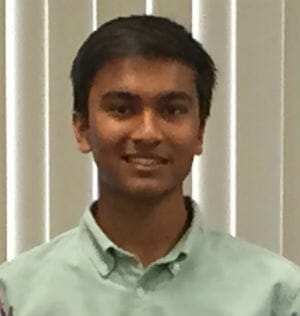 Shalin Shah
Two years ago, as a ninth grader in Orange County, California, Shalin Shah watched a documentary about a surgeon who traveled to North Korea and, with a simple procedure, returned sight to people suffering from cataracts.
The gesture, and the ailment, was an eye-opener for Shalin, now a 16-year-old junior.
“It seemed such a simple thing and yet it had such a great impact,” he says. “I wanted to see how I could make a contribution, using my own skills.”
So he spent his summer vacation building a free app, called Voice, which allows the blind, in effect, to read what is before them.
Like other apps designed for this purpose, Shalin’s relies on technologies such as computer vision, which analyses pictorial information, and optical character recognition, which allows a user to photograph a written segment (from a book, sign or label) and then converts the image into data. Analyzing the data it has collected, the app then voices the words out loud.
“In talking with blind people, I began to understand some of the weaknesses of the apps that are already out there for them,” Shalin says.
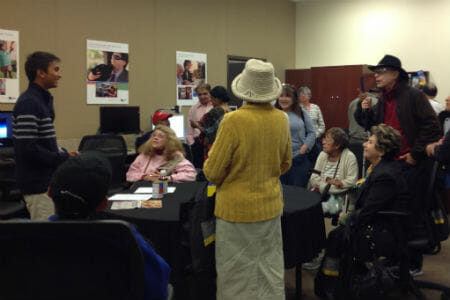 Shalin Shah, left, discusses his app during a seminar in Los Angeles at the Braille Institute of America.
Users complained that some apps couldn’t handle poor lighting or interpret photos taken at slight angles.
One of the greatest challenges for Shalin was making sure that the app could communicate when it had correctly detected all four corners of a document.
Once he was done, Shalin set about distributing his creation – for free.
“Another similar app costs about $100,” he says. “But I learned that 63 percent of America’s 6 million blind people are unemployed and I decided to offer Voice for free. They need my help, not for me to charge them money.”
Shalin posted news of his product on online forums for the visually impaired and contacted organizations such as the Braille Institute of America and the California School for the Blind.
So far, various versions of the app – now available in 30 languages – have been downloaded 13,000 times.
This budding computer scientist, who is scouting colleges now, has big ideas for future versions of the app, such as one that helps people with dyslexia and one that is entirely voice controlled. He also dreams of helping people who might not have easy access to eye doctors by developing an app that could take a photo of a person’s eyes and diagnose whether disease, such as glaucoma or cataracts, is present.
“I believe that anyone should try to help people by using what they like and want to do,” he says. “For me, that was computer science. But everyone has some skill or interest that they can share – they can have fun while helping out.”
Richard Bernstein
While a disability may prevent some from doing certain things, it doesn’t prevent Justice Richard Bernstein from being any less inspirational. Though Bernstein is blind, his vision for impacting his community is crystal clear.
Last year, Bernstein was elected to the Michigan Supreme Court becoming the first blind justice. While his accolades speak for itself, the work he does in the community serves as a voice for all.
For years now, Bernstein has worked closely with Achilles International. Created back in 1983, Achilles International’s mission is to enable people with all types of disabilities to participate in mainstream athletics, in order to promote personal achievement, enhance self-esteem, and lower barriers to living a fulfilling life. As both a board member as well as an active athlete, Bernstein serves as an advocate for disabled athletes and an ideal spokesman for Achilles International.
Bernstein’s inability to see makes his accomplishments even more noteworthy. His athletic success is especially impressive. Bernstein has ran as many as 18 marathons and competed in ironman and triathlon races. As a marathoner, triathlete and ironman participate, Bernstein is living proof that a disability does not have always have to be a hindrance.
In 2012, while training for a marathon in Central Park, Bernstein was hit by cyclist, breaking his hip and pelvis. Instead of being completely discouraged by his injuries, he decided to do what he does best, create change. Bernstein filed a federal suit claiming that the city is in violation of the Americans with Disability Act. His efforts eventually led to reform, helping make the park safer and more accessible to disabled athletes.
Despite his disability, Justice Bernstein has been a leader in his community. Through his words and actions he has truly made the world a better place.
Sean Gobin
Sometimes a walk in the woods isn’t just a walk in the woods.
Sometimes, that walk is a healing journey, a revitalizing chance to process, reflect and rediscover faith in humanity and oneself.
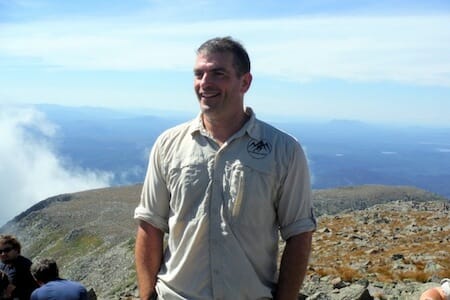 Sean Gobin
That’s what happened to Sean Gobin, a 15-year veteran of the Marine Corps who left the military and returned to Charlottesville, Virginia, after three combat deployments to Iraq and Afghanistan. Gobin had always wanted to hike all 2,185 miles of the Appalachian Trail, which he did with another veteran buddy.
“About two-thirds of the way through I realized that something profound was going on,” says Gobin, 40. “The hike was a therapeutic experience, something I thought other veterans could benefit from.”
Since 2001, more than 2.5 million veterans have returned home from Iraq and Afghanistan but many have never transitioned and continue to suffer from post-traumatic stress disorder.
Gobin saw a way to change that, and founded Warrior Hike, a nonprofit outdoor therapy program that helps combat veterans transition by hiking the country’s national scenic trails.
Spending eight hours a day for up to six months in nature offers the time and space to decompress, explains Gobin. Hiking with other veterans – people who understand what you’ve been through – is also critical, he adds.
“Every week our veterans are hosted by a local family for a meal and an overnight stay along the way. When you’ve experienced the worst of humanity, it’s easy to become cynical. Reconnecting to simple is a healing thing,” says Gobin, who was inspired by Earl Shaffer, a World War II combat veteran who became the first documented person to hike the entire Appalachian Trail.
Warrior Hikes helps veterans on and off the trail. After a screening process, veterans are outfitted with the equipment they’ll need on the hike, as well as town support, food and lodging. Warrior Hike also assists veterans with job placement opportunities with the program’s many partners.
Veterans can hike six different U.S. trails or opt to paddle the length of the Mississippi River.
To date, 71 veterans have walked the walk, 31 this year.
“For some veterans, a month on the trail can be life changing,” Gobin says. “It’s finding the time and the space to reintegrate, to process. That’s the key.”
CaTyra Polland
CaTyra Polland is an AmeriCorps VISTA with Step Up Savannah in Savannah, GA. At Step Up Savannah, Polland lends her services as a Wealth Building Associate. In her role she promotes financial literacy, builds community awareness of Step Up Savannah and its programs and connects clients with local services and resources.
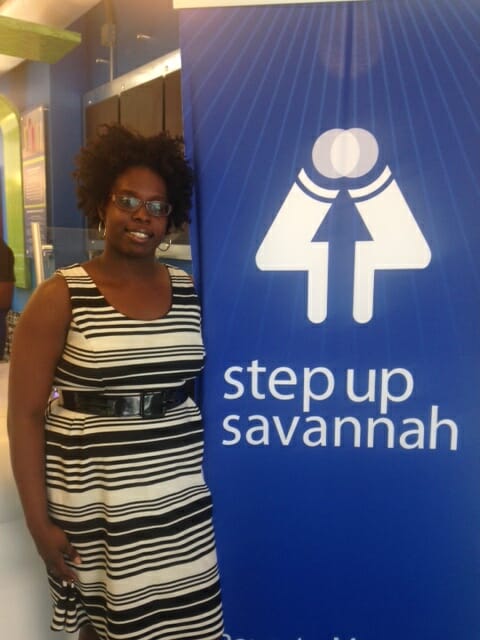 CaTyra Polland
 Polland’s services are vital. Polland has served as Tax Preparer for the VISTA Program. She helped prepare numerous tax returns for low to moderate-income households. As a result, Polland helped several families save hundreds of dollars. She volunteered to prepare returns so families can keep their hard earned money instead of paying to have their tax returns filed. Her keen sense of financial literacy allowed her to advocate for these families and help them make the best financial decisions available.
As the Poverty Simulation Volunteer Manager, Polland recruits volunteers to help execute the simulation. Poverty simulations are an experiential learning tool that helps to educate community members about the barriers faced by families living in poverty. Step Up hosts about four simulations a year, which are open to the public. Polland utilizes social media, in-person and e-mail to recruit and manage volunteers and has managed more than two dozen volunteers since November 2014.
Polland regularly writes blog posts for the Step Up Savannah website to educate viewers on various topics such as financial empowerment and current poverty issues.
There is no volunteer role is beneath Polland, she has volunteered as head hostess, food server, greeter, workshop facilitator and several other roles. Her humility and willingness to help others speaks volumes about her character.
Jackie Lomax
Meet Daily Point of Light Award honoree Jackie Lomax. Read her story and nominate an outstanding volunteer or organization as a Point of Light.
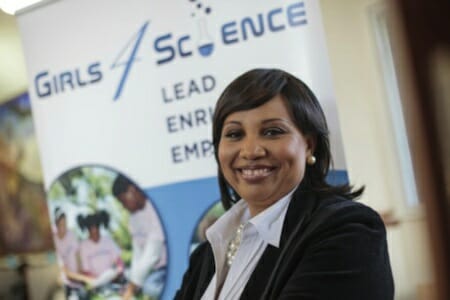 Jackie Lomax
During a routine visit in 2008, Jackie Lomax’s 9-year-old daughter, Lauren, peppered her dentist with questions. What kind of education was necessary to become a dentist? What were the tools and X-ray protection pad for? What exactly was going to be done inside her mouth?
As the dentist patiently answered Lauren’s questions, something stirred deep inside of Lomax – a wistful recollection of her own early fascination with science.
As a teen in Chicago, she had considered a career as an occupational therapist, but never pursued it. Instead, she studied communications, the first person in her family to go to college.
Both her parents worked – her father in construction, her mother as a housekeeper. In her world, there simply was no encouragement for girls to pursue what’s commonly known today as STEM (science, technology, engineering and math) careers.
In that dentist’s office, Lomax decided to change the paradigm for her own daughter, to “reverse the curse,” as she now puts it. She wanted Lauren to feel free – and more importantly, be encouraged – to pursue anything that sparked an interest.
The organization that sprung from this contemplation, Girls 4 Science, took off quickly. Over the past six years, more than 500 girls in and around Chicago, ages 10-18, have taken part in free Saturday Science Academy sessions now held on six consecutive Saturdays four times a year.
Lomax had recently been laid off as an administrative assistant and was running a small educational tour company part time when she had the idea for Girls 4 Science. Then she happened to see Linda McGill Boasmond – the nation’s first African-American woman to run a chemical plant – doing a television interview. Lomax looked up Boasmond and invited her to lunch.
The head of Cedar Concepts Corp., Boasmond recalls she accepted the invite because Lomax seemed sincere and her goals coincided with Boasmond’s own “wish to do something to get more girls, particularly from underserved communities, involved with science.”
The two hit it off and soon went to work, calling on scientists, getting legal help to write a viable business plan, getting Boasmond’s staff members involved, creating a board of directors, developing partnerships and finding space for the first Saturday session at Olive Harvey Community College through a church choir connection. As plans came together, more people were brought in to figure out the curriculum, format and details.
Lomax and Boasmond spread the word simply at first – putting up fliers in their churches and schools. Forty girls attended the first program session in 2009, where they learned to make, label and brand shampoo, combining science and entrepreneurship skills.
Subjects at subsequent sessions have run the gamut, from physics to chemistry to biology and beyond – in labs and on field trips. Through Girls 4 Science, participants have access to internships, college scholarships and other opportunities.
“Science opens up your world to unlimited possibilities,” Boasmond says. “Had I had access to a program like this, my grades would have been better, it would have impacted the types of colleges I could have attended and I wouldn’t have had to feel like I was trying to catch up.”
Through the program, Lomax’s daughter, Lauren – now a high school junior – has an internship, job-shadowing a doctor in a lab.
“My daughter is in the generation that inspired me,” Lomax says. “I’ve just been taking it one step at a time, and it’s working.”
Michael Barratt
The average 85-year-old is happy to be a passenger in life and not a driver. Not Mike Barratt.
Barratt is the volunteer transportation director for Seniors Intervention Group (SIG) in central Florida. “I’d say this job really saved my life,” says Barratt, who hasn’t lost his Midlands accent despite being in the U.S. since 1960. When his wife died of breast cancer Barratt was grief stricken. “We’d only been married six years, were still honeymooners really,” he says. So when SIG founder Lake Mary police officer Zach Hudson asked for his help, he said yes.
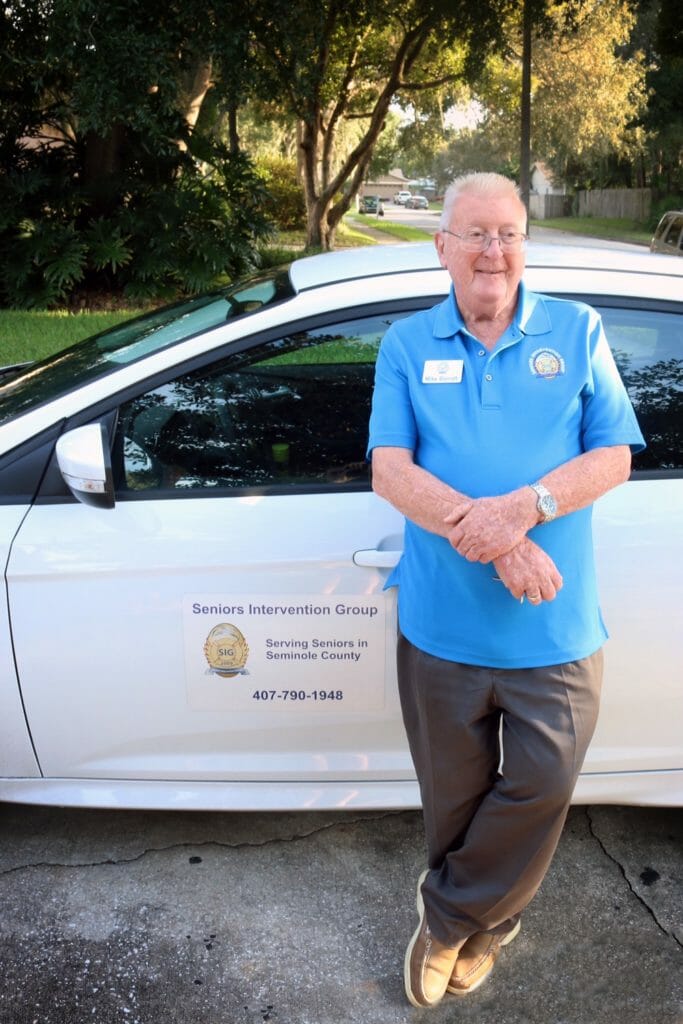 Barratt and his Ford are the trusted transportation duo for the Seniors Intervention Group.
What started with Barratt tending to the non-profit’s donated equipment soon took an interesting fork in the road. SIG was having a hard time finding volunteer drivers because of the price of gas. “I put a program together that got funds to reimburse drivers $.56 a mile,” says Barratt. “And I’ve been driving for them ever since.”
Cars have long been a part of Barratt’s life – his career as a trainer with Jaguar dealerships lasted 53 years. Although he’s driving a Ford these days – “I get a nice discount since they bought Jaguar back in the late 80s,” – Barratt uses to his ride to take low-income seniors to doctor’s appointments and to pharmacies for medication. Last year he drove some 250 trips totaling 3750 miles.
Although Central Florida is serviced by the para transit program ACCESS LYNX, many of Barratt’s passengers report waiting three and four hours to be picked up from their appointments. “I wait for them,” he explains. “I’m an avid reader, so I just always have a book with me.”
Barratt gets to know his seniors, social interaction that benefits both the driver and the passenger. “The most important thing after all these years of being in the work force is that I feel that I’m giving something back to society,” says Barratt.
Barratt’s greatest wish is for someone to donate a wheelchair accessible van to SIG so he can help older folks who can’t walk get to their appointments. To his way of thinking, poor seniors don’t tug the heart and purse strings of donors like other needy causes might. “But they’re deserving just the same.”
John McClure Robinson, III
The city of Caledonia, Missouri is a small, quaint town filled with loving residents. With a population of only 130 people, what the town may lack in numbers makes up for with its compassion.
One of the truly compassionate individuals of Caledonia is life-long resident John Robinson III. Born and raised in the town, Robinson is now Mayor Of Caledonia, while also holding several other prominent positions in the region. Mayor Robinson has been a pillar in the community for decades, volunteering his time and energy for the town in which he loves.
“Caledonia is special place … If I had to describe it one word, I would simply say it’s ‘home’,” said Robinson.
While Caledonia is home for Robinson, it’s also a place that represents his family legacy. His grandfather, John Robinson, was a leader in the Caledonia community, helping create the very first school district. Robinson III has decided to follow in the family’s footsteps .
Along with his mayoral duties, Robinson III serves as Chair of the Caledonia Community Betterment organization. This organization under Robinson’s leadership has hosted numerous youth programs and blood drives. They also engaged nearby students to assist with cleaning the local village park as well as helping plant trees.
Noticing a need for scholarships for many of the rural high school students, Robinson established a family scholarship. Since 2008, the Robinson Family Scholarship Fund has been helping seniors pursue their college dreams.
Robinson’s willingness to help the people of Caledonia is what makes him special. He doesn’t give back because he has to, he does it because he truly cares.
Master Sergeant Patricia A. Baisden
One who is willing to volunteer also possesses the power to create change. If that is to be true, then Master Sergeant Patricia Baisden is truly a hero.
For over 27 years, Baisden has been at the forefront of change. Whether it is serving the military or serving her community, her volunteerism has greatly impacted her surroundings. Baisden has led efforts to improve the quality of life for Veterans, as well as assisted with projects benefitting children. In all those years, her commitment has not once wavered.
“With very limited funds most community projects need volunteers to make them a success,” said Baisden. “I started my volunteer career when I became the proud mother of my first son in little league sports.”
Whether she is creating an entirely new project or simply volunteering a few hours for her son’s sports, Baisden’s leadership and devotion is poured into every task. Her Toys4Tots program, giving children gifts during the holidays, is now in its ninth year, while her Scholarship Contest for high school students is now embarking on its sixth year.
Baisden’s knack to care for others was even recognized by the United States Army as she received the Outstanding Volunteer Award while stationed in Kabul, Afghanistan. Once a month she host VA Claims Workshops to help Veterans and active duty, as well as their families, get the benefits they deserve.
From military personnel to the precious children of this nation, Baisden is helping transform the lives of people who truly matter. When she is not writing and protesting to reform military policy, she is helping fight childhood obesity through the her company, Baisden Healthzone, LLC. Volunteers as dedicated as Baisden are the true pillars of this nation.
Kyria Henry
Kyria L. Henry, MAHS, today’s Daily Point of Light, is CEO of paws4people™, Inc. Kyria founded paws4peoplein 1999 when she was 12 years old.
In the ensuing 16 years, paws4people has placed more than 400 highly-trained Assistance and Facility Dogs providing support in areas such as mobility and psychiatric service, educational and rehabilitative assistance, and social therapy. paws4people specializes in training customized Assistance Dogs for two general groups: children and adolescents with physical, neurological, psychiatric, and/or emotional disabilities; and Veterans and Active-Duty Service Members with Chronic/Complex Post-Traumatic Stress Disorder (C-PTSD), Traumatic Brain Injuries (TBI), and Military Sexual Trauma (MST). paws4people has more than 200 volunteers and operates in 21 states, placing dogs with nationwide consideration. Together, paws4people’s dogs have made more than 1,000,000 therapeutic contacts.
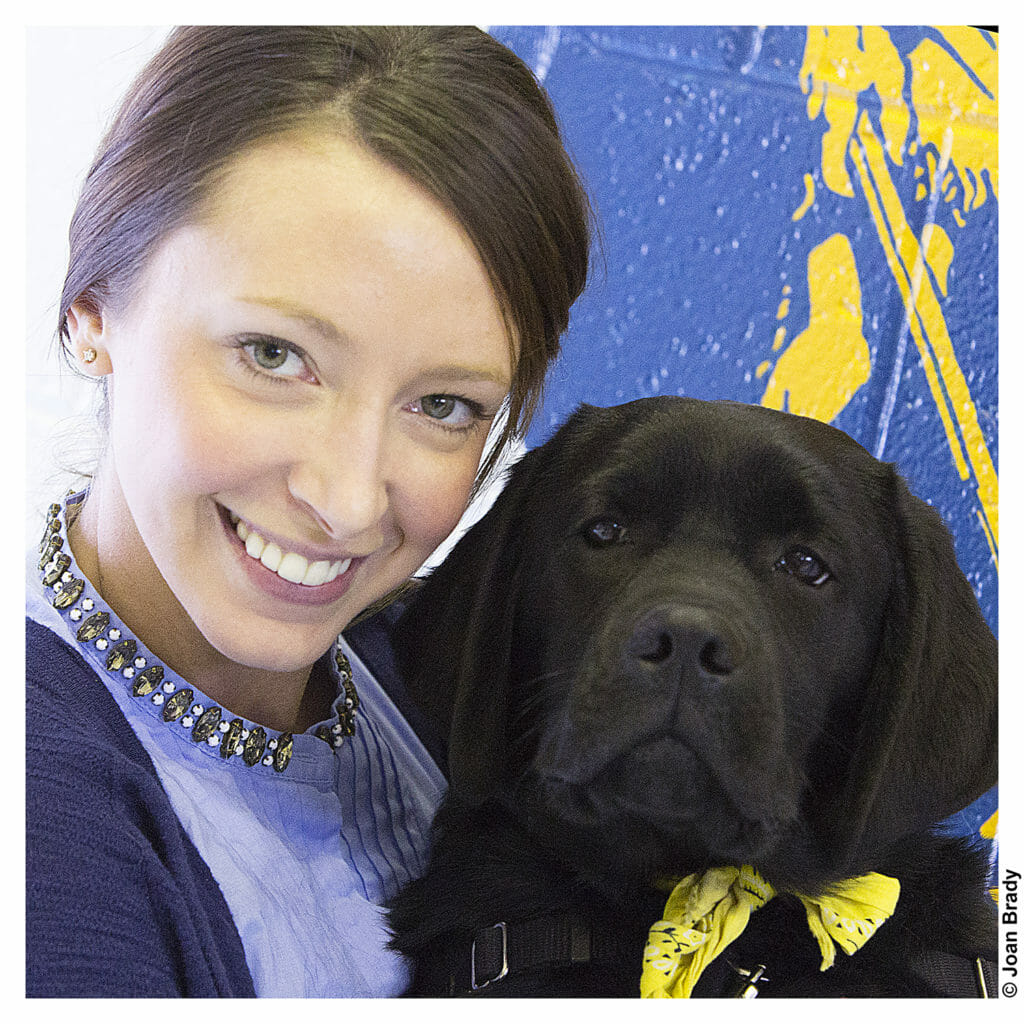 Henry and NOLEN, an assistance dog in-training
 paws4people use a comprehensive and rigorous 2-year training process from birth to placement with a client, at a cost to paws4people of $36,000 per Assistance Dog. The training process encompasses a paws4people puppy whelping starting from birth to six weeks old, placement in the paws4 people Puppy Development Centers in Wilmington, Chapel Hill, and the Mid-Atlantic Region (MD, VA, and Washington DC) from 6-20 weeks old, the paws4prisons program in 5 correctional facilities in West Virginia from 5-15 months old, the UNCW/paws4people Assistance Dog Training Program, a 4-semester certificate program in the School of Health and Applied Human Sciences from 15-24 months old and the Client Transfer Training in Wilmington from 18-24 months old.
In addition to her responsibilities as CEO, Kyria is Program Director and Instructor of The University of North Carolina Wilmington Assistance Dog Training Program (ADTP), the first and only comprehensive Assistance Dog academic certificate program at a state university, and has an adjunct faculty appointment at The University of North Carolina-Chapel Hill in the School of Medicine, Department of Psychiatry.
For Kyria, paws4people is her passion and calling. Kyria has been involved in every aspect of breeding, training, and placement process for 449 working dog-client teams, which dogs are provided at no cost to each client.



