Houston Woman Honors America’s Heroes with Trip of a Lifetime
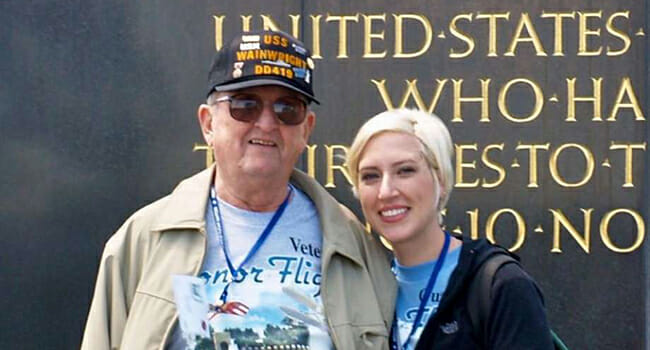
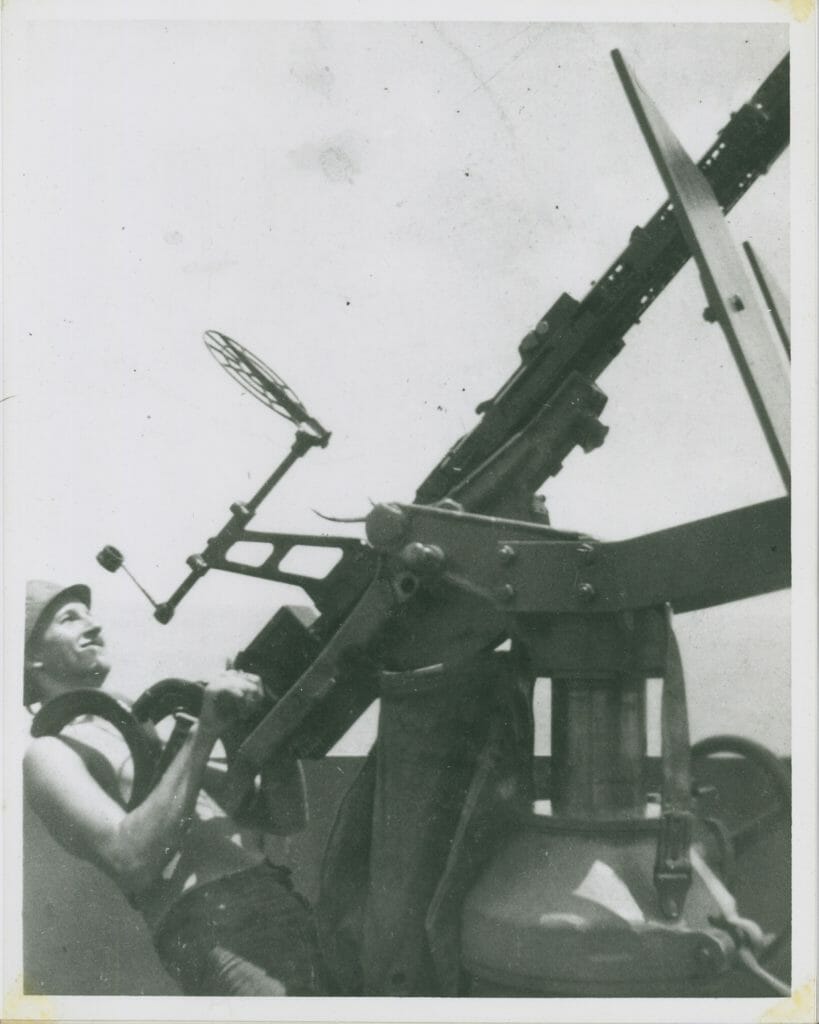
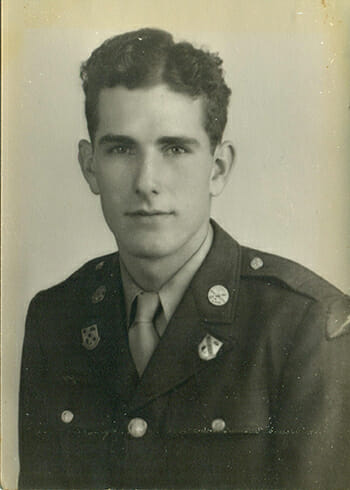
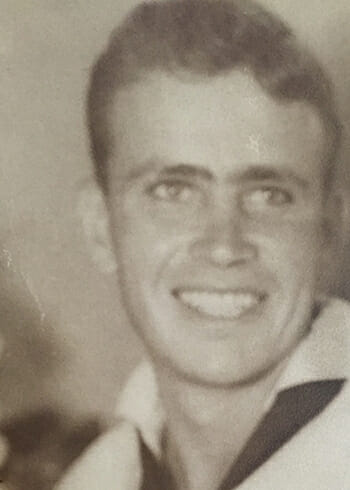
Daniel Kelly was a jack of all trades, serving as a Seaman first class for the Navy during World War II in both the Atlantic and Pacific fronts. Kelly had once told his granddaughter, Ashley French, that manning the turret guns on his ship, trying to shoot down kamikaze pilots, was the scariest thing he ever had to do. But when French thinks about her grandfather’s service, she’s grateful.
“It makes me feel really proud to look at that picture and know he’s all of 18 [years old]…to see and know he experienced that, and fought for our country,” said French.
That gratitude explains how French became involved with Honor Flight Houston. As chairman, French helps veterans travel to the nation’s capital to visit memorials that were built in recognition of their service. Working tirelessly to raise funds and connect with veterans in her community, she’s passionate about serving men and women just like her grandfather.
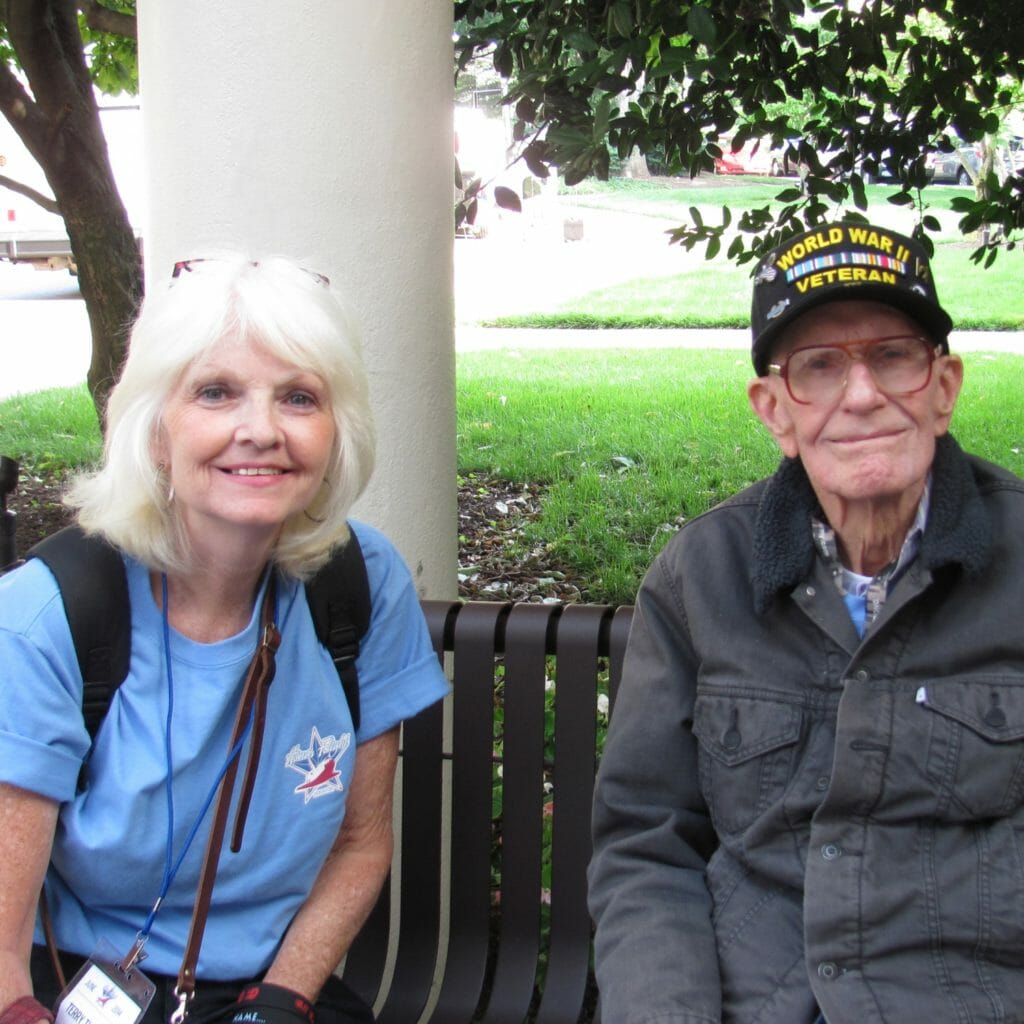
French remembers each and every veteran who has ever taken a trip, but she said veteran Jack Thomas made a lasting impression. Thomas was taken as a prisoner of war during World War II in the Battle of the Bulge, and he had carried his German-issued dog tag with him ever since being released. He brought it to Washington D.C. and proudly told his story to perfect strangers who came up asking about the tag.
Thomas’ daughter, Terry Smith, said the trip reenergized her father, telling her that it was a trip of a lifetime. French said the impact extends beyond the two day trip.
“It’s more than just getting them to see these memorials,” Smith said. “It’s a lot about getting them to have renewed relationships with veterans and their communities. They start sharing stories.”
Sterling Baker was one of those veterans who started sharing his war stories only recently. Even his family had been kept in the dark about his time overseas. Knowing he wanted to go fight for his country, Baker said the Navy had asked for volunteers that were “single, could swim good and didn’t have close family ties.” In August of 1942, Baker was accepted into the first class of Amphibious Scouts, known today as Navy SEALs, and was immediately sent off for training.
Baker vividly remembers details of fighting, saying he was a gunner on one of the 20 mm caliber machine guns up on the flying bridge of his ship. His task: to shoot enemy planes down. Baker said the captain of the ship would usually come out and stand by his machine gun, ordering the men to fire at targets.
“The captain would hit me on my helmet and say shoot, shoot, shoot!”
Asked why the Texas native never shared his stories with his wife of 71 years, or his family? He didn’t have an answer. It just didn’t come up.
But that changed recently. Baker said French’s work in organizing “Mail Call” for the veterans – a day so many looked forward to while stationed overseas – made a lasting impression on him.
“We were treated royally,” Baker recalled. “The most impressive thing? Going back to Houston, they gave us a package, [and] in that package was a lot of letters, from school children, talking to us about our service and thanking us.”
French doesn’t do it alone. She has a team she works with, but Patrick Kelly, the vice chairman of Honor Flight Houston, said French is an “old soul” who’s a natural at connecting with the veterans. The vets, many of whom returned home and went straight to work, get overdue recognition on their trip with Honor Flight, according to Kelly.
“A lot of them didn’t get ticker tape parades and for them, this is just a grand trip,” Kelly explained. “A lot of them say this is the best trip they’ve ever been on. They get to see the parts of history that they made.”
When Jack Thomas was rescued from the Nazis and finally made it back to America, a parade was held in San Antonio celebrating the men home from war, but Smith said her father was instead marched to a basement with the other vets. Thomas had told his daughter they were a “motley” looking group, their uniforms “not as nice looking.” Instead, veterans who served stateside were sent out to march because they “looked better,” Smith remembered her father saying.
Smith lost her father last year, and called French’s mission urgent.
“One day, their job with the World War II vets will be over because there won’t be any, and it’s just life. Their focus is urgent, it can’t be put off.”
She credits French and the other Honor Flight Houston volunteers for their dedication and commitment to making sure as many veterans as possible get to take this trip, saying the memory of the trip with her father stayed with him until the very end.
“We re-lived it up until he couldn’t talk anymore,” said Smith.
French said vets tell her they’re amazed people are still remembering them more than 70 years later. She wants to change that, and tells veterans, “Where would we be if [you] hadn’t won the war?” She wants to make sure their stories are remembered.
Some of the veterans have become like family to French. While French lost her grandfather, Daniel Kelly, just over a year ago, French said she’s thankful that her children get to know some of the veterans she works with.
“They get that living history, of the greatest generation,” she said.
Her 4-year-old son, who attends some of the welcome home ceremonies and waves an American flag welcoming the veterans back from their trip, told her, “I want to be a soldier…I want to fight for my country.”
And for these veterans, who sacrificed so much for their country, Smith said that Honor Flight Houston and French’s work finally made her father feel like his service was recognized.
“All these years later, he finally got to be in the parade,” said Smith. “I think that was his parade. And I think that’s why it meant so much to him. He finally made it to the parade.”
Ashley French’s work with Honor Flight Houston leaves a lasting impact for these veterans. If you are in the Houston area, you can take part in the “Welcome Home” homecoming celebrations at Houston Hobby airport, which take place upon arrival of Honor Flight Houston’s flights back home.
Email [email protected] to learn more about how you can get involved and other volunteer opportunities. If you don’t live in Texas, check out All For Good, for opportunities to help veterans in your area.
Christine Sandberg
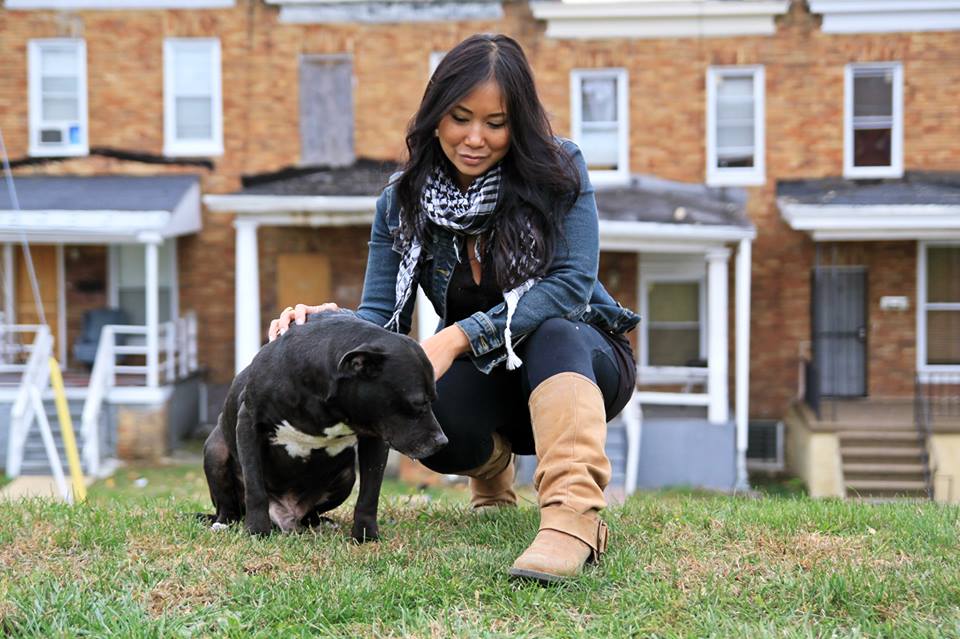
Rescue Well was founded by Christine Sandberg in Baltimore, Maryland in 2011. Since its launch, it has grown from offering post-adoption support to the city shelter, to offering several programs across Maryland, Washington, DC and Northern Virginia. The organization focuses on improving the lives of both pets and its owners. Rescue Well proudly serves without judgment or expectations.
The organization helps connect people with things they need, so they can safely rehome their pets, or keep pets healthy and fed. Supplies and vetting are provided by donors or out of pocket. They do not force people to do anything, rather, they provide owners with information and resources to make their own decisions.
Sandberg and her team spends hours a day in Baltimore City’s and Baltimore County’s most at-risk neighborhoods. Her mission is to: Engage, Educate, then Empower the communities they serve. They listen to people’s views on pets and abuse and gets to the core of why these things are happening, and they do so in partnership with Animal Control. Sandberg builds strong community relationships, and helps residents by connecting them to solutions that solve deep-rooted issues. This focus on the owner is what she calls “working our way up the leash”. She believes cultural change happens one resident and one choice at a time.
In the Well Placed program alone, the team manages 50 re-home requests every day, and they either offer resources to retain the pet, or they provide free marketing and screening to safely re-home them.
They also operate a crisis hotline that serves pet owners that are in homeless, crisis, and domestic violence shelters, the local Veterans Administration Hospital, and the general public. Each month, the hotline receives between 800-1,200 calls.
There are thousands of animal rescues across the United States. Rescue Well is not a rescue, but rather they support shelters (for both humans and pets), rescues, humane organizations and the community at the ground level.
Sandberg has created innovative programs and executes them flawlessly. Her concepts are initially thought to be completely unattainable, yet, she makes them happen and sees success. The Well Placed program alone searches every pet ad on Craigslist in the state of Maryland. Sandberg was thought to be crazy for undertaking such a large task that would “never work”. Six months later The Well Placed Program is successfully helping hundreds of families. Other programs include a Certified Transport Team that transports pets, supplies, and people; an Outreach and Advocacy group that engages the residents within their own communities to participate as an extension of Rescue Well: neighbors helping neighbors.
Sandberg also disproved the long-held belief that rescues could not work well together, when she created the Coalition of Rescues (CORE) earlier this year. To date, they have enlisted 50 organizations and nearly 400 members, all rallied around the central goal of working together to place – and keep – pets in safe and healthy homes. The Coalition is also a place for rescues and humane organizations to give and seek advice, to share resources, supplies, and information, and to support one another.
Her new mission: helping neighboring states launch Coalitions and proving that we are all better together.
Evelyn Christman
“Voting is the whole basis of democracy. What makes our country work is to have people find out about the issues and the candidates and vote accordingly. The main thing is to know the facts,” says Evelyn Christman, who served for years as president of the New Orleans, Jefferson and Louisiana chapters of the League of Women Voters.
Born in 1919, the year Congress ratified the 19th amendment, giving women the right to vote, Christman dedicated much of her life to encouraging citizens to be informed voters. At age 96, after a lifetime of supporting civil rights, women’s rights and higher education, Christman still advocates for social justice. For example, she supports gay marriage and denounces new voter ID laws.
The League of Women Voters was established in 1920 to encourage women to exercise their newly won power to shape policy by voting. It’s been active ever since across the nation. In addition to publishing information and volunteering as poll watchers, League chapters sponsor political candidate debates.
“The League, of course, is nonpartisan and doesn’t support candidates,” stressed Christman. “They do take stands on issues, and study them at every level. But the principal product that I’m really interested in is the voter services – getting out unbiased information on candidates and issues to help people vote. The purpose of the League is to promote informed and active participation of citizens in government and that’s where my efforts went.”
In Christman’s day, the League published and distributed written materials for voters; more recently, the organization provides information online.
Christman has reached at least 10,000 individuals through direct voter advocacy and women’s rights training. She was a central voice in the Equal Rights Amendment movement in Louisiana and set an example for women in business when she took over her husband’s construction business upon his early death in 1976.
Christman has inspired countless members of the community with her support for civil rights, women’s rights and education. She hopes most of all to have inspired her three children, 10 grandchildren and 11 great-grandchildren. One of her granddaughters, Beth Hester, says “Mimi” led by example. “I always thought of her as an amazing example of just always learning,” said Hester. “She would travel in her 60s and 70s. She was always reading, and now she listens to audio books. Every time I’ve talked to her she has something new; for example, last week she learned about the history of teacups and how they once had no handles. Now that I’m a mom, I try to teach my kids to be like that. I say, ‘Look at Mimi, she never stops learning.’”
Christman attended Agnes Scott College in Decatur, Ga., from 1936-1940, at a time when few women pursued higher education. After working on her master’s degree, she taught 7th and 8th grade English for several years. After her first husband, Fred Landis, died at age 56, Christman once again tackled a challenge just opening to women in the 1970s: she took over as chairman of the board of her husband’s construction firm. “I was able to participate in business activities at a time when people wanted to appoint women to boards of companies and organizations and so on,” she says. After she remarried, to Ralph Christman, she continued her involvement in the community, becoming the first lay woman to become the chairman of Xavier University of Louisiana, a historically black, Roman Catholic institution.
Christman still keeps up with the news, and votes in every election. Because she now lives in a retirement community, she votes via absentee ballot and encourages fellow residents to do the same.
Even today, Christman remains concerned about voting rights and social issues. She disapproves of recent moves by some states to require a photo ID to vote. “I think those efforts are clearly a move in the direction of making it more difficult to vote and I don’t like that,” she says, adding, “There are other things, too, such as cutting voter hours, changing registration hours and so forth.” Christman volunteers that she approves of the U.S. Supreme Court’s recent decision to legalize same-sex marriage.
“I’m hopeful for the future, and I hope the younger generation will do a better job than we did,” she says. “They’re more accepting of different lifestyles and races. My grandchildren’s ages range from 28 to 43, and there’s just absolutely no racial prejudice, and I know they’re bringing up their own children in the same pattern. They’re on the right track.”
Carri Rubinstein
“These videos give parents the peace of mind of knowing they’ve said what they’d like to say, and it gives children the gift of a lifetime – it gives them their parents,” says Carri Rubinstein, founder of Thru My Eyes, which helps parents with lifethreatening illness create a video legacy, at no cost, to be cherished by their children and families.
Rubinstein, a breast cancer survivor for 25 years, has long dedicated herself to raising money for cancer research. But in 2010, when a terminally ill friend confided that “All I want to do is make a video for my 8yearold,” Rubinstein knew she’d hit on a way to offer meaningful—and immediate—help to cancer patients. “The money I’ve raised for research is not going to help the people who have the disease right now,” she said. “But this would complete what I do – I can help people now and I can help them in the future.”
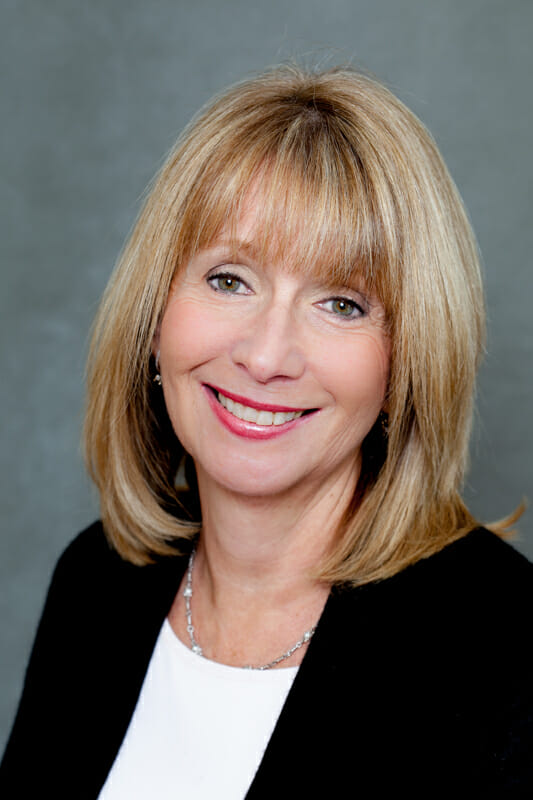
Rubinstein received assistance from her husband, Aaron, an attorney whose law firm donated its services to set up a 501c3 nonprofit agency; and her accountant, who volunteered to be the treasurer. She approached the gym where her friend had expressed her wish for a video and asked to hold a fundraiser there. Soon, Rubinstein had raised enough to hire Robert Allen, a professional videographer, and print brochures. Thru My Eyes was born. Allen created a website and Rubinstein started making presentations to hospitals. Clients are not charged a penny, although some make voluntary donations. “These days, health insurance doesn’t cover all costs, so people are fighting just to afford medication,” says Rubinstein.
Since Thru My Eyes fully began operations in 2011, it has created more than 100 videos. “We’ve gotten to the point where we’re doing one or two per week,” says Rubinstein, who has fulfilled requests from across the U.S. and Canada. Men and women with any type of lifethreatening illness are accepted. A team of medical professionals offers advice, for example, urging clients with ALS, or Lou Gehrig’s disease, to make their videos soon after diagnosis, before the ability to speak is lost. Carolyn Ngbokoli, a New York mother of two, says her breast cancer is in remission, but she’s glad for the video she made with Thru My Eyes. “It was very professional and done in a delicate way,” she says. “My mother died when I was young and I have no video of her. I have no way to hear her voice. What Carri’s doing is just great.”
As requests began to pour in from out of state, Rubinstein and Allen hit on the idea of using Skype to film the videos. Rubinstein also loans out video cameras so ailing parents can capture precious footage of themselves playing with their children and doing everyday routines. “We’ll incorporate it into the final video, so children get to see their moms and dads at mealtimes, bedtimes, story times and get to see those things they may not remember,” says Rubinstein.
Rubinstein knows the subjects of Thru My Eyes videos are struggling with physical illness and emotional stress. She makes sure they’re not doing the video alone. She’s assembled a group of mental health professionals who volunteer their time to talk to the video subjects in advance – and to be there in person during filming. The professionals have compiled a list of questions to get the ball rolling, such as asking parents to talk about their childhood and career, or to express what they’d like to say to their children on future occasions, such as graduations and weddings. “Sometimes clients break down,” says Rubinstein. The professionals offer guidance at a critically vulnerable time, she adds.
Rubinstein goes to the extra effort to stay in touch with clients long after the videos are completed. “Do I go to funerals? Yes,” she says. “Do I go to happier events? Yes. They become part of the family.” Rubinstein even offers clients the chance to update their videos at no charge after five years, if they survive that long. Many don’t. Rubinstein and her staff hold regular “debriefing” sessions to cope with the sadness they see. “You know this is not an easy topic,” she said. “But knowing what you’re giving people, you can do anything. We’re giving them a piece of their parents they can’t get any other way.”
Bringing STEM to the Girl Scouts
“Girl scouting builds girls of courage, confidence, and character, who make the world a better place.” That is the mission of the Girl Scouts of America. Jo Blackburn, a dedicated volunteer for the Girl Scouts of San Jacinto Council in Texas says that mission is not just a tagline, but a core part of the program that she has worked to uphold as a volunteer.
“I have seen girls, whatever their interest was, that were made better people and adults more confident in their own abilities by being Girl Scouts.” Jo credits her daughter, who wanted to be a Girl Scout, for her original involvement in the troop activities. She started volunteering by telling the troop leader, “I’ll do whatever you need help with.”
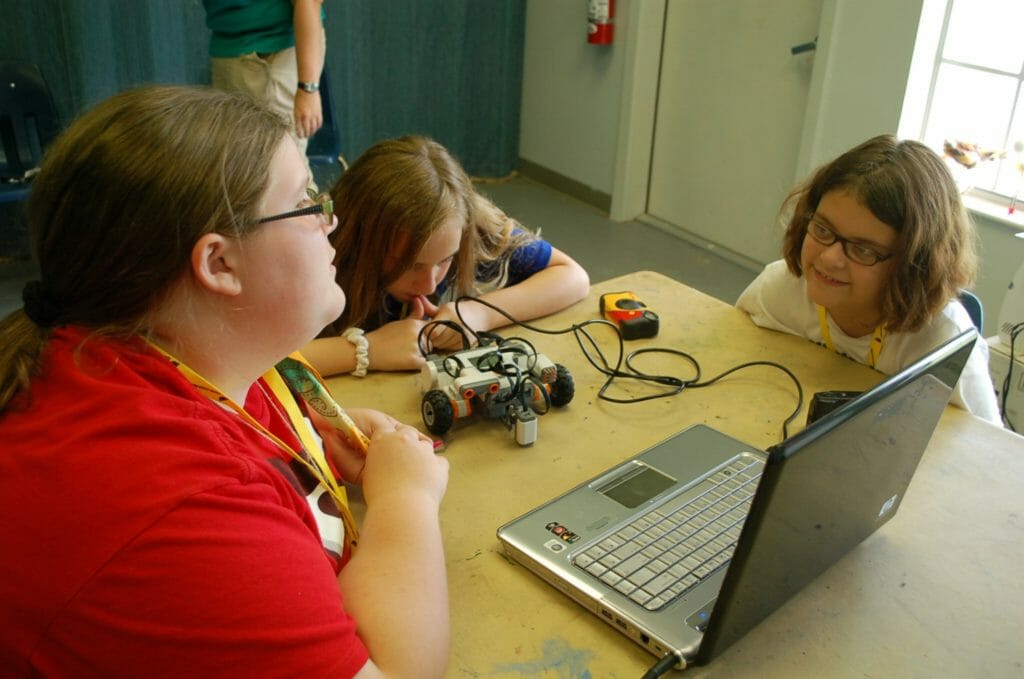
The San Jacinto area has more 60,000 girls in the program, with about 17,000 adult volunteers. As a volunteer for the San Jacinto Council for 14 years, Jo has seen some of her ideas come to fruition. She implemented the robotics program and started a Lego League to encourage young girls to develop interests in science, technology, engineering and math or STEM education.
The state of Texas is home to the Lyndon B. Johnson Space Center for human spaceflight activities and is a hub for STEM-education opportunities. In fact, more than 20 of NASA’s female astronauts were once Girl Scouts.
Jo is passionate about ensuring girls have the opportunity to explore STEM education opportunities due to her own childhood. She remembers as a young girl that she wanted to be involved in science and engineering, but she was told, “No” solely because of her gender.
“I was convinced I wasn’t very good at it,” Jo said. “Volunteering with the Girl Scouts has given me the opportunity to reconnect with that fun of mixing baking soda and vinegar and it bubbles. It’s fun whether you are in school or an adult.”
Jo was inspired to start the robotics program for the San Jacinto Council after attending a seminar hosted by NASA. It was there that she learned about the For Inspiration & Recognition of Science & Technology or FIRST robotics program, which encourages young people to be science and technology leaders.
Jo immediately saw an opportunity for the Girl Scout troop she volunteered with because many of them were not encouraged to participate in school programs. “I thought, since Girl Scouts is all about safe spaces for girls to try on different interests, even to fail in a safe space, we have to start this for the girls,” Jo recalled. “If you have knowledge about STEM subjects, I think it makes you a better-rounded person, whether that is your career or not. Every time you pick up your cell phone, you are touching technology. Every time you plant a tree, water your grass – there is something to do with science.”
Six months after Jo attended the FIRST seminar, the Girl Scouts of San Jacinto Council started their robotics program. The FIRST Lego League (FLL) was an instant success as well. FLL teams compete by researching real world problems such as food safety, recycling or energy conservation.
They are challenged to develop a solution by designing, building and programing a robot using Lego Mindstorms technology. The San Jacinto Girl Scouts are so dedicated to the activity that they spend several hours on weekends developing their team robot.
Jo recalled that the first year the Girl Scouts participated in a competition, the team won first prize, for the best project idea. Jo made sure the girls got the opportunity to experiment with science and technology and as a result, they thrived. The memory remains one of her top highlights that stands out through her service.
The Girl Scouts of San Jacinto has opportunities for girls of all levels to participate in STEM education activities. Jo’s advice to parents and guardians who want to encourage young girls in STEM education is to foster the interest and involvement in extracurricular activities, such as the Girl Scouts, to learn more.
For Jo, the most exciting part of being honored with the Daily Point of Light award is sharing her energizing experience of volunteering with the world and encouraging others to do the same.
“Number one, I get to communicate my passion for the Girl Scouts to many people, my passion for volunteering,” Jo said. “If the Girl Scouts isn’t your thing, get out and volunteer [elsewhere]. It will make you more connected to more people than you will ever meet though a job or neighborhood or your kids school. It will give you a passion that you did not know you had.”
John Corcoran
John Corcoran, 77, spent the first six years of his life being honest. But from age 6 on, he started dodging the truth about not being able to read and write.
Standard teaching methods didn’t work for him because – like millions of other children – he had auditory-discrimination problems that interfered with his ability to process language. John didn’t understand this until decades later, once he finally revealed his dark secret and learned to read – at age 48.
What he learned from that point forward led him to start a foundation to teach others with learning difficulties to read. For nearly 30 years, John has devoted his life to sparing other children – and adults – what he went through.
In his early years, adults figured it would just be a matter of time before John would make needed brain connections and be able to read and write. Teachers reassured his concerned but busy parents that “Johnny would get it eventually.”
By middle school, the young teen was frustrated and angry, acting out, and his bad behavior became the focus of teachers’ calls to his parents.
John moved a lot – living in a whopping 35 homes and attending 18 schools, as his father, a teacher, struggled to provide for his wife and six children. With each new start, John continued to hide the truth.
By high school, John had devised more creative and deceptive ways to cover up his secret. He hung around college-prep kids and dated the valedictorian. Fellow students did his assignments, and he cheated in other ways. He excelled in sports and was popular.
When basketball skills earned him a full scholarship to college, his fears deeply set in.
“I was so desperate to hide the truth and keep my eligibility that I crossed the line,” John says. “I was scared to death. I did some extraordinarily risky things,” sneaking into professors’ offices to steal tests, passing assignments and exams out windows for students to complete, and more.
Astoundingly, John got a teaching job when he graduated. He was the well-liked social-studies/driver’s ed/physical education teacher known for giving oral exams and assignments. He relied on smart students to help him complete some tasks, and frequently invited guest speakers to his classes.
He says he was deeply ashamed of his time teaching, always morally conflicted. But, of course, by that point, no one questioned him – everyone assumes that someone who goes through college and is a teacher can read and write. But how did he manage it? What about grading, and report cards, and even simple tasks like taking attendance?
“Well, as you might imagine, I wasn’t very big on grades, given my history, and didn’t give term papers. To take roll, I’d have a seating chart and ask kids to repeat their names every day as ‘a way for them to get to know each other.’”
His wife, Kathy, didn’t realize he actually could not read until she overheard John struggling when their young daughter asked him to read her a book.
“You know how they say love is blind? Well, it’s also deaf. Before we got married, I did try to tell my wife that I couldn’t read, but I was a highly functioning person, and she didn’t really hear it.”
Once Kathy knew, she became “my secret secretary,” helping with report cards and other tasks that required reading and writing, says John, who has a son, daughter and five grandchildren – all of whom are avid readers who “escaped my curse.”
John left teaching after 17 years and became a real estate developer. He finally had the courage to reveal his secret when he heard former First Lady Barbara Bush on the radio, advocating for adult literacy. Around the same time, he overheard a conversation at the grocery store about adult literacy lessons being offered at his local library.
With great trepidation, John “fearfully and tearfully” confessed to his tutor at the library that he’d been living a lie.
Learning to read, at long last, filled him with enormous joy. He revealed his secret to 200 CEOs about a year later in 1988, at a literacy conference in San Diego. Local newspapers covered the event, and the stories were picked up nationally. Suddenly, “The Teacher Who Couldn’t Read” was revealed. John later wrote a book with that title, chronicling his life.
From there, John “hit the road” to tell his story and bring attention to the problem of adult illiteracy. His many speaking engagements led him to meet Barbara Bush – who he continues to stay in touch with – and to the White House. The response was mostly supportive, though some educators were understandably confused and angry, John says.
“I owe the world an apology for hiding this as a teacher. That was so very wrong.”
Creating the John Corcoran Foundation was “an evolution because I realized it was time to do more than raise awareness. I wanted to provide instruction.”
Kayla Mertes was moved by her grandfather’s story, realizing that “literacy could solve so many problems. I believed that if we taught people to read the best way, as quickly as possible, it could empower them.”
She started helping John with tutoring and is now executive director of his foundation, which runs an online tutoring program and a learning center in Oceanside, Calif., where they both live. So far, she says, the foundation has helped thousands of children avoid the problems her grandfather faced, and the efforts are expanding, with teacher training at the core.
“It’s never too late to learn to read,” John says. “Illiteracy is a huge, underestimated problem. I consider it the most important civil rights and human rights issue of this decade. The nation doesn’t understand the negative impact not knowing how to read has on people’s lives.”
John Stacy
America the Beautiful. There are great cities all across the country, from the Atlantic coast to the Pacific Ocean, all with a distinct difference that sets one apart from the other. While certain cities like New York and Chicago are known for their massive, man-made industrial structures, it is the more quiet and secluded areas, known for their lush greens and tall trees, where nature and its aesthetic beauty truly shines bright.
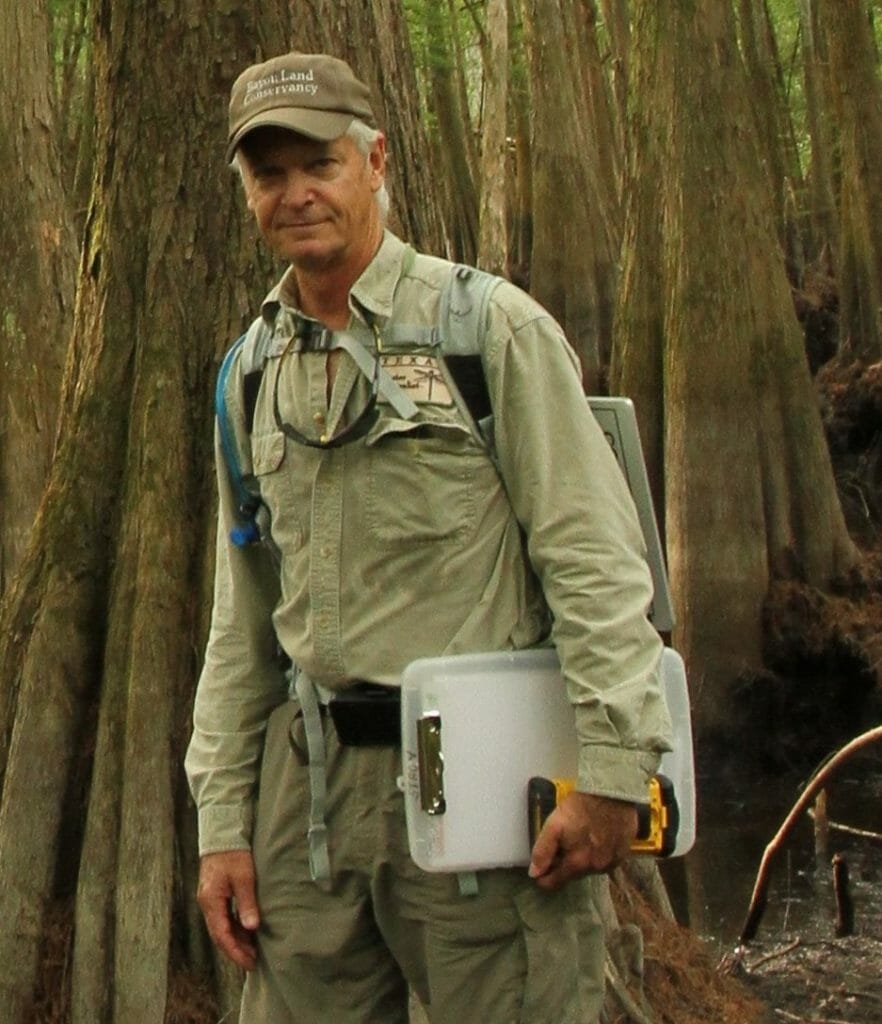
Protecting and preserving Americas’ natural beauty is John Stacy. For the past several years John has had a helping hand in the protecting rare plant species at the Mercer Botanic Gardens, and serving as a Conservation Crew leader for the Bayou Land Conservancy. John’s job is to make sure 12,500 acres stays in its natural state, unbothered by man or any other natural disaster.
John’s dedication to service started long before his volunteer work. His work in the Army Airborne division transitioned him well into a career of community service. The skills and training he gained from his military work has served as an asset for all he currently does.
“Knowing how to use a map and compass or GPS is essential to the work I do and of course you do that in the military,” said John. “More importantly I’m just very comfortable by myself out in the middle of 300 acres of wetland with wild hogs and alligators and it doesn’t freak me out.”
While his military preparation aided his volunteer career, it is his training with the Texas Master Naturalist program that made all the difference. Following retirement, John completed a course to become a Certified Texas Master Naturalist. This program focuses on developing well-informed volunteers to provide education, outreach and service dedicated to the management of natural resources and natural areas throughout Texas.
Frances Hall and Dr. Jane Everson
“When my 89-year-old mother was diagnosed with a rare form of cancer and relocated from Alabama to be near me in North Carolina, I quickly realized I was at a loss about area resources and support to help her. I felt overwhelmed by her new diagnosis. Mom and I had entered a ‘new world’ for which we were ill-prepared. And, I realized we need information and resources, not just support and a community,” says Frances Saus Hall.
According to MetLife, there are 10 million adult-child caregivers in the United States – a number that has risen by 300 percent in the past 15 years. The value of the services informal (unpaid) caregivers provide is estimated at more than $350 billion annually. The impact of adult-child caregiving on the individual, family, community and our nation are staggering, and the trends and impacts are predicted to continue increasing for the next 20 years.
Often, caregivers don’t consider themselves as caregivers. They simply do what needs to be done. However, recognizing other adult-children / adult-child caregivers faced similar struggles in trying to care well for their parents, Hall launched Adult Children of Aging Parentshttp (ACAPcommunity) in 2012 as a Hickory, NC community-based program to provide information, resources, support and community for adult-children who are, often, primary caregivers for their parents. Program attendance grew rapidly, and support and community among participants emerged.
Dr. Jane McVicker Everson began attending early ACAP programs, quickly saw its value, and soon partnered with Hall to expand ACAP. Everson was caring for her parents who lived in northern Virginia. Within a few months of Everson’s beginning to attend ACAP, her father had a stroke, requiring hospitalization, rehab and a variety of difficult decisions. When he passed after several months, Everson’s mother found herself in their large home without her life partner and several hundred miles from either of their adult children. She decided to move near her daughter, selling the family home of 40+ years and relocating to an unfamiliar area. Like so many adult-child caregivers, Everson has experienced long-distance caregiving, requiring periodic travel of hundreds of miles to provide support for parents, the uncertainty of helping make critical decisions, losing one parent and helping the other adjust to a new reality and “up close” caregiving that includes serving as a parent’s only means of transportation.
Each caregiving situation is unique, and all caregiving situations are similar.
Envisioning a national scope for the nonprofit, Hall and Everson birthed ACAPcommunity, a nationally-unique effort designed to help adult-child caregivers become more effective in their caregiving role while lessening the impact on the caregiver while also helping her/him begin to prepare for her/his own elder years.
They conducted a national survey of adult-child caregivers and professionals to determine strongest needs and most pressing concerns. As a result of the survey, Hall and Everson developed an educational curriculum of 24 programs, organized into six modules that offer evidence-based information and resources relative to issues of aging and adult-child caregiving.
Each month, local chapters present a 90-minute program in which content-area experts address a wide variety of age-related and caregiving issues. Typically, 30-35 adult-child and other family members and professionals attend the monthly programs, although attendance ranges from 25-70. In addition, Hall and Everson have recorded, to date, 25 audio podcasts, conversational interviews with content experts that have been heard by more than 4,300 times by caregivers in 48 states and 45 countries and launched a second ACAP chapter in Pennsylvania with plans to start new chapters biennially.
Later this year, the second annual ACAPcommunity conference will be offered, anticipating 100 caregivers and professionals to discuss common issues facing the group. “Balancing the Juggling Act” will be held in Hickory, North Carolina on November 5, 2016.
As adult-child caregivers, themselves, Hall and Everson understand both the joys and challenges of caring for an aging parent while balancing family, work, community activities and caring for themselves. Like many adult-child caregivers, most of whom are women, Hall and Everson have put their professional careers on hold to care for parents. They are passionate about ACAPcommunity’s mission — To provide information, resources, support and community for adult-children as we care for our aging parents and for ourselves. In sum, ACAPcommunity is designed to help adult-child caregivers most effectively care for their aging parents as well as to help caregivers begin to prepare for their own aging.
Everson states, “Personally, Frances has accompanied me as I journey with my aging parents – offering a listening ear, a hug, a referral to a professional caregiver, an introduction to a fellow adult-child caregiver with similar challenges, or most frequently, a simple but powerful reminder of the precious time we spend with family. Professionally, she inspired me to make a career change – leaving a university position to work side-by-side with her as she transforms her vision for ACAPcommunity into an innovative and well-respected nonprofit organization. I honestly don’t think I could physically or emotionally provide informed and compassionate care for my parents and take care of myself without Frances and ACAPcommunity.”
Rodney Smith
Last September, in the waning days of a still-hot Alabama summer, Rodney Smith Jr. noticed an elderly neighbor laboring to mow his lawn. “It looked like he was really struggling,” says Smith, now 27. “It seemed like I should do something.”
But helping out just that once and going about his business was not what Smith had in mind.
“I decided I would go ahead and offer to cut 40 lawns for people who couldn’t afford to hire someone by the time winter arrived,” he says. When he reached that goal in a month, he upped his desired total to 100 lawns. By mid-October he had achieved that mission, too.
So, he decided to get serious.
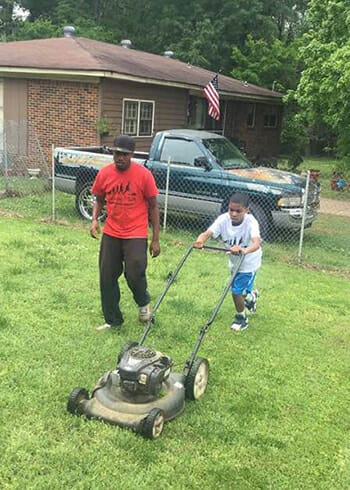
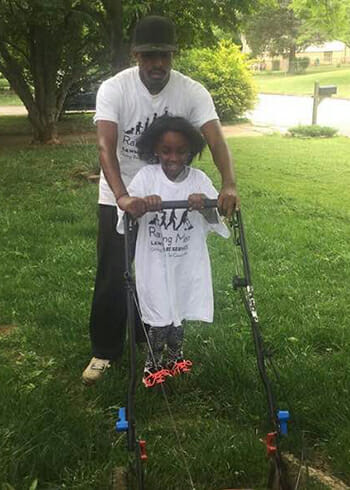
“I decided to start a nonprofit,” Smith says. He called it Raising Men Lawn Care Service, because he thought working for others could teach some valuable lessons. After mounting an intensive Facebook campaign to recruit volunteers, he soon had a troop of boys between the ages of 7 and 17 ready to pitch in.
One year later, the nonprofit has a total of 45 young volunteers – and five of them are girls. “The young ladies that we have in the program work just as hard as the boys,” Smith says. “When some of the girls first came out, a few of the boys were shocked to see them but they showed the boys that they can do it as well!”
Each day, Smith assembles a small group of kids and they mow about five or six lawns, averaging about 30 minutes per lawn. “The kids learn a lot of teamwork and leadership skills,” he says. “The older ones teach the younger ones and everyone understands that by working together they get the job done faster.”
Other, more intangible lessons – like the value of giving back to the community – have been there from day one. When the program’s first volunteer, a 12-year-old named Ethan, arrived to mow his first lawn, “the woman burst into tears.” says Smith. “She had no family and was just so grateful. Ethan had the biggest smile on his face and he told his mother that he wanted to keep on volunteering.”
To make sure everyone has fun, Smith created a clever reward system based on karate traditions. “When they start mowing, everyone receives a white t-shirt,” he says. “Then they move on to orange, green, and blue, and when they’ve done 50 lawns, they get a black shirt.”
Raising Men offers its services to financially strapped homeowners, who are in need of a little extra help. “Whether they’re a single mother, veteran, or elderly person, they are so grateful, and they know their property is being taken care of,” Smith says. “That frees them up to use their limited resources for medicine or child care or groceries.
Meanwhile Smith, a Bermudan native who recently received a degree in computer sciences, is learning, too. “Each kid has a different personality and each homeowner has different needs and concerns,” he says. “I’ve had to adjust the way I deal with everybody and keep everything running smoothly.” So taken is he with the idea of serving others, Smith has also decided to pursue a graduate degree in social work.
And he continues to dream bigger dreams for the effort. “An 11-year-old from Ohio contacted me after he saw a video about my program,” he says. “Then a 7-year-old in Kansas did, too. They’ve been inspired to duplicate the program in their towns.” He challenged each to mow a certain amount of lawns by the end of the summer.
“I promised that if they did, I would fly out and give them a brand new lawn mower,” Smith says, noting that in addition to donated mowers from Briggs and Stratton, Inc., he has gotten commitments from two individuals to sponsor each flight.
As the idea spreads, Smith says he envisions Raising Men Lawn Care Service establishing a presence in all 50 states. And, he adds, there could be spinoffs: maybe car repair, or plumbing services.
“Lots of people need help and lots of kids need trade skills,” he says. Observing that helping out and giving back are the Bermudan way, Smith adds, “my parents love that I came up with this stuff and they are very proud of me.”
To support Raising Men Lawn Care Service, visit their GoFundMe page.
Kendra Franklin
After 19 years as a Houston Independent School District math teacher, Kendra Franklin retired. She didn’t, however, give up teaching young people the math skills they need to know.
Instead, she focused on volunteering her time with young people in the Houston community who struggle with basic skills – ones who will benefit from one-on-one instruction. Franklin found her new teaching home in Almighty Ministries, Inc.
“I felt like I could help and encourage these children,” she said. “Many of them don’t have a good understanding of fractions or their multiplication tables. They simply lack many of fundamental skills they’ll need to be successful in life.”
Almighty Ministries opened in 1991 as an effort to reach at-risk youth living in a Southwest Houston apartment complex. Today, it serves young people throughout the community, giving them the skills they’ll need to be responsible, productive adults. Franklin works in its Back to Basics program. Here, youths who can’t afford academic help receive one-on-one tutoring, homework assistance, and standardized test preparation.
Franklin first volunteered on Jan. 13, 2013. She’s there every Tuesday for one-to-two hours, totaling 79 hours to-date. During these individual sessions, she focuses on math’s bedrock algorithms and concepts.
To date, she’s tutored between 20-25 students. She credits her straight-forward teaching style with helping students grasp difficult mathematical concepts. To help students understand, she relates math to something children can identify with from everyday life. She uses her background in special education to break down each math element into simple steps and explain why algorithms and rules work as they do.
It’s rewarding, she said, to see the light bulb flicker in a child’s mind when he or she finally grasps a concept that’s been elusive. Many times, students have returned to tell her, proudly, how they performed on a school exam or the state standardized test.
Franklin said she plans to continue her volunteer service because many children need that extra push, and mastering math skills improves their self-esteem.
“The children need help to be successful,” she said. “If I can give them that foundation, then, they can be successful in the future. And, I get the fulfillment of being part of their future, as well.”
If you’re interested in finding opportunities to engage in your community through service, please check out All for Good for projects near you!