Ian McKeirnan
The results of natural disasters, while shocking, should come as no surprise. Families are usually left devastated while communities are destroyed.
The Nepal Earthquake of 2015 was no different. Nearly 9,000 people died, while 3.5 million homes were destroyed. While the task to restore Nepal is a difficult one, it is the community of contributions that is making the difference.
Joining that community for change is Ian McKeirnan. At just 12 years old, Ian embodies the spirit of volunteerism. After realizing the earthquake’s devastation, he decided to help.
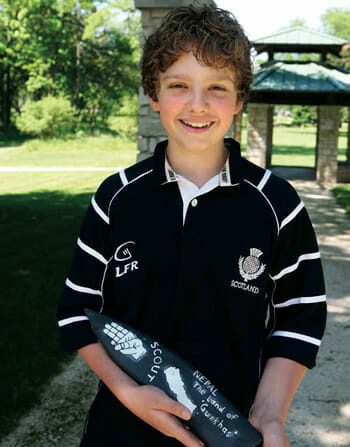 Ian holding a keepsake from Nepal
Ian initially got involved through a company owned by a distant relative called Venture Medical, a medical training company out of Scotland. Venture Medical allowed him not only to travel to Nepal, but learn first aid and disaster management skills, which he later used to train adult scout leaders and teachers.
“He’s better trained than probably 98% of adults,” said Ian’s father, Edwin McKeirnan. “If there were no nurse or paramedic, he would definitely be the right person to help. It makes me very proud.”
Beyond his physical help and training, Ian also provided care kits and medical equipment to all 75 districts in Nepal. Through fund raising and donations, Ian was able to create 100 EMT bags, to go along with an AED, totaling over $10,000.
“It really feels good to help,” says Ian. “To know that this is happening. And that I’m actually doing something about it, it makes me feel good.”
While a natural disaster is just that, a complete disaster, leaving nothing but devastation in its path, there is one positive that comes as a result. That positive is shown with the response of the people. Such disasters breed strength of character, and no one exemplifies that better than Ian.
Gary Nakamura
Marketing professional Gary Nakamura knows how to put his career skills into good volunteer service. After advocating for the elderly in Texas for nearly a decade, he pivoted to ensure future generations have a better understanding of how some of those same older adults sacrificed during WWII.
In 2008, he assumed the role as the first vice president of the Japanese American Citizens League (JACL) Houston chapter. The JACL is the oldest and largest Asian American civil rights organization in the United States. In 2011, he was elected chapter president where he took on responsibility for increasing awareness throughout Texas of Japanese-American internment during WWII, the heroism of the Japanese American WWII veterans, and the importance of protecting all Americans’ civil rights.
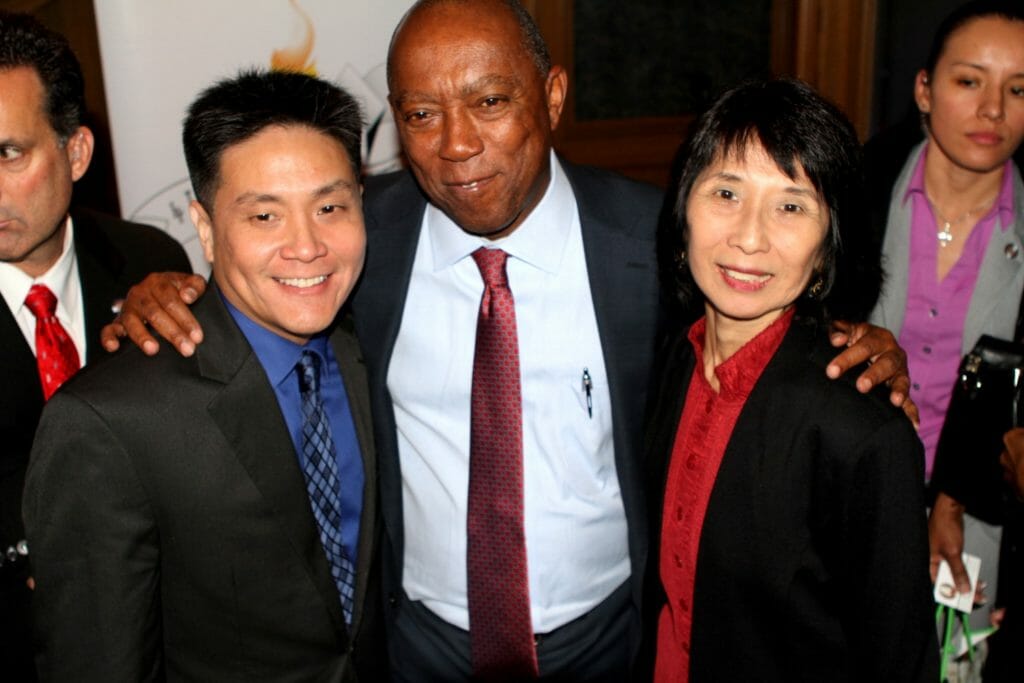
from left to right:Gary Nakamura, Houston Mayor Sylvester Turner, Linda Toyota
“I’ve been hands-on in terms of helping to engage membership and trying to encourage them to be more involved in the community and in issues that are important to all Asian-Americans,” he said. “How do we reach the younger generation?”
To answer that question, Nakamura has been integral in leading the chapter through several initiatives that educate the public about Japanese-Americans’ contributions.
In 2009, he spearheaded advocacy efforts in Texas and played an important role in the national initiative to secure the Congressional Gold Medal for the Japanese-American WWII veterans, including his own father, who was one of the first volunteers – despite their internment – for the U.S. Army’s Military Intelligence Service.
In addition to advocating for the Texas Japanese-American community, Nakamura reached across ethnic lines and forged strong relationships with other Asian-American communities, African Americans, Latinos, and Jewish organizations, as well. In 2015, he co-founded a coalition of Asian-American advocacy organizations in Houston.
Although civil rights have progressed greatly in recent decades, it’s important to ensure all people know about and remember past events, he said.
“It’s critically important for Americans to understand what happened not just to Japanese Americans, but what happens when minority groups are treated unfairly or are oppressed,” he said. “Unless people are aware of how fragile civil rights and the rights of all Americans are, we are bound to repeat those same mistakes in the future.”
Shannon Goldwater
Shannon Goldwater’s triplets were born four months prematurely. Feeding them quickly became the biggest challenge. All of her babies cried, gagged, vomited and often turned blue during feeding and eventually required feeding tubes to survive. Through this challenge, Goldwater founded Feeding Matters in 2006 to serve an underserved population of infants and young children. The mission is to bring pediatric feeding disorders to the forefront so infants and children are identified early, families’ voices are heard and medical professionals are equipped to deliver collaborative care. Feeding Matters is elevating the medical understanding of pediatric feeding disorders so research, identification, collaborative treatment, and insurance coverage are available to support children and their families.
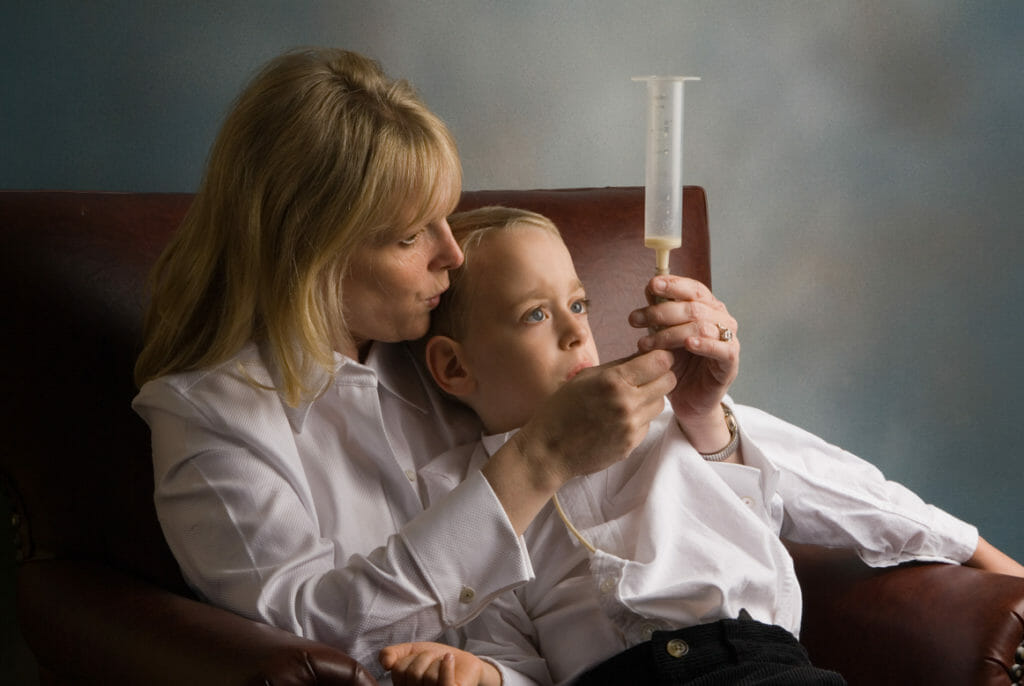 Goldwater has brought infant feeding struggles to the forefront.
Feeding Matters is furthering advancements in the evaluation and treatment of children with pediatric feeding disorders through a consortium of thought leadership. Many infants and children battle with the fundamentals of feeding — they are not just picky eaters. Feeding Matters is pioneering change for infants by increasing awareness and understanding of the impact of feeding disorders on a child’s social, emotional, developmental and medical well-being.
They have achieved great success over the years. Feeding Matters is the only organization of its kind, providing services to 60,000 individuals in 2015 alone and has grown into a $1 million/year operational budget. Education and awareness around pediatric feeding disorders is completely unique and their efforts are equally impactful and exceptional. They have come to include exhibitor booths at national conferences and community events, an interactive website with comprehensive resources and educational information, online forum for medical professionals and parents and connecting with the community through the use of social media.
At an incredibly stressful time in her life, Goldwater took it upon herself to create a system of support to help other families. Through her immense efforts at Feeding Matters, families are now better equipped to handle the complex issues of pediatric feeding disorders. Goldwater is creating a voice for the children who are suffering and their families.
Denise Treadwell and Courtney Goss
In May of 2015, after weeks of heavy rainfall, the Texas Hill Country — known to meteorologists as “Flash Flood Alley” — suffered a horrific flood that displaced hundreds in a matter of hours. The next morning in Wimberley, a small town of less than 2,600, Courtney Goss walked into her church to see if there was anything she could do.
“A man came in after me,” Goss, 29, recalls. “I’d always known him to be very strong, very professional. And all of sudden, he just burst into tears because he needed help. It was a very humbling experience for me.”
Denise Treadwell, 52, and her family were out of town the night the floods came. “We heard about it on the news and immediately came back to help our community,” she says. “Because I had experience managing nonprofits, I was asked to attend a meeting to put together a relief effort. The town structure was not set up for the immense organization and logistics that were needed.”
Within 24 hours, Courtney and Denise met and started volunteering together. “It was a great partnership right away,” says Treadwell. “We had different strengths and could divide and conquer.” She wound up working the volunteer reception center, setting up a data base and phone bank to match volunteers with those in need. Goss dealt with the volunteers and survivors who came to the church, arranging food distribution and walking everybody through the process to get help.
Together, the duo — putting in ten hour days for weeks on end — helped more than 400 people who were suddenly homeless. And, they managed the thousands of volunteers who showed up and distributed thousands of pounds of donated items.
“Courtney is just amazing at being with someone when they are in distress and giving them hope,” says Treadwell. “She remembers every name of every homeowner, and their children’s, and she remembers where they all ended up.”
Goss returns the compliments, saying, “without Denise’s grace under pressure, none of this would have been possible. I was certain she must have had previous experience in disaster relief.”
She didn’t — but she does now. In fact, the processes that Treadwell and Goss implemented in the aftermath of the flooding have been adopted by member organizations of the Texas chapter of Voluntary Organizations Active in Disasters (VOAD. Both women, who were stay-at-home moms at the time of the disaster, have now committed to joining Texas VOAD as full-time employees.
“We came to see that every disaster is different and every community is different,” says Treadwell, “So, it doesn’t really matter how experienced you are in disaster relief or what you’ve done before. Whether your skill is communication or organization or making lunches, there’s so much that goes into response and rebuilding. There’s a role for everyone.”
After all, Goss adds, when she filled out a form to register as a volunteer, she paused at a line that asked the applicant to name his or her skills. “All I could think of was ‘I don’t have any,’” she says, with a laugh. “But I learned that that’s not really true. Everyone can find a way to help.”
To discover more about VOADs, visit http://www.nvoad.org.
Laura Cowling
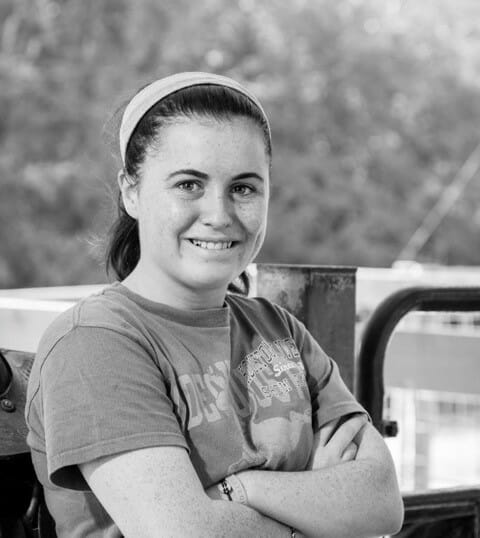
Laura Cowling has climbed a lot of symbolic mountains in her 21 years. Then again, being diagnosed with a brain tumor at the age of 11 certainly set the stage for uphill battles.
In July, to celebrate being cancer free for 10 years, she climbed a real mountain in Colorado, something she never thought she’d do.
 Laura Cowling
“10 years ago I couldn’t walk to the end of my street,” said the Houston native. “Here I am hiking up a mountain. It was a really good day.” Following surgery in 2006, Cowling spent five years in occupational and physical therapy to deal with severe weakness on her left side, the loss of peripheral vision and some cognitive challenges, changes she is still living with.
Forever thankful for her recovery, Cowling is committed to giving back to kids facing the same battle. Her own life was changed by Camp Periwinkle, a summer camp for children with cancer and their siblings. Now, she is a camp counselor working with eight year old girls, just one of her volunteer roles with the Houston-based Periwinkle Foundation.
“Camp Periwinkle was life changing for me,” she said. A year after her diagnosis, Cowling and her sister attended the camp, a week-long barrier free summer camp geared to providing a safe, emotionally healing and fantastic adventure for kids dealing with all kinds of cancer.
“Being able to go to camp and be with kids going through the same thing is amazing. You feel like you’re not alone,” she said. “I remember what a great example my counselor set for us, and I want to be that person for these girls. We do all kinds of fun things, like rock climbing and canoeing, and it gives them a chance to just be a kid, not only a kid with cancer. For some kids this might be their last summer, but the focus is on giving them the best time ever. ”
Another part of her personal Periwinkle experience was making art that was featured in the foundation’s Making a Mark exhibit, open to children from treatment centers all over the world. First displayed at Texas Children’s Hospital, the annual show goes on the road to airports and other venues around the country, where The Periwinkle Foundation’s Postcards From the Road program allows people who view the exhibit to write a postcard to the young artists. “I got postcards from people and it was so exciting to me,” she recalled. Now, she volunteers her time to help make this annual exhibit happen.
Her personal journey has inspired Cowling to go into medicine and work with children. She’s currently majoring in Spanish with a minor in Medicine in Society at the University of Houston. “I’m not exactly sure what path I will take, but I know this is my passion,” she said. “Ultimately I feel that if you can find something you’re passionate about, that can help your community, it’s the best thing you can do in life.”
Cowling’s mountain climbing days have only just begun.
DPOL -Carry the Future
It was a three-year-old boy named Alan Kurdi that changed it all. In an attempt to flee Syria amid civil unrest, Alan and his family sought a better, much safer life. Unfortunately that life never came.
While the Kurdi family traveled in search of refuge, along that journey Alan drowned. His lifeless body was found on the beach off the Mediterranean sea. Though his death undoubtedly raised numerous questions, it also raised one big answer – the ‘Carry the Future’ movement.
News of Alan’s death quickly spread around the world, eventually reaching Cristal Logothetis in California. Shocked and saddened by what she saw, she decided to do something. On September 15, 2015, ‘Carry the Future’ was born.
‘Carry the Future’ is a 100% volunteer ran organization that is focused on providing baby carriers for refugees all over the world. Traveling hundreds of miles by foot, baby carriers become imperative to the livelihood of children.
“Within two weeks Cristal’s campaign made national headline news,” said Pia Finkell, Carry the Future’s Public Relations Coordinator. “Her online fundraiser collected over 700% of her funding goal, and within 30 days she raised $42,000 and received over 3,000 donated baby carriers.”
‘Carry the Future’ was an immediate success. Now, supported by over 5,000 volunteers in four different continents, their success continues to grow.
Along with wearable baby carriers, they also help with other resources.
“Carry the Future also provides baby boxes, a safe place for a baby to sleep, filled with essential survival items for newborn babies and mothers,” added Finkell.
The journey to refuge is daunting, tiresome. Many of these people have no clue what the next day may bring. In situations like these, plagued by uncertainty and fear, it is the people at ‘Carry The Future’ that give hope for a better tomorrow.
Marie-Claude Thompson
For 35 years Marie-Claude Thompson has been volunteering to help low-income inner-city Boston children and teens escape poverty. In 1980 she co-founded Earthen Vessels (EV). EV empowers Boston’s youth with the skills and confidence needed to realize their potential. The team at EV, led by Thompson and her husband, Brian, created a community of support with one on one multi-year tutoring and mentoring matches with top college volunteers, professional family and school advocacy and a life-changing summer camp experience in the Green Mountains of Vermont.
In 1985, Thompson started EV partnered with the Harvard Catholic Center to recruit, train, and mobilize university students to tutor and mentor EVkids during the school year. With support, EV has since added partnerships at Boston College and Tufts University, expanded to two Afterschool sites in Dorchester, and provides additional family and school advocacy.
EVkids experience community life, helping with the cooking and dishes, learning conflict resolution techniques and mindfulness towards others and nature, and starting every day with ten minutes of silent meditation. Regular hikes, daily swimming, and workshops and games keep everyone engaged, challenged, and having fun.
Thompson’s vision and dedication over 35 years has built up an organization dedicated to helping the disadvantaged children and teens succeed and to mobilize dedicated student volunteers.
Thompson’s organization is able to help youth supersede poverty and access college. She did this by pairing children no one expected to go to college with college student volunteers whose campuses otherwise had little contact with their neighboring communities. By bridging this gap between the communities, Thompson helped create a mutually beneficial experience for all involved.
Inspired to act in the Catholic tradition of social justice, Thompson took the name from scripture. “…we hold this treasure in earthen vessels, that the surpassing power may be of God and not from us,” 2 Corinthians 4. Her faith has helped guide her to empower a population that some see as destitute or hopeless, resulting in a transformation in the lives of hundreds of Boston youth.
Thompson sees possibility in children and helps each to see their own worth. To help the children in your community, check out All for Good for service opportunities near you.
Judy Nyquist
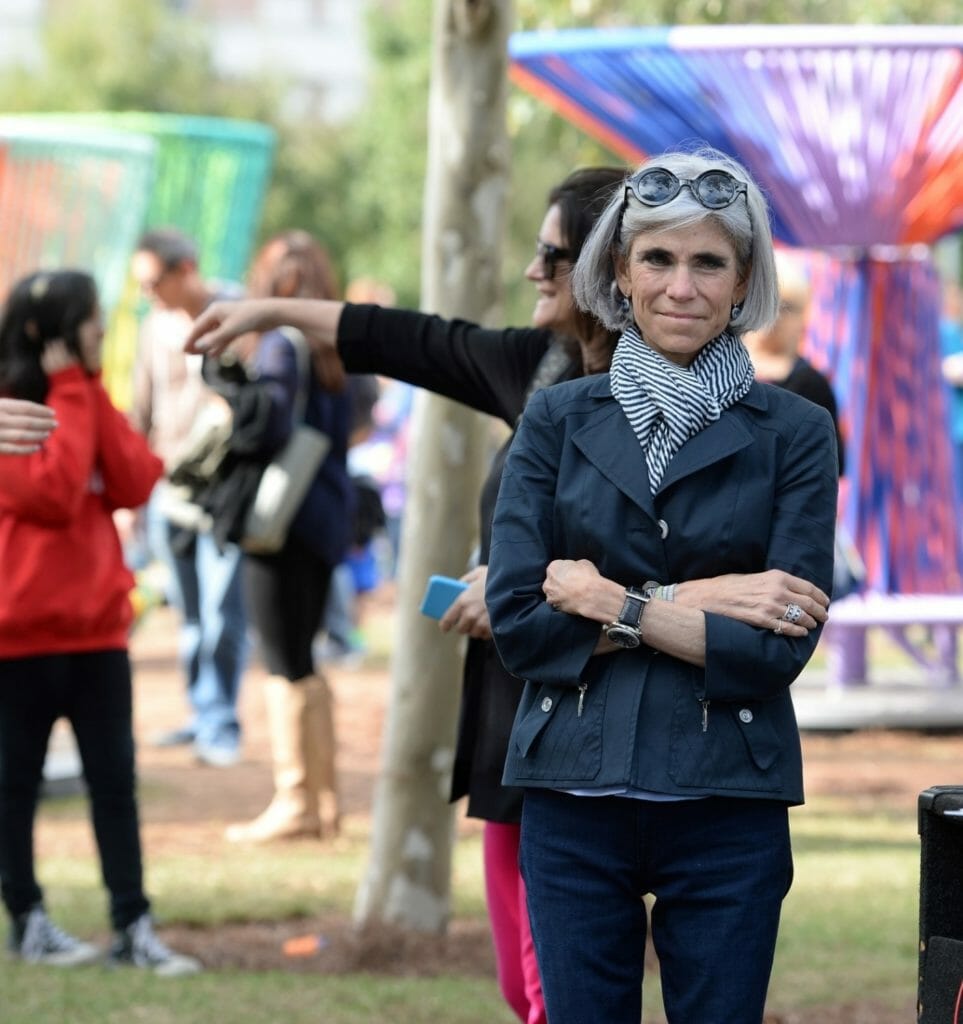
When it comes to art, Judy Nyquist believes everyone should have the unfettered opportunity to enjoy it and learn from it.
And, for the past 15 years, she’s volunteered extensively in the arts community in Houston to make sure that vision is a reality. It’s her intrinsic love of art and how the public relates to it and drives her daily activities.
“I have a huge belief that art goes across all barriers as a common denominator,” said Nyquist, who is a trained art historian. “It can be a place where open and accessible dialogue and participation can occur with respect.”
 Judy Nyquist
As a constant, dedicated volunteer, she serves many organizations, including the Houston Arts Alliance, the Glassell School Core and Executive Committees, the Buffalo Bayou Partnership, Rice University Art Committee, and Discovery Green Conservancy. It’s through the Conservancy that she’s creating her latest significant space.
Through this avenue, she’s largely responsible for bringing public arts projects to Houston’s green spaces by creating the Public Art Program. As a volunteer, she raises money, puts out calls for artists who might be interested in contributing work, and coordinates the process of getting the exhibits put together appropriately.
Judging the impact of public art can sometimes be difficult, she said, because it’s largely judged by how many people flock to the exhibits or how many take photos. But, social media now offers a tangible way to measure how art affects others. Based on first-hand views and the number of Instagram or Twitter posts, Nyquist said, more than 2.5 million visitors have enjoyed the Public Art Program.
Being involved in bringing art to large numbers of both the young and old generations is highly satisfying, she said.
“It’s incredibly rewarding and fulfilling to see a project come to fruition,” she said. “People benefit from it, and I have something to do with it. It’s a privilege to do that.”
If you’re interested in finding opportunities to engage in your community through service, please check out All for Good for projects near you!
Olivia Russo-Hood
When a massive flood displaced 8-year-old Olivia Russo-Hood and her family from their home outside Atlanta in 2009, she experienced first-hand nature’s devastation. But, immediately following that, she learned of an even more powerful force: the kindness of neighbors.
“We had to leave our house right away and we weren’t able to bring many things with us,” recalls Olivia, now 14 and a current member of generationOn’s Youth Advisory Council. “Our neighbors came and helped my mom sort through what we could save.”
The experience was overwhelming for Olivia and her brother, Vincent, who was just 5 years old. “It hit me really hard and came at just the right time when I was starting to think about what I wanted to do as I grew up and how I could be a good adult.”
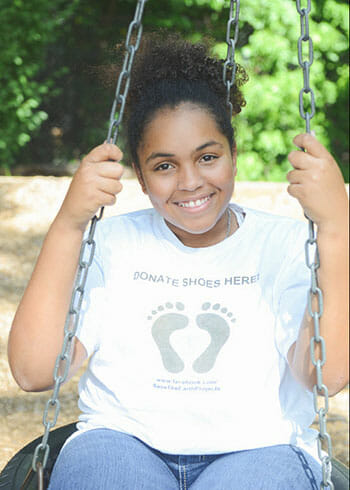
Olivia decided to give back — and she did so with a vengeance, forming a loosely knit group of volunteer efforts that she called Save the Earth Projects, or S.T.E.P., when she was 10. Over the years, projects have ranged from building vegetables gardens, to raising awareness of childhood obesity, to collecting and distributing some 22,000 pairs of gently used shoes to those in need around the world.
“If I hadn’t received help, I would still feel broken down inside,” she says. “We were lucky, but I couldn’t help noticing that hundreds of others were displaced and that not everyone was able to get the help that we did. I felt like I needed to give something back.”
The organization has three missions: living responsibly locally, raising awareness nationally, and giving globally. “Our earth is our home,” Olivia says. “It doesn’t matter where — people are in need all over the world. That’s why I chose the name. It means that together we can make a difference — one ‘step’ at a time.”
Olivia’s idea has become a family affair, with mom Denise — a professional event producer — handling administrative and social media tasks and brother Vincent creating an off-shoot of S.T.E.P. Meanwhile, Olivia maintains an active speaking regimen to encourage others to find their own ways of giving back to the community.
“Adults could become paralyzed by the experience of losing everything, but Olivia saw the good of humanity and people coming to aid,” says Denise. “She smells the roses in life.” It’s been that way for a long time, her mom notes that even in third grade Olivia was helping birds survive and thrive in their natural habitats by clearing brush and land.
The intent of S.T.E.P. is for everyone to create their own projects and use the network to publicize them. But Olivia still dreams up projects, too. The shoe collection effort, for example, came about after she discovered that 300 million pairs of shoes wind up in American landfills each year — while, of course, millions of the world’s poor go shoeless, making them susceptible to parasites that can enter the bloodstream through cuts in their feet. Her shoe drives have helped benefit those in need worldwide and they have also raised money for local soccer clubs, science clubs and other nonprofit organizations like the YMCA.
“If you see someone on the side of the road, you have a choice,” says Olivia. “You can continue walking and pass them by or you can stop to help. People went out of their way to help us when we needed it and that felt really good. It also feels really good for me now to be able to do the same.”
If Olivia’s story inspires you, visit savetheearthprojects.com for direction on bringing your own volunteer effort to fruition or to join one of hers.
Amin Tomeh
We cannot understand someone we don’t know.
That simple truth galvanized Amin Tomeh into action. As an American Muslim, born in Damascus, Syria and living in the U.S. since 1986, Tomeh saw a critical need for bridges between Muslims and their community. In 2004, the now 45-year-old civil engineer joined the Islamic Speakers Bureau of Atlanta (ISB), first as a trained speaker, and then expanding his volunteer roll to include training others and serving on the non-profit’s board.
“Eliminating stereotypes through education really appealed to me,” he said. “I liked that this wasn’t a religious organization interested in proselytizing. We are a group of certified speakers eager to go into the community to foster meaningful conversations, especially with young people.” His intent, along with the organization’s, is to become the Islamic source for faith and civic collaboration promoting (community/civility/religious) understanding and inclusion. He considers the ISB’s work as a constructive response to the Islamophobia we see around us. The idea behind the ISB is bringing a “real life Muslim” into the classrooms, churches, civic organization, etc. along with cultural artifacts like traditional dress and the Quran. “We are open to all questions, nothing is out of bounds,” he said.
In addition to the ISB’s work with the wider community, the organization developed a series of workshops targeted towards Muslim youth and their parents to deal with bullying and other issues they might be facing in schools and universities. These workshops are titled “Meaningful Conversations” and “Straight Talk”. As one of the group’s chief facilitators, Tomeh recently gave a Straight Talk workshop to almost 100 middle and high school Muslim students. It was interesting to learn about what these students are facing day in and day out and how they are dealing with that. The workshop empowers them with tools to use such as how to defuse bullying that can happen to young Muslim students. “During one workshop I asked by a show of hands for any student who had been called a terrorist. Ninety percent of the Muslim kids raised their hands. That is why our mission is so important.”
There are an estimated 125,000 Muslims in Georgia. “There are an estimated 1.6 billion Muslims from all over the world. We are American Muslims; we are Atlanta Muslims. Rather than learning about Islam and Muslims from a Google search, we are available to communicate and be involved in our local communities. We personalize the experience. No questions are off the table”
“Bridges go both ways,” Tomeh said. “Our goal is to always extend good will. People can sometimes feel under attack. There is a natural tendency to circle the wagons or to becoming more reactive than contemplative. In these programs we talk through scenarios in order to foster long-term sustainable bonds with people of other faith, and no faith, traditions.” The ISB is also very involved in our communities and such involvement includes participating in the Atlanta Food Bank Annual Hunger Walk where the ISB is an umbrella organization brining Atlanta area Muslims to the Walk. In addition, the ISB has been involved in the Fayette County Summer Lunch Program for the past 8 years where the ISB along with other faith based organization prepares and delivers lunches to the under privileged children of Fayette County.
At a recent presentation at the University of West Georgia, Tomeh asked the audience to share one thing that they learned from the presentation. He always hears a common response that “it was surprising how closely linked, and how similar the Muslim faith is to Christianity and Judaism.”
Tomeh concluded that “Once we focus on the values we share, the way we are related, stereotypes tend to lose their power.”