Elissa Davey
Today’s Daily Point of Light Award winner, Elissa Davey, was recognized by L’Oréal Paris and Points of Light as a 2015 Women of Worth honoree for her extraordinary efforts to ensure dignified burials for abandoned and unidentified children. Nominate an inspiring woman who is creating change in her community to be one of this year’s Women of Worth.
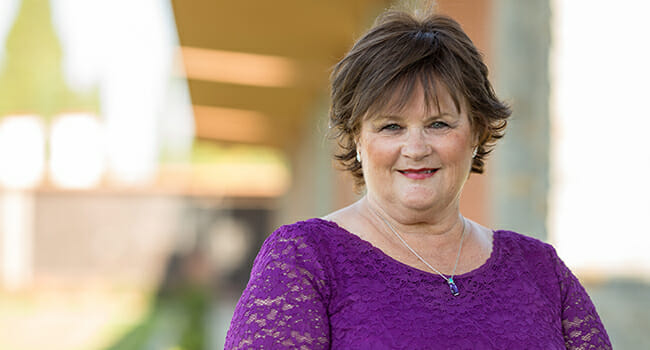 Elissa Davey, founder of Garden of Innocence.
“I wanted to start a place for children to find the rest, love and dignity they deserve. At Garden of Innocence, we have the opportunity to come into their lives and be their family – to show them love even if we never knew them in life.”
Elissa Davey provides personalized, dignified burials for abandoned and unidentified children.
While there’s no clear number, many abandoned children are buried in unmarked or mass graves every year. Davey established Garden of Innocence to provide abandoned children, up to age 8, with a respectful, heartfelt ceremony and burial. With the volunteers she has trained nationwide, she works with local coroners offices to claim the bodies of abandoned and unidentified children and partners with cemeteries to give each child a dignified goodbye.
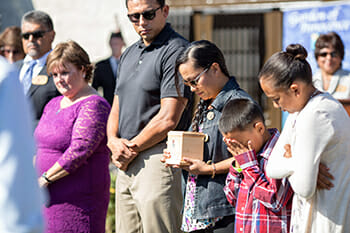
Through Garden of Innocence, Davey and her volunteers have provided funeral services for 307 children in the past 18 years. Currently, 160 children have been laid to rest at the first Garden. Each child is escorted to the Garden by the Knights of Columbus 4th Degree Color Corp as well as local law enforcement and members of the Boy Scouts. Each child is given a new name and a full memorial service which includes a poem written especially for that child. In addition, each child is buried in a handmade urn or casket, made by the Boy Scouts as their Eagle Scout project or by woodworkers from across America. Included is a handmade blanket and a Beanie Baby toy. Each Garden runs off the same operations manual but is staffed and controlled by an independent set of volunteers from the communities where the Garden is located. Garden of Innocence currently has 11 gardens. Each Garden needs a minimum of 16 local residents dedicated to providing dignified burials for abandoned children from their area. The garden works to find a cemetery that will donate space with room for at least 50 children and area to expand.
Davey believes Garden of Innocence is innovative because it is one of the only organization dedicated to providing memorial services to abandoned and unidentified children in an area set aside especially for them. In addition to giving these children a proper goodbye, many community members who have lost children attend the ceremonies and find closure to the loss of their own child.
Davey developed a passion for this cause when she read about an unidentified baby boy who was found in a trash can in 1999. At that point, she decided that every child who entered the world deserved the dignity of being recognized and remembered, to give a child that had so few moments one final moment of love and dignity.
Davey says, “If no one grieves, no one will remember.”
Enrique Reade, Garden of Innocence general manager and owner of Reade & Son Funeral Home in Fresno, California, says “With Elissa, everything is about those babies. She’s like an army tank – nothing can get in her way or stop her. She’s like an angel – one of God’s disciples. She goes out of her way to talk to someone about the gardens because she feels that once she does, they’re going to want to help. She travels at the drop of a hat to talk about the gardens, and she does so much of this work herself. No one stops her. That’s why I give all my time to her.”
If you know a woman who works to create lasting and significant change in her community, nominate her to be one of the 2016 Women of Worth.
Catherine Curry Williams
Today’s Daily Point of Light Award winner, Catherine Curry-Williams, was recognized by L’Oréal Paris and Points of Light as a 2015 Women of Worth honoree for her extraordinary efforts creating essential inclusive playgrounds and programs, uniting children of ALL abilities. Nominate an inspiring woman who is creating change in her community to be one of this year’s Women of Worth.
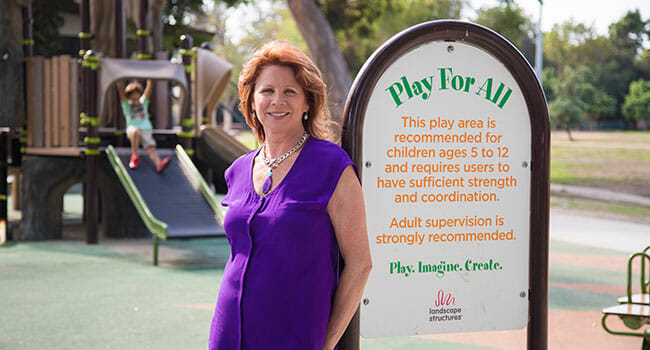 Catherine Curry-Williams, co-founder of Shane’s Inspiration.
“The passion of a mother who has lost her child can move mountains,” says Catherine Curry-Williams, who turned grief over the loss of a son into, not just one, but 60 fully accessible playgrounds worldwide. “We believe deeply in our hearts that play is the birthright of every child.”
In 1997, Curry-Williams and her husband, Scott Williams, were devastated when their son Shane was born with spinal muscular atrophy and died at just 2 weeks old. In addition to their grief, the prospect of raising a child with disabilities opened their eyes to the fact that there were no truly accessible playgrounds in the Los Angeles area. So the couple decided to create one as a tribute to Shane. With no experience in construction, playground design or fundraising, Curry-Williams says she “asked the right people for help and doors started to open.” Parents of children with disabilities described what they needed. They found a company to build the components. City officials rose to the need and dedicated land in popular Griffith Park. A man whom the Williams’ met on their honeymoon turned out to be a hospital CEO and fundraising expert. Her good friend, Tiffany Harris, was by her side from the beginning, co-founding this endeavor and helping drive the groundswell that would become a worldwide inclusion movement.
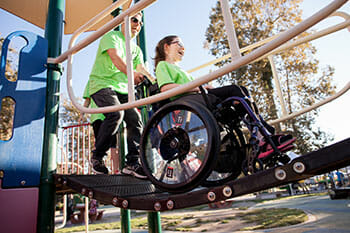
The finished park was such a success that families drove for up to two hours just to visit. Soon, requests for accessible playgrounds in other communities poured in, and Shane’s Inspiration, the nonprofit was born. Shane’s Inspiration provides project development and design services to communities around the world – whatever it takes to make these custom, sensory-rich playgrounds a reality and open to the public. Always evolving, Shane’s Inspiration has also developed education and family social inclusion programs that bring children of ALL abilities together at their playgrounds to teach compassion and acceptance for all children.
More than 35,000 children have been served through the social inclusion programs developed by Shane’s Inspiration, and hundreds of thousands have benefited from the playgrounds. The core vision is designing the playgrounds to be inclusive, so children of all abilities can play together on the same equipment. For parents like Nicte Mack of Santa Monica, this is crucial. Mack has two children with disabilities: one with spina bifida, who uses a wheelchair, and one with Cohen’s syndrome, who is able to walk but has developmental delays and coordination difficulties.
“Before, at public playgrounds, my daughter in the wheelchair had to stay down while I assisted the other one,” she says. “There was no way for them to play together. I gave up. I quit trying to take them to the playground.”
Mack was thrilled when Shane’s Inspiration playground opened in Griffith Park, and eagerly drove nearly half an hour to get there. “Since then, they’ve built accessible playgrounds only ten minutes away from my home,” says Mack. “It’s made a world of difference. They start playing and they forget about their disabilities.”
Curry-Williams says playground equipment manufacturers used to think putting a ramp at the entrance to a park was enough. “We went from playground to playground. There was accessibility, but no play-ability,” she says. “There certainly wasn’t side-by-side, interactive play.” She herself was surprised that parents hadn’t rallied in the past to demand inclusive playgrounds. She soon learned that families are already overwhelmed by advocating for their children’s medical and educational needs. “I was shocked,” she says. “I thought, gosh, we’re pioneers here? This is a critical, unmet need.”
Shane’s Inspiration playgrounds offer special swings that can support children who use wheelchairs that provide the back support they need. But the playgrounds provide play opportunities for a host of other children with disabilities as well. There are enclosed areas and sensory-rich sound, visual and tactile elements that are beneficial to children with Autism and other sensory processing disorders. There are activities designed to improve balance and muscle tone, a common need for children with Down syndrome and other disorders. “It’s actually great physical therapy,” says Curry-Williams. “There’s Braille, there’s music, there’s everything.” Best of all, Curry-Williams says the special features are “beautifully intertwined” with equipment that appeals to all children. “The playground is the first place children learn to negotiate with each other and work things out and they learn a lot.”
Curry-Williams is eager to continue expanding inclusive playgrounds to other communities and nations, rich and poor. Shane’s Inspiration playgrounds are now open across the United States, in Mexico, Ecuador, Russia and Israel and soon to be opening in South Africa and Australia.
Curry-Williams believes her son, despite having lived only two weeks, taught her to be more compassionate and showed her a way to help others. She still marvels at having gone from a young, grieving mother to being consulted as an “expert” in accessible design. “I was selfishly trying to heal my own pain, just putting one foot in front of the other and these families come to us like we are heroes. I think they are the real heroes.”
If you know a woman who works to create lasting and significant change in her community, nominate her to be one of the 2016 Women of Worth.
Teri Kelsall
Today’s Daily Point of Light Award winner, Teri Kelsall, was recognized by L’Oréal Paris and Points of Light as a 2015 Women of Worth honoree for her extraordinary efforts helping Veteran Entrepreneurs on their quest to become tomorrow’s high-impact business leaders. Nominate an inspiring woman who is creating change in her community to be one of this year’s Women of Worth.
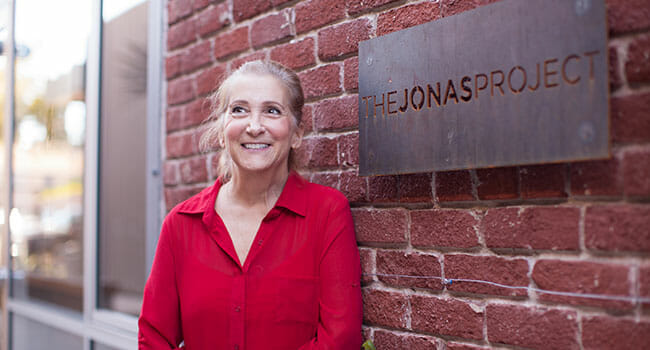 Teri Kelsall, co-founder of The Jonas Project.
Teri Kelsall understands the drive and potential in U.S. veterans. “The people we’ve had the opportunity of knowing are truly incredible individuals who work hard and want more for their families than just getting a paycheck,” says Kelsall, whose nonprofit organization helps veterans to start their own businesses. “They want to be responsible for building their futures and giving back to their country. They’re willing, they’re capable and we are going to give them that opportunity.”
Kelsall and her husband, John, created The Jonas Project two years ago, pooling her skills as a job training professional at a nonprofit organization and John’s expertise in chamber of commerce business networking. The project is named for the couple’s son, Jonas Kelsall, a Navy SEAL who was killed in action in Afghanistan in 2011.
The Jonas Project helps veterans with the drive to become entrepreneurs develop formal business plans, obtain advice from mentors and seek funding for start-up capital.
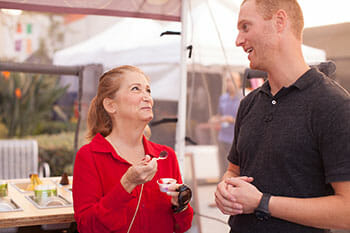 Teri Kelsall and Teague Savitch, who founded Assemblers with help from The Jonas Project.
William Osgood, who is himself a military veteran, small business owner and mentor at The Jonas Project, explains: “We take a proposed business model and turn it upside down. We’ve done everything from discussing the seven P’s: product, pricing, promotion, packaging, placement, etc., to developing a 3-year forecast, a market analysis and more. We ask tough questions. We’re looking at the whole business and how to make it eligible for financing and for contracts.” Osgood says he supports TJP because of its own solid business tenets. “The vetting of what I call the ‘vet-preneurs’ prior to eligibility to enter into the program is among the distinguishing characteristics that I looked at when I chose to become involved, first on the Board of Directors, and then as a mentor,” he says.
Start-up companies represent a range of ventures, including restaurants, construction firms, real estate companies, online publishing, and security firms. Would-be entrepreneurs must present detailed business plans and agree to monthly evaluations and intensive coaching.
Before his death, Jonas and his parents were already discussing how they could give back to the military community when he returned. The Kelsalls believe Jonas would be proud to see that in just two years, they’ve provided comprehensive assistance to 18 veteran-owned start-up companies across the country, four of which are now open for business.
“The Jonas Project was instrumental in setting me up with a law firm who helped me work through the details of my lease, get me set up to start hiring employees and bring on a partner. And they did it all pro bono,” said Teague Savitch, founder of Assemblers, a health food concept with customizable acai bowls. “The Jonas Project set me up for success because going through the loan application process forced me to get my financial projections and P&L statements together. I probably would not have gotten that on paper otherwise. I had to take a microscope to my business and look at what I was spending on everything. With all of that work done, I was able to get funding from a private entity. I had everything I needed for the loan,” says Teague.
Kelsall firmly believes many veterans have the skills and perseverance to run businesses. “They want a career, not just any job,” she says. At the same time, starting a new business is a long, complex process. Filling out the paperwork to incorporate a business, obtaining service-related disability certification and arranging financing can be daunting. It’s not uncommon for veterans to have trouble getting conventional bank loans, she says. Military paychecks can be delayed while bills pile up; divorce or other family issues can hurt credit, too. TJP is working to persuade Congress to pass the Credit Reporting Act for Military to increase protections for servicemen and women. In the meantime, although TJP does not invest equity in the new businesses, it does offer them low-interest loans.
“The need is definitely there,” says Kelsall. “America was built on the backs of small businesses. It’s not an easy road to travel, but we’re trying to remove every roadblock for the veterans.”
If you know a woman who works to create lasting and significant change in her community, nominate her to be one of the 2016 Women of Worth.
Melaney Smith
Today’s Daily Point of Light Award winner, Melaney Smith, was recognized by L’Oréal Paris and Points of Light as a 2015 Women of Worth honoree for her extraordinary efforts in promoting childhood literacy. Nominate an inspiring woman who is creating change in her community to be one of this year’s Women of Worth.
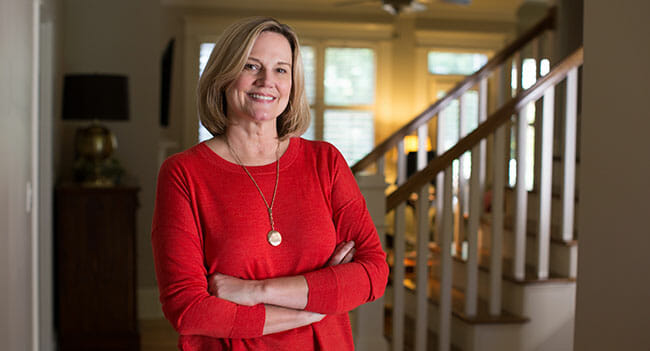 Melaney Smith, founder of Books for Keeps.
“I grew up reading books, which got me through some of the hardest times of my life, and to think of children having nothing to read, I couldn’t stand that,” says Melaney Smith, founder of Books for Keeps in Athens, Ga. “But once I came to understand the impact it has on their education, the path was clear from that point.”
Smith, an information security analyst, founded Books for Keeps, which gives away tens of thousands of brand-new books each year to schoolchildren across Georgia. Ever since a niece confided to Smith in 2009 that a student she was mentoring wasn’t looking forward to summer because she had no books at home, Smith wanted to do something to correct the void. “That year, we gave away 240 books,” says Smith, who couldn’t bear to single out just one child in the class without giving books to all the classmates. Today, the number of books given away by Books For Keeps is approaching 50,000 a year.
“What really clinched it for me was finding research about ‘summer slide,’” says Smith, warning that students who don’t read over summer break often regress in their studies. It can cause kids to be as many as two grade levels behind their peers by middle school.
Smith discovered many reasons why kids lack books to read at home. Poverty is one. At some Athens schools, 90 percent of the pupils qualify for free or reduced-price lunches. Some families don’t have a car to take their kids to the public library.
“There was one mother who was paying off her children’s past-due book fees by scraping together $5 every Friday,” said Smith, tearing up at the memory. “She was trying to reinstate her children’s privileges at the library. That was a parent who recognized the importance of reading.”
Books For Keeps is so intent on helping students avoid the “summer slide,” that it gives each child not just one, but 12 books. The program has expanded to 10 schools across the state. Once established at a school, BFK returns year after year. “I don’t ever want to pull out of a school,” says Smith. “We are working on a strategic plan to add 15 more schools,” she says.
Alps Road Elementary School librarian Naomi Craver says BFK is bringing more kids into the school’s library. “They get really excited, especially about books in a series,” she says. “Once they’ve read the one they got from Books For Keeps, they really want that next one.”
Books For Keeps actually asks schoolchildren in advance which book titles they want. Books are mostly new, and reflect the latest authors and subjects that kids seek. Students complete exit surveys that guide the following year’s selections. For some kids, having a choice is key. For example, Linda Renzulli’s 9-year-old daughter, who never liked to sit still and read, chose cookbooks. “She reads those and then tries the recipes with me,” said Renzulli. Books For Keeps also provided simple readers and picture books that appealed to Renzulli’s kindergartner. “Best of all, my daughter is willing to read them to him,” she says.
Renzulli, who teaches sociology at the University of Georgia, says she felt guilty at first to accept the free books. “We do purchase books, and we can afford to,” she says. But she realized that distributing books to the entire class removes any suggestion that summer reading is only for one income class or another. Inspired by Smith’s generosity, Renzulli now donates money to Books For Keeps.
Smith admits that at times, the effort required to get Books for Keeps off the ground was overwhelming. “Books are heavy,” she says. “A pallet weighs about a ton, and we probably process 30 or 40 tons a year.” Smith eventually hired an executive director to help with fundraising and coordination. Everyone else, including Smith, volunteers their time (and strong backs.)
Smith says she never thought herself capable of helping so many children. “I still can’t believe it,” she says. “I’m not a teacher; I don’t have children; I have no background in literacy or childhood education. I guess I was at the right place at the right time, the planets aligned, I don’t know. I see these kids face-to-face, year after year, and I see their teachers and the principals and the media specialists and I hear what a difference it’s making. How do you drop out of something like that? It’s become the passion of my life.”
If you know a woman who works to create lasting and significant change in her community, nominate her to be one of the 2016 Women of Worth.
Julie Ogden
 Julie Ogden, with her husband Curt and daughters Amy and Kat, and their dogs.
“My mother always took in strays, so I just assumed everyone did,” says Julie Ogden. “I couldn’t imagine not sharing my life with an animal; there was no great leap into actually taking in my own fosters.”
And when she jumped, Ogden, 57, did so in a big way.
She estimates that over the years, her family — husband Curt and their now-grown children, Amy and Kat — has taken more than 1,000 animals, most of them dogs, into their New Jersey home.
“Sometimes, we’ve had 10 or 15 animals in the house, including our own dogs,” says Ogden. “When most girls were playing with dolls, my four- and five-year-old were bottle-feeding puppies on their laps.”
Fostering can be hard, she says, but the alternative is worse. “We all cry when an animal leaves but we’re so happy to send it to its forever home.”
Even as no-kill shelters and rescue groups have proliferated, Ogden’s fight to save endangered dogs hasn’t slowed down.
“Every year, more than 3 million animals are still killed,” she says. “In my area of the country, we’re still only adopting out about 40 percent of shelter animals.”
The reasons that animals end up in shelters are myriad, Ogden says. They include the over-breeders (so-called puppy mills, as well as owners who do not spay or neuter their pets) and the overwhelmed (owners who are not prepared for the financial and time commitment of bringing an animal into the household).
Over the years, Ogden and her family have participated in group rescue efforts – once, joining about 100 volunteers who spent five days driving to and from Georgia to save more than 200 animals from a facility that was euthanizing an average of 35 puppies and kittens every week.
“We did it to raise attention, to make a statement,” she says. “We had signs on our cars and when we got there, one by one, we adopted the dogs and cats and emptied the shelter. Then we drove them back north and adopted them out.”
Amy participated in that effort, and Kat embarked on a similar trip the following year. “They were unusual ways to spend your summer vacation, to say the least,” says Ogden.
As the caravans illustrate, Ogden reminds everyone that she’s “just one of so many” who are part of grassroots efforts dedicated to rescuing animals. She works hard to change the way people think about animal welfare, raising awareness in the larger community to encourage more people to contribute to the cause.
One way this middle school teacher achieves that is by involving her students. Along with tech teacher Fred Matzan, Ogden advises the Woodcliff Animal Rescue Engineers (WCare) Club, encouraging kids to create videos about pets that need adoption and post them on YouTube. Students at the school have also organized fundraisers and participated in letter-writing campaigns advocating for animal welfare.
“We even had one parent volunteer as a foster themselves, and the family wound up keeping the dog!” Ogden says.
She is also active in organizing the annual Dogfest, now in its 8th year. The festival, which last year drew about 5,000 people, is alive with food and music and showcases local animal adoption groups and their charming charges. In this celebration of all things dog, families bring their pets and enter them into costume and talent competitions — and perhaps walk away with one more dog than they came with.
“There are so many ways to help with the heartbreaking problem of abused, neglected, and left-to-die animals,” Ogden says. Fostering and adoption are most-needed ways for people to help, she adds, but there are many ways to get involved as a volunteer. To get started, visit www.petfinder.com to identify local rescue groups or search for local volunteer opportunities at www.allforgood.org.
Morgan Guess
Children bullying is a real issue that plagues many students all across the country. Though one may not see it or be subjected to it themselves, doesn’t mean it does not exist. While there are those people who choose to ignore bullying, or blame it on just childish behavior, Morgan Guess chose to tackle the issue head on.
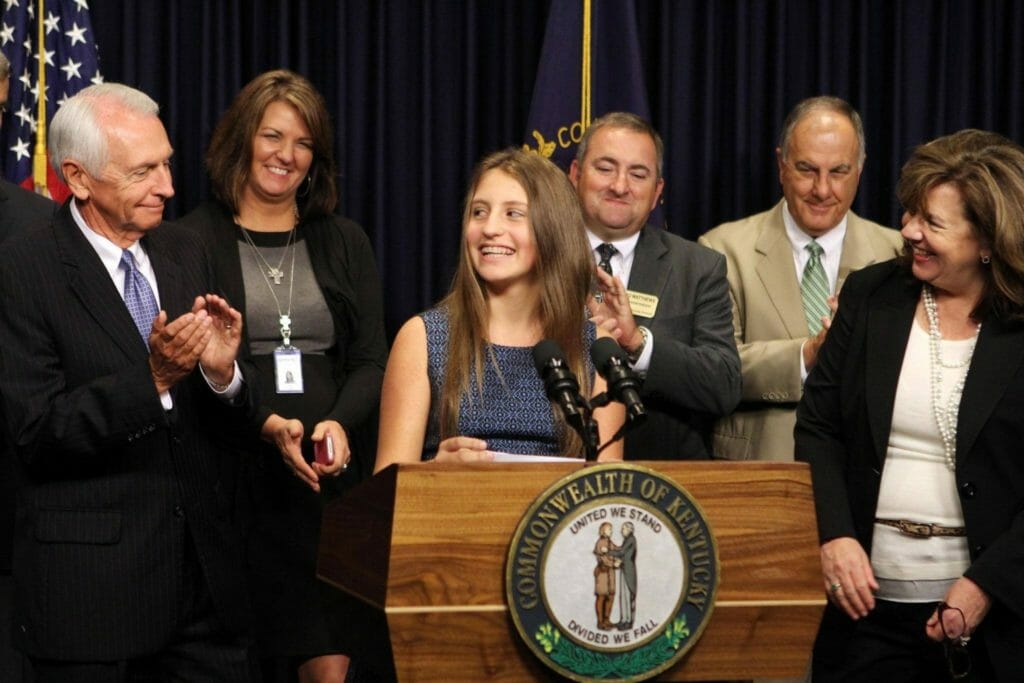 Morgan, center, speaking at Governor Beshear’s press conference where he appointed her to the Kentucky Youth Bullying Prevention Task Force.
 At just eight years old, Morgan was a victim of bullying. Too afraid to tell anyone, the bullying persisted to the point Morgan became physically ill. After experiencing stomach spasms and panic attacks, her pediatrician diagnosed her with clinical depression and prescribed her anti-depressants. This type of stress and anxiety from your average third grader is unheard of. Determined to turn from victim to victor, Morgan, with the help of her mother, created the Guess Anti-Bullying Foundation.
“So many people are not willing to stand up to hate in this world,” said Susan Guess, Morgan’s mother. “So many adults turn their heads to cruelty, while an 8 year old girl shows us that one person can make a difference.”
With Kentucky leading the nation in teen suicide attempts, the efforts of the Guess Anti-Bullying Foundation is much needed. By providing education and resources throughout the community, Morgan is hoping to change behaviors and attitudes ultimately creating a kinder culture in Kentucky.
Since its inception over four years ago, the Guess Anti-Bullying Foundation has been a cornerstone for change in The Bluegrass State. Whether it’s fund-raising efforts totaling nearly $75,000, or guest speakers reaching the ears of over 25,000 students, the Foundation has truly been inspiring.
Kentucky’s former Governor, Steve Beshear, awarded Morgan the Kentucky Youth Volunteer Service Award, and in May she was named one of America’s Top 10 Youth Volunteers by the Prudential Spirit of Community Awards. Currently, she is lobbying for legislation to formalize a definition for bullying in the state of Kentucky as it is one of only two states without a formal definition. She has testified before the Kentucky legislature and her bill has passed the Kentucky House and Senate. She now waits for Kentucky Governor Matt Bevin to sign the bill.
Michael and Josephine Gentile
Some people travel when they retire, others play golf or take up a hobby.
For Mike and Josephine, Jo, Gentile, retirement means giving back. The Orlando-area couple, who will celebrate their 51st wedding anniversary this year, volunteer with Give Kids the World, a storybook village and theme park where children with life threatening illnesses and their families are treated to a weeklong vacation, free of charge.
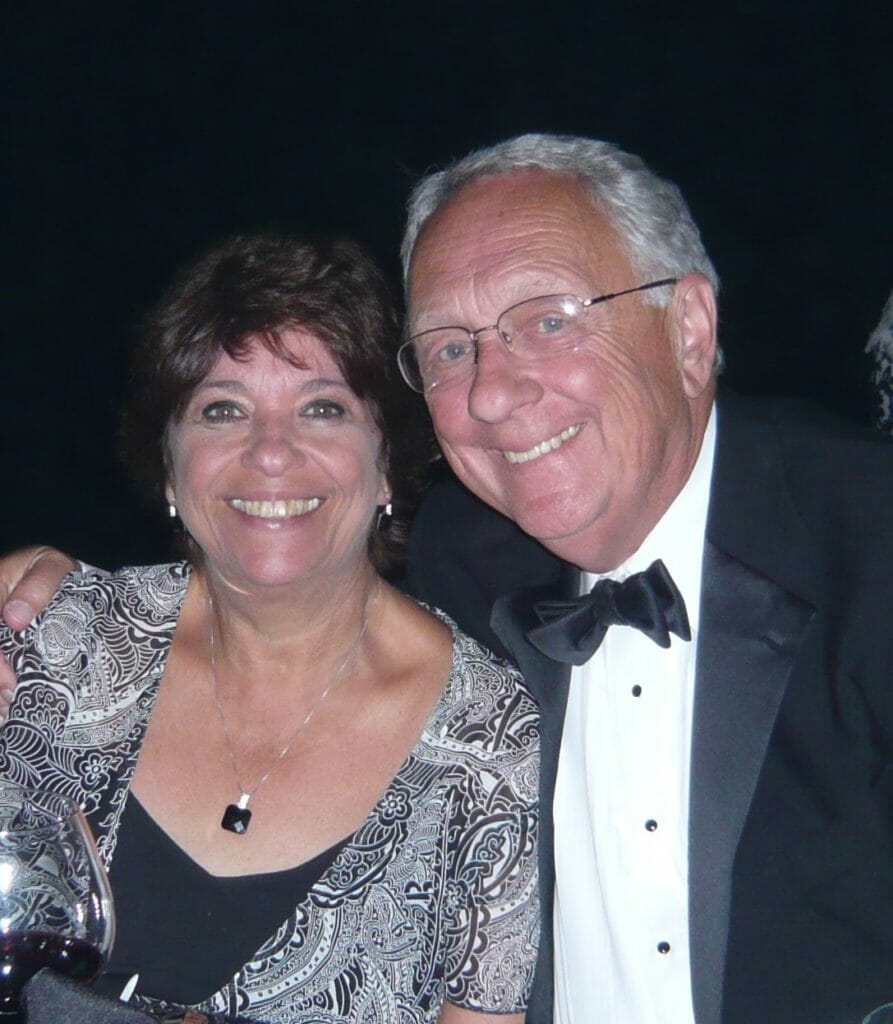 Josephine and Michael Gentile
The Gentiles, who are the kind of couple that do everything together, spend every Friday in the Village’s ice cream palace scooping out as much ice cream, hot fudge and whipped cream as the kids can hold. “The look on the children’s faces when we put the best banana split we can make in front of them is so wonderful,” said Jo. The pair love Give Kids the World so much that they are also Ambassadors for the charity, enlisting volunteers and donations. “94 cents on every dollar goes to support the kids and their families,” said Mike. The Village, founded by Auschwitz survivor Henri Landwirth in 1989, hosts more than 7,000 families annually from all 50 states, and from 70 countries around the world. The entire Village is run and operated by volunteers.
“These kids have life threatening illnesses, which is another way to say they are terminally ill,” he added. “Every kid deserves a childhood. But these kids don’t have one – they are in and out of hospitals, having medical procedures, and their parents are terrified that they might lose their child at any time. To see these kids and their families splashing in the pool, going to theme parks and horseback riding, all expenses paid, is just amazing.” “Sometimes we leave crying when our shift is over,” added Jo. “But at the same time, we can’t wait to come back and make these kids smile.”
When not at the Village, Mike and Jo also volunteer at the local hospital gift shop. All proceeds from sales go to local charities and scholarships for students entering medical courses of study. “Last year 24 kids were able to go to medical school because of this gift shop,” said Jo.
The couple also spends time together as Meals on Wheels volunteers, bringing nutritious meals to shut-ins and homebound elderly. Sometimes all this volunteering brings the unexpected. “Our last lady lived in a nudist colony,” said Jo. “I’m an old fashioned Italian girl. I’d never judge, but that was an experience I’ll never forget.”
Lisa Cohn
Incarceration punishes, but rarely rehabilitates. Therefore, many women have the same emotional pain and psychological maladies as they did before being released from jail; only now it’s coupled by the shame of incarceration. Cohn provides a home, where the ladies can be restored to dignity, receiving the requisite skills, professional services, love and support to recover and break the cycle of drug and alcohol addiction, which perpetuates crime and destitution.
Living Water for Women is a safe haven for women who have struggled with substance addictions, for many resulting in incarceration. These women are supported emotionally, nurtured psychologically, strengthened socially and prepared holistically to re-enter society as assets to their communities, their families and most importantly themselves. This is thanks to the work of Lisa Cohn, founder and executive director, who started the organization in 2010
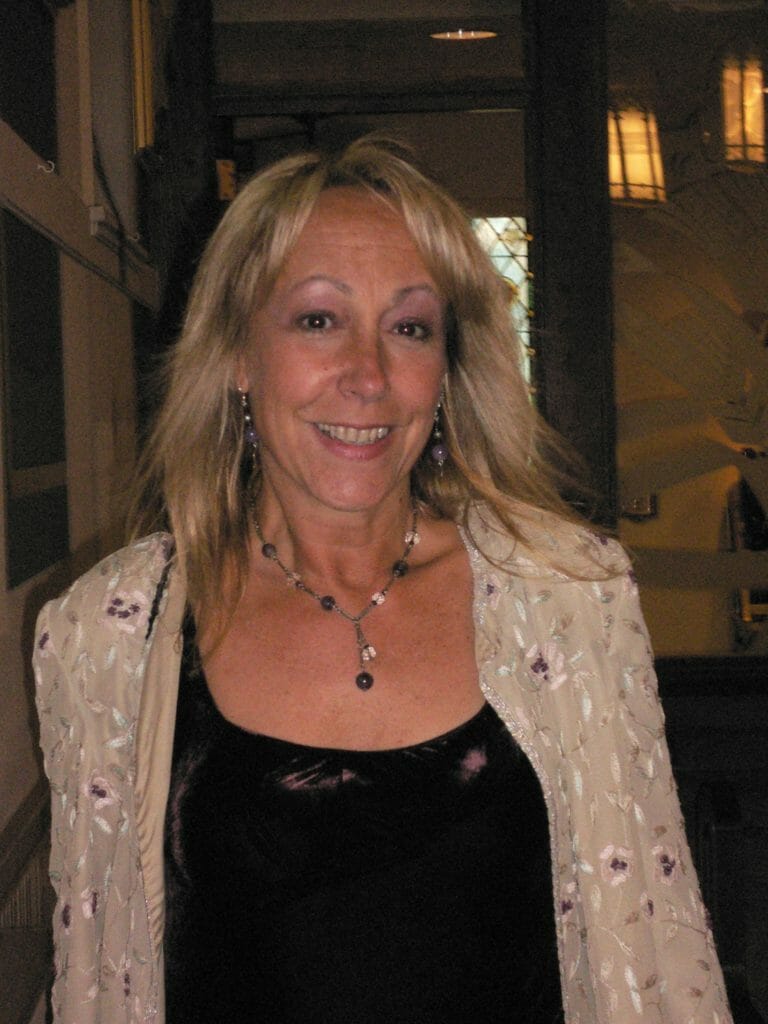 Lisa Cohn
Over the course of her 15 years volunteering at Nassau County Jail’s DART Program, hundreds of women benefited from Cohn’s therapeutic recovery meetings and writing workshops. With the opening of Living Water for Women, formerly incarcerated women receive guidance on gaining the necessary coping skills, life skills and training for securing. Women re-enter society with purpose, a plan and positive assets. The community lifts them up; some local businesses hire the ladies as interns, or paid workers, and local residents have employed them as care-givers.
Addiction exacts more than $400 billion annually on our nation, as it relates to crime, lost work productivity and health care. Nearly 95 percent of those released from jails and prisons return to drug abuse and 60-80 percent commit new crimes. Unlike a standard sober house, Cohn provides a safe, structured, holistic approach to recovery and re-entry where respect and accountability is a covenant between staff and residents. Her program reduces recidivism and addiction fostering restoration in families and communities.
After seeing women return to drugs and crime, Cohn decided to sell her business and purchase and renovate two side-by-side residential buildings to house Living Water for Women. But she couldn’t do all of this alone. She employed the services of a licensed clinical social worker, therapists with differing specialties plus an outpatient mental health and chemical dependence service to nurture, support and prepare these ladies for their futures in the comfort of a warm loving home environment.
Elizabeth Stiles
When most young girls start babysitting, they’re doing it to make a little extra money. Not Elizabeth, Lizzie, Stiles. For her, babysitting is a way to get experience taking care of younger children, but it’s also been a way to give exhausted moms and dads some free help.
Now a high-school senior, Stiles launched her babysitting career in 8th grade, watching a neighbor’s child. The young girl had leukemia, and Stiles realized the mother simply needed a break.
“I realized her life was chaotic and that I could help her,” she said. “My work made a huge difference – it brought peace and calm to the house.”
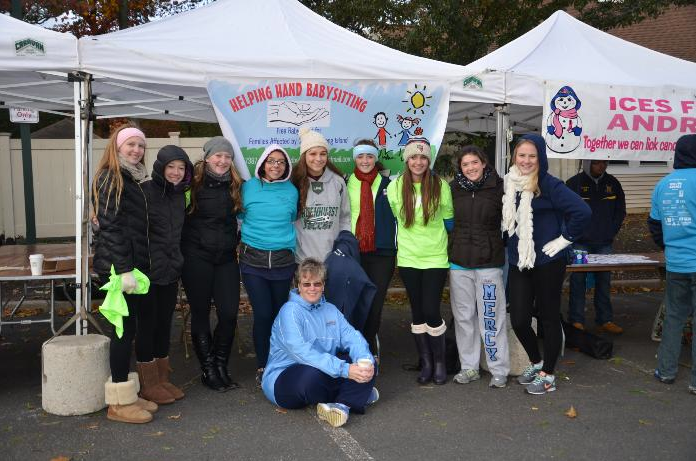 Lizzie, second from left, and some of the other babysitters.
That experience led her to create a volunteer babysitting service for families affected, in some way, by cancer. Today, approximately 100 girls from Stiles’ high school are part of her roster. Forty girls actively babysit for roughly 12 families with children ranging in age from 4 to 10.
Before they can babysit, interested girls must pass a CPR class and a First Aid course. These classes ensure the girls can handle virtually any situation. Stiles has also developed a relationship with social workers who can talk with the volunteers about difficult experiences or troubles with families.
“I think all the girls are really inspired,” Stiles said. “It’s helped them be more compassionate, to think outside the box, and to get outside their comfort zones.”
As volunteers, the girls tailor their services based on the family’s needs. For example, they can do housework, bake cookies, play with the kids, or do laundry.
Currently, Stiles is training some of her volunteers to take over the service after she starts college. She’s confident the babysitting will continue, and she hopes to return to a leadership role one day, fulfilling her goal of turning the organization into a certified not-for-profit venture.
Rosie Arbittier
As a child, Rosie Arbittier, participated in walkathons sponsored by her local synagogue and placed flags on soldiers’ graves on Veterans Day. That spirit of volunteerism continued into her teens, when she started tutoring special needs students at her middle school in York, Pennsylvania.
 Rosie Arbittier
The experience was an eye-opener.
“I began to see how isolated these kids were,” says Rosie, now 17. “They were told not to talk to me unless I talked to them first. They weren’t allowed to audition to be in a school play or to try out for a team. They spent their whole day with the same students and it was obvious that they just weren’t getting enough opportunities to socialize.”
When she reached high school a few years later, Rosie put her concerns into action by creating an after-school club for the kids. She approached a sympathetic teacher who helped her craft a “business plan” that would persuade school administrators of the validity of her idea and that she, at just 16 years old, was up to the challenge of managing the whole thing.
“It wasn’t easy,” she says. “It took a lot of trying.” Eventually, though, they gave her a chance.
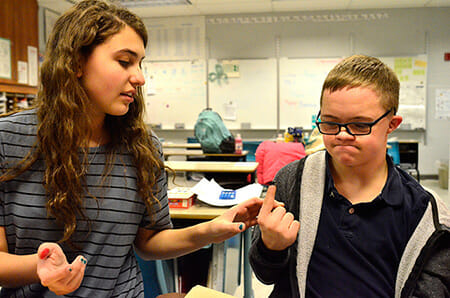
Now in its second year, “Rosie’s Class” meets every Thursday for just more than an hour. This year, 10 middle- and high-school students with challenges ranging from anger management to Down syndrome are participating in the class. Arbittier leaves the afternoon’s activities up to the students, but draws from a series of lesson plans that she’s developed — crafts projects like tie-dying shirts and activities like scavenger hunts.
Rosie has enlisted nine of her friends so the class runs at a one-to-one student to volunteer.
“I’ve been amazed at how willing young people can be to participate in community service if they’re just prodded,” she says. And it’s become a win-win situation, she adds. “The volunteer students have learned so much by getting beyond preconceived notions and social constructs and realizing that we’re all just people. I think they have as much fun as the special-needs kids do.”
Besides the weekly activities, the class also works on longer-term projects like writing and filming a short movie, and staging a talent show. Sometimes, these result in the most dramatic transformations.
“Last year, we had a 20-year-old student with Down syndrome who early on had a lot of trouble participating and opening up,” says Rosie. “We spent a lot of time at the class encouraging her to speak up and to interact with the others. By the end of the school year, she was able to get up on stage, wearing a giant ball gown, and belt out ‘Let It Go.’ It was as if she was just waiting for a chance to shine.”
Such experiences have convinced Rosie to pursue a career in nonprofit management and public policy at Princeton University, which she’ll enter this fall.
“I’m majoring in those subjects so I can take Rosie’s Class national,” she says, confidently. She plans on starting small — introducing the effort to two other towns in Pennsylvania before moving on to two other nearby states.
“I think it’s going to be really hard to do, but it will be worth it,” she adds.
Those interested in helping Rosie’s Class gain momentum, bringing the program to their school, or donating art supplies or other items can contact the Daily Point of Light Award program manager at [email protected].