Angels of Destiny
On March 12, 2016 Linda Richard celebrated the 15th anniversary of her non-profit Angels of Destiny by doing something she does very well. She made little cloth angels, 500 of them to be exact, small gifts that add up to a huge source of comfort for people battling cancer and other life threatening illnesses. Perfect for someone who is bed-ridden, these beacons of cheer fashioned from bits of fabric and ribbon can be pinned to bedding or hung overhead to add a bright spot to an otherwise grim setting.
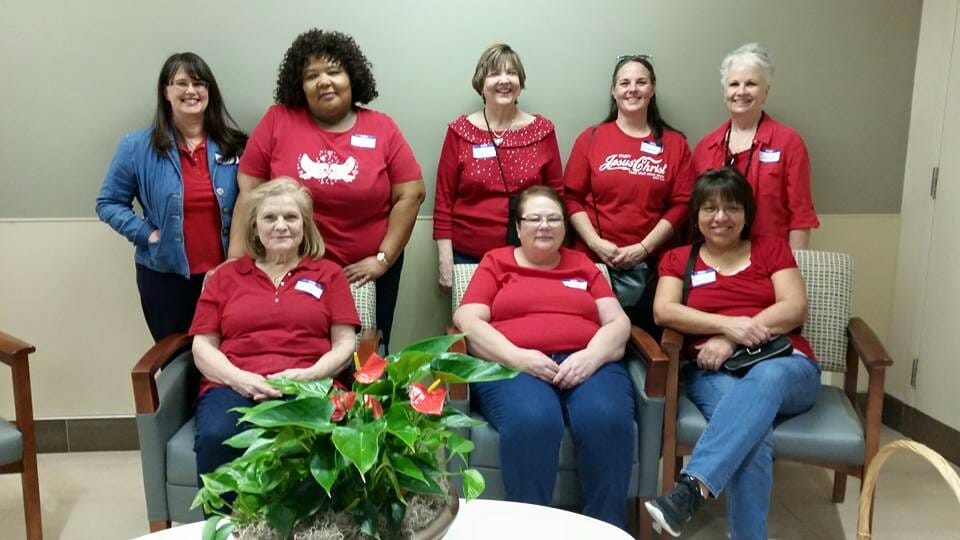 The Angel Ladies, led by Richards (top, second from left)
Richard, a native Louisianan who now lives in Houston, Texas, has lost three close family members to cancer and her mother is currently in treatment. She understands just how devastating cancer or any serious disease can be. It can be tough, even heart breaking, to meet people challenged by illness in the hospital or under hospice care, but Richard believes that small gestures can make a difference. “I just tell myself I’m there to make a small difference in their lives, to focus on the positive,” she said. “I can’t do anything about their situation, but I can bring a small ray of hope, a smile to their faces, it’s so worth it.” Richard spends about 30 hours a week making angels, coordinating volunteers and hosting dinners and parties for cancer patients and their families at medical centers around Houston.
Created in all hues and shapes, these small angels are hand-painted to match all ethnic groups, including skin, and hair color. Each angel is anointed with oil and prayed over with the recipient’s specific needs in mind. Although Angels is a faith-based initiative, it is non-denominational and isn’t dependent on the recipient sharing the same values.
“The other person’s background doesn’t matter at all,” she said. “We include everyone, from babies to grandparents, young people, gay people and straight people. The idea is to share a ray of hope and beauty, to let the person know someone is thinking of him or her, someone cares. This is all about love– we don’t discuss religion.” Richard, who works as a nanny in between making angels, is sure her work has a positive impact. “We get calls from hospitals and cancer centers asking us to bring angels to their patients,” she said.
“While people are fighting for their lives, it’s good to let them know someone cares,” she said. “To know that something created by your own hands has made a difference in a stranger’s life is priceless.”
Andrea Verdone Gorsegner
In 2012, Andrea Verdone Gorsegner’s almost 3-year-old daughter, Natalie Grace, was diagnosed with high-risk acute lymphoblastic leukemia, or ALL. It soon became apparent to Gorsegner that little funding is appropriated to the development of treatments for children even though it’s the number one disease killer of children in the United States (with the number of kids being diagnosed on the increase each year). In response, Gorsegner developed the “Will You Send Us A Dollar?” fundraising campaign in April of 2013 with the hopes of raising money (and awareness) to fulfill desperately needed childhood cancer research grants. Each year Gorsegner set a goal, and in less then three years time has raised over $450,000. Every single dollar (on her end and theirs) goes towards funding research via The Truth 365, the six-time Emmy Award-winning documentary and social media campaign that gives a voice to all children fighting cancer. The full-length documentary and short films sparked pediatric research legislation that was signed into law by President Obama in May 2014.
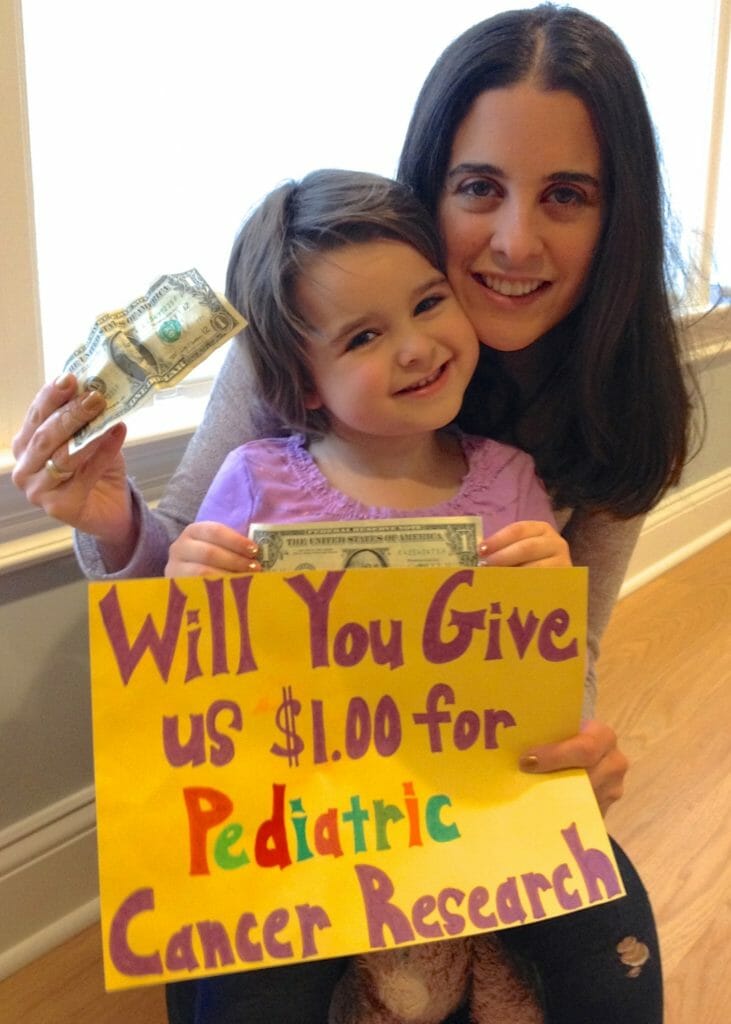 Verdone Gorsegner and Natalie take a photo every April to kick off their fundraising efforts!
Five billion tax dollars are given for cancer research each year, but only four percent is allocated for all 16 major types of childhood cancer (and there are hundreds of subtypes) whereas with most adult cancers, each type (breast, prostate, lung etc.) gets their own allocated research budget. Because of this, Gorsegner is constantly advocating and fundraising for The Truth 365 as well as supporting any other childhood cancer foundation needing help.
Gorsegner leverages social media to fuel her fundraiser “Will you Send Us A Dollar?” A talented photographer, she also travels the tri-state area taking photos of children with life threatening diseases so that their families will have a special photo to remember their child’s journey as well as photos of families who lost their children to childhood cancer.
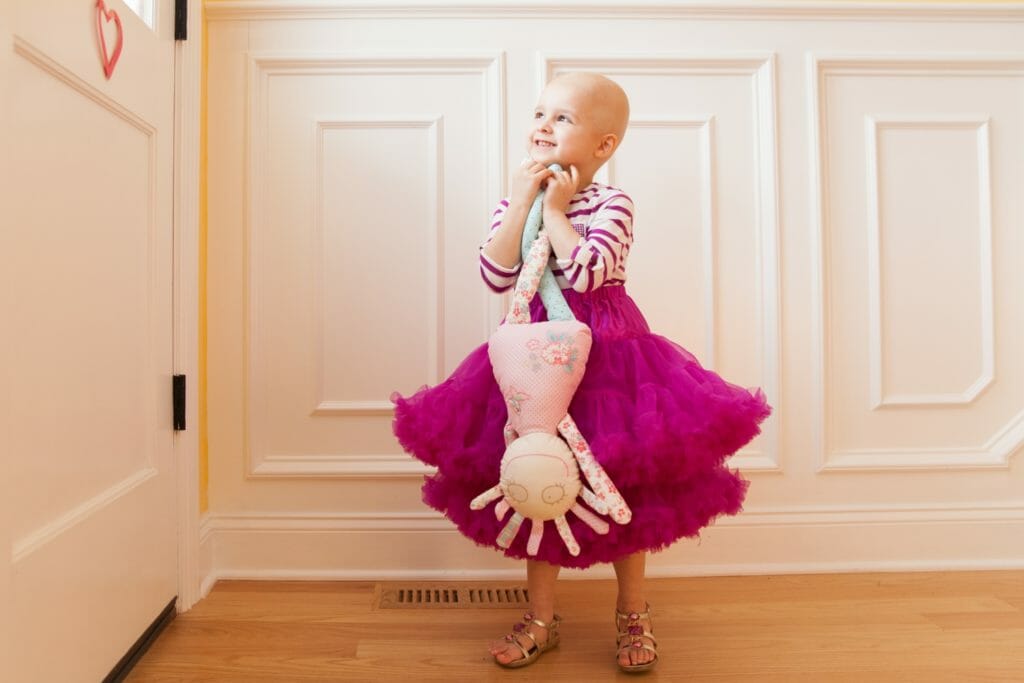 Verdone Gorsegner captures Natalie’s journey as she dances in her beloved tutu.
 Gorsegner uses the power of social media and a photograph to tell a story that can be difficult to describe. She shares updates on Natalie and other children, as well as informative articles on her Facebook page to raise awareness and encourage hope. In addition to fundraising, advocating and photography, Gorsegner regularly assists local families (or any other family that reaches out to her) in regards to whatever their need might be (giving a child an unforgettable day, fulfilling a wish, putting parents in touch with other oncology families, helping to pay a bill, lifting spirits, etc.).
By asking for just a dollar, Gorsegner empowers people to feel like they can give, enabling everyone to make a difference. She is a driving force in the childhood cancer community and has shed a light on this tragic disease as well as has educated thousands of people on the impact that we can have on our children and the kids fighting childhood cancer. She is a true advocate, finding a cure one dollar at a time.
Benjamin Shambon
During his volunteer hours at Walter Reed National Military Medical Center, Benjamin Shambon considers himself to be a substitute for the drug store CVS.
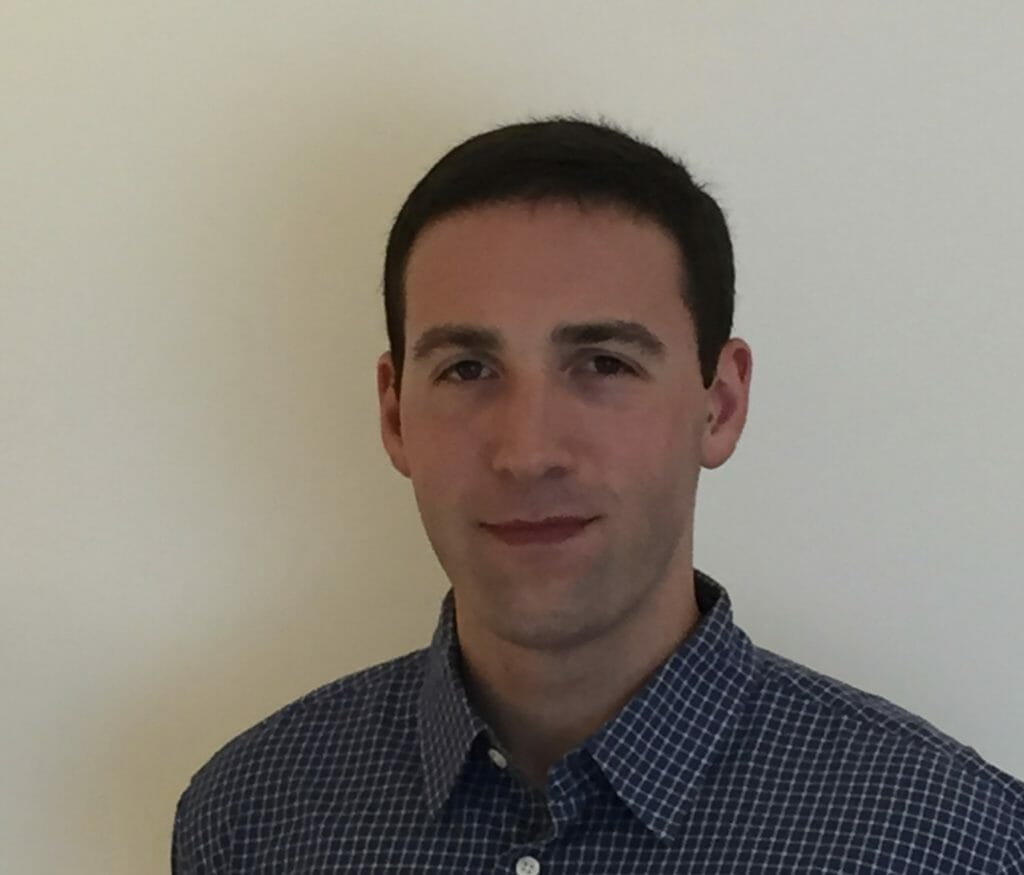 Benjamin Shambon
As a high school and college student, Shambon volunteered with wounded soldiers, eventually pushing the Care Cart, a convenience trolley that brings necessary and requested items to inpatients, every weekend. Today, he coordinates all Care Cart volunteers.
Often, family members aren’t available on weekends to fulfill patient requests for hygiene or entertainment needs. At those times, the Care Cart steps in.
“The small thing we bring them might be the one thing they’ve wanted all day,” he said. “It’s humbling for me because the feedback from patients and staff has been overwhelmingly positive.”
Over the past four years, he said, the Care Cart has had more than 100 volunteers, and each one reaches between 100 to 125 patients daily. They serve patients in surgical and medical ICUs, as well as hematology, oncology, and internal medicine departments.
The Care Cart can fulfill almost any patient request. Some ask for hygiene items, such as toothbrushes or deodorant. But, the Cart can also provide clothes, books, magazines, televisions, or X Boxes, as well as prosthetics or adaptive shoes for those with significant injuries.
In addition to managing the Care Cart, Shambon also coordinates the wounded warrior Pentagon tour. As part of the excursion, patients walk through the Pentagon and have lunch with generals and the Secretary of Defense.
Although he doesn’t have specific future plans, the Care Cart will likely be part of Shambon’s future activities. Until he has a reason to forego his involvement, he said he plans to contribute to the program in any way possible.
“As volunteers, we’re there to talk with patients about whatever is going on,” he said. “We’re there to demonstrate we support them.”
Meagan Warren
Reading is fundamental! While that may be true, there are far too many children who have zero interest in reading solely because they lack the necessary resources.
At just 11 years old, and hoping to make an impact in her community, Meagan Warren started the Books for Bedtime initiative. Realizing that there are many families who face unfortunate circumstances leading to underdeveloped youth, Meagan felt that a book drive is the perfect remedy to bolster education.
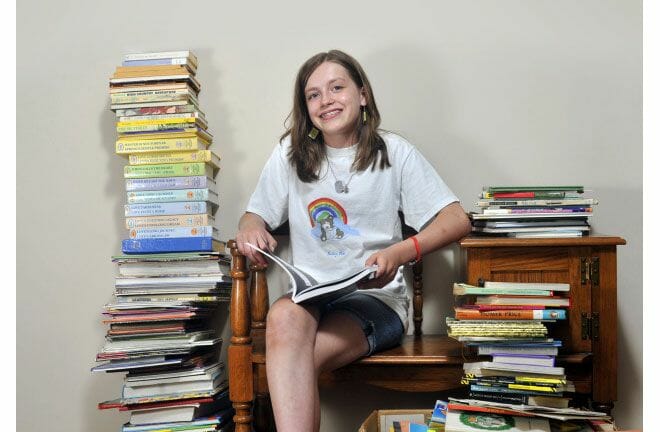 Meagan provides a variety of books for children of all ages.
Books for Bedtime, a non profit company, has helped countless children all across Ohio. Since 2014, Meagan and the Books for Bedtime program has helped collect over 18,000 books for children in 13 low-income schools, two homeless shelters, two child care centers, as well as an organization serving new immigrants.
“I am proud to say that Meagan is my daughter,” said Meagan’s mother, Shannon Warren. “I am a teacher at a low income school, and I am very impressed that Meagan has noticed the world around her, and how she can personally make it a better place.
Just embarking on her teenage years, to be so young Meagan is truly an inspiration. Her devotion is evident not just in her hometown of Bexley, Ohio, but the entire state. Meagan uses the Books for Bedtime platform to share her love for reading with all. From knocking on doors to approaching local businesses, Meagan is consistently campaigning for her book initiatives.
Meagan routinely visits schools to give books as well as speak to her fellow peers. She has given speeches to organizations such as the Ohio Reading Corps and the Bexley Girl Scouts.
By helping educate a generation of children, Meagan is literally shaping the future. She may be young, but her actions have made her a role model for all to follow.
Julian Martinez-Prado
When Julian Martinez-Prado’s parents immigrated to the United States from Argentina, they envisioned a better life for themselves and their children. It’s safe to say, though, that they never dreamed their son would wind up racing yachts in regattas.
 Julian Martinez-Prado sailing with the Ponderosa Boat Works.
“Santa Cruz is a pretty affluent area and a lot of my friends grew up with sailing,” says Julian. “They convinced me that I should try it.”
Soon enough, he was hooked.
“Being on the water is freeing in a romantic way,” he says. “It can go from completely therapeutic to almost survival conditions.”
Looking for younger members, the local yacht club offered to grant Julian membership privileges at a severely discounted rate. Now Julian, 19, is a freshman at the California Maritime Academy, pursuing a goal of becoming a merchant captain.
Meanwhile, he has committed himself to helping other disadvantaged kids enjoy the same opportunities by volunteering to teach sailing to students who have enrolled in a boat-building class at Ponderosa High School. Each semester, approximately 60 students learn how to build, repair and restore vessels as part of the school’s Alternative Education Green Technology program, which is designed to prepare teenagers for maritime careers in the area. After several weeks learning carpentry skills and how to safely handle power tools in the workshop, they take to the seas.
Because many of the students come from poor backgrounds or broken homes, they have had a hard time in traditional high school settings, struggling with grades or exhibiting behavioral problems. Getting their feet wet, literally and figuratively, in the sailing school can help them overcome these disadvantages.
“Sailing is a hobby that you can become obsessed with,” says Julian. “It requires a lot of time and focus — and that’s something I feel that a lot of these kids need.”
They may act tough when on terra firma, he says, but once out on the ocean, they reveal how scared of the water they are.
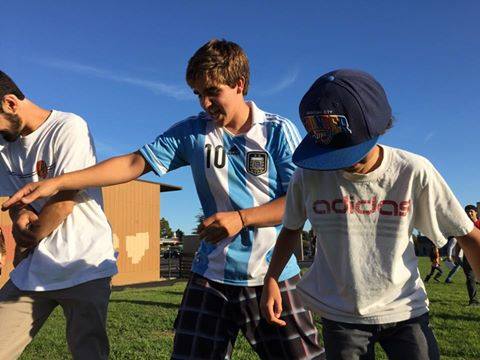 Julian Martinez-Prado working with kids through the Barrios Unidos Youth Violence Prevention program, teaching the importance of staying in school and pursuing an education.
 “Seeing how they overcome that fear and their progress in controlling their vessels is really great,” says Julian. “These are huge steps that will apply to anything they do in life.”
Julian has also mentored at Santa Cruz’ Barrios Unidos Youth Violence Prevention, a local organization dedicated to stopping the school-to-prison pipeline. The nonprofit provides individual and group counseling to Santa Cruz high school students, emphasizing the importance of staying in school. It offers a variety of programs, from educational outreach to a tee-shirt printing facility that teaches at-risk youth job-readiness skills.
Here, Julian uses his native Spanish-speaking skills to tutor elementary and middle school children after their regular school day has ended.
“Having that Spanish-speaking connection is really important because they could see where I had come from and what I’ve accomplished,” he says. “They needed someone to let them know that they can apply to a charter school just like I did, or to move on to higher education like I have. A lot of it is about just knowing what opportunities are out there.”
As he continue his college education and then embarks on a career, Julian says volunteering will always be a part of his life. Passionate about sailing and working with children, he looks forward to connecting the two once he has the means.
For those looking for ways to give back to their community, his advice is simple: go with what you love.
“Finding a cause that is in some way connected to the thing you’re passionate about makes it that much easier to help.”
Hannah Verma
According to the American Cancer Society, there will be an estimated 1.6 million new cancer cases diagnosed in 2016. For the patients fortunate enough to overcome the rigors of cancer treatment, their lives are forever changed.
The fight against Cancer is a very daunting task full of trials and tribulations. Intense, pain-filled sessions of chemotherapy is one of the more common treatments – leaving patients physically, mentally, and emotionally exhausted. Cancer is not a road that should be traveled alone. While the bad days of Cancer treatment may seem to outweigh any good, it is optimism infused into these patients that truly give them hope.
Hannah Verma is truly a beacon of light in her Longwood, Florida community. Volunteering at a local cancer treatment center, she tends to patients of all ages. Her volunteer efforts are centered around comforting cancer patients in anyway possible. Knowing their circumstance, Verma helps provide emotional stability by spending time speaking and listening to the patients, as well physical support by cooking and preparing some of their favorite meals.
“I volunteer because I know how lonely people can become during the treatment process,” said Verma. “I recognize that chemotherapy is painful … But I try to help the patients focus on the bright side, which keeps them from dwelling on their situation and from becoming depressed.”
Verma’s work with the cancer treatment center is rather unique. While there are outlets that provide physical gifts, there are much fewer outlets focusing on the mental and emotional side as it relates to cancer recovery. Verma uses the time during chemotherapy sessions to share some light-hearted conversation with patients, using dialogue as a distraction from the grueling process. The efforts of volunteers like Verma is undoubtedly making life easier for all cancer patients.
Bill Hayden
Retired Rear Admiral Navy fighter pilot Bill Hayden wants children in America to have the opportunities he had in a career focused on STEM – science, technology, engineering, and mathematics. Hayden, who still goes by Tball, the callsign he earned in 1968 thanks to his signature crew cut, spent his years of decorated service flying F-4 Phantoms in Vietnam and eventually served as Chief of Naval Air Training for the Navy, Marine Corps, and Coast Guard.
Hayden worries about the dearth of homegrown engineers graduating from American colleges and universities, a concern that inspired him to found STARBASE Victory in 2002, a program that connects elementary students to the Portsmouth, Virginia Navy base for interactive Stem projects. Although he’s quick to say he doesn’t deserve credit for the program’s success – “that goes to teachers,” — Hayden has served as STARBASE volunteer executive director since day one, responsible for taking the lead in administering, fund raising and strategic planning. What began as a kernel of an idea is now integrated directly into the Portsmouth school system with labs specially built for discover-based learning. Some 10,000 4th, 5th, and 6th graders have had the benefit of going through the program.
“Kids in elementary school want to learn, but they want it to be fun. They don’t want to be preached at or run through mental drills,” said Hayden “When you do that, when you make it fun and interesting, you change a child’s perception of what school is all about.”
The way Hayden sees it, for America to compete in the global economy, the workforce has to be literate in math and science to innovate, build, and think creatively. He’s sure that when students get excited about science, math, and technology at an early age, they are more likely to study these courses as they get into high school and beyond.
Although there are 25 STARBASE programs around the country, STARBASE Victory is the only public/private partnership in the United States. “I wanted this to be privately funded,” said Hayden. “We have the freedom to be nimble and creative.”
Kids involved with the program have sheer unadulterated fun discovering things like spatial awareness, mapping and weather parameters in four day interactive learning tracks called SPACEBASE Atlas, ENVIROBASE Aquarius and AEROBASE Atlantis. Free science summer camp is also offered for fourth, fifth and sixth graders.
“Learning to be a critical thinker can’t start early enough,” said Hayden. “We want to be focused on teaching not testing. STARBASE Victory gives me great hope for what our young people will do in the future.”
Meghan Freebeck
Simply the Basics began with the collection of donations of feminine hygiene products for homeless women. Within 48 hours, founder Meghan Freebeck had raised enough money and collected enough products to provide for more than 5,000 women in need. The basic act of being clean and healthy is a right for every woman, and Freebeck works to provide these critical items to women, men, and children so that they can live with dignity.
 Meghan Freebeck
Food stamps and other city support services do not cover all basic needs, including tampons or pads, toilet paper, soap, toothpaste, cleaning products, hair products, lotions, and sunscreen. There are more than 3,000 homeless women in San Francisco, with nearly 85 percent between the ages of 15-50. More than 35 percent of theese women have jobs, but are unable to afford rent or proper medical care, and many have escaped abusive relationships and are living in transitional housing.
Inspired by Abraham Maslow’s Hierarchy of Needs, Simply the Basics works to alleviate the struggle to meet a most basic need, food, shelter, clothing, education and so forth, so a person can achieve independence in other areas of life.
Under Freebeck’s leadership, Simply the Basics has developed a series of programs to achieve its mission to provide the most basic needs with dignity. The Academy curriculum offers courses led by trained volunteers that teach core life skills, job readiness, financial management, and enrichment. The Location Service is an online database that connects people looking for shelter, social services, and other resources to facilities in their area. The Marketplace program coordinates the redistribution of in-kind, surplus donations from individuals to nonprofits, while the Basic Needs program provides essential needs not covered by food stamps in reusable tote bags, customized to the client’s specific needs.
Freebeck has identified a critical gap in services for the homeless people of San Francisco, and has already been able to collect enough donations and products to support hundreds of homeless woman living in the city for a one-month cycle. With continued support, she has plans to expand the program nationally.
Freebeck is immensely proud of her work at Simply the Basics, and she devotes her spare time to provide these fundamental and essential items to women and men so they can live with dignity.
Ruth Tschudin
For Ruth Tschudin, helping others is the natural result of her lifelong dream to ensure others have the best life possible. She started slowly, but, her efforts grew.
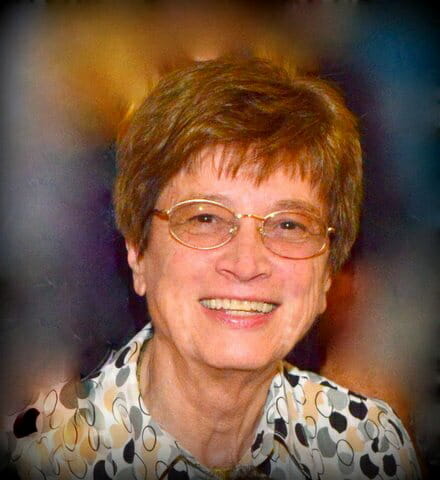 Ruth Tschudin
“I started a list of things I wanted to do in life – once you write things down, you start doing them,” she said. “I found myself volunteering as church choir director, mentoring teen-agers, and writing Girl Scout newsletters. But, I wanted to do something on a bigger scale.”
That desire led her to create the nonprofit organization Open Doors – An Amazing Grace Foundation in 1999 with her husband Hugo.
Named in honor of Ruth’s mother Grace this initiative provides supportive assistance to families and animals in need. For example, Tschudin and her husband maintained two condominiums in New Jersey for families who needed safe environments. In one instance, a young mother finished her nursing degree and saved enough money to start a new life with her son. Soon, she said, Open Doors will offer the same affordable-housing opportunities in Florida, through the Miracle House Program, to families.
Today, Open Doors also offers interest-free loans, security deposits, and educational scholarships. To date, it has awarded more than $100,000 in grants and makes sizeable donations to the Salvation Army and American Bible Society. Additionally, children receive music grants, and individuals can attend free Bible study courses.
For animals, they hold education and adoption events and use therapy rescue dogs to visit nursing homes, daycare centers, hospitals, and homeless shelters.
Although she has no firm future plans, Tschudin said she will hold fast to helping others.
“I foresee trying to help people overcome every discouragement. When you try to do something new, you will have setbacks,” she said. “That doesn’t mean you give up. It means you look for every opportunity to do something good.”
Keariene Muizz
When she was young, Keariene Muizz and her family were constantly on the move — she attended 12 schools before leaving her teens. Role models were few and far between, and at one point she ended up in foster care. But years later, despite her rocky start, Muizz found herself studying at the prestigious Sorbonne University in Paris.
“Looking at me in that situation, no one would ever believe that I hadn’t grown up in the most stable of backgrounds,” she says.
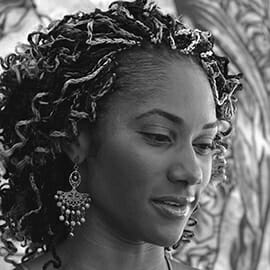 Keariene Muizz
The experience made Muizz think about “second and third chances, and the importance of being resilient.” She began drafting an idea for what would become known as Positive Resistance, a nonprofit with the motto, “A Broken Home Does Not Mean a Broken Life.”
“When I thought about it, it all came down to those two words: positivity and resilience,” says Muizz. “I wanted to help at-risk youth to resist the disfunctionality and negativity around them.”
Muizz, now 38 and based in Orange County, founded Positive Resistance in 2002 with a mission of supporting youth between the ages of 11 and 18 in the foster care system to transition into adulthood.
“There are so many skills that they don’t get in a group home or emergency shelter — everything from homework checking to resume writing,” she says. “We fill those gaps and help them to navigate.”
As executive director, she uses her original research on the psychology of young adult development — which has been recognized by the American Psychoanalytic Association — as a foundation for a host of programs. These include workshops that encourage participants to see themselves as separate from their history, as well as courses offering preparation for being a responsible parent, job-seeker and volunteer.
This summer, Positive Resistance is adding a new initiative into the mix by sending 30 foster and at-risk inner-city girls on a trip to Paris to study for a week. Muizz, who over the years has built a career for herself as a sought-after artist, says she will be leading classes there that teach art as a cultural experience.
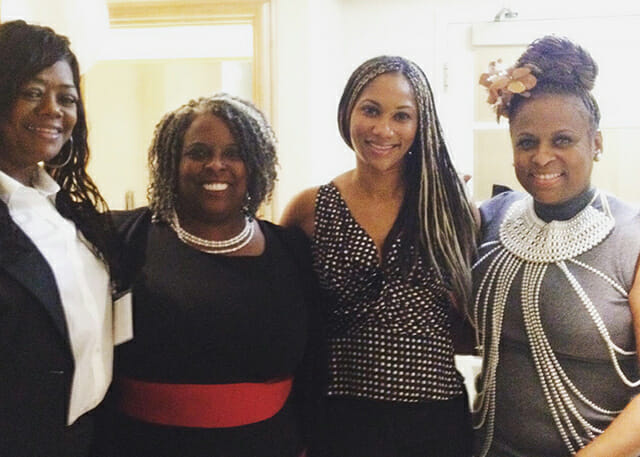 Keariene Muizz, along with members of the Intelligent Black Woman’s Coalition. Left to Right: Misty McCoy, Kandee Lewis, Keariene Muizz, and Yolanda “Yo Yo” Whitaker Windom.
“My goal is to help them see themselves as global citizens who have a place in the world,” she says. “We’re working on having them meet with art experts, historians, and foundation representatives that I have connections with. We’ll tour private collections. Being in another country is going to blow away all of their paradigms.”
Although the organization is still in the process of raising all of the necessary funding, Muizz is confident it will all work out.
“When I took the risk and decided to move to Paris, I invested in myself,” she says. Now, she wants to offer the same experience to others.
“I don’t want to live for myself and be a bystander. That’s just not in my DNA.”



