Bruce Wood
After serving in the armed forces, many veterans come back home to uncertain, and sometimes unfortunate circumstances. While these veterans have risked their lives for the sake of others, it is the willingness of your average civilian to give back that shows a true sign of gratitude.
Much appreciative of the service and sacrifice of veterans is Bruce Wood. Now retired, Wood spends the majority of his time volunteering. Lending his time and energy to support soldiers is a responsibility that is dear to Wood. He knows first hand the power of volunteering and the impact it can have on an entire community.
“Never underestimate the power of volunteers. Remember that Noah’s Ark was built by volunteers and the Titanic was built by professionals,” said Wood.
Working with Volunteer Prince William, Wood assisted in the start-up of the Veterans Enhanced Transportation Service (V.E.T.S.) program. With many veterans in constant need of urgent care, V.E.T.S. was created to help former soldiers, as well as widows, commute to and from their doctor appointments. Becoming the very first driver of the V.E.T.S. program, Wood has been essential in all facets of the operation.
As a constant contributor in the veteran community, Wood’s impacts has been evident. He helped build a facility for a Wounded Warrior project in Colorado, and later helped transform a residential home into a visitation and rehab facility for the Serve Our Willing Warriors program.
Present and past soldiers, willing to sacrifice their life for the safety of others deserve more support. We are fortunate to have someone as selfless as Wood to give back to those who have given us all so much.
Dawn Blackman Sr.
The garden Dawn Blackman Sr. is tending is rooted in kindness, fed by hope and showered with love.
Blackman, 63, is a Chicago native with decades of experience in the food service industry. Although she never considered herself a gardener, the Champaign resident is now the garden steward for The Randolph Street Community Garden, a project conceived by an urban studies grad student and continued under the leadership of University of Illinois Master Gardeners. Although she started as a volunteer gardener, when the garden faced foreclosure in 2006, Blackman stepped up and took over its care.
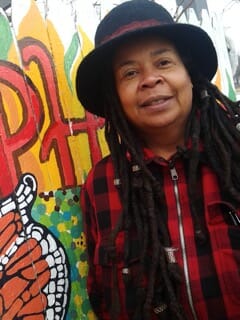 Dawn Blackman Sr.
Located in an underserved area of North Champagne considered a food desert by the USDA, the garden is a literal oasis of fresh produce in a landscape bereft of healthy food options. “You can buy all the junk food and fried fish you want but you can’t buy an apple or a banana,” said Blackman. Local residents can’t buy healthy food within walking distance, and four in 10 don’t own cars. Since the closest supermarket isn’t on a bus line, Blackman found herself giving neighbors rides to the supermarket. “I though to myself, wouldn’t it be easier if people could actually grow their own food?”
The Randolph Street Community Garden allows them to do just that. Run under the auspices of the Champaign Church of the Brethren, the garden started in 2003 with one 16 x 16 ft. bed, with10 children growing tomatoes and potatoes. Now nearly 2,000
people receive produce from the garden, which has grown to 66 beds. When people come to Church of the Brethren for food assistance, Blackman recruits them to become gardeners and offers them a bed of their own to plant. She also teaches canning and other food related skills in the church kitchen. “It’s not really teaching,” she said. “It’s demonstrating, gently coaching and encouraging.”
Because of the fruits of Blackman’s efforts, fewer people need food assistance from the local church during the garden’s growing season. Although she’s now recovering from an injury, Blackman took a part time job at FedEx to help fund the project.
“It’s important that our children know where food really comes from,” she said. “These folks take enormous pride in working in the garden and growing their own food. The community served ranges in age from three to 93, and speaks Arabic, Berber, Chinese, English, French, Korean, Portuguese and Spanish. “We have a lot of divisions in our community, but in the garden everyone is the same.”
Kelli Czaykowsky
Clarkston, GA is home to thousands of legal immigrants- many lacking resources. Kelli Czaykowsky started Friends of Refugees Providing Education and Empowerment (F.R.E.E.). F.R.E.E. is a non-profit all-volunteer organization serving the refugee community in Clarkston, GA. Its purpose is to provide refugee families with resources needed to build self-esteem and self-sufficiency. Kelli and her team of volunteers place significant focus on the effective education of immigrant children and the ever-present threats they face to fall through the cracks. They work daily to meet the education, nutrition and healthcare needs of refugees.
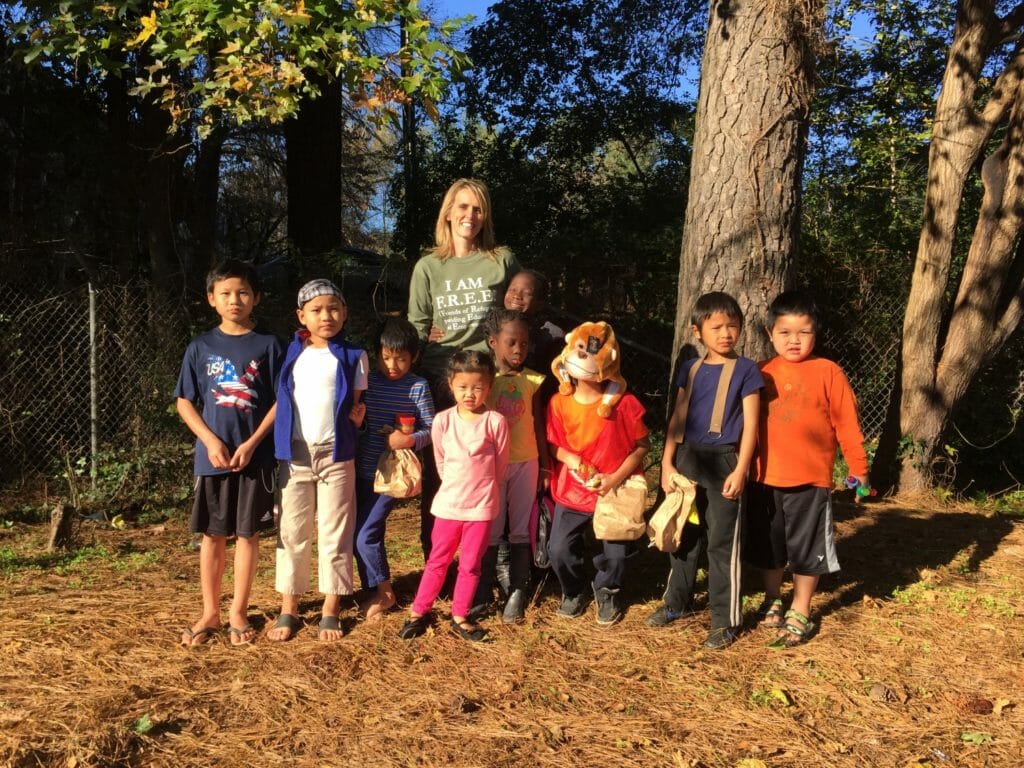 Czaykowsky with a group of children from different parts of Africa and Burma. All children are between the ages of 7 and 12.
In 2010, F.R.E.E. partnered with Duluth Adventist Christian School to fund and enroll 12 refugee children. These students are recipients of the ARETE Scholarship and donations received by F.R.E.E. directly address the remaining costs for the other 42 students who are still on the waiting list. Czaykowsky serves as a coordinator and provider for refugee student’s lunches and school uniforms and even fills in as a bus driver. F.R.E.E. partnered with Cohutta Springs Youth Camp to host 90 refugee children for some summer fun. Czaykowsky helped arrange transportation for the kids to camp once a week.
This energetic, positive and selfless leader of F.R.E.E. is a mother of five. An occupational therapist with a special needs child of her own, Czaykowsky has an uncommon compassion for others, for the disadvantaged, poor, burdened or mistreated. She is a fearless and tireless worker, ready to meet whatever needs she comes across. She is a uniquely gifted speaker, unafraid to visit the office of government officials or address large audiences. Czaykowsky is now “Mom” to hundreds of refugee children. There are many hurdles these children have had to overcome, and likely more ahead of them, but their lives will be a little easier with Czaykowsky in their corner.
Lily Pérez
Lily Perez got her first taste of social entrepreneurship while working for McKinsey & Co.’s Social Sector Office, where she learned how microfinance was impacting women locked out of formal financial system in rural Bangladesh. Also learning about Silicon Valley Lean Startup methodology, Perez and her coworker, Clara Chow, saw an opportunity to create change.
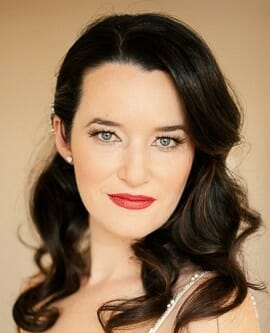 Lily Perez
Building on theories of microfinance and Lean Startup, Perez and Chow, along with dedicated volunteers and local partners, launched a pilot program to help youth in Lagos, Nigeria, start businesses. That pilot would eventually become Generation Enterprise (or GEN). The name is inspired by a 2010 report from the International Labor Organization, which warned of a “lost generation” of more than 80 million unemployed youth, and another 250 million working poor — many of them living on the streets of the world’s largest “slum cities.” But during their time in Lagos, Chow and Perez didn’t see a hopeless generation. They saw peers who are resourceful, industrious and audacious — Generation Enterprise.
In places like Lagos, “these young people are capable, but trapped,” says Perez, 32. “There are plenty of job training programs, but no jobs.”
Since its founding, GEN has directly supported the launch of more than 200 businesses in Nigeria and India, and has trained thousands more in the tools necessary for entrepreneurship.
Perez credits her interest in economic development to a year-long trip she took with her family as a 12-year-old. They traveled to places where her father had lived or volunteered when he was younger. In Kenya, they visited a school he had helped build 30 years before.
“One little girl who had attended was now its principal,” Perez recalls. “It really drove home to me that the actions of one person can have a big impact that grows over time.”
In Lagos, that realization has translated to empowering GEN “fellows” to launch small businesses that serve needs in their communities. They’ve had big impact on the fellows — increasing their income by 200 or 300 times — and each business adds net jobs to the local economy.
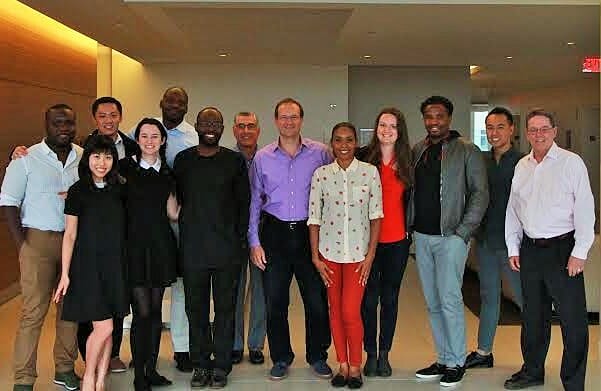 Generation Enterprise co-founders Lily Perez and Clara Chow, along with the organization’s senior team and board of directors.
“But, we’re starting to realize that some of the fellows are actually reluctant entrepreneurs, or happy small business owners, but not interested in taking the risk to scale,” Perez says. “What some want is simply a solid income and stable employment. So we’ve pivoted to add a model that emphasizes what we call social mobility enterprises (SME 2.0) — businesses capable of scaling to employ very large numbers of marginalized youth, while simultaneously creating a pathway to advancement and even ownership”
For its first SME, GEN launched Zest, a professional cleaning service for commercial organizations and wealthier homeowners in Lagos. The company is growing fast, and aspires to franchise (in the hands of fellows), and employ hundreds or even thousands.
“We still work to help young entrepreneurs launch businesses that are viable SME’s,” Perez says, “But GEN-launched SMEs like Zest compliment that pipeline, and offer another, predictable, self-funding, large scale, way to generate jobs.”
Either way, the goal is to empower under-employed youth. “When I first traveled to Lagos,” she says, “I met people who were just as capable as I am, and with a lot more grit, but their circumstances are different. I’ve had the opportunity to learn from them, and to contribute my expertise and network. When we work together, I am confident we can shape the future.
“When you unlock the capacity of one young person, it has a multiplier effect,” Perez says. “If you can tap into that across a broader population, you no longer have a lost generation, you have Generation Enterprise.”
Megan Sai Dogra
Megan Sai Dogra wasn’t born on December 3, 1984 when a deadly cloud of more than 40 tons of methylisocyanate (MIC) gas leaked over the sleeping city of Bhopal in central India. The horrific Union Carbide industrial disaster quickly claimed an estimated 8,000 lives, with an estimated 20,000 related fatalities traceable to the event.
Dogra, 17, is an Indian American living in Milwaukee. She visited her parents’ native Delhi often as a child, and was always touched by the poverty she witnessed. “I always felt the desire to do something to help these people, but I never knew what to do,” she recalls. Her intent crystallized when she heard a presentation by Professor Lalita du Perron, Associate Director Center for South Asia UW-Madison.
“She talked about the aftermath of the Bhopal disaster, that because it was at that time close to 30 years since it happened, it is forgotten by many people. But the tragedy continues for children born in the past 30 years, children affected with birth defects like autism, blindness, deafness, cerebral palsy and other developmental disabilities,” explains Dogra. “I immediately found my passion and focus.”
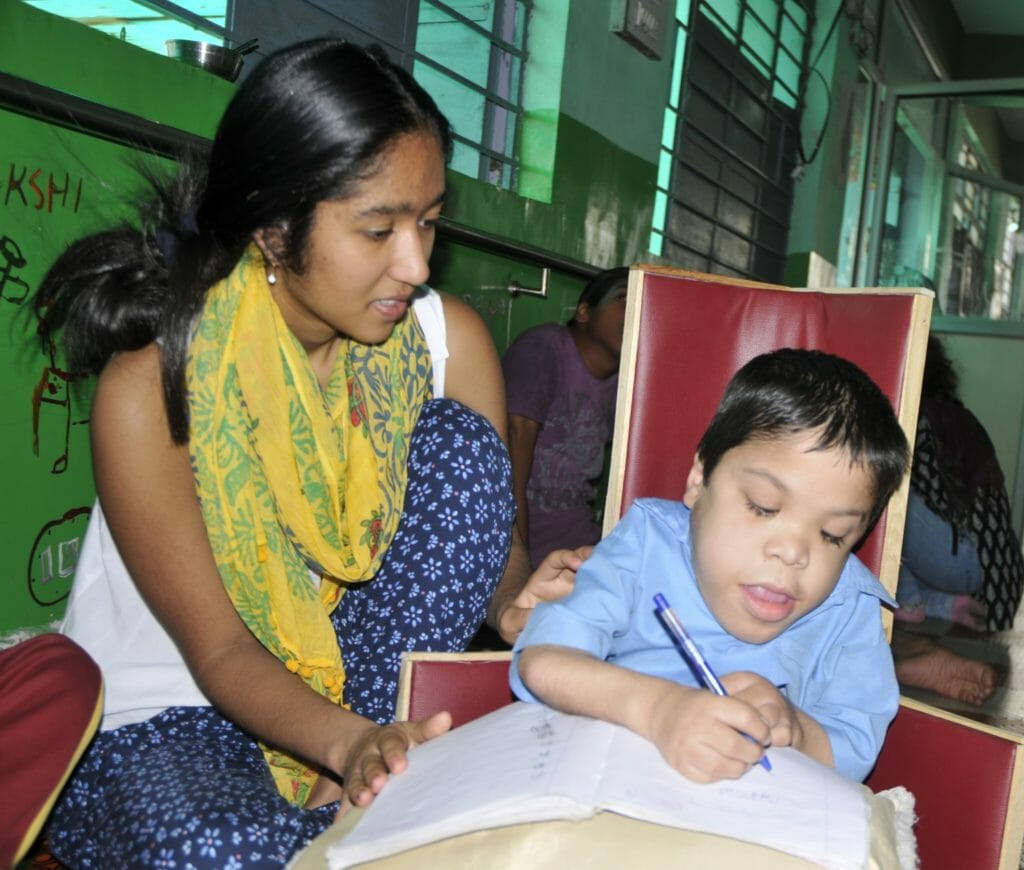 Dogra at the Chingari Rehabilitation Center in March 2014.
In March 2014, Dogra visited Bhopal, met with children and their families treated at the Chingari Rehabilitation Center and documented their stories in the film Assist Bhopal, screened at the Milwaukee Film Festival 2014, the All American High School Film Festival 2015, 13th Annual International Students Film Festival Hollywood 2015, Phoenix Film Festival Melbourne 2015 and at the “Global Public Health Film Festival- Toxic Exposures” at the 143rd American Public Health Association Annual Meeting and Public Exposition in Chicago.
On December 3, 2014, the 30th anniversary of the Bhopal Gas disaster, Dogra organized her first Assist Bhopal fundraiser dinner. Working with a team of dedicated volunteers, she helped raise $16,440, money that was sent directly to the Chingari Rehabilitation Center that serves this patient population. “The money was used to fund a nutrition program at the clinic, to buy food to feed these innocent children,” she said. She plans to return to Bhopal and the clinic in the spring of 2016. To date, Dogra has raised $23,811.
“My goal is to raise money and raise awareness of this forgotten disaster. The stories of these innocent children are heartbreaking. We can’t forget about them,” said the young filmmaker. Another goal is to facilitate environmental stewardship for this community, providing environmental conservation or restoration services and see the factory site cleaned up. “That’s the only way that the coming generations will not be born with congenital birth defects because of the contaminated ground water,” she says. “I am committed to helping these children for the rest of my life.”
Warren J. Hance, Jr.
When Warren Hance lost his three young daughters in a car accident, he vowed to pay homage to his children and honor their memories in a positive way. From that promise, the Beautiful Me program was born in 2009.
Aimed at young girls from 5 to college age, the program is designed to help them improve their confidence levels and self-esteem. Hance and his colleagues realized that women of all ages struggle with their self-perceptions – and the fight begins at an early age.
“We realized there’s a need, whether it’s the result of bullying or social media, to give girls the tools to help themselves with hot buttons issues,” Hance says. “Our hope is that we can reach girls at the right age to change the trajectory inside their heads a little bit.”
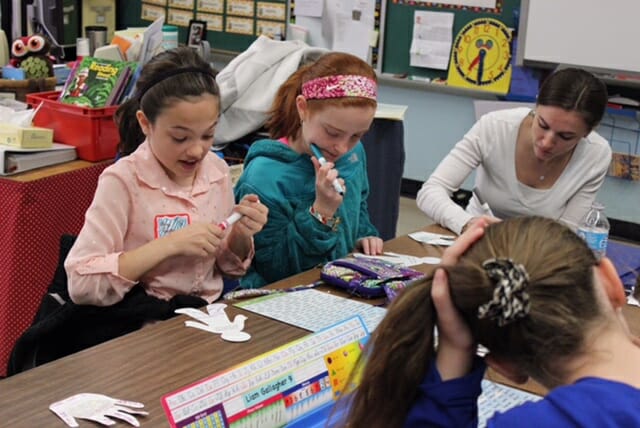 A Beautiful Me project director,Karen Finn(right), instilling the values of self-confidence.
To reach girls, Beautiful Me’s all-female directors deliver one of three age-appropriate versions of the program in elementary, middle and high schools, and colleges. According to one director, Kate Duffy, participants learn about honesty and self-awareness, are taught how to accept compliments without deflecting them, and they’re given 250 adjectives to help describe their unique personalities and accomplishments.
Initially meant to help 50 girls, the program has grown to help 19,733 as of this February. For example, Hance and his colleagues recently ran the program with female college athletes and sorority members at St. John’s University. Even among such a talented pool of young women, Hance says, the impact was significant.
“We received testimonials of how the program changed their thought processes on many issues for the better,” he says. “It didn’t matter whether it was an eating disorder or social anxiety.”
In fact, the program has been so successful that Hance says he wants to expand it to Boston, Philadelphia, and portions of Florida within the next five years.
Angelia O’Neal
Angelia O’Neal is the founder of M.E.N.S. Wear, Inc. (Making Employment the Next Step) which provides professional attire, soft skills and life skill development training to transform the lives of underserved young adult men and male youth. The mission for the organization is to provide a path to self-sufficiency for at-risk young adult men and male youth and to reinvent the positive professional male image.
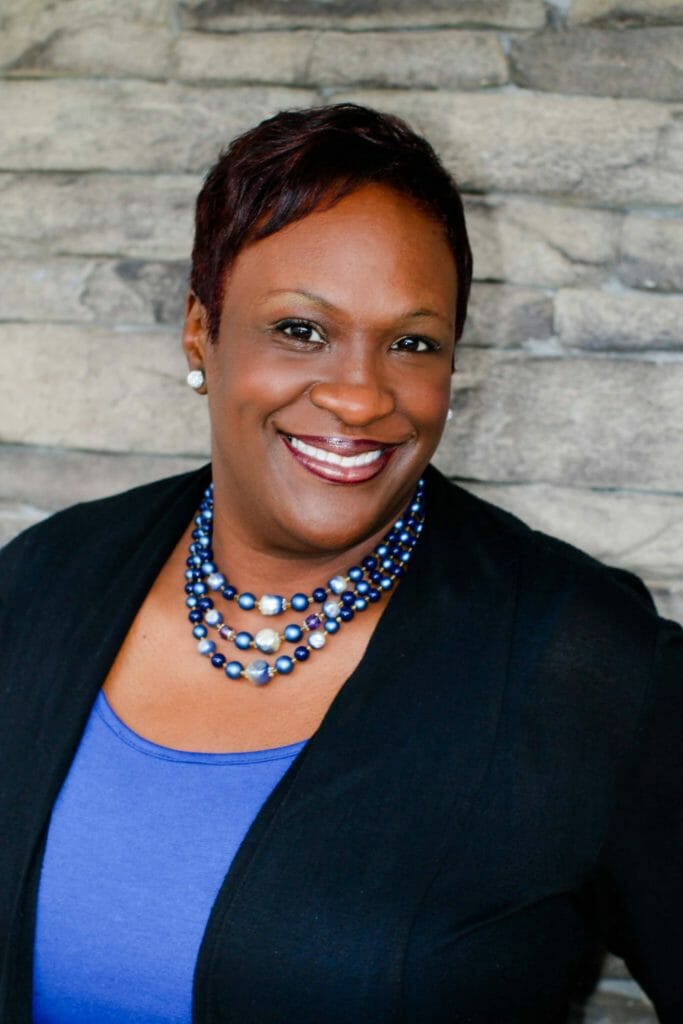 Angelia O’Neal
 O’Neal has worked tirelessly and dedicated numerous hours with the organization since its inception in 2004 and continually works to ensure the organization is doing its due diligence according to its core values.
Because of O’Neal‘s vision, the low economic and impoverished communities located in metro Atlanta now have an organization to equip young adult men with the tools needed to become self-sufficient and economically secure to support themselves and their families. To date, the organization has provided interview appropriate clothing and employability training for more than 1500+ young men. Operating as a social enterprise, similar to Goodwill, the organization is positioning itself to resale a portion of donated clothing and accessories to help support operation expenses while also providing hands-on retail and customer service training for clients.
Many organizations do not cater to men professional growth as well as their attire. O’Neal’s work inspires the community. The young men that participated in the organization’s program have gained invaluable interpersonal skills and experience for their future endeavors.
She had the vision to offer professional clothing to males in order to empower them to have success when seeking jobs; the same success that women have when going to interviews and to dress business professional while on the job. O’Neal wanted young men to have the same opportunities given in order for them to professionally enter the workforce.
O’Neal is the mother of two and works very hard to keep her home and the non-profit afloat. She has often times come out of her pocket to pay for part time workers to help keep the organization operating. She has kept the organization afloat for 12 years without compensation in order to help out the “hard to serve” population.
Florida Youth Advocates for Literacy and Aims for the Stars
Literacy is of the utmost importance as it relates to childhood education. What makes learning very difficult is the lack of access to key resources. While a trip to your local library may seem like the obvious choice to gain access to select resources, for many children in Jacksonville, it’s just not that simple.
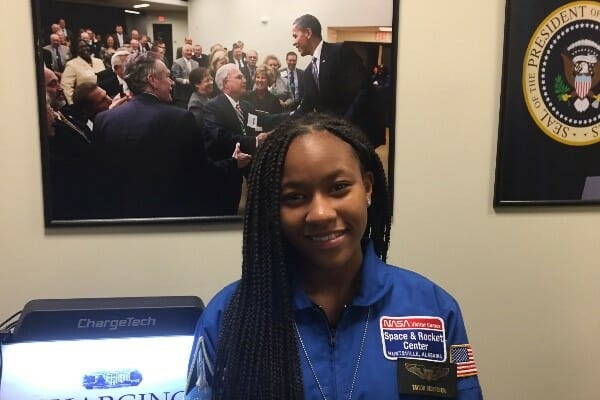
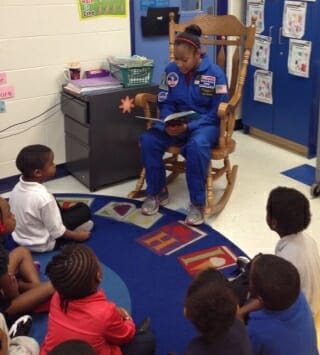
Taylor Richardson is helping educate the young children of Jacksonville. Her goal is to ensure that every kid in Jacksonville has a book to read. Aware of the power of literature, Taylor volunteers her time by donating books and reading to younger children. While her efforts to better her community is fascinating, what makes Taylor so unique is the fact that she is only 12 years old. “It feels awesome to be able to help kids have books,” said Taylor. “I love helping people and since I’m only 12 I felt this was a great way to help others, especially kids like me.”
In 2015, Taylor has read to hundreds of young students and donated over 1,000 books to her local YMCA, shelters and children’s hospital. With aspirations of her own to become the first African American female astronaut to travel to Mars, Taylor takes special pride in inspiring minority girls in the field of science, technology, engineering, and mathematics (STEM).
Just short of her teenage years, Taylor is already making a profound difference in her community. As the recipient of the 2015 Jacksonville Achiever award, she is not only sharing the gift of reading, but she is instilling a confidence in these children that will last a lifetime.
“I feel that I’m doing my part,” said Taylor. “It feels good to know that I may inspire another little person to help someone or just maybe become an Astronaut too!”
Elizabeth Dolan
At 16, most teens are busy with typical teenage concerns, like getting their drivers’ license, keeping up with schoolwork and spending time with their friends.
Lizzie Dolan isn’t your typical teen. At 16, the Tampa Bay teen founded a 501c3, organized a board of 24 high school students, planned and executed a 5K event, and raised more than $46,000 to help families of children battling cancer.
Quite an accomplishment, but even though she is also involved with Teens in Action in her high school, this event was outside of her comfort zone. “ I was terrified,” said Dolan, who celebrated her 17th birthday in February. “I couldn’t even picture the 5K until it was about to happen. It was so overwhelming. I was afraid to fail,” she said.
As is so often the case, giving back winds up benefiting the giver as much as the recipients. For this outgoing teen, powering through one task at a time and learning how to lead were byproducts of an idea that came to her in the shower.
A regular volunteer with Camp Agape NW, a weeklong Washington overnight camp for kids with cancer and their families, Dolan saw how tough a child’s illness is on the whole family.
“Each counselor is paired up with a child and spends the day with him or her, giving the parents a break. Seeing how much these families have to go through made me want to do something big.”
A runner on the high school track team, Dolan figured that running was something she knew – so why not hold a fundraising 5K? Despite her trepidation, Dolan’s can-do attitude made things happen. The first annual event attracted more than 400 runners. “It was a big commitment but it’s the best thing I’ve ever done,” she said.
Along the way Dolan met the challenges of planning an event with endless moving parts. She was gratified to meet doctors, caregivers and families and learned that leadership isn’t about control and doing everything yourself. “It’s really about inspiring other people and raising them up,” she said.
Braeden Q. Mannering
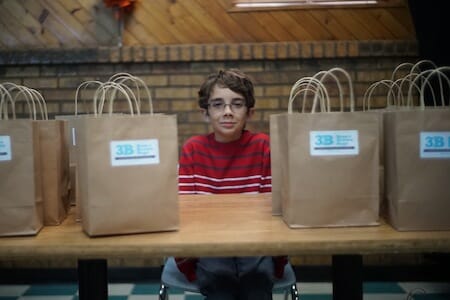 Braeden Quinn Mannering
When 9-year-old Braeden Quinn Mannering was selected to represent Delaware in 2013’s Healthy Lunchtime Challenge – part of First Lady Michelle Obama’s Let’s Move initiative – he had no idea where his tasty tortilla bowl recipe would lead him.
His first stop, the White House, was dramatic enough. As a guest at the Kids’ State Dinner, he was privileged to join the first lady in a flavor-filled meal that offered samples of many of the winning entrees.
But then Mrs. Obama asked him how he was going to pay this experience forward.
“At first I didn’t know,” Braeden, now 12, says. “But when we got home, I saw a homeless man on the street and it was raining and he had a cane and I couldn’t stop thinking of him.”
Upon arriving back at his house, Braeden packed up some food, grabbed a bottle of water and ran back to find the man. “I thought that this would answer Mrs. Obama’s question,” he says.
His impromptu act of kindness would grow into Brae’s Brown Bags (3B), an effort through which Braeden has given out about 5,000 lunch bags filled with healthy snacks, such as protein bars.
At first, Braeden and his mom, Christy, made sure they always had a packed brown bag on hand for when they encountered a homeless person on the street.
In addition to the snacks and water, they soon began to include contact information for local shelters. Then to make a bigger impact, they started personally delivering lunch bags to the shelters and soup kitchens – something they now do three times a week.
As 3B took off, Braeden began to seek food and other in-kind donations, hold fundraisers and even learned how to write grant proposals. He enlisted the help of students at the University of Delaware by staging bag-packing events.
And he started a spinoff effort, 3B Ripple Student Chapters, which talks to kids about the program and encourages them to participate with starter kits that they can personalize with their own designs and notes.
In addition to his travels around Delaware, Braeden has visited New York, New Jersey, Pennsylvania, Maryland, Florida and Georgia to tell his story. At a hunger conference that Braeden developed and co-hosted, nearly 200 students learned about food insecurity and healthy living.
“I’m always surprised – but inspired by – the fact that there are so many other kids who want to help,” says Braeden, recently a guest in the audience during President Obama’s final State of the Union address. “It’s great for them to see that they can have a voice in making things better.”