For Anika Jackson, Learn Grow Lead isn’t just the name of the nonprofit she co-founded to help fund education and other basic needs for poor, orphaned and formerly trafficked children in the developing world.
Jackson strives to live those words, to lead by example and mentor others as they learn to connect with the greater community. A Kansas native now based in Houston, Jackson’s commitment to service started young. “My mother was a social worker, as was my paternal grandmother,” she recalled. “When my mother would visit refugee and immigrant families, I’d play with the kids. It took me outside of my own world.”
Jackson with daughter, Siri.
A longtime supporter of the charitable outreach of the Junior Leagues, Jackson is committed to consensus building and fostering sustainability in both local and global community initiatives. With Learn Grow Lead, the goal was to help at risk children in Ghana become self sufficient by funding education. The group started funding 25 children, a number which has grown to 125. “We realized that many of these kids didn’t have a place to live, a pressing need that was impacting their future and education.” Working with influencers from the local community, funds were raised to build an orphanage, a safe place for these formerly trafficked young people to grow and thrive.
When her daughter Siri was in kindergarten, Jackson and a group of other mothers decided to do something to foster a commitment to giving back in their young children. “Like so many children, Siri is very lucky. We wanted our kids to grow up with caring hearts, aware that not everyone is so fortunate.”
That was the genesis of Houston Children Give Back, a grass roots non profit for families to host hands-on and educational events benefiting chosen and established charities. “We want our children to create positive change in their community,” she said. What started in 2014 with 75 children at a water walk event to benefit charity:water has mushroomed, taking on issues from literacy to urban hunger to affordable healthcare. In its first year the children and families of Houston Children Give Back raised $11,000 to build a well in Ethiopia, created 10,000 meals for Stop Hunger Now, made 50 Blessings Bags to be distributed to local homeless, and partnered with Canstruction, Houston Food Bank, The WATER Fund, Youth Philanthropy Connect and the Greater Houston Community Foundation.
“We have big ideas,” said Jackson, “and we’re slowly getting them off the ground.” Her daughter is 100 percent onboard, and recently used her seventh birthday party to collect books and toys for Legacy Health clinics in the city. “They sent her a thank you note, to her, not to me, and the look on her face was amazing. She saw that what she did made a difference. That’s the kind of spark we are trying to foster, a sense of philanthropy that will be life long.”
MusiCorps
It all started with a wounded drummer – a veteran who lost his leg to a road-side bomb in Iraq. He wanted to keep the beat again.
After that 2007 meeting, Arthur Bloom, a Yale School of Music graduate, launched MusiCorps, a conservatory-style music program within Walter Reed Army Medical Center that pairs injured veterans with musicians, helping them reclaim past musical talents or unearth unknown musical abilities.
“I wanted to create the best music program because there’s a huge need for it. Men and women coming back to Walter Reed could be there for years with very little to do outside of medical appointments,” said Bloom, who also lobbies music companies for instrument donations.
Since beginning, a growing number of professional musicians have worked with hundreds of wounded warriors. The musicians – who either volunteer or receive small stipends – work with patients in many ways, from providing lessons to helping create custom-designed prosthetics that enable patients to play music.
The program operates daily, but the length and frequency of meetings varies by individual. Many wounded veterans also opt to join the MusiCorps band. This ensemble has performed with several high-profile musicians, including Yo-Yo Ma and Roger Waters, and in multiple famous venues, such as The Colbert Report and the Kennedy Center.
With veterans sustaining substantial injuries and suffering from severe depression, Bloom said, MusiCorps’ impact stretches beyond the number of wounded learning to play music. Participants report reclaiming their sense of self through music, and many wives have credited the program with helping their husbands escape from dark mental places, he said.
“The music gives [the veterans] purpose, joy, and hope. It fills up a lot of time, but beyond that, you’re happy and productive, and your engines are going again,” he said. “This is serious. People get really good. That’s the key – it’s a genuine accomplishment. There’s nothing watered down about it. It makes people extremely hopeful and helps with their transition back to life.”
Michelle Sergi
Michelle Sergi was inspired by the children and families she visited through her volunteer efforts at Akron Children’s Hospital. She goes out of her way to accommodate and give hope to the families within the palliative care program.
Sergi has volunteered with the palliative care program for more than five years and has seen firsthand how every service and program provided affects the families and children involved. The hospital not only focuses on improving the quality of life of each patient, but also ensures the child feels at home and part of a family of passionate staff.
The Palliative Care Center serves children who have complex, chronic, or serious medical conditions regardless of ability to pay. Each patient receives customized care allowing each family to choose from a variety of programs and services that best meet their needs. These services include pain control, difficult medical decision advisement, bereavement counseling, and many more.
Caring for a child with a chronic or terminal illness is challenging, but this program guides families to make certain they are never alone. Sadly, many of the children must endure hospital visits lasting weeks or months in duration. This puts a significant amount of stress on the child and the caregivers. Sergi has met families that live in the Youngstown, OH area, and their biggest dilemma is trying to hold a job, provide care for all of their children and visit their ill child in the hospital over an hour away.
Meritage of Miracles was created to expand and support the pediatric palliative care program for Akron Children’s Hospital Mahoning Valley, therefore creating greater access to care and increasing quality of life for all children. Currently, there is only one pediatric palliative care program located in Akron, OH. Building another location will benefit more families and children. In 2014, the Akron palliative care program served more than 250 families. Sergi raised more than $41,800 to support the program in hopes of expanding it to other Children’s Hospitals in Ohio.
Sergi experiences and supports the miracles that are resultant of the program. Every time she volunteers she receives a list of patients to visit. Some of the children have never been outside of the hospital, others are not visited by their families very often due to the long distance they ahve to travel and some pass away never having a chance at a true childhood. What makes this painful truth brighter are the miracles from care. The children of the pallative care programs are provided with legandary medical care and served by volunteers like Sergi. Every child is entitled to this kind of care, and Sergi is working towards making this a reality for those outside of the pallative care cernter in Akron’s reach. Sergi is currently in medical school so she can continue to play a significant role in the care of these special children.
Justin Willis
Every child deserves a safe space to grow and have fun. Unfortunately, issues such as bullying hinders such growth. With one out of four teens admitting to have been bullied, and close to 15 percent of teens even contemplating suicide, bullying should no longer be viewed as an inevitable part of a childhood.
In 2010, Justin Willis founded Coaches Against Bullying (CAB). Hoping to eradicate the ills stemming from childhood bullies, Willis is on a mission. CAB uses a student centered approach, and details a step-by-step process and set of interventions to put a halt to bullying. With the focus and participation from students, CAB inspires children to come together to put an end to peer mental and physical abuse.
For more than a decade Willis has made education and giving back to youth a focal point of his life. Serving as an educational leader in east Texas, he has engaged thousands of youth challenging them to take a stand against bullying.
“Willis has inspired students all over Texas to report all bullying incidents,” said teacher and coach Greg Emerson. “I worked with Justin for three years and he really is an inspiration to me and for all students he encounters.”
Willis conducts presentations in different school districts throughout the year to emphasize the importance of reporting bullying. His presentations consist of research based strategies to help relate to students, as well as discuss the positive impact coaches can have on school culture.
Willis’ district wide presentations have helped create an anonymous drop box for students to report any form of bullying. Every school he visits adopts this drop box to allow students and teachers to feel open and safe about confronting bullying. Willis’ actions will foster a positive atmosphere for all children and can possibly help save a life.
48in48 volunteers gather in their teams to get started.
As a web designer and marketer, Atlanta-based Jeff Hilimire understands the importance of standing out in the digital arena. And he knows that for some nonprofits establishing a cohesive Internet presence can be time consuming and expensive.
“One day it occurred to me that the marketing community could use their skills to help out,” says Hilimire, 39. “Often, when someone wants give to back, they’ll think of feeding the homeless or helping to build a house – which is great. But they might not think of drawing from their own work experience.”
So, along with his friend and fellow digital marketer Adam Walker, 39, he began reaching out to an expanded network of peers throughout the city.
“What if we could build 48 websites for 48 nonprofits – in 48 hours?” they wondered. They dubbed their effort 48in48, and invited regional nonprofits to apply.
More than 100 did, and the team winnowed the applicants down to 48.
From left, 48in48 co-founder Jeff Hilimire, volunteer Lemon Hall and co-founder Adam Walker
Six months after planning started, the event was held last October. Nearly 160 digital marketing professionals – paired into teams consisting of two developers and one designer – volunteered to labored through the weekend.
After reviewing the materials submitted by the nonprofits, volunteers had just one extended phone call on Friday night with representatives from the nonprofits for whom they were designing websites. Then, they checked in again on Saturday night to update the nonprofits on the design and direction of the work.
“By Sunday morning, I was still nervous that we wouldn’t be able to pull everything off,” Hilimire says with a laugh. To encourage the volunteers to stay overnight, 48in48 provided sleeping bags and arranged frequent giveaways of products –including smartphones and laptops donated by sponsors such as Google and Samsung.
At the end, six nonprofit leaders judged the resulting websites, selecting three winners. The nonprofits were given the files for their new sites and were directed on the next steps toward getting them live.
In all, sponsors contributed about $150,000 in in-kind goods and services, while the value of the volunteers’ combined work product exceeded $1 million, according to Hilimire.
As the effort gears up to repeat itself in Atlanta this year, as well as in three other cities yet to be announced, Hilimire has ideas on how to expand the offerings to include such assets as new logos or social media content.
Most of the volunteers have indicated that they want to return this year, Hilimire says, and sponsors have also expressed interest. “It blew us away how much just about everyone has embraced this idea,” he says.
Kate Avino
Her Culture is an engaging online platform dedicated to expressing women’s languages, traditions, customs, and cultures. It is an organization that invites women to share their knowledge about their world – a world composed of dancing, storytelling, music, art, fashion, education, and so much more. Unfortunately, many women across the globe lack the true understanding and knowledge of what makes their cultures unique. Her Culture’s mission is to bridge these gaps and to draw all women towards global unity.
Kate Avino started her online magazine, Her Culture, as a high school student. Her Culture is intended to share the culture of women from all over the world so that there is more understanding, and a better knowledge of, the life of all women.
Kate Avino
Her Culture introduces women to women globally. Female writers are able to promote themselves through their experience with Her Culture. Since its founding in 2013, Her Culture has become global and has acquired over 85 female writers worldwide. The media platform has facilitated several partnerships with other magazines and organizations across the globe; Her Culture is now part of World Reader, which gives e-reader written material to students learning to read in developing countries.
Avino experiences living in an international community at New York University. She is devoted to her ambition of bringing peace and understanding to women globally using her education at NYU and her free online magazine. She is 20 years old and able to reach out to women of all ages by encouraging them to join the global community of women. Writers and staff for Her Culture are able to express themselves without censor, gaining experience and credentials.
Avino has a passion for a “culture revolution,” a coin she termed at Her Culture’s founding; to develop understanding through sharing information of global cultures. She helps women communicate to other woman. She encourages women to develop themselves through writing, through sharing their cultures and understanding life throughout the global community.
Tammy Crosby
For Tammy Crosby, encouraging athletic involvement and achievement for all individuals is a priority. But, ensuring individuals with disabilities have the same opportunities is of the utmost importance.
For the past decade, Crosby has coached athletes in a variety of sports as part of the Valdosta Lowndes Parks & Recreation Authority Special Olympics agency. In this role, she serves on the Area Management Team, partnering with Special Olympics programs throughout Southern Georgia to plan local and area events. She also directs Area Games for one of South Georgia’s Special Olympics “Areas,” including nine different counties.
As a mother leading her own family, the time she spends with the Special Olympics is an energy investment that doesn’t go unnoticed.
“Tammy spends countless hours of her ‘off time’ planning and even carrying out events locally in Valdosta so that individuals with disabilities have exciting things to look forward to and feel supported and loved,” said Crosby’s nominator, Whitney Warren, a volunteer and event manager. “She’s an inspiration to the individuals she serves and to anyone who encounters her while she’s with them. She treats them as her best friends and always encourages them to do their best.”
Currently, Crosby works with 88 registered athletes who have disabilities, planning practices and assigning volunteer positions to coaches. She also manages 30 Unified Partners – same-aged peers without disabilities who train alongside her athletes.
Locally, she coordinates more than 12 events and activities annually, including an “Eggceptional Egg Hunt,” a Special Needs Prom, and an annual Fall Festival. Additionally, she travels out of town with her athletes four times a years – 34 days at a time – so they can experience the state game competitions.
“Through her long-term commitment to Special Olympics Georgia, [Crosby] has undeniably changed the lives of many of the Special Olympics athletes that compete in Valdosta,” Warren added.
Vivian Weddle
The art of volunteering is all about effort and selflessness. You can never be too young or too old to volunteer. Vivian Weddle is the perfect example. Though she is in her 80s, her devotion and dedication toward giving back is remarkable.
Mrs. Weddle has used education as a tool to help transform and uplift her community. Through platforms such as the Boy Scouts of America, as well as local schools in the Goldendale, WA, community, both Mrs. Weddle and her husband help give back to children who need it most.
Weddle reading to one of the students at Goldendal Primary School.
Mrs. Weddle has been volunteering at the Goldendale Primary School for over 20 years. With a good portion of the students facing financial hardships, the support of the Weddle’s and their extra work in the classroom really pays off. Whether it’s helping students improve their reading skills, or assisting children with a purchase of books and school supplies, Mr. and Mrs. Weddle are truly difference makers in their community.
Mrs. Weddle’s dedication has been recognized all throughout the state, as she received a volunteer award given by the Governor of Washington State.
“Her love and generosity knows no bounds when it comes to kids,” said Lisa O’Leary, a teacher at the Goldendale Primary School. “We are so blessed to have her in our school and community.”
While most people in their 80’s have long been retired, Mrs. Weddle is quite the opposite. At 87-years-old, she is in the classroom four days a week and her attendance record is near perfect. Equating to roughly 510 volunteer hours each school year, regardless of the circumstance, Mrs. Weddle and her husband is consistently present to make a difference in the lives of countless of children.
Brian Butler
When a 911 call comes into the Prince Edward Volunteer Rescue Squad, anything can happen. Trauma resulting from a car accident is the most common reason for the call for help, but there can also be injuries relating to a shooting or stabbing, a health emergency like a heart attack or a crisis issue related to a frail elderly member of this community of 21,000 people in central Virginia.
Brian Butler
Brian Butler is prepared for everything. Butler, a volunteer with the squad since 1989, first got involved as a way to give back to the community. An attorney by vocation, he’d originally volunteered with the Hamden Sydney Volunteer Fire Department, where he experienced the importance of first aid training first hand. Over the years, Butler has continually raised the level of his first responder training, earning advanced certification in treatments relating to trauma assessment, airway management and cardiac intervention. His management skills have also come into play, talents that put him in charge of running the operations side of the community organization.
“It’s challenging work, but also very gratifying,” said Butler, who spends up to 16 hours a week in both management duties and call response for the squad. “In the best cases, you see an immediate benefit to what you do for the patient. When you hold somebody’s hand, deliver a baby, administer a medication that literally brings somebody back – there’s nothing like that.”
Besides upping his own skills, Butler is responsible for training dozens of first responders, mentoring other volunteers as they navigate the intense world of emergency calls. “It’s important to be compassionate, remain calm under difficult conditions and also be an independent thinker,” he said. “Usually there are just two people responding, not a whole team, so being able to think quickly and solve problems under pressure is key.”
“Brian is one of the best teachers I have ever met,” said fellow EMT Andrew Watters. “He has educated countless people in emergency medical techniques and is personally responsible for saving many people’s lives. His sense of pride and leadership is remarkable.”
Although not every call Butler has answered has had a happy ending, there was one in particular that he’ll never forget. “The first time I assisted a mom in delivering a baby, it was just amazing,” he recalled. The smile on his face happened to catch the eye of a pretty ER nurse at the hospital. “She said I was beaming as if I was father,” said Butler. That was 21 years ago, and that nurse is now his wife.
Amy Friedman and Dennis Danziger
Amy Friedman and Dennis Danziger
Two teens in Los Angeles, CA, attend a meeting of a new club at their high school for students who have a loved one in prison. Although the girls have been close friends since grade school, neither one knew that the other had a father serving time. They cry and hug each other, relieved not to have to carry this secret burden alone any longer.
Venice High School is not the only place where young people may have family members who are incarcerated. More than 2.7 million children in America have a parent in prison, according to a 2010 study by The Pew Charitable Trusts.* That’s one out of every 28 children in America and probably includes teens and children in nearly every school in the country.
“You’re not likely to be aware of these kids,” says Dennis Danziger, a 22-year-veteran English teacher in southern California high schools. “There’s such a huge stigma attached to even knowing someone in prison that kids tend to keep the sorrow and pain bottled up inside.”
That’s a pain his wife, writer Amy Friedman, knows firsthand. Her first husband was serving time in Canada when she met him while working for a newspaper and writing a series of columns on prison. They married while he was still in prison. Friends and family severed relationships with her, and her husband’s two young daughters refused to let friends or teachers know where their father was, for fear of being ostracized. Her husband was paroled seven years after their marriage, and they later divorced. But Amy has continued being a mother to the two girls, even after moving to California and several years later marrying Dennis.
Also a writer, Dennis has long encouraged his students to write about their lives and feelings. That’s how he found out some of his students were living with the pain of having a friend or family member in prison. In 2013, he and Amy came up with the idea of starting a club to provide a safe space for high school students who are struggling with the stress of having a family member or friend in prison, to nourish those students in body and spirit, offering community and opportunities for expression. With the blessing of the school’s principal, that’s exactly what they have done.
Today, P.O.P.S (Pain of the Prison System) meets weekly while school is in session, from 1:29 to 2:04 pm. After lunch (donated by area restaurants), students work on their writing or artwork. They share their work and are coached by Dennis, Amy and a team of dedicated volunteers. Sometimes there is a guest speaker. Student work is published on the website (http://popstheclub.com/), performed at an annual spoken word event and published in an annual anthology.
Says Amy, “Our vision is that no one should have to struggle alone with the shame, stigma and sorrow too often connected with having a loved one in the prison system.” That vision is spreading. A second and third P.O.P.S. club have opened at Conley-Caraballo High in Hayward, CA, and Los Angeles High School of the Arts; several others are slated to open this year.
“Our goal is to have a P.O.P.S. club in every high school in the country,” says Amy. “The club is life-changing for these students,” adds Dennis. “Kids shouldn’t be penalized for something a loved one has done. These clubs are a way for students to learn ways to cope and to feel that they are strong enough to create their own paths. Turning secrets into stories and poems can set them free. Why wouldn’t we want this experience available to students in every community?”




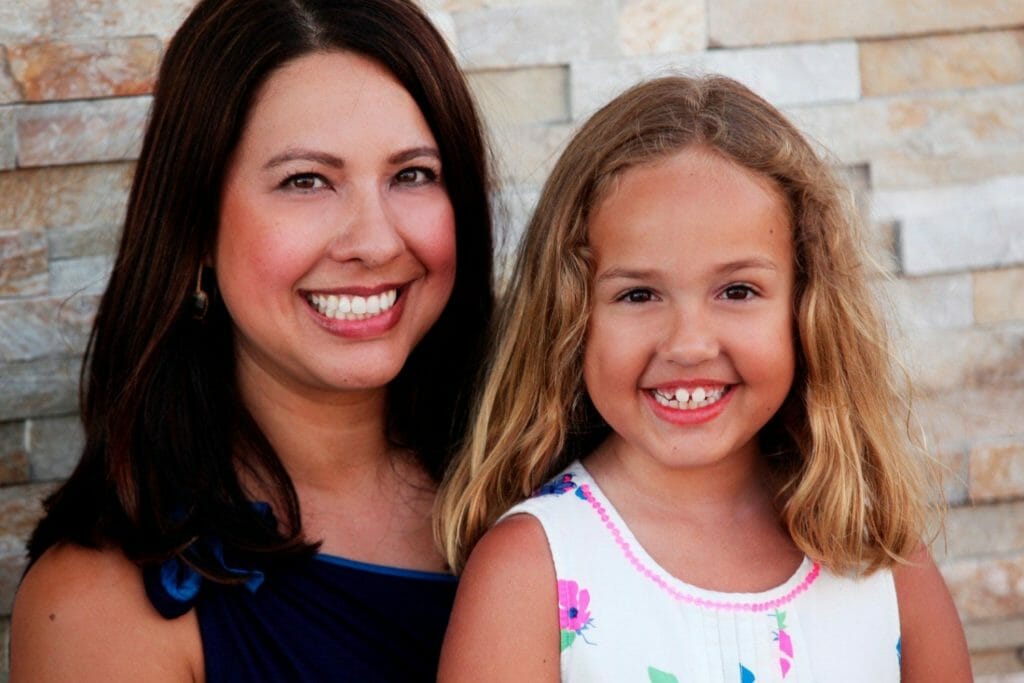 Jackson with daughter, Siri.
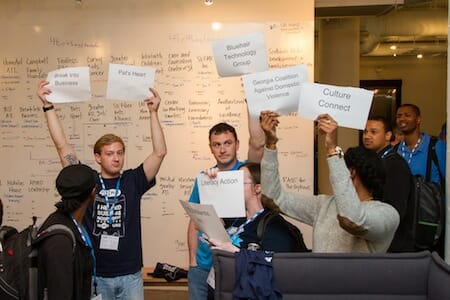 48in48 volunteers gather in their teams to get started.
 From left, 48in48 co-founder Jeff Hilimire, volunteer Lemon Hall and co-founder Adam Walker
 Kate Avino
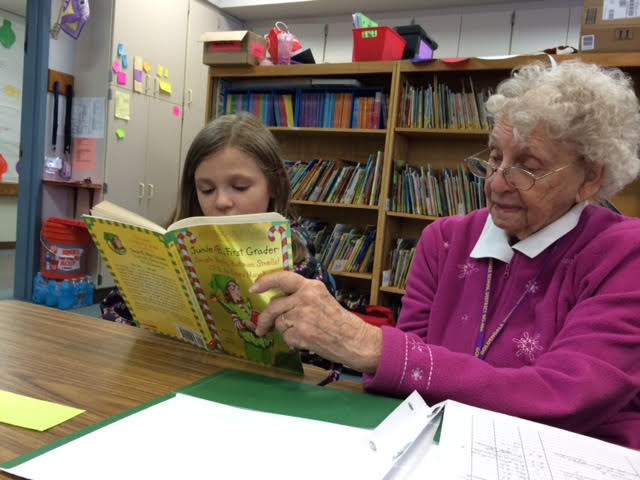 Weddle reading to one of the students at Goldendal Primary School.
 Brian Butler