Storytelling For Good: How One Journalist Found His Calling Again as a Volunteer
As a journalist for more than 15 years, Ken Lee, 42, relished using his skills as an impartial observer. But over time, covering stories of war, crime and catastrophe started to take its toll. Lee decided to take a buy out from his last employer and regroup. What he didn’t know was how important volunteering would become to his transition.
“I really had no clue what I would be doing,” he recalled. “I felt like I has lost my soul as a reporter. I wanted to plunge myself into something almost purely good. Getting involved in the world of volunteerism made me feel refreshed and focused on what’s really important.”
For the past year, Lee has volunteered full time at L.A. Works, a volunteer action center that creates and implements hands-on community service projects throughout the greater Los Angeles area. He started as a copywriter, and soon realized there was no social media plan in place. He stepped up and offered to build the organization’s social media practices from the ground up. “I wanted to take my experience and skills and apply them to telling good stories. Like most people, I felt starved for good news. L.A. Works has given me the opportunity to explore how my skills can be used in a different way.”
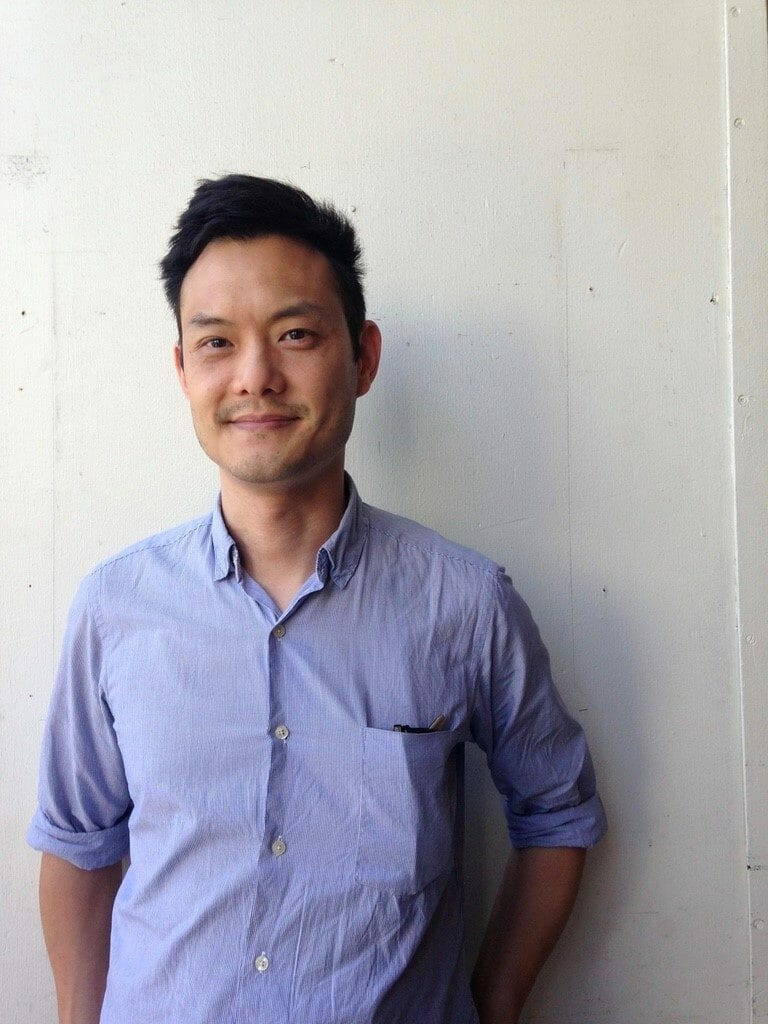
Telling stories through video, photos and digital content on platforms like Instagram, Twitter and Facebook has brought L.A. Works’ mission into sharper focus. For Lee, it’s been a year of learning on all kinds of levels. “I look at it as a radical sabbatical,” he said. “I went back to school in a sense and saw how my skills could create stories that would be transformative and inspire other people to volunteer and give back too.” Getting up to speed on social media marketing and how it can apply to the non-profit world was part of his learning process, as was getting behind the scenes of a non-profit and seeing how it operates on a day-to-day basis.
Lee will have to go back to working a full time job sometime in the near future. What that’s going to look like is still uncertain. “But whatever I do next has to have meaning and make a difference,” he said. “It can’t be about just making a dollar. My experience volunteering has helped me get realigned as to what’s most important in life. I want to produce content that inspires. I know people are starved for uplifting good news. I’ve found a lot of joy knowing that even though my career seemed over, it was actually reborn into something good. I can’t think of a better way to use my time than helping a nonprofit tells its stories.”
After Losing Her Son to Sepsis, She Advocates for Symptom Awareness
Each year, L’Oréal Paris and Points of Light recognize, celebrate and support Women of Worth who make a beautiful difference in their communities. For exceptional commitment to service, 10 honorees each receive a $10,000 grant to support their most cherished cause. One honoree, selected during the open online vote, receives an additional $25,000 grant.
“If this had happened to me or to Rory’s dad, Rory would have been saying, ‘Mom, Dad, we have to do something,’” said Orlaith Staunton, who lost her son, Rory, to sepsis in 2012. “We can’t bring Rory back, but it has become a mission for us to have people in our community and all over the U.S. … be able to recognize the signs and symptoms of sepsis, so they can advocate for their own care with doctors and healthcare professionals.”
Rory, a bright, ambitious 12-year-old, scraped his arm at school, where a bandage was applied to what was a minor injury. When Rory developed a fever and complained of feeling ill along with pain in his leg, his parents took him to see his pediatrician.
The physician suspected it was a stomach virus that was going around that “was nothing to worry about.” The family followed the doctor’s suggestion to have Rory get rehydrated via intravenous fluids at the hospital. The ER staff also thought it looked like stomach flu and saw no need to admit Rory. But the next day, Rory’s fever continued and he felt extremely ill. That night, he was admitted to the intensive care unit, where he died two days later.
Rory’s wound had gotten infected. His flulike symptoms were actually signs of septic shock.
When the grieving Stauntons learned that communication had broken down among the pediatrician, hospital staff, and lab – where blood tests had flagged a problem – they vowed, “Never again.” The couple established the Rory Staunton Foundation for Sepsis Prevention and dedicated themselves to educating both medical professionals and the general public in hopes of preventing similar tragedies.
They also formed the National Council on Sepsis, a nationwide support group for families affected by sepsis that is bringing together a network of volunteers to raise awareness and to push for legislation that mandates hospital protocols for treating patients with signs of sepsis.
Sepsis kills more than 250,000 Americans every year; yet, Staunton’s organization discovered that 60 percent of Americans have never heard of it. That’s because it’s almost always listed as flu, pneumonia, or something else on death certificates and medical records. “Whenever you see ‘complications of,’ such as ‘complications of pneumonia,’ that’s usually sepsis,” said Staunton. In some areas, medical examiners list the cause of death as either cardiac death or brain death, without elaborating on what caused the heart or brain to stop functioning.
Sepsis can cause serious illness or death very quickly, so early diagnosis is crucial. Early symptoms may begin at home, at work, or at school as an infection takes hold. Staunton said the Centers for Disease Control and Prevention used to think most sepsis infections were acquired in hospitals, “but then they discovered that nearly 65 percent of sepsis cases actually have it when they walk in the door of the hospital – so it’s community acquired.”
People over 65 are more susceptible to sepsis, notes Staunton: “There is a higher level of mortality if someone is transferred from say, a nursing home to a hospital, and a lot of the time, that’s because they are septic. This underscores the need for nursing home staff, in-home caregivers, and first responders also to know about and watch for early symptoms of sepsis.”
The seriousness of sepsis is compounded by lack of awareness. The Stauntons know hundreds of people in their New York community through their restaurants and bars in Manhattan and Queens, as well as by being active in their children’s school. “Yet not one person had heard of sepsis when Rory died,” recalled Staunton.
Martin Doerfler, a critical care physician who serves as a medical advisor to the Rory Staunton Foundation, said many doctors were taught a definition of sepsis that refers to much sicker patients. He agreed that sepsis is best diagnosed in the emergency department or doctor’s office, instead of in intensive care units, but described it as “a condition that is hard to recognize when it’s easy to treat and hard to treat when it’s easy to recognize.”
“We have, certainly for the last 30, 40, or 50 years, focused on the ‘easy to recognize, hard to treat’ phase,” said Doerfler. “We really need to move upstream and keep people from getting it.”
Staunton’s efforts to raise awareness of sepsis have already had a far-reaching impact. In January 2013, less than a year after Rory’s death, the state of New York adopted a mandated set of protocols, known as Rory’s Regulations, that require hospitals to screen patients suspected of sepsis and to expedite prompt treatment with antibiotics.
“You administer the fluids, you take a blood test, and you administer broad-spectrum antibiotics, and then you wait to see if there is infection there,” said Staunton.
The legislation also includes a Parents’ Bill of Rights that ensures parents’ right to know the results of blood tests and their child’s diagnosis, and that the hospital will communicate with the child’s primary care physician.
“They estimate Rory’s Regulations will save 5,000 to 8,000 New Yorkers every year,” Staunton added. “We are trying to push that into other states, so we established the National Council on Sepsis.”
Rory’s story has been shared in the media, including The New York Times, the Today Show, and Dr. Oz, alerting many thousands of readers and viewers to the dangers and symptoms of sepsis. Staunton has reached out extensively to the medical community through conferences, webinars, blogs, and forums, and is working closely with the American Academy of Pediatrics.
Chris Aiello of Pennsylvania said the Rory Staunton Foundation has given him “purpose and a voice” after he lost his daughter, Emily, to sepsis last year at age 14. Emily developed a blood infection following surgery. “Somehow they missed it,” said Aiello, who is now campaigning for legislation similar to Rory’s Regulations to be enacted in his state. “Orlaith and I both know we can’t bring our children back, but she has given me something to follow and to believe in. There are things we can do to save other lives.”
Staunton knows that a big part of the fight against sepsis is prevention and early detection. She also knows, as a mother – the Stauntons also have a daughter, Kathleen – that parents learn a lot from their children around the dinner table as they discuss, “What did you learn in school?”
A local teacher was so moved at Rory’s funeral that she developed a pilot curriculum for middle and high school classrooms in New York. Schools around the country are welcome to contact the Rory Staunton Foundation for information on the module. “Younger children can be taught in a fun way to wash their boo-boos” to avoid infection, said Staunton.
In addition to reaching out to schools and youth groups, such as Boy Scouts, Staunton maintains a Facebook page that has attracted more than 14,000 followers. “It’s become a place where people talk, and that’s what we want,” said Staunton. “When Rory died, we didn’t know what support we had, and we want people to know that there is support out there.”
The Rory Staunton Foundation was named a winner in the 2016 Global Sepsis Awards by the worldwide Global Sepsis Alliance. Irish America magazine named the Rory Staunton Foundation to its 2016 Irish America Health Care and Life Sciences 50 list. Orlaith Staunton was also awarded a Daily Point of Light Award, recognizing her commitment to this cause.
If Staunton were to win additional funding through the L’Oréal Paris Women of Worth program, she said she would use it to expand awareness of sepsis. “I would like to put together a program for kids ages 7 to 17,” said Staunton. “It would have a very empowering video. I would also have age-specific activities they could do, such as challenges and quizzes. Central to that would be that the older participants would raise community awareness and in doing so develop their own leadership skills. We would make first-aid kits and information packets available.”
Staunton, who is originally from Ireland, worked for years to help young people plan exciting experiences in international travel and student exchange programs. Her husband, also from Ireland, works for immigration reform in addition to running successful restaurants. Neither ever thought they’d find themselves advocating for prevention of a deadly medical issue. “It’s a lot of work,” said Staunton. “But when we started this, my daughter said, ‘Why did nobody do this for Rory?’ And so we know we’re doing the right thing.”
Show your support for Orlaith Staunton by voting for her, and learn more about the other extraordinary L’Oréal Women of Worth honorees.
After Caring for Her Husband, She Founded a Center to Help Caregivers Get the Support They Need
Each year, L’Oréal Paris and Points of Light recognize, celebrate and support Women of Worth who make a beautiful difference in their communities. For exceptional commitment to service, 10 honorees each receive a $10,000 grant to support their most cherished cause. One honoree, selected during the open online vote, receives an additional $25,000 grant.
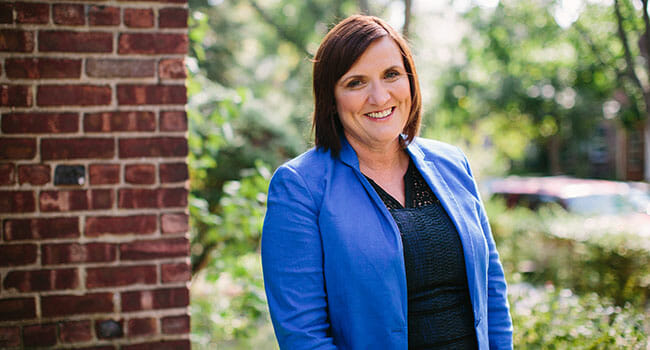
“Caregivers are an underserved population. It’s a silent population. People don’t realize how stressful it is,” said Marian Hamilton. “The life you had before doesn’t exist while you’re going through it. There needs to be a paradigm shift in the way hospitals view the family caregiver and how caregivers view themselves in getting more help.
Hamilton found herself in the bewildering, exhausting role of full-time caretaker in 2002, when her husband, Ken, was diagnosed with mesothelioma, an asbestos-related cancer of the lungs. The pair spent two years in and out of four different hospitals in the New York City area.
“He was getting good care, but I felt myself, as the primary caregiver, was always at my wit’s end, feeling so stressed out and so sick, trying to take care of him and my two teenage daughters,” said Hamilton. “I really felt that what would have been helpful to me was some place in the hospital – a caregiver’s center – where there would be somebody for me to speak to.”
One memory in particular bothers her: “My husband had been in treatment for a while, and he was in remission. Then he went back to the hospital for a checkup. I remember being in the lobby of the hospital and I got a call from the doctor, telling me my husband’s cancer was back. I burst out crying and not one person came up to me, to help me, to support me, to say anything to me, to see if I was all right. That was a wake-up moment for me to say, ‘Wow, hospitals needed to have a better way to deal with families.’”
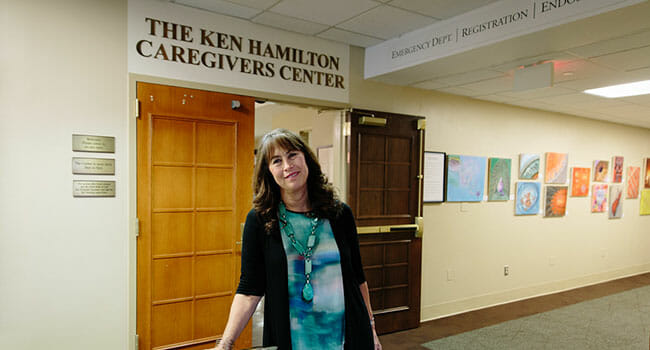
After her husband died, Hamilton floated her idea to local hospitals and eventually found a receptive home at Northern Westchester Hospital. The Ken Hamilton Caregivers Center was launched in 2006 and quickly resonated with the community.
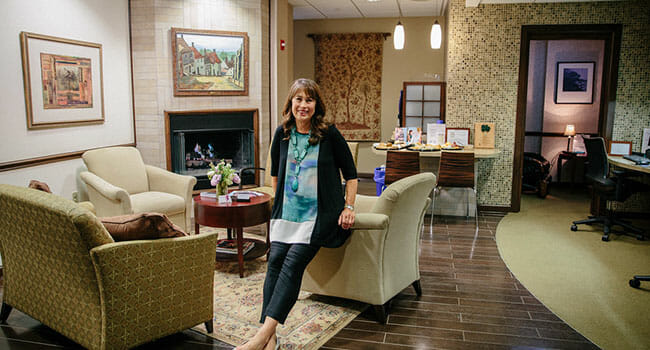
“We’ve raised more than $2 million,” said Hamilton. A soothingly furnished suite was built within the hospital, where caregivers can relax or meet privately with social workers, doctors, pastors, and others. A small endowment was established to pay for a full-time social worker and a part-time administrator who helps Hamilton set up similar centers in other hospitals. Volunteers, often coming from the ranks of former caregivers themselves, provide the key element of human support.
At least 10 other hospitals have replicated the KHCC – the need exists nationwide. Jerri Rosenfeld, a social worker who gave up her own clinical practice to work for the KHCC, noted, “Hospital stays are so much shorter now, so family caretakers have to take on more and more. We’re asking people to go home and change dressings and drain feeding tubes, etc. They’re completely overwhelmed.”
Ellen Travis, a volunteer, notes that anyone can be thrust into a caregiver’s role – or become a patient who’s dependent on family caregivers. She’s been both. During her father’s last six years of life, Travis, then a busy mother of four teenagers, juggled her own family’s needs with his repeated hospitalizations.
“There’s really nothing more isolating than those long days and nights, just sitting in a chair, waiting to see the doctor, waiting for information, feeling frustrated and the weight of the responsibility on your shoulders,” she said. Later, when Travis herself needed treatment for breast cancer, the newly created KHCC helped her family. Volunteers even sat with Travis during her chemotherapy sessions.
The KHCC concept helps hospitals in a multitude of ways, said Rosenfeld. “We’ve become the voice of the caregiver in the hospital. I sit on the ethics committee. I’m on the palliative care team. I attend rounds. We’re constantly sought out by doctors to attend meetings with families, to be a witness to what they’re telling the family, to help with the vocabulary, to help them deliver difficult messages.”
Rosenfeld said the hospital has improved its patient satisfaction ratings and has received hundreds of letters from grateful patients and families. “But the impact I’m most proud of is that so many volunteers are former recipients of our services,” she added.
The KHCC might be the first program of its kind to set aside a specific physical space in a hospital for caregivers. Cozy furnishings, a fireplace, and a gently gurgling fountain provide a soothing atmosphere for reflection and consultations. A bank of computers allows caregivers to check email or research medical information. Healthy snacks and beverages are also provided.
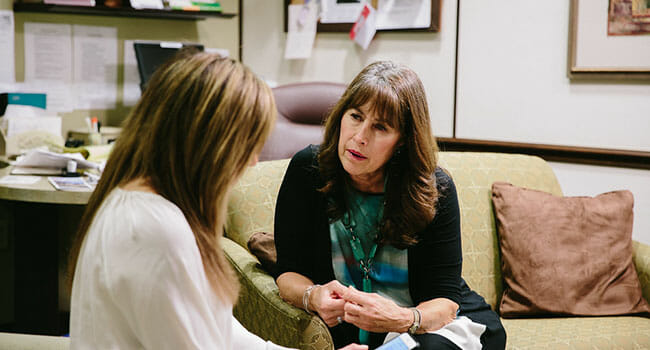
Volunteers provide nonjudgmental emotional support, but also practical assistance in everything from completing advance care directives to mediating disputes among family members over a loved one’s care. “We’ll go to care planning meetings; we help with physical discharges; we do a lot of end-of-life counseling. We’re the liaison between the families, the patients, and the care staff,” said Rosenfeld. Hamilton’s group has alerted many a doctor to a patient’s or family’s unspoken concerns or questions. In addition, the KHCC holds regular debriefings among staff to discuss how cases have been handled and ways to improve the program.
Hamilton is a frequent speaker in the community, and the center holds caregiver support groups for anyone interested, whether or not they are affiliated with or receive care at Northern Westchester. She continues to look for new ways to help caregivers. Last year, she launched an additional program called Stay in Touch on a pilot basis.
“One of the things I always wanted to do when I started the program 10 years ago was to help volunteers stay in touch with families,” said Hamilton. “Once you leave the hospital, that’s when your isolation is the greatest and you feel so alone and so stressed out. Stay in touch could remain a lifeline for them.
Hamilton and the Ken Hamilton Caregivers Center’s programming have been recognized by many different organizations. In 2014, the Caregiver Action Network awarded its Caregiver of the Year to Marian Hamilton and its Excellence in Patient and Family Engagement to the KHCC. At Northern Westchester Hospital’s annual gala, Hamilton was named Community Honoree. Hamilton also received the Quality of Life award from Volunteer New York, a division of United Way, and a Daily Point of Light Award.
Hamilton envisions several good uses for the L’Oréal Paris Women of Worth funds. “We have a replication program whereby we help other hospitals start their own caregiver programs,” she said. “We have written materials and a step-by-step manual that we give them. I’d love to make instructional videos that would show how to train volunteers, because that is the most time-consuming and challenging part of a caregiver program.” For example, Hamilton said a video could portray how to react when a caregiver is extremely upset, as well as many other scenarios.
“I’d also love to be able to put some of the money toward our new Stay in Touch program,” Hamilton added. “Since we piloted it a year ago, our statistics show it’s been successful; however, we don’t really have the staff to run this program. I would like to be able to hire a part-time social worker to run it. … In addition, I’d love to be able to provide more integrative services for our families, for example, a chair massage once a week.”
Finally, Hamilton would like to be able to bring in paid speakers for the program’s yearly symposiums.
Hamilton is frequently praised for her far-reaching goals. Rosenfeld, who has known her for decades, said Hamilton has always given back to the community, serving on school and library boards and being active in parent-teacher organizations. “Now her mission is that every hospital should have a caregiver system,” said Rosenfeld. “She is a true visionary.
Show your support for Marian Hamilton by voting for her, and learn more about the other extraordinary L’Oréal Women of Worth honorees.
With Free Getaways, She Helps Families Facing Breast Cancer Make Memories That Outlast Tragedy
Each year, L’Oréal Paris and Points of Light recognize, celebrate and support Women of Worth who make a beautiful difference in their communities. For exceptional commitment to service, 10 honorees each receive a $10,000 grant to support their most cherished cause. One honoree, selected during the open online vote, receives an additional $25,000 grant.
“The last time we had lunch with Leslie, she said to us as she departed, ‘Give me a big hug and a kiss. This may be the last time you see me.’ She drove away, waving, as we stood in sorrow. Soon afterwards, she entered into hospice care,” said Sandra Gunn.
Listening to Gunn share the poignant story of seeing her friend, Leslie Twohig, for the last time makes you realize that the loss is still painful. Twohig passed away on April 2, 2011, after a raging war with inflammatory triple-negative breast cancer that had metastasized to her bones. Gunn set out to honor the life and memory of her beloved friend and to dignify all women who have been told, “You have stage 4 breast cancer” by founding Leslie’s Week.
Vivacious, energetic and passionate, Gunn gave up a successful career as the owner of a high-end interior design firm in order to oversee Leslie’s Week. A stage 1 breast cancer survivor herself, Gunn met many stage 4 women when she was undergoing treatment and heard their heartfelt stories of hopelessness. “That’s why we work so hard to make memories that outlast cancer for these families,” she said.
Leslie’s Week provides donated vacation homes for one week to families with wives and mothers who are diagnosed with stage 4 metastatic breast cancer. “Leslie’s Week brings families together in a serene environment to join in a celebration of life,” said Gunn. “This is a time for a family whose mother is slipping away to create memories that outlast cancer.”
Stage 4 breast cancer is the final stage; there is no stage 5. While many breast cancer organizations focus on research to discover a cure, Gunn concentrates on compassionate care filled with “fun and happiness.”
“These families are financially devastated,” said Gunn. “All of their available resources are devoted to sustaining their loved one. It is a profound experience to work with families to secure a week in their lives when they can relax, connect, and make memories that last a lifetime.”
When she began in 2011, Gunn used her home in the Smoky Mountains of Tennessee as the vacation destination for the women and their families. Through the years, more homes have been donated to Leslie’s Week. Five-star accommodations now include Napa Valley, Ocean City, the Poconos, New Mexico, and Ft. Lauderdale, with more in the Smoky Mountains. “We want to gift as many families as we can, so we are always searching for additional vacation accommodations,” said Gunn.
Gunn works tirelessly to ensure that women and their families have all-inclusive vacations. She and her volunteers coordinate family activities, meals out, spa services for the women, entertainment venues, gift baskets, and other amenities to make Leslie’s Week as special and unique as possible.
Eligible families are nominated via the website and through corporate and nonprofit sponsors.
Gunn has assembled a community of volunteers, nonprofits, and corporate partners who have embraced Leslie’s Week, such as Gilda’s Club of Nashville, Dollywood, Antique Limousines, and the B Ocean Resort. Nationally known cancer institutes that support Leslie’s Week include Massachusetts General Hospital Breast Cancer Center, John Hopkins Cancer Center, the DeCesaris Cancer Institute, and others.
To date, 23 families have received vacations through Leslie’s Week. The greatest impact can be felt from families who reap the benefits of the experience. Chris Burke experienced Leslie’s Week in the Smoky Mountains in the summer of 2015, along with his wife, Melissa, and their three sons.
“Sandra is a relentlessly thoughtful person who works hard to coordinate a beautiful trip for a family that will soon have their world shattered,” said Chris. “Families, though they know what’s ahead of them, have no idea what reality really means. Sandra swoops in, briefly takes their minds off of the constant stress and worry, and provides a gift that never expires: memories.” Melissa passed away in January 2016.
“It is the mother who gives life, and it is her children who sustain it after she is gone,” said Gunn. That’s why, as an offshoot to the vacation experiences provided by Leslie’s Week, Gunn created an educational assistance fund to ensure the future of surviving children. By maintaining a database of these youngsters, Gunn monitors children who are graduating from high school and considers their need for financial assistance. “The number one concern a mother with stage 4 breast cancer has is for the future of her children,” said Gunn. “Through the educational assistance fund, we offer peace of mind at the end of life.”
Gunn has been recognized for her advocacy of women with stage 4 breast cancer. She was named one of 100 Everyday Amazing Individuals by Massachusetts General Hospital, received the Fire & Soul Award from DeCesaris Cancer Institute, and a Daily Point of Light Award.
As recipient of the L’Oréal Paris Women of Worth funds, Gunn would support more vacations for families and add to the educational assistance fund for surviving children.
Show your support for Sandra Gunn by voting for her, and learn more about the other extraordinary L’Oréal Women of Worth honorees.
Redbook Features Point of Light Honoree Michelle Hodgson
Michelle Hodgson created Children Helping Children to honor the memory of her third son, Cole. In lieu of gifts for what would have been his first birthday, the children who attended decorated bear packs and filled them with toys. The packs were later delivered to a local children’s hospital. That event signaled the start of CHC. Children Helping Children provides kids with a platform to share their ideas that ultimately serve as the inspiration for service projects benefiting nonprofits such as Kate’s Club and Camp Sunshine in the Atlanta-area.
To learn more about Michelle’s story, check out the November issue of Redbook – on stands October 18th.
Good Houskeeping Features Point of Light Honoree Barbara Victoria Allende
Barbara Victoria Allende is a VP at Citi, which funds ServiceWorks as part of the Pathways to Progress initiative. She volunteers at Jersey Cares and Youth Build Newark as a Success Coach. In her volunteer role, she helps first-generation college students ease their transition from high school to college. This work has become very personal for Allende, whose history mirrors the challenges of one of her scholars. As a teen mom, she struggled to care for her son and both of them ended up in foster care. Her life began to turn around, after school administrators took an interest in her by helping her apply for social service support and hounding her to finish high school. Now, as a mentor to a teen mom, she said, “I want so badly for her to create her own success story and hear about the amazing person she and [her] son become.”
To learn more about Barbara’s story, check out the November issue of Good Housekeeping– on stands October 18th.
Good Houskeeping Features Point of Light Honoree Kimberly Holder
Kimberly Holder is a volunteer for New York Cares. After the death of her mother, Kimberly began volunteering as a way to funnel the pain of her grief into something positive. “Each time I felt sad or lonely, I’d sign up for a project… I’d often go to projects with a heavy (yet hopeful) heart and walk away from projects feeling lighter and happier.” Holder has participated in numerous service projects including: distributing care packages to the homeless, painting murals, helping adults study for citizenship tests, and visiting the residents at Lott Assisted Living almost every month since 2010.
To learn more about Kimberly’s story, check out the November issue of Good Housekeeping– on stands October 18th.
Where Technology Meets Education, She Connects Underserved Youth with Inspiring Leadership
Each year, L’Oréal Paris and Points of Light recognize, celebrate and support Women of Worth who make a beautiful difference in their communities. For exceptional commitment to service, 10 honorees each receive a $10,000 grant to support their most cherished cause. One honoree, selected during the open online vote, receives an additional $25,000 grant.
Retired four-star general and former U.S. Secretary of State Colin Powell once said, “A dream doesn’t become reality through magic; it takes sweat, determination, and hard work.”
Monica Gray epitomizes Powell’s message of resolve and willpower.
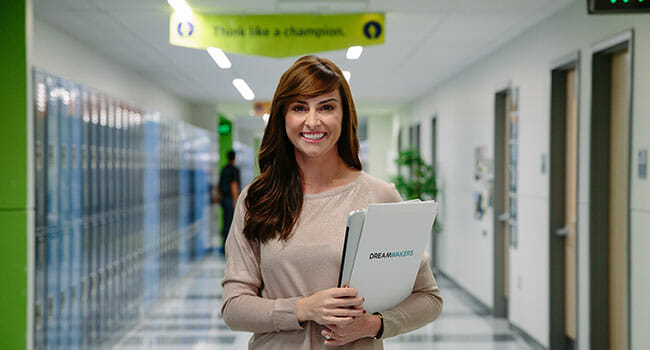
Gray put into action her dream to improve the lives of underprivileged children by co-founding DreamWakers, a nonprofit volunteer organization that uses video chatting to virtually connect diverse, dynamic professional leaders with public school children.
“We saw an opportunity to use free and existing video technology in a new and innovative way,” says Monica Gray. “We’ve taken something that already exists and elevated it for public service, democratizing volunteerism in America. The idea is simple, but the impact we’ve seen on students is real, far-reaching, and significant.”
More than two-thirds of employers have little or no interaction with children in public schools. In turn, children from low-income communities have fewer opportunities than their peers to engage with professionals from various career occupations.
DreamWakers bridges this chasm of disparity. Working with fourth- to 12th-grade teachers in schools that have at least 50 percent of their students on free or reduced lunch programs, DreamWakers virtually connects successful role models from a broad array of public- and private-sector organizations directly into the classroom to engage with students in a 45-minute interactive conversation or “flashchat.” DreamWakers’ ultimate goal is to expose students to the range of career paths so that they can better prepare for their future.
“We’re bringing the ‘real world’ into classrooms and allowing students to explore their professional passions early. In essence, flashchats serve as a launching pad for career dreams,” says Gray.
Since its founding in 2014, DreamWakers has connected thousands of children across 30 states and the District of Columbia with exceptional professional role models. Some of the more notable participants are television journalist Soledad O’Brien and White House political director David Simas. Examples of the organizations represented by DreamWakers’ speakers include Apple, Facebook, and the U.S. Department of State.
According to the U.S. Department of Education, more than a million students drop out of high school each year. Only 9 percent of students from low income brackets graduate from college, compared to 77 percent of students from higher-income families. DreamWakers is working to change these statistics by providing students with direct exposure to successful lawyers, chefs, writers, athletes, diplomats, and more who can tell their young audience, “You can do it, because I did!”
A staggering 84 percent of the classrooms DreamWakers works with have never hosted a speaker outside of their city limits. Following a virtual visit from an international business executive who grew up in his community, one ninth-grade student from the Bronx said, “He knows the struggles I face every day with peer pressure, violence, and issues at home. I became inspired to not follow the crowd, because they can be the reason why I might let my dreams go by.”
A DreamWakers virtual visit with a classroom in Newark, New Jersey, led to the trip of a lifetime for a group of seventh-grade students from Dr. E. Alma Flagg School. White House political director David Simas had a flashchat with the students and was so impressed by the interaction that he invited them to the White House.
“DreamWakers allows my students to virtually interface with mentors who encourage them to follow their passion. Consequently, DreamWakers re-ignites an aura of possibilities amidst my young scholars, and their renewed commitment to strive toward accomplishing their dreams is priceless,” said Principal Ganiat Rufai, who attended the Washington trip with students.
“Students can’t be what they can’t see; they need to engage with positive role models with whom they can relate,” says Gray, reflecting on her innovative model. DreamWakers vets speakers to ensure that they are exceptional in their field, come from all walks of life, and have a message that will resonate with young people.
Students aren’t the only beneficiaries of DreamWakers. In the amount of time it takes to have a lunch break, a speaker can have a positive, meaningful public service experience without ever leaving his or her desk. “DreamWakers empowers busy professionals to give back to schools that need them the most,” says Gray.
Gray has received numerous recognitions for DreamWakers, including the Toyota Mother of Invention Award, which celebrates women who actively contribute to their community and the world; the Founding Cville Award, which highlights leaders whose groundbreaking work inspires the next generation in Charlottesville, Virginia, and beyond; and the Grand Prize Award in the Media Rise Pitch Competition, sponsored by Newsweek, which supports making the world a better place through media, art, storytelling, design, or technology.
She has also been recognized with a Daily Point of Light Award.
Gray hopes to use the funds from L’Oreal Paris to create a new DreamWakers website with a self-service school-to-speaker matching system. This will allow teachers to directly select from the pool of vetted speakers, instead of DreamWakers making the match for them. “This would dramatically enhance our efficiency, allowing DreamWakers to serve far more students nationwide,” she says.
Show your support for Monica Gray by voting for her, and learn more about the other extraordinary L’Oréal Women of Worth honorees.
Storied Life of Social Justice Advocate Serves as Inspiration for Younger Generation
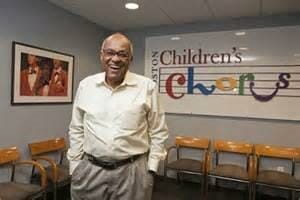
Few people have made their mark on a place as indelibly as Hubie Jones has.
He is responsible for helping start more than two dozen nonprofits that have done amazing work for Boston’s residents.
His broad efforts to blend people from all socioeconomic levels, races, ethnicities, religions and backgrounds to work toward social justice and common goals to improve their city have earned Hubie a reputation as a tireless doer, as well as numerous accolades, honorary degrees, and awards.
Hubie, who grew up in South Bronx, N.Y., says he knew from an early age the direction he’d be heading in life.
“By the time I was a junior at City College [of New York], I had made the decision to be a professional social worker,” he explained. “I was very much taken by working with young people in groups, and I was good at it. And I wanted to provide some leadership to change some things, too.”
He credits strong role models, starting with his parents, with instilling in him the importance of making a difference in the world. While working as a Pullman porter for 40 years, his father also volunteered for his union, advocating for coworkers’ rights. Jones’s mother went to college, became a teacher, and earned a master’s degree while raising a family. The Joneses brought their five daughters and son up in the Pentecostal faith, which Hubie recalled being “warm and supportive.”
Hubie also had the honor of being taught in college by noted psychologist, scholar, and civil rights activist Kenneth Clark, and of hearing The Rev. Martin Luther King Jr. speak in person.
He remembered that life-changing talk – Oct. 28, 1956 in Boston – because he was so taken with King’s “oratory, philosophy and intelligence that when I left Jordan Hall, I felt like I was levitating – like my feet weren’t touching the ground! That’s the night that sealed my decision to work toward social justice. I was already on that path, but then it was like, ‘Oh! Here we go!’”
By that point, he was earning a master’s degree from Boston University’s School of Social Work (where he later was a professor and dean) and wanted instant improvements for his adopted city. Over six decades, he said he came to accept the concept of “revolutionary patience.”
Patience paid off. When asked about his far-ranging accomplishments, Hubie said he is most proud of helping to erase the racist reputation Boston earned because of ugly riots during school-bus desegregation in the 1970s, and for the work he’s done to ensure that all children are educated fairly.
And he made note of City to City, an ongoing program that sends diverse groups of Boston leaders to a different city or country each year to learn best practices that could help Boston. Delegates pay their own way, and Hubie raises scholarship money to cover those who can’t afford the trips.
The first venture in 1997 was to Atlanta, to help learn more about solving racial issues. In subsequent years, groups went to Northern Ireland in 1998 when the peace accord was signed; to Barcelona, which had turned around its seaport; to China; to Silicon Valley; to San Francisco – each time learning more ways to help Boston.
“This was important because Boston was pretty parochial, with people always feeling like others should learn from us, not the other way around, when the fact was we had a lot to learn,” said Hubie.
The group’s 2001 trip made a particular impact on Hubie. He had been hoping to start an organization that could provide “authentic social integration” for kids and found it when listening to a Chicago Children’s Choir performance.
By 2003, after a lot of persuasion, he had secured enough support to start the Boston Children’s Chorus with 30 diverse students. Today, the elite, high-level chorus has more than 500 members, and it still draws all types of students – from struggling inner-city to wealthy suburban neighborhoods.
Through their travels all around the globe – “these students serve as ambassadors of the city and also get to know that they are global citizens with a responsibility to help others,” Hubie said. “I’m extremely proud of this chorus. Its members are committed to singing at a high level and doing work in the community. It’s joyous.”
Not surprisingly, the BCC sparked other ventures for Hubie, including a program to help create a new generation of leaders.
Isabel Koyama, a Bates College junior, had warm memories of her time in the chorus – and of Hubie Jones.
“The BCC was such an integral part of my growing up, and he was there a lot in the first couple of years that it started,” said Isabel, a member from ages 10 to 18. “He was an authority figure that I always wanted to be my best self around. He has such integrity.”
She recalled having little awareness – especially early on – of the differences between chorus members’ backgrounds and circumstances.
“We didn’t think about any of that stuff. We were there to sing together.”
And when she did start to recognize the diversity, friendships and respect for one another had been solidified, and any differences were immaterial.
Isabel said her longtime involvement and traveling with the chorus sparked her interest in anthropology, her major, and in Buddhist studies and music, her minors – and taught her to embrace differences.
That’s been Hubie’s goal all along.
“When you’re willing to be collaborative, anything is possible,” he said.
Breast Cancer Patient Takes Every Opportunity to Volunteer, Even in Face of Death
“Just because you have a medical problem doesn’t mean you have to stop living life.”
These are the words Lynn Hubach says to the patients at the clinic where she volunteers — and also the words she herself lives by.
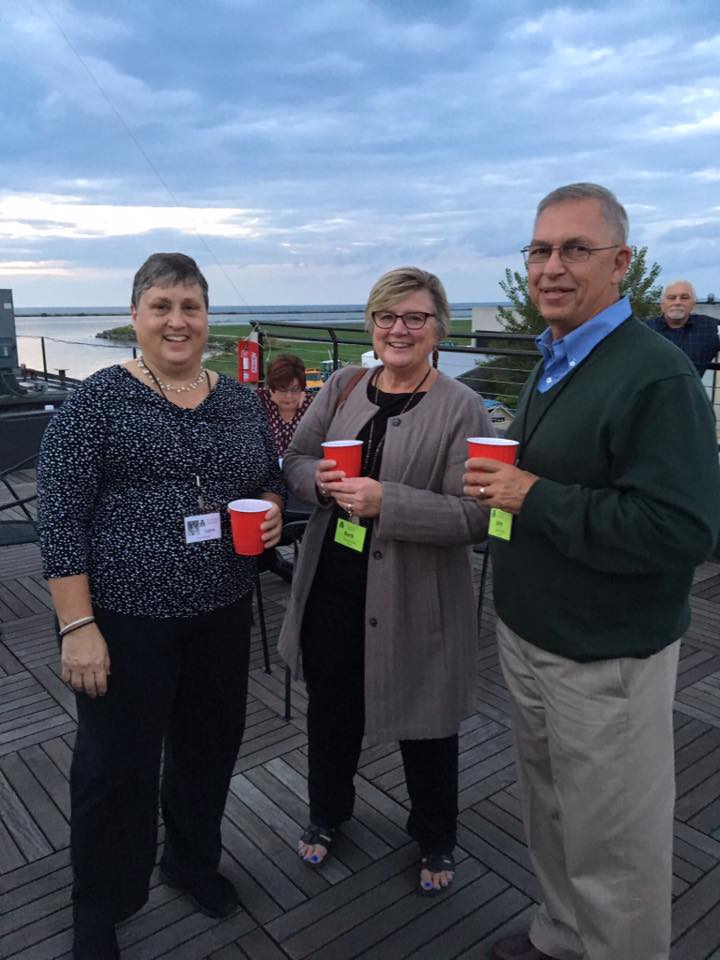
Lynn, 58, was diagnosed with breast cancer 12 years ago and after being cancer-free for 10 years, it returned. She is now facing stage 4 breast cancer.
“I was totally devastated,” Lynn said as she recalled the moment she found out her cancer had relapsed. “[Just] the day before, I walked in a cancer survivor’s lap at a Relay For Life thinking ‘Hey! I’m one of the lucky ones.’”
While her doctor told her that she might only have three to four years to live, Lynn is not letting that stop her commitment to volunteerism.
“If I see something that’s interesting, I jump right on it and say ‘I want to do that!’ I don’t stop and think about it.” Lynn explained.
When it comes to volunteer work, Lynn doesn’t discriminate. She’s done it all — renovated houses for homeless veterans, helped at-risk high school students with their resumes and even weeded out a butterfly garden.
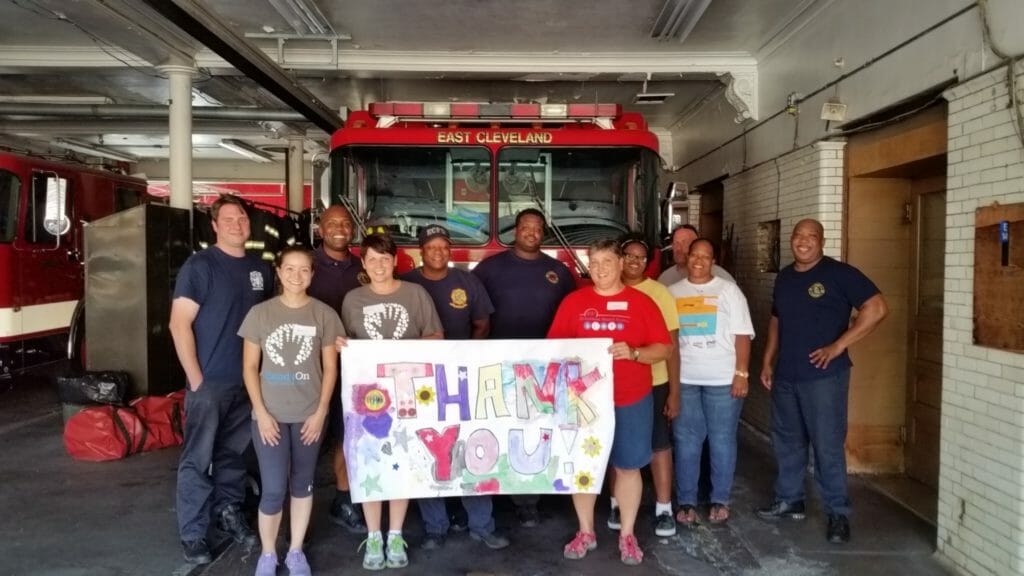
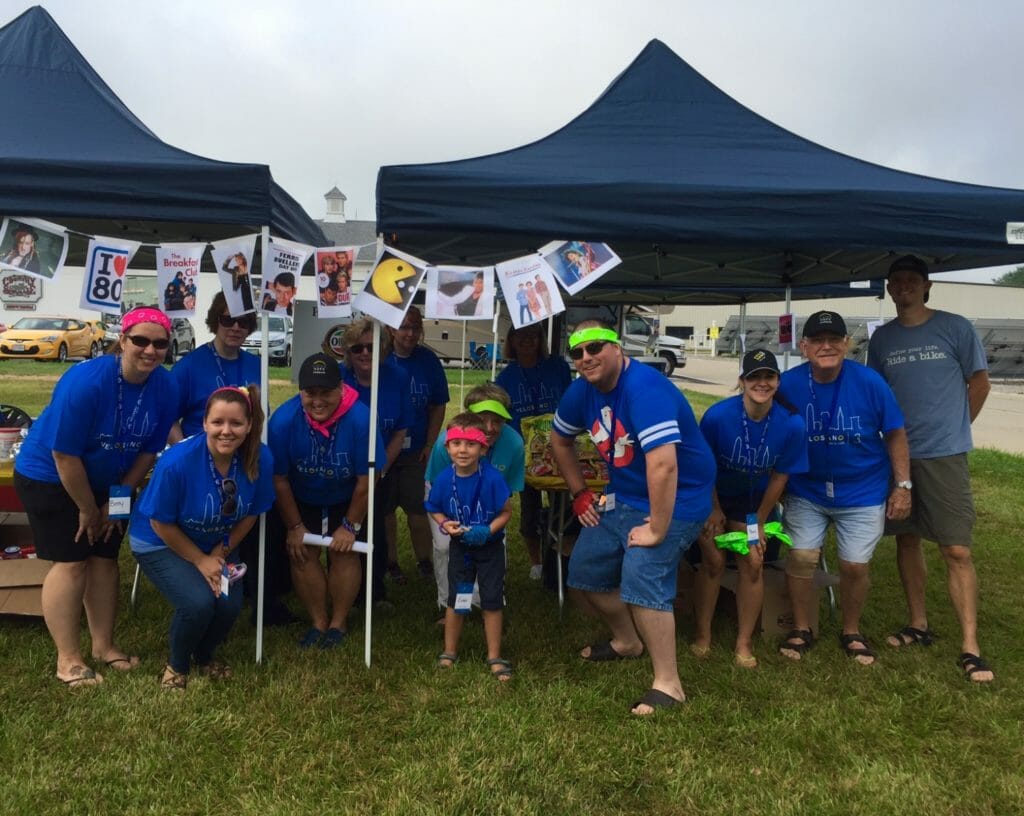
Currently, Lynn volunteers regularly with several organizations: HandsOn Northeast Ohio, Portage Animal Protection League, VeloSano, a biking fundraiser to support cancer research and MedWorks, a clinic that provides free health care.
Out of all the volunteer work that she has done, Lynn said the organization closest to her heart is Medworks because she empathizes with the patients.
“I like doing the medical [volunteer work] because some people come in very nervous about their health and I can reassure them,” Lynn said.
As her cancer progresses, Lynn finds it difficult to do volunteer work that requires physical labor. Even so, she finds her own ways to give back, such as sitting down and helping with registration at events.
Emely Vallee, the director of programs for HandsOn Northeast Ohio, has worked with Lynn for the past two years. She described her as a volunteer who goes the extra mile to make sure the community gets what they need.
“She inspires me in that no matter what, you don’t give up and keep doing good for other people — no matter what situation you might be in,” Emely said.
When asked why she volunteers, Lynn said, “You just want to help people. You see what needs to be done and you know it’s going to be appreciated. And if not, at least I got something out of it. I just get a lot of satisfaction from helping people.”
Lynn believes that people who don’t live paycheck to paycheck have a moral obligation to give back. She also believes that by volunteering, people can better the world and better themselves. Lynn, who grew up in an upper-middle class, suburban home was able to visit different parts of her city and meet people of different backgrounds, through volunteering.
“I found so much more understanding of racial differences, religious differences and a lot of things through volunteering,” Lynn said. “If more people volunteer, that could be a possible one of many solutions to the current race problems the country is having.”
Lynn plans to keep volunteering as long as she can and she hopes she can inspire others to go out and volunteer themselves.
Lynn’s personal passion project is rescuing animals, especially cats. If you’re inspired by Lynn’s story, consider adopting a pet or volunteering at animal shelter near you. Check out All For Good to find other ways to make a difference, in your area.
“I know that it’s very likely that I’ll be passing away soon, but I’ll be satisfied that I did everything I could,” Lynn said.