Marie Monsen
Before Marie Monsen joined the Annandale Christian Community for Action she pursued a career in the Department of Indian Affairs and the Peace Corps. But her life’s trajectory was established much earlier. The seeds to make a difference were planted by her mother who told Marie as a child, “Leave this world a better place.” Early on as a board member, she decided more could be done for housing in the Annandale, Lincolnia, Bailey’s Crossroads and Culmore areas of Fairfax County. She took initiative to involve the organization in the Rebuilding Together program helping low-income homeowners. But the reach of Marie’s service extended far beyond that. After the shock of 9/11, Marie met with a small core group seeking healing strategies which led to her cofounding the Interfaith Communities for Dialogue. Since its inception, this group has grown in its size and importance in our community. Marie’s heart for service keeps expanding. She indeed took her mother’s advice…the world is already a better place because of Marie.
Annandale Christian Community for Action Vice President, Diane McEldowney says, “Marie has been the champion of building the Fairfax County community’s interfaith and multicultural understanding, respect, harmony, and unity through her 15 years of fostering interfaith and multicultural dialogue.”
Karla Jamir
Karla Jamir is an active, vibrant member of the Huntley Meadows community. Karla began volunteering in 1995 where she emerged as a natural leader. As Herbarium Coordinator, she takes on the responsibility of maintaining the Herbarium – an entirely volunteer lead effort that identifies and catalogues plant species within Huntley’s 1556 acres. Karla’s dedication to the Herbarium ensures an historical record of plant life and activity that is available to the public, botanists, and any other professionals who may need it. Without Karla at the helm, the Herbarium would likely not be able to continue. She is a subject matter expert, and spends significant time keying out and identifying difficult to differentiate plants. Her work with the Resource Management Volunteers includes supporting staff goals and completing important and varied projects. She coordinates and trains other volunteers on important project work such as invasive species pulls and litter pick-ups. While Huntley’s 200,000 visitors per year may never see Karla, they are impacted by her efforts at every turn.
Emma Houston
Despite her young age, Emma has proven herself to be one of Northern Virginia Therapeutic Riding Program’s most talented volunteer leaders. The organization provides equine assisted activities for children and adults with disabilities, youth-at-risk, veterans and their families in an inclusive, community setting. As a day coordinator, Emma oversees the care of the 14 therapy horses on the property during her shift and manages a crew of up to 20 volunteers. Working with a team of all ages can be challenging, but Emma is able to communicate with every member of her team creating a focused and inclusive environment. Furthermore, she ensures that horses are prepared for lessons and that volunteers are organized so that they can properly support the riders.
Denise Mackie-Smith
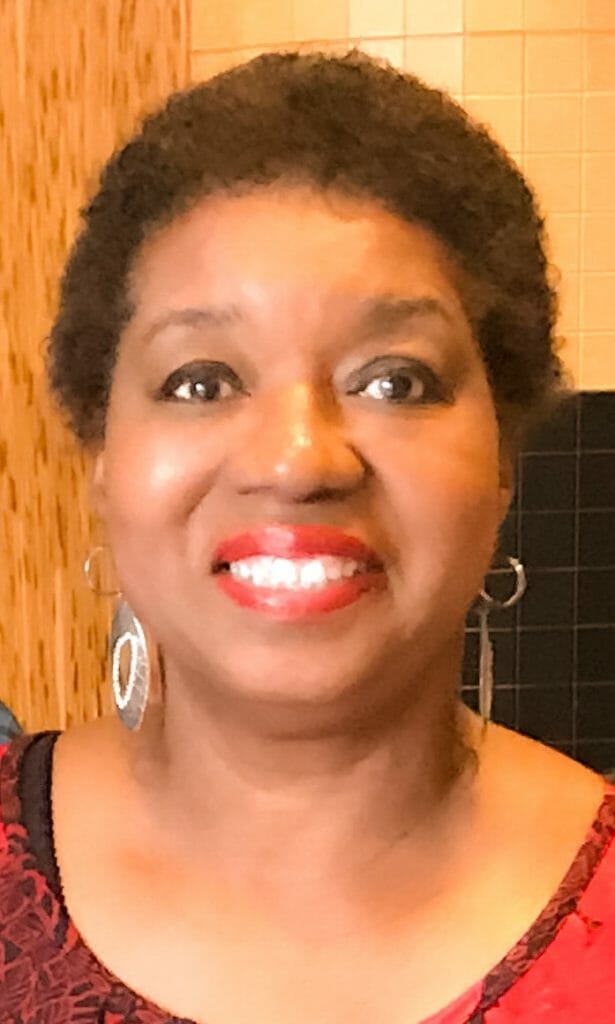
Denise, better known as Dee, started out volunteering with New Hope Housing in the education and employment resource center, where she worked one-on-one with shelter clients in their search for employment. One of the largest barriers from moving out of a shelter and into stable housing is unemployment or underemployment. Dee helped clients apply for jobs, update their resumes and work on interview skills. Dee then began volunteering with the development team, assisting with inputting donor information into the database, as well as other needed administrative tasks. Dee connected her organization, Les Gemmes, with New Hope Housing to provide additional volunteer meal servers at New Hope Housing’s annual Black History Month celebration and the “Out of Poverty” class. Dee is also an integral part of the Giving Hope Tours, during which she speaks about her experience as a volunteer and why she has become so deeply involved with the work that New Hope Housing does. Having her speak at the tours gives attendees a peek into how community members can make an impact on the clients that New Hope Housing serves.
Sami Smyth, a volunteer coordinator at New Hope Housing, says “Dee has been one of our most proactive volunteers turned advocates. Not only does she serve, but she has also opened up her network to serving, inviting new individuals from the community to learn and participate in work that New Hope Housing does.”
Michel Margosis
Michel Margosis has dedicated his life to making the world a better place for everyone. He has spent more than a quarter-century ensuring that the memory of the Holocaust is not forgotten. Margosis, a Holocaust survivor himself, focuses on planning the “Day of Remembrance,” the nation’s annual commemoration of the Holocaust and often speaks to his personal experiences. His message is an important one: “Do not forget the horrors of the past and do not allow them to happen again in the future.”
Margosis has also served as the Lee District appointee on the Human Rights Commission for 13 years, working tirelessly to protect the rights and freedoms of everyone in our community. Michel’s service doesn’t stop there. He also volunteers with numerous groups within his retirement community, Greenspring Village, including leading a French Discussion Group, guiding tours of the Holocaust Museum, and helping to start a Parkinson’s support group.
Carolina Calderon
Carolina Calderon first learned of Cornerstones a few years ago. Cornerstones is a nonprofit organization that promotes self-sufficiency by providing support and advocacy for those in need of food, shelter, affordable housing, quality childcare, and other human services. Carolina was so impressed by the work of the Laborers Day Center that she decided to become a volunteer. For the past six years she has been one of the most faithful and reliable volunteers at the organization. Almost daily, Carolina walks two miles each way to get to the Herndon Neighborhood Resource Center to ensure English classes run smoothly or to assist staff at the Cornerstones food pantry. Carolina’s most outstanding qualifications are her commitment, her compassion and her work ethic. Moreover, the fact that she walks 20 miles a week, rain or shine, is a huge testament to both those she serves and those she serves alongside.
Nate King, Cornerstone’s Donations and Drives Coordinator, says “We have many wonderful volunteers, but there is no one who works as hard to come and give of herself as Carolina. She is a model for doing one’s best to help others while helping to improve the community one person at a time.”
Longtime Conservationist Fights to Protect Land for Future Generations in West Central Indiana
Think of volunteering, and images of helping children, older adults, or rescue animals might pop to mind. But, donating time and energy also means providing services to protect the environment.
For Phil Cox, working with the Ouabache Land Conservancy in Indiana for nearly a decade has been exactly how he’s offered up his time and energies. With land and wildlife being a finite resource, Phil devotes his time to protecting properties, making them accessible for public enjoyment, and taking steps to improve and restore them. It’s an endeavor he hopes will benefit generations to come.
Points of Light talked with Phil about his volunteer service as president of Ouabache Land Conservancy.
Why did you decide to get involved with the Ouabache Land Conservancy?
I got involved back in 2008 and have been working for the Land Conservancy ever since. I was originally involved with the Ouabache Audubon Society, and they asked me to be on the Land Conservancy Board. It was just getting started up. I decided to go to a meeting, and it looked like it would be great thing for West Central Indiana to protect its land for future generations. So, it’s just another name for a land trust. We own properties in our area, and we hold conservation easements on properties that are privately held so they can have deed restrictions. That means that private land can’t be developed even after the property changes hands. It’s protected for what we call perpetuity — forever. We currently own three properties like that and have other conservation easement properties. We have approximately 643 acres. We’re an all-volunteer organization. All of us are on the advisory board, and we’re really dedicated to this. We don’t get paid anything for it. We just love what we do in protecting the land.
Why is this work so important?
They’re not making any more land. If we just keep letting it be developed, we won’t have any left for future generations of wildlife species, plants, and animals or for future generations of children, grandchildren, and great-grandchildren. They won’t have any places to enjoy nature. People often have to drive great distances to see nature, and we want to keep some of those places closer to home.
How do you get the community involved?
We try to get the word out frequently. We have activities throughout the year to involve the community and get people to come out on nature hikes, fall foliage hikes, and spring wildflower hikes. We encourage them to bring their family and children and get out into the woods and the prairies. We want them to see the spring wildflowers and see what’s happened in nature. People don’t often get to do that. That’s how we like to introduce people to what we do. Each of the hikes varies in the number of people. We’ve had anywhere from six people to 30 people on the hikes. We have an annual meeting where we try to get a lot of involvement for our fundraiser, and we plan the hikes quarterly. This year, we’ll be adding a spring birding hike.
How do you acquire more land for the Conservancy?
A lot of the time, people will contact us directly if they want to save the property they own from development. They want to see how we could help them and see how we accomplish our goals. Sometimes, if we think a property is important and it’s adjacent to one we already own, we’ll contact the landowner to see if he or she might be interested in working with the Land Conversancy. If there’s interest, wonderful. If not, we leave material with them — a brochure and contact information — so they can get in touch with us in the future if they change their minds.
Depending on how motivated people are and what legal issues might be in place, acquiring a new property might only take a month. Sometimes, it takes longer.
What are you hoping to accomplish with your volunteer work?
Our mission statement is that we protect, preserve, and restore the land in West Central Indiana to provide habitat for wildlife, scenic beauty, improve water and air quality, all while enhancing the quality of life.
Right now, we’re just getting started on a $200,000 grant from the Indiana Department of Environmental Management. We’re trying to help clean up the Otter Creek Watershed. We hope to complete it by August 2019. The goal is to write a watershed management plan that would have different conservation practices that would help control the largely man-made pollution that’s in Otter Creek.
That’s keeping us pretty busy right now. It’s a project that’s a little bit outside of what we would normally do, but we felt it was important. It will show that grassroots efforts like this one — with only a few people working together toward a common goal — can make great things happen.
Alaska Mom Seeks to Raise Awareness and Support Families Living with Kabuki Syndrome
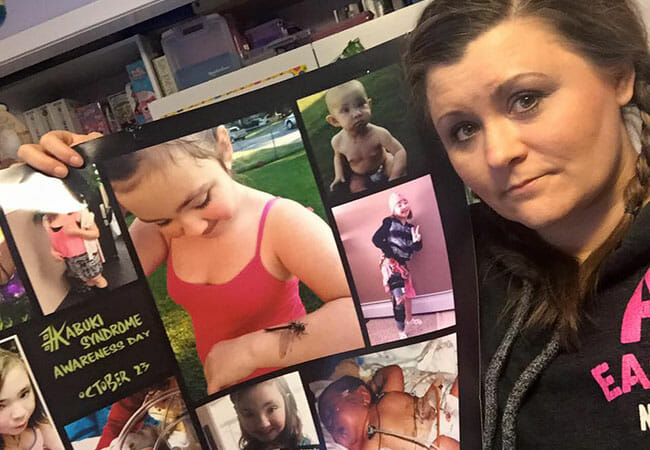
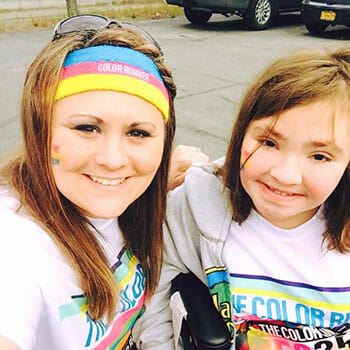
In 2001, Rene King’s newborn daughter Rikki was diagnosed with Kabuki Syndrome, a rare and complex genetic disorder. Rene knew that the road ahead would not be an easy one; but she had no idea how many lives she would eventually touch through her family’s experience with Rikki’s condition.
Kabuki Syndrome affects approximately 1 in every 32,000 births. Those born with the condition can present a variety of symptoms, including developmental delays and intellectual disabilities, weak muscle tone, scoliosis and cleft palates, to name a few.
In 2013, Rene came across a social media post by a fellow Kabuki mom in Pennsylvania whose daughter had been turned away from a local charity that said she was too old for the specific toy she wanted for Christmas. Rene reached out to the mom and asked if she could “adopt” their family for Christmas and buy the gift to send to her, all the way from her home in Wasilla, Alaska.
“We ended up finding out that several families with Kabuki Syndrome in the lower 48 were experiencing financial hardships as well and were not able to provide Christmas for their kids,” said Rene. “So we thought, ‘OK, well we’ll just find sponsors for these people’ and we called it Operation Kabuki Christmas.”
But Rene’s efforts didn’t stop there. Observing the lack of resources and awareness surrounding Kabuki Syndrome, she launched All Things Kabuki to raise awareness and provide support to families experiencing emotional and financial hardships.
“We saw a need in the community and saw that there was no active nonprofit in the United States advocating for Kabuki Syndrome,” Rene said. “We started creating cards to hand out and mail to families with a really brief description of Kabuki Syndrome because so many people would get on our forum and ask, ‘How do you explain it to people?’ because it’s so complicated. We just started making resources available.”
Now a certified 501(c)3 nonprofit, All Things Kabuki has expanded beyond Operation Kabuki Christmas, running a variety of programs such as the Random Acts of Kindness Campaign, the All Things Kabuki Birthday Club, the All Things Kabuki Family Mentor Club, Operation Kabuki Warrior, and the All Things Kabuki Pen Pal Club.
Since its inception, All Things Kabuki has helped countless children and families affected by Kabuki Syndrome – including Rene’s own family.
“It has allowed me to realize that this journey with this rare disease, while it’s very complex, we have the greatest people in our community,” she said. “It makes my journey as a mom raising a child with a rare disease easier, because I know there are so many other people that understand what we’re going through. It’s changed our life.”
The Young Family
For the Young family, volunteerism is simply part of everyday life. In an era where screen time is the priority, mother-daughter duo, Shayla and Samantha, find value in spending time with each other volunteering with the Lorton Community Action Center (LCAC) pantry distribution. LCAC serves more than 300 families each week, providing food, basic needs and educational opportunities to seniors, those with disabilities, military members and low-income families in southeastern Fairfax County. Seeing the need, the Young family has not only volunteered their time to LCAC but brought additional food and items in to donate. Volunteering for the Youngs started as a desire to get involved in their community and to teach their daughter the value of giving back. Shayla fell in love with the time she spends at LCAC, often preferring to volunteer rather than hanging out with friends.
Linda Patterson, executive director of LCAC, said “It would be impossible for LCAC to serve the number of families in our community that come to us in need, without the help of hundreds of volunteers…The opportunity to impact others in our community through the gift of time, is one that volunteers give to our families! I am grateful for Shayla and Samantha, and their commitment to helping others in Fairfax County.”
AmeriCorps Alum Fosters Environmental Stewardship in Texas Youth
As vice president for the Board of Directors and volunteer leader for Trinity Environmental Academy, Dhriti Stocks works with the environmentally focused charter school in South Dallas to support its mission to use the Great Trinity Forest as a truly green learning laboratory. Her interest in nurturing young people comes naturally. As an alum of AmeriCorps Alliance of North Texas, Dhriti understands the power of harnessing youthful energy and enthusiasm to do good. A leader in the local chapter since 2010, Stock works diligently to make North Texas an incubator for young learners and emerging leaders.
What inspires you to volunteer – is it something you’ve learned from family/friends/church group?
When I was young, I loved the library. I would visit the Dallas Public Library’s Renner Frankford branch weekly – sometimes more than once per week – and all of the librarians and staff always encouraged me to read and to get involved. As I got a bit older, they told me there was an opportunity to volunteer in the summer. I was so captivated by the institution and all its caring staff had done for me, that the jump to volunteering was easy and fun. When I had the opportunity to join the AmeriCorps national service program after college, I rediscovered my love of service and volunteerism. I’ve never stopped and I don’t plan to!
Describe your volunteer role with Trinity Environmental Academy. How has your role grown and evolved?
I serve on the Board of Directors for Trinity Environmental Academy. I began as a volunteer on the committee to envision North Texas’ first environmentally focused charter school, helped write the application to the state, and then ended up as a leader on the Board of Directors. It has been a fascinating journey, and I have learned a lot. Most importantly, I’m proud to be one of the supporters of an organization that is helping transform the way urban students are educated in the context of the environment – especially with the continent’s largest urban hardwood bottomland forest right in our back yard!
Why is it important to you to support your community in this way?
I care very deeply about education. I have always believed in the power of education to change lives, but when I served in AmeriCorps, it became even more apparent to me that the educational opportunities that were available to me – and the support structures – are not available for all students. Serving with Trinity Environmental Academy enables me to change that for children and youth who live in a highly underserved region in North Texas. All children can harness their future if offered the right support, and if I can help them connect with and strengthen their community in the process – it’s the highest possible honor.
What’s the most challenging aspect of your volunteer service?
Serving on a Board allows you to see so much of the amazing work being done in an organization. I have the joy of seeing Trinity Environmental Academy’s children showcase what they are learning, attending graduations and events, and supporting fundraising efforts. It’s a job that never stops, and sometimes it’s challenging in the moment – looking at Board policies or scouring financial data. Fortunately, that never lasts long!
Why is it important to you to foster environmental stewardship in these young people?
I didn’t grow up in the United States; I actually grew up in Sydney, Australia. The difference in the amount of outside time and environmental interaction that students in schools there receive – especially at younger ages – and that of those in the United States is astounding. Especially among the urban children who attend Trinity Environmental Academy, some are so unfamiliar with the natural environment. Outside time and exposure to the environment are important and have been shown to have so many positive outcomes in individuals’ lives, but it’s also our responsibility as a species to steward our natural environment and to understand the interaction between our built and natural environments. I think our students need this now more than ever.
Why do you think it’s important to give back?
If we don’t do it, who will? I took the AmeriCorps pledge seriously and I carry this commitment with me – forever. I think it’s so important to give back and to be engaged, because engagement in your local community is the easiest, quickest, and most fulfilling way to change the world.
Are there any future partnerships, programs, or events that you are excited about?
Trinity Environmental Academy partners extensively with the local HBCU, Paul Quinn College, and I’m excited about the collaborations and programming opportunities that will come from our partnership. For example, they have an organic farm on campus that they converted from a football field, and we have a vermicomposting (composting with worms) center starting up. Hopefully, our students will be able to help fertilize the farm with black gold from the compost learning center.
What do you want people to learn from your story?
I’d encourage everyone to get involved, no matter how they can. Attending a meeting about a cause that you care about can lead all the way to serving on the Board of a great organization. There are so many amazing ways to plug in, and every little bit of involvement from all of us matters a great deal.
Do you want to make a difference in your community like Dhriti? Visit All For Good to find local volunteer opportunities.