Theater Veteran Teaches Kids Mindfulness in His Second Act
As a career thespian, Andrew Nance had no idea that he’d been engaging in the age-old practice of “mindfulness” throughout his entire adult life. It wasn’t until after he left his theater work to embark on another adventure that he discovered the tie between his theatrical endeavors and the mind-calming behavior.
Today, through his volunteer efforts with the San Francisco Education Fund, Andrew runs Mindful Arts San Francisco, a mindfulness program for students ages 4 to 11 years old. With each session, he teaches the students to focus and be in the moment. It’s an effort, he said, to help them learn to control their actions and emotions, particularly during stressful times.
Points of Light talked with Andrew about why he volunteers and the benefits his work brings to young children.
Why did you want to get involved with the San Francisco Education Fund and teach mindfulness in the classroom?
I’d been running a theater school for almost 20 years called The New Conservatory Theater Center. Around the 18th year, I decided I needed a new chapter in my life. I left the theater, and I started taking classes in positive psychology, life coaching, and various sorts of self-help classes as a way to stimulate and spark that fuel in all of us that ignites when we find something we really love to do.
I took a week-long teachers’ symposium at the Greater Good Science Center at UC Berkeley. They train teachers how to help students have better self care, as well as teach the teachers how to have self care. There was an organization there called Mindful School, and they started playing theater games with us to convey the principles of mindfulness. That was a huge moment for me because I realized I’d been studying mindfulness for 30 years with my theater background.
In that moment, I decided this is the journey I wanted to go on. And, I signed up for Mindful School’s online curriculum training and very quickly found two classrooms to test out mindfulness training. I didn’t feel like I was an expert, but these were kindergarteners. I went in and I thought I had one really successful class and one mediocre class at two different schools.
Describe what you do and the benefits it provides to participants.
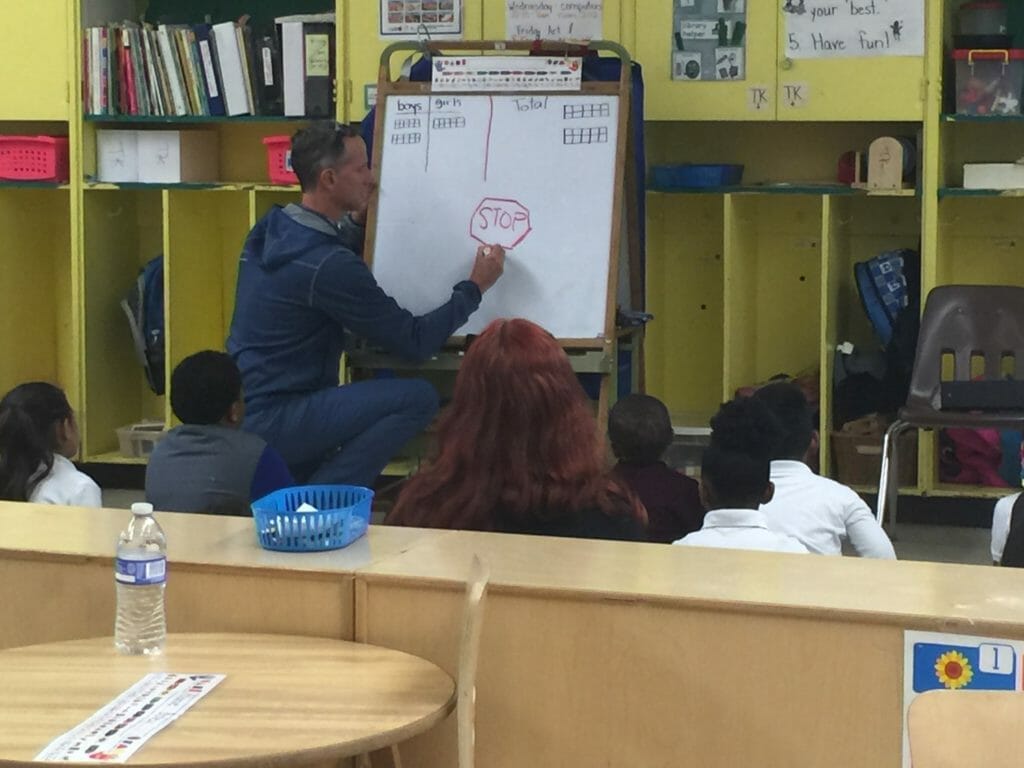
I work with 4-year-olds to 11-year-olds, and we go in and check in with the kids. How are they feeling physically? We ask them to do a thumb gauge – thumbs up for good, down for bad, middle for feeling so-so. We ask how they’re feeling mentally and emotionally. Then, we ask them to do focus time. That’s sitting quietly for anywhere between 1 minute to 3-to-5 minutes, depending upon the age of the participant. What that allows them to do is learn to notice their brain’s desire to be reactive. Just witness all those jumbles of thoughts flying past them at light speed and not to reach out to try and grab them, but to just let them pass by.
We’re reminding them they have the habit of grasping on to every thought that floats by. But, I’m trying to teach them that thoughts are just a suggestion. We don’t have to act on every thought we have. Then, we either read them an original story I’ve written–there are 13 stories in all of the curriculum–or we play a theater game that is mindfully-based. We have a question and answer period about the story or the game and how they see the concepts in the story or in the game in their own lives. One story might be about the value of taking deep breaths throughout the day or the value of noticing our emotions or what we’re hearing right now. It could be able the value of noticing what we’re able to feel right now and how we can be kinder and more compassionate to ourselves and others.
How do the children respond?
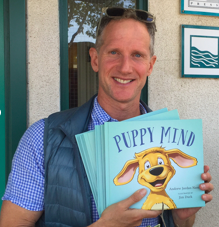
Their reaction depends on the day. Some kids can focus every time I’m there. Some kids can’t focus. In that moment, I ask them to just notice their minds and their bodies. If your puppy mind is wandering off, just notice it and come back to your breath. Sometimes that really helps. Other days there’s so much trauma in their minds from what might have happened earlier in the day or worried about what might happen that it’s really had for them to feel safe enough to do this work. But, mostly, they’re very receptive to the idea that they can calm their minds.
How is the program structured?
I have 20 volunteers that I work with now. I’ve created this program called Mindful Arts San Fransisco. Over two years, I’ve gathered the volunteers that go into the classroom once a week for 30 minutes. They go into two classrooms when they’re at the school, so they’re there for one hour a week.
Basically, I reach out to the school that is nearest to a volunteer’s home or office or is centrally-located to their lives. I want to keep our volunteers as long as possible, so I try to make it as convenient as I can for them. So, often, they get to walk to the school of their choice. Most of the time, a school is interested in us bringing in a free program, but it doesn’t always work that way. Eighty-five percent of the time, there’s one teacher in that school who’s interested. I usually reach out to social workers at the site or the principal. Or, I have a contact teacher already lined up, so I’ll just reach out to them.
With my volunteers, I look for someone with some sort of mindfulness practice. It could be a yoga teacher, a therapist, ex-trial lawyer or doctor. They must have some sort of mindfulness practice in order to do this work. I don’t have the time to train people to be mindful, but I do have the time to teach them how to use the curriculum. They come in the fall or winter and take a 4-hour training that gives them a really great overview of how to use the curriculum in the most effective way.
What do you find the most rewarding about this activity?
I get huge benefits from it. It’s just a great practice for me to go into the classroom and try to be my most self-regulated self in a classroom that may or may not be ready to sit for an extended period of time. The other amazing thing to watch is the kids using the curriculum on their own. I’ve seen them walking down the hall doing Spider-Man breathing or Quiet Coyote breathing or drawing their puppy for their puppy minds. At one point, there was a fire drill at the school, and I happened to walk by a few classrooms. Both of the teachers were using mindfulness practices as a way to keep kids calm and focused as they left the school in a single file line. I’ve seen teachers use the mindfulness work that we bring to the kids when they’re having tantrums. Therapists at the school say many of the kids who have a really hard time self-regulating end of regulating quickly by using breathing techniques. It gives me chills to think about it. We’re changing kids’ life trajectories. I know people who have wound up in prison, and all of them say to me, “I did one dumb thing when I was 18 or 19, and now I’m here.” If we can teach people to be less reactive and more responsive, we literally can change lives. That’s what fuels me – it’s the idea that I can help one or more of these kids make better choices.
How does volunteering make you feel?
Volunteering lifts me up. It fuels me and makes me smile. It makes me try to bring my best, my most curious self to the work because the stakes are that high in my mind.
Do you have plans for future efforts?
I’d like to see Mindful Arts San Fransisco grow in a very thoughtful, careful way. I actually think it could be so big that it might need a program manager who is salaried because there are a lot of nuts and bolts and things to think about. It certainly is a replicable model that can be used in other places. I’m open to that, as well. But, really my main concern is quality and making sure the kids’ needs are met.
What do you hope people will remember about your story?
I hope that people follow their own desires to give back to their communities to whatever passions are within them. The rewards are so many and so rich.
This interview has been edited and condensed.
Veteran and Frontline Families Member Finds Career Path Through Service
Meet Daily Point of Light Award honoree Angela Collins. Read her story and nominate an outstanding volunteer, family or organization as a Point of Light.
When it comes to serving her community, Angela Collins speaks about the “magic” – or individual talents – of each person involved. One’s “magic,” she explained, is his or her natural talent, an ordinary thing that he or she does better than most. Angela believes that each person’s skills are magic to everyone else. “So when you figure out what people’s magic is and you put it to use in the community, to build community, to create community, to bring people together, that’s where the magic happens,” Angela said.
Angela attended the University of Washington after two enlistments in the Air Force. After graduating, she needed assistance figuring out how to “jump back into the world” as a civilian. She ran across a newspaper ad for Rally Point 6, now known as USO Transition Services, an organization that offers services for veterans to help them with employment, education, VA benefits and more. She joined RP6 as a client, receiving help with her resume and interview skills; after three months, she signed on for a year of service with the organization as a Frontline Families AmeriCorps member.
Frontline Families, a national service program run by Points of Light, engages military service members and their families in volunteer service within their communities as they transition back into civilian life. The program brings them into a supportive network of other veterans who are trained volunteer leaders for the program, giving them the opportunity to make tangible improvements and to connect with other members of their communities.
Over nine months, Angela and her Frontline Families partner, Katie Bianco, created and led community programs all around the Lakewood, Washington, area.
“Angela’s energy is unique and it’s contagious, and it’s wildly positive,” said Katie. “And it was a huge impetus, I think, for our success as we went through the program. … She could look at somebody, talk with them for 90 seconds and figure out exactly how to get them excited and drawn in. It’s infectious in the best way. She’s a force to be reckoned with.”
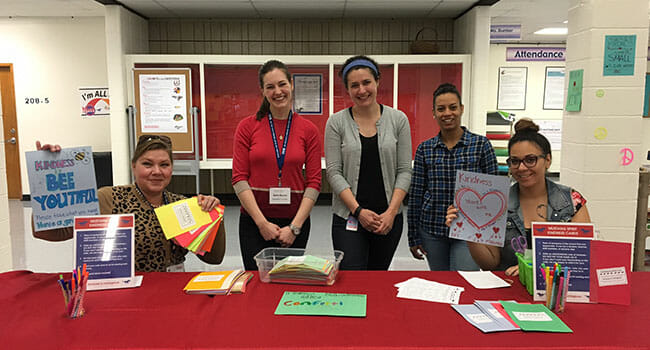
The first project Angela and Katie worked on was a Kindness Project at Mann Middle School. Initially, they wanted to secure books for the school library, but were told that what the students really needed was an attitude adjustment – so Angela and Katie created a curriculum to teach 54 sixth graders about kindness. They led discussions about the science of kindness, created kindness-focused games and an “appreciation station,” where students could write anonymous notes to one another to inspire more kindness school-wide. “These young ladies and gentlemen were thoughtful, forward-thinking, community-minded go-getters, that took it upon themselves to bring the Kindness Project home and to their neighborhoods,” said Angela.
Angela and Katie also spent time assisting McChord Field’s 62nd Medical Squadron in planning various events, such as a belated welcome home dinner for Vietnam veterans to express gratitude for their service. The Frontline Families team provided guidance on how to raise funds, plan and execute events and connect with veterans in the Lakewood area.
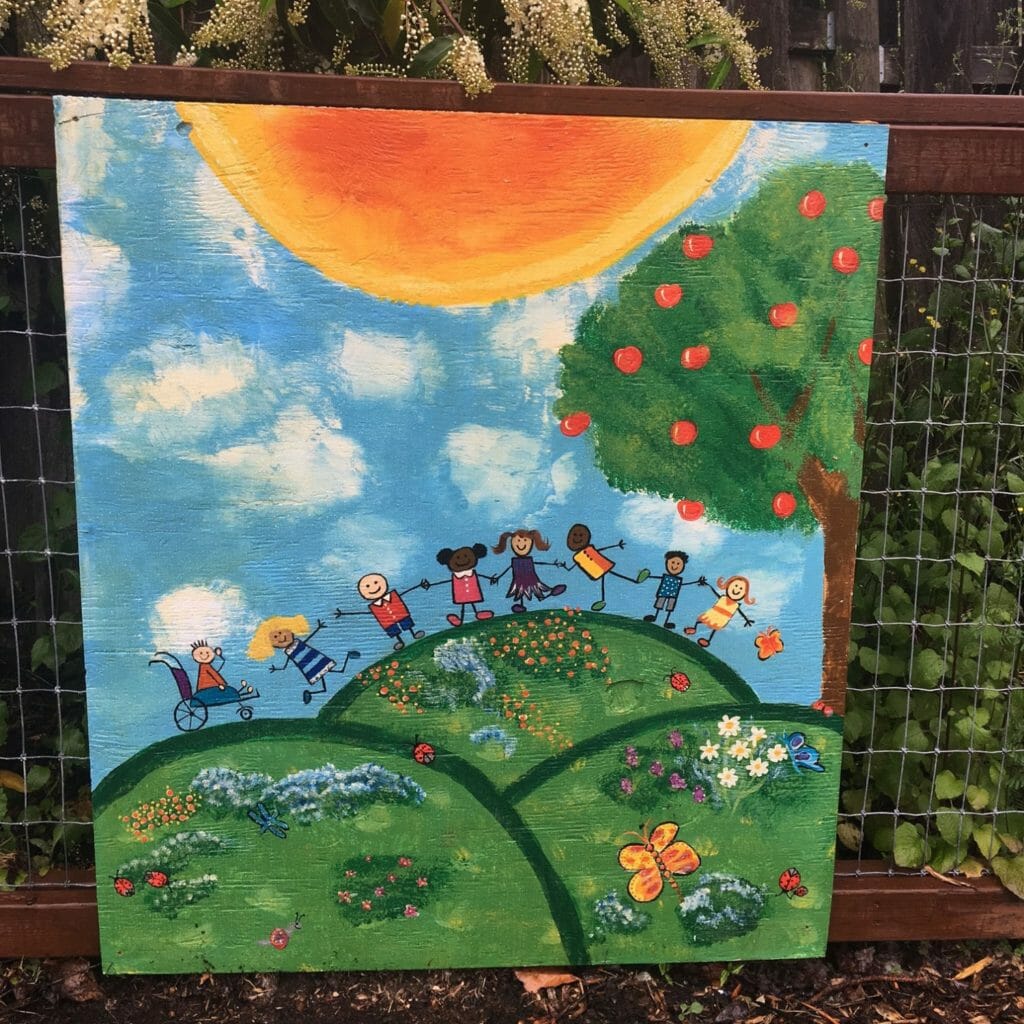
Towards the end of her service year, Angela organized a project in the Springbrook neighborhood, known for being a very densely populated area with abundant criminal activity. The city of Lakewood had already planned a multimillion-dollar park improvement, so Angela and her team planned a public art project to be installed within a new community garden. They surveyed families around the neighborhood, asking for the children’s input on the artwork they’d like to see in their community. The common theme of their requests was the beauty of diversity. The murals now displayed around the garden, inspired by the children of Springbrook, were all created by veterans and their family members.
In addition to the art project, Angela and her team secured a grant to install a memorial bench and picnic table in the park to honor a local fallen hero, Larry Sanders, the late Lakewood police chief. Through her work on the Springbrook project, Angela built a deep connection to the neighborhood residents and stays involved there by gathering household goods for families in need. She said, “there will never come a time when anyone can do too much for the community.”
Angela now serves as a scout for the USO and continues to help veterans transition smoothly into civilian life. Regarding her experience serving through Frontline Families, Angela shared, “I learned so much more by participating in this program than I have ever taught anybody. It’s eye-opening, and it opens your heart. I’d do it all over again.”
Mother Starts Charity to Fulfill Cancer-Survivor Daughter’s Dancing Dreams
Susan Rizzo Vincent faced the worst fear of any parent when her daughter was just 18 months old: the risk of losing a child.
“She was a normal 18-month-old and then all of the sudden I noticed her hands shake a little bit as we were eating dinner and then within hours her coordination just declined. By the next morning, she really couldn’t sit up or even crawl. She’d lost all of her motor coordination within 24 hours,” Susan said.
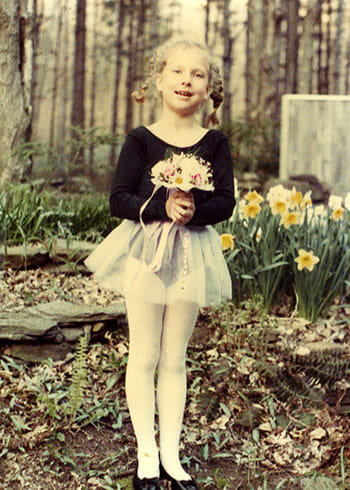
Susan’s daughter Andréa was diagnosed with neuroblastoma, an often deadly form of cancer that mostly affects infants and young children. When Andréa was diagnosed in 1979, Susan was told there was less than a 1 percent chance of survival. Thanks to the medical staff of Memorial Sloane Kettering Hospital in New York, Andréa was cured through chemotherapy and spared radiation. In spite of all of that adversity, Andréa survived and thrived. Though regaining her coordination took a few years, Andréa found both the antidote to an escape from her coordination struggles through dance.
Susan explained that the only residual difficulties she faced were minor learning disabilities. School was hard for her and that attacked her confidence – but she loved dance and she was good at it, which helped her confidence grow.
Andréa danced all through grade school and college. She also kept with her an awareness of how lucky she’d been. While working on a project in college, she took a deeper look into the disease that threatened her earliest years, learning just how often neuroblastoma is fatal. Andréa fully believed that by curing her, Memorial Sloane Kettering had performed a miracle and that dance was the key to overcoming all of the obstacles that followed. She decided she wanted to give back in the best way she could to the hospital that saved her.
After graduating from college with certifications in both elementary education and special education, she went on to NYU to begin graduate studies in dance therapy. Her dream was to become a dance therapist and work with kids who had special needs and cancer.
That dream, unfortunately, was never realized. On May 19, 2002, Andréa Rizzo was on her way home from a dance performance and was killed by a drunk driver. Susan was devastated but credits a group of compassionate friends and colleagues for helping her through it.
“One of Andréa’s colleagues approached me and said let’s start a foundation in Andréa’s name. She wanted to be a dance therapist, somehow maybe we can provide dance therapy to children,” said Susan.
Susan reached out to Andréa’s professor at NYU for guidance. Susan then decided that this program had to begin at the very place Andréa dreamed of helping one day, Memorial Sloane Kettering. Several phone calls later, Dréa’s Dream: Pediatric Dance Therapy began. Just months after Andréa’s passing, Susan and her newly formed army of supporters held the very first fundraiser, a walkathon, on the campus of Andréa’s undergraduate alma mater, Salve Regina University. That fundraiser was held on August 15, 2002, Andréa’s birthday.
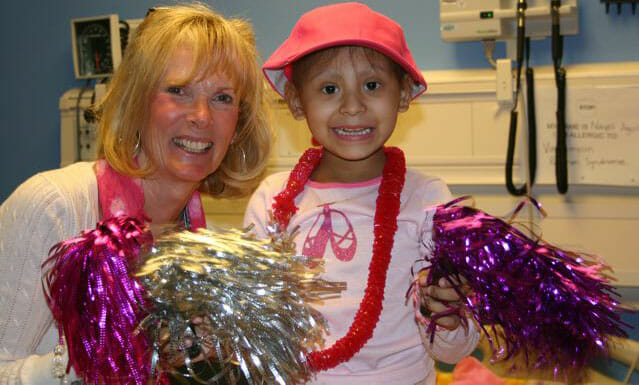
Fifteen years later, Dréa’s Dream is represented in ten hospitals and in schools with special education classes across the country. Susan described the work her team of dance therapists do as helping children access and then release their emotions through movement. After they release the negativity they feel during treatment, they are able to positively transform and better cope with the healing process.
This philosophy of healing resonated with dancers nationwide and they joined Susan’s cause. Dance schools from coast to coast now host Dance Across America events to help fund Dréa’s Dream. People began to notice, including the staff of ABC’s “Dancing with the Stars.”
The show reached out to Susan in 2007 to offer tickets to be raffled off as a fundraiser, but Susan said she’d much rather use the tickets to bring a pediatric cancer patient to the show. That patient was Julie Reed, a high school student who was also a dancer.
“Dréa’s Dream is like the guardian angel of children facing serious illnesses. Susan and her fantastic team of dance therapists bring joy to places where you least expect it,” Julie said.
In a commercial break of that taping of “Dancing with the Stars,” the house emcee chatted with audience members. When he approached Julie, she stood up and told everyone about her diagnosis and how Dréa’s Dream helped her through treatment. As she sat down, Carrie Ann Inaba, one of the judges on the show, turned to Julie and said, “I want to know everything about this organization.”
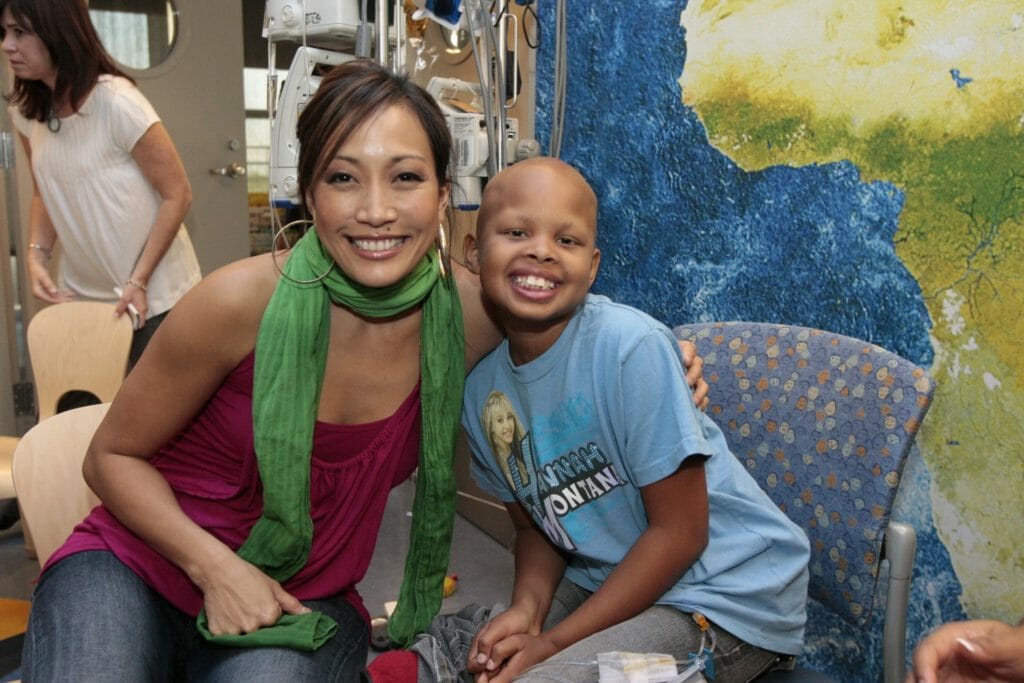
Not long after, Carrie Ann became the national celebrity spokesperson for Dréa’s Dream. She told Susan, “I get it. The mind, body connection. I am so in tune with that and I believe in that so strongly.” Carrie Ann helped Susan expand to Los Angeles area hospitals. Susan also formed a close relationship with the dance pros from “Dancing with the Stars.” She brings a patient to a performance every season, and during the season, the dance pros and their celebrity partners visit Children’s Hospital Los Angeles.
Susan has dedicated herself to bettering the lives of families facing the very scary things she faced with her daughter all those years ago. After losing Andréa, she struggled to find what her purpose was if she was no longer a mother, but then she realized her perspective was off.
“I am just also overwhelmed with gratitude that my daughter survived. I realize it was pretty darn close to miraculous that she did and then it leads me to think, well you know what, I got a gift of 24 healthy years with her.”
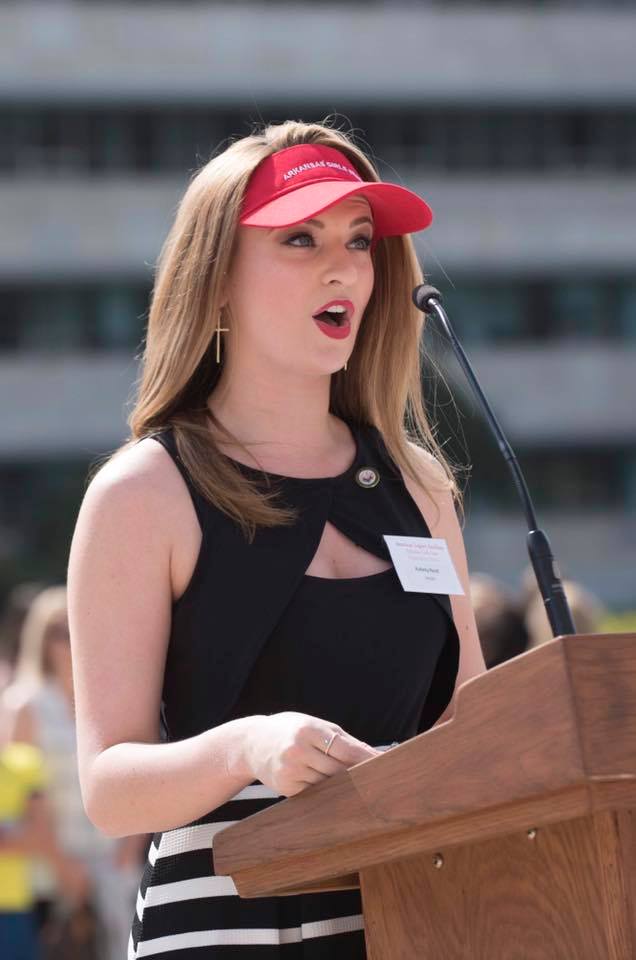
Arkansas Teen Develops Anti-Bullying Program
At 13-years-old, Aubrey Reed knew a depression no child should feel. She was a victim of bullying so severe her family had to move to a new town.
But, instead of letting the ordeal squelch her spirit, Aubrey chose to use it to help others side-step, or survive, the same experience.
“Speaking about these things is taboo as a society,” she said. “I really wanted to empower young people to learn how to speak up.”
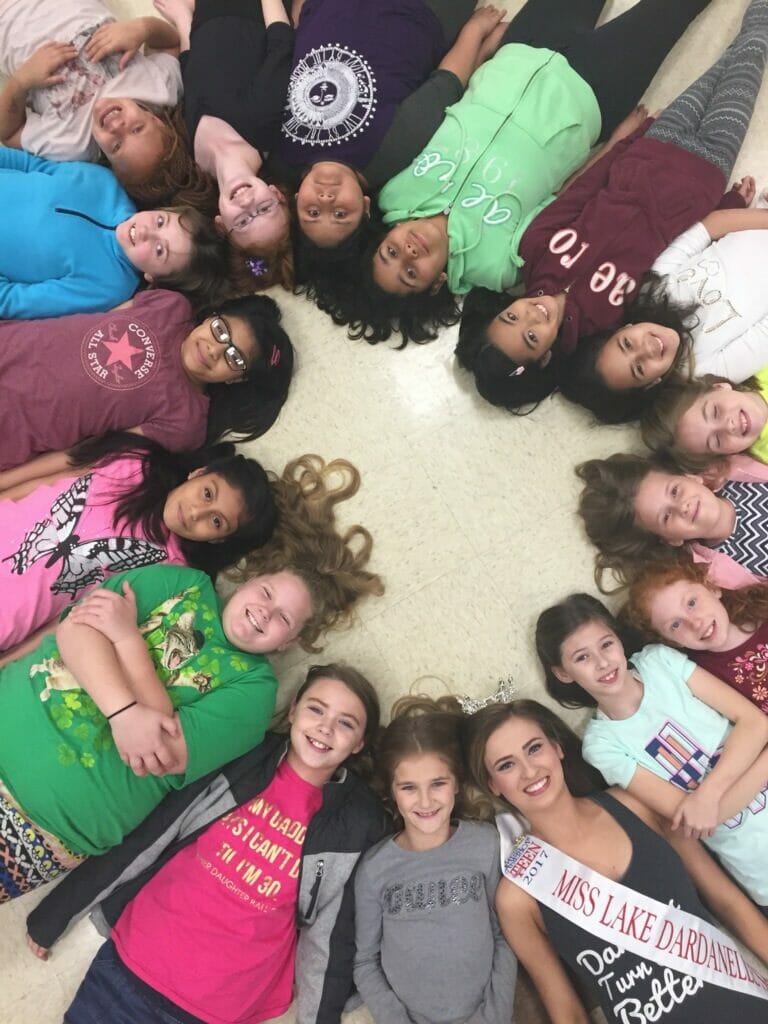
That’s why Aubrey made anti-bullying her platform as Miss Arkansas Outstanding Teen 2017. Through her four-step STAR program, she teaches kids to speak up for themselves, think about words and actions, accept others for who they are and reach out to those in need. So far, she’s spoken to more than 5,600 students from more than 40 schools.
To talk with the most students, she coordinates with guidance counselors and teachers to make presentations to classes and assemblies. She shares her experience with students and performs a skit that shows them how to treat a classmate wearing mismatched clothing kindly — instead of mocking and ostracizing them. Aubrey also identifies school leaders who can help students if they’re being bullied.
As a student herself, Aubrey participates in the Crown Club, a group that promotes volunteer service. They organize several events, including food drives and a Prom Closet that offers attire to students who can’t afford to prepare for high school’s biggest event.
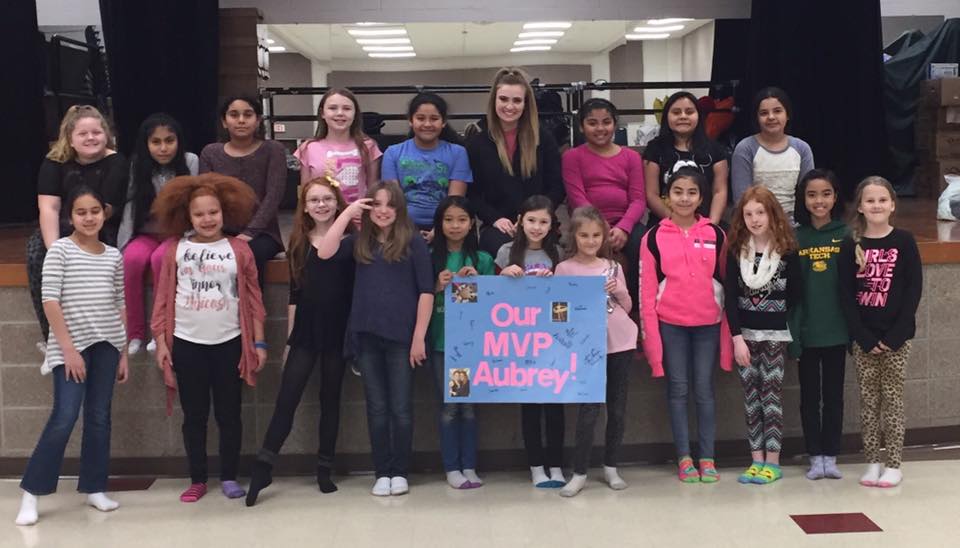
In addition to STAR, Aubrey also volunteers with STEPS, a program that brings dance lessons to underprivileged children. Every Monday from 3:30 p.m. to 5:00 p.m., Aubrey teaches 20 third-graders ballet and jazz. It’s an opportunity, she said, to teach them about self-expression and growing as a person. They showcase their accomplishments in a yearly recital.
Aubrey’s volunteer service extends beyond schools. In her church, she’s a New Life Youth Leader for 5th-to-7th graders. Working with them is another opportunity to tell her story, she said, encouraging them to maintain a close relationship with God.
At every turn, she said, she wants to help other young children avoid the trauma she experienced.
“It brings me joy that I might have saved someone through my pain,” Aubrey said. “It’s great to know I might have brought them happiness and eliminated pain in their lives.”
Oregon Woman Speaks Up for Child Abuse Victims
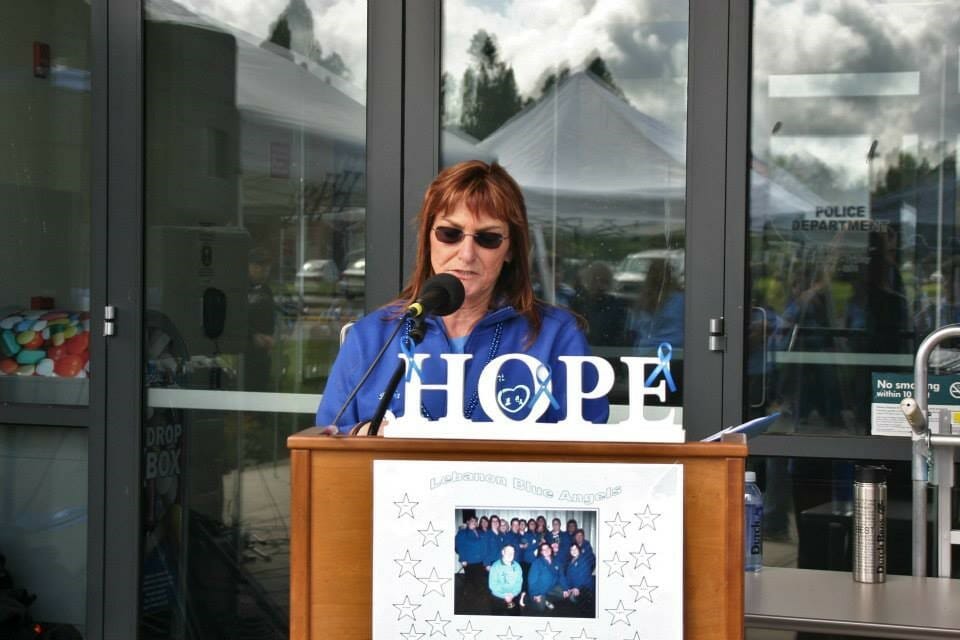
Dala Johnson is a Community Policing Officer in her hometown of Lebanon, Oregon, and the founder of Dala’s Blue Angels, an organization that raises awareness of child abuse and provides resources and support in the greater community for abused or neglected children. Dala is making a difference in her community by acting for those who are often powerless, and is today’s Daily Point of Light award honoree. Points of Light spoke to her to learn more about her work with Dala’s Blue Angels.
How did the deaths of two little girls in your community make you take action?
My heart just broke thinking about Tesslynn O’Cull’s death (the 3-year-old was brutally beat and abused and later died in 1997). They found her so close to where we lived and I thought to myself – how anyone could do that to a child. Chief Stevenson (Lebanon, Oregon Police Department) and I decided that Lebanon needed to be involved in Child Abuse Awareness month. We wanted to do something unusual so we started an event called “Walk a Mile for a Child”. We dedicated our first year to Tesslynn so people could read and hear about what happened to know that child abuse is real and understand what we need to do to end abuse. Year 2 we dedicated to Karly (Karly Sheehan was 3-years-old when she was beaten to death). Her dad has been involved in our walk every year since. Our community needs to shine a light on this issue as there are so many abuse cases out there that go unreported and there are so many victims still that need our help to become survivors.
Your volunteers are recognized as the Blue Angels because of the blue ribbons you hang around town. How are you bringing child abuse out of the shadows with these ribbons?
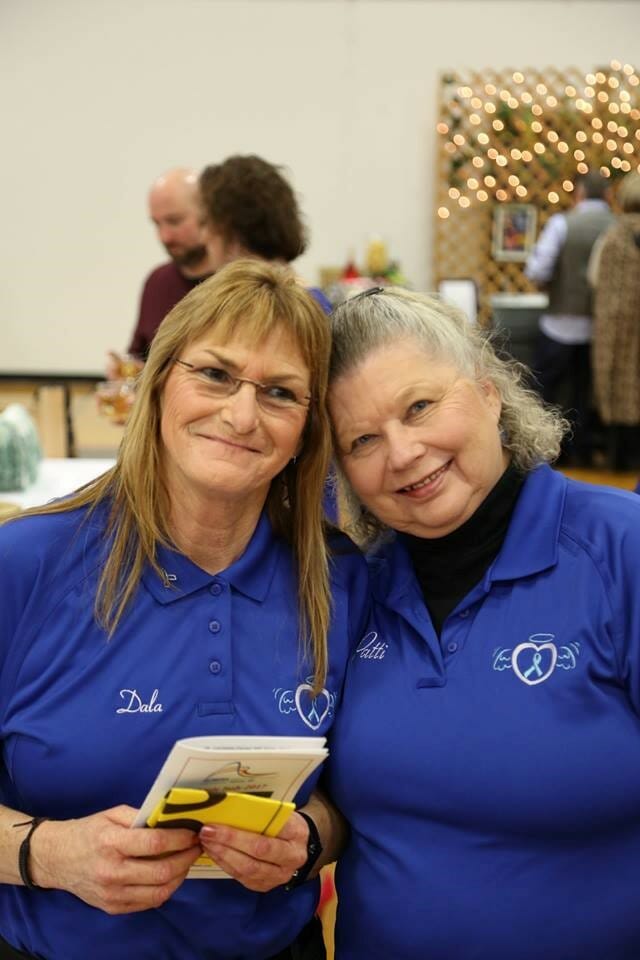
There are 26 of us in total, and when we place ribbons up and down our main streets in honor of Child Abuse Awareness Month, we are making a statement that we are not hiding child abuse anymore. April is just the month that we turn Lebanon blue, but we do not let them forget the rest of the year. There has not been one year that while I have been out tying ribbons and turning the city blue that someone has not stopped and hugged me to say “thank you” for getting abuse out in the open. The Blue Angels do events year-round; parades, traffic patrol and more to raise money and awareness. We serve as a reminder of stopping abuse.
You’ve said that if you can help save one child, you’ve done your job.
I have made a difference in helping families understand that child abuse is NOT okay and they can come and report it and not feel horrible for doing so. Have I personally saved a life? I do not know. But I know in my heart that in the five years (since Dala’s Angels was formed), our community has come to understand what the blue ribbons stand for, they know what the five foot metal blue ribbons are in front of our police department and they know what Dala’s Blue Angels are. They know that child abuse will not be swept under the mat in our community and that we are here to increase awareness and protect our children.
How are you motivated to do more?
My drive is personal, as it is for many of our Blue Angels. I was a former abuse victim, and am now a survivor. I never talked about it until recently. We as adults are supposed to be protecting children, as they are so vulnerable. We have to take that responsibility on. A child’s shoulders are not built for carrying that type of weight. The safety of our children comes first and foremost. Our goal is to let them know we care and that we will give them the resources they need to become survivors themselves.
What can people do in their own communities to help abused children?
People need to become advocates. Support policies and programs in your community that promote healthy child development and the prevention of abuse and neglect. The money Dala’s Blue Angels raise goes to a local ABC House, which is a child abuse intervention center that provides services to over 3700 people annually. Contact a Darkness to Light facilitator in your area – they are advocates trained to keep children safe. There is evidence-based training that influences community behavior change. Let’s all be superheroes for our children.
Habitat for Humanity Volunteer Helps North Idaho Families in Need
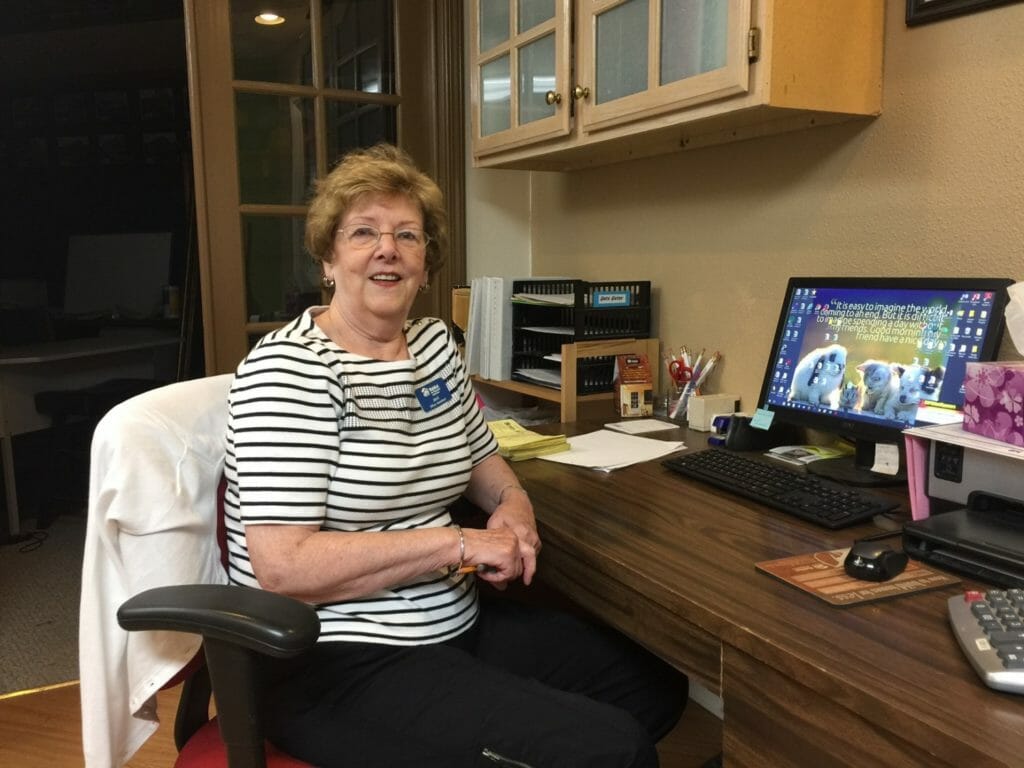
For Jerri Slocumb, nothing is more satisfying that helping a family in need secure safe, affordable housing. She and her husband began volunteering for Habitat for Humanity of North Idaho nearly two decades ago, with Jerri serving as an office volunteer, family partner and board member over the years. Jerri is today’s Daily Point of Light Award honoree, and Points of Light spoke to her to learn more about her service work.
Why did you decide to volunteer?
When my husband and I moved to North Idaho, the first people in our neighborhood that we met were involved with Habitat for Humanity of North Idaho, and they were enthusiastic about the organization. My husband soon became a volunteer gleaner and builder. A postcard notice from an affiliate for office help encouraged me to volunteer, and I am still doing volunteer office work.
What different volunteer roles have you taken on at Habitat for Humanity’s North Idaho location?
In the role of office volunteer of a small, all volunteer affiliate, I became acquainted with the board and committee members and their roles. As the “Monday girl,” I was responsible for fielding phones calls, receiving donation money and writing thank you letters, updating the board and committee roster and being responsible for the monthly postcard which had information about meetings, work location and times. Mondays were very busy!
Because our program was expanding and new families were being selected for homes, I was asked if I would be willing to volunteer as a family partner and I did. Over a period of years, I partnered with three single-parent families. Besides my role of partner/mentor with the families, it was also rewarding to see how the program changed their lives for the better. The single moms seemed to gain self-esteem and sense of accomplishment, and their lives appeared to move in a better direction. As a family partner, I also worked on their houses. I learned how to shingle a shed, mud drywall, attach vinyl siding and trim and, of course, paint! Part of the fun is always doing something different.
As an office volunteer, I have always known about the fundraising events, the construction, family selection and support, but didn’t realize the scope and importance of the board’s guidance of the affiliate. I have been a member of the board for two years and now have a much better understanding of board responsibilities. Our affiliate has grown much larger with paid staff, as well as volunteers, and includes a thriving ReStore. It has definitely been a learning process for me.
Can you recall a memorable, or defining moment, when you truly understood the impact of the service work that you do?
I think that the defining moment is at a home dedication. It is the culmination of hours of work, training classes, decisions and sometimes delays. Before being selected as a homeowner-to-be, one of my families lived in a very unhealthy, unsafe home. To be able to work for a Habitat home was a blessing. In spite of health issues, my partner persevered with sweat equity hours, budget and other training classes. It took time and many phone calls and meetings, but seeing how happy she and her daughter were when their house was finished and finally theirs was reward for our mutual commitment and that is what Habitat is about.
In five words or less, describe how the act of giving back to others makes you feel.
Humble, happy
Do you want to make a difference in your community like Jerri? Visit All For Good to discover local volunteer opportunities.
Michigan Teen Mentors Kids in the Art of Public Speaking
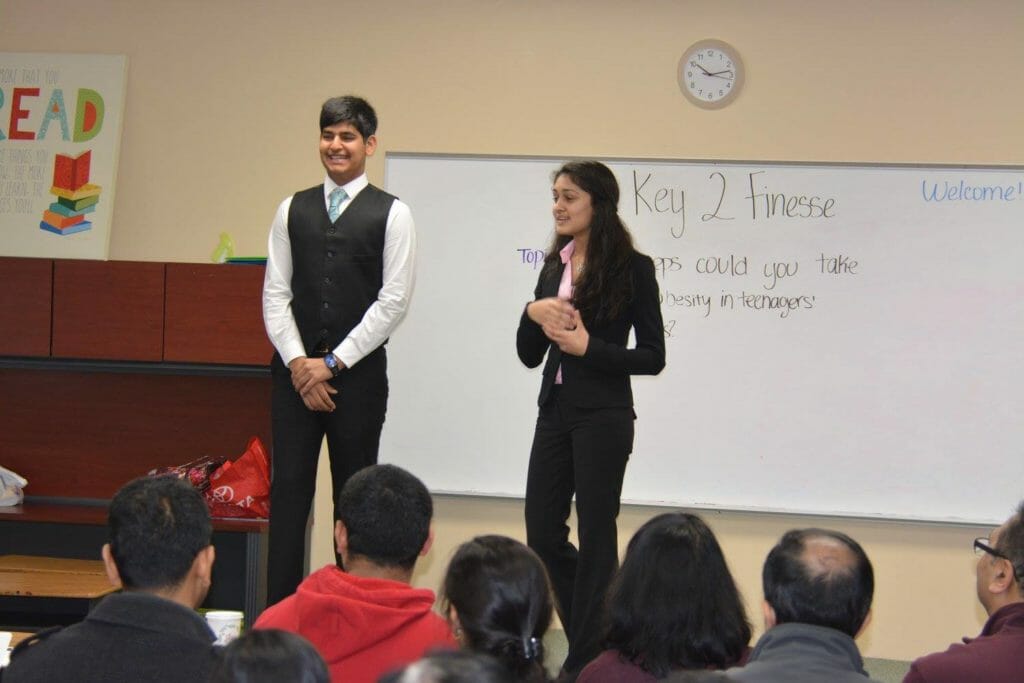
Farmington Hills, Michigan resident Chintan Maheshwari is rising senior at Detroit Catholic Central High School and the co-founder of Key2Finesse. At an early age, he discovered that he had a special talent for public speaking and a desire to serve others. He combined those two passions into Key2Finesse, where he mentors children and teens in the art of public speaking to help them gain confidence not only in front of crowds but in every facet of their lives from school to personal relationships.
The busy teen is also involved in other service activities in his community, including; acting as a volunteer leader for Palav, a nonprofit that raises funds to equip neonatal units in developing countries, volunteering at the Gleaners Community Food Bank and serving as a math tutor for a variety of organizations. Chintan is today’s Daily Point of Light Award honoree, and Points of Light spoke to him to learn more about how he is working to make a difference in his community.
Why did you decide to start Key2Finesse?
Public speaking is a skill that is truly invaluable, and I have learned that the earlier someone starts, the better they can be. As a student myself, I thought I would be able to connect well with other kids. Since there was no other similar organization that would help me spread my passion for public speaking, I decided to start my own.
Describe a defining moment with a mentee that demonstrated the impact of your program.
An extremely shy student joined our workshop. He would hardly say a word and would avoid participating in anything at all. I guess he was probably forced into attending our workshop by a parent. As a kid myself, I was able to get thru the barrier and connect with him. Our workshops are very interactive. By the end of workshop, we were able to get him to voluntarily participate in the final activity. And to ice the cake, after a few weeks, we received an email from his mother that she was seeing a definite positive change in him because of the workshop. I cannot define the satisfaction it gave me to read that email.
In five words or less, describe how the act of giving back to others makes you feel.
Rewarding and invigorating.
Why do you think it’s important for people to volunteer?
A lot of us are blessed to have more than what we need. And, it is not always about money. Many times, just giving time to someone or some cause is all we need to do to spread love and happiness. And, if we start volunteering early in our lives, then it will become our habit which we will keep doing throughout our lives – making this world a better place to live.
Where Art and Activism Meet: Zach Ingrasci Seeks to Create a More Equitable World Through Documentary Film
Meet Daily Point of Light Award honoree Zach Ingrasci. Read his story and nominate an outstanding volunteer, family or organization as a Daily Point of Light.
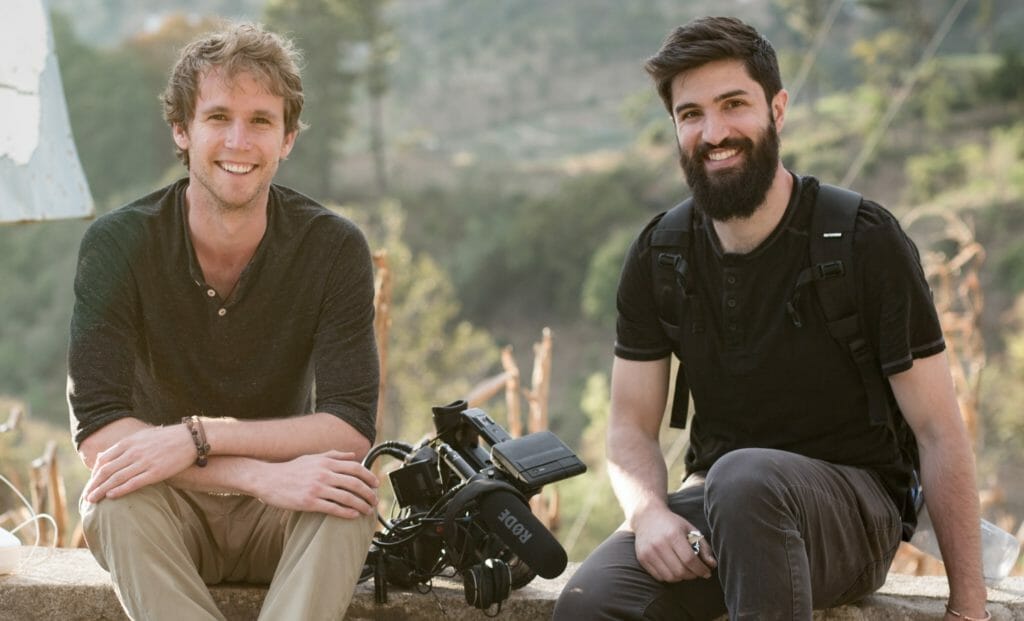
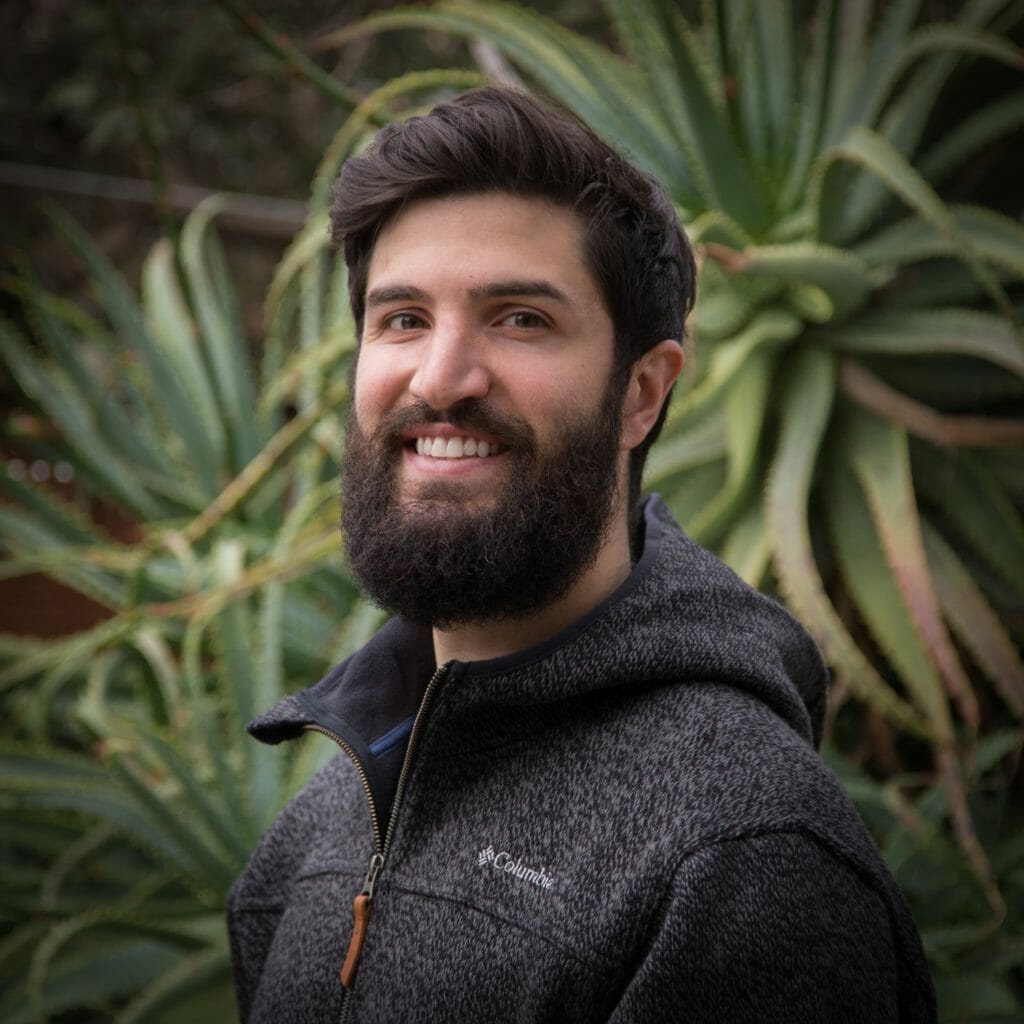
A filmmaker and a humanitarian, Zach Ingrasci is dedicated to using his talents to help empower disenfranchised communities around the world. From living in a tent in a Syrian refugee camp to working as radish farmers and surviving on $1 a day in Guatemala, Zach and his co-director Chris Temple have cultivated an innovative style of documentary filmmaking that sits at the intersection of storytelling and social justice.
Their first feature documentary, “Living on One Dollar,” helped shine a light on extreme poverty and mobilized audiences to take action. The success of the film opened their eyes to the power of art as activism, and led to the founding of Living on One – a production company dedicated to making “films that matter.”
We sat down with Zach to learn more about his work, and what inspires him to serve.
What inspires you to volunteer?
Interesting question! My inspiration for volunteering is very different now than it was 10 years ago. Growing up on Bainbridge Island, Washington, I felt physically constrained. My first serious volunteering experience was literally just an excuse to get off the island once a week. That experience was so important because I met people there that inspired me to continue to volunteer.
Now it’s easy to find inspiration. I’ve had the privilege of meeting some of the most radically innovative people on the planet; from women keeping their families afloat on less than one dollar a day to Syrian refugees building cities out of camps in the Jordanian desert. If I had to pick one person as my biggest source of inspiration, it would be Rosa from Guatemala. Watch a short film about Rosa.
Describe your volunteer role with Living on One.
We made our first feature documentary, “Living on One Dollar,” by accident – and on an unbelievably small budget. Basically, enough to pay for plane tickets for four of us to Guatemala and the $56 each that we lived on for 56 days in the rural village of Peña Blanca. The people we met that summer became the stars of our film, and the inspiration to spend the next 3 years volunteering our time finishing it and touring with it around the United States. With the launch of “Living on One Dollar” globally on Netflix, the film and our impact campaign have reached millions of people and have raised more than $750,000 for sustainable development work in the community. We now get to work full time creating a more sustainable and equitable world through documentary film with our nonprofit production company, Living on One.
Why do you think it’s important for others to give back?
There has never been more responsibility on individuals to create the change they want to see. We like to think about critical social issues like poverty, health, war and global warming as separate things, but they aren’t. They are all inextricably intertwined and the more that we give back to solve any of these issues the better they will all get. We are seeing funding for critical programs being threatened at a federal level. Now our only real choice is to radically ramp up what we are doing ourselves.
What’s been the most rewarding part of your work?
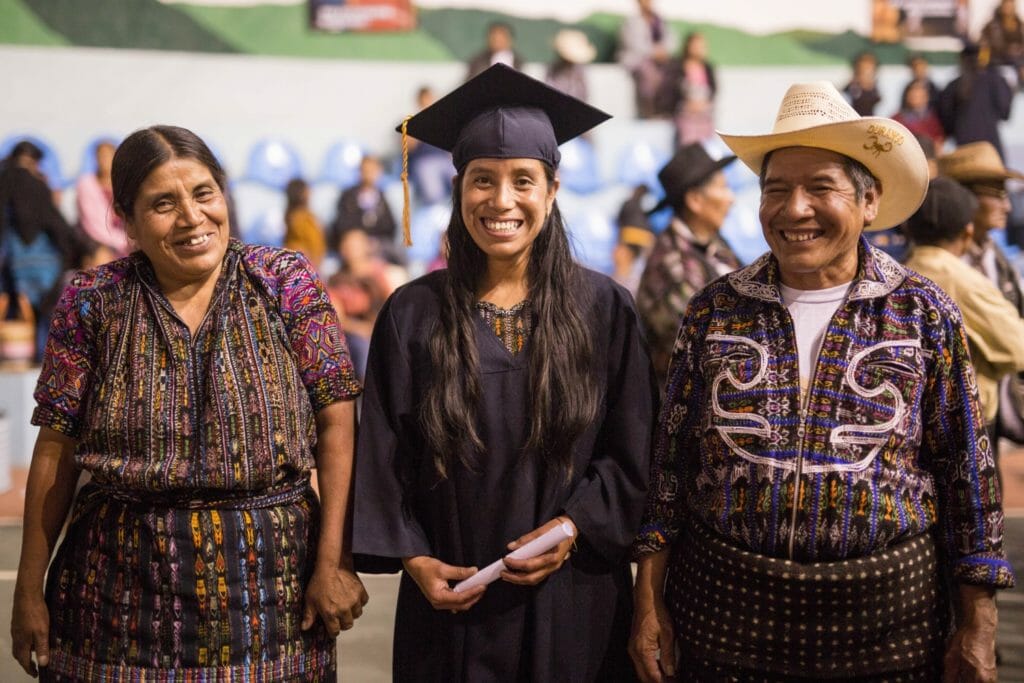
Two years ago I got to witness Rosa graduate high school at 27 years old and become the first person from Peña Blanca to attend university. Keep in mind that only 1 out of 4 Mayan women in Guatemala are still in school by the age of 17. Playing a small role in her achievement and getting to share in her success was incredibly rewarding.
What have you learned through your experiences as a volunteer?
I’ve learned to continually ask, “How can I help?” It seems obvious but the “how” part is often missing. We have to recognize that people are experts in their own lives and we are just partners in helping them achieve success.
Are there any future partnerships, programs, or events that you are excited about?
I’m so excited our new project “Searching for Syria” launched in time for World Refugee Day on June 20. We collaborated with Google and the UN Refugee Agency to create an immersive hub that answers the world’s top searched questions about Syria. Definitely check it out, and please share it!
What do you want people to learn from your story?
My career as a filmmaker and activist started with a kind of random volunteer experience. If I had spent too much time worrying what that experience was going to specifically help me achieve in my career path (I was studying economics) I never would have gone … and that would have been a serious bummer.
Watch the trailer for “Living on One Dollar” and learn more at www.livingonone.org.
Former Astronaut Dr. Mae Jemison Empowers Youth to Explore, Connect with the World Through STEM Education
Meet Daily Point of Light Award honoree Dr. Mae Jemison. Read her story and nominate an outstanding volunteer, family or organization as a Daily Point of Light.
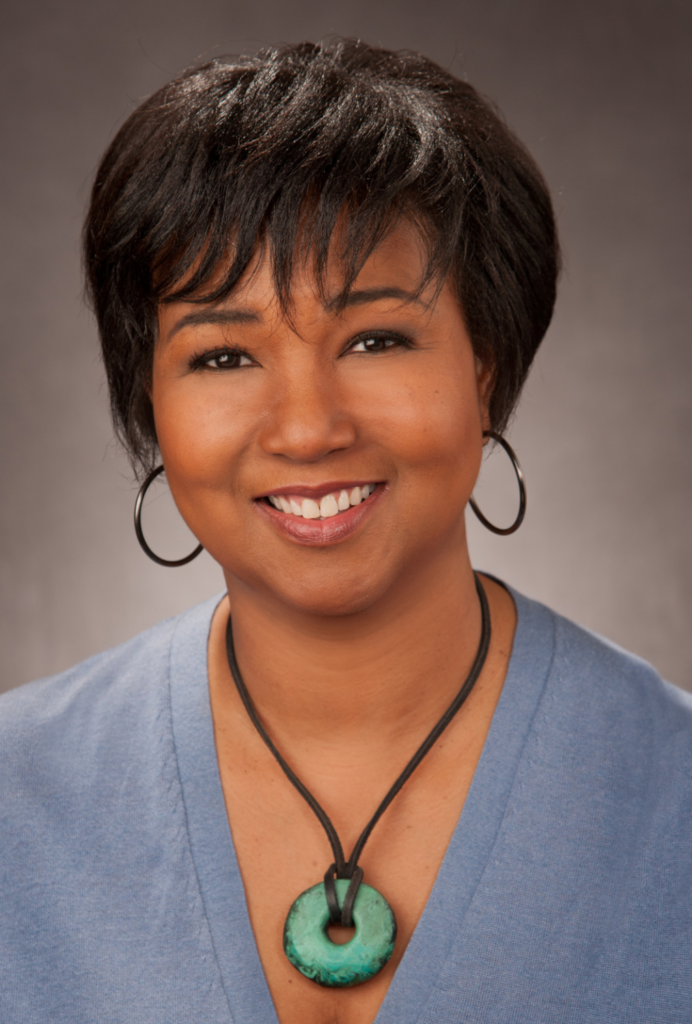
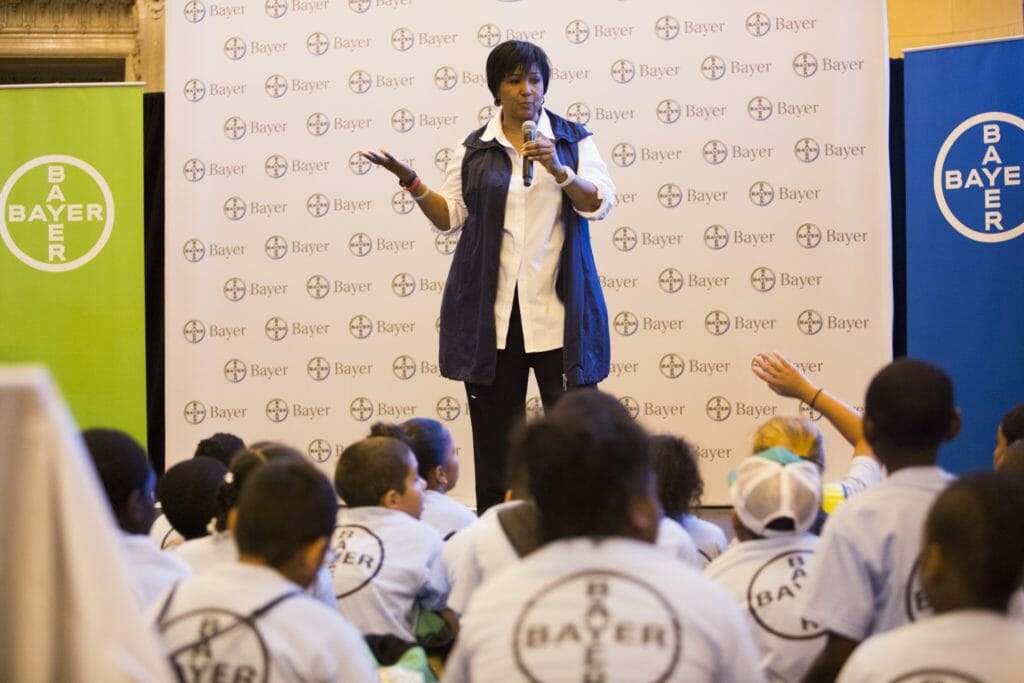
Dr. Mae C. Jemison, the world’s first woman of color to go into space, served six years as a NASA astronaut. She flew aboard the Space Shuttle Endeavour and was NASA’s first science mission specialist, performing experiments in material science, life science and human adaptation to weightlessness. Prior to NASA, Dr. Jemison served as a Peace Corps medical officer in Sierra Leone and Liberia; Her international experience also includes time spent working in a Cambodian refugee camp, and with the Flying Doctors of East Africa.
Acting on her passion for science literacy, Dr. Jemison founded the Dorothy Jemison Foundation for Excellence in 1994. Through the foundation, she launched an international science camp called The Earth We Share™ to engage youth in hands-on, interdisciplinary STEM education.
We sat down with Dr. Jemison to learn more about her work, and what inspires her to serve.
What inspires you to volunteer?
I believe everyone has an obligation to contribute actively in society to their ability – and that contribution does not always have to be in the form of paid compensation. Frequently, the non-monetary rewards are of incalculable value, and I’ve been at it since I was a child – really a busy body that was curious and willing to help. Throughout my career, I’ve noted how many things are interconnected – science, society, technology, politics and social welfare. Though I went to medical school to pursue biomedical engineering after graduating with a degree in chemical engineering, while there, I became fascinated with health care in very difficult settings of the developing world. I spent time volunteering in a Cambodian refugee camp in Thailand. I joined the Peace Corps as the area medical officer in Sierra Leone and Liberia to get more experience in development. Since leaving NASA, I’ve worked to develop and research technologies that were specifically designed for the social, political and economic needs of individuals and circumstances worldwide, especially the developing world. I now devote a lot of time to ensuring that all races, ethnicities, genders and social classes are represented in the scientific community – emphasizing that we create the future.
Describe your volunteer role with The Earth We Share.
I founded TEWS in 1994 with the objective to build a curriculum to bolster the science literacy of all students and help them to appreciate their connection with the world around them. Fundamentally, the goal was to actively engage students such that they never had to ask the question, “What does this have to do with me?” The answer is an experiential curriculum that takes advantage of the “superpowers of adolescence” – curiosity, the need to declare independence and do something special on their own, combined with the unique positives of not wanting to let their peers down. We tackled 12- to 16-year-olds, the age at which many students typically drop science and tech fields as career options. I believe that the most important things one gets from a science education are critical-thinking and problem-solving skills. The TEWS Discovery Method teaches students “how to think” while they gain a wealth of information. So, students seek solutions to global dilemmas such as “how many people can the Earth can hold?” and “design the world’s perfect house” and “predict the hot public stocks of the year 2030.” The initial camps were four-week residential programs, but we have evolved to hold day camps and one-week, non-residential summer programs. The most important aspect is that we train teachers who return to their classrooms armed with new, tried teaching methods. My role has been chief curriculum developer – training teachers and trainers, and advocating to evolve the methodologies and applications.
Why do you think it’s important for others to give back?
All of us – educators, parents, teachers, school boards, governments and society at large – have a role to play in advancing humanity. But it isn’t just about getting a seat at the table – it’s about what you do with the opportunity when you get that seat. What difference does it make if you have a place at the table and you mind your table manners and act like everyone else? We all need to bring our unique experiences and perspectives to bear.
Can you share a favorite story that highlights the impact of your work and your foundation?
I founded the Dorothy Jemison Foundation for Excellence in honor of my mother. Our work is modeled around her teaching principles and life accomplishments. My mother was a highly effective, dedicated educator for over 25 years in some of the most difficult schools in the Chicago public school system. She believed that each person can and should be expected to achieve a level of excellence that allows a unique contribution to society. The foundation works to capture and implement the caveats of excellence – my mother advocated and translated them into programs to enhance achievement and individual excellence throughout the world. Our return on investment is the creation of a workforce society that understands and appreciates other nations, cultures and societies. Interestingly enough, one of my current employees attended a TEWS camp as a 12-year-old, came back as college intern and after really impressive accomplishments in international relations, working overseas and on the trading floor, she is back helping get the next generations involved.
Are there any future partnerships, programs, or events that you are excited about?
Currently, my work includes 100 Year Starship, a global initiative to ensure the capabilities for human interstellar travel, beyond our solar system to another star, exists within the next century – not a mission date, but the capabilities. Why? Because I believe that pursuing an extraordinary tomorrow creates a better world today. And all the capabilities required for a successful interstellar journey mirror the capabilities needed to survive as a species on this planet. My task: get as many people not directly working in space exploration to contribute to and benefit from the potential of tackling such a difficult, but awe-inspiring challenge. In September, we will hold 100YSS NEXUS, bringing together the wealth of human experience. And for more than 20 years, I’ve proudly served as the science literacy advocate for Bayer’s national Making Science Make Sense initiative. Together, we are currently working to provide 1 million hands-on science experiences to students by 2020.
What do you want people to learn from your story?
Each of us is just as important to the universe as any speck of stardust. Don’t let anyone rob you of your imagination, your creativity or your curiosity. It’s your place in the world. Go on and do all you can with it.
Honoring the Memory of her Sister, Tamron Hall Works to Raise Awareness of Domestic Violence
Meet Daily Point of Light Award honoree Tamron Hall. Read her story and nominate an outstanding volunteer, family or organization as a Daily Point of Light.
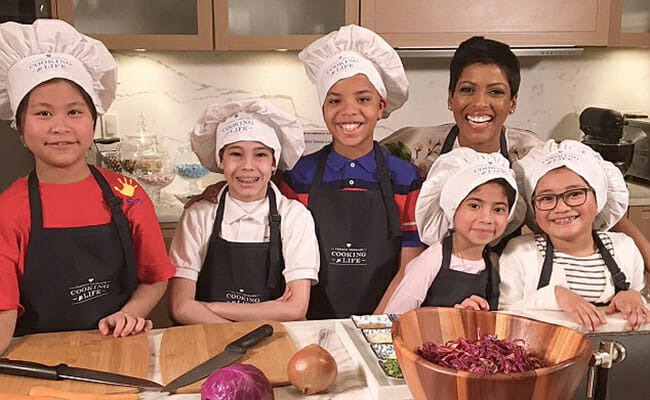
Tamron Hall is an award-winning journalist and host of Deadline: Crime with Tamron Hall on Investigation Discovery, where she takes an in-depth look at complex and compelling crimes that have shocked the nation. She was previously a co-host of the third hour of NBC’s Today Show and anchor of MSNBC Live with Tamron Hall. In 2015, Tamron received the Edward R. Murrow Award for Reporting: Hard News in Network Television, recognizing her segment on domestic violence as part of Today’s “Shine A Light” series.
She is involved with several charitable organizations that strive to end homelessness and illiteracy, and is a passionate advocate for victims of domestic violence. After her sister, Renate, was killed, Tamron wanted to help raise awareness about domestic violence. Working with Safe Horizon, an organization that provides assistance to victims, Tamron launched The Tamron ♥ Renate Fund to honor the memory of her sister and to help victims and families affected by domestic violence.
We sat down with Tamron to learn more about her work, and what inspires her to serve.
What inspires you to volunteer?
My grandfather’s legacy and what he taught me inspires me to volunteer. He had only a second-grade education and lived in a very rural part of Texas. Even though he had very little money, what he did and shared with others has been the core of my family values. His church was a foundation of spirituality, and he lived a life of giving and expecting nothing in return.
Why do you think it’s important for others to give back?
If we are only here to consume, is that a life you really want to live? I feel most people understand the importance of volunteering. Yes, we get caught up in our own lives, the ups and downs and distractions that can put us in a bubble. I think for most it’s a temporary thing as we know the world is connected by how we treat others and what we do to elevate others.
What have you learned through your experiences as a volunteer?
I’ve learned the power of giving. It’s not about feeling good or a pat on the back. The power comes from knowing you made a choice to give and love. That energy is undeniable and it helps me in my hardest and darkest moments.
Are there any future partnerships, programs, or events that you are excited about?
I’m excited to continue to grow my partnership with Safe Horizon through The Tamron ♥ Renate Fund. I never expected to be a voice for the survivors of domestic violence. As the years have gone by I know without a doubt it’s what was meant for me to do.
What do you want people to learn from your story?
My story is one that continues to change. I know the version of my life people see today is sometimes seen through the prism of TV, which can appear far more glamorous or exciting than it is. I’ve worked since I was 14. My family instilled in me a strong work ethic, but they constantly reminded me and stressed the importance of giving. We all need help in different ways. I know this journey is not easy. Trust me, my family was built on the legacy of a man who had nothing but gave so much. I am still the kid from Luling, Texas, and nothing will ever change that fact.