Georgia Teen Spearheads Ping Pong Fundraiser
High school student Albert Zhang is passionate about serving others and ping pong. The competitive table tennis player created Student Table Tennis Activists Foundation (STTAF) to address health and educational issues in the community through the common activity of ping pong.
STTAF volunteers have started table tennis clubs at six high schools and other disenfranchised areas in Georgia. In March, Albert’s annual charity tournament, Pong4Change, raised over $2,000 to fund STTAF programs with the help of more than 200 participants. His organization has funded tables and equipment to more than eight community centers around the Atlanta area, including 150 paddles to the Agape Art Center of Atlanta and the Boys and Girls Club.
Syrian Violinist Turns Passion for Music into an Inspiring Message of Peace and Cultural Understanding
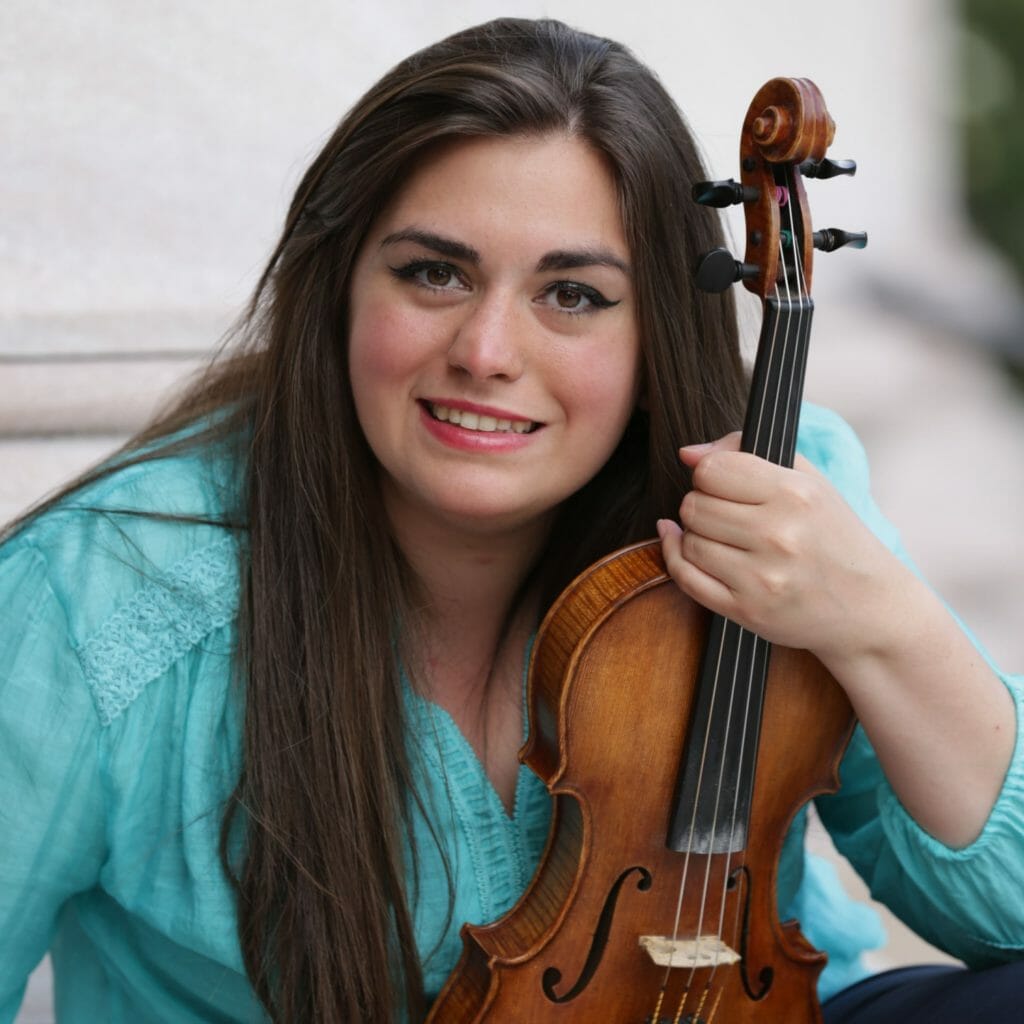
Meet Daily Point of Light Award honoree Mariela Shaker. Read her story and nominate an outstanding volunteer, family or organization as a Point of Light.
From a young age, Mariela Shaker was a gifted violinist. At the age of 10, she joined the Arabic Institute of Music in Aleppo, Syria, graduating in 2004 with distinction. She then began traveling across Syria to perform in various festivals and concerts, eventually returning to the institute to teach music to a new generation of students.
On Tuesday, March 15, 2011, a brutal civil war broke out in Syria as an anti-regime uprising challenged the presidency of Bashar al-Assad. With major cities destroyed and hundreds of thousands of casualties, the country was left in disarray. As the ongoing humanitarian crisis mounted in the years to follow, more than 5 million refugees fled the country in search of safety – Mariela among them.
Working to obtain her bachelor’s degree when the civil war broke out, Mariela’s graduation was delayed and she lost a scholarship opportunity in London. But in 2013, a full scholarship to Monmouth University in Illinois provided Mariela with another chance to escape the Syrian conflict, to study music and obtain a visa to the United States – where she was eventually granted full political asylum.
Now 26 and a full-time resident of the United States, Mariela uses her incredible gift to bring people together through music. She was honored in 2015 as a White House Champion of Change for World Refugees, and now travels the country and the world sharing her music to raise awareness for the millions who have fled Syria.
“I feel powerless to change the current tragedy on going in my country,” said Mariela, speaking at the 2016 Points of Light Conference on Volunteering and Service. “However, I believe so much in the power of music – and I believe it its ability to fashion peace and love in our world.”
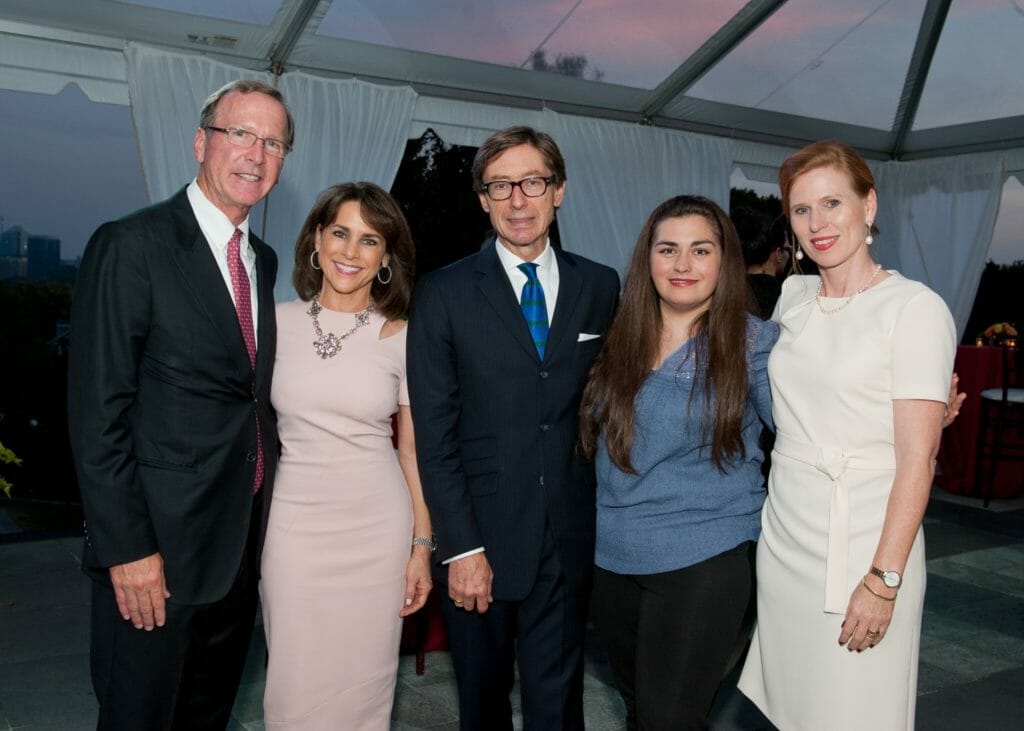
Points of Light will present Mariela with her Daily Point of Light Award at An Evening of Praise Celebrating Unity in Diversity in Atlanta, where she will be performing in a charity concert benefitting Friends of Refugees Providing Education and Empowerment.
We caught up with Mariela to learn more about her life, motivations and achievements as a musical changemaker.
What inspired you to begin using your voice and your talent to make a difference?
The war in Syria encouraged me to do something to change this world. I was so depressed in Aleppo, not knowing if I would live to see the next morning or not. I found the music a relief, medicine to turn the darkness into a bright place. Every day I risked my life to go to teach my students in Aleppo. I wanted to use my musical skills to contribute to the community and have a positive impact. Playing my violin was the best thing I could do to inspire people to keep dreaming and continue their life despite the death, which was ongoing. Here in the United States, I am still playing my violin and advocating for my people who are still inside Syria. I am playing my home song, and I shall always do. One day, I will go back to Aleppo and help rebuild my country!
What makes music such a powerful tool for change?
Music is a very powerful language. It removes barriers between people and nations. For me, it was the bridge that carried me from the war to the United States. It saved my life! Through music, we communicate, advocate, inspire and express the things that are hard to express by any other word or language. Whenever I perform, I feel I get to tell the story of my suffering country and people. I am a Christian, who has performed Jewish themes like Schindler’s List for Muslim communities. I feel this is a proof that music opens the door for people to better understand each other, and feel the pain this world has felt in hope for a better future. My hope is to keep using music to help heal the pain our world has felt and create a peace platform for everyone.
Why do you think it’s important for others to give back?
From my personal experience and since I was in Syria, a lot of people supported me and believed in me. I wouldn’t have been able to be this person without the great help and support I received from so many wonderful human beings. Their help has changed my life and made me be a better person. I would like to one day be able to touch the lives of others around me and inspire them to do good things in their community. I learned from so many beautiful humans around me that you don’t have to be a billionaire to be a philanthropist. It only takes a big heart to accept and help others in need.
What have you learned through your experiences as a ‘Champion of Change’?
I learned that life is full of challenges and difficulties. I also learned that life is a beautiful and painful journey, but we should never allow anything to keep us from fighting for the good and noble causes we believe in. I consider the award I received as a White House Champion of Change to be a huge responsibility, to represent the Syrian students and refugees in the United States, and also to represent all the great values I learned here and worldwide.
What’s been the most rewarding part of the work that you do?
It is so rewarding for me every time when I walk on the stage and get the chance to create an image of refugees and Syrian students. Although I feel safe here in the United States, I can never forget my friends and family who are still living in dangerous situations and struggling without the basic necessities of life – such as power and water. I have been honored to get the chance to perform and fundraise for so many organizations, like Jusoor and International Rescue Committee, to benefit refugees and students. It is rewarding to know that I have been involved in projects to help vulnerable people and aid them to have a bright future.
Are there any future partnerships, programs, or events that you are excited about?
Yes, in fact, I just received my master’s degree in music performance from DePaul University. I am now using the power of music as a bridge for peace and love, performing and speaking to fundraise for education, immigrants, refugees and students. I recently performed and spoke at MIT, Lincoln Center, Harvard, Aspen Ideas Festival, Georgetown University, and Honolulu Museum of Art. I have recently been appointed as a “High Profile Supporter” for UNHCR – the UN Refugee Agency – and started working with the Brian Seaman Agency in Canada on a project to write a book about my journey from Aleppo to the United States.
What do you want people to learn from your story?
I made my way from the war-torn city of Aleppo based on a music scholarship I received in the United States. I would like to send out a message of hope and peace through each performance, and encourage people to not to give up on their dreams. I believe that everything is possible in this world. We need to keep our dreams big, but never forget to work so hard to achieve these dreams.
Teen Conservationist Develops Energy-Saving Program for Colorado High School
Environmentally-conscious teen Jenna Engelken is making a big difference at her high school in Durango, Colorado. Jenna founded the Kill-A-Watt program, which aims to reduce energy usage at Durango High School by replacing light bulbs with new energy-efficient LED (light-emitting diode) fixtures and bulbs.
According to Energy.gov, “Today’s LED bulbs can be six-seven times more energy efficient than conventional incandescent lights and cut energy use by more than 80 percent.”
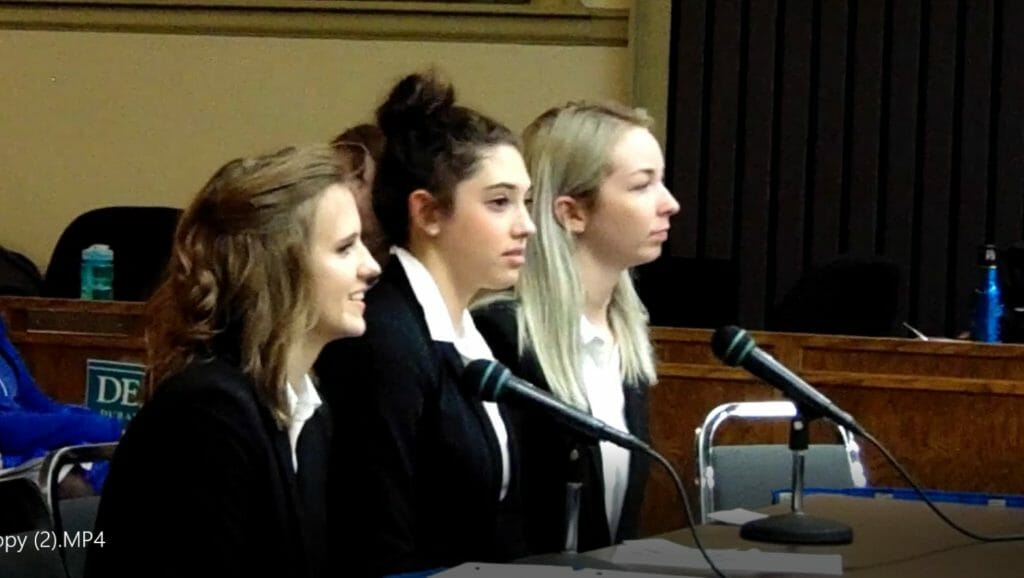
Jenna’s conservation efforts at her school began with a 30-page proposal she developed with two other students. With Jenna as project lead, the group presented their plan to the local school board, who heartily adopted the program for its cost-cutting and energy-saving measures.
Another part of Kill-a-Watt program includes expanding lighting to the school parking lot to ensure student safety during evening events. And, the high school will open an Environmental Center to serve as a think-tank for students who want to work toward preserving the environment.
Jenna has also volunteered as a “Big Sister” with Big Brothers, Big Sisters, she serves on the Mayor’s Youth Advisory Council and she spearheaded a teen art exhibit at her local public library which has served as the prototype for other exhibits throughout the city.
Illinois Man Uses Nostalgic Tunes to Bring Joy to Fellow Retirees
Few things send a person down memory lane faster than music. Often, a tune brings back thoughts of happy, younger times, prompting foot taps and smiles.
That reaction is the impetus and goal behind the “Music in the Mornings” program Bruce Smith created at The Garlands of Barrington retirement community in Illinois. It’s nostalgic for community members whose average age is between 80- and 85-years-old.
“These songs bring back floods of memories,” he says. “Members think and talk about where they were and what they were doing 30 years ago.”
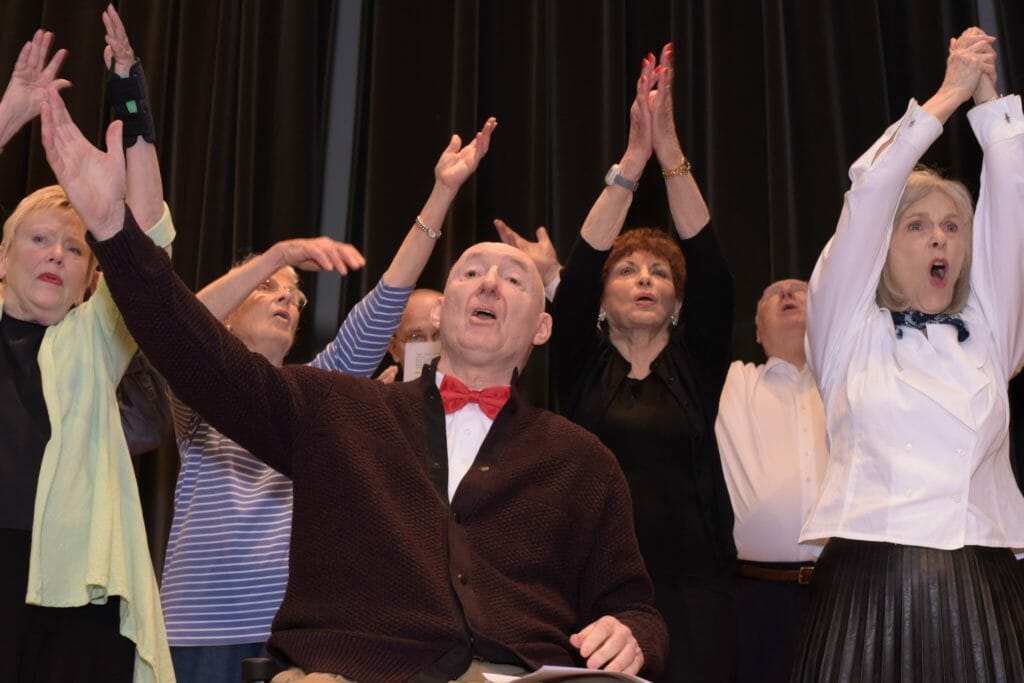
Bruce, a 75-year-old community member himself, started the monthly “Music in the Mornings” program in 2015. For each installment, held in The Garlands’ 40-seat, high-resolution theater, he searches YouTube for music that appeals to his generation, such as classical, Broadway hits and Big Band.
With assistance from the retirement community’s assistant director, Bruce, who has muscular dystrophy and is wheelchair-bound, creates a 2-hour video loop for the show that lasts from 9 a.m. to 11 a.m. Individual videos run roughly 3 minutes, giving members a wide variety of music to enjoy.
The events are so popular, he says, there are often two or three showings with no empty seats.
Bruce also holds a leadership role in the community as the Member Advisory Council chairman. The council is the liaison between members and Garlands’s leadership. Terms last three years, Bruce says.
It’s a position he takes seriously.
“If you’re living somewhere 24/7, and it’s your home, you’re invested in it,” he says. “You want to make it something you can all be proud of.”
During his term, Bruce has led the push for more security cameras in the community, as well as the switch to using transponders — instead of access cards — to open the garage. The latter move helps members avoid extreme weather exposure from rolling down their windows when coming home.
These volunteer activities keep him busy, and Bruce says he doesn’t plan to quit.
“I’m not reluctant to volunteer. I jump into things feet first,” he says. “When I was working, I was up to my eyeballs with my job. Now, I have time to volunteer.”
Retired Teacher Finds Joy in Educating National Park Visitors
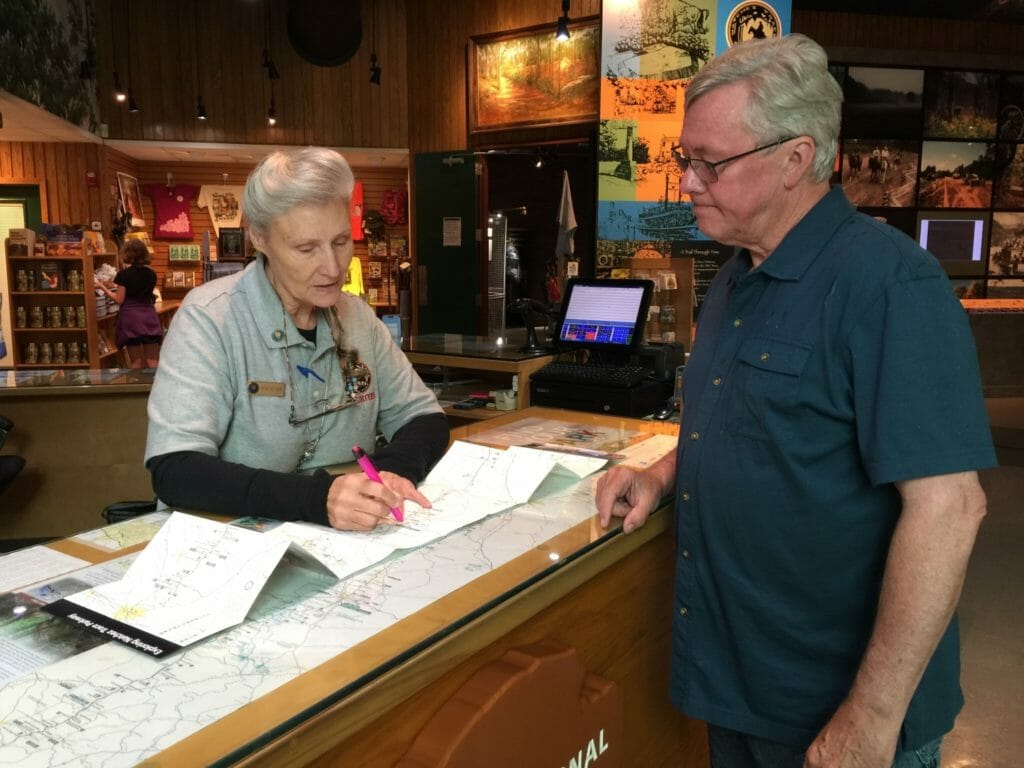
When Kathy Nethery and her husband first visited the Natchez Trace Parkway, they fell in love with its Meriwether Lewis Campground. When she learned the campground had no host, though, it prompted her to ask about assuming a volunteer role closer to home.
Today, Kathy is the campground host and visitor interpreter at the 18-site Jeff Busby Campground, one of three official Natchez Trace Parkway campgrounds, in Mississippi. It’s a position she pursued, she said, because she wanted to know more about the 444-mile Parkway that runs through Tennessee, Alabama, and Mississippi — and she wanted to share what she found out.
“Volunteers work for the pure pleasure of giving and being useful,” Kathy said. “Their hearts are in learning and sharing what they’ve learned.”
Since 2015, Kathy has completed more than 800 volunteer hours. She works closely with park rangers to keep track of visitor statistics, report maintenance needs and violations and conduct light clean-up. She also answers visitor questions and gives directions in person and over the phone, as well as presents programs on the Parkway. All total, she spends 32 hours at the Parkway weekly and routinely interacts with 125 park visitors daily.
Kathy begins each day by raising the flag and preparing to show visitors a 15-minute film about the Parkway. She’s, then, ready to greet visitors and help them learn as much a they can. In gratitude, many visitors have left Kathy glowing reviews in the visitors’ log.
As a retired teacher, educating others about the Parkway’s history is an opportunity to continue her passion for sharing knowledge. It’s also an easy way to learn more about her Native American heritage. Kathy comes from Cherokee descent, but she also disseminates information about the Chickasaw, Choctaw and Natchez tribes.
The time she spends helping visitors at the Parkway is so enjoyable, she said, that she has no plans to quit. Kathy said she’ll continue her volunteer activities with the National Park Service as long as they need someone to fill her position.
“We need our parks, and our parks need us. We need to never forget the history and the things that made our parks great,” Kathy said. “And, our national parks are loaded with history.”
Do you want to make a difference in your community like Kathy? Visit All For Good to discover volunteer opportunities in your area.
Georgia Woman Empowers Girls to Embrace Their “Flyness”
Cierra “Fly” Bobo is the founder and executive director of Fly Life Inc., a nonprofit with a mission to empower girls in low-income communities through after-school programs and mentorship. She has pledged to change the outlook for the girls she serves, including changing one statistic made famous by the Dove Self-Esteem Fund, “7 in 10 girls believe they are not good enough or do not measure up in some way, including their looks, performance in school and relationships with family and friends.”
Through her work with Fly Life Inc., Cierra inspires and equips girls to be “Fly” inside and out. She was honored at the 2018 Be the Change Summit in Atlanta, Georgia, with a Daily Point of Light Award. At the ceremony, she stated in her remarks, “I’m truly honored to receive this award. The goal isn’t to win awards, but to truly be a solution and help girls around the world recognize their true greatness (their FLY).” Points of Light spoke to Cierra to learn more about her work to help underserved girls develop resiliency and leadership skills.
What inspired you start mentoring?
The reason why I started was because I wanted to be [like] the mentor that I had and wanted as a young girl. Growing up I was really insecure, because of my father’s absence due to his battle with drugs. I wanted my father’s affirmation. I turned to being violent and unsure of myself. I didn’t believe that I could be successful in life. My defining moment was when I was a teenager and I was tired of getting in trouble and being told I wouldn’t be successful. When I was in the 9th grade, I had a teacher name Mr. Jim Carter who believed in my ability as a future leader and business woman. His belief in me caused me to believe in my ability. I stayed in marketing and business classes throughout high school and earned a business scholarship and an opportunity to compete on a national level. His mentorship inspired me and encouraged me to be that for others.
Can you share an example of the kind of impact you have had the opportunity to make since deciding to help others?
There was a young lady that was a teenager that got involved in sex trafficking. A pimp was forcing her to sell her body. One night she called me and I had the opportunity to go and get her and take her to a safer environment that was far away from the pimp who threaten to kill her. We were able to get her into a group home around a safe environment. That’s something I’m grateful to be a part of.
 Why should others join you in your efforts at Fly Life?
Fly Life is located in College Park, Georgia, were many households earn less $40,000 a year. Crime rates are high and sex trafficking in the metro Atlanta area is #1 in the nation. Having the opportunity to teach the hundreds of girls we mentor about their own greatness, financial literacy, and how to avoid the traps of crime and human trafficking is our proactive impact. This summer 12 of our girls are launching their first business as teenagers. This is awesome because many of these girls come from poverty; however, to empower them as young business leaders is one our goals.
How can others help?
People can volunteer to mentor by emailing us at
[email protected] and/or become a monthly partner and support our initiatives
www.theflylife.org/donate.
What’s next for you and Fly Life?
We are currently developing an app that empower girls on a daily basis to be FLY Inside Out.
What advice would you give your younger self?
I would tell my younger self to keep going, because all the bad things will work out for my good. I would tell others, don’t get so caught in focusing on the problems that bother them the most, but to focus on being the solution. To just do it, just start doing whatever you can to be a solution in the earth.
Through ServiceWorks Program, Citi Employee Finds the Perfect Opportunity to Serve
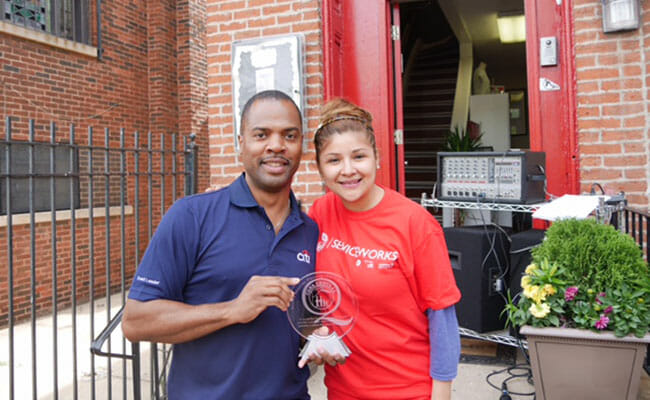
Robert McGhee, vice president of community development at Citi, has been a part of the Chicago banking community for more than two decades, with roles in retail banking, mortgage banking and community affairs. He supports the Citi Foundation’s partnership with Points of Light and the Corporation for National and Community Service to bring a groundbreaking initiative, ServiceWorks, to help underserved youth in U.S. cities where the economic downturn has intensified their struggles.
ServiceWorks was launched in 2014 as part of the Citi Foundation’s Pathways to Progress youth empowerment initiative, to harness community engagement and volunteer service to help underserved youth develop the skills they need to prepare for college and careers. Since then, the ServiceWorks program has expanded to 21 cities. In the past year alone, more than 9,000 youth and young adults ages 16 to 24 have participated nationwide.
One of the programs supported by ServiceWorks is Casa Central – a Chicago-based agency that focuses on helping Hispanic families. Casa Central’s Youth Opportunities Unlimited program offers participants year-round academic help, workplace readiness and college preparedness coaching. ServiceWorks volunteers support a 5- to 10-week program, offered at both Casa Central and at participating high schools, with more than 700 Chicago youth and young adults participating during the past year.
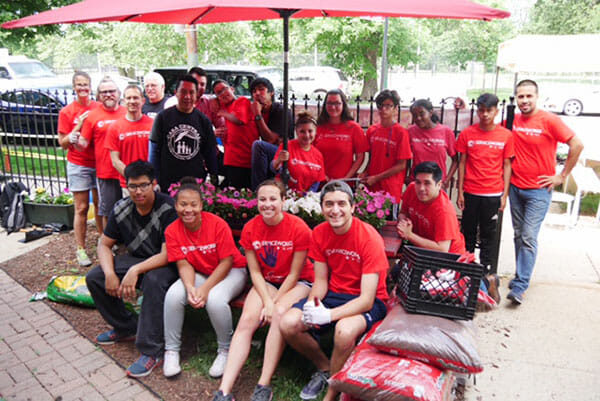
Volunteer service is a key component of ServiceWorks, with each cohort completing at least one project by the end of their term – while learning college and job preparedness skills. Students are paired with corporate mentors who help them create service projects, such as reading to children and older adults, shoveling snow for neighbors physically unable to do so, school beautification and knitting hats for premature babies. Participants also receive one-on-one mentoring and valuable career advice from the corporate volunteers.
Robert McGhee has been one such role model and mentor for the students participating in the ServiceWorks program. Through his work with Casa Central, he’s held mock job interviews to give the young people an idea of what employers expect and will ask, and has shared important lessons in financial literacy.
We asked Robert to tell us more about his service story and dedication to volunteering:
What inspires you to continue to devote your unpaid time to help others?
It may be a bit of a cliché, but I’m a firm believer in “paying it forward.” Citi does a tremendous job of encouraging its employees to “give back” to the communities in which we serve. I personally feel it’s important to volunteer to help strengthen the communities in which we live and work. We all have a talent or skill to offer, and we should share those talents and resources with those that are under-resourced and less fortunate.
How do you use your individual skills, strengths and trainings to best suit this organization?
My colleagues at Citi have been very supportive of the volunteer efforts that I’ve organized with the wonderful staff at Casa Central, so first and foremost, I see myself as a convener and coordinator of talent.
I’ve enjoyed a great career in banking, working in retail banking, mortgage banking, multi-cultural marketing and community development. I’ve taken experiences at my various roles including managing teams, collaborating with internal and external partners, and training staff members to support Casa Central by providing mock interview training sessions, financial literacy training sessions, and hands-on volunteer engagement activities.
What’s been the most rewarding part of your volunteer work? Can you describe some specific situations or people you’ve helped that showed how your efforts made a difference?
The most rewarding part of my volunteer work is simply having the opportunity and the ability to share knowledge and the resources and tools that I have access to. In the case of Casa Central, I conducted mock interviews with participants who were part of their employment training program. Walking through both the resume critiquing and mock interview process with these students was both humbling and rewarding. Most importantly, I was pleased to find out that all of the participants eventually secured full-time employment and they provided feedback that the mock interview exercises helped them during their actual interview process. Knowing I was able to support them brought it all full circle for me!
What have you learned from your experiences as a volunteer?
One of the biggest lessons I’ve learned as a volunteer is that most people are not necessarily looking for a handout; instead, they are simply looking for an opportunity – and many times that opportunity comes from exposure to available resources. I volunteer in neighborhoods that look and feel similar to the neighborhood where I grew up – on the west side of Chicago – and as I previously mentioned, to me, it’s a natural obligation to be selfless in sharing whatever knowledge or resources that I have with those that are not as fortunate.
What’s the next step for you? Will you continue your role with this agency?
I’m certain I’ll have some sort of connection with Casa Central – they haven’t gotten rid of me yet. I currently serve on three nonprofit boards, in addition to being involved in my local neighborhood association, so I’ll always be busy providing my time to and for others. I’ve also taken on more involved roles with each of the boards I serve, and I’m excited about the work that lies ahead.
Covering the Cost of Everyday Bills, Nonprofit Brings Relief and Hope to Families Battling Cancer
Meet Daily Point of Light Award honoree Bringing Hope Home. Read their story and nominate an outstanding volunteer, family or organization as a Point of Light.
Cancer patients work hard battling the multiplying malignant cells in their bodies. In the meantime, most also face multiplying bills as medical expenses pile on top of ongoing costs for housing, food, utilities and more.
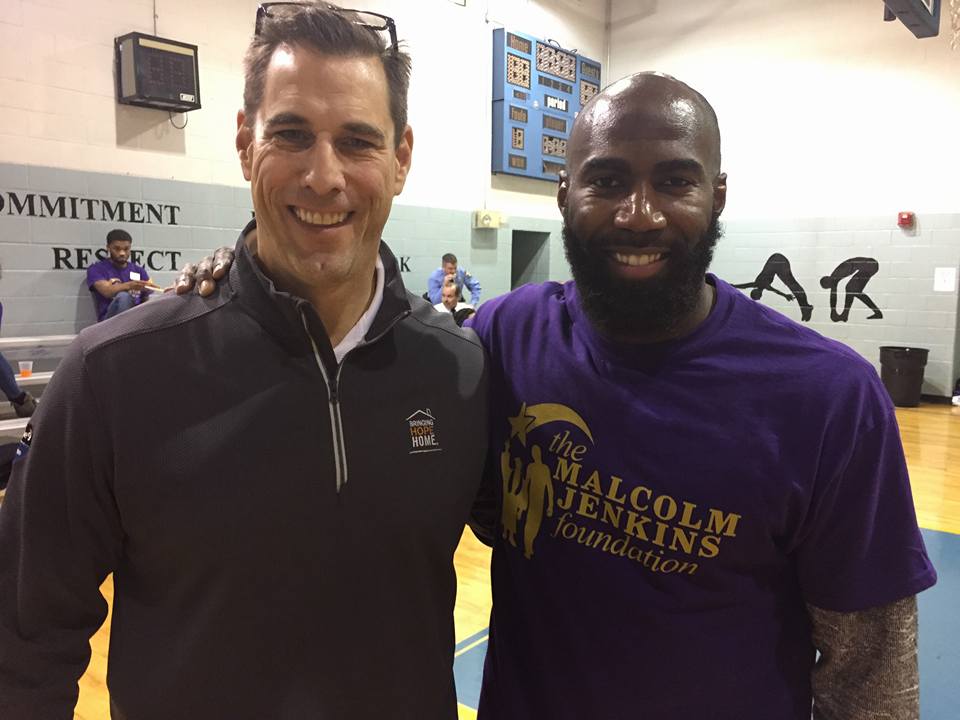
That’s why Bringing Hope Home, a growing Philadelphia-based organization, raises money to help cancer patients pay everyday bills that loom over their already stressful lives.
But Bringing Hope Home never calls the people they help “patients.”
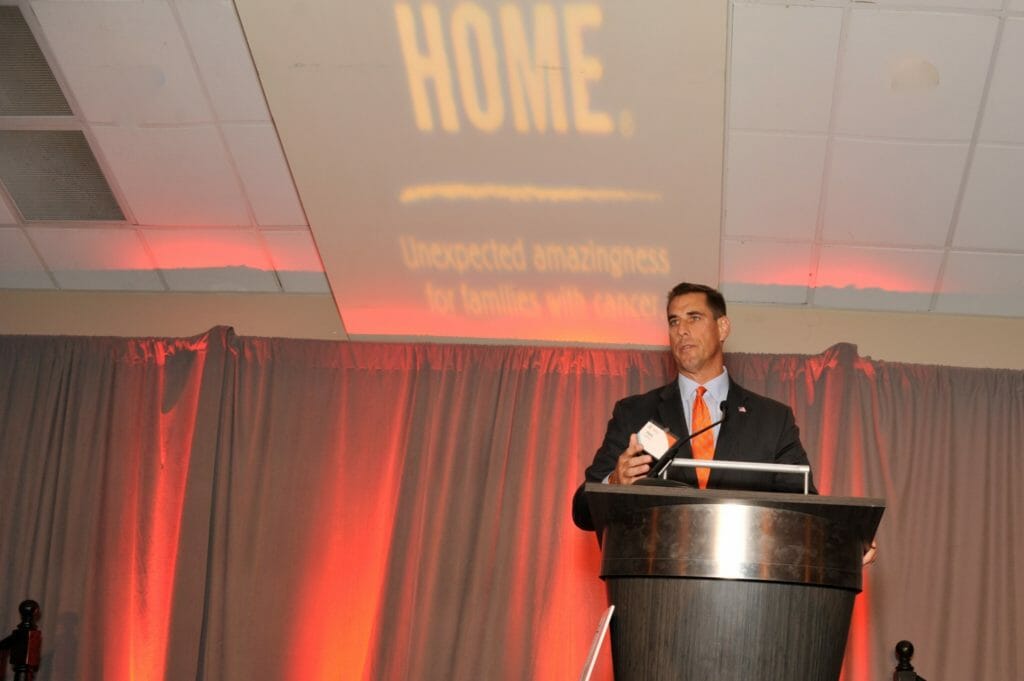
“You’re not allowed to use the ‘patient’ word in our office,” says Paul Isenberg, founder and CEO of Bringing Hope Home. “They are our ‘families.’ We treat all the people we help as family, because to us they are.”
Paul’s wife, Nicole, died in 2003 of Hodgkin’s lymphoma at age 39. She had battled her cancer for six years, undergoing bone marrow transplants and extensive chemotherapy. Paul and Nicole, who had two young children, experienced an outpouring of support; however, they couldn’t help but notice that others with cancer didn’t always have that.
“We were thankful that we had such an unbelievable support system, from family to neighbors to friends, to friends from church to our employers,” said Paul. The couple often referred to the men and women who helped them as “great guys,” and wondered if they’d be willing to help others, too. In 2001, Paul and Nicole had the idea to host a dinner to raise money to help people who are fighting cancer.
Paul called his friend Tim Sherry, for help organizing the event – and the Great Guys Dinner was born.
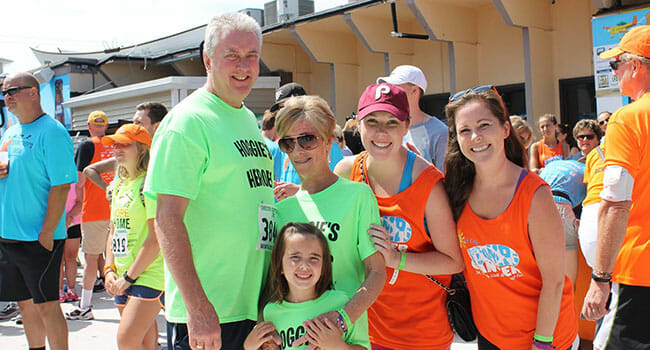
“We were both into corporate sales so we had a lot of contacts,” said Paul. “The first Great Guys Dinner drew 100 ‘guys’ and raised $13,000. This year, we had almost 550 attendees and raised almost $350,000.”
For the first 7 years, funds were donated to the American Cancer Society.
But then, one of the “guys” who’d been coming to the dinners passed away, and Paul learned that his wife and children were struggling financially. He began thinking about the financial burden that often accompanies a cancer diagnosis.
“We did some research and found that if you’re diagnosed with cancer, even with health care benefits, your out-of-pocket fees can be $10,000 to $25,000,” said Paul.
By 2012, the Great Guys Dinner had evolved into Bringing Hope Home, with the core mission of helping families pay bills. “We pay for rent, mortgage, utilities, car payments, food – whatever that family needs,” said Paul. “A lot of times, there are car repairs or a roof that needs repair. We don’t give the money to the family – we pay the bills directly. We find contractors to do repairs, and they give us a good price.”
Bringing Hope Home has helped 4,000 families – upwards of 12,000 to 13,000 people – since its inception in 2008. It has served families throughout the Philadelphia area, as well as in southern New Jersey and Delaware.
“But there’s tens of thousands of people we haven’t helped yet,” said Paul. “We want to get to them.”
This year, Bringing Hope Home is hosting a Great Guys Dinner in Baltimore for the first time. The June 7 event is expected to raise $25,000 to $50,000.
“All that money will stay in Baltimore to help families there,” said Paul.
He plans to also expand Bringing Hope Home’s mission to northern New Jersey and New York.
Paul, who has remarried and added two more children to his family, is one of six full-time employees of Bringing Hope Home. The organization also has two part-time staff and “an army of volunteers” who run a variety of fund-raising events and educational programs.
Fran Blanchette, a retired schoolteacher, has been volunteering with the organization three days a week for the past 2 years. She processes applications for help.
“It’s heartbreaking what you see in their stories,” said Fran. “People will tell about how their life was going fine and then all of a sudden they found a lump or developed a cough. Then they will write about needing help with bills because they’re going for treatment and are out of work. I look for immediate need: Is anyone facing a shut-off notice? Will anyone be without heat? We can help them work out a payment plan or help with that bill.”
Deb Yamashita, another volunteer, often gets to be the one to inform families that they have been approved for a Light of Hope grant to pay household bills.
“It’s humbling to hear the gratitude and relief in people’s voices when they share how difficult battling cancer and worrying about paying their bills has been,” said Deb. “As a breast cancer survivor, I remember how scared I was through all of my chemo and radiation treatments. But I had the best health care coverage and never ever worried about how to pay my bills for the month. I know the tremendous impact Bringing Hope Home has on the families they help.”
Maureen Walsh is one of those recipients.
“I was fine and healthy; I rode my bike and went to the gym,” said Maureen. “My face started to fall on one side – I thought I had a stroke or Bell’s Palsy.”
But it was an aggressive skin cancer that soon invaded Maureen’s ear, neck and upper back.
“Our life turned upside down,” Maureen said. She and her husband were real estate investors who were struggling to recover from the economic downturn during the Great Recession. “We had been financially secure. We lost everything,” she said. After getting sick, “My stubborn Irish husband found it hard to accept any help. Bringing Hope Home paid our mortgage one month and it came right when we needed it. We were trying to navigate insurance, co-pays, out-of-network fees.”
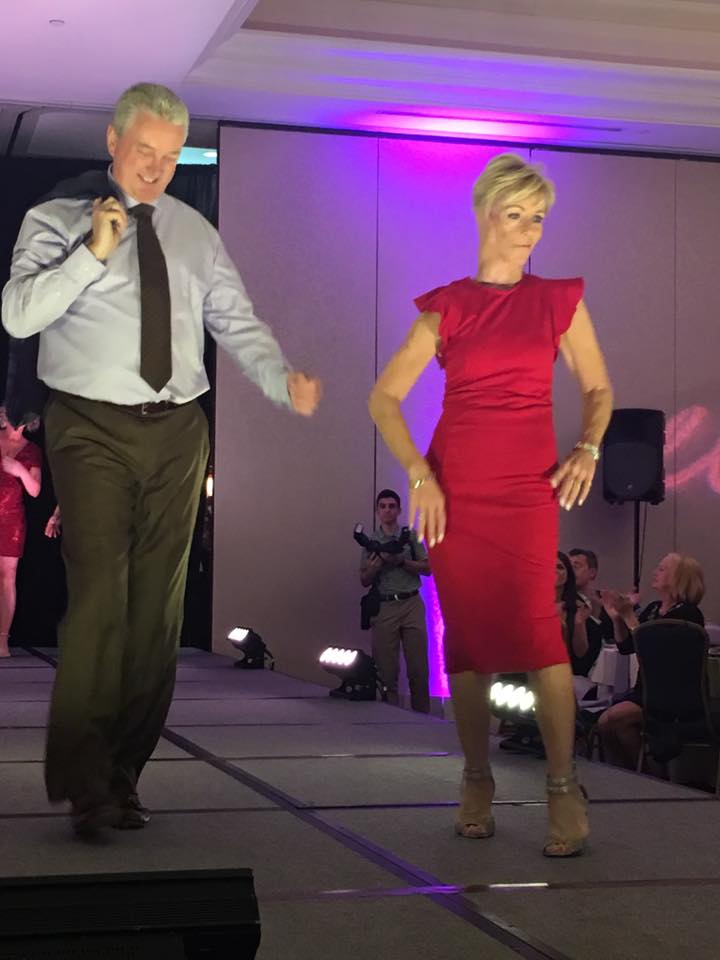
Maureen says Bringing Hope Home staff sent notes and a feeling of inclusion, “so it didn’t make you feel as if you’re simply getting a handout.” She and her husband, Chuck, were even invited to participate in a fashion show – which they accepted, though Walsh lost a third of her face to cancer surgery. “I think they make people feel part of a community. They do it right,” Maureen said.
Board Member Champions Sustainable Schools
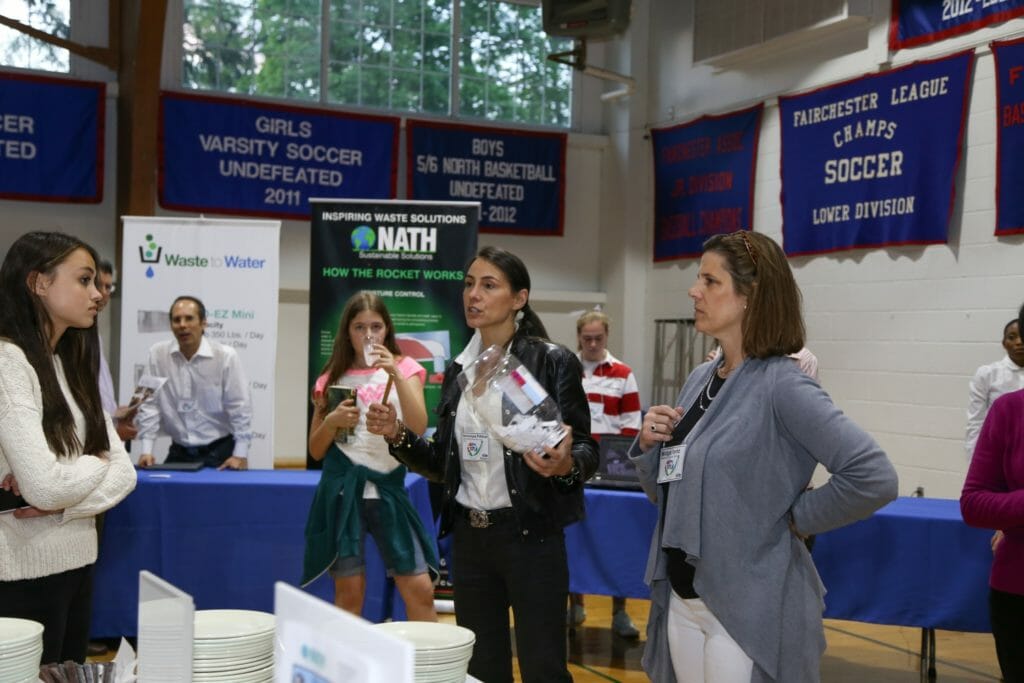
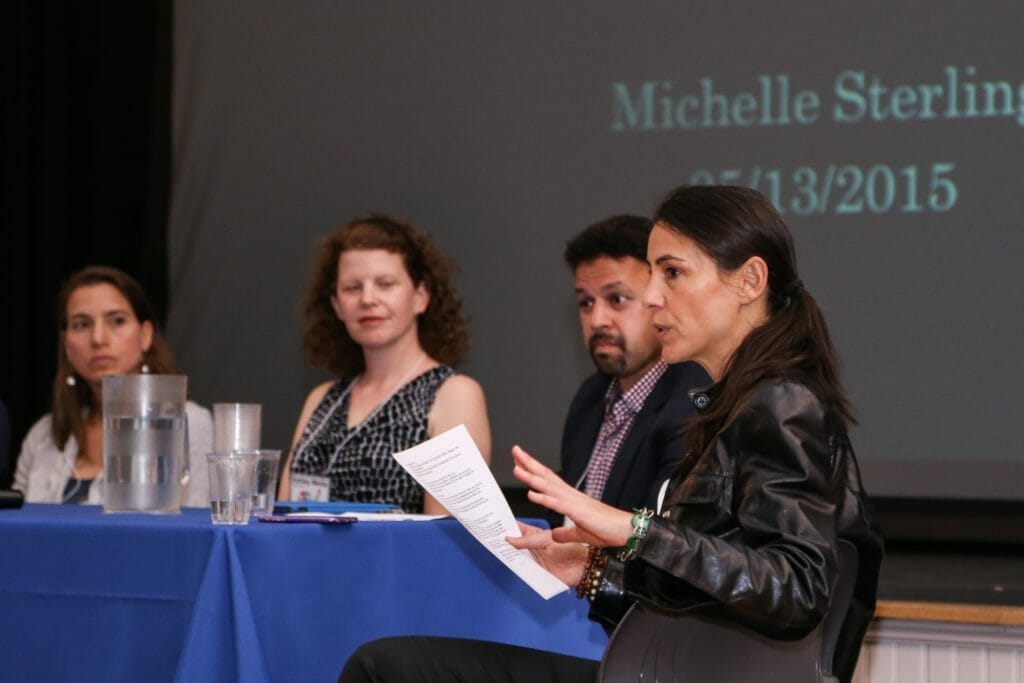
Today’s Daily Point of Light Award honoree, Veronique Choa Pittman, is on a crusade to educate and inspire future generations to be good global citizens. For five years she has served on the board of Green Schools Alliance, an organization that offers schools guidance on best practices for sustainability education and developing a healthy, sustainable school environment. Veronique first began volunteering with Green Schools Alliance in 2008. Over the years, she’s proved to be an invaluable asset by diving into any task thrown her way – from web site management to spearheading fundraisers. Points of Light spoke to Veronique to learn more about her service work.
Why did you choose to serve as a board member for Green Schools Alliance?
I chose to serve as board member for the Green Schools Alliance because I not only believe in the mission, but I had firsthand experience as an active parent in my childrens’ school as to why the model is scalable and transformational. Also, I not only funded, but project managed, the build-out of their first collaborative platform and reporting framework.
Why do you think it’s important for children, especially, to be actively involved in sustainability efforts?
While children may not old enough to vote, they are a very influential block. When we helped a school in New York City host a student-led conference around the issue of single-use plastic, the panelists, which included City Council members, were so impressed with their one-minute testimonials that they were invited to the hearings at city hall related to legislation that was up for a vote. They knew that childrens’ voices might actually sway the undecided, since they were the ones that were going to live with the consequences of inaction. Children learn better and more enthusiastically when given a real-world problem to help solve. Project and place-based learning is the way all children should learn in the internet age.
What other service projects or intiatives are you involved in?
I work with the Bedford2020 on the Greenlight Awards. I’m on their board and I serve on their Schools and Waste & Recycling Taskforces. Modeled roughly after the television show “Shark Tank,” the Greenlight Awards inspires local students to put their “Big Green” ideas into action. In this year-long program, students from 5 high schools in my community compete for funding to develop projects that have an impact in our community. At the end of the school year, the finalists compete for $500 and the Greenlight Award. The more students take part in this amazing, replicable program, the more our communities, and the people living in them like myself, will benefit from their inspiring projects. I also like community action days of any sort and have participated in many across the globe.
Why do you think it’s important that more people donate their time and talent to helping the environment?
If you are not part of the solution, then you are part of the problem. Humans are the single largest source of carbon pollution, so it’s up to each of us to engage with our communities or with an organization that is addressing whatever aspect of the environment resonates most, whether it be promoting programs that connect people to nature, reducing waste, working on renewable energy-related projects, and yes, even educating girls which is the 6th most impactful way to reduce climate change.
In five words or less, describe how the act of giving back to others makes you feel.
Relevant, connected, helpful, impactful.
Do you want to make a difference in your community like Veronique? Visit All For Good to learn about volunteer opportunities in your area.
New York City Teen Raises Money to Fund Pediatric Cancer Research
When you live in a big city, it can be hard to feel like you’re powerful enough to make an impact. Shannon Li knows that you can if you focus your efforts and tackle a single problem.
For her, the battle is fighting childhood cancer one cookie at a time.
Two years ago, Li, now a high school junior in New York City, launched a school club to benefit Cookies For Kids’ Cancer, a 501(c)(3) nonprofit organization dedicated to raising funds to support research into innovative pediatric cancer treatments. Today, nearly 60 students volunteer with her.
“I’ve always been interested in volunteering and wanted to influence the younger generation,” she said. “Creating this club gave me the opportunity to gain leadership and really set an example — to show younger people the importance of making the sacrifice of giving time to help the community and make a difference.”
Although Cookies for Kids’ Cancer supports all types of fundraising efforts, Shannon and her schoolmates run bake sales, on-and-off campus, twice annually to collect donations for New York University Langone Hospital. They also recently completed a fundraiser where they put custom messages on candies.
But, students are interested in doing more than selling baked goods, she said. Many have expressed an interest in being more interactive with pediatric cancer patients. Not only would visits brighten a child’s day, but it could also give club members first-hand exposure to working in a hospital. Additionally, volunteers have conducted toy drives and made Christmas cards for children and their families.
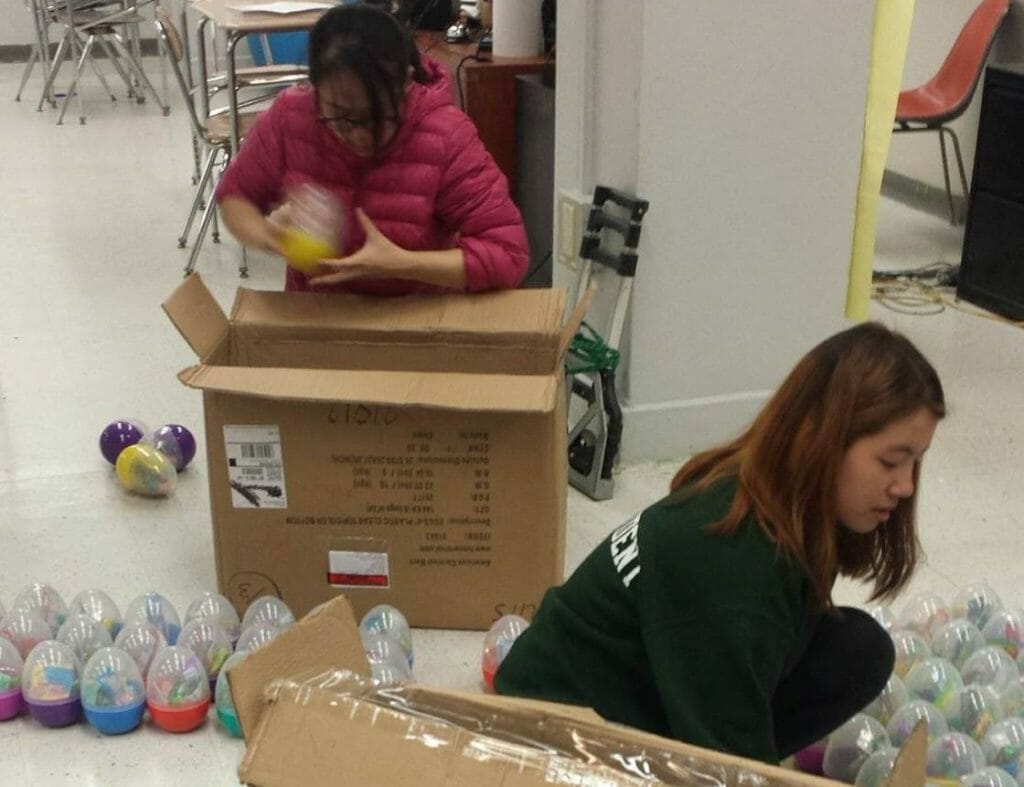
On top of these events, Shannon makes her efforts year-round by hosting cancer walks and candy Easter egg sales in the spring.
To date, her club has made a tangible impact, donating $300 in toys to hospitalized children and raising $900 per bake sale to fund research efforts, she said.
After graduation, Shannon said, she’ll hand club leadership off to another volunteer. And, she hopes her efforts show others that your age and location don’t dictate whether you positively influence others.
“Volunteering as a young person is important because it helps other people take us more seriously,” she said. “We play, and we fool around. But, we also care deeply about issues in a major way. We do like to give back to the community.”
Do you want to make a difference in your community like Shannon? Visit All For Good to find volunteer opportunities in your area.