Philadelphia Woman Finds Healing After Loss as a Hospice Volunteer
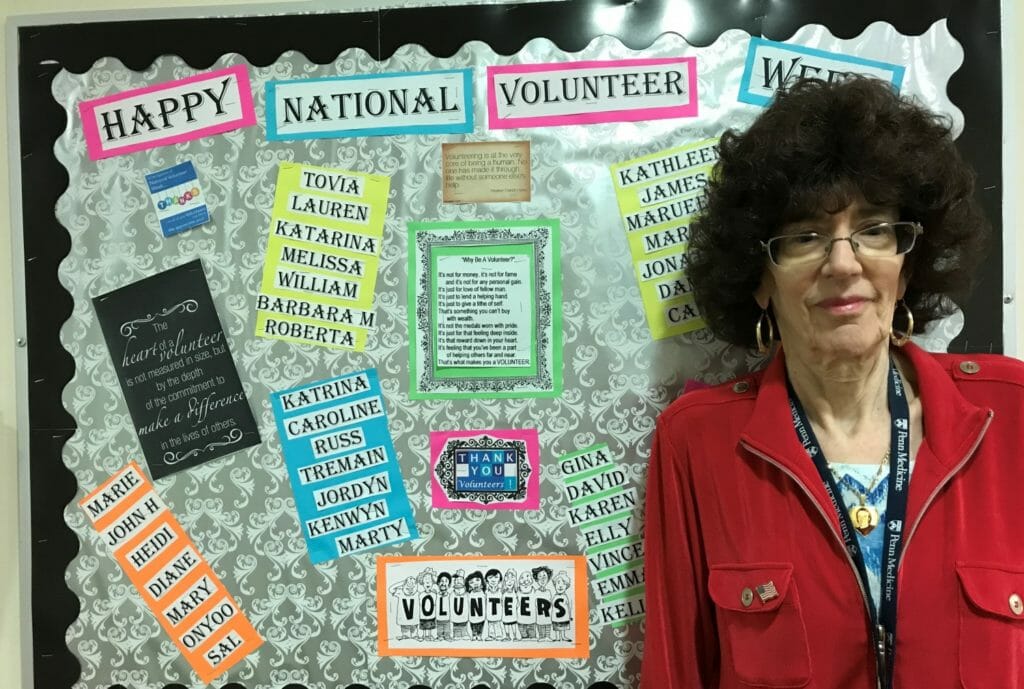
Ten years ago, if you had asked Barbara Manfredi if she could volunteer at an inpatient hospice unit, she would have said absolutely not.
“I would never have thought it was something I would do or could do,” she said. “But after I lost my mother, my father and then my husband, the people who were most important to me, death didn’t scare me anymore.”
Manfredi, who retired after 37 years working for the Philadelphia School System, didn’t know a thing about hospice until her husband was admitted to the 20-bed Penn Wissahickon Hospice just outside of Philadelphia in 2008, shortly after it opened. He was one of the first patients to pass away under the unit’s care. “It is still a sacred place for me, where we spent our last time together,” she recalled. After taking time to process her own grief, Manfredi returned to the unit, seeking training as a hospice volunteer.
“I wanted to give back,” she said. “Hospice is so wonderful, so supportive, not just for the patient but for the family and friends.” At first Manfredi worked in the office and at the front desk as a greeter. But after the requisite year had passed since her husband’s death, she started working with patients.
“I have met people whose lives would never have crossed mine. I have learned so much, been so inspired, met some of the nicest people.” Until her husband’s illness and death, Manfredi had no real experience with hospice. “I thought it was only for people with cancer, or AIDS. It would have helped my mom so much, and she had COPD. It’s all about dignity and respect.”
Manfredi spends two or three hours a week with “her” patient, visiting in the home or at the hospice unit. Some patients “graduate” – improve enough to exit the program. She gets to know folks over the course of five, six, seven months, hears their stories, holds their hand.
“In a way, I think maybe I’m being a little selfish,” she said. “Volunteering gives me the chance to know what I can expect when it’s my time. It takes some of the fear factor away.” She feels most useful providing company and comfort when her patient is on their own, without the benefit of loving family members.
“I know people might feel apprehensive about volunteering like this, they think all you’re going to do is talk about death. But that’s not the case. I treat them the same way as anyone else. We talk about what interests them, about their life. They aren’t defined by the fact that they are dying.”
Do you want to make a difference in your community like Barbara? Visit All For Good to find volunteer opportunities in your area.
College Student Uses Education to Combat Bullying
Bullying takes on many forms, all damaging, all wrong. It happened to Ananya Murali and her family 16 years ago, and sadly history continues to repeat itself. But she’s trying to change that.
Ananya and her family are from the south of India. When she was 3 years old, her father took a job in America, moving his wife and two daughters to Helena, Montana, a city and state not known for its diversity. They lived there for 5 years before moving to Milwaukee, a melting pot of ethnicities and culture.
“We looked different from everybody else and no one wanted to be our friend,” recalls the 19-year-old freshman now studying medicine at the Rensselaer Polytechnic Institute. “Then 9/11 happened. Suddenly there was a lot of racial tension and discrimination. We had our tires slashed, our windshield broken. People were calling us terrorists, telling us to go back to where we came from. It was terrible.”
As Mahatma Gandhi taught, ignorance can be conquered with education and enlightenment. Ananya’s mom Lalitha saw that her daughters were struggling socially in school, where there were no other dark-skinned children. She started volunteering, educating the children about India, its traditions, and its culture. Working with AmeriCorps Vista volunteers, the Murali family participated in a Diversity Carnival sponsored by the United Way, an event that included traditional Indian music set to the words of Ghandi and Martin Luther King, dancing and Indian food. “People are afraid of what they don’t understand. Seeing us as people like them made all the difference,” said Ananya. By the time the family moved, they’d reached more than 500 students with their educational and cultural message.
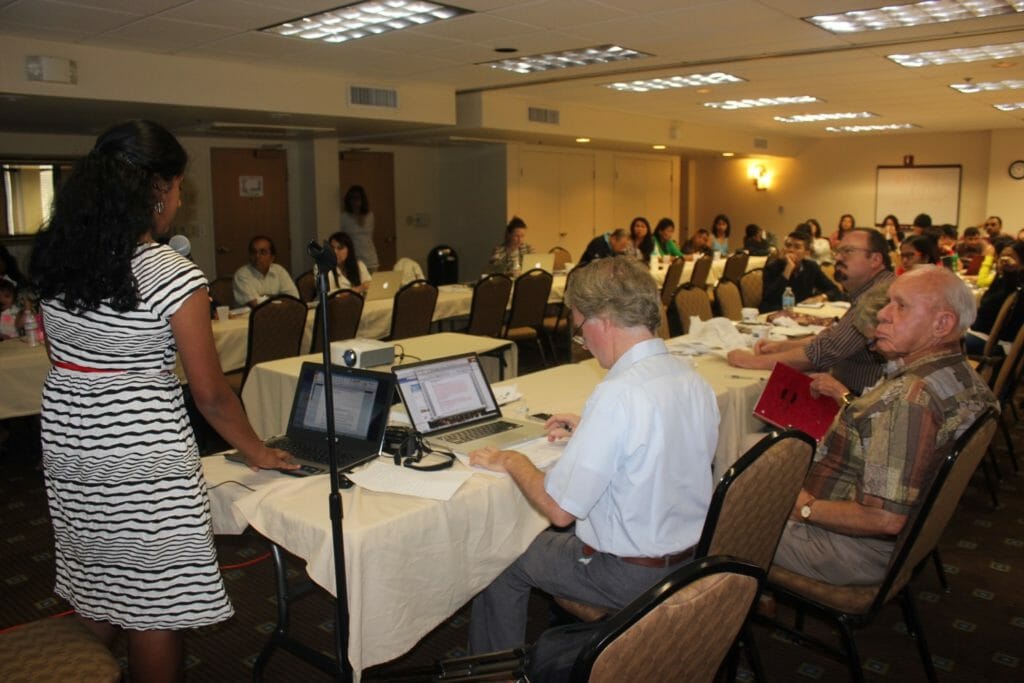
That experience shaped Ananya’s worldview. Although she felt more at home in Milwaukee, she was still troubled by the racial segregation she saw, the “us and them” mentality. When one of her classmates committed suicide after being bullied, Murali found her calling. “I did some research and found that 1 in 7 students in grades K-12 is either a bully or a victim of bullying, 71% of students in our country report incidents of bullying at their school, and 90% of 4th-8th grades report being victims of bullying.” She was determined to take action.
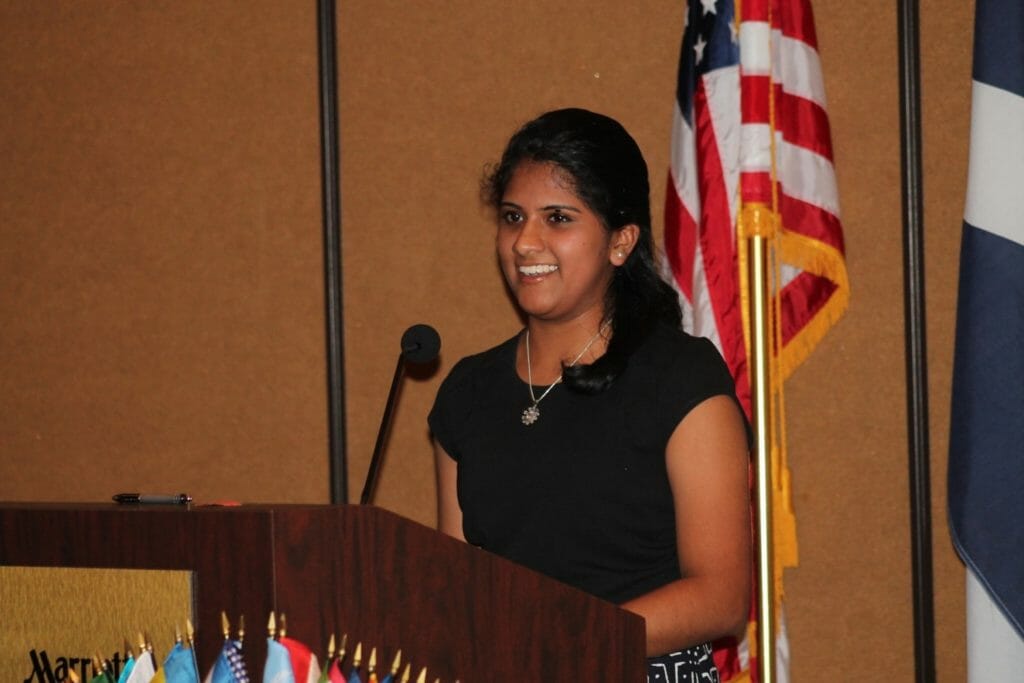
Three years ago, she planned, organized, and conducted a leadership/anti-bullying camp, “Step-Up Against Bullying and Violence” for more than 100 middle school girls to teach various strategies to reduce aggression and emotional distress and improve their attitudes toward themselves and others. She presented the project at the International Youth Peace Conference, received $2,000 grants from the Youth Service of America and KEDS Brave Life Project, and created an anti-bullying/leadership curriculum for the middle school girls, including speakers to address everything from self defense to stress management.
The program has met with such great success that it’s being modeled in other cities and countries. Ananya, who along with her sister formed a non-profit called Educate Engage Empower, presented the program at five schools in India, and in August she’ll conduct a camp for Syrian refugee teens in Milwaukee.
“Education can really change your life,” she said. “We were mistreated in Montana, but after our community became educated, everything changed for the better. There is a way to educate teens about bullying. It doesn’t have to exist as an expected part of our culture. Education will make the difference.”
Do you want to make a difference in your community like Ananya? Visit All For Good to find volunteer opportunities in your area.
Bullying Victim Finds Confidence Through Volunteerism
Meet Daily Point of Light Award honoree Lucas Smith. Read his story and nominate an outstanding volunteer, family or organization as a Point of Light.
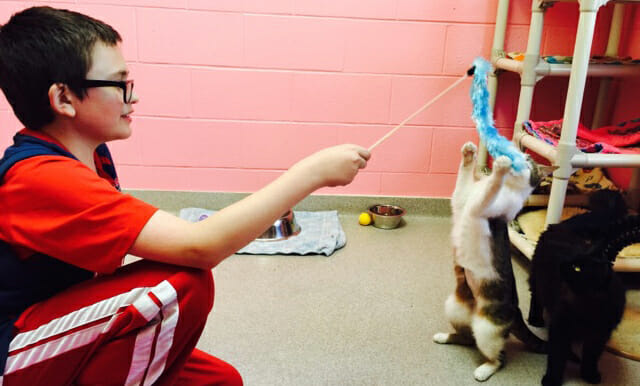
Photo Credit: Wendy Smith
Lucas Smith volunteers at the Lakeshore Humane Society in Manitowoc, Wisc.
Fourteen-year-old Lucas Smith clearly remembers one of the first times he was bullied. He recalls being just four or five years old when some kids picked on him, taking off his glasses and throwing them in a sandpit.
“It was not a fun day,” said Lucas. “I felt really sad after that, and I had to call my parents to get more glasses because I can’t really see that well without glasses.”
Lucas felt down after being bullied, but he soon found an outlet to channel his emotions into something positive. At age 6, he began volunteering. By getting involved with his community, he was able to change how he felt about himself and ultimately, how others would come to see him.
He began by helping at the Lakeshore Humane Society, fostering animals until they were able to be adopted into a permanent home. (Although, sometimes the Smith home ended up being that permanent home for Lucas’ furry friends.)
Lucas’ mother, Wendy, said her son – who is autistic – showed an affinity for animals with special needs, including a cat with asthma and a puppy with a heart condition.
“He shut down because of the bullying,” Wendy said. “Then he started connecting with the animals a lot and helping in the community. Knowing that he was doing good in the community and he was connected to something, kept motivating him more.”
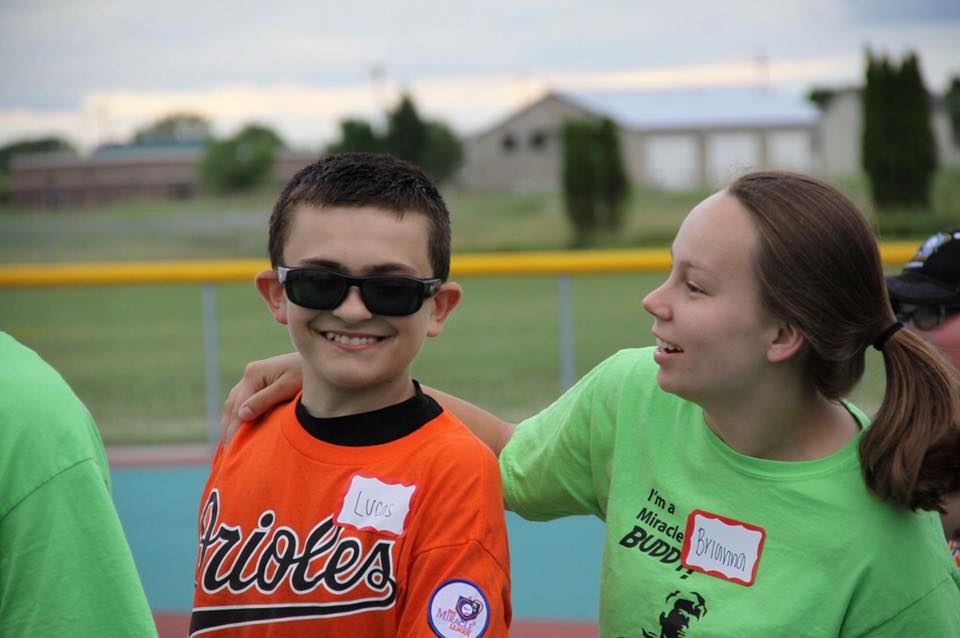
Photo Credit: Wendy Smith
After playing with the Miracle League in Green Bay, Wisc., Lucas Smith helped fundraise to bring the program to his hometown of Manitowoc.
A few years ago, Lucas got involved with the Miracle League, an organization that supports children with special needs through baseball. The league’s custom-designed rubberized baseball field makes it all-inclusive, even for children in wheelchairs.
“What’s really cool is that everybody plays,” Wendy said. “Everybody bats. Everybody wins.”
Lucas began playing for the Miracle League in Green Bay, Wisconsin, and later got involved with a committee that helped fundraise to bring the Miracle League to his hometown in Manitowoc, Wisconsin.
“It has raised so much awareness in the community about people with disabilities,” said Laura Zeimer, commissioner for Manitowoc’s Miracle League of the Lakeshore.

Photo Credit: Laura Zeimer
Lucas Smith plays with the Miracle League, an organization that makes baseball accessible to children with special needs.
Lucas is also a peer ambassador for Generations Against Bullying, a Wisconsin-based anti-bullying organization that provides services and support for students, parents and schools.
“Whenever I see bullying, I try to help,” said Lucas. “I just want to help [the kids] through their situation.”
“What’s inspiring is that he himself is autistic,” said Lee Thennes, principal at Lucas’ school. “But he certainly goes above and beyond in his call to the community. Kids see that, and they respect him very much for that.”
In Lucas’ mind, being on the autism spectrum may have been the catalyst for his ability to be a changemaker.
“If I didn’t have autism, I don’t feel like I would have been bullied as much,” he speculated. “… Probably wouldn’t have been in the community as much.”
Through his volunteerism, Lucas has been called upon to share his story and give speeches on behalf of the organizations he serves – even though public speaking isn’t his favorite pastime.
“It’s kind of hard, but I try to get over it,” Lucas said, referencing his anxiety. “Knowing that if I do a speech and do it [well], without having to worry about stuff, it will help my organization.”
The community’s response to his speeches is what hits home for Wendy. She recalled a recent event where Lucas spoke in front of an audience of 700 people.
“I had at least five people on our way out either stop and say, ‘Luke, you inspire me’ or come up to me or my husband and say, ‘Wow, your kid inspires me and that’s what I needed to hear today,’” Wendy said.
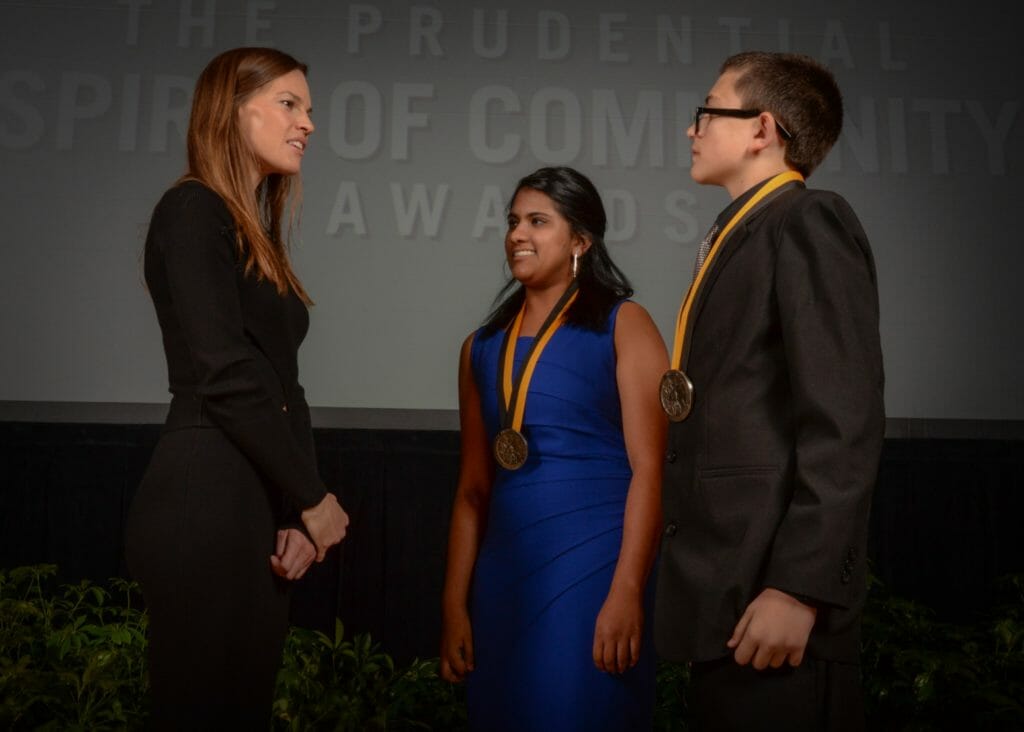
Photo Credit: Zach Harrison Photography
Ananya Murali and Lucas Smith, 2016 Prudential Spirit of Community Award State Honorees for Wisconsin, meet with actress Hilary Swank at the national award ceremony in Washington, D.C.
Last year, Lucas was honored with a Prudential Spirit of Community Award, recognizing youth volunteerism. He gave his acceptance speech in front of the student body at his school, speaking about his community involvement.
Shortly after, according to Principal Lee Thennes, several other students approached staff to ask how they could volunteer. “It’s kind of a neat opportunity for kids to get that reinforcement – that giving back to your community is an important thing.”
Lucas considers himself just a “normal teenager” – someone who enjoys sports, the outdoors, being on his phone. And of course, helping others.
“Bullying would normally hurt somebody, but it kind of helped give me the confidence to go further into the community,” Lucas said. “I stood up more than I stood down, after what happened. I just want to go far and help more.”
Find opportunities to make a difference in your community at www.allforgood.org.
Marine Veteran Finds Purpose and Passion In Serving Others
Instead of asking military veterans – including recent combat vets – to volunteer to help their community in traditional ways, Edwin Vasco challenges them with big projects that require a plan, teamwork and tough tasks.
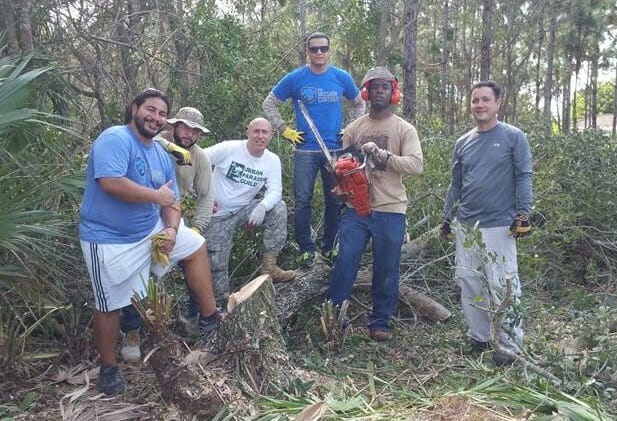
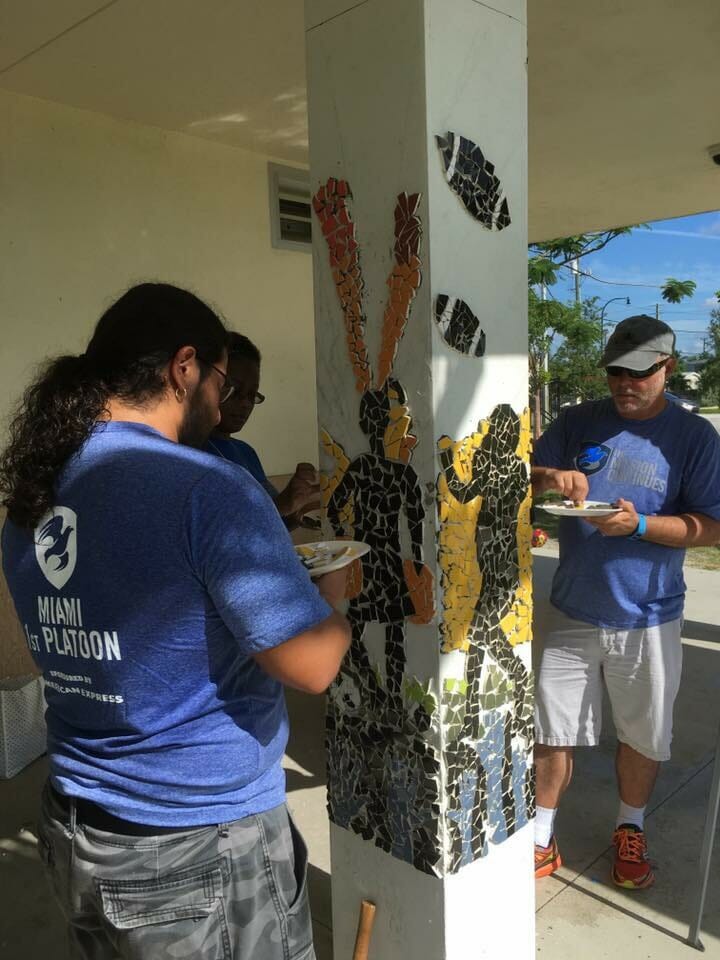
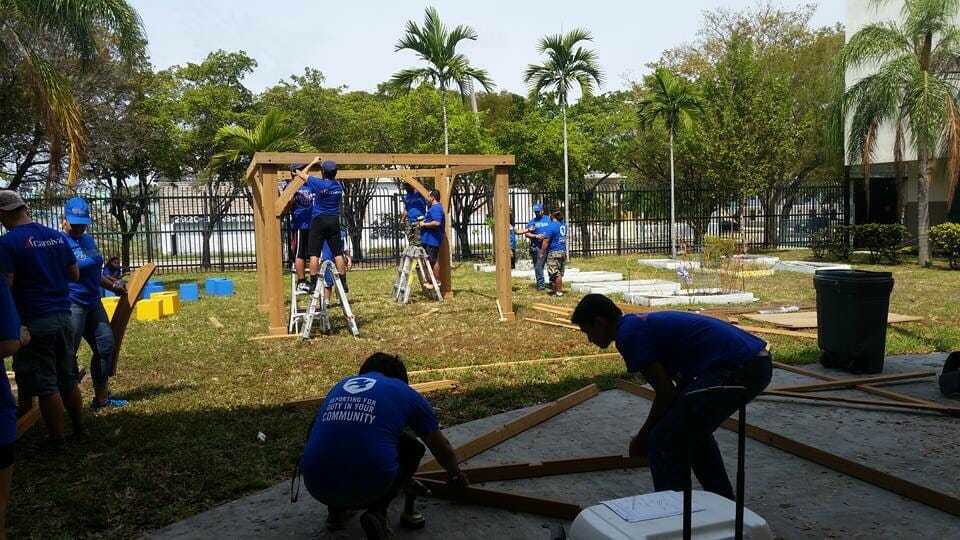
For example, he’s gotten volunteers to work in sweltering Florida heat, digging out invasive species, planting thousands of trees and building sturdy camping platforms in nature preserves and national parks, including the Everglades. They’ve built “outdoor classrooms” at elementary schools, picked up tons of trash along beaches and built a soccer field for use by immigrant families.
The projects are referred to as “missions.”
Vasco, who served in Iraq with the U.S. Marines, took charge in 2015 of a newly formed Miami chapter – dubbed a “service platoon” — of The Mission Continues, a St. Louis, Mo.-based organization that’s continuing to grow as more and more military vets find themselves in need of camaraderie and purpose. Each platoon identifies and carries out community service projects unique to its locale, using logistics, leadership and ingenuity honed in the service.
Within two years, the Miami platoon, which had struggled to get off the ground in 2014 – enlisting only 120 members — soared to 465 members. Under Vasco’s leadership, the group completed 26 service projects in one year, contributing some 4,800 volunteer hours.
“He built one of the most solid platoons we have across the country,” said Vu Nguyen, a Navy veteran who helped pilot the service platoon program nationally with The Mission Continues. “Our program volunteers are only required to do four service projects a year. For additional context, it’s pretty hard for most groups to get past the 350-member mark, whereas he got 465 with minimal effort.”
Although Vasco warns his Miami volunteers that projects will likely be “labor-intensive,” and advises them to wear heavy pants, boots and mosquito protection, that actually appeals to veterans like David Restrepo, who served with the Marines in Afghanistan from 2004 to 2005.
“The Mission Continues gives veterans a chance to rise up to any occasion and lead and take charge — to feel like you’re in the military again for a while,” said Restrepo. “It just makes us feel better. A lot of the service projects were very challenging, so it felt pretty good when you finished and saw the fruits of your labor.”
Vasco knows first-hand the let-down that many veterans feel upon returning to civilian life.
“It took me a long time to get re-acclimated to civilian life,” said Vasco, 33. “In the Marine Corps, everybody was working together for a common purpose, vs. in civilian life, people are competing against each other.”
Stacy Roman, who also served with the Marines, says volunteering brings together former service members who understand the tricky transition to what she calls “a completely different lifestyle.”
“While we’re working, we’re talking and a lot of times we hang out afterward,” said Roman.
Vasco, she says, inspires others with his energy. “I’ve never seen him sit down.”
Vasco says his organization’s volunteer model can be replicated in any community. To find—or create—a service platoon in your state, visit The Mission Continues. And, to learn more about other volunteer opportunities near you, visit All For Good.
Natalie Tryon
During an extended hospital stay, eighteen-year-old Natalie Tryon learned firsthand how lonely the life of a patient can be—and how important it is to give back. A small act of kindness extended to her by volunteers during her hospitalization motivated her to start her own giving program, Blessings for Blank at Blank Children’s Hospital in Des Moines, Iowa.
What inspired you to create the Blessings for Blank program?
Two years ago, I was hospitalized out-of-state for a long period of time. I never realized how difficult it was to be away from home, family and friends. One day, my nurse told me two young girls had brought gifts to hand out to the children and teens in the hospital. This act of kindness put a smile on my face during some of the hardest days of my life. These two girls knew what it was like to spend lots of time in the hospital. Together, they donated gifts to hand out to kids who were fighting difficult days in the hospital just like they did (and still are). Those two kindhearted girls inspired me to help out kids who are fighting for their health.
How did your personal experience as a patient inform how you interact with patients as a volunteer?
I was never actually able to interact with the patients at Blank Children’s Hospital due to HIPAA policies, but it was an amazing moment when I dropped off the gifts to the child-life specialists. They described to me how much even a small gift can [positively] impact hospital stays and make difficult days a little brighter for the kids — such as receiving a warm, fuzzy blanket to give them a taste of home or receiving different toys to distract them during their medical treatments. To this day, I still use my blanket and other items that were given to me when I was hospitalized. It helps to give a reminder to the kids and their families that there is hope, and that there are so many people thinking about them and [wishing] the best for them.
How many “blessings” have you been able to provide to patients?
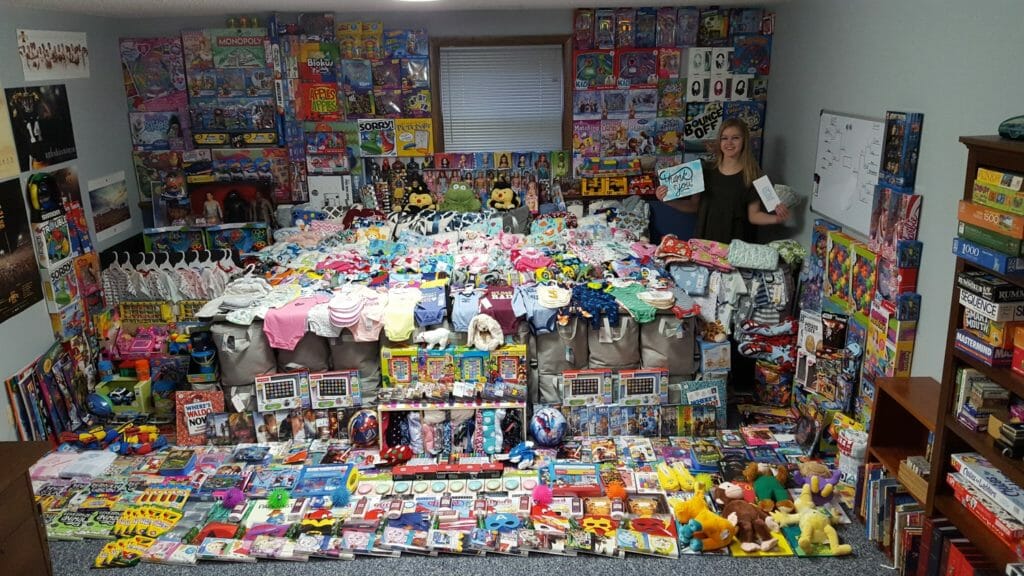
I am happy to say I have been able to donate 1,800 gifts, as well as a cash donation, to the strong kiddos at Blank Children’s Hospital during the second quarter of my junior and senior year [in high school]. The gifts included blankets, electronics, DVDs, board games, art materials, Barbie dolls, action figures, pajamas, and more. I was unable to deliver them [directly] to the kids due to HIPAA, but the child-life specialists shared with me how excited and happy the kids are when they receive a gift. It puts a huge smile on their face that is truly priceless.
What do you think might be one of the main barriers keeping people from volunteering, especially teens and young adults like yourself?
I think one of the main barriers that keeps teens from volunteering is all of the pressure [to be] the best you can be…in sports and academics. That really eats up a majority of your time—trying to be the best and [continually] training to become better.
In five words or less, describe how the act of giving back to others makes you feel.
My heart overflows with happiness.
Veterinary Student Helps Shelter Animals Find Their Forever Homes
When it comes to dogs and cats, veterinary student Danielle Mzyk is committed to making their lives better.
At first, her immersion into caring for animals at the Orange County Animal Shelter during high school in North Carolina was solely to check the box for having volunteer service on her college applications. She took animals for walks, gave baths and helped socialize shy creatures.
But, her volunteer service quickly become more than a resume builder.
“I always had a love of cats and dogs and animal welfare, in general,” she said. “Once I got into veterinary school, I learned how to take care of animals overall. And, I love teaching anyone who wants to learn about veterinary medicine.”
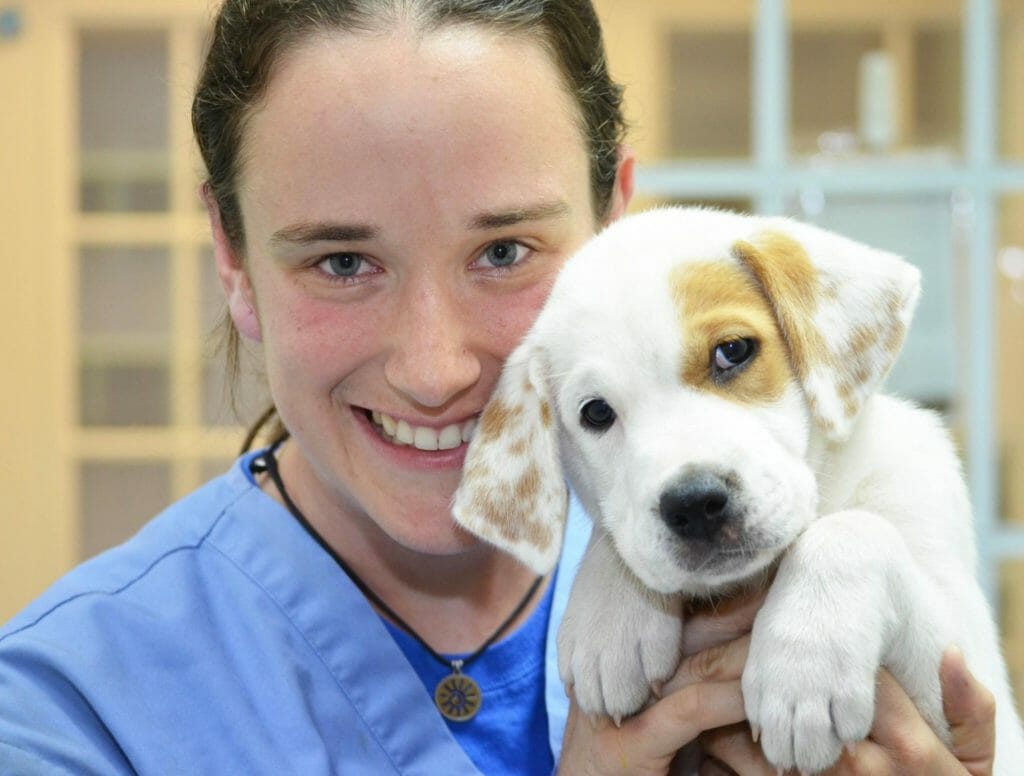
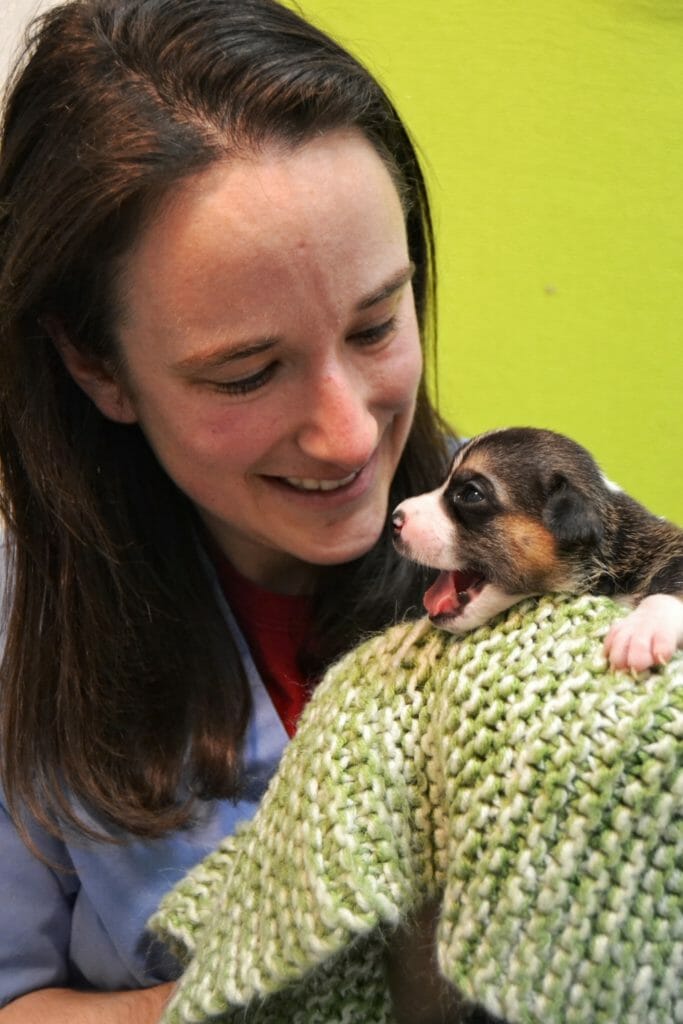
For the past four years, Myzk, a doctor of veterinary medicine and Ph.D. dual student, has volunteered as the veterinary student coordinator at Second Chance Pet Adoptions in Raleigh, N.C. At the city’s oldest no-kill shelter, she conducts physical exams, provides disease prevention and offers other health services for animals, preparing them for adoption. She also trains volunteer veterinary students to do the same.
In addition to conducting physical exams, Myzk leads Second Chance’s once-monthly spay-and-neuter clinic. It’s an effort, she said, to positively control pet over-population. She also launched the Student Veterinary Service Club at North Carolina State University College of Veterinary Medicine where she’s responsible for scheduling regular volunteer events for faculty, staff and students.
Although it’s difficult to judge the impact on students she trains because they graduate and move on, Mzyk said she’s seen the results of her efforts on the faces of others. For example, one dementia patient finally smiled and responded positively to a pit bull up for adoption, and a young girl expressed her excitement at adopting her first puppy.
It’s those responses that make volunteering with animals worth it, she said.
“My main goal is to get others interested in being a volunteer. I want to teach people that volunteering isn’t just something you do in high school,” she said. “It’s something that makes a meaningful impact on the community.”
Visit All For Good to find volunteer oppportunities in your area.
New York Teen Starts Leadership Program to Help Provide Low-Income Families with Baby Supplies
Birthdays are the one day of the year when you and your loved ones celebrate you by showering you with gifts, cake and love. But when 16-year-old Emi Silverstein holds her birthday parties, she makes it not about herself, but about others, by having her guests donate their time and volunteer.
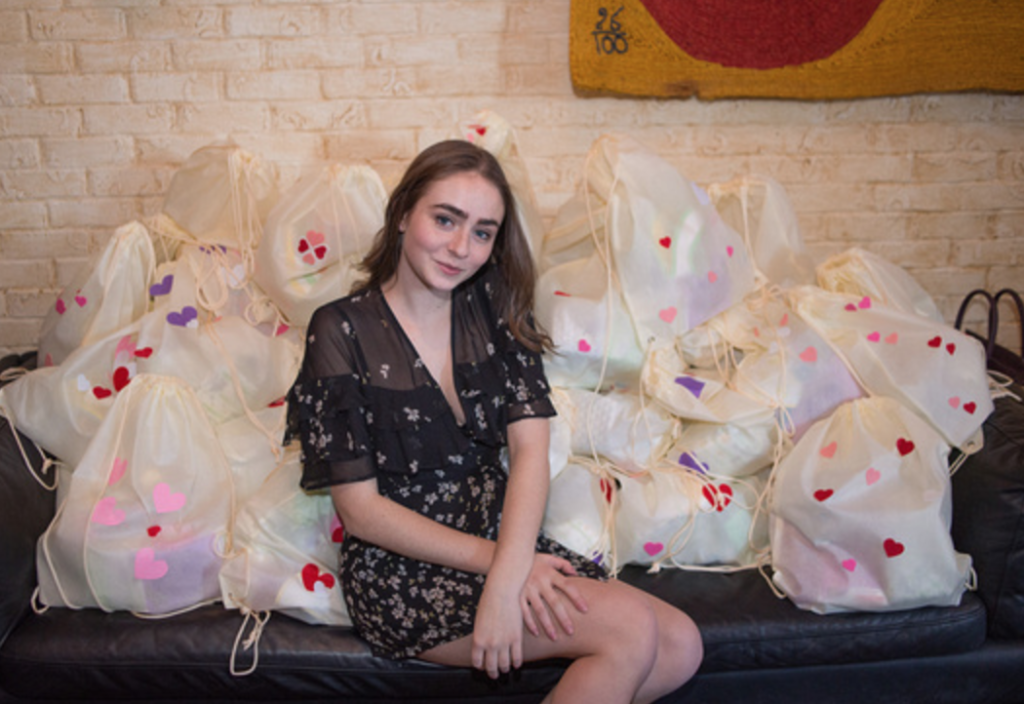
For her 15th birthday, she and her friends stuffed and decorated 60 diaper bags to donate to the Good + Foundation, a nonprofit organization that provides children’s gear and supplies to homeless and low-income families in New York City.
“I always like to add a little aspect to my birthday parties where I give back because I feel like at a time when you get a lot of gifts, you should be giving gifts to other people too,” said Emi, who invited her entire grade to the party.
“It was super fun and all the girls got involved and they knew where their volunteer work was going to support. I think time is much more valuable than money in those cases. You can give a foundation money, but you don’t necessarily get to see that impact. But you get to see the impact that you make when you give time.”
Emi was first introduced to the Good+ Foundation when she was 13, and she has continuously worked with them by volunteering at the warehouse, doing a summer internship where she worked on their website and blog, and most recently, launching a teen leadership training program.
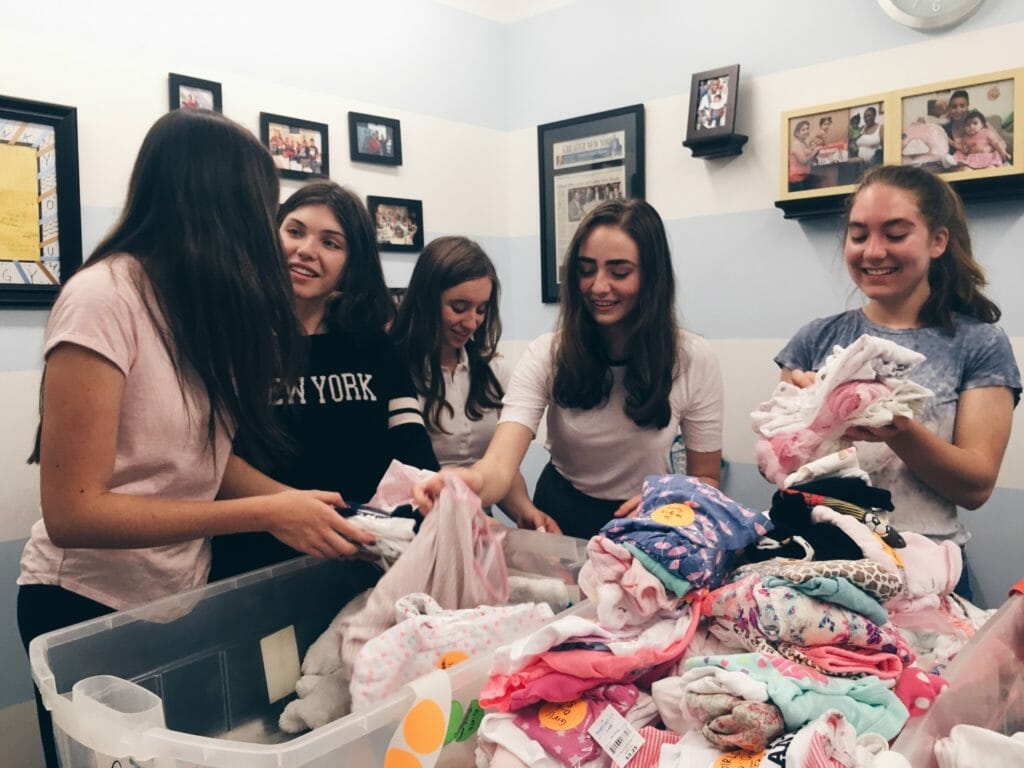
“I started the Good+ Foundation teen leadership council, which is basically a group of 14 teenagers, 8 of which, every Monday, come and we bundle and sort clothes,” Emi said. “We do a lot of group work with them and really teach the girls who do the work not only leadership, but about how poverty affects young families in the city.”
Since launching the program, Emi has recruited nine girls from high schools around New York. The teens are taught leadership skills by acting as school liaisons, tasked with promoting the Good+ Foundation mission and recruiting more volunteers to join the program.
Having been born and raised in New York, Emi has seen how prominent homelessness and poverty is in the city and has always felt a strong connection to these issues.
“You never want to have a family that has to choose between paying for a crib or buying gas, or transportation to get to their job or buying food that week or paying rent,” said Emi. “The generation that we’re helping is our generation… In order to provide them with the right start to life is really important and if you don’t give them a fair chance from the beginning, nothing’s going to work.”
Check out All For Good to find opportunities to volunteer in your area.
Bhutan Refugee Uses His Journey to Citizenship to Help and Inspire Others
When Giri Sapkota and his family landed in Cincinnati in August 2008, he experienced every imaginable emotion, from relief and hope to fear and anxiety. A native of Bhutan, Sapkota had lived in exile in Nepal for 20 years, without a home, without a country, in a state of cultural purgatory. The chance to start over, finally, in America was a dream long in the works. It was also a terrifying prospect.
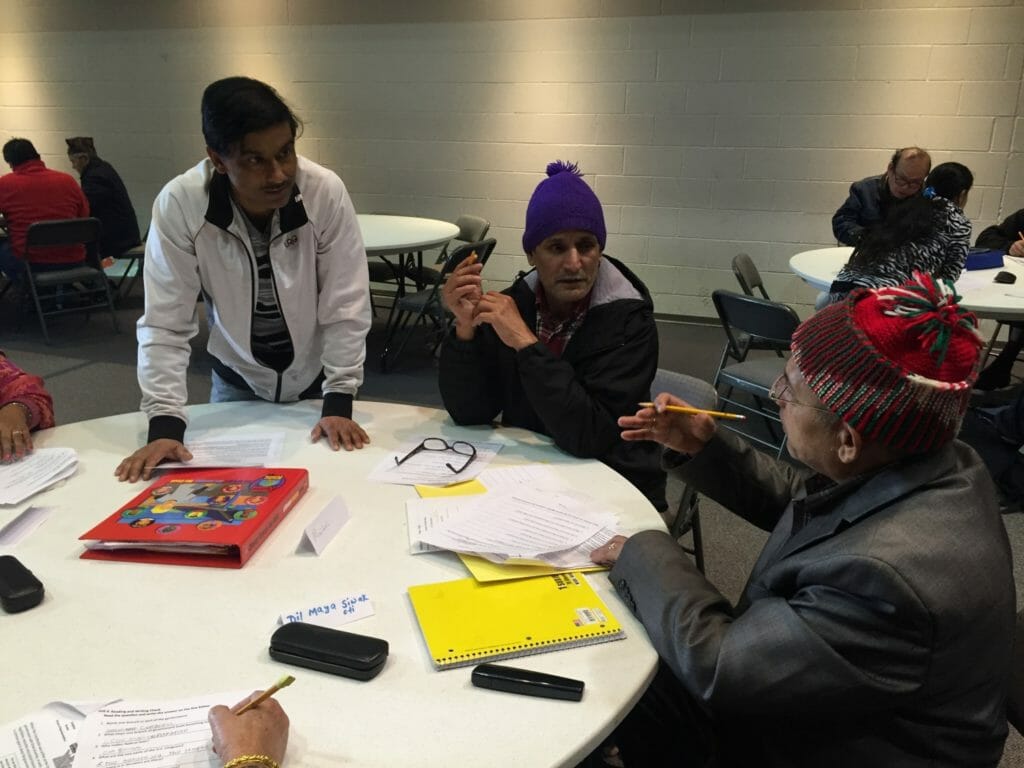
Sheryl Rajbhandari was there to help. Rajbhandari is a co-founder of Heartfelt Tidbits, a volunteer-based organization that provides long term support and services for the Bhutanese refugee community, which currently numbers about 15,000 in Cincinnati. “Sheryl stepped up for me and my family,” recalled Sapkota. “She inspired me. I wanted to help.” So before he himself was settled, Sapkota started volunteering. “People are in need of comfort at this time,” he said. “They don’t speak English, they don’t know where to take their children to school, where to shop. All basic and important things are new.”
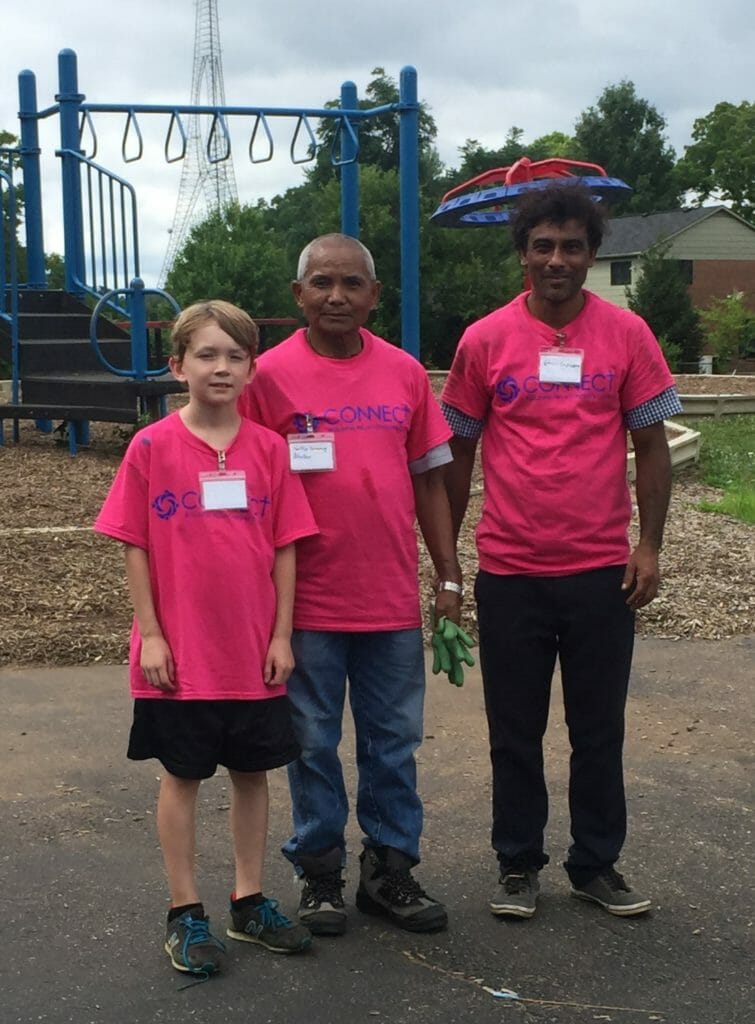
Heartfelt Tidbits was formalized in 2011. But from day one, Sapkota anticipated needs and solved problems. “When there was just my husband and I, we ran out of steam after assisting 200 or so people,” recalled Rajbhandari. “It was Giri’s suggestion to engage a core group of the refugees to help, and we discussed how we could logically separate the tasks so that we could serve more. On days where I feel like I could give up, he’s the person that reminds me there are many more to help and we can do it.”
Although modest about his role “Sheryl is the mastermind!” Sapkota has been passionate from day one, anxious to help refugees adapt as well as hold onto their own culture. “Living in exile for five, 10, 20 years, without a home, a nationality. That is so hard,” he said. “We need to help these people, to love them and encourage them. This is my intention for my whole life.”
Whether he’s translating documents, transporting and helping seniors navigate the new system, helping parents access schools and healthcare or coaching refugees as they prepare for American citizenship, Sapkota gives selflessly and from his heart. “I can show them my own life,” he said. “Like them, I came to this country scared and afraid and took baby steps. I am now a US citizen, a homeowner, a father of sons who attend college. I encourage them – if they work hard they can do the same. What brings me joy is making a big difference, having an impact on someone’s life. That gives meaning to my being here beyond simply looking after myself.”
Teenage Sisters Shine ‘Rays of Hope’ by Selling Necklaces for Cancer Research
At the beach, you might see people building sandcastles, soaking in the sun, swimming or maybe eating. But if you run into Jenna and Cara Ainge of Reston, Virginia, you’ll see them vigorously looking for seashells.
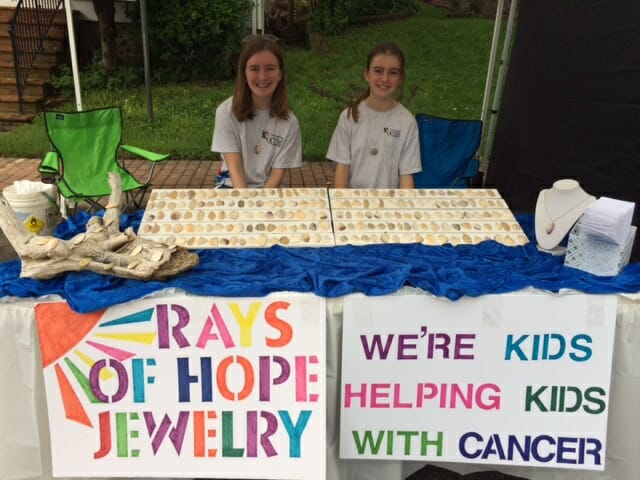
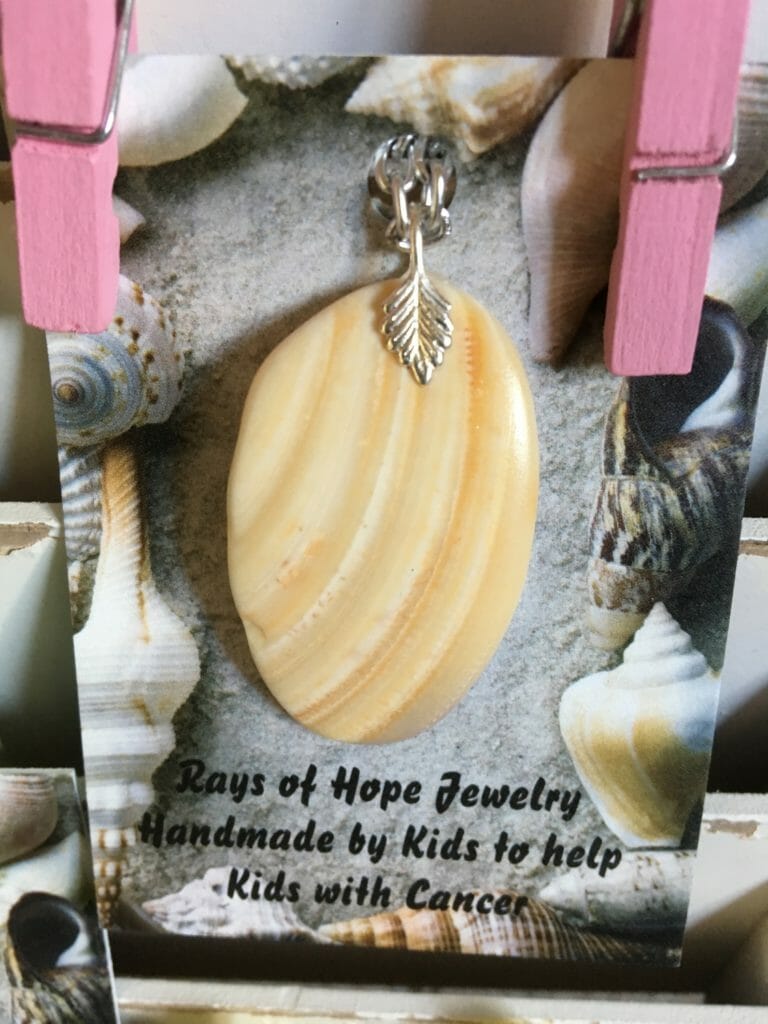
That’s because Jenna, 12, and Cara, 14, make pendant necklaces with seashells and sell them at their local farmers markets and craft fairs. They donate 100% of their proceeds to children’s cancer research organizations CancerFree Kids and St. Jude Children’s Research Hospital.
The idea to make and sell necklaces came from a school project, but the inspiration to donate all the money to cancer research came from their cousin Thomas who was diagnosed with leukemia at just two years old.
“He’s my closest cousin since we’re around the same age,” Cara said. “I was very little when this happened so I don’t remember much, but I remember being confused like ‘Why did he lose his hair?’ But at the same time, he was still the same kid. He was very strong during his entire battle and his smile never faded.”
“We wanted to help other people who went through the same thing as our cousin Thomas did,” Jenna said. “It makes me feel really proud and happy to be helping other people.”
Finding the seashells is just the first task of many. Each necklace takes around two hours to make. The girls grind, shape and polish each shell and then attach a clasp and chain to complete a necklace.
“The early products were probably something only a mom could love,” said Dennis, Cara and Jenna’s father. “But over a couple of years, they started to perfect this and they received tremendous support when we’d go up to these craft shows and farmers markets.”
Naming their business “Rays of Hope Jewelry,” the sisters have raised over $3,000 for the two charities by selling their pendants for $15 and $20 each.
“We’ve gotten most of the same response that we are doing a really good job of doing our duty as a citizen to help other people,” said Cara. “I think it’s great that people recognize that and hopefully we can inspire other people to do the same.”
Check out All For Good to find opportunities to volunteer in your area.
Veteran Finds His True Passion in Giving Back to Military Families
Rare is the person who knows what it’s like to serve in all military branches. It offers a unique glimpse into military families’ struggles and daily needs.
After a 26-year career in active and reserve duty, Michael Dean devotes 30-35 hours weekly (on top of his career with the U.S. Department of Defense) in unpaid service to the families who devote much to the nation.
“Volunteering is important to me because we must remember the military families and the sacrifices they make to support their soldier, sailor, marine, or airman,” Michael said. “They deserve our support, too.”
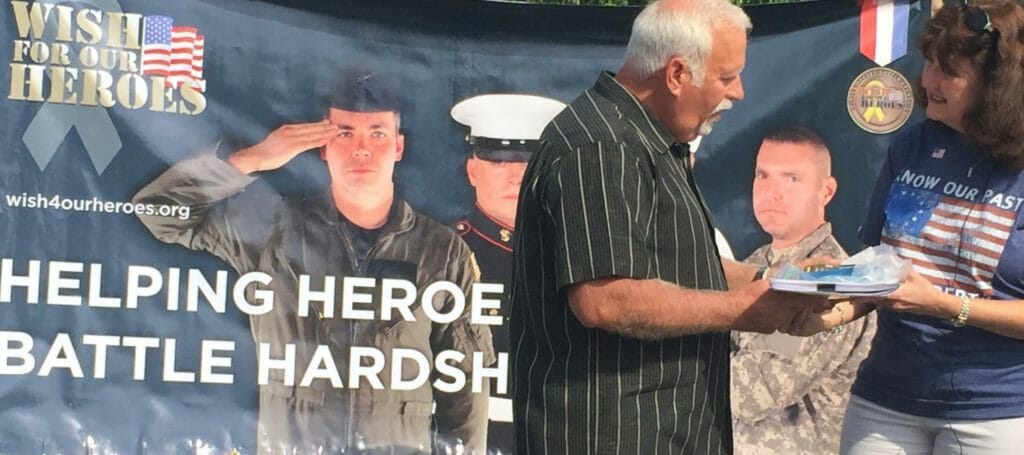
Most significantly, he gives back through the Wish for our Heroes Foundation, a 501(c)(3) organization dedicated to meeting families’ basic needs, such as assisting with car and home repairs to putting food on the table, when other resources are unavailable. Since 2009, the Foundation has raised more than $12 million and granted 3,100 wishes, touching 60,000 lives. Since 2015, he said, $450,000 have been allocated in food support alone.
Since 2013, Michael has volunteered 2,000 hours, delivering wishes, monetary and otherwise, to families directly. For instance, he presented recovered medals to the family of a World War II veteran. He also supports the foundation as an author, donating 100 percent of the proceeds from his book, “Send Me: A Soldier’s Story.”
Through interviews on his weekly veteran-produced radio show, “Got Your 6,” he provides information and access to resources for veterans residing in 20 counties in Indiana and Illinois. To date, he’s produced 62 shows, helping veterans identify correct contact information for needed programs.
As a leader of monthly veteran support groups for all branches and volunteer for suicide prevention awareness programs, Michael is also motivated to volunteer by personal loss. In 2016, he organized a remembrance walk, honoring his 7-week-old grandson. All proceeds supported the Franciscan Alliance for Women Pregnancy Infant Loss.
Next year, Michael plans to launch another volunteer avenue – a television show. With a venue (a military museum) selected and funding in place, the show will build upon his existing activities to enhance military families’ lives.
“This has been my passion – helping and supporting our military families,” he said. “Through all of this, I hope to inspire others.”