Mother-Daughter Pair Conquers Hunger Together in Kansas City
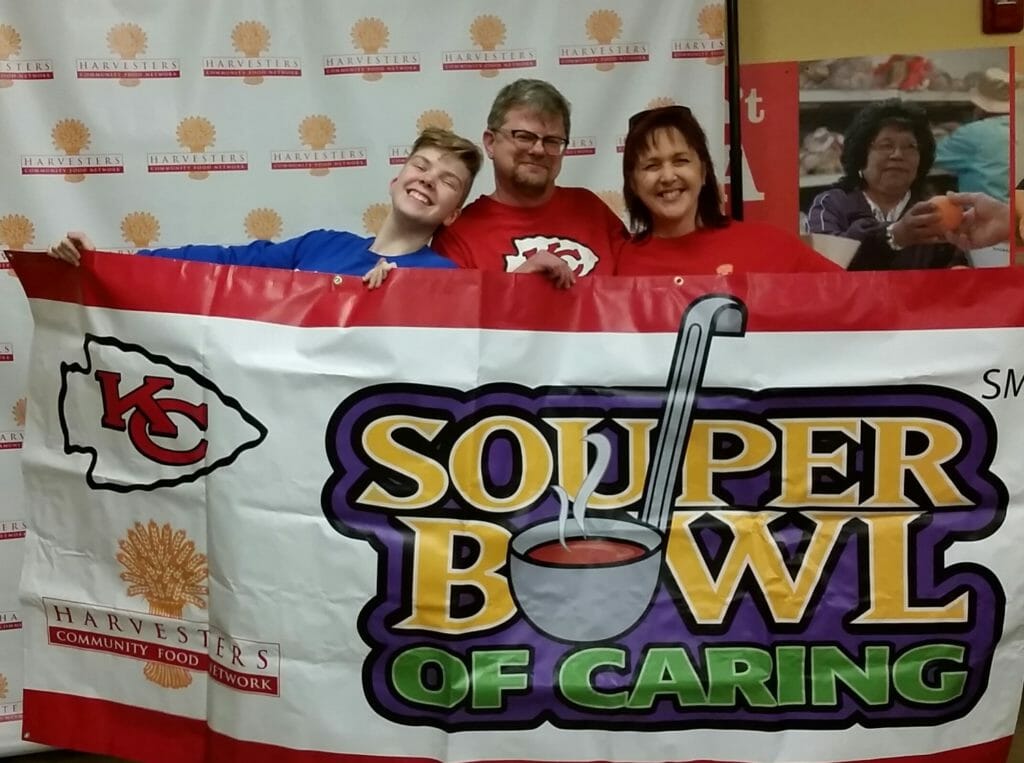
In July of 2012, mother-daughter duo Carrie Roberson and Whitney Lundy were at a friend’s birthday party where they spent the day helping out at a local food bank. They sorted and repackaged onions to be distributed to people in need and they loved the experience so much that they have continued volunteering at that food bank ever since.
“We were looking for ways to give back, because we have what I believe to be a fortunate life,” said Carrie. “We did that first event sorting onions, and when a 10-year-old is willing to go back and volunteer at that place again, I kind of knew we had something there.”
The birthday party took place at Harvesters, a local food bank that serves 26 counties on both the Kansas and Missouri sides of the greater Kansas City area. They supply more than 620 nonprofits with food and household goods, as well as teach programs on hunger awareness and educate the public on good nutrition practices. Together, Carrie and Whitney have completed more than 661 hours of community service at Harvesters.
“Harvesters can only do so much, they can do a lot, but there’s a point where we aren’t able to help them every single day of their life,” Whitney said. “We can’t be there in their house, but we can teach them how to be able to make smarter choices and use the help that we provide.”
When people sign up to volunteer at Harvesters, they are able to choose what type of work they would like to do and when they are able to do it. Carrie and Whitney’s responsibilities have included everything from sorting and repackaging foods, to helping out with events, to dressing up as the Harvesters mascot, Harvey the Turkey.
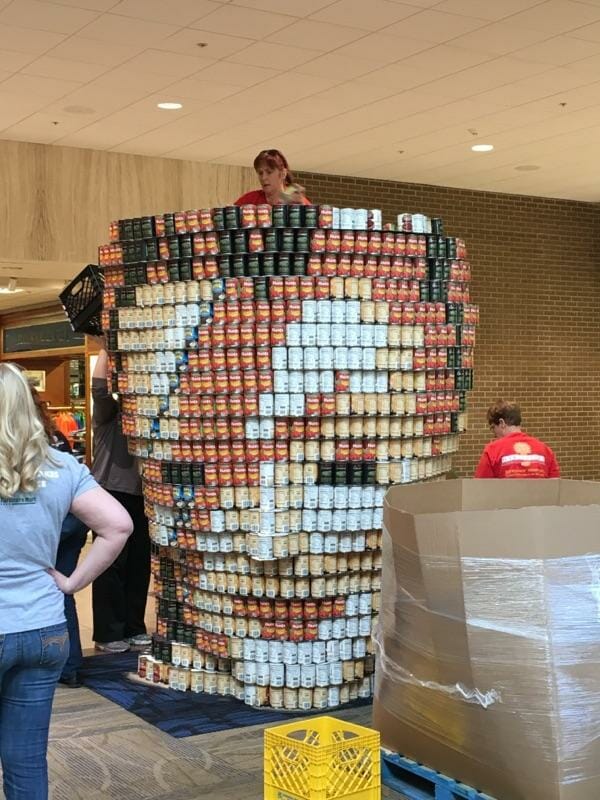
One of Carrie and Whitney’s favorite events is DeCANstruction. Each year, Harvesters partners with construction and architecture firms to create sculptures completely out of nonperishable goods. The sculptures are on display in the local mall for a month, then deconstructed and donated. For the past two years, Whitney has dressed up as Harvey at DeCANstruction to draw in crowds and support. Whitney has also served as Harvey for multiple events including the St. Patrick’s Day Parade and Kansas City Chiefs games.
Through their work with Harvesters, Carrie and Whitney find that seeing the faces that represent hunger statistics makes the work that they do all the more meaningful.
“Seeing numbers for me is one thing, that’s something that’s very eye-opening. But through some programs that we’ve done… I got to see their faces, and I got to see their families and who they were,” said Whitney. “Seeing each and every face of that child is just something that kind of tugs at your heartstrings and really gives a face behind those numbers. Statistics are one thing, people are another.”
Carrie and Whitney want people to know that food insecurity doesn’t discriminate; it can happen to anyone.
“I’m more aware and courteous to people around me because you don’t know who is food insecure,” Whitney said. You can’t look at somebody and say, ‘Oh, yep, that person doesn’t know where their next meal is coming from,’ you just can’t do that.”
While Carrie and Whitney are committed to helping lower the hunger rate in Kansas City, another thing that keeps them coming back to Harvesters is volunteering with each other. “As a mom and as a teenager, one of the most rewarding things is actually spending time with my child and seeing her give back,” said Carrie.
Do you want to make a difference in your community like Carrie and Whitney? Visit All For Good to find local volunteer opportunties.
Alabama Entertainer Mentors Next Generation of Musicians
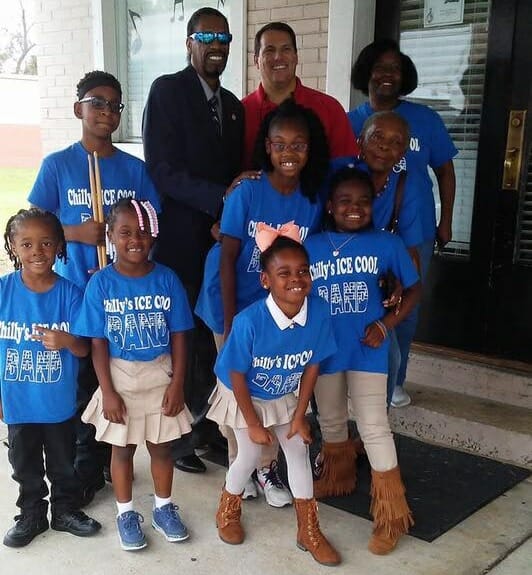
Hospitalized during an extended illness, Stan “Chilly” Cooks says prayers led him to give back to his community, through his passion for music. A touring musician and entertainer who’s opened for the likes of James Brown, B.B. King and Natalie Cole, Stan decided to devote his time, musical talent and attention to his small hometown of Union Springs, Alabama. Founding “Chilli’s Ice Cool Band,” Stan hoped to ignite a spark of musical interest amongst children in the community which could teach real skills, and eventually lead to possible opportunities including musical scholarships for a college education. Stan, who was the trumpet section leader and drum major while a student at Alabama State University, works tirelessly to made a difference by teaching his talents to many children in community, and is today’s Daily Point of Light Award honoree. Points of Light spoke with him to learn more about how he’s giving back.
How did you decide to use your passion to help others?
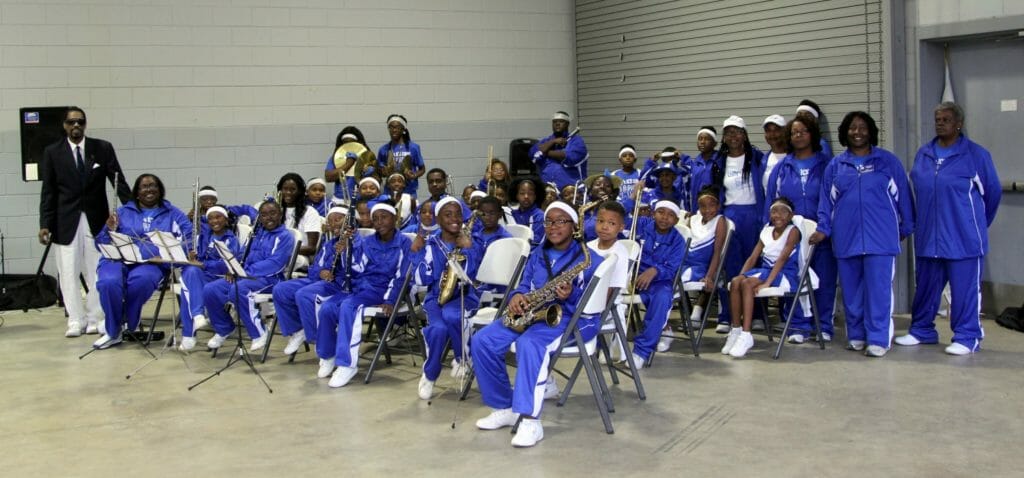
In 2004, I got sick, and it was a strange illness because it kept me hospitalized for the better part of three years. I had an infection on my hip and they had to do surgery. I was a touring musician, I’d opened for James Brown, B.B. King, Bobby Blue Band, Natalie Cole, Roger & Zapp Band, Little Milton, Gwen McCrea and more, and couldn’t do any work while I was sick. While I was laying in the hospital, I did a lot of praying. And I promised God, I said, “If you get me out of this mess, I’m going to go back to that little town and I’m going to do something nobody’s ever done before.” A friend helped me to secure a $3,000 grant from the Black Belt Community Foundation, and out of that grant, I started a band. We went to every pawn shop available, and bought any instrument we could find – you can’t buy new instruments for $3,000. I bought $25 trumpets, some people donated instruments. We grew from four members that first year, and now today, we have 38 people in our program, ages 4 to 15.
You’re not just teaching kids how to play music, you’re inspiring them to be better citizens. Explain.
My main objective is to create responsible, tax-paying citizens. So they’ve got a pledge that they all learn: I pledge to honor and uphold all rules of Chilly’s Ice Cool band, to always give my best effort in everything I do. To study hard, play hard, exercise hard and perform hard too. To respect my elders at home and about, and always remain Ice Cool throughout. In any situation—if you’re going to remain ‘Ice Cool—you can’t be fighting, cussing, all that belligerent stuff.
How is your volunteerism changing your community?
The school systems weren’t putting as much emphasis on performing arts as they were when I was growing up, When I was growing up, everyone had a band. Now the schools have taken band, choir, performing arts, and put them all on the back burner. They’re raising children now where everybody thinks they’re going to be an NBA star or a NFL football player…but knees, ankles give out. Your body wears out. But if you get music in there, I don’t care how old they are, or if they’re unemployed, there’s always going to be a church or something that’s going to need a musician. I just wanted to give them something, so I started my high school band. Our program is free, the instruments are free, uniforms are free – although we’re still trying to get better uniforms, so I got them wearing baseball jerseys now. We have an in-house tutor who helps them with their homework, we encourage them to give their best effort in everything they do.
What’s your message to those people out there with teachable skills?
If you know something needs to be done, if you know how to do it, pass it on. If you pass it on, you get blessings.
Do you want to make a difference in your community like Stanley? Visit All For Good to find local volunteer opportunities.
Robotics Champion Siblings Seek to Implement STEM Programs in More Schools
While siblings Gabriel and Chandler Wimmer celebraed their first-place at the 2014 VEX IQ Robotics World Championship in Anaheim, California, something struck them as odd. The competition hosted more than 10,000 teams from around the world, but the brothers were curious why they didn’t see more teams there – given that there are tens of thousands of elementary and secondary schools in the United States alone.
“We were kind of curious why we didn’t see more robotics teams there, so we did some research and found that only 15 percent of high schools in the nation have after school STEM activities. That’s not even robotics, that’s just STEM in general,” Gabriel said. “We were kind of appalled by this, and we found ourselves really fortunate to be a part of that small percent that did have robotics programs, and we wanted to help make robotics, and all the benefits of it, available to everyone else.”
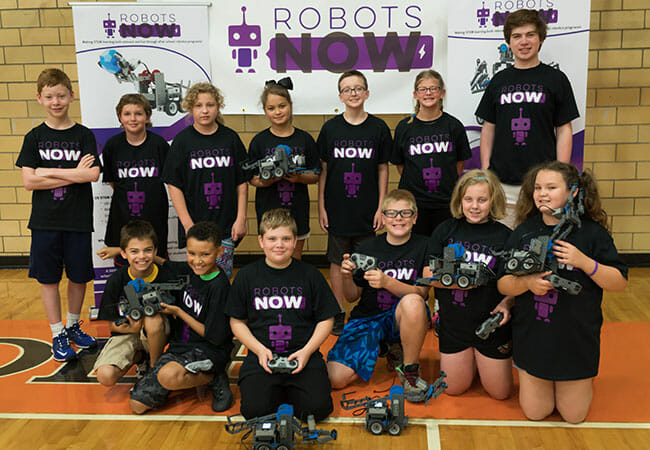
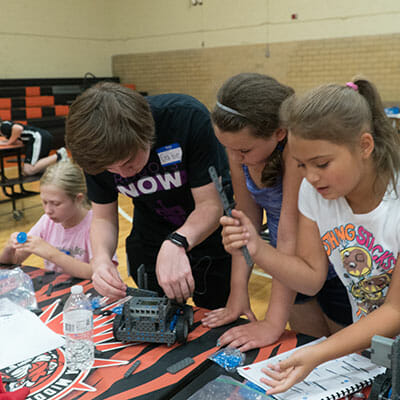
With the help of their father and some crowdfunding, the brothers started RobotsNOW, and nonprofit that works to incorporate STEM programs into schools through helping develop robotics curriculum, sponsoring robotics clubs and hosting free camps over the summer. Currently, RobotsNOW is working to supply three elementary schools and a middle school with full-fledged robotics labs. These labs will include laptops, robots, software, and instructional materials that Gabriel and Chandler will help set up and configure.
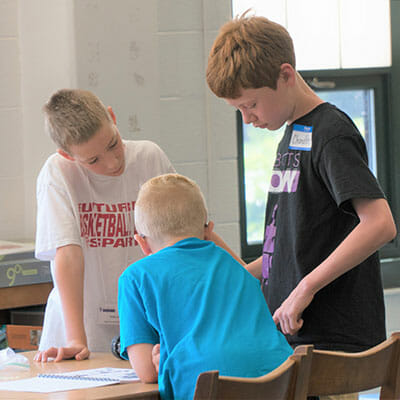
With an emphasis on working and learning together, the Wimmers have made making a difference a family affair with RobotsNOW. The brothers don’t have defined roles in the day-to-day responsibilities for the organization, so they tend to split up the work as it comes along – each playing to their own skills. Chandler, 13, often instructs the week-long camps. Gabriel, 17, maintains the website by writing blogs, content and editing videos. Their younger brothers pitch in as well, and with the help of their father both boys have a hand in RobotsNOW crowdfunding efforts.
“It really does help to do a nonprofit as a family because you can really learn,” said Chandler. “Obviously I don’t know much about crowdfunding but someone like my father or my older brother does, so we can accomplish much more because we all have different skills, and you can learn so much along the way.”
Gabriel and Chandler love to see when kids’ perspectives of math and science change after they are exposed to their STEM programs. “When we first start the camps, we like to ask ‘have you all done anything with robotics before?’ ‘What do you all think of science and math?’ and one of the most impactful reactions we received from one of the students was this little girl,” Gabriel said. “When we asked her what she thought of science and math, she was like ‘I don’t like it, I’m no good at it,’ but after the progression of our course, she was one of the best students. It’s really just the reactions we receive from the students after the camps, and even during them. It really excites them, and after the camps are over they all come up and they’re like ‘are these camps going to continue?’ They just love it.”
Retiree Finds Joy in Serving New Moms and Their Infants at South Carolina Hospital
When Maureen Newton’s husband was transferred to a new job in Columbia, South Carolina, in 2002, it took four years for her to wrap up her own work and join him. A hairdresser for 43 years, Newton was deeply connected to her community in Anderson, South Carolina, and volunteered at the local hospital’s oncology department, tending to the women patients with characteristic TLC. At first, in her new home north of Columbia, Newton felt disconnected from the community. So, she decided to volunteer again, this time at Palmetto Health Baptist in the Nesting Place for new mothers and their babies.
What inspires you to volunteer?
I just know how wonderful it feels to make somebody else feel good. I started volunteering back in Anderson, doing hair for the ladies in the oncology ward. When I’d leave them, it looked like they’d been to the beauty salon, even though they hadn’t gotten out of bed. That meant a lot to me. Here in Columbia, volunteering is a way for me to connect to the community and feel fulfilled.
Describe your volunteer role at Palmetto Baptist.
Honestly, I do whatever is necessary. In the Nesting Place, we change the babies, feed them, rock them, give them a bath – they don’t like their baths – and help the mothers with whatever they need. I guess I’m a gal Friday. Loving on those newborn babies is the greatest joy in the world!
Why is it important to you to support your community in this way?
That’s a hard question. I don’t know if it’s more helping me or helping the community. I had to give up my life to move here with my husband when he was transferred. It was tough. This has been a lifesaver for me. I’ve made friends and feel that I’m making a difference.
What’s the most challenging aspect of your volunteer service?
Gosh, I don’t feel like I’ve been challenged at all. I feel like I can always do more.
Why do you think it’s important to give back?
I’ve just always felt that way, and I’m the only one in my family who does. I feel like I have done so well in life, it’s important to help others. I’m always on the look out at the hospital for someone who needs help walking, or finding their way. I just love helping people.
What have you learned through your experiences as a volunteer?
I’ve learned a lot about the medical field, watching the doctors and nurses do their jobs.
What do you want people to learn from your story?
That if you’re looking for some kind of inner peace, inner fulfillment, volunteering can do that for you. I work really hard those four hours every Friday but I leave with a smile on my face and I can’t wait to come back.
Washington Teen Helps Organize “Day of Care” for Families and Individuals in Need
As a high school junior, Mai Nguyen knew she wanted to give back to her community by leveraging her true passion for taking care of others, but it wasn’t until she united with fellow teens to organize The Hope Festival that she found a way to best serve her community. The nonprofit organization, based in Sammamish, Washington, is coordinated by all-youth organizers who prepare year-round for the designated day of care, where hundreds of in-need families and individuals are given basic items and services like a bag of groceries for the month, clothing, haircuts, hygienic items and toys. Points of Light spoke with the 18-year-old, who is currently a college freshman studying to be a physician’s assistant, to learn more about her service, and how she is making a difference by improving quality of life for others in her community.
Tell us more about The Hope Festival.
This year, The Hope Festival is March 3, 2018. It was founded several years ago—I served as the co-director last year, this year I’m in college and continuing to help out at The Hope Festival while also doing some additional philanthropy through my sorority. The main organizers for the festival are usually a group of four teens, and as a youth-led nonprofit, finding businesses and corporations that will help with donations is challenging. You spend days putting supplies together, the whole year leads up to this one day of care. It’s a day where we make sure that people feel they can get a take a break from life, and not worry about the bigger things and just focus on themselves.
Why do you believe it’s so important to give back?
Our community is what our support system is. The community is what made me what I am today. I’ve grown up in a very privileged area, and it’s only fair to give back to those who don’t have as much. It’s just a nice thing, if I have the power to give back to others that don’t have as much as me, there’s no reason not to.
You serve as an inspiration to younger children in your community through your volunteerism. What does that mean to you?
That means everything to me. I am going to school and want to be a pediatric doctor, I think kids are our future. They have the whole world in front of them, and being that person to them. I know so many people I’ve looked up to and have centered my life around these ideals of who these people are and what an inspiration they are to me. To imagine that, I’m that to someone else, I can’t even wrap my head around it.
What does it feel like to help others?
It’s incredible to see, when you’re working behind the scenes for a year. I can’t even describe the number of hours we put in in a really dark, cold storage unit…when it’s snowing and raining, and we’re trying to get a pallet of toys into a storage unit. It’s so many different little things that go into the day, and it all pays off when you see the looks on people’s faces. They’re happy, content and relaxed. Community services is rewarding and it gives back to you emotionally as well. Community service has always had a place in my heart, The Hope Festival was just the next step to be involved in a bigger way.
In less than 10 words, explain what volunteering means to you?
Giving back to yourself and others.
How would you encourage others to give back in their own communities?
It’s so easy to give back. You don’t have to do something that’s big and grand like this big event. You can give back during holiday times, you can get a can of food for someone who is hungry. You can pick up the trash outside and make your community look beautiful. Especially as a younger kid, if you need volunteer experience, people always need help – help out with your family, friends. Do something above yourself to help others, using your own skills and effort to do so.
Speaking of The Hope Festival, what does “hope” mean to you?
Hope in essence, is looking forward to the future. It’s difficult sometimes when you’re wrapped up in what’s today’s worries are. You drop off your kids, you have to go to work, you’ll be tired, you have to figure out how to get food on the table. You have to figure out school clothes for the year. Giving people an opportunity to have something to look forward to in the future like this day of hope – it pushes them forward.
Do you want to make a difference in your community like Mai? Visit All For Good to find local volunteer opportunities.
Legally Blind Girl Raises Awareness, Funds to Provide Resources for Visually Impaired Children
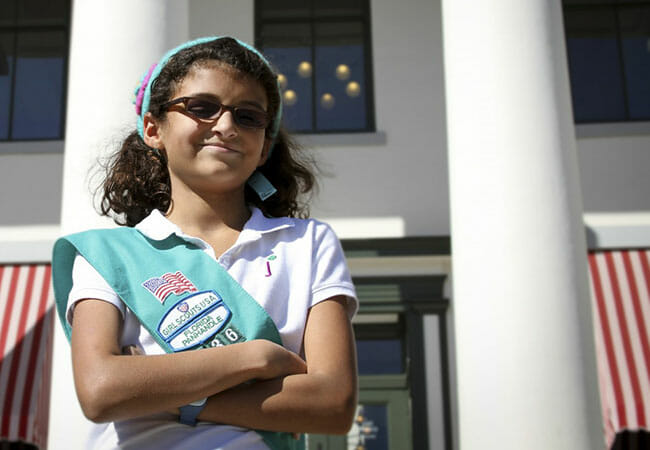
While most children are probably unaware of what lobbying is, legally blind Florida teen Paloma Rambana has been doing it since she was just 10 years old. Paloma realized there was an unfair imbalance in the resources available for visually impaired kids from ages 6 to 13, compared to their counterparts in other age groups. A part of this underserved group herself, Paloma knew she had to do something to help her peers receive equal services. Since, then she has worked tirelessly to advocate for children living with vision impairment.
“Sometimes I get upset because I can’t see as well as other kids,” said Paloma. “But then I think about how so many other kids can’t see as well as I do, and I want to help them.”
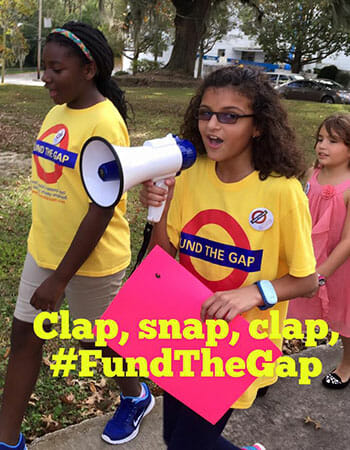
She started Paloma’s Dream, and launched the “Fund the Gap” campaign – which worked to provide money to help the Florida Division of Blind Services serve 340 visually impaired children. In order to garner those funds, Paloma met with many influential people from her home state, including Florida Gov. Rick Scott and more than 12 legislators, and led rallies from the Florida Division of Blind Services to the U.S. Capitol in Washington, D.C., to bring awareness to the campaign.
Due to Paloma’s hard work, the Florida legislature approved a $1.25 million program with $500,000 going annually to help kids ages 6-13 years old at the Division of Blind Services. This money is going to help 340 children with services such as vision classes, mobility training, in-home vision instruction and braille instruction.
Because of her exemplary efforts to create change for a cause she is passionate about, generationOn, the youth division of Points of Light, now showcases Paloma’s method as a way to encourage more young people to get involved in change making. The website provides a project guide with tools and steps on how to advocate for change, just as Paloma did.
Although she successfully gathered support and funding for more than 340 children in her age group, Paloma is still working hard to provide resources to a larger group of 921 children.
“I know that my work is not done,” she said. “I want to be able to help everyone that I can to get the proper care that they need.”
Retiree Teaches Seattle’s Youngest Residents How to Craft for Good
Not everyone gets to work the same job for more than 60 years — let alone volunteer for the same organization for the same amount of time. But, that’s exactly what Pearl Conkle—known affectionately as Grandma Pearl—has done.
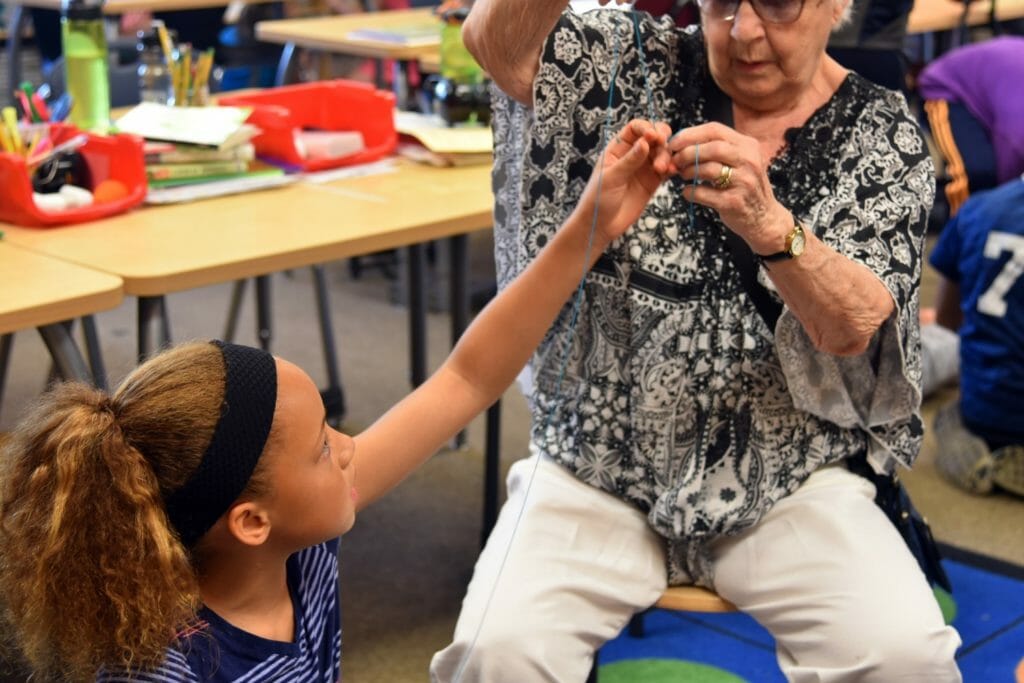
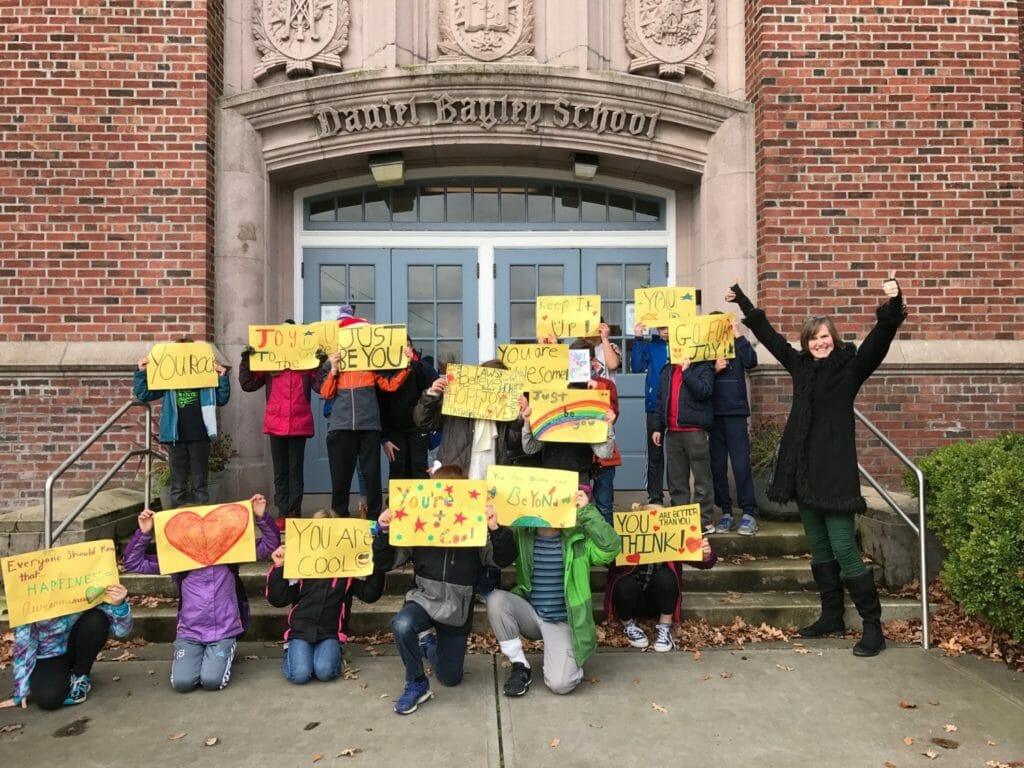
She started volunteering at Daniel Bagley Elementary School when her children were enrolled in the mid-1950s. Over the years, she’s taken her love of crafts, including, knitting, quilting, and crocheting, to young students who enjoy creating with their hands and spending time with her. In addition, as a big part of the Arts of Love Quilting Project, Pearl has touched the lives of nearly 100 hospitalized children and their families. She also spends time bringing smiles, hugs, and laughter to people in the Seattle community through her Happiness Sprinkling Project.
At the age of 92, Pearl is just now showing signs of slowing down, but she has no plans to abandon her volunteer service entirely.
When and why did you begin volunteering?
I actually started volunteering at Daniel Bagley Elementary School in 1956 when my kids were going there. I took time off after they left the school, but I’ve still been involved — just not to the same extent. And, all of this time I was collecting material. Then, I had a stroke at 62, and the doctors told me to take it easy. I thought that then was the time to drag all of the stuff I bought out. I had boxes and boxes, and I thought I’d have to live three lives to get rid of them.
I asked Daniel Bagley if I could come back and teach embroidery, knitting, crocheting and leather work. By that time, my grandchildren had started Bagley, and I took them to school every day. So, rather than sit at home, I have a table of eight kids at a time with me at Bagley. I furnish all the stuff because I had it in my basement. The school has been so sweet to me to let me come back. Two years ago, I celebrated by 90th birthday. But, this year, I’ve decided that it’s time to stay home.
How often were you there?
I would go in at 8:30 a.m. with my granddaughter and come home at 3 p.m. every day. I was there every Monday and Friday for full days. The teachers would sign up for when they wanted the children to work with me. And, for 30 minutes at a time, I would work with eight students out in the hall. I usually got about six or seven classes in every day. These were kindergartners through 5th grade.
Tell us how and why you got involved with Art of Love Quilting Project.
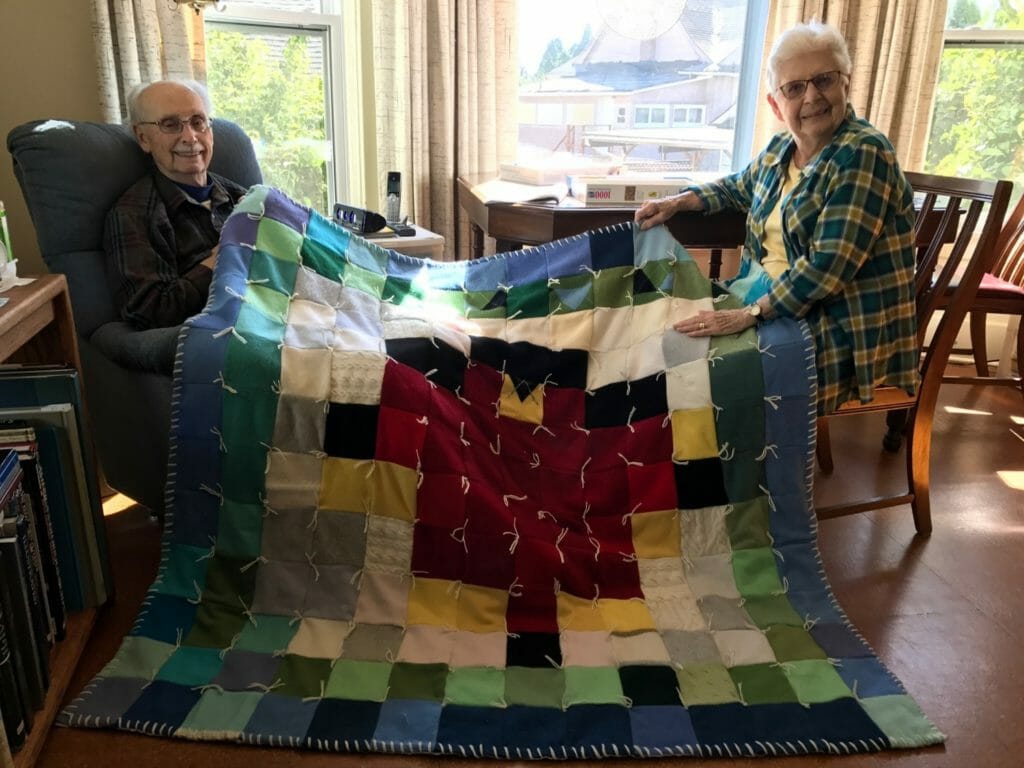
Jennifer Outhouse, one of the teachers at Daniel Bagley, wanted to get her kids to be more friendly toward each other. Kids have it rough today, and I feel sorry for them. I got involved because I wanted to teach them how to quilt and do something for others. Because the school didn’t have sewing machines, the kids would cut out the squares for the quilts. They designed them, and I’d sew them back together. Some of the parents helped put the quilts together, and the kids would use the old-fashioned tying method instead of a machine. Then, they took the quilts to the Seattle Children’s Hospital. In the past four years, we’ve made and donated more than 80 quilts to children in the hospital.
I did Art of Love for about five years. I had 3rd, 4th and 5th graders — mostly 4th and 5th. I never went with the kids to the hospital, but one of the mothers with a child in the hospital brought her son to the school with his blanket and talked with the kids. She’s come twice now.
What is the Happiness Sprinkling Project, and what do you do as part of this endeavor?
My daughter met a lady named Laura who wanted to put more happiness into the world, so we decided to do it together. There could be a dozen of us or 30, and we go to Pike Street Market. We have signs that say, “You’re okay!” “It’s Going To Be A Good Day,” “Have You Hugged Your Kid Today?” and others. We stand there with the posters and plaques for an hour.
The group has now gone to Mexico twice since February, and they’ve gone to France twice, as well as all over the United States and Canada. We also have a Happiness Tree a half block from my house, and the kids go down there with their signs and stay for an hour. They also put signs up on the street for people to see. All it takes to do this is for me to call up my daughter and ask her if she wants to go down to the Market. Any one of us involved is an ambassador who can get the group together.
What impact have you had with Happiness Sprinkling?
Some of the people we see are happy. Others are sad. I kept looking up the hill one time in Seattle, and this lady was having a hard time walking. I made it a point to turn around, look up, and smile and wave my sign at her. She came up to me and asked for a hug. She said, “I didn’t think I could make it down. But, every time you looked at me, I really knew I could.”
I’m trying to show people that they can put a smile of their face and make it a happy day. The only requirement to be part of Happiness Sprinkling is that you wear a yellow shirt. We always have extras for anyone who wants to join us. A lot of people have asked us who we’re affiliated with, but we’re just a group that wants to spread happiness. They often ask if they can join us, and they grab a sign to join in.
Why is volunteering important to you?
I just love kids, and I like to work with them. I see so many at the school who would come from broken homes or difficult situations. It felt good to get a smile out of them. The school also have homeless children now. I knit hats with them, and there are many who have said they never have had a hat before. It breaks my heart.
I also ended up in the hospital last June, and the doctor told me that I had to keep busy. It’s the kids that keep pulling me through.
Do you want to make a difference in your community like Pearl? Visit All For Good to find local volunteer opportunities.
Family of Volunteers are a Bright Light in Their Storm-Darkened Puerto Rico Community
As Texas, Florida and Puerto Rico face the aftermath of Hurricanes Harvey, Irma and Maria, Points of Light is honoring everyday citizens who stepped up to serve their communities during the immediate response and to embark on the long road to recovery.
After barreling through the Caribbean, Hurricane Irma skirted Puerto Rico, still managing to take out power for nearly one-third of the island’s population. The Reyes Torres family went dark, along with one million other Puerto Ricans following the Category 5 storm. This was one week before Hurricane Maria battered the U.S. commonwealth, plunging the island into chaos and knocking out most of the remaining power – causing the longest blackout in U.S. history.
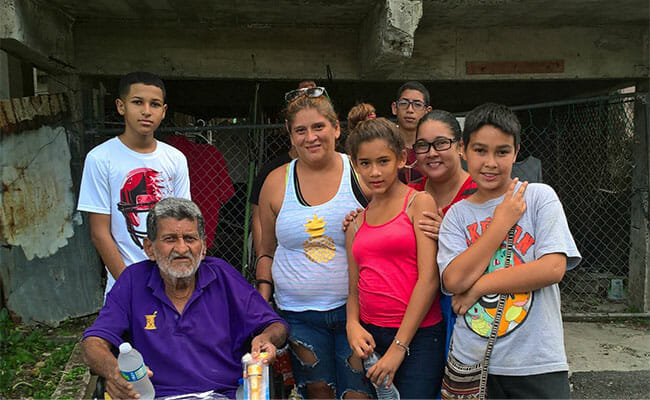
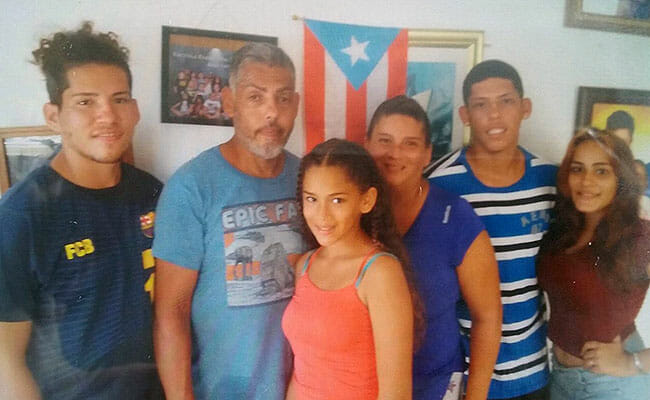
Standing united, the Reyes Torres family has prevailed through the crisis, providing support to their neighbors in the wake of the disaster when, at times, there’s been no water or ice to preserve food, and no phone service to communicate with each other. The family – parents Carlos and Maria, and children Carlos, 21, Shaquille, 19, Anaisa, 18, and Lizbeth, 11 – are long-time community volunteers. Carlos and Maria, as well as a few of their children, also serve with a local AmeriCorps program where they’ve helped to recover and maintain Casa Educativa, a community center providing mentoring, tutoring and service learning experiences to the children of the Cantera Peninsula community.
We spoke with the Reyes Torres family to learn more about how they are supporting their community as recovery efforts in Puerto Rico continue, and why volunteering together is important to them.
Hurricane Maria had a devastating impact on your home. Does seeing your neighbors in need underscore the importance of contributing to your community through service?
After Hurricane Maria, we helped our neighbors and our community through the immediate need. More than 60 days after the disaster, the need persists, and we are continuing to volunteer and respond to the great need for help, because it’s necessary. We’ve spent time moving trees, trash and offering general support to our community.
You volunteer together as a family. Explain why?
We volunteer as a family because in this way, we are stronger to help people through our heartfelt efforts, without expecting anything in return.
Carlos and Maria, as parents, where does your inspiration come from to lead your family through service?
As a family, giving back together motivates and inspires us to do more volunteer work to help others.
Carlos: As a father, I’ve taught my children how to help their neighbor without receiving anything in return.
Maria: My family became involved in volunteering because we know that our community needs help, and we can offer that support.
Some of the family has had experience volunteering with AmeriCorps. Describe some of the work you’ve done with them.
Maria: I’ve volunteered with senior citizens through an AmeriCorps program in the Cantera Peninsula community in San Juan, Puerto Rico. Encouraging the elderly to be able to stay in their homes, we offer recreational and educational activities to promote their mental and physical health (listening to music, reading newspapers, watching television and discussing the news). Similarly, we help with basic household chores and maintenance.
Shaquille: I’ve worked with the AmeriCorps program in San Juan as well, through their initiative to promote future health and prevent childhood obesity by facilitating physical activities and sports for children in the community.
Share 5 statements about what volunteering means to you.
- Help without expecting anything
- Cooperate for a better community
- Serve others with your heart
- Be a motivation for change
- Inspire others to serve
What do you want people reading your story to learn about your service together as a family?
We want others to recognize the importance of being a volunteer in their own communities. Above all, we want people to know that volunteering as a family promotes a healthier community. And even bigger than just your community – serving as a family is a way to show that you are united as one, and committed to your country.
Do you believe volunteering together has made your family bond stronger?
Since we’ve volunteered, the family has grown closer and stronger. This makes us want to do more – and motivates us to continue helping and offering services to those who need it.
What’s next for your family? How will you continue to give back?
Our family will continue to offer services with all our hearts as God allows it.
Do you believe you serve as an example for others in your community to give back and help?
Of course, yes. We serve as an example with our commitment and actions. Our goal is to motivate other people and families to increase their volunteerism in our community and our country. Together we are stronger.
Learn about Points of Light’s disaster response work, and find out how you can help.
Georgia Woman Encourages Girls to Reach for the Stars in STEM
It’s no secret that efforts are underway nationwide to entice and recruit more young girls into science, technology, engineering and mathematics (STEM) fields. To date, these have been mainly male-dominated industries, but thanks to volunteers like Akili Allah — more and more girls are signing up to learn about STEM.
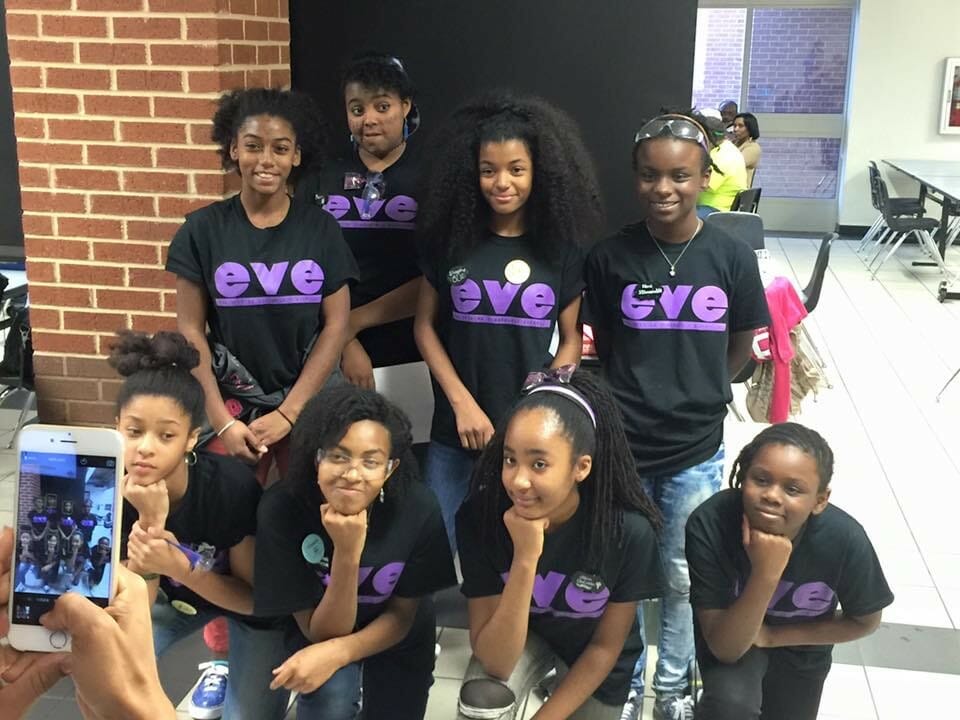
For the past five years, Akili has coached an all-girls robotics team, EVE, leading them to receive multiple awards for their robotic creations. She says that she is motivated by the desire for her daughter to feel welcomed in STEM and never question whether it’s something she could do as a career. Akili is today’s Daily Point of Light honoree, and Points of Light talked with her about her committment to service and education.
How did you begin volunteering with EVE?
Actually, my daughter is on the team. She had done robotics previously. My son and she were on a co-ed team when they were younger. They outgrew that level of robotics and were looking for the next level. One of the things we noticed in the younger team was that boys tend to take over. My daughter was really interested in continuing with robotics, and she was the one who motivated me to start this team. She loved robotics, and I asked her about starting an all-girls team. That way, all the girls would have a chance to share their ideas, and they could recruit their friends.
How did you get other girls involved?
We recruited with fliers and announced ourselves on Facebook and other social media outlets. I homeschool [my children], so I put it out there in the homeschool community, as well. We had an open house meeting where anyone who was interested could come and learn about the team and what we wanted to do. Originally, that first year, we had five girls involved. Now, we have nine. They range from ages 12 to 18 years old. We’re in our third year, and we get together three days a week or three to four hours each time.
What do you do as a team?
We compete in First Tech Challenges Robotics competitions. Usually, the season starts with us being given a game or competition that includes challenges or obstacles on a field. Once we receive these challenges, the girls have to come up with a unique robot design to overcome those challenges. They have to figure out a way to achieve their objective with what they know how to do based on their level of experience. Typically, they have 6-8 weeks to come up with their design.
Sometimes teams run into fundings issues — they might have the experience needed to conquer the challenge, but they don’t have the parts to do what they want to do. As a community-based team, we’ve had challenges every year coming up with funding. Usually, we do in-person crowdsource funding. We go to strip malls and display our robots and collect donations. During the competitions, we’ve also had challenges with programming. Our last lot of girls are now learning programming, and it’s helping out in that area.
What have the girls accomplished?
We did win last year’s judges’ award. There are a lot of awards in the competition. Even though we missed the mark on some things, we were still the judges’ favorite. They saw how much we were trying and embodied what a challenge team should be.
What impact do you feel you’ve been able to make?
I talk to the girls a lot about perseverance and not giving up. As I’ve said, funding has been a challenge, and we keep trying to come up with creative ways to get funding. And, I check in with their every year to make sure this is something they want to continue doing. They’ve all said they had a desire to do it. I think this will have a lasting impact — the fact they they don’t want to give up. They continue to be resourceful.
How have your fundraising efforts worked?
I think we’ve probably raised $2,500 just by going to the strip mall. We’re also thinking of writing a children’s book. We want to put one out there. We have the illustrations done, and we’re waiting until competition season is through to complete writing it. It’s aimed at 5-to-8-year-olds, and it’s about showing how girls can get into STEM. It shows how they don’t have to be intimidated by it simply because it’s something that boys do. We’re hoping that publishing it will fund the team in the future and inspire even more young girls into come into the field.
Why is it so important to you that you volunteer your time and efforts to this group?
My own mother, who passed away in 1999, was a welder who worked for the Navy. She always talked to me about the difficulties she had being in the field that was predominantly male. It was just something that was important to her. When I saw that some of that same spirit in my daughter, I knew it was something I couldn’t ignore knowing the struggles my mother had gone through. I knew she had a skill level that was constantly tested to show that her welding was as good as it was supposed to be. She always had to demonstrate that she was doing a good job, but even then she would be among the first people let go if there was a layoff.
STEM is a buzzword now, and it’s something that we know in America that we need more people involved in. When I saw my daughter, who is now 15, had an interest, I felt that it was most important to me to support her in any way I could.
Why do you feel it’s important to volunteer overall?
I have always felt if there were a need in the community — and you had the ability to do something about it — then you should. To be honest, I’m not on the same level with these girls and robotics. I’m a non-engineering mentoring coach. But, I still saw a need. Even though I didn’t start out knowing about robotics, we’re all working together. It was a community need. I saw it. I filled it. I didn’t even think about it.
What are your future plans?
I will continue to coach as long as my daughter wants to do it. There have been a few boys who were brothers, cousins, and friends of some of the girls on the team. We had a second team last year that was boys only. This year, unfortunately, there wasn’t enough interest to field that team and it fizzled out. I’m hoping to get that back together again. I want to start at the lower level. I’m hoping to have thorough pipelines for all grades, K through 12, in robotics. I know so many younger people are wanting to get to this level of robotics, so I don’t think interest will stop anytime soon.
Do you want to make a difference in your community like Coach Akili? Visit All For Good to find local volunteer opportunities.
Domestic Abuse Survivor Helps Others Break Free from Abuse
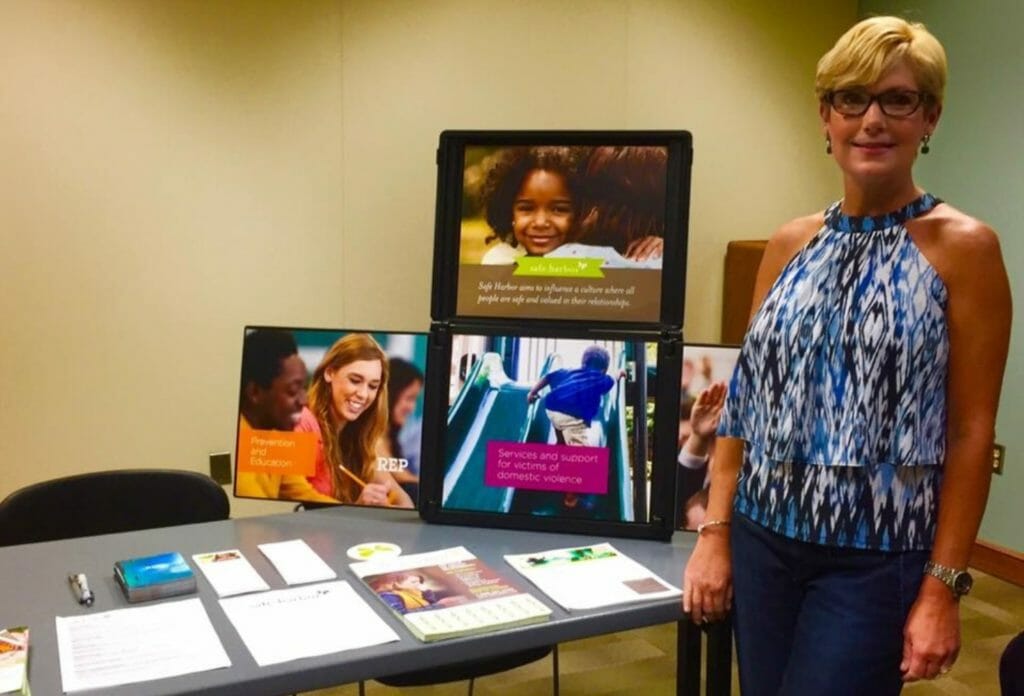
The pattern for relationship violence started early for Angie Dickmeyer. Starting with an abusive ex-boyfriend in high school, Angie fell into one abusive relationship after another as an adult, never sure how to end the abuse or who to reach out to for help. The Easley, South Carolina, resident realized she wasn’t alone when she began to encounter women just like her who were also facing relationship abuse in their homes and elsewhere. Now ranked the fifth worst for domestic violence rates in the country, South Carolina had the highest rate of women murdered by men in the U.S. in 2011, more than double the national average. After years of abuse, Angie sought counseling and began educating herself about abuse, and started volunteering with Safe Harbor, a nonprofit organization that provides services to victims of domestic violence and their children. Now an ambassador for Safe Harbor, Angie uses her platform to speak out about her experiences and advocates for abuse victims, and is today’s Daily Point of Light Award honoree. Points of Light spoke with her to learn more about how she’s making a difference.
Why is it so important to you to highlight this cause?
Starting in high school, I was with a very abusive boyfriend. He tried to drown me, and choke me. I don’t know what it took for me to finally tune in that this wasn’t normal. It’s hard for people to say the words ‘domestic violence’ and get help. It’s almost like people turn their heads. When these things were happening, when I was in abusive relationships, we often weren’t alone. There were other people around, people just turned their heads. And it’s not always physical — you can be abusive just by your actions and the way you talk to and treat people.
What changed for you?
Getting a lot of education has helped me. When I was a kid and for part of my adult life, I don’t think I ever really saw any good relationships. Becoming an adult and going through what I went through, I made a decision. I liked myself, and I knew it wasn’t me causing this violence. Once I saw that, it woke me up, knowing that you can’t change abusers.
How do you use your experience and your work to connect with others?
There is a feeling of being trapped, because (the abuser) wants to isolate you from everybody else and wipe away any sense of self-worth. I can remember my phone being taken away, no money, no ways or means to try to help yourself because that was stripped away. Walking on eggshells is how you live your life, because you try not to cause anything that’s going to make them blow up. As a hair stylist, women would confide in me, because they felt comfortable, and now, as a manager at Clinique, I am able to connect with women as well. I work with another group called Cut it Out, an organization that provides training to salon professionals and others to fight domestic abuse by building awareness and training salon professionals to recognize warning signs and safely refer their clients and others to local resources.
Where does your dedication to help others come from?
That’s why I’m working where I am during the day, because primarily everybody I work with is a woman. I’m still getting that connection with people who may need help. When I leave in the morning, I say a prayer, it’s all about who I run into throughout the day, and how I help them in some way. How can I lift them up, and if they’re going through something, how can I make sure I say or do the right thing to help make a positive difference? I’m 52, and I believe that we’re all here for a reason and I think what happened to me was so that I could do this now.
Why is it so important to give back to the community in this way?
Because of where I live, it seems to affect so many people. And it’s affected me so much in my life, there were so many years I threw away because I didn’t know any better. If I could have taken that back, a lot of it had to do with self-esteem. I don’t want to see other people waste their lives like I did. I want women to be strong and be able to stand up for themselves and not even make a decision to even be with a person like that in the very beginning. I’m passionate about starting with kids in middle school before they even start dating. Abuse doesn’t discriminate – it’s with men and women, starting at a very young age, of all demographics.
How would you encourage others to give back in their own communities?
Find out what you’re good at and what you can help share. Experience, money, however you can, to make a difference where you live. To me that’s what it’s all about. I don’t think I knew that when I was younger, but now that I’m older, I realize, it’s why we’re here, is to give back.
What’s next for you?
My goal is to do whatever I’m led to do. I think as long as I’m doing something to help, whether it’s at work, or with Safe Harbor, or whether it’s through a documentary I’m working on with a producer, ‘Destined to be Heard.’ We’re putting this documentary together that will educate viewers about domestic violence to distribute to schools and local businesses. There are too many people that are quiet about (abuse) because they’re embarrassed. We want to change that through education.
Do you want to give back to your community like Angie? Visit All For Good to find local volunteer opportunties.