Louise Whelton
Louise Whelton has helped keep bellies and hearts full for 18 years with Meals on Wheels.
In the 84-year-old’s hometown of Wayland, Massachusetts, Louise has been serving senior citizens weekly hot meals to their own respective residences. This interaction not only providing a nutritional sustenance but also a conversation for people who may not get to speak to anyone else that day.
A polio survivor, Louise has dedicated her life to volunteering, and with Meals on Wheels, has spent more than 1400 hours delivering an estimated 900 meals, having walked around 11,000 miles.
Her cheerful demeanor and year after year dedication have encouraged her clients, as well as other volunteers to help the community in any way, because something small can have a large impact.
Canadian Woman Advocates for Survivors of Child Sex Trafficking
After an extraordinarily successful ten-year run in the United States, L’Oreal Paris has expanded the Women of Worth program to include a Canadian edition. In the program’s inaugural year, Points of Light and L’Oreal Paris Canada recognized and celebrated ten women who selflessly volunteered their time to serve others throughout their local communities, their provinces or, even, across Canada. For exceptional commitment to service, each honoree received $10,000 to donate to a charitable organization of her choice, and a national honoree received an additional $10,000 grant.
Cheryl Perera was just 16 when she learned that a global sex trade in children was flourishing. “I was researching for a high school project,” she recalled. “I went to the library, borrowed a book and as I was flipping through the book, my eyes became transfixed on a description of the child sex industry in Thailand. I was horrified and enraged.” Wanting to obtain an insider’s look into the child sex trade, Cheryl embarked on a fact-finding mission to her native Sri Lanka where she partnered with the law enforcement and played the main role of the decoy—a 15 –year-old prostituted child—in a STING operation that ended in the successful apprehension of a child sex predator.
But, the Ontario, Canada resident soon realized that letting her anger get the best of her wouldn’t help these children in any way, so she decided to channel it into positive change. “I was 17 – but I thought if other young people learned about this violation of the rights of the child, they would want to help their peers,” said Cheryl. That’s when Cheryl founded OneChild in 2005, with the mantra that “even one child exploited is one child too many.” OneChild harnesses youth power – and some very influential adults as well – to spread awareness, lobby their governments and the private sector, and raise funds to rescue, rehabilitate, and empower survivors.
Cheryl is a pioneer, having sparked Canada’s anti-child sex tourism movement by launching the first-ever campaign to lobby the travel industry to take action against child sex tourism. Her next steps are to expand rehabilitation and reintegration services in Asia; expand child rights training and leadership training for survivors in Canada to transform into advocates, and bring national service providers together to explore how young people can be meaningfully engaged in anti-sexual exploitation programming and policy.
“Although I’ve been running OneChild for over 10 years, it has so much potential and the need is greater than we’ve ever witnessed,” said Cheryl.
Cheryl continues to challenge herself to stay abreast of the best methodologies to push the anti-child sex trafficking movement to the next level as an Atlas Corp fellow. Atlas Corps engages leaders committed to the nonprofit sector in 12 to 18 month, professional fellowships at organizations to learn best practices, build organizational capacity, and return home to create a network of global changemakers. Cheryl is completing her fellowship at CARE in Washington, D.C.
Learn more about the other extraordinary L’Oréal Paris Canada Women of Worth honorees.
Lauryn Hinckley
As part of generationOn’s Make Your Mark on Hunger campaign, sponsored by C&S Wholesale Grocers, Points of Light is recognizing young changemakers who are helping to alleviate hunger and food insecurities in their community through service.
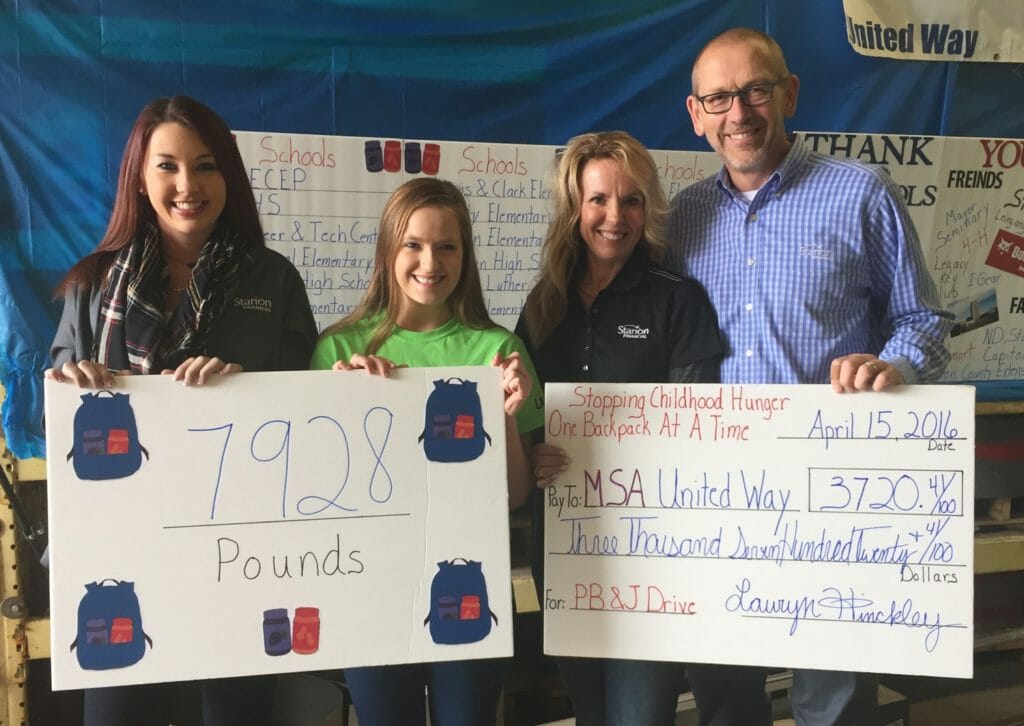
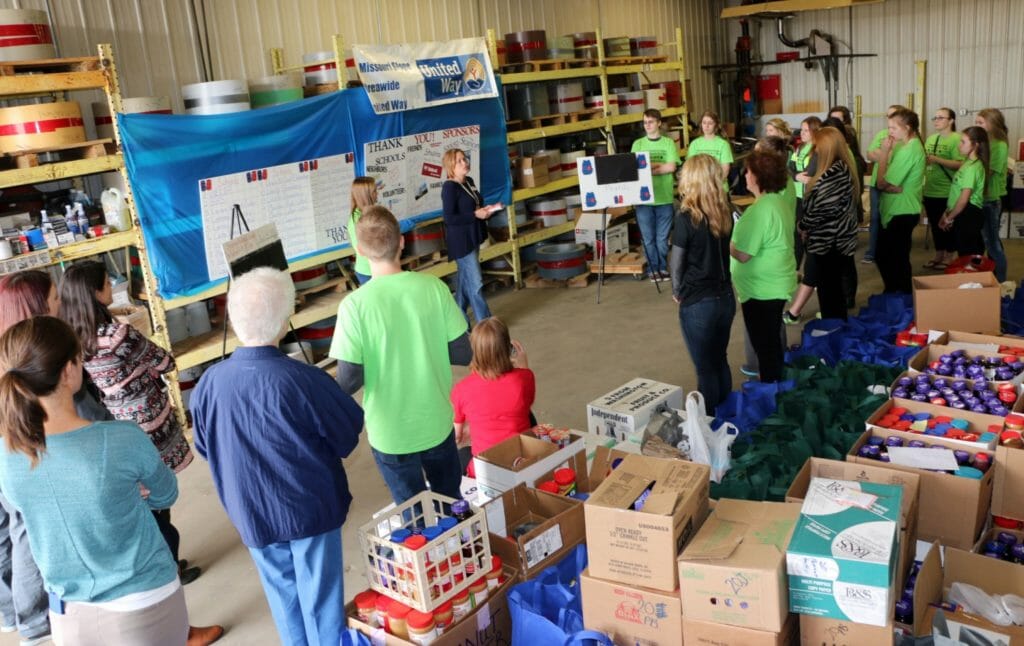
Lauryn Hinckley of Bismarck, North Dakota runs a peanut butter and jelly drive called “One Backpack at a Time” to support the United Way Backpack Program. She picked peanut butter and jelly because they are the most expensive items to include in backpack weekend meals. Over the past six years, she has worked with her community to increase the donations of peanut butter and jelly and continued to make her mark on hunger in her community.
Q: How did you first get involved in organizing service projects to help alleviate hunger?
Lauryn: I have seen hungry children standing in front of me with a grocery cart half full of food, and most of which had to be put back on the shelves because their mom didn’t have enough money to pay for it. The first time I saw it I was nine-years-old and I have never forgotten seeing this sad situation. One in five children ages 0-17 in my area live deal with food insecurity. For these children, the School Lunch Program is often their only source of regular nutritious meals. Almost thirty-five hundred elementary school students in my local school system qualify for free or reduced lunches. For this reason, I chose to talk to people about childhood hunger and how we can combat it “One Backpack At A Time.”
Q: Why have you focused on peanut butter and jelly?
Lauryn: My first year I did a snack drive. Everyone contributed a little bit of everything. I came to realize that after packing backpacks myself, that the organization preferred similar items to pack in the backpacks so that most kids got the same items in their backpack. Peanut butter is the most requested item because it is the most expensive item they put in backpacks. The program only had funding to put peanut butter in backpacks every couple of months if they were lucky. After talking to the administrator, I decided that doing a drive for peanut butter and jelly would be the best.
Q: How have you engaged local schools and members of the community?
Lauryn: I worked with a select few local businesses my first few years. Then, I was introduced to the community relations director of my local school system, who set me up to speak to local principals. This has worked great as a platform of school children working to help their classmates.
Q: What has been the impact of your food drives in the community?
Lauryn: The first year I started a food drive with 1 business and collected 100 lbs. of food. Last year, my 6th drive, grew to include 28 schools, 13 businesses, and numerous organizations. In 6 years, my community has helped me contribute 15,602 pounds of peanut butter and jelly, 3000 bags, and $9,837. The total estimated value has been $52,324 (equaling 13,002 meals).
Q: How have you spread the word about the importance of helping the hungry in your community?
Lauryn: I have spoken to larger audiences, including an audience of 250 at the State Igniting Legendary Leaders Conference and sat on the Basin Electric Hunger Panel speaking to business professionals. I’ve also done local outreach including radio and TV interviews, distributing fliers, talking to smaller groups and creating a blog for schools.
In addition, I have helped to combat hunger in different ways in addition to my drives. Over the summer I served lunch on Wednesday’s for the Summer Lunch Program. I have also helped to dig vegetables for the hungry from a 4-H garden, pack food baskets for the Open Your Heart Campaign, work food drives, and The Banquet that was established to feed the hungry. There, I set up, served, cleaned, baked bars, and visited with guests.
Q: What’s the most rewarding part about engaging other youth in volunteering with you?
Lauryn: My reward is knowing fewer kids are hungry in my community. Being involved is life changing. One small act of kindness can change someone’s life. My motivator is a blonde-haired, blue-eyed little boy in first grade. The boy told a janitor he was so happy it was Monday morning so he could eat again after the weekend. The janitor signed him up for the “Backpack Program” which he knew about through my drive.
Q: What does it mean to you to be a Make Your Mark on Hunger grantee?
Lauryn: This has meant that my community can make a difference together. When children no longer need to worry about hunger they will be able to focus in school to absorb valuable education. The grant has led me to further my outreach in my community and touch the lives of the invisible faces hunger strikes.
Q: What advice would you give to other kids and teens who want to volunteer?
Lauryn: By living out the motto, “Be the change you wish to see in the world” I am constantly striving to be a good leader and set an example for those around me.
I have learned so much and so can others when one volunteers. I developed lifelong skills such as patience, good work ethic, time management, leadership, delegation, persistence, and public speaking. I cannot help but feel good when I help others, so other teens should join in.
To learn how you can Make Your Mark on Hunger, visit www.generationOn.org/hunger.
Sisters Recycle Crayons to Inspire Passion for the Arts
Meet Daily Point of Light Award honorees Abby and Riley Neff. Read their story and nominate an outstanding volunteer, family or organization as a Point of Light.
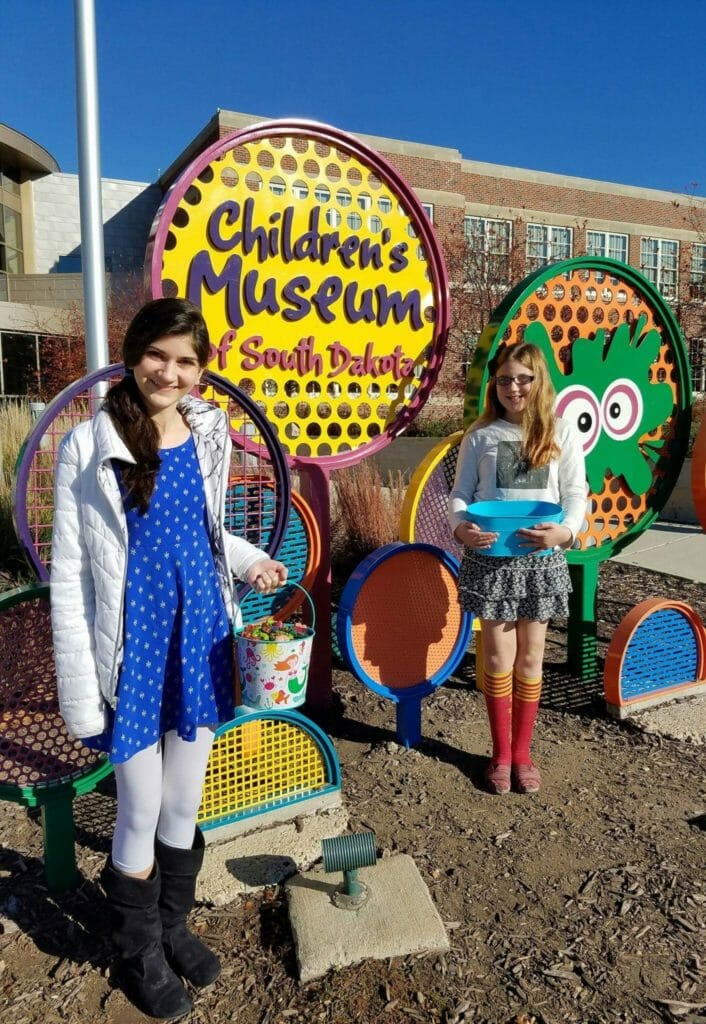
At just 15 and 12 years old, Abby and Riley Neff recognize the importance of the arts. “The arts are like a bridge,” said Abby. “They bring people together.”
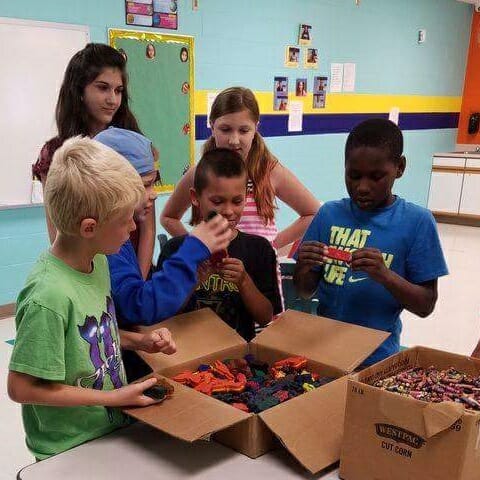
So when the girls realized that many kids in their community of Sioux Falls, South Dakota, didn’t have access to simple art supplies, they set out to find a solution. They thought of the most basic craft supply – crayons.
“We went to restaurants and asked what they did with their used crayons,” said Riley. “Most just threw them away, so we asked if we could have them.”
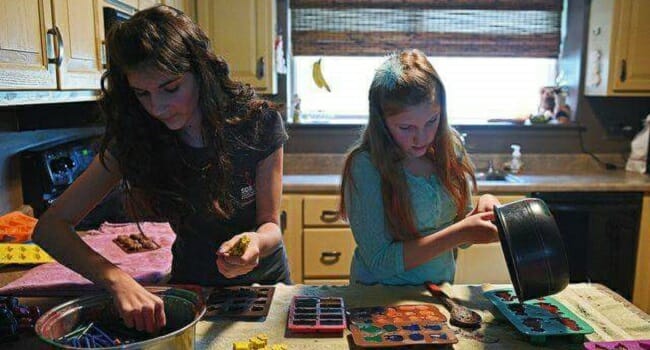
And that’s how Recycled Rainbows was born. Abby and Riley now collect crayons from local restaurants, community members, churches and museums every 2-3 weeks. They take them home, peel off the wrappers, melt the crayons down and pour them into molds to create new ones.
“When we started we didn’t really know what we were doing,” Riley said. “We used old pots to melt them down and poured them into a couple of silicone molds and started popping them out.”
What started as a small project in their kitchen has now grown and expanded into their garage. To date, they have made and donated 15,000 crayons and are expanding with local partnerships like their local Boys & Girls Club and different schools in the area.
“We work with the Boys & Girls Club to collect their old crayons, recycle them and bring them back as new crayons,” said Riley. “One time we made car-shaped crayons and when we handed them out the boys were so excited!”
Abby loves seeing the excitement of other kids when they get art supplies they might not have had. “I’ve been in a couple situations where I got to work one-on-one with kids who don’t have access to art supplies,” she said. “When they get the crayons, it gives them a light in their life.”
The girls recognize that art should be accessible to all, so they partnered with a local all-abilities learning center called Life Scape and created multiple sizes and shapes of crayons so everyone could participate. When they arrived to donate the crayons, they saw how small the Life Scape art supply closet was; so they sold $100 worth of crayons locally and used the money to buy more art supplies for the center.
In addition to recycling crayons to promote the arts, Abby and Riley realize they can make an even bigger impact working with local schools. Recently, the girls visited a Title 1 school and did a presentation on the importance of recycling, then handed out crayons and a coloring book to each student to take home over winter break. They’ll also be making another recycling presentation around Earth Day.
Abby has also created Recycled Rainbows SMART bags – which stands for Science, Math, Art, Reading and Technology. Each bag has one item from each of the five categories, and they are given out to low-income students to help them stay engaged and stop the learning lapse that can occur over the summer.
“I want to break the cycle of poverty and help kids stay engaged and inspired to learn,” Abby said.
The girls said that keeping up with Recycled Rainbows is a lot of work, but it’s all worth it when they see how happy it makes other people.
They also encourage other kids to get involved. “Find something that you love and spread it around to other people,” Abby said.
For project ideas for kids and teens to get involved, visit generationOn, the youth division of Points of Light.
A Mission to Connect: Veteran Volunteers Mentor to At-Risk Youth
Meet Daily Point of Light Award honoree Tee Hanible, who was a Top 30 finalist for the L’Oreal Paris Women of Worth Award in 2016. Each year L’Oreal Paris and Points of Light recognize and celebrate Women of Worth who make a beautiful difference in their communities. Ten honorees each receive a $10,000 grant to support their most cherished cause, and an online vote determines one honoree who will receive an additional $25,000 grant. Nominations for 2017 are now open! If you know a woman who works to create lasting and significant change in her community, nominate her to be one of the 2017 Women of Worth.
“I grew up as a foster child and was later adopted. I never truly fit in or knew who I was,” said Tee Hanible. “I’ve turned my pain into helping and inspiring young people to reach their full potential just as others helped me. The moral to this story is to never let your current pain consume you; use it as a platform to reach your greatest calling!”
Mother. Marine. Philanthropist. Entrepreneur. Reality TV star. These are just a few words that describe decorated Gunnery Sergeant of Marines Tee Marie Hanible. But for at-risk children in the Washington, D.C., area, there is another word that comes to mind – hero.
Hanible, recently retired from the Marine Corps after 19 years of service, is the founder of Operation Heroes Connect – a mentoring program established in 2011 that partners volunteer military service members and veterans with at-risk youth in the Washington, Maryland, and Virginia areas. These military mentors help young people explore and access support, resources and opportunities necessary for them to make positive choices in their lives. Many of the mentors, along with other service members, also volunteer as counselors at an annual free summer camp spearheaded by Operation Heros Connect, which supports more than 100 children who otherwise wouldn’t have the opportunity to attend such a program.
“Service members and veterans of Operation Heroes Connect can and want to answer the call to help mold and shape young lives in our community,” says Hanible. In addition to its youth programs, Operation Heroes Connect operates a 30 Days of Giving project benefitting the 700 homeless citizens in the Northern Virginia’s “Tent City”.
Hundreds of children have been impacted by Hanible’s extraordinary work. Young people have been able to reach beyond their current circumstances and pursue their dreams of completing high school, attending college, and being productive citizens in their own communities.
“Tee is a phenomenal person. She has opened doors for my son that I haven’t been able to, and she’s been able to provide parental and mentoring support when my work or school schedule got in the way,” said Candice Thomas, whose son participates the Operation Heroes Connect mentorship program. “The active duty and veteran military personnel really take time out of their busy lives to include the children as family. There is not a distance or length Tee and the Heroes won’t go to lend a helping hand.”
Do you know an incredible woman like Tee who’s making a difference in your community? Nominate her for a 2017 Women of Worth Award!
Erico Corbett
Erico Corbett grew up in a low-income neighborhood where positive role models were few and far between. But, he didn’t let the negative images around him cloud his vision for the future or keep him from helping others. Erico works with students at the elementary level via several programs that he initiated, including “Adopt an Underclassman Mentoring/Tutorial Program. Erico has engaged, educated, and motivated fifty-five students from ninth through twelfth grade at Slater Elementary School and Carver Early College High School to strive for academic success.
“Erico Corbett leads by example,” said his mentor Thomas Gosha, a teacher at Carver. “He has set a standard of academic excellence and a commitment to his community for himself and his peers. ‘Be the change you want to see’ — he is living that at the age of 18 years old, and this program will remain in place far after he has moved onto college….”
Ricardo Wiggs
Ricardo Wiggs’ advocacy was sparked by a horrible tragedy; the loss of his wife. 25 years ago, she was fatally shot by a stalker. After joining a support group with people who have endured similar experiences, Ricardo turned his pain into perseverance in his non-stop efforts to create homicide and stalking awareness.
Since 1992, Ricardo has been adamant in addressing and promoting safety through legislation. In 1996, he visited the White House to witness President Clinton sign the Interstate Stalking Bill into legislation.
Ricardo has met with hundreds of families going through similar situations and realized the need there was for comfort not only for the loss but coaching through court dates. He used his own experiences to educate them and guide them through arrest procedures, media discussions, trial preparation, PTSD recovery, and acceptance of the trial outcome.
After the Washington Navy Yard shooting in 2014, Ricardo initiated peer to peer support counseling for any personnel affected.
Currently, he resides on the board of directors at the Maryland Crime Victims Resource Center and continues to fight for victim and their family’s rights for justice.
Packed with Love: Maryland Teen Starts Food Drive for Kids in Need
As part of generationOn’s Make Your Mark on Hunger campaign, sponsored by C&S Wholesale Grocers, Points of Light is recognizing young changemakers who are helping to alleviate hunger and food insecurities in their community through service.
In Fredrick County, Maryland, more than 11,000 children (27% of all students) are fed by the Free and Reduced-price meal programs every week. But over the weekend, they often had to go without anything to eat.
Jack LeBlanc has seen firsthand kids who were affected by hunger. He had classmates that he knew didn’t have food over the weekend and wanted to take action.
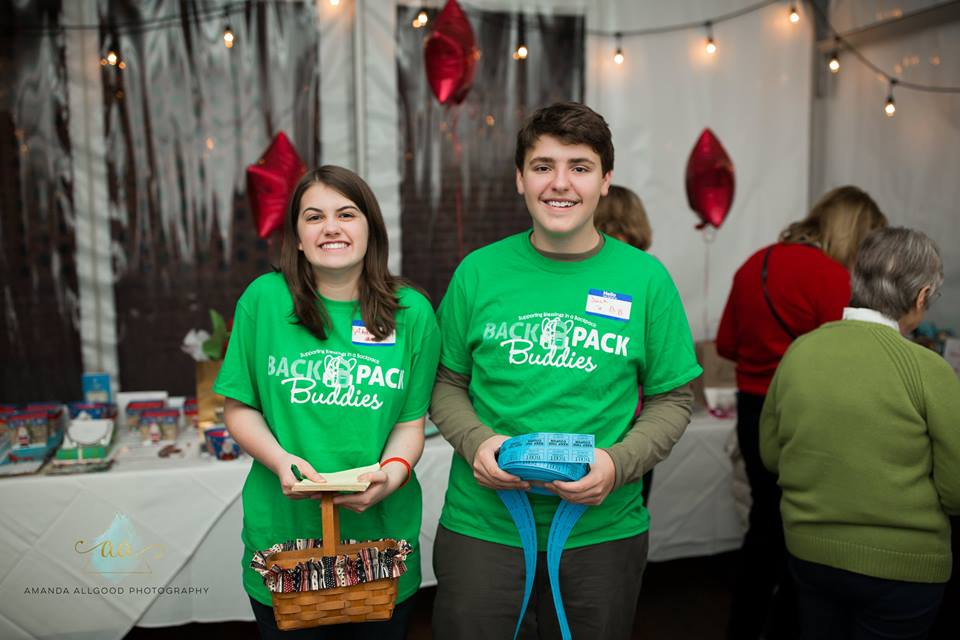
He started Backpack Buddies with a group of his friends who were also interested in helping. These older kids are able to take action through fundraisers, awareness projects and food drives. All the food collected supports Blessings in a Backpack, an organization in Fredrick County that provides food over the weekend to children in 11 schools in the county.
As part of the Make Your Mark on Hunger campaign, Jack and his Backpack Buddies are holding a teachers vs. students volleyball tournament at his high school to raise food items, funds and awareness with more than 200 people expected to attend.
The best part of Backpack Buddies is seeing it come full circle. “Some of the kids that are now in Backpack Buddies were once in need of food through Blessings in a Backpack,” said Jack. “This gives older kids a way to give back.”
From Lonely Lunches to Leading App Founder: 16-Year-Old Helps Others Create Kindness in Schools
Meet Daily Point of Light Award honoree Natalie Hampton. Read her story and nominate an outstanding volunteer, family or organization as a Point of Light.
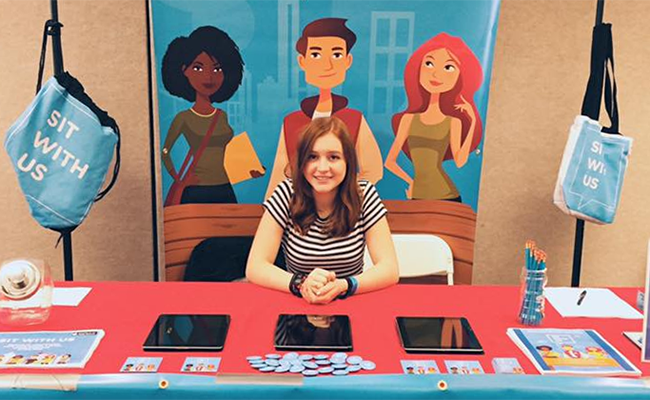
In 7th and 8th grade, Natalie Hampton faced a terrible bullying experience. Every day, she ate lunch by herself and dealt with the pain and isolation that comes from being the outsider. She decided she wanted to give bullied kids an ally – not just in her Sherman Oakes, California, school, but in schools around the country.
That’s how she came up with the idea to create an app called Sit With Us, which allows students to identify themselves as “ambassadors” and create open lunch tables. Students who face bullying and eating lunch alone can check the app to find an open lunch table, walk over and sit down, no questions asked.
Though she didn’t have much coding experience, Natalie recognized that her fellow classmates use their phone for everything. She teamed up with a coder to create the app and help her flesh out her ideas.
“The app creates a micro-community within your school and it’s your peers and your classmates that are standing up and taking leadership roles to make their school a kinder place,” Natalie said. “Instead of bringing someone from the outside in and setting up an assembly to say ‘don’t bully,’ it’s your own classmates that are taking on that role. That’s why it has a big impact on making a school community more inclusive.”
“I created an app for two reasons. The first is accessibility – more people have access to a phone than a bathroom, putting it through the phone is a way to reach a large amount of people in a short amount of time,” said Natalie. “The second reason is that it’s very discrete. You don’t have to wander around looking for people or go up to other tables, you do it all through the phone and then go sit down at the table. It’s not embarrassing for the user at all.”
The app launched in September 2016 and already has more than 100,000 users in seven different countries.
“I thought this would be a small pet project for a couple schools in the L.A. area,” said Natalie. “The growth of the app showed me that bullying is such a huge problem, but it also shows me there are kids who are upstanders in every school.”
Natalie says she has always been an activist – something her parents instilled in her – but it was really her personal experience that motivated her to get involved in anti-bullying issues. Now a junior in high school, she encourages other young people to get involved, especially if they see a need and they don’t see it being addressed.
“I thought it was impossible, but a year later, it’s a reality,” Natalie said. “I’ve just been paired with an amazing mentor to grow and expand. Our goal is to reach as many kids as possible.”
is such a huge problem, but it also shows me there are kids who are upstanders in every school.”
Natalie feels she has always been an activist, something her parents instilled in her, but it was really her personal experience that motivated her to get involved in anti-bullying issues. Now a junior in high school, she encourages other young people to get involved, especially if they see a need and they don’t see it being addressed.
“I thought it was impossible, but a year later, it’s a reality,” Natalie shares. “I’ve just been paired with an amazing mentor to grow and expand. Our goal is to reach as many kids as possible.”
Service Dogs Bring Joy and Healing to Veterans with PTSD
Meet Daily Point of Light Award honoree Angie Pratt, who was a Top 30 finalist for the L’Oreal Paris Women of Worth Award in 2016. Each year L’Oreal Paris and Points of Light recognize and celebrate Women of Worth who make a beautiful difference in their communities. Ten honorees each receive a $10,000 grant to support their most cherished cause, and an online vote determines one honoree who will receive an additional $25,000 grant. Nominations for 2017 are now open! If you know a woman who works to create lasting and significant change in her community, nominate her to be one of the 2017 Women of Worth.
“PTSD is called an invisible injury – to you and me. It’s not invisible to a dog.” said Angie Pratt. “If your heart rate increases, your breathing increases, you start sweating, you start producing adrenaline, the dog takes these physical manifestations and reacts to them. These physical manifestations are what cues the dog to help.”
Angie doesn’t raise or train dogs. “My background is as an entrepreneur and venture capitalist,” she said. “I know how to put things together, I know how to jump through hoops, I know how to organize, and I know how to get from point A to point B.”
But she’s also the mother-in-law of a U.S. Marine who was injured in Afghanistan. That sparked Angie’s curiosity about veterans’ issues. “I came across an article about how service dogs help veterans who have physical injuries, post-traumatic stress disorder, or traumatic brain injuries. I told my daughter maybe they should get one. She called me back a few weeks later and said, ‘Mama, you can’t just get one that easily.’”
The more Angie looked into it, the more she realized that despite the enormous need for service dogs for veterans, such animals were scarce – only certain dogs have the right temperament, and the specialized training process takes a long time.
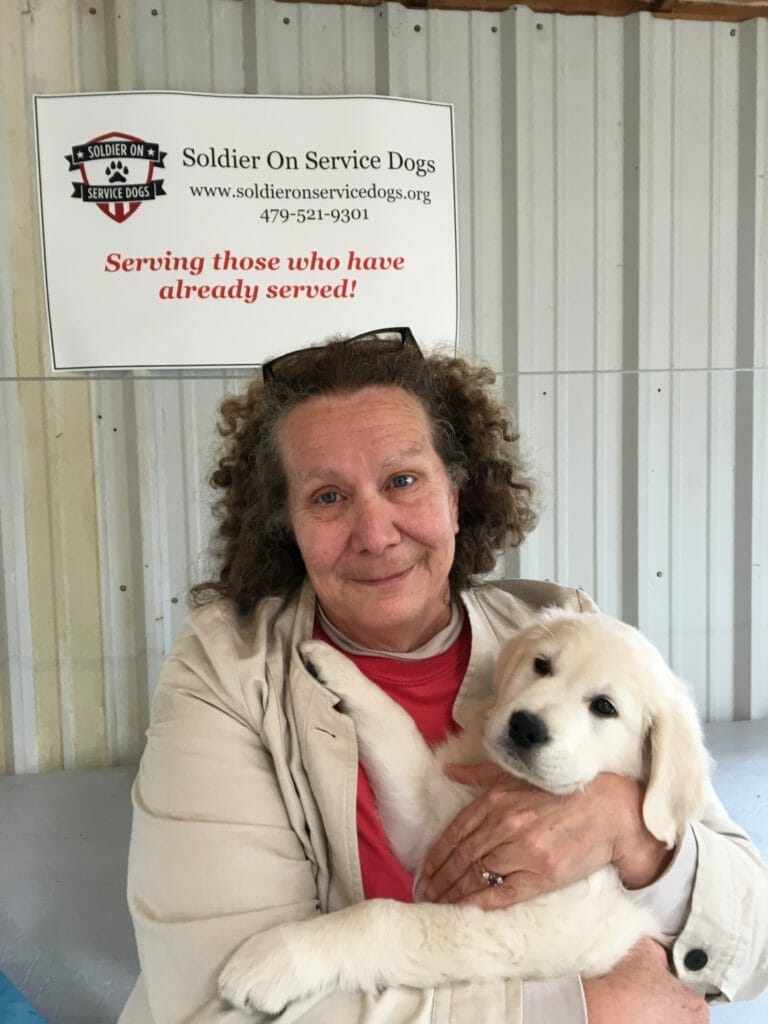
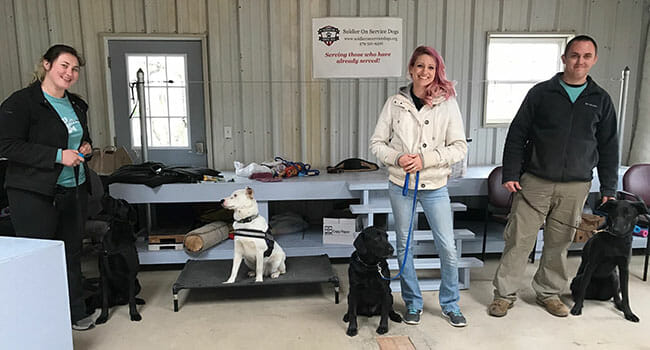
So in 2013, Angie started a new venture, Soldier On Service Dogs. She hired professionals to screen dogs for the right characteristics and to train them – along with their prospective owners. Then she provides veterans with the dogs – for free.
The population of Fayetteville, Arkansas, has a relatively high percentage of veterans. Angie estimates there are as many as 14,000 veterans living within a 50-mile radius, including parts of eastern Oklahoma and southwestern Missouri. They range in age from early 20s, veterans who served in the Middle East, to older vets who served in Vietnam, Korea, and World War II. According to some estimates, as many as 20 percent of war veterans have some degree of PTSD, Angie said. While not all veterans want a service dog, or would be able to care for one, Angie estimates that close to 1,000 people in her area would benefit from one.
Angie has noticed the effects of PTSD. One local Vietnam vet remained shaken for decades, choosing to live alone in a cave in the woods rather than socialize. “Social isolation and social anxiety are among those check marks that indicate PTSD,” she said.
“Another veteran didn’t leave his house by himself for four years,” Angie said. “We gave him a dog and a few months later, his wife called, crying. I thought, ‘What happened? Did the dog get run over?’ but she said, ‘No, these are tears of joy.’ He had gone to Walmart all by himself. Now, he drives himself back and forth.’”
Bob Grubbs, a Vietnam veteran who suffers from PTSD, said his service dog, Scout, has restored the sense of “purpose and hope” that he lost when spinal injuries from a fall forced him to retire. “I was a graduate geologist, I worked all over the world, but now I can’t do that,” he said. Bob began to feel as though he were being cast off as old and useless.
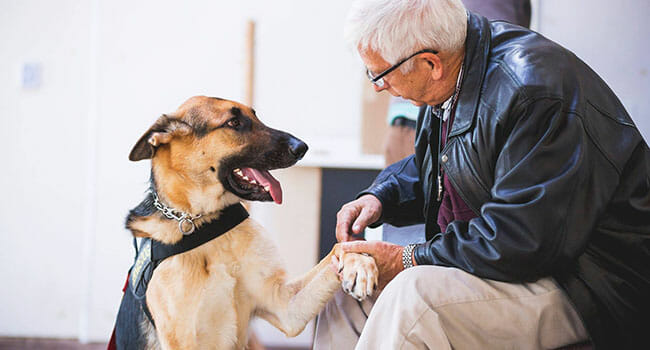
Scout, a German shepherd, helps Bob walk with better stability and, “he helps me get up if I fall down.” But just as important, Bob said, are the emotional benefits. “He keeps me calm, and he gives me pride, too. I go around showing him off. It’s giving me a whole new perspective on life.”
Bob now volunteers for Soldier On Service Dogs by giving speeches to veterans groups and other community organizations. “It gives me an opportunity to use my talents and my abilities,” he said. “It doesn’t bother me to talk to just one person, or to 200 or more.”
Since its inception in 2013, Soldier On Service Dogs has trained and placed eight dogs. “We want to do 12 per year,” Angie said. “Someday, we’d like to get up to 60 to 70 dogs per year.”
Research has shown that the best service dogs for PTSD and brain injury are Labradors, standard poodles, mixes of those two breeds, or either of those breeds mixed with golden retrievers, according to Angie. The ideal dog is sensitive to changes in a veteran’s mood, but not so laid back that it won’t respond in a crisis.
Dogs with a strong prey drive are flagged as unsuitable. “We can’t have any squirrel moments,” Angie joked. “They can’t be going after the neighbor’s cat.” Overly protective dogs aren’t right either, “We don’t want our dogs to scare people,” she said.
But dogs that do meet the organization’s standards are trained to do some remarkable things.
“Nightmares and flashbacks are extremely real for veterans, which leads to sleep deprivation,” Angie said. The dogs are trained to gently wake the vet in such instances, just enough to interrupt the nightmare and allow the veteran to go back to sleep. “We also teach our dogs to turn on the light switch, so that when that veteran does wake up from the nightmare, he’s not in the dark.”
Dogs are trained to sense the onset of seizures, allowing owners a few seconds to quickly sit or lay down. They help vets in the early stages of dementia remember to take medications or find their way home if they get lost.
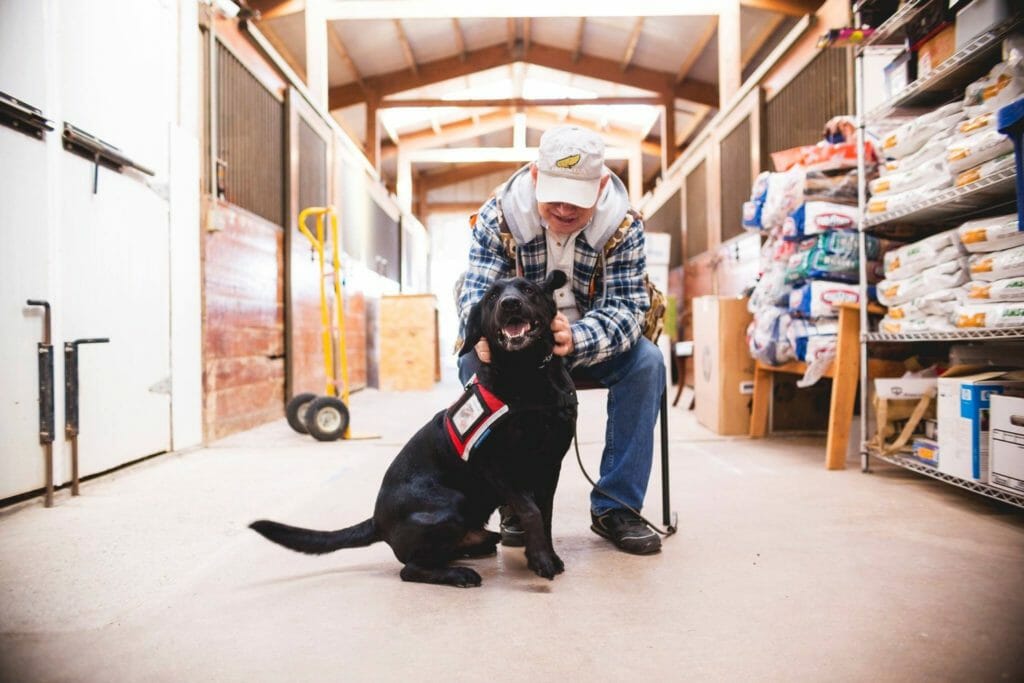
Soldier On Service Dogs has successfully recruited a small army of volunteers, including one group that cares for young puppies in their homes, where they teach them basic commands and help the dogs become socialized.
The dogs then are given six months of intensive training, followed by another six months of training with their prospective owners. Volunteers also help Angie raise money for the program in numerous ways. In August, for example, one fundraising event included a 1,000-foot-long “slip and slide” spanning a downtown street in Fayetteville.
Currently, the organization relies on donated dogs or rescue animals. “We need to build up the pipeline of dogs,” Angie said, again noting that very few dogs prove to have just the right traits to be PTSD service dogs – Soldier On Service Dogs is also committed to helping unsuitable animals find good homes.
“Too-friendly dogs, we generally give those to folks who want to train therapy dogs,” Angie said. “If the prey drive is too high, becoming a search-and-rescue dog might be a good alternative; if they are aggressive, we might call the local police department. The worst thing that can happen is they become pets, and we have a waiting list for dogs that wash out.”
Angie estimates she spends 60 to 80 hours per week volunteering. She admits it’s a new experience for someone used to owning rental properties, investing in startup businesses, and running her own companies.
“I find myself at a loss for words as to why I do this,” she said, “but it’s definitely better to give than to receive. I’m now a PTSD advocate and a veterans’ advocate. But once you see what these dogs do for these guys, it’s life changing.”
Do you know an incredible woman like Angie who’s making a difference in your community? Nominate her for a 2017 Women of Worth Award!