Texas Nurse Finds Joy in Helping Underserved Populations and Disaster Victims Through Skills-Based Volunteering
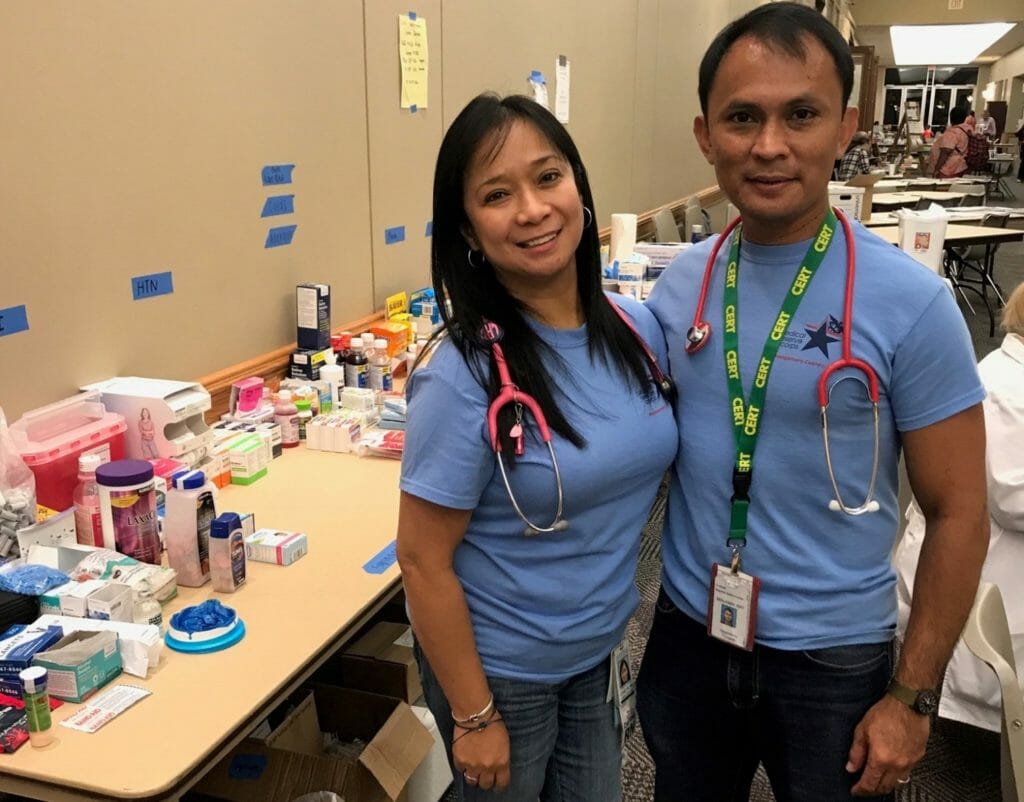
As a nurse, Lovelyn Agleam knows the importance of meeting the needs of others. She’s a full-time charge nurse in the observation unit of Memorial Hermann The Woodlands in Texas, but her work to help others extends beyond the hospital walls.
Lovelyn keeps a busy schedule, but she still finds time to volunteer her nursing skills with the Medical Reserve Corp, assessing patients, monitoring vital signs and meeting basic patient needs. In addition, she also volunteers through her church and other community organizations.
Points of Light spoke with Lovelyn about her volunteer service and the impact she’s made.
How did you first get involved with the Medical Reserve Corp?
I was involved with medical research for three years. My husband encouraged me because he was active with community service, and I thought, “Why not?” I’m a nurse — I’ve been a nurse for more than 25 years. And, for me, being a nurse isn’t limited to taking care of sick people in the hospital. You also can extend it by helping your community, especially those in need of help medically. Recently, Texas was affected by Hurricane Harvey, and my husband and I decided to volunteer, sharing our medical skills and helping those people in the area just to make sure they were okay. Being a nurse is trying to share your knowledge and skills, especially when taking care of sick and indigent people who are in need of my help.
What are your responsibilities in that role?
Usually, because I’m an RN, they’re asking for me to make sure to assess the patient in relation to their complaints of hypertension. So, I take their blood pressure to make sure everything is normal. If something is wrong with our assessment, we inform the doctor or nurse practitioner in charge. It could be something that needs to be treated at that time.
How frequently do you volunteer your nursing services?
We usually receive an email, especially during a calamity. If we’re available, we help during our free time. During Hurricane Harvey, our hospital was activated, and the Code Team we were part of needed to stay in the hospital. So, I stayed there for three days. If I have time, and during my off days, I usually go with my husband. We always go together because he’s a respiratory therapist. We usually go to the shelter nearby or to some designated places where the Medical Reserve Corps needs help.
We’ve helped about 50 people, and they were all sick. Their issues could be minor or major. If there are already major issues, we usually make a referral that they be admitted to the hospital.
What other volunteer services have you done?
I’ve been a member of Sacred Heart Catholic Church for 14 years from the time I came to the United States. I started volunteering there four years ago. We usually help the church during fundraisers to raise money for indigent people. I usually do this once or twice a month for three hours.
Also, at the Society of St. Vincent De Paul Conroe Texas, I volunteer in the clothing section that provides clothes to the homeless and low-income families of the Montgomery area. We’re trying to help them meet people’s basic needs.
Why do you think it’s important to volunteer?
It totally makes a difference. It makes me feel that I’m really a part of the community. It’s not only one way of helping your community, but it’s also one way of socializing with multicultural people with different needs. I really love doing it.
Do you want to make a difference in your community like Lovelyn? Visit All for Good to find local volunteer opportunities.
Puerto Rico Native Organizes Hurricane Relief Effort for Residents of His Former Island Home
As Texas, Florida and Puerto Rico face the aftermath of Hurricanes Harvey, Irma and Maria, Points of Light is honoring everyday citizens who stepped up to serve their communities during the immediate response and to embark on the long road to recovery. Meet Daily Point of Light Award honoree Rafael Babilonia, and nominate an outstanding volunteer you know as a point of light.
Raised by parents who were heavily involved in the nonprofit sector, Rafael Babilonia learned early on the power of volunteerism and civic engagement. So it is no surprise that, as Hurricanes Irma and Maria threatened the Caribbean, the Puerto Rico native wasted no time in stepping up to help. He knew the devastation to the island he once called home would be substantial, so he began large-scale relief efforts before the storms had even passed.
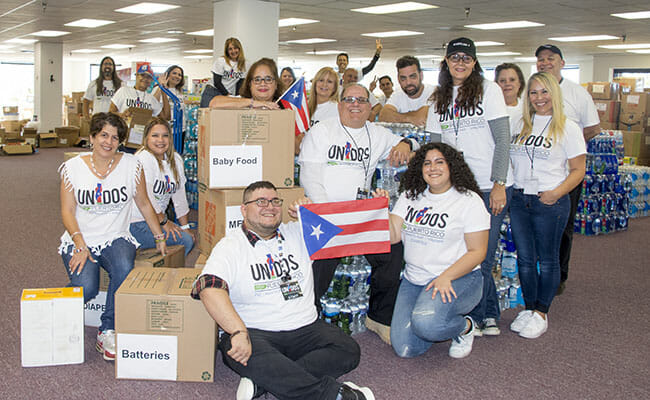
Rafael organized Unidos por Puerto Rico – DMV, with support from Susana Slayton, CEO of Dynamic Animation Systems, where he works in Chantilly, Virginia. Rafael has been working tirelessly to collect supplies and get them to various aid organizations and Puerto Ricans in need – Unidos por Puerto Rico – DMV (District of Columbia, Maryland and Virginia) has already sent nine planes full of supplies to those in need and is not showing any signs of slowing down.
We spoke with Rafael to learn more about his efforts to help the people of Puerto Rico affected by Hurricanes Irma and Maria.
What inspired you to volunteer in response to Hurricanes Irma and Maria?
First, thanks to my parents Rafael and Hedda, who taught me that serving and helping others is the only way you can make a difference in your life. As former founders of Make-A-Wish Foundation of Puerto Rico, and members of many nonprofit organizations like Boy Scouts of America, Rotary Club, United Way and American Red Cross, at home we saw and witnessed the dedication given to helping others. Also, living in Puerto Rico during Hurricanes Hugo and George, which also destroyed our island, I worked as part of the Red Cross Humanitarian Mass Care and Damage Assessment teams.
When I saw on Monday, Sept. 18, a meteorologist from a Puerto Rican news channel crying on live TV, I knew this would be a major disaster for Puerto Rico. I contacted my company’s CEO, Susana Slayton, and asked her for support. She and I have traveled many times recently to Puerto Rico because we want to open an office there. Susana immediately converted the company warehouse into a collection center before the hurricane made landfall in Puerto Rico. In this way, she and I began our project, Unidos por Puerto Rico – DMV.
How did Unidos por Puerto Rico – DMV start and what is your role as a volunteer leader?
Unidos por Puerto Rico is a movement created by Puerto Rico First Lady Beatriz Rossello to help people before Hurricane Irma passed through Puerto Rico, and then Hurricane María. As the coordinator and founder in partnership with Susana Slayton, we added DMV to the name to distinguish our “chapter” from others around the country. My role and my partner’s role is to promote donations, provide the resources and space to accommodate all donations, and manage the logistics needed so that supplies are delivered as soon as possible to the people in Puerto Rico. We work hard so that donations do not just sit in warehouses. We also have more than 200 volunteers who are a very important part of this operation.
How is Unidos por Puerto Rico – DMV supporting Puerto Rico?
As of today, we have flown nine major shipments with almost 200,000 pounds of supplies to Puerto Rico in private planes, commercial airline flights and National Guard flights. Our shipments include pallets of medical supplies, canned food, water, clothing, tools, baby food, baby formula, diapers, pet food and other needed supplies. At our warehouse we currently have more than 166 skids ready for delivery with a total weight of more than 250,000 pounds. We are getting ready to ship another 250,000 pounds of supplies at another collection center that we opened. As part of our efforts, we have shipped medical supplies for the Health Department, supplies for the Puerto Rican Police Department and for our soldiers through the 1st Mission Support Command. This is in addition to supplies we sent directly to many of the hardest hit municipalities in Puerto Rico.
What has been the most rewarding part of the experience so far?
To see a picture or a video of my Boricuas, when the supplies are in their hands, how their faces change. To be able to make a difference in their lives is the highest reward.
What have you learned through your experiences as a volunteer?
That the only way to help others and make wishes come true is with the great support of your family, your company, volunteers, and making strategic partnerships with people who have resources that can help. There are many, many people who want to help. We need to reach out in every direction to find them and make the connection. It is all about relationships.
Why do you think it’s important for others to get involved and make a difference in their community?
Everyone can contribute and make a difference in the lives of others and the world. If you don’t have money, you can work or use your other talents to help. If everyone works together, giving what they can, and thinking of those in need, then everyone can make a real difference and make the world a better place. It takes dedication and sacrifice for others but it is so worth it.
What do you want people to learn from your story?
That, no matter what you dream or you wish to do to help others, put all your spirit and soul towards your goals, and always count on your family, friends, and other good people in this world.
What is next for Unidos por Puerto Rico – DMV?
We remain dedicated to helping Puerto Rico as long as they need help. Hurricane Maria was a disaster like no other and the need will be great for a long time. We will not stop doing what we do until the people of Puerto Rico tell us they do not need our help anymore.
How can people support Unidos por Puerto Rico – DMV’s work moving forward?
We need help with securing flights and other transportation so we can move the supplies quickly into the hands of those in need. We will continue to need donations of supplies. We can also accept monetary donations that will be used to purchase urgently needed supplies and help pay to expedite shipments. Also pray that we will be able to continue operations as long as needed, pray for our volunteers, but most of all pray for all the people of Puerto Rico. Only with everyone’s support can we rise and make Puerto Rico “La Isla del Encanto” (The Island of Enchantment) again.
Visit the Unidos por Puerto Rico – DMV Disaster Relief Fund.
Volunteer Helps Build Community, One Cup of Coffee at a Time
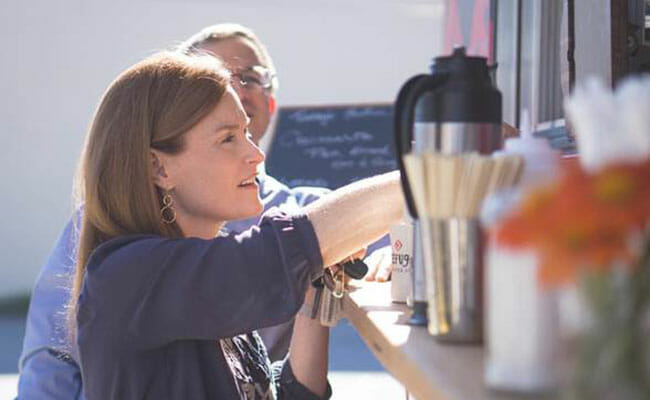
As the first volunteer for Refuge Coffee in Clarkston, Georgia – an area that hosts the most diverse square mile in the country and is home to over 60 native-spoken languages – Karen Guess brings together people from all walks of life over the universal language of coffee and tea. She moved to the area at the same time as Refuge Coffee founder Kitti Murray, who had a dream of creating just such a communal place.
“She asked me to be her No. 1 volunteer, so I said yes,” Karen said. “We met every week to plan this coffee shop and the logical next steps. In that first year, my role was really to take her big dream and process it with her. I love idea vetting and participating behind the scenes, so this was a great role for me.”
Selling coffee from a bright red food truck in a used car lot, Refuge Coffee has made its presence in Clarkston known. The team hopes to create a vibrant community, as well as create hope and opportunities for resettled refugees through employment, training and mentoring. Sticking to its mission, Refuge Coffee provides job training and employment with livable wages to refugees, helping to create a diverse and welcoming experience for those resettling to the United States.
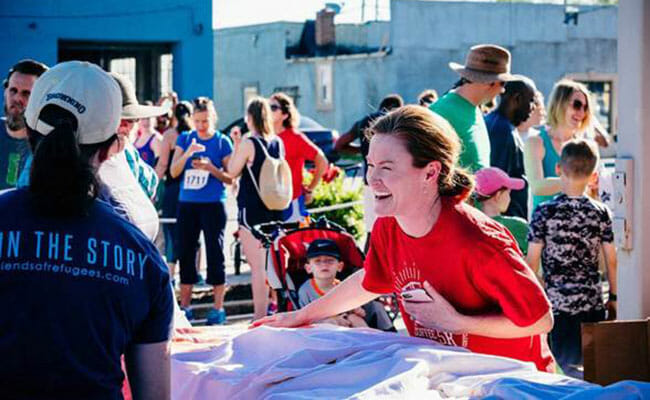
Refuge is also committed to addressing gaps seen in the community through awareness, hospitality and opportunity. Many in the greater Atlanta area are unaware of the growing refugee population; the Refuge team is working to fix that by providing a place for locals and refugees to connect and learn from one another. Many immigrants have never been inside the home of Americans; Refuge serves as a gathering place where locals and refugees can mingle and foster relationships. And, while the number of people in Clarkston without jobs is extremely high, Refuge seeks to fix that by providing jobs and employment training.
Karen is part of a team of volunteers who have been the backbone that keeps Refuge going. She supports events, works to support the trainees and helps refugees find their way in a new community through unofficial tours. She helps fundraise and share the story of the community and organization. But she says for as much as she gives, she gets even more out of her experience.
“Being part of building Refuge and the Clarkston community has been a huge turning point in the way I see and interact with the world,” Karen said. “I’ve changed who and how I am because of this community; there’s a strength of community here that just doesn’t exist in most places.”
When it comes to encouraging others to volunteer, she says go for it.
“For me, I’ve never regretted walking through an open door,” Karen said. “Sometimes I stand at the threshold a little bit, but I’ve never regretted it. If you’re feeling drawn toward something, just walk through the first open door and see what happens. We live in a world where we are super busy and highly tuned people. We want things to be efficient and sometimes aligning your passions with the needs of the world takes time, experimenting and patience, but it’s worth it to take the journey.”
Find opportunities to get involved in your community at www.allforgood.org.
When It Comes to Giving Back, This Chicago Police Officer is Always On Duty
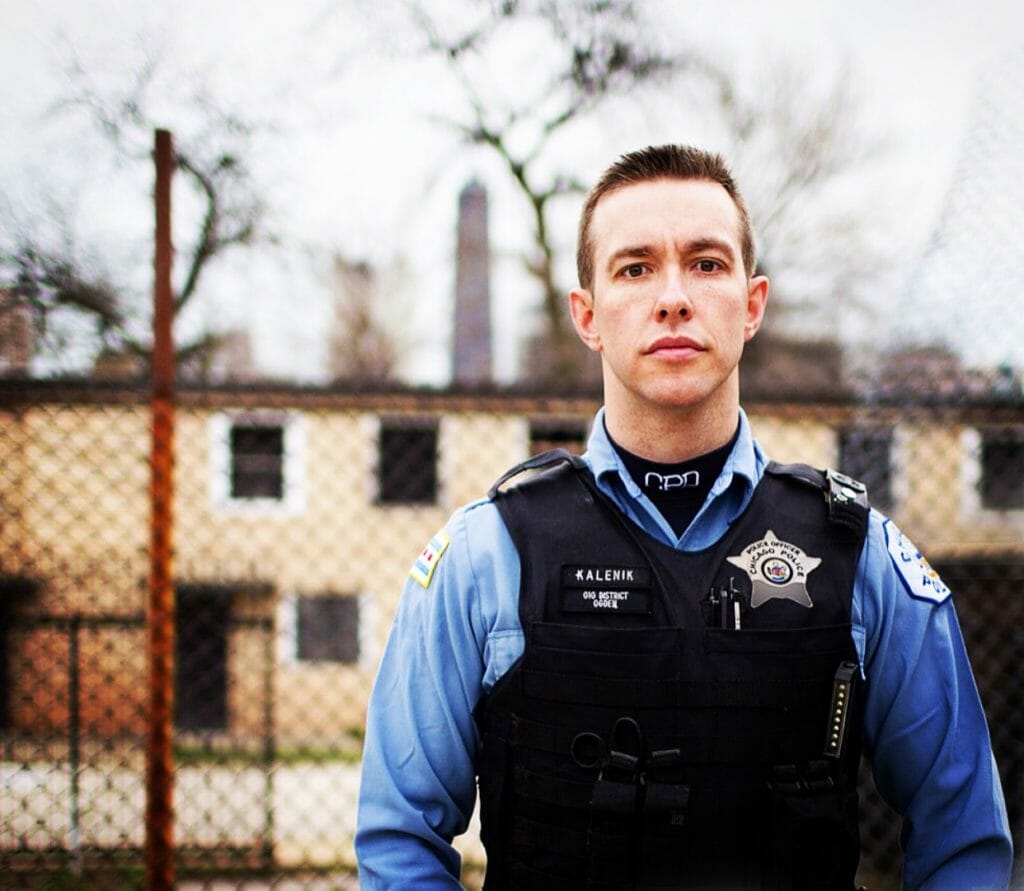
Pete Kalenik is currently a patrolman for the Chicago Police Department, and is also pursuing a law degree and serving as a Staff Sgt. in the Army Reserve. A consummate public servant, the 32-year-old Chicago resident’s motto is “We All Serve.” Pete is making a difference by encouraging his community to live for a higher purpose and to commit to serving others, and is today’s Daily Point of Light award honoree. Points of Light spoke to him to learn more about his work within the community.
You’re 32-years-old, but you’ve worn a lot of hats since you graduated from school. How have you given back to the community?
Admittedly, for a long time, I’ve really sought out different opportunities to volunteer and to make a difference at different points of crisis. I served in the United States Military as a soldier and paratrooper at Fort Bragg, North Carolina shortly after the announcement of the surge in Iraq. Then I came home, and I served as an AmeriCorps educator when Chicago was undergoing the largest school closure in the history of public education in America. And then from experiences teaching, led me to become a police officer and now I patrol one of the toughest communities in the city. I graduated from the police academy two weeks prior to the incidents that took place in Ferguson, Missouri. I’ve been working, going to school and volunteering for almost a decade now.
Your motto is ‘we all serve’. What does that mean to you?
It’s definitely a reminder of putting in context that what I do, it’s completely dependent upon the service of others as well. In addition to doing the work, I think it’s important to serve as almost an exemplar of, – you know, when I was growing up, my father told me you can’t ask someone to do something you wouldn’t do yourself. That motto both, is a point to almost reenergizes my own batteries but then also to show others, that there’s this opp that we all have to live for a higher purpose that’s more than just ourselves.
What’s the most rewarding part of your work?
The authentic relationships that you form with people. Now, whether it’s the ease in which we’re able to connect with people via social platforms – LinkedIn and whatnot, things being highly transactional in terms of networking. Volunteering allows you to understand people better and then they are able to understand you better. The important thing about that understanding, ‘what is your intentionality, why are you doing what you’re doing’. The best way to express that isn’t in words, it’s showing up every day, and making a difference through your actions.
 What have you learned through your experience as a volunteer?
Really, the biggest takeaway – the simple fact that everyone has a role to play and every role is important. No one would be able to do anything by themselves. And I think that, putting that in context, listen, the janitor that cleans the classroom is just as important as the teacher that’s in the classroom. The person who packs the parachute is just as important as the person who uses it to jump out of the airplane. If we all saw our own capacity- whether it’s our profession, as a friend or family member within that larger context to see that we’re all contributing to either make our community or country better, then a lot of benefits, both primary and secondary, can come about because of it.”
In five words or less, describe how giving back to others makes you feel.
Hopeful for the future.
Why do you think it is important for millennials like yourself to volunteer?
I think there are two sides to that. If you look at the number of applications to the Peace Corps, to Teach for America, we’re having folks almost 6 to 1 in terms of number of applicants to the number of folks that are being accepted. I think that there is a great desire amongst folks of our generation and younger to give back because of individuals who are seeking out that higher purpose. Unfortunately I don’t think there’s enough opportunities currently being provided, much less, are they provided in a way that makes it easily accessible to folks who may not come from certain privileged backgrounds.
What do you want people to learn from your story?
I think the most important thing, is to understand that there are people out there who are working extremely hard in order to make a difference. If we were able to see more examples of that, instead of necessarily gossip and news stories that are related to, ‘if it bleeds, it leads,’ if we’re able to show more positive interactions that folks have between themselves and the community, I think it’ll change the overall tone that the country has towards volunteerism.
You’ve taken several oaths in your life. How have they strengthened your commitment to service?
The 3 big pillars of service- whether in the military, teaching, policing- what do they have in common? To me, what really stood out was the oath. Whether it’s saying you’re going to defend the constitution of the United States against all enemies foreign or domestic, or the AmeriCorps oath in which you’re going to give everything to improve your community, or the police department oath in terms of serving and protecting individuals, for us, within the city of Chicago. If you really meant that when you said it, all of the hard work is the easy part because you’re just living up to the oath that you swore to uphold. It makes it easier, whether it’s the military and getting yelled at with the push-ups, or having difficulty explaining certain subject matter to a student, or seeing pretty gruesome acts of violence on the street – the reason you’re putting yourself through those different situations is to fulfill that oath.
Do you want to make a difference in your community like Pete? Visit All For Good to find local volunteer opportunities.
Middle School Student Gives Back By Helping Kids Discover the Joy of Creative Expression
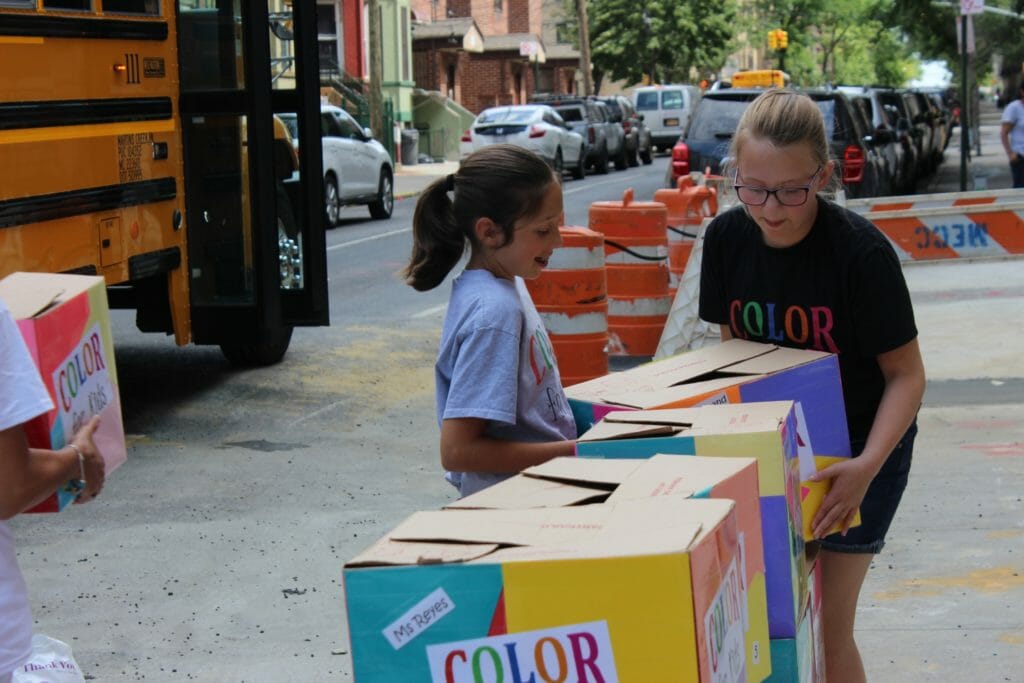
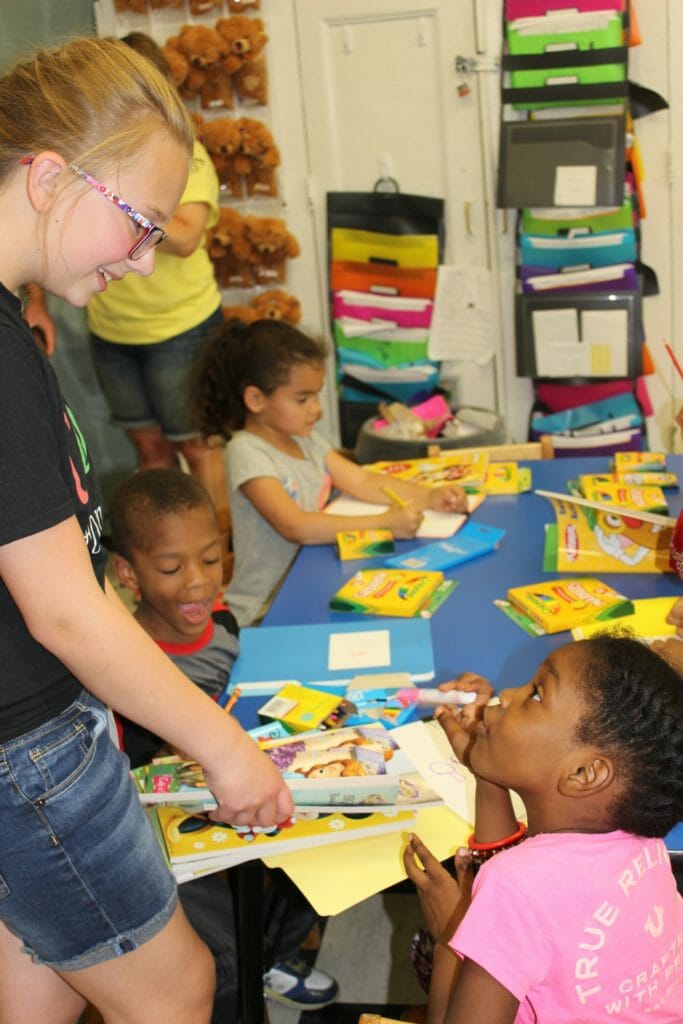
Coloring can be therapeutic. It can bring joy. Or, it can just be fun. That’s why Bethany Kuster founded Color for Kids as a fourth grader. Once she realized that not all children had access to art supplies, she wanted to change that, helping as many kids as possible enjoy the freedom art can provide. Now, she coordinates school- and city-wide efforts to collect and send donated art supplies to schools across the country.
Points of Light talked with Bethany about Color for Kids and why she feels providing art opportunities is so important.
Why did you decide to start Color for Kids?
I started it when I was 9 years old. I have a pen pal named Elsa [Brule], and she goes around the world to do a lot of things to give back. She makes a lot of donations. She helps build schools and libraries. She does a lot, and I want to be like her. I thought I had to wait to be like that when I grew up, but I realized kids could make a difference.
I talked to a teacher in the fourth grade and asked him if I could talk to my class. I wanted to know if we could collect art supplies for kids who don’t have any. I made a PowerPoint presentation with my brother and presented it to class. We gathered two boxes [of supplies] and sent them to a class in Alabama. I think coloring is something every kid should be able to do. It helps express their feelings when they’re mad, sad, or excited. They can color – it’s easier to write things down or color sometimes instead of talking to someone.
How did you get the program going? How do you collect?
Now, businesses and schools all donate. Sometimes, I personally go pick up items, and sometimes we’ll come home, and there will be boxes of coloring supplies on the porch. Sometimes, we don’t know who they’re from. I was on the Steve Harvey show in September, and received a big box of supplies from that appearance.
Sometimes people contact us and ask if they can donate. An insurance company is collecting for me right now.
What do you do to get art supplies to kids who don’t have them?
My mom does that part. We get suggestions from schools and from my pen pal because she donates to schools across the world. She gives us the names of schools that don’t have anything. We also use a website, DonorsChoose.org, and check to see what teachers need. They put what they need there, and we can contact them. We package up the supplies and mail them off. Sometimes we will personally deliver it, but usually, we send it out.
How many people have you helped?
It’s my organization, and I like getting other people to help. I’ve gotten a lot of kids to help. I talk with my entire school during the morning announcements. They collect art supplies for me. Two months ago, a big group of us – my friends, my parents and their friends, and my brother and his friends – rented a bus and delivered to two schools in New York. Overall, I think more than 5,000 kids have received arts supplies.
Do you ever hear back from any of the kids?
Usually, they send thank you letters or they give the letters to me if I go to them. But, there was one boy I remember. I gave him colored pencils, and he had no idea what they were. He was so happy he tried to give me his hat. He lived in a shelter, and that hat was all he had.
Why do you think it’s important for young kids to volunteer?
I think that it’s important because some kids don’t realize they’re lucky with what they have. Some kids don’t have anything, and they’re living on the streets or in shelters. It’s important for kids to realize that they’re lucky, and I think it’s a great experience to volunteer.
Do you want to make a difference in your community like Bethany? Visit All For Good to find local volunteer opportunities.
Vietnamese Immigrant Founds Organization to Connect, Help and Inspire Children Globally
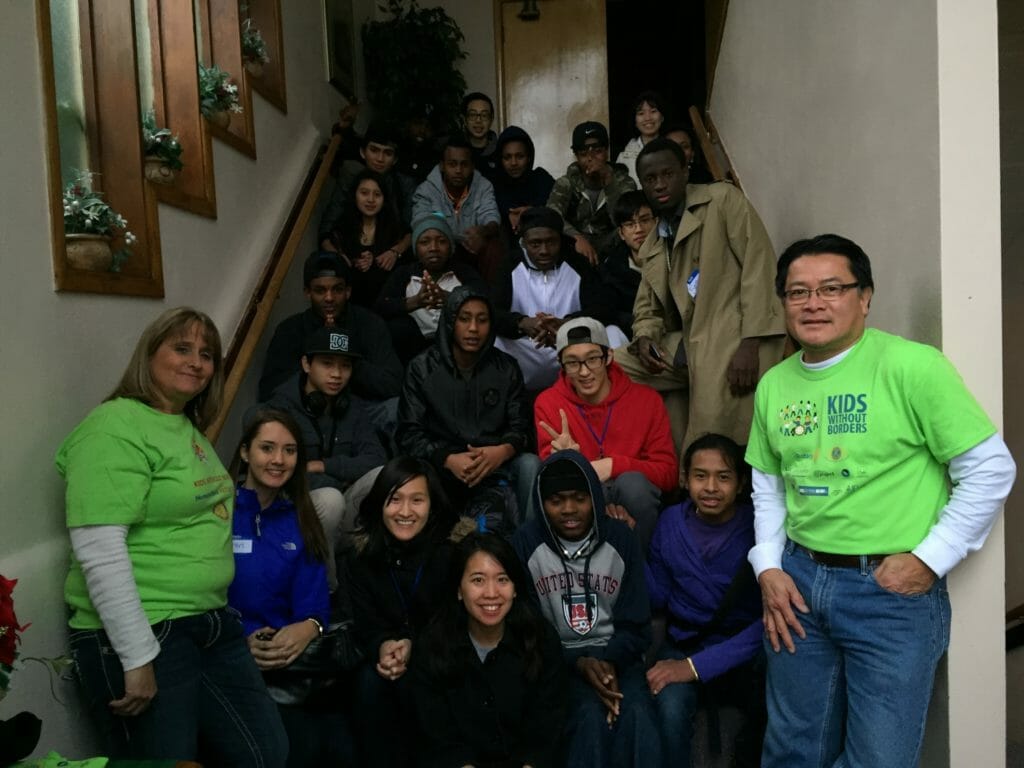
Son Michael Pham immigrated to the United States from Vietnam in 1975 as a refugee on the last day of the Vietnam War. Arriving in the U.S. with “nothing,” Son Michael says he was on the receiving end of the kindness of others, slowly working his way up in the community. Now a successful businessman based in Sammamish, Washington, Son Michael runs Kids Without Borders, an organization that supports and works with children in more than 30 countries. Son Michael is making a difference by encouraging children and youth to give of themselves through service to others in their communities and is today’s Daily Point of Light Award honoree. Points of Light spoke to him to learn more about his service work.
Why did you start Kids Without Borders?
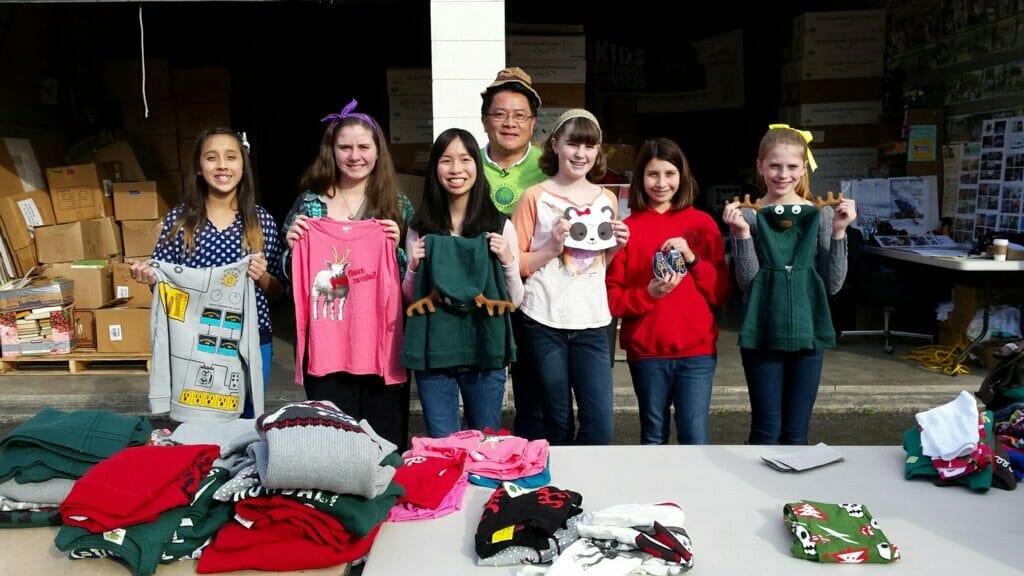
Children always have a big part in our lives. Early in 2001, we were contacted by an organization out of New York to be a recipient of a donation – five pallets of children’s pajamas. One thing I’m not too smart of, I always say ‘yes’, I never say ‘no’. My thought at the time was involving children in our community to be involved in a working project, volunteering their time, and they would sort, and they would identify recipients (for these baby pajamas), and so that’s how it started. We didn’t plan to do anything big, we just launched an organization.
Beyond clothing, how are you making an impact?
Clothing is only a resource that allows us to develop that human contact. For example, I work in Vietnam, we work with a lot of orphans. They come from all different circumstances. On my last trip, there were two young women – they were orphans from the same orphanage where we work. They were adopted to France, and now they are back in Vietnam, retracking their roots. [They] came back to the same orphanage where they came from, became volunteers there, and they fell in love with life there. I’m helping them now finding work so they can stay in Vietnam. There’s just so many, every story is unique.
What have you learned through your experience as a volunteer?
Everyone is unique, that’s probably the best thing I’ve learned. Every person, every kid, every adult has his or her own life story and is unique in his or her own way. It never fails – sometimes you just walk up to this individual, you don’t think much until you take time and listen and learn from that person. That makes us better every day, because we never look at anyone else differently. You always know behind what you see outside and what you hear and what you witness, there’s always something unique and something extraordinary inside of that human through that human life.
How can people give back in their own communities?
One thing that we work very hard and we try to promote a lot – you don’t have to have materials, or you don’t have to have money in order to reach out and be kind to somebody else and to help somebody else. A lot of time, that’s the obstacle, the reason, “well, I can’t help anyone, I don’t have anything.” We teach the kids to get rid of those barriers, the reasons why they can’t do something for somebody. It’s more about the quality versus quantity of giving. Giving can be the simple act of kindness.
How do you use your experience as a refugee to give back?
I use my story. When we first arrived in America; we arrived in Chicago. It’s a very tough place. For every bad thing that happened to us, ten good things happened to us. It might not be a big deal now, but back in 1975, our country was torn apart with Watergate, the end of the war, all these soldiers came home and couldn’t find jobs – it was a pretty tough time back then. But no matter what happened, we were new in the country and so many strangers just reached out and showed us what America was about. Now I’m an American, and I live the American dream, and I just want to make sure that I do my part to be a good American and help other people.
What do you want people to learn from your story?
Being unconditional is important. Let’s not worry about what you’re going to get out of it. Working with children is important. They are the next generation. A lot of the time they happen to be the ones that are setting examples for us. It should be the opposite. Hopefully we do things right, we live our lives right – they can learn from us and benefit, that’s for adults. For kids, if you’re given an opportunity to be good, to help each other – if you create opportunity for them to do that, it’s automatic, they get very good at it. Sometimes it’s a lack of opportunity to be involved and to do things for others. Everyone can do the same thing that I do for others in their community.
If you had an autobiography, what would the title be?
‘It’s easy to be me.’ I don’t think I do anything extraordinary. I’m not a medical doctor, I don’t save lives. I’m not a war hero. I’m just an ordinary person doing ordinary things. There’s nothing I do that somebody else couldn’t do.
Do you want to make a difference in your community like Son Michael? Visit All For Good to find local volunteer opportunities.
Volunteer Travels to Disaster-Affected Areas to Rescue Animals, Reunite Them With Their Owners
As Texas, Florida and Puerto Rico face the aftermath of Hurricanes Harvey, Irma and Maria, Points of Light is honoring everyday citizens who stepped up to serve their communities during the immediate response and to embark on the long road to recovery. Meet Daily Point of Light Award honoree Cheri Deatsch, and nominate an outstanding volunteer you know as a point of light.
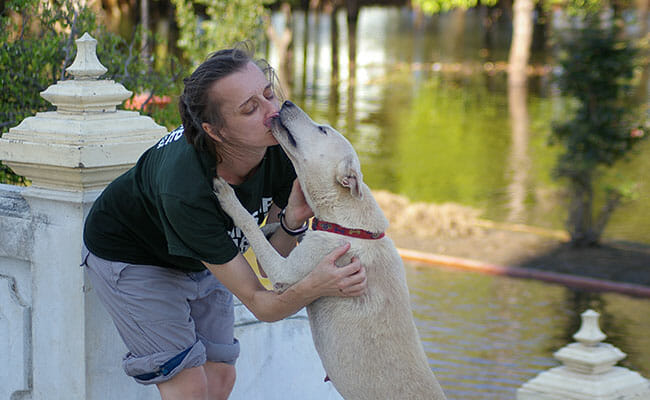
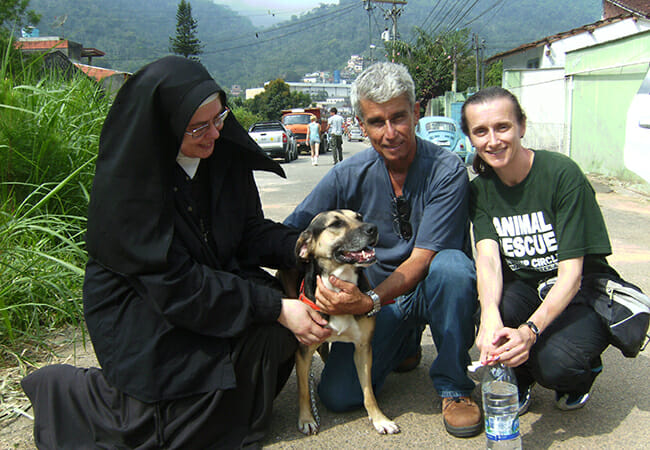
When Hurricane Katrina hit New Orleans in 2005, Cheri Deatsch returned to her hometown to help rescue pets that were impacted by the catastrophic storm. In the years that followed, Cheri has continued to travel to communities affected by natural disasters to rescue animals in need. Through Kinship Circle, an all-volunteer animal advocacy and disaster rescue nonprofit where Cheri serves as disaster field response manager – she has stepped up to volunteer in the aftermath of Hurricane Sandy, the Fukushima earthquake in Japan, severe flooding in Thailand, the Oklahoma tornadoes, and many more.
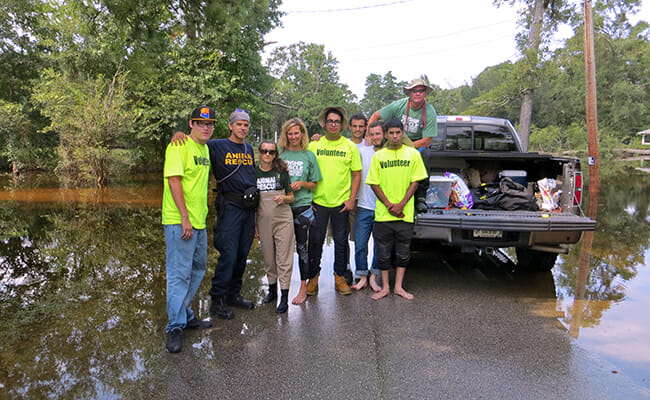
When Hurricane Harvey hit Texas, Cheri once again traveled with Kinship Circle, spending four days performing search and rescue missions to save animals from the floods and other detrimental conditions in Houston.
We asked Cheri to tell us more about her experience rescuing animals affected by the natural disasters.
What inspired you to volunteer in response to Hurricane Harvey?
My initial inspiration to help animals in disasters was Hurricane Katrina. Since then, I have responded to nearly every major natural disaster as animal rescue volunteer. When I saw the images of animals affected by Harvey, I knew that I had to go.
Describe your volunteer role during Hurricane Harvey with Kinship Circle.
Myself and my team responded to displaced resident requests to save their animals that had been trapped in the flooding. Most of the rescue work was done in flooded neighborhoods that were only accessible by boat. Many of those people had been rescued and were forced to leave their pets behind.
What has been the most rewarding part of the experience so far?
The most rewarding part of animal rescue work is when you are able to reunite a rescued pet and its owner.
What have you learned through your experiences as a volunteer?
Generosity of spirit in times of extreme stress. I’ve seen the worst of times brings out the best in people. Often people not affected by the disaster feel helpless when they see television images of the pain and suffering of others, and volunteering allows one to channel those feelings into actions, which can really make a difference in the lives of persons who are in a time of need.
Why do you think it’s important for others to get involved and make a difference in their community?
Volunteers are really invaluable for almost every nonprofit, regardless of the type of assistance they provide. As a volunteer, not only is your work really needed, but you form bonds that last a lifetime, and the end result is that you enrich the lives of others and yourself.
What do you want people to learn from your story?
Everybody has a skill, and there are always circumstances where you can use your skill to make a difference in the lives of others. Not only will your work be greatly appreciated, but you will learn a lot about yourself and others. And, that learning experience is invaluable.
How can people support Kinship Circle’s work moving forward?
As a nonprofit, Kinship Circle always appreciates donations. Be informed in your community and learn about smaller organizations that don’t have the budgets to do the advertising to make themselves as known as some of the larger nonprofit organizations.
Loukoumi the Lamb Inspires a Good Deeds Movement, Encouraging Children to Make A Difference
Nick Katsoris is today’s Daily Point of Light Award honoree, and one of the winners of the 2016 Make A Difference Day Awards. Each year, TEGNA recognizes 14 outstanding leaders of Make A Difference Day projects, awarding $140,000 in grants that are donated to the charities related to the winning projects. Learn more about Make A Difference Day and register a 2017 project at www.makeadifferenceday.com.
An attorney by day, Nick Katsoris’ childhood dream was to become an author. Some 15 years ago, the Eastchester, New York, resident was inspired to write a series of children’s books featuring Loukoumi, a cuddly lamb named after the sweet Greek candy. His dream of becoming an author realized with his award-winning book series, Nick knew he could help others achieve their dreams as well.
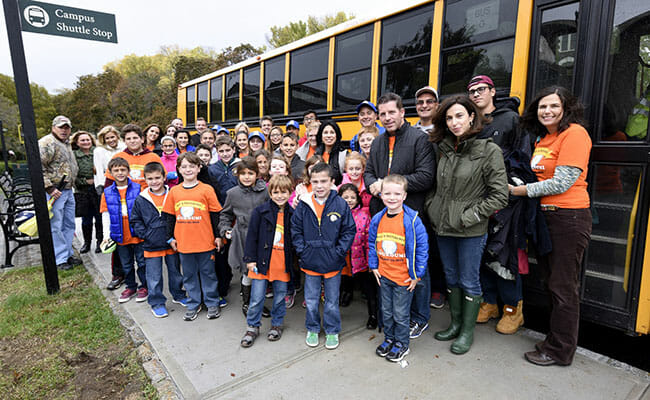
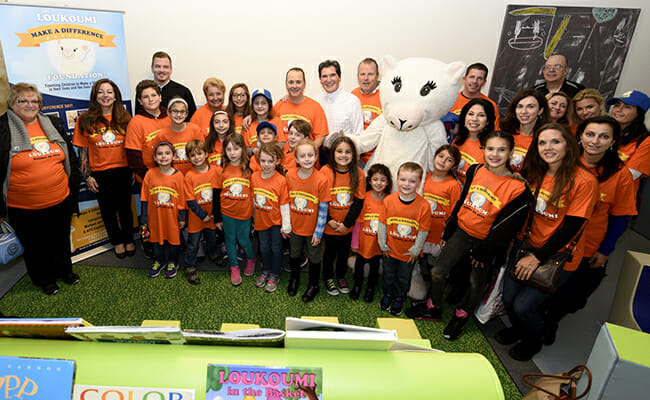
In 2009, Nick released “Loukoumi’s Good Deeds,” with an accompanying CD narrated by supporter and A-list actress Jennifer Aniston. The book encourages children to make a difference by pledging to do good in their communities. After receiving a 2014 Make A Difference Day Award, Nick put the grant money toward starting the Loukoumi Make A Difference Foundation – a nonprofit focused on teaching children to make a difference in the lives of others. Through his foundation, Nick offers a number of programs beyond Make A Difference Day, such as the Dream Day contest that gives children the opportunity to spend a day in their dream career. And each year for Make A Difference Day, Nick organizes a Good Deed Bus Tour in his New York community, making stops at various locations where the children do good deeds. Stops have included donating books to the Westchester Children’s Museum for their literacy program, bringing supplies and food for animals at the Rye Nature Center, and one year, encouraging fans attending the Fordham University football game to make cards and give donations for young patients at St. Jude Children’s Research Hospital. According to Nick, more than 100,000 children now participate in his programs through Make A Difference Day, their school curriculum, and general philanthropy.
Nick won the All-Star Make A Difference Day Award in 2016, receiving a $10,000 grant that he is contributing towards his Good Deeds projects, using the extra money to grow these programs so that kids can make a difference all year long. We asked Nick to tell us more about his Make A Difference Day projects, and the Loukoumi Make A Difference Foundation’s ongoing dedication to encouraging children to give back while having fun.
What was the original inspiration behind the “Loukoumi’s Good Deeds”?
I’m an attorney by day and I’ve always loved to write. I wrote some legal thrillers when I was younger, thought I was going to be the next John Grisham overnight, which never happened (laughs), so I went back to the legal practice. About 15 years ago now I was in the kitchen with my wife, and someone had brought us back a box of Loukoumi candy. And I asked her, “would you please hand me that box of Loukoumi, Loukoumi?” We just looked at each other and I said, “wouldn’t that make a cute name for a children’s character?” Loukoumi actually means “sweet” in Greek. Then I started writing the children’s book. I wrote the first book, simply called “Loukoumi,” about a little lamb that comes from Greece and gets lost at airport, and I self-published the book. The next thing I knew, we sold out of our first printing, The New York Times wrote a story about us, and it hit the Barnes & Noble bestsellers list, and that was my dream come true.
Tell us a little more about what your history with Make A Difference Day, and what you did for your 2016 event.
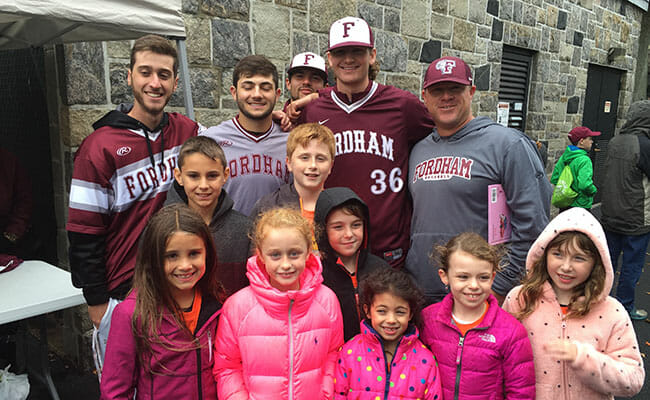
2016 was our second bus tour. We made stops at the Children’s Museum in Westchester and brought books to promote literacy. We went to the Yonkers Animal Shelter and brought supplies for the animals. And we stopped at Fordham University. We’d found a school in Jamaica that had been battered by a hurricane, and didn’t have any money for recreational activities, including baseball – a beloved sport down there. We started a baseball equipment drive, working with the Fordham baseball team and, during a football game last year, we stopped to collect the donations. We just wanted to collect enough equipment for this one school, but we had such a great response that we collected enough for six schools, and now they were able to form the Make A Difference Baseball League on the island. Things like that, when people just rise to the occasion and things exceed your expectations, it just shows you the power of making a difference. And that’s what we’re all doing, we’re just trying to teach kids at a young age, so that these are things they can do throughout their lives.
What has been the most rewarding part of the experience? A favorite memory?
There was a little boy named Lionel, he won our second Dream Day – he wanted to be a soccer star. I arranged for him to play soccer with the New York Red Bulls, a team that’s in New Jersey. After that he started coming to all our Loukoumi events, we got to know his family well. But then he stopped coming for a couple of years. I didn’t know why – I thought he got older, and wasn’t interested. I found out he was diagnosed with cancer, he had lymphoma. After two years, his mother reached out to me and she told me, “You know, I’m sorry we haven’t been around, but Lionel was very sick, it got really bad for a while.” Thank goodness his cancer is now in remission, but his mother told me a story that while he was in the hospital, the Make-A-Wish Foundation contacted him, and they said, “Lionel, we’d like to make a wish come true for you – what would you like?” He said, “I’d like to go to Disneyland Paris.” Two years go by, his cancer goes into remission, he’s ready to go, and they say, “OK, we’re going to send you to Disneyland Paris.” And he said, “When I was in the hospital, there was an organization called Friends of Karen that helped me and my family through this ordeal. Instead of spending the money on a trip to Disneyland Paris, I want to make a donation to Friends of Karen for all that they did for me.” His mother called me up and said, “Nick, the reason why he did this is because, at a young age, he learned about doing good deeds through Loukoumi and the Loukoumi Make A Difference Foundation. That’s why he wanted to give back, because people helped him and he wanted to give back.” I never expected to hear a story like that. When you reach a child like that, without even realizing it, and they’re giving back in the world – that’s what it’s all about, that’s what we’re all trying to do.
Why do you think it’s important for others to get involved and make a difference in their community?
The simple answer is, it just is. It creates good values for these kids, it creates lessons and memories that they’ll remember. It’s also a lot of fun. When we’re on our bus tour every year, the kids have a blast. They learn that doing good is fun. It makes you feel great. The world is a tough place and there’s a lot of crazy things going on in the world, I feel like we’re here to help each other. And if you can’t help one another, then what else is there? There’s a lot of power in banding people together to do good deeds. I’m just seeing the results over the last three years. It’s become my mission to help children continue to do good deeds.
As a 2016 Make A Difference Day Award Winner, you were awarded a $10,000 grant to donate to a charity of your choice. What will that money go toward?
We’re working on several projects – the baseball project, also our bus tour, plus the exhibit at the Westchester Children’s Museum. (The Loukoumi Foundation sponsors an exhibit at the museum that promotes literacy and offers a “Book Nook” for children.) All of the money, and the money we have raised through the foundation, is going towards growing our programs so that it’s not just one day a year, so that kids can make a difference with Loukoumi all year long. Our next stop is to have these museum exhibits, our school curriculum and these bus tours not just where we are in Northeast, but all across the country.
What do you want people to learn from your story?
I want them to realize that nothing is impossible. That if you have a goal or dream, you need to go after it and you need to follow it. And also to realize that that dream or that vision may take a different path, something that you never imagined or something you never expected, kind of like what happened with us. This all started because I wanted to be a writer when I was younger, never in a million years did I think that I’d write a book series about a fluffy little lamb that just wants to make the world a better place. Look inside your heart and figure out what it is that’s important to you and then go out and do it. Follow your passion, because that will make you a happier person, that’ll make other people happier and then – the sky is the limit.
What are your plans for Make A Difference Day 2017?
We’re doing the bus tour again – making several stops within the community to share contributions the kids have organized, and end with a Good Deeds celebration in New Rochelle, New York. In addition to encouraging the kids through this charitable day, we have 25 to 30 partner organizations that we work with and support, including St. Jude Children’s Research Hospital, Kiwanis International, PACER’s National Bullying Prevention Center, and Matthew McConaughey’s Just Keep Livin’ Foundation. Loukoumi is also a part of the curriculum in more than 200 schools. We’re encouraging students to read “Loukoumi’s Good Deeds,” and think about a good deed that they want to do, something that means something to them.
Volunteers across the nation will come together again on Saturday, Oct. 28, to improve their communities for Make A Difference Day. Project organizers are encouraged to register at www.makeadifferenceday.com to be eligible to win a $10,000 grant to donate to a charity related to their Make A Difference Day project.
Boston Retiree Helps Raise Funds for Underserved Students
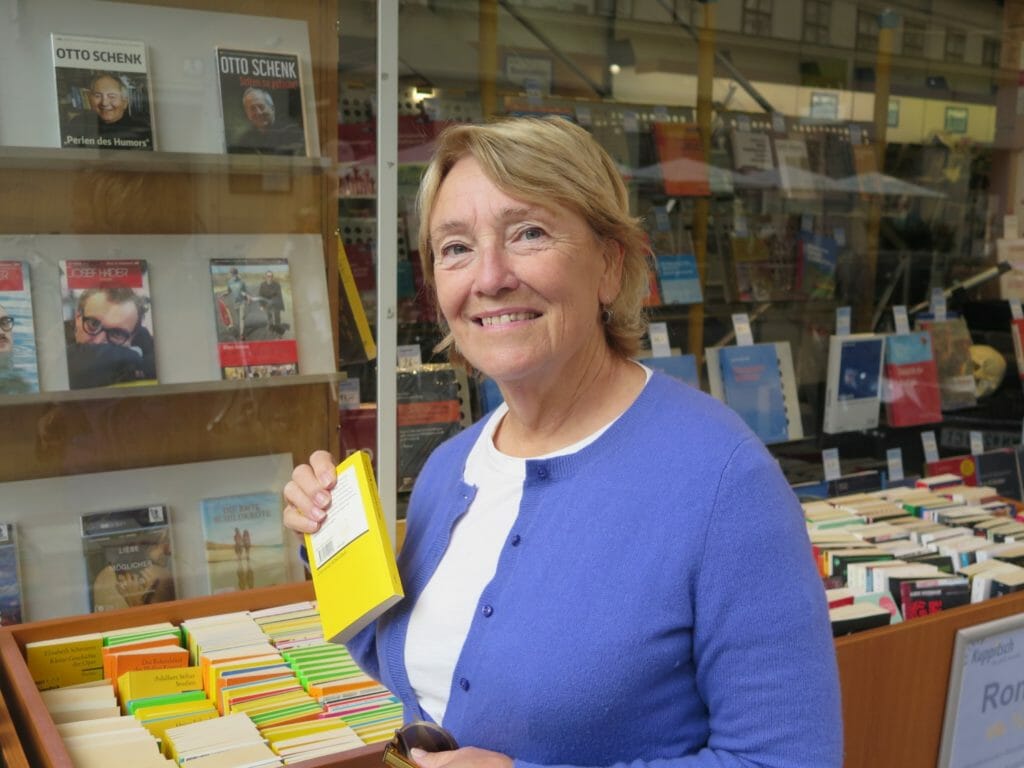
Mimi LaCamera brings a wealth of experience and a fierce record of success to her volunteer work with Sara Greenwood K1-8 School, a school she calls “wicked underserved,” with 94 percent of its 415 students living below the poverty level. A marketing and fundraising wizard, LaCamera’s past jobs include being director of visitor marketing at the Greater Boston Convention & Visitors Bureau, executive director of the Lupus Foundation Freedom and director of the Freedom Trail Foundation. In each of those jobs, she used her skills to transform and move an organization forward. Clearly not the retiring kind, La Camera, 73, has spent the past three years working with the school’s principal and staff to do the same for these kids. LaCamera’s efforts have generated substantial resources that have improved the student’s ability to learn. She has raised more than $120,000, monies that have created learning and enrichment spaces that didn’t exist before including a library, music room and maker space.
How have your past jobs informed your work with Sara Greenwood?
What I’ve done has afforded me the opportunity to learn an amazing amount of business skills. I know how to organize and create stability and a stream of income. And I’ve learned how to listen – at the Lupus Foundation, it was critical to listen to what the patients needed, not what we thought they needed. I’ve learned to get up in the morning and count my blessings, which inspires me to give back.
How did the library project come about?
It was completely by accident. I had just finished working with Freedom Trail Foundation, and I was at a party and met the principal of Sarah Greenwood. I mentioned that I was looking for my next project and he said, “Well, we don’t have a library.” And I said ok, we’ll build a library. It turned out to be an amazingly hard physical job that took hundreds of volunteers. But we got it done.
Your 2015 project was to create a music program. And now you’re working on maker studios and spaces. Why are these programs so important to you?
There is research that indicates that children do better academically when they are exposed to books, music and creative projects. It doesn’t just feed their souls, it teaches them skills that improve their ability to think and learn and do well in school. These kids don’t have the opportunity to be exposed to these things otherwise.
Tell us a little bit more about the programs you’ve worked on at Sarah Greenwood.
In 2015, we completed building a dual-language school library. I was responsible for $40,000 in corporate, grant and individual contributions and more than $30,000 of in-kind donations. I coordinated volunteer activities that involved sorting old and out-of-date books; assembling furniture, painting, cataloguing and shelving 5,000 books. We also set up Library World, an online catalogue system.
In 2016 we completed the first music program, bringing music education to 100 percent of the students. I was responsible for corporate, grant and individual contributions generating $40,000 for musical instruments, furnishings and equipment for a new music room and $25,000 in-kind donations. I designed and helped implement B.E.A.T. a new percussion curriculum for middle school students; coordinated volunteer activities of painting and New England Carpenters Union Trade School construction of custom designed storage cabinets.
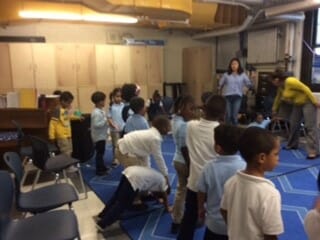
This year, we completed building the school’s first MakerSpace – a unique classroom featuring STEAM (science, technology, engineering, arts and math) curriculum where students select projects to work on (i.e. using circuit boards, 3D printers, laser cardboard cutters; carpentry tools, sewing machine, robotics and more). I raised $45,000 in corporate, grant and individual contributions; actively participated in building out the classroom with custom designed tables and workspace; managed volunteers to paint and prep the classroom.
Your fundraising success is incredible. What is your secret?
I only do fundraising for projects that I believe in. I segment my fundraising; I completely target my audience. And I never go back to the same group twice. I develop a very targeted pitch that is aligned with a foundation’s or corporation’s culture and identity. Then we have a conversation. It is my firmest belief that I’m giving people an opportunity to do something good. If they don’t take that opportunity, so be it. I never take it personal. I’m doing them a favor by bringing this idea to the table.
What’s the most challenging aspect of your volunteer service?
Selecting the right project and working within those specific parameters. Staying focused and not overextending.
Are there any future partnerships, programs, or events that you are excited about?
I’m continuing with Sarah Greenwood, hopefully raising discretionary money so the administration has the flexibility to offer a variety of opportunities for the students that without a smaller amount of money they would miss. For example, tickets to the symphony, tickets to museums, t-shirts for the sports teams, a debate club, father/daughter book clubs and the like.
Do you want to make a difference in your community like Mimi? Visit All For Good to find local opportunities to volunteer.
Heart and Sole: Martial Arts Teacher Rallies Community to Collect Shoes and Rain Boots for Kids in Need
Farshad Azad is today’s Daily Point of Light Award honoree, and one of the winners of the 2016 Make A Difference Day Awards. Each year, TEGNA recognizes 14 outstanding leaders of Make A Difference Day projects, awarding $140,000 in grants that are donated to the charities related to the winning projects. Learn more about Make A Difference Day and register a 2017 project at www.makeadifferenceday.com.
Each year, Farshad Azad meets with 29 public school principals, representing nearly 14,000 students in Chico, California, to see what the kids need most. The answer last year: shoes.
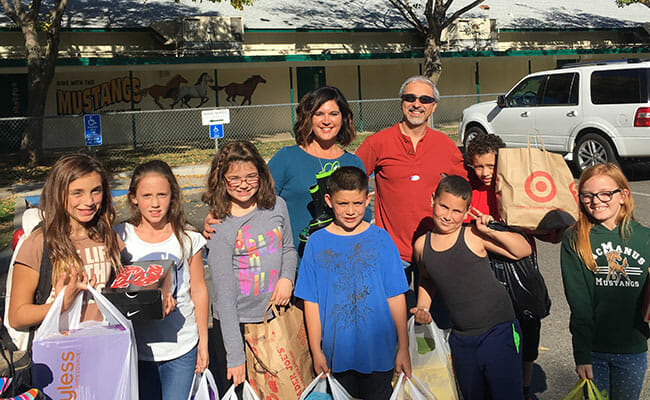
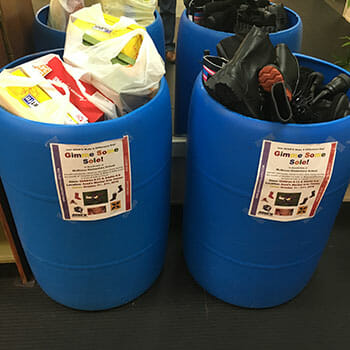
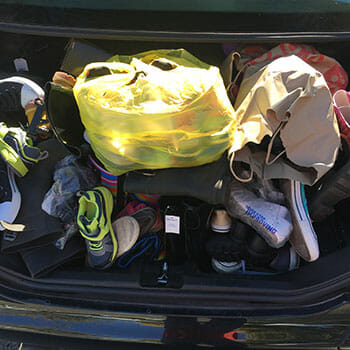
Farshad, who is the grandmaster at Azad’s Martial Arts Center in Chico, responded with a month-long donation drive – which he called “Gimme Some Sole” – to collect new and gently used shoes and rain boots for children from low-income families, whose flip flops, beat-up sandals and hand-me-down shoes would offer no protection or warmth from cold and rainy winter weather. He recruited students from his martial arts center to participate, along with their family and friends, members of the community, and worked out a partnership with the local Payless Shoe Source. The initiative included Make A Difference Day 2016, when more than 50 pairs of shoes and rain boots were donated in a single day. In the end, shoes and rain boots were donated to local elementary school students and homeless children.
In recognition of his efforts on Make A Difference Day, Farshad was awarded a $10,000 grant that he donated to the Chico Community Shelter Partnership, , which manages the Torres Community Shelter – a little extra money to do a lot more good for homeless families in the community. We asked Farshad to tell us more about last year’s project and what he has planned for Make A Difference Day this year.
What was the inspiration behind the “Gimme Some Sole” project?
Every winter I get calls from various community members, teachers, counselors or principals to help purchase a pair of shoes or rain boots for a child from a low-income family, whose feet are soaked in rainwater due to damaged or worn out shoes.
Last year, I attended a meeting of school principals in our district. I asked the group what would be their most urgent need for kids. Tina Keene, principal at John McManus Elementary School, told me that they needed a lot of rain boots for kids. In another meeting, with the executive director of Torres Community Shelter, I found out that they also needed rain boots and good shoes for homeless children in our community.
Thinking about young children and their health and safety became the inspiration for me to choose it as the 2016 Make A Difference Day project. So, I called it Gimme Some Sole! The idea was to not only collect much-needed shoes, but to encourage the community to reach into their own heart and share their love and compassion with disadvantaged kids in Chico.
Tell us a little more about what you did on Make A Difference Day 2016.
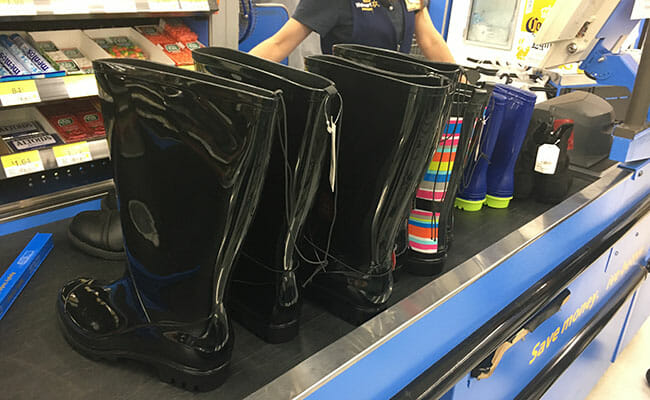
We collected a few hundred pairs of used and new rain boots for disadvantaged kids in our community.
The project took place at my business, Azad’s Martial Arts Center. It was a community service event for all students, and an opportunity to get hundreds of people in our community volunteering to make a difference. Azad’s students and their friends and family members looked in their own closets for lightly used shoes to donate, and many purchased new shoes with their saved piggy bank money. As we registered the event on the Make A Difference Day website, Gimme Some Sole quickly became a community-wide project, with people stepping forward to help and dropping off rain boots at the center.
I personally approached the general manager of the local Payless Shoe Source, asking him to set aside or order shoes for our project in a very rainy season. Once he heard what the project aimed to do, he provided us with a deep discount to help us out in purchasing more rain boots for kids. That was highly unexpected and much appreciated!
What was the most rewarding part of the experience? A favorite memory?
The most rewarding part of this project was the smiles on children’s face when we delivered the shoes to them! Absolutely heart-warming and fun. Many of them wanted to wear the shoes right there and then. Also, the fact that with the help of your organization and our team’s effort we got the community rallied to make a positive impact in a child’s life. Children are the future and if we guide them appropriately they will become great contributing members of their community in the future.
Why do you think it’s important for others to get involved and make a difference in their community?
A community is only as great as its citizens. Make A Difference Day is a great platform for people of all backgrounds to unite and help with whatever needs to be attended to or improved in a community. One day a year, the entire country can put their differences aside and join each other to benefit others. This is a great resource and opportunity.
I have a formula! When we inspire an individual to give of their heart and soul and resources, we begin to improve the world.
To positively impact our country, each city must take charge of its problems with visionary action-oriented solutions. To improve each city, we must strive to beautify our neighborhoods. To impact each neighborhood, we must first take care of the look and feel of our own residence. To beautify our place of residence, we must take pride and exercise daily attention to each part of the place. To take care of the residence, each one of residents must practice mindfulness in making ourselves better. What better way to take steps toward mindful action than to take charge of our own life and meanwhile actively help others!
I believe Make A Difference Day and any occasion to volunteer is a fantastic opportunity for everyone to step forward and take positive measurable actions to make a difference in themselves and in their community.
As a 2016 Make A Difference Day Award Winner, you were awarded a $10,000 grant to donate to a charity of your choice. What will that money go toward?
I decided to give the money to the Chico Community Shelter Partnership, with the stipulation that the funds be used to help children and their mothers get off the streets and moving toward independence. The shelter is frequently visited by homeless mothers with children of all ages. Each year, the shelter helps many homeless men and women find jobs and get their independence back. According to the center, it takes about $1,000 to get each family back on regular track. I am excited to know that the Make A Difference Day award will help at least 10 families this year to become independent.
What do you want people to learn from your story?
I hope those who read this story will realize that each one of us can truly make a difference in each other’s day. Whether we know it or not, we are all role models. Whatever we do can affect others in a positive or negative way. Why not choose the positive way? Find what is dear to your heart that can benefit everyone in the community non-discriminately and with full inclusiveness. Then take positive action! Start with a simple warm smile at someone, to whatever you can contribute. To influence this world in a positive way we have to start looking to our abilities as opposed to our limited thoughts. From that point on, your vision will take you forward. We have a saying at Azad’s Martial Arts Center: “If sky is the limit, then reach for the stars!”
What are your plans for Make A Difference Day 2017?
This has been a year of natural disasters, from floods to fires to hurricanes. I was contacted by a friend who has relatives working at a school in a low-income area of Houston. This school was in an area hit by Hurricane Harvey last month, and they lost everything including all their school supplies for the year. We have decided to dedicate this year’s Make A Difference Day to collecting and purchasing supplies for the school, so kids can go back to school knowing they are covered for their basics, from paper and pencils to tissues for the cold season. This school also lost a family of six to the floods caused by Harvey; we are happy to be a part of their healing process.
Volunteers across the nation will come together again on Saturday, Oct. 28, to improve their communities for Make A Difference Day. Project organizers are encouraged to register at www.makeadifferenceday.com to be eligible to win a $10,000 grant to donate to a charity related to their Make A Difference Day project.