During Hurricane Harvey, He Helped Shelter Residents Survive the Night Until Help Arrived
As Texas, Florida and Puerto Rico face the aftermath of Hurricanes Harvey, Irma and Maria, Points of Light is honoring everyday citizens who stepped up to serve their communities during the immediate response and to embark on the long road to recovery. Meet Daily Point of Light Award honoree Zachary Dearing, and nominate an outstanding volunteer you know as a point of light.
Photo Credit: Rick Wilking/Reuters
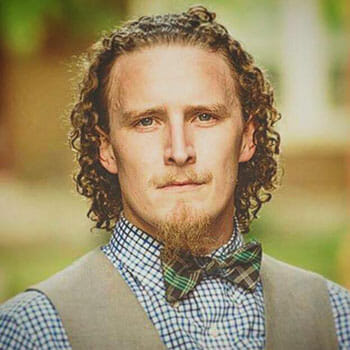
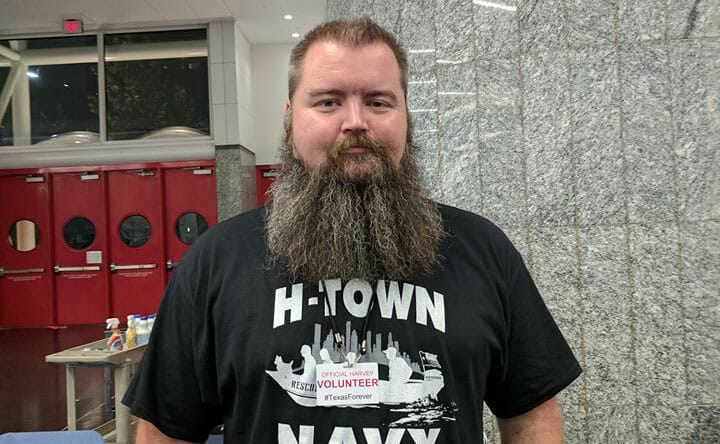
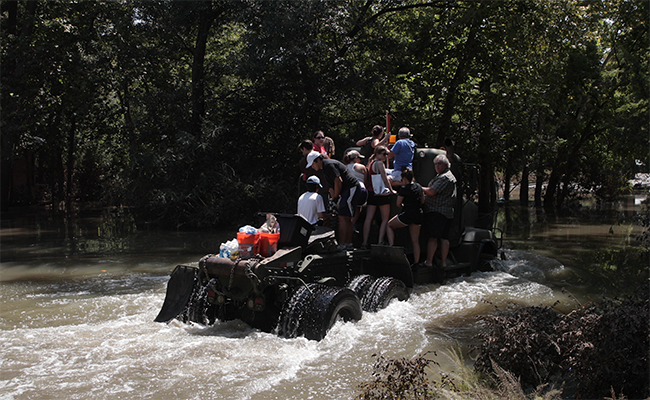
Zachary Dearing (right) organized a team of volunteers to help evacuees, including several with medical conditions, make it through the night at a Hurricane Harvey storm shelter.
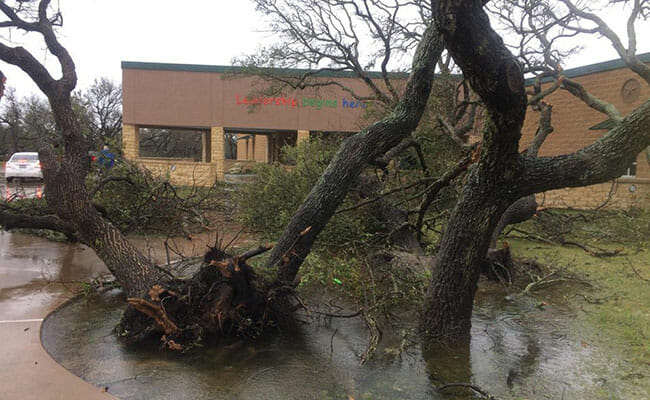
Zachary Dearing was living with his father on a houseboat in Rockport, Texas, when Hurricane Harvey hit. After his father evacuated to Houston, Zachary sought cover at the Live Oaks Learning Center. Upon his arrival at the city-designated shelter, he found that there was no one in charge to help evacuees or even to distribute supplies.
Stepping up to take responsibility, Zachary began directing people in the shelter to go through the classrooms to gather useful supplies such as hand sanitizer, trash cans, and rugs to sleep on. He organized a force of volunteers to help, periodically checking on the people in the shelter, especially those who were frail – including six shelter occupants who required oxygen tanks – and venturing out into the storm to rescue people who had been stranded. With a team of volunteers, Zachary helped more than 200 shelter occupants make it through the night, and worked with local law enforcement agencies to organize evacuation to Austin.
We asked Zachary to tell us more about his experience helping those affected by the storm.
What inspired you to volunteer in response to Hurricane Harvey?
I took action at the Live Oak Learning Center because nothing was being done. The environment inside the school was not a physically or emotionally safe one. I felt that I could change that, or at least try.
Describe your volunteer role at the shelter.
I went to the shelter on Friday to seek refuge with a neighbor of mine. Upon arrival; the power was out, halls were flooded, parts of the ceiling had fallen, toilets were overflowing, and people were roaming dark hallways looking for any dry spot to stay for the night. Of the roughly 90 people in the shelter at that time, roughly 60 percent were elderly and/or wheelchair-bound, six required oxygen and of those, two were hospice patients. I realized that the shelter had no leadership or supplies: we were alone.
I made friends with a few teenagers and saw they were trying to help, but weren’t sure how. I viewed their efforts as an opportunity to organize. Winds were tropical strength but the storm was still hours away. I felt we had to prepare to defend against storm surge, control water leaking from the roof, clean the restrooms, and arrange a plan to evacuate to the roof in need be. None of us had any way to receive storm updates, so I asked, “Who’s ready to work?” All six kids I was speaking with raised their hands. I broke them into teams and we began addressing problems one by one:
- Storm surge. We decided rugs were the best way to plug doors and slow flooding, so I sent one team to count the exterior doors and the rest to raid classrooms for rugs. They dispersed and plugged the doors, and came back with a “what next?” attitude.
- Leaks in the roof. I sent teams to classrooms for find empty containers. They came back with trash cans, buckets, marker containers … everything. We dispersed them to catch water and prevent further flooding.
- An evacuation plan. The latest we’d heard was to expect a 9- to 12-foot storm surge, and we knew the rugs would only buy us so much time. I used the map to find all of the maintenance rooms. We investigated all of them and one of the kids brought to my attention that wind was blowing water out from under one of the doors. This room had a ladder to the roof if we needed to evacuate the school.
- Rounds. With the most pressing concerns taken care of we began making our presence known and made 20-minute rounds with flashlights to offer water and check in with all of the occupants.
- New arrivals. We greeted arrivals throughout the night and helped them unload and park their cars. We familiarized them with the school and helped them find a dry spot to sleep.
- Food and water. Knowing supplies were limited and not knowing how long we’d be in the school, I’d ask new arrivals if they’d pool their supplies with those we’d already collected. Most were more than willing to cooperate.
- Resting, eating and staying dry. As we hit our groove, I allocated shifts for my team to sleep and eat. For those on my team, there was no way around getting wet and cold. People volunteered clothes to us as we’d begin to shiver. An immense act of kindness.
- Supply run and damage assessment. As the sun rose and we saw the devastation, occupants wanted to leave the school to check on their properties. A few members of the team – which had grown overnight – and I took a list of properties to check on. We’d check on our own properties too, and raid them for additional supplies. We gathered supplies and came back with word of the devastation. Delivering news to somebody that they’ve lost everything is something I’d never like to do again so long as I live.
- Busses. As agencies arrived to assess the situation, I was asked what we needed. I said, dry bedding, food, water, sanitary supplies, and a generator. And if we couldn’t get a generator in the next two days, we’d need busses.
- Rescue and relief. Word had gotten out that we needed food, and the prison delivered. As dinner started, I was called outside as eight tour busses, four National Guard Humvees, the Texas Emergency Medical Task Force, and a convoy of Texas State Troopers arrived. Lt. Edward Groves marched out of the lead vehicle, shook my hand and said, “Mr. Dearing, your work is done, sir. Thank you.” A lieutenant from the National Guard embraced me, and we cried together. I stepped out of the sight, and broke down with tears of relief. Another round of busses came later and, when it was all said and done, we’d evacuated approximately 200+ residents to Austin.
What has been the most rewarding part of the experience so far?
The most rewarding part of my experience has been hearing back from those my team and I helped. Knowing we could be there and provide aid and comfort during their time of need, and feeling that appreciation, is reward enough.
What have you learned through your experiences as a volunteer?
I’ve learned or confirmed a lot about myself, but more importantly, I’ve learned that within people there exists inherent goodness. When times are at their most dire that goodness shows up. Kind hearts come in many forms.
Why do you think it’s important for others to get involved and make a difference in their community?
If you are capable, it is always right to DO right by the members of your community. Circumstances arrive, and often during the most inconvenient of times, where those who cannot help themselves require help from those who are in a better position (physically, emotionally, financially) to do so. Always lend a helping hand if you are in the “better” position. As a people, we endure this rugged world together and we do it as friends, family, neighbors – Americans. Do right and pass zero judgement.
Are there any future partnerships, programs, or events that you are excited about?
I’ve discovered a lot about myself and about the personal gratification I feel from serving others; I’d like to pursue public office.
What do you want people to learn from your story?
If nothing else, I’d like people to read our story and understand that:
Firstly, people ARE inherently good, even if those stripes appear only during the most dire of times (what time is better?).
Secondly, kind and compassionate hearts come in a wide variety of packages. One of my teammates, actually one who inspired me greatly to take action, was Mashon Hunt, a 17-year-old mother to a 7-month-old child. She kept a smile on her face throughout our experience and maintained an admirable level of charisma and devotion to duty; I tried to adjust my mindset and that of my team to match hers. You never know where “heroes” will rise …
Zachary Dearing will be recognized at the “Deep From the Heart: The One America Appeal” benefit concert on Oct. 21, 2017, at Reed Arena on the Texas A&M University campus. He will receive his Daily Point of Light Award from Points of Light Chairman Neil Bush, and will be recognized on stage with the five living former presidents, Barack Obama, George W. Bush, Bill Clinton, George H.W. Bush and Jimmy Carter. The presidents launched the One America Appeal on Sept. 7, 2017, to raise funds for Hurricane Harvey relief, and subsequently expanded the initiative to include the regions affected by Hurricanes Irma and Maria. Funds raised will be distributed to Houston Harvey Relief Fund, focusing on the greater Houston region; Rebuild Texas Fund, which distributes funds throughout the state; Florida Disaster Fund; Juntos y Unidos Por Puerto Rico, launched by the territory’s First Lady Beatriz Rossello and a private sector coalition; and The Fund for the Virgin Islands.
After Hurricane Harvey, Houston Wedding Planner Coordinates Recovery Effort Powered by Volunteers
As Texas, Florida and Puerto Rico face the aftermath of Hurricanes Harvey, Irma and Maria, Points of Light is honoring everyday citizens who stepped up to serve their communities during the immediate response and to embark on the long road to recovery. Meet Daily Point of Light Award honoree Kat Creech, and nominate an outstanding volunteer you know as a point of light.
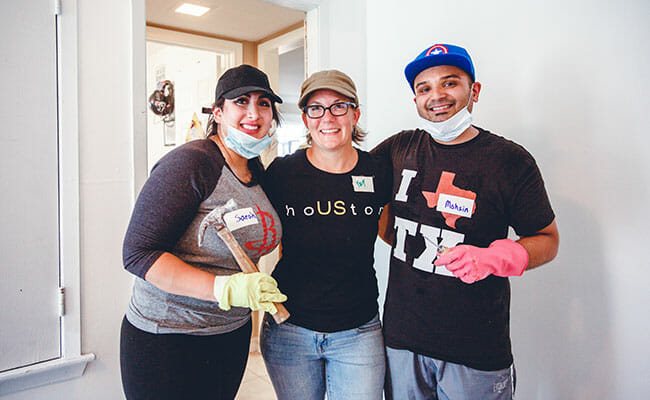
Wedding planner Kat Creech was watching the development to Hurricane Harvey closely, worried about an upcoming wedding scheduled for Labor Day weekend. With doubts about the weather, Kat and the couple, Sarah Samad and Mohsin Karedia, decided to postpone – knowing that they wouldn’t truly enjoy their wedding while so many people were suffering through the impact of the storm. And at Kat’s suggestion, Sarah and Mohsin invited members of their wedding party, family and friends to instead come together to volunteer in support of families impacted by the flood.
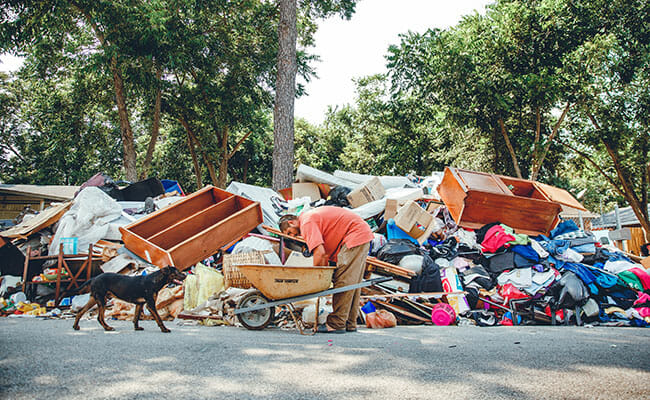
Kat quickly shifted her focus from planning weddings to coordinating relief efforts, and Recovery Houston was born. What started as a Facebook group grew into a movement, with hundreds of volunteers. In just one week, an estimated 600 volunteers helped clear more than 120 homes. The group has now blossomed into a nonprofit organization; they’ve cleared more than 200 homes and are preparing to start the recovery and rebuilding process.
We spoke with Kat to learn more about her efforts to help people affected by the storm.
What inspired you to start Recovery Houston?
On Monday, Aug. 28, I texted Sarah and Mohsin regarding their wedding scheduled over Labor Day weekend. For more than a year we have designed and planned a 500-person wedding celebration. The unimaginable rainfall and the dam release left the city under siege, with freeways literally looking like rivers. I was not feeling comfortable that their wedding would be able to be executed. All airports and major interstates were shut down and it was pretty certain that supplies and flowers would not be delivered. However, I did not even have to express any logistical concerns to Sarah and Mohsin. Their returned text was simple. “There is absolutely no way that we could possibly start our marriage in a time of crisis and tragedy. We would like to postpone and lift humanity instead.” I was really taken back. It was such selfless act.
As this gestured settled in, I pitched the idea of doing some recovery work over what was supposed to be their wedding weekend. They loved the idea and thought that 50-75 of their friends and family would join in these efforts. As a planner, I moved into logistics of how to organize a large group, where do we go, supplies, safety, and how to muck.
While sleuthing I found two people, Kim and Jason, who were separately posting their numbers on Facebook looking for volunteers to help in the recovery effort. I let them know that my clients and their friends wanted to participate in the cleanup effort. They were on day two of mucking houses. They had hearts and hands, but not enough supplies and the list of houses was overwhelming. It was at that moment that the effort to find a place for my client to help ignited an idea and Recovery Houston was founded. Recovery Houston is a volunteer grassroots movement providing relief and assistance to homeowners affected during a crisis. We connect eager volunteers ready to lend a helping hand with house clean-up and mucking.
On Sept. 1, we cleared out six houses while setting up a command center and beginning to put systems in place. The Facebook group quickly grew to 1,000 followers. Over the Labor Day weekend we cleared 94 homes. The volunteers, the donations, and the financial support was extraordinary. The Facebook group has grown to more than 4,500 followers, with continued to grow by the minute. We have assembled a tremendous volunteer group and have already demo’ed, mucked, and cleaned more than 200 homes throughout the Greater Houston Area, with the goal of continuing our efforts well after Hurricane Harvey relief efforts conclude.
One selfless idea, ignited a movement, which has led to an unrelenting desire to continue to lift up humanity. Recovery Houston is an entity which will stick around, drafting a blueprint for how the great people of our city can react better next time, as well as helping to implement similar recovery efforts in other cities and states. We are currently attaining our 501(c)3 status and excited about to lift humanity.
What has been the most rewarding part of the experience so far?
Every day we try to find someone’s normal. Normality has a different face, but to offer hope and a step in the direction to rebuild is why we show up every day. Every day, for six weeks, we have been a hero for someone. Helping one person might not change the world, but it could change the world for one person.
What have you learned through your experiences as a volunteer?
People are resilient and humanity is amazing. Hearts and love are stronger than any hate out there.
Why do you think it’s important for others to get involved and make a difference in their community?
People helping people made all the difference. Humanity stepped up and saved so many. Without them, so much more would be lost. From the boat rescues to the shelters to the recovery, the unrelenting commitment to help each other was the game changer.
Are there any future partnerships, programs, or events that you are excited about?
Recovery Houston is now an official nonprofit organization and we are attaining a 501(c)3 status. We are ready to get back into the homes we have recovered and help them rebuild. So many do not have the means to rebuild. We also want to be a blueprint for the city, and other cities and states. We are looking at how to reach larger dollars to fund this initiative.
What do you want people to learn from your story?
You can move mountains and really make a difference in someone’s life. Volunteers want directions with organizational skills and do not want to be bogged down with red tape. I might have had an idea, but it is the volunteers that truly lift up an organization. I am truly grateful for each and every one of them who continued to give their hearts and hands. What we have learned is that we have solid systems in place for the front end of recovery with first responders and shelters, while we have rebuilding initiatives on the back end. Recovery initiatives are flawed and we can do better.
How can people support Recovery Houston moving forward?
Come volunteer! We welcome volunteers from Houston or anywhere, especially groups. We are also working on obtaining an official 501(c)3 status, but we are accepting monetary donations at Gofundme.com/recovery-houston.
Kat Creech will be recognized at the “Deep From the Heart: The One America Appeal” benefit concert on Oct. 21, 2017, at Reed Arena on the Texas A&M University campus. She will receive her Daily Point of Light Award from Points of Light Chairman Neil Bush, and will be recognized on stage with the five living former presidents, Barack Obama, George W. Bush, Bill Clinton, George H.W. Bush and Jimmy Carter. The presidents launched the One America Appeal on Sept. 7, 2017, to raise funds for Hurricane Harvey relief, and subsequently expanded the initiative to include the regions affected by Hurricanes Irma and Maria. Funds raised will be distributed to Houston Harvey Relief Fund, focusing on the greater Houston region; Rebuild Texas Fund, which distributes funds throughout the state; Florida Disaster Fund; Juntos y Unidos Por Puerto Rico, launched by the territory’s First Lady Beatriz Rossello and a private sector coalition; and The Fund for the Virgin Islands.
Veteran Leads Platoon of Volunteers in Hurricane Irma Prep and Recovery Work
As Texas, Florida and Puerto Rico face the aftermath of Hurricanes Harvey, Irma and Maria, Points of Light is honoring everyday citizens who stepped up to serve their communities during the immediate response and to embark on the long road to recovery. Meet Daily Point of Light Award honoree Derek Auguste, and nominate an outstanding volunteer you know as a point of light.
After leaving the U.S. Army in 2015, Derek Auguste struggled to find purpose outside of the military – but he found his place when he heard about The Mission Continues, a nonprofit that empowers veterans by engaging them in service to the community. Through the organization’s fellowship program, Derek volunteered for six months at Up2Us Sports, where Derek recruited and mentored veteran coaches to give underprivileged youth the opportunity to develop positive relationships with adults. At the conclusion of his fellowship, he was hired full-time by Up2Us.
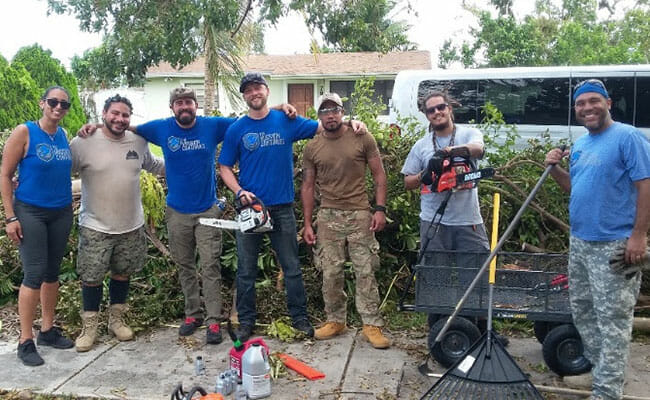
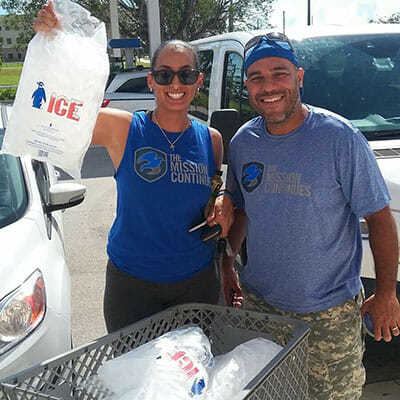
Derek has continued to deepen his commitment to service through The Mission Continues, becoming a volunteer platoon leader for the Miami 1st Service Platoon. As Hurricane Irma moved towards Miami, Derek didn’t hesitate to mobilize his platoon to help residents prepare. The homes of elderly and disabled residents were prioritized, including WWII and Vietnam veterans. As the storm passed, Derek recruited volunteers to begin clearing debris. Under Derek’s leadership, the Miami Service Platoon has made an incredible impact on the community:
- 30 homes were prepared with hurricane shutters and plywood.
- 200 pounds of ice was distributed to a migrant farm worker community in Homestead, Florida.
- More than $35,000 of tree cutting, house mucking and debris removal was provided at no charge by volunteers across Miami Dade county and Key West, including assistance for nonprofit agencies who work with disadvantaged youth and special needs students.
- 700+ hours of volunteer service hours performed.
And, in addition to helping their own community, Derek and his team have stepped up to assist in the aftermath of Hurricane Maria, supporting donation drives to benefit residents of storm-torn Puerto Rico.
We spoke with Derek to learn more about his efforts to help those affected by the recent storms.
What inspired you to volunteer in response to Hurricane Irma and Maria?
In 1992, I was in Miami during Hurricane Andrew and witnessed the devastation caused by a powerful storm. As a child, my parents thought I would be safer leaving Miami and attending school out of state. The sense of leaving my parents and friends behind left me incomplete. I wanted to do more to help. As an adult I believe it is my responsibility to do all that I can for those who might not have the ability to. There was never a question in my mind that I was going to help people in any way I could prior to the hurricanes, and assessing my ability to contribute after the hurricanes.
Describe your volunteer role before and after the hurricanes.
Before the hurricane I was traveling to different homes in Miami to help put up shutters, clean out patios to minimize the threat of flying debris, and moving supplies between teams that were working on homes. We helped 30 homes prepare for the storm. These were individuals who, if we didn’t step in to help, there would have been no one else there.
What has been the most rewarding part of the experience so far?
Feeling a sense of accomplishment. After separating from the military in 2015, I have missed the excitement of working as a team towards a common goal and the feeling that I might have saved a life by my actions. Working with the team as I did gave me a great sense of rejuvenation, camaraderie, and mission accomplishment.
What have you learned through your experiences as a volunteer?
Even the smallest gestures can have a monumental impact. Get out and do what you can, regardless of how small it may seem to be. The act of getting out and helping in any form is a contribution.
Why do you think it’s important for others to get involved and make a difference in their community?
So much can be done when people get in their minds that something needs to be done. Don’t wait for someone else to do it. Some of the veterans that I worked with during this time told me how great they felt, how they didn’t think about how bad they have it but instead focused their energy on helping someone else – it really put things into perspective for their own lives and for what they might be dealing with.
Are there any future partnerships, programs, or events that you are excited about?
We are planning a trip to the Florida Keys to work on clean-up efforts. While most of the debris has been cleared away, the amount of trash that is left behind is posing a threat to the environment. I’m looking forward to doing my part to protect the coast line and encourage visitors to come back and enjoy what the Florida Keys have to offer.
What do you want people to learn from your story?
There are no small contributions. Every contribution is important, do what you can with what you can. There is great healing through helping others. While on the outside it appears that I was helping my neighbors, on the inside they were helping me have a sense of purpose and feel like I was accomplished and a contribution.
Derek Auguste will be recognized at the “Deep From the Heart: The One America Appeal” benefit concert on Oct. 21, 2017, at Reed Arena on the Texas A&M University campus. He will receive his Daily Point of Light Award from Points of Light Chairman Neil Bush, and will be recognized on stage with the five living former presidents, Barack Obama, George W. Bush, Bill Clinton, George H.W. Bush and Jimmy Carter. The presidents launched the One America Appeal on Sept. 7, 2017, to raise funds for Hurricane Harvey relief, and subsequently expanded the initiative to include the regions affected by Hurricanes Irma and Maria. Funds raised will be distributed to Houston Harvey Relief Fund, focusing on the greater Houston region; Rebuild Texas Fund, which distributes funds throughout the state; Florida Disaster Fund; Juntos y Unidos Por Puerto Rico, launched by the territory’s First Lady Beatriz Rossello and a private sector coalition; and The Fund for the Virgin Islands.
Learn more about The Mission Continues or sign up for a service platoon.
South Florida Resident Uses Tech Skills to Support Harvey, Irma Relief Efforts
As Texas, Florida and Puerto Rico face the aftermath of Hurricanes Harvey, Irma and Maria, Points of Light is honoring everyday citizens who stepped up to serve their communities during the immediate response and to embark on the long road to recovery. Meet Daily Point of Light Award honoree Leah Halbina, and nominate an outstanding volunteer you know as a point of light.
After Hurricane Harvey hit Texas, Leah Halbina reached out to friends in the Houston area to see how she could help. She found out about Sketch City, an open, nonprofit community of technology advocates and civic hackers that used technology to organize rescue efforts, help victims locate their nearest shelter and satisfy other pressing needs.
She jumped in to help Sketch City’s initiative harveyneeds.org by calling shelters and asking about their capacity. Shortly after, Leah had to use the technology in her home state of Florida as Hurricane Irma approached and made landfall. Leah and other volunteers created irmaresponse.org, a website providing victims with information on shelter locations and capacity, and providing donors with information on the needs of each shelter. Chatbots (via text and Facebook messenger) were used to help evacuees locate shelters, and were equipped to speak both English and Spanish, while the website was offered in English, Spanish and Creole to accommodate as many residents as possible.
Not only did Leah help many victims in the wake of both Harvey and Irma, she’s now part of a grassroots technology disaster response network that includes people from different tech communities in cities across the United States who were involved with rescue, relief and recovery efforts for Sandy, Harvey, Irma and Maria. The group is focused on making sure the critical tools built in response to these storms continue to be improved and leveraged.
We spoke with Leah to learn more about her efforts to help people affected by the storm.
What inspired you to volunteer in response to Hurricane Harvey and Irma?
What initially inspired me was Sketch City’s “Harvey Needs” initiative and the entire team working on those tools for victims of Hurricane Harvey. It was amazingly overwhelming to see people jump in with one simple question: “How can I help?” It was so obvious there was a single, common goal of helping people who need it.
After Harvey hit Houston, I reached out to a few friends who live in Houston and asked the best organizations to donate to. At that point, I didn’t know how else to help and at least wanted to make sure it would go directly to people who needed it. One friend who shared JJ Watt’s Houston Flood Relief Fund and the Texas Diaper Bank also shared a post from Swamplot about what Sketch City was working on. I jumped into the conversation and found myself helping to set up and manage the HarveyNeeds.org social media presence.
Before Irma was a “thing,” there was already some talk about how we could expand Sketch City’s work to other cities for faster rollout when disaster strikes. Being that I live in South Florida, I thought it was a no-brainer to leverage the work from Harvey Needs.
Sketch City helped me reach out to local Code for America Brigades, and that’s how Irma Response was formed. From there, people started pouring in to help.
What inspired me to keep it going was witnessing the time, effort and passion put into Harvey Needs by everyone involved. I felt some sort of responsibility for making sure it would go on to help others.
Describe your volunteer role during Hurricane Irma.
For Irma Response, I took on a lot of the same responsibilities as Harvey Needs: Setting up our Facebook page, Twitter handle, website, and helping route new volunteers to help them find their place and a project they wanted to contribute to. With a lot of help from others in the group, I also managed our social media to spread the word about the available tools and resources.
What has been the most rewarding part of the experience so far?
It’s everything as a whole that has made it such a humbling experience.
Overall, the opportunity to witness a group of people from all over working toward a common goal was amazing. It’s hard to explain unless you’re in it but watching people jump into the Slack channel and get started wherever they thought they could help was awesome.
The most rewarding part is the opportunity to be part of something bigger than yourself. It really puts everything into perspective. We probably won’t ever meet the people this technology helped and none of us expect anything in return. Being part of something that helps people during a time of unimaginable stress, destruction and devastation, and having the support to keep it going makes it all worth it.
The sites irmaresponse.org and harveyheeds.org were the result of a collective effort by volunteers. Are there other people you would like to recognize for their efforts?
Irma Core TeamSketch City Houston; Willow Brugh – involved with Occupy Sandy, Harvey Needs, Irma Response (and more!); Rob Underwood – involved with New York Tech Responds after Sandy; Code for America Brigades – HQ, Miami, Fort Lauderdale, Tampa, Orlando, Atlanta, Oklahoma, Tallahassee, San Jose, Greensboro and Washington, D.C.; Data for Democracy; Code for Democracy; Civic Data Alliance (Louisville, Kentucky); CrowdSource Rescue; and Open Austin.
What have you learned through your experiences as a volunteer?
At a time when it feels like people are constantly at each other’s throats for one reason or another, it was nice to be reminded that there’s still a lot of good out there. And a lot of people who want to do good. I wish it was under different circumstances, but it was a nice reminder.
I especially learned a lot about how the tech community plays an important role in these situations. To help New York and New Jersey recover from Hurricane Sandy, New York Tech Responds and Occupy Sandy developed apps and tools. Sketch City did the same thing for Hurricane Harvey. We expanded it to Florida as Irma Response. And now we’re seeing similar efforts in Puerto Rico after Maria. Each initiative leveraging and learning from the previous one with the unique ability to move and work at the pace required. Every disaster represents unique sets of problems, in different combinations. We can’t in perfect precision determine the specific challenges, but having this infrastructure that’s now been proved in three different disasters is certainly a step in the right direction.
Why do you think it’s important for others to get involved and make a difference in their community?
Someone who also worked on Harvey Needs, and then Irma Response, shared this quote with me and I think it’s perfect:
“Never doubt that a small group of thoughtful, committed citizens can change the world; indeed, it’s the only thing that ever has.” – Margaret Mead
I also think it’s important to put yourself in someone else’s shoes. That’s what I did for Harvey.
Are there any future partnerships, programs, or events that you are excited about?
Groups involved in Harvey Needs and Irma Response have formed a grassroots technology disaster relief network whose mission will be to strengthen this infrastructure so other cities can benefit from it.
There are also plans for collaboration with local officials to understand how we can better support them moving forward.
What do you want people to learn from your story?
Never underestimate the difference you can make. When it’s something you’re truly passionate about and you’re working with such a collaborative, supporting team it can make all the difference in the world.
I was so inspired by Sketch City’s work and I just hope at least one person felt the same way working with Irma Response. In each of these disasters, the civic tech community built critical tools. We’ve seen firsthand that this works and makes a huge difference.
How can people get involved in supporting efforts like irmaresponse.org in the future?
Get involved with your local tech brigade/community:
Leah Halbina will be recognized at the “Deep From the Heart: The One America Appeal” benefit concert on Oct. 21, 2017, at Reed Arena on the Texas A&M University campus. She will receive her Daily Point of Light Award from Points of Light Chairman Neil Bush, and will be recognized on stage with the five living former presidents, Barack Obama, George W. Bush, Bill Clinton, George H.W. Bush and Jimmy Carter. The presidents launched the One America Appeal on Sept. 7, 2017, to raise funds for Hurricane Harvey relief, and subsequently expanded the initiative to include the regions affected by Hurricanes Irma and Maria. Funds raised will be distributed to Houston Harvey Relief Fund, focusing on the greater Houston region; Rebuild Texas Fund, which distributes funds throughout the state; Florida Disaster Fund; Juntos y Unidos Por Puerto Rico, launched by the territory’s First Lady Beatriz Rossello and a private sector coalition; and The Fund for the Virgin Islands.
Ismaili Muslim Leader Gathers 2,500 Volunteers for Hurricane Harvey Response
As Texas, Florida and Puerto Rico face the aftermath of Hurricanes Harvey, Irma and Maria, Points of Light is honoring everyday citizens who stepped up to serve their communities during the immediate response and to embark on the long road to recovery. Meet Daily Point of Light Award honoree Murad Ajani, and nominate an outstanding volunteer you know as a point of light.
As devastating as Hurricane Harvey has been, it continues to bring people together around one common goal: help Houston. When Murad Ajani saw the toll Harvey took on his hometown, he seized the moment to bring together a community of more than 2,500 volunteers to help with recovery efforts.
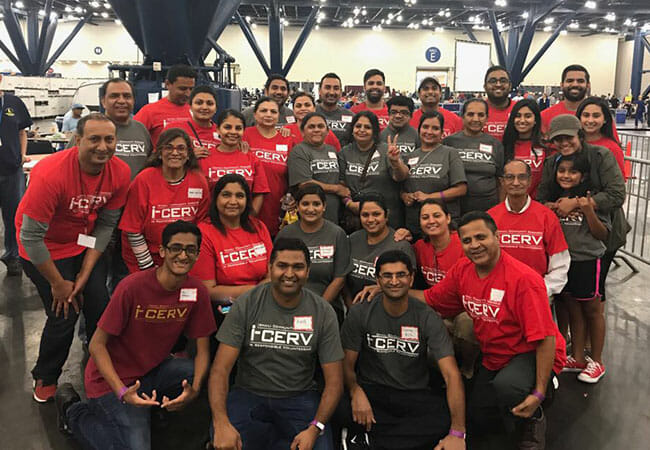
“Volunteering really is a central component of the Ismaili Muslim community’s ethos,” says Murad, who serves as volunteer president of the Ismaili Council for the Southwestern United States. “We have an organized group under the Ismail Council, called i-CERV, that organizes service projects year round. For us, this was not a one-off activity. We wanted to help in larger numbers due to the gravity of the situation.”
Murad was inspired by His Highness the Aga Khan, the Imam, or spiritual leader, of the worldwide Ismaili Muslim community, to mobilize a large and diverse group of volunteers to help those affected by the storm. Collectively, these volunteers have put in more than 13,000 hours of work during both the evacuation and early recovery phases of Hurricane Harvey.
During the evacuation, the group used the Ismaili Jamatkhana and Center to coordinate rescue efforts, and as a staging location for displaced families while waiting for safe housing. They worked throughout the night and slept at the center to ensure the safety of more than 150 evacuees whose had been damaged by the storm.
“Like most Houstonians, we began with volunteers from the Ismaili Council simply wanting to make sure their neighbors were safe and provided for,” Murad said. “Since we don’t have direct experience with disaster relief, we partnered with our affiliated organization, Focus Humanitarian Assistance, on rescue activities, and with other key partners on the recovery efforts. We were working each step in tandem with volunteers and service organizations from around the city. That’s part of what made it all so special.”
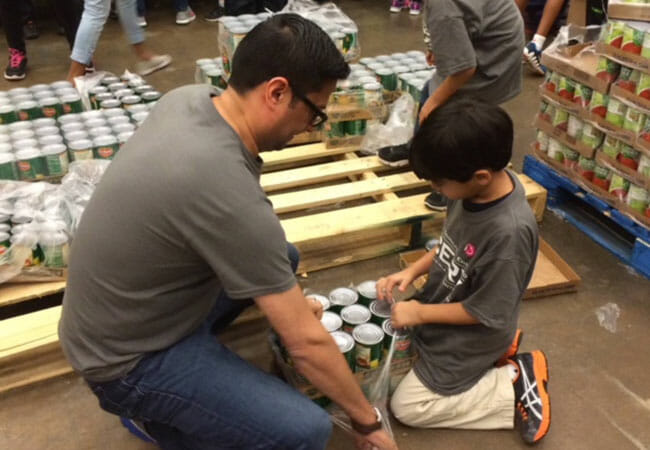
Along with evacuation efforts, Murad and his team have gone above and beyond to help with recovery projects in Houston. Volunteers were deployed to locations all over the area including the Houston Food Bank, the George R. Brown Convention Center shelter, the NRG Center shelter, St. Theresa Catholic Church, St. Laurence Catholic Church and the Southeast Food Bank. At these locations, volunteers packed and served meals, collected and delivered supplies, and helped with general clean-up efforts.
Groups of volunteers were also sent out to restore homes affected by floodwaters, pack lunches for Meals on Wheels, deliver groceries and meals to people in low-income multi-family housing, and assist in moving senior citizens out of uninhabitable nursing homes.
What led to so many volunteers deploying to perform thousands of hours of service was two-fold, said Murad.
“First, Houston is full of citizens who want to and are proud to help one another; second, service is contagious!” he said. “As the recovery phase of our activities gained momentum, we found that the more volunteers we deployed each day, the more volunteers we were able to deploy the next day. Volunteers were coming back to serve the next day, and bringing friends and family with them.”
The volunteers from the Ismaili Muslim community organized the “Share Your Blessings” supply and food drive at the Ismaili Jamatkhana and Center – filling four trucks with items that were later donated to churches and community centers in the Houston area. In addition to the drive, they also delivered milk and water door-to-door in the areas most devastated by Harvey.
Murad’s efforts show that when people are in need, there are always people out there willing to help.
“Volunteerism and service are nourishment for the soul,” Murad said. “The moment we engage in volunteerism, we immediately benefit from that service. My faith as an Ismaili Muslim teaches me that not only is it my responsibility to serve humanity and care for those in need, but that it is a blessing from God to have the opportunity to do so. And in America, volunteer opportunities are available to all of us, and we should all be looking for more ways to give of whatever time we can to benefit and enrich the community around us.”
Murad Ajani will be recognized at the “Deep From the Heart: The One America Appeal” benefit concert on Oct. 21, 2017, at Reed Arena on the Texas A&M University campus. He will receive his Daily Point of Light Award from Points of Light Chairman Neil Bush, and will be recognized on stage with the five living former presidents, Barack Obama, George W. Bush, Bill Clinton, George H.W. Bush and Jimmy Carter. The presidents launched the One America Appeal on Sept. 7, 2017, to raise funds for Hurricane Harvey relief, and subsequently expanded the initiative to include the regions affected by Hurricanes Irma and Maria. Funds raised will be distributed to Houston Harvey Relief Fund, focusing on the greater Houston region; Rebuild Texas Fund, which distributes funds throughout the state; Florida Disaster Fund; Juntos y Unidos Por Puerto Rico, launched by the territory’s First Lady Beatriz Rossello and a private sector coalition; and The Fund for the Virgin Islands.
Actress Advocates for Diabetes Awareness, Health Care and Research
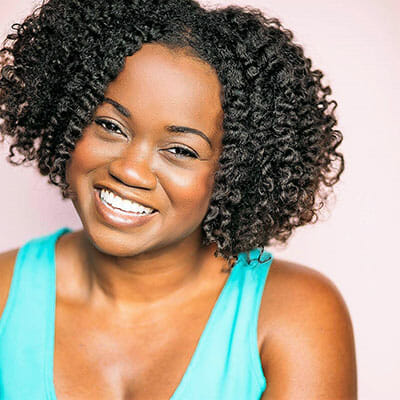
At age 12, she was the voice of Nala in Disney’s “The Lion King” movie. Since then, she has appeared in TV shows, off-Broadway plays, and commercials. But Niketa Calame-Harris found that developing a chronic illness – in her case, Type 1 diabetes – came without a script.
“When I was diagnosed with diabetes at age 19, all I knew about diabetes was from ‘Steel Magnolias,’ where Julia Roberts was dying because she had a baby and she was Type 1,” said Niketa.
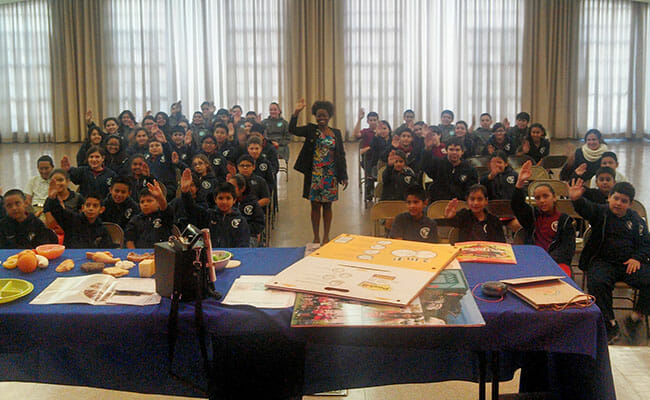
Today, Niketa lends her voice to improving education and advocacy for people with diabetes. As a spokeswoman for the American Diabetes Association’s Los Angeles-area chapter, she talks to schools, senior communities, and other groups to explain how to spot symptoms, “easy do’s and don’ts” to follow if diagnosed, and healthy meal plans.
Niketa has also helped lobby lawmakers for better access to health care and increased funding for diabetes research, as part of the American Diabetes Association’s bi-annual Call to Congress advocacy event in Washington, D.C.
“In particular, we’re concerned that people with pre-existing conditions [don’t get] left high and dry,” said Niketa. “For a business person, it’s just a matter of numbers, but for a person with pre-existing conditions, it’s a matter of life and death.”
In her speaking appearances, Niketa explains the difference between Type 1 diabetes and Type 2 diabetes. She also advocates for support of what she calls “Type 3 individuals,” that is, “the type that looks after loved ones with Type 1 or 2,” such as her husband, Donovan Harris, whom she describes as “super supportive.”
“Niketa is a great speaker, but she does grunt work as well,” said Valerie Loduem, former director of community engagement for the Los Angeles chapter of the American Diabetes Association. “She’s an actress. She’s a singer. She’s a remarkable speaker. But at the same time, she doesn’t come with the stereotypical prima donna attitude. She can get down and dirty – lifting boxes, putting up signs.”
Niketa even developed a theme song for the association’s annual fundraising walk, but Valerie said the actress/singer didn’t do it for self-promotion. “Unless I told somebody what she did, that was the only way they would know.”
Niketa has always enjoyed volunteering, starting with church activities as a child, then participating in the Top Teens of America community service organization. “My mom’s a teacher and the whole idea of volunteering and sharing or helping is part of our family,” she said.
Anyone can help further the cause of diabetic research and treatment, Niketa added. “Anybody can go to our website and search for local offices and volunteer opportunities,” she said. “There are walks and 5K events if you’re an active person. When you sign up on the website, you’ll get emails about what’s going on in Congress and alerts to send out emails or post on social media. Sometimes, it’s not even getting out of your house – it’s just reading your email and sending it to your network. Even that kind of things helps.”
Habitat for Humanity Volunteers Come Together to Repair Homes, Build Community Spirit
Habitat for Humanity of Dutchess County is today’s Daily Point of Light Award honoree, and one of the winners of the 2016 Make A Difference Day Awards. Each year, TEGNA recognizes 14 outstanding leaders of Make A Difference Day projects, awarding $140,000 in grants that are donated to the charities related to the winning projects. Learn more about Make A Difference Day and register a 2017 project at www.makeadifferenceday.com.
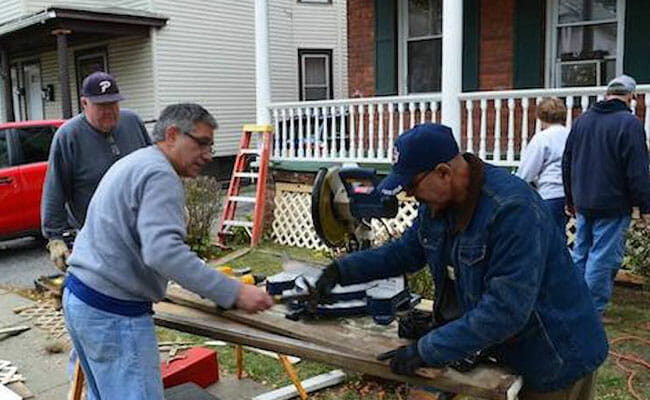
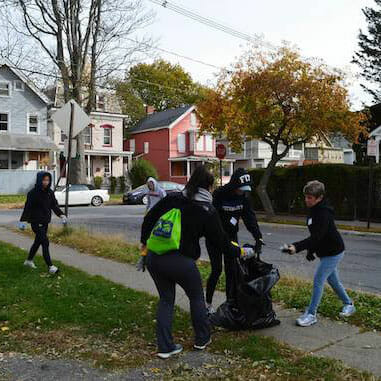
Volunteers with Habitat for Humanity are driven by the belief that everyone deserves – and needs – a decent, affordable place to live. On Make A Difference Day 2016, the Dutchess County Habitat for Humanity team partnered with Thrivent Financial to recruit 160 community volunteers who tackled 20 much-needed home repair projects in neighborhoods in need. Despite the cold and rainy weather, volunteers worked on tasks ranging from simple yard cleanup and fence and porch repair, to rebuilding the entire front porch and stairs of one home. “The tangible differences in the neighborhoods are extraordinary,” said longtime Habitat volunteer Barb Adams. Afterwards, neighbors and volunteers joined together for a community lunch donated by local restaurants.
Habitat for Humanity of Dutchess County was awarded a $10,000 grant for its community-building effort on Make A Difference Day – a little extra money to do a lot more good in their efforts to eliminate substandard housing in their communities. We asked Maureen Lashlee, executive director of Habitat for Humanity of Dutchess County, to tell us more about the organization’s history with Make A Difference Day, and how their important work is continuing today.
What was the inspiration behind your Make A Difference Day 2016 project?
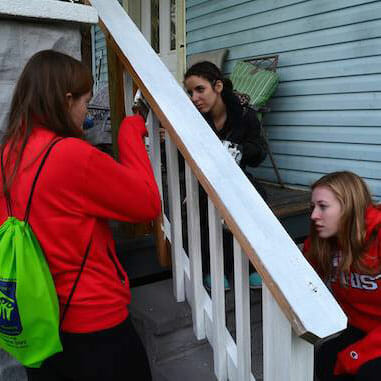
As you know, Habitat for Humanity’s mission is to partner with the community to build or improve a place that families can call home. Thrivent Financial offered Habitat for Humanity of Dutchess County a grant partnership to assist low- to moderate-income homeowners make health and safety repairs to their homes. At the same time, Habitat for Humanity took on a model of community improvement called Neighborhood Revitalization, or NRI. We were building new homes and gut rehabbing others, but these new homeowners were sprinkled throughout a fragile neighborhood. Seniors who were holding onto their homes by a thread, and low- to moderate-income homeowners who, through reduced wages and increased taxes, were having difficulty making even the smallest of repairs, were beginning to live in substandard conditions. Through conversations with neighbors, it became apparent that a repair program that was affordable and could help build community was critically needed. We met with the community at a Thrivent-hosted event and asked them what they needed and wanted. That became our first Make A Difference Day.
Make A Difference Day 2016 was, as some like to call it, “MDDAY on vitamins.” As a result of the work done previously, another struggling community asked for our help – we added the Village of Wappingers Falls to our program. Using the same method, we met with the community and are in the process of surveying the entire village to determine what they need in order to live in safe affordable housing. The village is our newest NRI and we will begin home building in the near future. Our work will help identify Zombie properties and assist longtime resident with both home ownership and housing assistance.
Tell us a little more about what your volunteers did that day.
Led by an incredible volunteer, Barb Adams, and her team leaders, our volunteers and homeowners came together in two locations to create a community spirit of generosity and to better understand each other. Our first activity was to introduce everyone and to introduce the partners that made the day possible. At the close of breakfast, each team of volunteers was sent to their respective home. Volunteers had previously set each home up with the materials needed to complete the project in one day. The homeowners participated in the repair work to the best of their ability and prepared a dish to share at our luncheons, at First Lutheran Church in Poughkeepsie and First Presbyterian in Wappingers Falls.
Repairs included painting ramps, porches, yard work, addressing safety issues, and more. Perhaps most the important opportunity of the day was the relationships begun with people who may never have met under any other circumstances.
What was the most rewarding part of the experience? A favorite memory?
As you can imagine, the gratitude of the families is heartwarming. But aside from that, seeing a hundred or more people gathered together giving of their time and talent is overwhelming. The shared luncheon is beyond my capacity to explain. Watching families break bread with volunteers, and listening to the conversations honestly brings tears of joy to my eyes.
Over the years, friendships have been forged and sometimes the current Make A Difference Day is the first time volunteers see each other since the previous year. It’s heartwarming to hear them pick up where they left off. Because this is a multi-year program, I am most touched by the families that were helped in previous years now coming on board as volunteers.
Why do you think it’s important for others to get involved and make a difference in their community?
We at Habitat firmly believe that there is enough in our communities that everyone can live in a safe and decent home surrounded by a secure community. Living generously will make this possible. Working side by side, the Habitat for Humanity model breaks down communication barriers and promotes self-reliance. We are strong, determined and confident. We are not afraid to dig in and get dirty, and we know that in doing so we not only lift others up but we improve our own lives. We could offer a class on the benefits of volunteering, but it’s important to recognize and acknowledge the recipients’ willingness to accept help. In particular, Habitat assists with home repairs. The home probably represents the single largest asset of the family, and they trust us to get the job done. We have to honor that trust.
As a 2016 Make A Difference Day Award Winner, you were awarded a $10,000 grant for this effort. What will that money go toward?
The award was used as part of the construction budget of a new Habitat for Humanity home that we are building in the 2016 Make A Difference Day Community, scheduled for dedication in the spring of 2018.
What do you want people to learn from your story?
Families who partner with Habitat for Humanity are extremely grateful for your help. A decent home gives them the strength, stability and independence they need to create a better life for themselves, which in turn will make them stronger community members. When families are stronger, we are all stronger. And probably something we all know, but may forget at times – action speaks louder than words. Just roll up your sleeves and do it.
Volunteers across the nation will come together again on Saturday, Oct. 28, to improve their communities for Make A Difference Day. Project organizers are encouraged to register at www.makeadifferenceday.com to be eligible to win a $10,000 grant to donate to a charity related to their Make A Difference Day project.
Houston Resident Uses Volunteer Coordination Experience, Tech Skills to Help After Hurricane Harvey
When Ronnie Devries realized how many Houston residents were in need following the devastation of Hurricane Harvey, he knew he could help. With experience as the volunteer coordinator for TXRX Labs, a local nonprofit “hackerspace,” Ronnie helped create a makeshift command center at Houston’s George R. Brown Convention Center – which quickly became a shelter for thousands of residents displaced by the storm. Working overnight, he helped set up a system for volunteer coordination to ensure volunteers were matched with all aspects of shelter operations.
Ronnie also developed a hurricane relief curriculum, offering seminars and resources to help guide victims and volunteers through the process of disaster recovery. The curriculum covers everything from sheltering in place to flood damage and home repair, with resources available in English, Spanish and Vietnamese to reach as much of the Houston population as possible.
We spoke with Ronnie to learn more about his experience as a Harvey volunteer and his efforts to help people affected by the storm.
What inspired you to volunteer in response to Hurricane Harvey?
Honestly, I knew there was work to be done and that I could help. I think we have an obligation to help each other when we can!
Describe your volunteer role during Hurricane Harvey.
Initially I volunteered at the George R. Brown Convention Center shelter, helping to organize volunteers and provide on-the-fly solutions to unique challenges that arose from the urgent needs and unprecedented scale of the relief efforts at that location. I managed hundreds of volunteers for a few overnight shifts, and helped to coordinate between various agencies and groups working at the shelter.
After the volunteer coordination was handed off to Volunteer Houston, I switched to doing educational outreach around Harvey-related issues, creating harveyseminars.org and conducting free seminars/workshops around information for people affected by the storm, or for people who wanted to help others. I also put together a hands-on DIY class for repairing insulation, drywall and trim work, which I teach weekly.
What has been the most rewarding part of the experience so far?
Seeing people come together, being inspired by the sacrifices and camaraderie of my fellow Texans, and learning that I was capable of doing a lot more than I thought I could.
What have you learned through your experiences as a volunteer?
Not only can everyone make a difference in the lives of others, but that we can actually make more of a difference than we think, and that it is more rewarding than we might have expected.
Why do you think it’s important for others to get involved and make a difference in their community?
First off, we need to help each other; cooperation is the key to mankind’s success! Second, we need to help others in order to reconnect with what it means to be human, to remember that we are all in this together, and to be reminded that it’s purely chance that separates us from being the person in need next time.
Are there any future partnerships, programs, or events that you are excited about?
Too many to list. I am working on hardware and software solutions to provide early warnings about street flooding, creating resources for rebuilding with flood resiliency (wet-floodproofing), and programs to train people in flood repairs to facilitate job placement as well as speed up rebuilding.
What do you want people to learn from your story?
Don’t wait for permission, if you see something that needs doing, just get started. And don’t worry if it’s too much for you to do on your own, once you start to lead, others will follow.
5,000 University of Pittsburgh Volunteers Make A Difference in the Surrounding Community
PittServes at the University of Pittsburgh is today’s Daily Point of Light Award honoree, and one of the winners of the 2016 Make A Difference Day Awards. Each year, TEGNA recognizes 14 outstanding leaders of Make A Difference Day projects, awarding $140,000 in grants that are donated to the charities related to the winning projects. Learn more about Make A Difference Day and register a 2017 project at www.makeadifferenceday.com.
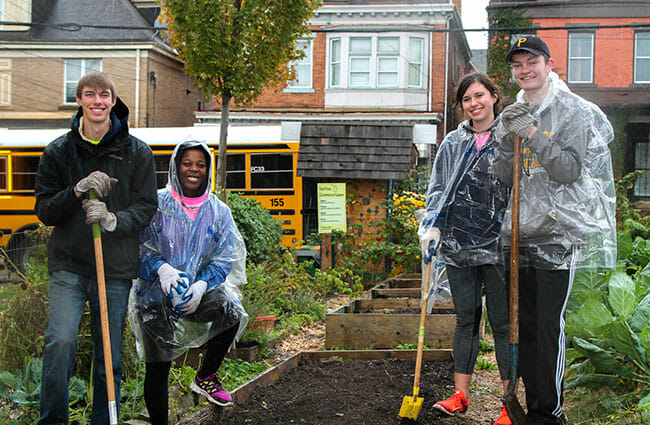
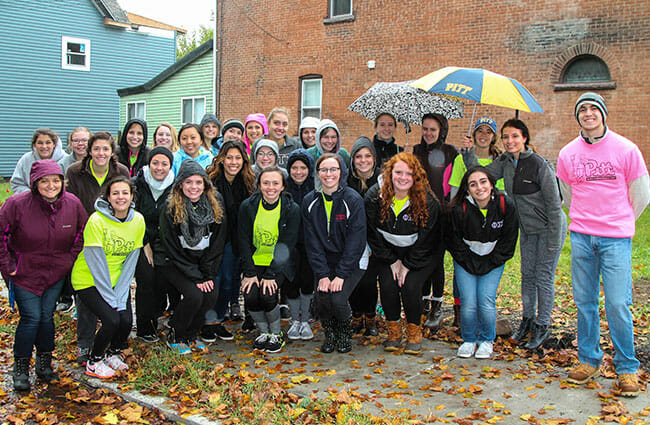
Steady rain couldn’t dampen the spirits of more than 5,000 volunteers at the University of Pittsburgh, who came together on Make A Difference Day 2016 to engage in service projects across the ethnically and economically diverse city of Pittsburgh. What started as a small student-run project nearly a decade ago has grown into an annual, multi-campus event coordinated by PittServes – a university-wide initiative that each year engages students in hundreds of thousands of hours of service to the surrounding communities. On Pitt Make A Difference Day, or PMADD, PittServes organizes a variety projects aimed at improving the lives and neighborhoods of some of the most vulnerable residents in this iconic city, long associated with the once flourishing steel industry. In 2016, students, staff and faculty participated in more than 100 projects, dedicating more than 20,000 combined hours of service that benefitted the local community and more than 1,000 residents.
PittServes was awarded a $10,000 grant for its community-wide effort on Make A Difference Day – a little extra money to do a lot more good as they make plans for PMADD 2017. We asked Misti McKeehen, director of the Office of PittServes, to tell us more about last year’s projects and what to expect for the 10th Annual PMADD event this year.
What was the inspiration behind the PittServes 2016 Make A Difference Day project?
PMADD has become part of the Pitt student experience! Focusing on community needs, the student committee rallied around a focus on sustainability and enhancing the long-term impact we could have on communities served.
Tell us a little more about what your volunteers did that day.
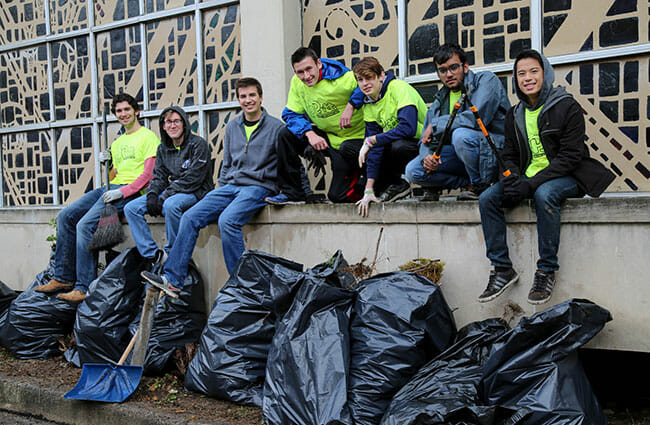
With more than 100 projects, student, staff and faculty volunteers served in a variety of ways, ranging from painting murals, coordinating 5K races, community clean ups, maintaining miles of our riverfront trails, building a chicken coop, and much, much more! With more than 20,000 hours of service dedicated, our community partners were able to achieve their goals through the person-power of our Pitt volunteers.
What was the most rewarding part of the experience? A favorite memory?
My favorite memory was looking out at the William Pitt Union lawn filled with thousands of Pitt students standing in the rain waiting to load buses to go serve. On a cold, rainy, October day, I wasn’t sure many people would show up – but looking out from our “command central” space I saw students laughing and student leaders cheering people on to get ready for a great day of service.
Why do you think it’s important for others to get involved and make a difference in their community?
Nonprofit agencies contribute to our ability to have a more liveable community for all – by supporting those agencies’ missions and the community members who request support on PMADD, we have the ability to directly impact our neighbors and our community. With our incredible students, faculty, staff, and alumni, our large institution has the ability to make a meaningful impact by serving on PMADD and year round.
As a 2016 Make A Difference Day Award Winner, you were awarded a $10,000 grant for this effort. What will that money go toward?
This money is funding projects in the community for PMADD 2017. We were able to identify three major projects in the Pittsburgh region that will create long-term community impact. Working closely with the community members, students will build bio-swells, revamp community activity space, build a community gazebo, and paint murals – all thanks to the funding we received from our Make A Difference Day Award!
What do you want people to learn from your story?
Ten years ago, a small group of students decided to take on the task of planning a campus-wide community service event. In this short amount of time, we have grown to engage thousands of people, all over the globe, to inspire additional investment into the community through PMADD. I hope that people will learn that even the smallest acts on Make A Difference Day can have a lasting impact on the community and on those who are serving.
What are your plans for Make A Difference Day 2017?
We are currently planning for 5,000 volunteers to serve worldwide this year, for our 10th Annual PMADD. We will engage students, faculty and staff from all five Pitt campuses, as well as alumni and students who are located across the country and across the globe. All Pitt Panthers are invited to gather in whatever community they call home to make a difference on PMADD!
Volunteers across the nation will come together again on Saturday, Oct. 28, to improve their communities for Make A Difference Day. Project organizers are encouraged to register at www.makeadifferenceday.com to be eligible to win a $10,000 grant to donate to a charity related to their Make A Difference Day project.
Limb Loss Support Group Collects Socks for the Homeless to Help Prevent Frostbite and Amputations
Moving Forward Limb Loss Support Group is today’s Daily Point of Light Award honoree, and one of the winners of the 2016 Make A Difference Day Awards. Each year, TEGNA recognizes 14 outstanding leaders of Make A Difference Day projects, awarding $140,000 in grants that are donated to the charities related to the winning projects. Learn more about Make A Difference Day and register a 2017 project at www.makeadifferenceday.com.
To most of us, socks are a basic item we don’t give much thought to. But to a homeless person, a good pair of socks is a luxury item. On Make A Difference Day, the members of the Moving Forward Limb Loss Support Group organized a sock drive to benefit the homeless population in their community, counted at more than 6,000 people, including 1,200 children. At the end of the day, the group had collected 864 pairs of socks to be donated to the local Salvation Army – doubling their collection from the previous year!
As part of its mission, the Moving Forward group, based at Southern Indiana Rehabilitation Hospital, works to help prevent amputations. In homeless populations, frostbite is a major concern and is the leading cause of amputation. With winter coming, the sock drive seemed like a perfect way for the group’s members to offer their support
Moving Forward was awarded a $10,000 grant in recognition of its Make A Difference Day project – a little extra money to do a lot more good, both for its members and the larger community. We asked project organizer Belindi Jacobi to tell us more about their efforts, and what’s in store for this year.
What was the inspiration behind your Make A Difference Day 2016 project?
I was sitting in my prosthetist’s office one day waiting for my appointment, and I was looking out the window people watching. A homeless man appeared and started shuffling through a garbage can. His clothes were torn, dirty, and much too big for his small frame. It was then that I noticed his feet. He had on no shoes, just dirty socks that were full of holes. I knew at that moment that I had found our project for Make A Difference Day. We are an amputee support group, and part of our mission is to prevent amputations. If we could help to keep the feet of the homeless in our community warm and dry during the cold winter months, we could possibly save some of them from losing toes and feet to frostbite.
Tell us a little more about what your volunteers did that day.
We collected socks throughout the day at various locations, and spoke about our project at an Amputee Walking School that was held that day.
What was the most rewarding part of the experience? A favorite memory?
To most of us, a pair of socks doesn’t mean that much. We have a drawer full of them. For homeless men, women and children, that same pair of socks is a luxury item. One of my favorite memories is when my 5-year-old grandson Deklan spied a package of Spider-Man socks in our collection. He asked, “Nana can I have these?” I told him that he couldn’t, because those socks were going to go to some little boy who didn’t have any nice clean socks to wear. “Nana, that’s the saddest thing that I have ever heard,” he answered, handing them back to me before he ran off to play. So not only was I able to help with the sock collection, but I was also able to teach my grandson a valuable lesson. That lesson is that it is important to help those in need and even a small thing such as a pair of socks can make a difference.
Why do you think it’s important for others to get involved and make a difference in their community?
First, I think it’s important for everyone to know that they can make a difference. No matter what your circumstance in life, you can still make a difference. That is one of the most beautiful things about our amputee support group. Here we are, a group of individuals who have lost a limb or limbs and are doing our best to get by in life, but we still have that desire and determination to make a difference in the lives of others. We need to realize that even if we can’t do something big alone, that if we work together we can accomplish a lot of small things that add up to big things. We need to set an example for our children and grandchildren that it is important to think of others, and that at the end of the day what matters is if we have made a difference in someone’s life.
As a 2016 Make a Difference Day Award Winner, you were awarded a $10,000 grant for this effort. What will that money go toward?
A portion of the money was used to give scholarships to amputees with financial need to attend the 2017 Amputee Coalition National Conference. While there, they attended gait and mobility training classes, informative sessions on topics to assist them in their daily lives. They also met amputees from all over the world, allowing them to make new friends and gain knowledge. The award money has also been used to help us continue with existing projects such as providing care packages for children with limb loss, new amputees, and veterans at our local VA Hospital. We were also able to begin a new project because of the award money. Our support group has begun providing boxes of food to amputees when they return home from extended hospital or rehabilitation stays. It gives them one less thing to worry about upon returning home. And, plans have been made to use a portion of the money to purchase socks and gloves to help get this year’s Make A Difference Day project off to a good start.
What do you want people to learn from your story?
No matter what your circumstance in life is, you can still make a difference in the life of someone.
What are your plans for Make A Difference Day 2017?
Our group is planning another sock drive, but this year we will also be collecting gloves. and accepting new or gently used coats and winter hats. There is such a need for all of these items by needy men, women and children in our community. We have a monthly meeting scheduled on Make A Difference Day, and the director of the Louisville-area Salvation Army will be there to accept our donations. We are also going to have a “silly sock” competition among our members, with the one wearing the silliest socks winning a prize. It should be a fun way to end the day and make for a great group photo!
Volunteers across the nation will come together again on Saturday, Oct. 28, to improve their communities for Make A Difference Day. Project organizers are encouraged to register at www.makeadifferenceday.com to be eligible to win a $10,000 grant to donate to a charity related to their Make A Difference Day project.