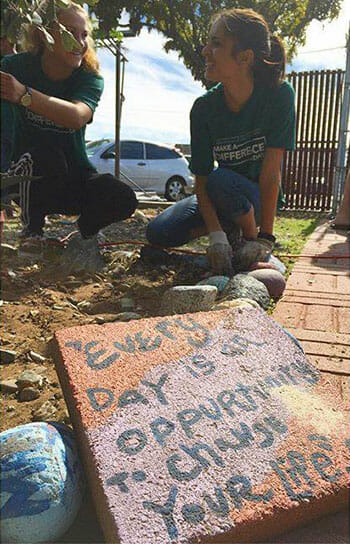
Garden Pool Volunteers Stock Public “Seed Library” to Promote Food Sustainability
Garden Pool is today’s Daily Point of Light Award honoree, and one of the winners of the 2016 Make A Difference Day Awards. Each year, TEGNA recognizes 14 outstanding leaders of Make A Difference Day projects, awarding $140,000 in grants that are donated to the charities related to the winning projects. Learn more about Make A Difference Day and register a 2017 project at www.makeadifferenceday.com.
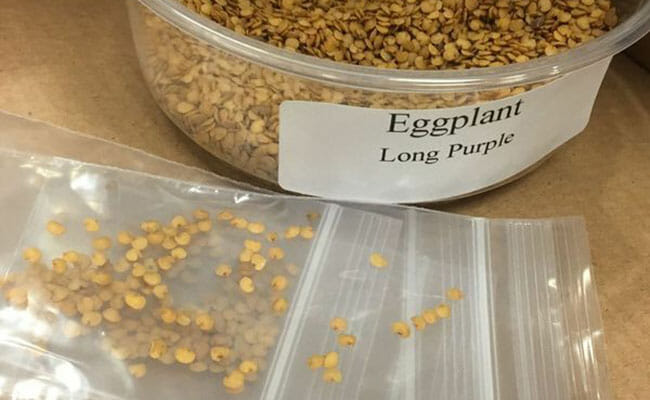
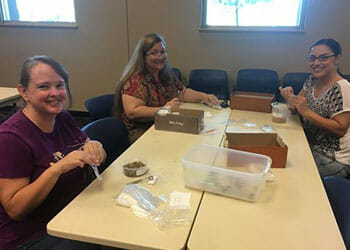
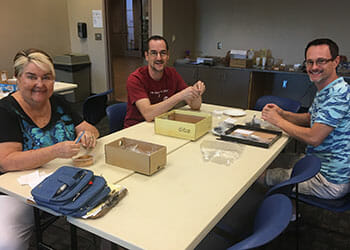
Bok choy, collards, eggplant, fennel, kale, spinach and squash – just a few of a wealth of seed options made available to Maricopa County residents, thanks to “seed libraries” stocked by volunteers in Mesa, Arizona. Garden Pool, a nonprofit dedicated to research and education on sustainable ways to grow food, recruited 50 volunteers who came together on Make A Difference Day 2016 to pack nearly 4,000 seed packets to restock three public seed libraries. Local residents can “check out” the seed packets using their library cards, then return seeds saved from their harvests. Students from Arizona State University joined local middle school students and community volunteers to pack 60 varieties of seeds, supplied by organic farm distributors as well as Garden Pool’s own crops.
Garden Pool was awarded a $10,000 grant, recognizing its efforts on Make A Difference Day – a little extra money to do a lot more good for the community, helping Arizonans learn to grow and sustain their own food. We asked Dennis McClung, president and founder of Garden Pool, to tell us more about last year’s project and the organization’s ongoing efforts to make a difference in food sustainability in Arizona, and in communities around the world.
What was the inspiration behind your seed packing project on Make A Difference Day 2016?
The inspiration behind our seed packing party was Make A Difference Day. I was inspired by the national event to make the biggest difference in a single day with a volunteer project.
Tell us a little more about what your volunteers did that day.
We had volunteers in three locations pack seeds for public seed libraries. We had students at a university, middle school students, and the general public volunteering.
What was the most rewarding part of the experience? A favorite memory?
The most rewarding part of the experience has been watching the community grow with the seeds that we packed. My favorite memory was visiting the youth volunteer group and seeing how inspired they were.
Why do you think it’s important for others to get involved and make a difference in their community?
I believe that community change is very possible when you volunteer. We can all take part in making our community better.
As a 2016 Make A Difference Day Award Winner, you were awarded a $10,000 grant for this effort. What will that money go toward?
The money has been used to help bring our local programs to developing countries.
What do you want people to learn from your story?
If you have a good idea that can help others, don’t be afraid to put it out there because you’ll be surprised how many people want to help.
What are your plans for Make A Difference Day 2017?
We will be volunteering and raising awareness for a low-income community garden.
Volunteers across the nation will come together again on Saturday, Oct. 28, to improve their communities for Make A Difference Day. Project organizers are encouraged to register at www.makeadifferenceday.com to be eligible to win a $10,000 grant to donate to a charity related to their Make A Difference Day project.
North Carolina Doctor Serves Patients with Chronic Illnesses
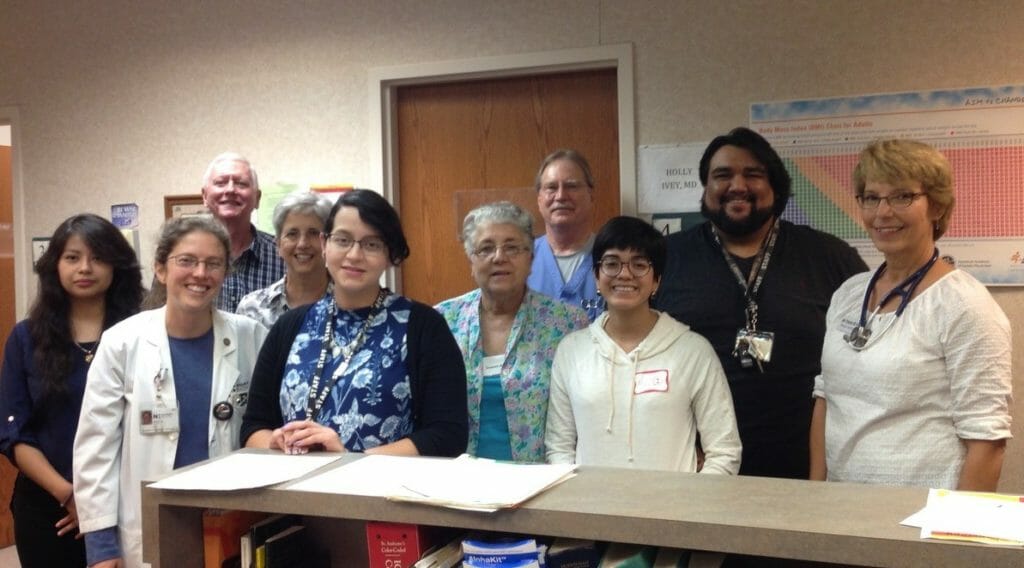
Six years ago, Dr. Holly Ivey began volunteering at the Community Care Center (CCC) during her residency, and the experiences she’s had there have shaped the doctor she is today.
“I feel strongly that it’s hard to live a happy life without being in good health,” Holly says. “It’s hard for people with chronic medical conditions. Unfortunately, there’s not good access for everyone, and I feel like there should be.”
Unlike most free clinics that focus on active illness, the CCC provides services for chronic conditions. It’s the perfect place, Holly says, to use her internal medicine training to treat patients who can’t always see a doctor.
In fact, before accepting her current job at Forsyth Internal Medicine, she made sure her new employer would allow her to continue her weekly volunteer service.
Each Thursday, Holly arrives around 3:15 p.m. and sees patients until at least 7 p.m. During that time, she treats 5-to-10 individuals, addressing chronic concerns, including diabetes, high blood pressure and asthma. As part of each visit, she checks a patient’s vital signs, discusses medications and sometimes starts a patient on a new health regimen. Any patient receiving medication is scheduled for a 3-month return visit.
The clinic also has a lab where patients can have blood work done and an on-site pharmacy that dispenses each patient’s medications.
Holly is one of several doctors and nurse practitioners volunteering at the CCC, but she’s just one of a small handful still actively practicing medicine. Perhaps her biggest contribution to the clinic, though, is her Spanish skills.
“I noticed in medical school that some patients only spoke Spanish, and, through no one’s fault, they would fall through the cracks,” she said. “So, I took a month to study abroad in Spain during medical school. Now, I don’t have to rely on the volunteer interpreters to talk to my patients.”
Being able to speak directly to their doctor is something her Hispanic patients truly appreciate, she says.
Overall, Holly says, her volunteer service at the CCC is important because she gets to work one-on-one with patients who return to the clinic for follow-up care. Not only does she have the opportunity to address their immediate needs, but she can also help them change their future behaviors.
“Volunteering has a much bigger impact if you do it consistently,” she says. “You build relationships, you learn a system, and you really get to know what you’re doing.”
Do you want to make a difference in your community like Dr. Ivey? Visit All For Good to find local volunteer opportunities.
In Memory of Yeardley Love, Family Seeks to Educate Young Adults on Warning Signs of Domestic Abuse
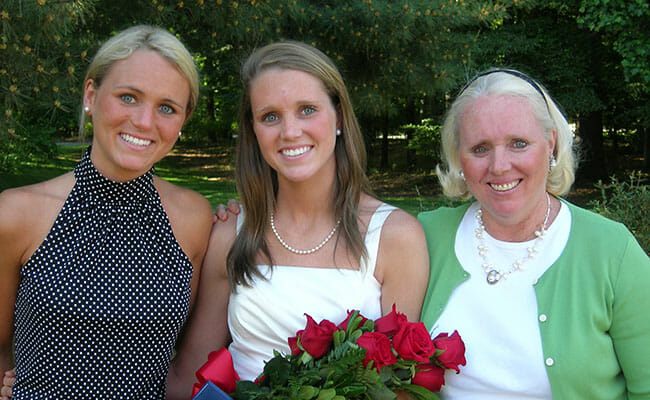
At around 6 a.m. on May 3, 2010, Sharon Love opened the door to police officers who delivered the worst news a parent could ever receive. Her daughter, Yeardley, had been killed. Not just killed, but beaten to death by her former boyfriend.
“I couldn’t believe it,” Sharon said. “It’s still hard to put the two together that you know somebody, that somebody has been in your house and they’re capable of beating someone to death.”
Yeardley was a thriving student at the University of Virginia, majoring in government, minoring in Spanish, playing lacrosse and building positive relationships with just about everyone she met. She was just three weeks away from graduation when she was killed.
“She was so kind and when she walked in the room, she got along with everyone,” Sharon Robinson, Yeardley’s cousin, said. “So many stories came out after her death. We got so many letters of lives that she touched that we never knew about.”
Yeardley and her ex-boyfriend had dated on and off for two years and her family recalled small signs of an abusive relationship.
“There were little hints here and there,” said Lexie, Yeardley’s sister. “They were passed off as a joke or him just being a jerk. … In hindsight, now, I would’ve thought differently, but relationship violence had never really entered our minds at that point.”
To honor Yeardley’s life and make sure that this avoidable tragedy never happens to anybody else, Sharon and Lexie Love founded the One Love Foundation. With the help of Sharon Robinson, who sits as vice chair, and the rest of their staff, the Loves hope to educate people, especially young adults, on the signs of unhealthy relationships so that they or their loved ones can get out of an abusive relationship before it’s too late.
The One Love Foundation has visited 500 colleges and universities across America to hold their Escalation Workshop, which features a 90-minute film titled “Escalation.” It educates viewers on the warning signs of an abusive relationship and, after the showing, the students are able to discuss how they felt about the film and talk openly about relationship abuse.
With 1 in 3 women and 1 in 4 men experiencing some form of relationship violence in their lifetime, abusive relationships are very prevalent, yet, the conversations surrounding the topic are not.
“There’s a lot of shame. There’s a stigma around it,” Sharon Robinson said. “We’re trying to shift the stigma, saying that you shouldn’t be ashamed. You should feel free to go and get help.”
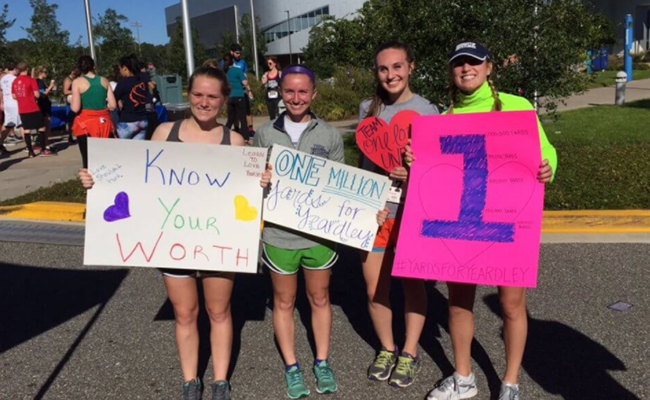
Many students have thanked and credited the foundation for helping them realize that they were in an abusive relationship and getting them out. Some students are even running a million yards in an event called Yards for Yeardley to honor Yeardley and spread awareness of One Love’s mission and message.
“I think in so many ways One Love keeps Yeardley alive,” Sharon Robinson said. “She did not die in vain. Her story has really helped so many people and I think that’s just who she was.”
To plan an Escalation Workshop in your own community, learn the 10 signs of an unhealthy relationship, or learn how to support the One Love foundation, visit www.joinonelove.org.
150 Volunteers Bag 37,000 Pounds of Potatoes to Help Hungry Families
The Pineville United Methodist Church is today’s Daily Point of Light Award honoree, and one of the winners of the 2016 Make A Difference Day Awards. Each year, TEGNA recognizes 14 outstanding leaders of Make A Difference Day projects, awarding $140,000 in grants that are donated to the charities related to the winning projects. Learn more about Make A Difference Day and register a 2017 project at www.makeadifferenceday.com.
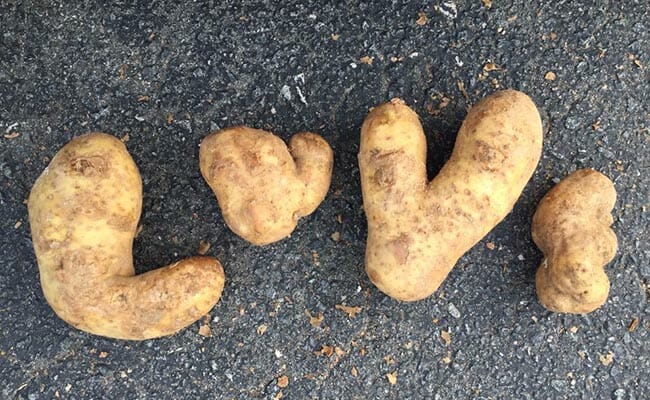
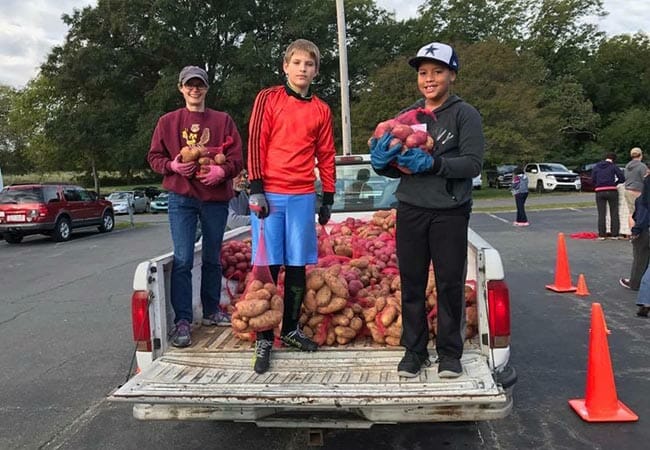
On a Saturday morning in October, in a church parking lot in Pineville, North Carolina – a small town where nearly 30 percent of families live below the poverty line – a tractor trailer dumped 37,000 pounds of potatoes. The Pineville United Methodist Church had partnered with the local chapter of Society of St. Andrew, a national program that collects excess produce from American farms to help feed the hungry, to glean the potatoes from the fields of local farms the week before. And on that Saturday – Make A Difference Day 2016 – 150 community volunteers of all ages came together in that parking lot to bag the spuds in 10-pound sacks and deliver them to local families, area schools, food banks and soup kitchens.
The Pineville United Methodist Church was awarded a $10,000 grant recognizing its efforts on Make A Difference Day, which they donated to Pineville Neighbors Place – a little extra money to do a lot more good for the community. We asked Jane Shutt, the new executive director of Pineville Neighbors Place, to tell us more about the potato project and how it has made a difference for the community.
What was the inspiration behind the Pineville Potato Drop?
The focus for Pineville UMC in 2016 was feeding the hungry. We had signed up with the Society of St. Andrew to do some gleaning projects during the summer, but those projects had unfortunately been rained out or the produce was not ready for picking. But, they did have potatoes that needed to be bagged and distributed.
Tell us a little more about what your volunteers did on Make A Difference Day 2016.
We had about 150 volunteers, ranging in age from 2 to 85 years. They tied plastic netting into the bags we needed; sorted the potatoes to remove any bad ones; bagged and distributed potatoes to two local schools, where families picked them up, and also to local food pantries and soup kitchens.
What was the most rewarding part of the experience? A favorite memory?
The most obvious reward was the opportunity to distribute donated potatoes to the people who needed them the most. A side benefit was the unity of our churches and community to work on this project. A month earlier, Charlotte had experienced some serious racial conflicts following the shooting of a black man by a white police officer. This event brought together people of different colors and faiths to help our community.
Why do you think it’s important for others to get involved and make a difference in their community?
First, it’s important to us to build awareness of the hungry who live in our neighborhood. We have a great diversity of people, from the very rich to the homeless. Once we build that awareness of the needs, then we want to give people the opportunity to act upon those needs. As Christians, it is part of our faith that we help our neighbors. But for all of us who live in Pineville, it has always been important that we reach out to all who live in our community. Together we can make it better!
As a 2016 Make A Difference Day Award Winner, you were awarded a $10,000 grant to donate to a charity of your choice. What will that money go toward?
We donated the money to a new nonprofit, Pineville Neighbors Place, which works with the poor and homeless in the Pineville community. The money has helped people who are facing financial crises with rent and utilities, bought beds for children sleeping on the floor, given backpacks with school supplies to children who needed them, and so much more!
What do you want people to learn from your story?
When people join together, they can change the lives of their neighbors for the good. But it also changes our own hearts and fills them with love and understanding. It was a wonderful way to build bridges in the community for a common cause.
What are your plans for Make A Difference Day 2017?
We are hosting our second annual Pineville Potato Drop! We hope to have more volunteers, and more potatoes to share with more people. We’ve already invited our local TEGNA station to volunteer with us and to film the event live. We are also going to invite our local Arby’s to partner with us, to provide some volunteers and snacks for the volunteers.
Volunteers across the nation will come together again on Saturday, Oct. 28, to improve their communities for Make A Difference Day. Project organizers are encouraged to register at www.makeadifferenceday.com to be eligible to win a $10,000 grant to donate to a charity related to their Make A Difference Day project.
Texas Fifth-Grader Creates Empowerment Club for Opportunity Youth
Volunteering isn’t just an adult activity. Kids can make huge differences in their communities, too. And, fifth-grader Curt Fendley has proven that. By launching Operation Empower through his local Boys and Girls Club in Texas, Curt created a volunteer opportunity for young children looking to positively contribute to their neighborhoods. In addition to helping others, Curt ensures the children learn essential life, leadership and job skills. He does it all, he said, to give his peers as solid a foundation for the future as possible.
Points of Light talked with Curt about his volunteer service and the impacts of Operation Empower.
Why did you decide to start Operation Empower for Boys and Girls?
I’ve been going to the Boys and Girls Club for the past three years, and I saw that not all the kids have knowledge of some basic life skills. They don’t know how to work as a team or set good examples or be good leaders. Many don’t know the importance of looking someone in the eyes or having a firm handshake. I want to enhance their experiences, and, I hope, give kids an attainable future. Most kids, their dream is to become a famous athlete or entertainer, but that’s not a solid life plan. They need to build a solid foundation based on core principles so they’ll be okay if they don’t end up as an athlete or entertainer.
How does the program work? What do you do?
We are a group of fourth- through seventh-graders who are involved with the Boys and Girls Club of Texas. We meet once a week to make sure the kids stay involved. Without them, there wouldn’t be an Operation Empower.
We’re developing leadership skills and experience real-life skills, like gardening or simple woodworking – the type of skills that can help improve a community. I meet once a week with the kids and problem solve issues at our club. And, each weekly meeting includes a community, team-building exercise. These are fun things, and they don’t even realize they’re learning a skill.
One of their favorite things to do is to link hands across a big circle and work as a team to unwind themselves into a regular, larger circle without letting go. This teaches them how to care for each other in a community and how to work as a team together.
What are your responsibilities with the program?
I had to organize some of the events that we go to and the meetings that we put together. I do Iceberg. It’s an ice breaker like the Human Knot. I’m in charge of getting volunteers and, then, helping them with what they have to do.
What impact have you been able to make through the program?
We have about 20 members, and we’re still growing. One big focus at our club has been improving physical activity. Our county has one of the highest obesity rates in Texas. Most of my members live well below the poverty line. They don’t have any outdoor playground equipment. We also raised money to build a club vegetable garden, as well as two tetherball sets and Gaga ball. Volunteering isn’t something that most of the kids have done before. Helping the community outside the Boys and Girls Club is important.
In June, we spent two days redoing a local food pantry in Paris. We painted bookshelves, the chair rail, the bathroom and the walls. For many of the kids that helped paint the food pantry, it was empowering because they were able to give back to the organization. None of them had volunteered before.
What do you think you’ll do in the future?
We learned that we need a much larger vegetable garden, and we need to get a lot more kids involved to help with that. It’s a way for us to give away more fresh food to club members. I’d love for Operation Empower to build a picnic table and shade structure for outside. Our biggest goal is to build a playground for the Boys and Girls Club. We’re working on getting the financial support and continue to volunteer in the community.
Why is volunteering important to you?
One kid can have an idea and make a big positive influence in the community. You’re never too young to change the world. I came up with the idea, but it had to be done with other kids helping. I wanted to demonstrate to others the value of volunteering – that they can make a difference in their community.
When I first started, I felt like a lot of adults weren’t sure what an 11-year-old with a bunch of other kids could do. It was hard to find adults to sign up, but once they did, the staff at the Boys and Girls club have been helping us ever since. Now, I feel like we’ll get more volunteers to do even more projects.
Do you want to make a difference in your community like Curt? Visit All For Good to find local volunteer opportunities.
Law Student Helps Immigrants Realize the American Dream
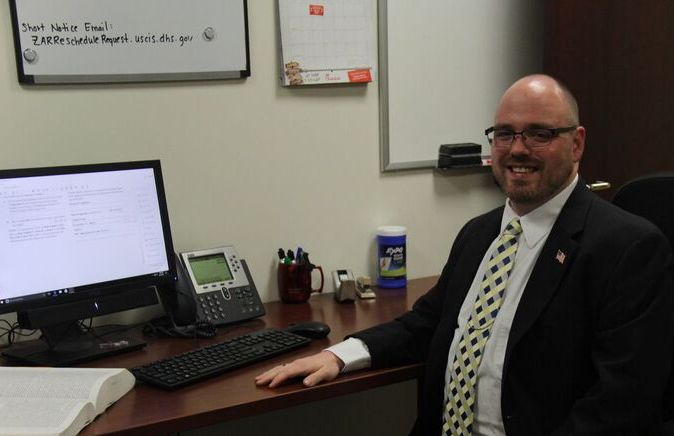
As a student attorney volunteering at the West Virginia University Immigration Law Clinic, Jonathan K. Heath has heard hundreds of stories of desperation and despair, hope and aspiration. While he was in law school, he donated countless hours to helping the immigrant community navigate the complex system of law. Sometimes he succeeded, other times he did not, but every time he was proud to use his expertise to help this underserved community reach for the American dream.
What inspires you to volunteer?
I have always been an avid volunteer. I volunteered for years with soup kitchens and homeless shelters in New England when I was younger. I helped found a small nonprofit charity in the years before I came to law school. I feel that if I am in a position to help someone by donating my time and efforts, I should do it.
Describe your volunteer role with the WVU Immigration Law Clinic
I volunteer as a student attorney. I, along with other student volunteers, am allowed by statute to practice law under the supervision of our supervising attorneys. As a student attorney, I represent clients before judges in immigration court and before the immigration officers at USCIS, clients who are seeking asylum because they are afraid for their lives in their native country. I also accompany clients to interviews and check-ins with ICE officers and help them prepare for visa interviews,
Why is it important to you to support your community in this way?
There are very few attorneys who handle family-based immigration issues and asylum cases in West Virginia. Many members of the immigrant community have gone to Pittsburgh for help, which can be both expensive and logistically difficult. We fill that void by providing assistance, at no cost, to low-income clients from West Virginia and Pennsylvania. I feel it’s important to volunteer because I am very privileged to be able to have gone to law school and to gain the skills to help these individuals.
Immigration has been in the news more than ever this year – has this changed your clientele or their needs?
Definitely! This past year we have had many new clients and former clients contact the clinic because they were worried about either being deported or about being able to get relatives into the United States before the travel ban came into effect. We’ve had clients from those countries who were worried that their applications would be denied. Many of our clients are worried and some are scared.
What’s the most challenging aspect of your volunteer service?
The most challenging aspect, for me is confronting the fact that some clients have no legal avenue to stay in this country. It is heartbreaking to tell someone that there is nothing you can do. Aside from that, I think it is listening to the horrible stories of past persecution from asylum seekers, who have fled to the United States out of fear for their lives.
How have you grown personally through your service?
I have learned about other country’s cultures and met some very interesting people. It is a unique experience, working with underrepresented immigration populations, and to hear their stories. I have made lifelong friends with others in the clinic and have fostered professional relationships with immigration attorneys in the area.
Why do you think it’s important for others to give back?
Everyone has something they can contribute, a skill, vocation or knowledge to share. In doing so, you can actually change someone’s life for the better. When you change that one person’s life, that person is going to have an effect on other people, and it ripples outward… your act of giving back will have a lasting effect on many other people down the line.
What’s been the most rewarding part of your work?
Being able to help someone stay in the United States and pursue the American dream. There is no better feeling in the world than hearing from a client that their green card has arrived or that their application for asylum has been approved.
What have you learned through your experiences as a volunteer?
Immigration law is highly specialized. I am grateful for the opportunity to learn about this area of the law through my volunteer work. I have learned so much about the complex immigration system and my interviewing and negotiation skills have improved.
What do you want people to learn from your story?
No matter where you are in life, you have an opportunity to give back to your community. You have the ability to help change people’s lives for the better.
Do you want to make a difference in your community like Jonathan? Visit All For Good to find local volunteer opportunities.
Across Differences, 500 Volunteers Unite to Build Homes for the Homeless
The Dream Center is today’s Daily Point of Light Award honoree, and one of the winners of the 2016 Make A Difference Day Awards. Each year, TEGNA recognizes 14 outstanding leaders of Make A Difference Day projects, awarding $140,000 in grants that are donated to the charities related to the winning projects. Learn more about Make A Difference Day and register a 2017 project at www.makeadifferenceday.com.
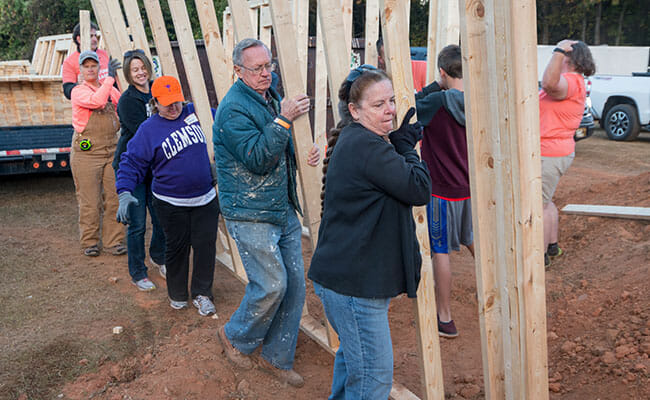
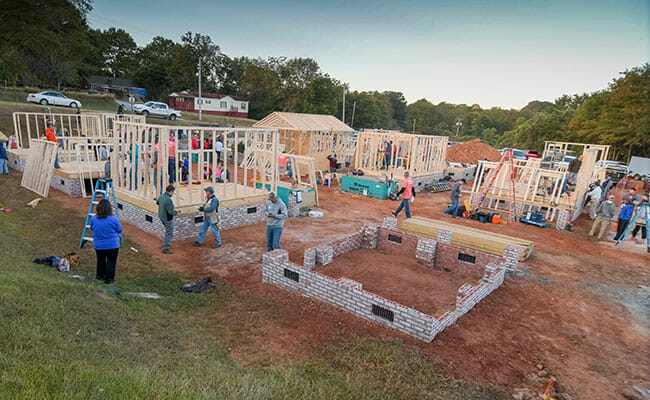
In Opportunity Village, rebuilding lives starts with a safe and comfortable home. On Make A Difference Day 2016, 500 volunteers came together to begin construction of the tiny house community that would become home to some of the homeless residents of Pickens County, South Carolina – constructing 13 houses in just 14 hours. Through the Dream Center, these residents would not only gain shelter, but also begin developing the assets and life skills needed to secure employment and ultimately transition back into their community. Local churches helped shuttle volunteers to the site; nurses donated time at a First Aid tent. “Everyone in town came,” said Chris Wilson, executive director at Dream Center. “Black, white, rich, poor, Republican, Democrat – it was a beautiful thing to see.”
The Dream Center was awarded a $10,000 grant, recognizing its efforts on Make A Difference Day – a little extra money to do a lot more good, giving hope to homeless residents of Pickens County. We asked Chris to tell us more about the Opportunity Village project, what’s happened since last year’s event and what to expect this year.
What was the inspiration behind the Opportunity Village project?
The Dream Center had more than 1,200 walk-ins in crisis poverty over a two-year period, with more than 400 homeless. As the only county in the upstate of South Carolina with no homeless shelter, it was a struggle to help them get back on their feet with no place to lay their head. Many people were already experiencing great life change through our programs, but the missing link was shelter. We developed the concept of The Opportunity Village but we knew we could not do it without the support of our community. Make A Difference Day seemed like the perfect avenue for enlisting the help of our community to build our village.
Tell us a little more about what your volunteers did on Make A Difference Day 2016.
We partnered with our local career center and volunteers to pre-build the walls and floor systems of 13 tiny houses. On Make A Difference Day, we organized 500 volunteers from the community and assembled and built 13 houses in one day. We had volunteers doing construction, making meals for the day, serving in first aid, and other projects around the Dream Center.
What was the most rewarding part of the experience? A favorite memory?
Make A Difference Day happened during a heated presidential election season. It was truly an amazing sight to see 500 people from every background, race, religion, and political party come together for the common good. On that day, nobody cared who was a Democrat or Republican. Every person worked together and had a blast while making a true difference in our community.
Why do you think it’s important for others to get involved and make a difference in their community?
The opportunity to physically be a part of something allows them to have ownership. Each of the 23 tiny houses built over the last year were financially sponsored by businesses, schools, and individuals from our community as a result of that special day.
As a 2016 Make A Difference Day Award Winner, you were awarded a $10,000 grant for this effort. What will that money go toward?
The money we received went toward finishing construction on tiny houses that are now being occupied by homeless residents.
What do you want people to learn from your story?
Every person has the opportunity to be a difference maker. When people come together, we can make a bigger impact on needs with less duplication. The ripple effect begins with one person.
What are your plans for Make A Difference Day 2017?
We are planning a day of service with our clients and homeless shelter residents, giving back to the community. Last year, the community gave to us and this year, we are teaching our clients the importance of giving back as well.
Volunteers across the nation will come together again on Saturday, Oct. 28, to improve their communities for Make A Difference Day. Project organizers are encouraged to register at www.makeadifferenceday.com to be eligible to win a $10,000 grant to donate to a charity related to their Make A Difference Day project.
Millennial Uses Technology to Connect Students, Communities Across the Globe
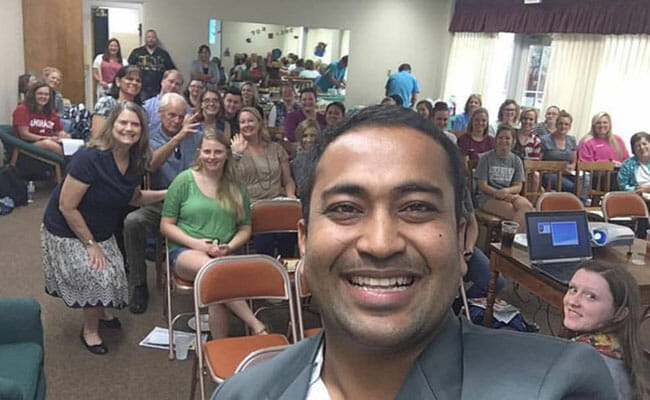
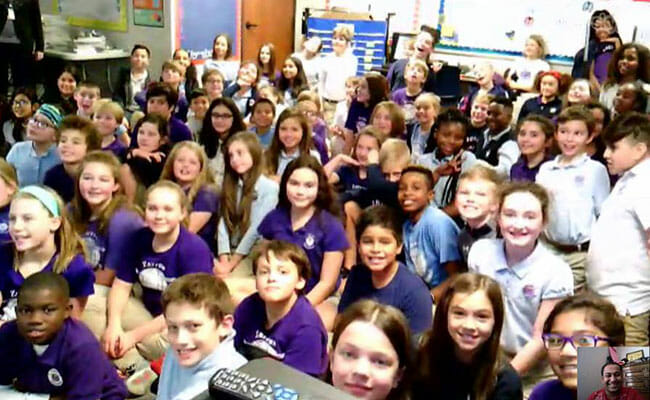
Picture a student in science class, seated at a desk, her computer on. The student isn’t writing a paper about her studies or reading class materials, according to Akash Patel. She is interacting with students halfway around the world in Australia, touring their classroom, hearing about what their science quiz will cover that week. The child, from her desk in America’s heartland, is experiencing a world she may never get to travel to – but because of the World Experiences Foundation, she’s learning from it.
Founded by Akash in 2012, while he was in college, WEF is designed to bring classrooms and communities together worldwide to develop global citizens and impart anti-bias multicultural and multilingual education. The 26-year-old Norman, Oklahoma, resident, who was a full-time volunteer up until last year, believes people of all ages can – and should – make a difference in their communities. “Volunteering is such a terrific way of creating a community you want to live in,” said Akash. “Volunteer, make a difference, start small, and see how it evolves into something big.”
Akash has been struck by the response to his work, and believes the digital-first generation is inspired by stories of goodwill shared online in ways that other generations have never before experienced. “A lot of these young people think ‘I’m too young, and I don’t think I can make a difference,’ but maybe my life can be an inspiration to these folks,” he said. “You are never too young to make a difference. If you have that will and if you have that passion to make a difference in the community, it’s never too late to start.”
Born in Nashik, India, a city nearby Mumbai, Akash immigrated to the United States in 2009. While living and student teaching in rural Oklahoma, he discovered many students had never seen anyone like him before. “I saw the spark in the eyes of the children,” he said. “That’s when I realized, my work doesn’t stop right here in one classroom. Maybe I have the opportunity to share all of these experiences with children across the state of Oklahoma.”
Connecting students using technology and offering professional development to educators on global education, Akash believes that by teaching lessons about countries and cultures around the world, he can foster cross-cultural dialogue and help dispel stereotypes.
“We as educators have the power to bring the world to their classrooms, and broaden their horizons, and show them that, ‘hey, there’s a world that exists outside these classrooms, outside your neighborhoods,’” Akash said. “And then they see these role models, people with varied professions, and they see that, ‘wow, yes, I too can be there someday, and I too, can do some of these amazing things.’”
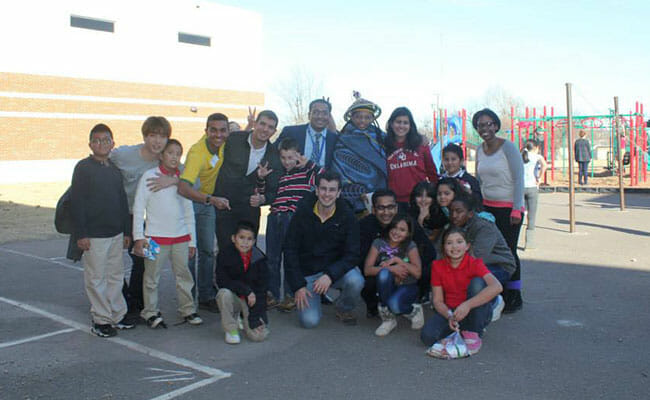
In 2016, Akash started the Global Ambassadors Leadership Institute, a program within WEF that annually grants a scholarship to 50 Oklahoma high school students and enables them to give back to the community through global projects. As one of the students selected, 16-year-old Michael Pope created an app under Akash’s counsel that facilitates access to resources desperately needed by immigrants new to the United States. According to the Edmond, Oklahoma, teen, the project has changed the way he thinks about his community. “Akash gave me a lot of knowledge on how people outside of the country think. … I didn’t realize how hard it was until I was actually in the class, how hard it is to adjust from their lifestyle into ours,” Michael said. “It’s really opened my eyes up a lot.”
WEF now serves hundreds of schools across Oklahoma. Akash, who wants to expand his organization to schools around the world, says his focus on bringing people together is based on a simple idea. “Simple actions can have a huge impact and inspire others to take action,” he said. “Despite our differences, we are all the same.”
Do you want to get involved? Sign up to be a volunteer at www.worldexperiencesfoundation.org.
With Support from Local Businesses, Community Volunteers Create a Center for Seniors and Veterans
The Petal Public Improvement Corporation is today’s Daily Point of Light Award honoree, and one of the winners of the 2016 Make A Difference Day Awards. Each year, TEGNA recognizes 14 outstanding leaders of Make A Difference Day projects, awarding $140,000 in grants that are donated to the charities related to the winning projects. Learn more about Make A Difference Day and register a 2017 project at www.makeadifferenceday.com.
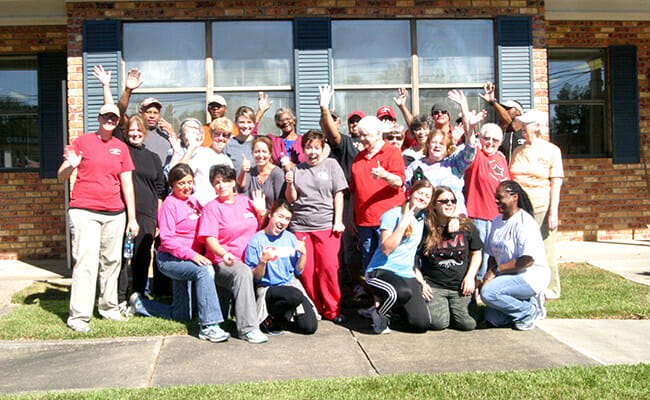
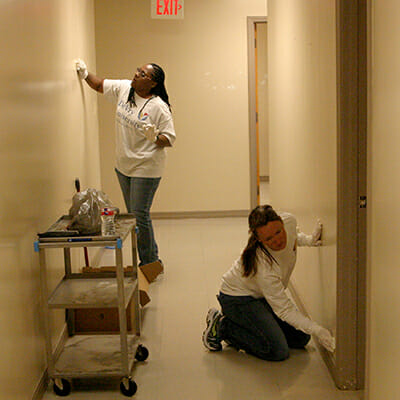
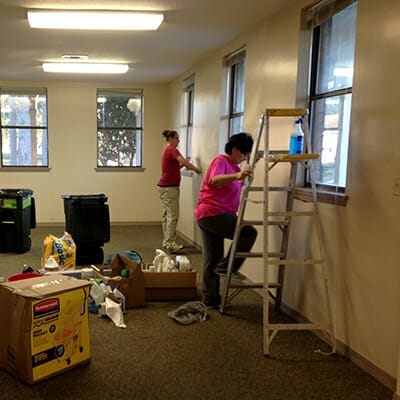
In Petal, Mississippi, volunteers from all walks of life came together on Make A Difference Day 2016 to create a welcoming senior center for local seniors and veterans. With a “gently used” building donated by Merit Health Wesley, and $2,500 in supplies donated by the nearby Lowe’s home improvement store, volunteers wasted no time readying the new space – washing windows, cleaning cabinets, landscaping the property, and more. Corner Market, a locally owned grocer, made sure all the volunteers were fed.
“We are an extremely caring and close-knit city,” said Valerie Wilson, executive director of the Petal Area Chamber of Commerce. “The senior center has become a rallying place for the community. We all care about it. It’s everybody’s home.”
The Petal Public Improvement Corporation was awarded a $10,000 grant in recognition of its Make A Difference Day project. They put some of that money toward additional improvements for the senior center, and donated the rest to local organizations supporting children, families and educational opportunities. We asked Valerie to tell us more about last year’s senior center project, and what’s in the works for this year’s event.
What was the inspiration behind your Make A Difference Day 2016 project?
Our inspiration was the group of senior citizens in our city that were excited and anxious to move into a place that they could call their own and enjoy each other’s company on a daily basis.
Tell us a little more about what your volunteers did that day.
The volunteers took up the task of turning a building that had been empty for several years into a clean and serviceable center for senior citizens. With the help of supplies donated by Lowe’s of Petal, they cleaned walls, floors, bathrooms, fixtures, and windows. They patched nail holes and prepared the walls for painting. They worked on flower beds and cleaned the parking lot. They did anything that was needed.
What was the most rewarding part of the experience? A favorite memory?
It was wonderful seeing the diversity in the group of volunteers. We had high school students, veterans, senior citizens, civic clubs, city employees and church volunteers working together to accomplish in one day what would have otherwise taken weeks.
Why do you think it’s important for others to get involved and make a difference in their community?
Working alongside people who feel as strongly as you do about supporting a particular cause creates a path to developing strong relationships with others in your community. Volunteering is about giving, contributing, and helping other individuals and the community at large. It is working with others to make a meaningful contribution to a better community. And most importantly, it is FUN and rewarding.
As a 2016 Make A Difference Day Award Winner, you were awarded a $10,000 grant for this effort. What will that money go toward?
That money went to three very important causes in our community: $3,000 went to the senior center to purchase additional resources for the seniors; $3,500 went to the Petal Education Foundation, which grants scholarships to Petal High School students; and $3,500 went to the Petal Children’s Task Force, to help underserved children and their families.
What do you want people to learn from your story?
Just take the first step! You don’t have to create or do something big, as long as you create or do something small for your town and do it with love. Reach out to others who care about your cause and let the magic happen.
What are your plans for Make A Difference Day 2017?
Once again with the help of our local Lowe’s store, we will be building 10 picnic tables, which will be used at the Center for Seniors & Veterans and at the Petal River Park.
Volunteers across the nation will come together again on Saturday, Oct. 28, to improve their communities for Make A Difference Day. Project organizers are encouraged to register at www.makeadifferenceday.com to be eligible to win a $10,000 grant to donate to a charity related to their Make A Difference Day project.
Hundreds of Students and Community Members Join Forces to Do Good in San Luis Obispo County
The Center for Service in Action at California Polytechnic State University is today’s Daily Point of Light Award honoree, and one of the winners of the 2016 Make A Difference Day Awards. Each year, TEGNA recognizes 14 outstanding leaders of Make A Difference Day projects, awarding $140,000 in grants that are donated to the charities related to the winning projects. Learn more about Make A Difference Day and register a 2017 project at www.makeadifferenceday.com.
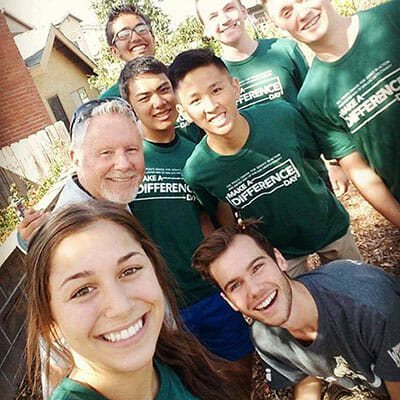
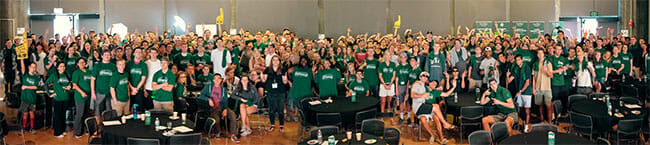
Students at California Polytechnic State University have had the Make A Difference Day spirit for about 15 years – and the 2016 event was another big success! Through the school’s Center for Service in Action, more than 850 volunteers – students, Girl Scout troops, local businesses and other members of the community – participated in projects at more than 40 sites in San Luis Obispo County, serving more than 3,200 hours to make a difference in their community. Staff and student organizers coordinated the day’s efforts with United Way of San Luis Obispo County. Volunteers groomed the San Luis Obispo Botanical Garden, painted a Boys and Girls Club, and stocked a food pantry that serves people with HIV/AIDS; others volunteered at a street fair and children’s Halloween party, and prepped for one town’s annual Oktoberfest; and still more participated in projects that benefitted a mental health association in San Luis Obispo, a homeless organization in Atascadero, and a children’s science museum in Grover Beach, among others.
The Center for Service in Action was awarded a $10,000 grant for its community-wide effort on Make A Difference Day, which they donated to El Camino Homeless Organization – a little extra money to do a lot more good, bringing hope to local families in need of a fresh start. We asked Sarah Dornish, SLO AmeriCorps VIP Lead at the Center for Service in Action, to tell us more about last year’s project and what to expect for this year’s event.
What was the inspiration behind your Make A Difference Day 2016 project?
Our inspiration is centered around inviting community members to participate in community service across our county for one day. We know that their incredible work and passion will offer support that local nonprofit and educational sites may not otherwise have access to. And, we use this as a way of spreading the word about year-round volunteer opportunities – once our volunteers have a great experience with Make A Difference Day, they often return to their nonprofit or educational site to volunteer again!
Tell us a little more about what your volunteers did that day.
Our main tagline (which we actually exceeded in numbers this year!) is: 40+ Sites. 800+ Volunteers. 3,200+ Hours. 1 Community. Our volunteers served at different nonprofit and educational organizations throughout the county, ranging from gardening and painting to special events and fundraisers.
What was the most rewarding part of the experience? A favorite memory?
It’s so incredible to see everyone come together and work towards the goal of improving our community and the lives of people who live here. The morning of the volunteer day, we host all 850-plus volunteers together in one big auditorium for a unifying breakfast, so the volunteers can get to know each other and fully realize the major impact they make as a whole. I’ll never forget seeing hundreds of people all together, exuberant for the day of work ahead of them.
Why do you think it’s important for others to get involved and make a difference in their community?
We are so grateful for the opportunity to bring our community together through volunteering. This type of service improves the social services our community provides, improves our locals’ access to these services, and brings together countless people to work towards and learn about these goals.
As a 2016 Make A Difference Day Award Winner, you were awarded a $10,000 grant to donate to a charity connected to your project. What will that money go toward?
This incredible grant will benefit El Camino Homeless Organization, locally known as ECHO, a tremendous community partner with an amazing staff dedicated to helping solve homelessness in San Luis Obispo County. ECHO serves locals’ immediate needs like food and shelter, and also case management services like finding people permanent housing and careers.
What do you want people to learn from your story?
Many of our volunteers rely on the services we support through this volunteer day, and those who don’t get to work and learn together in solidarity for a day. The nonprofits and educational sites we support during this day of volunteer service provide our community with such invaluable and impactful social services, and I hope others can learn to passionately support these services as our volunteers have.
What are your plans for Make A Difference Day 2017?
Our plans include creating the same type of annual campus and community-wide volunteer day! We aim to host 800-plus volunteers at 40-plus volunteer sites, working 3,200-plus hours for our one community.
Volunteers across the nation will come together again on Saturday, Oct. 28, to improve their communities for Make A Difference Day. Project organizers are encouraged to register at www.makeadifferenceday.com to be eligible to win a $10,000 grant to donate to a charity related to their Make A Difference Day project.