Remembering His Past, Helping Others’ Future
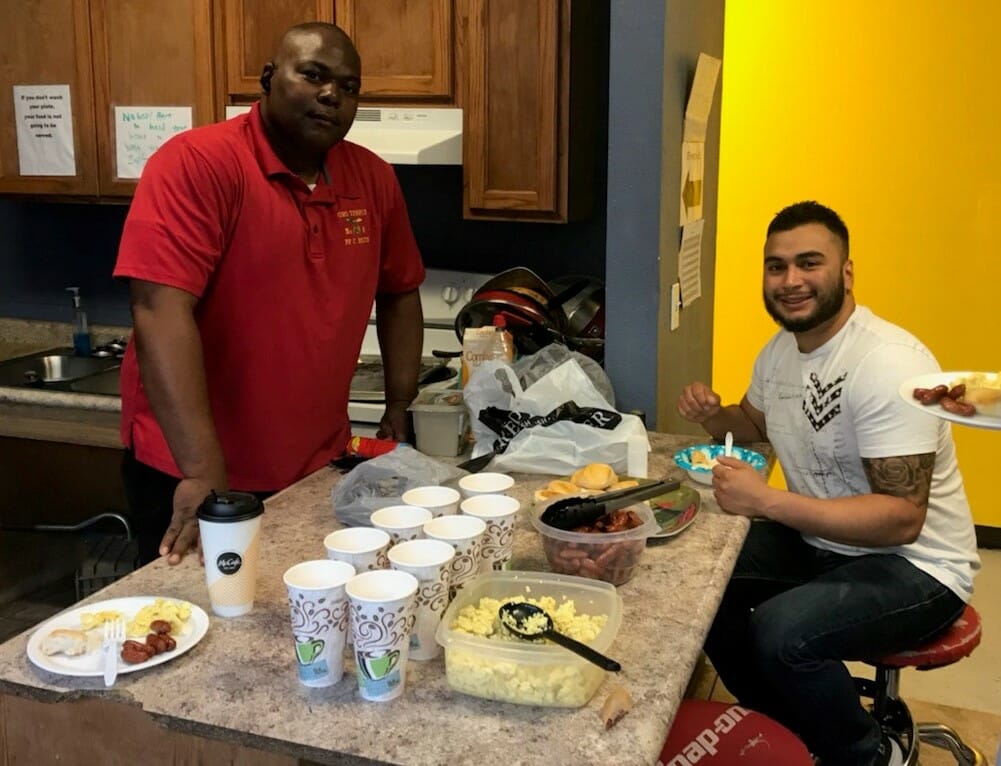
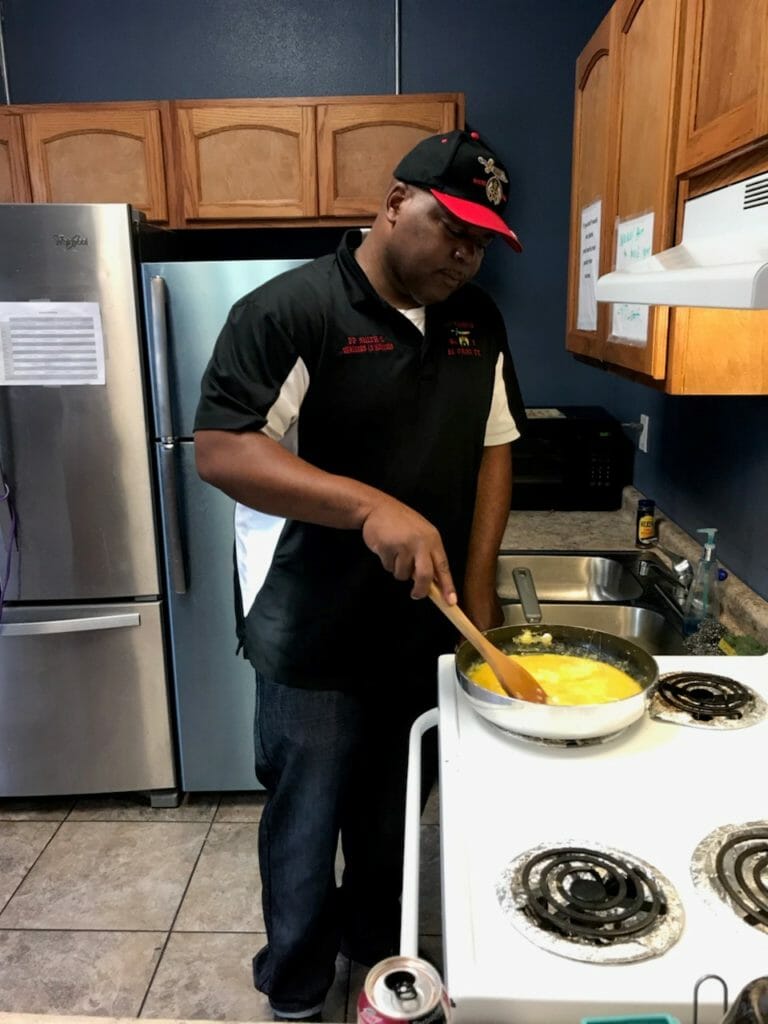
At 47, Curtis Smith just retired from a 24-year career in the U.S. Army. But the Charleston, S.C. native didn’t sit back and take a break. Instead he threw himself into volunteering for multiple community organizations in his present home of El Paso. His focus is on giving a helping hand to at-risk youth and young African American men in need of something as simple as a hot breakfast and a few encouraging words. Curtis has accomplished a lot in his life, but he can relate to feelings of loss, anxiety, failure and despair. That’s because he was a product of the foster care system, bouncing around all over the state of South Carolina from the age of 13 to 19, feeling alone, angry and without hope. Hard work, the military and care showed to him by crisis center volunteers helped him find balance in his life. Now, he turns his calm presence and gentle humor towards others, working to inspire hope and show by example that a life at risk can turn around and become well lived.
Curtis is committed to making a difference in his community and he is today’s Daily Point of Light Award honorees. Points of Light spoke with him about his commitment to service.
What inspires you to volunteer?
I see a need in the community to help the less fortunate, both elders and young adults. There are many wonderful agencies doing good work, but often they are short staffed. Volunteers are important to getting the job done.
Describe your volunteer role.
I volunteer at the El Paso Human Services, Winchester House and the El Paso Police Department Safe Communities section. At the Winchester house I cook breakfast for the homeless young men ages 17-25, so they have a hot meal before going to school or job interviews. I was asked to volunteer, and of course I gladly accepted. I was once a foster child in the same situation as many of these kids. For the police department I assist with preparing information packets to give out local job corps, high schools, and colleges dealing with drug use, alcohol abuse and school safety.
What’s been the most rewarding part of your work?
I feel so rewarded when I see how happy the guys are when I come in at 6am to cook for them – they know that I don’t get paid. I explained to them that I was in their situation at one time and I care about their well-being. It makes me so happy to see that they are happy, and I feel good giving back because someone did it for me with food baskets, clothes, and monetary donations when I was struggling.
What have you learned through your experiences as a volunteer?
I learned that there are people out in the world that need us and want our help. It was up to me to find time for them, not for self-gratification or praise but because I love helping people. I also learned that by showing people that you care by volunteering your time you motivate them to improve their own situation. A simple thank you motivates me to volunteer in the El Paso community and encourage others to do the same.
Are there any future partnerships, programs, or events that you are excited about?
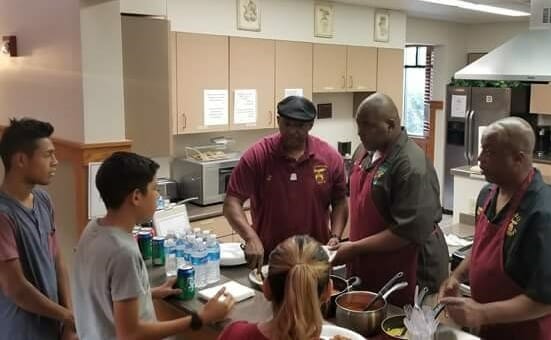
I am excited about the Prince Hall Shriners As Mentors’ program with Burleson Elementary. I recently volunteered to do the read across the district as part of Read Across America campaign and will continue helping out. I am also looking forward to assisting in programs at the Winchester House to help with the life skills of the young men living there.
Why do you think it’s important for others to give back?
Giving back keeps us grounded. Any of us can be in a difficult situation, and by giving back we can make a difference – it might even be a life changing experience that can help them turn their life around.
What do you want people to learn from your story?
I used to be one of these young men. Someone that worked at a crisis home as a volunteer showed that they cared and made an impact on my life. Because of their selfless service and time spent with me, I was very appreciative and in turn wanted to make a difference in someone else’s life.
Do you want to make a difference in your community like Curtis? Visit All for Good for local volunteer opportunities.
Post written by Beth D’Addono.
Maryland Preteen Spends Life Dedicating Time to Serving Others
When most kids think of how they’re going to celebrate their birthday, the imagine a party with all their friends; when they decide how they’re going to spend their weekend, it usually involves hanging out with friends or sleeping in. Twelve-year-old Neev Saraf, however, spends his weekends, birthdays and holidays volunteering — most recently at
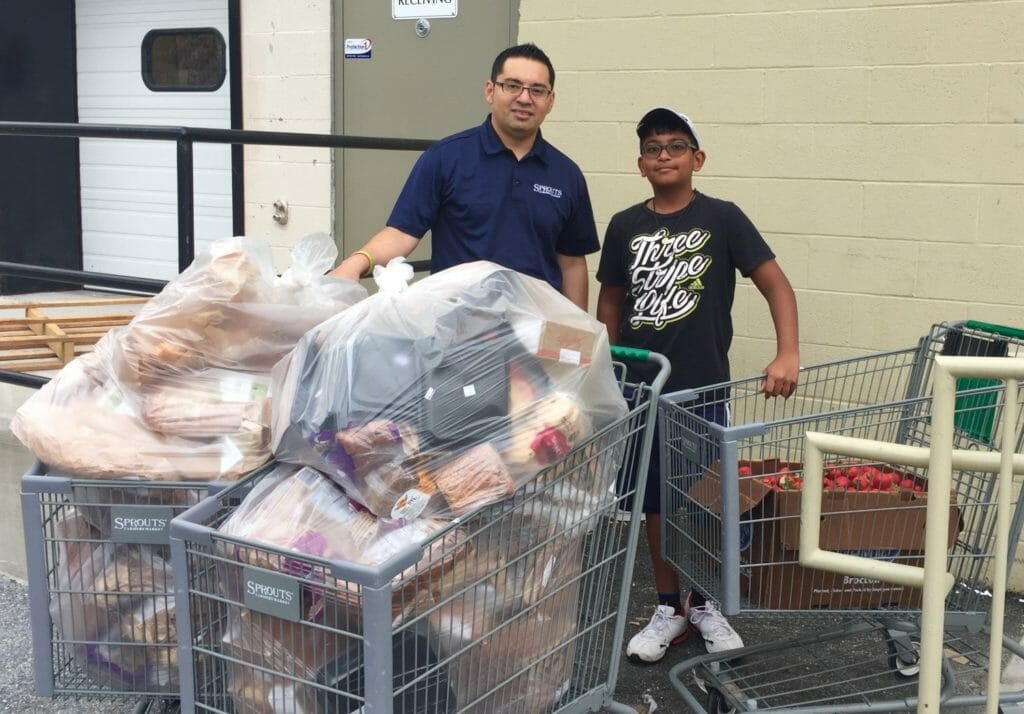
Project PLASE, a nonprofit that provides emergency housing, permanent housing and supportive services to Baltimore’s homeless community. Neev brings donated food to one of Project PLASE’s shelters every Sunday. He and his father, Prakash Saraf, have since started their own nonprofit,
Friends Of Sparsh, in order to collect donations to help better serve those benefiting from Project PLASE.
Neev’s lifetime of service has, quite literally, lasted almost his entire lifetime. When he was four-years-old, he donated a five dollar bill he found on the ground to a homeless man he saw nearby. From that moment on, he knew he wanted to give everything he could to others — whether that meant donating his entire piggy bank to various charities, raising thousands of dollars for victims of the 2015 Nepal earthquake, or collecting and delivering donated food and other items to those helped by Project PLASE.
Due to spending his entire childhood serving others, Neev is today’s Daily Point of Light honoree. Points of Light spoke with Neev and Prakash about how this dedicated preteen serves Maryland’s homeless community.
Describe what you do to volunteer.
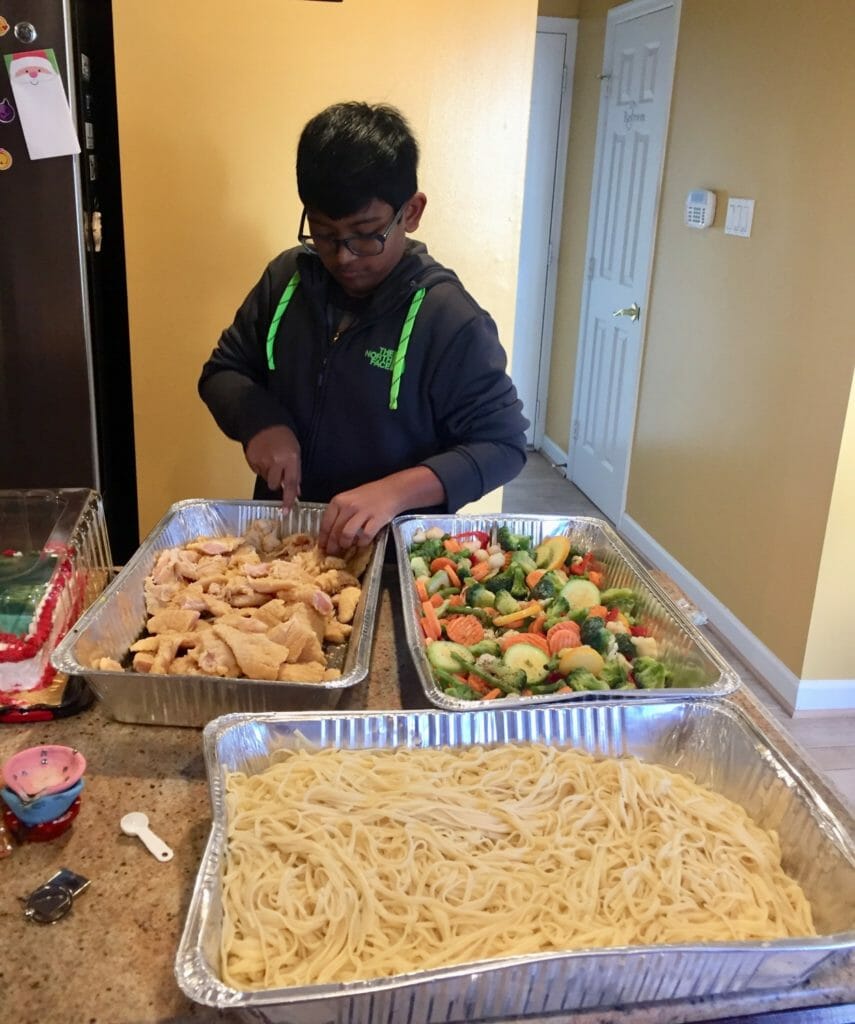
Neev: Right now, I go to Project PLASE every Sunday to feed the homeless. We have restaurants give us food once or twice a month or volunteers will bring their own food and we’ll serve them, all the homeless people.
It started eight years ago in the metro. What happened is, I found five dollars on the floor and it felt like the luckiest day ever. And then I saw one man asking for a little money to get something to eat. And then I decided that this five dollars would mean more to him than it would mean to me. I gave him it. Then when my dad saw it, he decided to start taking me to … another homeless shelter. And then from that we went onwards, and that’s when I started to go to Georgetown and then after that I started going to Project PLASE. It started with my dad. He got in contact with the [Project PLASE] director, and he said how this shelter needed more stuff because they weren’t getting much food and their kitchen burned down so they needed help with food.
Can you talk about Friends of Sparsh?
Neev: Friends of Sparsh is the nonprofit we made and what we are hoping to do is raise more and more money to buy things for the homeless shelter. Right now, we are in the process of saving up money to buy a food truck so that everyday we can bring food to Project PLASE.
Prakash: So we founded this organization about three months ago. We’ve been involved in the homeless community in the Baltimore area for the past eight years. Project PLASE is a place where they put a lot of people from the street into permanent housing. So what happens with permanent housing, they need a lot of stuff. So me and Neev, we put in our Facebook page [what we need], we collect stuff for the people for when they move to the permanent house and we provide them with furniture or clothes or whatever they need. The people from Project PLASE, they call us and they say, hey, there’s a family that needs, for example, some clothes, utensils, whatever they need. So we try to gather all the stuff and get it for them. They have two shelters. One of the shelters, they don’t have very good funds, so now every Sunday we provide food in the shelter. We contacted local restaurants and our friends, people celebrating anniversaries, birthdays, and they bring the food. So every Sunday we provide them food. Next year we are to organize this nonprofit in a better way. We are raising funds for the food truck or maybe to help them to build a kitchen in the shelter so people can come and cook the food. This whole project [Friends of Sparsh] was established with simply me and [Neev] together. We are planning to raise 50,000 dollars, so we will have enough money to bring the food every Sunday, plus we can help them basically with different activities or what they’re going to need. Sometimes they call us and say this family doesn’t have air conditioning. We go buy that for them. Sometimes they call us and say this family needs a bed. So we want to have enough money so we can fulfill all of the families’ needs. Plus we want to start trying to reach more people. The past two years we’ve been helping with Project PLASE — we have 15 families with about 40 kids, we fulfill their wish by buying their Christmas gifts and we get Santa Claus, magic shows, all these things. Plus every birthday and holidays, the last eight years, Neev’s been celebrating in the centers. He goes there with me and celebrates in the shelter. He collects money all year round.
What inspires you to volunteer?
Neev: My inspiration right now is the realization — when you realize there are others out there who really do need more than you do right now. I guess that’s what’s inspiring me to carry on and the dedication.
Why do you think it’s important for others to give back?
Prakash: We are middle-upper class people and a lot of times we don’t see the under belly of society. There are so many things that are happening and we try to avoid it, we don’t look at it, we just ignore it. I work in Baltimore city where I see many families struggling … We can’t ignore them. We try to ignore them, but these people are also the foundation of our society, the basics of society. We don’t know their story when we go to Project PLASE. We [as a society] just judge them, we just think, ‘Oh, they’re dirty, they must be there because of their own fault.’ But sometimes circumstances are there and we don’t know their story. So now when we talk to them, we meet with them, we know what’s happening in their life.
Neev: Adding to what my dad said, we judge them immediately. When you get to talk to them, you know they share many similarities and likes with you and dislikes. For example, I met some people who shared the same interest in football team and many other different variety of sports and food options.
Prakash: So basically, they’re like us but they’re in difficult situations. It’s very important that we have to give back to the community and not ignore it. That’s what I’m trying to teach my son. He’s developing this philosophy and he has a lot of things he doesn’t understand. And for me, what’s important is, when we tell stories to kids, they just listen. But when they look at it, they believe it, they feel it. So now when we take so many kids with us, they see, they feel it, they believe it. They know there are homeless there, but when they meet a homeless person or a person struggling, they feel the pain right away. Seeing is believing, you know? It makes more of an impact.
What’s been the most rewarding part of your work?
Neev: The most rewarding part is to see everyone smile and have a good time.
Are there any future partnerships, programs, or events that you are excited about?
Prakash: The two shelters have about 60 residents, and those kids don’t get any gifts on Christmas morning. We have collected like 60 gifts for them, with the volunteers writing notes for them. We’re going to the shelter on Christmas morning to give them the notes and tell them that there are people who care about them. We already have gifts and everything ready. … This is a shelter where residents stay for a longer time. We feel more connected to them because we see the same people every Sunday. You start connecting to these people, you starting knowing their life. You start knowing about them. That makes a difference. At another shelter, every time there’s new people who come and they go away so there is no connection. But in this shelter … we know many of them by name … We get to look at their life more closely than anybody else. We have founded this nonprofit and hopefully we will get to do much better work. We have big projects to do.
What do you want people to learn from your story?
Neev: I want them to take from it how they can help. Normally when they think about helping the homeless, they think about giving them some money. But there’s a different strategy to it. What I want them to do is, make something called care packages, at least 30 to 40 care packages. What the care packages should consist of are normal everyday needs — toothpaste, toothbrushes, granola bars, water, anything that you would need. And then keep them in your car and whenever you see a homeless person or less fortunate, feel free to give one of them to them.
When you give a care package or when you’re volunteering on Sundays, how do the people you’re helping react?
Neev: They have a big smile on their face. They always say thank you so much. You can tell that deep down they’re very happy and excited that someone is actually looking out for them.
Do you want to make a difference in your community like Neev? Visit All For Good for local volunteer opportunities.
Post written by Morganne Mallon.
Bringing a Dog’s Love to Homeless Teens
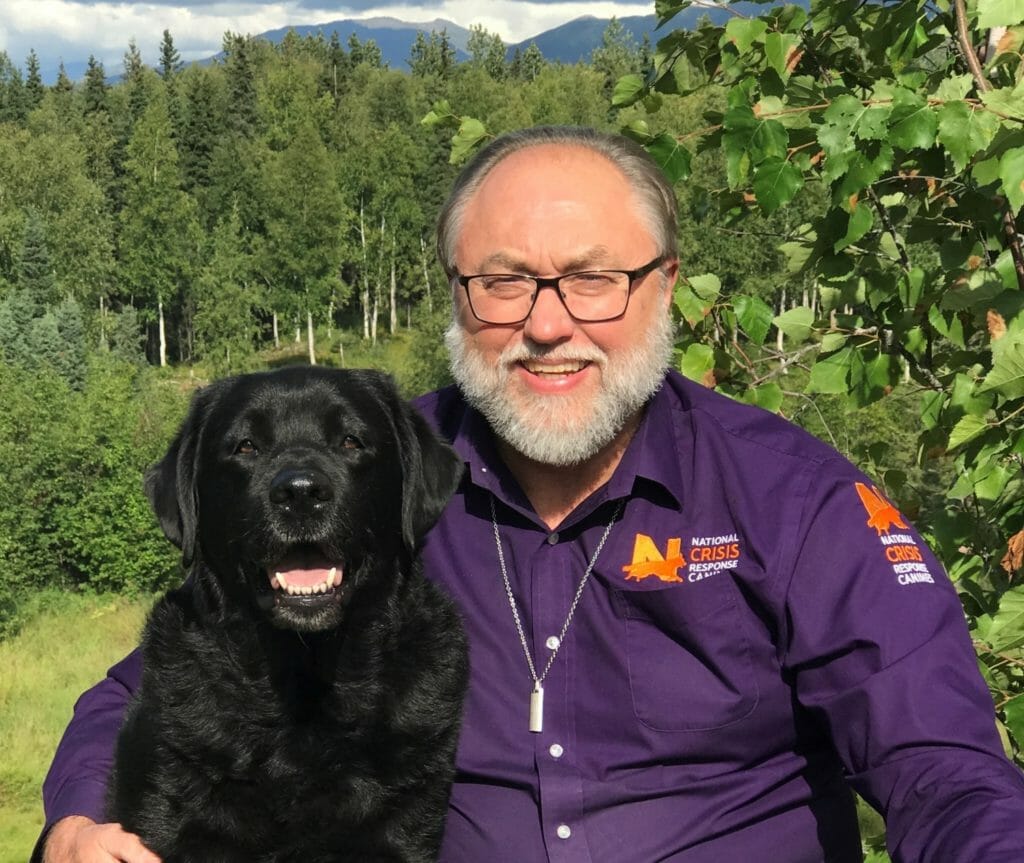
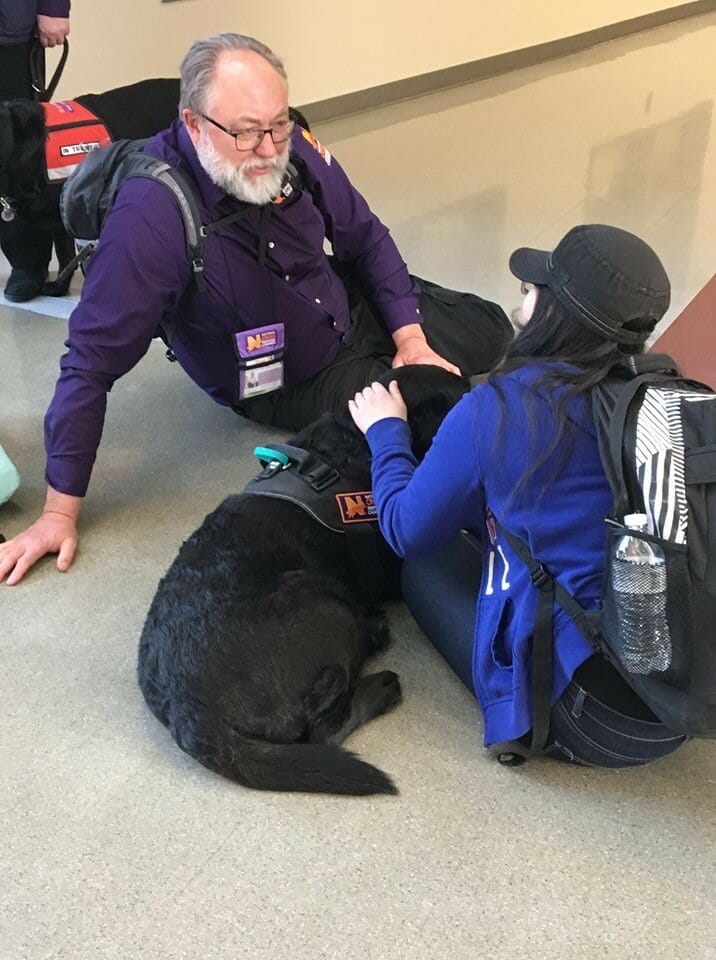
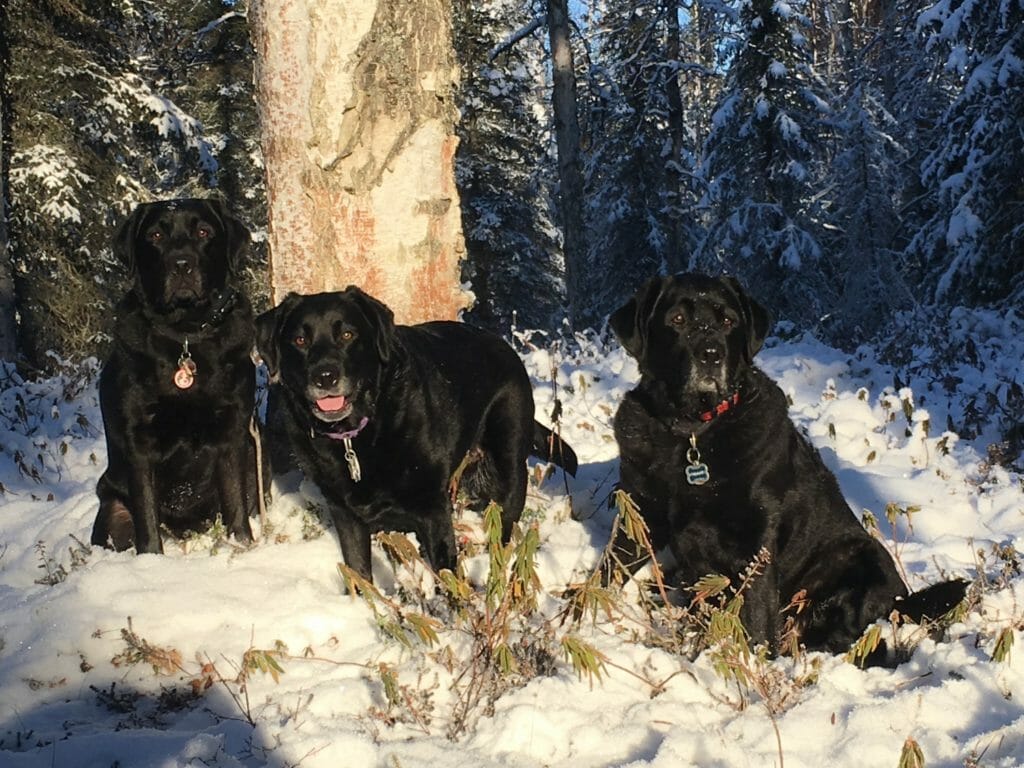
Max and Nyxie take their volunteer roles very seriously. The two beefy black labs are members of National Crisis Response Canines, a non-profit that trains canines and their owners to provide safe compassionate support to people in crisis. The compassionate labs let their owner Dennis Morner get involved too. The trio have been volunteering at Covenant House Alaska for close to two years, serving youth experiencing homelessness in the Anchorage area. Max and Nyxie’s mission (with Dennis’ help) is to harness the power of the human and canine bond to inspire resilience and recovery in people affected by crisis, trauma or disaster, and the responders who help them. Dennis, a retired minister, spends time every week with the organization’s youth and staff, responding to traumatic experiences as they arise. The trio also work with other local non-profits, using the healing power of the dog’s unconditional love and acceptance to make a difference.
Dennis is committed to making a difference in his community and he is today’s Daily Point of Light Award honorees. Points of Light spoke with him about his commitment to service.
What inspires you to volunteer?
Wanting to make a difference in peoples’ lives! As a pastor for 35 years I helped people as a response to all God has done for me. After retirement I wanted to expand beyond the church and into the community. I discovered that using Max, my oldest black Labrador, was a wonderful way to open doors for me with strangers and help people. I had him registered as a therapy dog and began visiting a local hospital and working with a grief recovering program for children and youth through Hospice of Anchorage. I was then invited to be part of six canine teams training to become the first NATIONAL in Alaska.
I have been amazed and humbled by the impact Max and Nyxie (my younger dog) have on victims, first responders, and others. We are now working with Covenant House, and Rights of Passage, the organization’s transitional living program that addresses the long-term needs of at-risk, runaway and homeless kids. It is an incredible privilege to hear their stories and provide some assistance in their journey, even in a small way.
Describe your volunteer role.
At Covenant House, Nyxie and I visit several times a month. I usually let Nyxie lead the way and interact with the young adults sitting on the floor or in a chair. Nyxie is great at simply loving whoever she’s working with. Her presence calms and sometimes as they are petting her, stories come out. It may be sharing what they’ve been through in life, struggles with finding work, loneliness, joy at a new accomplishment, talking about the pets they miss. More than anything it’s just listening; letting them know someone cares about them as a person. There is initially a hesitancy, even a wall, between me and the individual. Nyxie is able to immediately bridge it, and then over time the person begins to trust and share their story. My role also includes supporting staff through the love my canine provides, sharing at least a little of the burden they carry, laughing with them, and sometimes just talking about life.
What’s been the most rewarding part of your work?
It begins with the smile on their faces when they see Nyxie coming up to them tail wagging and eyes eager. There’s the gentle warmth of seeing the young people snuggling with her. I’ve seen children, youth, and adults curl up with, hug, and cry into my canines. Sometimes they will just sit there, slowly petting, looking into their eyes, and I see the tension melt away. There are few things better in life to know I’ve made a meaningful difference in a young person’s life.
What have you learned through your experiences as a volunteer?
I have been amazed to see my canines, especially Max, detect a person in crisis and glue himself to them. He comforts and becomes their protector. I’ve learned that I don’t need to have all the answers as long as I am willing to just listen. If they don’t feel like talking, I’ve learned to be at peace with silence knowing that our presence is enough.
I also had to learn that I can’t reach or touch every hurting person. I only need to be concerned about the person God has put in my path at that moment. When I allow myself to focus on just that one person, amazing things happen. I’ve also learned there are an incredible number of good and caring people in our world. The staff of Covenant House is awesome in working with young people, many who aren’t easy to work with.
To keep from becoming burned out or frustrated I’ve been taught that others pain and problems are not mine. I can’t solve them or take them away. This provides tremendous freedom to be present in even the most difficult situation.
Are there any future partnerships, programs, or events that you are excited about?
I’m excited to continue working with Rights of Passage at Covenant House. In the community there are always new opportunities presenting themselves.
Why do you think it’s important for others to give back?
I don’t believe we were created to just care about ourselves, our immediate families and close friends. There are so many hurting people who only need someone to be there for them … not to solve their problems but to listen, encourage, and help them identify the next step in their journey. When I decided to retire, I told my congregation I was simply moving into another vocation. This has allowed me to meet so many new people and touch so many lives.
What do you want people to learn from your story?
Virtually every day, each one of us have people entering our lives who need a warm smile, a word of encouragement, a listening ear. Just stop and take time for that one person.
We all have unique talents and abilities to share with others. As we give, we also receive back in ways that enrich our own lives. Through my volunteering I have developed some incredible friendships and memories that will be with me the rest of my life. None of us can change the world, but each of us can make a difference in our little corner of that world.
Do you want to make a difference in your community like Dennis? Visit All for Good for local volunteer opportunities.
Post written by Beth D’Addono.
Teen Girl Helps Others Gain Confidence
After being diagnosed with Arteriovenous Malformations (AVM) on her left arm at the age of five, Arlena Occhipinti struggled with her self-confidence and wanted to hide her imperfections. Arteriovenous Malformations are high-flow lesions that appear as a red tumor with palpable pulsation and elevated temperature. The condition caused Arlena to become self-conscious and shy. Then, when Arlena was eight years old, her mother entered her into a scholarship beauty pageant that would change her life.
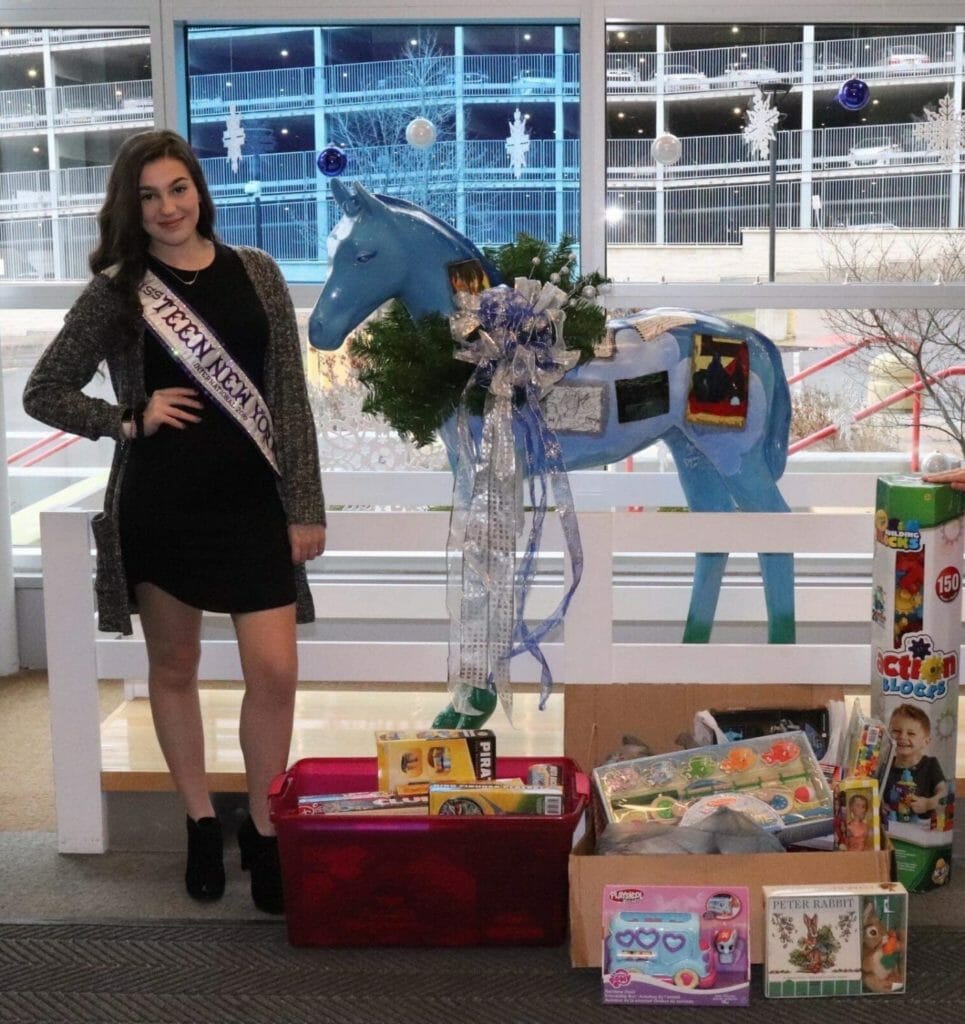
Mentored by strong and empowered women with incredible stories and a love for volunteering changed Arlena’s life. Since then, the now 15-year-old Rome, New York resident, has volunteered more than 4,000 hours with numerous organizations and is committed to making a difference in her community and is today’s Daily Point of Light Award Honoree.
Arlena makes monthly visits to the Ronald McDonald House and is a youth ambassador for NYPENN Girl Scouts, where she travels to central New York and shares her story with other girls through her program, Girl Talk. At their weekly meetings, they discuss topics like building self-confidence, bullying and peer pressure. The recently crowned Miss Teen New York International also helps set up a yearly toy drive and fundraiser which benefits Children’s Miracle Network and for the past four years, she has volunteered at the Shine the Night event with the Tim Tebow Foundation, a prom night experience for people with special needs ages 14 and older.
When asked what inspires her to volunteer, Arlena responds, “Seeing how my volunteer work actually makes a difference inspires me to continue. I’ve seen so many girls gain confidence through the weekly Girl Talk meetings I run. It’s truly heartwarming to see the girls accept them self and realize it’s okay to be different.”
Do you want to make a difference in your like Arlena? Visit All For Good for local volunteer opportunities.
Pennsylvania Teen Teaches Others to Be B.R.A.VE.
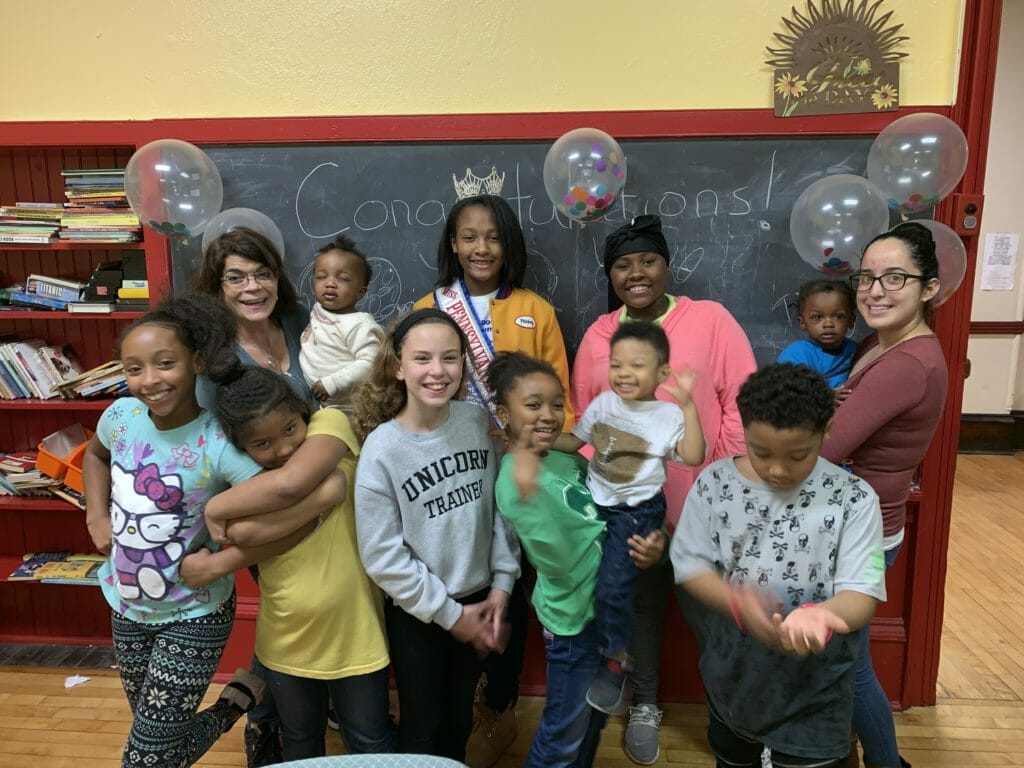
At a very young age, Ajae Richardson learned the power of giving back. Six years ago, Habitat for Humanity helped Ajae’s mother become a homeowner and by doing so, it allowed Ajae the chance at a new and better life filled with better opportunities and revealed a passion for service within her. The now 13-year-old Norristown, Pennsylvania resident is on a journey of her own to give back to her community and improve the lives of those around her.
Ajae volunteers as a Junior Almost Home Facilitator with Habitat for Humanity, helps children who have faced bullying and is starting her own organization, “Kids Helping Kids”. Ajae is making a difference in her community and is today’s Daily Point of Light Honoree.
Points of Light spoke with Ajae to learn more about her volunteerism and commitment to service.
What inspires you to volunteer?
When I was 5 years old Habitat for Humanity help my mom become a homeowner. Ever since we was given a hand up, I made a promise to help other kids who families are becoming Habitat for Humanity homeowners. I was very young but I remember a time when I was not able to go outside to play, because it was not safe. So once we moved into our new home, everything was different. I was given a chance at a wonderful childhood. Better schools and a safe environment. Other kids just like me needed these same opportunities. So I became an advocate for Habitat for Humanity. I spoke at info sessions, I worked at their afterschool programs, and recruited kids in the neighborhood to volunteer at their annual “Rock the Block” Event.
Describe your volunteer role.
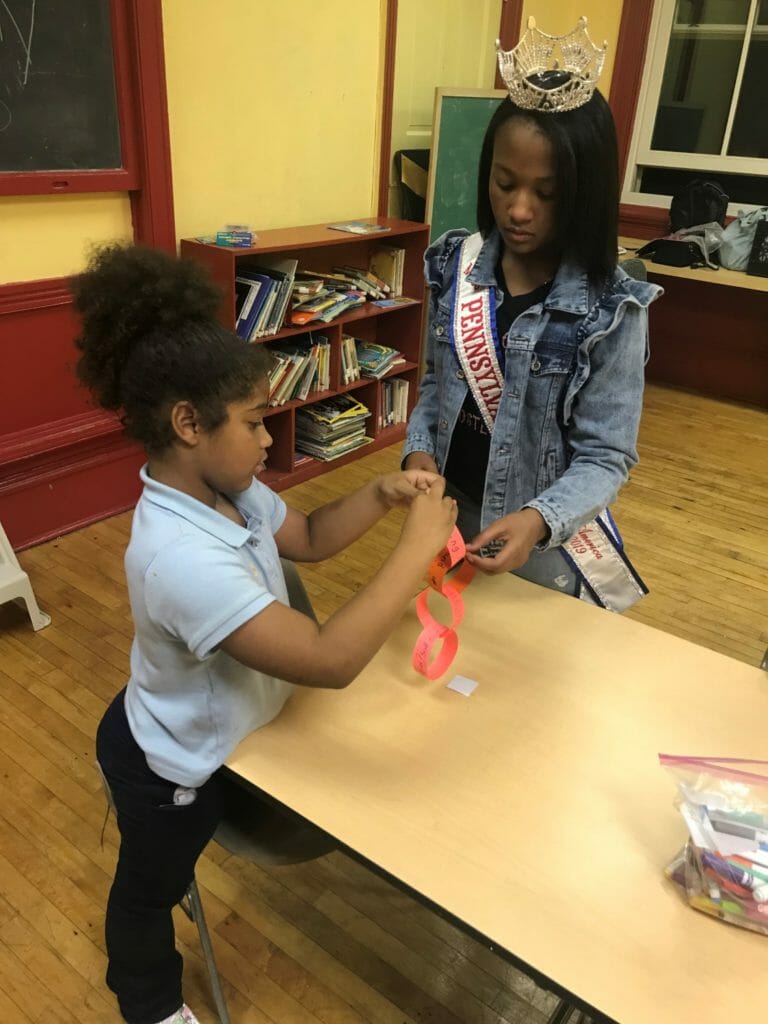
As a Junior Almost Home Facilitator for Habitat for Humanity, I get to lead activities that benefit children whose parents are taking classes for homeownership. As the current Miss Pennsylvania Jr. High School America 2019, my national platform consist of spreading awareness about our anti-bullying campaign. That campaign is called B.R.A.V.E. – “Building Respect and Values for Everyone”. During my sessions, I have lead the children through conversations surrounded by Bullying. We read books that help to prevent bullying, watch videos, made anti-bullying links, discussed ways to handle bullying, and each child was able to sign a pledge stating they would not bully others.
What has been the most rewarding part of your work?
Working with children like myself, who may have been bullied, is always rewarding. Sharing my story and letting kids know that if we work together we can defeat most situations. When talking to each group, I get so excited when everyone is able to open up and feel comfortable sharing. That is why I started an organization called “Kids Helping Kids” because I enjoy helping children younger than me. I also enjoy older student mentors helping me. Just knowing that I could help someone who couldn’t talk to an adult. Also knowing that my organizations, encourages other kids to help each other is the most rewarding part of why I believe my organization is truly making a difference.
What have you learned through your experiences as a volunteer?
There are many benefits I have gain through volunteering. Helping others, has not only gave me lifelong experiences but I have learned a variety of skills. Through volunteering my time, effort and skills, I have learned more than what money can buy. Expressing myself and gaining communication skills through this process is a plus. But the most important thing I have learned is to be helpful, giving, kind, as well as, B.R.A.V.E.
Are there any future partnerships, programs, or events that you are excited about?
I am excited about applying to become a non-profit organization, so that “Kids Helping Kids” will gain 501c status. Becoming a non-profit organization will help me accomplish so much. I want to be able to grant awards and scholarships to kids in needs. Helping kids achieve their goals. And inviting student leaders to join me on this journey. I am excited to see this organization expand throughout Pennsylvania and eventually in every state. It is a dream but dreams do come true.
Why do you think it’s important for others to give back?
In the words of Martin Luther King Jr. “Everybody can be great, because everybody can serve”. If everyone could understand how good it feels to give back to their community, we would see so much good happening and less hate. Being Miss Pennsylvania Jr. High School America, every girl in my circle gives back to their communities and we champion each other to do so. It’s a joyful emotion that comes over you when you are giving back. You forget all your problems because someone else’s needs are more important than your own.
What do you want people to learn from your story?
I am only thirteen years old and I started volunteering at the age of five. It does not matter when you start but as long as you know your power. Some people can’t believe I am so young, doing so much in my community. But I always have to remind them, I am so appreciative because one day someone helped me. That someone is Habitat for Humanity and they have changed my life forever. I am truly grateful because Home is always where the heart is. So thank you for inspiring me to start “Kids Helping Kids”.
Do you want to make a difference in your community like Ajae? Visit All For Good to find local volunteer opportunities.
Fighting Elderly Isolation One Phone Call at a Time
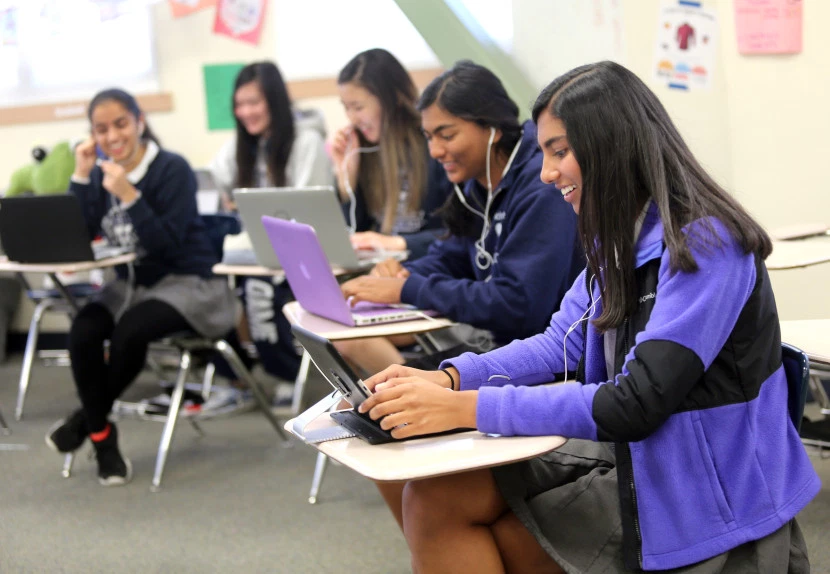
Once a week San Jose, California native, Anika Kumar, and other volunteers come together and connect with close to 40 seniors telephonically. Three years ago, Anika founded Forget Me Not, an intergenerational phone call program that partners isolated elderly with compassionate teen volunteers. By providing seniors with companionship and human interaction Forget Me Not seeks to reduce the isolation, loneliness and sometimes depression older adults might face.
As an undergraduate student at UC Berkeley, 18- year-old Anika also conducts cell biology research to study the biological processes of aging in humans and potential ways to slow it. Anika is committed to making a difference in her community and is today’s Daily Point of Light Award Honoree.
Points of Light spoke with Anika to learn more about her volunteerism and commitment to service.
What inspires you to volunteer?
Volunteering gives me something to be passionate about. It is incredibly humbling to me to know that I, as a single human being, have the capacity to impact someone else’s life in a positive way.
Describe your volunteer role.
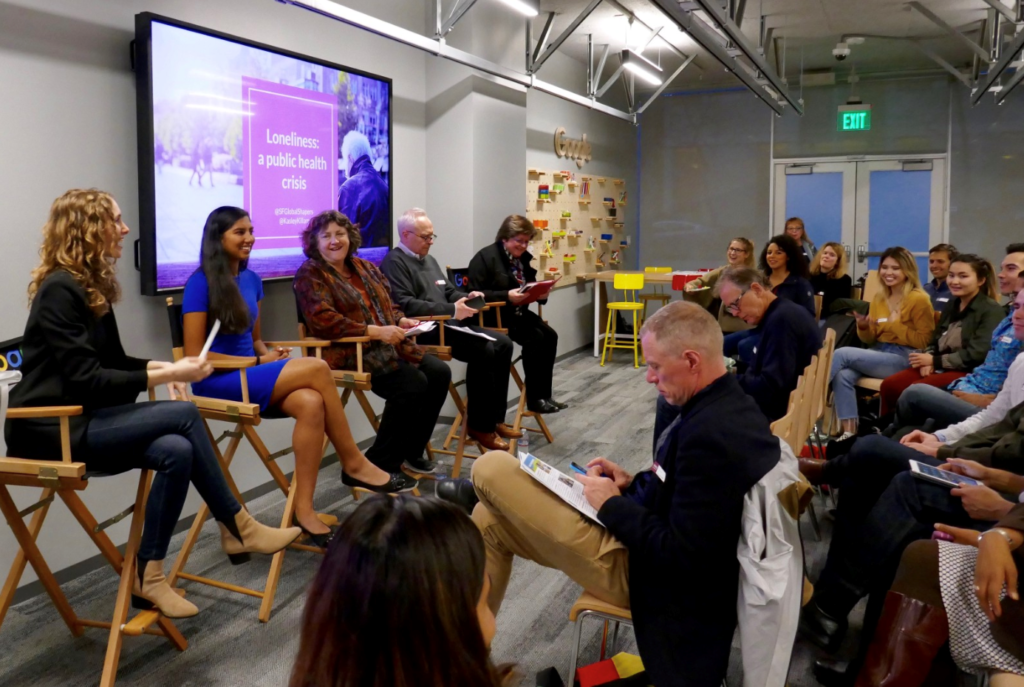
4 years ago, I founded a nonprofit called Forget Me Not that partners socially isolate older adults and compassionate teenage volunteers in weekly companionship phone calls to alleviate feelings of isolation. As founder and director, in addition to making some of the calls myself, I also manage outreach, logistical operations, and expansion of the program. Outside of Forget Me Not, I raise awareness for older adult needs and large scale change to better the lives of this generation. I have spoken on numerous panels and have met with various legislators to advocate for this population.
What has been the most rewarding part of your work?
I started this nonprofit a few years ago with the sole intention of helping alleviate feelings of loneliness in isolated older adults. However, the most rewarding part of my service is seeing how mutually beneficial the program is. Though Forget Me Not was created to serve elders, it is so heartwarming to see how much the teen volunteers get out of it as well. Their older adult companions have so much to share, and watching relationships from between the two generations is the most gratifying experience.
What have you learned through your experiences as a volunteer?
I think the most important thing that I have learned is that volunteering is best when it is reciprocal. Volunteering is not about fulfilling a community service requirement or adding something to your resume. It is all about feeling good about doing good.
Are there any future partnerships, programs, or events that you are excited about?
In the last few months, many students and community leaders from various places have reached out to me about getting involved. Seeing such interest from so many people is really exciting, and now Forget Me Not is embarking on a new phase of national expansion. This will allow us to engage so many more teens and older adults all over the country!
Why do you think it’s important for others to give back?
More than anything, I think it sets a precedent for a harmonious community built upon people helping other people. If we have the opportunity to give back in any capacity, it is our responsibility to. And if we, as a whole community, share this mindset, giving back will always come back full circle!
What do you want people to learn from your story?
I guess my biggest takeaway is that you can find joy and friendship in the most unlikely of places! I’d encourage everyone to put themselves out there and try out some new volunteer opportunities– you never know what you’ll find truly eye-opening and rewarding!
Do you want to make a difference in your community like Anika? Visit All For Good to find local volunteer opportunities.
California Woman Utilizes Passion to Provide Healing to Hospice Patients
Dianne Goswick said she always had an interest in hospice care — so much so that just over two years ago, she decided to walk into Kaweah Delta Hospice and offer to perform her own profession for free in order to help their patients. For the past 19 years, Dianne has worked as a Reiki Master — a practitioner of a touch-based healing technique to help a patient’s physical and emotional wellbeing. The hospice workers at first had no idea what Reiki was, she recalled with a laugh. But since educating the hospice on the practice, Dianne has treated about two of their patients a week. She also frequently treats their caregivers, as Reiki helps treat not only physical pain, but anxiety and stress as well.
“People are happy to see me coming because both the caregiver and the patient know that usually then their pain is going to be alleviated,” Dianne said. She said volunteering for the patients is not only peaceful, but has given her a greater appreciation for her own life.
For helping to provide relief and relaxation to people when they need it the very most, Dianne is today’s Daily Point of Light Award honoree. Points of Light spoke with her about her commitment to service.
Describe your volunteer role with Kaweah Delta Hospice.
I am a Reiki Master, Reiki practitioner. I’ve been doing Reiki for 19 years. For any patients asking for a Reiki treatment, I go out and treat the patients. It’s a very gentle, hands-on modality that helps relax the body. It helps balance the body on a physical, mental, emotional and spiritual level. So it does very, very well for pain, also for anxiety. Often the husbands have huge amounts of anxiety knowing they’re going to be leaving their family, their wife behind. So it’s really helpful for pain and anxiety, it really helps the patients out. There’s one [patient whose] wife has Lou Gehrig’s disease, so I give her Reiki treatment and then I also treat the husband. The husband is on hospice, the wife of course is the caregiver, so I give both sometimes the caregiver and the patient Reiki treatments.
How did you get into Reiki?
Nineteen years ago, I was having infertility issues so a friend of mine told me she was starting to see a person doing Reiki. So I thought well, I’ll give it a whirl, and I just instantly fell in love with it. I just love the relaxation of it. You simply lay on a table, you’re fully clothed, it’s very non-invasive. Just how it balanced me on a physical [level], I had some pain going on a little bit in my body, but then mentally and emotionally — as one of my clients said, he feels like his reset button got pushed. It just gives you a balanced outlook on whatever you’re dealing with.
Why did you want to work with a hospice to give the Reiki treatments?
I was always very intrigued with it and then I had a dear friend, she was like, ‘Oh, with your sense of humor, you would be great at hospice.’ I would always get busy and then finally I was just like, no, I want to go in and see if they have anybody doing Reiki. And they were like, ‘What is this?’ So it’s been a lot of education, which has been fun, educating the foundation folks and then of course nurses and the social workers and anybody who can explain it to the patient to see if it’s a good fit for them. I guess I’ve always been intrigued with hospice for some reason and then finally I was just like, I’m going to go do this and see if they’re interested in having me on board to volunteer. And now it’s full swing.
What’s been the most rewarding part of your work?
Just seeing the patients’ relief from pain, and also seeing the caregiver. I remember, maybe it was eight months ago, this man had a huge amount of anxiety and his wife thought Reiki transformed him. He went from being so wound up to [after the treatment], he fell asleep and she was just amazed. Often they’ll be very relaxed or asleep for like an hour or two after I leave. So just to see the relief in both the patient and often the caregiver, to see the relief from their pain and anxiety, it makes me feel very good that I’ve helped somebody feel better.
What have you learned through your experiences as a volunteer?
I would say one of the biggest things is don’t take life for granted. It’s quite a gift to go in and to be with another person in their last days of life. And then I am able to walk out of their door and get into my car, and drive home to my family and it just makes me appreciate and respect my health and the life that I have. I think before hospice, some of that was taken for granted. But boy, to see somebody in so much pain and agony, it just makes me appreciate what I have that much more.
Why do you think it’s important for others to give back?
Obviously it would help the people you’re helping, [and] I think it helps yourself as well. I think we need to have good boundaries but I don’t think we can ever have too much compassion. Compassion with boundaries, of course don’t sell the last shirt on your back, but if you have a couple shirts, why not reach out and help somebody?
What do you want people to learn from your story?
I would hope that people just would learn to always have compassion for other human beings and if there ever is a chance they can help out another person, I hope that’s what they will do. Have compassion for others. Whether it just be a smile or helping out in anyway we can.
Do you want to make a difference in your community like Dianne Goswick? Visit All For Good for local volunteer opportunities.
Post written by Morganne Mallon.
Sisterhood Makes Impact in Volunteer Circles Across New Jersey and Pennsylvania
They’re not old enough to drive yet, and they can be found in class Monday through Friday during school hours. But when the DiFabio sisters have free time, they channel their energy for good, performing acts of kindness large and small for their greater community.
According to their mother, Alicia DiFabio, the Mullica Hill, New Jersey family started volunteering regularly together in 2013, when their three young girls began participating in service events through what is now The Angels Community Outreach, which offered volunteering opportunities for teens and younger who wanted to help. They started giving back to a range of those in need, from volunteering with seniors, to helping the hungry and impoverished, to providing resources for children like themselves. “That’s when we started realizing that, wow, kids can make a difference,” Alicia said, “and there are so many opportunities in our community to do things.” The girls, Sophia, age 14, Madelena, age 12, and Ariella, age 11, now engage in some formal volunteerism at least once a month often bringing friends and neighbors to join in on the fun, but say there are opportunities every day to pitch in and make someone’s day better.
Giving back to thousands in their community, Sophia, Madalena and Ariella are inspiring their peers to commit to service, and are today’s Daily Point of Light award honorees. Points of Light spoke to the DiFabio girls to learn more about their volunteerism.
What inspires you to volunteer?
Madalena: We’ve been doing it for such a long time and our parents have exposed us to the idea that we’re extremely fortunate and other people aren’t, so it’s natural to help.
Ariella: During the holiday months, we do small acts of kindness just because everyone wants to feel special around the holidays. For example, around Easter or Christmas in my neighborhood, whenever someone’s trash can would get knocked down, I’d go outside and pick it up.
What word do you think of when you volunteer?
Sophia: Happy
Madalena: Joyful
Ariella: Joy
How do you share your acts of kindness with each other?
Ariella: Sophia made a box and when we did something nice, we’d write what we did down, and put it in the box. And then we’d get together and read all the pieces of paper together to share our acts of kindness.
Let’s talk numbers. There are three of you, which has multiplied your impact. Tell me more.
- 1k PB&J & 55k Cookies: Through The Unforgotten Haven, we’ve given back to the homeless population in Philadelphia and Camden, New Jersey by making 1,000 brown bag peanut butter and jelly lunches alongside friends. We also helped to bake over 55,000 cookies for their Cookies for Charity Group.
- 2k Easter Baskets: Through The Angels Community Outreach, we work alongside others at the Easter basket event to make about 2,000 baskets for kids and teens in need.
- 600 Backpacks: Through Robins’ Nest Backpack Drive, we’ve helped to sort thousands of donated school supplies, and filled approximately 600 backpacks each year.
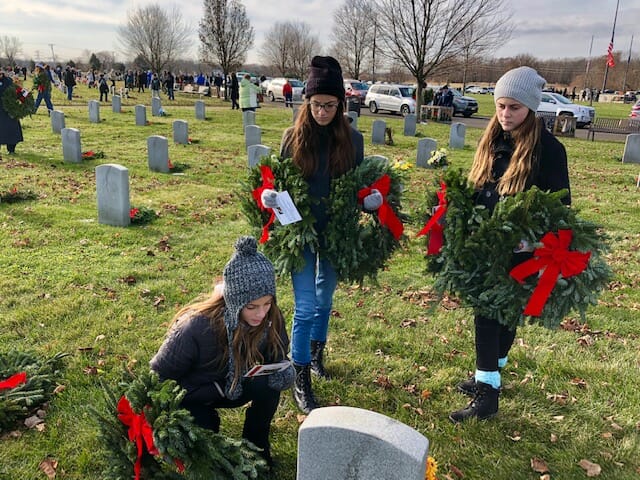
- 7 Years: Through People for People, we’ve helped to lay wreaths for the Wreaths of Remembrance event for 7 years at a cemetery in New Jersey where over 2,700 veterans are buried.
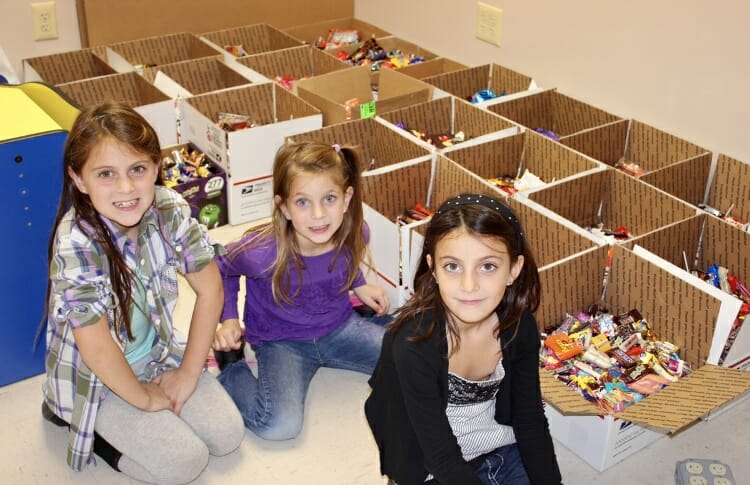
- 1,200 Lbs Halloween Candy: Through Operation Gratitude we have collected over 1,200 pounds of Halloween candy that goes in care packages for US Troops. In 2015, we organized a school-wide candy drive which yielded 773 pounds of candy.
How does volunteering together as sisters change your impact?
Alicia: I feel like together, they’re just a force. What makes it interesting is that they’re so incredibly humble about their service. They’re embarrassed when I brag about them. They really inspire their peer group to get involved as they lead by example. The girls are demonstrating that you don’t have to start a nonprofit or come up with this big project, you can just find the opportunities all around you, show up with a smile on your face and be willing to work.
Sophia: It’s a bonding experience. It brings us closer together, we’re not distracted by reading or a screen, but we’re all just there together, catching up see how each other are doing and doing something amazing for someone else.
How has volunteering changed your family?
Alicia: My husband and I thought we’d be inspiring our children to do good in this world through service, but in turn, we’re inspired…they’re laughing at me now because they know I cry when I talk about their volunteerism. I’m really guided by their kindness and willingness to help people. Sure, I drive them places, I share ideas with them about how to give back, but they’re always looking for new ways to help.
Tell me about your favorite volunteer memory.
Sophia: There’s just so many fond memories. I did the Challenged Champs Kids Triathlon with my friend Claire who has Down Syndrome, the triathlon is for kids with disabilities. Along the race, we’d encourage each other, high-fiving all the time. When she finished the race, she looked like she had accomplished so much. It made me feel good to cheer her on.
Why do you think it’s important for others to give back?
Ariella: It’s important to give back so others can feel happiness just like you can feel happiness.
Madalena: It’s important for people to give back because people don’t realize how lucky they are and how many people aren’t lucky. It makes me feel happy to give to others and it can still be so fun.
What might you want to be when you grow up, and how will giving back be a part of that?
Ariella: I’ll probably always volunteer, but I currently want to become an engineer and somehow help people in that way.
Sophia: I want to go into the medical field, maybe something to do with psychology. I love that environment because you can always help people.
Madelena: I’m definitely going to continue doing volunteering. I’m thinking about being a therapist or guidance counselor, or teacher, to help people as they go through their problems.
Are you happy that your parents have helped to facilitate your volunteerism?
Sophia: It’s so nice, I’m so glad to have volunteering in my life. I’m appreciative, because if it weren’t for them, I probably wouldn’t be doing as much helping as I am.
What future events do you have coming up that you’re excited about?
We help to fill over 1,000 Easter baskets for kids and teens in need through The Angels Community Outreach. Please check their website for more information on how you can help:
https://angelsofgod.org/our-programs/.
Do you want to make a difference in your community Sophia, Madalena and Ariella DiFabio? Visit All For Good for local volunteer opportunities.
Post written by Marlena Militana.
STEM for All is Her Mantra
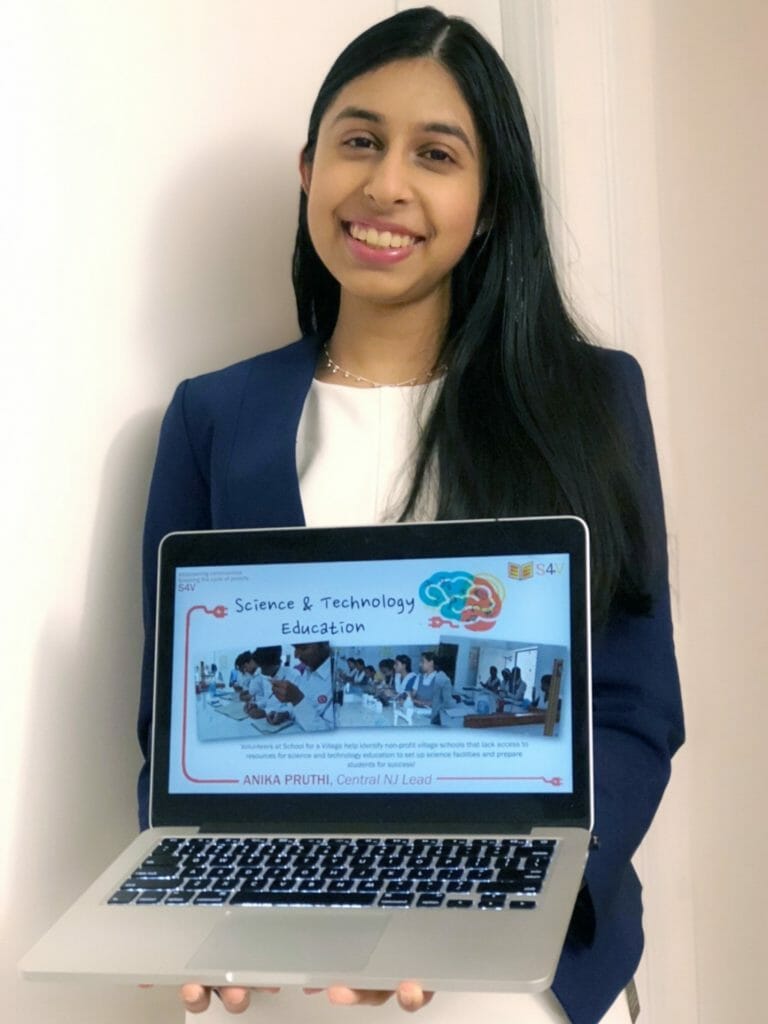
As an 18-year-old senior at The Middlesex County Academy for Allied Health and Biomedical Sciences, Anika Pruthi has a razor-sharp focus on STEM (science, technology, engineering, math) coursework. She plans to become a neurologist specializing in autism and is determined to meet her goal. Anika realizes that she’s been afforded many opportunities, and she sees science as a gateway to success in her life and future. Because she wishes that all students had the opportunity to learn STEM, Anika is one of the co-leaders for the central New Jersey chapter of School for a Village (S4V) a non-profit that promotes STEM education to underserved students. Founded by New Jersey native Anjali Gupta, the nonprofit’s original application was in India, where Anjali’s family roots are. But the youth-led organization
has expanded, partnering with U.S. schools in central New Jersey, where both Anjali and Anika were born. Anika takes great pride in reaching a multitude of students, many non-native English speakers, in this incredibly diverse swath of the Garden State.
Anika is committed to making a difference in her community and she is today’s Daily Point of Light Award honorees. Points of Light spoke with her about her commitment to service.
What inspires you to volunteer?
I was always invested in STEM education, and I’d literally read books and text books in the library, which was my second home. I found that the more I learned, the more confidence I had. And I wanted to share that.
Describe your volunteer role.
I started volunteering in 2012 at my local Westergard library as a tutor in the school’s summer reading program. I teamed up with S4V in 2017, and now serve as a supervisor for our central New Jersey chapter. I recruit volunteers, design the projects, set up social media and Go Fund Me campaigns. To date we have been able to secure $15,000 in donations of money and equipment that has reached more than 700 New Jersey students. The idea is to equip science labs and stimulate learning and thinking – this will all help kids get into more competitive colleges.
What’s been the most rewarding part of your work?
To me, it’s so important that teenagers understand how important STEM is. Adults already understand that. But when young people get it, they can connect with kids their age locally and around the world. They can be learning advocates.
What have you learned through your experiences as a volunteer?
I’ve personally learned how to dispel stereotypes and myths, how to lift and empower communities through STEM. I’ve gotten the confidence to speak in front of people. I’ve had my ups and downs with fundraising and time management. But it definitely is so worth it, when you see kids enjoying STEM and receiving the same opportunities that I’ve had.
Are there any future partnerships, programs, or events that you are excited about?
We are planning a Penny War, a small-scale fundraising program that will have schools competing with how many coins each class can raise.
Why do you think it’s important for others to give back?
For me, it’s not just about a sense of volunteerism. It’s about the joy that comes from helping others. That’s the best part. I feel like we are all obligated to help our community, which has given us something in our lives, even if it’s just moral support
What do you want people to learn from your story?
You should always make a difference even in a small way. Even if you’re scared that what you have to offer won’t make a big impact, you should always try. If we work together, we can help these students achieve their dreams.
Do you want to make a difference in your community like Anika? Visit All for Good for local volunteer opportunities.
Ohio Mom Dedicates Time to Help Feed Local Families in Need
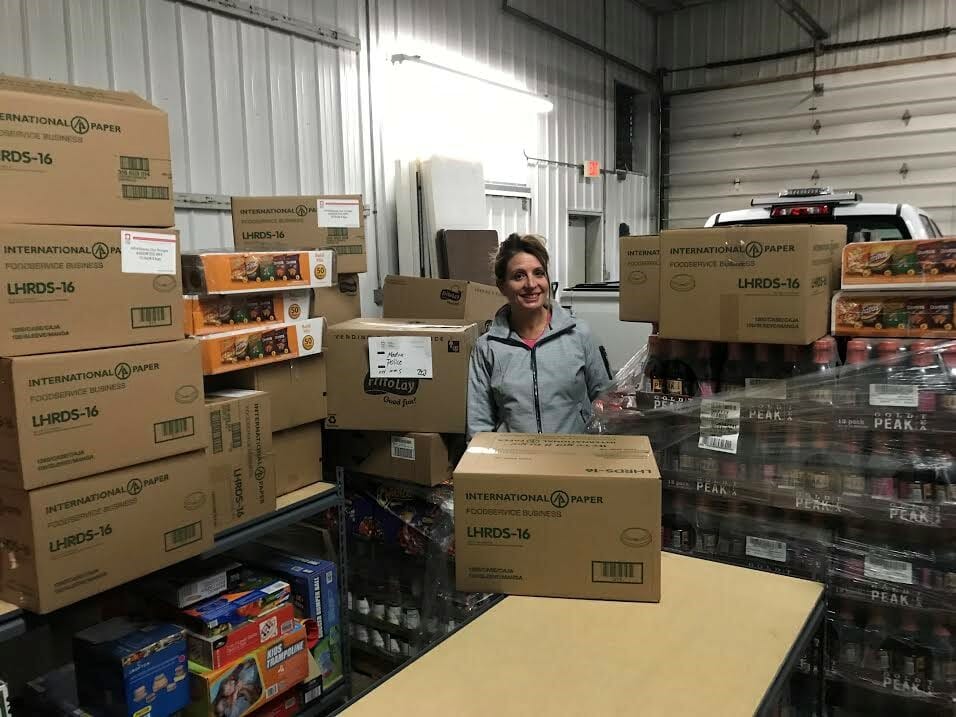
When Renee Haberfield heard the Medina County Police Activities League needed someone to fill the recently-vacated spot of managing their food pantry, it was just natural for her to step in, she said. Her parents raised her to help others in need, and so it was a simple decision to begin dedicating her time to help sort and maintain the food coming through the pantry.
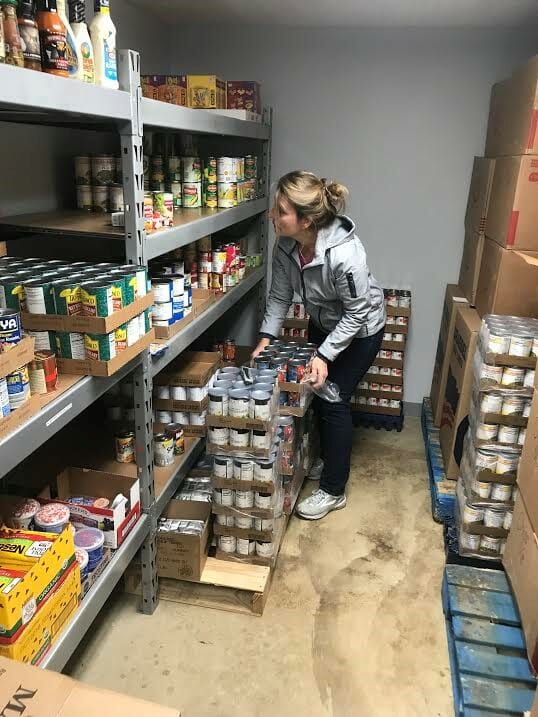
In the three years since, she goes to the pantry at least twice a week to unpack pallets filled with boxes of donated food — about 5-7,000 pounds worth, which comes from both community donations as well as the Akron Food Bank. The food services 21 families a week, who each receive the items necessary to make two meals. Renee then packs the food and sorts the food, a task she takes on by herself — with the exception of when her teenaged daughters, in whom she hopes to instill the same lessons her own parents taught her, pitch in to help. Along with a group of volunteers, she delivers it each week to a pick-up area or even directly to the families’ doors. In addition, she participates in procuring non-food items such as toys for various other programs the League, also known as MCPAL, hosts for the families.
Renee does everything she can to help ensure that the families in need around her area are cared for, and for her selfless dedication to the MCPAL food pantry, she is today’s Daily Point of Light. We spoke with Renee to learn more about how she helps her community.
Describe your volunteer role with Medina County Police Activities League (MCPAL).
My role primarily with the MCPAL program is the food pantry. So it’s a smaller community food pantry where we service families within the school district that are impacted by the MCPAL program. So with our MCPAL program, there are kids who are identified who could use some extra help in meeting needs during the week and our food pantry does our best to meet those needs. We try to provide two meals a week for the families within that program. So I basically care and keep the food pantry, as the pallets come in I unpack them and stock the shelves. Every week, we pack bags for each family that contain the basics for two meals for our families during the week. I pack those bags out every week. We have a great volunteer group of people who deliver those. So we have people who take them to the school, and families pick them up there, and we actually deliver to homes too and I’m a part of that. I partner with the Akron Food Bank where they will invite us to come to different events that they have, where we can get non-food items to help our families. There’s a lot of things we acquire through that too.
What made you want to volunteer for this program?
I think its just something you naturally do. My parents were amazing teachers and they taught us lessons in life; they taught us to see need, and when there is need, that God has given us natural gifts and talents and abilities to meet those needs. I think it’s just a natural thing for me. I know that the smallest things that we can do can make the biggest difference and I’m the type of person who likes to help meet needs. I was raised to give back. My faith is probably the primary reason why I believe that. Just in all aspects of my life, not even in just the food pantry.
What is the reaction like from the families you’re helping?
They’re very gracious. I guess what I’ve learned is, there’s so much need out there. The families are not any different than my family. They’re parents who love their kids and want the best for their families and their struggles are real. Everyone I’ve met has just been so gracious and so appreciative of receiving that food, just to make it a little bit easier for them to make ends meet in their family. Most of the time, to the families we deliver, it’s the kids who answer the door and receive the items and they’re just very grateful.
What is it like for you to be able to share this experience with your daughters?
You know, the saying that it’s better to give than receive is absolutely true. I feel I receive more than I give. It’s a weird concept in life that that could be real but it is so true. I think you learn a lot about yourself when you give to others. That’s what I hope I teach my girls, because one person can make a difference. I hope [they know], like my parents taught me, how important it is to give and when you do that, it doesn’t matter if anybody sees what you’re doing. We may never see the rewards or see what impact we make on people, but when you do give up yourself, it does make a difference whether you see it or not.
What’s been the most rewarding part of your work?
The most rewarding part is knowing — I know beyond a shadow of a doubt — even the littlest things we do make a difference in somebody’s life. I’m more of a back room girl and I’m more of just the labor in the bigger picture of the MCPAL program, but the MCPAL program does a lot for kids in other aspects. One time I went to the Akron Food Bank for a non-food distribution. There’s a whole bunch of food banks there and they put everything in the middle of the warehouse and you go shopping, but you kinda gotta move fast because you have to know what your program’s about; you have to know what you’re looking for because there’s a ton of stuff there. I went there over the summer, and they had a whole bunch of kids’ stuff. Things we could shop for were doll pits and swimming pools and badminton and soccer balls, all this stuff, because our program is more about servicing school-aged children. So I was able to snag some of those things and the MCPAL program put that together, they did a back-to-school ‘shop with a cop.’ All this really cool stuff that we were able to get, the kids were able to go shopping. One little girl in the program … she had one of those items that we were able to [get from the distribution.] The picture of her … you could see the delight in this child’s face as she hugged this item she got from us. That you could just tell [her joy], it just warmed my heart. It’s things like that, just knowing that I can make a difference in somebody’s life or just bring a little joy or a smile to a child’s face, is a reward in and of itself.
Are there any future partnerships, programs, or events that you are excited about?
What is really exciting — food banks are not that glamorous, and it’s something that has been done — but just providing those extra meals at the holidays for families. Getting families turkeys and everything that goes with that on top of the food we provide, and the excitement of [giving them] a complete and wonderful holiday meal, is exciting for me. Those families may not be able to enjoy otherwise. Always being able to service more families, finding those needs and being able to pull people into the program as needed. Knowing that we have the program there for people who need that extra help is exciting for me and it’s something that is continuous and ongoing. It’s just not a one stop. It’s something we can continually serve people throughout the year.
What do you want people to learn from your story?
I think what I would like people to learn is that you learn a lot about yourself when you serve others, and when you get to know others and you’re able to share their experience. You know that people you serve are not that different from you. I’ve learned to be grateful, I’ve learned to reserve judgment, and I’ve learned to accept people and offer assistance. I hope other people can learn that it changes you as a person. It’s humbling. I don’t think that any of us are but an illness or a major tragedy away from somebody who we serve. As I said, it’s not very glamorous but it’s necessary and it’s good. It makes an impact and I’m glad to be a part of it.
Do you want to make a difference in your community like Renee Haberfield? Visit All For Good for local volunteer opportunities.
Post written by Morganne Mallon.