Anuhya Tadepalli
When 18-year-old Anuhya Tadepalli started volunteering, she would go to a senior center and typically, she says, she’d end up playing bingo or other games with the residents that weren’t very exciting.
What if, Anuhya thought, chess was substituted for some of those other boring games? The recent Alpharetta, GA, high school graduate had played chess since she was a child. When she rolled up her sleeves and did the research on the positive effects chess has on mental health, she realized how impactful the game could be.
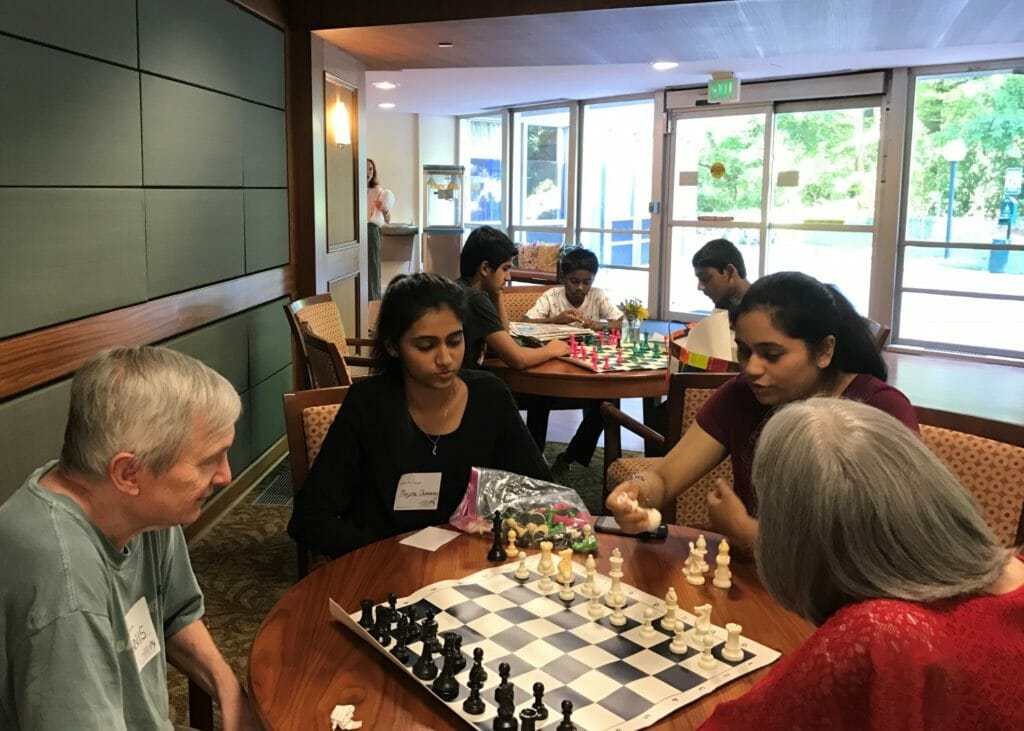
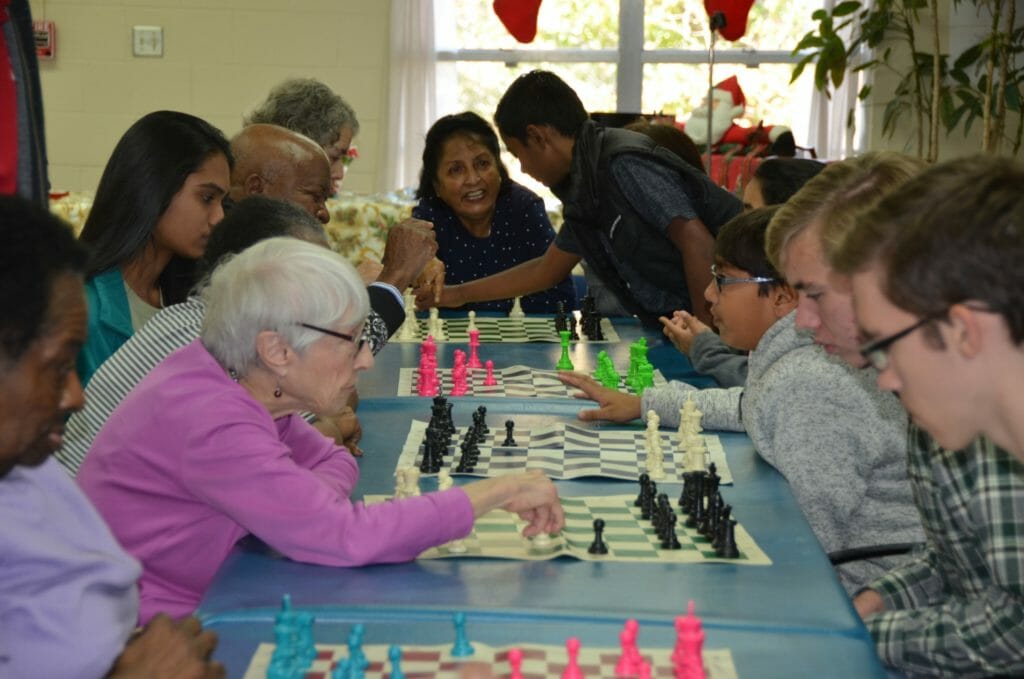
In 2016, Anuhya, along with a fellow high school student, launched Chess for a Cause, an organization made up of student volunteer clubs across the metro Atlanta area that is focused on reducing and reversing the effects of aging-related dementia in adults using the game of chess. Through her organization, which visits senior care, memory care and assisted living facilities, introducing them to the game of chess, Anuhya is making a difference in her community, and is today’s Daily Point of Light award honoree. Points of Light spoke to Anuhya to learn more about her work with Chess for a Cause.
What inspires you to volunteer?
Generally, I enjoy helping my community. I realized I wanted to be involved in health care from a business approach for a career, and volunteering was a way to continue helping people in the same area. For personal reasons, I specifically enjoy going to help at senior centers because I don’t have many interactions with seniors and I like meeting people. Senior centers can be lonely, and it’s fun to meet new people and hear their interesting stories.
Describe your volunteer role with “Chess for a Cause”
I lead Chess for a Cause, but I also volunteer at centers too. If I’m going to a center, I will take 4-5 students with me to help. If it’s a new center, we start with the basics. We’ll set up a presentation and show seniors how the pieces move and different tactics. And then it’s game time!
What’s your favorite chess piece?
I like the queen. She’s the most powerful.
What’s been the most rewarding part of your work?
In the beginning, I didn’t think people would respond so well to playing chess. They seniors seemed so lonely when I first arrived, but when I saw how excited they were playing, it was so nice to see them happy. Even for younger kids coming in to volunteer, it makes you feel good to see you had a positive effect.
What have you learned through your experiences as a volunteer?
Overall, leading other volunteers has taught me how I have to conduct myself in these environments. I learned how to approach people, make them feel comfortable, and be receptive to their needs. Volunteering has empowered me to evaluate the environment, and to be more innovative and make more of a difference. As I do more service, I become a better volunteer.
You’re headed off to Cornell University in the fall. How will you continue your service?
I’ve looked up senior centers near Cornell, I’m talking to some professors there to see if we could launch an initiative at the university studying the impact of chess at senior centers. Back in Georgia, Chess for a Cause will be continued with our younger club members.
What’s your life motto?
“No regrets.” I like to try to do my best. That means if I have an idea, I’ll test it out and see if I fail rather than thinking about it and not taking action.
Why do you think it’s important for others to give back?
For students, especially, they don’t realize how rewarding it can be to volunteer. At first, it seems like a lot of work, you might have to wake up early on a Saturday and a teenager might not be excited about that. But after you finish volunteering, you feel really good inside. I don’t think people realize how good it makes you feel and how you see things in a different light after you volunteer.
What do you want people to learn from your story?
Don’t just be a robot while volunteering. Create new solutions to the already established practices. I never thought I’d combine my love for chess with volunteering, but I realized that chess had a bigger purpose than just serving as my passion. It’s now helping others.
Do you want to make a difference in your community like Anuhya Tadepalli? Visit All For Good for local volunteer opportunities.
Post written by Marlena Militana.
After Sister’s Cancer, Firecracker Septuagenarian Spreads Joy at Cancer Center
Loretta Brunetti is described as having the energy of someone in their 20’s. The high-spirited 77-year-old from Tulsa, Oklahoma naturally rises early and is off to the races each morning, but it was losing her sister to cancer that made her find what’s become her life’s passion: giving back at a local cancer treatment center.
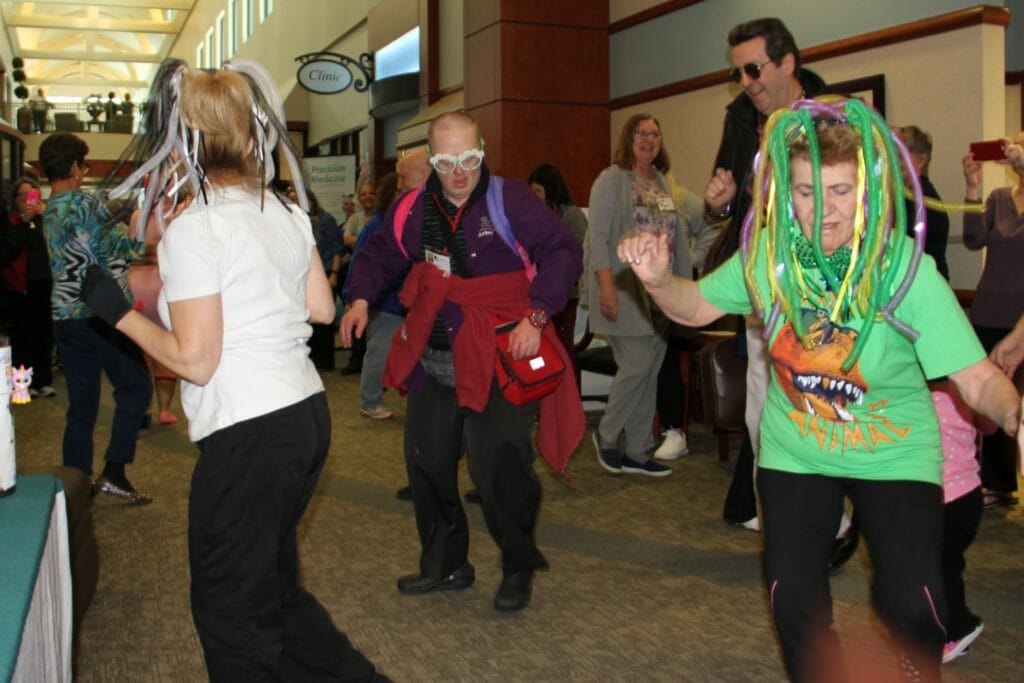
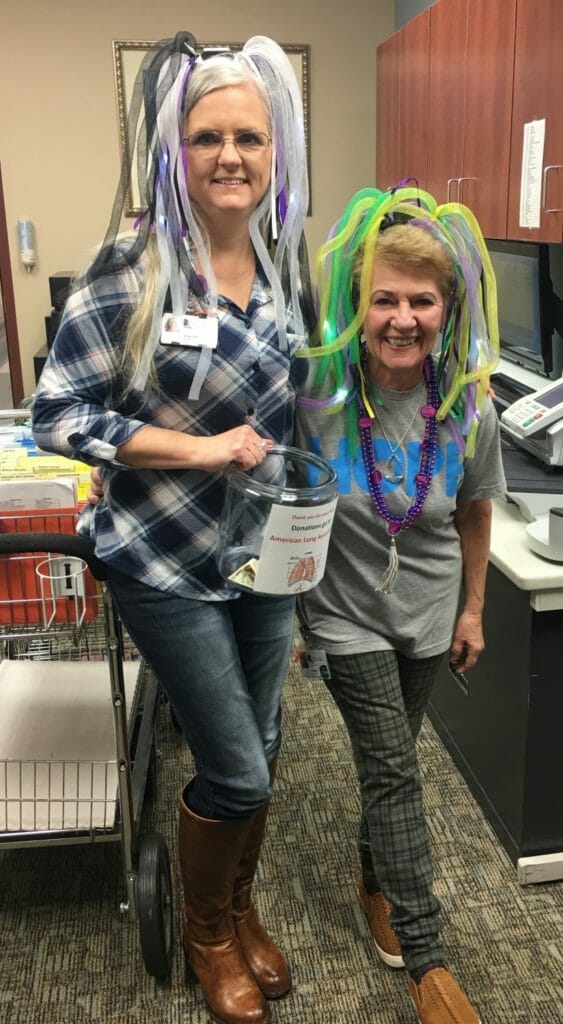
Loretta is easily recognizable at the Cancer Treatment Centers of America Tulsa, where she volunteers her time and energy, giving back to those fighting cancer. Putting on weekly flash mobs, karaoke nights, and just about anything else that involves laughing, dancing or fun for the patients, Loretta is today’s Daily Point of Light award honoree. Points of Light spoke to Loretta to learn more about her work with CTCA.
You wrote a poem about what inspires you to volunteer. Can you share it?
Today I made someone smile / It may have been for a little while / But this special patient / Was going thru tests / Her heart was heavy / But she knew she was blessed / She didn’t know how long would be her stay / So I gave her a hug & she went on her way / It only takes just a little while / To take time out to make someone smile.
Describe your volunteer role with CTCA.
I first started a walking class at CTCA, now we do flash mobs, karaoke, activity fliers, raffles. A lot of patients are fearful because they’re far away from home. I’ll visit patients that are going to be operated on, or have just come out from an operation. I’ll do just about anything I can to make them smile, and make them feel comfortable.
You give others hope through song and dance. Explain.
A cancer patient I hadn’t seen in two years recently came back to our karaoke night. His vocal cords had been paralyzed due to his disease, and he’d been told before that he’d never sing again. His treatment had improved him, and he got up for us and sang 10 Elvis songs. Things like that really inspire me.
What’s been the most rewarding part of your work?
I lost my sister after the first year that I started volunteering for CTCA. I volunteer for myself, but her too. To see patients that are going through the struggles of radiation or chemo actually come up and tell me – ‘Hey, you made me smile today!’ or, ‘Hey, when are we going to dance?’ It just makes you want to stay there, and then go back the next day and help more.
You’re the Flash Mob queen at CTCA. Explain.
I’m the leader, sometimes nurses or a doctor will join in for about 20 minutes of freestyle dancing. Patients and caregivers will be coming down the elevator, hear music and see us dancing, and join in. A lot of times I’ll see people in wheelchairs stand up and dance for a bit. A lot of people schedule their appointments for Thursday’s just so they can be there for the flash mob.
What have you learned through your experiences as a volunteer?
I’ve learned that I should have started volunteering a long time ago. I mean that in all sincerity. Nowadays everyone is so busy, and I thought that for a long, long time. But there’s always time to help people out.
What event are you most looking forward to?
During Christmas, we dress up in outfits – Santa Claus and other Christmas outfits, and dance. This is an upbeat place. It’s the people that make it special, the doctors, nurses. It’s not just Loretta. The treatment center is where my heart is.
Why do you think it’s important for others to give back?
Sometimes a lot of people are going along in life, and they’re not really happy, and you never know how happy you could be by volunteering. It’s that giving that gives you joy – you’re the one that’s getting, when you’re giving.
What do you want people to learn from your story?
I hope that when you read my story, for those who say they don’t have enough time to volunteer, I’d tell them: that’s the only thing we’ve got left in this world, is time. We can always make the time to help someone else out.
Do you want to make a difference in your community like Loretta Brunetti? Visit All For Good for local volunteer opportunities.
Post written by Marlena Militana.
Advocate for Alaskan Malamutes Promotes Adoption into Safe Homes
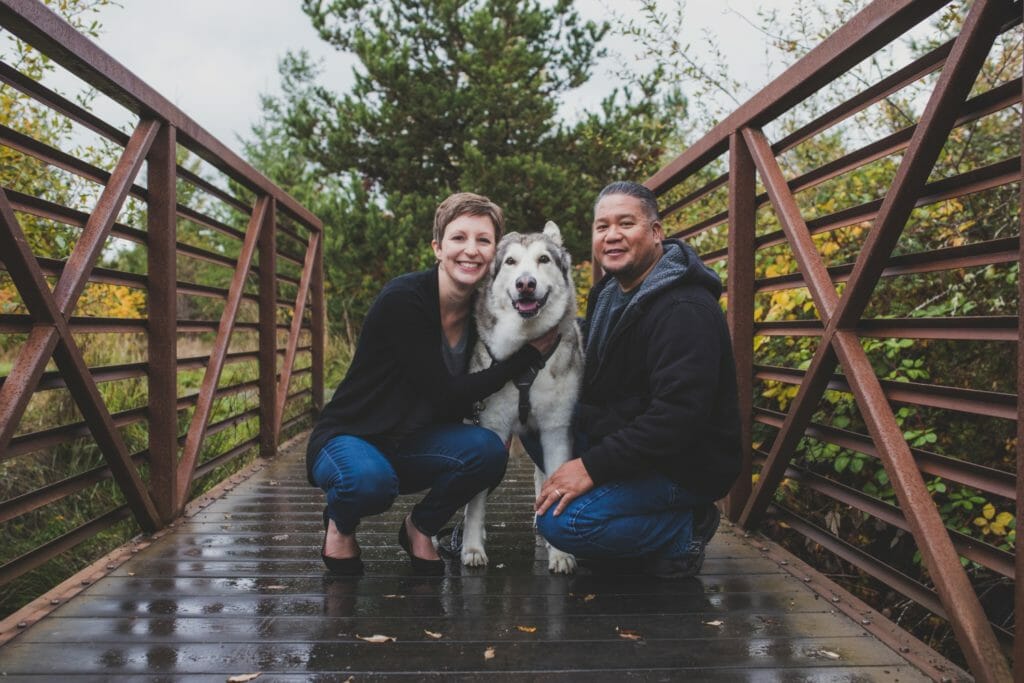
According to Jaime Perez, her volunteerism started with one furry friend – her beloved adopted Alaskan Malamute, Glacier.
Perez, a 36-year-old from Silverdale, Washington, who is a program manager for the U.S. Navy, was looking to adopt a dog in her area when she found the Washington Alaskan Malamute Adoption League, otherwise known as WAMAL. When Glacier joined her family it wasn’t just the start of their life together, it was the start of something greater. Her experience inspired her to became a volunteer and advocate for dogs in need.
As a member of the WAMAL board of directors, Perez serves as a leader for the organization, and works daily to make sure Alaskan Malamutes in her area find their forever homes. Since 2010, Perez has helped to coordinate over a hundred adoptions through WAMAL, and is today’s Daily Point of Light award honoree. Points of Light spoke to Jaime to learn more about her work with WAMAL.
What inspires you to volunteer?
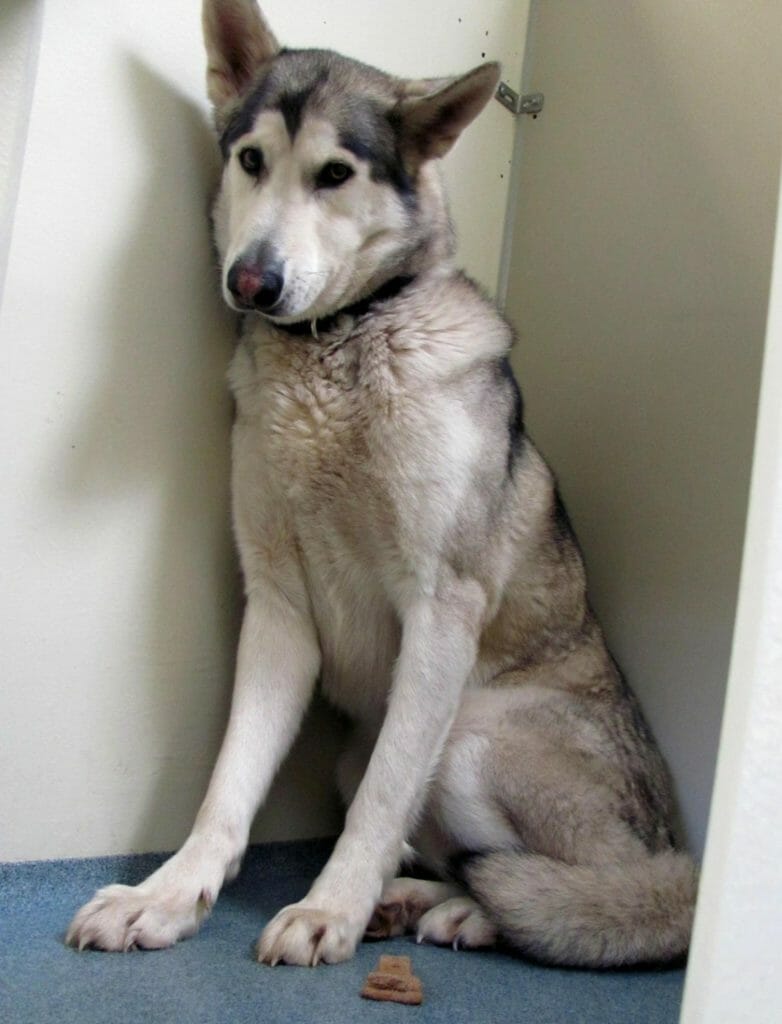
I was inspired by my initial experience of adopting my dog Glacier through WAMAL. Glacier was the first dog I had as an adult, and he came with a lot of baggage. He was very afraid of almost everything – the first time I opened an umbrella, the poor guy was terrified. Working through all of that with him, and realizing what a need there was in our community for dogs just like Glacier, I decided to get more involved.
Describe your volunteer role with WAMAL.
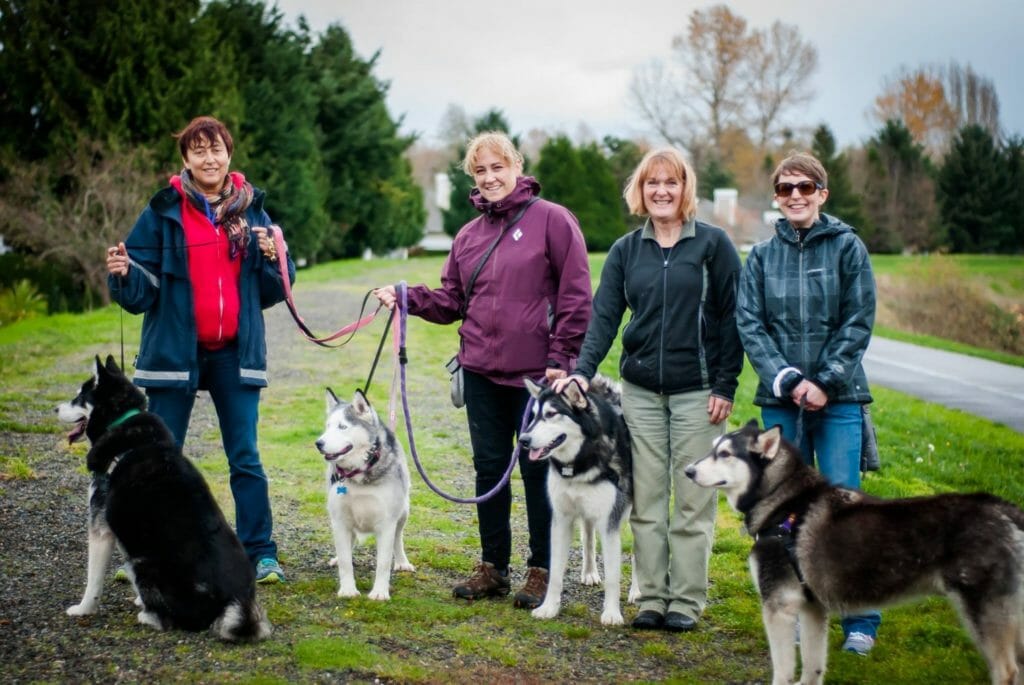
In in addition to serving on the board, I’m currently helping with shelter coordinator duties. We work with local shelters so that when they receive Alaskan Malamutes, they come to WAMAL. Malamutes are loyal and playful, but they can be a very challenging breed, they’re very hierarchal in their pack structure and are very strong. They truly need a tailored rescue effort to make sure they are in the safest environment possible while we look for their forever homes. I also coordinate getting home visits done and working through the approval process for each adoption or foster application we receive for our rescues.
What’s been the most rewarding part of your work?
The greatest joy I get is when we can give that comfort to a dog that has been through a lot. The majority of the dogs we see have faced a lot of challenges. One of the first dogs I transported was about 30 lbs underweight. He was a stray, but a total love. You just wanted him to pet him, and you could feel every little rib on his body, he was so thin. We found a home for that dog pretty quickly, and he is now just thriving.
What have you learned through your experiences as a volunteer?
WAMAL helps dogs in Washington and Oregon, so we have a very diverse network of volunteers and situations. I’ve learned that rescue is incredibly complex and more emotional that I would have thought possible. From seeing a dog who’s been through a traumatic situation, or hearing about families that need to rehome their dogs and how upsetting that can be – it can be an incredibly emotionally taxing process.
Are there any future events that you are excited about?
We have a number of events year-round. Visit our website for more information: http://www.wamal.com/.
Dogs can’t communicate verbally to you when something is wrong like humans can. How does that change the work you do?
The pictures we get from their new families are worth a thousand words. We recently got a photo of a dog who’d been adopted, the new owner and his wife wrote that the photo showed the pup’s “new favorite spot”. It was a photo of this 85 lb Malamute, sitting on the husband’s lap, as close to husband as possible. They have that grin on their faces when they’re content – it’s those photos where you can tell they’re settled, they’re happy.
Why do you think it’s important for others to give back?
Giving back is important because you’re able to find something that speaks to you personally, and feel that you can make a positive difference. I love my career and find it incredibly fulfilling, but non-profit work is very fulfilling in a different way. Anyone who has the opportunity to make a positive impact – even if it’s just for one person, one animal, one area of the country – it’s fulfilling.
What do you want people to learn from your story?
We all have busy lives, and it’s hard to know who to reach out to to help. Keep your eyes open and evaluate the need – and then jump in and help.
Do you want to make a difference in your community like Jaime Perez? Visit All For Good for local volunteer opportunities.
Post written by Marlena Militana.
Teen Combines Brains and Heart to Give Back and Promote Science Education
18-year-old Karishma Muthukumar describes a “spark” that inspired her journey to promoting neuroscience education for students.
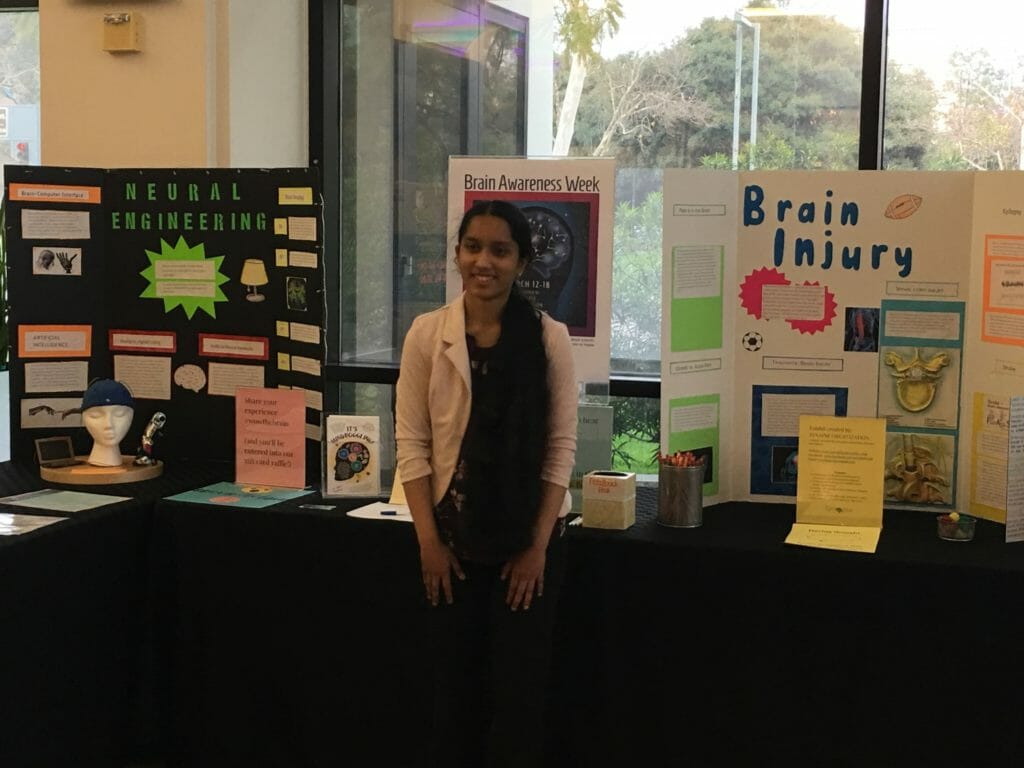
While volunteering at a brain injury center, the recent high school graduate says a stroke survivor held her hand, and thanked her for her impact. That one exchange was a literal “synapses firing” moment – and led to the creation of Synapse, an organization founded by Karishma dedicated to promoting neuroscience education and outreach, by teaching students about scientific innovation and the mind.
Through Synapse, Karishma and her team have organized neuroscience exhibits, bimonthly workshops, and volunteer opportunities for younger students. Partnering with local schools, brain injury centers and more, Karishma is serving her community and beyond through her service in science, and is today’s Daily Point of Light award honoree. Points of Light spoke to Karishma to learn more about her work with Synapse.
What inspires you to volunteer?
I started volunteering at a brain injury center, and there was a stroke survivor there who held my hand and told me that she was really thankful for my impact on her life. That was really the spark that inspired me to do more, leveraging my interest in the brain to do good.
Describe your volunteer role with Synapse.
I volunteer at the Alzheimer’s Center twice a month and each week I volunteer at the brain injury center. On a day-to-day basis, we volunteer and teach at local middle and elementary schools. We host interactive workshops and summer courses for students, offering them fun and interactive ways to learn about the brain.
What’s been the most rewarding part of your work?
Seeing the smiles on students’ faces makes it all worth it to me. It’s also rewarding to receive feedback from our students, and hear how our workshops have revolutionized their thoughts on the brain and neuroscience.
How are you paving the way for the future of neuroscience?
We’re exposing these students to ideas and skills that they may have never considered before, especially with neuroscience. Through our classes, these students are considering careers in science – a field they may have never before given thought to. Synapse might inspire a whole new generation of future scientists and neurologists.
What does volunteering mean to you?
Volunteering is not about showing up at a place, but it’s about taking leadership and being able to solve problems. Volunteering is about adding value, and making the organization even better.
Are there any future programs that you are excited about?
We’re continuing our workshops at elementary schools, and we’ll host dozens of brain awareness exhibits throughout Southern California in March 2019 for Brain Awareness Week. These exhibits can be found at hospitals, libraries and more. Check out our website for more information: https://www.facebook.com/wowthebrain/
What’s your personal motto?
Sincerely with a smile.
Why do you think it’s important for others to give back?
We take a lot from people, so it’s just as important to give back. During times of need, there are people who give back to us. This is especially true for people who have brain injuries or Alzheimer’s. It’s critical that they receive the attention, self-care and wellness that they so desperately need.
What do you want people to learn from your story?
You can start small and really grow bigger and make a change in any organization you enter. Volunteering involves leadership, creativity, organization. You don’t have to be a certain age to volunteer, you can really impact someone’s life at any age.
Do you want to make a difference in your community like Karishma Muthukumar? Visit All For Good for local volunteer opportunities.
Post written by Marlena Militana
Professor Aligns Career with Personal Life Helping New Refugees
Dr. Mary Helen O’Connor is an Assistant English Professor and a Senior Faculty Associate at the Office of International Initiatives at Georgia State University, but teaching isn’t just a day job for this Decatur, Georgia resident.
Mary Helen started aligning her professional work and personal life after finding that her classroom had become a destination for new refugee and immigrant students who were trying to navigate the university and its systems. Co-founding the Mentoring Initiative for New Americans (MINA) in 2016, Mary Helen works to welcome new refugees and immigrants, connecting them with others in the community and opportunities for jobs and education.
Dedicating her time to advance the lives of people in need, Mary Helen is today’s Daily Point of Light award honoree. Points of Light spoke to Mary Helen to learn more about her work with MINA.
What inspires you to volunteer?
My life’s purpose is to help. That’s what I’m charged with each morning that I wake up. The relationships I have with my students give back to me exponentially, in return for the small things that I do for them.
How has your perspective on volunteering evolved?
I grew up next to a Jewish refugee family from Eastern Europe who came here through Ellis Island, and I wrote my first research paper in 6th grade on immigration. I’ve had had an awareness of what it means to be an immigrant in the U.S. since I was a small child, and ever since, it’s been a personal driving interest of mine.
Describe your volunteer role with MINA.
I’m the faculty advisor, which means I raise the money and help to manage the kids in our program. I do a good deal of interfacing with different parts of the institution including admissions and financial aid. I also do a lot of advocacy within the community to spread interest and awareness.
What’s been the most rewarding part of your work?
One of our program participants from Iran had participated in our tutoring and she went to our monthly educational meetings. She is a trained lawyer at home, and holds advanced degrees from her home country, but she was struggling because she wanted to go college here and be able to secure work opportunities in the U.S. Because of the program we put together – she’s going to college this summer! That’s a big deal, it’s life changing.
What would the title of your autobiography be?
“Making a Difference One Refugee at a Time”
What have you learned through your experiences as a volunteer?
Having kids, of course, teaches you a lot about how you influence people. I think that volunteering is a part of who I am – it’s not necessarily just something I do. I wanted it to be an example to my children about how to live a happy life. I really do believe that giving to and helping others who are in need is how you find happiness. My work has sustained me through the most difficult parts in my life. Volunteering is not a choice when I wake up in the morning, it’s just something I do.
How do you want to be remembered?
I want to be remembered for helping people when they needed it. A high school friend of mine recently reached out to me – he was from Vietnam, and he told me how much he’d appreciated me sitting with him and his friends at the lunch table when we were students, not treating him any differently than any other student at school. He sent MINA a $500 donation because of how I’d treated him, all those years ago.
Are there any future partnerships, programs, or events that you are excited about?
Georgia State and Emory are working together on a community-wide summit to help refugee students and immigrants. With all the challenges we currently face in the U.S., building this coalition right now is like swimming upstream – we need all the help we can get. Check out website for more information on the summit: https://international.gsu.edu/join-us/.
Why do you think it’s important for others to give back?
Because it’s the solution to all our problems. It sounds really simple, but if we just learned to be a good neighbor, I truly believe we could solve many of our problems.
What do you want people to learn from your story?
All it takes is something small. To be a good neighbor or good volunteer, it can be as simple as dropping off old books to a book sale, or taking a new neighbor to the grocery store. You don’t have to invest your whole life. I don’t perform miracles. I send a few emails, fix small problems for people here and there. Because of these small things, I am helping people navigate cultural and institutional barriers. That’s all I do.
Do you want to make a difference in your community like Mary Helen O’Connor? Visit All For Good for local volunteer opportunities.
Post written by Marlena Militana.
California Teen Empowering Those Vulnerable to Human Trafficking and Child Marriage
Sakshi Satpathy is a rising high school senior, but the Palo Alto teen says as a child, she had a strong awareness of some very adult issues. The 16-year-old grew up hearing heart-wrenching stories of young girls being forced to marry early, or girls who had fallen victim to trafficking in South Asian countries.
Hitting even closer to home, Sakshi says she was motivated to take action and promote human rights for girls when she discovered that incidents of trafficking and child marriage exist in several parts of the U.S. Through Project GREET (Girl Rights: Engage, Empower, Train), Sakshi has been able to develop resources to increase awareness, help communities to better identify the red flags of human trafficking and child marriage, and provide opportunities for people to help individuals most at risk.
Through resources, videos and the internet, Project GREET has educated nearly 3 million individuals about to the risks this vulnerable demographic face. Sharing tools to maintain rights for girls and women, Sakshi is today’s Daily Point of Light award honoree. Points of Light spoke to Sakshi to learn more about her work with Project GREET.
Explain what Project GREET stands for.
Project GREET stands for Girl Rights: Engage, Empower, Train. This initiative was something I created for my Girl Scout Gold Award Project. I worked with several organizations to design, implement and distribute my project artifacts for the program.
What inspires you to volunteer?
I’m passionate about human rights, particularly women’s rights, and I work each day to empower women through Project GREET. Through activism with organizations I’ve been involved with, and individual research, I learned more about the pervasiveness of gender inequity, child marriage and human trafficking, and I was inspired to tackle these issues through my project.
Describe your volunteer role with Project GREET.
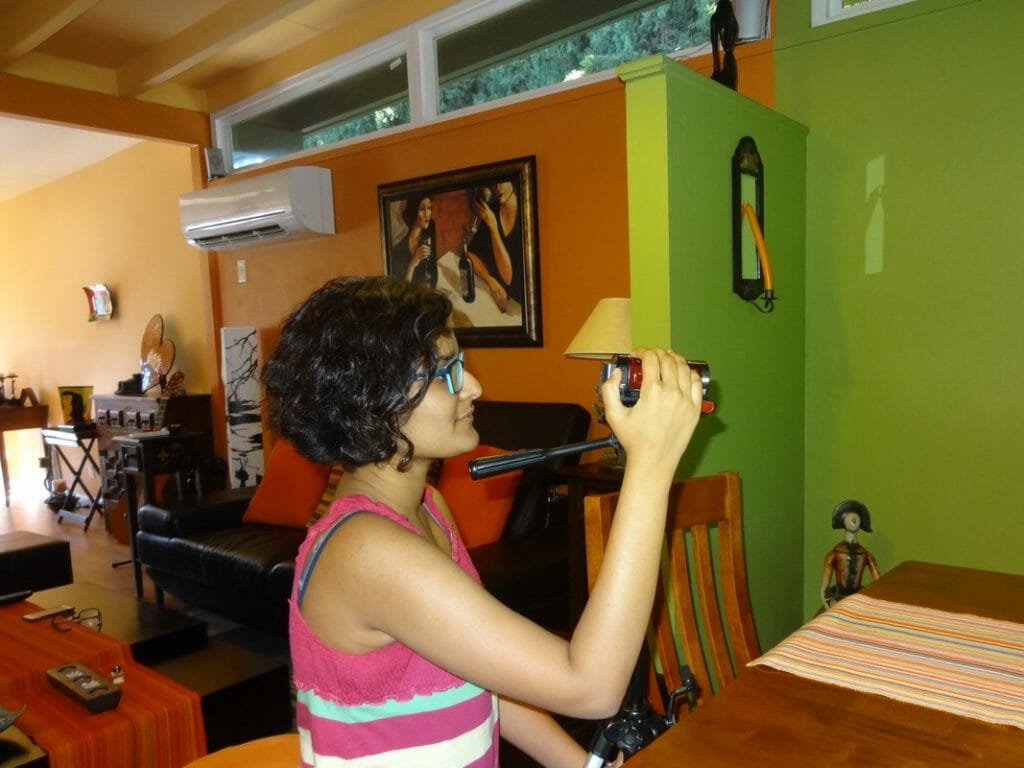
I began planning for this project in October 2015, and the project reached its completion two years later, in October 2017. I’ve interviewed activists, lawyers, and social workers from around the world to gather perspective and facts, I created my project’s website, produced documentary films on the topic and a YouTube playlist and training curriculum. To support the costs of the project (including filmmaking equipment, website, video editing tools), I secured a community grant and fundraised. The resources created have been distributed to various partner organizations worldwide and have been used to increase awareness, garner support from better-equipped communities, and empower at-risk or previously trafficked girls to leave the vicious cycle of dependency on their trafficker.
Is there a personal story behind your passion for social justice and empowering women?
I lived in India until the middle of seventh grade, and had been told several heart-wrenching stories of girls who were married at young ages and trafficked. I strongly believe in treating others the way I want to be treated. Advocating for those who have been mistreated greatly resonates with me.
What’s been the most rewarding part of your work?
Seeing the final products of the film, website and curriculum for my project, and hearing back from representatives of partner organizations who are experts in their fields, telling me that my resources would be helpful in their advocacy work. Giving back, in my opinion, is really rewarding. It provides a sense of purpose in life, provides the opportunity to interact with and learn from various people with unique experiences and interesting personalities, and helps one make lasting memories.
How has volunteering broadened your community?
Through the course of this project, I built relationships with individuals from different religions, ethnicities, cultures and communities around the world. This has further inspired me to travel around the world when I am older and immerse myself in different cultures. Volunteering has, and will continue to make me more compassionate and gain greater perspective from others to tackle pressing global issues.
Do you have any future partnerships that you are excited about?
There are chapters that are interested in adopting my curriculum, “Guidelines to Rehabilitate Young Trafficked Girls,” to implement vocational training programs or fairs for girls at risk of trafficking or those who have been previously trafficked.
Why do you think it’s important for others to give back?
I think it is important for others to give back for two reasons – first, it is necessary, and second, it is rewarding. We live in an interconnected society where we depend on others for everything, and our standard of living, and social and physical wellbeing is dependent on how we are treated by society. For our society to be truly equitable and fully functioning, we need all hands on deck to contribute where help is needed most.
What do you want people to learn from your story?
It is possible to conduct a project on such a large scale, and really rewarding to find a passion that has the potential to help others and solve a community problem. Additionally, I want people to know that trafficking and child marriage are even prevalent in the U.S., and that they should remain vigilant to the signs of both these practices.
Do you want to make a difference in your community like Sakshi Satpathy? Visit All For Good for local volunteer opportunities.
Post written by Marlena Militana.
Teen Volunteers with Veteran Dad, Uniting Vets and Civilians in Service
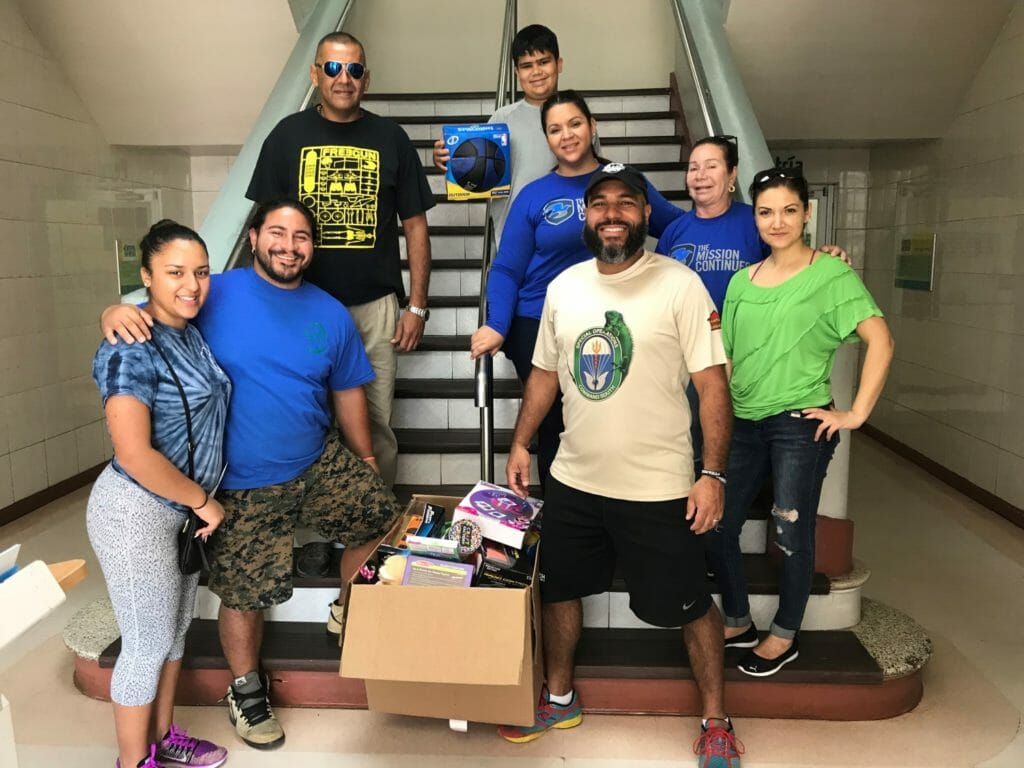
For 17-year-old Gabriela Auguste, connecting civilians with veterans in the name of service isn’t just volunteer work, it’s personal. The rising high school senior is all too familiar with the challenges veterans face when they come home, especially after her father transitioned from the military to civilian life in 2015.
Inspired by her father and motivated by a desire to support her family, Gabriela started volunteering with The Mission Continues, an organization that empowers veterans to keep serving and succeeding in their communities. By helping to connect veterans with civilians, the organization facilitates service for vets adjusting to life at home by finding purpose through community impact. Deploying veterans on new “missions” in their communities, they’re matched with civilians in platoons nationwide.
Though her volunteer work within the Miami platoon, Gabriela is helping to bridge the gap between civilians and veterans, and is today’s Daily Point of Light award honoree. Points of Light spoke to her to learn more about her work with The Mission Continues.
What inspires you to volunteer?
Every day of my life, I feel so blessed to be able to attend school, to have my family. I know that many people in life aren’t as fortunate as I am. Last summer I had an opportunity to study abroad in Jordan, working with Syrian refugees, and that truly helped me understand how fortunate I am. I was inspired hearing their stories, and when I returned home, I was committed to working even harder to give back.
Is there one veteran story that stands out, and motivates you to continue volunteering?
One of the most powerful and empowering is my father’s story. He separated from the military in 2015, and he’s been diagnosed as being 100% disabled. He’s only 36-years-old. The separation and all that he’s been through medically took a toll on my family, but my dad is one of the lucky ones – he made it out of the military and completely changed his life. So many veterans battle PTSD, depression, and worse. A study has shown that 20 veterans commit suicide each day. My dad is living a healthy lifestyle, he doesn’t let his disability stop him, and he is serving as a leader in his own community to help change those statistics. He motivates people to do better and he gives me the drive every day to try to transform myself and my community.
What have you learned through your experiences as a volunteer?
I’ve learned that hard work does pay off. When you help someone it makes their life a little bit easier. I volunteer as much as 40 times each month, and each time you volunteer, there is a piece of you in everything you do. You make an imprint everywhere you go.
You had an unusual request for a Christmas gift this year. Tell me about it.
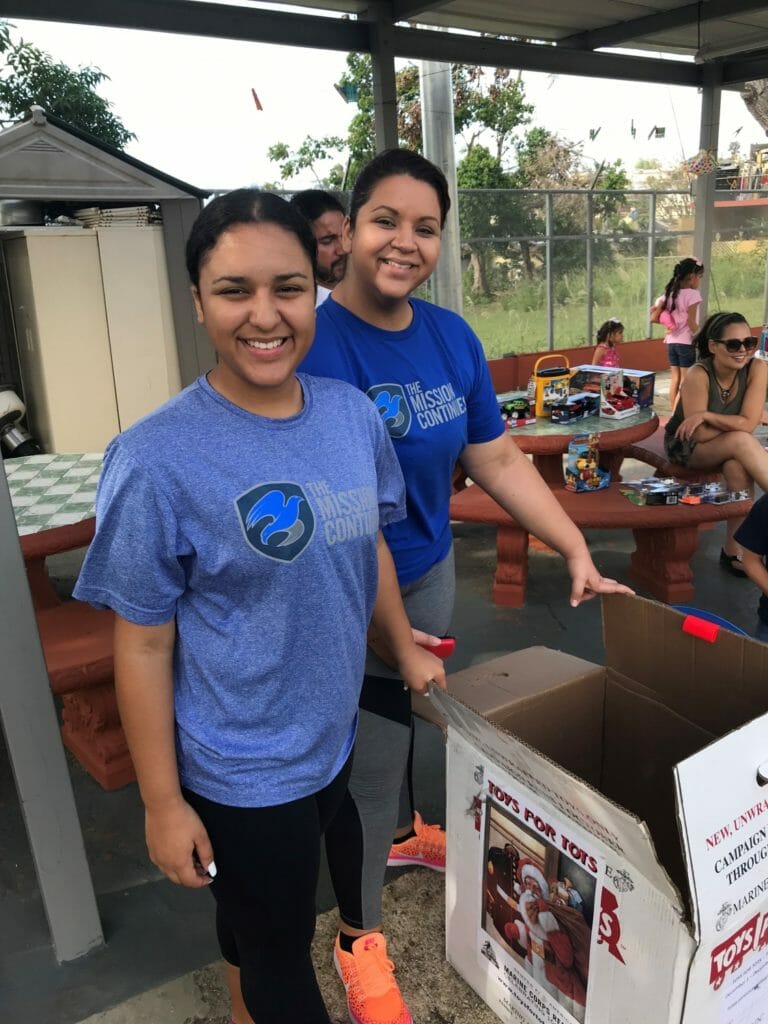
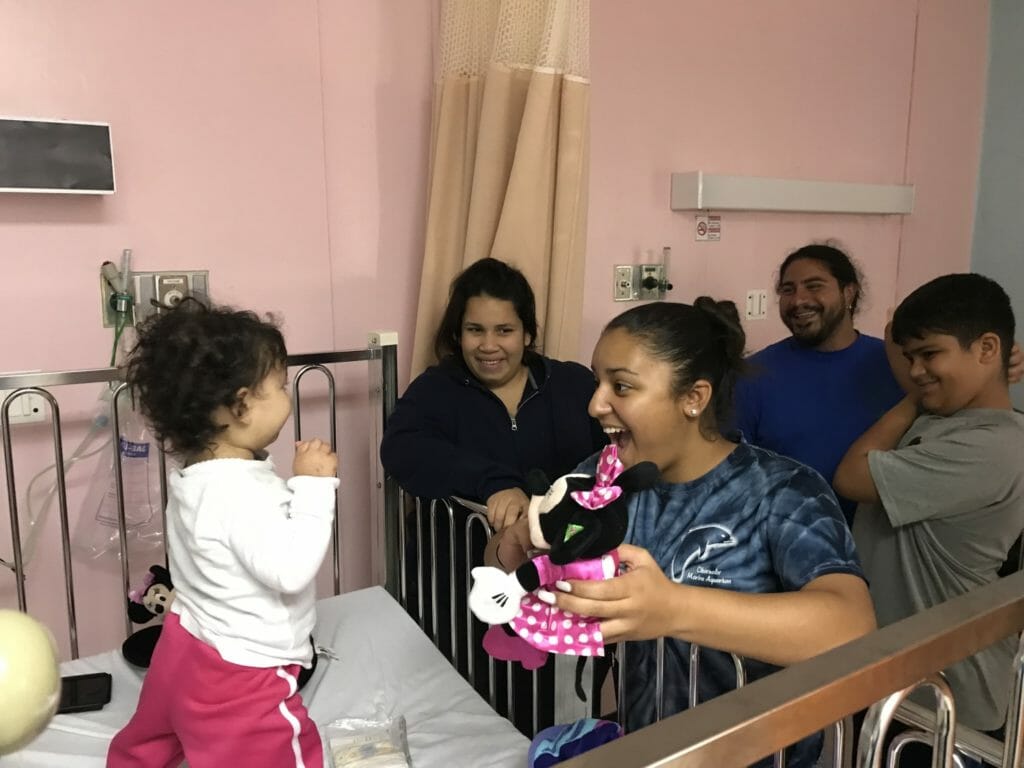
I asked for a service trip to Puerto Rico for Christmas this past year after Hurricane Maria hit the island. Some of my family members have passed away following the hurricane due to the overwhelming heat. Christmastime is about giving back, it’s not about the presents. We spent 10 days in Puerto Rico and helped distribute over 500 toys to orphanages and hospitals, delivered 50 lbs. of food and water, and worked at an animal hospital. Here in Florida, when a hurricane hits, you lose air conditioning for four days. In Puerto Rico, they’ve been without AC and supplies for months. It opened my eyes to what others are dealing with – I’m only a couple miles off the coast from them, but they’re over here still struggling. These service opportunities really give you a chance to experience something that you may have never been able to experience before.
Are there any future partnerships, programs, or events that you are excited about?
We’re working towards forming a service project partnership with national parks. We’ll also try to organize another trip down to Puerto Rico.
Why do you think it’s important for others to give back?
People get stuck in everyday life. When you volunteer, if you put yourself out there and free yourself from the everyday routine; it gives you a sense of life and perspective. Service gives me a sense of purpose, and being able to work with veterans every day is pretty awesome. They’ve given their lives for you and now they’re still giving back.
Do you want to make a difference in your community like Gabriela Auguste? Visit All For Good for local volunteer opportunities.
Note: Read more about Gabriela’s father here, featured by Points of Light in 2017.
Post written by Marlena Militana.
Former Concert Pianist Extends Her Talent as an Instrument of Kindness
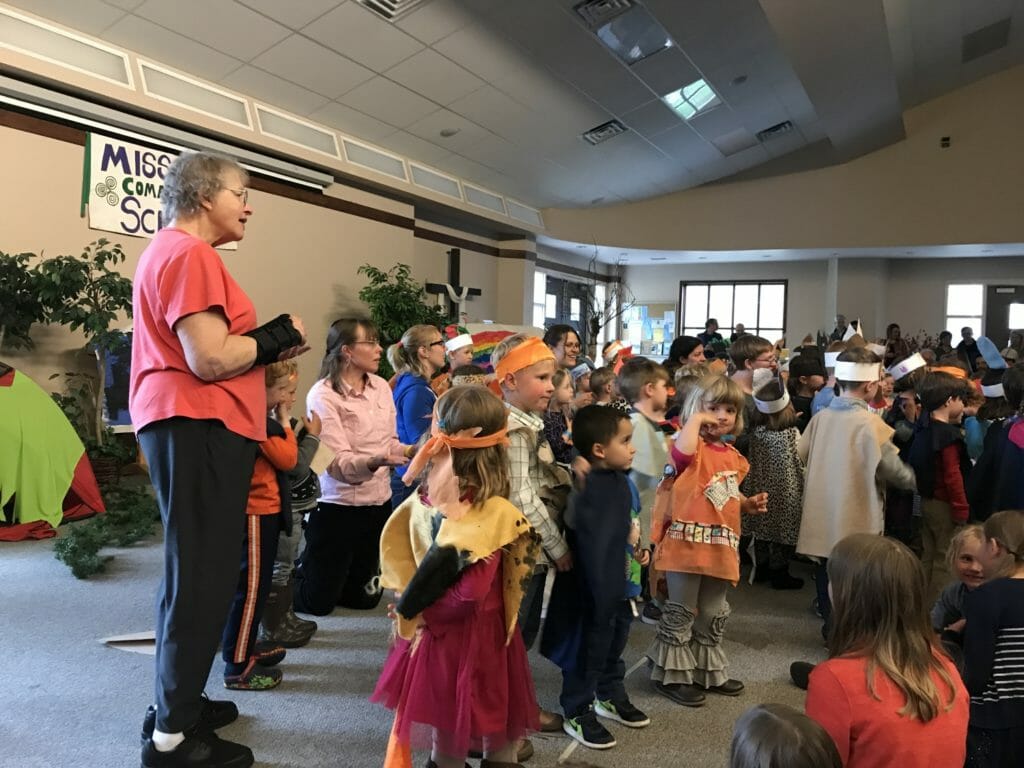
77-year-old Mary Barnett is a former concert pianist and performer, who traveled the country as a young woman thrilling audiences with operetta and musical comedy. As a long-time resident of Missoula, Montana, the songstress is now wowing crowds of a different kind – both young and old – through her community outreach.
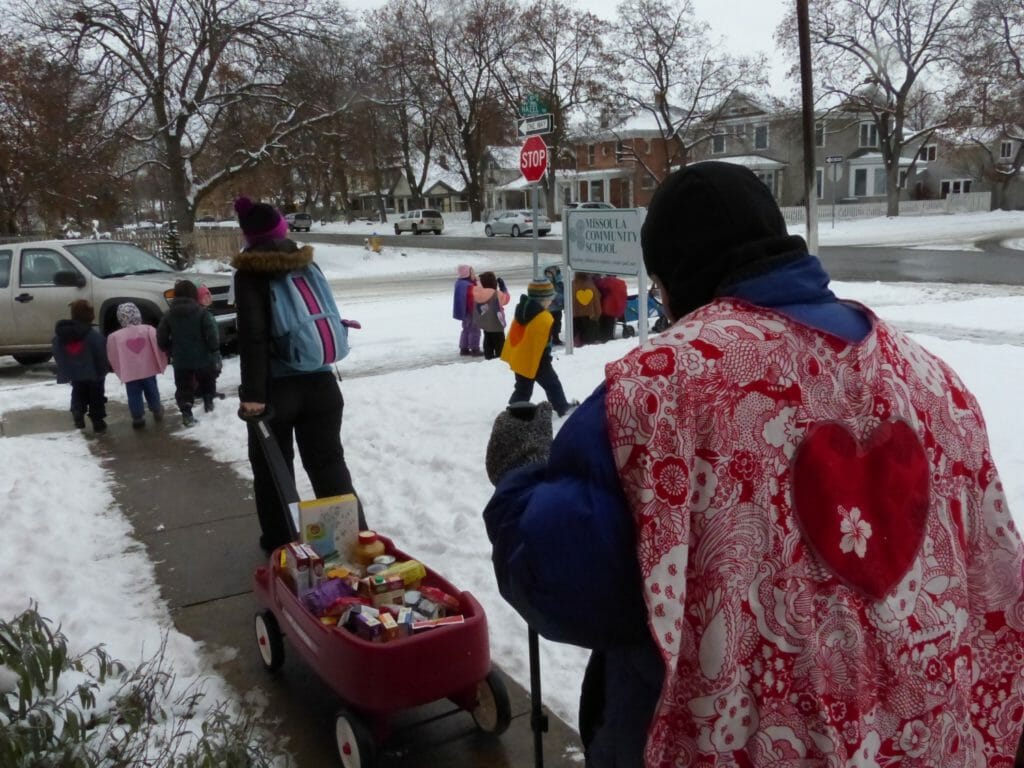
Giving back to the community through a variety of organizations including Stephen Ministries and Mended Hearts, Mary is perhaps most recognized for her work as a Foster Grandparent with Missoula Aging Services. Since 2004, Mary has mentored at-risk children at the Missoula Community School with education and songs. Donning her “Kindness Cape,” the “Superhero of Kindness” gives back to the community through service, and is today’s Daily Point of Light award honoree. Points of Light spoke to her to learn more about her work with the Missoula Community School.
What inspires you to volunteer?
I have a lot of love and compassion for people, whether they’re seniors, children, or in-between. Through service, you give others hope, and you give them light. You are reminding people that there are positive, compassionate and loving people there to help them.
Describe your volunteer role with Missoula Community School.
I teach Spanish and other languages to the children. I work with the children on literacy by reading to them, and math. It fills up my heart to help them, and they love learning other languages. Some of the children are speaking when they’re 3, 4, 5-years-old. I was a school teacher for 45 years, so I just love being able to continue helping children.
Tell me about your Kindness Cape.
We go around the community wearing kindness capes, and we do kind things. We do different things for our neighbors and for the senior center, and all of these activities let people know that we love them. When they see us with our capes, they know we’re there bringing kindness. Recently, a local food bank was in need in donations, so we went there in our capes, and donated box after box, can after can of food for them.
What’s been the most rewarding part of your work?
Seeing the people – whether it’s children, or vets, or the homeless – blossom and have confidence in themselves. For these groups to know that they’re loved and that people care, and that they’re not alone in this world, a world that’s so negative lately. Especially when you have different age groups interacting through service. You should see the senior citizens when I volunteer with children – their eyes light up, they have big smiles on. It’s an interrelationship which I think is just terrific.
What have you learned through your experiences as a volunteer?
For me, it’s reaching out and being kind and compassionate, no matter what the issue. My husband passed away of terminal cancer, and I took care of him until the end. There are a lot of organizations that have been there for me, but the Missoula Community School – the parents, and the little ones – have been behind me through all of this, deeply loving me — and I’ve loved them back.
Are there any future events coming up that you are excited about?
The Missoula International Wildlife Festival takes place every April — the festival is over 40 years old, I was there when it started. I help people get their seats, I take tickets, and I tell attendees about the events. Also, the Missoula Aging Services has a lot of events year-round through their RSVP Action initiative.
Why do you think it’s important for others to give back?
I’ve been in the foster grandparent program for a long time. In a way, you give up yourself through this service. But what you give comes back double, triple-fold. One personal story — I taught reading and other subjects to a little guy that really had a lot of learning problems when he was younger, and now he’s going through high school and he’s getting straight A’s. He came to visit me recently, and said, ‘Grandma Mary, I love you. You gave me so much and I want to thank you for how you helped me.’ — that meant so much to me.
What do you want people to learn from your story?
I have a severe essential tremor now, and it’s taken much of my fine motor skills, which is hard, but despite this severe disability, one can keep on. Despite losing my beloved husband of 48 years, one moves on and walks in hope, grace, love and peace.
Do you want to make a difference in your community like Mary Barnett? Visit All For Good for local volunteer opportunities.
Post written by Marlena Militana.
Transforming Lives with a Smile: Best Friends Hand-craft Charm Bracelets to Fund Cleft Surgeries for Children Across the Globe
16-year-old Nandini Arakoni was born with a cleft lip and had several surgeries to repair the birth defect at a very young age. After visiting family in India, the Naperville, Illinois teen realized how fortunate she’d been to have a procedure to resolve the issue, as many children globally do not have the resources to undergo repair procedures, suffering long-lasting health issues.
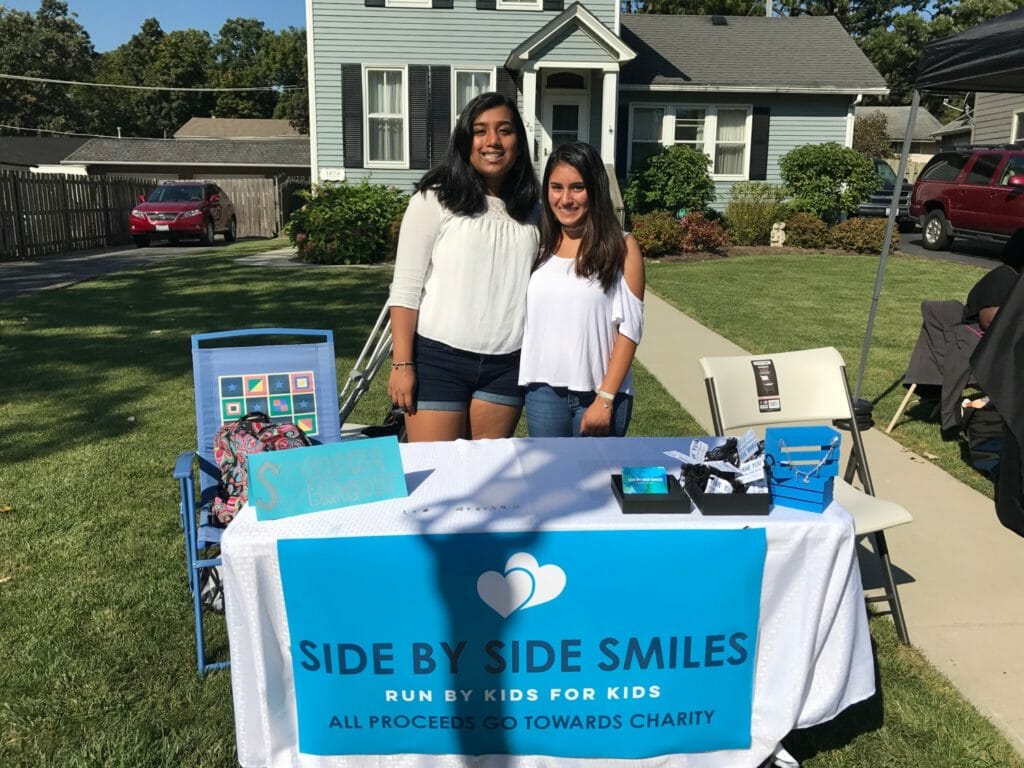
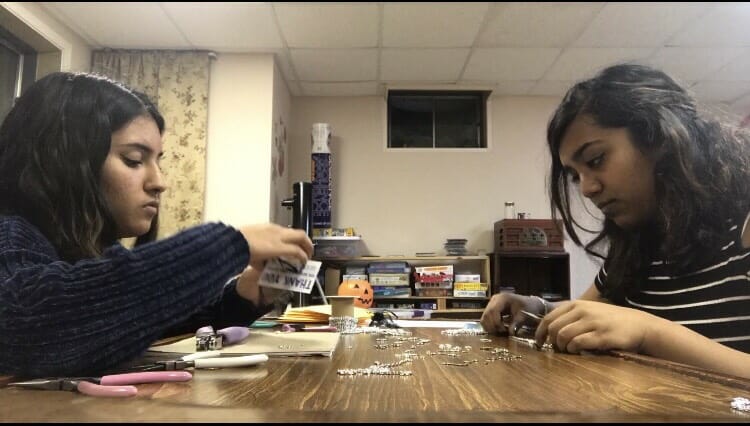
Uniting with her best friend, 16-year-old Sanjana Gangadharan, also of Naperville, in January 2017, the two joined efforts and started Side by Side Smiles, an organization dedicated to helping sponsor cleft surgeries for the thousands of children globally who cannot afford them. The teens work day and night making handmade charm bracelets, using the profits to put towards sponsorship for surgery – which costs about $250 per child. To date, the two have raised over $24,000 and sold more than 600 bracelets, and are today’s Daily Point of Light award honorees. Points of Light spoke to them to learn more about their work with Side by Side Smiles.
What inspires you to volunteer?
Sanjana: Nandini is pretty much like a sister to me, so thinking about what would happen if she had never gotten this surgery, I can’t even imagine. Even though I don’t technically have the personal connection to this issue, it feels like I do because she’s like my sister. If it affects her, it would affect me just as much. Being able to help kids who can’t afford this surgery is just so rewarding.
Nandini: I’ve always been so lucky — I got the surgery at such a young age. Growing up, my family visited India a lot and I saw how privileged we were in the U.S.. I’ve wanted to help people for such a long time, and taking something that was close to my heart helped me be more passionate about it.
Explain how receiving surgery for your cleft lip changed your life, Nandini?
Nandini: It changed my life a lot. Cleft lips and palates affects how you speak, breathe, eat. Children who don’t receive these surgeries struggle with all of these things. A lot of them can’t go to school because of it. Maybe if I didn’t live here and didn’t have the surgery, I wouldn’t have gone to school, and that would have changed my life.
Describe your volunteer role with Side by Side Smiles.
Nandini: It was my idea because I had this personal connection, I was born with a cleft lip. As I grew older, I realized how lucky I was. Many children don’t have the opportunities I’ve had. I told Sanjana I wanted to give back to the community struggling with cleft lips and palates, and the first thing she said was, how can I help?
Sanjana: When we first came up with idea, we knew we wanted to give something back to people who donated to us. Jewelry-making runs in both of our families, so we thought we could give back by making our own charm bracelets.
What’s been the most rewarding part of your work?
Nandini: Just starting this organization in general has been rewarding. A lot of these children suffering from clefts are bullied and discriminated against in society, they’re not able to attend school. When they receive these surgeries, it’s life-changing. Those are the things we take for granted here in the U.S. — being able to go to school and not being alienated.
Sanjana: Also, knowing that – it doesn’t just affect the children, it affects their families. As a woman who would one day like to be a mother, if I was a mother who knew there was a solution, but I couldn’t afford it, I can’t imagine how devastating that would be.
What have you learned through your experiences as a volunteer?
Nandini: It’s kind of cheesy, but thinking about how your scars aren’t anything to be embarrassed about. Scars are proof that you’re a fighter, it’s evidence you came through something. That was something I’ve learned through this experience.
Sanjana: I’ve learned the importance of being kind. Even the smallest act of kindness can change someone’s life.
Are there any future partnerships you’re excited about?
Sanjana: In the near future, we’re looking at getting another cause or charity — we want to start funding special needs programs in the Chicago area.
Why do you think it’s important for others to give back?
Sanjana: I think it’s very easy to do something kind. It doesn’t have to be starting an organization. Even if you give someone a compliment, it could change their day. You don’t know what people are going through in their daily lives.
What do you want people to learn from your story?
Sanjana: As two young Indian women, we’re fighting stereotypes. As teenagers, as women, as people of color. No matter who you are or what you’re doing, you shouldn’t let anyone else tell you what you can or can’t do. No matter who you are, you can do what you put your mind to if you have passion and are willing to put in the hard work.
Do you want to make a difference in your community like Sanjana Gangadharan and Nandini Arakoni? Visit All For Good for local volunteer opportunities.
Post written by Marlena Militana.
Navy Corpsman Spreads a Healthy Dose of Laughter and Fun to Hospitalized Children
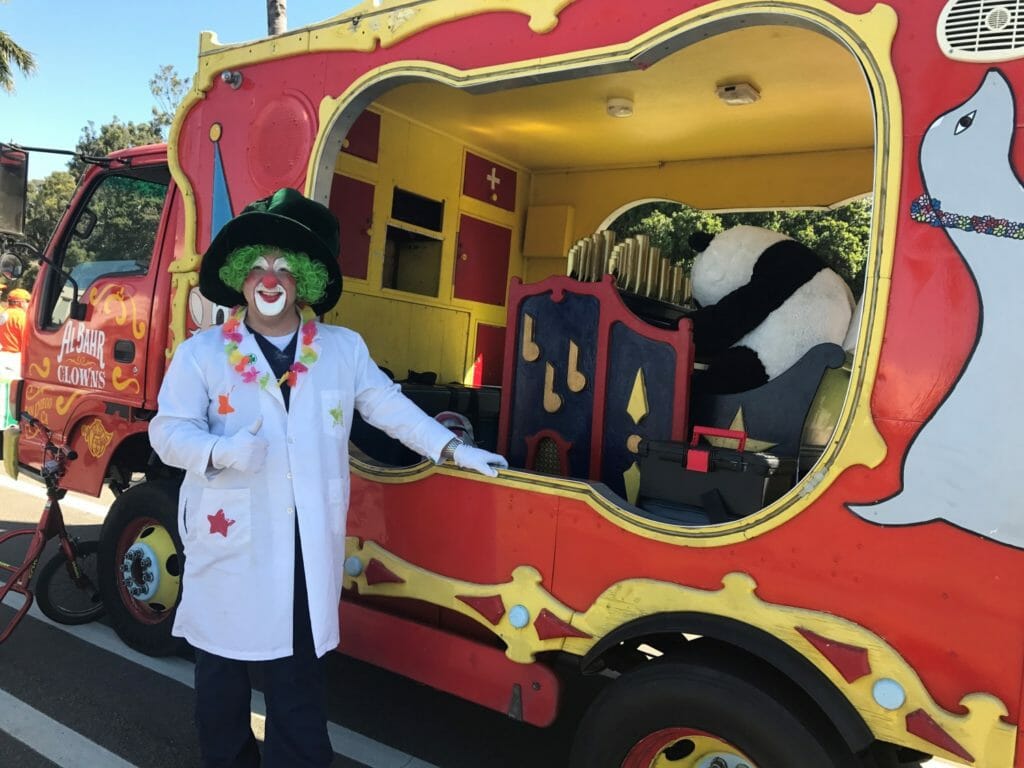
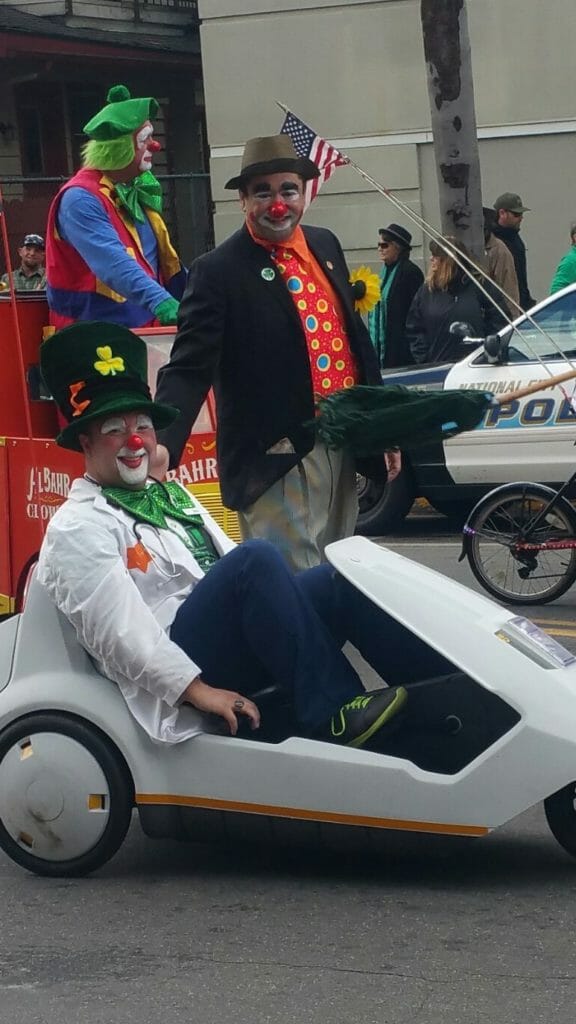
As an active duty Navy Corpsman for the Wounded Warrior Battalion at Camp Pendleton, Cole Morrie has dedicated his life to service, treating patients in the mental health unit as a psychiatric technician. When the 23-year-old Fallbrook, California resident has free time, Cole is still committed to service, just a different kind.
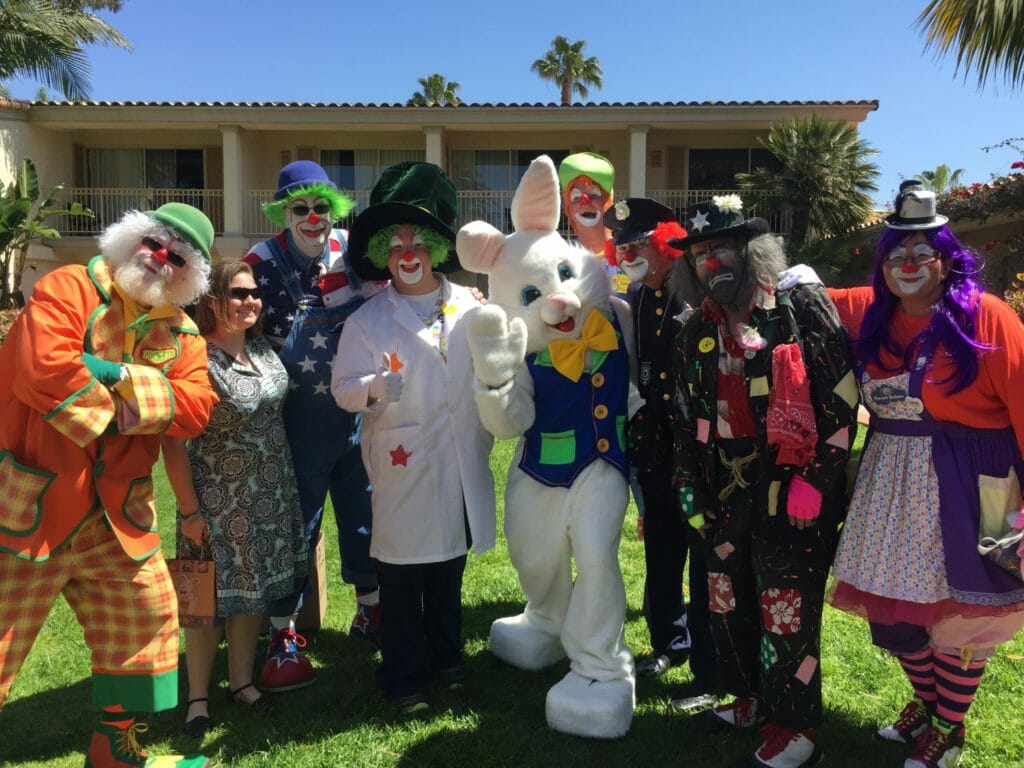
As the secretary of the Al Bahr Shrine clown unit, Cole performs in parades and events at children’s hospitals to raise spirits and, he says, hopefully give the children a break in their day from their illnesses. Devoted to making his community a safe and happy one, Cole is today’s Daily Point of Light award honoree. Points of Light spoke to him to learn more about his work.
What inspires you to volunteer?
I think if you’re not helping, you’re hurting. It’s easy to do your job and go home. Volunteering at Shriners was where there was a need, and I wanted to fill the need and help others. I like the hospital setting, and it’s a really genuine group of people. I really like working with the population that doesn’t expect anything from anyone, really. They’re just really happy you’re there and able to spend time with them.
Describe your volunteer role with Shriners.
We go to the burn center at the children’s center in Sacramento. We put on parades and performances for the children — we have about 12 parades at a minimum each year. I decided to volunteer at Shriners because it helped mix up what I do day-to-day within the hospital — but I also really enjoy helping out kids. I’ve also worked with veterans, and at Big Brothers Big Sisters, and with children who have a parent deployed, or have lost a parent due to war-related injuries.
What would the title of your autobiography be?
“To Make Someone Laugh Today”. That’s my biggest goal; if I can make one person laugh then I’ve done my job. Just to help them forget about all the bad that’s going on in their lives, even just for a bit.
What’s been the most rewarding part of your work?
We always have discussions before we do a parade or anything like that, that there may be a child who is in an abusive home, or not really in a great situation. The whole idea of being a clown is letting them forget about that situation they are in for a little and maybe just smile even for a couple of seconds. I think that’s the biggest payoff.
What have you learned through your experiences as a volunteer?
The diversity of the people I see has been a reality check. It’s very easy to forget about people who are in need or sick and go about your daily life. The constant reminder that things we have going on in our lives aren’t too bad compared to what other people struggle with everyday has really helped me grow and become a better person.
How are you giving back to veterans?
Right now in Fallbrook, we’re working on doing more for the veterans since we’re right outside Camp Pendleton. It’s important to get recognition locally for veterans – they’ve given so much to our country – so I’ve been working with the town to get more awareness and events, especially for Memorial Day and Veterans Day.
Why do you think it’s important for others to give back?
If you’re not doing your best to help others around you, really you’re just drawing from other people. There’s so much negativity that’s going on in our world, it really does take a group effort to try to change things and change the morale of the town you live in and your community as a whole. If people aren’t chipping in, if they aren’t concerning themselves with the issues of other people, then nothing’s going to grow, nothing’s going to get better.
What do you want people to learn from your story?
There’s always time to go out and help somebody. One thing I’m always trying to do is recruit more volunteers to join me. It’s all about making helping others a priority, and it’ll just come naturally. It becomes a part of your daily life. Volunteering isn’t as hard and time consuming as people think. Sleep good at night and that will give you the energy to go out and do it again the next day.
Do you want to make a difference in your community like Cole Morrie? Visit All For Good for local volunteer opportunities.
Post written by Marlena Militana.