Ivy League Teen Making Business Entrepreneurship Accessible to Low-Income Students
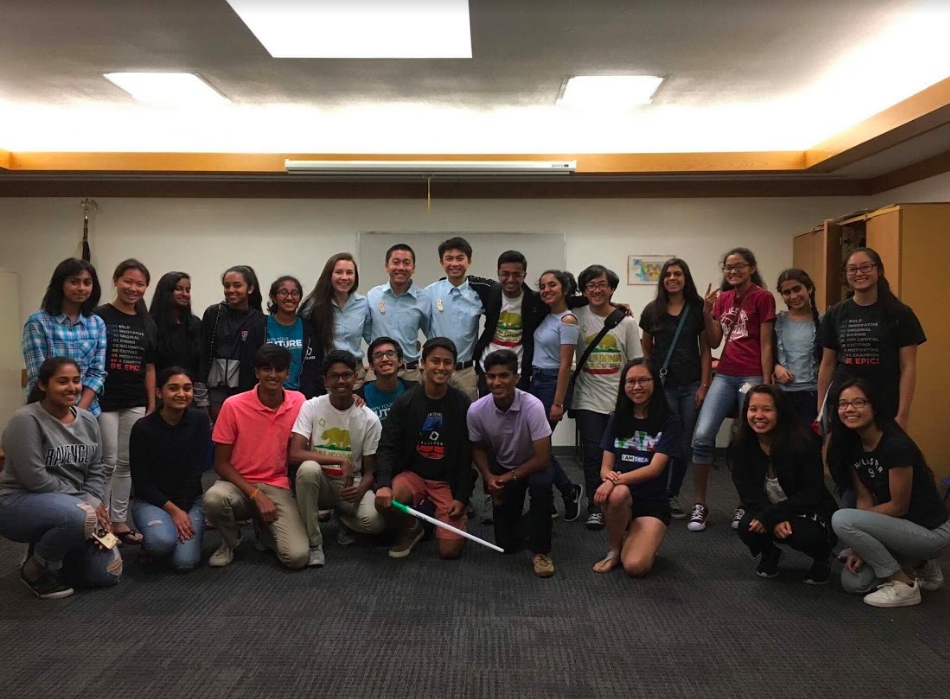
17-year-old Ashton Lam is a recent high school graduate who is heading off to Brown University in the fall. The Pleasanton, California, native has always been passionate about the business world, and participated in a business-oriented competitive organization in school.
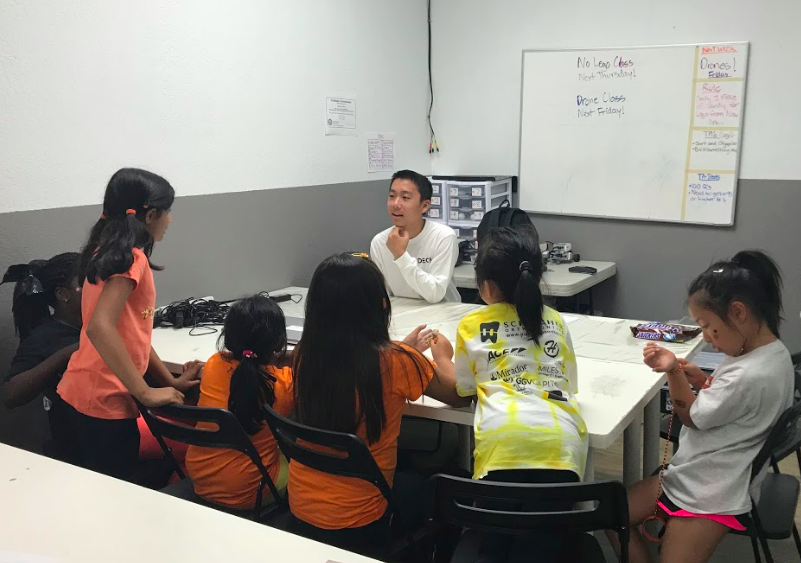
Wanting to provide underserved students with critical business and entrepreneurial tools that, according to Ashton, are just as important as a STEM or humanities studies, the teen started TakeOff in May 2017 with two friends. The organization promotes entrepreneurial equity by teaching students around the Bay Area a skillset they may not otherwise have access to. Giving the keys to business success to as many as 75 low-income students thus far, Ashton is making a difference by helping to level the playing field within his community, and is today’s Daily Point of Light award honoree. Points of Light spoke to Ashton to learn more about his work with TakeOff.
This is a twist on traditional volunteering. What inspires you to give back in this way?
Growing up in the Bay Area, I’ve seen lots of disparities. Silicon Valley is the tech hub of the world yet many lack access to business education. I wanted to close that disparity in my own community and expand access to information and services.
Your organization is called TakeOff. Where did the name come from?
(Laughs). This is really nerdy. We were inspired by a theory called the Model of Development that describes the stages of economic development. One of the stages is called “takeoff”. For developing countries, that’s when businesses start to expand – we were Inspired by that stage. We really wanted students to enter the world of business and hopefully become successful entrepreneurs.
Describe your volunteer role with TakeOff.
There are three co-founders; we divide the work pretty evenly. Day-to-day, I manage our social media, website presence, emails to partners and research possible venues for our boot camps and training. I also design the framework for activities and classes we want to produce, and do a lot of prep leading up to events.
What’s been the most rewarding part of your work?
Throughout the activities and workshops we do, we distribute post assessments. We’ve been able to compare knowledge with pre-assessments, and we see a large increase amongst students who are genuinely interested and fascinated by the things we are saying. They’re inspired to do this as a career, but never got a taste of entrepreneurship before. It’s nice to see them grow both as students and increase their business skills.
What have you learned through your experiences as a volunteer?
I’ve learned a lot about running an organization, event planning and management. But also just with working with students and giving them opportunities to learn more – I’ve been able to see the impact that education itself has. Education changes lives.
Are there any programs TakeOff has coming up that you’re excited about?
We have done “job shadows” with companies in our area in the past – we’d like to launch another one soon. The job shadows take a few hours, but they give students invaluable time on a company’s campus to really see what makes an organization tick. Students can ask employees they’re paired with about their work.
Why do you think it’s important for others to give back?
It’s really important to give back to the community, especially if you’re like me, growing up in Bay Area and you have lots of opportunities. It’s important for everyone to have equal opportunities. Giving underserved individuals those opportunities are a way for them to lead successful, stable, happy lives.
What do you want people to learn from your story?
I want them to learn that studying business education is just as important as studying STEM or humanities curriculum. Business entrepreneurship teaches lots about soft skills that will provide access to more jobs for students. Whether your community service is teaching a school subject or not, once you combine business education with service, it can lead to really great results.
Do you want to make a difference in your community like Ashton Lam? Visit All For Good for local volunteer opportunities.
Post written by Marlena Militana
Battling Negativity on Social Media, Miss Pennsylvania Contestant Wants People to THINK
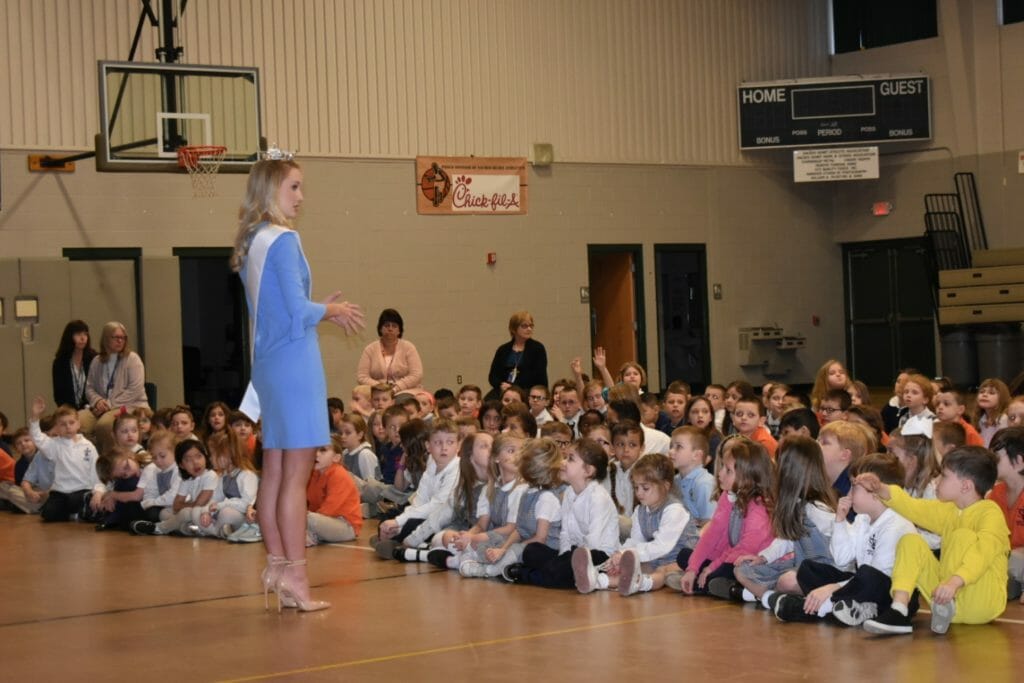
Kayla Repasky has been involved with the Miss America Organization since she was a teen, but the 22-year-old pageant winner wants people to look beyond beauty, and use their brains to combat negativity on social media.
Through her THINK Before You Post program, the Pennsylvania resident is raising awareness of cyberbullying, teaching people how to use omnipresent technology responsibly. Kayla is making a difference by educating users how to use the internet in a positive way, and is today’s Daily Point of Light award honoree. Points of Light spoke to her to learn more about her work with THINK.
What inspires you to volunteer?
The impact that one person can make. I’ve learned that through my organization, and I’ve met people along the way who I’ve impacted and changed the lives of. THINK First America stands against bullying and cyberbullying, and when I see someone being bullied and I can help them, that inspires me to volunteer even more.
What does THINK stand for?
THINK stands for: T – Is it True? H – Is it Hurtful? I – Is it Inspiring? N – Is it Necessary? K – Is it Kind?
Why are you passionate about combating negativity on social media?
In high school, a bright student just made the wrong choice, and ended up being suspended from school. He created a fake twitter account of a coach he did not like. I wanted to get to students and raise awareness before they made a bad decision like this. A lot of students don’t realize the internet is a permanent place. Everyone is creating a digital footprint, and nothing you post goes away.
Describe your volunteer role with THINK.
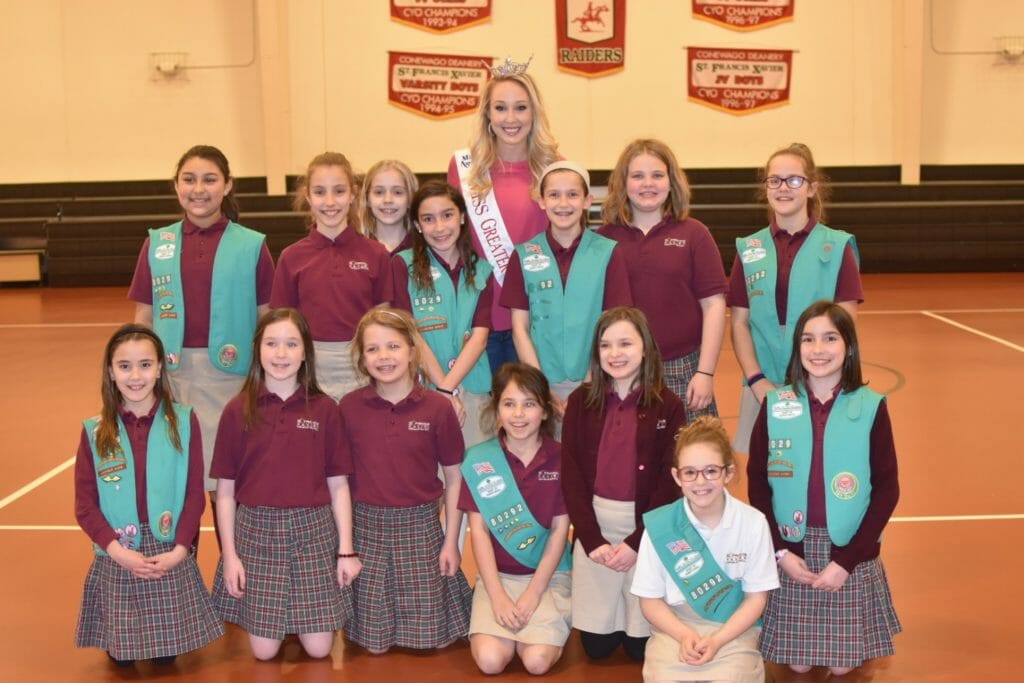
THINK First America started as a social media campaign. I used to go into schools and I would ask kids five questions they could ask themselves that spelled out “THINK” (is it truthful, hurtful, inspiring, necessary, and kind?) But I wanted to do more. Now it’s grown so much. I have several education programs, I’ve spoken to over 2,500 students in dozens of schools. We have a Girl Scout patch and have donated over 250 of them. I’ve partnered with the YMCA and other local organizations and have a THINK pledge program for middle and high schools. I recently published a children’s book called “Buddy and the Bully”. These are all different ways that I can reach more people with my message of kindness.
What’s been the most rewarding part of your work?
Recently, I met a family, and their son had committed suicide due to being bullied. I wanted to help them, so we started a scholarship in his name. Seeing that family’s face just light up, knowing that their little boy will never be forgotten, he’ll be honored every year – that was definitely the most rewarding part to me. My relationship with the family has grown, because we’re both fighting for the same cause.
What have you learned through your experiences as a volunteer?
I’ve learned that the impact you can make is so important – even if you just reach one person. If I can talk to one person and get them to stop bullying, or to report the bullying, it can make a huge impact.
How do you stop negative social media in today’s world?
Unfortunately, our world is very negative and we like to focus on the negativity. When we open the news, we see all the negative things that have happened. I think there is kindness in this world, for some reason we don’t focus on it. I try to be a role model as Miss Greater Carlisle, and hopefully if I was to win Miss Pennsylvania in June, I could be a state-wide role model to choose kindness and positivity.
Are there any future partnerships, programs, or events that you are excited about?
I’m planning to implement THINK First America first clubs nationwide. We will have advocates that would start clubs, and THINK would send them resources to conduct their own education to combat bullying and cyberbullying. In a perfect world, we’ll one day have a core curriculum within schools with THINK materials.
Why do you think it’s important for others to give back?
It’s kind of like a domino effect. If someone can help another person, maybe that person will be inspired to help someone else. If I smile at you, or open the door for you, maybe you’ll be inspired to do that for someone else, pay it forward. Anything we can do to make the world a better place.
What do you want people to learn from your story?
I want them to take away the 5 questions of THINK, and to be kind to one another, and be inspired to choose positivity on the internet.
Do you want to make a difference in your community like Kayla Repasky? Visit All For Good for local volunteer opportunities.
Post written by Marlena Militana.
Former Chemist Tests Critical Medical Equipment for Rural Clinics, Hospitals, Disaster Relief
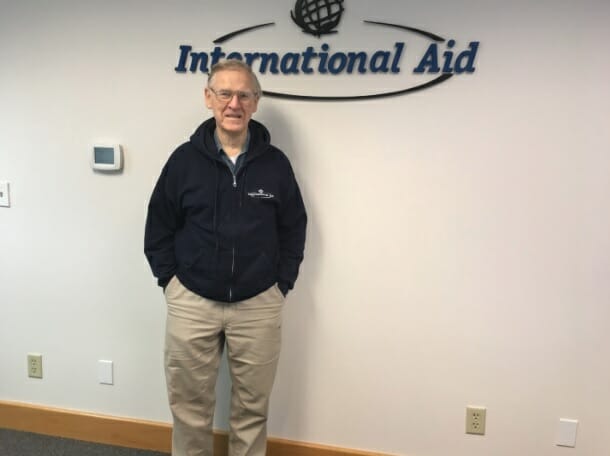
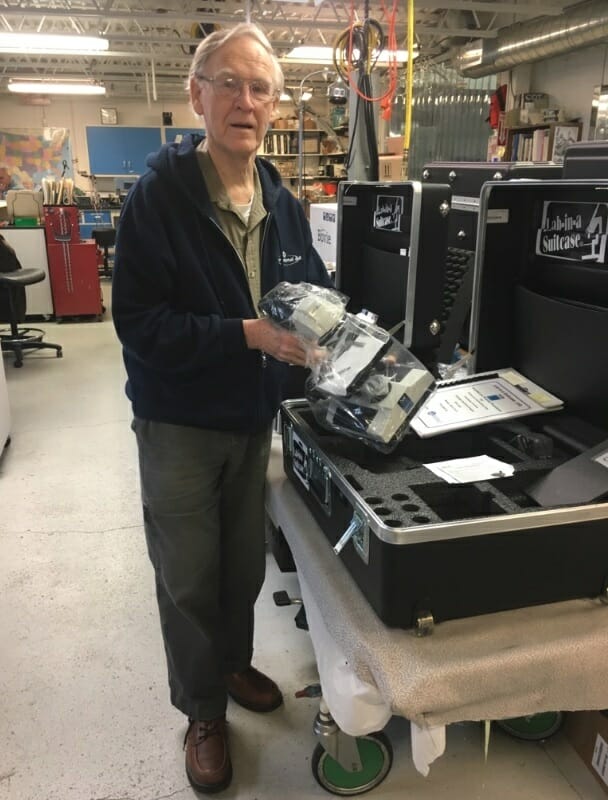
For hours each week, 89-year-old John Hoekstra sits in the corner of a back warehouse at International Aid in Spring Lake, Michigan, meticulously testing parts for the organization’s “Lab-in-a-Suitcase” that provides efficient and accurate diagnostic testing for those most in need.
The octogenarian has logged some 8-thousand hours verifying equipment for the portable case. Powered by battery and charged by a solar panel, rural clinics, hospitals and disaster relief areas rely on the compact lab to determine the best course of treatment for their patients. The former chemical researcher and professor is making a difference by leveraging his expertise to help serve communities around the world, and is today’s Daily Point of Light award honoree. Points of Light spoke to John to learn more about his work with International Aid.
What inspires you to volunteer?
Well, partly, I was retired and I had time, and I have health. It’s a very fine service what International Aid does. What I’m doing is just one part of it. They refurbish all kinds of medical equipment that a hospital here in the U.S. may think is old-fashioned, but it works just fine in a rural community in Africa, or another place that may lack electricity or other resources.
Describe your volunteer role with International Aid.
It depends on how busy we are. I’m usually in there about 6 hours a week, sometimes I go in more. It’s very hard to predict how much equipment you’ll be able to test in one sitting. We number each suitcase we work on — I just started number 310. We don’t just do Labs-in-a-Suitcase — we’ll refurbish operating tables, patient monitors and other equipment.
What’s been the most rewarding part of your work?
It’s a very fine group of people, and I enjoy the mission that International Aid has. What I think is so nice about it — I can help with a foreign mission without getting on an airplane (laughs). It’s just a good place to help.
What have you learned through your experiences as a volunteer?
When my wife and I moved back to Michigan, we happened upon International Aid — they were looking for volunteers. My wife thought that I should be doing something useful instead of just playing with amateur radio (laughs). I really enjoy the opportunity to help. There are a lot of volunteers there — it’s not just me. I appreciate the mission of this organization. They’re helping people, and that’s just good to do.
Are there any future partnerships, programs, or events that you are excited about?
We are always preparing for the next big mission or place that may be in need.
According to International Aid, your work has saved the lives of countless individuals. What does it mean to you, to hear that?
I’m glad that they feel that way. It’s good to know that these labs are going to many places, some very far away, and every one of them can serve a lot of people. That’s very satisfying.
Why do you think it’s important for others to give back?
There’s work to be done. It’s really a good way to spend one’s life if you’ve got the time, and you’ve got the health. Well, it’s service. It’s Christian service.
What do you want people to learn from your story?
If you can be of service, one should be of service. While I don’t travel as much as I used to, I can still be of help here in Michigan to distant communities in need. The Suitcase-in-a-Lab has been used in 50 different countries, and the work that I’m doing here helps places like Honduras, Haiti, countries in Africa.
Do you want to make a difference in your community like John? Visit All For Good for local volunteer opportunities.
Post written by Marlena Militana.
Rescue Ranch: Married Couple Create Haven for Boston Terriers & Friends
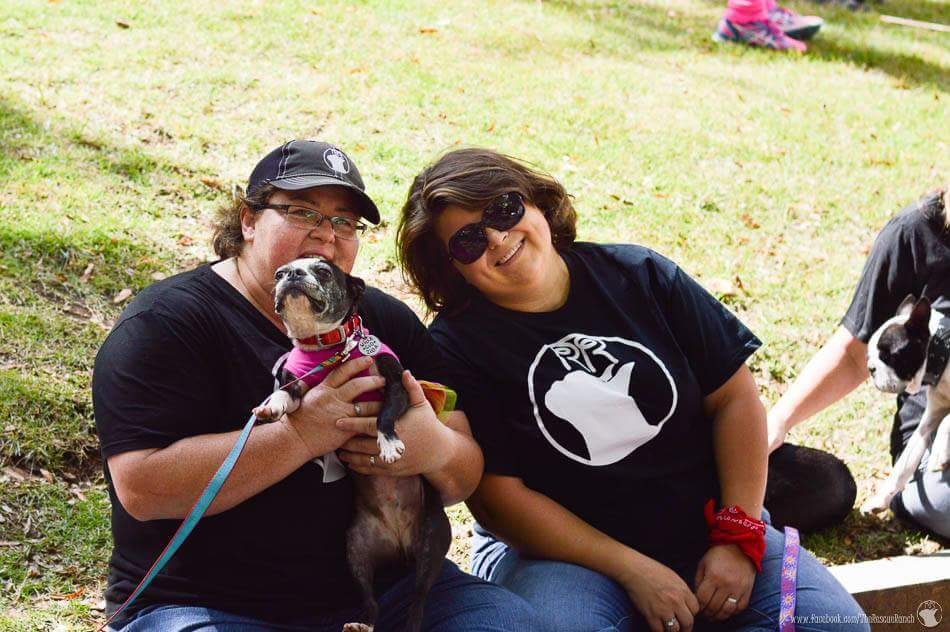
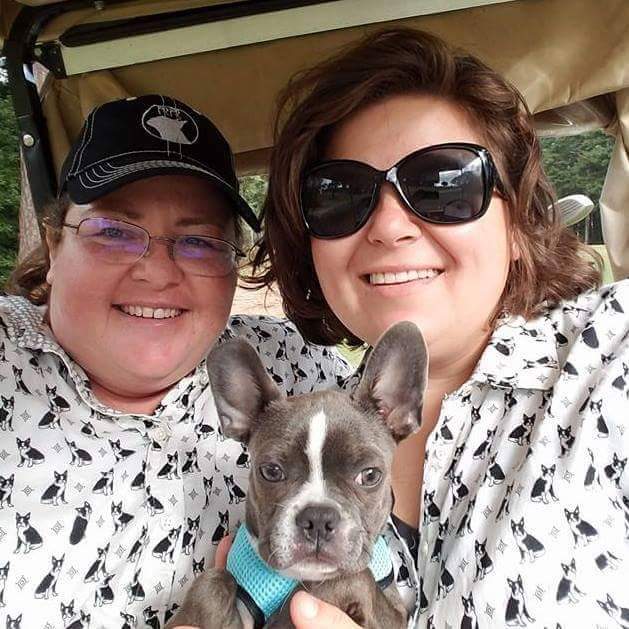
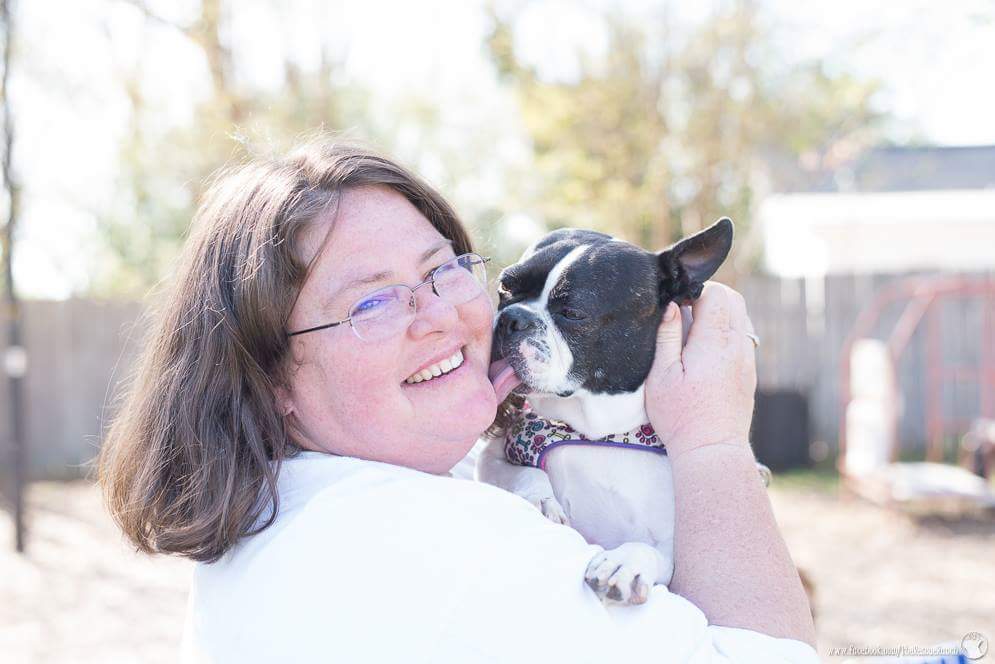
Before the sun rises, when the birds are just starting to chirp, Courtney Bryson and Renee Ussery have started their morning, attending to the myriad of special needs Boston Terriers and rescues they’ve welcomed into their Rescue Ranch.
The country ranch, based in Rutledge, Georgia, includes a 3-acre dog park and shelter able to accommodate a large number of rescues. Renee and Courtney have identified needs in the community, and work to offer solutions for local animals, including low-cost spay and neutering and free microchipping. Starting just with a dream of helping animals in need, Renee and Courtney are serving as a positive force in their community and in animal rescue, and are today’s Daily Point of Light award honorees. Points of Light spoke with them to learn more about their work with Rescue Ranch.
What inspires you to volunteer?
(Courtney) When we adopted our first special needs dog, we didn’t know that there were rescues closer to us. We ended up driving to Nashville, almost six hours away. We wanted to help bring awareness so that people in our area knew that there were nearby special needs dogs that needed their help. The idea just snowballed from there. The more we knew about the needs of animals were in our area, the bigger it got, and the greater our efforts became.
Describe your volunteer role with Rescue Ranch.
(Courtney) We both have daytime jobs – but our morning usually starts with the dogs at 5:30 a.m. Renee takes care of the inside dogs, the ones that live with us full-time and are most medically fragile. Renee leaves for work at 7 a.m., and then I jump in for the cleaning, feeding, medications. There are usually vet appointments that start at 8 a.m. During the day, we do a lot of enrichment and training. At 8 p.m., we start our evening routine: evening meds, final let outs, getting everyone situated. We’re taking care of anywhere between 20 – 25 dogs on any given day. About 100 dogs pass through our home each year, and we’ve reached thousands of dog through our outreach.
You both have busy lives. What drives you to continue to take care of so many animals?
(Courtney) Recently we took in a dog from another rescue, his name is Pop. Pop had 2 birth defects in brain development. When we picked him up, the only movement he could make was to lay on his side and flop like a fish. We worked with him for months, we were doing physical therapy at the University of Georgia weekly, home therapy, we even got him a 4-wheel cart. He was just adopted in late May. So I think, when you see this process, when we brought Pop in, people said to us, you should euthanize this dog, he doesn’t have a quality of life. But to really give him this chance, and watch him blossom and bloom, that keeps you in it.
(Renee) All the successes drive me. To see how other people’s lives are changed by having a companion animal that fulfills a lot of their needs. You create this huge community just through these dogs and these people. To see the positive impact the dogs have on them and their quality of life – it makes it a full circle.
What’s been the most rewarding part of your work?
(Courtney) It’s really watching the transformation of the dog. A lot of times when we get them, they’re not in the best place in their life. But for dogs, if they can’t walk, or if they have something wrong with them, it’s just the way it is for them. They just kind of move on and figure out what’s the next thing to do. To watch people see these dogs overcome these big odds – it’s a really overwhelming sense of community, and that we’re all in it together, and all rooting for same success stories.
(Renee) On a personal level, just between Courtney and I, it’s incredibly fulfilling to know there aren’t many things we can’t tackle together, we’re an incredible team. We came up with one little dream, and now our farm is the size of most county and health shelters. People know they can turn to either one of us and there’s not a whole lot we can’t tackle or figure out.
You take care of very sick dogs, old and young. Tell me about your “senior sweethearts”.
(Courtney) We created a senior sweethearts program, as we take care of a lot of dogs that are special needs and medically very fragile and a number of them are seniors. The “senior sweethearts” are not easily adoptable because they usually are more expensive, they require frequent veterinary care. Our neighbors help to do the rescue with us. They are our miniature facility for our “forever fosters”, taking care of them without the financial responsibility.
What have you learned through your experiences as a volunteer?
(Courtney) We’ve learned there are limitations to what we can do. That’s been a hard lesson to learn. If it was sheer love or determination to save a dog, we’d save them all. It makes you realistic, and it makes you value those success stories even more. That’s what keeps us in it. Some of our rescues don’t end well, but then it makes you celebrate stories like when we got a Pop. People know we’re not a big rescue, but we’ll do anything we can.
(Renee) Volunteering has taught me a lot about connections. Not just with the dogs, but with people we’ve gotten to know. Anywhere we go now, we have some kind of connection with people here. We adopted a dog, Lira, her mom was surrendered to us pregnant. When she was born, we went through really long journey, and we ended up adopting her. Lira become one of our most famous rescue within our rescue community – we’ve gone on trips to different states and people recognize her. People celebrate with us, mourn with us. Volunteering makes you feel not alone, and connected with other people.
Are there any future partnerships, programs, or events that you are excited about?
We have 3 big events in the fall. On September 22 we have our annual golf tournament. In October, we have our biggest event at the ranch, it’s called Boston’s Barbeque Blues & Booze festival, we welcome the public to the ranch and it’s dog friendly. And then in November, we go camping with our dogs. Check our website for more information about our events.
Why do you think it’s important for others to give back?
(Renee) In general, we’re much more community minded. There’s a saying, “saving one dog will not change the world but it will change that dog’s world.” But it goes for people as well. If all of us become more involved in our communities, and look at the impact that one simple action has — it creates a positive, almost a domino effect.
What do you want people to learn from your story?
(Renee) One of the key words we bring up and talk about, we’re trying to be a positive force. That’s what we do is all geared towards being a positive force in the community. It doesn’t matter what form your help takes, just try to put something out in the world that is positive, and it will be returned.
(Courtney) Everyone can do something. Wherever you are locally, there is an organization, there is a person, there is an animal, a group that needs help and you can offer something. It doesn’t necessarily have to be an all-consuming life passion that you spend 24 hours a day on. There are a lot of things people can do even from their own homes, their computers, helping make phone calls, writing letters with local organizations.
If a book was being written about your volunteerism, what would the title be?
(Courtney) The crazy dog ladies (Both laugh). Changing the world one dog at a time.
Do you want to make a difference in your community like Renee and Courtney? Visit All For Good for local volunteer opportunities.
Post written by Marlena Militana.
Maple Valley Educator Devotes Her Time to Saving Feline Friends
Sally Halela believes it is in everyone’s DNA to be an animal lover. While she didn’t grow up with cats, she has become a fierce animal advocate, dedicating time to this cause for more than 35 years.
She began with modest annual contributions to the local humane society and moved into volunteering when she couldn’t bear to see animals helpless in shelters.
Sally had been devoting her free time in the Senior Citizen Pet Food Bank when she noticed that low-income seniors were requesting kitten food and wondered why their cats were having kittens. She knew she had to help find a way for affordable spaying and neutering of cats. Sally was also a long-time volunteer for Regional Animal Service of King County (RASKC), MEOW Cat Rescue, PAWS, Feral Cat Spay/Neuter Project, Pasado’s Spay Station and the Seattle Humane Society. Her friends took notice of Sally’s time and devotion to volunteering with cats, and urgently requested her help in fostering cats in need.
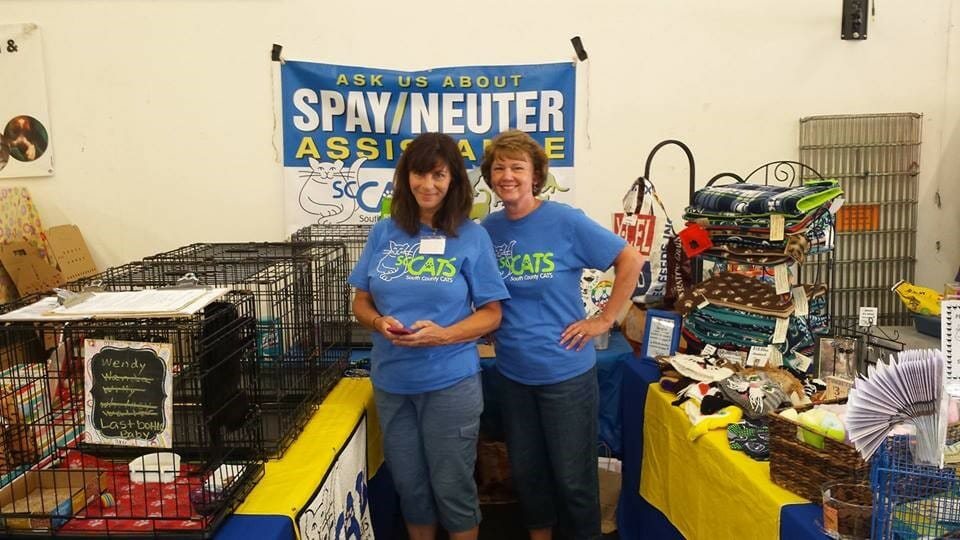
For a period of time, she took on the responsibility of paying out of pocket to spay and neuter cats herself but knew this wasn’t sustainable. This eventually led to Sally getting organized and founding South County Cats in 2006, a nonprofit, all-volunteer organization that raises funds for surgical sterilization, arranges foster care for under-socialized cats, assists with trap-neuter-return of feral cats and educates the community about coexisting with free roaming outdoor cats.
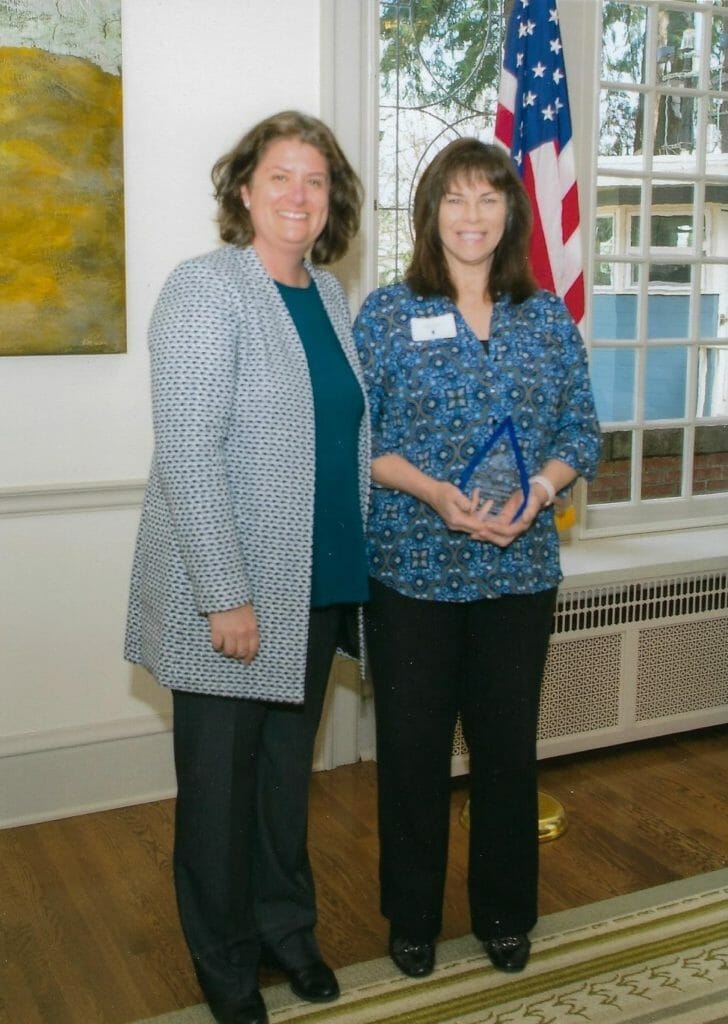
For her efforts and dedication to cat welfare, Sally was honored with the 2018 Governor’s Volunteer Service Award in the Animal Welfare Category and the Auburn Valley Humane Society’s 2018 Animal Champion Award.
What inspired you to volunteer?
My inspiration for volunteering is that I know there is a need and I am filling that need. There was an overpopulation problem in the cat shelters and they looked to euthanasia to make room. But I knew that the solution was to spay and neuter the cats, and that’s where I felt I could make the most impact.
Describe your volunteer role with South County Cats.
I am the founder and director of South County Cats, and I also hold the treasurer position on the Board. I manage daily operations, which includes phone calls, emails, volunteer management and cat care, including the not-so-glamourous job of cleaning litter boxes!
Why do you think it is important for others to give back?
Volunteers play a critical role in the success of small nonprofit organizations. We fill a need and have the satisfaction of knowing we are making a difference in our community.
What has been the most rewarding part of your work?
Seeing the progress our local shelters have made. That fact that we have contributed to more than 90 percent save rates proves our efforts are making a difference.
What have you learned through your experiences as a volunteer?
I have learned that I can’t do everything myself. I have learned to depend on and trust my other volunteers, and give them a chance to learn from me as well as others.
Are there any future partnerships, programs or events that you are excited about?
I have been recently named a board member of an organization with an initiative to make Washington a no-kill state by 2020. The official announcement for the organization will be made any day now. South County Cats also has a goal to expand our financial assistance to neighboring counties so that they are able to provide the same services that we do. We are excited to be a part of the successes of our local shelters that are now spreading across our state of Washington as we move towards becoming a no-kill state.
What do you want people to learn from your story?
Most shelters have foster programs that allow volunteers to have experiences with kittens or puppies, but the most important thing I want people to learn from my volunteer work is the importance of spaying and neutering for all cats and dogs. This is a great way to be a part of the solution – saving lives through spaying and neutering!
Want to make a difference in your community like Sally? Visit All For Good for local volunteer opportunities.
Post written by Karen Cohen.
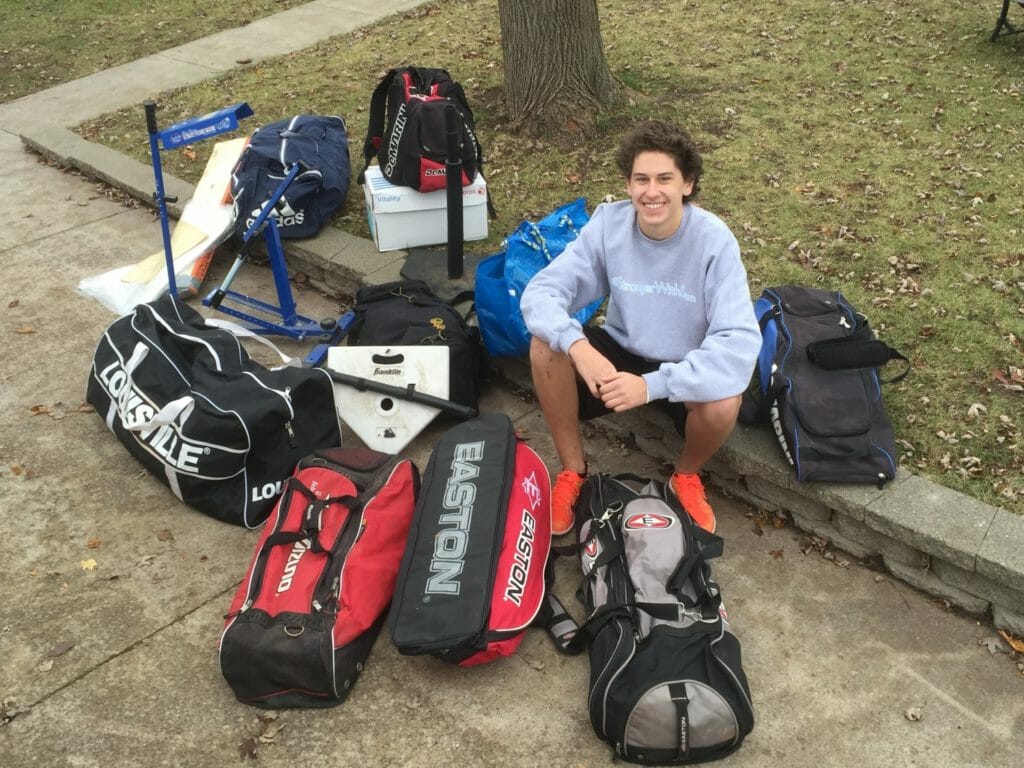
College Bound Teen Gives Baseball Equipment to Kids in Need
Even though Evan Arnold recently registered for his freshman year in college at the University of Wisconsin-Whitewater, he already has nearly a decade of experience running an organization.
At the age of nine, Evan saw photos of kids in Haiti playing soccer. The fields were comprised of all dirt, unkempt, and they used a ball of socks as a soccer ball. Despite the rough playing conditions and lack of equipment, the Haitian kids, accustomed to the circumstances and unaware of anything different, just played.
“My dad would say, ‘There is a lot of negativity in the world and we need more good.’” Inspired by his father’s words of wisdom, Evan wanted to make a difference and said, “It gave me the single goal to make the world a better place.”
Evan’s love of baseball and drive to do good inspired him to start Step Up To The Plate, an initiative that provides baseball equipment to children in need throughout the world.
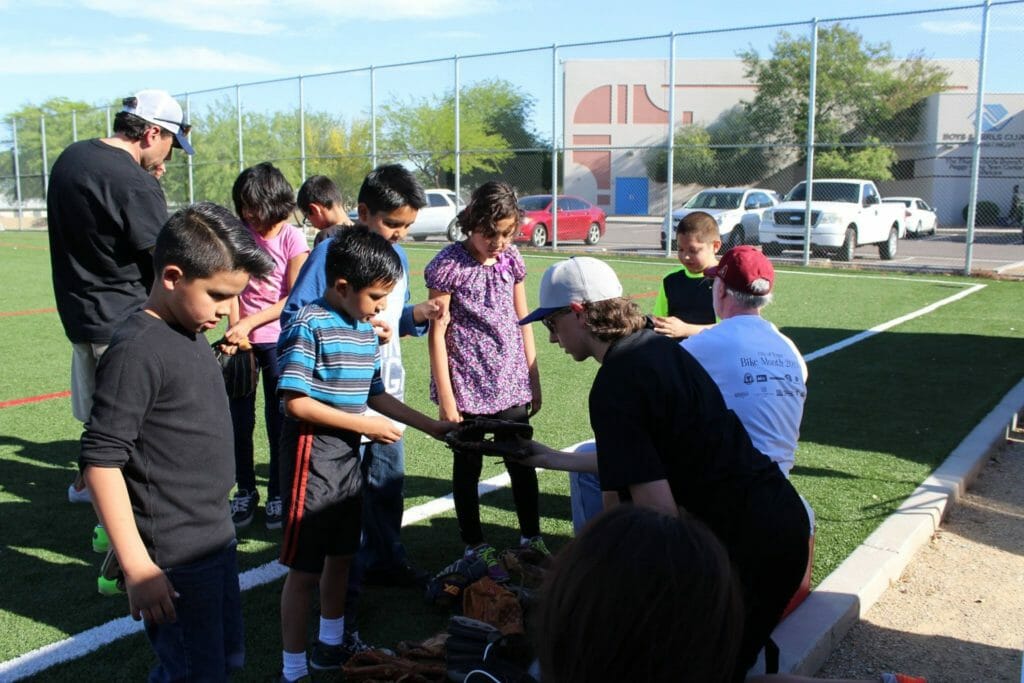
Since its inception, Step Up To The Plate has made an incredible impact. More than $55,000 worth of equipment has been shipped and delivered both domestically and to 45 countries internationally. Evan’s also completed more than 135 projects, including on-site events like one-day clinics for orphans and children of parents who are incarcerated or in drug treatment facilities.
Having started his goodwill initiative at the age of nine, Evan wants people to learn from his story that no matter the age, they can make a difference.
“We need to push the envelope and encourage the next generation to give back more,” Evan said. “It is important for others to give back as the world has given us so much.”
Seeing smiles from kids who have received Step Up To The Plate’s equipment is the most rewarding part of his volunteer work. “I get pictures in the mail of kids who may have received their very first baseball. To see their smiling faces and to know I am doing something good in the world is rewarding,” said Evan.
As a volunteer, Evan says he has learned that life is more than just about him. “I can give back to kids and families who could use something more,” he said.
As the organization’s founder, Evan’s volunteer responsibilities include working through social media to reach people and organizations who can take boxes of equipment to communities and countries in need, procuring equipment from thrift stores and garage sales and boxing up equipment for shipment.
Step Up To The Plate works with the Milwaukee Brewers Single A minor league team, the Timber Rattlers, to help with equipment drives. He hopes to one day partner with the MLB and bring his organization to a national platform.
As Evan heads to college in the fall, he plans to study business, economics and entrepreneurship and use some of these skills to help push Step Up To The Plate a little further.
Want to make a difference in your community like Evan? Visit All For Good for local volunteer opportunities.
Post written by Karen Cohen.
Dwight Howard
Long recognized for his incredible talent, the NBA’s Dwight Howard shines both on and off the court. An NBA Community Assist Award winner and five-time winner of the DeVos Community Enrichment Award.
In 2012, he founded the D12 Foundation, which seeks to strategically and effectively help close critical community “gaps” in three key areas of focus: early childhood education and literacy, facilitating the education of girls in East Africa, and empowering youth and developing leadership. Dwight champions girls’ education in Tanzania, providing safe housing and school essentials for young women pursuing their education. Additionally, he adds his voice to the challenges facing youth through engagement in mentorship, including at the Boys and Girl Club bearing his name in Charlotte.
A native of Atlanta, Dwight spoke at Service Unites 2018 with Points of Light Chairman Neil Bush on the importance of service.
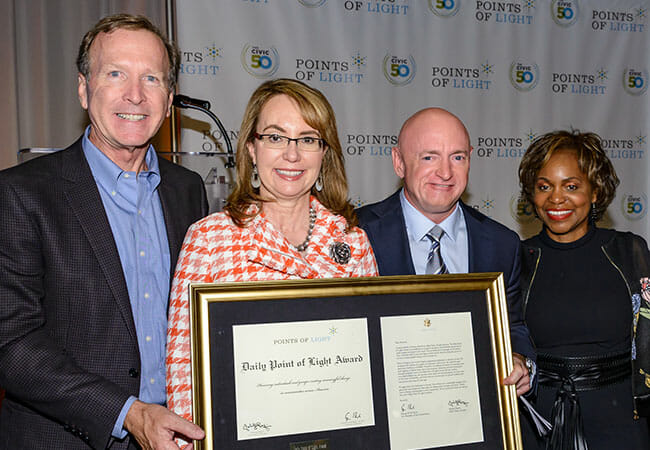
Rep. Gabrielle Giffords and Capt. Mark Kelly Honored for a Lifetime of Service
Congresswoman Gabrielle Giffords and her husband, Navy combat veteran and retired NASA astronaut Capt. Mark Kelly, have dedicated their lives to service. The youngest woman ever elected to the Arizona State Senate, Rep. Giffords spent more than a decade representing her community first in the state legislature and then in Congress. As a naval aviator, Capt. Kelly made two tours of duty and flew 39 combat missions, before becoming a NASA astronaut – flying four missions and spending more than 50 days in space.
On January 8, 2011, at a “Congress On Your Corner” event in Tucson with her constituents, Rep. Giffords was shot in the head from near point-blank range. In stepping down from Congress in January 2012, she said, “I will return, and we will work together for Arizona and this great country.”
After her recovery, Rep. Giffords and Capt. Kelly founded Giffords: Courage to Fight Gun Violence to encourage elected officials to stand up for laws that make communities safer from gun violence. Together, the two have worked tirelessly to ensure leaders across the country cannot forget that Americans are demanding solutions to save lives from gun violence.
Their commitment to service has helped countless individuals create change and become inspired to lead a civically engaged life. We spoke with them to understand what fuels their passion for giving back.
You have both dedicated your lives in service to your country. Is this something you felt inspired to do at a young age?
Rep. Giffords: I’ve always considered Tucson home, the way people cared about one another and fostered a community stuck with me even when I left. That’s why not long after taking a job in New York City for PricewaterhouseCoopers, I felt the urge to give back in the way I saw growing up. So I moved back and took over the family business as president and CEO of El Campo Tire Warehouses. It was a wonderful experience working at a place that created opportunities for people in Tucson. But as much as I enjoyed increasing sales and creating Tucson jobs, I felt I could more for those around me. It’s why I threw my hat in the ring for Arizona House of Representatives. What better way to give back than work every day listening to people you represent, figuring out how to make their lives and community better?
Capt. Kelly: Growing up in New Jersey, you could say that public service was part of the family business. My mother was the first female police officer in West Orange, New Jersey. Not only was she the first, she also worked the night shift. Joining her on the force was my father, who was also a Naval paratrooper. Our parents were always for there for us, even when we caused a little trouble, and the example they set was pretty powerful for both my brother and me. My mother was always a positive person and I think that’s a big part of public service. She tried to understand what was going with others and from there she could better figure out how to help them. I don’t think my brother and I would have served our community in high school on the rescue squad without her example. That carried through my careers in the Navy and NASA. I can trace back my desire to fight and protect my country, and then explore space for America, to the example they set.
Former Rep. Giffords sits on the board of the National Institute for Civil Discourse, and you’ve both demonstrated a dedication to civil service. What does it mean to you lead a civic life, and how do you think average Americans can help create a civic culture?
When Gabby was serving in government, she made a point to hear everyone out. Whether you are in space or flying a plane, you also need to listen to the people who are on the team to bring you safely back. It’s one thing we’ve tried to do as we travel the country trying to make our laws stronger to stop our gun violence epidemic from hurting more: listening. Listening to people who want stronger laws, listening to people who are dealing with pain, listening to people who are scared of how changes could impact them. You can’t lead a civic life without understanding how others feel about the issues impacting us. When we do that, we can create stronger community bonds, and people feel more involved in decisions that impact us all. By understanding a viewpoint and being empathetic, you’re more likely to work with someone to tackle big issues.
The two of you co-founded Giffords: Courage to Fight Gun Violence. What has it been like working together on a cause so personal to you?
After the horror of the Sandy Hook shooting, seeing the grief on the face of parents and remembering our own experience with gun violence, we decided it was time to raise our voices and join the public debate on this issue. We knew it was going to be tough. We understood that there is an organized opposition, with deep pockets, to the policies we support. But part of public service is fighting for what’s right, even when the going gets hard. We stay focused and motivated by the organization’s supporters – over one million strong – who continue to raise their own voices through phone calls, letters, and social media posts.
What has been the most rewarding part of your service?
Traveling around the country and meeting so many people from all sorts of backgrounds that are willing to talk about this issue. That has translated into progress. We’ve passed more than 200 laws since the Sandy Hook Elementary School shooting – in red states and blues states, and every region of the country. Seeing others joining us take actions, both big and small, watching legislators pass laws we know will truly save lives, and fighting for something we know can make a difference has been an amazing experience.
Why do you think it’s important for others to give back?
We rely on the support of others. When Gabby was serving in office, she couldn’t have been in so many places without a talented staff by her side. When my parents served in law enforcement they relied on their partners to keep them safe. It doesn’t matter if you are working on a problem like pollution, petitioning your local legislator, or maybe making a run of your own – you need the help and support of others. Too often in these times we focus on how divided everyone in our country is. When politicians try to tear us apart by making us fearful and forgetting the importance of relying on one another, we all lose. By giving back, whether it’s to your family, friends, or community, you perpetuate a positive energy that not only makes you feel good, but improves the lives of those you’re impacting.
What future service, partnerships or programs are you most excited about?
We are tremendously excited about the future of our country. That’s because of the energy and passion we’ve seen from the young people of this country. They were sick of being afraid of going to school because of the potential for gunfire so they decided to do something about it. The March for Our Lives happened in cities and towns across the country – and they are not stopping. Many of these kids are getting engaged in politics for the first time and our spending time pushing lawmakers, encouraging others to vote, and getting involved in issues. More importantly, they are working together across all communities – rich and poor – to better make a difference. The first stop is showing up to vote in November and from there, we expect to hear a lot more.
What advice would you give to others looking for ways to make a difference?
Be optimistic. It’s important to always look forward, not backward. Fighting to address gun violence in our country is a marathon, not a sprint. But we are building a coalition that will make a difference. Others can do the same thing, no matter what they care about. At first, you’re going to work extremely hard to make just a few small improvements, but through determination, small victories begin to build up and you’re closer to achieving your goals than you had ever been before.
Want to make a difference in your community? Visit www.allforgood.org to find local opportunities to get involved.
Actor, Activist Jesse Williams Honored for His Work Highlighting Injustice, Systemic Inequalities
Actor, director and producer Jesse Williams is well known for his work on ABC’s “Grey’s Anatomy,” but gained international renown for his 2016 BET Humanitarian Award acceptance speech, where he eloquently covered a range of issues including police abuse and systemic inequities.
At Service Unites 2018, he led a discussion with three men who have had very different journeys, but all of whom are bringing their skills and experiences to service and social justice. This is just one example of how Jesse is continuing to shine a light on those who are using their voices to change issues, helping to ignite a civic culture.
Jesse is among the prominent and impactful entrepreneurial faces in tech today, with three leading mobile apps on the market. He launched BLeBRiTY, a charades-inspired mobile game that immediately shot to No. 1 on the Apple App Store charts in two categories. He’s also a partner and board member of Scholly, a mobile app that has connected students directly to more than $100 million in scholarships. He is also the youngest to sit on the board of directors for both Advancement Project, a leading national civil rights advocacy organization, and Harry Belafonte’s arts and social justice organization, Sankofa.org.
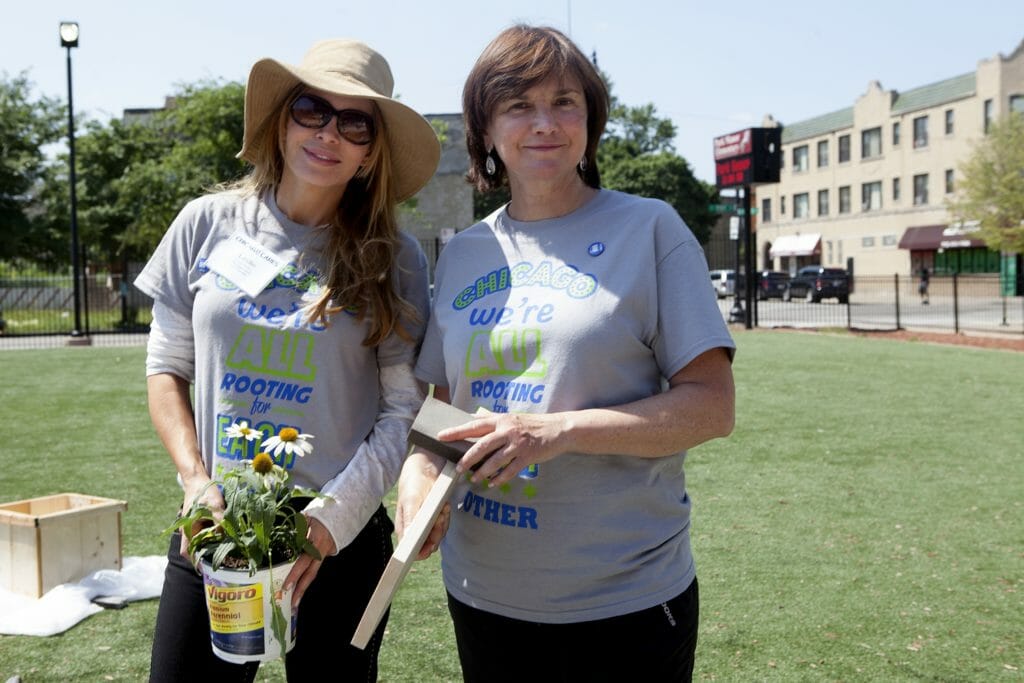
Two Chicago Friends Create Volunteer Movement, Celebrate 25th Anniversary of Annual Serve-a-Thon
In 1991, Leslie Bluhm and Mary Prchal had a deep interest in volunteering, but found that Chicago lacked the channels to find volunteer opportunities. Together, they had an idea to bring diverse Chicagoans together through hands-on volunteer projects, completed on site in the neighborhoods that would benefit.
Their idea became a grassroots effort, one that eventually led to Leslie and Mary founding Chicago Cares, a nonprofit that mobilizes volunteers to build a stronger, more unified Chicago.
Now, Chicago Cares plans more than 200 volunteer projects open to the public every month and hundreds of corporate volunteer programs every year. The organization has mobilized volunteers from every zip code in the city, partnered with more than 1,000 nonprofits and schools, and become a Points of Light affiliate.
“Organizations like Chicago Cares are not a short-term intervention,” said Leslie. “By providing regular and impactful opportunities for Chicagoans to connect, to learn and to engage, we are changing hearts and minds, and encouraging investment for the long term.”
On June 23, Chicago Cares will also host its 25th annual Chicago Serve-a-thon, bringing together more than 5,000 volunteers on one single day to engage in hands-on volunteer projects around the city.
“More than 25 years ago, Leslie Bluhm and Mary Prchal recognized a need to bring people together through service, celebrate their diversity, and break down the barriers that divide us” said Jenné Myers, CEO of Chicago Cares. “We are grateful for Leslie and Mary’s leadership, vision, and continued commitment to our work. Their idea has grown into a movement: since 1991, Chicago Cares has mobilized more than 600,000 volunteers to make Chicago stronger and more unified.”
Leslie and Mary are still very involved with Chicago Cares. Leslie is a board member and leads the strategic direction of Chicago Cares, and is involved in fundraising for the organization. Mary now resides in San Francisco and continues to play a role in fundraising.
Both Mary and Leslie say being a part of the Points of Light network has given Chicago Cares a group of other nonprofit organizations to share best practices and ideas with, which was especially critical when they first started. “Points of Light brings volunteerism front and center to people’s minds,” Mary said. They recognize how important it is for others to give back. “In today’s increasingly digital world, there is no substitute for the power of visiting communities in person and meeting new people,” Leslie said. “By doing so, we can disrupt preconceived ideas and build a stronger, more unified Chicago. But it can only grow stronger through volunteers’ hard work.”
Chicago Cares often provides people their first volunteer experience. “We are creating future volunteer leaders,” Mary said. And, she says the most rewarding part of her volunteer work is seeing changes in people’s lives. “Seeing the happy faces and the results, that is the reward.”
Leslie says the most rewarding part of her work with Chicago Cares is dispelling the myths and perceptions about communities by activating volunteers to see and work in different neighborhoods.
“People come to see the potential and assets in each community. They see that the neighborhood is much more vibrant and complex than the local news will have you believe. They make a connection and see the value of investing their time and making deeper connections.”
Want to make a difference in your community like Leslie and Mary? Visit All For Good for local volunteer opportunities.
Post written by Karen Cohen.