Humanitarian Takes Action and Brings Love and Hope to Atlanta’s Homeless
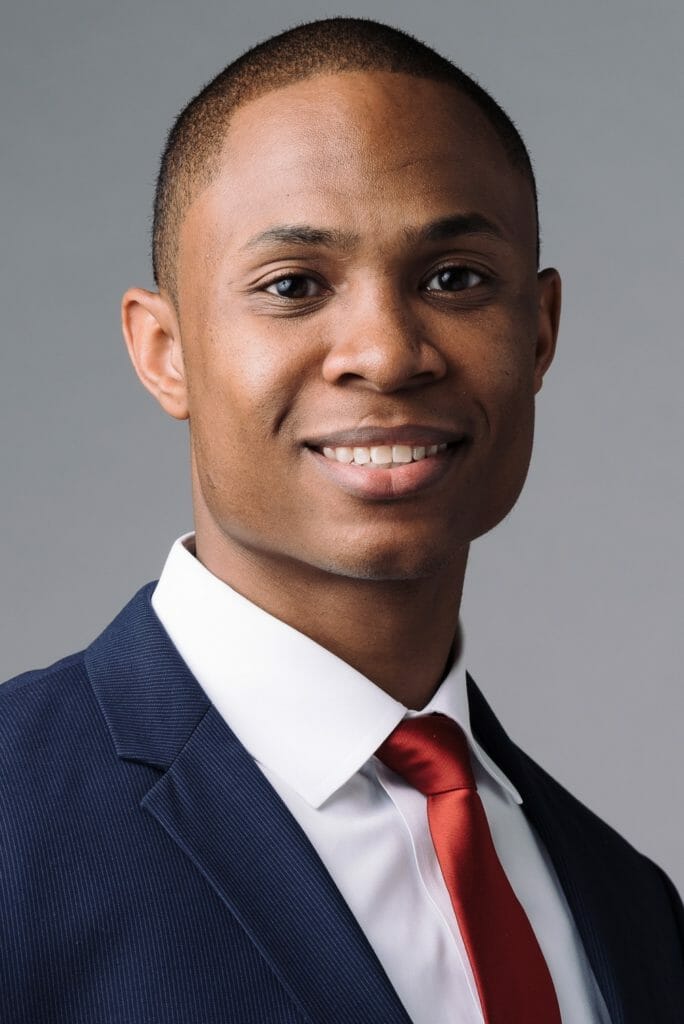
Taos Wynn is an Emory University graduate who majored in economics with a concentration in finance. He grew up with a family committed to volunteering, but it was a mission trip overseas to Haiti that completely changed his perspective.
While in Haiti, his group of volunteers was assisting with the construction of an orphanage and also leading youth activities with children. It was there Taos witnessed extreme poverty firsthand. Upon his return to Atlanta, he had a heightened sense of awareness that poverty existed in his own city. His desire to perform good deeds grew into an urgent need to help.
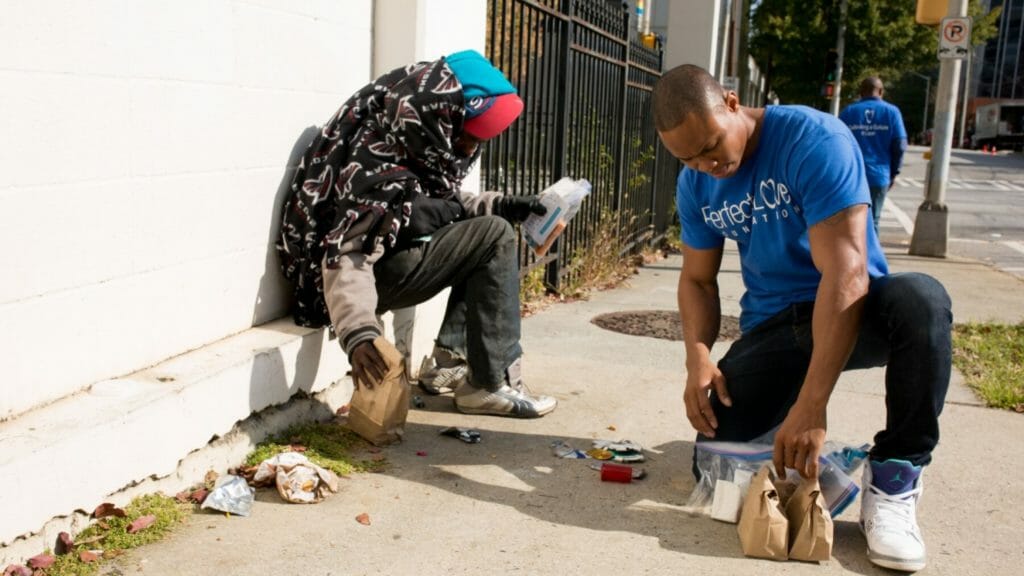
He founded Perfect Love Foundation, an Atlanta based nonprofit organization that leads community outreach activities in Atlanta and packages and distributes food, hygiene kits and affirmation notes to Georgia’s homeless. The Foundation received its 501(c)3 status in 2014 and has been gaining momentum ever since. Its goals are to create hope and encourage people to love.
During the 2017 year, Taos and 72 volunteers distributed 3,347 meals, 3,246 affirmation notes and 1,576 hygiene kits through Perfect Love. We recently talked to Taos to find out why he thinks it is important for others to give back and what his future plans are for Perfect Love Foundation.
What inspired you to volunteer?
I grew up in a family where my parents led by example. They always opened up our house and invited the neighborhood kids over for meals and snacks, talked to them and offered rides to extracurricular activities. It didn’t occur to me to ask why at the time. Now, I understand that their intentions were to provide a safe space and offer mentorship. My parents were my models for volunteerism.
Describe your volunteer role with Perfect Love.
In my role with Perfect Love, I develop relationships on behalf of the Foundation. Also, I am involved in the resource packing events in the community such as creating and planning the distribution of hygiene kits and meals. I spend time planning future initiatives such as Leading Hope and Unify America.
Why do you think it’s important for others to give back?
I think there is a responsibility to give back. The responsibility to make change and the obligation to love mutually belongs to all of us — no one shares a proportionately greater or lesser degree of either opportunity. Everyone can give back, no matter at what level.
What’s been the most rewarding part of your work?
I see the impact of our work every day and that is rewarding. We had a homeless student who needed help with college application fees and Perfect Love stepped in and was able to pay for the associated fees. Later, we received a thank-you note from that student stating he had been accepted to Georgia State University. Moments like that are priceless. We see these success stories all the time, but we are mindful of the realities and know more needs to be done. Systematic changes need to be made and we need to attack the core issue.
What have you learned through your experiences as a volunteer?
I’ve learned everyone can make a difference. I’ve learned that everyone matters and everyone needs love.
Are there any future partnerships, programs, or events that you are excited about?
I am so fired up about our Leading Hope initiative. Leading Hope is a movement promoting educational excellence and empowering student leaders for community and generational change. Our program seeks to create a systematic means of disrupting the cycles of poverty, insecurity and limited exposure for students.
Leading Hope offers students valuable experiential learning and exposure opportunities that better prepare them for real life application. Through Leading Hope, students have access to our unique curriculum (which covers a wide variety of topics from leadership and business to diversity and cultural awareness), service opportunities, hands-on activities and expeditions. We are looking to start this program in the fall.
Also, this year we led the Unify Georgia initiative at the Georgia State Capitol on March 9th. The initiative brought more than a 100 individuals together to encourage lawmakers to look past their differences and promote gender and racial equality.
Going forward, we would like to replicate our Unify Georgia model and make it more widespread into other states to promote a message of love and unity as Unify America.
What do you want people to learn from your story?
I want people to know their stories can become someone else’s life inspiration.
This post was written by Karen Cohen.
Do you want to make a difference in your community like Taos? Visit All For Good to find local volunteer opportunities.
With the unPrison Project, Woman Born in Prison Brings Hope, Life Skills to Incarcerated Girls and Women
Meet Daily Point of Light Award honoree Deborah Jiang-Stein, who was a Top 10 finalist for the L’Oréal Paris Women of Worth Award in 2017. Each year L’Oréal Paris and Points of Light recognize and celebrate Women of Worth who make a beautiful difference in their communities. Ten honorees each receive a $10,000 grant to support their most cherished cause, and an online vote determines one honoree who will receive an additional $25,000 grant. Nominations for 2018 are now open! If you know a woman who works to create lasting and significant change in her community, nominate her to be one of the 2018 Women of Worth.
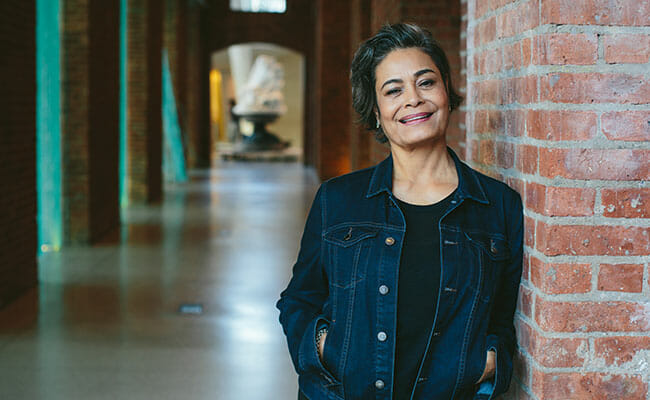
Born to a heroin-addicted mother in an Appalachian prison, Deborah Jiang-Stein spent the first year of her life in incarceration, then bounced between foster families until she was adopted. After overcoming the harsh realities of her past – including an addiction of her own – Deborah set out to empower and inspire incarcerated women with the hope and tools they would need to succeed in life after prison.
Now clean and sober for more than 20 years, Deborah leads the unPrison Project, providing incarcerated women with education, literacy, recovery and mentoring programs to prepare for a successful life after their release.
“This is personal for me,” Deborah says. “More than 200,000 women are incarcerated in the United States, and 2.7 million children under the age of 18 have a parent in prison. I was born in a prison, heroin-exposed because my birth mother was untreated and didn’t get the help she needed. Telling my personal story inside prisons empowers and inspires incarcerated women and girls with hope, and with life skill tools for success outside prison.”
A Maui Musician’s Grant Writing Generates New Chairs for Entire Orchestra
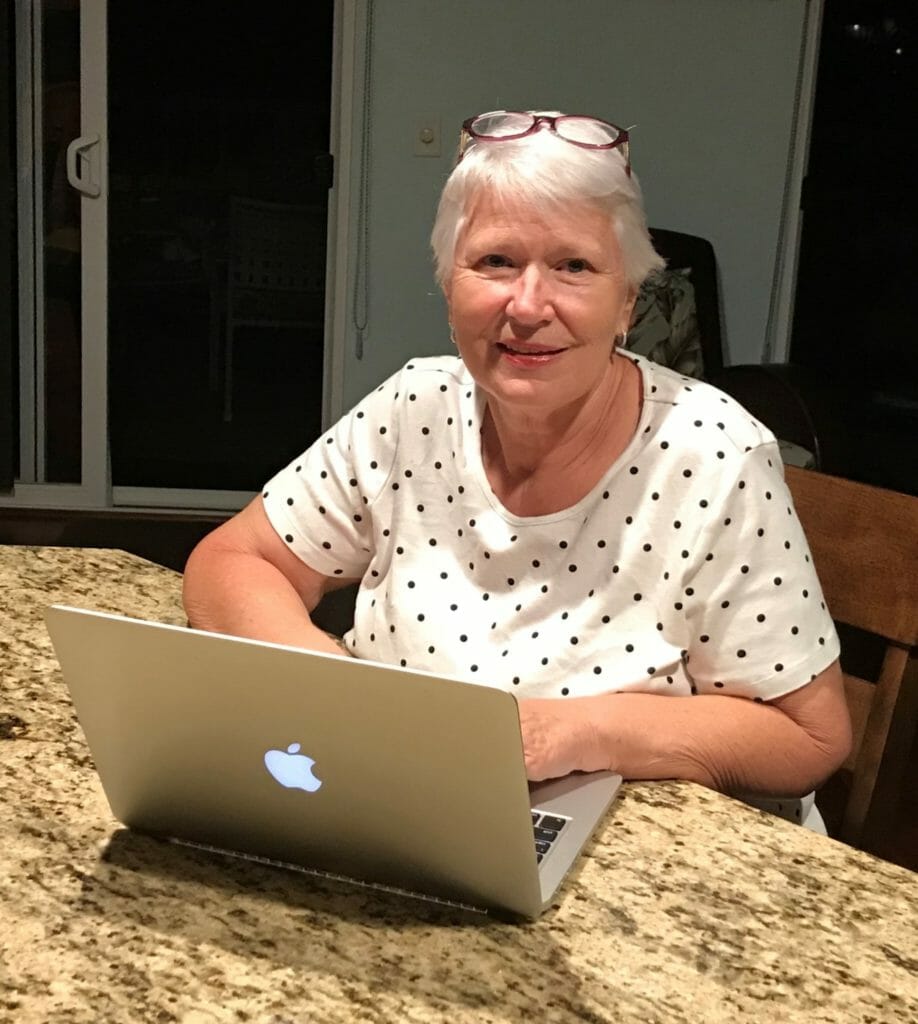
Jennifer Meyers always loved to sing. After she retired as a senior regulatory specialist in the pharmaceutical industry, she was looking for ways to stay busy. She wanted to continue to challenge her brain while giving back to her community. Her vocal talent and volunteering spirit led her to start singing in the Maui Chamber Orchestra Chorus.
The Maui Chamber Orchestra was struggling at the time, but it was Jennifer’s ideas on how to promote the organization that landed her a seat at the board table. While attending board meetings, she learned that the musicians were sitting in old, hard and uncomfortable chairs. Together with another board member, Jennifer decided to file three grants requesting funds to buy new professional chairs.
Jennifer had attempted twice before to file operating cost grants and failed. From this experience, she knew she needed to learn everything she could to make a strong case for her cause. During her research, she found a white paper detailing how proper seating was as important to musicians as helmets were to football players. She applied to three Hawaii foundations and all three foundations provided funds for a total of $22,500.
The money enabled The Maui Chamber Orchestra to purchase top of the line professional chairs. Jennifer says the musicians are now able to focus on their music and not worry about being uncomfortable.
What inspired you to volunteer?
I knew when I retired, I wanted to keep busy. I thought volunteering would challenge my brain and it would turn into a learning experience. Helping others is in my nature. If there is something I can do to help, I am going to do it.
Describe your volunteer role with Maui Chamber Orchestra.
As a member of the Maui Chamber Orchestra board, my role is to promote the orchestra. I help stimulate attendance at our performances, educate people about the orchestra, write grants and help sustain our donors.
Why do you think it’s important for others to give back?
Giving back is so ingrained in me, I believe you have to pay it forward. There are so many different ways to be a volunteer, people can find their niche. There are many opportunities that can suit different personalities and interests, whether it is dropping off food or visiting with seniors. Giving back makes life so much better. In a small community like Maui, I have never talked to anyone that hasn’t wanted to give back. In Hawaii, there is a word “kuleana,” the broad meaning is “personal sense of responsibility.” It is our kuleana to give back.
What’s been the most rewarding part of your work?
The most rewarding part of my volunteer work was writing grants for new orchestra chairs and receiving funds for $22,500. To see all those new chairs on stage and knowing the musicians can perform comfortably is exciting. My past attempts at obtaining grants had failed. Being successful at getting these grants funded and being able to give the musicians proper seating was incredibly rewarding. Also, when I am up on stage singing with the orchestra and knowing the audience is enjoying our performance – that is greatly fulfilling.
What have you learned through your experiences as a volunteer?
I have learned you can’t make everyone happy. There have been times patrons have been dissatisfied with the compositions we have chosen to perform. Even though we are doing the right thing for us, it may not always be viewed as doing the right thing for everybody. As a board member, I have to be tactful having tough conversations and addressing complaints. It has been a learning experience on how to placate the customer while representing the board.
Are there any future partnerships, programs, or events that you are excited about?
Recently, the Maui Chamber Orchestra was nominated for and won a “100
Women Who Care” prize. This group of women each donate $100 and gather for an hour to learn about several charities. At the end of the meeting, the group votes on the charity that should take home the pool of donations. We were chosen and awarded $13,000. We are using this money to bring music back in the classrooms. Last fall, we introduced a body percussionist into two kindergarten and first grade classrooms. Now, we are going to move more programs into more schools with the goal of following these students through sixth grade and tracking their test scores.
What future goals do you have with Maui Chamber Orchestra?
I want the board to learn how to find sustainable money to be able to continue with our program. We will need to go out of our comfort zone and ask for donations from our friends and coworkers and look for corporate sponsorships. We want to keep our chamber orchestra performing, so we can continue bringing our music to Maui.
What do you want people to learn from your story?
I would like people to learn volunteerism is a unique experience that creates learning opportunities. I am just elated when something special happens. When you give back, it makes you feel good.
This post was written by Karen Cohen.
Do you want to make a difference in your community like Jennifer? Visit All For Good to find local volunteer opportunities.
College Student Offers Friendship to Young Adults Palliative Care Patients
Jordy Botello was first inspired to give back when he came to America from the Dominican Republic in 2012 and did not speak English very well. He was in his high school’s ESOL program and he noticed a majority of the students who were struggling with the language skills were uninspired and academically and socially behind. He wanted to find a way to integrate mentoring and tutoring into ESOL to help set these students up for success.
While he was a student at the University of Florida, Jordy co-founded Literary Achievers, a student-run organization at his high school that provides tutoring and mentoring to underserved high school students in ESOL programs. His achievements here led him to other volunteer opportunities.
Now, Jordy is a biochemistry student at the University of Florida with aspirations of continuing on to medical school. His desire to help people motivated him to volunteer at a local hospital, where he delivered flowers, lab results and supplies, but he felt isolated from actual patients. He wanted more direct interaction with patients, to help develop his bedside manner and to feel he was making a real impact on their care.
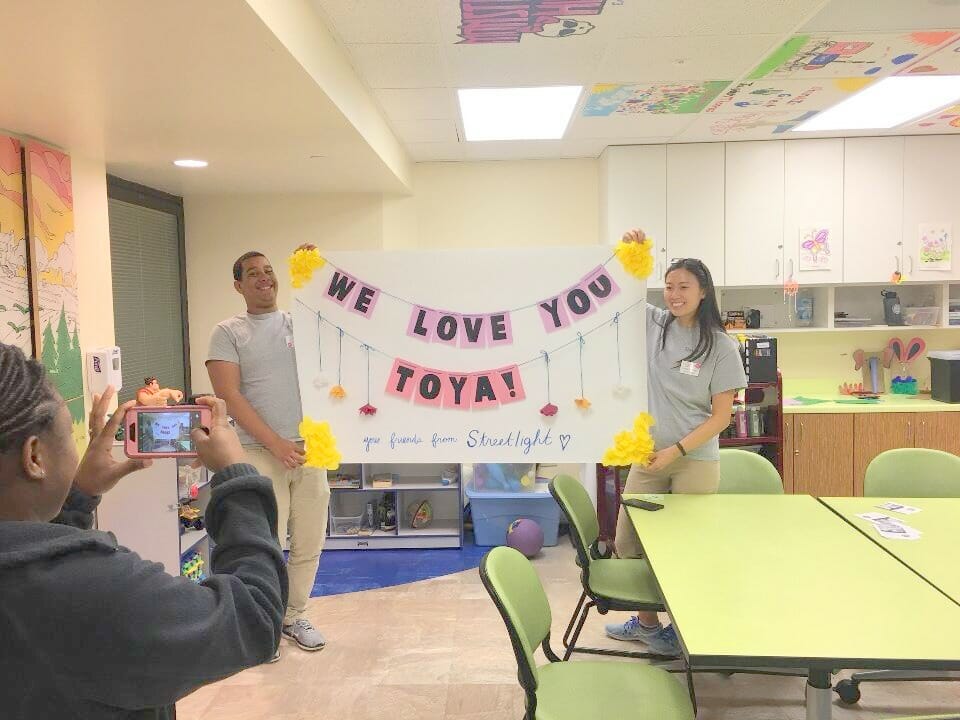
Jordy credits serendipity when a friend told him about Streetlight, a program that pairs college volunteers with young adults living with chronic and life-limiting diseases. This was the opportunity he had been looking for to make a real difference. He has been a volunteer at Streetlight for the past year building friendships and providing emotional support to patients so they don’t feel so alone.
What inspired you to volunteer?
I had been involved in other volunteer experiences, but I hadn’t had any direct contact with patients. I was talking to a friend about this and how I wanted to make a difference and impact patients more directly and he connected me with the Streetlight program. I interviewed and was accepted as a volunteer.
Describe your volunteer role with Streetlight.
We first have a meeting and look at the personality charts of the patients and try to match up volunteers who may fit best with that particular individual. For example, if we see a patient likes Star Wars, we match a volunteer who likes Star Wars. If a patient speaks Spanish, we match a volunteer friend who speaks Spanish. Then, we go in the room with a patient and visit with them. When I talk to them I try to make their day as nice as possible. I volunteer in four-hour shifts providing peer support to patients.
Why do you think it’s important for others to give back?
After you see patients with life-limiting diseases, you realize just how privileged you are. I think the morally appropriate thing for me to do is to give this blessing back to these people. I believe that those who are able to give have a moral duty to give back.
What’s been the most rewarding part of your work?
The most rewarding part of my work is getting that smile from someone who is suffering. Also, knowing I made contact with a patient who hadn’t seen someone in weeks is rewarding. The fact that I can complement something the patient is missing is my driving force.
What have you learned through your experiences as a volunteer?
I’ve learned that one day I may need help too. And to know there are people out there willing to volunteer gives me peace of mind and hope.
What do you want people to learn from your story?
I want people to understand it is important to give back. You never know when it will be your turn to need help. Volunteering with patients in palliative care at first struck me as sad, but we are able to make an impact during that time of their life and it is impossible to explain in words just how rewarding it is.
Tell me about your work with Literary Achievers.
I was inspired to help ESOL students because of my own personal experience as an ESOL high school student in Gainesville, Florida. I noticed ESOL students are at immediate risk of not being as successful because their English skills are not on par.
I started Literary Achievers in my high school to provide tutoring and mentoring to underserved high school students in ESOL programs.
The most rewarding part of my work with Literary Achievers is when I see a student score a higher grade after I have tutored them. And, it is not just because I tutored them, but it is the fact that I tried to inspire them to do better. That is worth a million dollars to inspire someone to do their best.
Are there any future partnerships, programs, or events that you are excited about?
Literary Achievers is in the planning stages to do a research project with The University of Florida’s childhood department. I hope the work provides research that will impact government policies in the future and ultimately further our impact. We also hope to expand the program into more schools this year.
This post was written by Karen Cohen.
Do you want to make a difference in your community like Jordy? Visit All For Good to find local volunteer opportunities.
One Women’s Passion for Horses Gives Adults and Kids with Special Needs the Ability to Shine
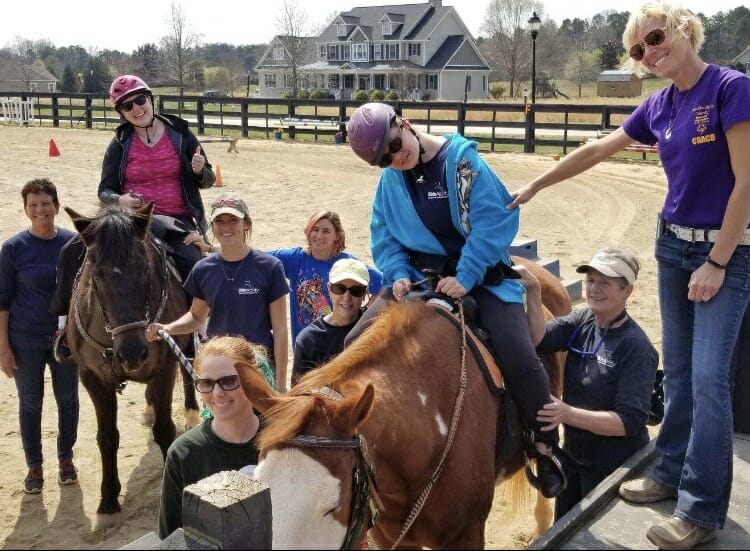
Wendy Schonfeld started riding horses at the age of 14 so it had always been a personal passion. However, after her daughter was born with a disability, therapeutic horse riding created a deeper, more personal connection between them. When Wendy’s family moved to rural South Carolina, she had a vision and a mission to bring the type of service that she experienced in New York to her new community.
She founded RideAbility Therapeutic Riding Center in 2011, providing horse-related programs to children, adults and families with special needs to promote their physical, psychological, emotional and social well-being. Its goal is no family should ever be turned away due to financial obstacles.
Wendy and the RideAbility volunteers use horses as facilitators to improve muscle strength, confidence, coordination and balance in kids and adults with special needs.
We talked to Wendy to find out how her passion for horses led her to start RideAbility and what she wants other people to learn from her experience volunteering with people with special needs.
What inspired you to volunteer?
I was a chiropractor and volunteered with the Special Olympics and always had a passion for riding horses. Becoming a therapeutic instructor with horses seemed like a perfect mix. I can recall watching a little boy with special needs on a horse and he was so happy and laughing — it was the type of belly laugh from his head all the way to his toes. After he was finished riding the horse, I observed him being returned to his wheelchair and he still had a smile on his face. I just remembered thinking; I want to give kids with special needs that ability to shine. At RideAbility Therapeutic Riding Center, we offer horse-related programs to children and adults with special needs such as autism, cerebral palsy and Down syndrome. We show them that the possibilities are endless. Watching them achieve their goals, complete tasks, gain confidence and make friends is why I volunteer.
Describe your volunteer role with RideAbility.
I wear many different hats. I am the certified instructor at RideAbility, and the volunteer coordinator. We have 50 volunteers who all make RideAbility possible and I am responsible for training them all. In addition to the volunteers, I train the horses. I also work with the Special Olympics equestrian team.
Why do you think it’s important for others to give back?
It is so rewarding to give back to others. If everyone could make a difference to one person a day, what a wonderful world we would have. The smiles of our families and riders are why I do what I do. That is our reward.
What’s been the most rewarding part of your work?
The most rewarding part of my work is seeing the happiness and joy of the families when they see their kids do something that they thought was not possible. Kids who are unable to walk say they feel free when they ride on a horse. Seeing the riders feel joy and happiness and watching them reach goals — that is my reward.
What have you learned through your experiences as a volunteer?
As a special needs volunteer, I have learned patience, kindness and love. Honestly, my special needs clients have the ability to be pure, honest and non-judgmental. Our society doesn’t seem able to do that. They have taught me about caring and forgiving. I have learned so much more from my special needs clients than anything I can teach them.
Are there any future partnerships, programs, or events that you are excited about?
Right now we have a Go Fund Me campaign to raise funds for a covered arena, so our special needs population can still benefit from the RideAbility program regardless of weather conditionscontinue to benefit from our therapeutic program all year long with rain and extreme temperatures.. We don’t want our riders to miss out on therapeutic rides due to rain, heat or wind. Our hope is with a covered arena, our riders won’t have their sessions interrupted due to inclement weather.
What is your role with the Special Olympics?
I am an advanced certified equestrian coach for the Special Olympics. I work with the equestrian athletes in a 10-week training program in South Carolina and North Carolina. I coach them in team work and sportsmanship.
What do you want people to learn from your story?
I want people to learn that individuals with special needs are the most amazing people to work with. It is not about our own crazy, busy schedules – take the time to find a place to volunteer and make a difference in someone’s life.
This post was written by Karen Cohen.
Do you want to make a difference like Wendy? Check out All For Good for local volunteer opportunities.
Focused on Families and At-Risk Youth, Community Group Finds Innovative Ways to Fight Hunger
Meet Daily Point of Light Award honoree Charolette Tidwell, who was a Top 10 finalist for the L’Oréal Paris Women of Worth Award in 2017. Each year L’Oréal Paris and Points of Light recognize and celebrate Women of Worth who make a beautiful difference in their communities. Ten honorees each receive a $10,000 grant to support their most cherished cause, and an online vote determines one honoree who will receive an additional $25,000 grant. Nominations for 2018 are now open! If you know a woman who works to create lasting and significant change in her community, nominate her to be one of the 2018 Women of Worth.
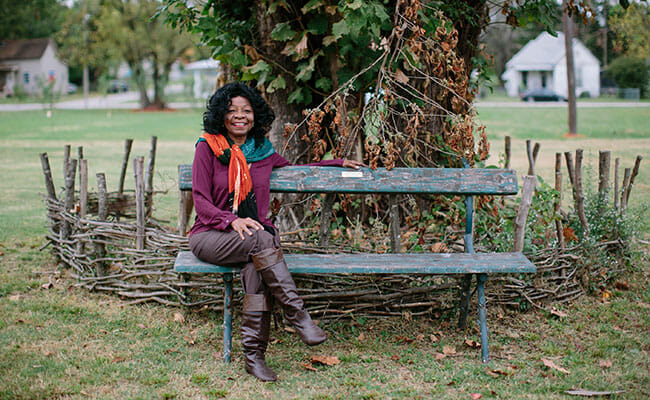
Raised by devoted parents of 10children, Charolette Tidwell’s natural passion for caretaking led her to pursue a long and fulfilling career in nursing. Rather than retiring, Charolette found a new way to keep helping people, and founded Antioch for Youth and Family to combat her hometown’s hunger crisis. Focusing on family nutrition, mentorship for at-risk youth and elderly care, Charolette’s organization provides resources to more than 10,400 people in need, with more than 800,000 meals each year. She also spearheaded the development of a community garden to source fresh produce for her pantry, while providing more than 1,000 schoolchildren with opportunities for garden-based STEM learning.
“Being a Women of Worth honoree validates my journey to renew their hope – and it now gives me an even stronger platform to nourish the minds, bodies and souls of my community,” Charolette said.
Youth Group Leader Notices Hungry Teens; Leads Her to Create Mobile Food Distribution Program
As a youth group leader in 1999, Joyce Kawakami noticed teens were coming to her youth group who were not getting enough to eat. Joyce grew up in poverty herself, so she knew she needed to help.
Every week, she would bring groceries for the teenagers to take home. As an advocate for healthy eating, she wanted to make sure they had enough nutritious foods that would keep them healthy and growing.
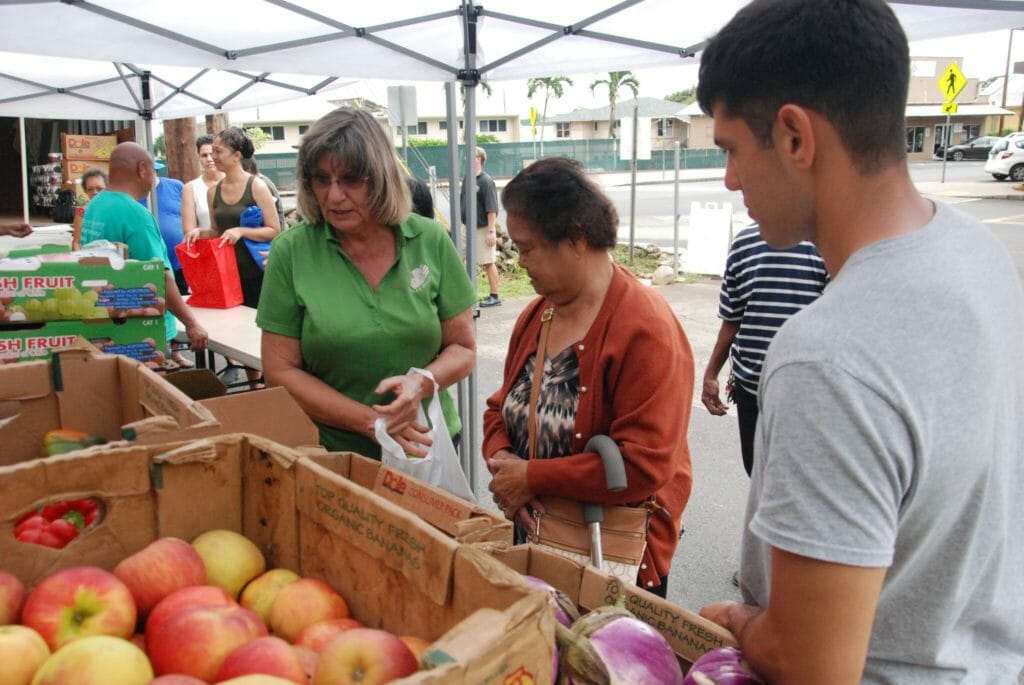
Word quickly spread and others started asking Joyce for help. She couldn’t just turn her back, so she started finding other resources to help provide food. This developed into a regular food distribution process out of the trunk of her car. Joyce’s work eventually led her to start the nonprofit, Feed My Sheep, a mobile food distribution program in the Maui area.
Now 19 years later, Feed My Sheep is a coalition of church congregations, collaborating ministries and corporate sponsors providing 69,000 half-pound meals each month. In the past year, it has given food to 3,200 people including low-income families, seniors on fixed incomes and homeless men and women. Joyce and the Feed My Sheep volunteers also offer emotional support through prayer and listening.
We caught up with Joyce to learn more about her experience as a volunteer and why she thinks it is important for others to give back.
What inspired you to volunteer?
I was a youth group leader 19 years ago and had kids coming to my group who I know weren’t getting enough food. I wanted to provide them with healthy nourishment to help them thrive. I knew if I didn’t do it, they wouldn’t survive. I couldn’t ignore the problem.
Describe your volunteer role with Feed My Sheep.
I work as the executive director at Feed My Sheep. My role is to find the funding and resources to fulfill our mission. I find the farms and the produce, so we have nutritious meals to supply our families. I manage the volunteers and I also write and allocate the grants. At the end of the day, I am the final authority and act as the chief executive officer.
Why do you think it’s important for others to give back?
I’ve never thought about it as giving back, it all just fell into place. I know there would be people suffering if we didn’t have Feed My Sheep. I don’t get a salary or a benefits package, but my reward is far greater than that. When you look at the faces of those you are helping — getting the hugs — that is our reward. Each person who comes to Feed My Sheep becomes a part of our family and our community.
What’s been the most rewarding part of your work?
The most rewarding part of our work is knowing the people we serve are thriving and doing better. We frequently conduct surveys to test the Feed My Sheep program. Our survey results show when people get enough food, their health improves. We want them to get healthy to stay in school or hold down a job, and that is what is happening. Our friends who come to Feed My Sheep feel loved. They are doing better because we are there.
What have you learned through your experiences as a volunteer?
There is more value to human existence than making a living and paying your bills. We pray for people’s spiritual connection. At Feed My Sheep, we don’t have clients, we have friends. We know everyone by name. We know their kids and we know what is going on in their lives.
Are there any future partnerships, programs, or events that you are excited about?
When Hawaiian Commercial and Sugar CO. (HC&S), the last sugar cane plantation in Hawaii, owned by Alexander and Baldwin closed down, they donated 7.5 acres as the future home of our warehouse, office space and farm. They have been our landlords since 2005 in our current location and have never charged us rent. At present, we work out of shipping containers and trucks. Our immediate plans are to fix and repair the old buildings on the land. The farming will include aquaponics, fruit trees and a chicken farm for eggs.
What do you want people to learn from your story?
The rewards of volunteering are greater than you can imagine. Step up and reap those rewards.
What is a favorite memory with Feed My Sheep?
A memory that stands out is a homeless man, Johnny, who came to get food supplies weekly. He was malnourished, grumpy and a little scary. He only wanted candy, treats and snacks. In 2012, we started pushing healthier food options for him and Johnny wasn’t happy about it. He decided he would stop coming because he didn’t like the food we were offering. But, after a short time he returned because he was hungry and needed something even if it wasn’t what he wanted. He started consuming the healthier options, which was mostly fresh produce and was surprised by how much better he started feeling once he was getting the nutrients he needed. He improved so much, it wasn’t long before he was able to hold down a job. I still remember when he came in and said thank-you, gave me a hug and told me he didn’t need to come anymore because he was working and living in a home.
This post was written by Karen Cohen.
Do you want to make a difference like Joyce? Check out All For Good for local volunteer opportunities.
College Baseball Athlete Hangs Up His Cleats to Offer Hope to Brain Tumor Patients and Their Families
As a young boy, Stephen Frederico had dreams of being a major league baseball player. He was moving closer toward his goal when he arrived at the College of Charleston as a member of the baseball team. But, he wasn’t completely satisfied.
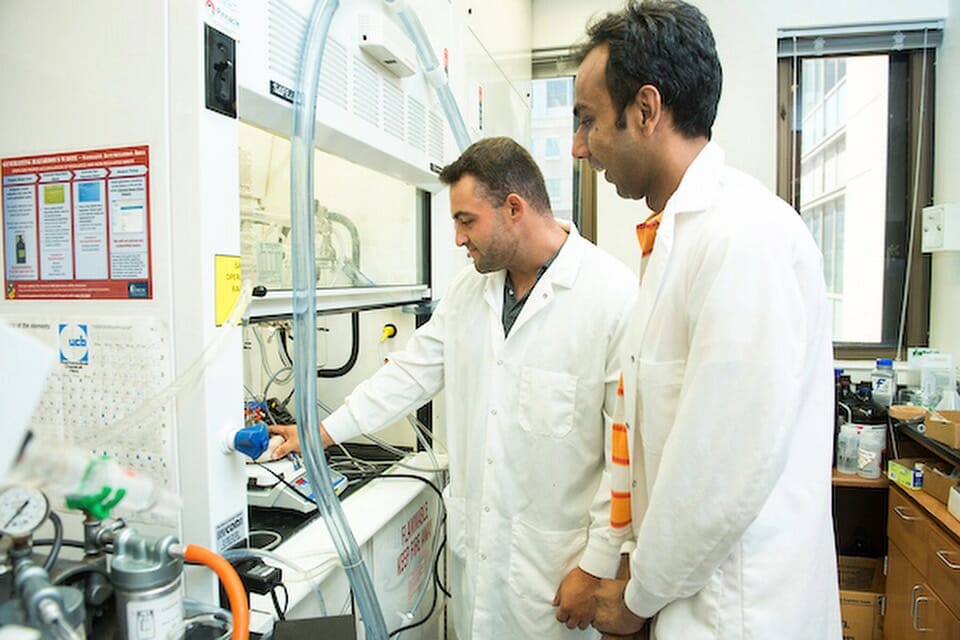
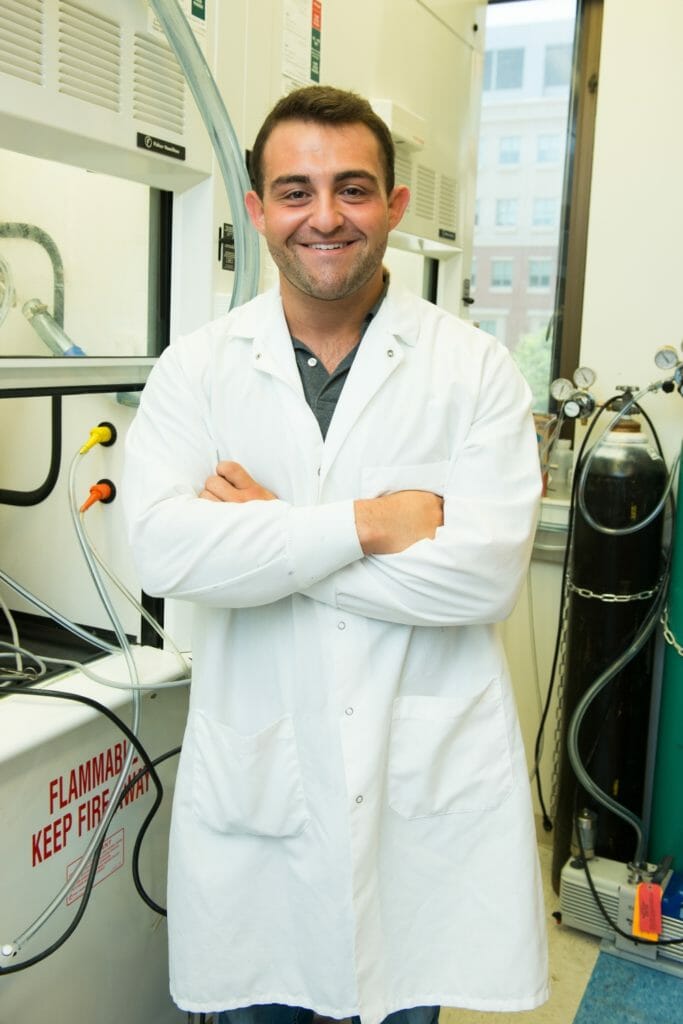
He always had a love for science, but never felt very good at it. He decided to switch gears and major in biochemistry. Now, he spends countless volunteer hours in a Medical University of South Carolina lab researching treatments for brain tumors, as a way to give patients and their families hope.
In addition to his volunteer work at MUSC, Stephen delivers leftover baked pretzels from a local restaurant to Charleston’s homeless. He walks approximately five miles passing out food to the hungry a couple times a week. He not only passes out the food, but he also has developed relationships, as he spends time talking to and getting to know them on a more personal level.
Describe your volunteer role with Medical University of South Carolina.
My volunteer role at Medical University of South Carolina is in the lab researching drug treatments for brain tumors. I am responsible for conducting experimental research that could extend the lives of patients with glioblastoma, a type of brain cancer. Currently, life expectancy with this type of cancer is 12 to 15 months.
What inspired you to volunteer at Medical University of South Carolina?
I went to the Medical University of South Carolina and bounced around different labs. It was when I met with a pediatric neuro-oncologist and witnessed her working with brain tumors that I saw how horrible a disease it is. I wanted to get in a laboratory and help. I bonded with a patient who was given about a year to live. When I first met her, she was six years old and was able to walk and talk. Through the progression of the disease, I watched her go from having the ability to walk — to a walker — to a wheelchair. Seeing her struggle and losing her made me decide volunteering with a focus on brain cancer was where I wanted to invest my time.
Why do you think it’s important for others to give back?
We are making major strides in medicine. In order to continue to make progress, we need more people working to make it happen. Volunteers help push projects forward. Without volunteers, we wouldn’t be where we are today.
What’s been the most rewarding part of your work?
It is rewarding to go to the clinic and share with families that they are not alone. It is rewarding to share with them the research going on in the laboratory and the progress that is being made. By no means is there a cure, but you can give them hope. Giving families comfort and putting smiles on their faces is rewarding.
What have you learned through your experiences as a volunteer?
When you are first starting out, be prepared to be wrong and fail. That is how you learn. There is going to be great amount of sacrifice, but the reward is completely worth it.
Are there any future partnerships, programs, or events that you are excited about?
I will be doing a research internship at Duke University in the department of neurosurgery on the use of immunotherapy to treat different tumors.
What do you want people to learn from your story?
I want students to know that just because you come to college with one idea of what you want to do with the rest of your life, be open to opportunities. My dream was to play major league baseball and now I am working in a science laboratory. Don’t be closed off.
In addition to your volunteer work at MUSC, you also deliver baked goods to the homeless in Charleston. How did you come up with this idea?
I have a friend who makes delicious pretzel rolls at a restaurant in Charleston. Every night they were throwing away the leftovers. There are a lot of homeless people in Charleston who can’t afford food. I asked my friend — instead of getting rid of the pretzels that would have otherwise been thrown out, if I could distribute them to the needy? Now, twice a week, I walk five miles delivering 60 to 70 pretzels to Charleston’s homeless.
How has delivering pretzels to the homeless impacted you?
The best part is talking to and listening to their stories. It is not just about the food. They are grateful someone cares and is listening to what they are going through. I have made a lot of new friends. Many of these people sit out there every day and no one stops to talk, no one cares. It helps them to have a conversation and have someone see how they are doing.
Do you want to make a difference in your community like Stephen? Visit All For Good to find local volunteer opportunities.
A Daughter Honors Her Mother’s Memory by Calling Bingo at a Retirement Community for 17 Years
Stella Avret’s mother was a resident at the Assisted Living Cottage of Magnolia Manor, a retirement community on St. Simons Island, Georgia. After her mother passed away, the assistant director suggested she come back and volunteer. The retired kindergarten teacher then decided that volunteering to answer phones at the retirement community would be a great way to honor the memory of her late mother.
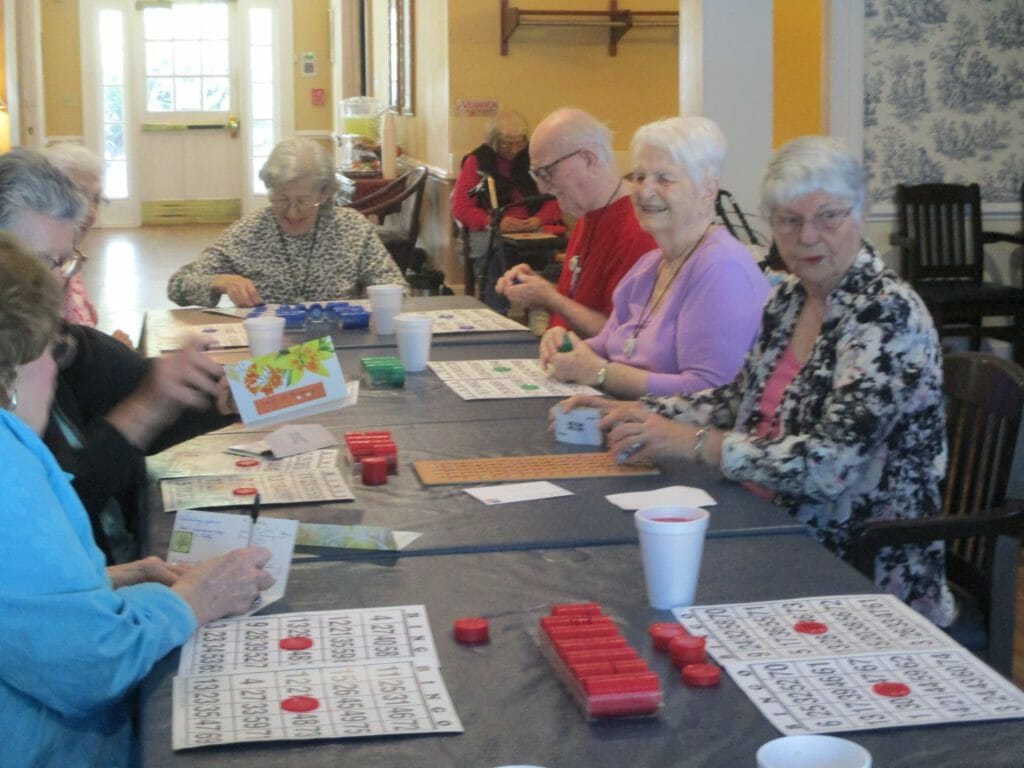
When she realized the people at the Bingo table were having a lot more fun, she asked for a reassignment. She started out by serving coffee and juice, and before long she was calling the Bingo game.
She is still running the Bingo table 17 years later and spends every Wednesday morning getting to know the residents personally. She also supplies the candy treats and prizes, even making sure there are sugar-free candy options available for certain residents, and sends out cards to former residents and volunteers.
We spoke with Stella to learn about what inspired her to start volunteering and why she thinks it is important for others to give back to the community.
What inspired you to volunteer?
I had retired in 1998 from teaching and hadn’t done much volunteer work other than at my church or at my kids’ school. I had spent a lot of time at Magnolia Manor when my mother was there. After she passed away, the assistant director told me, “Don’t be a stranger,” and I decided it would be a good place to put my energy.
Describe your volunteer role with Assisted Living Cottage of Magnolia Manor.
Every Wednesday, I set up Bingo and call the game. I help assist the residents who may have visual or hearing problems play. I get to know the residents on a personal level. I also send weekly greeting cards to the residents and volunteers who have left Magnolia Manor; I want them to know we still remember them.
Why do you think it’s important for others to give back?
I believe in volunteerism and think it is very important for people to give back to their community. I think people should go into volunteering with the same commitment as a paying job. I commit myself to being at Bingo every Wednesday, unless I am out of town or ill. I always give advanced notice if I am going to be out and make sure to get the candy and prizes to Magnolia Manor in my absence.
What’s been the most rewarding part of your work?
The most rewarding part of my volunteer work at Magnolia Manor is getting to know the residents. I enjoy the people and getting to know their stories and background. It has been a pleasure to see people who once preferred to isolate themselves now looking forward to being with their friends at Bingo. These people hold a special place in my heart.
What have you learned through your experiences as a volunteer?
The more you give, the more you receive. And, I have learned as a volunteer, I am the one on the receiving end. Volunteers receive a lot by giving.
Are there any future partnerships, programs, or events that you are excited about?
Magnolia Manor has a bulletin board full of activities for the residents. There is always a lot going on, including taking the residents on field trips such as shopping.
What do you want people to learn from your story?
I want people to sign up to be a volunteer. There is such a need for volunteers out there in the community. Volunteering is rewarding.
What is your favorite memory from volunteering at Magnolia Manor?
Volunteering every day at Magnolia Manor is a new favorite memory.
Do you want to make a difference like Stella? Check out All For Good for local volunteer opportunities.
Jacqueline Means
Fifteen-year-old high school sophomore, Jacqueline Means, founded Wilmington Urban STEM Initiative in 2016. The nonprofit hosts empowerment STEM events for girls throughout the Southbridge community in Wilmington, Delaware.
Jacqueline’s exposure to the negative and violent activities in Southbridge moved her to get more involved in her community. “I got tired of wishing Wilmington was a better place, and then doing nothing about it,” she said. “So I started my nonprofit because I wanted to see a positive change in my community, starting with young girls.”
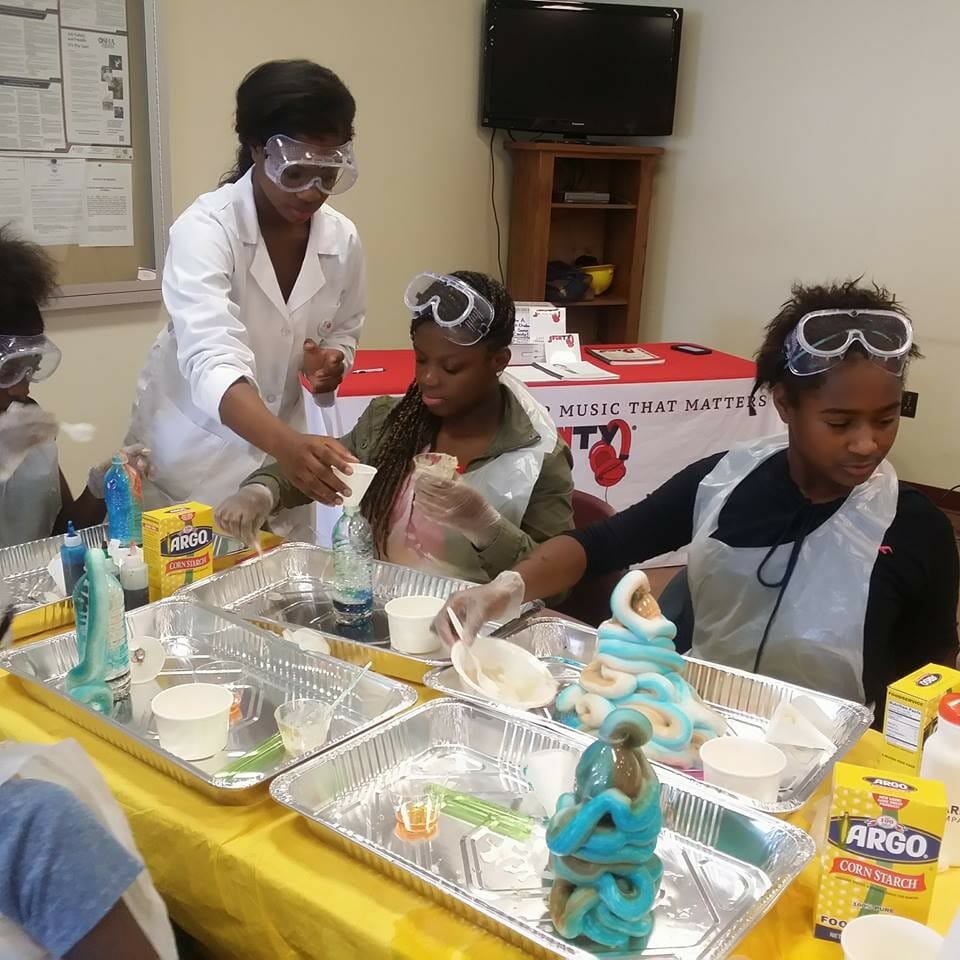
At the organization’s events, attendees participate in an interactive anti-bullying demonstration and hear from female speakers, which in the past has included Representative Lisa Blunt-Rochester. The girls also participate in hands-on experiments, including making ice cream with dry ice, slime and non-Newtonian liquid, elephant toothpaste, and much more.
As a STEM advocate, Jacqueline hopes to inspire young girls to be more involved and learn that science is not just for boys.
“If you can’t say with 100% confidence that you are helping your community, you aren’t. It’s time to take action, and put it upon ourselves to move our neighborhoods, our towns, and our communities forward,” Jacqueline said.
Do you want to make a difference like Jacqueline? Check out All For Good for local volunteer opportunities.