With Bright Blue Socks, Brothers Team Up to Help Save the Blue-Footed Booby
During National Volunteer Week, we celebrate the impact of volunteer service in our communities, and recognize extraordinary individuals who are at the center of social change – like Daily Point of Light Award honorees Will and Matty Gladstone. Read their story and nominate an outstanding volunteer or family as a Daily Point of Light.
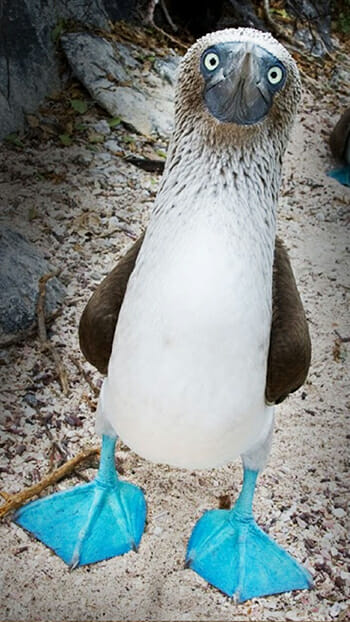
Two years ago, Will Gladstone studied the endangered blue-footed booby in his fifth-grade science class. He learned its population had declined by 50 percent in the past 60 years, and scientists didn’t know why.
Most kids would have closed their book and forgotten about the endangered bird, living far away in the Galápagos Islands. But not Will.
He was intrigued by this “really cool bird.”
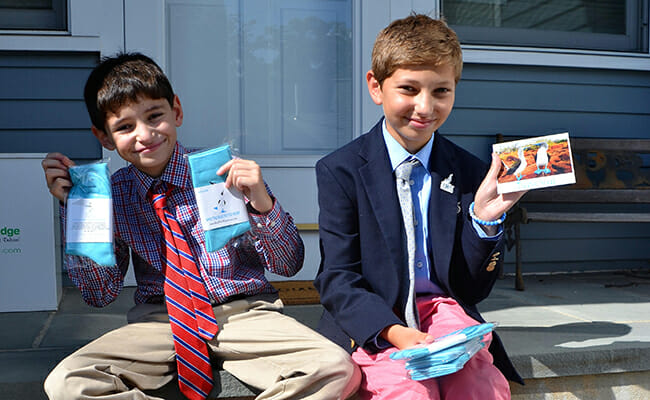
Will wanted to do something to help, and began staring at his feet. He came up with the idea of selling blue socks, so everyone could have blue feet like the blue-footed booby. His dad helped find someone to make the socks, and they held a logo contest online.“It has bright blue feet and dances,” said Will, age 13. “It also isn’t afraid of people, so it’s really friendly. It made me sad to think it might disappear.”
Younger brother Matty, age 10, also wanted to be a part of the project, and came up with The Blue Feet Foundation name. Together, the boys were ready to raise money to help save the blue-footed boobies.
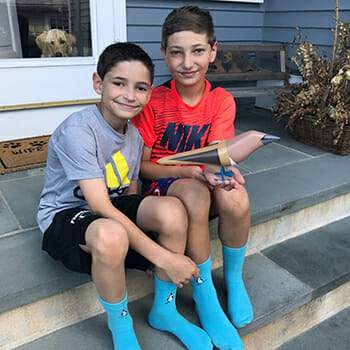
Matty and Will Gladstone, wearing the Blue Feet Foundation’s signature blue socks.
At first, no one took the two kids seriously, and it was three months before they sold any socks. However, they have now sold more than 3,000 pairs of socks, with orders coming in from all 50 states and across 30 countries.
Will and Matty have already raised more than $40,000 for their cause. And, in 2017, they helped the Galapagos Conservancy fund an expedition for Dr. David J. Anderson, a professor at Wake Forest University and a world-renowned expert in blue-footed boobies, to study the population decline.
The Blue Feet Foundation has also attracted a large following on social media, with more than 12,000 followers on Instagram alone. Their followers post photos wearing the foundation’s signature blue socks making appearances all over the world, including the Grand Canyon, the Great Wall of China and Stonehenge.
“More people know about the blue-footed booby because of us,” said Matty.
Their school, The Fessenden School in Newton, Massachusetts, has also been supportive of The Blue Feet Foundation, even hosting one day where all the students wore blue socks.
When the boys aren’t saving endangered birds, Will likes to play sports and video games. He also likes to watch hockey and says his favorite hockey player, Kevan Miller of the Boston Bruins, sent a photo wearing The Blue Feet Foundation socks. Matty also likes sports, reading and playing videos games, and he enjoys hiking with his three dogs as well.
Both boys understand the impact of giving back to the community. “We need to inspire people to want to help everyone else, so the world gets better.”
Matty says it makes him feel good to help the world be a nicer place. “If people don’t help other people and animals, the world would be a bad place and never get better.”
As for the future of The Blue Feet Foundation, Matty says, “I hope we go out of business, because that means we saved the blue-footed booby.”
The Difference They Make
As of March 2018, The Blue Feet Foundation has made 11 donations to the Galapagos Conservancy, ranging from $500 up to $8,000, for a total of $33,000. The funds have gone towards the conservation of the blue-footed booby, including funding the 2017 population census led by Dr. Anderson.
“Will and I have been exchanging emails since March 2016, and I admit when he first contacted me I was sure I would never hear from him again,” said Lori Ulrich, director of membership and marketing at the Galapagos Conservancy. “A lot of kids contact us with ambitious book projects or fundraising ideas, but none have ever put in the effort or succeeded quite as well as Will and Matty.”
Lori has been consistently amazed by the boys’ success.
“We hope that, in time, we can report that the blue-footed boobies in Galápagos are making a comeback, and that Will and Matty Gladstone and The Blue Feet Foundation played a large role in their recovery,” she said.
Want to make a difference in your community? Find local opportunities to get involved at www.allforgood.org.
This post was written by Karen Cohen.
Social Entrepreneur Helps Women Discover Their Power Through Self-Defense and Leadership Training
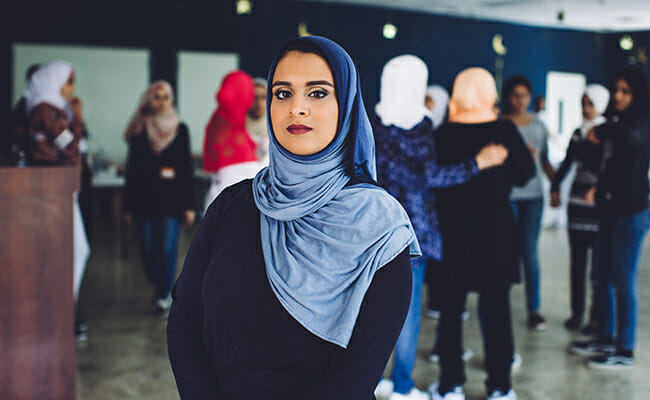
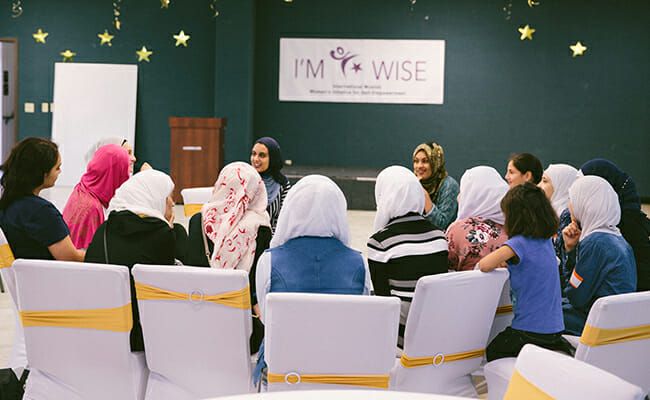
At the age of 16, Rana Abdelhamid was the victim of a hate crime in New York City when a stranger tried to rip the hijab from her head. “I felt shaken and all alone,” she said. She wanted to find a way to help bring Muslim women together to find a safe space to heal.
The experience led her to start (IM)WISE, a nonprofit organization and grassroots movement supporting Muslim women’s empowerment through self-defense and skills-based training.
“At the end of the trainings, we have everyone hold hands and say one word around how they feel,” said Rana. “The women often say ‘empowered,’ ‘supported’ and ‘confident.’ That is how I feel too.”
Rana said one of the most profound outcomes of the program is when participants are inspired to start their own program. “It’s healing and empowering to teach other women.”
Last year, (IM)WISE brought more than 50 women to Harvard University’s National Muslim Women’s Summit to train them on community mobilization, and, the organization is planning to do it again this year.
Rana, now 24, has traveled to 17 cities across the world teaching self-defense and healing to more than 3,000 women. What has been her biggest takeaway? The fact that “gender violence happens to all women, everywhere,” she said.
As a result of her work, and the journey she began in 2010, Rana wants to grow her grassroots movement to help even more women.
(IM)WISE has now re-launched under the name Malikah, which means “queen” in 10 different languages. As Malikah, the global grassroots movement has expanded to support the empowerment of all women through self-defense, entrepreneurship and organizing training.
Malikah’s first initiative is its Healing Justice project; a digital toolkit with a 10-session facilitation guide that encourages women to get together for intentional conversation. “Gather a few women or 10 women,” said Rana. “We want people to be more intentional in their relationships.”
In addition, Malikah will have programming focused on financial literacy. “We want to empower women to understand their financial needs and seek economic justice,” said Rana.
Rana says she has personally been given so much by women like her mom, sister and friends. “There is beauty when women come together and create change together.”
Rana hopes the future of Malikah will include hundreds of chapters around the globe distinct to its local needs. “The impact of the program is a feeling of wholeness, safety and security,” she said.
Longtime Volunteers Help People in Need Make Houses into Homes
It all started in 1990 when Barbara and Ira Smith heard about a family that had fled to Massachusetts from their home in San Salvador due to violence, and were in need of furniture for their apartment.
The Smiths put an ad in their church bulletin seeking donations to help the family, and received more furniture than was needed. They contacted their community’s local housing authority, to offer the extra items to its low-income clients. “We thought once all the stuff was gone, we’d be done,” said Barbara. But they were just getting started.
The housing authority kept calling, with additional needs for their clients. Barbara and Ira continued asking members of their church for items, more donations came in, and so the cycle continued.
Before long, people were just leaving donations at the Smiths’ house. They started storing items in their carport, driveway, yard and cellar – anywhere they could find space. Eventually, Barbara and Ira had to expand and began using their church’s basement and satellite locations.
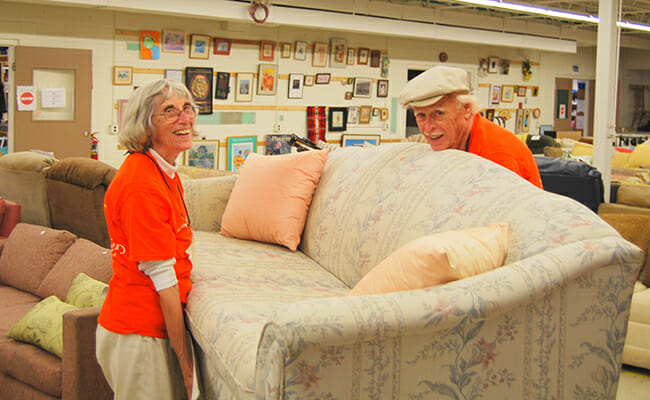
When Ira retired in 1995, the couple made helping provide furniture and home goods to families in need their new full-time job. They bought an orange truck, which Ira said would make people “see us coming down the street,” and started picking up and delivering items when needed.
By 1999, their project had blossomed into Household Goods Inc., a nonprofit offering a full range of donated furniture and household items to help people in need make a home, free of charge.
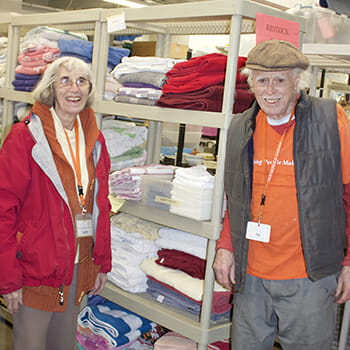
Household Goods has grown from 50 volunteers to 850 volunteers and four employees, and the donated furniture and home goods – once stored at Barbara and Ira’s home – now occupy a 20,000 square-foot building. Each year, hundreds of volunteers serve more than 30,000 hours with the organization, which works with more than 300 social service agencies supporting families throughout eastern and central Massachusetts. Household Goods serves people in need, including veterans, families living on minimum wage, those emerging from homelessness or fleeing abuse, people living with illness or disability, or those who have lost their homes or belongings in a fire.
According to the Smiths, Household Goods is more than just a building filled with furniture, furnishings and home goods. Barbara and Ira have created a welcoming environment where people who are getting back on their feet can personally make their selections with dignity. A personal volunteer escort guides them through the building to assist and offer friendly support. “It’s like a big store,” said Barbara, “but the items are free.”
“The Household Goods difference is that we provide a friendly and happy shopping experience, and it’s a way to bring the community together,” said Ira.
“The community sees the direct benefit of its work and wants to get involved to help,” Barbara added.
More than two decades later, 86-year-olds Ira and Barbara both volunteer at Household Goods three hours a day, six days a week.
When asked what their future goals are for Household Goods, Ira quipped, “You haven’t seen anything yet.” Barbara says this need is not unique to only their community. They hope more furniture bank models like Household Goods will open throughout the country.
Veteran Sets Out to Educate, Empower Fellow Vets and Entrepreneurs to Find Business Success
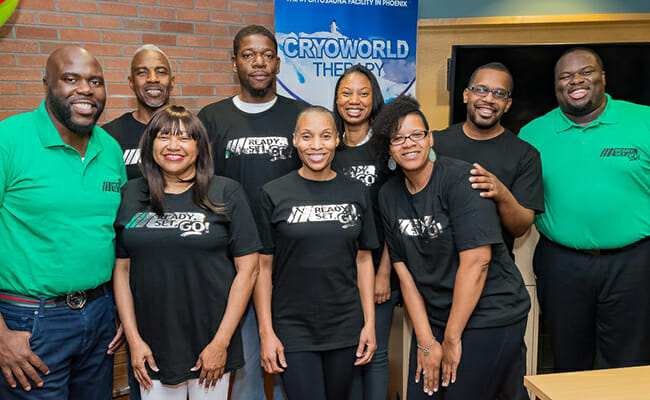
U.S. Army veteran OD Harris co-founded the Ready Set Go Foundation in 2014 to provide veterans and disadvantaged entrepreneurs with the tools for business success. OD was frustrated by a lack of real support and mentorship for entrepreneurs to establish their businesses. Drawing on OD’s own experience as an entrepreneur, Ready Set Go has helped more than 700 veterans and other individuals, and given out more than $1 million in financial scholarships to start-ups.
In 2015, OD was honored as the Entrepreneur of the Year by Black Wall Street Phoenix. He has served as vice president of NBMBAA Phoenix, vice president of Lansing Youth Organization, and currently serves on the board of Arizona Black Philanthropy Initiative, dedicating more than 4,000 hours to the community.
We spoke with OD about Ready Set Go and his passion for empowering entrepreneurs.
The mission of Ready Set Go is to educate and empower disadvantaged and veteran entrepreneurs. How does the program give participants the tools to be successful?
Educate. Empower. Execute. This is indeed our mission for Ready Set Go. First, we educate our participants with relevant information in the marketplace. So often, we see many veterans and entrepreneurs who are not privy to current information or advancements in technology, so it is our goal to give them the knowledge needed. As we gain knowledge, we become empowered. Once the participants have an education and understanding, then they develop confidence in themselves and in their ability. This empowerment develops intrinsically, as well as from those who provide mentorship. Once they are empowered, then they execute. By offering financial support and one-on-one support to each participant, execution of businesses is inevitable. Through this three-step process, Ready Set Go has allowed many to execute the startup of their businesses.
What inspired you to start Ready Set Go?
Ready Set Go was established 2014 by me and Ja’Meen Oliver. After accepting many invitations to various networking events that promised to offer support to entrepreneurs, we learned they yielded great social interaction but very little substance. There was a genuine need for entrepreneurs to be educated on the process of business development, and be assisted with resources to help establish their business, eventually allowing them to execute their plan, and make their stamp in today’s marketplace.
There are many ways to measure success, how do you define Ready Set Go’s impact?
Ready Set Go offers a five-week program with the partnership of several city and state organizations, free of charge to entrepreneurs and veterans. Participants are provided a comfortable and resource-rich environment as well as the necessary tools needed to develop and deliver their business. Ready Set Go has given more than $1 million in financial scholarships to assist with necessary requirements for business start-up, we have 63 graduates of our entrepreneurial program, and we’ve helped more than 700 entrepreneurs and veterans execute their businesses. To see the growth in participants from week one to week five is what I call success. Knowing that we have helped someone by giving them knowledge needed to be successful will have a lifelong impact on every person who participates.
What have you learned through your experience starting Ready Set Go?
I have learned that many entrepreneurs have amazing ideas but lack the support to have confidence in their ability to execute. Relationships and resources are two key things needed to successfully launch a business. There is also a great need for assistance with business development; getting the idea from your head (or heart) into a working plan. When you have a program that will fill in the gap through education, empowering, and execution by harnessing passion, doing the work required to walk in purpose, that is freedom. People are seeking independence and freedom to do what they love to do.
What is your favorite memory from your work with Ready Set Go?
I have several, but all have a central theme of empowerment. It’s the 68-year-old woman who had a dream for many years, all the details meticulously captured in her spiral-bound notebook but no direction on how to materialize her vision. Or, the veteran who, after having been deployed for several years, was devoid of direction in his life but had a business that was growing inside of him. Or, even the child who had an innovative idea, but had been waived off by older people because of their age or social economic status. Providing the resources and access to education on how to bring these ideas to fruition – these are my fondest memories. We are birthed with vision, ideas, plans, purpose; we sometimes need access to the tools to help deliver that purpose to the world. To be able to see those people obtain what is needed to launch their business, whether it is financial support, moral support, emotional support or spiritual – whatever it takes, that is Ready Set Go.
What is your dream for Ready Set Go in five years?
My plan is to have Ready Set Go established in under-resourced inner city schools. The children are our future and they have ideas today. To have access to knowledge is key. Through education, we empower and they execute. Also, to partner with veterans to assist with their transition back into civilian life. To give them the tools needed to be successful. Lastly, to have multiple chapters in various states.
Why do you think it is important for others to get involved and make a difference in their community?
Community is key. When you get involved with your community you can feel the pulse and know how to invest your time, talents and treasure. Working with members of your community builds connections, and provides opportunities to collaborate and become agents of change. This opens the door to personal and professional growth, and to strengthen the community at large.
Michael Shattuck
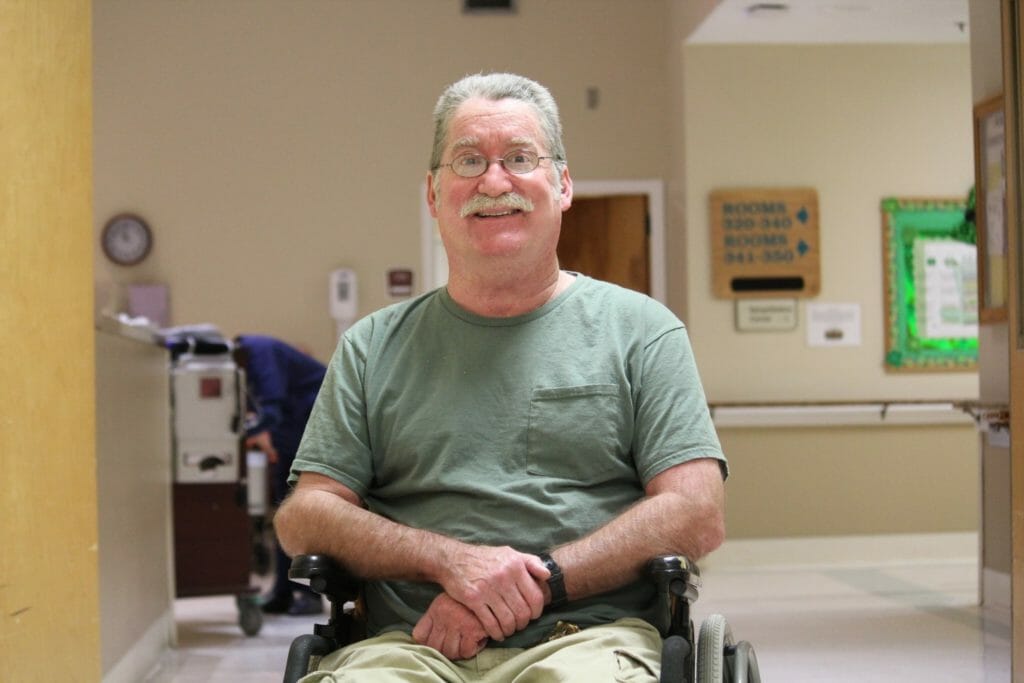
Michael Shattuck greets and directs patients at Bridgeway Hospice and Wellstar Infectious Disease in Marietta, Georgia. His friendly face is a welcome sight to visitors at check-in, and he also helps staff with additional requests as needed. He was motivated to give back because he wanted to do his part to make the world a nicer, kinder place.
“You either contribute to the world, or take from it,” Michael said. “Like it or not – we are all part of one global organism.”
Do you want to give back like Michael? Visit All For Good to find local volunteer opportunities.
With the Validation Project, Teen Empowers Youth to Speak Up, Take Action
Meet Daily Point of Light Award honoree Valerie Weisler, who was a Top 10 finalist for the L’Oréal Paris Women of Worth Award in 2017. Each year L’Oréal Paris and Points of Light recognize and celebrate Women of Worth who make a beautiful difference in their communities. Ten honorees each receive a $10,000 grant to support their most cherished cause, and an online vote determines one honoree who will receive an additional $25,000 grant. Nominations for 2018 are now open! If you know a woman who works to create lasting and significant change in her community, nominate her to be one of the 2018 Women of Worth.
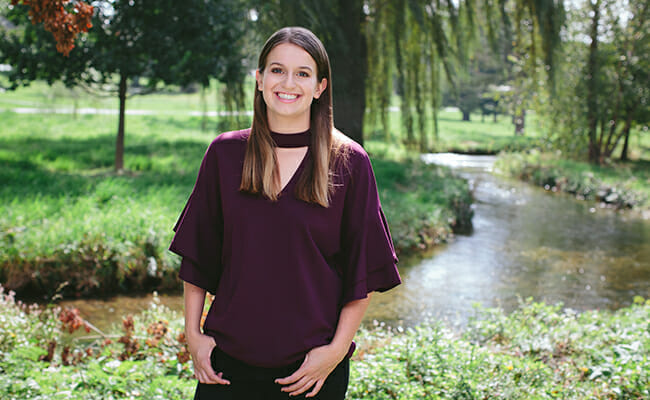
Five years ago, 14-year-old Valerie Weisler’s life was in ruins. The high school freshman was painfully shy and traumatized by her parent’s divorce. The bullying came almost immediately. A crowd of mean girls taunted her mercilessly, calling her mute and stupid, telling her to leave, even giving her reasons why she should kill herself. “I was scared to go to school,” said Valerie, now a 19-year-old college student. “I felt like I was drowning in darkness.”
Then one day, Valerie saw another student being bullied about his weight, and something clicked for her. She approached him and told him not to listen to the bullies, that he mattered and that he was important.
“Later, he told me he was going to kill himself that evening – it was all planned out. But because I validated him, he didn’t,” Valerie said. “I didn’t even know what validation was – I had to Google it. That’s when I got an idea. What if there was a global space where kids from all over the world could share their struggles and work together to solve problems?”
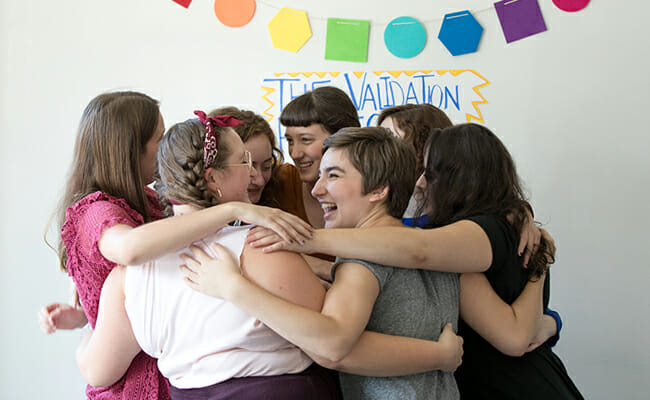
That idea became the Validation Project. What started as a blog funded with her babysitting money rapidly grew into an international program that matches at-risk teens with mentors from nonprofits and corporations like Google and the NFL. Run by youth for youth, the project is operated primarily by high school and college students who understand the issues their peers struggle with, including the feeling of not being heard.
“I built a proactive platform to give my generation a voice and the resources to turn that voice into positive action,” Valerie said. “Instead of asking, ‘What do you want to do when you grow up?’ the Validation Project asks, ‘What do you want to do now?’ We are teaching my generation that you do not need to wait to make a difference.”
In addition to one-on-one relationships, the Validation Project also teaches a “kindness curriculum,” showing educators and students how to work together to creatively solve problems in their communities. So far, it has replaced existing anti-bullying curriculums in more than 1,000 schools across the globe.
In less than five years, the Validation Project has become a global movement, operating in 105 countries. More than 30 national and international campaigns have focused on various issues such as homelessness, domestic violence, LGBTQ rights, women’s rights, etc.; and more than $45,000 in goods and services have been donated to those in need. Most recently, the project launched a celebrity ambassador program, working with transgender activist celebrities like Jazz Jennings (TLC’s “I Am Jazz”) and Rachel Osterbach (A&E’s “Born This Way”) to elevate its mission through social media platforms and connections.
Teens can visit the Validation Project website to start a chapter at their school or start a mentorship. Adults are also invited to sign up to be mentors, or get more information about Validation Project work in their community.
Kiarra Smothers
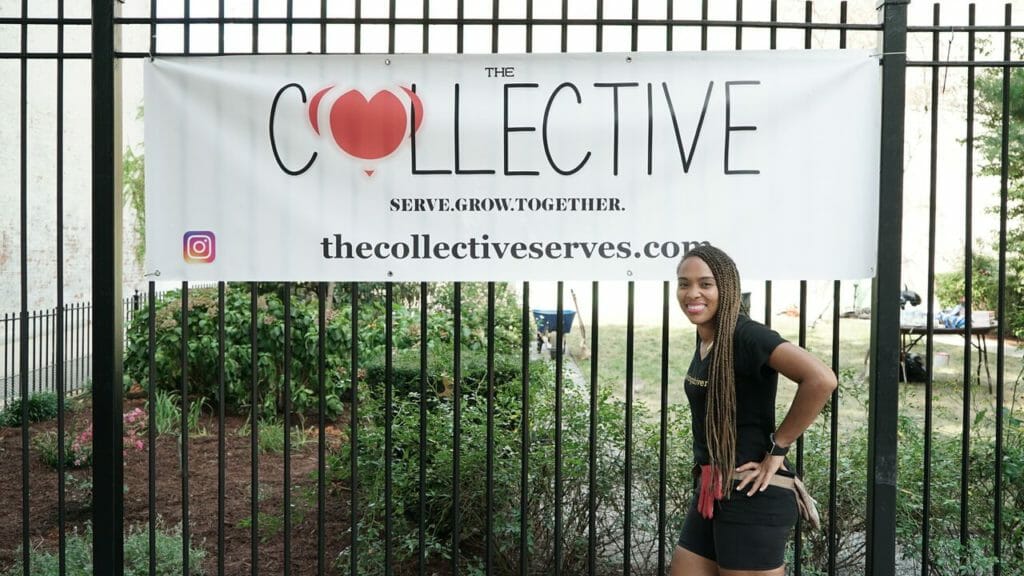
Kiarra Smothers is the founder of THE COLLECTIVE, a movement of friends, neighbors, strangers, and members of the community coming together to serve. Participants in the movement have gathered to make care packages for the homeless and refurbished school playgrounds. Recently, its efforts expanded globally by partnering with a soup kitchen in the Brixton community of London to host and feed the homeless during the Christmas holidays. Kiarra is today’s Daily Point of Light, and she spoke with Points of Light about her committment to service.
Describe your volunteer role.
I am the Founder of The COLLECTIVE. I create fun and engaging service projects from the ground up and then invite the local community and others with a heart of service to join the fun! I also, partner with other local organizations to gauge where there is a need in their community and help to fill in the gap.
What inspired you to give back?
Serving others has always been rooted in me through my parents from childhood. My family taught me that I am blessed to be a blessing to others, and I’ve made it my mission in life to spread joy, love, hope and excitement about life and service with others. That’s why the heart symbol is at the core of The COLLECTIVE logo because it all comes from the heart.
What is the most important lesson you’ve learned through your experience as a volunteer?
I’ve learned that each time I volunteer, not only are those whom we are serving feeling the excitement and blessings around the day, but one or more volunteers leave transformed as they’ve been touched by the experience as well. Serving brings me pure joy!
Why do you think it’s important for other people to volunteer?
I believe it’s important for people to be engaged with, touch, see, smell, and experience things that are happening outside of their personal bubbles because we are in this world together – a COLLECTIVE. It’s good karma and the RIGHT thing to do. I promise people they won’t be the same after they commit themselves to a day of service, and as the great James Baldwin once said, “The world is before you, and you need not take it or leave it as it was when you came in.”
Do you want to make a difference like Kiarra? Visit All For Good to find local volunteer opportunities.
Chaplain Diane Peterson
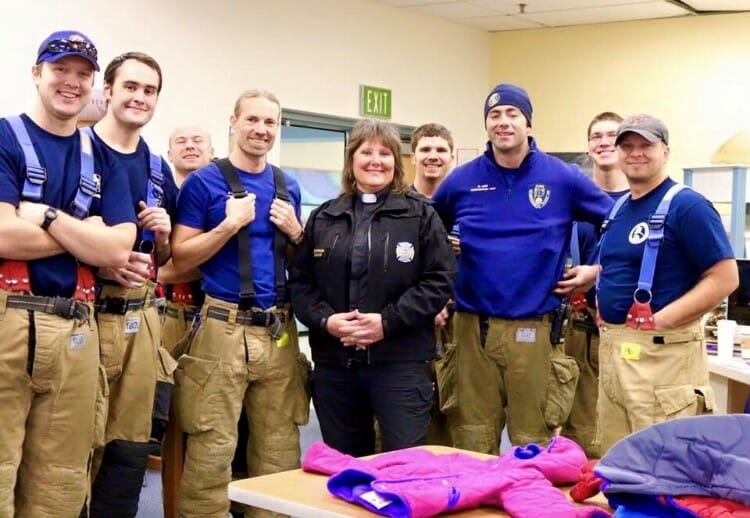
Anchorage, Alaska, resident Diane Peterson has spent the last 15 years serving as a chaplain. Working alongside first responders, she has helped people in her community through some of the most traumatic experiences in their lives.
“I strive to be a light, a beacon of hope – a source of strength that others can draw on,” said Diane, who is the executive director of Alaska Police and Fire Chaplains’ Ministries.
As a chaplain, Diane helps families celebrate an elder that has come to the end of their life, lifts the spirits of police and firefighters after a bad call, and supports families as the co-facilitator of a suicide support group.
Diane describes her main duty as “being present.”
“One of the most important lessons I learned is you can’t always fix things, but you can provide the greatest gift – yourself,” said Diane. “The presence of simply being.”
Do you want to make a difference in your community like Chaplain Peterson? Visit All For Good to find local volunteer opportunities.
The Shikh Family
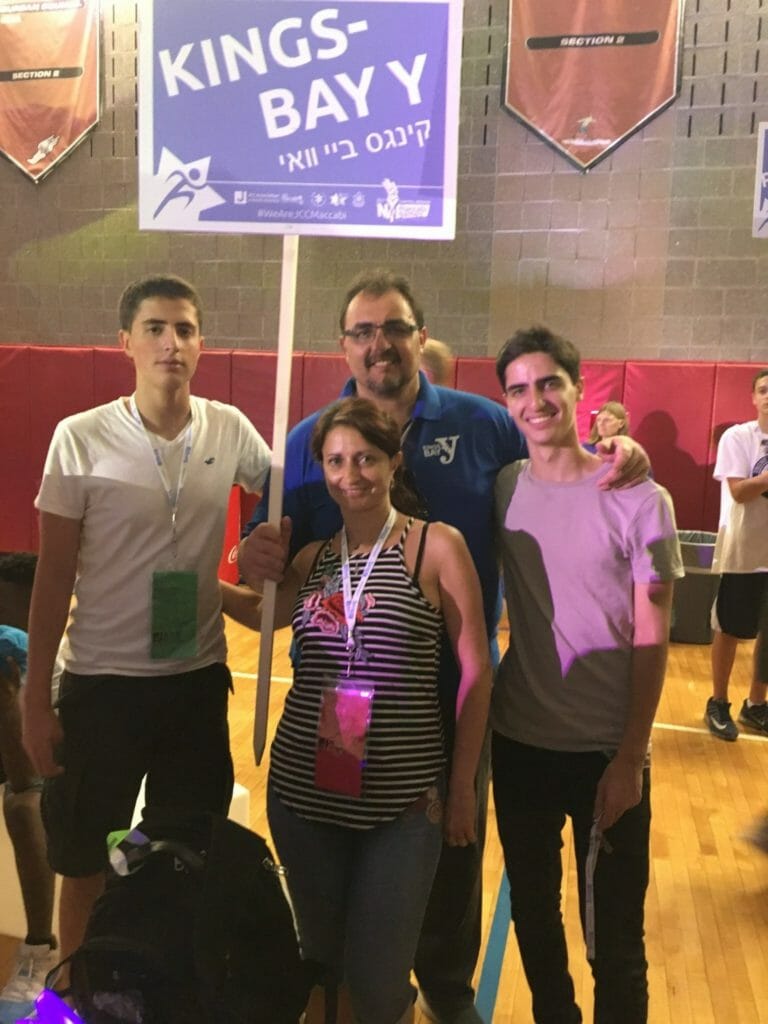
Ayzik and Rimma Shikh are active volunteers in their Brooklyn, New York, community, and often involve their children in service activities.
“We started volunteering, not only for ourselves, but with our children because we wanted them to see that they are the ones that can make a difference. That nothing in life should be taken for granted, and that it feels good to give back,” said Ayzik.
In 2013, the Shikhs started a chapter of the Jewish Community Center (JCC) Maccabi Games at the Kings Bay YM-YWHA. The Olympic-style sporting competition is the second largest organized sports program for Jewish teenagers in the world.
“We have participated in yearly games, bringing about 100 kids to compete and experience the wonderful spirit of the Jewish Junior Olympics,” said Ayzik. Because of the Shikhs’ fundraising efforts, children from low income families were able to receive sponsorships to attend the event.
As part of their commitment to their community, the family has also organized and hosted holiday celebrations, such as World Shabbat and Hanukkah, and volunteered at their local soup kitchen. They also participate in service activities with the Jewish Women Renaissance Project, iMishpacha, and Morgan Stanley.
Do you want to make a difference in your community like the Shikh family? Visit All For Good to find local volunteer opportunities.
Annie Blumenfeld
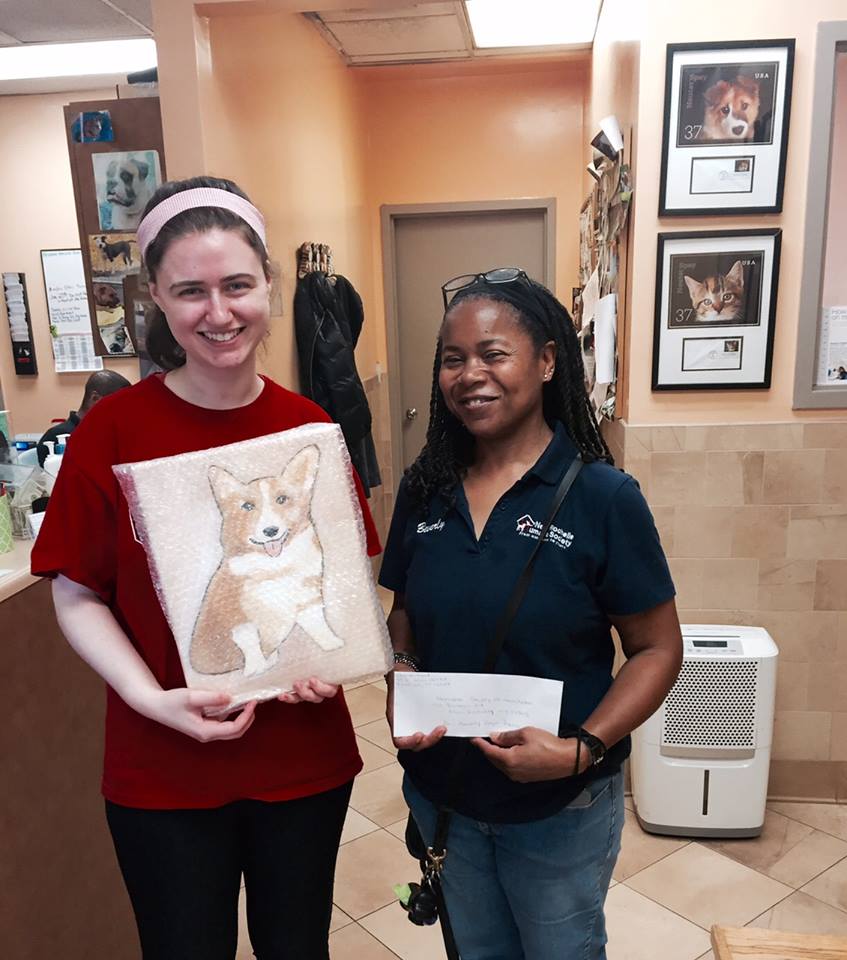
Annie Blumenfeld is the founder and president of Wags 4 Hope, a nonprofit that teaches responsible pet ownership and helps support the needs of rescue animals in the Fairfield, Connecticut area. Annie is today’s Daily Point of Light, and she talked with Points of Light about her longtime committment to service.
Describe your volunteer role.
I started Wags 4 Hope in 2012, and I oversee all aspects of the organization. I paint portraits of peoples’ pets and donate the proceeds to the shelter or rescue group of their choice. The funds go toward an animal in need so that they can find their deserving forever home. I also focus largely on the educational component.
I worked with legislatures to spearhead a bill to increase heartworm disease awareness in the state of Connecticut by adding an educational awareness message on the Connecticut Dog Licensing Form about heartworm disease. For Operation Hope CT, I supply their food pantry with pet food for visitors.
What inspired you to give back?
Learning about what my rescue dog went through when I was in middle school inspired me to start Wags 4 Hope. My dog Teddy suffered from heartworm disease, which is completely preventable. He was picked up from a high kill shelter by Houston Shaggy Dog Rescue where he was treated for over a month with arsenic injections to kill the worms. Seeing how full of life and happy Teddy was once he arrived to our home in Texas made me realize how many other animals can be saved. I decided to raise awareness about Teddy’s story through my organization.
What is the most important lesson you’ve learned through your experience as a volunteer?
You can make a difference if you continuously work on something. My work with Wags 4 Hope started primarily in my community by painting portraits of peoples’ pets on my weekends and holding educational workshops at local libraries. I did not realize that it would then span to national speaking engagements and sending portraits across the country. Most importantly, you are never too young to advocate for an issue you care about.
Why do you think it’s important for other people to volunteer?
Often times, many people feel too overwhelmed to make a difference with so many issues facing our country. I encourage everyone to find something they are passionate about and advocate for change. Your voice matters.
Do you want to make a difference in your community like Annie? Visit All For Good to find local volunteer opportunities.