Teen Builds Friendships, Fosters Acceptance Through Inclusive Team Sports
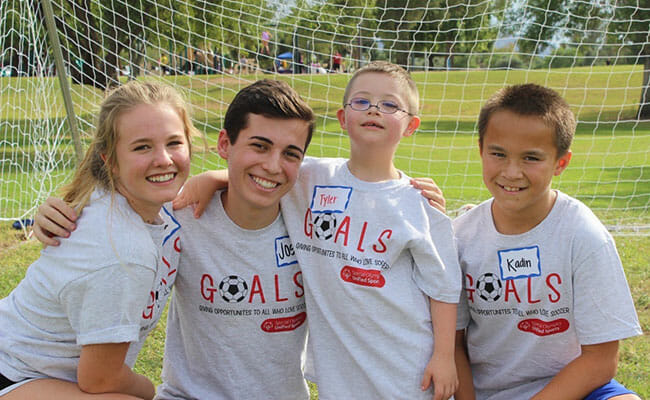
Josh Kaplan, along with friends Emma, Tyler, and Kaden, participate in a GOALS soccer scrimmage. GOALS provides athletes with intellectual disabilities the opportunity to pair up with neurotypical peers and play on a soccer team.
For Josh Kaplan, giving back to the community is part of who he is. Driven by the Jewish concept of Tikkun Olam, or “repairing the world,” he believes each of us has the power to create change and participate meaningfully in the world around us.
An avid soccer player, Josh turned his passion into action when he launched GOALS (Giving Opportunities to All who Love Soccer) in his hometown of Phoenix. The program partners young athletes who have intellectual disabilities with neurotypical peer buddies, who then play as unified pairs in small-sided, non-competitive games twice each month. Inspired by a teammate’s brother, whose Down syndrome prevented him from joining a soccer team, Josh created GOALS to help break down barriers, build friendships and foster genuine acceptance through the team sport.
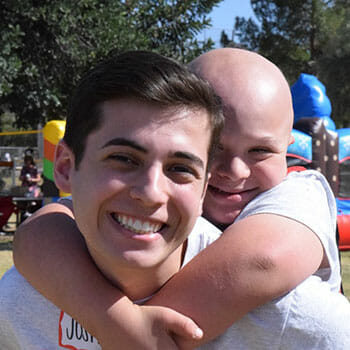
Josh Kaplan with GOALS athlete Jake.
Now a freshman at Emory University, Josh continues to lead GOALS and is actively involved in the Atlanta community. He currently serves on the Special Olympics Arizona Youth Activation Committee and as an ambassador for Youth Service America and Special Olympics International.
We spoke with Josh to learn about what drives his passion for service, his dreams for GOALS and why he thinks everyone should get involved in their community.
What have you learned through your experience starting and running GOALS?
Starting GOALS wasn’t easy. As I overcame one hurdle after another — finding funding to buy equipment, reserving fields, recruiting athletes and buddies — the sense of accomplishment propelled me forward. I’ve acquired valuable, real-life skills: budgeting, planning, grant-writing, web design, and communication. But seeing how much being treated as part of the team means to the special needs athletes at GOALS is the real reward. For many kids, GOALS is the first time they experience genuine acceptance.
What is your vision for GOALS in the next five years?
In the next five years, I can see GOALS becoming a national organization, with youth running programs in communities across the country. We’re already taking the next step by partnering with Special Olympics Georgia to launch our second chapter here in Atlanta!
How can people get involved with GOALS?
Visit our website, www.kickingoals.org! There, you can find information about our program, its history, and how to volunteer at one of our events. You can also send us an email if you are interested in participating but aren’t able to play in one of our scrimmages.
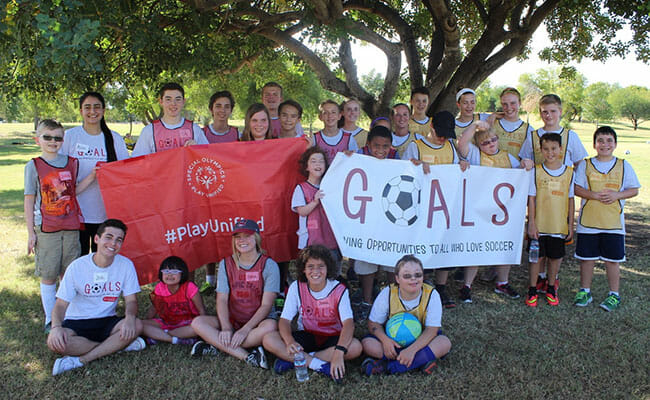
Two GOALS teams gather together for a picture during half time.
Why do you think it’s important for others to get involved and make a difference in their community?
Judaism is fundamental to my identity, and particularly important to me is the Jewish concept of Tikkun Olam, or “repairing the world.” Tikkun Olam is the idea that each of us must leave our piece of the world, no matter how small that piece is, better than how we found it. Collectively, we have the power to change the world, so long as we each do what we can to impact what is within our reach. Volunteering allows us each to step outside our bubbles, not just to see the world but to participate meaningfully in it.
What do you hope people take away from your story?
No matter your age, you have the power to make a difference. It is easy for young people to feel disenfranchised because their voices aren’t heard. But they also always have creative ideas to solve our world’s most pressing issues. So find your passions and talents, and challenge yourself not just to see the world but to participate meaningfully in it. Communities aren’t whole until everyone feels not just tolerated, but accepted.
Do you want to make a difference in your community like Josh? Visit All For Good to find local volunteer opportunities.
Jackie Wan
Jackie Wan, 86, is the director of the Singing Messengers Choral Group. The choir provides music for residents of senior living facilities throughout Contra Costa County, California. Jackie helps organize the efforts of three separate choir groups by overseeing music selections and scheduling performances.
Mike Ciulis
Mike Ciulis is one of Catholic Charities West Michigan’s most invaluable volunteers. He is known as the “go-to” guy in their Muskegon Food Pantry for collecting donations, sorting and keeping the pantry organized. “Without Mike, we would not be able to offer emergency food services to over 1,300 individuals monthly,” said volunteer coordinator Holly Salas.
HandsOn Miami Volunteer Finds Purpose in Connecting Community Members to Volunteer Opportunities
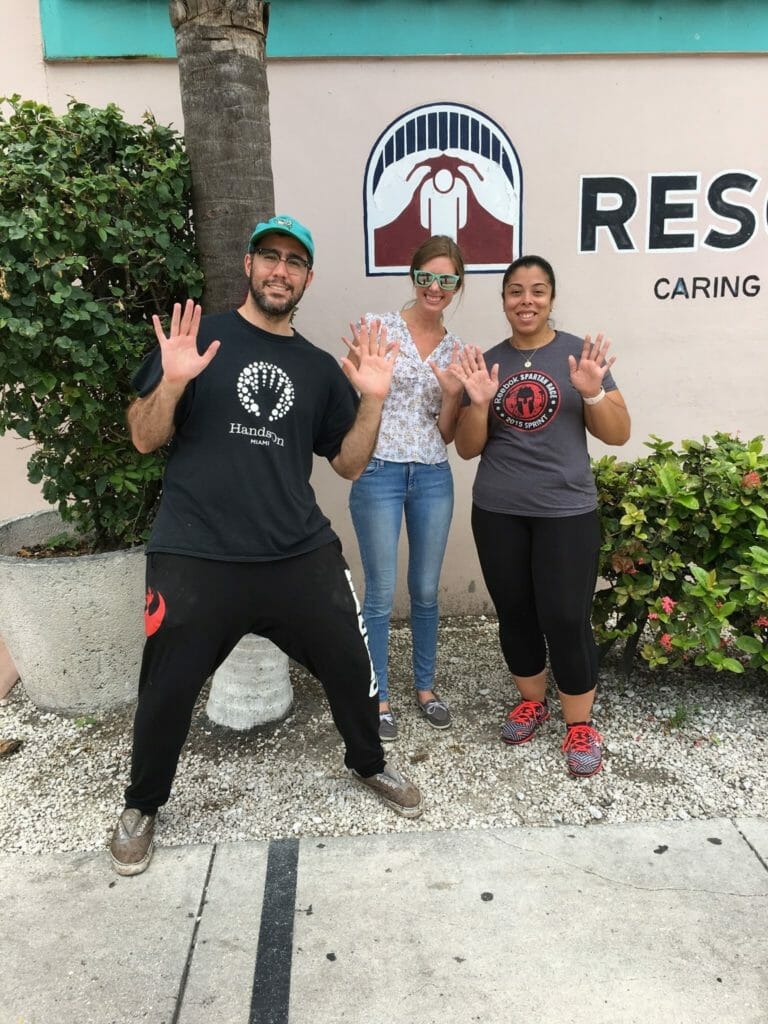
When Kristian Toimil, 28, signed up to volunteer with HandsOn Miami in 2009, he wasn’t sure how he would apply his passion for service and giving back. Toimil took advantage of the organization’s flexible volunteering model to “hop” between opportunities and try a multitude of projects on for size. Over the years, he has stepped up his leadership role and continues to provide hundreds of hours of service to organizations including The Ronald McDonald House Charities of South Florida, the Bruce W. Carter VA Hospital, the Vizcaya Museum & Gardens, History Miami, Miami-Dade County Parks, Recreation and Open Spaces, the Miami Rescue Mission, Chapman Partnership for the Homeless and Miami Bridge Youth & Family Services, Inc.
Describe your volunteer role with Hands on Miami.
I’m currently the volunteer community engagement manager. In this role, I meet with nonprofits, and find out their needs, and act as a bridge between volunteers. Each month we post 20 projects that offer volunteer opportunities of all sizes, some just needing a few volunteers, others might call for 50 or 100 people to help. It’s kind of like being a traffic manager.
Why is it important to you to support your community in this way?
I grew up with a lot of privilege in my life. My parents are immigrants from Cuba, exiles really, and they always stressed how fortunate we are to live in this country and that it’s our duty to give back.
What’s the most challenging aspect of your volunteer service?
I guess the most challenging thing is turning people from just casual volunteering into a more serious commitment. We make it as easy as possible, and hope to ignite a passion in our volunteers. In our society, we are catered to in so many ways. Volunteering is a way to break free from putting ourselves first.
What’s been the most rewarding part of your work?
I am rewarded by appreciation coming to me from all sides. The nonprofits are so happy we are able to help them, and volunteers benefit from feeling good about what they are doing. It’s really a win/win and I can share in that.
What have you learned through your experiences as a volunteer?
I think the thing I’ve learned the most from volunteering is to listen to people. Don’t go in thinking you know what needs to be done or how it needs to be done. Listen to both sides and hear what the nonprofits actually need, and what the volunteers think might be the most effective way to do that. I didn’t have those listening skills before.
Are there any future partnerships, programs, or events that you are excited about?
We are always trying to reach out to new nonprofits. One I’m excited about is a group called Shake A Leg, an excellent organization that gets people with disabilities out on the water in specially outfitted sailboats. I think that’s fantastic.
Do you want to make a difference in your community like Kristian? Visit All For Good to find local volunteer opportunties.
Mary Gallo Teicholz
Danbury, Connecticut, resident Mary Gallo Teicholz has organized the town’s annual “Walk of Honor” event for the past six years. The event spotlights a local veteran who has served in combat, thanking them for their service with a special Walk of Honor Warrior Award. Mary’s responsibilities include booking entertainers, inviting community leaders, sponsoring a writing contest for 5th graders and managing publicity and sponsorships.
Houston-Area Resident Steps Up to Organize Church and Community-Led Recovery Efforts After Hurricane Harvey
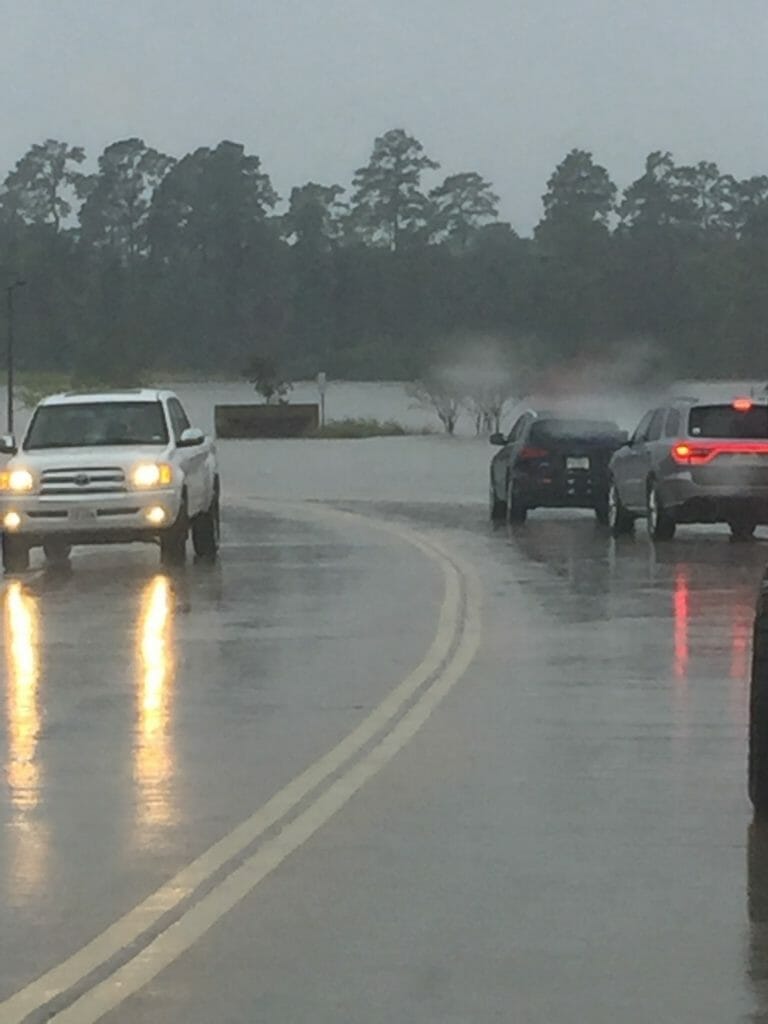
After Hurricane Harvey devastated the greater Houston area, many residents stepped up to help their fellow Houstonians. One of those volunteers was Bryan Grant, who used organizational skills honed at his day job as part of Halliburton’s Global Human Resources Business team to support recovery efforts being made by local churches and community leaders.
Bryan is today’s Daily Point of Light honoree, and he talked with Points of Light about what moved him to serve and why it’s important for communities to come together both during times of crisis and every day.
What inspired you to volunteer in response to Hurricane Harvey?
I was in Houston for Hurricane Ike, and felt guilty and frustrated that I could never find a way to help. Harvey impacted everyone, everywhere in Houston. It didn’t hit certain parts of town, or certain types of people–everyone across the city was either impacted or knew people who were–it was personal. It felt like our city was under attack, and I wanted to do something to help.
Describe your volunteer role during Hurricane Harvey.
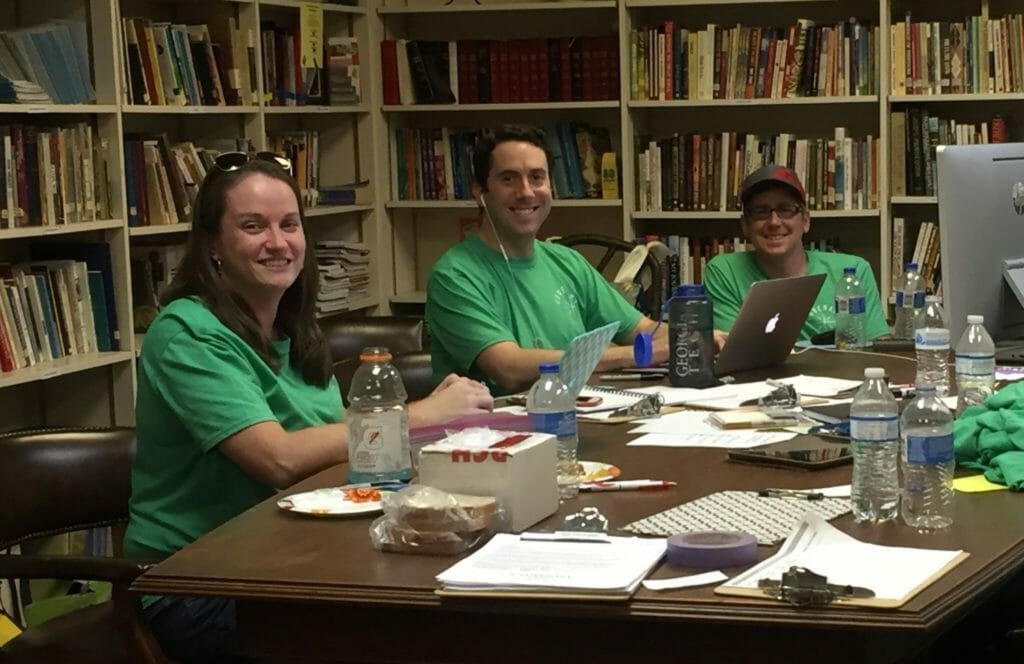
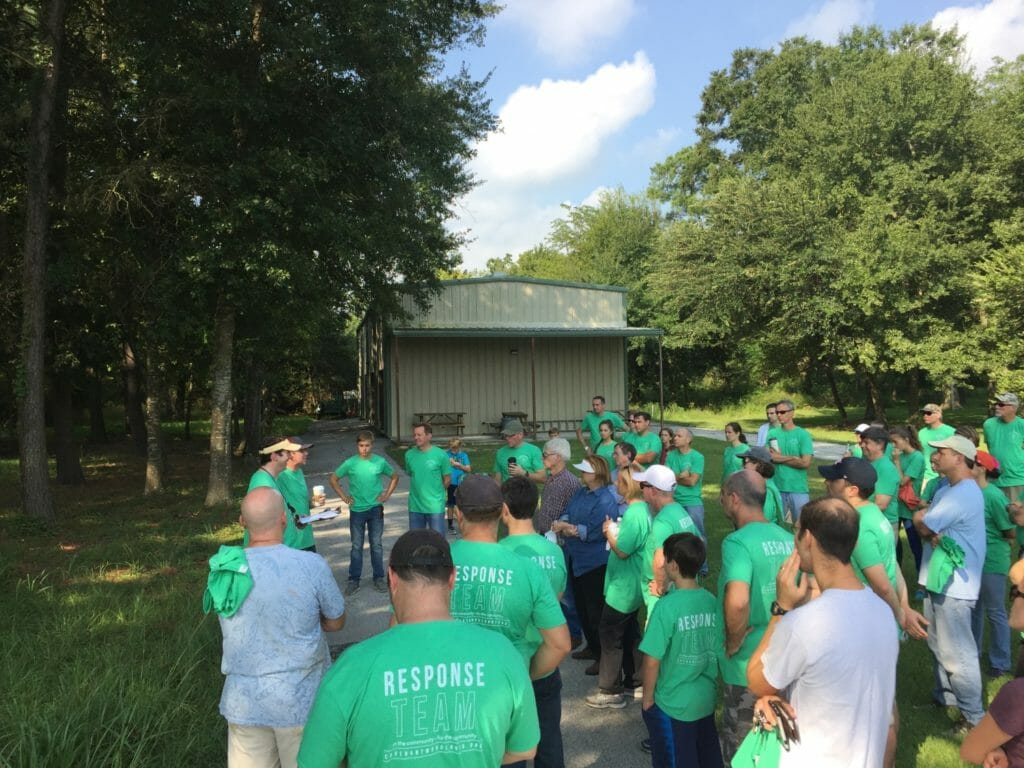
A few days after the storm, I told my pastor to let me know if there was anything I could do to help out. He let me know there might be a way he could use my organizational talent. The next day I stepped into a loosely connected coalition of church and community leaders. I quickly brought organization and structure to the group. I organized our command center, response structure and volunteer leadership roles. I then led the ongoing, real-time deployment of volunteers, tools and equipment across the community.
The needs were so great across the city, it took a few days before we found the right system to identify needs and efficiently deploy people and equipment. We found a critical element was to have volunteers going door-to-door in high impact areas to determine “who” need “what” type of help. We became so efficient at gathering needs and deploying resources that another 4-5 churches and volunteer groups came to us looking for places to be put to work. We estimate that we directed the efforts of over 1,000 volunteers helping roughly 150 impacted homes.
What have you learned through your experiences as a volunteer?
There is a role for everyone to play – all you have to do is ask! My skills are not demolition or hauling debris, but I know how to bring order to chaos in fluid situations.
I also learned that help comes from more than just big organizations and large facilities, all you need are people and passion. Our church isn’t breaking ground on our first building until 2018, and even without a building we were able to have a massive impact on the community.
Finally, social media is a critical component of any volunteer effort–from identifying needs, to building awareness, recruiting volunteers and requesting specific supply donations–we quickly recognized it was an essential part of maximizing the effectiveness of our response efforts.
Why do you think it’s important for others to get involved and make a difference in their community?
One individual at a time, deciding they are going to help… I think it’s the only thing that’s ever really made a difference. There are lots of big organizations and national charity groups, but at the end of the day, it’s people helping people and neighbors helping neighbors that builds communities. Volunteering doesn’t have to be some big event or something you have to go out and sign a waiver to do – everyone has an opportunity to make a difference in someone else’s life, every day.
Are there any future partnerships, programs, or events that you are excited about?
Contractors are beginning to price gouge people for supplies and work. So my church, Covenant United Methodist, has begun helping families start rebuilding their homes. We’re gathering small groups of volunteers for one day, focused efforts to collect and hang drywall in flooded homes.
We’re also excited about our ability to respond to future disasters. We now have a battle-tested system/plan in place that will enable us to respond quickly and efficiently to a crisis.
What do you want people to learn from your story?
I think it’s important for everyone to know that there is a way they can make an impact. During Harvey I saw moms with kids driving supplies around, high school sports teams demoing houses after practice, small businesses donating food and supplies and countless individuals walking up and asking where they could help.
Sometimes the needs are so great and can seem overwhelming, but if you look closely and are just willing to ask, there’s a place for everyone’s gifts to be put to use to help their neighbors and communities.
Do you want to make a difference in your community like Bryan? Visit All For Good to find local volunteer opportunities.
Pleural Mesothelioma Survivor Battles to Raise Asbestos Awareness
In 2005, Heather Von St. James was a new mom, having just welcomed a baby girl named Lily Rose. The 36-year-old was planning to take a few months off to spend time with her newborn, and then go back to the career she loved as a hairdresser and salon owner. Three months after giving birth, Heather’s world was turned upside down when she was diagnosed with pleural mesothelioma and given 15 months to live. Pleural mesothelioma is a rare and malignant cancer caused by asbestos. According to Heather, a resident of Roseville, Minnesota, who now serves as an activist to promote and battle environmental issues around asbestos, the only way to emerge from the depths of her disease was to help others. Heather is now making a difference by speaking out for the up to 3,000 victims diagnosed with mesothelioma annually, and is today’s Daily Point of Light award honoree. Points of Light spoke with her to learn more about her activism.
This is personal for you. Why do you believe it’s so important to increase awareness?
Every preconceived notion of parenthood I had flew out the window. I was going to stay home for a couple months, go back to work, be a working mom, everything was going to be great. Suddenly, I couldn’t revel in the motherhood, I couldn’t waste any time, because I didn’t know frankly if I was going to be alive to see (my daughter’s) 2nd birthday. There was an incredible sense of urgency in getting the treatment, and kind of a go-for-broke attitude, like, let’s throw everything we can at it, in order to conquer this disease, so I can be around to raise my daughter. Because frankly my husband sucks at makeup, and there’s no way he could put makeup on her as a teenager (laughs). I have a really stupid sense of humor, and those types of things got me and continue to get me through it. You have to laugh at it because it takes the fear away.
You’re working to raise awareness about environmental issues around asbestos. There are many misconceptions about the toxic substance. Explain.
People believe asbestos is banned, but it’s not. Asbestos has not been manufactured in the United States since 2002, but imports surged last year. Under the Obama administration, a proposal was made to review a list of ten toxic chemicals, and asbestos was on that list. We fought for this win over the last three years. However, under the Trump administration, the EPA has decided to not pursue the congressionally mandated review, so asbestos and nine other chemicals that are highly dangerous and toxic are no longer up for review and possibly expanded regulations. It’s going to be devastating environmentally and health-wise if this list can’t get reinstated. Without adequate protections through the EPA, we’ll go back to polluted streets, water and air, and that’s really scary considering that I almost died, and literally hundreds of my friends have died, because of an environmental toxin.
Before you became sick, you weren’t an active volunteer. How has your perspective on giving back changed?
It’s completely changed. I worked in the salon industry which is great, but for me, it was also incredibly self-centered. It’s all about helping people feel their best and look great, but it’s always about bettering yourself, and making more money. I loved the life, but I never volunteered, I never helped out, so with the diagnosis, I felt the need to get out of my head, because you can sit and stew in these thoughts all day, but the best thing to do is help other people, and that makes you realize how good you really have it. Helping other people, connecting with people and helping them through their diagnosis makes me realize it’s not so bad. It’s not about me, it’s about giving peace and hope to those who find themselves in the same situation.
What does it feel like to help others?
Just yesterday, I got a message from a gal in Hawaii, her wife was just diagnosed, and she told me that my story had given them so much hope. She’s only 36-years-old, she has pleural mesothelioma just like me, and she said my story has given them more fuel for the fight. And I just sat there with tears rolling down my face, reading this message, because that’s the type of effect that just sharing your story has. That scenario plays itself out week after week after week. Sometimes even though they’ve lost their loved one, the messages I get from people saying that during the battle, my story gave them hope. I don’t do it for me, I fight for all of those who can no longer do it.
In 5 words, explain what volunteering means to you?
Joy from giving of yourself.
If you had to name your autobiography, what would it be called?
Funny because I’ve been trying to think of that. I don’t know! What would the title of my book be? A lot of my story is about conquering and facing fear. So maybe ‘Don’t Let the Fear Win’ or “Conquering Fear with Humor’ or maybe ‘Heather’s Hope.’
How would you encourage others to give back in their own communities?
I found that helping others in your time of need, when you find yourself in a position where, maybe you have no more money, you’re going through tough personal times, I found that’s the best time to reach out and help others, because it gets you out of your head and giving automatically fills up your tank. It helps when you can find something you are passionate about, or something you identify with. There are millions of ways to help – soup kitchens, or just find a small nonprofit that needs help, offer to come in and answer phones for the day, or go to the local grade school and read to kids.
What’s the one thing you want people to know about your volunteerism?
Even in the darkest times, even when everything seems like it’s falling apart, there’s always hope.
What’s next for you?
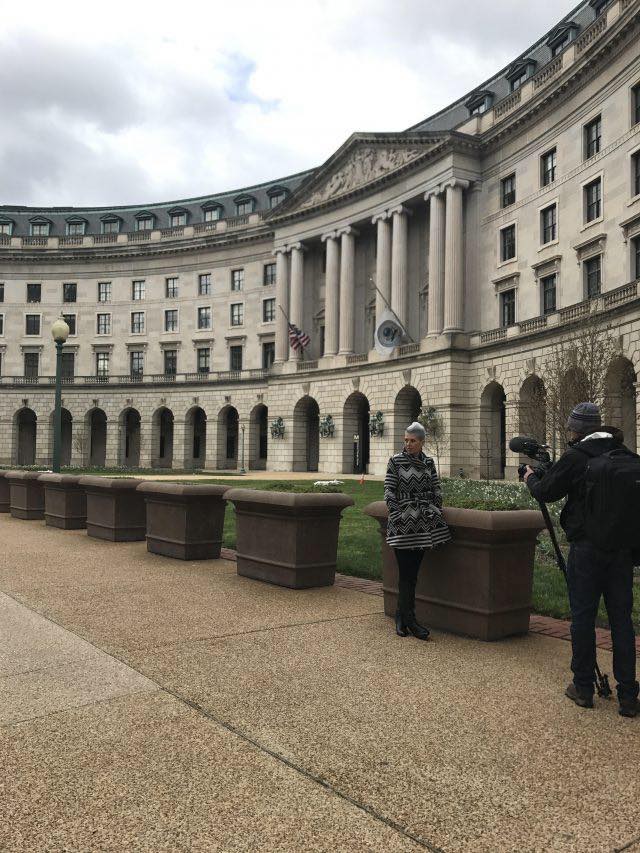
I went to Washington D.C. recently. I’m fighting for a ban on asbestos. We’re currently trying to get a law passed for a mesothelioma registry. I volunteer with a couple of nonprofits, but I am probably going to start my own non-profit within the next few months. It’s something I’m feeling led to do.
Do you want to make a difference in your community like Heather? Visit All For Good to find local volunteer opportunities.
Longtime Activist and Volunteer Works to Revitalize Neighborhood and Create a ‘Beloved Community’
For Annie Moore, Dr. Martin Luther King’s vision of a beloved community didn’t die when he was assassinated. A long-time community volunteer and activist, Annie’s passion is to revitalize her Atlanta neighborhood, bringing to life Dr. King’s vision of a strong, thriving, resilient community.
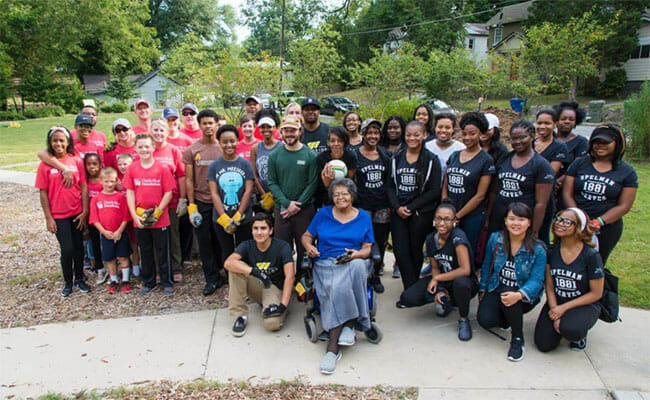
The English Avenue neighborhood in Northwest Atlanta is located only a half mile west of Georgia Tech, the World Congress Center, the World of Coca-Cola, and the Georgia Dome, but suffers from crime and the threat of gentrification. Annie is active in the neighborhood association and volunteers with a group that maintains the community’s parks. In the Moore household, volunteerism is a family affair. Annie cares for her disabled mother, who taught her about community activism, and is now passing those lessons along to her young grandsons, ages 2 and 4. Annie is also part of a new Resilient Communities Impact Program, a whole-community effort engaging local changemakers to take individual and collective action to ensure all neighborhoods are thriving places of opportunity.
The Resilient Communities Impact Program, a collaboration between Southwest Airlines, Points of Light, Hands On Atlanta and other local partners, seeks to strengthen cross-sector participation and connections, instill a greater sense of identity and pride, increase quality of life, and support the livelihood of residents. The initiative works to address a variety of needs in the English Avenue community – including programs designed to minimize hunger and malnutrition, alleviate poverty and deter crime, and leveraging the community’s historic and cultural arts focus to bring beauty to the community.
We talked with Annie to learn more about her neighborhood advocacy work, why she believes it is important to fulfil Dr. King’s vision of a beloved community, and the important role volunteers play in creating community connections.
Can you tell us how long you have lived here in English Avenue and what you love about your neighborhood?
I have lived on the Westside for 11 years, only a few blocks from the English Avenue borders and actually in English Avenue for seven years. As a corporate archivist/historian, the location alone is rich in African American history and what I consider to be a part of the center of Atlanta. All you need to see in Atlanta is easily accessible by foot, bike and public transportation. And the people, my neighbors, from the impoverished to the disempowered – I just see my friends that have shown me love and hope.
How did you get involved as a volunteer?
I have been involved in activism since I was about 7 or 8 years old, because of my mom. I was actually raised in it, and it has naturally been a part of my life. But you know, when you are raised in something you never want to be it. All these years I have been going to events because of my mom, but all of the sudden it was like, “Yes, our people. Yes, our neighborhood.” I kind of shocked myself the last couple of years.
You volunteer with an initiative called Beloved Community, tell us more about that.
The Beloved Community is an effort to follow Martin Luther King’s vision of a beloved community. We are actually working on building a more beloved community. We are working with a lot of corporations in Atlanta to have what we are calling “Beloved Community 101” to discuss what Martin Luther King talked about around building a beloved community. At this time in our nation, it just seems that this is the perfect time to do this work. It’s not about color, it’s about people. It’s about us all working together.
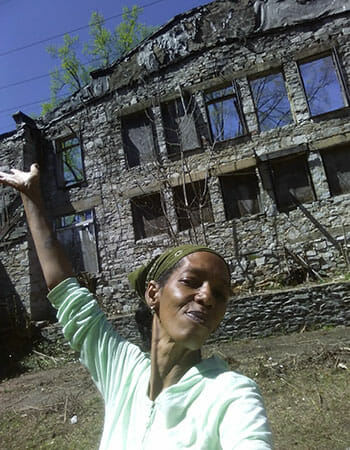
We are trying to rebuild an old church, St. Marks in English Avenue, to restore it and make it a place for our community where we can always go. We are working with several organizations to stabilize the area. I am working on establishing its historical value for historical preservation.
The resilient communities program with Hands On Atlanta and Southwest was an opportunity to do some work in our community to change a physical space. The corner that St. Mark’s is on is one of our highest drug corners, so we wanted to make it different. So I said, I know these guys aren’t stupid, it takes a lot of effort to sell drugs. So I decided we should build chess tables for that corner, which we are going to build on Jan. 15 for MLK Day of Service. My goal is to see if we can get a basketball court built inside of St. Marks as part of the stabilization, which would be open to the community.
What is your dream for the next year for this work?
To have St. Mark’s fully revitalized and have a place for people in the community to have meetings. Someplace where they can say, this is ours. A year from now, I really want St. Mark’s to be done. We have a vision for a shared kitchen and for a food market. That is my dream.
Dr. King’s concept of Beloved Community has a lot of interpretations, what does it mean for you and for Atlanta?
For me it means an opportunity for us as people to come together, regardless of our color, our race, our religion or our sexual preference. We are the beloved community. We cannot keep walking around in this world as if we all don’t exist. We have to exist together.
Being in the South, you realize how much the residuals of slavery still exist, and some of the fights we have in our community are just that. That we are all equal, that nobody is better than anybody. For our community I just feel that it is a way to bring us back together as whole, with all the different nationalities we have in our neighborhoods. If we become strong as a beloved community in this neighborhood, this is something we could take throughout the country.
What role do volunteers play in addressing chronic community challenges and in making your community more resilient?
Volunteers are working from their hearts, out of love for humanity and their needs. Even if what we do is only making a small change in the overall conditions, we as volunteers believe every little bit helps. And even what seems like a small change in the overall conditions – a small thing can make a huge difference.
How do you think volunteerism helps connect us as neighbors?
It allows the opportunity to bring neighbors together where there is a commonality, a common goal that connects us in a way that is more intimate, and creates relationships that build and strengthen the community as a whole.
Pennsylvania Youth Leads by Example, Starts Teen Service Group to Encourage Peers to Give Back
Fifteen-year-old Nick Moncilovich already has more than five years of volunteer service under his belt. Nick credits his mom for nudging him in the direction of service. But for this hard-working high schooler, serving solo wasn’t the plan. He wanted to get his friends involved, and founded Voluntweens of Drexel Hill as a platform for giving back in a multitude of ways. How to lead and allowing others to lead, are two skills Moncilovich has learned along the way.
Describe your volunteer role with Voluntweens of Drexel Hill.
When I was in 4th grade my mom and I started going to our local SPCA shelter and dropping off food and blankets we had collected from the neighbors. [Then] over the summer, I got the idea of creating a volunteer group with some of my classmates (with some help from my mom – basically telling me to go outside and hang out with friends, rather than sit inside and play on my gaming system!)
I came up with the name Voluntweens of Drexel Hill and wrote a letter to hand out to about 10 of my classmates. Over the next four years, from elementary school through middle school we worked with more than 20 different organizations ranging from cancer support groups to veterans homes, hospitals, women’s shelters, and food banks. Every month, we tried to help a different organization so that it would be new and exciting each time. My role grew from vocal leader in the beginning to more of a passive leader because I learned that if each member felt like they were a leader of a monthly project, they would feel more inspired and want to keep coming back for another turn leading the group. Our group grew to 14 students as primary members, but each month we had lots of the community helping us complete our goals.
Why is it important to you to support your community in this way?
I think it is important to support our community in any way possible and especially now with social media to project positive messages to younger kids. When we were in the middle school we were often asked to come to the elementary schools and talk to the younger kids about what they can do to make a difference. During that time the school district honored my group with the Superintendent’s Award and made a video that they could play in classrooms throughout our school district.
What’s the most challenging aspect of your volunteer service?
It’s difficult to find the time that I had when I was younger. Now that I’m in high school, I feel I need to study more, and I also participate in more sports, leaving the weekends for volunteering. Luckily, I attend The Haverford School for Boys, which encourages the students to not only be excellent academically, and athletically, but also teaches that we are responsible for giving back to society. I am proud to have been chosen as one of four Maguire Scholars representing THS (The Haverford School). THS has great a volunteering department headed by Ms. Loos, and she helps organize many opportunities for us to get more involved in the community. We have done can drives for food banks, held baseball tournaments for cancer fundraisers, toy collections, and many other events.
Why do you think it’s important to give back?
There are many reasons, but one is it helps you grow as a person and gain a different perspective on things that you may have taken for granted. Secondly it gives you a sense of purpose and self-worth knowing you are helping others.
What’s been the most rewarding part of your work?
The most rewarding for me is personally feeling the sense of accomplishment knowing I am helping someone, and also making all the new social connections with people I may have never met.
What have you learned through your experiences as a volunteer?
I have learned through my experiences how to work better with others, how to manage time and groups of people, and increase my patience. It also helped with leadership skills and how to know when to step back and let others lead.
Are there any future partnerships, programs, or events that you are excited about?
Going forward in the next few months and years, I am excited to work with my schools’ volunteer programs and as a Maguire Scholar with the Maguire Foundation’s Hunger and Homeless mission.
What do you want people to learn from your story?
I want to convey that you are never too young to start volunteering and that no idea is a bad idea. To be compassionate, and take pride in yourself while helping others. Also, find the need in your own community in which you live and don’t turn away from it.
Do you want to make a difference in your community like Nick? Visit All For Good to find local volunteer opportunities.
Illinois Teen Creates Music Academy for Low-Income Students
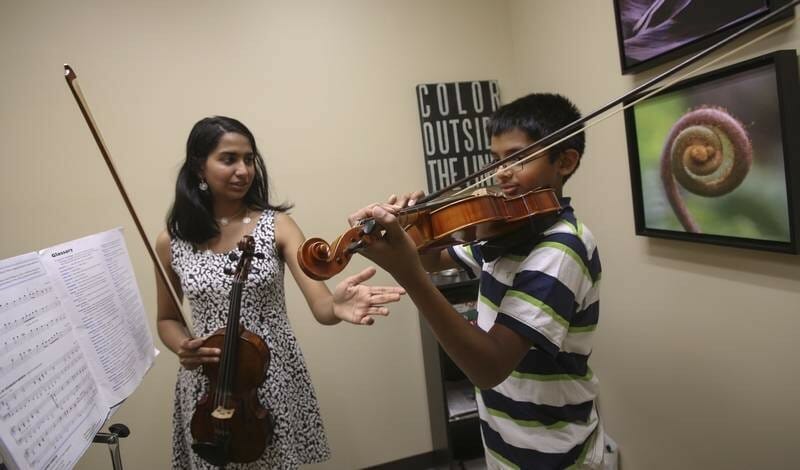
High school senior Abinaya Ramakrishnan founded the Muzik Academy, an organization that pairs volunteer high school student music teachers with elementary and middle school students, three years ago. Her goal was to make music lessons affordable for anyone with a desire to play, especially low-income individuals, as well as foster the love of music and support school music programs.
Points of Light spoke with Abinaya about Muzik Academy and the widespread impact the organization has had.
Why did you decide to start the Muzik Academy?
When I was in school, […] a lot of my friends that wanted to take music lessons couldn’t afford to because it was expensive. Especially in the area I was brought up in, my lessons were $120 an hour. Many couldn’t afford that high price. That’s where the idea of having high school students start teaching and bringing lessons to middle school and elementary school students came about. That was my initial passion.
How is the program designed, and who do you recruit to volunteer for it?
It happened a lot through connections. I had amazing teachers through the last few years. They connected me with music directors and people who run orchestras. I connected with directors at high schools and have been able to market [my program] to high school students through them. High school students who choose to teach are rewarded through volunteer hours. We also have a program at the elementary and middle schools to reach kids who want to take up music lessons.
We recruit the students through the high school directors, and they go through a screening process. They send in video auditions tapes, and we have a student board that looks over the applications. Then, they pair the high school teachers with interested students based on personality, interest, type of teacher the student is looking for, and what music they want to play. We have workshops that we hold on a bi-monthly basis to teach the high school students how to teach lessons and also show them PowerPoints of how lessons should begin and what situations they might find themselves in.
What do you teach the students? What benefits are there for them to participate in Muzik Academy?
Students can take lessons as long as they want. We’ve been running the organization for about three years, so we’ve had a few of our high school students graduate. When that happens, we transition the students to another high school student that is eager to step in and help. Most of our students have stayed with us. Only a handful have left because they’ve wanted to continue with their music with a more professional teacher. Right now we have a couple thousand students and high school volunteers.
What are lessons like?
It depends on the level of the student. If it’s a very beginner lesson, we’ll sit with them and teach them how to hold their instrument, read notes, and work on position and posture. And, they slowly move up. With intermediate lessons, they’re playing music that students would play in school, and teachers can identify other pieces of music they feel it would be pertinent for the student to play at that time. We do have a library of music that we give the teachers to use. We have our own book — it’s a PDF that I’ve personally put together. If they have a certain point they want a student to reach, we can give them the steps to get to that point. Intermediate students are playing more pieces based on advanced music theory. Advanced student lessons are based mostly on what they want to play. It might be at a high concerto level, and the teachers help them get there.
What is the financial structure for Muzik Academy?
Our organization is structured so people pay a very cheap price. The pricing is on our website, themuzikacademy.org. You pay a certain price, but if you’re low income, you are able to have lessons for free. And, we concentrate on low-income areas and work with schools to find students in these locations. Parents will sometimes tell us this is their situation, and we provide free lessons through a scholarship application. The benefit is there because it provides low-income students with the opportunity to pursue music at an in-depth level. With the money we receive for lessons, we also give back to school music programs. It helps low-income schools get instruments and make their music programs bigger and more interesting. It will help them have a higher retention rate in music. All the money for the scholarships and for the school music programs comes from the fees from the parents that can afford to pay for lessons.
How much of an impact do you feel like you’ve made?
At the very beginning, I had five students of my own. During that time, I think it helped that this was one thing I was passionate about. I wanted to grow the organization. That summer, I met a few students that taught me the importance that music had in their lives. They were just learning to play “Twinkle, Twinkle,” and they were passionate about wanting to learn more. They wanted to practice. They would take my lessons and go home and work. In particular, some joined local youth orchestras. It only took a few months to realize what an impact my organization could have.
What are your future plans?
I think one of the greatest things about the organization is that, at this point, it’s self-sustaining. It has a Board of Directors and is linked to several entrepreneurs in the area who have made it possible for me to not worry about marketing strategies or things that I don’t have any expertise in. I want to continue to be part of the organization as I enter college, but it’s comforting to know that I can hand-off the organization to someone else when I graduate.
Do want to make a difference in your community like Abinaya? Visit All For Good to find local volunteer opportunties.