Boxing Champ Turns Gym into a Safe Space for At-Risk Chicago Youth
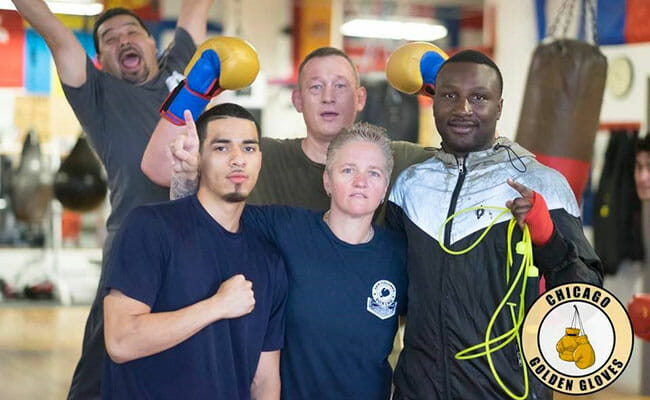
Rita Figueroa, a customer service representative for AT&T, has earned a lot of titles — champion, coach, and mentor are just a few that that she is most proud of. For nearly 15 years, Rita was a powerhouse Chicago boxer, earning a spot in the Illinois Boxing Hall of Fame and was named Chicago Golden Glove champ four times. After an accidental head butt during a boxing match in 2009 broke a blood vessel in her brain, Rita retired from competitive boxing.
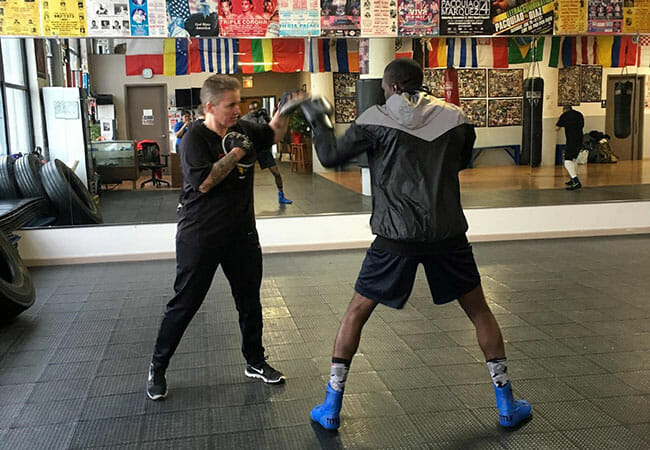
Although she is retired, Rita hasn’t given up her love of boxing and has found a new passion as a coach. The streets of Chicago can be a dangerous place, and Rita has lost a lot of friends. So, she began coaching and mentoring young men, teaching them life skills through boxing and turning the gym into a space place for them to be.
We spoke with Rita to learn more about what motivates her to keep volunteering.
What inspires you to volunteer?
I volunteer because we can all use a little help along our path. I’ve been helped. Why not pass that on?
Describe what you do as a volunteer.
I help people by showing them others care about their goals, struggles, dreams, etc. Don’t we all want someone to just care?
Can you describe a time when you knew you were making a difference as a volunteer?
I knew a young man named Rashad — his cousin got shot and he wanted to retaliate. He reached out to me instead, and I got him to the gym. He didn’t shoot anyone that night. I think we saved a life.
What have you learned through your experiences as a volunteer?
We all want someone to just care. No matter who you are, a scholar or a gang banger.
Why do you think it’s important for others to get involved and make a difference in their community?
If we all succeed, we all succeed.
What do you hope people take away from your story?
You don’t have to be anyone special to make difference. You just have to care. They have to feel it. Be real and care. That’s all.
WATCH: Champion boxer helps youth find hope in the ring
via Chicago’s WGN9
Green Thumb for Good: Retiree Helps Preserve Hawaii’s Tropical Gardens
When Margery Hexton was 68 years old, in 1994, she moved from her home in Chicago to the rural island of Kauai in the state of Hawaii to be near her daughter and grandchildren during retirement. Although her family was there, she left behind friends and a deeply rooted life.
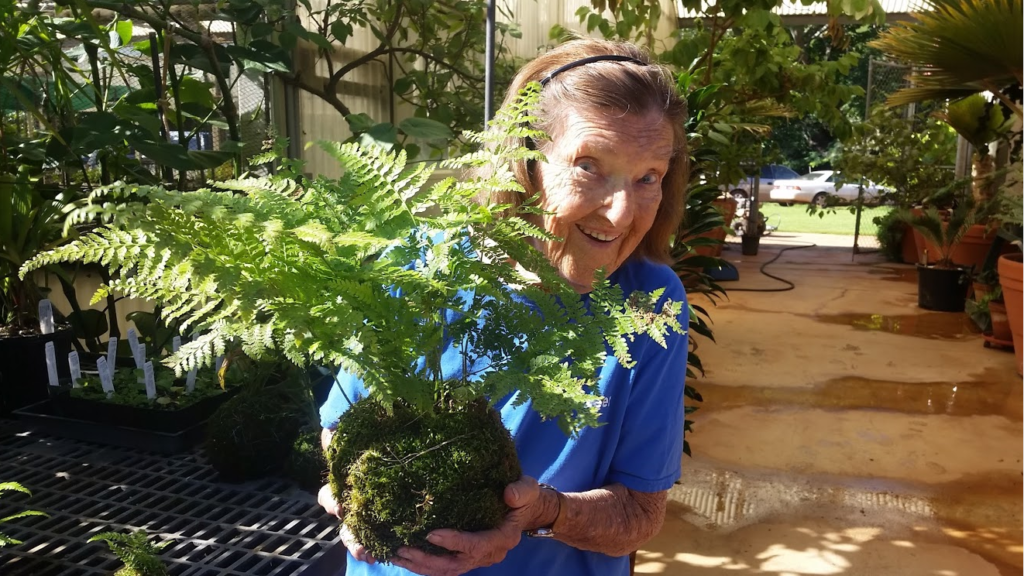
The way she coped, the bridge to her new life and community, was volunteering. The same week she moved Margery started volunteering at the National Tropical Botanical Garden (NTBG), a stunning green space dedicated to research and conservation of rare tropical plants. More than 23 years later, at age 91, she is still volunteering and helping to save endemic native Hawaiian plants and using her artistic abilities to make crafts sold at local art sales, with proceeds benefiting NTBG.
Describe your volunteer role at the National Tropical Botanical Garden.
A friend of my daughter’s introduced me to the garden and I’ve loved it ever since – it’s such a magical place. I’ve always had a big garden, and my mother had a garden too. When I volunteer on Monday mornings, I sit at the plant site surrounded by pots and dirt and transplant. On Fridays, I work with other volunteers in our Oshibana group; we make crafts out of fabric and other materials, which we sell at local craft fairs. We make a lot of money – maybe $800 a year that goes to the garden.
Why is it important to you to support your community in this way?
Because I think we have to preserve our natural resources. This is a very small island and we need to take care of it. We have so many endangered plants, they are just going to be gone if we don’t do something. The smart people who run the garden go on expeditions, they climb up rocks to get three or four seeds to grow rare plants. It’s so wonderful. I just have to do something – to feel connected and support the environment.
What’s the most challenging aspect of your volunteer service?
It really isn’t a challenge at all! It’s pure enjoyment, I love working with plants. I can’t remember a time when I didn’t volunteer. I was a Girl Scout leader for years. You have to give back a part of yourself.
Why do you think it’s important to give back?
We receive so much. I have my life, my grandchildren. I have to thank God for everything.
What’s been the most rewarding part of your work?
Being part of something bigger, that feels good. You just can’t go through life sitting and taking.
What have you learned through your experiences as a volunteer?
I’ve learned a lot about plants, and transplanting. I’ve also learned that I, as one person, can truly make a difference. I tell people, just try it, and try volunteering. See how it goes.
Do you want to make a difference in your community like Margery? Visit All For Good to find local volunteer opportunities.
Ohio Teen Starts Animal Advocacy Organization
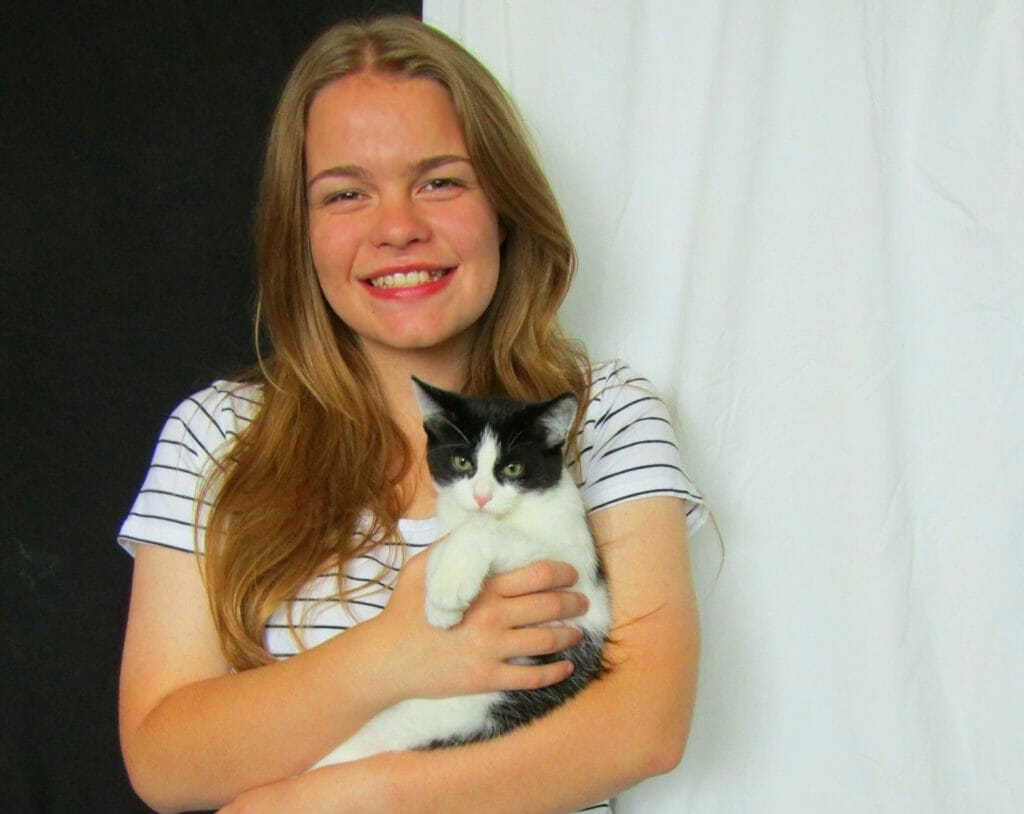
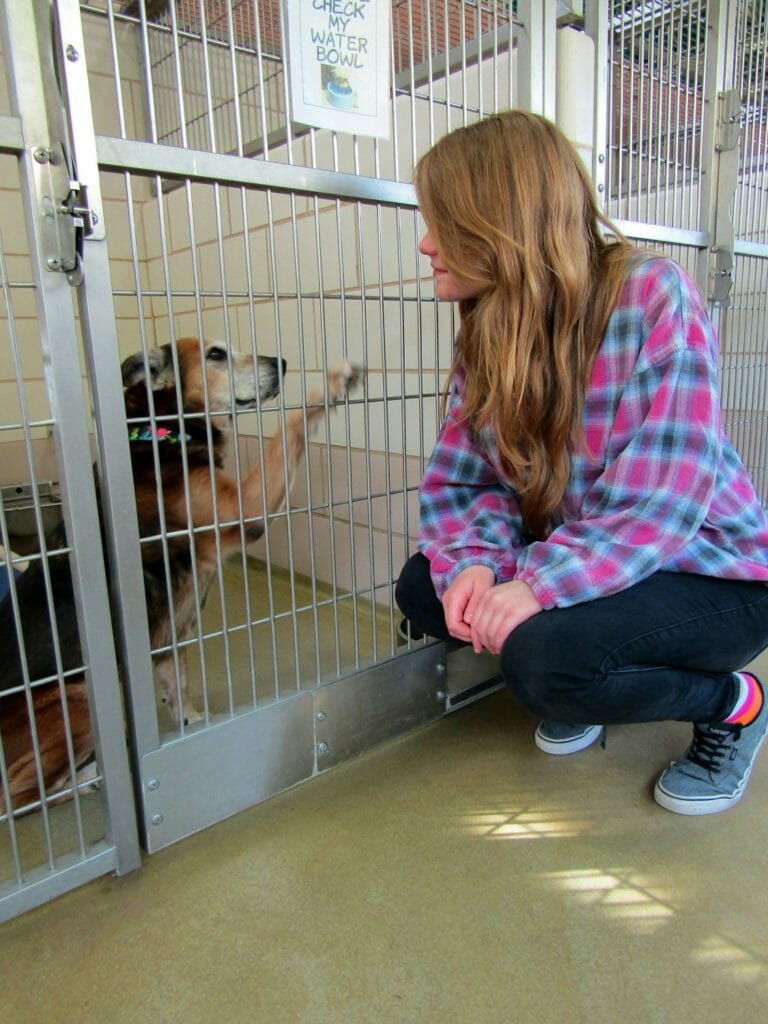
In 2009, Harley Helman was inspired by her love for animals to start Blankets Fur Beasties, a nonprofit that collects new and used baby blankets, quilts, sheets, towels, pet food and dog and cat toys for critters in local shelters. The organization is all about making the lives of these animals a little more comfortable—and a little less scary—as they wait to be adopted into their forever homes. Harley’s mission is mirrored in the quote she posted on her website by Boston Unitarian minister Edward Everett Hale, “I am only one, but I still I am one. I can’t do everything, but I still can do something.” Since founding Blankets Fur Beasties, the 17-year-old has collected more than 4,000 items to improve the quality of life of animals in her community.
Why is it important to you to support your community in this way?
It’s important to me to just help the animals. They deserve a good and safe life. And, I think it’s important to make people aware of the importance of spaying and neutering your pets – to help the over-population problem and to make them aware of homeless pets in their own community that they may be interested in adopting.
Why is it important to you to support shelter animals in this way?
Because I want them to feel comfortable and loved as they wait to find their forever home. Shelters can be a very stressful place for these poor animals.
What’s the most challenging aspect of your volunteer service?
Right now, because I’m a senior in high school, it’s trying to juggle my schoolwork, my part-time job, and my work with Blankets Fur Beasties. Sometimes it feels like there’s not enough time to do everything.
What do you want people to learn from your story?
Individuals can make a difference. You can make a difference no matter what your age. There are many different ways you can make a positive [change] in the world. You don’t necessarily have to be rich or powerful, you just have to have your heart in it. But there are still so many animals that need comfortable blankets, and fun toys…and most importantly, loving homes. Please remember when you decide to bring a new four-legged family member into your life there are so many [already] in shelters that are just waiting to share their love.
Do you want to make a difference in your community like Harley? Visit All For Good to find local volunteer opportunities.
Spanish Translator Volunteers in Honor of Wife’s Legacy of Service
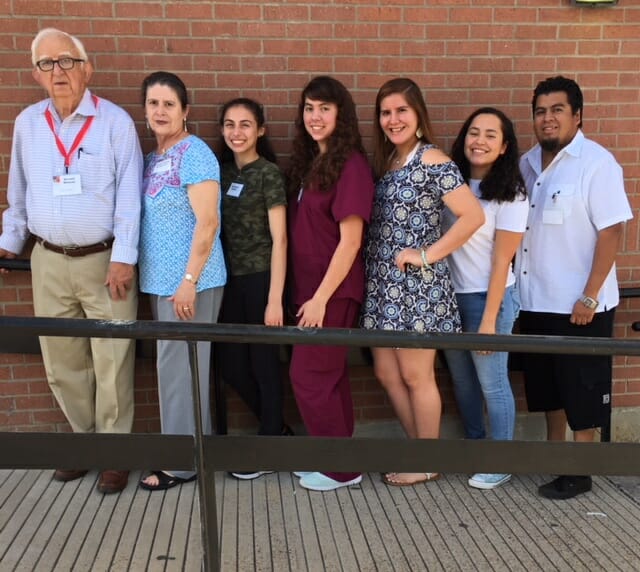
Operating with the motto, “let me know how I can help,” Ron Weaver has been an inspiring fixture in his community for over 50 years to many who have been on the receiving end of his generosity. What keeps the 85-year-old Plano, Texas resident going? The memory of his beloved wife, Dolores, and keeping her legacy of compassion alive. The two, who met in Spain, Dolores’ birthplace, identified a need for resources amongst the low-income Hispanic community in Plano well before the tremendous growth of the city in north Texas, now home to over a quarter of a million people. Together, they provided needy families with basic essentials including furniture, appliances and financial support, and in the process, turned their home into a thriving community built on trust and good deeds. Now volunteering most of his time at a medical charity clinic, Ron can be counted upon to be the first person in the building, and the last one to leave. We spoke with Ron to learn more about his work at Julia’s Center for Healthcare, and how he is making a difference in the community by advocating for ESL families.
How did you decide to begin serving your community?
When we moved to Plano in 1967, the town had a population of approximately 7,000 people – at the time, you’d say the town didn’t even have a full-time traffic light. We were just starting to face race issues, segregation was very rampant. But most of the people in this town were good folks, they wanted to make it better. There were approximately 20 Spanish-speaking families who had called Plano home for some time, they were the true “Spanish-speaking Texans”. They lived in a very poor part of town, and my wife, who was a Spaniard, felt a very deep need to help people. She would see a beggar on the other side of the street and cross the street to help the person. We helped families get washer machines, and anything else you can imagine. The 20 families became 50, 50 became 100, and pretty soon, the town grew and Plano had a big population of Hispanic families. We recognized a need early on in our community, for these families to be recognized, listened to and cared for, and those were needs we were able to respond to.
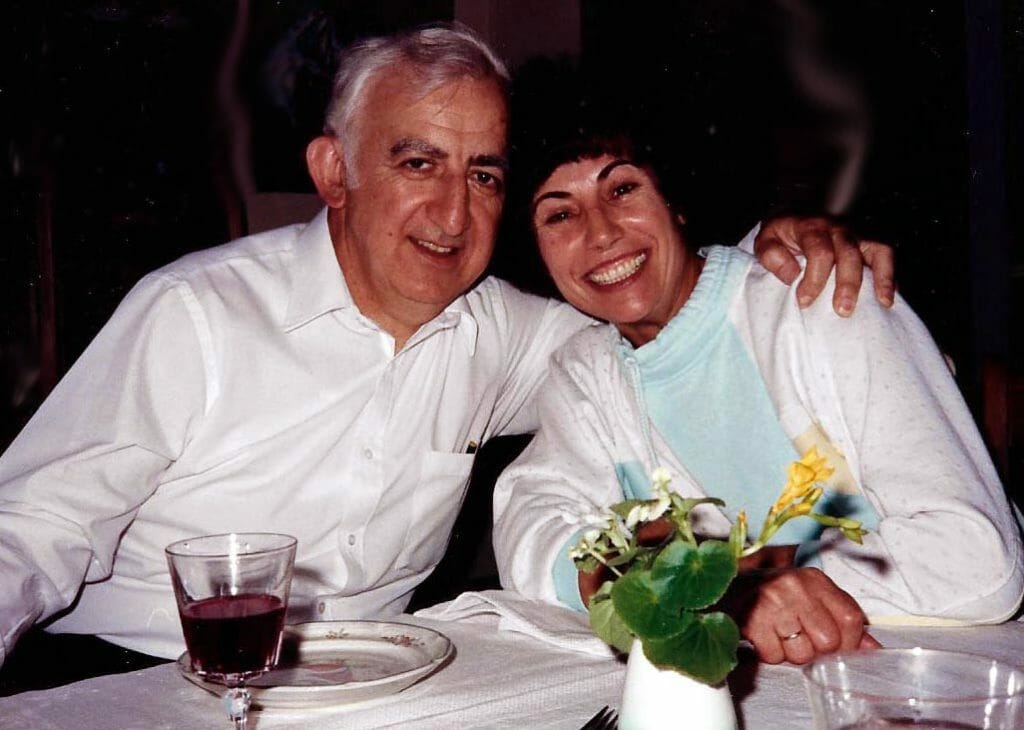
Tell me about Dolores. Why is it important to you to keep her legacy alive?
When I was a young man, I lived and worked in Spain. I married Dolores in Spain, and my son was born there. Dolores was born the same month that the Spanish Civil War began. Her father was a civil engineer, and he was conscripted into the Army. The family lost everything in the war, they wound up with nothing. Dolores and her family very closely identified with those who had little, and this became a way of life for her family, to help those who had nothing. Dolores set a standard for giving back, and she became well-known for that. Her volunteerism was never organized. Her attitude and her view of contributing was, ‘if God places a person in your path who has a need, then you must address that need.’ This established a way of thinking, it permeated our neighbors, our family.
You spend all your time giving back. What does it mean to you to hear that people value what you do?
It’s flattering, but I would say to you that I have worked for years with several other volunteers who are just as worthy of that recognition or more so. Some of them have jobs – I’m retired, I’m 85-years-old. I have the time. And still, these other volunteers show up just to help. It means a lot to me to know that I can help. That they tolerate me (laughs).
In 5 words or less, explain what volunteering means to you.
Al finale tendrás lo que has dabo. It’s all about fulfillment, it means, ‘at the end, you will have what you have given’, because truly, what you have given is all that matters. All of the accolades, awards, they don’t really matter. What really matters at the end, is what you have given.
How would you encourage others to give back in their own communities?
I’ve thought a lot about it. A lot of people are reluctant to get to know the people who truly need the help. And the perfect way to get to know a family is by getting to know the children, that’s the way to do it. At the last clinic where I volunteered, we do our best to take the time to listen to people about their story, about what they want to do. A 16-year-old girl told me recently how her high school still feels very segregated by race, unfortunately. These Hispanic kids bring diversity to the overall group, someone needs to tell them that they are valuable, and that they strengthen, and that places like the clinic I work at can’t do their jobs without them. They’re absolutely crucial. Suddenly, when these kids think they have a value, you wouldn’t believe the change. The number of kids translating next to nurses, who go on to become a nurse, or a teacher. And then they’ve broken down another barrier, because this is the first child in the family who is going to go to college, become a nurse, a teacher.
What’s the one thing you want people to know about your volunteerism?
I currently work at Julia’s Center for Healthcare as an English and Spanish translator, and as an administrator. I’ve also worked as a substitute teacher for an ESL program, mostly to immigrants, assisting families and young people. We need translators in these clinics, and 16-years-old is the required age to start. We ask teens to come help at the clinic, and along the way, I talk to them about what they have in mind for their future, I assist them in getting scholarships, I’ve helped kids with college essays. I want to make these kids understand the value of their second language, and encourage them to develop their skillsets, not have them toss their Spanish-speaking skills aside.
Do you want to make a difference in your community like Ronald? Visit All For Good to find local volunteer opportunities.
Indiana College Freshman Learns Important Life Lessons Through Service to Older Generation
Indiana State University freshman Gina Emricko learned the importance of giving back from an early age. With the encouragement of her mother, she began volunteering at the Avonmore Center for Active Adults in high school. Along the way, she learned invaluable lessons from the senior citizens she served, and made long lasting relationships that have enriched her life. Gina is today’s Daily Point of Light Award recipient, and Points of Light talked with her about her experience as a volunteer at Avonmore.
Why did you decide to volunteer at Avonmore?
My mom worked there for a really long time as a nutritional aide. As I got older, she asked if I wanted to go to work with her. I exercised there and, then, got involved in the kitchen. This was when I was around 14 or 15 years old. I would help out in the kitchen to make and serve the meals. I went there every day in the summer.
What types of services or responsibilities do you have?
When I first started, I just served the meals. But, then my mom taught me how to make the food. I also would make the take-out meals, as well, where you have to portion everything to make sure things were perfect and we didn’t run out of food.
We usually showed up around 10 a.m., and we put the takeout meals together first and, then, take a break and do puzzles, exercise, or watch TV. Lunchtime is at 11:30 a.m. for the people who eat at Avonmore. We always arrived early to get everything prepared and said a prayer before we serve the food. On a regular day, we had two tables full to feed at lunch. If we had pizza or bingo that day, the room might be a bit fuller.
How often are you there?
When I was in high school, I was there every single week day during the summer. I would wake up at 9:30 a.m, go to the store and get breakfast and coffee, and get right to the center.
What have been some of your favorite activities as a volunteer?
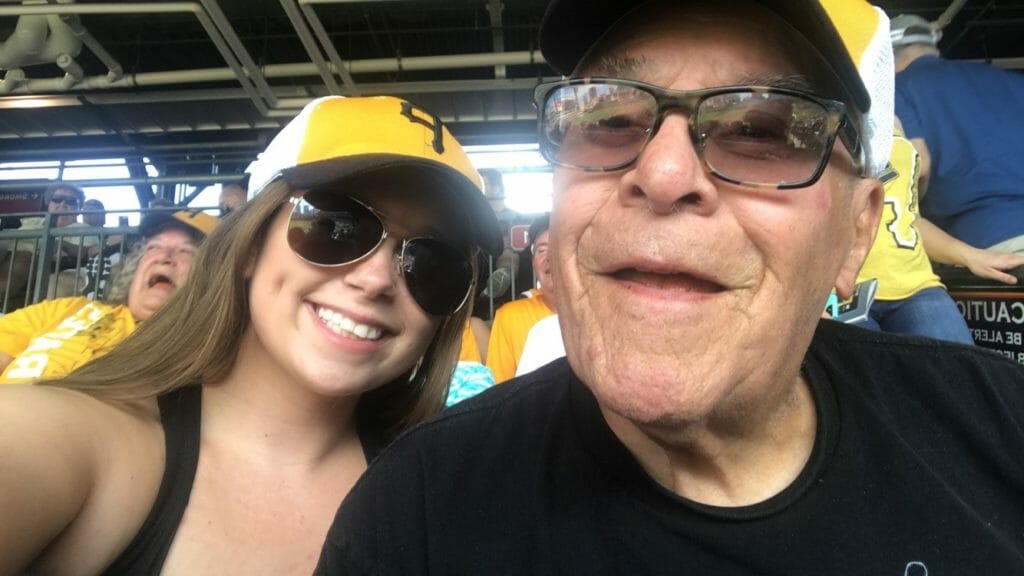
The center does a lot of events like fashion shows and bingo. We also played cards every Wednesday — I would volunteer for everything. Everyone became friends. I actually have a special buddy there because he showed up every day. Every year, they take a trip to go to the Pirates game, and he was so happy that we got to go together. I’m close to him, and that’s made a big impact on me. He’s like a grandparent I’ve never had.
What impact do you feel you’ve been able to make?
We have a lot of fun together as a group. Everyone laughs when we play cards, and we celebrate birthdays. They got me a cake for my birthday. I’ve done Zumba with them, and we sometimes sing. I feel like my spending time with them makes them happy, and we all enjoy ourselves. I’m really young, and I feel like I learn a lot by being friends with older adults. It’s really cool. I get to learn about their generation, and they learn about mine.
Why is volunteering such an important thing to you?
I really love volunteering with older people because you learn so much from them and their experiences. I think that volunteering and giving back to the community is needed and is something we should do instead of socializing all the time. Every day, I’d rather be at the center than hanging out with my friends in the summer time. It makes people happy, and I really love making people happy. My mom raised me to try to help people, so that’s a big part of me. I like to get other people involved because I think it helps you be more responsible, and you learn from it, as well.
Do you want to make a difference in your community like Gina? Visit All For Good to find local volunteer opportunties.
Silicon Valley Teen Helps Bridge Digital Divide with Equal Access to Technology
As a Silicon Valley native, Terence Lee is no stranger to technology. Although he grew up next to tech giants like Google and Apple, 16-year-old Terence noticed the considerable digital divide within the United States – and even within the San Francisco Bay Area itself. “With the rapid advancements in computer technology, individuals, schools and companies regularly refresh their computer hardware and software to keep up with their work,” said Terence. “At the same time, many students from low-income families do not have easy access to computers, even with the abundance of outdated computers often slated for electronic waste.”
Inspired by his Boy Scout Eagle Service Project, Terence launched EqOp Tech, a nonprofit that provides underserved communities with equipment, resources, workshops, and more in order to help bridge the digital divide. “’One person’s trash is another person’s treasure’ says it all. I see an opportunity to help others by reviving and reusing older, obsolete computers that would otherwise go to e-waste,” said Terence.
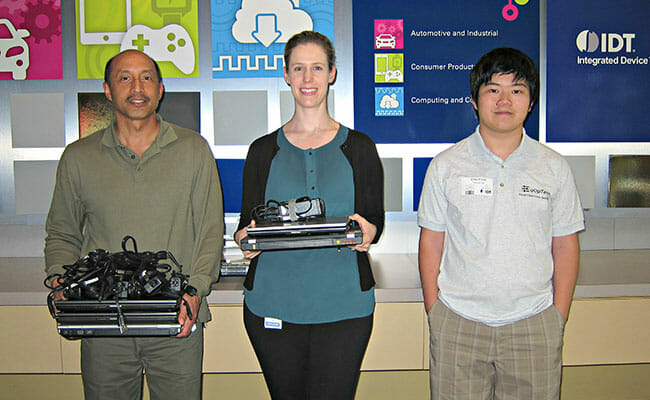
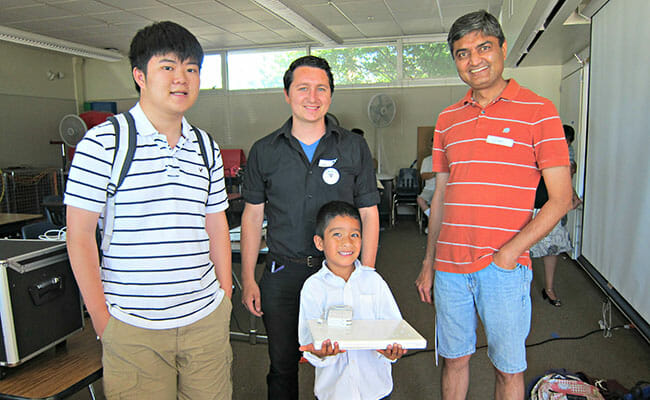
One of the main projects EqOp Tech takes part in is refurbishing and donating used laptops to underserved communities. They train volunteers to refurbish laptops, from repairs to software installation, to make sure the devices are up to date. “My role has changed over time, from a ‘doer’ to an ‘enabler,’” said Terence. “For example, I used to work on refurbishing laptops one laptop at a time. Now instead of working on it solo, I host lunch-hour and after-school workshops to teach volunteers the refurbishing process.”
Since the program began in 2016, EqOp Tech has received more than 540 laptop donations, refurbished more than 250 of them, and of those, donated more than 150 to communities in need. The laptops are also used for teaching STEM classes and workshops, and loaned out to students for home use.
EqOp Tech also provides resources to help students to get involved in the tech field. They have hosted a speaker series and hands-on workshops that cover topics ranging from cyber security, to computer networking, to cryptography. They also partner with local tech leaders to mentor underserved students in the community and provide internship opportunities for students to gain experience in the tech field.
“The most rewarding experience is seeing the smiles on kids’ faces when presented the laptops and receiving thank you letters from them, knowing that these at-risk students will have easy access to technology tools and mentor services support to learn STEM at an early age,” said Terence. “The work brings me a gratifying sense of accomplishment.”
Although EqOp Tech is fairly new, Terence has a big vision for the organization. He wants to expand the organization’s reach to other cities with booming tech communities like Seattle, and is even tinkering with artificial intelligence and looking into the prospect of virtual mentoring.
Terence hopes people can learn a few lessons from his story:
Don’t be afraid to challenge common beliefs.
“The general consensus is that new operating systems cannot be loaded onto older computer hardware and obsolete computers cannot be reused. I challenged this belief by reviving decade-old donated MacBooks from 2005 or later with re-installed modern age, lighter version Linux operating systems, giving hundreds of used laptops a purposeful second life.”
Think outside the box and turn problem into opportunity.
“Upon receipt of hundreds of obsolete MacBooks from my local school district, I developed a creative solution called ‘Computer in a Box’ to further engage student volunteers. Given the time and classroom constraints, volunteers can opt to be trained through a hands-on instructional manual, Linux ISO image DVD, YouTube tutorials and other essentials that are boxed conveniently for refurbishing flexibility in time and place.”
You are never too young to make a difference.
“Our ‘Computer in a Box’ refurbishing program engages younger students in 4th and 5th grades. We also have young volunteers help us coordinate laptop drives, teach STEM classes and write blogs. It is important to follow your passion and focus on making an impact, big or small.”
If you have an interest in technology and want to join the effort, learn how to get involved at www.eqoptech.org.
Teen Leader Crusades for Diversity and Wellness in Her Community
When it comes to making a difference in the lives of young people, sometimes there’s no better mentor than another young person. That’s been the way high school senior Joyce Zhou has approached volunteer service since she first began donating her time to others.
Today, she’s the president of the student advisory board for the Alive Center in Naperville, Illinois, and she helps coordinate the efforts of the ever-growing number of teen volunteers. The goal, she says, is to give younger and older teens a place where they can feel safe to pursue their passions and can learn the skills necessary to be successful later in life.
Points of Light talked with Joyce about her efforts to engage her community more and her desires for future volunteer service.
Why and how did you get involved with the Alive Center?
When I first joined as a volunteer, the Alive Center was still a new organization. It was based around the idea of being a safe and supervised placed for children and volunteer youth to stay after school. From personal experience, I was drawn to that cause. I helped develop the mission of being a teen-led and teen-driven space for creativity and inclusivity. It gave me the opportunity to become a leader in the community and support other teens.
What are your responsibilities there?
I got involved about three years ago — I’m a senior now. I think it’s really important to help children develop life skills — leadership, effective communication, and organization. We can help them overcome challenges and be resilient. We provide them with mentorship and resources that spur personal growth.
Some of our free programs include afterschool tutoring with healthy snack options, STEM programming, girl empowerment and multicultural arts. A lot of my work has involved collaborating with other volunteers to execute these programs. Planning and organizing begins months in advance. I help lead the student advisory board and gather teens interested in our initiatives.
For example, last year, we had a multicultural market fundraiser, and I led a group of about five other teens. In the beginning months, we planned the vendors and the space, the timing and the food. We kept up communications with the vendors and asked for local high school performers to showcase various performances, including dances and songs from their own cultures. Toward the evening when everything was set to happen, we set up practices for all the performances and organized with the owner of the Alive Center.
Who generally comes to the Alive Center to work with you?
The student advisory board has expanded since I joined. When I first joined, there were around 10 to 15 teens. Now, there are around 30 active teens. Some of them are on the board, and some of them help to lead different committees. We have many volunteers. I’m very excited about the increase in teen engagement in my community.
As for the children, about 80 percent of those we serve are from below medium-income families, and 40-percent are minorities. Fifty percent are disabled, and 60 percent are from single-parent families. Every day, we get around 20 regular kids, but for events and clubs, we get more. And, with the larger events, we usually get around 100 families showing up.
When we were a newer organization we had about one large event every other month, but this year, it’s been jam-packed. We’ve had a big activity planned for every month. Since we have different committees, the mission of Alive is based on what makes you come alive. We’re helping youth find their passion. We have STEM committees, education committees, health and wellness committees, and service fundraising. Usually, each committee is in charge of one or two events a year, interspersed throughout the community. We have a multicultural fundraiser in February and a STEM one in the summer. We recently had one on relieving stress. Kids came to have fun and snacks, and we had places for them to study, as well.
What skill sets do you try to help the children develop?
I think one thing we definitely focus on is overcoming challenges and building resilience. It helps to empower youth to overcome the disadvantages in their lives. We’re centered around older teens leading younger teens. We also help them with tutoring and mentoring one-on-one. Some of our mentees are very young, but we do have mentors who can provide some guidance for getting ready for college, too.
What does the diversity committee do?
I’m in charge of the diversity committee, and we had a fashion show recently. We’re also looking into more diversity with health and wellness. We’re planning to offer culturally diverse foods as snack options to increase awareness, exposure and tolerance for other cultures in the community.
What impact do you feel you’ve been able to have on the kids?
My service has been very important because it builds a connection with kids, and it’s proactive in the community in a meaningful and impactful way. I like being engaged with the children and families that come to the program, especially because I get to regularly see the changes in their self-confidence. It’s been really fulfilling to see their passion and hopes bloom with the visits. I can tell it all has an effect in their lives and beyond.
Do you want to make a difference in your community like Joyce? Visit All For Good to find local volunteer opportunties.
Karrie Delaney
As chair of the Fairfax County Library Board of Trustees, Karrie Delaney was elected by her colleagues to lead the board in strategic planning, making key financial decisions and managing the board. When the Fairfax County library director retired at the beginning of 2016, the responsibility fell to Karrie to manage and oversee the recruitment, interview, and vetting process for a new director. Karrie again demonstrated her value to library patrons when she began initiated a program to make Fairfax libraries engines for economic growth in our community. She recognized that area libraries could be utilized as makerspaces where entrepreneurs and inventors can collaborate on new products and ideas.
In addition to her work with the library, Karrie was also responsible for advising Fairfax county in the best way to respond to emergencies as the Sully District Representative to the Citizen Corps Council, a community group aimed at promoting emergency preparedness at every level.