Ex-Military Wife Making Dreams Come True for Generations of Veterans
As the wife to a former pilot in the Air Force, a daughter and niece of WWII and Korean war veterans, and sister and cousin to even more who have served, Diane Hight comes from a true military family. As she puts it, her family has served in the military from the Civil War to Afghanistan.
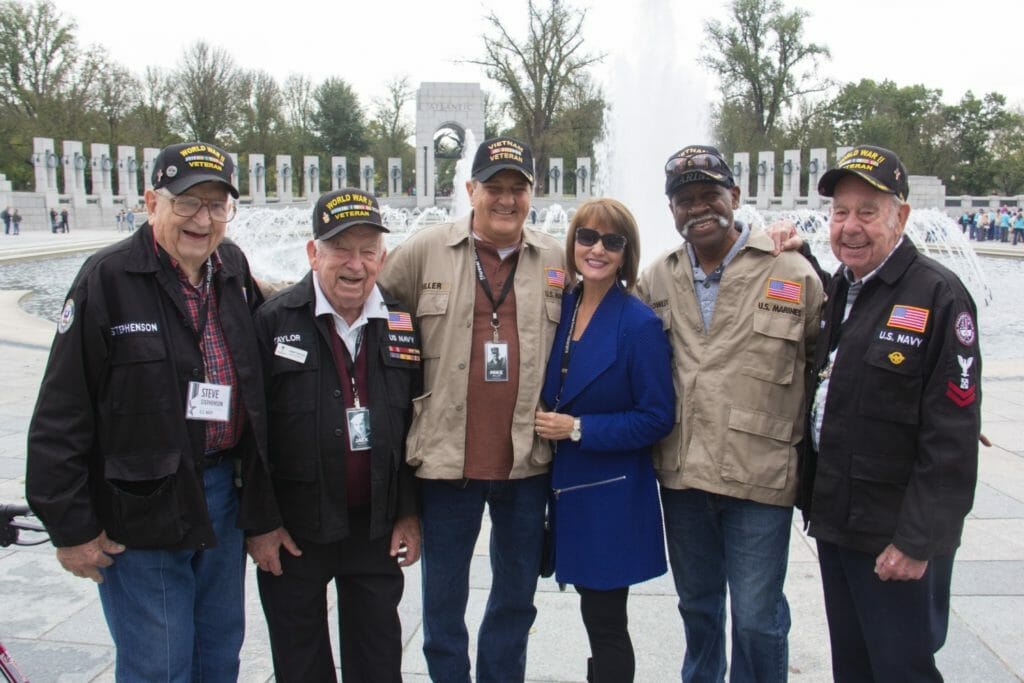
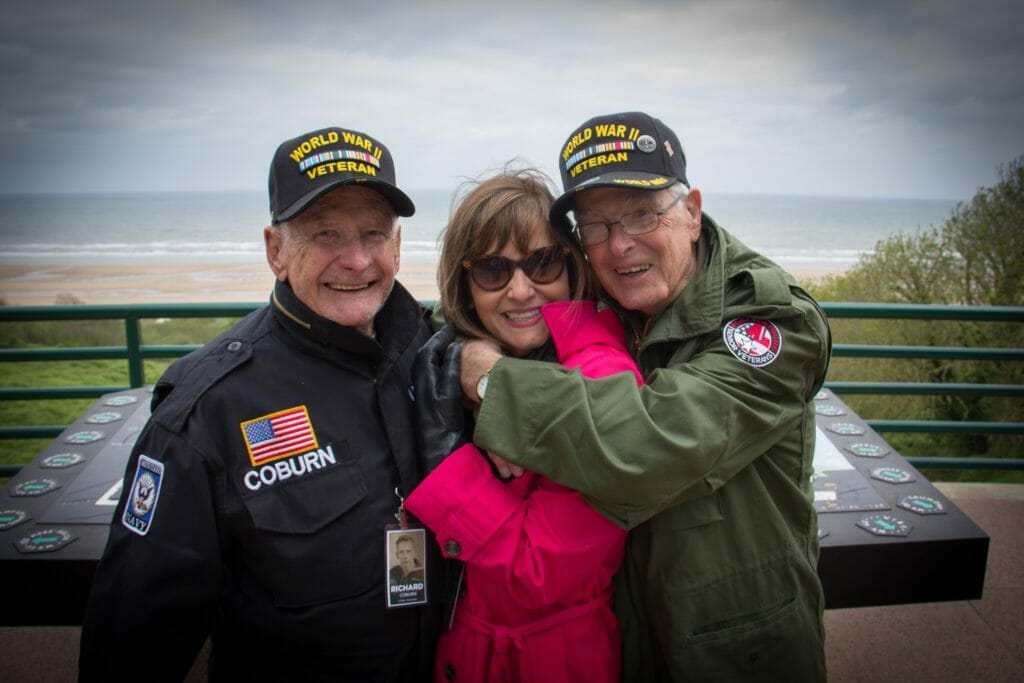
But what sets Diane’s service apart from others in her family is her dedication to those veterans themselves. Through Forever Young Vets, an organization she launched in 2006, Diane provides honor, healing and hope to military veterans 65 years and older by granting their unfulfilled dreams, returning them to the places they fought, and sharing their stories of sacrifice. Effecting change in the winter of these heroes lives is her goal, helping them to heal from old wounds by reuniting them with long-lost peers and celebrating their legacies.
Giving back to more than 3,000 veterans and raising more than $2 million to date, Diane is gifting heroes with invaluable experiences, and is today’s Daily Point of Light award honoree. Points of Light spoke to Diane to learn more about her work with Forever Young Vets.
What inspires you to volunteer?
Growing up, my dad really instilled in me a love for America. He was so proud of his service in WWII and Korea, it defined him in a lot of ways. My dad and uncle, who both served in WWII and the Korean War, have both since passed, but Forever Young Vets is an opportunity for me to give back to their comrades.
Tell me about your favorite wish.
So many of these guys didn’t receive the recognition they deserved, they just came back home from war and went back to work at the farm. We had a 93-year-old sailor who had been a pitcher for a minor league baseball team for the St. Louis Cardinals. He had dreams of playing for the Majors – but had to leave baseball to go fight, and he never went back. His wish was to throw out the first pitch for the Cardinals. This was one of my hardest wishes, it took me about 2 years to get it done. At the age of 95, he got to go and throw out the first pitch at a Cardinals game with his two grandsons. When he was returning from the game, he called and told me that he threw the ball 95 mph. He was serious. It made him so happy.
Describe your volunteer role with Forever Young Vets.
I have never taken a salary, I volunteer out of love and passion for the older veterans. Our organization has about 25 volunteers in all, and it’s exciting to help these veterans. That’s the one thing I love about granting wishes for veterans, they know what’s important. They’re not going to ask for a big screen TV. They want meaningful experiences: to be reunited with a buddy that they fought with, or to get their Purple Heart medal they never received, or they want to go back to Iwo Jima. When you have been fighting in a war, they know that possessions mean nothing. It’s people that matter, and America.
What makes these wishes so special?
The greatest challenge is getting wishes from the greatest generation because they will not ask for free things. They were taught that you don’t accept free things, you work for it and you pay for it. They almost don’t believe you when you tell them you want to do this for them.
You rely on fundraising for your trips with the vets. Tell me about them.
After granting individual wishes, the word spread, and we ended up having a group of 30 men, up to the age of 100-years-old, that wanted to go to the World War II memorial in Washington D.C. That was our first trip in 2009, and it was life-changing, to see what the memorial meant to these guys. We got back, and we had 50 more guys that wanted to go. After that, I just started raising money like crazy to do more trips, because I felt like these veterans had given enough, they deserved this free trip. We’re taking a group of WWII veterans overseas for the last time this upcoming year. We’ll be going to the 75th anniversary of the Battle of Normandy in June 2019, and to Belgium in September 2019 to celebrate the 75th anniversary of the Battle of the Bulge. This is the last year because they’re getting older and not able to travel as much. Check out our website for more information about how you can help: http://www.foreveryoungvets.org/givetoveterans/.
What would your dad and uncle say to you today, if they were able to see what you were doing for vets?
I know they would be so proud. And I know my dad would be on every trip with me if he was here. They would be very grateful, because they were both in combat and witnessed the horrors of war. Our organization is about honor, healing and hope. We want to help bring peace to veterans and their families who often suffer silently.
How has leading your life in service changed you?
You can’t help but change when you see other people’s lives changed. It’s made me appreciate what our veterans have done even more than I previously did. For instance, we had a man that went in on Omaha Beach and fought through the Battle of the Bulge – he couldn’t even talk about the experience. Now he attends speaking engagements and he shares his stories. His children would tell you he’s a different man than who they grew up with. It’s so fulfilling to see someone’s life improve. I’m just thankful that I can even hang out with these guys (laughs). They are the real deal.
Why do you think it’s important for others to give back?
I don’t think that we can totally be happy if we’re not giving back to others. The more you give, the more you get back. I wish that people would volunteer more, I don’t think people realize the joy in it – it’s addictive. The veterans are so grateful for the tiniest little thing you do for them.
What future events do you have coming up that you’re excited about?
Our Dreamgivers’ Gala is Saturday, August 11, 2019, at the Hilton Memphis. We will raise money to return WWII Battle of the Bulge veterans back to Belgium for the 75th Anniversary. We will also raise funds to take WWII, Korea, and Vietnam vets to Washington DC for a five-day “Trip of Honor.” Check our website for more information: http://www.foreveryoungvets.org/events/.
Do you want to make a difference in your community like DIane Hight? Visit All For Good for local volunteer opportunities.
Post written by Marlena Militana.
Entrepreneur Creates a Culture of Second Chances for Formerly Incarcerated Individuals
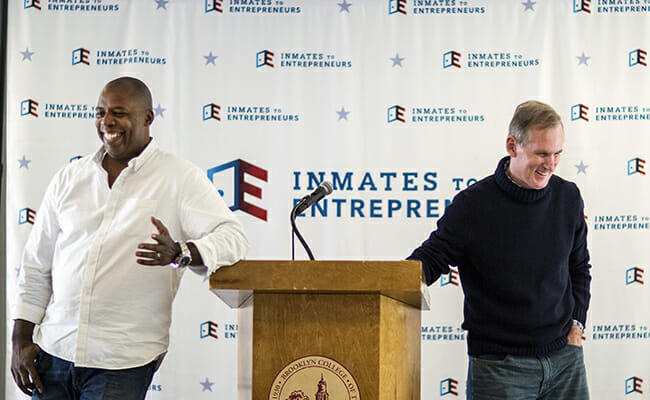
An entrepreneur from an early age, Brian Hamilton has worked alongside many creative business owners and understands the power and potential of a dream. So when he learned of the difficulties many inmates face in finding employment after their release from prison, Brian was determined to find a way to help them find a second chance.
Brian’s first visit to a prison was in 1992, alongside his friend Rev. Robert J. Harris who frequently provided ministry services there. When he asked inmates what they wanted to do once they were released from prison, their answer was always the same: find a job. Brian couldn’t help but think that finding a job would be extremely difficult with a criminal record. That is the reality faced by millions of inmates who are released every year and, according to Brian, this problem is not getting any better. Reflecting on his own experience as an entrepreneur, he thought, why don’t we help them start businesses instead of trying to get a job?
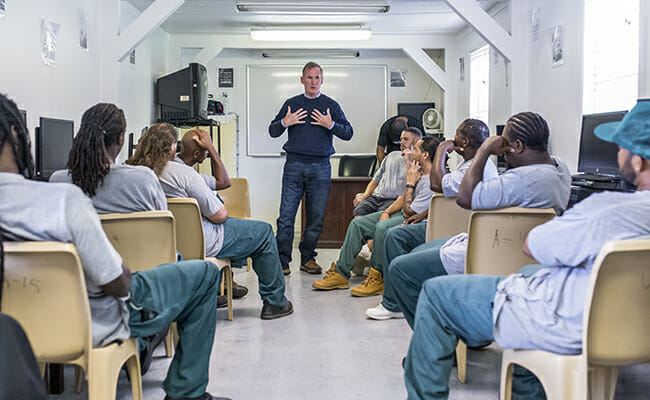
With the help of Rev. Harris, Inmates to Entrepreneurs was born in 2008. The organization has assisted thousands of former inmates start their own business by providing free resources and mentorship opportunities. In addition to training inside prisons, they host eight-week courses for inmates at no charge after they are released from prison. A library of videos and tools are available to participants, offering important tips for starting a business.
One of the most important elements of Inmates to Entrepreneurs is its mentorship program. Entrepreneurs who are interested in helping those with a criminal background start their business can apply for a mentor position online. Volunteers go through a selection process, security clearance, and are able to lead mentees in various business-themed classes. According to Brian, around one-third of the mentors are formerly incarcerated individuals who have successfully completed the program themselves.
With these core program elements, Inmates to Entrepreneurs is helping to reduce the rate of recidivism in the United States, and assisting past inmates in finding financial stability and success. “People start businesses, we don’t,” said Brian, whose belief in the potential of former inmates – and the power of second chances – is giving them access to a brighter future.
Scott Jennings, a past participant and mentee in the Inmates to Entrepreneurs program, now serves as a board member for the organization – in addition to running a successful fitness assembly business. His story is a shining example of what can come out of believing in people’s potential for good.
In addition to Inmates to Entrepreneurs, Brian also runs the Brian Hamilton Foundation, a nonprofit that opens the door to entrepreneurship for all Americans, regardless of background, age, race or dream. He knows the challenges many people face in breaking the socioeconomic circumstances into which they are born, and he wants to make entrepreneurship more accessible for everyone.
The next stop for Brian and Inmates to Entrepreneurs is their National Second Chances Conference in Atlanta. The event is open to anyone with a criminal record who is interested in learning how to start a business.
In all of his endeavors, Brian remains dedicated to guiding anyone with a dream on their own path to success. And through his leadership, he is helping people find empathy for and confidence in those who may often get overlooked.
“I think we need to set up a culture of second chances,” Brian said. “People make mistakes, and if we give them a second chance, maybe they won’t go back to prison. Let’s be open to the idea that everyone can get better.”
Want to make a difference in your community? Visit www.allforgood.org to find local opportunities to get involved.
Inspired by grandmother, teen takes over family book donations; expands to helping girls across the globe
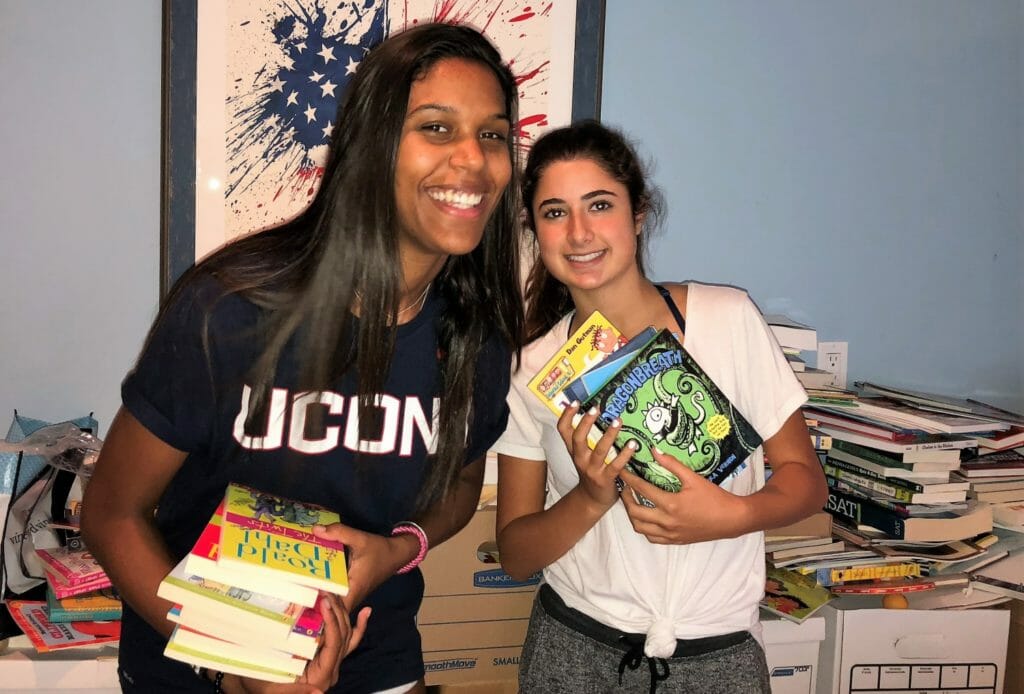
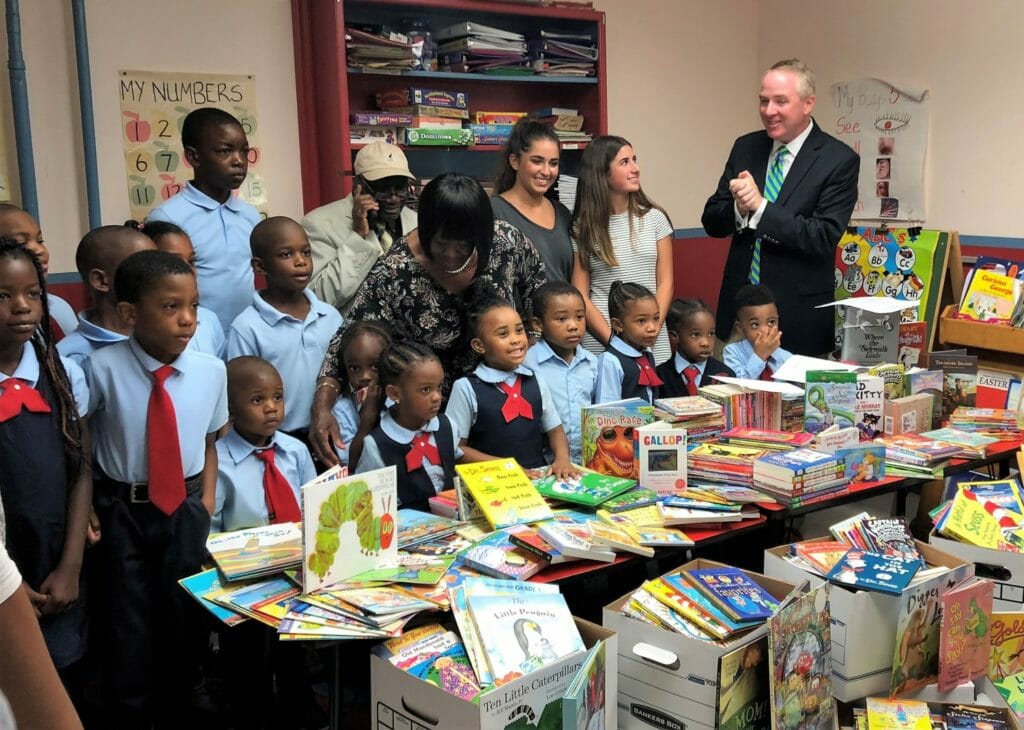
When Eden Schneck was only 6 years old, she eagerly helped sort and package donated books for other children. At the time, her oldest brother, Max, was a freshman in high school. Eden’s other older brothers, Jonathan and Jeremy, also took their turns collecting books for less fortunate kids. They did it in honor of their grandmother, a schoolteacher who grew up in rural Texas and later taught school in Pittsburgh, Pa. She believed so strongly in literacy that she’d used her own money and time to stock school libraries.
When Eden was 14 and a freshman in high school, it was her turn to take over the family tradition and become presisdent of Reading Reflections, the book donation nonprofit they’d started. By this time, the Schnecks had expanded into donating books both locally and overseas, to Nigeria.
A representative of the Hope and Dreams Initiative, a New York-based NGO that helps families in Nigeria approached Eden with a request she’d hesitated to ask Eden’s brothers: Could she help collect and ship sanitary products so girls in Nigeria wouldn’t need to miss school for lack of supplies? Eden – now a senior at North Shore Hebrew Academy — agreed and has successfully sent shipments of products, packaged discreetly in colorful bags that Eden purchased herself.
“I answer emails at least three times a day to arrange book pickups, book meets, drives to deliver the books where they need to go, etc. I run the drives, I tell them the ages of books needed, everything. I collect books for all ages, or sometimes, a school will ask for say, dictionaries, so we try to find those. We pack 100 books to a box and we deliver the boxes three to six times a week.”
How many schools have you served?
“There have been hundreds of schools over the years. We’ve donated books all over Long Island and we’ve filled libraries in Nigeria. I have a lot of friends who live in other states and I always try to get them to donate books in their area. We donate about 3,000 books a week.”
What’s been the most rewarding part of your work?
“The times that I’ve seen the reaction from children. I have had opportunities to deliver the books directly to the kids. Seeing their reaction is amazing! I’ve gotten letters that are so heart-warming, it’s all worth it. It’s beyond rewarding.”
What are some of the hard parts of your volunteer work?
“It’s hard to manage school at the same time. I attend school from 8 a.m. to 4:40 p.m. I’m not only emailing, I’m the one physically organizing the books by age, and figuring which books go where. It takes hours.”
What have you learned through your experiences as a volunteer?
“I learned that not everyone is as fortunate as the people around Long Island. Some kids don’t have access to books, something that seems so easy and so simple to get ahold of to me. It’s crazy when it’s right around the corner that kids don’t have access to books. They’re so excited to get them.”
What do you want people, especially other young people, to learn from your story?
“That it’s so important to help out. Everyone really can make an impact, whether small or large. It’s really so important to give back to your community. I hope to keep doing this no matter where I go to college.”
What are your plans going forward?
“I really like entrepreneurship. I consider myself innovative and I’m interested in helping people, so something like global health policy and entrepreneurship is something I’d be very interested in.”
Do you want to make a difference like Eden? Visit All for Good for local volunteer opportunities.
Post written by Kay Nolan
Out of a Passion for Sports Journalism, a Purpose in Helping Kids in Colombia is Born
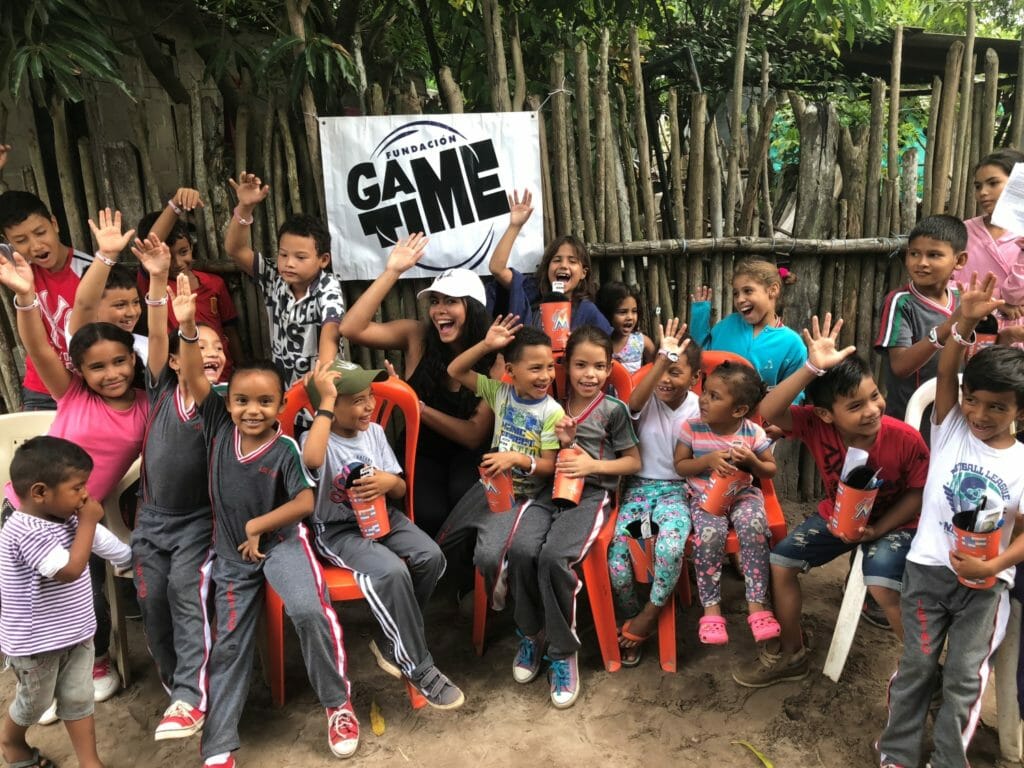
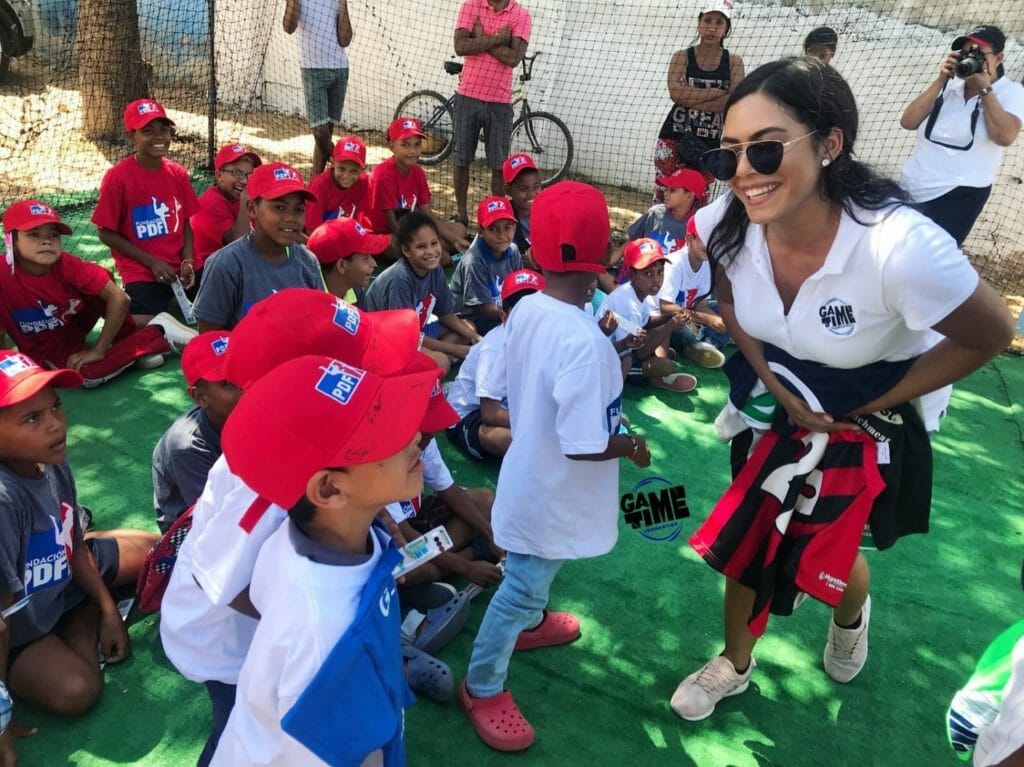
Nicole Fernandez entered journalism out of a sense of wanting to be of service to others. She became a sports broadcast journalist in her hometown of Miami. But ever since her childhood, when she visited Colombia, the South American country where her parents were born, Nicole wished she could help the plight of the poor children she saw there. In 2013, Nicole traveled to Colombia to conduct some sports interviews. She was struck by a 5-year-old child’s eagerness to play baseball. By 2014, Nicole had created a nonprofit, the Game Time Foundation, to collect used sports equipment and uniforms to be donated to Colombian children. Now Game Time is 5 years old, and Nicole has collected more than 2,000 pounds of equipment that has been donated to more than 1,100 children in 18 communities in Colombia.
What inspires you to volunteer?
“Out of my passion, which was sports journalism, I found my purpose,” says Nicole. “I went into sports journalism because I like the sense of unity that occurs during the World Cup or the Olympics. Sports can do many things for children. It teaches teamwork, responsibility, respect. It helps a kid learns things that will make him a better adult and better individual. When I’ve interviewed athletes as a journalist, I’ve seen that some have come from bad neighborhoods or whatever, but sports helped them grow personally and professionally.”
How has your media training proved useful?
“I do the organization’s website, I take photos, I produce videos, I do all the social media – Instagram, Twitter, etc. I do media when I’m in Miami; I do media when I’m in Colombia. Doing international interviews helps my credibility.” Nicole notes that communities in other countries are sometimes skeptical of nonprofit organizations’ motives. “When I can show them videos and pictures and interviews of what I’ve done, they know I’m the real deal and doing this for the right reasons. This past October, I took 30 kids to a new baseball stadium in the city of Barranquilla and it drew a lot of media attention and now more people know me and want to get involved.”
What’s been the most rewarding part of your work?
“It’s so rewarding to follow your heart. Also, I travel to Colombia twice a year and I get to see family I wouldn’t get to see otherwise. I’ve gotten closer to family; I’ve made friends over there. My mom has traveled with me and has been able to go back to her hometown.”
What have you learned through your experiences as a volunteer?
“When I started this, I wondered if I was crazy for wanting to this. At my age, most of my friends are buying homes, having kids. I’m still single and living with my parents. But I learned it’s OK not to have a timeline. I’ve learned discipline and innovation. I’ve learned that it’s OK to have bad days, that it’s part of the process.”
What are some of the hard parts of running your nonprofit?
“Sometimes I get pushback from people. They ask, ‘Why should I help children in another country?’ I love living in Miami because it’s so diverse, but especially here, some people argue that I should help children in countries other than Colombia. That’s also true with some people in Colombia. Many of the children within the past year have been migrants from Venezuela hoping for a better life. Some people resent helping migrants. My answer to that is, ‘Most of the time the parents want a better future for the child and he’s leaving his home behind. If there’s something I can do for a child who’s been here for a couple months in a new country and he’s adapting well because he’s playing baseball like he did in his old country, why not help that child?’”
What do you want people to learn from your story?
“Nowadays, we’re living in a time when people have forgotten to be kind. People like to help but they want to know what they’re getting in return. But the actual act of giving is very rewarding. I think we should all help and we should all be kind. And you don’t have to be old to help. A lot of people are surprised – I’m 29, when I started, I was 24 – they say, ‘Why? You’re so young, why do this now’? But I think it’s important to find your purpose and do something good for the next generation.”
Do you want to make a difference like Nicole? Visit All for Good for local volunteer opportunities.
Post written by Kay Nolan
Teenager Changes Lives Through MS and Cancer Awareness Nonprofit
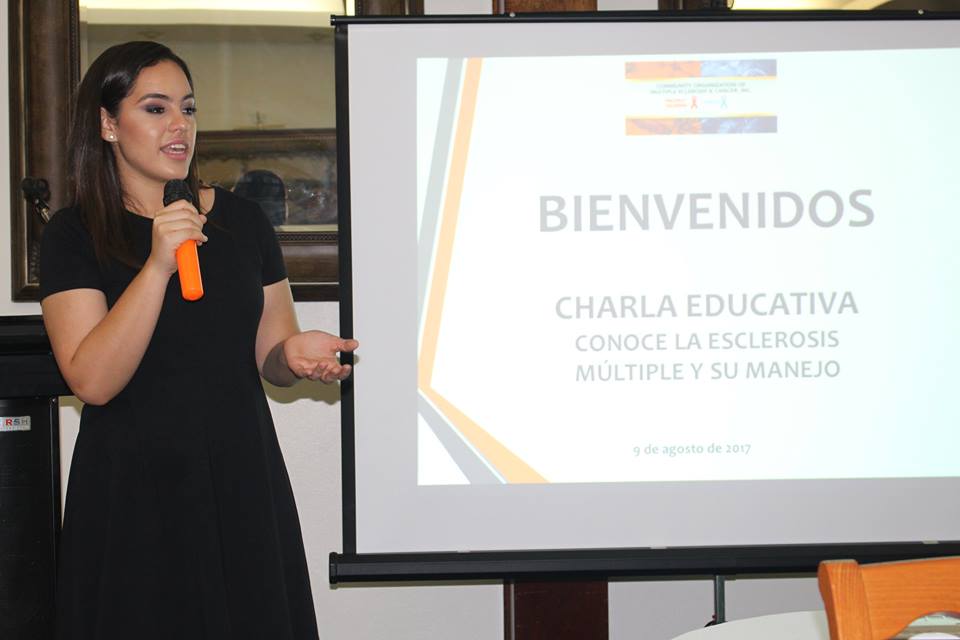
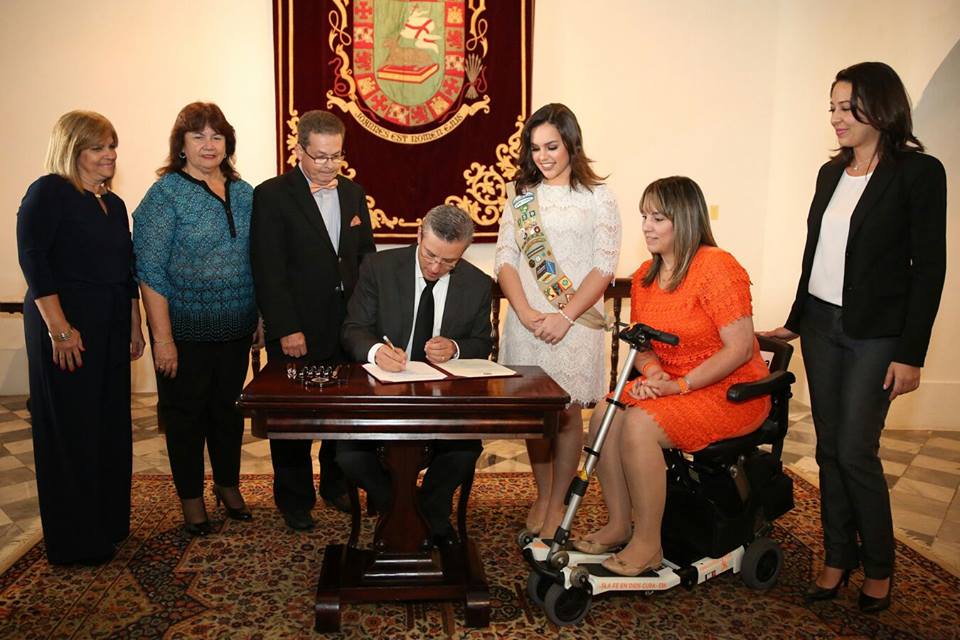
When it came time for then-16-year-old Vilmarie Ocasio to decide what she was going to do for her Gold Award project, the highest achievement in Girl Scouts, she knew she wanted to focus on raising awareness for multiple sclerosis (MS) and cancer. The Puerto Rico native’s mother had recently been diagnosed with MS after years of doctors being unable to determine what was wrong, and Ocasio didn’t want to see others go through the confusion and uncertainty that came after her mother’s MS diagnosis. Through her project, Ocasio raised awareness for MS and cancer, and also advocated for the approval of the Senate Bill 1180, which would create a mandatory registry for people diagnosed with MS in Puerto Rico. With her help, the bill passed to become Law 85 in 2016, and is already helping with genetic studies research at the University of Miami.
After finishing her Girl Scouts project, Ocasio decided to keep working to spread awareness of MS and cancer by founding Community Organization of Multiple Sclerosis & Cancer, Inc. (COMSC), in 2017. She uses donations to COMSC to send portable mini air conditioners to patients in Puerto Rico who are struggling with the electrical power outages after Hurricane Maria. She has also implemented multiple awareness campaigns and coordinated educational conferences. Now attending Coastal Carolina University in South Carolina, Ocasio continues to educate on these health issues through social media campaigns and through educating local high school students and her fellow students at CCU.
Ocasio is committed to making a difference in the lives of those affected by MS and cancer, and she is today’s Daily Point of Light Award honoree. Points of Light spoke with her about her commitment to service.
Describe your volunteer role with COMSC.
After the community work that I did with Girl Scouts, I decided to keep on working with [MS and cancer awareness]. I sent mini air conditioners to those patients back in Puerto Rico after Hurricane Maria came along, thanks to donations people gave me from Facebook. Now I’m still working on that to keep sending those mini air conditioners. They’re portable. This will benefit many people that have the condition because my mom actually used this resource after the hurricane.
Why did you choose to focus on Multiple Sclerosis and cancer?
I got interested in this cause because my mom was diagnosed with multiple sclerosis back in 2014. It was a really hard process for my family and for myself because we thought that she was going to die and we didn’t have the resources we needed to know about the condition. We didn’t know where to find help, we didn’t know anything. That’s why I decided to orientate people about the condition and help them anyway possible that we can.
I got the chance to work on my Gold Award project from Girl Scouts and that’s when I decided to do my project [based on MS]. I did a lot of campaigns to benefit the people that have multiple sclerosis and the doctors also. We had many experiences where doctors didn’t know how to medicate my mom. She took around six years to be diagnosed with MS. I did a large campaign toward the public in general, because we also had experiences where people didn’t believe that my mom had the condition and just judged her because she was using a wheelchair in the supermarket. People just didn’t understand how if she seems capable walking around and she seems perfectly ok, why is she using the wheelchair or anything? At my school, I also did a campaign toward teenagers about multiple sclerosis and the human papillomavirus (HPV), because I saw that [the number of people who have it] was increasing. Because it’s a sexually transmitted disease, many teenagers weren’t aware of the effects of having sex [without protection.] That really worried me. It still worries me. Many people are working on that to get vaccinated and get educated about the condition. With MS, I also orientated them because as a collective in high school, we’re the future doctors, we’re the future of the society. If we know about these conditions beforehand, we can help people in the future.
Describe getting Law 85 passed. Why is it important?
I knew it was in the Capitol, and I saw that it was there for two years and I didn’t see any action. So I took this bill and actually advocated until it’s approval. I looked for information on why it was important, why was it necessary for the island to have this registry. If we have a registry for MS patients, or with any kind of disease or condition, we actually can now get funds. That law, this required registry, is going to be the first resource where people will look at it and be like [for example], ‘Ok, they’re telling the truth, there’s 4,000 patients that have MS because of this registry. We can give you about $500,000 because you’re telling me you need that for this amount of patients.’ It’s going to be more credible because you have a registry. For genetic studies … you’re going to see that amount of people and it’s accurate, because you have a registry and it’s required. It’s not voluntary or someone taking it by their own hands. It’s a law where you can actually see [the information] on paper.
Are there any future partnerships, programs, or events that you are excited about?
With my non profit right now, I’m working on another law in Puerto Rico. One of my projects that I did before that, it was to orientate the youth in high schools about MS and human papillomavirus. So if we could bring it to a law, all of the high schools in Puerto Rico are going to be orientated about that condition. It’s going to be over 100,000 students being impacted by that information. And then also to keep on sending the mini portable air conditioners to those patients back in Puerto Rico because hurricane season is once a year but it’s always there, especially since we’re on an island. So to keep on sending those mini portable air conditioners over there and just to spread awareness about MS. Also here in South Carolina, I’m working with the MS society to also impact the high schools over here in the county where I currently live. It’s going to be in March, the MS awareness week, that’s when we’re planning to involve the high schools over here in my county and my university. Many people around the United States are also getting involved through Facebook, through social media.
What’s been the most rewarding part of your work?
I know that I’ve won many awards and all that and that’s really gratifying. But it’s mostly when people actually are really thankful. I’ve seen during my journey that many people are really in need of help, they really need that support. When people say thank you and are really grateful that I helped them and are really genuine on everything that I do, that’s my most gratifying achievement and I’ve seen it in many people recently. I helped give a nurse to one MS patient in Puerto Rico. She is on her bed and she is blind so she only depends on her children, but her children are all grown up and they have a busy life, so she doesn’t have that support she needs. With the mayor of that city [in Puerto Rico], we help her to actually get a nurse two times a week. I called her recently and she’s really grateful. She’s like, ‘Really, thank you, my children are really thankful too, they really needed this help, I really needed this help.’
What have you learned through your experiences as a volunteer?
I’ve learned how to express myself in front of an audience and to lose the fear. Even though I get super stressed out before I talk in any interview, that’s one of the things that I’ve done where I just got out of my shell and tried to talk in front of people. Also, I’ve learned to be really patient and to not give up easily. In the world, there’s not many people that are going to help you. I’ve learned that yeah, there’s going to be people like that but there’s also going to be many more that are going to help you. So [I learned to] not really focus on those negative thoughts, those negative situations and be more focused on the positive outcome and the positive people. And just to not give up on what you really want to do because it’s not going to be easy at first. It’s going to take some time skill and patience to actually build what you want to do.
Why do you think it’s important for others to give back?
It’s important for others to give back because you see so many people that actually are in need of help, and you have to be grateful for the things you have. If you have the skills and this ability to do those things, why not give back and actually help those people that actually need it? I’ve seen during my journey that many people are really seeking that support. So if you’re capable of doing something and you’re really able to do it and you have the energy and the excitement, why not do it? It’s really important to help people because at the end, it’s going to be really gratifying for yourself and you’re going to be proud. Seeing those people’s [that you helped] faces, you’re going to be like, ‘yeah, at least I did something in this world, I didn’t just stay in my house and not do anything. I helped create something for this society.’
What do you want people to learn from your story?
That you’re capable of doing any work that you put your mind to at any age. There’s no age that can stop you or limit yourself to do something. I’ve seen many of my peers say, ‘Oh, I’m too young to do this, I just have to wait ten more years to actually be a professional so they can listen to me and they can actually help me do what I want.’ You don’t have to actually be a professional. I hadn’t even graduated high school when I was doing my projects. So you don’t have to have an education or anything if you are really willing and have the energy and excitement to do something. If you have the energy and want to do something, go for it. It’s going to be hard at first because nothing really is easy. If it was easy, everyone would do it. That’s what I tell my friends, they’re like, ‘Oh, I can’t do this because I don’t have the resources like you Vilmarie, I can’t.’ You can. You just have to find your way through it and actually accomplish it. There’s going to be people that are not going to help you. You just have to put them aside and then find the people who are going to help you and then show those people that didn’t help you that you did it.
Do you want to make a difference in your community like Vilmarie Ocasio? Visit All For Good for local volunteer opportunities.
Post written by Morganne Mallon.
Chicago Family Inspires a Lifetime of Service by Starting Young
Wife and mom to four, Tanya Polsky says she was looking for volunteer opportunities for her young children as a way of instilling a sense of gratitude and appreciation for service, but was coming up empty.
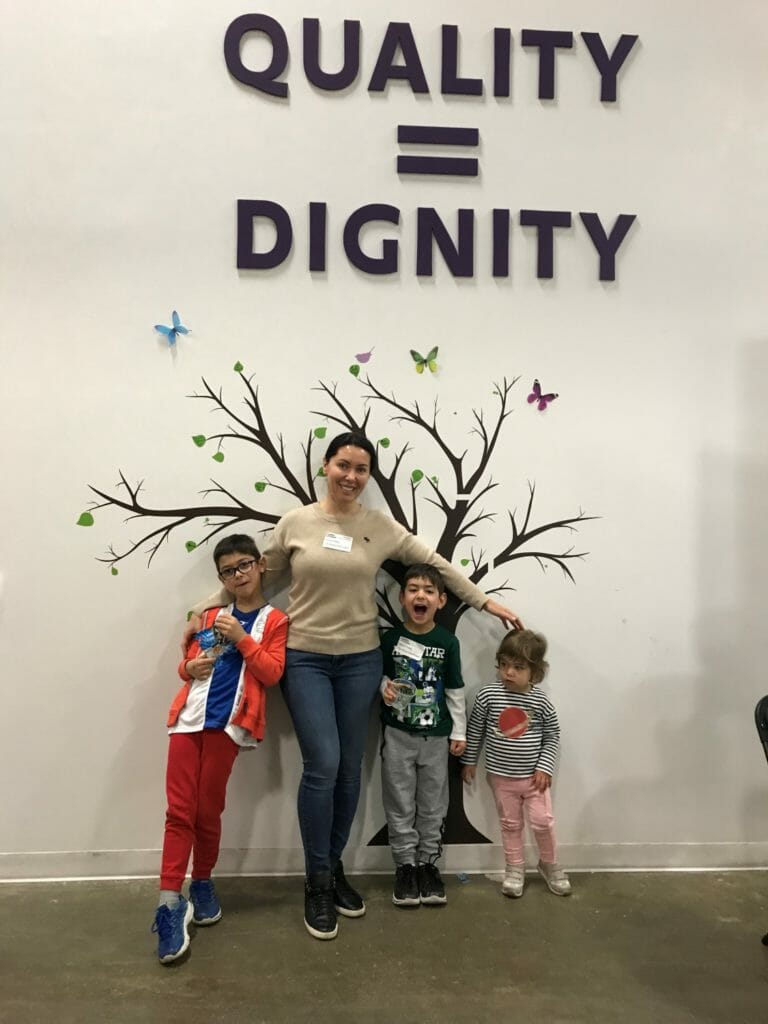
While many organizations only accommodate teenage volunteers and older, the Chicago resident connected with The Honeycomb Project, an organization founded in 2011 with the mission to engage, mobilize and inspire kids and their families to strengthen Chicago’s communities. Tanya, her husband Michael, and their three young children: Peter, Simon and Anabelle, now volunteer together as a family, providing their children with an understanding of the importance of charitable work for the less fortunate.
Having logged 60 hours at over 30 events, volunteering on projects that help at-risk, homeless and low-income individuals and families, and improving natural and recreational areas in underserved communities, the Polsky family is cementing a love of service early on with their children, and is today’s Daily Point of Light award honoree. Points of Light spoke to the Polsky’s to learn more about their work with The Honeycomb Project.
What inspires you to volunteer as a family?
Michael: We started volunteering with Honeycomb in 2016, and it certainly feels a lot more fun to volunteer as a family. In some ways, it’s more fulfilling, and it’s not just solo mission because everyone’s involved. I wish we could do a lot more.
Tanya: We, as parents, model the behavior we want our children to emulate. We are leading by example in teaching our children to give back.
Explain why you feel so strongly about including your young children in service.
Tanya: When my older daughter would volunteer, it was all top-down, the sense of giving back on a daily basis just wasn’t there. I don’t blame her, as she was growing up, I didn’t instill that ethic. When these little ones came into our lives, I wanted to get them involved with service earlier, because by the time they’re teenagers, it’s kind of late to start teaching the importance of living a life of service.
Your children skipped birthday gifts in order to make charitable donations. Explain.
Tanya: Our 8-year-old, Peter, forwent receiving birthday gifts, instead he donated his toys to his favorite local charities. In our school, in earlier grades, everyone is invited to birthday parties. The children end up with 50 gifts. We’d discuss it with the boys, and say listen, there are poor little boys and girls and they don’t have these things. We’re all born very nice people, children are very kind. It’s not difficult – they said ok.
You have three children under the age of eight – let’s talk to the two older boys. Peter, Simon, what do you like most about volunteering?
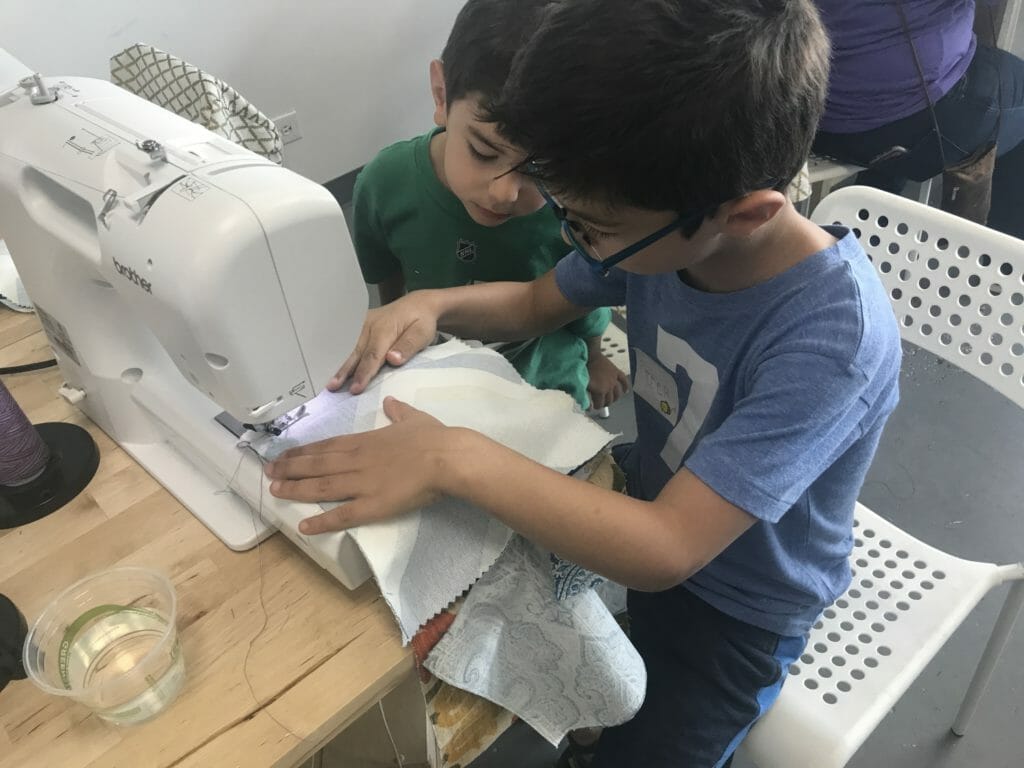
Peter (8): Making the sewing part for blankets for pediatric patients. It’s fun… I like helping people, it makes them happy, and I like getting the pins.
Tayna: The boys were taught how to sew, they made blankets for pediatric patients. At 5, 6 years of age, it’s nice to have a real life skill like that.
Simon (5): Because it’s really good when you help people and it’s really nice.
The children receive a pin for their volunteerism. How many do you have now?
Tanya: The children earn pins for each five events they volunteer at, the pins eventually filling a “honeycomb” of service. Honeycomb has had to come up with additional colors because of us, we were burning through these events. In the summer, we’d go volunteer twice a week! We even bring Anabelle, our 3-year-old. She understands, she gets it. That’s my Soviet upbringing – volunteerism is a job, we’ve got to do it.
What’s been the most impactful project you’ve worked on?
Tanya: We’ve volunteered at food pantries and women’s shelters, working directly with human suffering. We made meals at the women’s shelter and we give out food at the food pantries. There could be 200 people in line at the food pantry at 8 a.m. on a freezing winter day, people of varying cultures and ethnicities: Russians, Chinese, everyone. One day, an older gentlemen received a package from Peter and said in Russian, ‘thank you for your kindness.’ My children are bilingual, so Peter turned around to me and asked in Russian, ‘what’s kindness?’ We talk about kindness now, and how to make an impact on people’s lives. That is how you develop compassion.
Tanya, you and your husband were both raised in Ukraine. How does service differ here in the states versus in your native country?
Michael: There was no volunteering in Ukraine, it was required volunteering. People were told to come to work on Saturday, because the country needed you. Everybody resented it. It was completely different than in the U.S. Here, you volunteer because you want to do it, you want to help, and because you’re more fortunate than others. It’s day and night.
Tanya: Volunteering was a mandatory process in schools, you were forced to go, otherwise you’d be punished. But I have a different perspective on it – I enjoyed most of it. I got something out of that service because at an early age I was required to do it. You’d get released from school for 3 days as a middle schooler, they’d give you a sandwich, and you’d be taken by bus to go pick tomatoes at a farm.
Why do you think it’s important for others to give back?
Tanya: My family had an intentional need to fill a gap in our lives. We were doing things in our synagogue and school, but we wanted to get closer to real life…to the real people in Chicago’s neighborhoods. Including young children in volunteering is the core of teaching appreciation for service. Most people in our community don’t really go to church, and there’s no other way to develop community. This is my way of ensuring my children possess certain human qualities.
What future events do you have coming up that you’re excited about?
Do you want to make a difference in your community like the Polsky family? Visit All For Good for local volunteer opportunities.
Post written by Marlena Militana.
Sharing Love for Sports with Children-in-Need, Teen Gives Others a “Chance”
Anuva Shandilya is a self-described globe-trotter who has practiced her love for sports around the world, from Denmark to England to Canada. The 17-year-old, who says she’s traveled to 24 countries in total, playing soccer, tennis, lacrosse, field hockey, table tennis and more, observed extreme poverty throughout her travels and decided to combine her passion for sports with a dedication to give back to children in need.
Launching Chance for Sports in 2015, the now high school senior solicits donations of gently-used sports equipment that is provided to children who would otherwise be left out of participation in sports solely because of costs.
Helping children to fulfill their passion for sports and helping to change lives in the process one piece of sports equipment at a time, Anuva is today’s Daily Point of Light award honoree. Points of Light spoke to Anuva to learn more about her work with Chance for Sports.
What inspires you to volunteer?
Seeing poverty first-hand, I gained a global perspective that not many kids have. I have always wanted to enact change, and when I discovered the real need in some of these developing countries like Cambodia and Nepal, where children aren’t able to play sports like regular kids, it touched my heart and I took an oath to give back.
Describe your volunteer role with Chance for Sports.
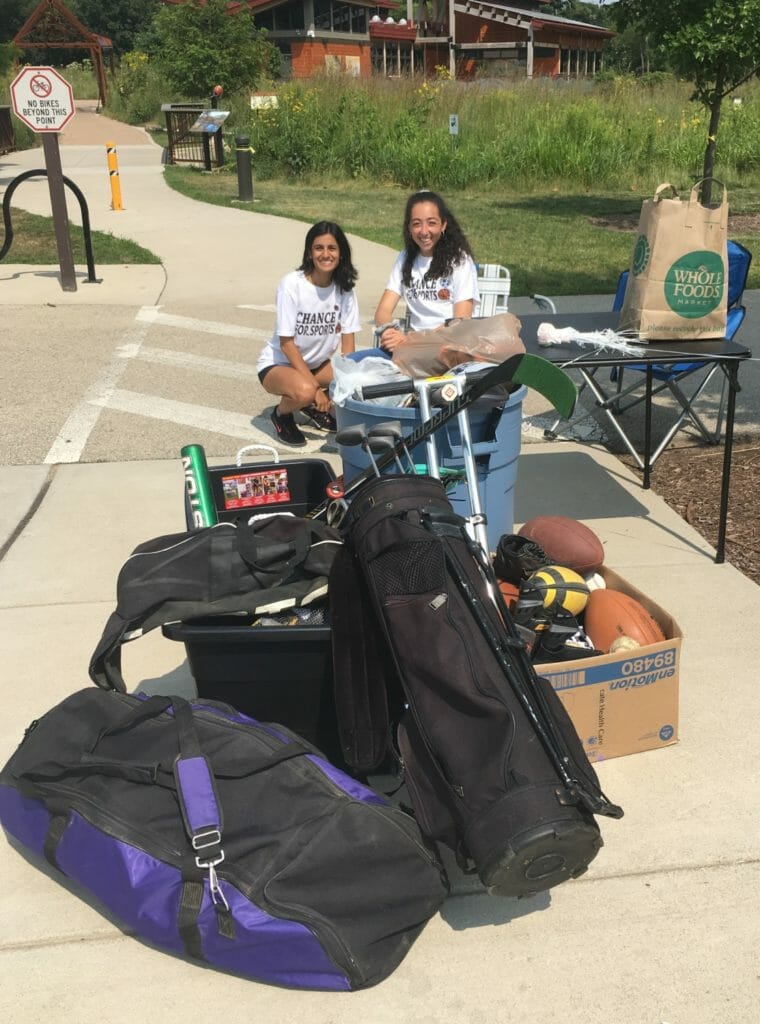
Our organization is teen-led, so we do the majority of donation solicitation in the summer when school is out. Our volunteers go door-to-door soliciting donations, receiving about 100 pieces of sports equipment from each neighborhood on each trip. We’ve received over 4,000 pieces of sports equipment since the inception of Chance for Sports, valued at approximately $35,000. We also have boxes at Play it Again Sports, where people can drop off their equipment.
Tell me about some of the sports equipment that’s been donated.
We see the more common equipment: soccer balls, basketballs, tennis rackets. Bikes and scooters. The most unusual piece of equipment we’ve received was equipment for water skiing. We still have that equipment, when we find someone who could use it.
You’ve traveled far and wide to share these donated items with kids who want to play sports.
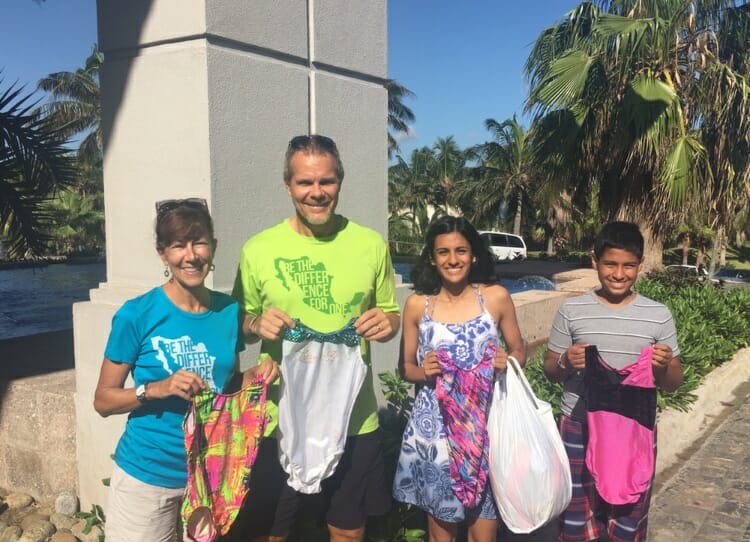
With the help of 60 volunteers, we’ve donated both nationally and internationally, including to children in Zambia, Haiti, Mexico, and India. I personally delivered leotards to aspiring gymnasts in Mexico and visited orphanages and children in need in India more recently, during the summer of 2018.
What’s been the most rewarding part of your work?
Last summer when I was in India donating to various schools and orphanages, I worked with SOS Children’s Villages in Faridabad, and we donated sports equipment including badminton rackets and birdies. This young girl came up to me and told me how excited she was about the equipment because she was a badminton player. She was younger than me, and I saw some of myself in her. It was awesome to see her dreams propelled forward because of our help.
You’re a busy teenager. You could spend your summer vacation many other ways. What does it feel like to know you’re helping others in your spare time?
It’s indescribable. I feel such a great wave of gratitude that I’m able to lead this effort and inspire my peers to engage in civic service. I’m proud, it’s not easy being a teenager, and on top of that managing high school, and on top of that, managing a charity.
What’s your personal mantra?
Yeah (laughs) it’s “anyone can make a change, all you need is a lot of courage and a lot of love.”
Why do you think it’s important for others to give back?
No matter what age you are, it’s very important to give back. In my neighborhood, we live privileged lives. We should all be acting on our privilege. You never know what others are going through, so if you can make a change in someone’s life, why wouldn’t you seize that chance.
What future events do you have coming up that you’re excited about?
What’s one thing you want people to take away from your story?
It doesn’t matter who you are, where you live, your gender or age. You can make a difference. And it doesn’t matter how little the difference you make is – anything you do can have a domino effect on others.
Do you want to make a difference in your community like Anuva Shandilya? Visit All For Good for local volunteer opportunities.
Post written by Marlena Militana.
Giving families a safety net in a Ugandan village
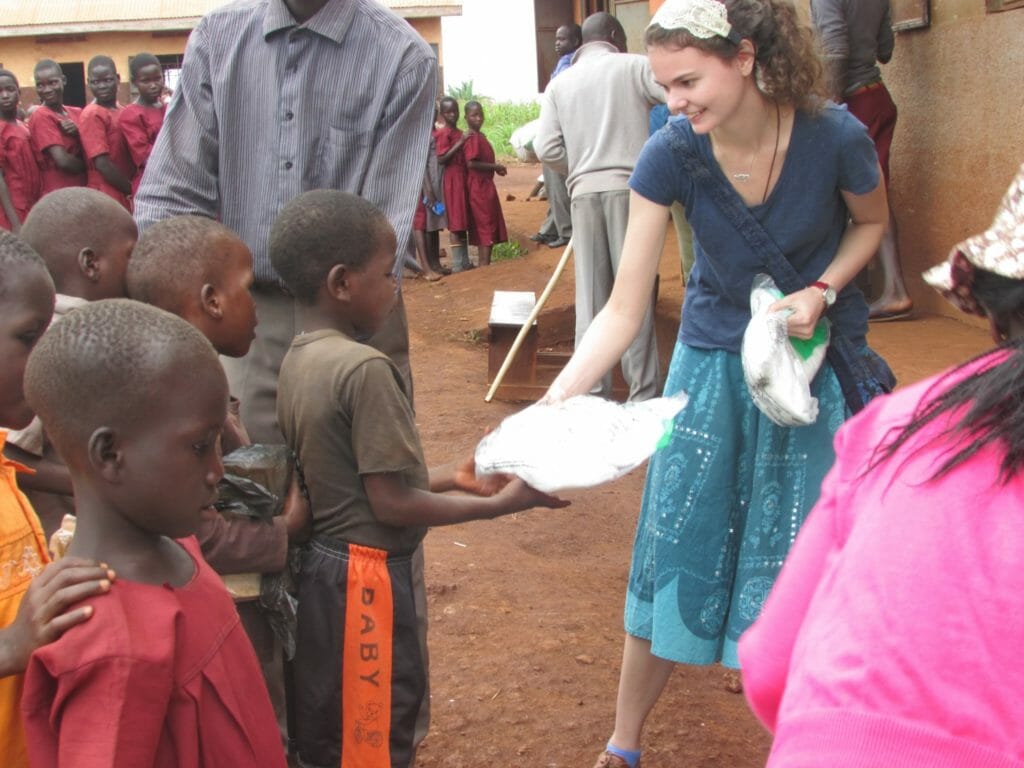
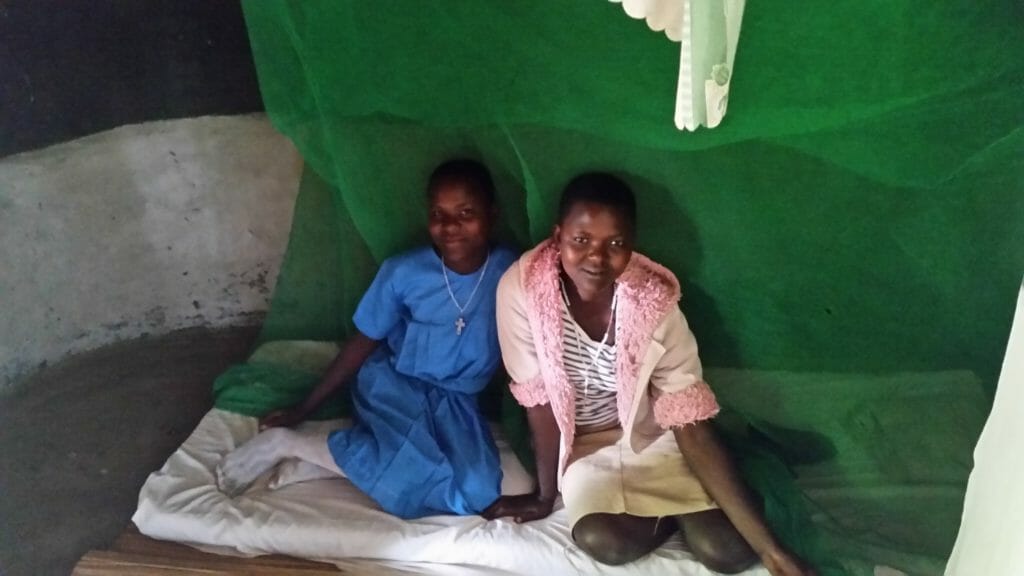
When she was 14, Mary Claire McGlynn had an aha moment. Michael Christopher Mugisa Mujule , a Ugandan educator, came to dinner at her home and spoke to her, her parents and her three sisters about the barriers Ugandan girls faced when pursuing an education. Mujule had started a rural girls school and was passionate about educating and empowering women. He described the many barriers these girls face simply trying to pursue their education, from family expectations, to safety issues and health, especially the chance that the girls would contract malaria multiple times during the school year. Shocked, heartbroken, and motivated, Mary Claire did some research and found that malaria nets cost $10 – an easy fix to prevent the disease. She and her sisters co-founded NETwork Against Malaria and have distributed 45,000 insecticide-treated nets to school-going Ugandan children. Her vision from the start was collaborative – all distributions are Ugandan led, done in the local language of that community and students plan parts of the distribution.
Mary Claire is committed to making a difference in her community and she is today’s Daily Point of Light Award honoree. Points of Light spoke with her about her commitment to service.
What inspires you to volunteer?
As one of four girls in our family, I never thought about not having the chance for an education. When I realized what Ugandan girls have to face to simply get through school, I wanted to do something. We co-founded NETwork Against Malaria with the initial goal of distributing 400 nets to Mujule’s school. We did that in six months and to date have distributed 45,000 insecticide-treated nets to school-going children.
Describe your volunteer role.
I am executive director for NETwork Against Malaria, which is a broad role. I help write grants, fundraise and determine our missions and goals. I coordinate volunteers, help establish and encourage chapters (groups of volunteers throughout the country). I design promotional materials and I designed the website. I coordinate with US and Ugandan volunteers and help plan distributions. I’m a medical student now and had the opportunity to travel to Uganda in 2016. I was able to see first-hand a distribution of 1500 nets and meet children who are still sleeping under the nets they’ve received from our organization.
What is the most rewarding part of your work?
These nets make an incredible difference in these family’s lives. They don’t need to spend money on malaria treatment for their children. They don’t have to stay home from work to take care of sick children. These families can now use their precious resources to pay school fees, with education playing a critical role in helping to break the cycle of poverty. This has made a big difference in the village.
What have you learned through your experiences as a volunteer?
I started this project when I was 14 and grew with it. NETwork, its mission and the volunteers have shaped my world view. From my experiences I know, hard work and diligence can impact other’s lives. I am certain that collaboration improves any project. Most importantly I learned that communities are the experts on themselves- their own problems, and how to approach solutions. I’m excited by the impact I’ve had and humbled by how much I’ve learned.
Are there any future partnerships, programs or events you are excited about?
We continue to grow our organization and now have chapters in 10 states and in 16 universities, including Rice, Cornell and Boston College.
Why do you think it is important for others to give back?
I think what makes life most meaningful is the connections we have with other people. The truth is when you take action you can positively impact others.
How did going to Uganda change you?
I was grateful to be welcomed to this community, shown into their homes welcomed into their schools, and allowed to contribute to their efforts to improve their own lives. I was humbled. Yes, our project has distributed many nets, encouraged participation in the school system and promoted children’s health and girls empowerment. But it didn’t feel like enough. There were so many needs. And those two feelings together made me feel determined. These people had brought me into their community, had involved me in their fight against poverty, their journey towards a better life. I would do whatever I could to walk with them help them succeed.
What do you want people to learn from your story?
Volunteering can take your life in a direction you had never imagined. My journey in Uganda solidified for me the desire to serve. I am determined to work hard to lessen disparities between peoples. Poor health inhibits one’s ability to experience aspects of joy. Poor health care robs a mother of her child. Poor resources mean a child may die while driving forty minutes to the emergency room, or a bowel obstruction surgery may not go as well when the electricity goes out and the procedure is completed under the glow of a flashlight. I am now in medical school and I’m determined improve the health and resources available for children in Uganda.
Do you want to make a difference in your community like Mary Claire? Visit All for Good for local volunteer opportunities.
Post Written by Beth D’Addono
Florida Man Helps Honor Hundreds of Veterans for Their Service
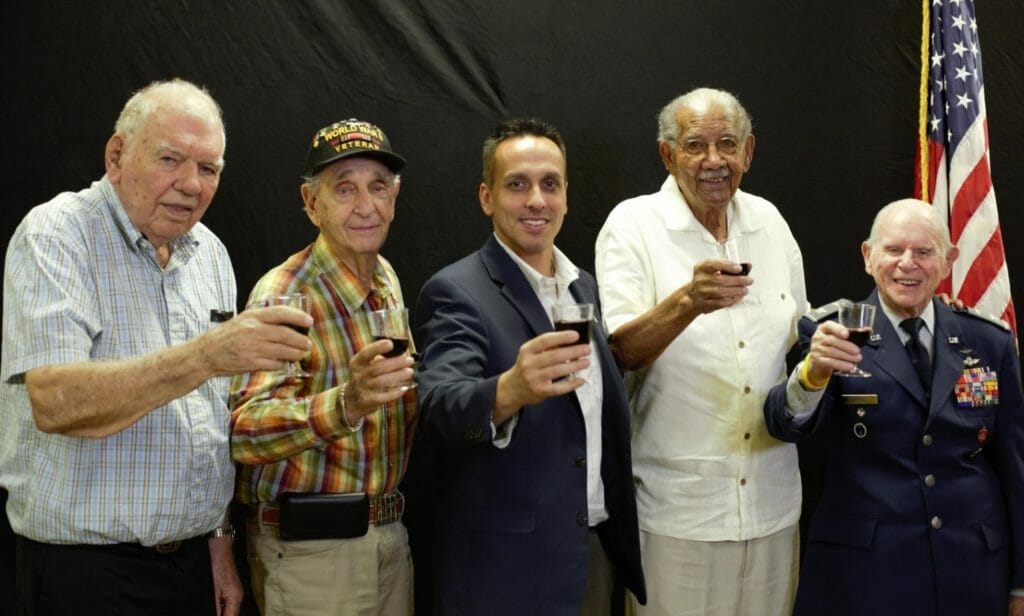
Paton holds up a toast with some of the veterans involved with Honor Flight South Florida, an organization that flies older veterans to visit memorials in Washington, D.C. /Courtesy Ryan Paton
A phone call from his brother in 2011 would have a lasting impact on Ryan Paton and the hundreds of veterans he has volunteered for since. After his brother urged him to look up Honor Flight, a nationwide organization that flies veterans to visit memorials in Washington, D.C., Paton immediately reached out to the Honor Flight hub that was closest to him to volunteer to go on a flight as a guardian for a veteran. The Fort Lauderdale resident said the experience was “unbelievable,” and ultimately led to him being asked to help start a hub in south Florida to be more accessible to other veterans in the state. Since then, Honor Flight South Florida has flown 1,300 veterans of World War II, Korea and Vietnam to D.C. since 2012, their 16th flight being just last month. World War II veteran Julian Syphax described the flight experience as “very fulfilling.”
“It made me really glad to be an American and glad I had a part in the memorial,” Syphax, who served in the Navy, said.
With Honor Flight South Florida, Paton also hosts two live events per year called Cocktails with Heroes to honor the veterans and fundraise for Honor Flight organizations across the country. Paton calls the veterans he works with some of his best friends, and is currently writing a book and filming a documentary that profiles the veterans as a way to honor them further.
“The fact that people acknowledge what we did in those days, 70 some odd years ago, it’s a very satisfying thing to know we’ve been appreciated,” World War II Army veteran Larry Weston said. Weston has gone on an Honor Flight to D.C. and attended Cocktails with Heroes, where he has been the guest of honor. “I walked all the way across France into Germany, across Germany into central Austria,” he added. “The day I went on the flight was worth every step of the way, that’s how wonderful it was.”
Paton is today’s Daily Point of Light Award Honoree, and we spoke with him about why he chooses to dedicate his time to Honor Flight South Florida.
How did you first get involved with Honor Flight South Florida?
My brother called me up in 2011 and he said you have to check out this organization, you would love it. You fly World War II vets to Washington. The closest one was about two hours away north of us. So I called [Southeast Florida Honor Flight and Honor Flight West Central Florida] and said ‘Hey, I’m interested and I can help you guys out fundraising, do whatever, and I would like to go on a flight.’ [Southeast Florida Honor Flight] called me back and said ‘Hey, drive up here, meet us.’ So I drove up there and I paid my $400 and I went as a guardian in 2011. As a guardian, anybody can go, you just pay your money and you get teamed up with a veteran. A couple weeks later, I did a fundraiser in Fort Lauderdale and I raised like $3,500 in two hours. I took that money and gave it to the Honor Flight Southeast Florida. And [the organization] said, ‘How would you like to help us out and start a hub in south Florida?’ I said ‘Absolutely, whatever I can do.’ I went on another flight with them as a staff member so they could teach me everything that I needed to know. Myself and three other guys got together, we started having meetings. When you’re trying to recruit veterans who have no clue what Honor Flight it, it’s hard to fill the hub because they have to trust you, their families have to trust you because you’re taking them to Washington, D.C. from Florida. So our first flight, we had 16 World War II veterans on the flight. Honor Flights charter full planes but you have to start somewhere. Our first ever flight was only 16 World War II veterans and we had 3,000 people show up at the airport to welcome them home which is the biggest crowd probably in any hub ever.
What is a typical trip like for the veterans?
The veterans get picked up by their guardians. The guardians have probably taken them to lunch or dinner so they have a good relationship already. The guardians pick them up about 4, 4:30 in the morning and get them to the airport by 5. The guardian takes them, checks in, then we have a beautiful picture board where they get a picture together. Then they go upstairs to the terminal, we have a beautiful breakfast for them with coffee and everything. Every step of the way, even at the check in, people are thanking them and doing stuff they normally don’t get. We charter their planes, we get on the microphone talk to them, give them a cool experience. Then when they get to DWI or Dulles or wherever we fly into, we have active duty military from Fort Meade at the gate waiting for them. We get a full police escort when we go to Washington because you can’t go to five different memorials in one day. Even a healthy person can’t do that with all the traffic. So we’re able to hit all these different memorials, Arlington National [Cemetery], Iwo Jima [Marine Corps War Memorial], the [National] World War II Memorial, Air Force Memorial. And then on the plane ride back we do what’s called mail call. Our staff has contacted the veterans’ families from all over the country and we’ve gotten letters from all the family and friends, which the veteran doesn’t know. So when they’re on the flight home we call them out by their last name like they’re in the military for mail call. We give them this beautiful package that local high school kids help make. They get this package and they’re reading these letters from family members that they don’t really get to see, might not have talked to in awhile. On my first flight, I had to read the letters to the guy because he had trouble seeing, and I had to put my sunglasses on because I got so emotional reading these letters and watching him cry. It’s just a cool gift to give, not only for the veteran but for the family, because the family gets to have an opportunity to tell their loved ones how they really feel about them. We get off the plane, then we have the homecoming. The homecoming is what I think is the most important thing. People think these guys came home from World War II and they all got this big parade. I have veterans who came home from World War II, fell asleep on the subway and got robbed. So some of them had a horrible homecoming when they got home, especially the Korean War veterans and the Vietnam veterans. So it’s such an incredible honor to be able to give these guys. [During the most recent flight], these guys were coming to 2,500 people waiting for them, waving the flags, crying, hugging them, and they all get so emotional from it. It’s a gift that money can’t buy to finally give this to them. This welcome home is one of my favorite parts of the whole Honor Flight. We had a DJ playing, we had two congressmen were there, police departments, we had a two star general who was waiting at the gate for them, 15 active duty soldiers were there. So it was a tremendous homecoming. They say it was the best day of their life.
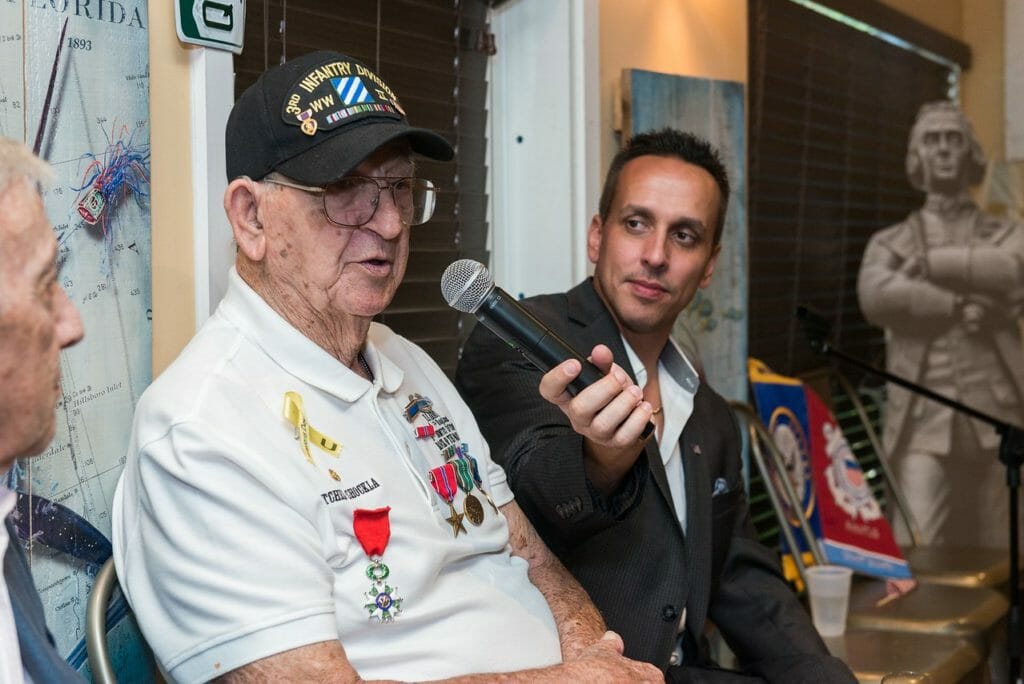
Paton interviews one of the veterans involved with Honor Flight South Florida, which seeks to honor veterans of World War II, Korea and Vietnam. /Courtesy Ryan Paton
Describe your volunteer role with Honor Flight South Florida.
We fly four times per year so that leaves 361 remaining days to raise funds, to recruit veterans, to recruit volunteers. But one of the things that I’m most proud of is we take these World War II veterans to all the local schools in Miami, in Broward County. We have them speak to the students. About five years ago we came up with an idea about bringing World War II veterans into the school and having the elementary school kids put on a performance for them. These elementary school kids know more than high school kids about World War II. The fact that we’re bringing live world history to these kids so even when they get into high school, most likely all the World War II veterans will be gone by then, but they’ll be able to talk about it. Talk about the people they met, real history. That’s something that has nothing to do with flying veterans to their memorial but the veterans will love it because they know they’re passing history off and obviously the teachers love it, the kids love it. I probably do six, seven events per year. I just want to get these voices out there because we have so many interesting veterans in south Florida that come from all over the country, and I want to get them out and kind of be their microphone and let them speak. They might be in their 90s but they’re still young at heart. They’re just great people. It’s not just about the four flights per year. We take these guys to the doctors, we take them to visit family. We take them to lunch, we take them to dinner. It’s a constant thing, Honor Flights.
Describe Cocktails with Heroes.
So I became really good friends with five or six World War II veterans since my first flight and one of them is a black American vet who served our country when our country wouldn’t serve him. I became good friends with him and we golfed together. We would drink beers and golf and then we would go back to his house and we would watch golf on TV and drink more. It was like he was 17 again and we were just friends. I look at these guys like they’re young. When I have these Cocktails with Heroes events, I don’t play World War II music, I play today’s music because I don’t want you to look at these people like they’re 95 years old, because they were kids when they went into World War II and fought this war. That’s how I feel when I’m with them and they feel the same way, they feel younger and enjoy hanging out with me. So I made it a thing, I like to drink a cocktail from the country that they liberated. The first event I did was a live event and I had seven World War II veterans that liberated seven different countries. I had a seven-course dinner with seven different cocktails from each country that they served in. I got Capital Grille to shut down the entire restaurant and give it to us. At the restaurant, I had all the veterans meet at a location and they got on a limo bus. The limo bus pulls up to Capital Grille and I had all 200 people outside waving flags, so I gave them another kind of homecoming. Then they got a red carpet entrance with the Miami Dolphins cheerleaders and took pictures. Then we all went to the dining room at the Capital Grille and I did a whole kind of presentation with the veterans. Each course was a different country and I had them come up and did a Q&A with them. Like I said, I know these guys very well and I know their stories. I don’t do anything about fighting and all the bad stuff about the war, what these guys saw and went through — I try to tell a different side of World War II. I’ve raised close to about 80,000 dollars from the live events. One hundred percent of every dollar goes directly to Honor Flight.
Why is it important for veterans to go on these trips?
We’re finally thanking them for what they did. To give the gift of saying thank you and we’re never going to forget what you did. There’s a quote from [Former President] Eisenhower that the world must know what happened and never forget. So we’re kind of keeping these voices alive and keeping the memory of the 407,000 Americans that died in World War II. It’s an important job that we do, not just giving them the thanks but also preserving what these people did for us.
Paton stands with a veteran honored by Honor Flight South Florida. Twice a year, Paton holds Cocktails with Heroes, a fundraising event to honor the veterans. /Courtesy Ryan Paton
What’s been the most rewarding part of your work?
I think the most rewarding part is the families. When they come up to me and I sit and talk to the families. When [the veterans are] staying alive, I know they’re staying alive for the stuff that we do. It gives them a reason to want to live and I wish I could do it with so many more veterans. But when the families come up to me and they cry and say thank you for what you did and I say, ‘well, the jokes on you, because they do so much for me.’ Everybody thanks me for hanging out with them — I hang out and drink expensive wine with world heroes. That’s like a dream come true for any American. It’s so much fun for me to do it.
What have you learned through your experiences as a volunteer?
I’ve learned so much from [the veterans]. As far as the war goes, I learned stuff you’ll never read in history books, stuff you just don’t know. I’ve always been a history buff, especially about World War II. I’m getting stories that are untold. What I’ve learned, that’s why I’m doing this, because this stuff is so interesting, the stuff I’m learning. Most people don’t really get into the good parts of World War II, the side stories. There’s so much history that I’ve learned but the message is from the veterans. If congress would listen to these veterans and use them when they make decisions, it would be unbelievable. They might be in their 90s and close to 100 years old, but they’re so smart, they’re so sharp. Whether they’re Republicans or Democrats, I ask them questions and I decide how I’m voting because of the input I get from them. They have a different view of life [because of] what they went through. They grew up in the Great Depression, they went to war when they were kids, they rebuilt America. These people are so smart and so humble. I learned how to behave, I learned how to be a better person. They’re phenomenal people and if I could just give a little bit of these people, show a little blueprint of what it takes to be an American and how lucky we are, what these guys went through — it’s fantastic.
What do you want people to learn from your story?
We have Veterans’ Day, we have Memorial Day, where we thank these people for what we have, because we would be a different country if it weren’t for what our veterans do. Every time you see person with a Korean War hat, a Vietnam hat, a World War II hat, Iraq, Afghanistan — walk up to them and acknowledge them and thank them for what they’ve done for serving. Always go out of your way. Don’t wait until Veterans’ Day and Memorial Day, you can do this every day. Every restaurant you go to, you’re going to see a Vietnam, Korea, World War II, Iraq, Afghanistan veteran. I didn’t walk up to veterans and say thank you for your service until I got involved with Honor Flight. I didn’t know if they didn’t want to be embarrassed or anything, so I never did that before, and now I’m teaching elementary school kids how to do it and they love doing it. So that’s what I want people to get from this article, go out of your way for them. There’s so many good organizations, not just Honor Flight. Honor Flight, we’re serving our nation’s oldest and most revered World War II and Korea and Vietnam veterans that are kind of at the end of their lives, but there’s still the younger generation. There are so many good organizations that are helping these guys. They have PTSD and the suicide rates are unbelievable, so there’s so much help we can give to them if we just stop for a second and give the effort.
Do you want to make a difference in your community like Ryan Paton? Visit All For Good for local volunteer opportunities.
Post written by Morganne Mallon.
A Miami Family’s Strength in Service Helps To Provide Food and Necessities to the Homeless
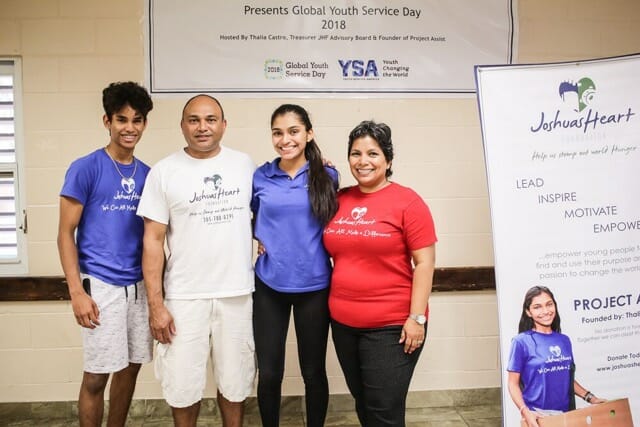
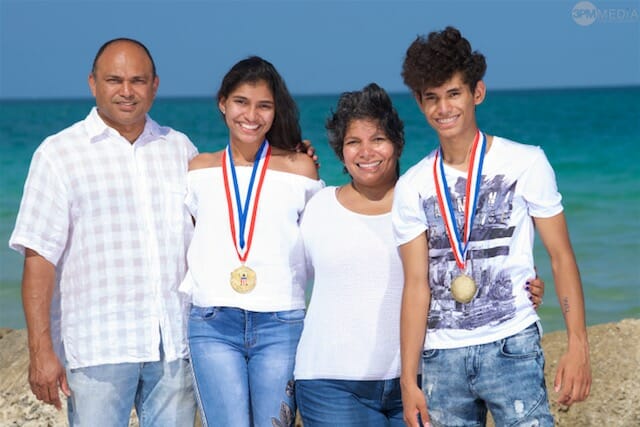
A Miami family of four says their story of service started small – quite literally – when siblings Thalia and Chaz Castro, then six and four-years-old respectively, helped their school classmate with his endeavor to give back to their community.
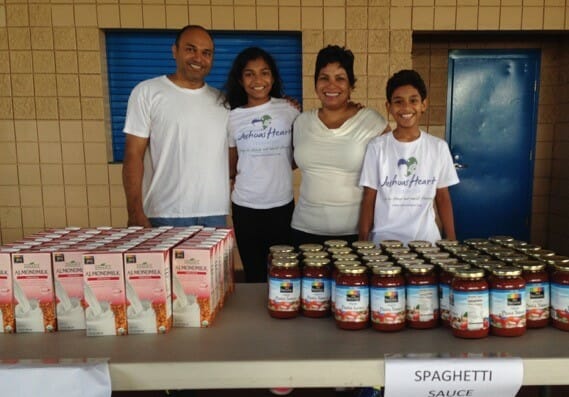
The sister and brother duo attended montessori school with Joshua Williams, who at four and a half, decided he wanted to fight global hunger and poverty, launching Joshua’s Heart Foundation (JHF) in 2005. In South Florida, where fifteen percent of the residents experience food insecurity, JHF is a direct line to those in need, helping to organize food distribution events and sourcing grocery items and non-perishable goods. Out of necessity, parents Angel and Fara Castro supported their young children in their service, driving and supervising them at events. Fast forward to today, those small children are now grown and thriving teenagers, and what started as an effort to instill compassion in their children through community service has now become a family’s mission to help those in need.
Sharing blessings they are thankful for with their greater community, the Castro family is generous with their time and efforts, and is today’s Daily Point of Light award honoree. Points of Light spoke to the Castro family to learn more about their work with JHF.
What inspires you to volunteer as a family?
Angel: It’s a sense of us being able to do something together, and work towards a common goal to achieve something. To be able to help others in need at the same time gave us an opportunity to really unite as a family and impact the lives of others.
How has volunteering impacted your family? Fara: As a parent, we’ve very fortunate, our family is fortunate. A lot of times in society, kids don’t seem to realize how fortunate they are. Volunteering was a way of getting our kids involved. Because of their service, our children are empathetic, they’ve been giving food and blankets to the homeless. They are aware of people in the community that need help.
Angel: When we started to get involved in volunteering with the kids, we were there as their parents, to transport them basically. Over the years, they’ve really blossomed and accepted the challenges involved in giving back. They now can go to events, organize them, conduct distributions because of all the years of experience they’ve gained.
Describe your volunteer role with Joshua’s Heart Foundation.
Thalia: My brother and I are on the junior advisory board for JHF, Chaz is the head of the welcoming committee, and I serve as the advisory board chair. JHF is a non-profit organization, so we meet once a month to fundraise, plan and scout for sponsors. We reach out to grocery stores and small businesses around the community soliciting perishable and non-perishable items for our distribution events and to stock our year-round food pantry. We’ve partnered with sponsors including First Care Home Services, Whole Foods, Publix, Feed the Children, T.J. Maxx, Unilever and SHSM. At the food distribution events, we engage one-on-one with the people we are providing groceries to. They share their stories as we pack their boxes with groceries, and we’re able to really connect with the individuals in a personal way.
You help hungry kids in creative ways. Explain.
Thalia: We have a Backpack Distribution program that forges a direct connection with hungry children. We send kids who qualify for free or reduced price school lunches home for the weekend and school holidays with backpacks full of nutritious, non-perishable food so that they can focus on their school work instead of hunger.
Describe a meaningful experience you’ve had volunteering with the community.
Chaz: Volunteering at the annual Thanksgiving distribution, where I got to know a family that had no money. All they had was each other. It meant a lot to me to meet them, because even though they had no food, they were really happy. They were talking to us about the meaning of Thanksgiving, and how you can help one another by being a part of the family.
You’re making a difference at a young age. What does that mean to you?
Chaz: It means a lot to me. Most kids my age aren’t doing a lot to help out. They notice people are in need, but they don’t really do anything. I’m thankful to be able to contribute and help out others, not just by saying it, but actually doing it, and by allowing a family to have food on the table like my family provides for me.
How has volunteering strengthened your family, and multiplied the impact you’re making on the community?
Thalia: Growing up, I know I was very fortunate to have had parents that were always able to provide for me. I realized through volunteering that there were a lot of kids living in low-income households, or kids that didn’t have basic necessities. But even though they faced these adversities, they remain united as families. They show up to the food distributions optimistic, and they’re happy to be receiving food. If I was in that situation, it would be very easy to have a negative outlook on the world – but that isn’t the case with these families. Helping as many families in our community as possible makes our family happy, and we have formed a stronger bond as a result of helping so many others.
Fara: We’ve tried to teach our children how fortunate they are. There will always be people who have more or less than you, but it’s not about who has more or who has less, it’s about what you can do to add value, and what you can do to give back. You hope that by instilling that understanding in them, they become successful themselves, and they will always want to contribute to the community.
What future events do you have coming up that you’re excited about?
This Saturday, November 17, 2018 is the JHF annual Thanksgiving distribution. It is held at the North Miami Avenue Church of God, and we help to provide groceries for up to 300 families. Check the JHF website for more information on how you can help: https://joshuasheart.org/make-a-donation/.
What will you have on your Thanksgiving table this year?
Thalia: Turkey! We’ll have a lot of mashed potatoes because I love mashed potatoes.
Fara: Always have chocolate. And a bottle of wine!
What’s one thing you want readers to learn about your family’s service?
Fara: Don’t underestimate the power of youth, the children. You’ve never too young to make a difference. Working together as a family, it strengthens you as a family. The feeling you get from volunteering is invaluable: the happiness, the contentment, the pride you feel when you see your children giving back.
Do you want to make a difference in your community like the Castro Family? Visit All For Good for local volunteer opportunities.