New York Teen Dedicates Time to Help Pediatric Cancer Patients and Their Families
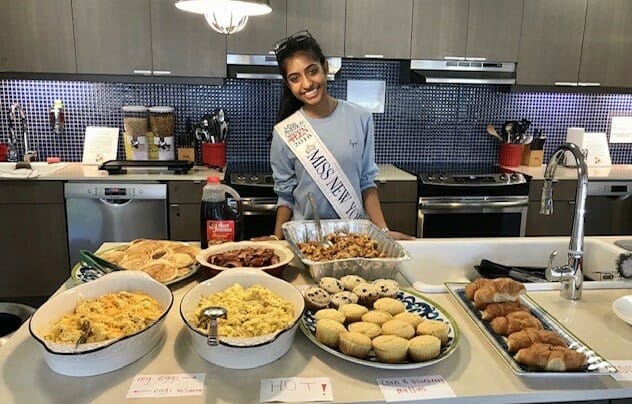
Cayla Kumar lost her great grandmother to cancer, so she understands how battling cancer can affect an entire family. Which is what inspired this 16-year-old junior at Archbishop Molloy High School to devote her free time to helping families facing cancer. Moved to help families with children dealing with cancer, in 2012, Cayla became the first youth ambassador to St. Jude’s Children’s Research Hospital. The following year, she started working with the Ronald McDonald House, where families stay while their child is in treatment. In the past five years, Cayla has volunteered more than 4,500 hours of service and helped raised more than $25,000 for cancer research and Children’s Miracle Network Hospitals. Wanting to raise public awareness of pediatric cancer, she started the gold ribbon project, a passion project that sells gold lapel ribbons for $3, with the money going to pediatric cancer research. Her compelling focus on pediatric cancer is more than passing – Cayla plans to become a pediatric oncologist to make a lasting difference.
Cayla is committed to making a difference in her community and she is today’s Daily Point of Light Award honoree. Points of Light spoke with her about her commitment to service.
What inspires you to volunteer?
My interest in helping families with children with cancer is directly related to my great grandmother. But it was my mom, who volunteers a lot herself, who inspired me to volunteer. I was being bullied at school and my self-esteem was very low. My mom suggested volunteering to focus on others in a very positive way. Making an impact on others really helped me feel good about myself. At the end of the day I love the feeling of making a difference.
Describe your volunteer role.
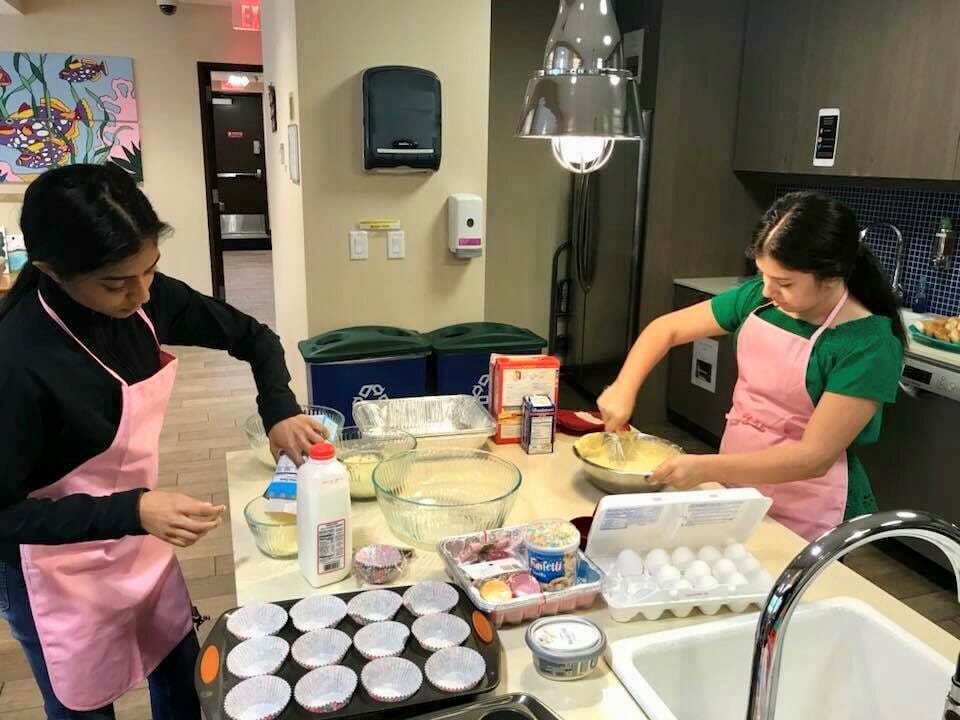
It depends on where I volunteer. On the weekends I volunteer at different fund raising walks for causes like breast cancer and pediatric cancer. Then I hand out t-shirts, restock water bottles, register people, whatever is needed. At the Ronald McDonald House in Hudson Valley, where I go twice a month, I make breakfast for the residents so they can eat before going to the hospital to be with their child.
What’s been the most rewarding part of your work?
It’s a powerful feeling to make an impact on somebody’s life. It encourages me. It’s just the best feeling in the world.
What have you learned through your experiences as a volunteer?
I’ve learned how to communicate and network with people. I was shy when I was younger, I’d stay to myself. Volunteering brought me out of my shell. It has also taught me that even as sick as some of these kids are, they find joy every day. They stay positive about getting their treatment and getting better. It puts my own problems in perspective.
Are there any future partnerships, programs, or events that you are excited about?
I’m working closely with the Pediatric Cancer Foundation, helping with their fundraisers, I’m working with them to expand the gold ribbon project to spread the word about pediatric cancer. Everyone knows what the pink ribbon means, but not that many people know that the gold ribbon is for pediatric cancer.
Why do you think it’s important for others to give back?
I feel like in this day and age, so many people take what they have for granted. Honestly, I used to myself. But seeing what people go through, what kids and their families go through, makes you want to do whatever you can. It can be as simple as helping at a walk. Just do something, you get more out of it than you give.
What do you want people to learn from your story?
As someone who has been bullied, I can say for sure that if you believe in yourself, there isn’t anything you can’t achieve. I promise that if you work hard, you can achieve your dreams.
Do you want to make a difference in your community like Cayla? Visit All for Good for local volunteer opportunities.
Healing Veterans Through Adventure, Former Green Beret Unites Heroes
Ronny Sweger joined the Army in 1993, and as a Special Forces engineer, was deployed countless times over his 14 years of service. Serving all over the world, from Africa, to Iraq, to Afghanistan, the former Green Beret said coming home after an honorable discharge and medical retirement in 2009 meant that he shut most of the world out for a time.
The 44-year-old Bixby, Oklahoma resident says it was only when he looked at his young sons that he realized he needed to be a leader and set an example for others who might be experiencing similar struggles. Teaching a sniper class for an old buddy he’d served with, Ronny’s volunteer service back stateside evolved into what is today The Foundation for Exceptional Warriors. Known as The FEW, Ronny co-founded the organization in 2012 to encourage healing and connections through outdoor adventures to underserved veterans who risked their lives for their fellow countrymen. As Ronny explains, while there is ample funding for organizations supporting injured veterans, there is a void when it comes to the heroes among us, some with dozens of deployments under their belts: Special Operations Forces, Ex-Prisoners of War, Purple Heart recipients and those recognized with awards for Valor, that don’t receive the support back at home that those wounded in combat often receive.
By encouraging healing through the power of the great outdoors with this overburdened and underserved group, Ronny has dedicated his life to veterans who risked their lives for our country, and is today’s Daily Point of Light award honoree. Points of Light spoke to Ronny to learn more about his work with The FEW.
Explain the mission of The FEW.
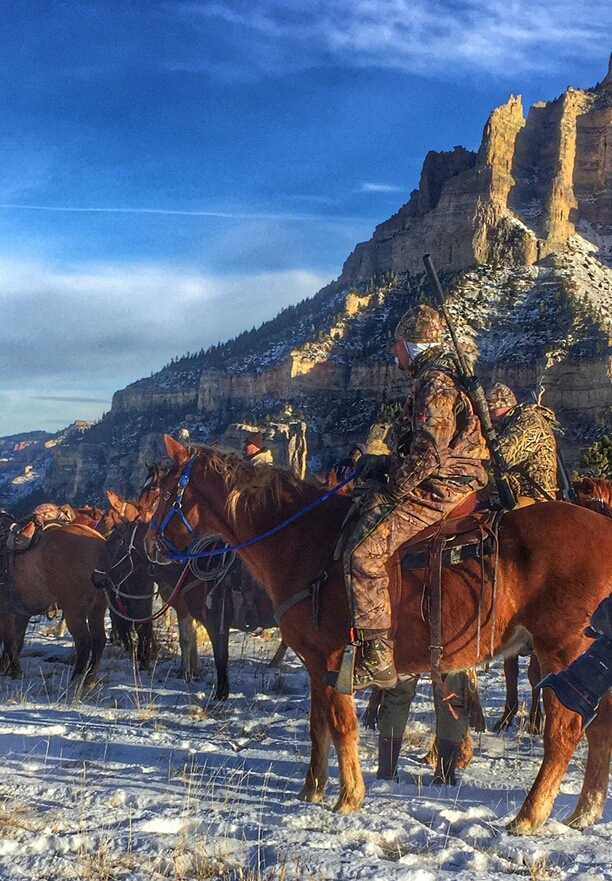
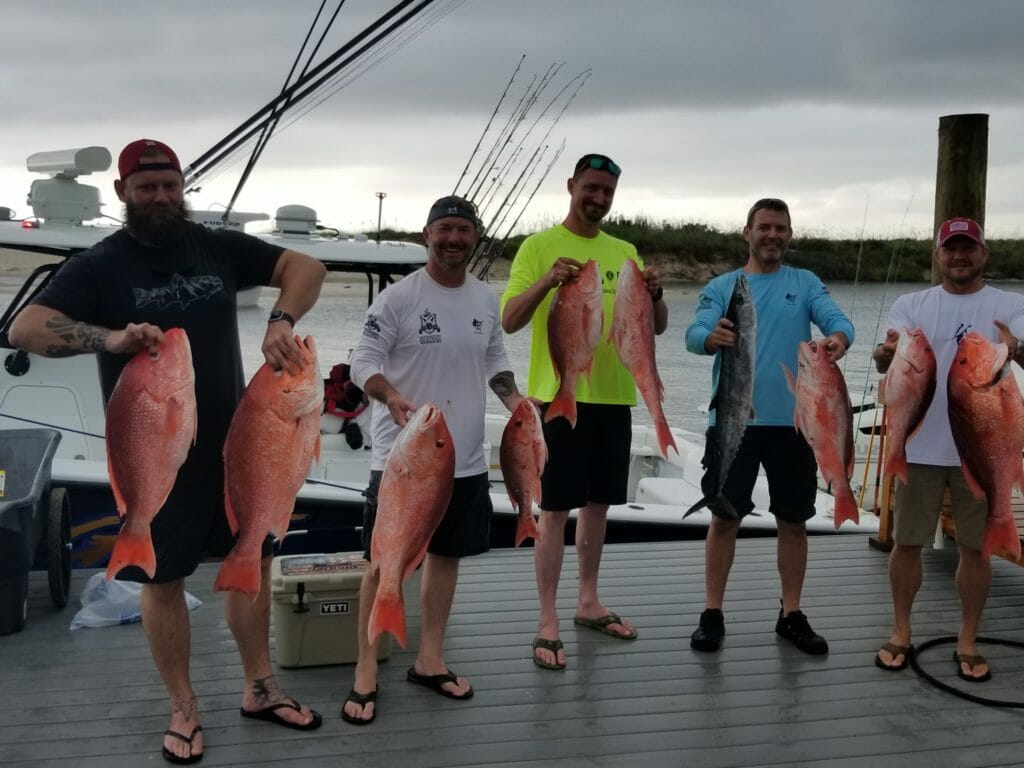
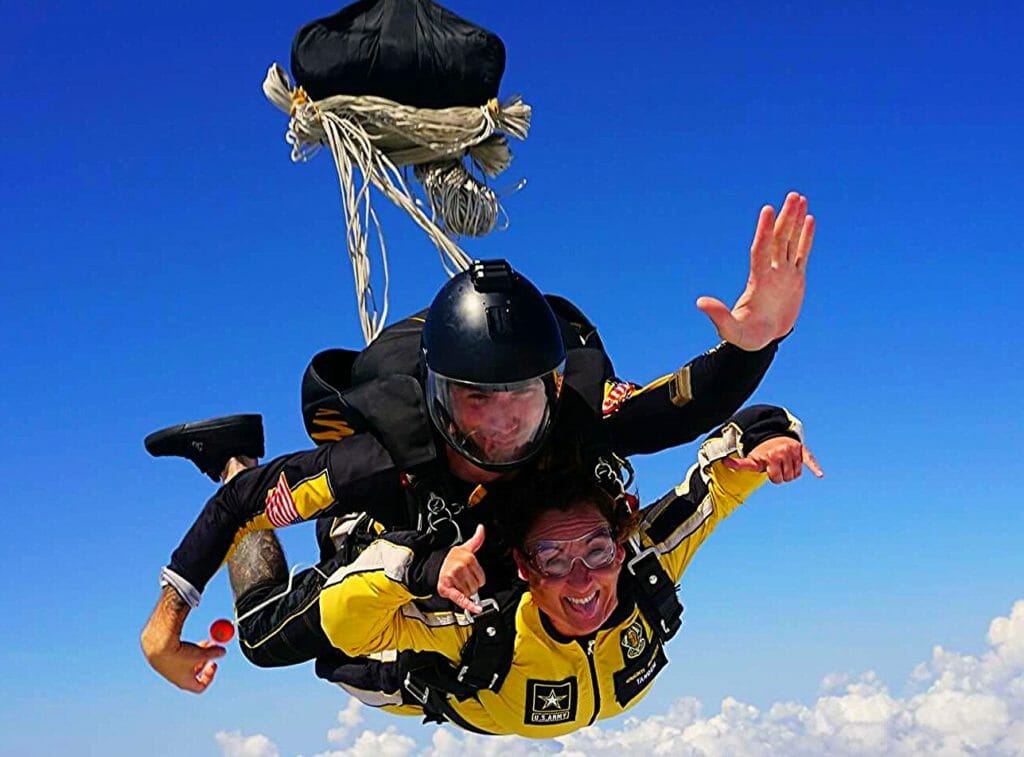
We use adventure to unite these exceptional veterans and inspire them. Adventure could mean power boating, parachuting, river rafting, hunting, fishing. We’re all over the world. We’ve got these Green Berets, Delta Force, Navy SEALs that disappear into the woodwork once home, and lose that comradery they experienced while serving. Using these adventures as a bait to draw these guys out, it’s a foot in the door to start the communication process. If I ask one of these guys to come talk to me, sit by a fire, and sing Kumbaya, they’ll all say no. But if I ask if they want to get out on an elk hunt with 5 other operations guys, they’re going to come. While they’re at that elk hunt, through conversation after you have that shared experience, you start talking, and that talk leads into conversations about maybe marital problems they’re experiencing, personal problems like PTSD, physical injuries. They start sharing information about how they’re dealing with their problems – whether it’s therapy, something from the VA, assistance of some kind.
What inspires you to volunteer?
I’ve always volunteered, even while serving. But when I got out of the Army, I disappeared, I had my own personal problems I had to sort out. When I was invited out to teach this sniper course, I got back exactly what I’m giving today to others. I got that brotherhood back.
Tell me about the kind of exceptional veteran you’re helping.
Take Rob O’Neill for example – he killed Osama Bin Laden. He’s a former Navy SEAL Team Six commander with the highest profile ever, but he was never wounded, so most of that support provided to combat-wounded veterans back home will never help him. The America’s Response Monument at Ground Zero commemorates Task Force Dagger – the initial Special Operations forces response in Afghanistan fighting the Taliban. That was a part of what I did. Our organization is led by exceptional people, warriors helping other warriors – and there’s nothing but positive that comes from that.
You’ve been called exceptional. What does that mean to you?
As one of my buddies put it, guys like us are kind of like magic: everybody knows we exist, but nobody knows who we are. Do I consider myself exceptional? I don’t. I consider myself a guy that was willing to go the extra mile. I learned Arabic, I went Special Forces so I could deploy first and fight if it ever happened. To me, it doesn’t seem exceptional, but to a civilian, there are books and movies about guys like me.
What’s your life motto?
You can’t go wrong by doing the right thing. And one more: history’s made by those who break the rules.
Why do you think it’s important for others to give back?
Everyone has to have a purpose, whether you call it a mission or a purpose. You have to be part of a bigger cause than yourself. When I was up on my hill after I’d just returned home, I had little boys, our triplets. I was looking at them and knew they were looking at me. I knew I had to set an example whether it was large-scale, or just with my family. That realization lead me to be a leader within the volunteerism world. Get involved at any level you can, and that level will grow – the more you give back, the more you’ll receive.
What’s been the most rewarding part of your work?
We did a simple duck hunt once, and there was a guy that hadn’t been out of his house much since he returned from service. He came out with us and was shooting the ducks just fine, and at the end we were cleaning the ducks. He had blood on his hands and feathers on his face, and all of a sudden, he just stops. As an observer, I see this, and think oh gosh, maybe the blood is setting him off, maybe this is going to be a big deal. He’s starting to tear up, so I asked him what was wrong. He asks ‘hey, can I take these ducks home?’ He explained he had two sons at home that he’d never hunted with, and wanted to show them how to clean ducks. All of a sudden, this guy realized he’d missed a large part of his life, and he needed to show his kids how to clean ducks. That’s rewarding to me.
What future events do you have coming up that you’re excited about?
We’re jumping into Normandy on the 75th anniversary of D-Day this upcoming June, and we’re taking 3 Medal of Honor recipients with us. Check out our website for more information about how you can help: http://www.exceptionalwarriors.org/.
What’s one thing you want people to take away from your story?
Never quit. I’ve had a lot of challenges in life, but I’ve always been rewarded greatly. Sometimes you have your head down, but as long as you’re moving your feet, God’s going to move you around the obstacles.
Do you want to make a difference in your community like Ronny Sweger? Visit All For Good for local volunteer opportunities.
Post written by Marlena Militana.
Washington Teen Uses the Power of Music to Make a Difference
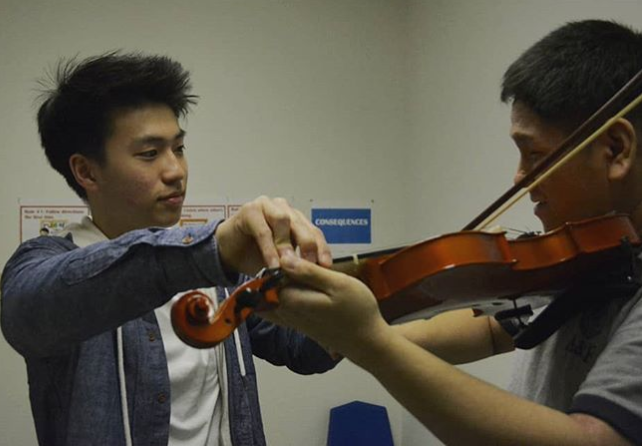
Music is a language Joseph Choe understands. The 17-year-old Newport High School senior has played the violin since he was very young and knows the power that music can wield. For the past three years at his school, he’s used that power to connect to a group of autistic young adults in his community, teaching them the violin, but imparting lessons far beyond a few musical notes. Joseph has patiently worked with these young people, connecting with them on levels their parents hadn’t dreamed possible. He’s also led group hikes through the area with the students, engaging their bodies in healthy physical exercise in a way that gets them to connect with the world around them. It’s slow and painstaking work, but for this teenager of few words, the life lessons go both ways.
Joseph is committed to making a difference in his community and is today’s Daily Point of Light Award honoree. Points of Light spoke with him about his commitment to service.
What inspires you to volunteer?
I’ve lived in four countries so far in my life, and I’ve always been taken care of. I’ve been lucky, getting all the privileges that come with a comfortable life and a good education. In my freshman year, I set a course for myself – I wanted to give back as a way to know what I want to do with my life. These students inspire me every day. Working with me has inspired me to work towards a career in medicine.
Describe your volunteer role.
I started learning the violin when I was in 7th grade and played in the school orchestra. As part of my volunteer work at school, I thought of the idea of communicating through music. We started with three of us meeting every Saturday with our students one on one – now there are 15 of us doing this. My student is in his early 20s and isn’t really verbal. But he wants to learn. I also lead our students on hikes, which they seem to really love.
What’s been the most rewarding part of your work?
I’ve been teaching my student for around three years. Progress is measured differently with an autistic person. It’s not about learning quickly or being able to practice on his own. My student has trouble memorizing and staying focused. He has a short attention span. Music therapy isn’t so much about him learning to play the violin as about making a connection that wasn’t there before. Volunteering has taught me patience and perseverance.
What have you learned through your experiences as a volunteer?
I’ve learned a lot about autism. Before I thought that a person with autism couldn’t communicate or form social interaction. I thought that all autistic people were some kind of savant, gifted in one particular way. But each person is different. I’ve learned to have empathy for my student and to see his progress in many small ways.
Are there any future partnerships, programs, or events that you are excited about?
We are having a fundraiser at school next month to help fund this music therapy program and get more equipment. It’s like a recital with our students playing the pieces they’ve been learning the whole year for the audience. We are now up to 15 students – the pride they have in their accomplishments, how it makes their families feel, is so great.
Why do you think it’s important for others to give back?
You have to pay it forward. I personally feel like the whole giving back thing might sound cliché, but once you do it, it really changes your life view.
What do you want people to learn from your story?
Please don’t judge an autistic student by what you think autism is. Find a way to be patient and see each person as an individual. We all deserve that.
Do you want to make a difference in your community like Sami Meyers? Visit All For Good for local volunteer opportunities.
Post written by Beth D’Addono
With Team Red, White and Blue, ‘Eagle’ Helps Build Community for Veterans Returning to Civilian Life
Meet Daily Point of Light Award honoree Marisa Saucedo. Read her story and nominate an outstanding volunteer or family as a Daily Point of Light.
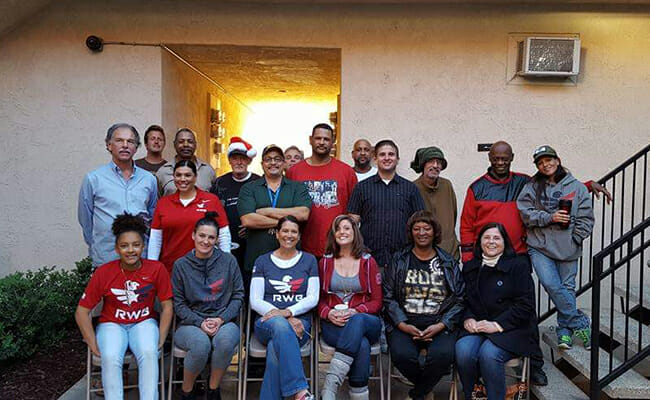
Having served as an Army Reservist for more than 20 years, Marisa Saucedo understands what many veterans need from their community when returning from service. When soldiers leave the military, they can face an intimidating road to reintegration and the transition back to civilian life is often more difficult than most people know. The key to making it to the end of this road, Marisa says, is having authentic community.
“One word that comes to mind is ‘acceptance.’ Accepting that when a solider or service member deploys, they are going to come back different. Not good different or bad different, just different,” said Marisa. When family members and loved ones start to understand this reality, veterans are able to feel encouraged on their path towards full reintegration. However, that support is not limited to just family. That’s why Marisa, and many others like her, are dedicated to turning the challenges of veteran reintegration into opportunities to partner with them and support them as they transition. Through her involvement with Team Red, White and Blue, she is joining together with and for veterans to address their critical needs and build stronger communities.
.
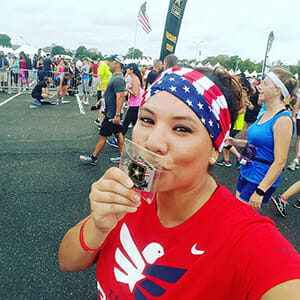
In addition to athletic events, Team RWB hosts Christmas parties for transitional homes, places flags out in the community on Memorial Day and Veterans Day, participates in Veterans Day parades, Turkey Trots and local weekly events. As the current athletic director at the Inland Empire chapter, Marisa helps foster support, encouragement and empowerment within her veteran community by creating activities eagles can participate in.
“I didn’t feel as alone as I transitioned from being around soldiers all the time to a civilian community. It makes you feel at home,” Marisa said of her experience with Team RWB. “I have found a big passion for working with veterans, and Team Red, White and Blue even allows civilians who have a heart for veterans to come alongside us at all of the events. I’ve got a purpose, and we’re filling the gap between veterans and the civilian community.”
When veterans are connected to their communities, they begin to realize that they are not alone. Team Red, White and Blue and its network of eagles – fellow veterans – has helped Marisa and thousands of others find instant connections with those who understand where they’ve been and what they’ve gone through. The nonprofit enriches the lives of veterans by connecting them to their community through physical and social activity. Marisa first came across Team RWB in 2014, but believed it was just a running club for veterans. When she was home from deployment the following year, she stumbled upon Team Red White and Blue’s A Flag for Every Hero event for Veterans Day. She realized that the organization was much more than a running club, it was a source of true belonging
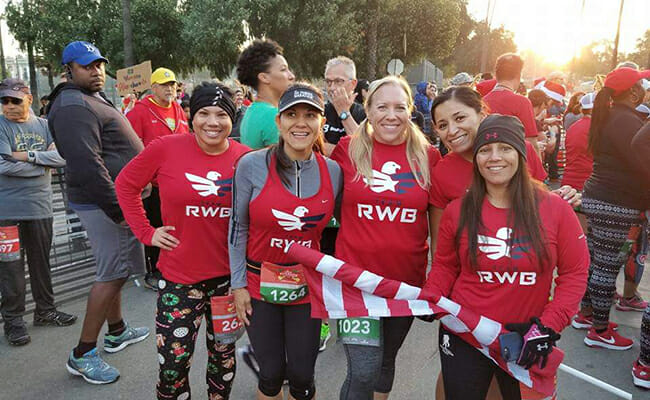
Marisa’s Inland Empire chapter of Team RWB is always active in finding new and exciting activities for returning veterans. On Nov. 10, they participated in the annual Old Glory Relay, a 4,300-mile journey taking the historical flag across America, since the relay crossed their home turf for the first time in five years. They had the flag on Day 61, then eagles and volunteers took the flag 56 miles from Fontana to Temecula, California, where the San Diego chapter met them to take Old Glory to the finish line on Veterans Day.
One of Marisa’s favorite memories with Team RWB was the organization’s Christmas event at a transitional home for veterans dealing with sustenance abuse. Eagles brought the holiday party with them; there were Christmas trees, ornaments, decorations, gifts, and quality time spent together as a community. When you wear an eagle’s shirt, you are a part of something bigger than yourself. “We came as eagles, we listened to their stories. That’s what it’s all about: reminding everyone that these veterans are not forgotten,” said Marisa.
Want to make a difference in your community? Visit www.allforgood.org to find local opportunities to get involved.
Third-Generation Volunteer Firefighter Safeguarding Community Through Service
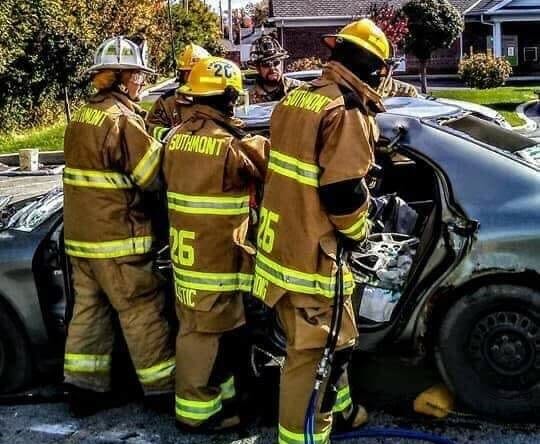
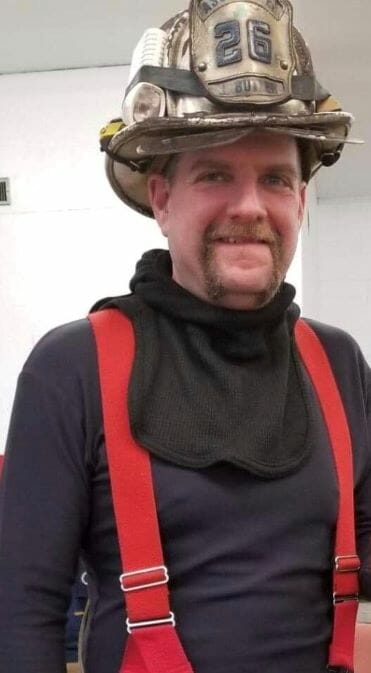
John Butler is a third-generation volunteer firefighter who trains new members, recruits, fundraises and helps to lead his department. In response to those who call him a hero – the Johnstown, Pennsylvania resident says his service is just what he’s trained for, nothing more.
Volunteering alongside his dad, his grandfather a former volunteer and his brothers also a part of the family legacy of service, the 43-year-old runs the family business during the day – a garage and body shop, and in his spare time, serves as a volunteer firefighter for the Southmont Borough Volunteer Fire Department.
Giving back when the community needs it most, John is on-call 24/7, prepared to confront danger and assist his neighbors, and is today’s Daily Point of Light award honoree. Points of Light spoke to John to learn more about his work with the Southmont Borough Volunteer Fire Department.
What inspires you to volunteer?
It’s just something I enjoy – I like to help people in need. It makes me feel good.
Describe your volunteer role with fire department.
You stop what you’re doing and you just go when there’s a call for help. Usually if I’m at work, my dad will go on the call. I’m not doing this for anybody but me. I enjoy volunteering, but it has its ups and downs. I’ve seen some terrible stuff on calls, those are the ones that are always in the back of your head, but then there are the good moments. I rescued people out of a home that was on fire – that felt great. It’s something I’ll never forget.
Wow, you rescued people out of a burning home. Tell me more about that.
It was a full first-alarm fire. The two people were in the home, I’m close friends with these people, we’d serviced their cars – but I’d never been in their home before. I just happened to be in the area, and realized the home was on fire. The front door happened to be open because the couple was waiting for their daughter to come home. I ran in and looked around, but didn’t find them. I ran around the back and just started opening doors. They were sound asleep in their bed, the fire had stopped just shy of their bedroom door. They would have slept right through that fire. They told me the next day they sleep with a gun, and I was lucky I didn’t get shot saving them (laughs).
That’s pretty serious. What about some of your lighter calls? Have you ever rescued a cat from a tree?
I’ve had some cats stuck down some sewer grates. Once, at three o’clock in the morning, we got a call to go get a bat out of someone’s home. I said, ‘Are you kidding me? We’re turning back to the bat cave!’
Why is it important to volunteer?
It’s so hard to get people to volunteer. You have to go through 200 hours of training to join our volunteer fire department, but there are other ways to give back. You can do the books, you don’t have to be the one running into the fire.
Why do you think it’s important for others to give back?
I think everybody should at least make an effort to try to do something for their community. It makes you feel better, and it makes the community feel better.
What future events do you have coming up that you’re excited about?
Check our Facebook page for more information about our events, and how you can help: https://www.facebook.com/Southmont-Volunteer-Fire-Company-881268238634293/.
Do you want to make a difference in your community like John Butler? Visit All For Good for local volunteer opportunities.
Post written by Marlena Militana.
Veteran Spends Retirement Bringing Joy to Kids in Need
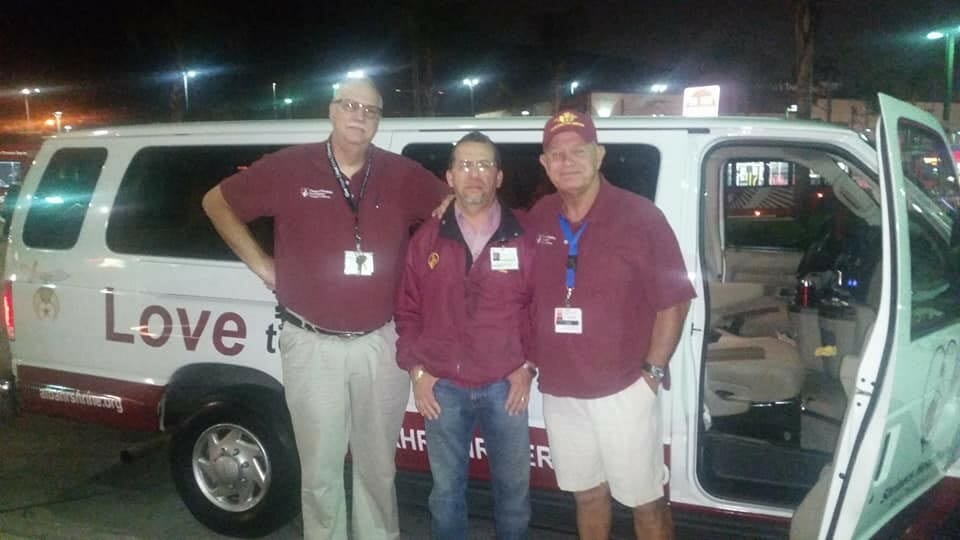
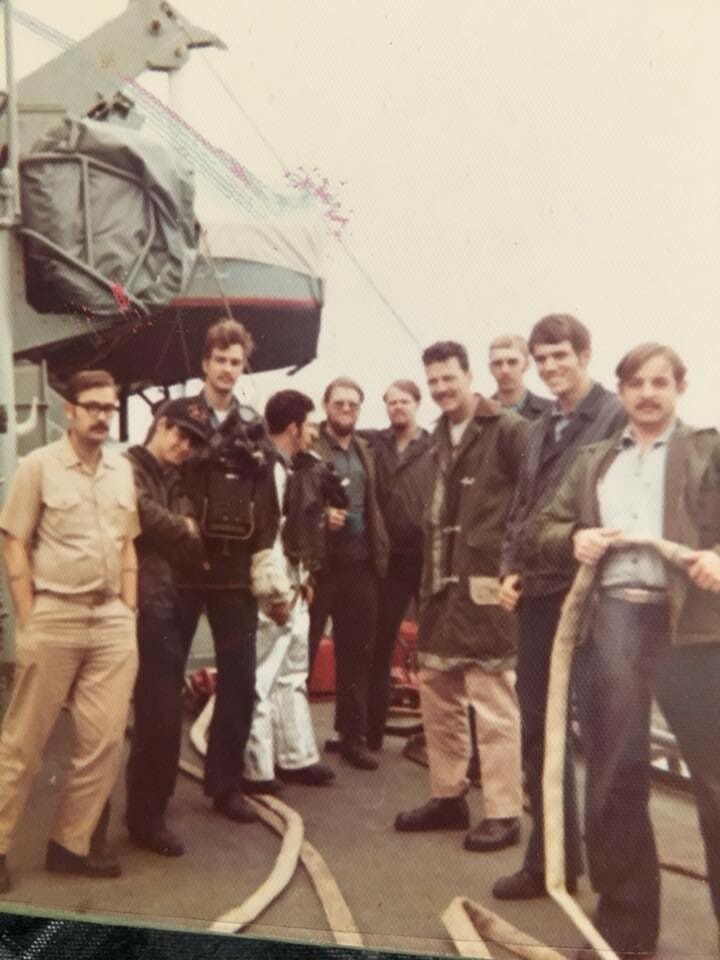
William Romer spent a long, impressive career in the Navy, serving in the Vietnam War and eventually achieving the rank of Master Chief. But after 20 years of service, he found himself retired with not a lot to do. Then Al Bahr Shrine — a San Diego-based nonprofit that serves as an offshoot of Freemasonry — asked for volunteers to drive kids in need to the Shrine’s medical center. William, a Shriner since 2003 who was already volunteering as a clown at the organization’s events for kids, found himself signing up.
Since July 2015, William spends once a week driving about three hours to the Tijuana border to pick up children and their families at 5am in order to make it to their medical appointments at Shriners for Children Medical Center in Pasadena. He and the other drivers spend the day waiting for the children to finish their treatments, and then turn around and drive them back home. William describes what he does as “a labor of love.” He is today’s Daily Point of Light Award Honoree, and we spoke with him about why he chooses to dedicate his time to the kids of Shriners for Children Medical Center.
Describe your volunteer role with Shriners for Children Medical Center.
I belong to Al Bahr Shrine. It’s one of the many Shrines throughout the country. It’s an offshoot of Freemasonry and the charity that they chose. In 1922, they developed the hospital for children with polio. From that original hospital in 1922, we have now 22 hospitals and five burn centers located in Canada, Mexico and the United States. They’ve branched out from polio and crippling diseases, to cleft palates and minor surgeries. Our charity is to make sure the kids that are in the program get delivered to the hospital or to the medical center for their appointments, and get them back to their places of abode. What our Shrine does here in San Diego is take patients from Tijuana, they come across the border into San Ysdiro, we load them to our vans and we take them to Pasadena to the medical center. Once we get there, they do their appointments and we just sit back and wait until they’re done, and we bring them back to the border until they have their next appointment. I’m a volunteer driver for that so I make a trip to Pasadena about once a week. I’ve been driving since July 2015 on a regular basis, taking kids to the hospital and medical center and back.
What inspired you to volunteer?
The Shrine asked for volunteer drivers and since I retired and didn’t have a lot to do, I went ahead and signed up to do it. It’s basically a labor of love. We’re not getting any pay for it, the Shrine takes care of the vehicles, the Shrine pays for the gas, all we do is make sure the parents and their children get to their appointments on time and back home safely.
If it weren’t for the drivers, would the patients have any other option to get to the center?
They would but that would be out of pocket for them. The hospital is irregardless of the parents’ ability to pay for the appointments —basically the hospital picks up the cost of driving them there and back, and their meals and stuff, so the parents don’t have to. Most of the patients we are seeing are destitute or can’t afford the medical care that they’re asking for because of the condition that the children are in. It’s sort of like a last effort to have any medical service done on the kid because they can’t afford it. Our Shrine doctors do such a great job with them, it’s just fantastic. It makes your heart break to see what some of these kids go through.
Describe to me what you do when you volunteer as a clown.
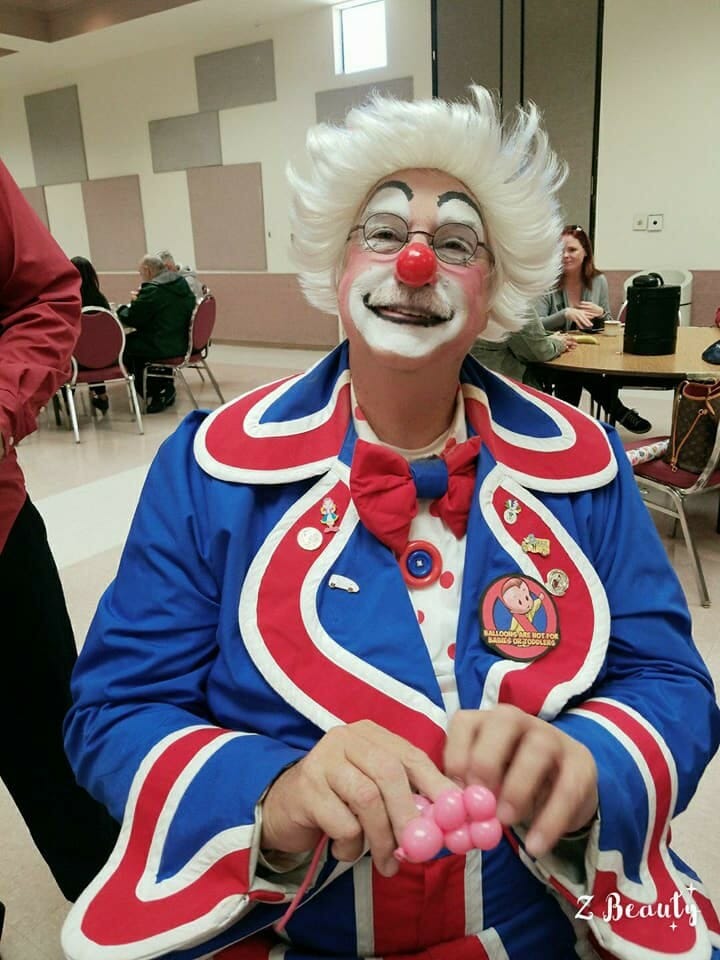
Basically, I get in makeup and costume, go to the event we’re doing and make kids laugh. I do balloon animals and do little bits of magic. Basically just to bring a smile to their face and make them feel better about themselves during the day with what they’re doing. Every year at Easter, the March of Dimes … has a luncheon for their kids that are in the program, and we’ve been doing it for 25 years down there, being with the kids and just entertaining the kids while the kids are having lunch. Just volunteering our time and making kids happy.
What do you want people to know about the children you are working with?
Even though the kids are afflicted with whatever malady they have, they’re still our future. They’ll be taking over for our politicians that we have now, and basically lead the country. When I’m dead and gone, they’re going to be taking how we treated them, how we showed them how we care. It makes a big impact on their lives. It shows them that there are people who care and hopefully it will press on them that yeah, there’s people out there who are like that. Not everybody’s out for themselves.
What’s been the most rewarding part of your work?
Seeing the kids smile. The families appreciate what we do and we understand that, but we aren’t doing it for any gain or rewards or anything like that. It’s just so heartwarming to see the kids and know they really appreciate what we do.
Why do you think it’s important for others to give back?
I know it makes me feel good. I was always taught with the principle, if you recognize a problem and you don’t do anything about the problem, then you in turn become a part of that problem. That’s the outlook that I was raised by, and we have a problem in our society with children in need. If I don’t do something about it, then I become a part of that problem. So by my volunteering driving, it’s not doing a lot, but its doing something, and that’s more than I can say about a lot of people. If everybody would just do a little bit, and be a little bit better, I think the world would be a better place to live.
What do you want people to learn from your story?
I think if everybody gave a little bit of themselves to help others, the world would be a better place to live. Everybody is tied up in their own little agendas and programs, but if we set aside a little bit of time everyday for others [and] pay it forward — where you have something done to you and you give back to somebody else to make it better, and then they pay it forward to somebody else — if enough people do that, before long, everyone’s paying forward and not expecting anything out of it.
Do you want to make a difference in your community like William Romer? Visit All For Good for local volunteer opportunities.
Post written by Morganne Mallon.
Helping Veterans Find Their Way
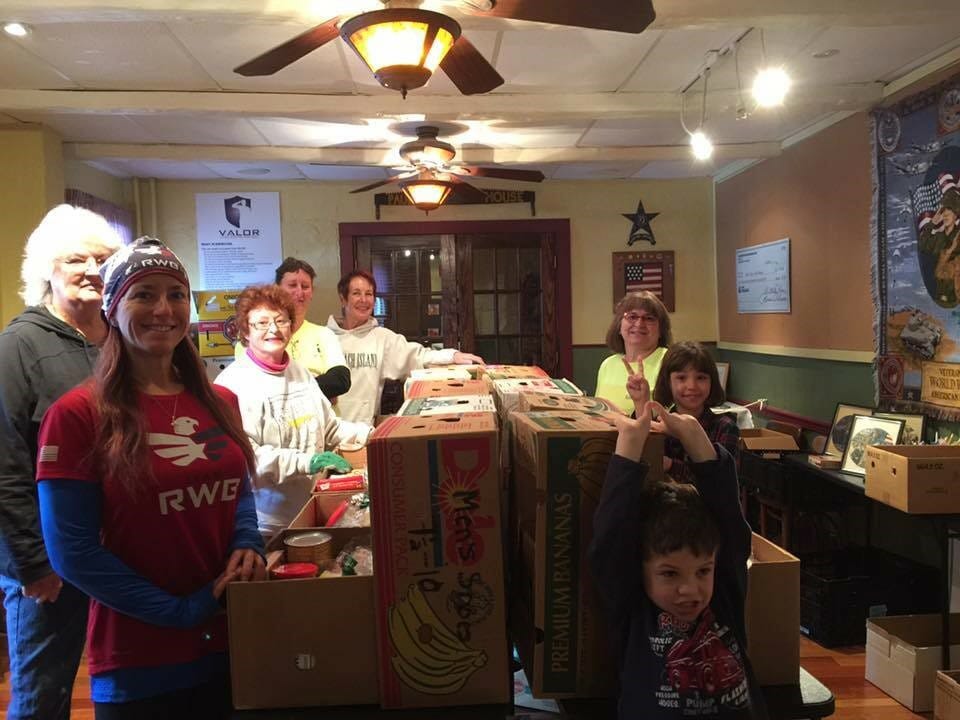
On any given night in America, the U.S. Department of Housing and Urban Development (HUD) estimates that 40,056 veterans are homeless. That sad state of affairs has become part of the landscape in most large American cities, where the homeless population is all too obvious. In rural areas, the issue is harder to pinpoint. Sandy Spotts lives in rural eastern Pennsylvania, and if you’d asked her about the homeless problem in her area five years ago, she would have said ‘what problem?’ But after a seven-year stint caring for her father-in-law ended when he passed away, Sandy found herself with time on her hands. She heard about Paul’s House, a nearby home for veterans that needed volunteers and answered the call. That was four years ago and her involvement has grown from two days a week to four, sometimes five. Paul’s House, named for Major Paul Syverson, a Special Forces Officer who was killed in Iraq in 2004, is a residence for up to 13 homeless veterans, a place where they eat three healthy meals a day and can stay short term, get assistance with job training and other services and get help to find affordable housing. Helping homeless veterans has become Sandy’s passion.
Sandy is committed to making a difference in her community and she is today’s Daily Point of Light Award honoree. Points of Light spoke with her about her commitment to service.
What inspires you to volunteer?
I volunteer because it is my way of giving back and saying thank you to veterans for the sacrifices they made for me and all Americans. I really enjoy getting to know our residents, although some of the stories just break your heart. We have men and women of all ages, and so often they can’t believe they are dealing with this issue at this point in their lives. Let’s face it nobody aspires to be homeless.
Describe your volunteer role.
I coordinate our holiday meal program, which distributes baskets of donated ingredients for a holiday meal to a list of 135 veterans and their families in the region. I’m also in charge of the food pantry at VALOR, (Veterans Assisted Living Out Reach), the organization that runs Paul’s House. I help with administration and work with the veterans one on one. I go to weekend events to let people know about VALOR and what our mission is. We also set up a pop up “store” a few times a month that offers clothing, hygiene products and food to those in need. We are very grassroots.
What’s been the most rewarding part of your work?
There are so many rewards! I have met some amazing people that I now call my friends. I started as a volunteer and now I’m considered family, and that means so much to me. The hugs and smiles I get from veterans, the phone calls where someone says they didn’t know what they were going to do for Christmas, or Thanksgiving until our basket showed up, that just makes my day.
What have you learned through your experiences as a volunteer?
I learned that we do have homeless people in our area. It’s so rural, you don’t really see them, so I was shocked. It bothers me. These are veterans, they shouldn’t be living on the street. I have also learned to be more patient. Each of our veterans are dealing with something different, and I can’t know their world. Sometimes to me their fears or concerns might seem unwarranted at first, but I’ve learned to really listen, to put myself in that person’s shoes. We are here to help them – but so often they help us.
Are there any future partnerships, programs, or events that you are excited about?
The holiday meal program is going to be in full swing in a week or so and it’s a very busy time until Christmas. Busy and exciting, I call it my organized chaos. But it’s a lot of fun. We work with local farmers, Girl Scout troops and other groups to get all the food donated that we need.
Why do you think it’s important for others to give back?
We all have something to be thankful for and we learn and gain so much when giving back to others less fortunate than us. My volunteer work has given me a different perspective on homeless people. Being homeless doesn’t define them. They deserve dignity and respect and we try to give them that.
What do you want people to learn from your story?
God gave each of us a gift and we need to use that gift to the best of our ability. I believe my gift is taking care of people. I wasn’t born with a lot of money, I didn’t go to college and I’m certainly not a beauty. But I can help people and that is what I’m going to do.
Do you want to make a difference in your community like Sandy? Visit All for Good for local volunteer opportunities.
In Suburban New York, Soul Ryeders Helps Cancer Patients Directly; Finds That Many Become Volunteers Themselves
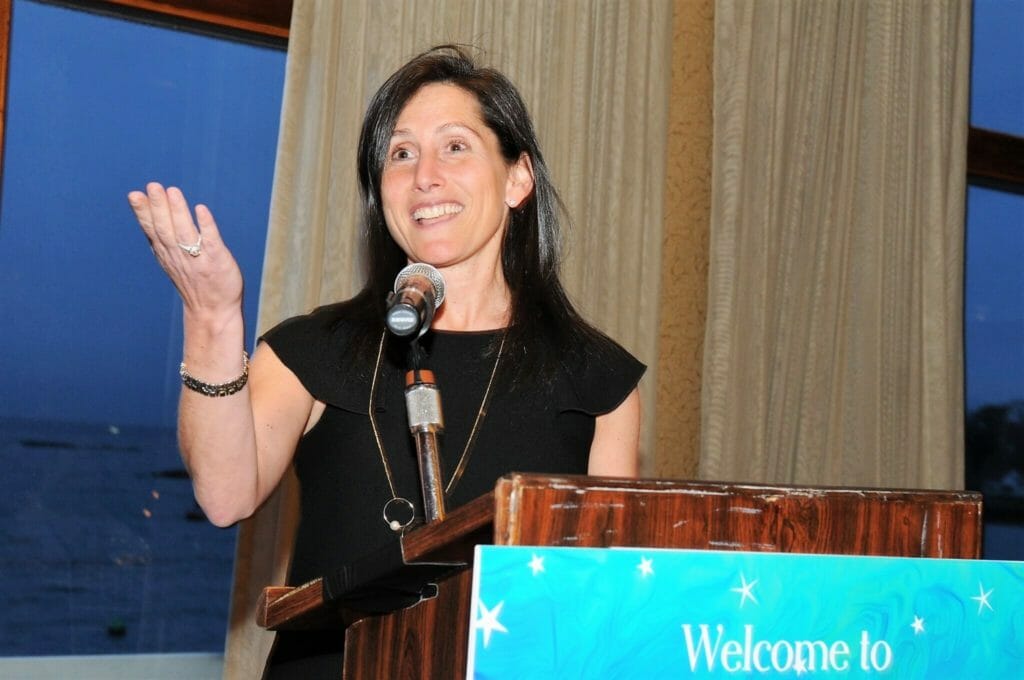
Like many people, Sandy Samberg knew a good friend with cancer. “Like anyone else, you want to do something tangible to help,” says Sandy, a former pediatric nurse practitioner. “I registered to do the Avon Walk for Breast Cancer, but I had a heart condition and my cardiologist said I couldn’t. But I went to the finish line with my friend and stayed for the closing ceremony. I remember tears rolling down my cheeks and I made a promise to myself that someday I would do this walk. That was in 2000. Fast forward to 2006 — my friend passed away in February, and another friend was diagnosed in March. By this time, I’d had open heart surgery and was able to participate in charitable walks.”
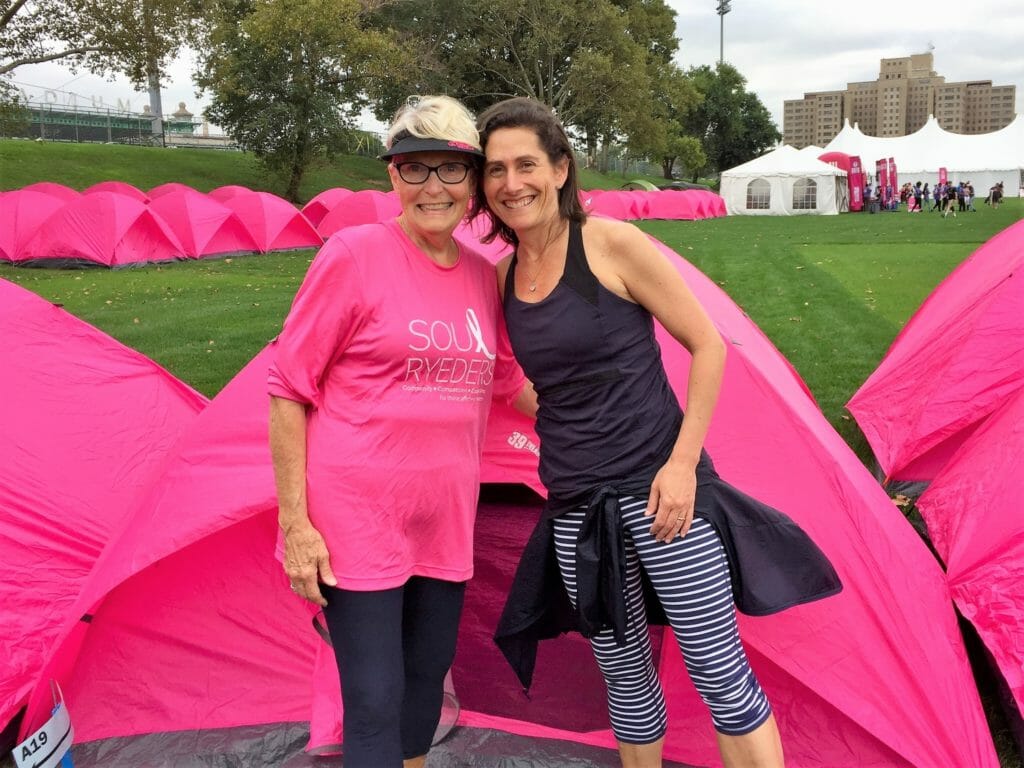
Sandy soon gathered an entire team of walkers comprised of fellow residents of Rye, N.Y. She dubbed them the “Sole Ryeders,” a play on the name, Rye, and the motto that “Every Step Counts.” But Sandy wanted to do more than raise money for cancer research by participating in walks. She saw a need for concrete help for families affected by cancer in her own community. Today, Soul Ryeders — Sandy changed the name to reflect the broader mission — provides numerous programs, such as a wig exchange, educational workshops, homemade nourishing meals and specially designed yoga. The organization has raised more than $3 million, has more than 200 volunteers, four paid employees and has served an estimated 1,300 clients to date.
What inspires you to volunteer?
“There’s so many different things I love about what I do — helping people after diagnosis, through treatments, recovery and survivorship and then seeing a lot of them become volunteers of ours. I love seeing that full cycle. I feel honored that strangers let us into their lives at such a vulnerable time. I love seeing our volunteers of all ages learn firsthand that giving back feels good. I love connecting someone who’s just been diagnosed with someone who’s been through it on the other side to provide inspiration, as well as someone who’s going through it at the same time and can help them get through it day by day.”
Describe your role with Soul Ryeders:
“I am the executive director. I oversee programs. We have a board of directors and a leadership team. The nice thing about that is we have people who specialize in different pieces. We have a director of development who specializes in fund-raising. We have an event planner and someone who does accounting and administration. It allows me to do what I like most, which is helping people. My No. 1 day-to-day responsibility and passion is working with our clients who have been diagnosed and going through cancer treatment, and also their caregivers.”
What kind of community is Rye, New York?
“It’s a suburb of New York City. There are a lot of working professionals and a lot of families. It’s a very family-oriented community. That’s one of my favorite parts — working with the kids in the classrooms and doing projects. For example, we support Camp Kesem, which is a camp for children who have a parent with cancer or have lost a parent to cancer. The kids in our community make autographed pillows for campers with words of inspiration. We sew the pillows and the kids write cards and we take them to the camp. I love seeing kids really understanding what they’re doing and why they’re giving back.”
Tell about the wig exchange program:
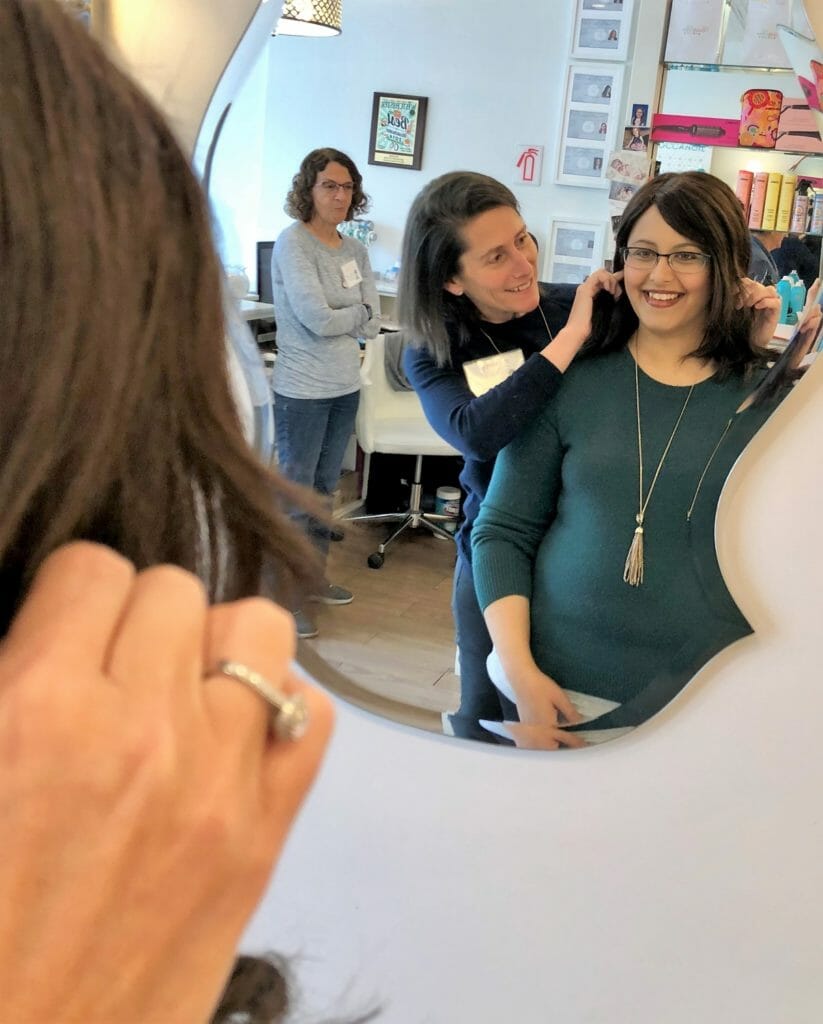
“I was getting calls from people diagnosed with cancer. One of the calls I often got was, ‘I need a wig, but they’re so expensive. Where do I go?’ At the same time, a woman from Rye, Kate Conn, had just finished treatment and she had a gorgeous wig that she didn’t need any more and didn’t know what to do with it. Together with Kate’s husband Paul, the three of us created The Wig Exchange, which launched in 2012. Those who no longer need wigs donate them to us; we have them professionally cleaned and reconditioned and we loan them to people who need a wig. Each person who gets a wig is linked with one of our volunteer coordinators — they’ve all had cancer and lost their hair and knows what the person is going through. We’ve received over 12,000 donated wigs. So now we’ve launched Wigs Without Borders, and our wigs are now in 13 different Third World countries to be distributed to women who have cancer.”
What have you learned through doing this volunteer work?
“I’ve learned about being a leader. I never set out to be a leader — it wasn’t a goal of mine. I’ve definitely stepped out of my comfort zone. I try to lead by example and I’m willing to do whatever it takes for the organization to succeed in meeting its mission. I’ve also learned that in order to do what I do — sometimes it can be really hard, helping people with cancer — I have to focus on our ability to be a ray of sunshine in a really dark time. I’ve learned to stay calm and positive in stressful situations.”
What are the hard parts of being a full-time volunteer for cancer patients?
“There were parts, especially at first, that were things I didn’t love, like fund-raising and event planning, but you need to fund-raise in order to have an organization like this. The nice thing is that as we raised more money we were able to hire people who love those things. It also gets very hard emotionally, especially when we lose people (to cancer). One woman in particular I became very close to. She was only 41 and was the mother of 3-year-old twins. Very sadly, she passed away in December. That was really hard. I also have to work to balance this work with my own family needs. I’ve figured out ways, like my morning routine is to work out, clear out my emails, read the paper so I know what’s going on in the world and take time to talk to my husband and to my kids before they go to school. That way, I feel energized and ready to help people for the rest of the day.”
Why is it important to give back?
“For me, it’s a value I was brought up with. I feel very fortunate for everything that I have, so it’s one way I can pay that forward and help other people. Once you start volunteering in a capacity like this, you learn that you get as much out of it as the people you help. I can’t imagine not volunteering. I started as a “candy striper” at a hospital when I was 10 years old. I actually can’t remember life without volunteerism being a big part of me.”
Do you want to make a difference in your community like Sandy? Visit All For Good for local volunteer opportunities.
Post written by Kay Nolan
Florida Teen Helps Fight Global Hunger and Poverty
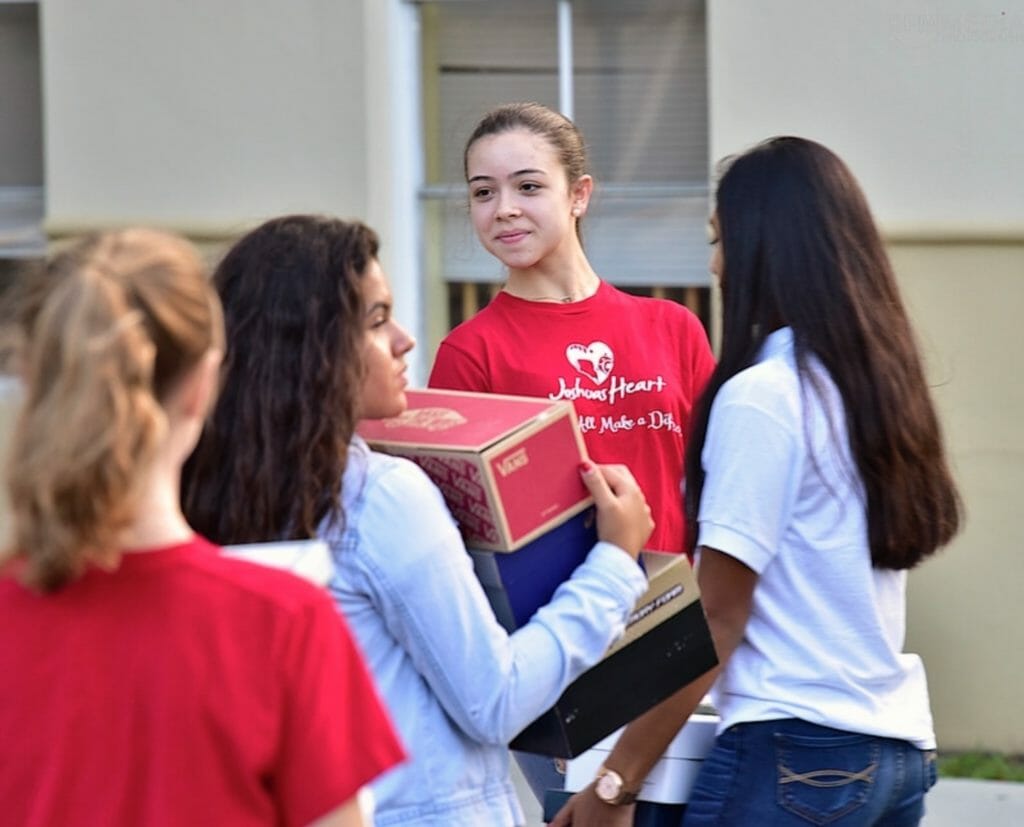
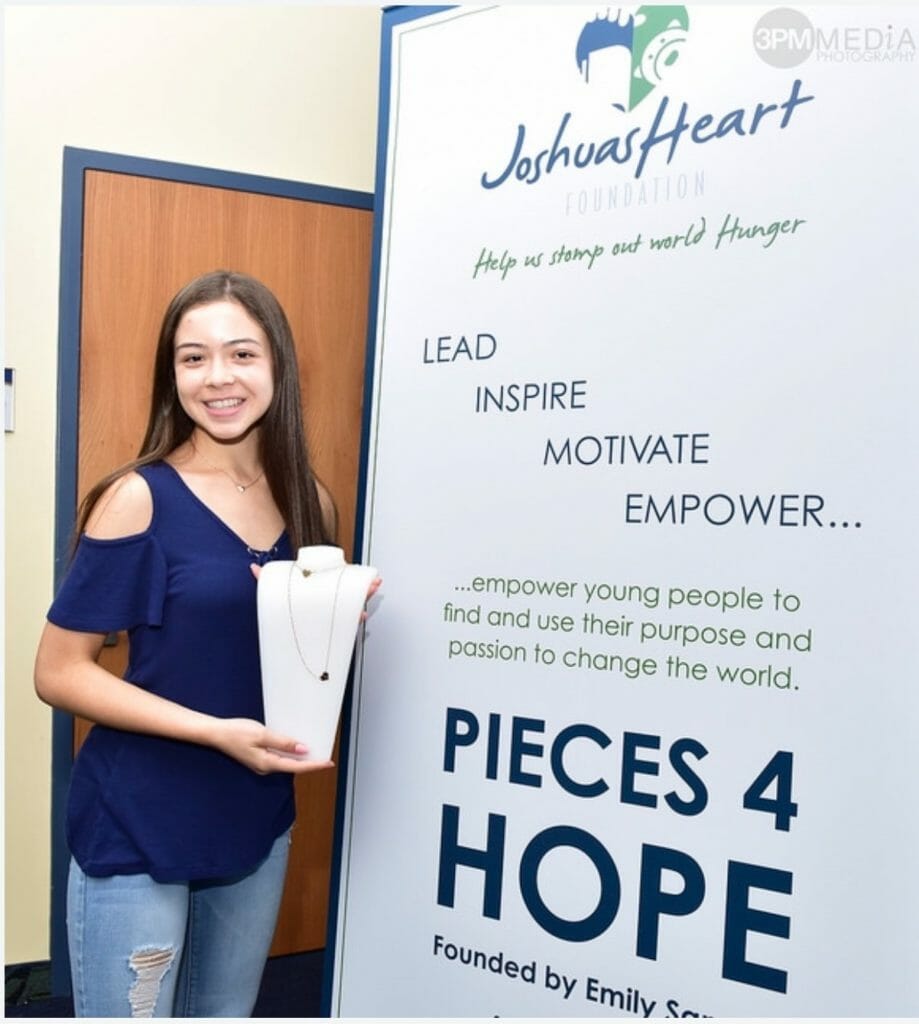
When Emily Sanudo first discovered Joshua’s Heart Foundation, she knew she’d found her passion. The Florida non-profit, which was founded by Joshua Williams when he was just four years old, is dedicated to the fight against global hunger and poverty. While this mission is close to Emily’s heart, what really grabbed her attention is that Joshua’s Heart is a youth-led organization. Everything is run by kids of all ages, from the board activities to the event planning and fundraising. Emily is now the vice chair for the foundation’s Junior Advisory Board (JAB), leading by example in countless ways that make a huge impact on her community in Greater Miami. Last year she organized her first Thanksgiving food drive, raising funds and donations to give 600 people what they needed to make a holiday meal. She plans to exceed those numbers this year. Because Joshua’s Heart Foundation is close to her heart, she worked with Taudrey, a local jewelry designer, to create Pieces of Heart, a handmade 18 karat gold filled necklace to represent the foundation, with all sales proceeds going to the charity – to date $850 from sales in shops and online. Emily’s commitment inspires countless other youth volunteers, because as she is always ready to point out, a person is never too young to make a difference.
Emily is committed to making a difference in her community and she is today’s Daily Point of Light Award honoree. Points of Light spoke with her about her commitment to service.
What inspires you to volunteer?
My mom, for sure. When I was younger she took me to His House Children’s Home to spend time with the kids there who didn’t have homes of their own. As I got older, I started seeing Miami in a different light – it’s a party town, but when you dig below the surface, you see men and women sleeping the street. I’ve had the pleasure of meeting Joshua Williams, and he inspires me also. I never would have thought of starting a charity to help others at the age of four. That’s amazing. Too often we take for granted what we have.
Describe your volunteer role.
I try to do anything that is needed when I can. As vice chair of our board, I work with the board to plan meetings, events, fundraisers – anything that can help accomplish our mission of fighting hunger and poverty. We go to shelters and distribute hygiene kits and food. I had the idea of designing the Joshua’s Heart necklace, so I work on selling that at different place and events. And we are gearing up for our second Thanksgiving grocery drive November 17, which is super exciting. I’m getting donations and coordinating a lot of details for that drive. Honestly, I just love volunteering.
What’s been the most rewarding part of your work?
It’s getting to know the people we are helping, interacting with them and hearing their stories. I’ve learned about their lives. These are normal like you and me, they just happen to be homeless because of all kinds of circumstances. So many times, they lift me up with their positive and happy attitude. It’s wonderful.
What have you learned through your experiences as a volunteer
For sure I’ve learned how not to be shy. I used to be very shy and quiet – in fact the first event I went to for Joshua’s Heart, I didn’t talk to anyone! Now I talk to all kinds of people, and ask for things, money and donations. I’ve learned how to be a leader, and plan things and get other kids excited about volunteering too.
Are there any future partnerships, programs, or events that you are excited about?
I’m going to start college next year, and I hope to start a Joshua’s Heart initiative wherever I go.
Why do you think it’s important for others to give back?
Giving back helps you appreciate the blessings you have in your life. Even though volunteering is required at my school, it isn’t about hitting a certain number of hours and stopping. It’s making volunteering a party of your life always, moving forward.
What do you want people to learn from your story?
Of course, that you can make a difference at every age. Also, I hope people think about volunteering as a lifelong hobby, to really enjoy it and realize the impact you are have on so many people around you. Sometimes we get stuck in a bubble and we don’t even realize it.
Do you want to make a difference in your community like Emily? Visit All for Good for local volunteer opportunities.
Teen Starts Student “Hugs” Chapter for Underserved Children
Sami Meyers is a 16-year-old junior, who plays sports in her free time, and one day wants to have a career in business. One thing that sets the Ponte Vedra, Florida teen apart from others? Her commitment to service, by helping local underserved children in her community.
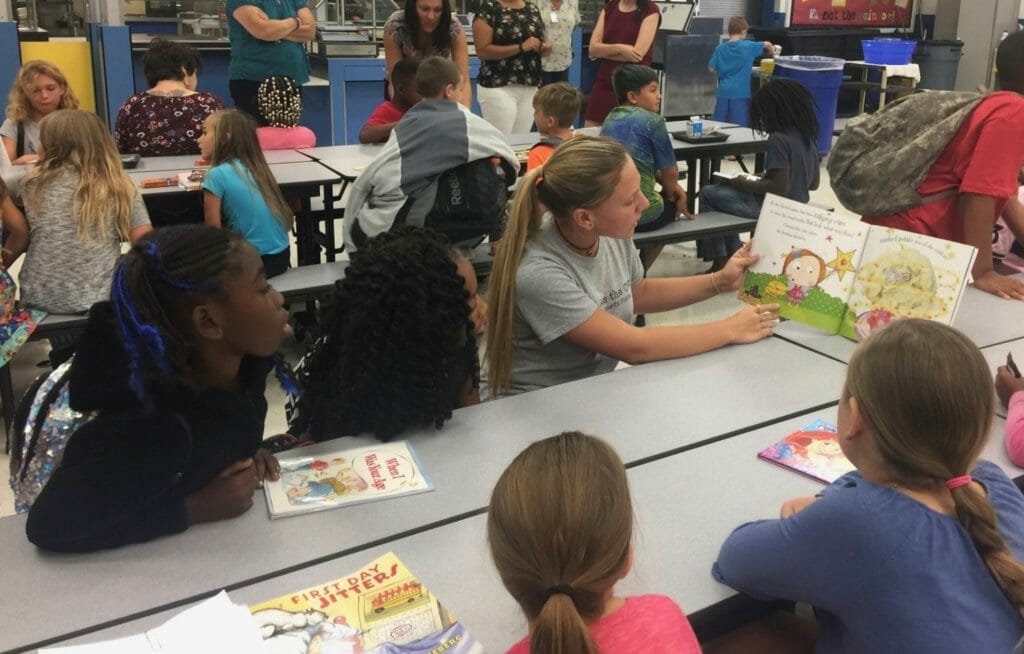
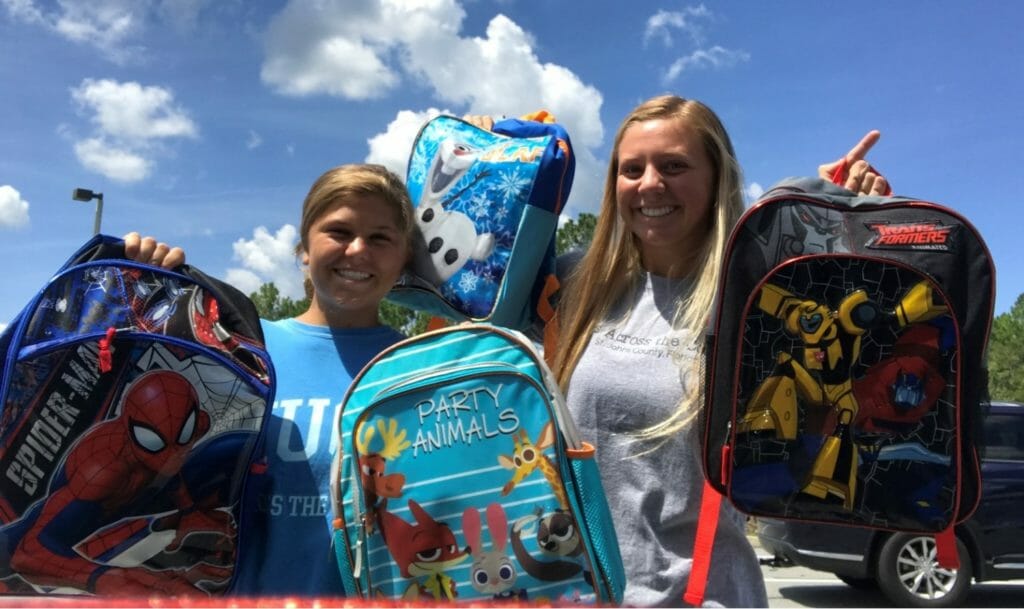
In St. Johns County, Florida, where about 800 students are considered homeless, and thousands more are living at or below the poverty line, some children attend school with empty stomachs, or shoes that don’t fit. Because money is so tight, these students sometimes lack mentors in their lives, books to read at home or funds for field trips. Working with Hugs Across the Country, an organization dedicated to meeting the basic needs of children-in-need, Sami started a student chapter of the organization at her high school in 2017. Through the chapter, Sami managed the Hugs Summer SOAR book giveaway and reading buddy program for hundreds of underserved K-6th grade children throughout the summer, a program that has now been extended into an after-school program during the school year.
By putting books into the hands of local children who may not have books in their own homes, and recruiting dozens of teenage volunteers to serve as reading buddies, the “huge-hearted” volunteer reaches upwards of 30 children during the school year, and is today’s Daily Point of Light award honoree. Points of Light spoke to Sami to learn more about her work with Hugs Across the Country.
What inspires you to volunteer?
This summer, when we hosted the reading program in several locations and were reading with all the kids, it hit me how big of a need there is in our community for these kids, and how much help they need from us. It’s crazy, because they live 10 miles away from me, but are living in such different conditions. Through our program, we’re not just helping these kids read – we’re forming bonds and developing relationships with them.
Why do you think it’s important for others to give back?
For two reasons: First, you get to meet more people and see how you can relate to them across the differences in your lives. Secondly, you learn more about yourself and your surrounding community. If you have the ability to give back, it’s a good thing to do
What’s been the most rewarding part of your work?
For two months over the summer, we hosted our reading program at 5 locations once a week. Every time we went back, the kids were just so happy and excited to see us. We gave them free books at the end of the program, and they thought it was the best thing ever. It’s rewarding for me to make other people happy.
What future events do you have coming up that you’re excited about?
We’re planning a holiday drive for the kids, and we’ll host a party in December. Check out our website for more information about future events, and how you can help: http://www.stjohnshugs.org/.
What’s one thing you want people to take away from your story?
It’s important for both young and old people to know that you can have an impact at whatever stage you are in at life. I’m 16-years-old, and I’m impacting people that are younger than me. Anybody can make a difference.
Do you want to make a difference in your community like Sami Meyers? Visit All For Good for local volunteer opportunities.
Post written by Marlena Militana.