Woman Gives Back and Fights Alongside Survivors of Rare Cancer
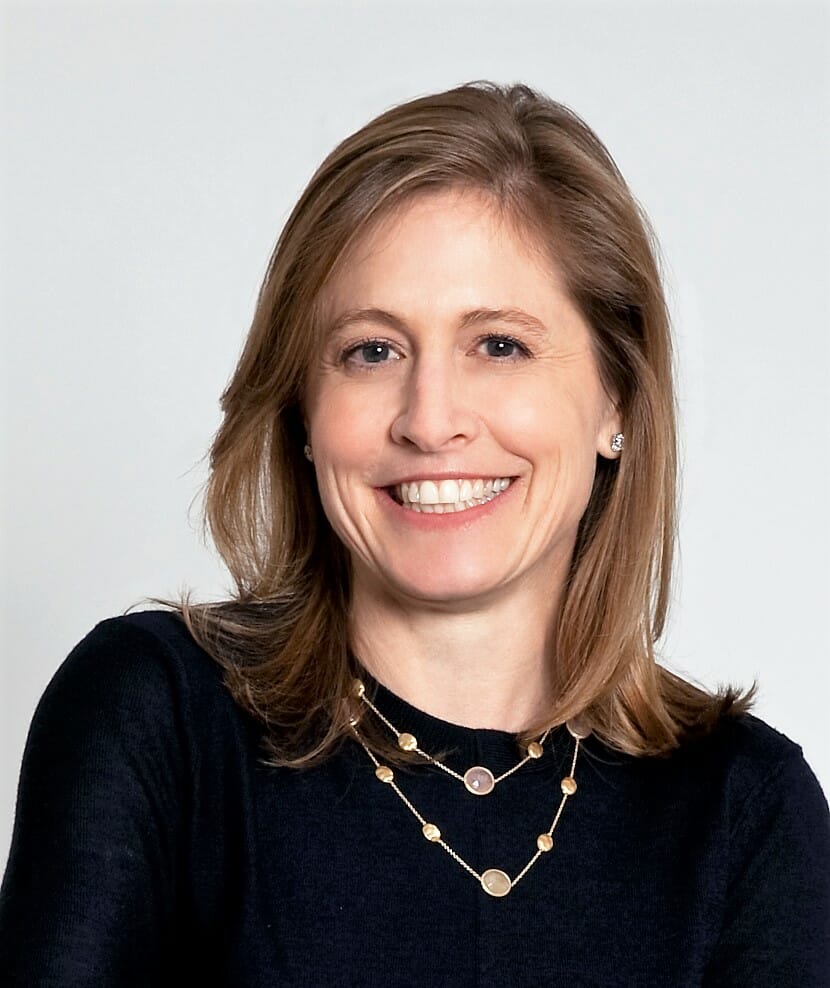
Katie Glenn was sitting in the doctor’s office at the Mayo Clinic with her dad, who’d just been diagnosed with Stage 4 Cholangiocarcinoma, when she brought up a conference she’d come across online. Explaining to the doctor that the conference, which was being held halfway across the country in Salt Lake City, was focused on research about the disease, a rare cancer of the bile duct, she asked if she should go. The doctor told her to book a ticket.
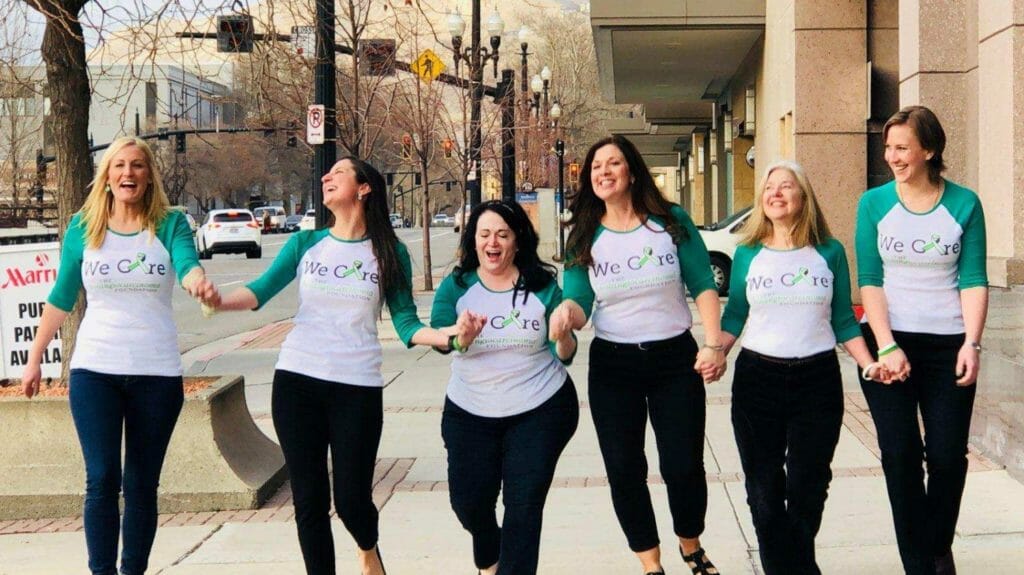
Attending that conference, the 33-year-old, who lives in the Chicago suburbs, says she was better able to care for her dad, who passed away just five months after his diagnosis. And connecting with the network that hosted the conference, the Cholangiocarcinoma Foundation, spurred her into action, joining hands with others desperately fighting this rare disease, often labeled a silent disease because it can go unnoticed until the cancer is in the advanced stage. Starting off small, Katie began fundraising for a marathon run, and then progressed into formally serving as a volunteer race coordinator for Team CCF, an initiative within the Cholangiocarcinoma Foundation. Supporting runners across 16 races throughout the U.S., Team CCF has raised more than $100,000 since Katie’s involvement, all in the name of research and finding a cure for Cholangiocarcinoma.
Katie, who is a high school teacher and swim coach during the day, is channeling her commitment to finding a cure and desire that not one more survivor, family member or friend feels alone in their battle against Cholangiocarcinoma, and is today’s Daily Point of Light award honoree. Points of Light spoke to Katie to learn more about her work with the Cholangiocarcinoma Foundation.
What inspires you to volunteer?
I didn’t really volunteer before my dad’s illness. I’d always been aware of the importance of raising funds for research, because both my mom and sister are cancer survivors. But this was different – I just knew continuing this fight was something I had to do when my dad passed away. I couldn’t turn my back and not do anything for the other people who were still alive and fighting against this disease.
This is a rare cancer – many people may even have trouble pronouncing the name. How do you say it?
Cole-ang-EE-L is the first part. And then carcinoma – what does that mean? it means cancer. And Cholangeal means bile duct. So Cholangiocarcinoma means bile duct cancer. According to the American Cancer Society, about 8,000 people in the U.S. are diagnosed with it each year.
Describe your volunteer role with Cholangiocarcinoma Foundation.
I fundraise, train, organize events and recruit. For Team CCF, all of my work is done to support our runners, and make sure they meet their goals. The biggest goal? Unite around this cause that means so much to all of us. Our runners are running for a reason, they are all connected to our cause. By running, they keep the memory of those who have lost the battle alive. In addition to Team CCF, I am a member of the C.A.R.E. Team. C.A.R.E. stands for Cholangiocarcinoma Awareness Research Education, and we serve as the bridge between patients and caregivers, doctors, clinicians and researchers. It’s such a rare disease, a patient can go in to see a doctor and they may not know what to do with them. So in pooling our resources and connecting these groups, we are working to most effectively get people help and education.
What’s your life motto?
I’m sure I have a lot (laughs). The first one that comes to mind – I try to live by kindness. We never know each other’s struggles, so we have to support each other. Another one – It’s my dad’s legacy: love can conquer anything. That was his motto, and it’s one I’ve wanted to live up to that legacy. Lastly, one saying that came from my dad’s service: “Prayer never stops and love never dies.” I will forever love my dad, and all my family, and that will never change.
Why do you think it’s important for others to give back?
I don’t want anyone to ever feel alone. I know there will be research that will come about one day that will cure the disease, and I know it won’t be there for my dad. But it will be there for someone else. I call those still fighting this disease warriors. Someone else’s daughter, someone else’s dad. It will save someone. There are other people in need.
What future events do you have coming up that you’re excited about?
February is Cholangiocarcinoma Awareness Month. Check out the foundation’s website and Facebook page for more information: https://www.facebook.com/cholangiocarcinoma/.
What’s one thing you want people to take away from your story?
If you’re in the fight: Stay united as a family and find support. Because it’s out there. No patient and no family has to go it alone.
Do you want to make a difference in your community like Katie Glenn? Visit All For Good for local volunteer opportunities.
Post written by Marlena Militana.
Pairing Teens with Buddies Online, Young Activist Builds Community and Raises Mental Health Awareness
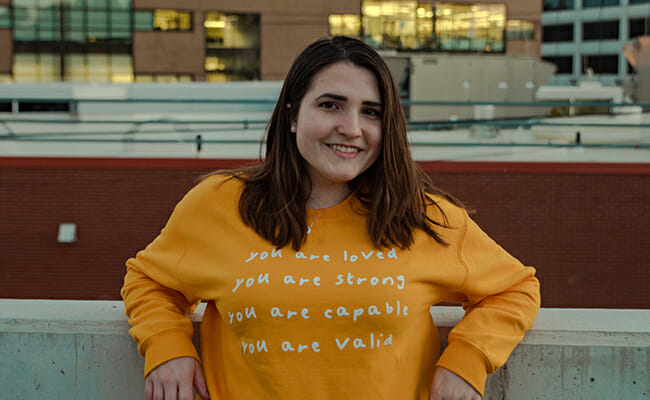
On April 8, 2013, Gabby Frost opened Twitter and saw that three girls in her network were contemplating suicide. After responding to them directly, she thought, “What can I do to prevent this from happening again?” The answer was Buddy Project.
Combining her own experience with social anxiety, and the knowledge she’d learned from friends who had opened up to her about suicidal thoughts and self-harm, and the power of social media, Gabby came up with the idea of an online community where people could make new friends, support one another and become mental health advocates.
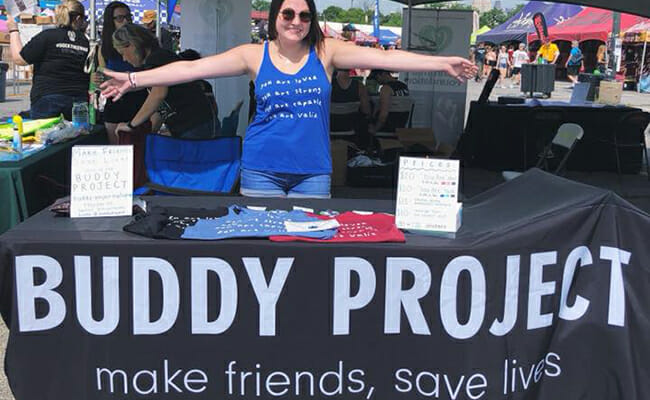
She tweeted about her idea that very night, and with support from her online community, the following day Gabby created Buddy Project’s Twitter account and a buddy sign-up form. Within the first 12 hours, nearly 3,000 people signed up. To Gabby, the response showed just how much people were longing for community, and she knew she had to put more time and effort into it by matching as many buddy pairs as possible.
Buddy Project pairs people with buddies online with the mission of preventing suicide, self-harm and to raise awareness for mental health, giving thousands of teens and young adults the opportunity to find the community and support system they need. Through this movement, Gabby, now 20 years old, is proving that positivity, empathy and companionship can break down the stigma of mental illness and reduce bullying and negativity on social media.
For those who are looking for a support system, Gabby believes finding an online community can be a great resource. Buddy Project builds on that concept, matching users with buddies according to interests and age.
“So many people out there have a hard time making friends and creating community, but there are people online who share common interests with you,” said Gabby. “Find them, and community will become one of the best things for you.” Reaching out for professional help can also be a positive resource, she said.
In addition to providing a supportive online community, Gabby hopes Buddy Project will help people better understand mental illness. For example, she wants to show people that their language is extremely important when supporting someone who is struggling with mental illness. Using words like “crazy” and “psycho” have negative connotations that could be damaging to someone’s confidence and growth.
“Changing our language and teaching ourselves to be more empathetic can show people that we aren’t afraid to hear how they feel,” said Gabby. “People don’t want to talk about things and don’t want to get help if they believe that their feelings will be overlooked and seen as insignificant.”
Gabby’s dreams for Buddy Project are taking off. In the near future, participants will be able to use a Buddy Project app to be matched more efficiently and effectively. When the app development is complete, users will also have more control over who their buddy is, and will be able to have more than one buddy at a time. Gabby is also expanding more Buddy Project campus chapters to middle schools, high schools and colleges, creating spaces where deeper conversations about mental health can take place. And, the organization offers several other ways for people to get involved, from organizing fundraisers to joining online campaigns, or even participating on their youth advisory board.
Thanks to people like Gabby, mental illness is becoming something people can discuss more freely and honestly. Today, more than 228,000 people have signed up to be paired with a buddy through Buddy Project, which is helping people see that their differences don’t define them — and that there will always be someone ready to support them.
Gabby understands the importance of trusting yourself and believing in your potential for doing good — and that anyone can make a difference, regardless of age, race, gender, sexuality or social class. “This was something that was tough for me to learn, since I was a teenage girl and people didn’t take me seriously,” said Gabby. “It’s been five and a half years, and not listening to negative people was one of the best decisions I made to succeed. All that really mattered was what I thought, and I thought what I was doing was good.”
Want to make a difference in your community? Visit www.allforgood.org to find local opportunities to get involved.
Daily Point of Light Honoree 6381
Teen Helps Youths Learn to Love the Outdoors, Stand Up for Ocean Conservation Efforts
Brittany Turner, 17, admits she didn’t know much about sea turtles when she started volunteering for Love a Sea Turtle, a nonprofit organization in North Carolina that promotes protection of sea turtles, which are considered crucial to ocean health, as they eat and help encourage growth of the sea grass that other marine species need. Some species of sea turtles are endangered. But Brittany soon found out that the Love a Sea Turtle group does more – it promotes ocean conservation in general and helps teach youth how to advocate for worthy causes, as they also learn to appreciate the outdoors.
Brittany is committed to making a difference in her community and she is today’s Daily Point of Light Award honoree. Points of Light spoke with her about her commitment to service.
What inspired you to volunteer?
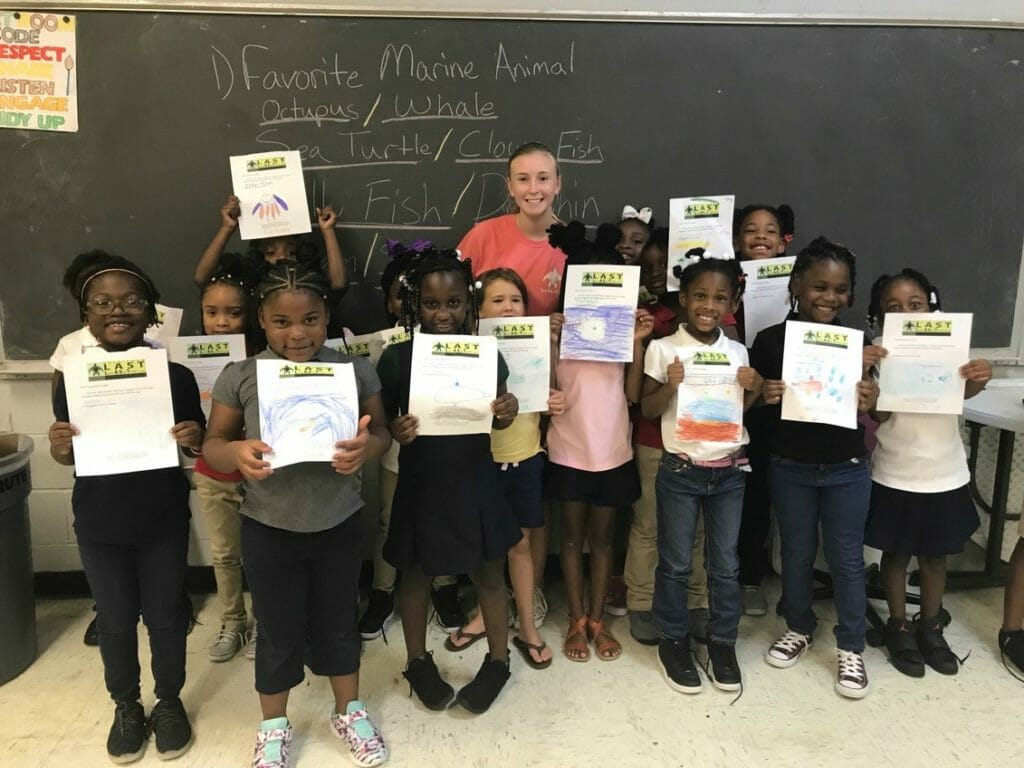
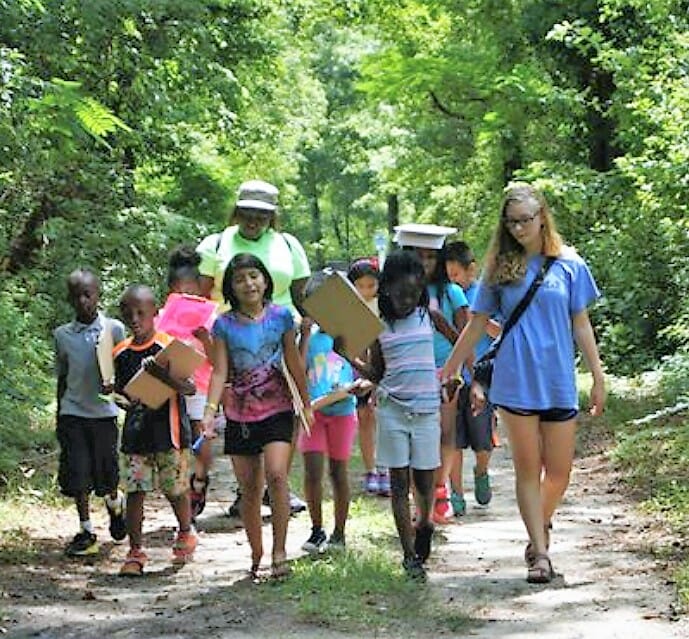
Four years ago, I got started by running in some of the 5K races that they hosted, and from there, I found out more about their volunteer opportunities that they have in the summer and year-round. I started volunteering in their summer camp. It’s aimed at under-served youth in our community, to teach them about environmental conservation and water conversation. They do a lot of fun outdoor activities, such as biking, fishing, hiking.
Describe your volunteer role with Love a Sea Turtle.
After volunteering in their summer camp program, I joined the Love a Sea Turtle Youth Advisory Board, where I then began to help plan year-round events. I kept volunteering the next summer. The third summer, I became the Summer Camp Director. I plan all of the activities that happen throughout the school year. I’ve also started my own initiative called Youth Explorers. It connects a platform for kids to speak out about what they’re passionate about.
What kinds of things is this group passionate about?
The biggest project I’ve done with that has to do with seismic blasting and offshore drilling off the coast of North Carolina. Last year, it was proposed that we start seismic blasting to test if there’s oil for offshore drilling. It’s detrimental to North Carolina’s economy, as we are the No. 1 dive spot in the world, and it’s hurtful to the ocean, to our water. I started a letter-writing campaign. I went in to Boys and Girls Clubs all across North Carolina and I had these kids write letters to Gov. Roy Cooper. It was a learning experience for them, as well as helping me.
Did anything come of that?
I was able to collect and hand-deliver hundreds of letters to Gov. Cooper. This happened a year ago, and as of right now, we are not seismic blasting and we are offshore drilling off the coast of North Carolina. Gov. Cooper did not the sign the bill to go on with that. I’d like to say that it helped.
What’s been the most rewarding part of your work?
The most rewarding part for me was working at the summer camp and seeing the smiles on the kids’ faces when they leave to go home.
What have you learned through your experiences as a volunteer?
I have learned that one person can truly make a difference in their community. In the back of my mind, I never really believed that one person could make a huge difference until I met these kids at the summer camps. Some of these kids have never gotten on a bike and they’re 12 years old. They’ve never been in a kayak on the water or gone fishing. I learned I really was making a huge difference in these kids’ lives.
Are there any future volunteer events that you are excited about?
We have National Make-a-Difference Day and Family Volunteer Day coming up. Those are big days and we’ll have tons of volunteers coming out. One thing we will do is paint storm drains to say, ‘Do not pollute this close to the river.’ I’m super excited to be a coordinator for these events this year.
Why do you think it’s important for others to give back?
I think it’s self-rewarding to give back, and I truly believe it’s our duty as citizens. It’s important to give to our community just as much as we get from our community.
Do you find it hard to fit in volunteer work with school and other activities?
It can be challenging at times. I’m in quite a few extracurricular activities and I’m taking extra classes at school even. I’m in the marching band and on my school’s mock trial team. It can be hard, but this stuff is important and it’s OK if I don’t get much sleep at night.
Do you want to make a difference in your community like Brittany? Visit All For Good for local volunteer opportunities.
Using Respect to Battle Bullying
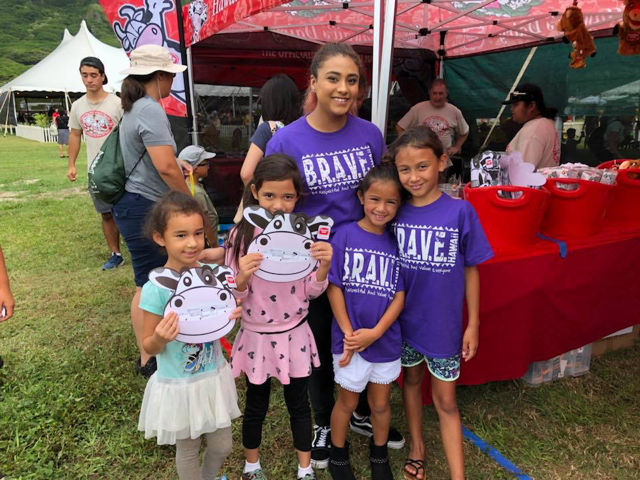
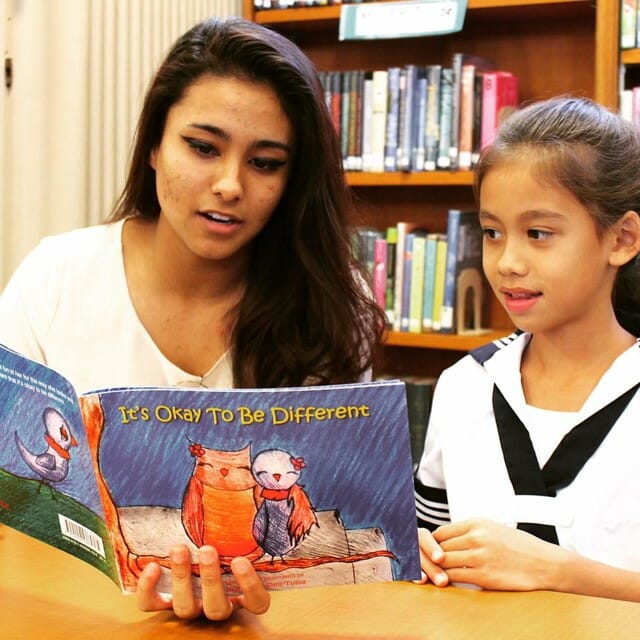
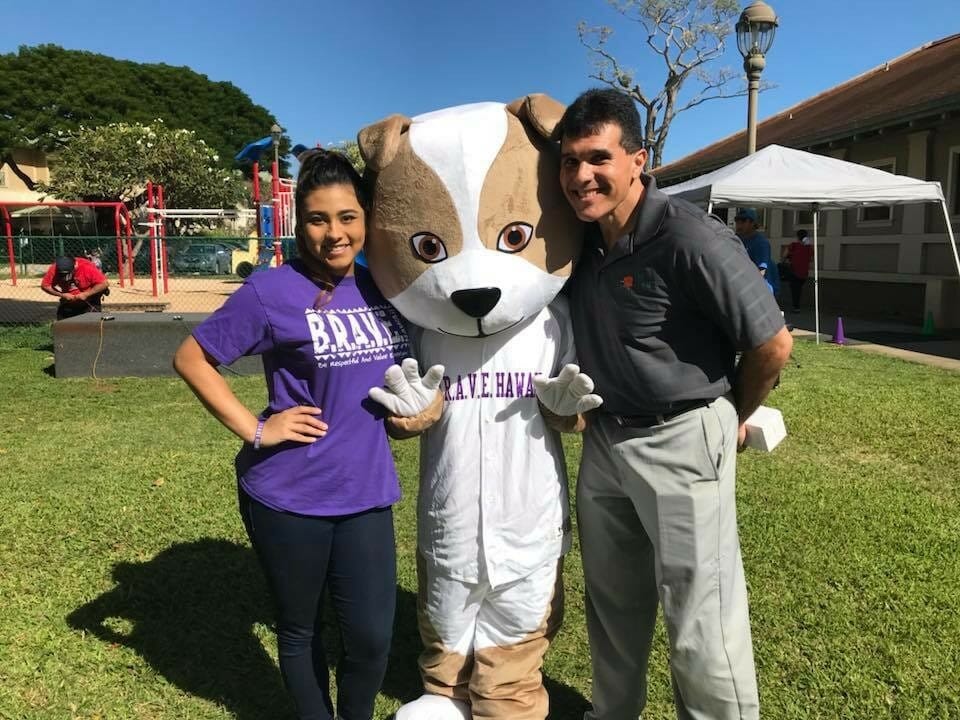
Being different, showing individuality, is a good thing. Or at least it should be, until those differences inspire bullies to berate and intimidate. As defined by the Centers for Disease Control and Department of Education, bullying is unwanted aggressive behavior, observed or perceived power imbalance and repetition of this behavior to hurt and intimidate. It’s a real problem, an average of 1 in 4 U.S. students say they have been bullied at school. It happened to Mahealani Sims-Tulba when she was in the 5th grade and got involved in the competitive pageant scene with a few of her friends. Mahealani, now 18, was soon derided for being “too fat, not smart enough, not pretty enough” to do well in the competitions, bullying behavior that continued for years. With the support of her parents, she got past the attacks, but realized that not all kids who are bullied have that kind of support. Which is why, when she was 13, she created a 501c3 non profit organization called B.R.A.V.E. – Be Respectful and Value Everyone. Partnering with schools all over the state of Hawaii, Mahealani speaks and holds workshops for kids of all ages, reaching more than 70,000 kids to date with her message of anti-bullying positive reinforcement. She wrote a children’s book, called “It’s Okay to be Different,” which she shares with children as young as five. Recently crowned Miss Teen Cosmos United States, she plans to take her B.R.A.V.E. Hawaii platform nationwide.
Mahealani is committed to making a difference in her community and she is today’s Daily Point of Light Award honoree. Points of Light spoke with her about her commitment to service.
What inspires you to volunteer?
I was inspired to create B.R.A.V.E Hawaii when I became a victim of bullying in the 5th grade. I knew that there were many children who had gone through the same experiences as I did, and I wanted to share my story with others. I wanted to create positive programming that would build kids’ self esteem and inspire kindness and positivity in kids of all ages. Not all kids have such great parents as I do, so I wanted to show other kids that someone was listening and understands what they are going.
Describe your volunteer role.
I am the founder and CEO of B.R.A.V.E Hawaii, which involves creating community service events and bringing kid volunteers together to create positive change. Our Foundation also uses donations to give scholarships to extraordinary kids who make a difference. I’ve been performing since I was six years old, and I know how it can build self-esteem. So we hold talent shows that give all kids the chance to express themselves in a supportive environment.
What’s been the most rewarding part of your work?
The most rewarding part is knowing that I am able to touch the lives of other people and educate them about the effects of bullying. I have been able to speak to teachers, students who have been bullied, and even students who are the bullies, and I have been able to help them realize why that behavior is wrong. Being able to touch their lives and put smiles on their faces means a lot to me.
What have you learned through your experiences as a volunteer?
I’ve learned the importance of speaking up. Since we are able to have educational assemblies in the schools here in the state of Hawaii, we speak with many students and teachers. Many of the teachers tell us that their students experience bullying, but they never speak up about it. I’ve learned that if you speak up, especially if you are being bullied, not only does it make it easier to get help, but you encourage others to speak up about their experiences as well.
How does social media figure into bullying?
In this day and age social media can make it easier for kids to bully others. They bully behind the safety of their screen and keyboard, feeling they don’t have consequences. We talk about that, how to stop that cycle, block the person, report them to social media and ultimately tell an adult and take action. It’s important not to buy into the bullying, to live your life and walk away from it. Speaking up is the first step.
Are there any future partnerships, programs, or events that you are excited about?
We are very excited for our annual B.R.A.V.E Hawaii Toy Drive, which is coming up in November. We also excited about our B.R.A.V.E Hawaii Kids Showcase, where we will honor the winners of our B.R.A.V.E Hawaii Kids Scholarship Program. We also are launching BRAVE TV – a community access television show – January 15. We are also planning a benefit concert starring comedian Augie T (who happens to be my dad) February 25 with all proceeds going to BRAVE HI.
Why do you think it’s important for others to give back?
I believe it is important for others to give back because there are people in our community who are constantly giving to us. As young people, I believe that if we give back to those who watch over us, it will make the world a better place. We must set examples for those who will come after us, and encourage them to give back to those who help them throughout their lives.
What do you want people to learn from your story?
I want people to learn that it is okay to speak up. Luckily, when I was going through my bullying experience, I had a very supportive family who helped me through it. I know that some children aren’t so lucky. I want to communicate that they aren’t alone – that there are thousands of other children who are going through the same thing. Ultimately, I want to be able to encourage others, and with their bravery and courage, they will be able to inspire and encourage other kids just like them.
Do you want to make a difference in your community like Mahealani? Visit All For Good for local volunteer opportunities.
Post written by Beth D’Addono
Women Donate Corporate-Level Business Acumen to Empower Small Businesses, Minorities
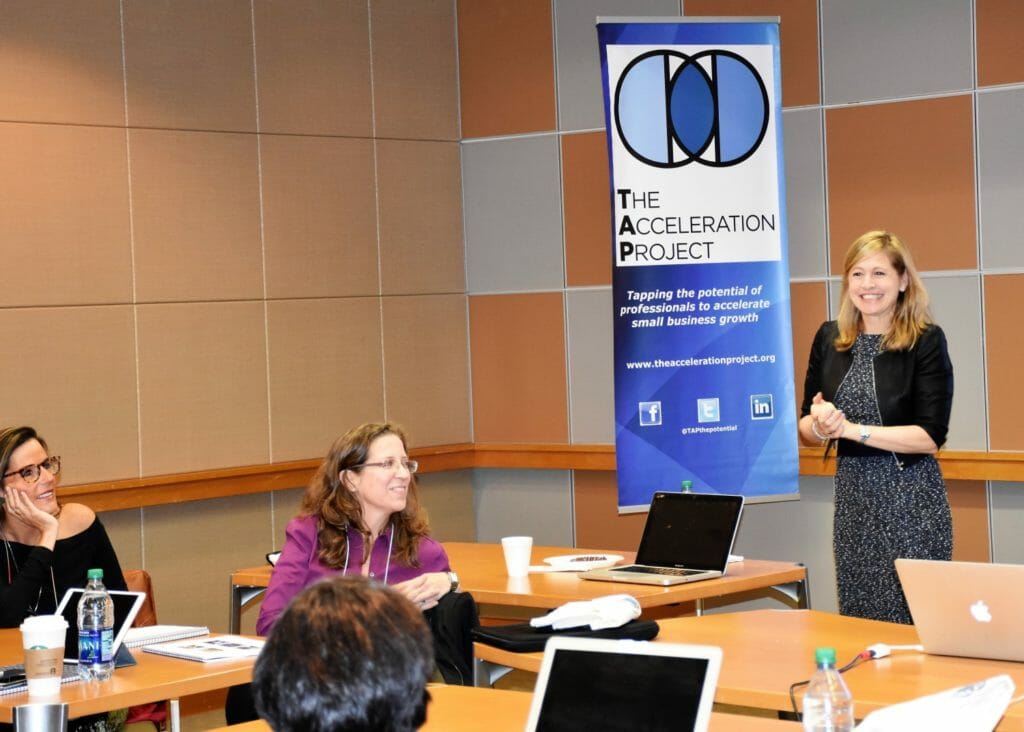
Jane Veron has a bachelor’s degree from Yale and an MBA from Harvard. She’s held demanding jobs in management and marketing positions at large companies in New York and Boston. These days, she’s donating her top-notch business skills to struggling small businesses – and she’s assembled dozens of similarly qualified women professionals to do the same. As members of
The Acceleration Project, which Jane helped found in 2012, volunteers are proudly practicing and broadening their skills, while smaller, often minority-owned businesses – and the changing neighborhoods where they’re located – benefit from solid, professional consultant work.
Jane is committed to making a difference in her community and she is today’s Daily Point of Light Award honoree. Points of Light spoke with her about her commitment to service.
What inspires you to volunteer?
“The entire economic landscape shifted, and I saw that small businesses were getting battered by the Internet, and it pained me to see businesses who were so dedicated to their product or service struggling to compete. They didn’t necessarily have the business tools to confront it. Also, I knew there was this incredible pool of talent, primarily women who left the workforce to care for families — children or aging parents — who had this experience base. I thought, ‘Why don’t I identify, train and mobilize this group of professionals to have them advise these businesses?’ It’s been successful beyond my wildest dreams. Every day I wake up so energized and excited to do the work I do.”
Describe your volunteer role with The Acceleration Project.
“I leverage pro bono talent. I don’t take a salary, but I’ve gotten to the point where I can pay a small staff to help me run the business.” Jane’s group of TAP professionals, including former corporate executives, lawyers, marketing experts and others, offer seminars and consulting sessions for small businesses for a nominal cost. They also meet with community leaders eager to revitalize “Main Street” and downtown neighborhoods. Jane has persuaded executives at companies like JPMorgan Chase to sponsor TAP as part of their corporate community service efforts. In recent years, the TAP team has traveled to various cities and offered video-conferences to lend their expertise in online sessions.
Why are small businesses important?
“Businesses along Main Street are so vital to the health of our communities. It’s important to have brick and mortar places where people can gather, particularly in a world when technology can make us super isolated from each other. I learned the importance of land use, zoning, development and affordable housing legislation during my career, and as a village trustee in Scarsdale, New York.”
What’s been the most rewarding part of your work?
Although the idea is to help others “accelerate” their businesses, Jane says this type of volunteer work is very “empowering” to herself and the other women, who are delighted to be using their education and workplace experience. It builds real-life resume experiences and introduces them to a variety of business enterprises. “I actually have a waiting list of people hoping to volunteer,” says Jane.
You have a Harvard MBA, but what have you learned through your experiences as a volunteer?
“I’ve learned that people who run individual businesses are so resourceful. I used to work in big companies that were very well-resourced, and I took these resources for granted. But when you’re in a small business, you don’t have that support and you have to work triply hard to be able to do your day-to-day job. I’ve also learned how to make volunteers feel successful — that when you clearly define the problem and give them the tools to do the work– they will exceed expectations.”
Why do you think it’s important for professionals to give back?
“You get much more back than you give because you get to see immediate, tangible results. People are so appreciative. The volunteers also have thanked me. They get an opportunity to use their skills, to be using what they know in a way that fits into their life and makes them feel that they have an impact. People want to do that. It’s probably astonishing, but we have a wait list.”
Do you want to make a difference in your community like Jane? Visit All For Good for local volunteer opportunities.
Post written by Kay Nolan
Family of Five Builds Bonds Through Commitment to Volunteering
For the Elwy family, volunteering together is engrained in their lives. Rani, Sherin and their three children, 20-year-old Lucy, 17-year-old Ben and 13-year-old Charlotte, have spent hundreds of volunteer hours on projects ranging from distributing groceries at food pantries, to creating learning aids for ESOL students, to planting flags at dawn alongside Boston’s 9/11 memorial. The family of five has discovered that volunteering is the one thing that brings them all together.
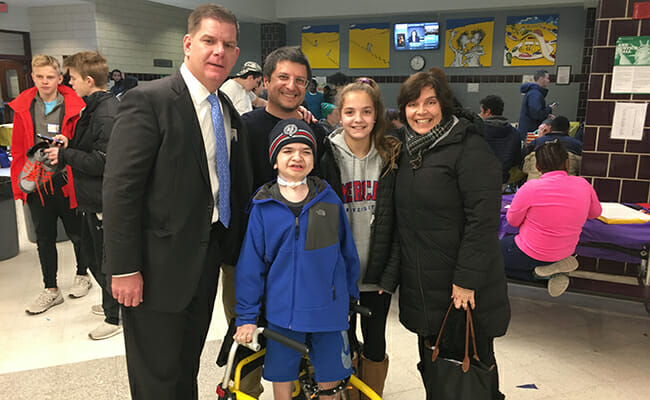
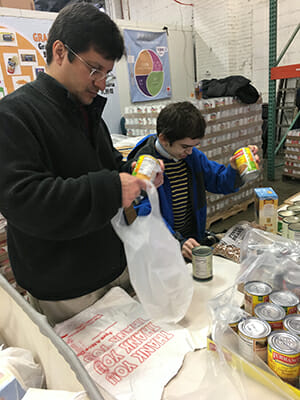
Rani and Sherin have learned it’s important to listen to your kids and discover their wide range of interests. So, when Ben came to them two years ago with the desire to start volunteering, they wanted to find a way to make it happen. Ben was born with Schwartz Jampel syndrome, a rare genetic disorder that affects bone and muscle development – however, physical limitations could not deter Ben’s service-oriented heart. Volunteering has connected him to his fellow classmates through school-based service projects, and created new bonds with family members. In recognition of their commitment to volunteering, Ben and his sister Lucy received the President’s Volunteer Service Award in 2017 through Boston Cares, the largest volunteer agency in New England. Ben’s involvement with the local American Red Cross food bank, Cradles to Crayons and Room to Grow allowed him to focus on social justice projects. In addition to these organizations, Lucy has volunteered with Mass Audubon’s Coastal Waterbird Program, helping to shelter endangered birds along the shores of Boston.
Each member of the Elwy family is unique and different, and they look for ways to match their service activities to the things they are passionate about. Volunteering has become both unifying and contagious. “Before we knew it, we as a family were doing something every weekend,” said Rani. “It was the only thing everyone made time for. It’s cool to hear the kids ask, ‘What volunteering activity are we doing this weekend?’ – knowing that it’s just part of the schedule.”
Rani and Sherin are showing their children the magic that comes with celebrating others’ differences, and that it is always possible to find ways to do more for those in need. From prison projects to distribution days at the local food bank, they understand that recognizing and understanding people’s different circumstances is important.
Boston Cares, a Points of Light affiliate, has become a useful resource for the Elwy family. All volunteer events and projects are posted on an online calendar, and Rani and Sherin never fail to find service opportunities that are both family friendly and accessible to Ben. Charlotte can even get in touch with her crafty side with take-home DIY projects like fleece blankets. The Elwys also participate in the Boston Cares MLK Day and Family Volunteer Day activities each year. Last year on MLK Day, the family put together cards of encouragement for immigrants studying for their United States citizenship test.
When asked if she has any favorite memories from volunteering as a family over the past two years, One of Rani’s favorite family volunteering memories is how Ben chose to spend his 17th birthday. Every year on July 31, Rani and Sherin take off work to spend the day doing whatever Ben wishes. That birthday turned out to be a little different than previous years, when he decided they would all spend the day assembling food bags at the local Red Cross food bank. Employees later gifted Ben with a large photo taken on his birthday, signed with thank-yous and words of encouragement.
The family’s culture shift towards volunteering has brought tremendous light into their lives. “Volunteering is something we do because it is literally the one activity we can all do at once. We do it because we are grateful to help other people, but we also get so much out of it. We get time together. We don’t know how to not volunteer anymore,” said Rani.
There will always be volunteer activities scheduled on the family calendar, Rani says. The Elwys continue to volunteer every weekend, and enjoy time well spent united in giving back to their community.
Dressing Teens for Success in School and Life
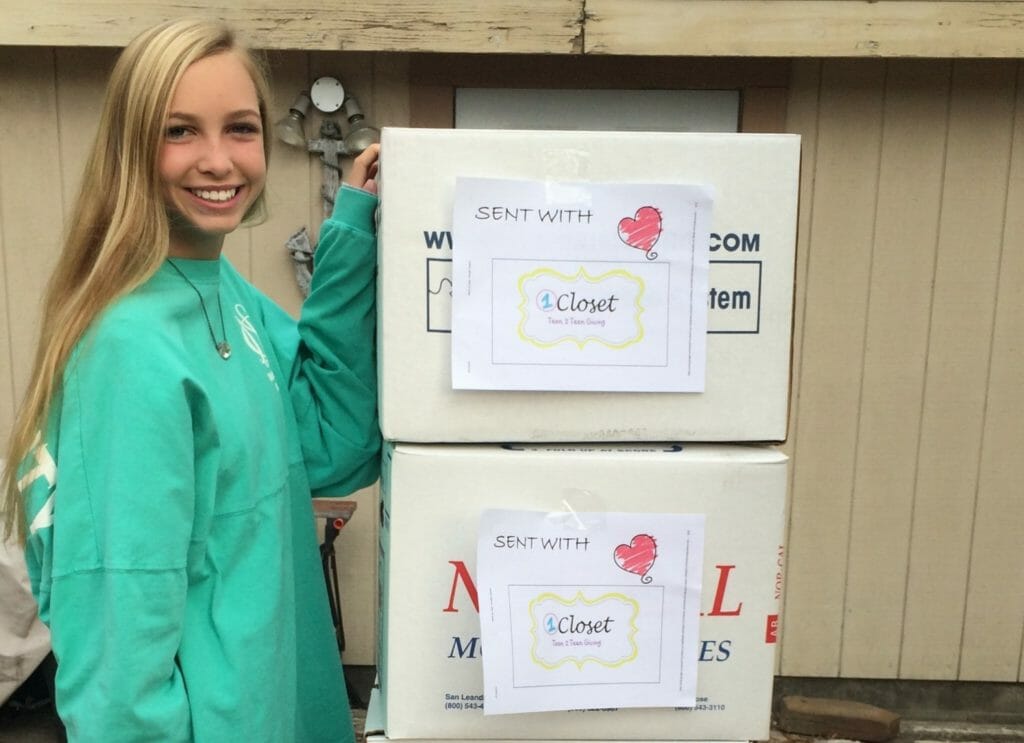
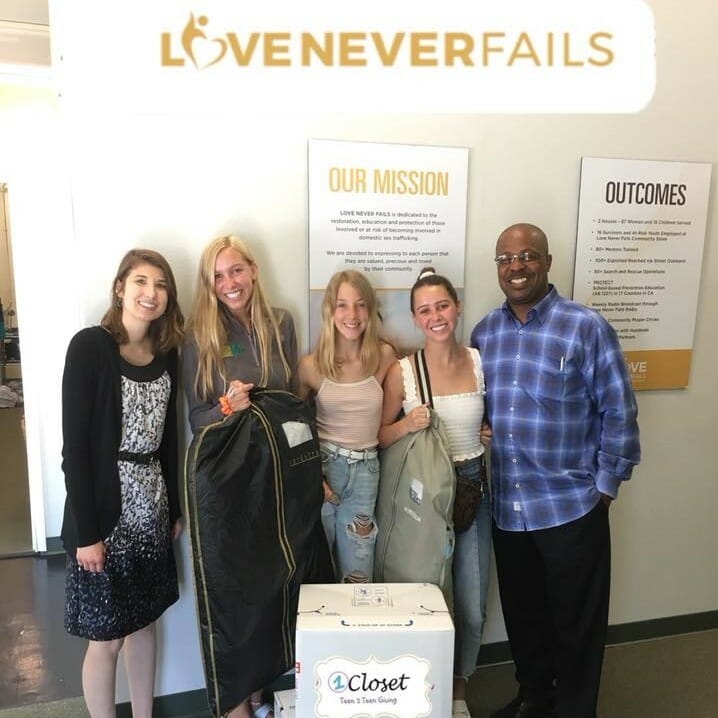
California teen, Carly Glasson, understands how clothing can affect a teenager’s self-esteem. Carly serves as the director of 1Closet, a non-profit that coordinates the donation of new and gently used clothing to underserved teens in California’s Alameda and Contra Costa Counties. Not having basic clothing can affect self-image, which can impact school attendance and social interaction. After food and a place to live, Carly believes that clothing is a critical necessity. 1Closet is all about teens helping other teens, with volunteers sorting, boxing and delivering clothing to teen-targeted non-profits that reach out to kids in foster homes and organizations working with survivors of human and sex trafficking. They have donated more than 500 boxes of clothing, which is about 175,000 garments worth close to $1 million dollars in the last five years. As she was getting ready for her own junior prom this year, Carly realized that disadvantaged teens couldn’t have the experience without a dress. She set up first annual Prom Dress pop up, giving more than 80 girls the chance to “shop” for gorgeous dresses and accessories.
Carly is committed to making a difference in her community and she is today’s Daily Point of Light Award honoree. Points of Light spoke with her about her commitment to service.
What inspires you to volunteer?
I am inspired to volunteer because I like helping my peers and getting my peers involved with helping others. It feels great to be able to give teen clothing to organizations that help teens. Teens are usually the group that gets left behind when helping those in need, so I like helping teens feel good about themselves.
Describe your volunteer role.
As director of our 501c3 1Closet, I am responsible for overseeing all aspects of our organization. I work with our partners who collect clothing donations for us and pick them up and bring them back to our home to sort into boxes by clothing item. I then make contact with the organizations we work with to distribute teen clothing to their programs. 1Closet works with low income, homeless and foster teens and organizations working with survivors of human and sex trafficking. I also founded the Prom Dress Pop Up this year and collect prom dresses to give away to teens in our community who are in need. I created a Pop Up event for the girls to “shop” for their dress.
What’s been the most rewarding part of your work?
The most rewarding part of my work has been hearing stories from teens themselves and sometimes their parents about how their teens getting clothing or a prom dress meant so much. It feels like such a small contribution I’m making but it can really mean a lot to someone else.
What have you learned through your experiences as a volunteer?
I’ve learned through my experiences as a volunteer, that it doesn’t take a huge act or donation to make a difference, sometimes just being able to help one person can really make a difference.
Are there any future partnerships, programs, or events that you are excited about?
I am excited about hosting the second annual Prom Dress Pop Up for teens in my community. It was such a successful and exciting event last year, I can’t wait to make hundreds of other girls feel pretty and special on their prom night.
Why do you think it’s important for others to give back?
It’s important for others to give back, because life is about doing the right thing with the time you have on this earth. It’s important to be a good member of society and give back to your community. You never know when you might need someone’s help and you never know when someone might need your help. Giving back feels so much better than thinking only about yourself, it makes you realize what kind of person you are and can be.
What do you want people to learn from your story?
I want people to learn that it doesn’t matter how old you are, how much time you have or what idea you have, there is always room to be that person that makes a difference in one or hundreds of people’s lives.
Do you want to make a difference in your community like Carly? Visit All for Good for local volunteer opportunities.
Post written by Beth D’Addono.
St. Louis Senior Dedicates Retirement to Putting Food on Table of Struggling Families
In 1989, former President George H.W Bush spoke of “a thousand points of light, of all the community organizations that are spread like stars throughout the nation, doing good” and emphasized his commitment to make community service a centerpiece of his presidency. Well, one person watching his inaugural speech and taking it to heart was Bob Marshak of St. Louis, Missouri. Bob took the president’s words as a call to arms and has dedicated his retirement years to serving his community.
For over 10 years, Bob volunteered with the American Red Cross, but wanting something more local and engaged with the community, he discovered the Harvey Kornblum Jewish Food Pantry, which provides food, personal care items and community resource referrals to struggling individuals and families. With one in eight American households finding it difficult to provide enough food to all family members in 2017, according to FeedingAmerica.org, Bob realizes that food insecurity is a major problem in America, and is doing his part in St. Louis to be a part of the solution. He is today’s Daily Point of Light Award honoree, and we spoke with him to learn more about his passion for community service.
What inspires you to volunteer?
My wife Dianne actually started us on this journey of working for different charities and doing different works of good. She saw an article in her church bulletin many years ago and said we should start volunteering. So she was actually the spark and we have continued that for all these years.
Describe your volunteer role with the Harvey Kornblum Jewish Food Pantry.
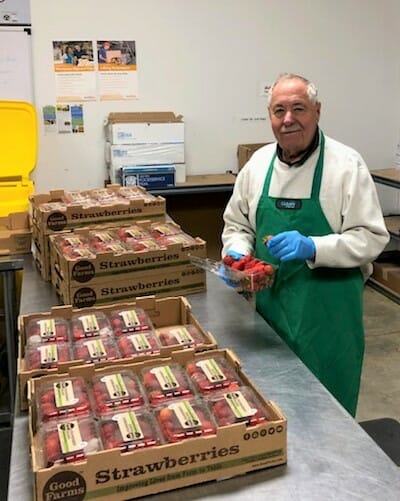
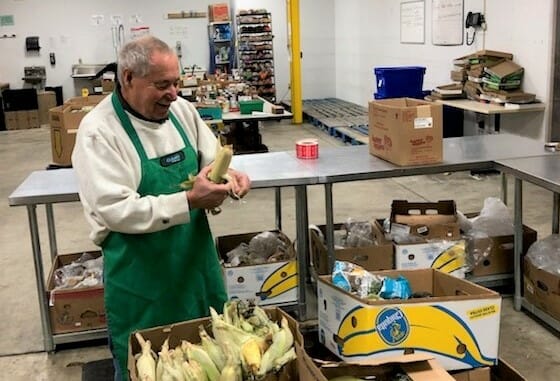
I volunteer with the Harvey Kornblum Jewish Food Pantry (HKJFP) and it’s been over three years now. I recognized how difficult it is in St. Louis. We have such a disparity in food security and I wanted to do something. The work that I do there is basically grunt work, for lack of a better term. But essentially, the food pantries, and I think this is correct for all across America, rely on volunteers so there’s a lot of things that have to be done. For example we separate good fruit from bad fruit, good vegetables from bad vegetables. We create an environment where people have dignity and can shop and obtain hat they need for their families.
The HKJFP feeds about an estimated 6,000 people a month. That’s a sobering fact when you consider that we’re living in, at least in this part of St. Louis county, somewhat of an affluent community This food pantry is a combination of many things including USDA surplus foods and an awful lot food fresh produce and fresh foods. They’re collected from supermarkets in the St. Louis area. They’re also collected from, for example, Panera Bread. We get all the extra bread that’s left in the evenings. We get an awful lot of fruits and vegetables that are very close to being unusable and yet in a matter of a day or two, all the good can be separated from the bad. The beautiful thing about the food pantry is that it’s like a grocery store. Individuals can come in and they have a shopping cart and they can simply get what they need to feed their family.
You look at the statistics nationwide about the huge amount of food that is wasted on a daily basis and then you look at the tons and tons of food that is wasted on an annual basis so we’re just doing our part. Is it enough? Of course not. But does it make a slight difference? I think it does. You take it one step at a time.
What’s been the most rewarding part of your work?
Walking out of the food pantry in the afternoon knowing that we have provided fresh, good, quality food to people that need it is heartwarming and it moves you forward to the next week and the next. The things that we do are in and of themselves, you can look at them, relatively unimportant, but they really make a difference. So when you finish your volunteer shift at the food pantry, and you know you’ve helped people that need help and need good food, it’s very heartwarming and rewarding.
What have you learned through your experiences as a volunteer?
I’ve learned that small acts of kindness, small acts of volunteering time and effort make a difference. I don’t believe that food pantries, ours included, could operate without volunteers. You can’t pay people because there’s no money. These are nonprofit organizations and they rely on volunteers. Each one of us can make a difference. You go in and spend a day sorting fruits and vegetables and I know it sounds silly, but it makes a difference. That’s what motivates me to come back week after week because I know volunteers are making a difference.
Are there any future partnerships, programs, or events that you are excited about?
We have problems in St. Louis that we have yet to solve. When you look at many cities across the country, we have racial imbalances. We have racial divisions in St. Louis that we have not yet solved. My wife and I and a group of other individuals are working on some projects in the Ville neighborhood in North City. We’re working on a tiny house project for the homeless and for those at risk. These are two tiny homes and these are the first in St. Louis. The two homes were built by students in the St. Louis County school district, the Rockwood school district, and we have moved those to the city. They are on permanent foundations and we are finishing the interiors now. We plan to have them finished, inspected and approved for occupancy and occupied by this winter. The third house, which is in the same complex, will be built on site and we fully intend to have that finished next year. At the same time, there’s a project called the North City Food Hub that is just getting started. One of our goals is to set up a small food pantry in that area. The term is overused, but it truly is a food desert. Most of the major supermarkets exclude that city. The food pantry can be done because there are some neighborhood gardens that produce a lot of vegetables in the summer time. So the question is how do we get those out and not waste it? And then if you add onto that, how can you teach families how to process that food? For example, you can can it or freeze it and make it available throughout the year. We are members of a group called Social Justice 4 All and the other one is North Grand Neighborhood Services. They are going to own these tiny houses.
Why do you think it’s important for others to give back?
We’re all human. We have a shared responsibility. We’re all in this together. This is the way this country was founded. You look back and you look at how many people helped others. I think it helped in more rural communities and in the earlier years of the urban community. But we’ve lost some of it. I think it’s critical to regain it. I keep going back to President Bush’s thousand points of light. I think that’s what he intended. That’s what he thought we should do so this is just following up on that. And again, you look at these recent natural disasters and it’s not just FEMA and other government organizations, but look at the NGOs. We had some floods and tornados in Missouri and it was the NGOs and volunteers that came in and opened up soup kitchens, opened up feeding stations and provided blankets and clothes. This was all volunteers. It was no government money. I think that’s the American spirit. I think each of those in some small way do their part. If we do, we can solve these problems.
What do you want people to learn from your story?
To recognize that each of us can make a small difference. When you add that up and look at the totality, it makes a big difference. That’s the takeaway. All of us can do something. All of us can contribute in some way to the betterment of the country. We take that as individuals and all of a sudden, it’s a mighty force. My goal is to inspire others to do the same because one individual can make a difference.
Do you want to make a difference in your community like Bob? Visit All For Good for local volunteer opportunities.
Louisville Senior Gives Back to Seniors Through Time, Friendship
Bonnie Clark says she’s always held the senior citizen population near and dear to her heart, and so it was only natural that in retirement, she’d be inclined to help this demographic. What the 77-year-old Louisville, Kentucky resident didn’t count on though, was how serendipitously she’d begin giving back to her community.
After caring for her ill husband for some time, Bonnie says it was a matter of weeks after his death that an announcement was made at her church about the desperate need for Meals on Wheels volunteers. Calling Ministries United of South Central Louisville “first thing Monday,” Bonnie says it brings her joy to serve often isolated seniors and those who are homebound, as they sometimes become like family.
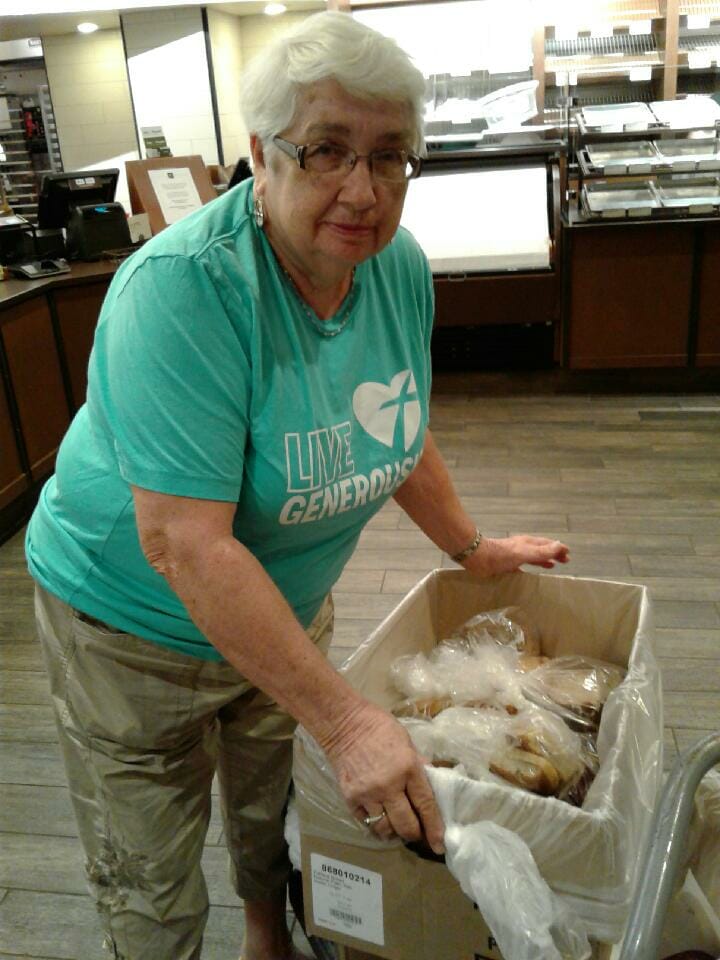
Spending several days each week as a volunteer driver for Meals on Wheels, and then serving as a volunteer Friendly Visitor through ElderServe, Bonnie imparts her positive outlook on life each day to others in the community while providing critical support to those most in need, and is today’s Daily Point of Light award honoree. Points of Light spoke to Bonnie to learn more about her work with ElderServe and Meals on Wheels.
What inspires you to volunteer?
Service has always been my life’s mission. It’s become a part of who I am and what I do. And spending time with these senior citizens – they’re really an inspiration to me.
Describe your volunteer role with Meals on Wheels and Friendly Visitor.
Three times each week, I volunteer for Meals on Wheels, which means I deliver a hot meal to homebound seniors, and I visit the senior at a certain time so they can count on me being there. We’re kind of like the mailmen: we’re there in sleet and snow, but not if the schools are closed. For Friendly Visitor, I am matched as a companion to an older adult to provide friendship and emotional support to help the individual maintain their independence and well-being. Being a senior who lives alone myself, I can understand the challenges of not being able to get out. God’s been good to me, and I’ve been blessed – I can still drive. But many can’t. You can get so isolated as you get older, which is why programs like this are so important.
You keep pretty busy. Tell me about the telephone calls you make to seniors.
On Wednesdays, I volunteer for TeleCare, another program at ElderServe. I make wellness calls to seniors – I’ve been doing that for even longer than I’ve driven for Meals on Wheels. The calls can be made from home or your office, and you end up developing friendships with these people. One of the ladies I talk to, she is now 94-years-old, she’s an African-American lady who grew up in Alabama. Her great-grandmother was a slave. The stories she’s told me about her life – not only is she an inspiration, but I’ve learned from her stories.
What’s been the most rewarding part of your work?
To me – getting older means you start to lose your support systems. My volunteerism means that someone has me to vent to, or complain to, or laugh with, or take them places they wouldn’t normally get to go. As a mother whose children are grown, helping others fulfills a part of me that instinctually wants to nurture people.
You say volunteering is a part of who you are. Explain the impact of your service.
It’s like a rock thrown into a stream, it ripples out. Things can start small and then expand from there. And thinking about all the lives that it can touch, maybe this small action that you take can give someone else hope.
Why should others volunteer?
In my opinion, when you let yourself go and do for other people, it’s a fulfilling experience. You get back as much as you give. Just being able to help someone, to me, is a great blessing.
What do you want people to learn from your story?
The rewards of volunteering are much greater than the effort you put in. I think everybody needs a reason to get out of bed in the morning, and service is that something to look forward to. A lot of people don’t have that reason, other than watching TV all day – not that I can’t do that some days, because I can! (laughs)
Do you want to make a difference in your community like Bonnie Clark? Visit All For Good for local volunteer opportunities.
Post written by Marlena Militana.