Food for Thought: College Student Fights Hunger with “Swipes”
20-year-old Kendyl Lewis describes the genesis of her desire to end hunger on her college campus with the realization that many of her classmates had food left over on their meal plans, and there were way too many “meal swipes” going unused.
Discovering Swipe Out Hunger, an organization that partners with colleges to end student hunger, the Georgia College & State University sophomore started connecting the dots between food insecure students on campus, and the unused meal swipes her classmates accumulated that went to waste. Meeting with campus administrators, Kendyl worked to implement a chapter of the program on campus, and starting in Fall 2019, her college dining services will begin donating swipes to students in need.
Working to address the issue of college student hunger in her community, Kendyl is today’s Daily Point of Light award honoree. Points of Light spoke to Kendyl to learn more about her volunteerism with Swipe Out Hunger.
What inspires you to volunteer?
Knowing that I have can help even just one other individual is what motivates me every day. I’ve fallen in love with Swipe Out Hunger’s mission of taking a system already in place, and enabling students to help their peers out, without any additional money or fundraising. It’s a no brainer to provide resources to these students who are going through a tough time.
Kendyl Lewis says of her work fighting hunger: “Not only are we serving a meal, but we’re educating people on the systemic issue that food insecurity is.”/ Courtesy Kendyl Lewis
Describe your role with Swipe Out Hunger.
I handle education, logistics and awareness aspects within the national organization and our campus chapter. Working with my school’s administration and dining services, I compiled several reports about food insecurity across the nation and at our school, and provided suggestions on how our school can help to resolve the issue. Whether a parent has recently lost a job, or someone is sick in the family, or the family can’t support the student’s education anymore, there are students on our campus who are temporarily struggling with food insecurity, and we want to help them. Additionally, I’ve worked with my school to take wasted food from our dining hall or restaurants and turn that perfectly usable food into new meals for food insecure students. Not only are we serving a meal, but we’re educating people on the systemic issue that food insecurity is.
Describe a challenge that you encountered through your service.
Student food insecurity was a topic that just wasn’t brought up at school. We didn’t have any data to indicate how many students were hungry on campus. I started hosting campus-wide conversations to raise awareness of the issue, and then worked with my school to demonstrate why helping these students was necessary. The fact that some of my classmates were going hungry was shocking to me when I first heard about it, but I didn’t want it to get swept under the rug, so we dealt with the issue head on.
What’s your life motto?
People matter. That’s something that my dad always used to tell me growing up. If you keep that in the back of your mind at all times, it helps you to become more patient, understanding, and you keep in perspective why you serve other people. I live by that motto every day.
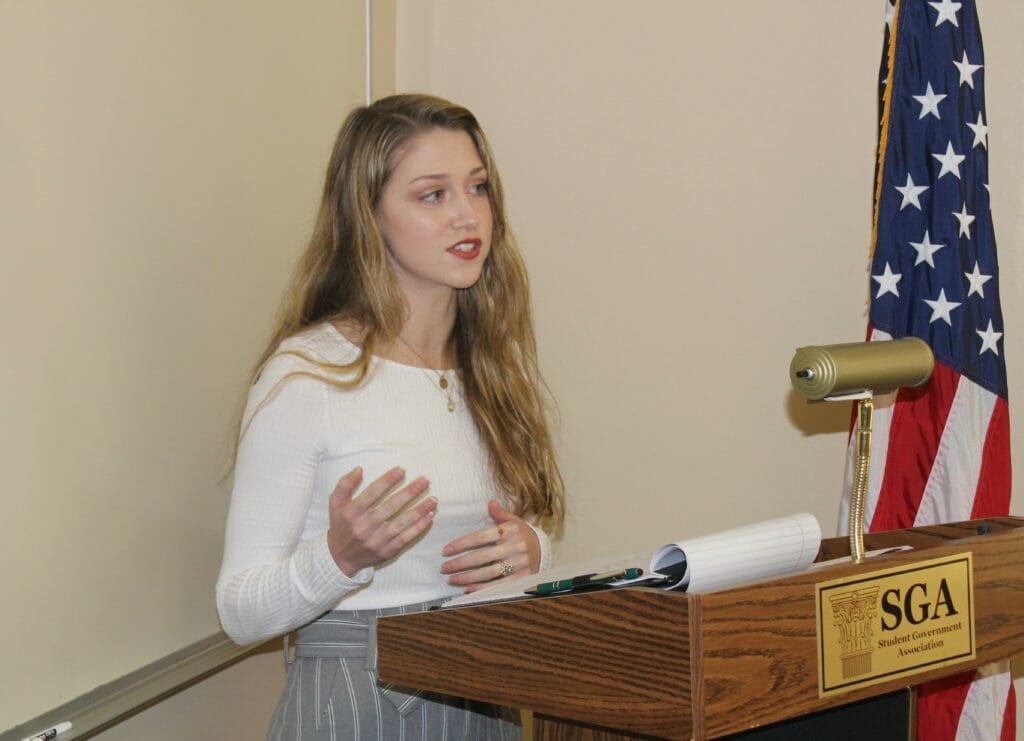
Kendyl Lewis presents a resolution to increase hunger-fighting efforts in the Student Government Association at Georgia College./ Courtesy Kendyl Lewis
What have you learned through your experiences as a volunteer?
There’s a very strong stigma associated with food insecurity. There are individuals that don’t want to be seen having a free meal. But I’ve gotten the opportunity to sit down with some of these people, understand why they’re in this current situation and ask if there’s anything we can do to help. You gain more of an understanding of people and their needs, which is experience you can’t get without volunteering your time or taking the initiative to go outside your bubble in life.
Share one personal story with me from your volunteerism.
Recently, I’ve had students come up to me and say, ‘hey, my friend told me they’re out of meal swipes and they don’t have enough money to get food. Do you have any ideas about how I could help my friend?’ Hearing that people are looking for ways to help others, and they’re coming to me because I have this experience, made me realize that my efforts are making an actual impact on people’s lives.
What do you want people to learn from your story?
I hope people know they can help, even if they don’t necessarily have the financial means to help other individuals. Maybe their job doesn’t allow extra time to volunteer, but you can educate a friend or tell somebody about an available resource. Don’t give up, there are ways you can help your community across a variety of issues.
How can readers help?
Please check Swipe Out Hunger’s website for more information about how you can help and give back: https://www.swipehunger.org/.
Creating Unforgettable Experiences for Families with Critically Ill Children
Meet Daily Point of Light Awardhonoree Linda Zampelli. Read her story and nominatean outstanding volunteer or family as a Daily Point of Light.
As a parent and grandmother, Linda Zampelli can’t imagine anything worse than having a critically ill child. Motivated to provide uplifting experiences to families in these circumstances, Linda has dedicated her time to bringing personalized vacations to life since 2013, working towards replacing burdens with joy.
After retiring, Linda explored different volunteer programs in order to find the right fit for her skills. She found Casey Cares, which became near and dear to her heart because of its focus on keeping families’ spirits high through personalized programming, from simple movie nights to mini vacations. Linda understands how difficult it can be to plan even the smallest of activities when a child is in the hospital, so she decided to begin meeting families where they are.
Linda works diligently to handle the vacation program at Casey Cares. She volunteers each week to make arrangements for vacations, including planning, creating and shipping the vacation package to each family. Every vacation consists of a free one- or two-night hotel stay, passes to a local activity of interest, gift cards for meals and new pajamas for each child in the family. Linda also finds new donors to support Casey Cares, coordinates with hotels, and reaches out to restaurants and entertainment entities for donations.
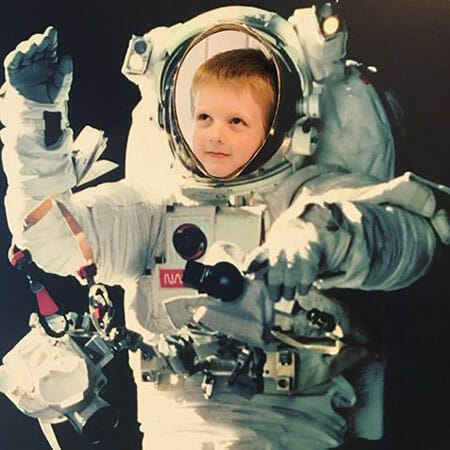
With Linda’s help, Jaxsen and his family were able to receive a VIP tour of the NASA Wallops Flight Facility.
Casey Cares’ programming is unique, since eligible families can receive a vacation package every other year. Volunteers like Linda are committed to ensuring that families receive continuous, ongoing support, and providing opportunities for them to build positive memories that will last a lifetime. She focuses on helping entire families, not simply the sick child.
One of Linda’s favorite trips to plan was for Jaxsen, a 3-year-old boy who loved NASA and rocket ships. Linda discovered a NASA rocket program based in Chincoteague, Virginia, but she had never planned a vacation in that area before and had no contacts in the city. Even though it was a big challenge to take on, Linda was on a mission to get Jaxsen and his family to the NASA Wallops Flight Facility.
With Linda’s help, Jaxsen and his family were welcomed by the small town and were able to receive a VIP tour of the NASA facility. She also partnered with the Chincoteague Chamber of Commerce to secure a boat cruise, miniature golf passes and treats at the local ice cream shop for the entire family.
“The families are so excited and grateful for the opportunity to take these trips,” said Linda. “It just warms your heart, that’s all there is to it.”
Linda and the volunteers at Casey Cares fill needs that many people don’t know exist, and support families with critically ill children in simple, yet impactful ways. “I know that volunteering is what you make of it,” Linda said. “I’ve learned how strong these parents are. They look at every opportunity as an opportunity to make another memory and pick themselves up.”
Volunteer Serves as an Advocate for Fellow Cancer Patients
Mid-treatment for cholangiocarcinoma, a rare cancer of the bile duct, Cait Telaak hit the road, spending 30 days in a minivan with her husband, hiking 18 national parks and driving 10,000 miles. She jokes that the two knew they were meant to be together when they came out of the road trip still liking each other.
The gusto with which Cait approached that whirlwind vacation with her husband is the same energy that she has applied as a volunteer serving fellow cancer patients like herself through the Cholangiocarcinoma Foundation (CCF). The organization, whose mission is to find a cure and improve the quality of life for those affected by the rare and aggressive cancer, is a resource in research, education and public awareness for patients, their families and those in the medical field. Serving as a literal lifeline while she battles for her own wellbeing, Cait is a patient mentor, helping individuals navigate the rigorous emotional and physical strain of the disease, in addition to serving as an advocate for patients just like her, working to raise awareness of CCF and its mission.
Cait is supporting others fighting cholangiocarcinoma, and is today’s Daily Point of Light award honoree. Points of Light spoke to Cait to learn more about her volunteerism with CCF.
What inspires you to volunteer?
Volunteering has become so much more powerful to me now that the cause is personal. Constantly talking to patients and caregivers allows me to give back, because I owe CCF for how they provided resources to me when I was first diagnosed. This cancer seems to pick almost to a person, the most remarkable, loving human beings.
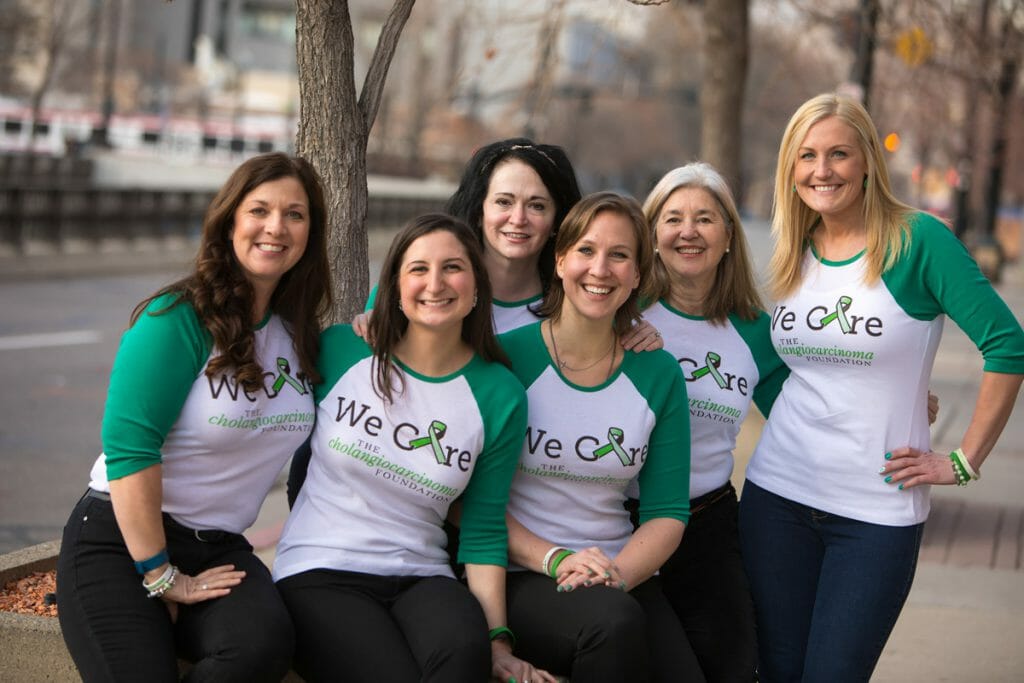
Cait is pictured third from the right with the C.A.R.E. Team, a targeted volunteer group seeking to bring education and awareness to communities and local medical centers./Courtesy Cait Telaak
Describe your role with WeDo Club.
I was a data analyst, however stopped working last year to focus on my medical care. I volunteer hundreds of hours annually with CCF in a number of different roles, including:
Patient advocate and mentor: I focus on community building and supporting people through their journey. This sometimes means talking to someone for an hour or more on the phone, helping them to navigate the overwhelming physical and emotional toll this disease takes.
Research advocate: This is where the science part enters, as I’m helping to bring science to the patient. I’ve attended advocacy efforts such as webinars and face to face patient panels as a representative of CCF, and I also take on miscellaneous projects for the foundation.
Nursing Advisory Board: Serving as a patient advocate during these board meetings, I’m the designated note taker, and attend to help guide their mission and what they do. The team primarily produces resources for medical professionals and patients alike around different challenges encountered with cholangiocarcinoma that might not be well documented or well known.
What have you learned through your experiences as a volunteer?
I’ve never been a scientific person, so engaging with this foundation has provided me with invaluable knowledge about my disease, and also, the ability to mentor fellow patients. One of the biggest barriers to wellness is navigating the system and being able to talk to medical professionals. I’ve amassed this knowledge base through foundation resources and public information to advocate for myself and be that voice for fellow patients.
What does it mean to know you’re helping other people?
Even though I’m sick, I can still contribute. Personally, I’m able to focus my energy and passions on projects and interactions with other patients. It’s an honor to be able to help and serve these wonderful people through a challenging situation, and one that I’m dealing with personally as well.
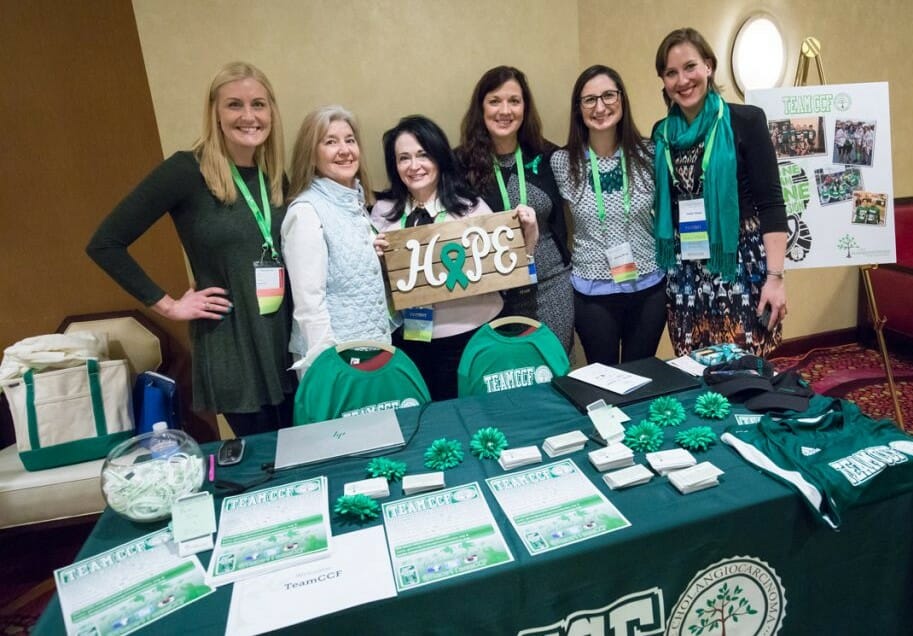
Cait Telaak is pictured far right with fellow volunteers at the 2018 Cholangiocarcinoma Foundation annual conference where she was both a volunteer and a presenter./ Courtesy Cait Telaak
Share one personal story with me from your volunteerism.
I spoke at a symposium in St. Louis, which is where I was first diagnosed with cholangiocarcinoma. I shared my email address during one of the presentations so that attendees had a contact to reach out to. To this day, there are still patients from that event that I correspond with. There are people who have maybe never met another patient with cholangiocarcinoma, and they’re just trying to make connections with other people in the community. The response has been incredible. I was there to serve them, and they’re still giving back to me.
What do you want people to learn from your story?
As much as I would love to say, ‘be gone, cancer,’ we are not able to control the cells dividing in our body. I have to focus on what I can control, and that’s how I engage with my reality and how I respond to it. The most meaningful way I’ve been able to do that has been through volunteering, finding that purpose in something that is otherwise so cruel and random. There has been so much joy and connection to be found in the relationships I’ve formed.
How can readers help?
CCF’s annual conference will take place in April 2020. Please check the CCF website for more information about additional events, and how you can help: https://cholangiocarcinoma.org/misc2/2019-annual-conference/.
Minnesotan Woman Helps Others Heal Through Equine Therapy
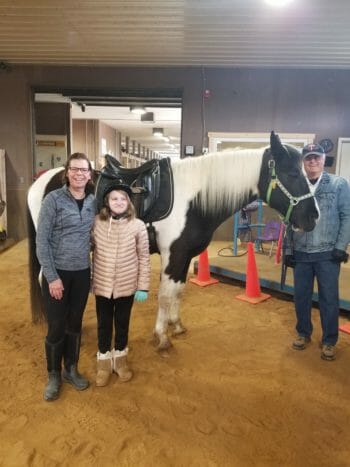
As a lifelong rider and equine fan, Laura Scott knows how transformative the riding experience can be. The powerful connection between horse and rider is therapeutic for everyone, which is why she’s so thrilled to volunteer with We Can Ride, a non-profit that improves the lives of individuals with disabilities or special needs through equine assisted activities and therapy. Eager to be around horses, but without her own horse to ride, Laura found out about We Can Ride through a neighbor and has been working with the group for more than two years now. Whether she’s cleaning stalls or walking alongside the horse and special needs rider, Laura knows she’s making a difference.
Laura is committed to making a difference in her community and she is today’s Daily Point of Light Award honoree. Points of Light spoke with her about her commitment to service.
What inspires you to volunteer?
I feel so very lucky to be doing something I love – being around horses- and play a small part in facilitating the horse-rider connection that is such a powerful force for good.
Describe your volunteer role.
I have several volunteer roles. I sidewalk – which means I besides a therapy horse and rider for hippotherapy classes – hippotherapy involves physical, occupational, or speech and language therapy on horseback, with both a therapist and volunteers assisting. I also regularly exercise the horses to keep them in shape for their therapy jobs. As a substitute feeder, I feed the horses twice a day and muck out their to paddocks and stalls. I also boot camp new horses – get them used to new surrounding. I’ve also co-chaired and raised money for We Can Ride’s annual fund raising event. I am usually there four or five days a week.
This little girl was initially afraid of horses but through We Can Ride, she’s made huge strides. Laura Scott has worked with her as a sidewalker./Courtesy Laura Scott
What’s been the most rewarding part of your work?
Being able to see how the horses help these people is incredible. They sense the person’s fears and disabilities and somehow a bond of trust is formed. That’s a powerful thing – when a little girl says that her horse is her legs so she can run, how can it get better than that? Seeing the smiles and sense of accomplishment of our riders is the best reward.
What have you learned through your experiences as a volunteer?
I have learned watching and knowing all the volunteers and staff that the little things really do matter. A smile, a hug, a word of encouragement goes such a long way. I have learned that therapeutic riding changes lives for the better, even when the rider starts out afraid or hesitant.
Are there any future partnerships, programs, or events that you are excited about?
I am excited and hopeful to grow our organization to assist more people. We are opening our large clear span arena this spring – this will allow us to have so many more therapy clients and give the horses so much more room to do their jobs.
Why do you think it’s important for others to give back?
If you are thinking about volunteering at all just find a place and jump in! In most cases you will receive far more than you give. I tell all my friends about We Can Ride – it’s become like a second home for me.
What do you want people to learn from your story?
That being a small part of a change making organization is incredibly satisfying. I see lives changed daily and I am grateful to be a part of that. As someone who has a busy career in real estate, it’s so rewarding to switch gears from making a living and be involved in something that just involves giving back.
High School STEM Superstar Engages Younger Children in STEM Education and Tech
Shyla Summers is a STEM champion, and is on a mission to introduce younger children in her community – particularly ones that think they might not be smart enough – to engineering and computer science.
Founding the WeDo Club in 2018, the current Los Angeles high school junior has translated her passion for robotics into a larger effort to engage young children in her community in STEM education and tech. Through the WeDo Club, creating curriculum, hosting education sessions and battling stereotypes, Shyla is introducing students to STEM so that any child, regardless of age or experience, is able to take part and feel confident in what they are learning.
By democratizing STEM education for students in her community, Shyla is today’s Daily Point of Light award honoree. Points of Light spoke to Shyla to learn more about her volunteerism with the WeDo Club.
What inspires you to volunteer?
Being so involved in STEM when I was younger, I wanted to give back to the community using that skill set. When I’m volunteering, I’m watching kids who never thought they could do STEM because they weren’t smart enough, realize that, ‘hey I’m smart enough’ to learn more. Volunteering has made me realize why introducing this kind of education and challenging our students is so important.
Describe your role with the WeDo Club.
I recruit mentors for our sessions, develop the curriculum for students and host the education sessions, volunteering up to 30 hours each month. WeDo Club is held at the La Crescenta Library in LA County, and during these sessions, we have volunteer high school mentors who are there to work with the students and help me make sure the class is engaged. I’ve developed all the curriculum, which is based off of my experiences being on robotics teams, and also have created a guide for the sessions and how to launch a program like WeDo, so that once I’ve graduated from high school, others are able to continue our program.
Describe WeDo Club Activities.
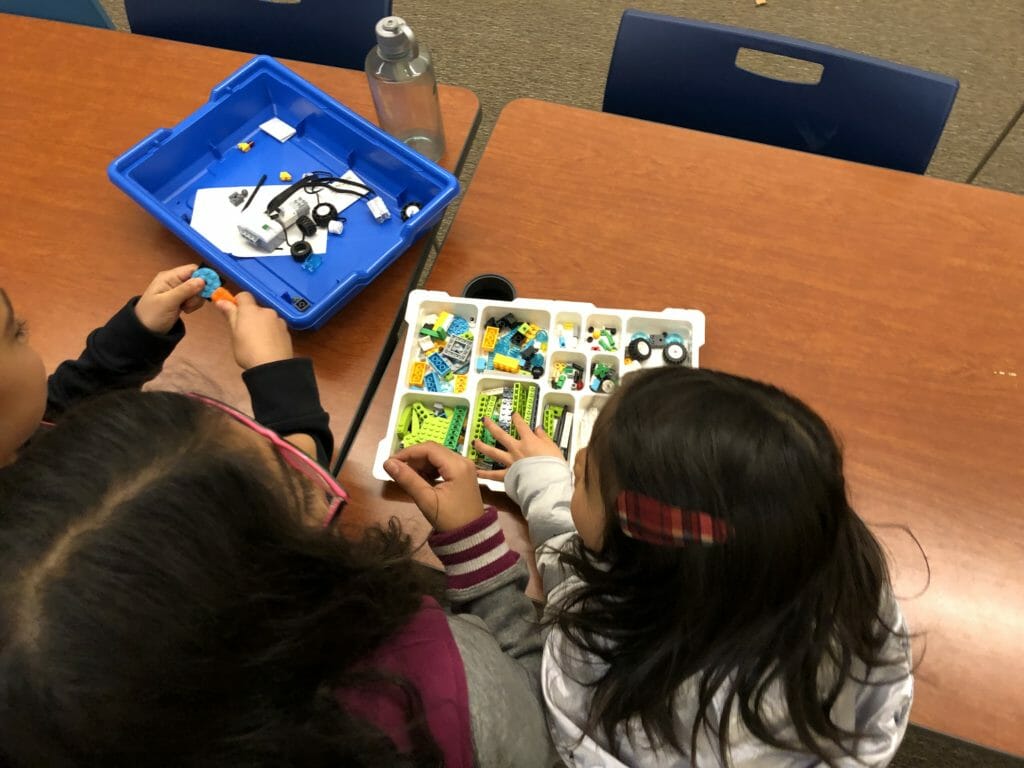
The students will build something small to start, then they go on to build robots during the next session. These sessions build their confidence so they feel good learning about engineering and computer science. We talk about teamwork a lot too.
Shyla is introducing students to STEM through WeDo Club so that any child, regardless of age or experience, is able to take part and feel confident in what they are learning./Courtesy Shyla Summers
You’re being recognized for being an inspiration. How does that make you feel?
(Laughs) Hearing that all my hard work has paid off, especially for the kids in our programs, and that it’s being recognized, really means a lot to me. Some students who have been a part of our program have gone on to join other STEM-related programs in our community. I’m extremely happy to know I’ve helped to inspire some kids.
What’s your life motto?
This is a motto from a middle school robotics team I was on: What does a team mean and how can I help? It’s a good model to live by. You consider others when you’re working in a group, and taking a look at what is needed versus what you want as an individual. The community really needed a program like this to open doors for children to educational opportunities that didn’t really exist before.
What have you learned through your experiences as a volunteer?
I’ve learned I really love teaching, sharing knowledge with others and inspiring younger students. We’re helping them to realize STEM is something they can do.
Share one personal story with me from your volunteerism.
During our second session of WeDo Club, we were about to start teaching the students about programming. There was this one kid who didn’t think he could be in STEM, or do anything that involved engineering or computer science. I pushed him to be involved. By the end of that session, I heard all the kids start laughing in the room. They’d built these disco ball robots, they lit up and made different sounds. It was really cool, and this kid who didn’t think he could be in engineering, his eyes lit up when he realized what he’d made. He was showing his robot to everyone. That was a really cool moment for me.
What do you want people to learn from your story?
If you see a problem in your community, pick something you’re passionate about and tackle it head on. It takes perseverance and continuing to ask to get that support.
What do you do for fun?
I’m on the Robotics team! During our season, we have six weeks to build a 120-pound robot. That’s where I spend most of my time during the winter. I absolutely love it.
How can readers help, or get involved?
We’re planning another WeDo Club session for Fall 2019. For more information, please check the La Crescenta Library website: https://lacountylibrary.org/la-crescenta-library/.
Do you want to make a difference in your community like Shyla Summers? Click here to find local volunteer opportunities.
Silly Socks Bring Smiles to Ailing Kids
Some silly socks have polka dots, some have stripes. Some are bright red, others the colors of the rainbow. There are socks decorated with spider man, music notes or dinosaurs. But the one thread that binds all of the silly socks together is that they bring smiles to kids at Lakeland Regional Health Hospital in Winter Park, Florida. Two years ago, at the age of 14, Zachary Kirkland was assigned a project – to dream up a way to make a difference in his community. Since he’d visited family members in the hospital, he remembers jokes about the ugly long blue socks that were standard issue for hospital patients. Why not literally brighten a hospital stay for kids his own age, or younger, with a bag of play and craft items and a pair of silly fun socks sure to bring smiles to an otherwise difficult situation? Silly Sock Saturdays was born, with Zachary, now 16, founder and CEO of a 501-C-3 nonprofit corporation. The young changemaker, a longtime volunteer at his church and a boy scout on the cusp of making Eagle Scout, delivers 60 bags and pairs of silly socks to kids 3-18 every month to Lakeland Hospital, with hopes of expanding his vision into more Central Florida hospitals in the near future. Because being sick is scary, silly socks bring smiles to kids in need, and that’s a step in the right direction.
Zachary is committed to making a difference in his community and he is today’s Daily Point of Light Award honoree. Points of Light spoke with him about his commitment to service.
What inspires you to volunteer?
I’ve been taught to have an attitude of servitude my entire life, at school, in church and scouts. Giving back to my community is just something that is a part of normal life.
Describe your volunteer role. When I started, I had to figure out all the paperwork to fill out to be a nonprofit – how to make it happen. I am constantly out there, talking to groups and partners and explaining the work that we do. I speak to the media, community groups, organize fundraisers. And we put together 60 bags per month to deliver to the local hospital. Each bag is worth about $8-$10 and is geared by gender to certain age groups so each one is a little different and special.
What’s been the most rewarding part of your work?
Really the feedback I get from the kids and the parents, who see how happy a bag has made their child. I get photos of the kids smiling – that makes me so happy.
What have you learned through your experiences as a volunteer?
I’ve learned to ask for what I need, to interact with adults to get donations. That had me kind of worried in the beginning, I struggled with that outreach at first. But I’ve grown in my confidence and ability to handle that – I see it as life skills that will help me moving forward.
Are there any future partnerships, programs, or events that you are excited about?
I have my big annual bowling fundraising coming up July 27 at Cypress Lanes in Winter park, so that’s exciting. I also hope to expand to other hospitals in the near future.
Why do you think it’s important for others to give back? Giving back is a way to keep the good going. There is a lot of negativity spread throughout the community. Doing good combats that and brings positive energy that creates a force for good.
What do you want people to learn from your story?
Everyone can give back in some way and be an inspiration not matter what their age, where they come from or how they have struggled. They can bring their life experience and wisdom to helping others, which will in turn help them.
After Retirement, Volunteer Creates an Inclusive and Safe City for People of all Ages who Walk and Bike
Jim Durham is passionate about keeping the streets in his Alexandria, Virginia, community safe. After retiring from full-time employment, he searched for ways to make a difference locally and was drawn to the spirited volunteers who advocate for a safe and accessible city for all. Jim now serves as the chair of the Alexandria Bicycle and Pedestrian Advisory Committee, and brings to life the organization’s vision of a safe, connected network of streets and trails filled with people of all ages.
Since 2014, Jim has led advocacy efforts regarding infrastructure and policy change at the Alexandria Bicycle and Pedestrian Advisory Committee to make the city inclusive towards active modes of transportation. The organization is made up of local volunteers and engages thousands of Alexandria residents to find solutions for safe walking and biking. Because of Jim’s passion and gift of inspiring those around him, BPAC’s number of active members has more than doubled in the past five years.
According to Jim, infrastructure change is an issue that should be prioritized in cities and goes beyond increasing the numbers of bike lanes. He works towards ensuring pedestrian safety by advocating for increased crosswalk lead times, more no right turn on red signs and an integrated network of protected lanes, resulting in a 60 percent improvement in the reduction of crashes and accidents.
Jim believes that bike activity and safety is something anyone of any age can enjoy. He established a partnership with Alexandria Public Schools in 2016, and provides walking and biking education programming to elementary school students. The partnership began with a Bicycling in the Schools pilot program, and today consists of multiple initiatives, including fundraising for bicycles, bicycle training for teachers, volunteers delivering education during P.E. classes and more. “Around 25 percent to one-third of students we’ve met have never been on a bike before,” said Jim. “If we don’t want these skills and opportunities for joy to evaporate, then we need to teach them.”
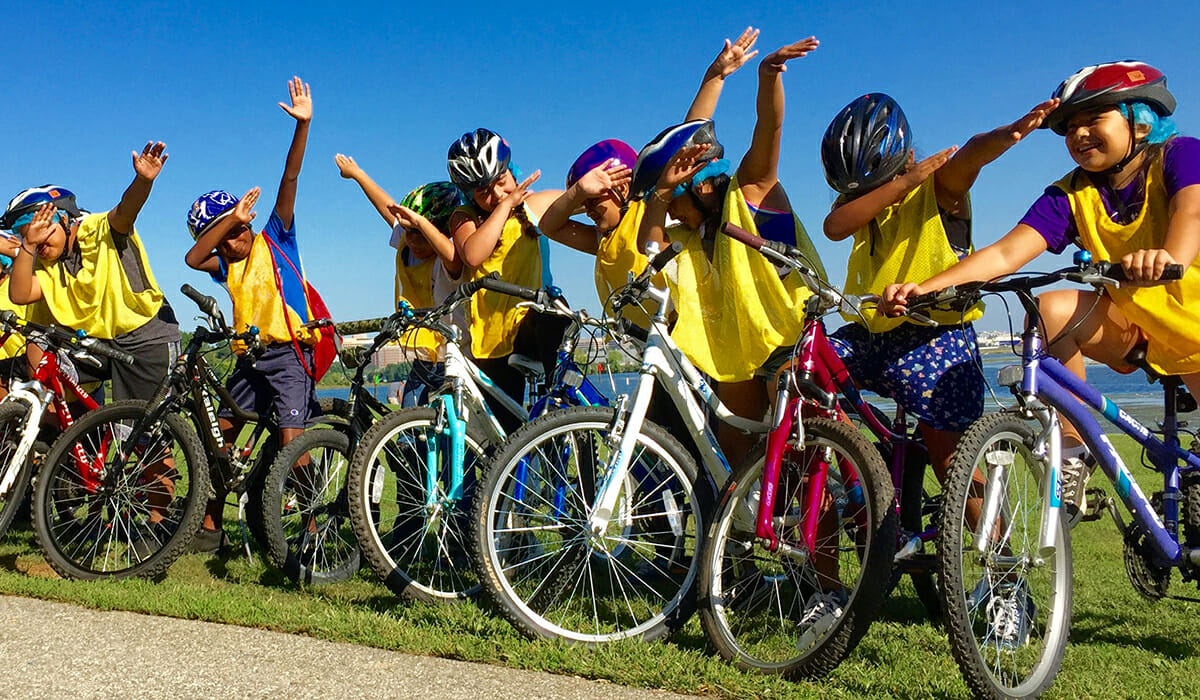
Jim Durham helps youth improve their cycling competence through a Bike Rodeo program, where cycling stations address equipment, skills and signaling drills, rider readiness and safety education.
With a focus on youth safety, skills and fun, BPAC’s Bike Rodeo program takes youth education to a new, sustainable level for kids and teens. In partnership with local organizations in Alexandria, Jim helps youth improve their cycling competence, safety and enjoyment by leading young cyclists through cycling stations that address equipment, skills and signaling drills, rider readiness and safety education. Volunteer mechanics tune up bikes and run helmet checks to ensure that kids are safe, and unique station activities reflect real-world practices similar to crossing streets and signaling to cars.
Additional innovative BPAC programs that Jim leads include Operation Illumination, an initiative that gives maps, bike lights and reflective gear to bikers at no cost, and bike mentoring where beginners are matched with mentors to help find their best bike routes and ensure that a bike is in good condition to ride.
One of Jim’s favorite memories from volunteering has been spending time with the youth in his community. “The kids are truly gleaming with joy when they get to ride. It is one of the most rewarding experiences to see a kid’s newfound confidence when they can operate and ride a bike,” Jim said.
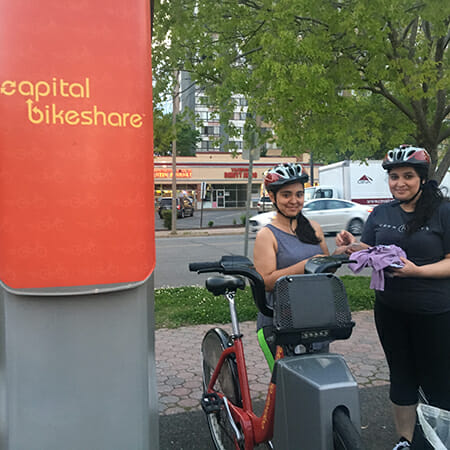
Jim Durham gives community members in the Arlandia neighborhood access to new sources of transportation through the Arlandia Bikeshare Partnership.
Jim continues to find new ways to engage others, including a program called the Arlandia Bikeshare Partnership, which gives community members in the Arlandia neighborhood access to new sources of transportation. It is funded by a People for Bikes grant where nonprofits can sponsor subsidized Capital Bikeshare memberships for low-income members of the community. In partnership with the Four Mile Run Conservatory Foundation, Casa Chirilagua and Capital Bikeshare, programs will discuss transportation issues relevant to the Latino community of Arlandria and will provide the adult students with a one-month trial and/or one-year Capital Bikeshare membership in addition to helmets and additional mentorship.
“There are so many ways to give back locally, and I want to encourage everyone to find one that fits their passions,” said Jim. “We can all be respectful of a city’s infrastructure and advocate for changes that make it safer for people to walk, bike and be active.”
Grad Student Helping Others Achieve Goal of Having a Place to Call Home
Sammy Hadi says he’s never had to worry about having a roof over his head, and is helping to make sure others in his community are able to say the same thing.
As a volunteer with the South Palm Beach County chapter for Habitat for Humanity, Sammy is serving alongside people in his community to build simple, decent homes for those in need of adequate shelter. For the thousands of low-income families who struggle to build stable foundations in communities, Habitat makes that dream a reality, enabling individuals to earn a home of their own.
Logging more than 100 hours of service over the last year while simultaneously being enrolled in two graduate degree programs, Sammy is putting his community first by helping to put a roof over the heads of others, and is today’s Daily Point of Light award honoree. Points of Light spoke to Sammy to learn more about his volunteerism with Habitat.
What inspires you to volunteer?
A close friend of mine passed away, and I volunteer in his name. With his passing, I realized that life is so short, I want to touch as many lives as possible and make a difference. When I volunteer, he’s with me.
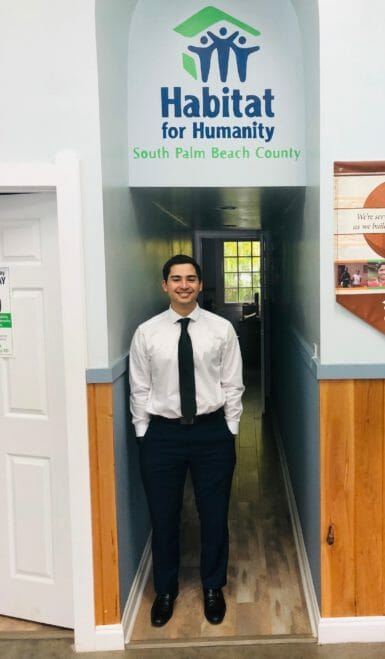
As a volunteer for Habitat for Humanity, Sammy assists with daily tasks, projects and outreach necessary to Habitat for Humanity’s mission./Courtesy Sammy Hadi
Describe your role with Habitat for Humanity.
I have several volunteer roles at Habitat. Included amongst my activities:
● Hotline: I man the Habitat hotline, and divert calls to the restore/donation line when applicable.
● Greet guests: I assist volunteers and individuals who need help as they walk into the door, and help direct them to the right office or individual.
● University outreach: I am building a plan to facilitate outreach activities for our Habitat chapter at local universities. It will ideally be implemented down the road to help recruit more volunteers.
● Special events: I attend special events and volunteer on behalf of our chapter. I was able to volunteer on behalf of Habitat at a local pickleball tournament recently.
● Donations: I send out donation letters on behalf of the CFO and CEO of the affiliate.
Describe how you’re helping with outreach for Habitat for Humanity:
Since I volunteered at Habitat while an undergrad student, I was recruited to help plan university outreach for our chapter. I’m doing ongoing research about different organizations, and how to most effectively reach out to them to better engage with college students.
You’re being recognized for making a difference and making the lives of others just a little easier. How does that make you feel?
It makes me feel amazing, but I know that I can do even more to help people. I won’t stop, because I believe someone’s true worth isn’t about how much money they accumulate, but by how they live their life. It’s about helping people.
What have you learned through your experiences as a volunteer?
How collectively together we can make a difference. I’ve always thought that as an individual, my efforts alone didn’t do much. But all voices together can truly make a difference, and I’ve seen that in effect through Habitat. As a nation, we can do more, but Habitat has opened my eyes to what more I can do myself.
What’s been the most rewarding part of your work?
A family came into the Habitat office, and I sat with a little girl as her parents were being assisted. She colored a drawing for me, it was a house. I put the drawing up on my wall in my room when I got home. A home can bring stability into a child’s life, and her experience really hit home for me. Seeing that little girl drawing a home was so powerful because not everyone can have a home. I’m not rich, but I’m not poor, and I’ve always had a roof over my head. Realizing that some people don’t have the same basic things you have, it really opens your eyes to the great need that exists in all of our communities.
What do you want people to learn from your story?
I want people to go out and seek volunteer opportunities. It’s easy to donate money, so I invite you to go and see from a personal standpoint how you can help. For example, with my Habitat experience, when you’re building a home or meeting a family, it’s much more personal. I loved volunteering at Habitat from the moment I walked in, I was hooked.
Are there any upcoming events you’re excited about?
Habitat is hosting a Women Build starting May 9th, it’s one of their signature events. Please check Habitat for Humanity’s website for more information about the event, and how you can help: https://www.habitatsouthpalmbeach.org/women-build.html.
Teenager Starts Nonprofit to Help Children with Autism Throughout Southern Nevada
While most remember their sixteenth birthday as the day they were able to get their driver’s permit, Radhika Shah’s sweet sixteen will be remembered a bit differently — it was the day she started her nonprofit organization, Real Autism Difference (RAD). The Nevada native’s goal was to create an organization where families with children diagnosed with autism could find support, education and activities that would positively impact their lives. RAD offers educational workshops, organized open play for children at sensory gyms and most recently, an after-school program and summer-care program. Although RAD only recently celebrated it’s first birthday, the organization has held about 20 events in the past year, from teaching workshops at a homeless shelter with autistic children, to a community 5k walk and run that saw over 700 attendees and close to 100 volunteers.
Radhika was inspired to start RAD based on her own family’s struggles to find adequate resources after her younger brother, who had previously been on the high-functioning autism spectrum, suddenly developed severe Autism Spectrum Disorder after an illness. She says one of the most rewarding parts of founding her own nonprofit has been being able to better connect with her community, through hearing the stories of other families with children with autism, as well as learning about and partnering with the other organizations and resources in her area.
“The southern Nevada community in general has been very supportive,” Radhika said. “Something that’s pleasantly surprised me was how many people, once you’re willing to speak to them about a cause, are willing to support it.”
For her selfless efforts in founding a nonprofit to fill an important need in her community, Radhika is today’s Daily Point of Light Award honoree. Points of Light spoke with her to learn more about how RAD helps children with autism and their families in southern Nevada.
And to hear more about Radhika’s story, you can listen to the TEDx talk she gave at the University of Las Vegas in 2018.
Describe your volunteer role with Real Autism Difference.
I’m the founder of Real Autism Difference, which is a nonprofit organization. I founded it last year for my 16th birthday, so we actually just had our one-year anniversary. Basically I coordinate a lot of the events that we do. RAD is an organization that holds different types of family educational workshops, we have open play at sensory gyms and local sensory areas, we do different events and then actually this year we started our after-school care program, which is for children with autism. The idea of Real Autism Difference is to provide resources for families in southern Nevada who have children with autism.
What inspired you to start Real Autism Difference?
My younger brother Amar is diagnosed with autism. He’s only a year and a half younger than me so I’ve always been really close with him. In middle school, I started volunteering in the special education classroom to spend more time with him, and that’s when I started to realize how many parents needed to leave work and pick up their children early because they didn’t have a place for their children to go after school. They didn’t have any sort of day care for their children with autism in case they needed to run errands. People like my brother need 24-hour supervision and if a parent goes to a grocery store, the child with autism has to go, and if the child can’t go to a grocery store then basically the parent just has to stay home with out child, if they require that supervision. I thought it was necessary to have a place where children could go and be supervised, sort of like a day care or a facility with a trained ADA therapist, where children with autism could go and their parents could run errands. That was something that was missing in southern Nevada and just didn’t exist.
Radhika Shah stands at one of the sensory gyms where RAD organizes open play for children with autism./Courtesy Radhika Shah
What kind of feedback have you received from people who go through your after school program and their families?
I think actually it’s just been so great. We’ve had parents who have just started the after-school program, they said that it’s something that’s been extraordinarily helpful for them and it’s something that they find to be very beneficial and it acts as a good resource, so the feedback has been great. We have a summer break program starting soon, so we already have families registered and are excited for that. I think it’s just something that can only have positive feedback because so many families need it and I think that’s what makes it prominent in southern Nevada.
What do you want people to learn from your story?
My younger brother — it’s a crazy story. He was diagnosed with autism at the age of two so at a very young point, but he was high functioning. He could do second grade math, he could read, and he did have autism but it wasn’t as prevalent as it is now. We went on a vacation in central America and when we returned, he developed a very high fever. He lost bowel and bladder control, he lost his reading abilities, he lost his math abilities and he basically decompensated to a kindergartner or preschool level. We still don’t know what happened. We consulted several physicians across the country, and my parents are also physicians as well, and no one can figure out how he lost all these abilities and how he went from a high-functioning child on the spectrum to a really low-functioning child on the spectrum. Throughout the next decade, because it happened when he was five years old, we have been trying constantly to get him back to where he was. He’s made improvements but he’s still never where he was, at that high functioning ability. He’s a lot better now, but there was a point where he couldn’t even go to school. Now he goes to school, he goes to the same school as me, he’s in the special education classroom, but there was a point where he couldn’t go to school and he really couldn’t go out anywhere and I think just learning from that shaped me in so many ways.
Obviously having a child with autism, it can take a huge toll on families and there are many struggles that families have to endure and learn from and grow from. But I think that something we can always learn is that these negative experiences shape us. Oftentimes when we go through these struggles, we learn something from it and we can use that to help others. So I think if there’s anything that I’ve learned from this experience or that other people can learn, is that although those struggles are never good, we learn something from that and we can use that to help others and I think that’s powerful.
Are there any future partnerships, programs, or events that you are excited about?
Like I said, our summer program, continuing after-school programs and things like that, and just expanding that throughout the state, that’s something that we’re all looking forward to. Our two big events that we have throughout the year are our anniversary celebration which just passed … and we also have our annual 5k walk and run which is every January. At that event, we had like 700 people attend, which was great. That’s always a fun event so thats something we’re going to keep doing yearly.
Right now, we have open play at sensory gyms and recreational facilities, so basically depending on your age group, you can go to different sensory gyms that RAD partners with. We also have partnered with different groups at our local university and we have family education workshops there that we’re scheduling, which are basically seminars. And from time to time we like to do different workshops. One of the ones we did was at Shay Tree Homeless shelter. Children at this homeless shelter who also have autism, so a lot of care providers there, we were able to train them and let them better know how to take care of children with autism at this homeless shelter. So that was really amazing and I was really happy about that. So we just have different events from time to time, different workshops in the community and those are always great. RAD also believes in partnering with as many organizations as possible and also going to different events and things like that with other organizations, and working with them to expand. Because it’s really a community effort, so we’re always looking for outreach like that.
What’s been the most rewarding part of your work?
Just talking to families. I think it’s amazing, at some of our local play and sensory gym events, and also the RAD walk and different events, I get to talk to families and sort of learn about their experience with their child with autism. It’s very rewarding to see what you can do when you bring a community of people together and you learn about their stories and how they’ve been impacted by autism. It’s something that’s really special, I think, having my personal experience with my brother and everything he’s been through, and also getting to talk with other families and learn what they sometimes do, and what their coping mechanisms are, and the different programs that they’ve enrolled in, and what their plans are. Also when you have these different events and you get to see these children with autism who are smiling and laughing and are able to interact with other children like them, it’s just remarkable. I think thats the best part, being with the community.
Have you thought about what you want to do with the organization once you leave high school? And has working with the organization had any effect on what you want to do with your future career?
I guess with the plans for the organization and with my future in general, I want to expand the after-school care program to northern Nevada, because right now it’s just in southern Nevada and concentrated in this area. In the near future, maybe in the next year or so, continue to expand and get out to more locations and get as many kids as possible, because [the care program] just started, so getting it going and is the short-term goal. I guess as far as my goals in the future, I do plan on going to college and I plan on becoming a doctor eventually. Maybe even a pediatric neurologist, which often times is correlated, as we do see patients with autism … so I think that career was partly influenced by my entire experience with the organization. So that’s long term where I see myself in the future, and with the organization, just continuing to expand. I mean, the dream would be to have it expand to multiple different states, but that’s just something I envision. I want to stay with RAD for a very long time because it’s become a very large part of me.
Spirited Senior Helps to Clothe and Feed Low-Income Working Atlantans
Gweneth Mack jokes that she is 72-years-old going on 17 – and the spirited senior has a big heart and appetite for service that matches her youthful energy.
In 2017, the Atlanta resident, who has a part-time job working for Fulton County, decided to spend her spare time giving back, and began volunteering with the Midtown Assistance Center (MAC). The non-profit, whose mission is to provide emergency assistance to low-income working Atlantans to help prevent homelessness and hunger during periods of crisis, is a bright spot for clients, who are able to turn to MAC for help when they have seemingly run out of other options.
Serving up a personal connection to those in her community desperate for a helping hand,
Gweneth is helping to provide assistance to thousands in the Atlanta area annually, and is today’s Daily Point of Light award honoree. Points of Light spoke to Gweneth to learn more about her volunteerism with MAC.
What inspires you to volunteer?
I love volunteering, and MAC is an awesome organization. Serving gives me a sense of peace. This is going to sound corny, but it’s wonderful to see how appreciative some of the clients are. The smiles you see on their faces make the effort really worthwhile. Sometimes, if I take a food order within our food pantry, I’ll go sit down and talk with the client for a bit, ask them about their needs and preferences. I’m a good Jewish mother, I’m a good listener (laughs). That connection helps us to better understand how to help them. Especially if the client has children with them – oh my God, I’m such a pushover!
Gweneth Mack volunteers at Midtown Assistance Center where she organizes and helps to distribute groceries from MAC’s food pantry to clients./Courtesy Gweneth Mack
Describe your role with the Midtown Assistance Center (MAC).
I’m most effective helping clients behind the scenes, within MAC’s clothing closet and food pantry, and have organized several food and clothing drives in my neighborhood. I also work outside of assistance hours, keeping MAC’s records up-to-date.
Clothing and shoes: MAC’s clothing closet provides men with interview and work outfits. MAC also purchases nonslip shoes and black pants for restaurant workers and steel-toed boots for construction workers. Last year, MAC gave out 1,841 outfits and specialty work pants and shoes.
Groceries: MAC has a food pantry that provides non-perishable food for households experiencing a temporary shortage. Even though MAC’s clients are below the poverty line, many are not eligible for food stamps and need help with putting food on the table. Last year, MAC provided 5,042 bags of groceries to 3,102 people in need, including over 500 hungry children. I’ll organize the food that has come in from donors or that has been purchased. I’ll also talk to the client about their order, to make sure they’re getting the food they need for their household.
You’re being recognized for being a faithful volunteer with a passion for service and generous spirit. How does that make you feel?
It makes me smile and laugh, and I’m a toucher! I love to hug people (laughs). It makes me feel good and honored that they would say that, because there are a lot of volunteers that help to make MAC great, although I don’t know if any one of them hug as much as I do.
What powers your service?
Volunteering at MAC has become so much a part of my life. Volunteering at MAC is rewarding, it’s a family. And MAC can help with more than what I do – the staff can help with the rent, utilities, they have a program now where they have computers for children to learn. It’s just a little bit of everything.
Share one personal story with me from your volunteerism.
Sometimes, we might have a client who has had some unfortunate event that caused them to lose their job and/or their home. Often, if they are on the streets or even staying in a shelter, they have had all of their belongings stolen: clothes, personal identification, money, important papers, etc. The staff and volunteers at MAC work diligently to help these victims get back on their feet. While I am incredibly honored to have been awarded the Daily Points of Life award, MAC is an organization that deserves the accolades.
What’s your message to others who want to give back to their community?
Call MAC. They’re always trying to get more volunteers. And if you don’t live in our community, it depends on your interest. If you’re interested in children, there are always wonderful organizations that you can help. I am a firm believer that giving back really helps others, and helps you personally. There’s so much need in this country and in this city.
How can readers help?
MAC’s annual Midtown Race for MAC 5k is on May 11th, 2019 at the Park Tavern in Piedmont Park in Atlanta. Please check their website for more information about the event, and how you can help: http://www.midtownassistancectr.org/mac-happenings/midtown-race-mac/.