Planting Seeds of Service in Tropical Paradise
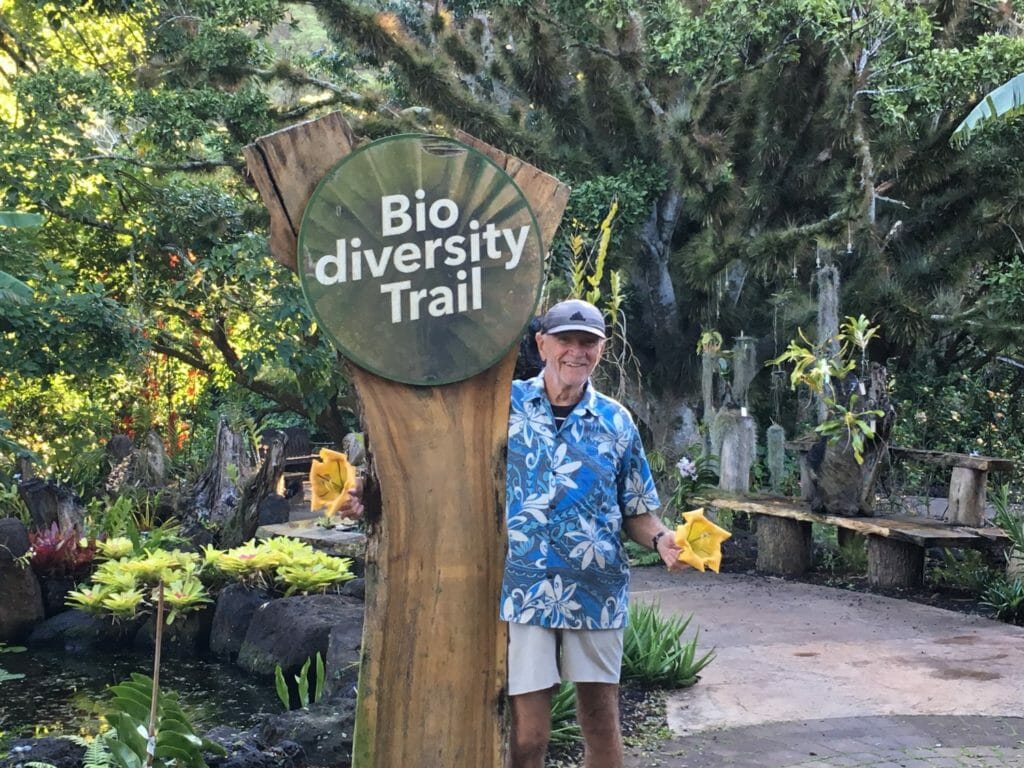
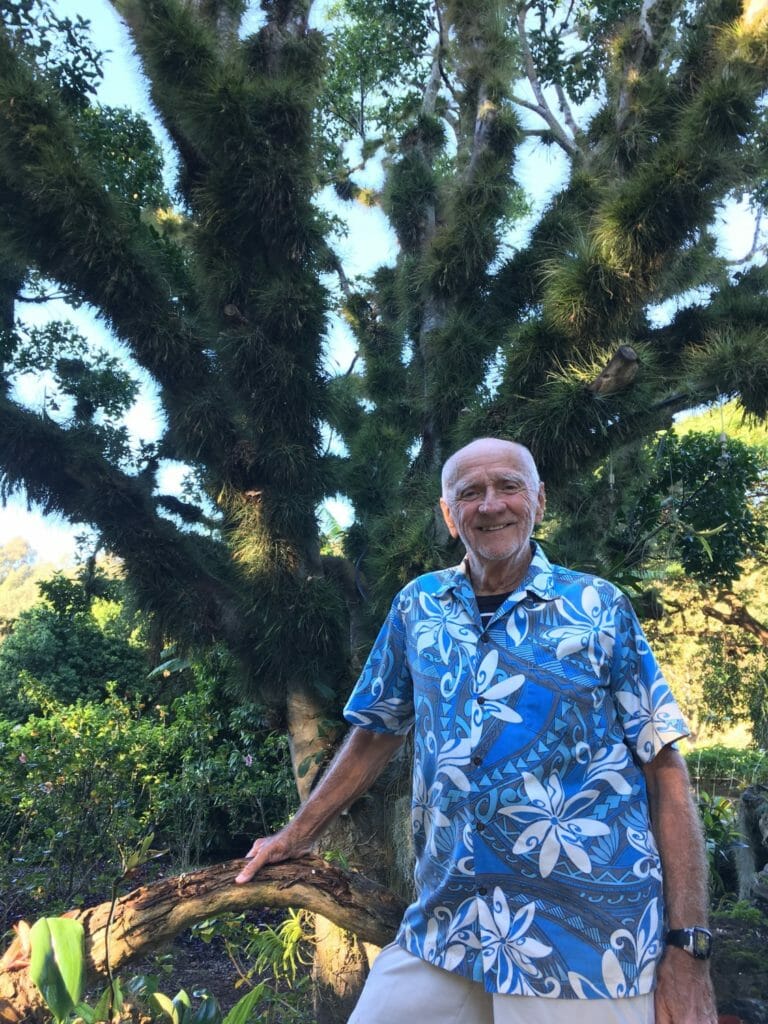
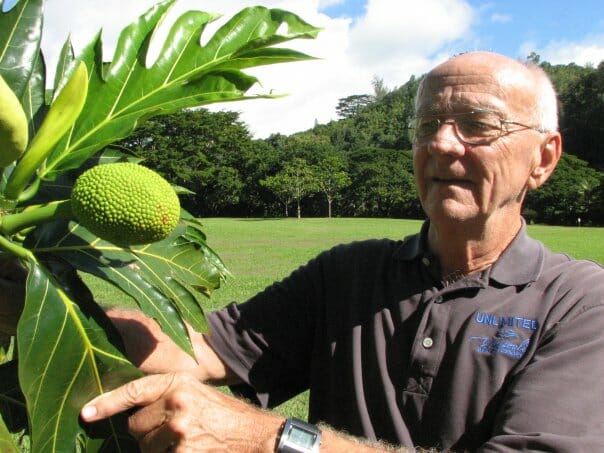
When Loren Johnson retired at 62 and moved to Kauai from Homer, Alaska, he didn’t know that this northern most archipelago in the Hawaiian Islands was called the Garden Island. He’d never been involved with plants or gardens period. But today, after almost 14 years of volunteering with the National Tropical Botanical Garden just a few minutes from his home, Loren can identify a breadfruit, spot a heliconias and share his love of tropical plants with a steady stream of locals and visitors. His upbeat attitude and get it done mindset makes him and invaluable member of the volunteer team, with no job too menial to be completed with pride and pleasure. A winner of the Older Americans Award, Loren is now a fit 76 and his passion for giving back keeps his mind, body and spirit young.
Loren is committed to making a difference in his community and he is today’s Daily Point of Light Award honorees. Points of Light spoke with him about his commitment to service.
What inspires you to volunteer?
When I retired in 2007 at the age of 62, I knew I wanted to do more to serve the public. For the first six months I delivered meals on wheels, but the 20-40 miles a day driving got to be tedious. One day I passed by The National Tropical Botanical Garden (NTBG) and realized, those gardens are just two miles from my house. Maybe there is something I can do for them. I met the volunteer coordinator and I’ve been with them ever since, almost 14 years. It’s such a beautiful place and now I have a simple task which I love.
Describe your volunteer role.
In the beginning I did weekly surveying and harvesting of breadfruit trees for the Breadfruit Research Orchard, which promotes the conservation, study and use of breadfruit for food and reforestation. They showed me what to do – I didn’t know anything about breadfruit, being from Alaska! Now I’m the exhibit custodian, which means I walk the 75-acre garden every week to clean signs that get pooped on by tropical birds and geckos.I also use my old Dodge Ram pick-up to haul rubbish to the dump. When the gardens have a special event, I manage the parking for them. I also do trash hauling for Habitat
What’s been the most rewarding part of your work?
Being in the gardens is just fantastic.I come early before the tours start and average about two miles a day. I feel that I’m helping the earth, and meeting people along the way. I’ve literally met thousands of people over the years and the garden staff are like family.
What have you learned through your experiences as a volunteer?
I think I’ve learned to relate well to people.To enjoy being able to do something that’s worthwhile without having any profit motive. I ‘ve learned all kinds of botanical information, not that I’ve retained it!
Are there any future partnerships, programs, or events that you are excited about?
Not really. One of the things about living on Kauai, it’s paradise every day. I’ve grown so serene and satisfied with my life. I am excited by everything I do every day.
Why do you think it’s important for others to give back?
It’s good for the soul. The way it’s been for me, giving back makes me a happy person.
What do you want people to learn from your story?
At any stage of your life, you can make mindful changes and contributions. I’ve challenged myself to focus on the positive and eliminate the negative. Maturally, volunteering anywhere for a long time, everything can’t always be perfect – there might be a little stress or personality conflicts. But the he positives far outweigh that small stuff.
Do you want to make a difference in your community like Loren? Visit All for Good for local volunteer opportunities.
“It Takes a Village”: Ohio Woman Supporting Families Through Volunteerism
Rebecca Rak says that it wasn’t until she had her own child that the proverb “It takes a village to raise a child” truly made sense. A strong community, according to the 52-year-old Lafayette, Ohio resident, is better equipped to best raise children and offer a safe place for families.
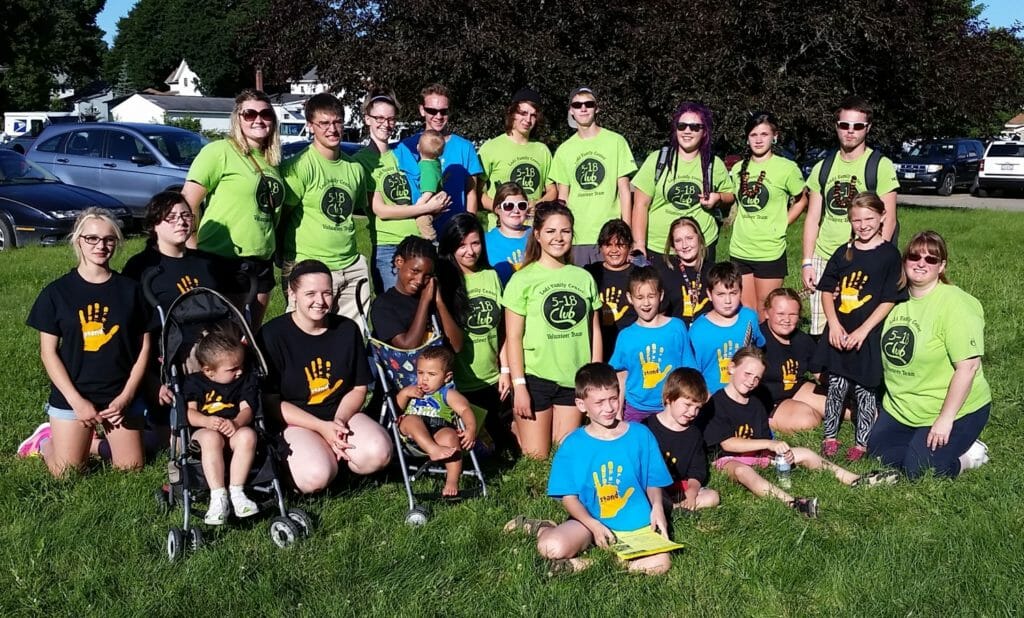
In the spirit of providing a foundation for her own village, Rebecca launched the Lodi Family Center in 2013, supporting children and families in her rural community through activities, educational programs, food and personal care.
Raising nearly a quarter of a million dollars thus far to serve over 400 children in the after-school program and thousands of families promoting health and wellness, Rebecca is today’s Daily Point of Light award honoree. Points of Light spoke to Rebecca to learn more about her volunteerism with the Lodi Family Center.
Describe your volunteer role with the Lodi Family Center.
We have over 100 volunteers at the center, so I coordinate our volunteers and encourage them. I manage client issues. I run some of our programs – we offer many programs, including education and social events for adults, seniors, new moms and after-school programs for children aged K-12. Everything from making sure hot meals are ready to go for our clients, getting kids off the bus and getting their homework started to running the foundation’s finances and handling donor development, I do it.
Tell me about some of the programs the center offers.
We live in a rural area that is known as a “drug corridor,” so keeping kids safe and off the streets is paramount. The center is a safe place for families and their children to come have fun and hang out with their friends, and working parents know their children will be supervised at the center. Some of our programs include:
- Senior Day Monday’s: Our senior programs include activities, food and resources that support senior citizens and break the isolation they sometimes face. Our support helps to keep them in their homes longer, and maintain their independence.
- Parenting support: We offer a variety of parent support and education opportunities to help parents provide a nurturing and healthy home environment for their children.
- After-school program for kids: We give kids the chance to excel at school and figure out how to pursue their dreams by providing homework help, life skills groups and mentoring. We offer programs that range from STEM, coding, robotics to photography and baking.
What was the inspiration behind the robotics program?
My kid (laughs). When he asked me to do robotics with his friends, I said, ok, figure out the plan, tell me your budget, and we’ll do it. This is really a kid-driven program, I’ve just been there to support them. We live in a community that includes a lot of low-income families, so our goal is to take street kids and set them up for success in a science environment. Some of these kids haven’t even had the opportunity to work on computers. We’re teaching them coding, we’re teaching them to build and design and problem-solve and become leaders.
Share one impactful story with me from your volunteerism.
We were in the middle of a snowstorm, and a young lady and her friend walked up to our center. They were wearing flip flops and jeans and t-shirts. That was it. They just needed a place to be to get off the street while their parents fought because it was nighttime and cold. By the time their parents finished fighting and came looking for them near midnight, they were safe at the center and waiting for them. Fast-forward many years, the young lady was the first in her family to graduate from high school, the first to go to college, and the first to hold the same job for five years. She married, had kids and now her kids are in my program.
Why do you think it’s important for others to get involved and make a difference in their community?
I would love to see more people get involved because it’s the way community is supposed to be. Participating in community means that we surround ourselves with healthy people when things go bad personally, and in turn, it’s our opportunity to help others when things are going bad for them.
What’s your personal motto?
If everyone does a little bit, we bring a whole lot of change. We are the change.
What do you want people to learn from your story?
Volunteering can be a whole lot of fun, and it really gives you a chance to use your talents.
What’s an exciting event you have coming up?
We need volunteers for summer 2019 for our STREAM Summer Hangouts programs. For more information about how you can help, and how to get your child involved in our programs, please visit our website: https://lodifamilycenter.org/programs/.
Do you want to make a difference in your community like Rebecca Rak? Visit All For Good for local volunteer opportunities.
Post written by Marlena Militana.
Volunteer Adopts Local Streams, Monitoring Water Quality to Help Protect the World’s Most Vital Resource
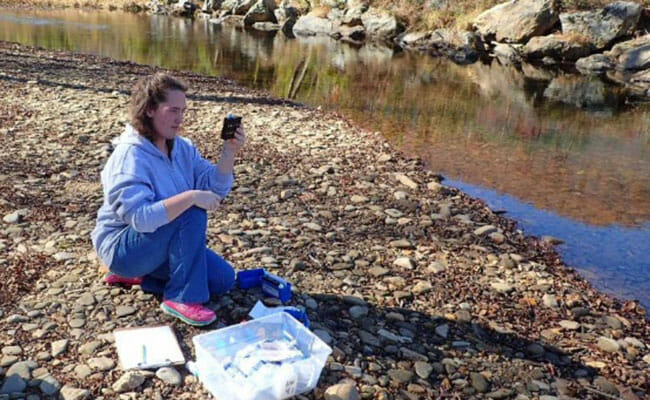
Brittaney Dyer believes in the power of people. As a volunteer water quality monitor, she helps preserve the lakes and streams in her community for future generations. For more than three years, Brittaney has been testing the chemical and bacterial levels of streams alongside the Georgia Adopt-A-Stream program and the Hiwassee River Watershed Coalition, committed to protecting our world’s most vital resource.
Brittaney developed a love for the environment at an early age. From spending time at her grandparents’ house surrounded by natural springs, to fishing and walking her dog near local creeks, she grew up immersed in the outdoors. The sustainability of water has long been a priority to this Blairsville, Georgia, native, and four years ago, she took the step to become certified as a chemical and bacterial monitor through Georgia Adopt-A-Stream.
Upon completion of the certification, Brittaney jumped at the opportunity to be responsible for monitoring local sources of water, and she adopted not one, but two streams. Each year, she adopts the same two streams, and is responsible for checking the water’s oxygen, pH levels, temperature and running E.coli test each month.
The data Brittaney collects goes to the Hiawassee River Watershed Coalition, a nonprofit dedicated to sustaining water quality in creeks, lakes and rivers that flow into the Hiawassee River, which runs through Georgia, North Carolina and Tennessee. Research from volunteer water monitors like Brittaney is essential for evaluating water improvement efforts over time, and helps reveal which waters are safe for swimming and other water-based recreation.
Brittaney says people can make everyday choices to contribute to keeping sources of water clean. She collects trash on the banks of streams and garbage that has made its way into the bodies of water itself. Waste can flow directly into water, and being aware of the items you can recycle can go a long way to cut down the level of excess materials at landfills.
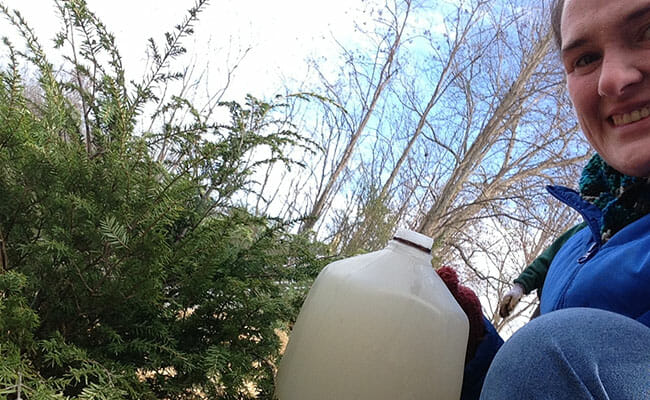
She also works alongside Save Georgia’s Hemlocks, a volunteer-run nonprofit addressing the urgent need to protect hemlock trees in north Georgia from an invasive species. Brittaney cares for the trees by treating them with non-harmful chemicals, and works to spread awareness in the community on steps protect them from the growing insect population.
Dedicated to strengthening her community in any way she can, Brittaney is always on the lookout for opportunities to make a difference. She volunteers at the local sheriff’s office, helps feed and clothe the homeless, collects resources for children and families in need, and picks up trash during her community’s Saturday of Service events. Currently a student at the University of North Georgia’s Dahlonega campus, she is involved in five leadership organizations and recently advocated for recycling and sustainability initiatives on campus —resulting in the introduction of recycling bins on campus for the very first time.
“We all have the ability to make a lifelong impact,” said Brittaney. “Why not get involved in the community with something you’re passionate about?”
Without volunteers like Brittaney, many bodies of water would be under-monitored, or not monitored at all. “I want to let everybody know that we can all take a stance of doing our part in the world,” she said. “Find something you’re passionate about, and work towards it. We can all make a difference.”
Do you want to make a difference in your community like Brittaney? Visit All For Good for local volunteer opportunities.
Hawaiian Volunteer Gives Back to Her Community
Introduced to the United States in the 1970’s, hospice care is considered the model for quality, compassionate care for people facing a life-limiting illness or injury. Hospice care takes a team-oriented approached, tailored to the patient’s needs and wishes, at the heart of which is the belief that each of us has the right to die pain-free and with dignity, and that our families will receive the necessary support to allow us to do so.
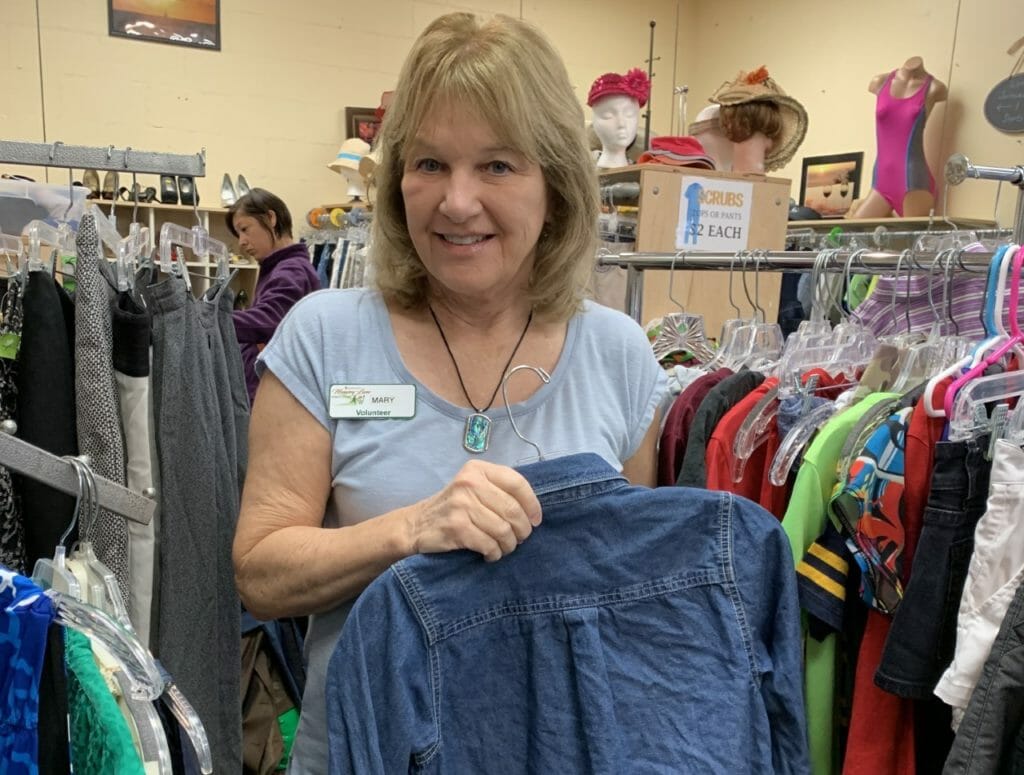
At Hospice of Kona, located in Kailua-Kona on the western coast of the Island of Hawai’i, a community of over 165 caring volunteers lends their time, energy, and compassion to help ensure that patients receive the highest possible quality of care. A dedicated volunteer, 69-year-old Mary Hamacher exemplifies the caring spirit of this community. She assists Hospice of Kona in many ways, from staffing the fundraising thrift store to sitting with patients to helping the office run smoothly.
Mary is making a difference in her community by supporting dignified, compassionate, end-of-life care, and is today’s Daily Point of Light Award honoree. Points of Light spoke with Mary about her commitment to service.
What inspires you to volunteer?
I want to grow in my outlook in life, meet like-minded folks and to give back to my community.
Describe your volunteer role.
I volunteer in several areas for Hospice of Kona. I volunteer at the Hospice of Kona thrift store Memory Lane. There I greet customers, cashier, and sort and price donations. I also help at the Hospice office doing data entry work and general office work. I love helping with the fundraising events, as they are also a fun outlet (“FUNdraising”). I have helped hospice families with respite care so that they can have time for themselves.
What has been the most rewarding part of your work?
Customers, other volunteers and hospice patients have shared their most wonderful life stories. They are all so appreciative of the care they receive from Hospice of Kona. Just the connections with others no matter how short or long are so rewarding.
What have you learned through your experiences as a volunteer?
Volunteers, patients and their families all have a unique story that is so precious. It is what makes all of us important in this life.
Are there any future partnerships, programs, or events that you are excited about?
The Hospice of Kona Royal Tea fundraising event. [An annual fundraiser where guests celebrate life and friendship, and honor those who have passed away, while wearing festive hats and outfits and enjoying a traditional high tea with a Hawaiian twist.]
Why do you think it’s important for others to give back?
We should all help where we can no matter how little as a little from everyone adds up.
What do you want people to learn from your story?
Hospice provides support, education and care for those approaching the end of life. Volunteering is an important part of this and it makes a difference to patients and their families whether we provide help directly or indirectly.
Do you want to make a difference in your community like Mary? Visit All For Good to find local volunteer opportunities.
Childhood Friends Use Passion for Coding to Teach Hundreds of Kids
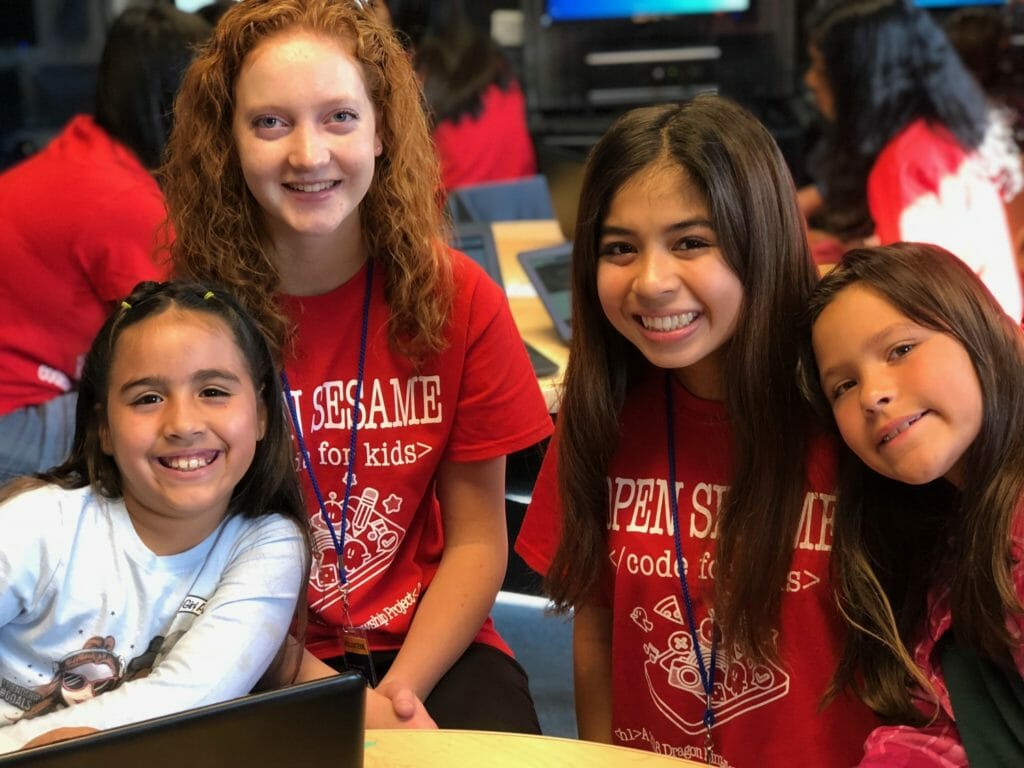
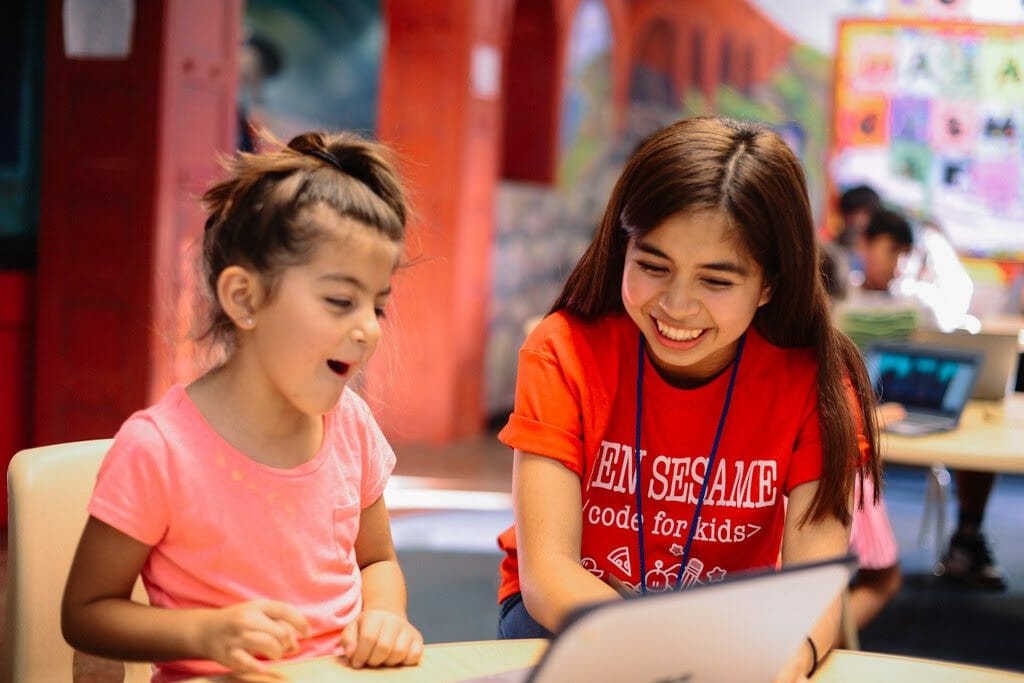
Not many teenagers can say they have impacted the lives of hundreds of children, much less grown an organization from the ground up in less than a year. But when childhood friends Katherine McPhie and Milan Narula decided to combine their talents for coding with their passion for volunteering, they were able to do just that. In July 2018, the duo founded Open Sesame Coding for Kids, an organization of high school and college students who go to homeless and domestic violence shelters throughout Orange County, CA to teach kids computer coding. Since then, the organization has grown to over 130 student volunteers who have taught about 385 children the skills to build a better future.
Open Sesame not only teaches kids how to code, but also helps to build their confidence. Some of the children at the shelters don’t know how to use a computer at all, Milan said, before working with Open Sesame, which through grants were able to donate Google Chromebooks to the shelters for the kids to work on. And the friends don’t want this outreach to end — they hope to expand to more areas in the future to help build the computer skills of even more children.
For their contribution to enriching the lives of disadvantaged children, Milan and Katherine are today’s Daily Point of Light Award honorees. Points of Light spoke with them about their creation of Open Sesame.
Describe what you do with Open Sesame.
Katherine: We go into homeless shelters and domestic violence shelters and we teach the kids there computer coding.
Milan: Basically a session is usually anywhere from one to three hours. We like to have a one-to-one student-to-teacher ratio. So each tutor there will be working individually with each kid so they can go as fast or as slow as they want.
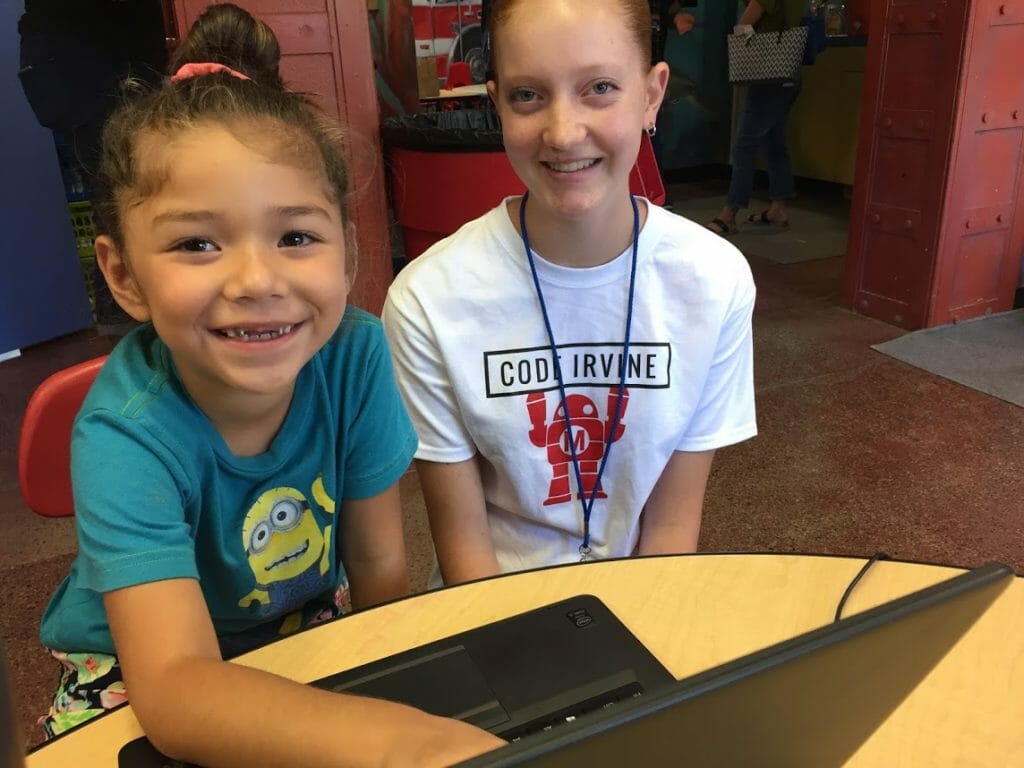
Katherine: At each session, what happens is the tutors come in a little bit earlier, we set them up at computers, log them on and get them onto the coding website. Then all the kids come in, each kid sits next to a tutor and then for the rest of the time, they’re just working one on one with the kids.
What inspired you to start Open Sesame?
Katherine: We’ve both done volunteering in the past. I had done volunteering at the Orange County Rescue Mission.
Milan: I did about two years of tutoring with homework at a domestic violence shelter.
Katherine: Someone once told me that to find a good way to serve the community, you should find an area where your interests or your talents overlap with a need in the community and I think that describes coding perfectly. We had experience with coding and we realized it’s a skill that could help children lift themselves out of poverty because coding is the future.
What kind of feedback have you gotten from the kids and shelters?
Katherine: It’s been very good feedback for the most part because coding is a useful skill but it’s also very fun because we’re teaching it in a fun way, with games and other things like little puzzles that the students can work on. So I think it’s been very fun for them as well.
Milan: I think when they first hear that we’re going to teach them coding, they’re kind of intimidated, but then once they start doing it they think it’s really fun. And they also think it’s really cool that they’re learning something so advanced.
What are your hopes for the kids you’re working with?
Milan: Personally I just hope they’re more confident when it comes to computers and when it comes to anything kind of in this range. I hope they know they can overcome these challenging tasks and they’re smart enough to figure things out.
Katherine: That’s exactly correct. I think that for these kids, they’re often a couple years behind in school, [and] doing something like coding can be a really big confidence boost for them because they can realize they’re good at this, this is something they can do and it can help them that way as well.
Has your work with Open Sesame had any effect on what you want to do in the future?
Milan: I actually discovered that I really like working with kids and I would like to be a teacher. And without Open Sesame I definitely would have not figured that so I’m very grateful for that.
Katherine: Absolutely. I really love working with the kids and I really like this combination of doing the coding and also using that to help other people so I’m thinking about maybe a career in computer science. Also, I would like to continue volunteering and doing other things with kids.
What’s been the most rewarding part of your work?
Milan: I would say it’s just seeing how much the kids have grown. We stay at pretty much the same shelters. Once we start, we keep doing sessions. Seeing the kids — from some of them starting off not knowing how to use a computer, not knowing how to use a mouse — and then seeing them get really good at coding, it’s just kind of amazing seeing the impact.
Katherine: It would pretty much be the same for me. When you have a kid who says, you know coding isn’t for me, and they’re really reluctant at first and they don’t think they can do it, and then when a couple weeks later that kid is so proud to see what they’ve been able to do and they get this really big smile on their face, that is really great to see.
Why do you think it’s important for others to give back?
Katherine: I think when you have something that has brought you joy and you also think will be useful to you later on in life, it’s really good to share that with other people. And not only is it good for other people, it’s also good for yourself. I know doing this has definitely helped me as well as helped the kids I’ve been working with. I think it’s really been great to share this thing I love with them.
Milan: We also acknowledge that we are really lucky. We live in nice neighborhoods and go to nice schools and we have the resources that we’ll always need. And so it’s kind of an eye opener to see some areas where they don’t have that kind of stuff, and it’s really important to give back.
What do you want people to learn from your story?
Katherine: I’d say that you can make a difference no matter what it is. I never imagined our program could grow this big when we started it and it’s been really amazing to see that growth and to see what we’ve been able to do. And other people can do this as well.
Do you want to make a difference in your community like Katherine and Milan? Visit All for Good for local volunteer opportunities.
Post written by Morganne Mallon.
Chicago Student Helps At-risk Youth Plan for the Future
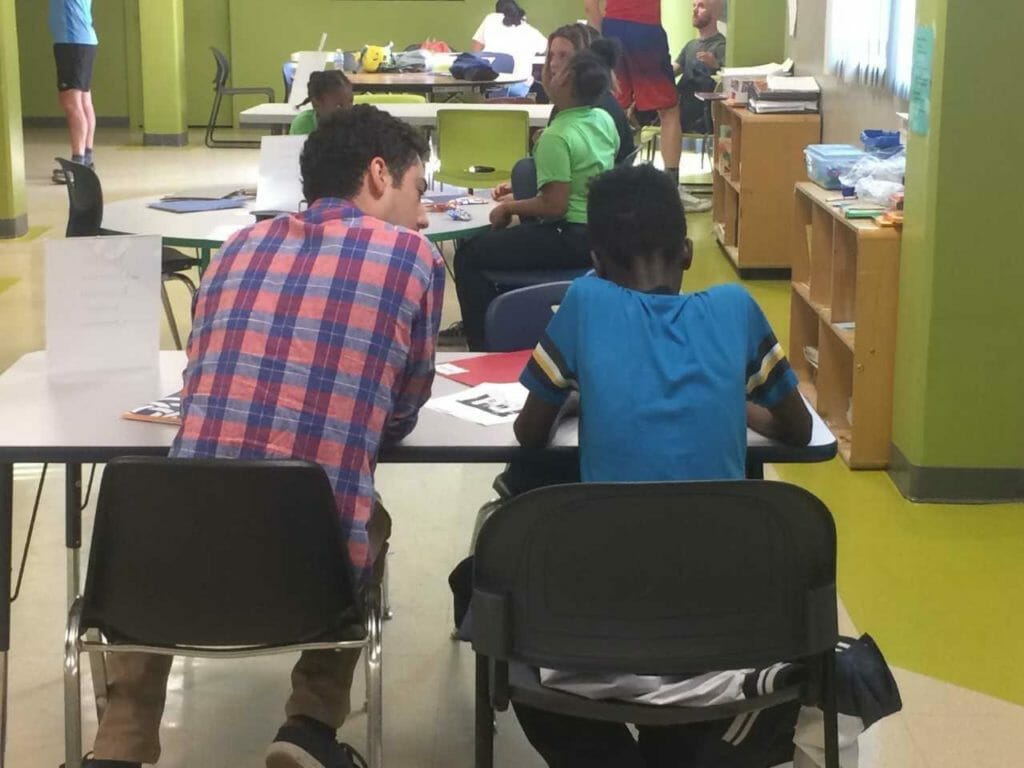
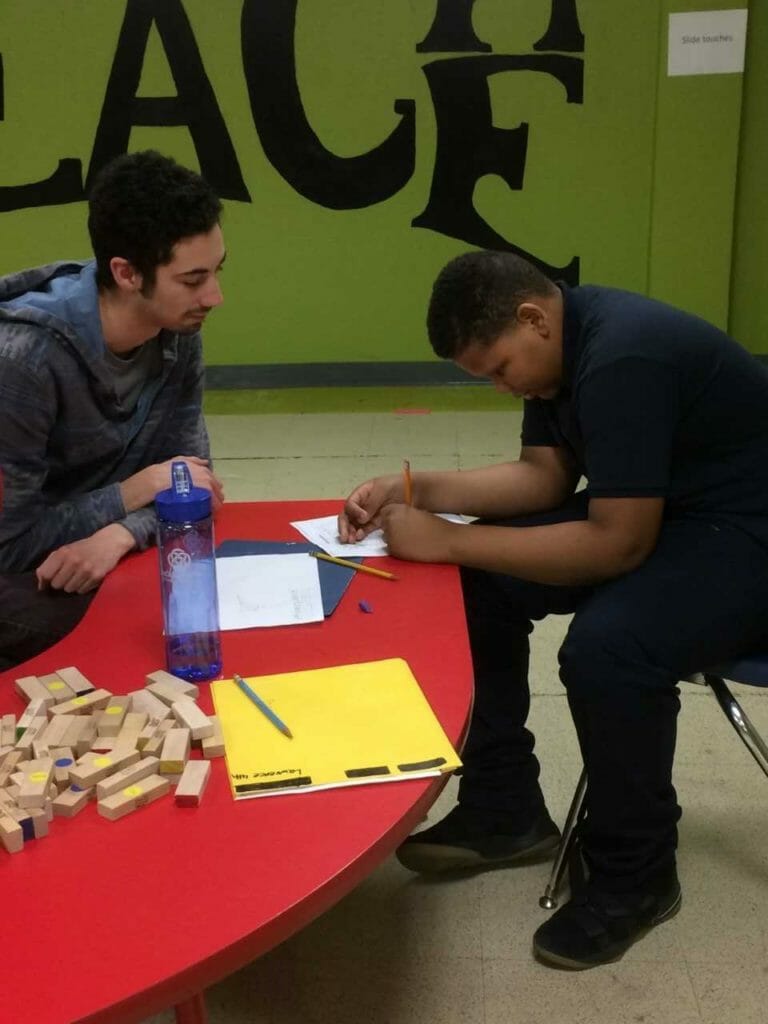
When Marco Bartolomeo was first starting his graduate program at the Chicago School of Professional Psychology, he knew he wanted to become more involved with his school and community. At the recommendation of a friend, he decided to do so by volunteering at Homework Help Room, an after-school tutoring program organized by Community Builders Inc. Along with Marco, about seven others volunteer their afternoons with the approximately 20 kids in the program, whose ages range from seven to 12.
Now in his second year of the program, Marco spends every Tuesday afternoon personally tutoring about three kids each week. He says he finds the time he spends with the kids, many of whom are considered to be at-risk youth, to be greatly rewarding. And they don’t just work on homework together — Marco and the kids also work on goal-planning and fostering positive relationships with adults.
For dedicating his time to kids who need not only homework help, but also a positive role model to work on their future with, Marco is today’s Daily Point of Light award recipient. Points of Light spoke with him about how he got involved with Homework Help Room.
Describe your volunteer role with Homework Help Room.
So basically I’m there every week and right after they’re done with school, the kids come into Homework Help Room and we start with going over how their day was. We don’t really jump to homework immediately, just kind of talk to them, because they’re usually more jittery because they just got out of class so the first thing they want to do is not do more school work. So we try to talk to them about their day and then we’ll get into their homework. We’ll work on that for about an hour, just figure out what needs they have as far as the physical homework assignments but also if they need to work more on their math, multiplication, reading skills. After that we usually do some play time for the remainder 30 minutes.
What effect does Homework Help Room have on the kids?
They gain a sense of consistently in their life, I think, when they’re getting tutored. But I feel like they’re actually learning a lot more than just what educational needs they have. They realize they’re able to have a positive relationship with someone older than them. They’re able to learn a lot from us and I think they really enjoy the consistency of being with us every week.
Has Homework Help Room had any effect on you as a person, as well as your future career goals?
Absolutely. I’ll find myself just thinking about what they needed or whatever we talked about that day and I’ll follow up with them the next week because I’m generally interested in what’s going on in their lives and how I can help them. It has allowed me to see a lot of the clinical needs of the kids I work with. A lot of them are considered at risk so they have a lot of risk factors for getting into trouble or what not, so it’s allowed me to better talk to them and establish a better relationship with them. I help them to formulate goals.
What have you learned through your experiences as a volunteer?
It taught me that I can take a part of my day and basically not have to worry about anything else that’s going on in my life and just focus on someone else’s. It makes me feel good. It’s kind of like — I don’t want to say mediation because it can be exhausting — but it allows me to focus on something else, the bigger picture, other than the school work I have to get done and the job I have to go to.
Are there any future partnerships, programs, or events that you are excited about?
We do college visits and I’m looking forward to actually taking a part of that. I couldn’t last year and I was really bummed about that. We’re trying to get a college visit going on to try to get them to think about their future goals. That’s a very important part of Homework Help Room — developing goals, both short term and long term.
What do you want people to learn from your story?
On a personal level, just the satisfaction I get from going to Homework Help Room. But also the fact that there are a lot of kids that unfortunately don’t have programs like Homework Help Room and that it’s incredibly beneficial for those who do. It’s great being a part of it.
Why do you think it’s important for others to give back?
Because I think that a community will only work if people work for it. I don’t think it’s possible for someone to have a great life without the help of the community.
Do you want to make a difference in your community like Marco? Visit All For Good for local volunteer opportunities.
Post written by Morganne Mallon.
Indiana Sisters Give Back to the Community
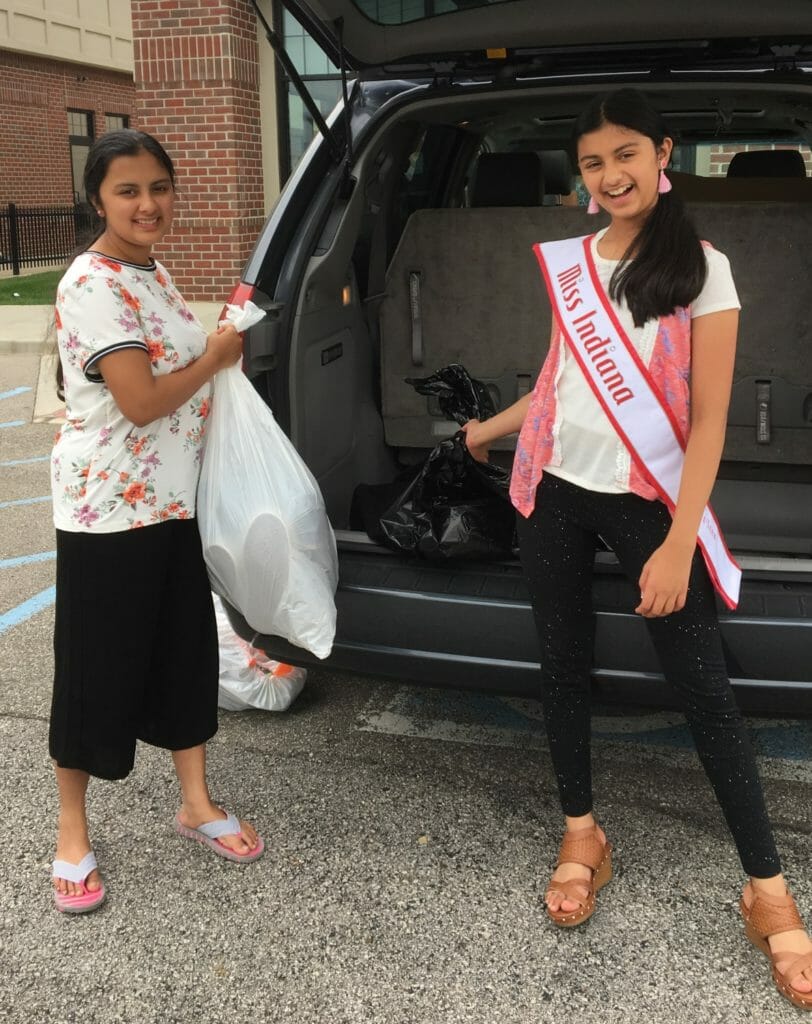
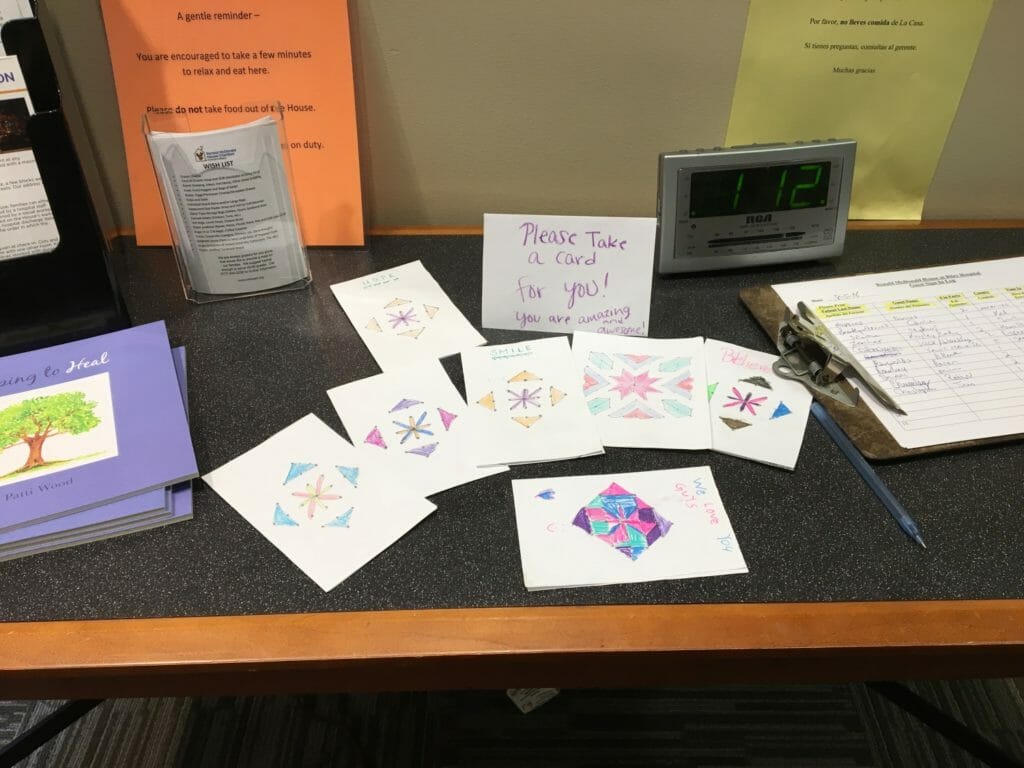
For Anitha and Vani Sharma, everyone is a star–and they’re on a mission to help every star shine its brightest. The dynamic sister duo initially started volunteering in 2011 at their local Ronald McDonald House, and they’ve been using their talents and passions to give back to their community of Fishers, Indiana ever since. They continue to serve meals at the Ronald McDonald House, and have found other ways to make a difference, including performing music for guests at the Ronald McDonald House (Anitha plays the flute, Vani the clarinet), collecting and sorting gently-used footwear for donation to Changing Footprints, cleaning up local parks, and reading books to young children during storytime at Barnes & Noble.
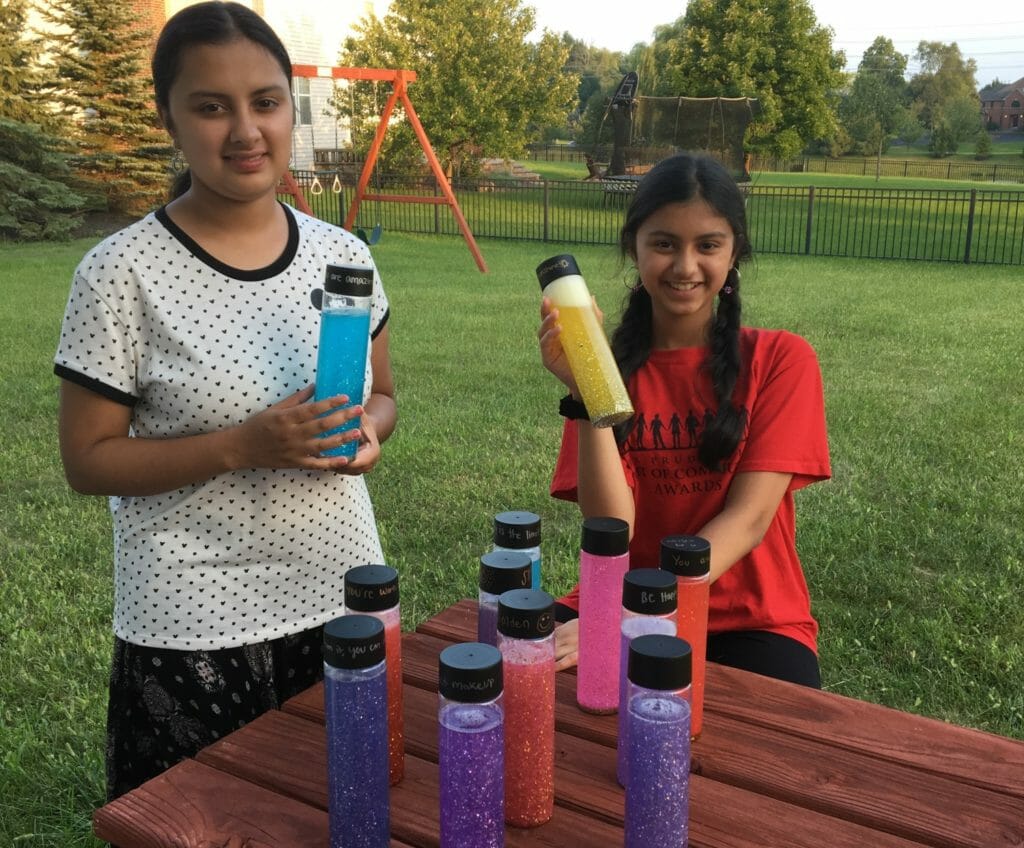
In June, they launched their signature “Glitter Jars for the Stars” project, creating calming glitter jars to donate to rehabilitation therapy, autism, and senior living centres. They made more than 100 jars last year, each one accompanied by an uplifting note to bring joy to the recipient.
Points of Light spoke with Anitha (17) and Vani (12) to learn more about their commitment to service.
What inspires you to volunteer?
Anitha Sharma: My inspiration to volunteer started in 2011, when I was admitted to Riley hospital and I came across several volunteers who were performing various activities with a smile. Specifically, I was moved by the volunteers who served meals at the Ronald McDonald house since my family also had to eat there for a few days. I did visit the Ronald McDonald house during my stay at the hospital. After I got discharged from the hospital, we as a family decided that it was our turn to give back and started volunteering at Ronald Mc Donald House serving meals.
Vani Sharma: When I volunteer and see others getting inspired by my work, it further encourages me to do more. The smiles on the faces of people I serve also inspires me.
What has been the most rewarding part of your work?
VS: I believe that no act of kindness is small. While I cannot make a huge difference myself, I can certainly make a difference for the person I am helping. The most rewarding part is to see others getting inspired by my work and join me to help.
AS: When the people I serve thank and appreciate what I do, the smile on their face has been my strongest motivator. This smile drives me to do more for the communities we live in. When I do this with my friends there is even more fun doing service. As the saying goes, “The more the merrier”.
What have you learned through your experiences as a volunteer?
AS: My biggest learning has been that people in this world want to volunteer but they just need a little nudge to get them going. I feel very lucky and blessed to be able to help someone in need and believe that volunteering helps build bonds with various individuals and the community as a whole.
VS: Every little thing that you do to help someone and make a difference will have a long-term positive impact on the communities even though it does not appear that way in the short term.
Are there any future partnerships, programs, or events that you are excited about?
VS: In the future I would like to start an organization called “Shine Bright”. The purpose of this organization will be to inspire people to give back and be the change for people.
AS: While I have a lot of ideas for the long term, in the short term I am excited and looking forward to do a Happiness Wall at Ronald McDonald House in the month of March.
Why do you think it’s important for others to give back?
AS: I believe that it is a divine blessing to be able to give back. Everyone in this world deserves to be happy and I feel very fortunate and satisfied when I see a happy face. Everyone deserves to experience the happiness of giving and hence it is important for everyone to give back.
VS: I consider myself very fortunate and blessed and one way to make others feel the same is by giving back.
What do you want people to learn from your story?
AS: I just want to say that it is never too late to give back to the community and make a difference in someone’s life.
VS: I would say, use every opportunity to help out, there is no act of kindness that is small, it dosen’t have to be big or time consuming , even a smile can bring a change and make someone happy.
Do you want to make a difference in your community like Anitha and Vani? Visit All for Good for local volunteer opportunities.
A Father’s Legacy Lives On
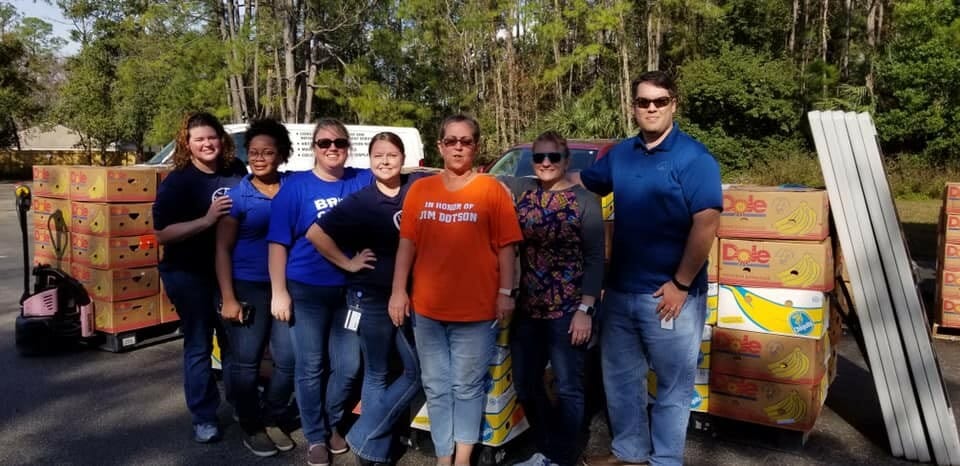
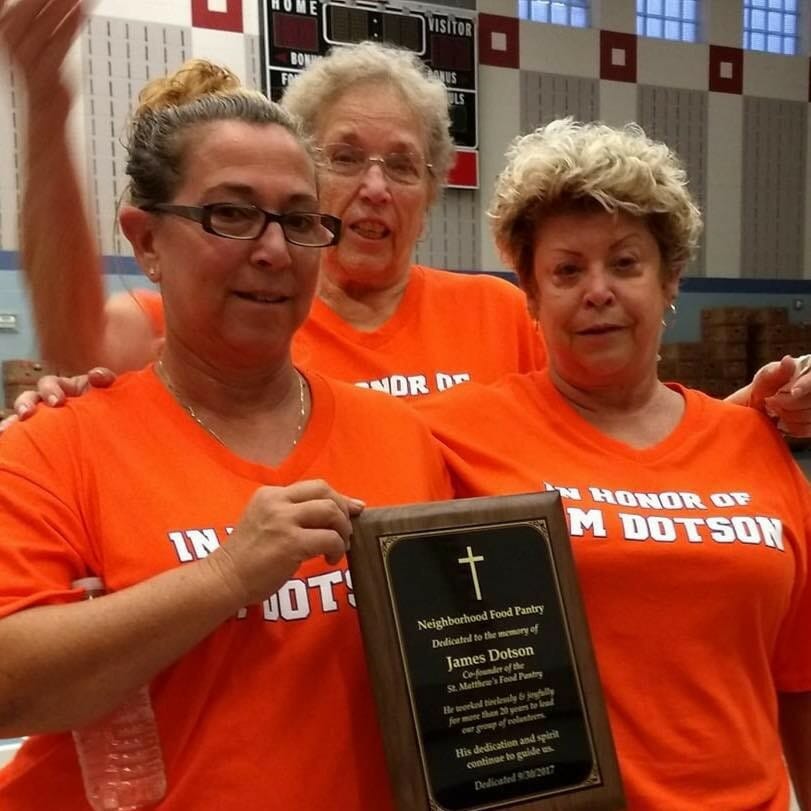
When Jo Chesser’s dad Jim passed away in 2017, he left a huge hole, not just in her heart, but in the hearts of the countless people he helped in his 35 years running a community food bank with his church Fort Caroline Presbyterian. Jo knew that one way to keep her father’s memory alive was to create a foundation in his name and continue his work. She formed the Jim Dotson Foundation, and along with her mother and siblings and a slew of volunteers and partners, continues to feed, clothe and comfort the needy in her community. With the help of partners including Lutheran Social Services, Publix, Feeding Northeast Florida, Thrivent Financial for Lutherans, Winn-Dixie, Farm Share, Walmart and The Five Star Veterans Center , the Foundation feeds about 750 people a month. Not satisfied with simply volunteering on her own, Jo reaches out to co-workers and friends and inspires them to do the same, creating an even more powerful force in her community.
Jo is committed to making a difference in her community and she is today’s Daily Point of Light Award honorees. Points of Light spoke with her about her commitment to service.
What inspires you to volunteer?
My parents taught us at an early age to give back to those who need help. My dad Jim Dotson had a food bank at a church for about 35 years and when he passed May 4, 2017, I wanted to continue his work so I started the Jim Dotson Foundation. It is still very much a family endeavor. My mother, daughter, sisters and good friends all pitch in with specific roles that make it appear seamless, but as everyone knows, it takes a hard working village of committed folks to make it look that way
Describe your volunteer role.
As president of the Foundation, it’s my job to be sure everything gets done. That means being sure we have what we need for our mobile pantry. We make boxes of canned goods and my daughter and I have pickup twice a week at Publix where we pick up meats, produce and bread. We store the food until our pantry day. Also, we get clothes donated and fold and put the clothes in boxes by gender and size.
What’s been the most rewarding part of your work?
Since the foundation started the best thing is helping and meeting the people that come to the pantry. A lot of our people give back, by helping us by take the boxes to other cars or sharing what they have with others or in one case, an older lady that makes homemade flan to share. We see the community coming together and wanting to help each other out.
What have you learned through your experiences as a volunteer?
It’s hard and never-ending work but I love doing it.
Are there any future partnerships, programs, or events that you are excited about?
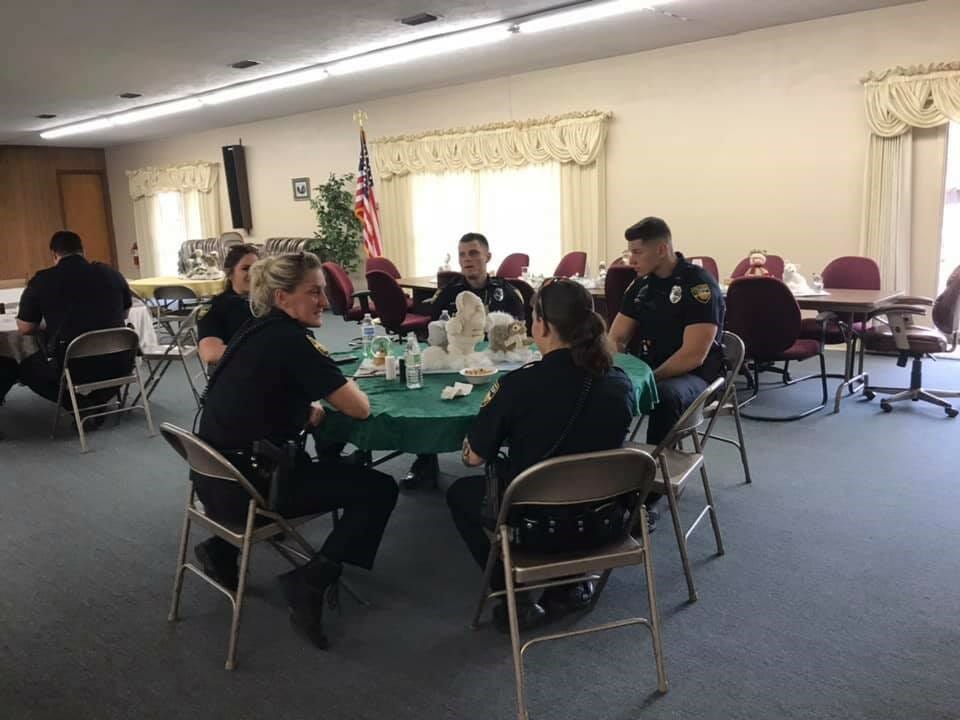
Yes we have two events coming up. On March 30th we host Jacksonville Sheriff Office Zone 2 roll call. We usually have about seven shifts come in starting at 5 am through 6:30 pm. We serve breakfast, lunch and dinner with lots of dessert for them. We strongly support all of our first responders and do what we can to let them know we do care. We host roll call every other month for Zone 2 and working on getting the fire department and FHP too.
We are having our First Fundraiser event on June 22th to raise money for a building. We are having this at Mudville Grille 3105 Beach Blvd Jacksonville, Fl with live music, bbq and a silent auction.
Why do you think it’s important for others to give back?
There are people out there in need of things and it would make this world a better place if others did just a little something.
What do you want people to learn from your story?
That we are just everyday people trying to make our community better by helping. We all struggle in life but by giving just a little bit back, we truly are rewarded.
Do you want to make a difference in your community like Jo? Visit All for Good for local volunteer opportunities.
Volunteer Connects Students to Schools Through Bikes
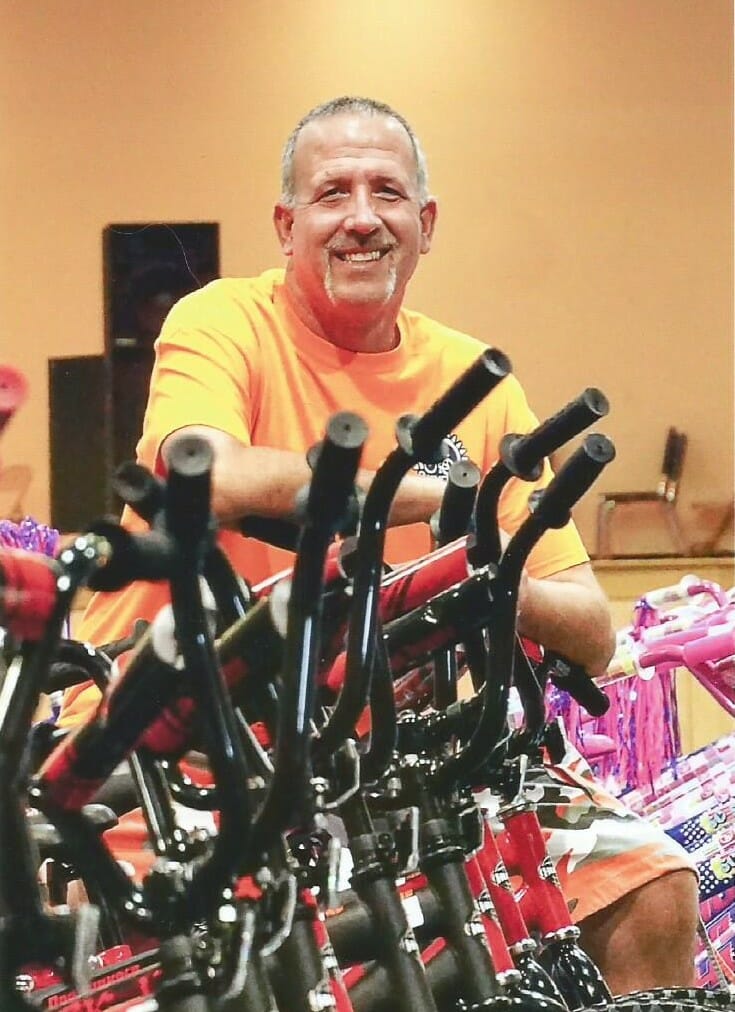
John White says buying a new bicycle for his daughter made him pause, as the Corona, California resident’s mind cycled through all the students he’d taught over his career who didn’t own a bike because their parents couldn’t afford one.
6 months later, the 54-year-old middle school teacher created a project during a leadership class that was designed to strengthen the bond between impoverished students and teachers through bicycle donations and keep kids in school. Founding Bicycles for Children, what began as an initial goal to gift bikes to 32 elementary students in 2012 has blossomed into an organization that has donated over 4,700 bicycles and helmets to students across 100 elementary schools and five school districts in California.
Through fundraising, community events and private and business donations, John is providing bicycles to needy and deserving children while also instilling a deeper connection to their school and educators, and is today’s Daily Point of Light award honoree. Points of Light spoke to John to learn more about his volunteerism with Bicycles for Children.
What inspires you to volunteer?
I hated that something so monumental in a child’s life wasn’t an option for some because of financial concerns. When you’re focusing on buying food and putting enough money together for rent, a bike is a non-necessary. My idea was originally intended as a one time deal, or so I though and it went over so well, it just continued.
Explain the impact behind donating bikes to students.
I wanted the process to be three pronged. Primarily, impoverished and deserving children receive bicycles. Secondly, as a teacher, we want to create a home/school connection for the child. This means that we’re strengthening the bond between school and student, and when a teacher delivers a bike to a child at their home, it shows the student that their educator cares about them, which in turn encourages the student to work harder in school and do better in classes. Lastly, the program gave kids who needed volunteer hours for school a chance to experience true volunteerism.
Describe your volunteer role at Bicycles for Children.
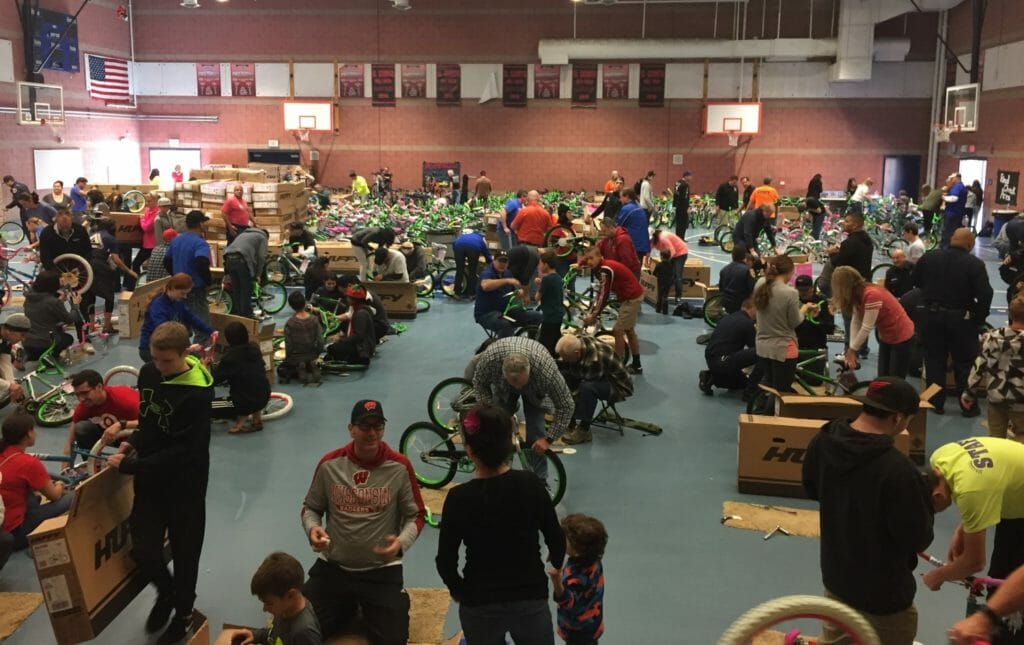
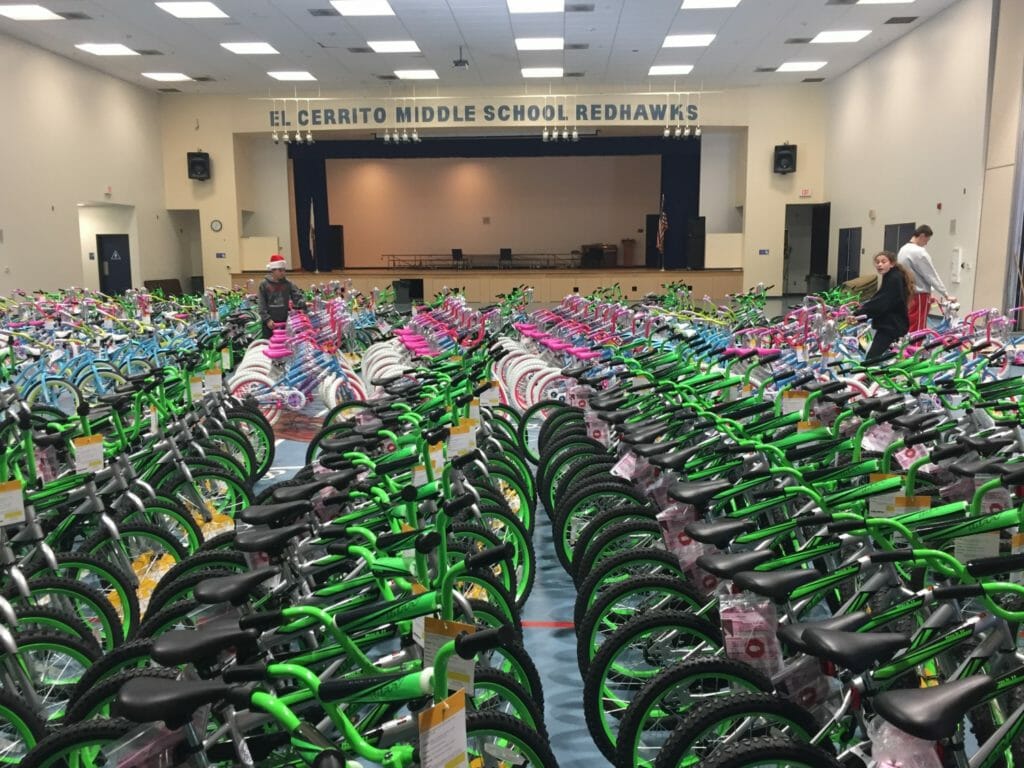
Day to day, I’m corresponding with local companies soliciting donations, or talking to vendors about helmet donations. I also work closely with school districts and principals to raise awareness about the program and determine their bike needs. November and December are crunch months as we get closer to bike donation day. During a select few days in December, up to 300 volunteers show up to assemble bikes. Teachers and school employees from each school will pick up the bicycles and helmets and deliver them to the students before Christmas Day.
Who benefits from these donations?
While we’ve given away more than 4,700 bikes, I personally have only handed out three of them. I stay behind the scenes and give bikes to the schools based upon their poverty level. I ask schools to not use behavior or attendance or grades against the kid in determining who deserves a bike. We provide what is typically a child’s first bike to students K-6, but also provide mountain bikes to foster kids and middle school students who we hear are struggling to get to school because of a long walk, or are just in need. We also donate bicycles to local police, sheriff and fire departments, churches, local YMCAs and programs that work with kids in need.
Why are these bikes so meaningful to foster children?
Our second year, a teacher drove 40 miles to bring a bike to a former student who had moved to a new foster family. When she checked back in with the child two weeks later, his foster mom said the boy had been riding the bike nonstop since he received it. When the teacher asked him why he’d been on his bike so much, he told her that the bike was the only thing that was truly his.
Can you share another impactful story with me from your volunteerism?
My very first year, a teacher came back after she’d dropped a bike off with her student. Her face was very red with emotion, and she thanked me for the program. I was shocked when I saw her, and she explained that when she went to deliver the donated bike, she realized that her student was living with his parents in a shed at the back of a property that had a bed sheet as a door. The teacher was floored, she didn’t know that about one of her students was living in a shed, or how he was getting any work done there.
Tell me about the unexpected impact of these donations.
It’s the power with the unexpected of what we’re able to do. That’s the cool thing in this. We have a gentleman who donates money every year to our cause because someone gave him a bike when he was 6-years-old. He sees this as way to pay it forward. He’s personally donated 800 bikes.
What’s one thing you want readers to take away from your service?
I tell my students that every action done in a positive way has the potential to have an even greater positive effect on others.
Do you have an event coming up that you’re excited about?
Bicycles for Children is hosting a golf tournament in late spring 2019. Check our website for more information about participating, and how you can help: http://bicyclesforchildren.org/.
Do you want to make a difference in your community like John White? Visit All For Good for local volunteer opportunities.
Post written by Marlena Militana.
Shining the Light of Kindness onto a Campus Community
Carmen Burgess knows how parents worry. She’s a mom herself and when her daughter started school at Clemson, Carmen connected with the school’s parents’ and family community on Facebook. Carmen, a giver with a lifetime of service in her DNA, realized that kids were lonely, sick, anxious, overwhelmed. And with families farflung, those feelings can be exacerbated. Which is why she took it upon herself to be the mom on the ready, with emotional service dogs to calm and spark conversations on campus, and a laundry list of “mom” services to provide out of kindness and empathy. From taking students to the Urgent Care or dentist, driving them to the airport so they get home for holidays, checking on them when they are sick and just listening, being there, Carmen is making a difference every day.
Carmen is committed to making a difference in her community and she is today’s Daily Point of Light Award honorees. Points of Light spoke with her about her commitment to service.
What inspires you to volunteer?
I come from a family of servants. My mother was a nurse and my father was a Naval officer. Though we didn’t grow up with an overabundance and we moved around a lot, we were always involved in community as a family. When I became a nurse and had my own family, I wanted to instill those values in my children to honor my parents, who showed us that by doing for others we got back 100 percent in self-confidence and self-worth.
Describe your volunteer role.
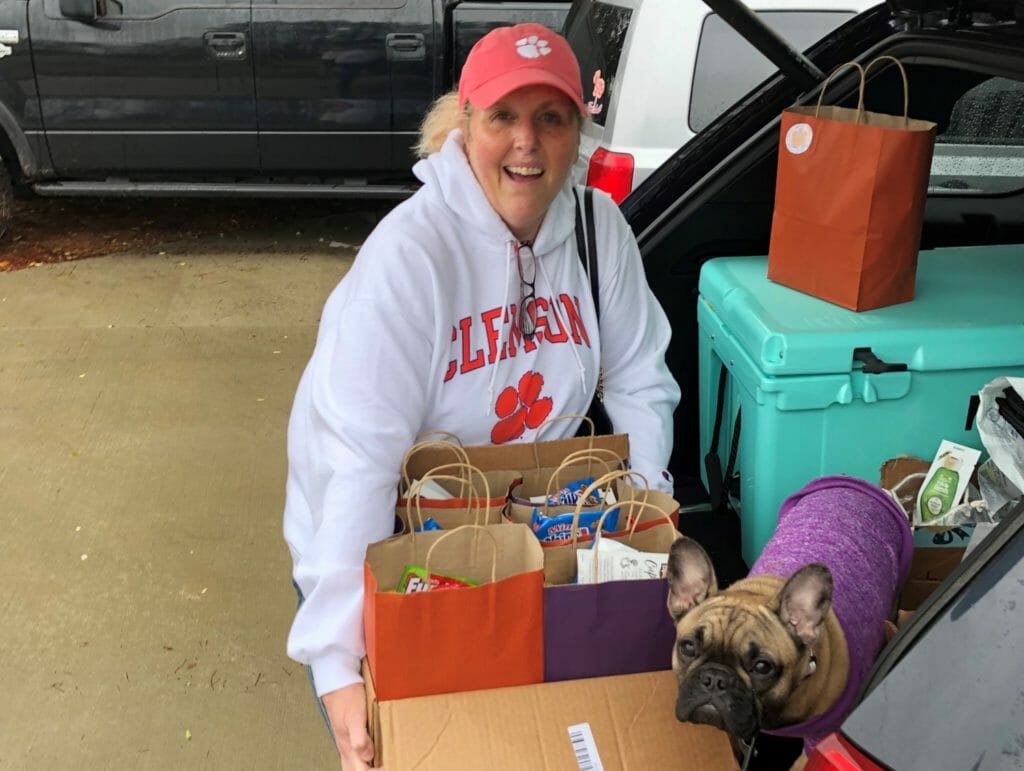
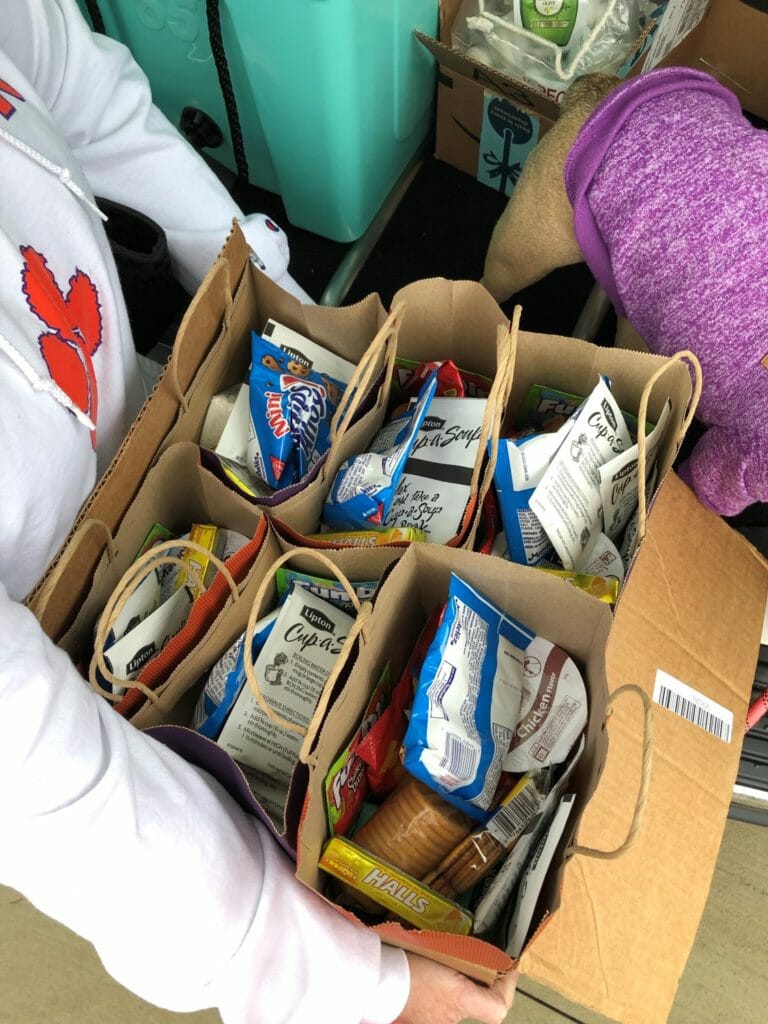
It’s not an ‘official’ volunteer position. When my daughter started at Clemson I joined the school’s parents’ Facebook page which connects families in and out of state. I soon realized that being sick or feeling alone when your family is far away is tough on these kids. So I started visiting campus with my two dogs to interact with the students. I now get calls to come in when a student is having a bad day. I began posting to parents to give them a sense of connection. I have found that with all the flu, mono and strep that is rampant this year, at times students can’t get out of their rooms and get the care they need. I make up ‘get well bags’ with items they might need during recovery. I keep them on hand and I encourage parents and families to let me know so I can deliver them. The personal connection and the relief for parents can mean the world of difference. I have taken supplies to students on and off campus, taken students to Urgent Care, the ER, dentist, picked up medications and just gone by to check on students who are sick without family close by.
What’s been the most rewarding part of your work?
It’s a combination of parents feeling relief that someone (a mom) is checking on their student and the hundreds of comments by students and families that they are inspired by ‘random kindness’ from a stranger. For me, when a parent, a student or a random person tells me that they will pay my kindness forward, that is the most rewarding part of all.
What have you learned through your experiences as a volunteer?
I have learned that personal fulfillment comes from giving not receiving. And that our future generation is more service oriented than they are given credit for. I have learned that this country is full of more people with kind, generous hearts than not.
Are there any future partnerships, programs, or events that you are excited about?
I am excited for flu season to be over! While sitting in the ER waiting room, a doctor told me there were 1008 cases of flu just in that hospital alone the previous week. I am looking forward to a new Freshmen class at Clemson in the fall of 2019 and their families who will become part of this fabulous community.
Why do you think it’s important for others to give back?
Not only does giving back cause a cyclical effect, it inspires others and ‘paying it forward’ becomes an action not just a saying. It is also a self-fulfilling action. By doing for others, people have a sense of worth within themselves that they did not know they were capable of. I had a student recently asked me why I did what I did for people and I explained it to which he said “wow, you’re just putting random goodness into the world, that’s cool”. I honestly believe he will now put more of his own random goodness into the world.
What do you want people to learn from your story?
I want others to realize that just by reaching out to one person, by doing one random act of kindness every day you will inspire others to do the same. We, as a society, are exposed to so much stress and less than desirable news in our lives, creating a community of people who care for one another and inspire one another can change everything.
Do you want to make a difference in your community like Carmen? Visit All for Good for local volunteer opportunities.