Social Worker Serves Female Inmates and Recovering Addicts Through Education
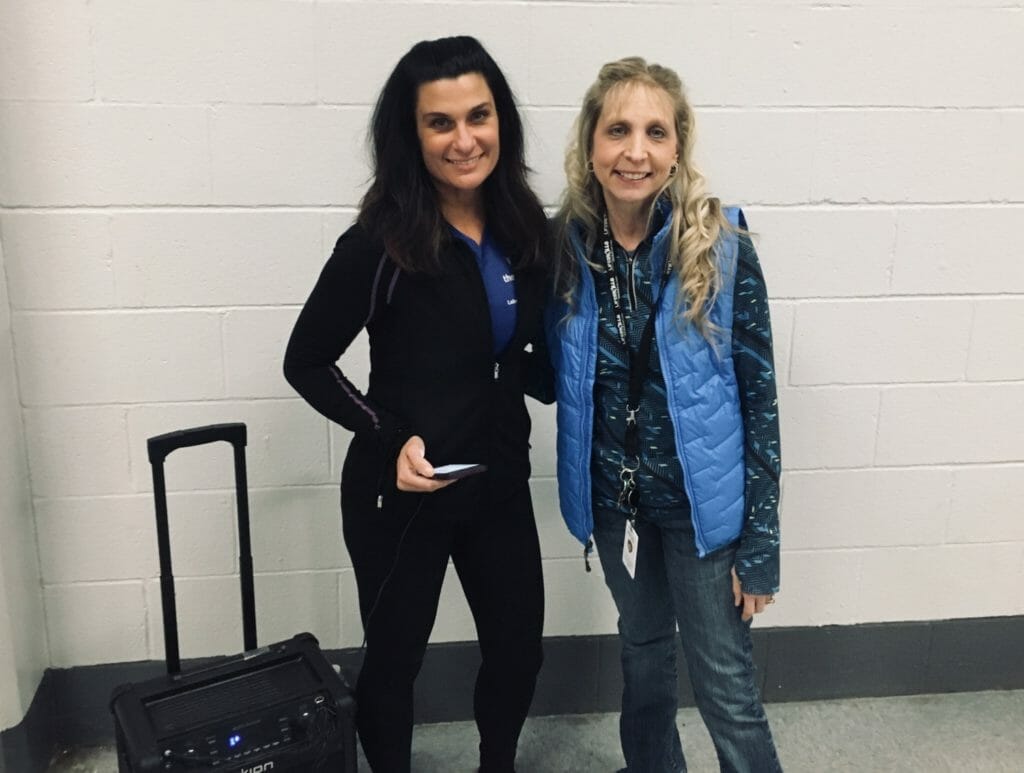
Each week, Kristy Mowry visits the Lake County jail in Painesville, Ohio. While she doesn’t wear a uniform, Kristy is equipped with a radio and keycard that gives her access to many areas the general public has never seen – and some would never dare to go.
The 50-year-old Chardon, Ohio resident began working as a social worker at the jail many years ago, through the Women in Transition Through Support (WITTS) program, which was funded by a grant. Setting up programming for the women to get education, taking advantage of services having to do with mental health, addiction rehabilitation, and more, Kristy says she was able to make real change for the inmate population. When the grant dissolved in 2012, Kristy decided her work wasn’t done, and continued going back to the jail, but this time, as a volunteer. Further complementing her work with women in need, Kristy is launching a pilot program called Women’s Wellness and Recovery (WWAR) in association with the YMCA, which is tailored to the needs of women who are recovering from chemical addiction.
Helping hundreds of the most vulnerable and in need in her community over the past six years, Kristy dedicates her time to providing support for incarcerated women and recovering female addicts as they work towards better lives, and is today’s Daily Point of Light award honoree. Points of Light spoke to Kristy to learn more about her work with WITTS and WWAR.
What inspires you to volunteer?
In today’s world, a lot of social service agencies are cutting funds and workers are overwhelmed. Once the women in the jail find out that I’m not an employee, but I just come there to dedicate my time, they show a new appreciation. They’re so grateful. They look forward to our groups and at the end of the session they want to know if I’m coming next week. It’s encouraging them every week, that someone is being consistent, listening to them and following through if they need help.
Tell me about your role with WITTS.
The corrections officers have nicknamed me ‘Kristy WITTS’ (laughs). I don’t even know if they know my last name. I do some case management in the jail to help the women get connected to services. I lead, or assist in leading the life recovery group, where we also share information about support programs for recovery out in the community. I help the inmates prepare for transition out of the jail. Once outside, I mentor women one-on-one to continue supporting them. It’s not just helping the person inside the facility, it’s trying to figure out how to help them when they’re out, too. We are supporting them holistically and evaluating the barriers of what’s going on in their lives that can be improved upon to help increase their chances at success, and reduce recidivism.
Describe some of the programs you offer through WITTS.
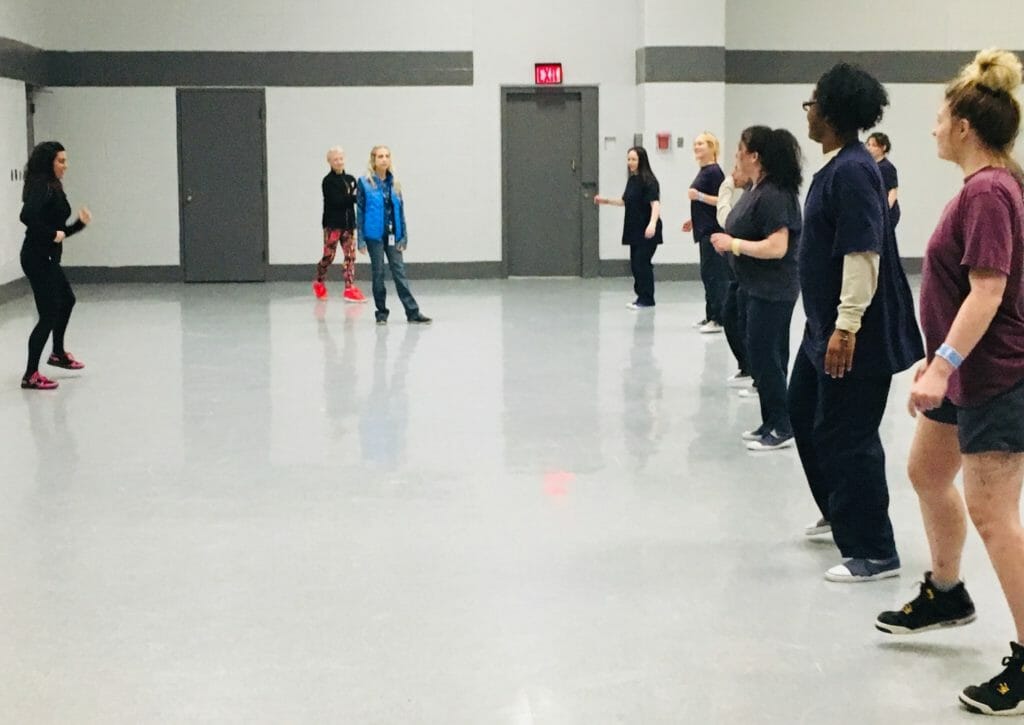
We organize special classes including anger management, fitness classes and support groups in order to help these women develop positive relationship and, gain confidence, as well as help them become productive members of society. We also have a YMCA instructor come in and teach Zumba and other cardio aerobics. Lastly, I started a life recovery group, which is a 12-step bible-based program that teaches these women what it’s like to live Christian faith in deed and thought. We’re providing them with education now, so once outside, they are better equipped to get involved in a local church, to get jobs, to stay sober. We’re also teaching them to become better mothers, because on the outside, they will get to try to parent their children again.
How has your volunteerism effected change?
Of the women that I come in contact with at the jail, there have been a few that didn’t want to follow the rules, they were belligerent. They’re just angry, depressed and causing problems. A lot of the women are also addicts, so they’re dealing with coming off of drugs or alcohol. We have had corrections officers and staff tell us that because of our programs and services, they’ve seen a really big change in how the inmate is handling things, or how they’re dealing with depression and anxiety. It’s a change of the atmosphere. The inmates are a little more positive, they’re trying to get along better and problem solve better.
Can you share a personal story about that change?
A woman in her forties came into the jail for the first time on a forgery charge. She was a wife and mother who was devastated about her actions, and the effect they had on her family relationships and marriage. She was having trouble adjusting to life in the jail, and attended one of my book groups, to learn about Christian principles as it relates to marriage. She shared what she was learning with her husband, who finally agreed to read the book’s counterpart on marriage for men. The education they both received had a positive impact on their marriage, and they decided to work on things once she was released. Now outside, they are doing well as a couple, she is working full-time and improving relationships with her family.
Explain what volunteering means to you.
I’ve been through things in life, real difficult situations and crises, and I saw how people faded away, and they didn’t stick around to help when you needed help most. I look at volunteering as ministry, not a job. That’s the difference.
What’s one thing you want readers to take away from your service?
In terms of service at the jail, everybody has gifts and talents that they should be giving to volunteering. My advice? Don’t close off a certain place because you might have a preconceived negative view of it, even though you’ve never been there and experienced it. A lot of people might say, “there’s no way I‘m going in a jail with criminals,” but I’d encourage people to be open-minded about trying different volunteer opportunities. If you talked to me 20 years ago, I would have said, “absolutely not, there’s no way I’m setting foot in a jail.” But I love it, and I know that’s where I’m supposed to be.
You have a program launching on Tuesday for recovering addicts. Tell me about it.
WWAR stands for Women’s Wellness and Recovery, and it’s a pilot program that combines exercise, wellness, nutrition and a 12-step bible-based recovery curriculum. It is designed for women who have had a chemical addiction, have several months of sobriety, and have other support systems in place. I partnered with the YMCA to launch this program, so they are hosting the weekly group, which is based off of some of the programs we facilitate at Lake County jail. Resources to support the program have been donated, from the healthy snacks to the life recovery bibles. We are soliciting sponsorships from individuals and businesses to ensure membership for the 3-month program. In addition, the female attendees will have access to the YMCA facilities outside of this weekly group. For more information on how to help or apply, contact Lana Niebuhr at the Lake County East End YMCA in Madison, Ohio.
Do you want to make a difference in your community like Kristy Mowry? Visit All For Good for local volunteer opportunities.
Post written by Marlena Militana.
Scientist Sparks Discovery and Spreads Awareness of STEM through Volunteerism
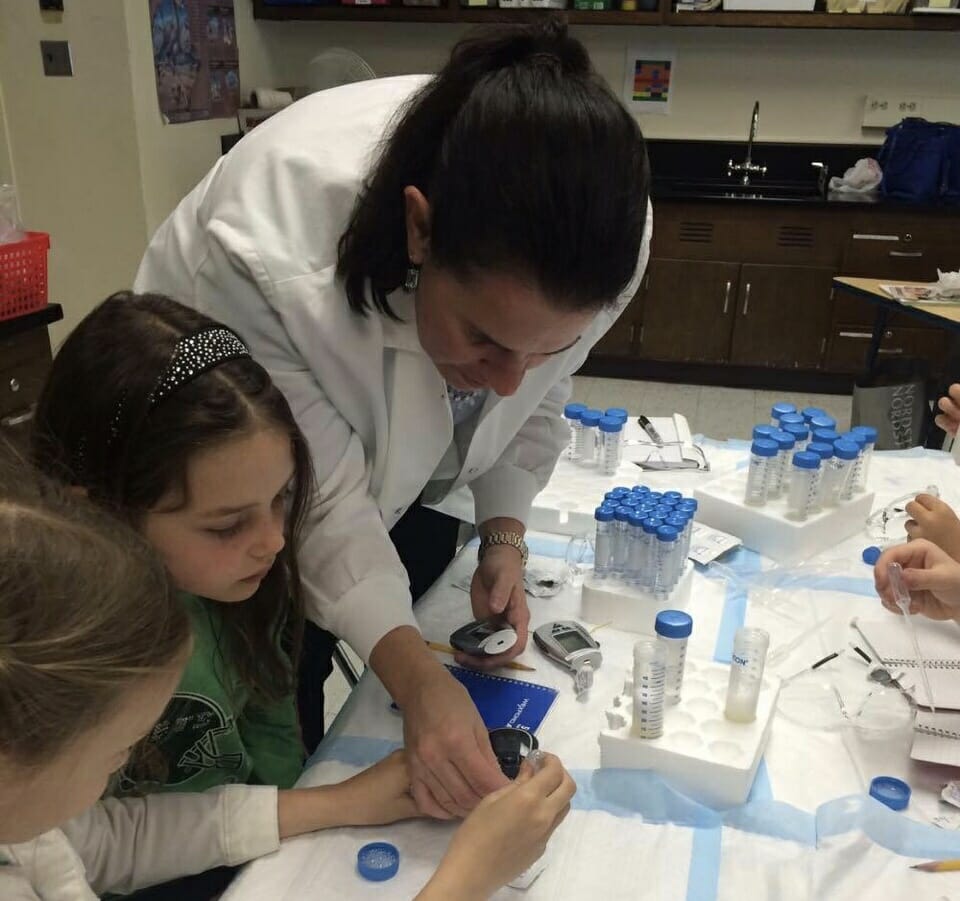
That first spark of amazement in a child’s face, Lori Morton says, is what drives her volunteerism day after day. “When a kid looks into a microscope for the first time, and sees an ant, or a bumblebee, at high magnification, and realizes there’s this otherworld complexity, and they’re seeing it for the first time,” Lori says. “Being a part of that moment, is wonderful.”
By day, the 47-year-old scientist, who hails from Chappaqua, New York, is vice president of research at a biotechnology company, but her free time is dedicated to providing STEM discovery for kids. Through many community-based organizations and projects, Lori is providing new opportunities for kids to have fun and engage in STEM activities, in addition to underscoring the importance of science with the leaders of tomorrow.
Reaching about 1,000 children annually, Lori is dedicated to educating youth in her community, and is today’s Daily Point of Light award honoree. Points of Light spoke to Lori to learn more about her work involving STEM.
What inspires you to volunteer?
I brought some microscopes to my kids’ preschool classes, and sharing that spark of discovery with a child – or even with an adult – was really so satisfying and inspiring. You’re revealing some science magic in a way that they can understand, and that was so much fun. For kids, their faces light up, the little ones stamp their feet because they’re so excited. (Laughs) Being a part of that moment is wonderful.
Explain the importance of service when it comes to STEM education.
I had an advantage because my mother was a science teacher. That idea of, ‘let’s discover something together’, was absolutely a part of my childhood. I maybe even took that for granted as a child, because not everybody has that philosophy of instilling learning and discovery in children. One of the wonderful things about science and STEM education is that it empowers kids and adults to recognize that there’s a way to understand how things work if they take the time to observe how things work. I hope I can motivate talented thinkers to pursue STEM careers and provide that moment that drives their motivation and inspiration.
As a female scientist, what role do you play in sharing your talents in service?
As the face of a scientist, and a woman scientist, I feel a responsibility to heighten awareness of the world around us and how things work. Even if they’re not destined or inclined to pursue a life in STEM, I’m inspiring a student’s energy to learn. When I was a kid, part of my inspiration for thinking I wanted to make medicine was that I had a family friend in my life who did that. I don’t know that I would have included medicine in the view of my future if i didn’t have an example in my own world. I don’t have super powers, I’m just a regular person who chose this profession because it makes me happy, and I’m able to share that with others.
Let’s talk about some of your favorite volunteer projects.
Chappaqua Children’s Book Festival: I am a board member for this annual book festival, where thousands turn out. We feature around 90 children’s book authors and illustrators that attend the festival, and the kids can meet and interact with them. The festival promotes literacy and enthusiasm for reading, and children are introduced to “worthy real live heroes” in the authors and illustrators that bring imagination to life.
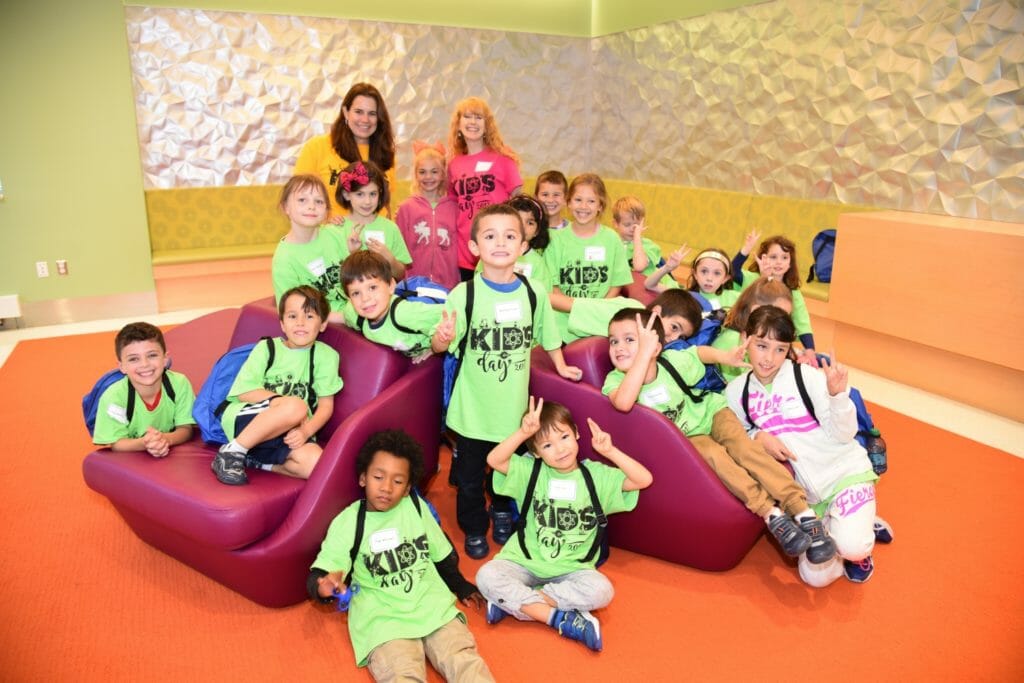
Regeneron Kids Day: My company dedicates one day to providing STEM discovery for hundreds of kids, I’m involved in developing curriculum for this day. The annual program means kids come to our campus for a full day of science discovery. The kids are literally cheering for science (laughs).
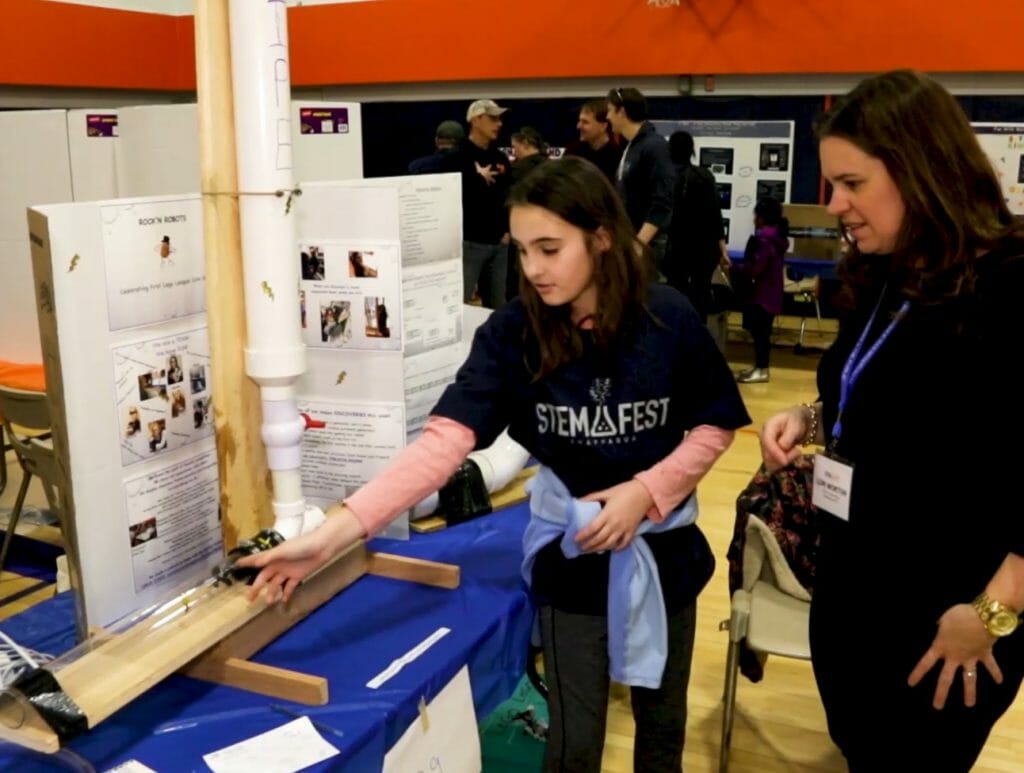
Chappaqua PTA STEM Committee: I serve as the chair and the founding member for this committee, which is designed to work with the district to provide new opportunities and enhance existing extra-curricular STEM programs and resources for kids to engage in. We host First Lego League (FLL) Robotics and Engineering teams in the district, and the “Hour of Code” event, a hands-on event for hundreds of students and their parents to learn to code. Our cornerstone event is the Chappaqua STEM Fest. This is a non-competitive science and engineering fair that about 300 students participate in annually, as well as local STEM-focused organizations and businesses. Students ranging from kindergarten to 12th grade present their independent research, team discovery projects, engineering innovations, computer science advances, “maker” inventions and wild array of other creative and ingenious pursuits. It’s an exciting and inspiring day.
You are the head of cardiovascular research at your company. How do your professional responsibilities intersect with your volunteerism in this capacity?
I have long been a member of the American Heart Association. I was the 2017 Chair of the Westchester AHA Heart Walk, and we raised almost $300,000 for the association, with funds going to support local community resources for heart health, and local grants for research. It’s a great cause, and a really fun event with several thousands in attendance.
How can people who don’t have direct access to STEM resources learn and teach their children?
Most of the fun things I’m doing at these events are quite simple. You don’t need a science background to conduct kitchen chemistry-type activities and experiments. So much material is available online – I suggest checking Pinterest for kids science activities. Search for ‘kitchen chemistry projects’ or whatever science topic you are interested in. There is a wealth of information available online.
Share one story of an impactful service project you’ve been involved in.
I grew up at the Jersey Shore and when Superstorm Sandy hit, parts of my hometown and places that were really special to me growing up were devastated. I decided that I had the power to do something and help my community, so I raised over $10,000 in support and truckloads of supplies to put into the hands of people that needed it. Being able to directly help someone with my own hands and make a difference for them was an incredible feeling. It taught me the power of one person.
What’s one thing you want readers to take away from your service?
If you make the time to do something that solves a problem you care about, it is incredibly satisfying and you gain so much personally. Not only from the feeling of success in dealing with the problem you care about, but actually doing something about it. You’re constantly surprised by what you get back from the people you impact.
What future events do you have coming up that you’re excited about?
The Chappaqua STEM Fest is happening on March 23, 2019. Please check our website for more information: https://chappaquapta.membershiptoolkit.com/stem
Do you want to make a difference in your community like Lori Morton? Visit All For Good for local volunteer opportunities.
Post written by Marlena Militana.
Saving the Planet One Marker at a Time
While most 11-year-olds would use the money obtained from chores to buy the latest toy or gadget, Joslyn Stamp uses it to help the environment. The Plattsmouth, Nebraska, resident participates in the Crayola ColorCycle program and has helped to keep thousands of used and dried up markers from ending up in landfills.
Joslyn has set up decorated collection bins, paid for by her own chore money, at locations throughout her hometown, including schools, a daycare, and two libraries. She picks up the markers that are turned in, counts them, and sends them back to Crayola. Joslyn is passionate about the environment and about making the world a better place, and is today’s Daily Point of Light Award honoree. Points of Light spoke with Joselyn to learn more about her commitment to service.
What inspires you to volunteer?
Reading about pollution and endangered animals inspires me to try to do something to help. I do not want Earth to turn into a giant trashcan. I also get upset when I see litter because animals could eat the litter and die.
Describe your volunteer role.
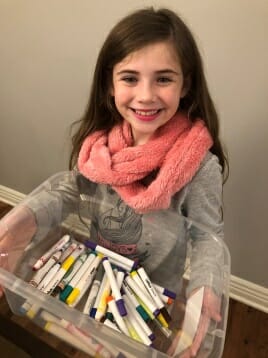
My role is Colorcycle Champion at my school. My school did not have a way for students and teachers to recycle markers, dry erase markers, and highlighters. Every student uses markers for school, so that is a lot of markers we are using. I don’t want to fill up the landfills with markers. So, I looked online and found that Crayola has a program to recycle these. I got permission from my school to put bins in classrooms to collect used or dried up markers. I collect the markers from the bins and count them. After the markers are counted, I then send them to Crayola in a recycled box to be turned into clean-burning fuel.
What has been the most rewarding part of your work?
Seeing the number of my bins grow from being at just one school to being at three schools, two libraries, a daycare, a 4-H Extension office, and a moms group. I was excited when I got 1,000 markers. So far, 5,619 markers have been collected! My teachers, classmates, and community have been very supportive.
What have you learned through your experiences as a volunteer?
I have learned that I really like helping the planet. I want to help find new ways to make it easier for people to recycle.
Are there any future partnerships, programs, or events that you are excited about?
I am excited about continuing to spread the word about Colorcycle whenever I can. I plan on having a booth at a local Earth Day event to promote Colorcycle. If a student or teacher is interested in starting ColorCycle at their school, visit https://www.crayola.com/colorcycle. I will continue for look for opportunities to help the planet and endangered animals.
Why do you think it’s important for others to give back?
If we each help a little, we can save the world. Each of us doing small things can save the world!
What do you want people to learn from your story?
That anyone can help save the world. Anyone can recycle. I was nervous to try because I was not sure anyone would recycle their markers. I am so glad ignored my fears and tried, because now over 5,619 markers have been recycled!
Do you want to make a difference in your community like Joslyn? Visit All For Good for local volunteer opportunities.
Massachusetts Volunteer Provides ‘Hope’ for Her Community
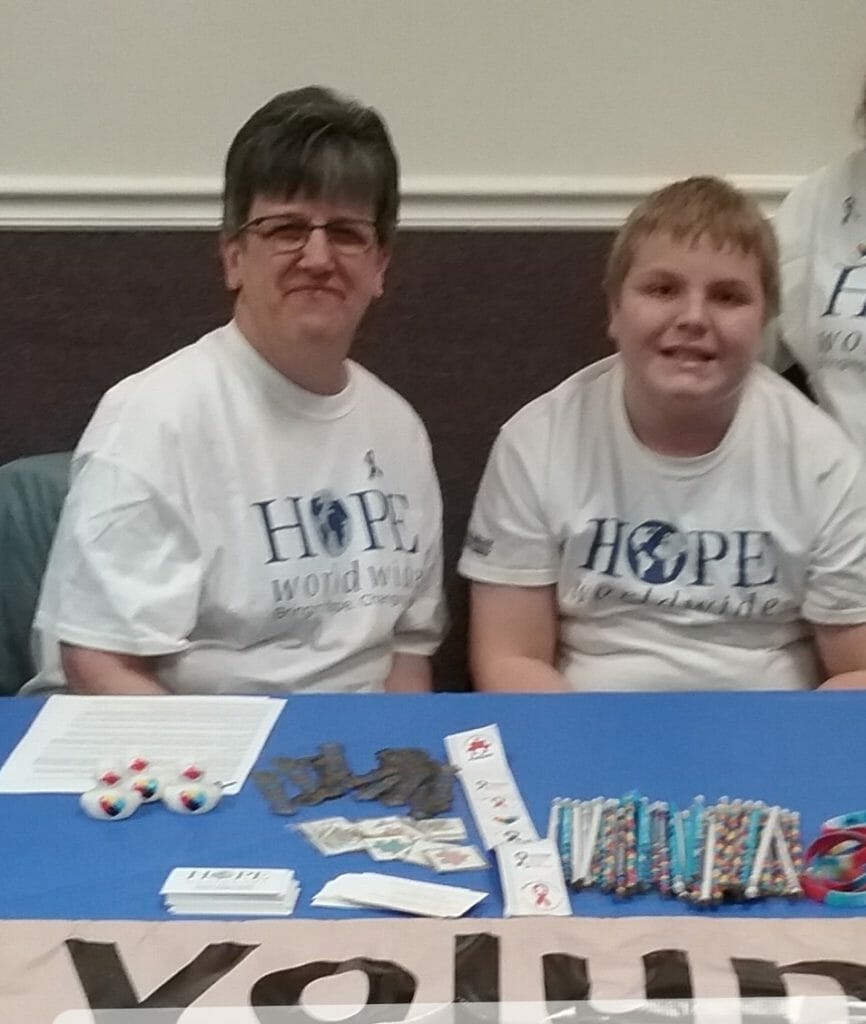
For the past five years, Chicopee, Massachusetts resident, Cathy Morgado, has dedicated herself to the HOPE worldwide Pioneer Valley Chapter, which is part of HOPE worldwide , an international charity that changes lives through the compassion and commitment of dedicated staff and volunteers delivering sustainable, high-impact community-based services to the poor and needy. Cathy oversees several of the chapter’s ongoing programs. She leads the HOPE autism support group, which provides family support for parents affected by autism and is currently involved in planning an upcoming mentoring program for at risk youth.
Cathy is committed to making a difference in her community and is today’s Daily Point of Light honoree. Points of Light spoke with Cathy about her commitment to service.
What inspires you to volunteer?
Volunteering is a way for me to give to others unconditionally. My passion to help others really comes from my Christian faith, my inspiration being Jesus, who was the ultimate example of servanthood.
My parents were also “givers” and they brought me up to be that way, too. My dad suffered through the Depression, going from door to door begging for food. That had an impact on him and in turn affected me positively. Even when my father was dying, he was directing me to give away appliances from his home to people who needed them.
As I have gone through “hard times” myself in life I have developed a lot more compassion for other people in need because I have been in their shoes.
Describe your volunteer role.
My current role is being an advisory board member and volunteer for HOPE worldwide Pioneer Valley Chapter. For the past several years, I have been overseeing several chapter programs here in Western Massachusetts: food drives for local food pantries, service at a soup kitchen in Holyoke, and our retail donation program. I run a monthly support group for parents of children on the autism spectrum. I have also volunteered in different capacities in our annual Christmas party for foster children and our backpack drive for needy students
What has been the most rewarding part of your work?
The most rewarding part of volunteering is meeting new people and developing relationships. It has really changed my perspective from being judgmental of others to empathizing instead. We are all in the same boat down here on earth. At some point in our lives, we all need help from somewhere, from someone. I feel that I have a huge responsibility to give what I have because God has blessed me with so much to give. When I give, I see the long-term impact it can have in this world. It can save people in many ways, not just materially but emotionally and spiritually also.
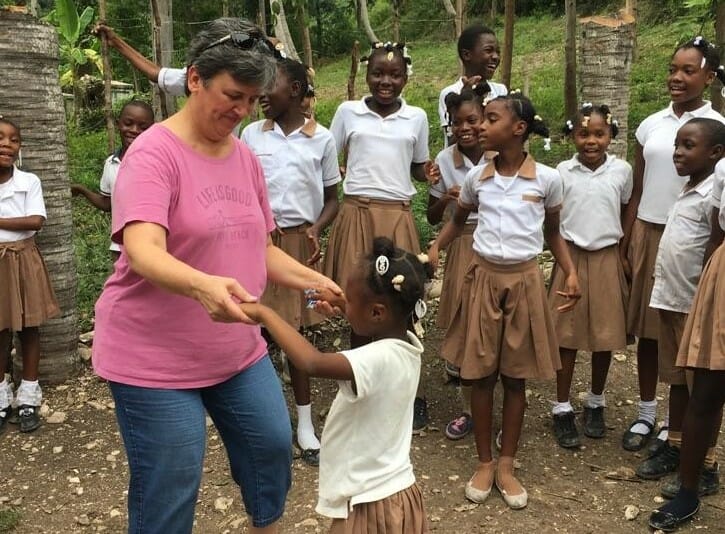
My husband and I have donated financially to start a medical program overseas in partnership with BRITE Initiative. I went to visit their schools in Haiti and saw that little children were dying from lack of medical care. Because we give, their students can get medical treatment. Sometimes we just have to volunteer our money to make a difference. Once you make a decision to get involved, you can’t ignore what is going on.
Are there any future partnerships, programs, or events that you are excited about?
One new program we are developing is a mentor program for at risk youth in Department of Youth Services (DYS) custody. We are going to provide mentors for them in developing goals for their lives, including life skills and education and employment. We really want to make a difference that is sustainable and lifelong for people in the program.
Why do you think it’s important for others to give back?
We can each do something and I believe we need to take personal responsibility for others.
What do you want people to learn from your story?
I really want people to know that you can give what you have to others, whatever that is. I love Mother Teresa’s quotes that say: “If you can’t feed a hundred people then feed just one,” and, “If you judge people you have no time to love them.”
Do you want to make a difference in your community like Cathy? Visit All For Good for local volunteer opportunities.
Spinning His Wheels to Help Disadvantaged Kids
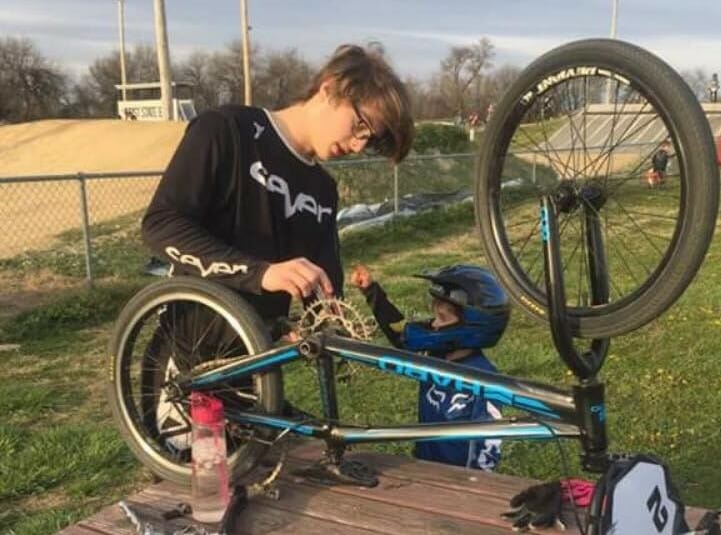
Harrison Barnes helps one of his special kids get his bike ready to ride./ Courtesy Harrison Barnes
Harrison Barnes understands what it means to feel different. When he was just a toddler, he was diagnosed with Sensory Processing Dysfunction and Asperger’s Syndrome.
Athletic by nature, Harrison struggled to find an outlet for his boundless energy, but team sports didn’t work for him. When he was 12, Harrison discovered BMX, off road bike racing and everything clicked into place. By finding his focus and using his bike as a coping mechanism, Harrison realized that biking could help other kids with all kinds of challenges, some visible, some not. He founded Gear Up in 2016, a non-profit whose mission is to “Get Kids on Bikes!” By engaging kids’ minds and bodies in mentoring and coaching programming, Harrison has helped more than 160 children in eight states and has documented more than 450 hours in volunteer service. As he finishes his senior year, Harrison is planning to study occupational therapy at University, continuing to help children with developmental disabilities to find their place in the world like he has.
Harrison is committed to making a difference in his community and is today’s Daily Point of Light Award honoree. Points of Light spoke with him about his commitment to service.
What inspires you to volunteer?
I was inspired to volunteer because of people that helped me when I was little. I was diagnosed with an Autistic Spectrum Disorder and there were many people that helped me to succeed. Now I want to give back and help others.
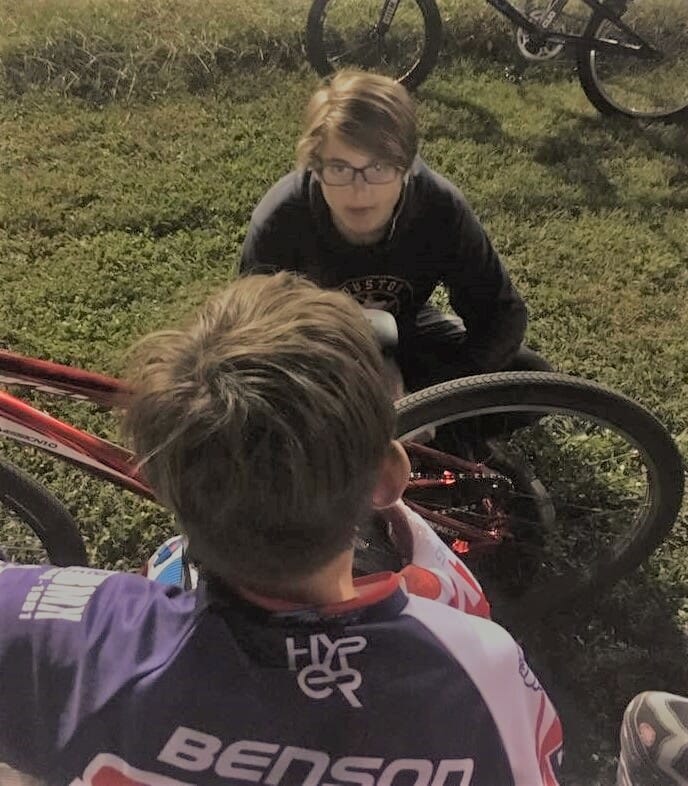
Biking made all the difference for Harrison Barnes, and now he helps other kids get on bikes./ Courtesy Harrison Barnes
Describe your volunteer role.
I lead an organization called GearUp which exists to “get kids on bikes.” Primarily we work on projects that make bike riding more accessible to everyone and specifically children with special needs. My role is to organize and plan projects. I also serve as a mentor and help provide leadership to other programs with the same mission. In the fall of 2017, I organized a national bike rally focusing on bringing military children out to local tracks in 11 different states to get experience riding. For the summer of 2018, I created a Summer Bike Program that invited children across the country to register and then record the number of hours they rode their bike during the summer months. I recruited sponsors to provide prizes, the goal being to get kids outside and riding their bikes – more than 100 kids registered! I have also spent time working on lobbying for legislation to make youth sports safer for kids by requiring background checks for youth sports volunteers.
What’s been the most rewarding part of your work?
The most rewarding part of what I do is working one on one with a child and seeing them find success.
What have you learned through your experiences as a volunteer?
I have learned a lot about myself and about the best ways to interact with people.
Are there any future partnerships, programs, or events that you are excited about?
I am looking forward to the second year of our Summer Bike Challenge which encourages kids to get off the couch and ride their bike during the summer. Last year we had more than 100 participants.
Why do you think it’s important for others to give back?
I think that by giving back, you learn more about yourself and what you are capable of.
What do you want people to learn from your story?
I want people to learn that a diagnosis cannot define who you are as a person.
Do you want to make a difference in your community like Harrison? Visit All for Good for local volunteer opportunities.
Post written by Beth D’Addono.
Atlanta Medical Student Brings Healthcare and Medical Education to Refugees
Becoming a doctor and more specifically a surgeon was something Hannah Williams wanted to do since high school. The human anatomy fascinated her ever since a young age so pursuing a career in medicine only seemed natural. So when she entered college, she started working at a research lab with surgeons and fell in love. She was reassured that this career was for her. Hannah, now, is in her last year of medical school at Emory University.
But what sets Hannah apart from other medical students is that she is passionate about providing healthcare and medical education to refugees and the underserved. She co-founded and is program director of the Young Physicians Initiative, a “pre-medical” mentorship program that prepares high school and undergraduate students in their journey of pursuing a career in medicine. The program has had over 40 participants across four different high schools and one university. Hannah also regularly volunteers at the Harriet Tubman Women’s Clinic, which provides free reproductive health services to underserved and uninsured women, many of whom are refugees. We spoke with Hannah to learn more about her passion for medicine and why she believes refugees deserve equal access to healthcare.
What drives you to volunteer?
It’s just something that I really enjoy. Often going to the women’s clinic is the best part of my week. You learn a lot even though you’re volunteering. You’re not in school, but it’s still a great learning experience. Working with the patients at the clinic and working with the students at YPI, it’s just something that I enjoy.
Describe your volunteer role with the Young Physicians Initiative and the Harriet Tubman Women’s Clinic.
Dr. Kelli, the co-founder, was stepping in for what we call a small group advisor. They’re faculty that meets with first and second-year med school students on a biweekly basis. Our small group leader was out of town so Dr. Kelli came and led the group instead. During that time, he told us more about himself, his story and that he was interested in starting a high school mentorship program in Clarkston. The Clarkston High School is made up predominantly of refugee students. I was really interested in working with refugees. I had lived in the Middle East before coming to medical school. I studied Arabic and Middle East politics in college and I really wanted to continue working with populations from other parts of the world during medical school even though I was in Atlanta so I approached him about helping start the program. Ever since then, we’ve been building it and evolving it. For me, it was really important to continue teaching as that was something that I did before medical school. I just love the opportunity to get to know the kids and watch them grow.
I started working at [the Harriet Tubman Women’s Clinic] about a year and a half ago. I’m one of the clinic coordinators. We all volunteer to manage and run the clinic about 1-2 times a month, which involves checking patients in, helping them get any medications that they need, and making sure that the clinic is flowing smoothly so that patients don’t have to wait a long time. The clinic also has a phone that enables patients to call us to either schedule an appointment or ask questions.
Why did you choose to start volunteering at the women’s clinic?
The clinic serves a large refugee population as well as an underserved and uninsured population in Atlanta. I wanted to continue working with underserved populations because I think that everyone should have equal access to healthcare and the healthcare that you can be provided shouldn’t be dependent on what you’re able to pay.
What does the Young Physicians Initiative do?
It’s a program that is aimed at giving mentorship to low-income and minority students interested in a career in medicine. We know that both of those demographics, both low-income and minority students, are routinely underrepresented in medical schools. While there are bigger structural reasons why that’s the case such as financial barriers to get to medical school, part of the other reason is that if you don’t know someone in medicine or you don’t understand how the application process works, it can be really difficult to even know what classes to take or when to start planning for this. It’s easier if you start planning in your early years of college. You really have to be ahead of the curve to be successful to get into medical school.
Our pilot program was at Clarkston High School. The idea was to do interactive medical cases where we took the class in small groups through a medical problem and they would ask questions about the patient, look at their physical exams, tell us what’s abnormal, normal, look at their imaging, any other studies that the patient would have in a workup and then at the end, they would get together, summarize the patient and come up with a diagnosis. At the end of the session, we talk about what diagnosis the patient was supposed to represent. The idea is that through that it shows them what the thought processes are in a medical diagnosis and to get them excited and engaged about something related to healthcare. In addition to those interactive medical case sessions, we do physician speakers where doctors come in and talk to the students about their own journey to medicine. We also offer college application assistance.
Why do you think it’s important to reach these students while they’re in high school?
I think it’s important for several reasons. First, developing a mentor relationship with someone in medicine at an early stage is helpful. At the end of the year, I give all the students my email address and phone number and tell them, “If it’s seven years from now and you’re applying to medical school and want to talk to somebody, you can call me, email me, I’ll answer.” Also, for a lot of these students, when we ask them “What would stop you from pursuing a career in medicine,” a lot of them feel like it’s both financially out of reach or too difficult. So addressing some of those issues early and showing them it’s possible, that they have resources, and that they’re capable of doing it academically is important.
If you’re talking more largely about healthcare in general, I think it’s important for healthcare providers to reflect or mirror the population that they’re serving and that’s certainly not the case right now. I think that also having a diverse group of physicians and a diverse medical school class brings a diversity of thoughts and experiences to your learning environment.
What’s been the most rewarding part of your work?
With YPI, it’s watching the kids get really excited about medicine and watching them work through difficult medical problems and then solve the case and realize that they did that by themselves. So I just enjoy watching them succeed, watching them get excited about medicine. For the women’s clinic, it’s being able to provide care to women who desperately want healthcare and aren’t able to access it and just watching them be able to get that care whether it’s somebody who hasn’t been able to get birth control pills for the last seven months and is just so excited to have birth control again or a woman who needed a pap smear in a year and didn’t know where she could get it because she lost insurance and being able to do that for her, that’s the most gratifying part.
Are there any future partnerships, programs, or events that you are excited about?
At YPI, we’ve incorporated a pre-medical program for university students. I’m not directly running that because we handed it off to students who are a year below me and so that there’s continuity for the next two years. So for the program, that’s exciting because it’s expanding our curriculum to a more advanced level and the students that are showing up at the university programs are very interested in medicine and they’re a lot closer to trying to apply to medical schools than the high school students.
Why do you think it’s important for others to give back?
It’s a learning and growing experience for the person that’s volunteering. There’s a lot you can learn from helping other people out. It can change your perspective on how you view a problem or just how you see other people in your community. There are definitely people in your community that could use help and if you’re able to give that assistance, then you should.
Do you want to make a difference in your community like Hannah? Visit All For Good for local volunteer opportunities.
Post written by Alicia Lee.
Making a Case That all Service Matters
John Gemma, 71 has volunteered in some capacity as long as he can remember. He always gave back at church, and since he retired from his job at the Pentagon, John has upped his game, working with Habitat for Humanity, where he is a team leader, and more recently, Voices for CASA Children. But John knows himself. He knows that having direct contact with at risk or abused children would trigger emotion in him that would not get the job done. But since he wanted to help, he asked to handle administrative duties, back of the house tasks that while furthering the group’s mission wouldn’t expose him to the day to day that the CASA volunteers see and handle. And he feels good about that.
John is committed to making a difference in his community and he is today’s Daily Point of Light Award honorees. Points of Light spoke with him about his commitment to service.
What inspires you to give back?
My sister’s service as a prioress for an order of Dominican nuns has long inspired me. Also, our son, who just turned 39, is adopted, so I’ve always had a soft spot for children that need a home and loving care.
Describe your volunteer role.
I couldn’t handle it if I knew a kid was being abused. So I said I would do administrative things. I administer our gas card program from Circle K. Since all of the advocates are volunteers, the gas cards help them pay for gas. Each month I get a list of top 25 volunteers ranked by miles they drive. I’ve also helped with the back to school back pack program for the kids, and getting gift card donations for around the holidays. I have worked with them for 8 years and continue to be a Team Lead for more than 4 years.
What’s been the most rewarding part of your work?
Talking to the CASAs, hearing what they do and how they do it, the difference they make to these kids.
What have you learned through your experiences as a volunteer?
I’ve learned that we can all do something. It doesn’t matter what your skills are, there are always opportunities for all of us to give back.
Are there any future partnerships, programs, or events that you are excited about?
I intend to volunteer for other programs at Voices, whatever they need, throughout the whole year. And I’m going to continue working as a team leader for Habitat. In the past 22 years, the four Lutheran Churches in this area, including my church, has donated money to build 22 houses. We are very proud of that.
Why do you think it’s important for others to give back?
How can I put this? The environment that we are in now in our country is filled with a lot of negativity and hate speech. We need to learn that everybody is important. All human beings are important. A lot of people need our help and each of us should be doing something about it.
What do you want people to learn from your story?
The idea that we can all do something, as little as we might think it is, it does help. It’s incredible how much satisfaction comes from even the smallest jobs giving back.
Do you want to make a difference in your community like John? Visit All for Good for local volunteer opportunities.
Post written by Beth D’Addono.
Los Angeles CPA Helps Inner City Students with College Applications
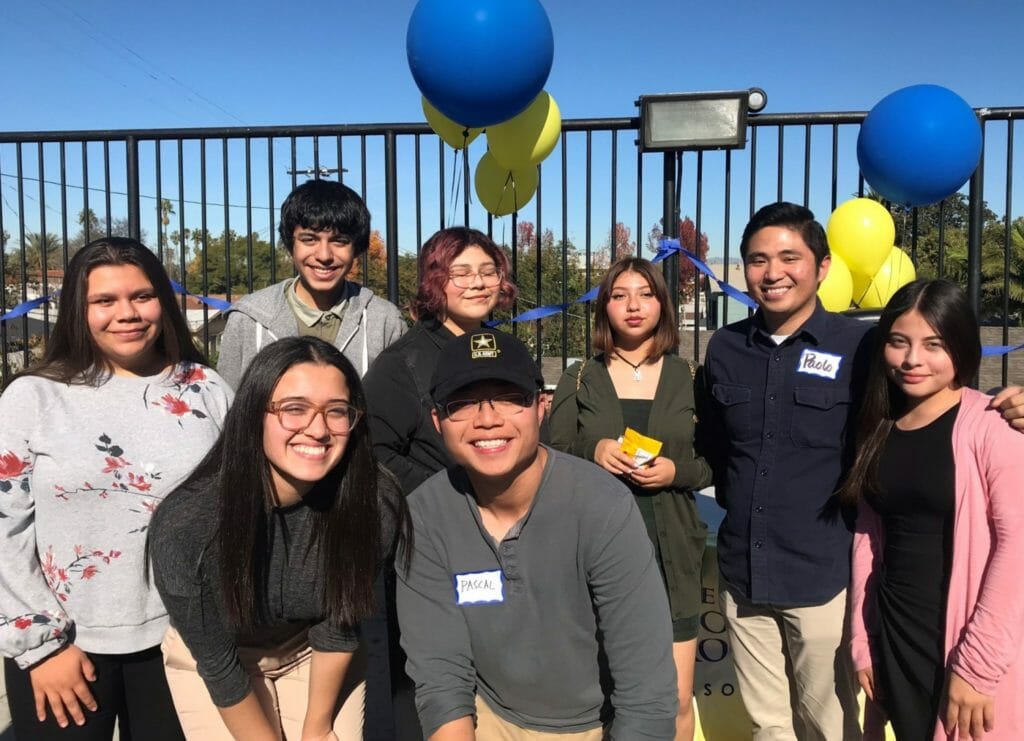
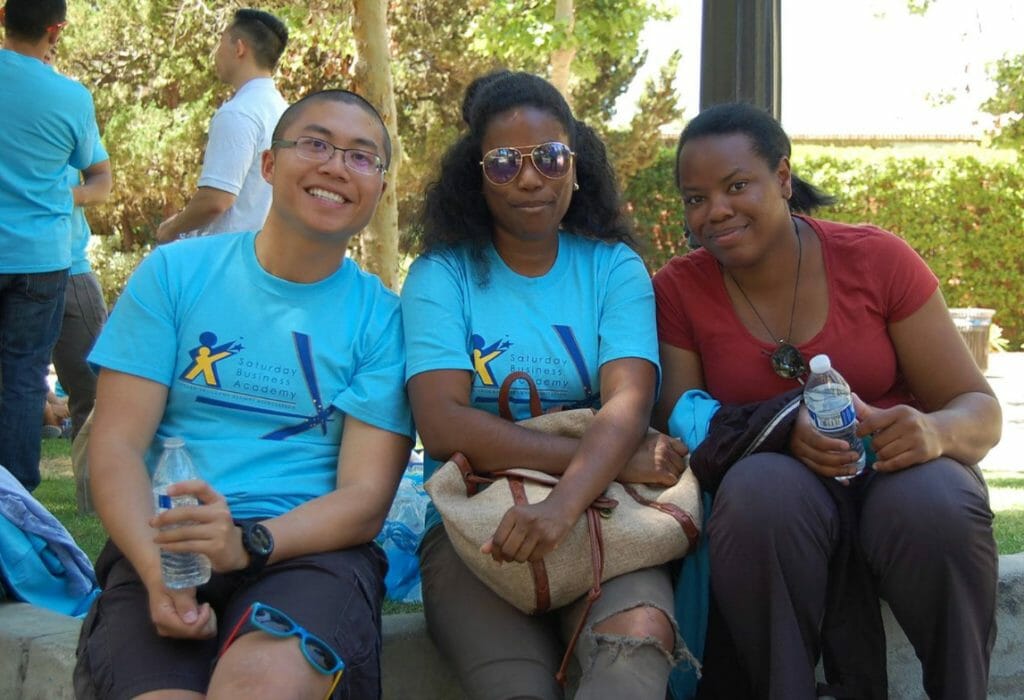
Pascal Su was attending a Riordan Alumni Association recruiting event held at UCLA Anderson School of Management when he learned about the Saturday Business Academy, a program at local high schools where volunteers help prepare inner city students for their college applications and provide mentorship. He was inspired by the cause and believes education is the driving force to change society, so he signed on as a volunteer.
Now in his fourth year as a volunteer with the Saturday Business Academy, Pascal has served as a program manager helping to plan out topics for the Saturday sessions including leveraging his experience as a CPA to instruct the students on financial literacy. In addition, as a mentor, he helps students with college test preparation, college applications, filling out resumes, writing personal statements and taking students on college campus tours. “Many of these students are first generation college applicants and don’t have parents to guide them through the college process. Having the Saturday Business Academy mentors helps them.”
Pascal believes it is important for others to give back as many people need help. “There will always be people who need help and there will always be a need for more volunteers to make our society a better place.”
He says volunteering has personally taught him how much he enjoys working with kids and public speaking. “I enjoy publicly talking about topics I am passionate about. I didn’t know that about myself before.” In addition, he says he has learned how much enjoyment he receives from helping others.
The most rewarding part of his volunteering work with Saturday Business Academy was when he recently walked the halls of a local high school and saw the photos of some of the high school students he had mentored displaying the colleges they would be attending. “To know I had partially helped make a positive change for these students to go to college as one of the first in their families are the moments I live for.”
Pascal wants other people to learn from his story that you are never too busy to volunteer. “A lot of people have busy schedules and want the weekends to relax. Volunteering with the Saturday Business Program made me realize it is not an arduous task, you will find time if you want to. Volunteering is not a burden on our schedule. You will get fulfilment, enjoyment and relaxation.”
Do you want to make a difference in your community like Pascal? Visit All for Good for for local volunteer opportunities.
Post written by Karen Cohen.
Using Sports as a Way to Connect With At-Risk Youth
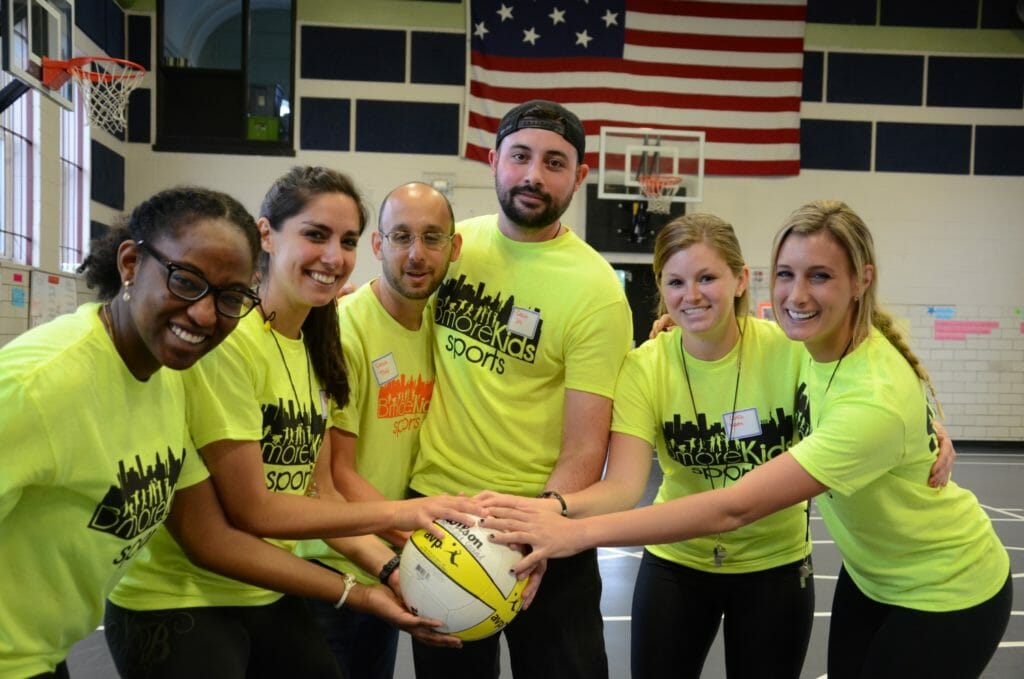
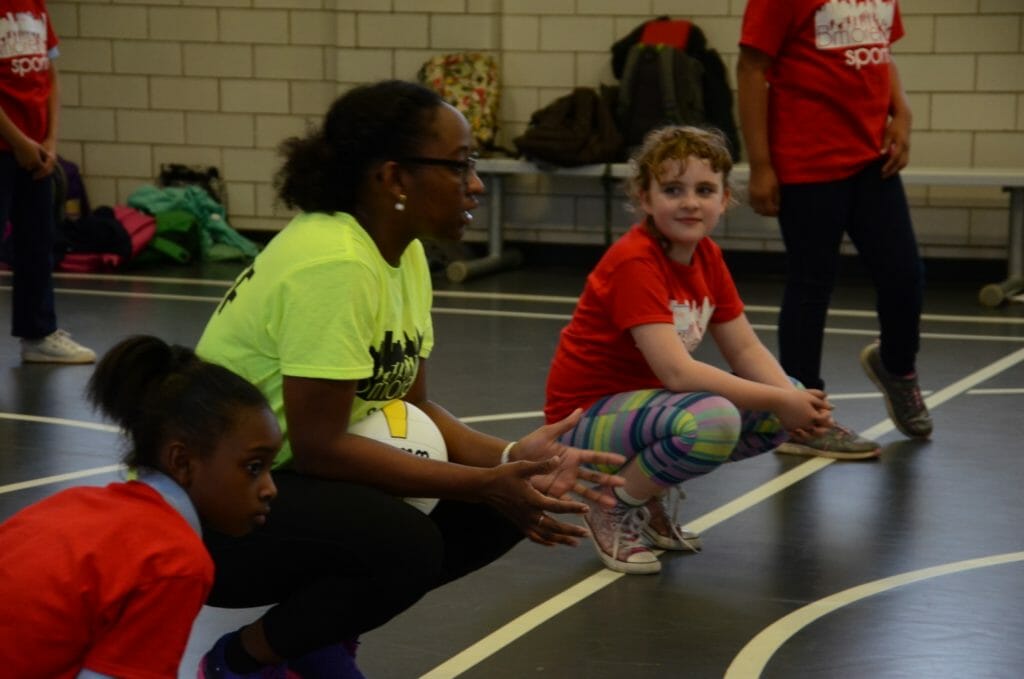
In her job as a fellow with BaltimoreCorps, 27 year old Stephanie Alphee focuses on mentoring and STEM education for 9th and 10th graders in Baltimore. In her free time, she supports another aspect of youth education, interventional recreational sports. A volunteer with Baltimore Volo City Foundation since 2015, Stephanie coaches at risk kids from ages five to 13. The program gives these kids the opportunity to play a variety of sports in a fun but structured environment at no cost to the family, as well as eat a healthy meal after play is done. Besides helping kids be active and develop social skills, the mentoring program offers positive adult role models and, in some cases, the only safe space for the kids to play outdoors.
Stephanie is committed to making a difference in her community and she is today’s Daily Point of Light Award honorees. Points of Light spoke with her about her commitment to service.
What inspires you to volunteer?
My passion is for at risk youth development. As a kid growing up in Long Island, my parents worked and had a long commute into the city, so I was always involved in some type of afterschool program. I remember how enriching those experiences were for me. I met some mentors who really helped shape my life. Providing a positive adult role mode, a healthy meal and activities that keep kids off the street is incredibly inspiring.
Describe your volunteer role.
I started volunteering with Volo City Kids, formerly BMoreKids Sports, first as a coach in various sports for Baltimore City kids five to 13. The idea is recreational intervention, to get kids engaged, active and having fun. I’m a member of the foundation’s Junior Board as well and help with fund raising and development. But I still coach volleyball, soccer and even flag football.
What’s been the most rewarding part of your work?
Being able to share a passion of mine that isn’t so academic. I love doing the STEM work in my job and helping kids achieve academic goals. Not every child is going to excel in academics. Volo City Kids’ programming touches kids in a different way. Playing sports for fun encourages social development and in some cases helps with anger and behavior issues.
What have you learned through your experiences as a volunteer?
My volunteer work has helped me become more familiar with the way a lot of people live in Baltimore City. I believe I’ve grown in both empathy and knowledge. I started volunteering in the aftermath of Freddie Gray’s death – and there was clearly a lot of pain, separation and division within the city. I see that the love of sports is a universal language and this program creates bridges – even between people of color from very different walks of life. Baltimore Volo City Kids helps transcend divides and open space for conversation.
Are there any future partnerships, programs, or events that you are excited about?
I’m just looking forward to continuing to work with Baltimore Volo City Kids – there is always something going on. I also am excited that a lot of Millennials who are involved in sports leagues now volunteer with us, helping kids who look and live very differently from them.
Why do you think it’s important for others to give back?
Because giving back offers an opportunity to learn more about yourself and your communities.
What do you want people to learn from your story?
That volunteering offers an opportunity, not just for giving back, but for personal growth that the volunteer wouldn’t have otherwise.
Do you want to make a difference in your community like Stephanie? Visit All for Good for local volunteer opportunities.
Post written by Beth D’Addono.
He’s Gone From Bullied to Bow-Tied With a Purpose
Meet Daily Point of Light Award honoree Alex Hart-Upendo. Read his story, and nominate an outstanding volunteer or family as a Daily Point of Light.
Most 12-year-olds aren’t fashion trendsetters or philanthropists. Which is what makes Alex Hart-Upendo so special.
The young entrepreneur, who was diagnosed as both gifted and on the autism spectrum when he was five, founded Build-A-Bow after he was beaten up and bullied for being autistic. Resolved to turn taunts of “nerdy” into a positive self-image, Alex expanded his bespoke bowtie business into a community workshop program, Build-A-Bow for Purpose, offering free workshops to Racine residents every month. Participants learn bowtie design, with their handiwork sent to a rotating list of non-profits, more than 2,000 bow ties to date. When he lost his grandfather, University of Wisconsin-Madison football player Eddie “The Pony” Hart to cancer in 2016, Alex became especially passionate about supporting cancer related causes along with his anti-bullying initiative. Alex is also the author of “Bullies Bowties And Brilliant Alex,” a multicultural picture book that encourages children to be kind while bringing awareness to bullying.
Alex is committed to making a difference in his community and he is today’s Daily Point of Light Award honorees. Points of Light spoke with him about his commitment to service.
What inspires you to volunteer?
When a house fire took away our home, my mom told me that when God got us out of our situation our job would be to help others through theirs. After my grandfather passed away from cancer, I was inspired to bring joy to others battling incurable diseases. I have also been the victim of bullying and wanted to help and uplift others in the same situation.
Describe your volunteer role.
Through my free community workshop program Build-A-Bow for a Purpose, I teach people how to design bowties, which I then send to different awareness groups – for example, September is childhood cancer awareness and October is breast cancer awareness. When people receive their bows they know that someone took time to make them something special. I’m just the organizer. Without people taking time to design bows my workshops would not exist. I also tour schools to bring awareness to bullying and have donated hundreds of my books in hopes of inspiring other kids to be the change.
What’s been the most rewarding part of your work?
Seeing the smile on people’s faces! I’m not paid in money – I’m paid in smiles. I know that I am bringing joy to others battling through a tough time and that’s all that matters.
What have you learned through your experiences as a volunteer?
I learned that just because you are one person doesn’t mean you can’t make a big impact. It’s all about taking action! Just get out there and do something.
Are there any future partnerships, programs, or events that you are excited about?
I’m super excited to have recently partnered with U.S cellular. I was chosen to be part of a national campaign for their Future of Good program. I was featured in a national commercial on their platform and tell the world about what we’re doing here in Racine to give back. More than a million people have seen the commercial and I’m just amazed by that!
Why do you think it’s important for others to give back?
I think it’s important because helping others is contagious. When you help someone, they are inspired to help someone else. It makes you feel happy inside when you know you made someone else smile.
What do you want people to learn from your story?
No matter how old you are or what you may have overcome, you can make a difference. I started doing this when I was nine, I was labeled as autistic and people wanted to put me in a box with what they thought I was capable of. You can do anything you put your mind to regardless of obstacles. You just have to believe and work hard to achieve. Because nothing comes from a dream unless you make a plan of action.