After Witnessing Sandy Devastation First-Hand, New Yorker Joins Forces with Red Cross
Hurricane Sandy was a once-in-a-lifetime storm, with surges and flooding devastating New Jersey and New York in October 2012, destroying communities and fracturing lives.
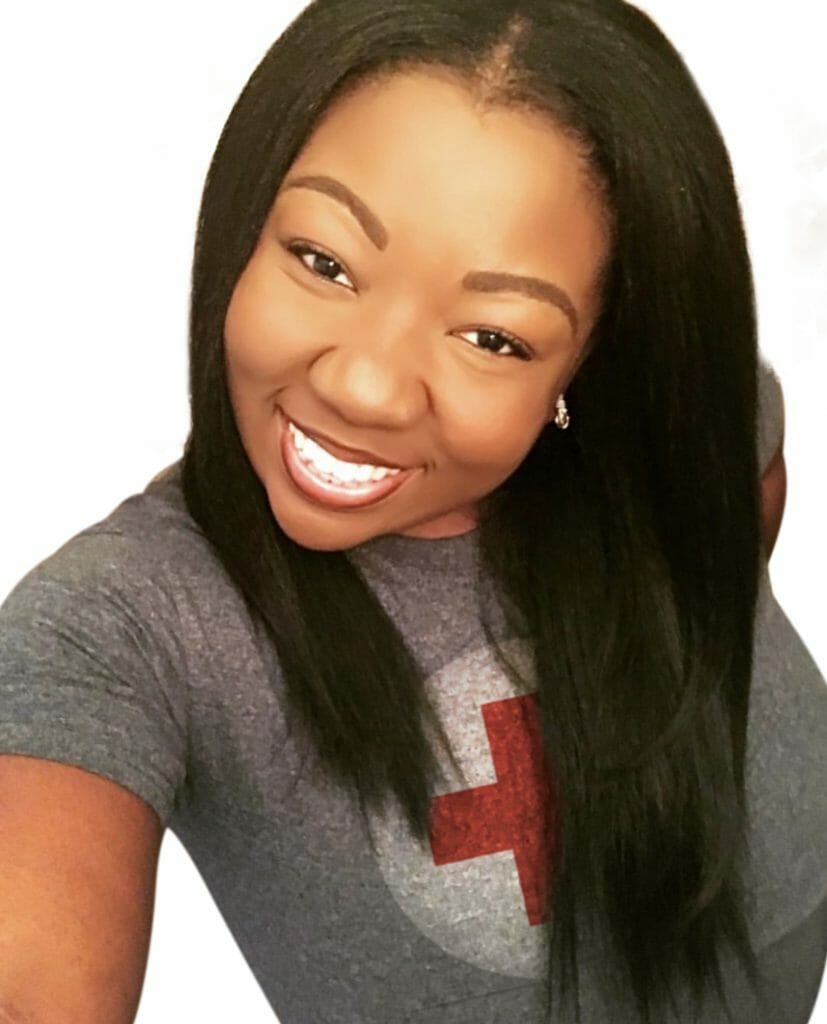
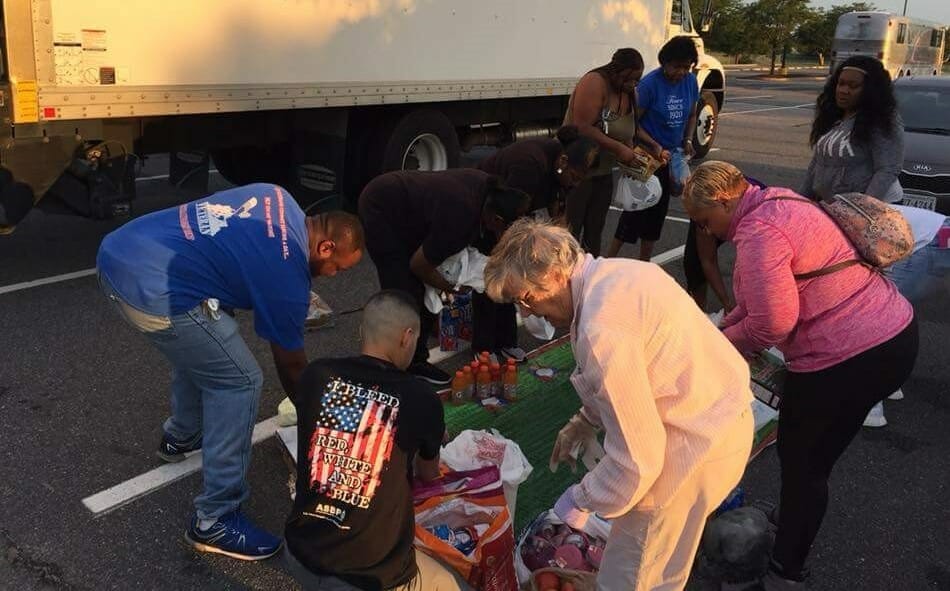
Nikki Skeete was one of those New Yorkers who watched helplessly as the community she’d grown up in was overtaken by the hurricane. Living in Brooklyn, the 29-year-old says the Red Cross volunteers who went door-to-door with food, supplies and more for the hurricane victims brought more than just physical aid – they brought hope to all those struggling. Wanting to make an impact like these volunteers in times of disaster, Nikki joined the American Red Cross as a volunteer in 2015, first assisting at blood drives and now currently serving as the Volunteer Engagement Lead, responsible for engaging all volunteers.
Racking up over 200 hours of volunteering just in the last few months, Nikki, who is studying for a masters degree in public health, balances her service while also working two day jobs as an educator and in a hospital, and is today’s Daily Point of Light award honoree. Points of Light spoke to Nikki to learn more about her work with the Red Cross.
What inspires you to volunteer?
Honestly I’m very into community service and engagement. I’ve been volunteering as early as I can remember at soup kitchens and then progressed to helping various organizations including hospitals and Meals on Wheels. My mom would take my brother and I to serve and give back, and my efforts grew from there.
Describe your volunteer role with the Red Cross.
I began as a Biomedical Blood Donor Ambassador. That means I worked registration and greeted our blood donors. Now, I check in on our blood drives to see how they’re going, I also work towards upcoming blood drives. Currently, as the Volunteer Engagement Lead, I engage our volunteers and make sure they’re recognized for their work.
What sets American Red Cross apart from other volunteer organizations?
We cover a vast, vast list of providing aid and resources. We are known for our blood services, but ARC is involved in so many different aspects within the public health industry. They’re strong advocates for social change and that’s very much needed in today’s society.
Tell me one story about your service that has stuck with you.
I have so many stories, but one that has stayed with me is about a husband whose wife was going through dialysis. He’d come to ARC every 56 days to donate blood, even though he was busy each day accompanying his wife to dialysis. This couple was going through so much, and with the spare few minutes he had, he made time to donate blood to help save someone else.
Donating blood isn’t the only way to help. Explain what else volunteers can do to give back.
You can also donate your time. ARC is looking for people in so many different areas. You can work registration or the canteen at events, also within various departments for disaster relief. Learn more about how you can help here: https://www.redcross.org/volunteer/become-a-volunteer.html.
Do you have a motto that you live your life by?
Don’t dream your life, live your dream.
Your efforts for the Red Cross have been praised as “tireless”. What does that mean to hear someone say that?
It’s very touching. I always give my all, and I learned that from my mom. She’s such a nurturer and giver, and if I could be a quarter of that, I’d be happy. I like to give, and make sure everyone is ok and everything is going smoothly.
How has volunteering with the Red Cross changed you?
When I see the impact on different people trying to recover from a disaster or emergency, and yet, they’re still thankful, it makes me want to help the community more. Volunteering with ARC has showed me how they can change a life. Even if you think your action or gesture is small, it can be very major for the individual or family.
Why do you think it’s important for others to give back?
You can contribute to making the world better in just the little bit of time you have. Even if you only have one hour, or one day a week, or one weekend, giving that time helps an organization. At ARC, one donation of blood can save three lives.
What future events do you have coming up that you’re excited about?
We routinely have blood drives, and January is National Blood Donor month. Please check the ARC website for more information: https://www.redcrossblood.org/give.html/find-drive.
Do you want to make a difference in your community like Nikki Skeete? Visit All For Good for local volunteer opportunities.
Post written by Marlena Militana.
Alabama Teen Helps Bring Comfort to Children in Foster Care
For many children, home means safety and comfort, surrounded by familiar, loving faces. For children in foster care, it can be a different story. Children in foster care often have more than three different placements during their time in foster care. For them, home can mean another new street, another new bedroom, and another new set of faces.
Lindsey Wood’s best friend, Amberly, faced many of these challenges while living in foster care, before she was adopted. Inspired by Amberly’s story, Lindsey dedicated herself to helping children in foster care feel comfortable in each of their new foster homes as they journey towards their forever homes.
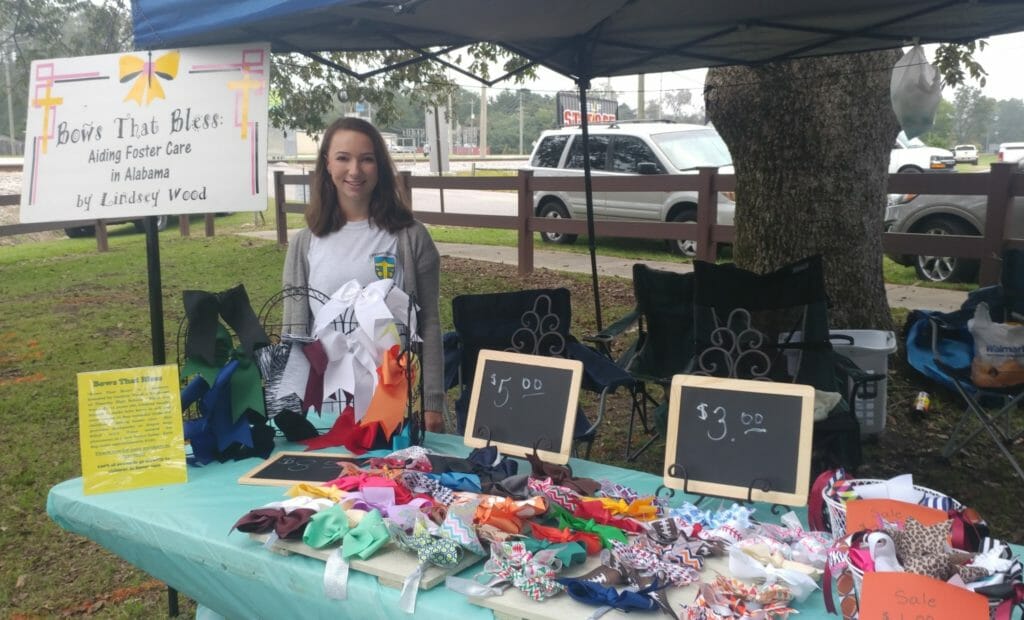
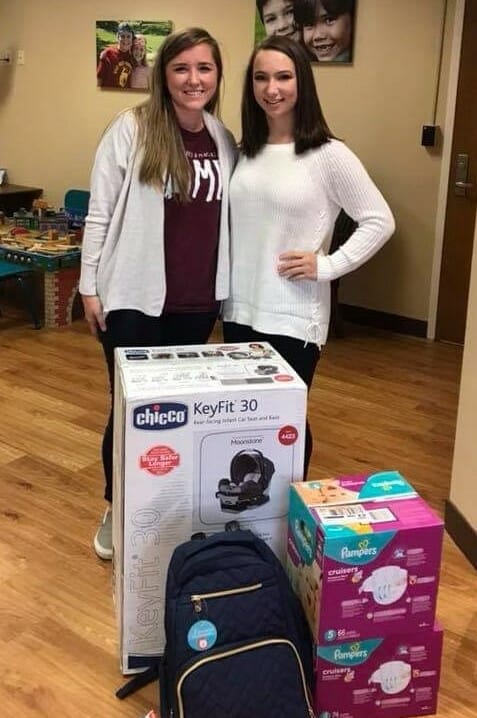
At just 11 years old, Lindsey, now 16, launched Bows That Bless, making and selling hair bows to support children in foster care to cheer teams, at festivals and in local boutique shops. She uses the proceeds to provide backpacks or diaper bags to children when they enter a new foster home. The bags are filled with essential items such as clothing, pajamas, bottles, blankets, stuffed animals, and more. Having a bag of their own helps the children feel a little more at home in their new home.
Making and selling the hair bows is time consuming, but Lindsey’s hard work has paid off. Through Bows That Bless, she has raised over $5,500 for children in foster care near her hometown of Thorsby, Alabama, and touched countless lives. And even after five years, she has no intention of slowing down. Alongside making the bows and balancing her commitments to school, sports, and church, Lindsey spends her summers volunteering at Camp of Champions, a summer camp for foster children and their families.
“The most rewarding part of my work is when I get to go to the camps and meet foster families,” Lindsey says. “I get to see the joy on the kids’ faces and the love that their parents show them.”
She hopes to continue to spread this joy, by connecting with other organizations in her community to raise funds for children in foster care and awareness of the unique challenges they face. “I plan to work with my church and other churches to raise money for these children. I am also hoping to partner with my school and sell t-shirts to bring awareness to foster care and also meet the needs of our local Department of Human Services,” Lindsey says.
“If you really care about something, you can make a difference,” she says. “It always starts small but you can grow into something amazing if you believe it and put in the work.”
Do you want to make a difference in your community like Lindsey? Visit All For Good for local volunteer opportunities.
Virginia Man Finds New Purpose Through Helping Fellow Veterans
In the years following Antione Hines’ honorable discharge from the Navy in 2009, he found himself facing depression, suicidal thoughts and homelessness. He says what helped him turn his life around was volunteering throughout his Chesapeake, VA community. Antione would ultimately find what he called “a new purpose in the community” by creating Veteran’s HomeFront, a nonprofit organization dedicated to homeless and at-risk veterans. His focus is giving veterans access to the resources they need and providing them emotional support.
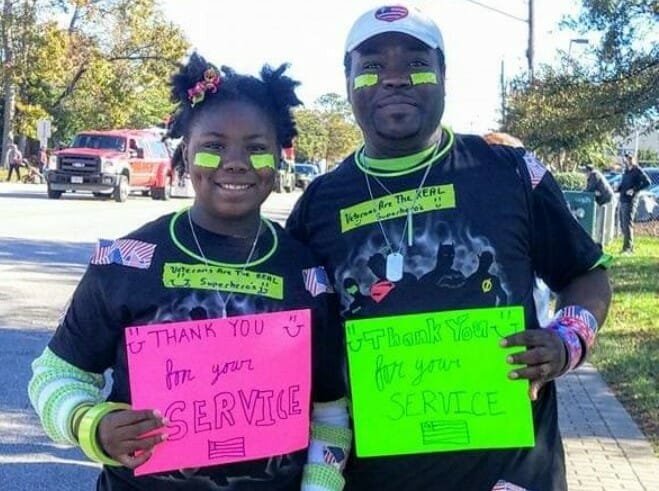
Every Saturday, 30 to 40 volunteers join him in visiting the homeless community to provide toiletries, snacks and contact information for different programs. Antione says he sees about 15 to 20 homeless veterans each weekend, and tries to make the time he and the volunteers spend with them very personal. On top of this, Veteran’s HomeFront has numerous other initiatives aimed at reaching the veterans’ community that Antione himself is apart of. Antione says he tries to make the organization very family-orientated, and his own teenaged daughter has frequently volunteered with him since she was about five years old.
For his dedication to making sure no veteran experiences what he himself went through, Antione is today’s Daily Point of Light Award honoree. Points of Light spoke with him about his journey from homeless veteran to Veterans HomeFront founder.
Describe your volunteer role with the Veteran’s HomeFront.
I’m the founder of Veterans HomeFront, in which I coordinate and direct everything.
Our three main goals are to help in veterans’ homelessness, number two is to help reduce the number of veterans’ suicide, and number three is to help transition our military to a community that is welcoming to them. One of our top programs we do is homeless intervention and street outreach, in which we go on the streets and help the homeless, and we go to different parking lots and help them with toiletries, snacks, different items. But the difference that we do is we bring resources and information and case managers to them, we bring the phone numbers to them, we pray with them, talk with them, motivate them and and make sure we can connect them to different things. So that’s one of the main programs. Our second program is our suicide prevention. And so with that we indirectly help with suicide prevention by inviting our active duty military members and our veterans to come volunteer with us. To help the homeless, to clean up the streets, to just refurbish homes, do many things just so we can get the whole family out there doing stuff together to ensure we can reduce those numbers of suicides.
Talk to me about how you founded this organization.
When I was coming out of the military in 2009, I was going through my own depression, divorce, suicidal thoughts, over that year or two. Later, I became homeless and really started volunteering and wanted to be more in my daughter’s life. That was the main thing, my daughter’s life and my faith. I had to switch my life around in order to be in both of those purposes, but I found a new purpose in the community was to help homeless individuals and help veterans find a better way from just what I experienced.
What has been the reaction from the homeless and the veterans’ community in the area?
Many of them reach out to us as a resource. We try to be the gap filler and not be the main source. We have great organizations out here that do housing and other programs with the funding, but there’s no one in between that’s creating the relationship of being a friend. So we be a friend. We’re being the saddle buddy of that veteran, and making sure that at three o’clock in the morning if they need help, two in the afternoon if they need help, we can go out there and talk with them, but also connect them to the things they may need.
What have you learned through your experiences as a volunteer?
I learned it never stops. There’s always someone out there who’s hurting, there’s always someone who has a different story, there’s always a family. Not only the veteran is hurting, the spouse is hurting, the children are hurting. And if we can engage the community and we can teach them, train them, and give them a little bit more information, we can bring on 30 to 40 more people and multiply and make it a whole community, a whole city, a whole state, and change lives — save lives.
What’s been the most rewarding part of your work?
Seeing the smiles on the homeless, regardless of us giving them money or getting them into housing or anything. Just a homeless person being in their car, having nothing sometimes and just being so depressed, and we bring people out there and they just have a smile. We’re not giving them anything but some food or a voucher, little things, but they have a smile, they have a willingness to live another day. We had someone on Facebook, a veteran who was in the Coast Guard. He sent a Facebook post to me later on, after he left the parking lot — he was out there about a year and a half, experiencing it — he said, ‘I didn’t need much at that point in time but every Saturday I came out there, you motivated me, you don’t know how much that changed my life because I was suicidal some of those nights.’ And that’s why we do this on a regular basis and we can’t stop.
Are there any future partnerships, programs, or events that you are excited about?
One of the biggest things in 2019, we’re really going to look towards doing focus groups and support groups with our veterans, our active duty and our spouses. Almost similar to AA groups that we can have at any place. At Burger King, at Panera Bread, have a meeting of just veterans talking to veterans, having that peer support. And so we really want to hone in on that. One of the things that’s connected back to my daughter, she actually went through suicide prevention training and anti-bullying at her school, so we’re really looking at the kids taking a part of this and being leaders in their schools as well as leaders in their home.
Why is something like a support group important to veterans?
We’ve seen the [United States Department of Veterans Affairs] does as much as they can, the government does a lot of different things. The thing that we’ve seen is veterans helping veterans, active duty helping active duty. The military community is in a whole other society so that becomes a solution better than just giving them money or giving them housing. It becomes that peer support, wives helping the other wives, military child helping another military child.
What do you want people to learn from your story?
There’s more you can do without money. That’s the main thing. I think we have so many gifts and so many desires to help people and we think we have to have the degrees and all the certificates. No, you just got to have a heart to love. Bring your kids out with you, make it a family event and just help wherever you can. All these organizations out there, just volunteer.
Do you want to make a difference in your community like Antione? Visit All For Good for local volunteer opportunities.
Post written by Morganne Mallon.
Wisconsin Teen Gives Back to Community in Countless Ways
As a sixteen-year-old high school student looking to give back to his Milwaukee community, Neil Sai Dogra could have easily chosen to volunteer for one organization, and then spend the rest of his time focused on school, friends and having fun. But for Neil, having fun involves volunteering his time to not one, but at least six different organizations and counting.
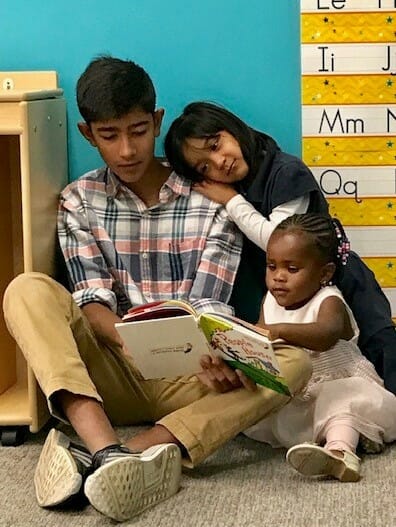
He plays guitar for hospital patients, teaches kindergarteners about safety, and volunteers for both a health center and a learning center that predominantly cater to refugees. He is co-president of a charity organization that provides free lunch to disabled children being treated at a rehab center in India, as well as the founder of an opioid awareness campaign aimed to public school students. On top of this, he found time to shoot a short documentary on the refugees he works with that has been screened worldwide, and is now working on shooting another one. Neil’s motivation comes solely from the joy he gets from giving back to the community.
Due to the numerous ways he has benefited those around him, Neil is today’s Daily Point of Life Award honoree. Points of Light interviewed him to learn what exactly he does to help so many around him.
You are involved in a lot of different volunteer opportunities. Describe the ways you volunteer.
I do a wide plethora of volunteering within my community. I play guitar at a local hospital for the patients there waiting as a way of stress relief, as a way of welcoming them. I volunteer with the Thiensville Police Department, where basically I’m an instructor for a program called Safety Town. That’s a free program for kids in kindergarten to learn about things like fire safety, safety around strangers, how to call 911 in case of emergency, and just a way for acquainting the kids with emergency services and fighting against a stigma that police are bad or that the government can be an enemy of the people.
I’m involved with the Muslim Community Health Center. That’s a free clinic … that caters to predominately refugees in Milwaukee and it offers incredible services to them at a very low cost, sometimes even for free, ranging from blood tests, clinical work, all the way to to financial literacy programs. They have lawyers come in from Marquette University to teach refugees about basically what it’s like to live in the United States, and help them integrate within our city and community. Then I’m involved with the Crescent Learning Center that’s actually right next door to the Muslim Community Health Center, which is how I found out about that program. The Crescent Learning Center is also catered toward refugees, so that provides a day care service to children of refugees and allows them to seek occupations without having to worry about where their kids go. It provides meals every single day, it provides field trips to movies, ice skating, stuff like that. I go there and I volunteer, I play guitar for them, sometimes I teach them about things like math or science. And then I heard some of the stories of the parents and then the staff [who are] as well as predominately refugees. They’re very compelling and that really moved me, so I decided to make a short documentary [“Crescent of Hope”] about the stories of refugees and the story of Crescent Learning Center and the services it provides. That film has been broadcasted from all over the world ranging from Times Square, New York to Istanbul. The purpose was really to raise awareness about the refugee population within Milwaukee and what kids like myself can do to make a difference.
Lastly, I founded the Opioid Epidemic Awareness Campaign. Milwaukee, and really the United States in general, are in the grasp of a raging epidemic of opioid misuse. I realized that I was completely unaware to this crisis within our city, until I heard a UWM radio talk. So that got me thinking that there are probably other students like myself who have no idea about this issue. So I decided to raise awareness in the Milwaukee public schools. I’m working with the head of the physical education department and I prepared a presentation that teaches kids what opioids are, how they interact with neurons within our body to cause addiction, how they are affecting our community. I touch on what students like myself can do to help which includes raising awareness, spreading things like drug disposal systems, because 80 percent of opioid addicts begin on prescription medications that they found lying around houses. By disposing of those pills, we can prevent an addiction from forming. Lastly, I want to encourage them to fight the stigma of addiction as something that is the sole responsibility of the addict and encourage addicts to reach out and get help from a medical professional to treat their addictions. As you can see, that’s a wide range of what I’m involved in. I really just like taking all the things I feel like I’m good at — so playing guitar, math, science — and finding ways to help the community by doing the things I love.
What gave you the idea to create the documentary “Crescent of Hope”?
So there was one [Crescent Learning Center] employee in particular … she is a Burmese refugee, she is a Rohingya refugee from Myanmar, and her kids actually attended the camp at Crescent Learning Center. We started talking about her story and she was very moving in her story. She talked about how difficult it was to move. Her family lived in refugee camps in Bangladesh, but they were not suitable for a long life. They were intended to be temporary relief and so when she was accepted into the United States as part of the refugee resettlement program, she jumped on the opportunity and came. But she found it wasn’t an easy integration process. She didn’t know English, it was difficult finding a job, it was difficult supporting her kids all alone. Crescent Learning Center helped her earn a degree in teaching and childcare, so now she works for Crescent Learning Center, her kids have meals and a program to go to every single day so she can focus on basically supporting her family. That really compelled me to raise awareness of this issue of refugees and their integration process and furthermore just to shine light on the philanthropic aspects of Crescent Learning Center.
Talk to me about Assist Bhopal.
I visited Bhopal, it’s a region in India. I visited that in I think 2013 and while I was there I learned about Bhopal’s gas tragedy. In 1984, there was a chemical plant in Bhopal … and one of it’s gas containers leaked and formed a cloud of methyl isocyanate within the city and thousands of people died that night. One of my good family friends was exposed to the gases, he had a lot of health issues because of it. Then people just forgot about it, they assumed the worst of it was over. But what they found out is that the children who suffered the attack who are now adults have kids with several birth defects. Cerebral palsy is extremely common in Bhopal at an alarming rate, along with several other congenital birth defects and deformations. Two survivors of the gas tragedy decided to form a clinic called Chingari. They provide affordable and often free healthcare to these children to care for them, to treat their defects. One of the problems they run into is they don’t have funding to provide food. So this fundraiser [Assist Bhopal] seeks to provide lunches every single day for the kids that attend. It’s extremely cheap to provide lunches, I believe it’s 65 U.S. dollars a day to feed a child for an entire year. Every year we hold a fundraiser with the goal of raising money to feed these children and to date we have raised 30,000 dollars which we donated to Physicians for Social Responsibility, which then transfers that to Chingari’s funds.
The fundraisers we hold every year are the main source of income. We have a local restaurant … provide food and then we have a lot of speakers come in that have visited the hospital along with that family friend [who was affected by Bhopal], he often speaks there. He has an incredibly moving story about how his driver helped to get his family out of the gas cloud, and left his own family to help. Then throughout the year we have monthly donors that donate funds, we have several family friends along with people from all over the world who have decided to help out. It’s mostly donations and then that one fundraiser is the largest source of revenue.
How are you able to balance all these different volunteer opportunities with school?
I feel like it’s not as hard as people think. If you really enjoy it you can make the time. Twenty-four hours in a day is really more than you need. These have really just become my extracurriculars along with my hobbies. People think, ‘how are you going to balance playing video games and whatever with doing all this stuff?’ And really, this has become what I choose to do when I have free time. I choose to work on a documentary or I choose to drive over to the hospital and play guitar for half an hour. If you want to do something, you can make a difference very easily.
What have you learned through your experiences as a volunteer?
I’ve learned that volunteering is not the strict definition that I often associated with it. I always though volunteering entailed doing hard labor jobs that nobody else really wanted to do. I always thought it was things like pulling weeds out of a garden or restocking shelves. But I’ve learned that volunteering is really just doing anything that helps your community and it’s in the process helping you. I’ve decided that my version of volunteering is taking everything that I’m good at, things that I love, and how I can apply that to the community and help a community. So I really just want to encourage kids out there to redefine their understandings of what volunteering is. If they like pulling weeds out a garden or restocking shelves, that’s great, they should do that. But if they like playing piano or playing tennis or whatever, they can use that to help the community. They can teach somebody how to play piano and that alone can change lives.
Are there any future partnerships, programs, or events that you are excited about?
I made my first documentary for Crescent Learning Center and then having watched that documentary, the Muslim Community Health Center wanted me to make a promotional video for them to raise awareness and support their causes. So I’m currently working on at that and hopefully it will be filmed during the next Ramadan.
Why do you think it’s important for others to give back?
For me personally, it was really compelling because Milwaukee has provided so much for me. I’ve lived an incredibly privileged life and I realize that’s not the case for so many people. It’s important to better your community I believe, and really to just be grateful for all that I have, and I just wanted to give back.
Do you want to make a difference in your community like Neil? Visit All For Good for local volunteer opportunities.