First-Generation Indian American Volunteer Tutors Rohingya Refugees
Meet Daily Point of Light Award honoree Hamza Chishti. Read his story and nominate an outstanding volunteer or family as a Daily Point of Light.
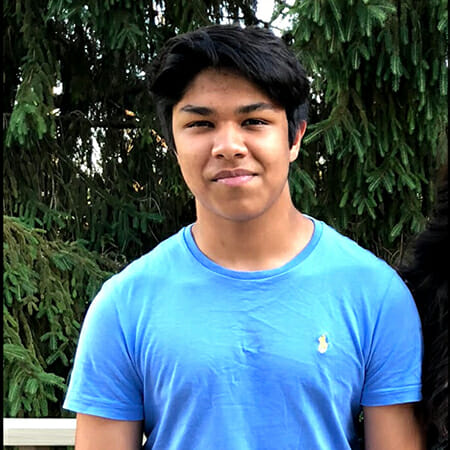
17-year-old Hamza Chishti was learning about human rights in school when he says he first heard about the Rohingya crisis. Walking by the Rohingya Cultural Center (RCC) each day on his commute to school, Hamza says his own family’s immigration story compelled him to help the displaced people.
Rohingya Muslims of northwestern Burma are among the most persecuted people in the world, displaced by ethnic violence and forced to flee persecution. As a first-generation Indian American whose parents came to America as immigrants, Hamza says while their journey wasn’t as difficult as what the Rohingya have faced, he understands the challenges any immigrant faces in America.
As a volunteer at RCC, Hamza, a high school senior in Chicago, Illinois, tutors Rohingya children of all grade levels, and has also fundraised to help buy clothing and school supplies for the refugee children. Teaching refugees language, American culture and way of life, Hamza is helping Rohingya refugees to assimilate and at the same time, he is mentoring children through their shared experiences.
What inspires you to volunteer?
Refugees are the most in-need community in the country, and in particular, the Rohingya need more resources and assistance because of the atrocities they’ve experienced. The least I can do is help them with homework and offer other educational support to help make their transition a little bit easier.
Describe your volunteerism with refugees.
I tutor Rohingya children at the RCC in Chicago twice a week. I spend time with children of all grade levels, helping them with their homework, preparing them for tests and also mentoring them as they adjust to life in American schools. Some of these refugee children are newly arrived, others were born here in the states to Rohingya refugee parents. I’ve also raised money to buy winter accessories and school supplies for the RCC children.
In addition to my volunteerism at the RCC, I’ve volunteered with Syrian refugees who have resettled in the Chicago area. I would mentor young Syrian children by practicing English with them and helping to introduce them to the American way of life. I also raised funds to buy laptops and school supplies for the families I volunteered with. My service with Syrian refugee children made me realize that there was a greater refugee crisis and made me want to help others.
17-year-old Hamza Chishti has connected with dozens of Rohingya refugee children through his volunteerism with the Rohingya Cultural Center in Chicago, Illinois./Courtesy Hamza Chhishti
Share one personal story with me from your volunteerism.
One evening I was volunteering at the RCC, and one child, a high school student, asked me for help with a math problem at the end of my time there for the day. He said he had a quiz the next day and needed help, so I stayed a little bit longer. When I really had to leave, I helped him download an app on his phone to show him more videos on the exact subject he was studying. The next time I saw him at the RCC, he said he did really well on the quiz thanks to my help, and he was really excited.
What’s one way you hope to inspire others in your service?
I don’t volunteer to inspire others, but if that happens as a byproduct, that would be amazing. Service doesn’t have to be fundraisers or anything like that. Even spending an hour a week helping others can make a difference. These centers have so few volunteers, any time spent makes a huge difference in any one of these children’s lives.
What’s been the most rewarding part of your service?
When I teach a student a concept, they’ll see me at the RCC the next time I’m volunteering and show me a test result they received and tell me how well they’re doing on that particular concept. Seeing the impact I am making motivates me to volunteer more. I want to make an even greater impact, whether that means helping these students get into a good college or succeed at life beyond college. I volunteer to support them on whatever it means to make their lives as immigrants in America be as great as they can be.
What have you learned through your experiences as a volunteer?
This one is a little bit cliche, but through my volunteerism, I’ve learned everyone is a lot more alike than they are different. Starting this service, I was nervous, because I wasn’t sure if we’d have much in common. I’m thinking, what am I going to talk about with kids who have been through war crimes, and how am I going to connect with them? But as it turned out, we have a number of similar interests. At the end of the day, we’re all just kids.
What do you like to do for fun when you’re not in school or volunteering?
I like to play basketball a lot, I like reading and I like lifting weights. I am a senior in high school and currently applying to colleges.
How can readers help?
Please visit the RCC website for more information about how you can give back.
Do you want to make a difference in your community like Hamza Chishti? Find local volunteer opportunities.
Woman Follows in Her Parents’ Footsteps to Live a Life of Service
Meet Daily Point of Light honoree Regina Rogers. Read her story and nominate an outstanding volunteer or family as Daily Point of Light.
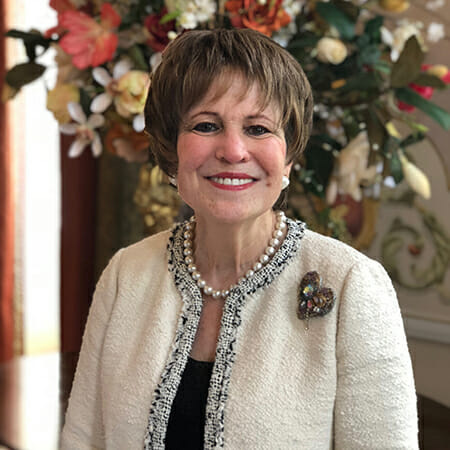
Throughout her life, Regina Rogers has always known the importance of giving back to her community. The Beaumont, Texas native grew up watching her parents volunteering at various organizations. Each night at the dinner table, her father would ask everyone to share how they had helped someone that day.
So it’s no surprise that today, Regina is the founder of four nonprofits, serves on eight nonprofit boards, and has touched numerous lives through her volunteer and philanthropic contributions.
“Most of my life has been dedicated to what I call the four L’s — the least, the last, the lost and the lonely,” Regina said.
One of the organizations Regina established in her community was the “I Have a Dream” Program, which provides scholarships and mentoring for underserved children and families. Regina started the program for her Beaumont community in 1988 and named it in honor of her father, Ben Rogers. The program, which she also serves as the Executive Director for, currently offers $1,000 a semester to 30 students attending either Lamar University or Lamar Institute of Technology. Regina was inspired to start the program to prevent kids from dropping out of school, and decided to implement it in honor of her father’s 75th birthday, as she said he was always passionate about helping young people succeed.
Along with a long philanthropic and volunteering career, Regina Rogers is the founder of four nonprofits and serves on the board of eight nonprofit boards./Courtesy Regina Rogers
“I felt very strongly that opportunity is one of the greatest gifts you can provide young people, and all people, so they have an equal basis on which to really succeed in life,” Regina said. “I was always aware of the disparities among individuals who have low income or less education — a lot of barriers, disparities, marginalization — and I wanted to try to equalize that in southeast Texas.”
Regina was also inspired by her father to establish the IEA — Inspire, Encourage, Achieve Program in 1997. Following the suicide of two teenagers who were being housed in an adult jail, he provided a juvenile facility — named the Minnie Rogers Juvenile Home after his mother — to Texas’ Jefferson County, so youth offenders would have their own housing. Regina’s parents would bring her to visit the kids there throughout the year and every Christmas, a tradition she has not missed once and will continue for the 60th time this year. The first time she attended the facility during the holidays after her father passed in 1994, Regina decided she needed to do more for the children housed there. Thus, she created the IEA program to bring outreach and support services to the juvenile center, including counseling, tutoring, and a speaker series designed to motivate and advise the kids as well as provide them with compassion and respect.
Outside of initiatives to help children, Regina founded the Julie Rogers “Gift of Life” Program in 1994 as a way to honor her mother who was a breast cancer survivor. The Julie and Ben Rogers Cancer Institute was dedicated to Regina’s parents in 1992. As a gift in honor of the dedication, Regina arranged for the Institute to provide 500 free mammograms to women. While the program was only intended to be a one-time event, Regina decided to raise money to continue it after seeing its success. “Gift of Life” now provides nearly 3,000 free screenings a year to women, as well as to men for prostate cancer. It also offers cancer prevention and education programs, and provides diagnostic tests, support groups and treatment navigation for those diagnosed.
Additionally, Regina co-founded the Southeast Texas Emergency Relief Fund in 2005, following the devastation of Hurricane Katrina. The fund has provided several million dollars in emergency disaster relief for evacuees of natural disasters in southeast Texas, including Hurricanes Ike and Harvey.
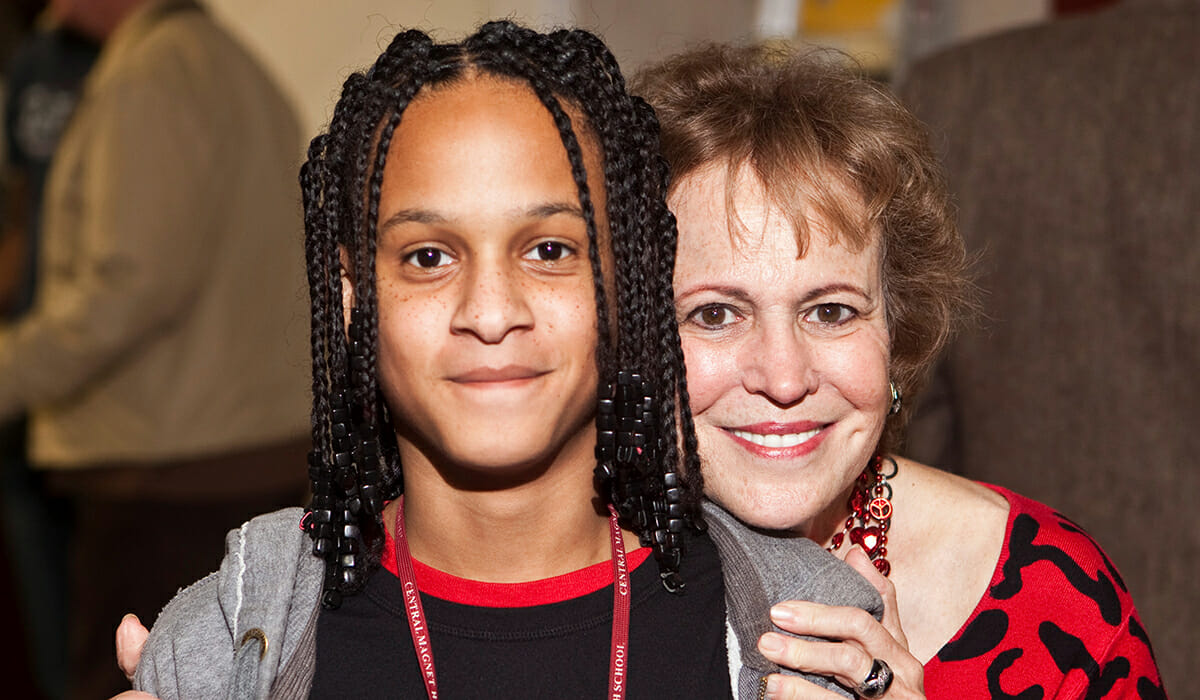
Regina Rogers, right, stands with a former participant of the IEA – Inspire, Encourage, Achieve Program she founded in 1997./Courtesy Regina Rogers
Reverend Bill Lawson, a close friend of Regina’s who she met through the nonprofit Interfaith Ministries and worked with on its Campaign for Mutual Respect, said for as long as he has known her, she has been very philanthropic. However, he said she never performed any of her good deeds in search of praise.
“She is the kind of person who rushes to the rescue of the helpless and the underclass but who really does not like recognition or applause,” Reverend Lawson said. “She is a person who gives, but she is not a person who wants to be applauded.”
Not content with just focusing on her nonprofits, Regina serves on multiple nonprofit boards including the University of Texas M.D. Anderson Cancer Center, where her mother was treated, the Harris County Hospital District Foundation which provides care for uninsured individuals, the Texas Heart Institute Foundation, the Anti-Defamation League Southwest Region, the Children’s Defense Fund of Texas, the Pauline Sterne Wolff Memorial Foundation, the Houston Holocaust Museum, and the William A. Lawson Institute for Peace and Prosperity.
“I’m just continuing a legacy of love that was established by my parents many years before,” Regina said. “They were just exemplary role models and I was able to observe their actions and their feelings, and at a very young age knew that was where I needed to be.”
Meet Daily Point of Light Award honoree Mahima Das. Read her story and nominate an outstanding volunteer or family as a Daily Point of Light
Even though 16-year-old Mahima Das has long fulfilled her school’s required 40 hours of service to the community, she’s still a regular volunteer at BINA Farm, a therapeutic and recreational riding barn in Lexington that uses hippotherapy to connect to kids with special needs. The high school junior, a member of Teen Leadership Corps, has always loved horses, so the chance to work with them on a regular basis is a pleasure. Beyond that, seeing how the horses relate to kids of all abilities leaves her in awe, teaching her both patience and gratitude along the way. Not sure where to volunteer? Take Mahima’s lead and follow your heart, the win/win results will be amazing.
Describe your volunteer role?
As a volunteer at BINA Farm, I assist during therapeutic and recreational horseback riding lessons, as well as help out with barn chores. During the lessons, I lead the horses around the ring while the students work on different skills. I also muck stalls and feed the horses when I have some spare time at the barn.
Why is it important to you to support your community in this way?
It is important because I am able to see the kids progress and see first-hand how much it means to them. I also get to spend time around horses and at the barn, which is always fun.
What’s the most challenging aspect of your volunteer service?
For most of the students, having a familiar face at their lessons every week is critical. As a volunteer, this means I have to commit to a certain time every week and make sure I am there. Additionally, being patient rather than expressing frustration with the horses and the students is important.
Why do you think it’s important for others to give back?
Because we benefit so much from the community and people around us, it is important for us to contribute and give back. By helping out within our own community, we create stronger ties with people who share similar experiences as us.
What’s been the most rewarding part of your work?
The most rewarding part of my work has been seeing the improvements in the kids and the close connections they form with the horses. Every child that comes in has different abilities and seeing the horses react to their needs is amazing. Many of the children start off afraid of the horse they are working with and, after just a few lessons, are sad to leave when their lesson is over.
What have you learned through your experiences as a volunteer?
I have learned patience and commitment to a certain activity. When a child or a horse is having an off day, it is so important to stay patient and not get frustrated and instead focus on what they are able to do that day. Positive words or encouragement often have such a huge impact on the children
Are there any future partnerships, programs, or events that you are excited about?
Once every session there is a rider showcase where all of the children get to show off what they have learned on the horse. It is so special to see all of my students in one show and also have them ride in front of a crowd – something they normally don’t get to do.
What do you want people to learn from your story?
I want people in my age group to learn that volunteering is not just a school requirement and that it is actually a fun and rewarding experience. Finding a way to contribute by doing something you enjoy is the best way to help everyone out and make it not seem like a chore.
Third Generation Police Officer Dedicates Over 40 Years to Service
Meet Daily Point of Light Award nominee Steven Labov. Read his story and nominate an outstanding volunteer or family as a Daily Point of Light.
Steven Labov has dedicated the past 43 years of his life to his community through service, and he hopes to make it 50. With no signs of stopping in his many volunteer roles, it looks pretty likely that he will reach that goal.
The Elkins Park, PA resident has always had a passion for public service, following in his father and grandfather’s footsteps to enter a career in law enforcement. He retired last year as sworn Director/Commanding Officer of the Cheltenham Township Police Department’s Auxiliary Police Unit, which he began volunteering for when he was 18. Steven remains dedicated to serving his community through his several other volunteer roles. He is the Chief of Department for the U.S. Search and Rescue Task Force; serves as a volunteer notary, including through the Wills for Heroes Program; is the National Vice President and National Advisory Board Member of National Association of Chiefs of Police; and is a volunteer member in the Emergency Services Section of InfraGard, a partnership program between the FBI and private sector.
Steven also voluntarily serves on several National Boards related to law enforcement, including The Chapel of Four Chaplains; co-authored 15 books and served as a senior consulting editor on a rescue and prevention series, the profits of which he donated to non-profit organizations; and has received several awards and citations for his work, including three life-saving awards related to his work with the Search and Rescue Task Force.
DESCRIBE YOUR VOLUNTEER ROLE WITH THE U.S. SEARCH AND RESCUE TASK FORCE.
I started approximately 30 years ago. It was an interest that I had even though I originally started in law enforcement. It was just something different, but it piqued my interest in order to help serve others. It’s a totally different type of work and it’s sort of a science, similar to the science of firefighting. People think in Search and Rescue, they’re just looking for people, but there’s an actual science to it and there’s a lot of training that a specialist must obtain. I’ve done a lot of searches, for example, for individuals with dementia and there’s a science just for individuals like that so when you go on a mission, you’ll know exactly what to look for based on the individual that has that type of problem. It’s really been a passion, along with law enforcement. Of course, that brought me to New York City during the incident at 9/11. It was a three-and-a-half-month ordeal. It’s not something that one would expect would ever happen in their lifetime. You have to be able to handle these things because it’s constant day after day dealing with death and destruction.
It’s not just missions, which can be few and far between, but it’s also education. We found out if we can educate individuals, and in particular children, on what to do if they do get lost, it makes the rescue of the individual or the search mission much less time consuming and by that, we need a lot less in the way of resources. The longer the search mission take, the larger the search area will grow exponentially, so education is extremely important.
CAN YOU DESCRIBE WHAT YOU DO AS A VOLUNTEER NOTARY?
There are a few things I do. One would be to swear in any of the volunteer or reserve officers. Others would be situations such as the Wills for Heroes Program, which provides a free service to draft wills for military personnel, law enforcement, fire and rescue. They need attorneys to volunteer and they also need notaries to volunteer, so I volunteer as a notary in order to serve that purpose. Also, occasionally I get calls for individuals who might require notaries who can’t get out of their house, and I’ll go over and take care of that. I must have been a notary now for approximately 15 years, and in all that time, I haven’t charged for any notarizations yet. So, it’s pretty much pro bono even though it gets tougher and tougher to remain a notary because now they’ve changed the laws in Pennsylvania and aside from approximately $500 every four years, you have to now take training each of the four years, but I do it as a public service.
The notary I actually started because I was able to swear in the officers, especially in the unit I commanded. So subsequent to that, I found out about the Wills for Heroes Program, and I was interested in the fact that they also served military and law enforcement and public safety. They always are in dire need of notaries, so I figured I would do the best I can to make the events that they sponsor and assist them in that way.
CAN YOU DESCRIBE WHAT YOU DO WITH THE NATIONAL ASSOCIATION OF CHIEFS OF POLICE?
Currently I serve as National Vice President and Advisory Board Member of National Association of Chiefs of Police. In that capacity, one of the functions that I follow through with is presenting the Medals of Honor to law enforcement officers killed in the line of duty. When I say present to the officers killed in the line of duty, the award is presented to the spouse and in the case where there is a son(s), the Medal of Honor goes to the eldest son. These are very emotional events. They could be attended by hundreds of individuals. I’ve had one police chief who wanted to do the presentation in front of a new police academy and have these individuals at the academy actually see what can potentially happen when you go into the law enforcement field. It’s very gratifying to be able to help the widow or widower, as well as the family, not just with presenting the Medal, but also with assistance for summer camp, we send gifts on the children’s birthdays up to the age of 18. It’s a very worthwhile cause.
I serve on different committees over the years. I served on the U.S. Counter Terrorism Committee, I served on the Awards Committee, but currently right now I’m working with training as well as handling awards as they come into this tristate area.
I’ve been on the board for the National Association of Chiefs of Police probably in excess of 20 years now and I firmly believe in support of law enforcement and especially these individuals who will give their life for the life of another. There’s nothing more you can ask for then somebody who is willing to give their life to save someone else so if they can do that, I certainly can do what I can do to help them.
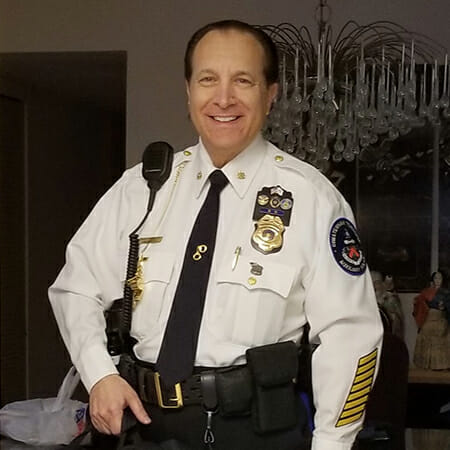
Steven Labov has spent over four decades serving his community in various volunteer roles related to law enforcement and public service./Courtesy Steven Labov
CAN YOU DESCRIBE WHAT YOU DO WITH THE INFRAGARD?
InfraGard is a partnership between the FBI and members of the private sector. The InfraGard program provides seamless public private collaboration with government and expedites a timely exchange of information and its relative to the protection of critical infrastructures. I’ve been a member of InfraGard for approximately 10 years. It’s interesting work too. All the affiliates are vetted by the FBI. Members come from different backgrounds — military, government officials, law enforcement, emergency services, community professionals — but each is dedicated to contributing specific insight to advancing national security.
It sort of everything meshing together, and when you serve, say in Search and Rescue, it’s almost like in order to be able to serve the public and other agencies better, you have to do more and be part of other organizations just to be able to have yourself trained to a higher level. That’s part of the reason why all of these organizations come into play, and with InfraGard and with Pennsylvania VOAD, they all work together.
WHAT INSPIRES YOU TO BE INVOLVED IN SO MANY DIFFERENT AREAS?
I think serving others is really important. If people have the time and want to do something rewarding and helpful for the community, I would tell them to volunteer because through this type of service, they can learn to respect others and find their life more valuable. I have 43 years of service and I would love to make it to 50 years in volunteering. You can’t always help everyone, but you can always help someone. You can make a difference, even to one person.
WHAT’S BEEN THE MOST REWARDING PART OF YOUR WORK?
I would say in general, the sense of service. Little did I know, when I first started as a sworn officer in volunteer status, they called them auxiliary/reserve officers, that I would go up through the ranks to become director/commanding officer. Little did I know, that the teams that I worked with and I would be bestowed lifesaving awards for serving in New York City during 9/11. And there’s nothing greater than to be able to give another person a second chance at a life and to give that person back to their family and to see the look on their family’s face when you do recover that person. I believe I was meant to help others, which is why I went into law enforcement and the public safety field. I feel rewarded when interacting with other people. Part of the job in public safety is to make people feel comfortable even when they’re at their lowest point, so comforting people and giving them strength is really rewarding to me.
WHAT HAVE YOU LEARNED THROUGH YOUR EXPERIENCES AS A VOLUNTEER?
Probably how much I care for others. I want everyone basically to be the best person they can and I want to help support them. Volunteering is free, it just takes time. I put in a lot of time, but even a few hours a month that someone else can put in can make a difference. There’s a quote I use, ‘what I have done for myself alone dies with me and what I’ve done for others in the world remains immortal.’ Sometimes people have to remember that.
WHAT DO YOU WANT PEOPLE TO LEARN FROM YOUR STORY?
I’ll go to another quote, and this is a really simple quote that will make you think; ‘I make a living by what I get, but I make a life by what I give.’ I’ve learned it’s a privilege to volunteer and it’s a gift that I cherish. I’ve learned that everyone can make a difference. If you have an interest in public safety or the community, there’s a volunteer position for you somewhere that you’ll enjoy and you’ll get involved to be able to help others. When I specifically mention public safety or first responders, people don’t usually think of a volunteer position, but it’s a critical role that those in the community can assist with. We’ve had individuals from varied backgrounds, not just in Search and Rescue but as sworn reserve officers. When I say varied backgrounds, we’ve had physicians, attorneys, electricians, individuals in sales, we even had a chef and many others, serving in critical positions that help the community in different ways. So, while the backgrounds can be varied, specific training is provided for whatever they do. There’s a volunteer opportunity pretty much for anyone. As I said, little did I know when I first started to volunteer that I would be going to New York City during 9/11. Some people can’t imagine what I do, and my response to them is I can’t imagine not doing it.
IS THERE ANYTHING ELSE YOU WOULD LIKE PEOPLE TO KNOW?
All of the organizations and all of the people you work with, you sort of become a family. In the police department, one of the officers in my unit started at the academy when she was 19 years old. And I guess it was a few weeks after she started, she didn’t show up to training. When we finally tracked her down and we spoke to her parents, we found out she unfortunately was diagnosed with bone cancer. Three days after her 21st birthday, she passed away. But during that year that she was ill, for some odd reason she had a connection and she only wanted to see one of her close girlfriends and me. I would go over about every weekend or every other weekend. I would sit and talk to her and her parents and her brother. Then when she passed, the parents and I became very friendly because we consider the people we work with like a family. Both of her parents were physicians and it was extremely difficult on them because they were trying all over the world to do whatever they could do to save their daughter, and they couldn’t. It was very meaningful to me, to this day, that we are still very good friends. We see each other often and their son also went on to be a physician. Basically, we’re dealing with a huge family and to me, that means a lot. We know we can count on each other. We’ve had some people say ‘I have to go in for a surgery, would you be able to give me a ride,’ or ‘I need help with this,’ and somebody is always there to help. It’s — I was going to say a secondary family, but really, to some people it’s their only family.
Houston Native Serves Police Department to Improve Law Enforcement Efficiency
Meet Daily Point of Light Award honoree Ila Harris. Read her story and nominate an outstanding volunteer or family as a Daily Point of Light.
A Houston, Texas native, Ila Harris had long supported the city’s police department through volunteerism alongside her husband, a military veteran. Passionate about supporting law enforcement and fostering safety in their community through citizen action, the two volunteered together for many years before his death in 2006.
Recommitting herself to serving her community and law enforcement in the wake of the deaths of her mother and husband, Ila rejoined Houston Citizen Police Academy Alumni Association (HCPAAA), where she volunteers alongside other Houston Citizens’ Police Academy graduates to enhance relations between the community and police. As an advocate for the police department, Ila shares the department’s values with her fellow citizens. By supporting officers at community activities, Ila is providing a valuable service to the department to enhance the overall delivery of police service to the citizens of Houston.
What inspires you to volunteer?
Houston has always been good to me and to my family. I’ve lived here for 70 years, and volunteering gave me a purpose in my life after losing my husband and mother. I really felt lost after their deaths, and by doing volunteer work, I found a place for myself again. I am helping people, and they’ve in turn helped me to remain a vital part of my community.
Describe your role with HCPAAA.
Through shared responsibilities and resources, HCPAAA volunteers give their time so that police officers are able to focus on their public safety responsibilities. I assist with the annual Comida/Food Drive which is put on by the Houston Police Department. I provide and serve meals to officers conducting No Refusal weekends, as they work to combat drunk driving. I also participate in continuing education, ride-alongs with officers and other police activities and large-scale public events. I’ve connected with hundreds of officers over the years as we support the police department.
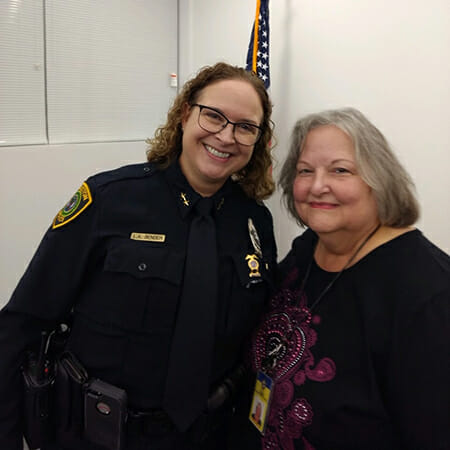
As a Houston Citizen Police Academy Alumni Association (HCPAAA) volunteer, Ila Harris enhances relations between the community and police./Courtesy Ila Jane Harris
Your volunteerism isn’t limited to supporting police officers. Explain.
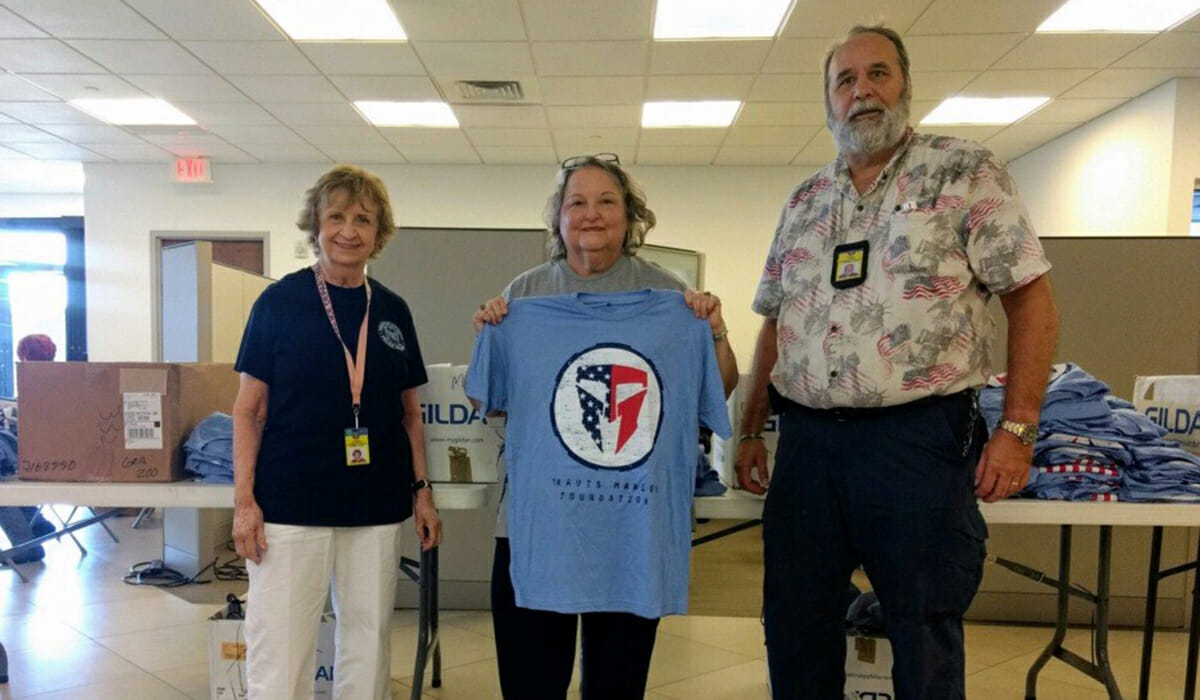
I have volunteered with the Travis Manion Foundation for the past eleven years. This organization empowers veterans and families of fallen heroes to develop character in future generations. I volunteer for their 9/11 Heroes Run and at their Houston office performing various duties. In the aftermath of Hurricane Harvey, I helped with the phone banks at the U.S. Army Combined Arms Center, contacting veterans to determine their status and see if they needed assistance. While I never served in the military, a number of men in my family have served, and my service is a way to honor them and other service people for their dedication and sacrifice.
Share one personal story with me from your volunteerism.
During one recent Comida/Food Drive, an elderly man approached our donation table and pulled out a wrinkled dollar bill, placed it in the donation jar and looked up and smiled at us. He was Hispanic and in broken English, he said, ‘Last year, you all helped me. I can’t do much this year, just this one dollar.’ I thought to myself, that’s what this is all about. We help people and when they can, they in turn pass it on to others.
What’s one way you hope to inspire others in your service?
There’s always a need for volunteers. You might have to try two or three different things to find the one service that speaks to you and to your heart, but whatever time you give back to the community, you’re going to increase it tenfold back to yourself.
What’s been the most rewarding part of your service?
Gosh. So much of it is rewarding. The smiles that I get from the police officers and from the people I serve at the Travis Manion Foundation. It’s rewarding when these people know that somebody is willing to come out and help them like they are helping us.
You volunteered alongside your husband before he passed away. What would he say about your service?
I know he would be so proud of my service, and he would be right there with me. He was involved in private security work and he was a military vet, so I think about him and how he would feel about a lot of what I do. I know he would be so happy and so proud.
In addition to her volunteerism supporting Houston police, Ila Harris volunteers for the Travis Manion Foundation, which supports veterans. /Courtesy Ila Jane Harris
What’s your life motto?
I’ve adopted the statement that guides the Travis Manion Foundation. When Travis was asked why he was going back for a 3rd tour of duty, he said, ‘If not me, then who?’ And that’s the way I feel. If I don’t go out there and volunteer, then who’s going to do it?
What have you learned through your experiences as a volunteer?
I’ve learned tremendous things about safety in our community and the police department. The police are the people that we call when we’re in trouble, but citizens often don’t know what police do proactively to control crime. Personally, I learned that I’m much stronger than I thought I was. Not only do I feel like I’m helping people, but a lot of the activities I participate in are really fun.
Do you want to make a difference in your community like Ila Harris? Find local volunteer opportunities.
Volunteer Empowers Sexual Trauma Victims and Fights for Healing for Survivors
Meet Daily Point of Light Award honoree Lavinia Masters. Read her story and nominate an outstanding volunteer or family as a Daily Point of Light.
At the tender age of 13, Lavinia Masters was raped by a stranger at knifepoint in her bedroom. It was only after her case was reopened by Dallas Cold Case police detectives that critical evidence from her rape kit was reviewed. Like thousands of other victims in Texas, Lavinia’s rape kit had sat untested for years due to a backlog, as the serial rapist who had attacked her continued to attack other unsuspecting victims. By the time Lavinia’s case was resolved, she says the statute of limitations had expired, and the suspect didn’t face prosecution.
Empowered by her own personal experience, Lavinia decided to offer hope to other victims so that they too could be empowered to heal. Launching HOPE S.A.V.E.S. Ministry in 2004, Lavinia’s mission is to offer hope to the hopeless after being victimized by sexual trauma, raise awareness about sexual assault and fight to eliminate the national backlog of rape kits.
“When I realized that this was a national issue, and that my rape kit was one of thousands in my state that had gone untested,” Lavinia says, “I decided I’d start fighting and speaking up, and being a voice for other survivors.”
What inspires you to volunteer?
When I came through my healing process, I knew I had to do something. I had lived in such a dark place for so long, I knew I had to be a voice for victims to empower them.
Explain what ‘HOPE S.A.V.E.S.’ stands for.
S.A.V.E.S. is an acronym that stands for “Sexual Assault Victims Empowered to Speak”. When my case was resolved, I realized my rape kit was one of thousands – 19,000 pieces of peoples lives – that was just sitting on the shelf in the state, and there was absolutely nothing we could do about it. We’d suffered for all of these years, and for what? Where was the justice? I advocate and work to empower victims who have gone through pain just like me.
Lavinia Masters launched HOPE S.A.V.E.S. Ministry to empower other sexual trauma survivors like her./Courtesy Lavinia Masters
Describe your role with HOPE S.A.V.E.S. Ministry.
As founder and director of HOPE S.A.V.E.S. Ministry, I empower victims and raise awareness about sexual assault and the national rape kits backlog. We also raise money to fund decreasing the rape kit backlog in the state of Texas. We work with Denton County Friends of the Family and other area crisis centers and have connected with thousands of survivors in Texas and beyond.
You recently had a law named after you. Explain.
The Lavinia Masters Act was passed this summer to make sure rape kits are processed in a timely fashion across Texas, and give prosecutors more time to file charges if they’re not. The new law also creates a system to notify rape survivors of the process. The passing of this law was rewarding because it means I’m making a difference and people are being healed.
Share one personal story with me from your volunteerism.
I met a woman about 10 years ago, she is now a volunteer with HOPE S.A.V.E.S. She had been through such a traumatic experience: childhood rape, abortion, trauma, trauma, trauma. I connected with her. She always told me that she saw the fight in me, and that I was not willing to give up. She said I impacted her life and made her want to get up and fight every day.
What’s one way you hope to inspire others in your service?
I hope people can realize that they are the change. Whatever has happened to you, embrace it and see what change you can make with it. I finally embraced my pain and realized what I had to do to make a change not only in my life, but in others as well.
What’s a saying you live your life by?
I feel like a chihuahua in a big world, but I stand tall like a rottweiler for all survivors out there. My little voice is making a big sound in this world. No matter how small you think your fight is, if it’s making a difference or making or an impact in someone’s life, it’s huge.
What have you learned through your experiences as a volunteer?
Sometimes pain can be blind. You can be so overconsumed by pain that you don’t even realize how toxic it’s become to you. Service has changed me a lot personally because it has taught me so much more compassion. People act out because of past pain and trauma, and service has taught me how to better understand people.
Two Boston Volunteers Dedicate Nearly a Decade of Service to Encourage Next Generation’s Leaders
Meet Daily Point of Light Award honorees Michael Lawler and Marcia Robinson. Read their story and nominate an outstanding volunteer or family as a Daily Point of Light.
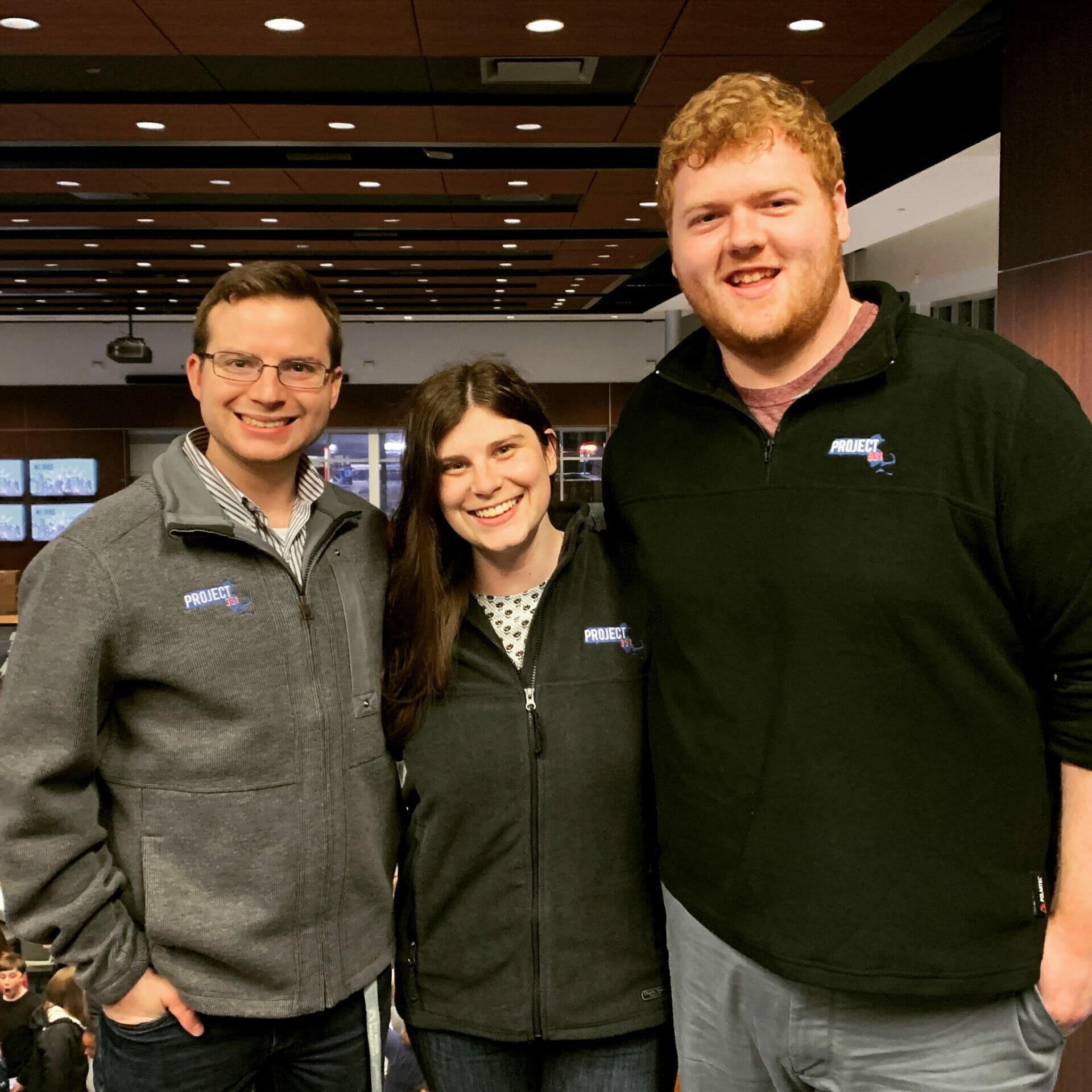
21-year-old Michael Lawler and 60-year-old Marcia Robinson of Boston, Massachusetts, are very much in different stages of their lives. Michael is a senior in college, while Marcia describes herself as semi-retired. But one thing that brings them together is that they have dedicated thousands of hours to Project 351, a nonprofit organization that recruits eighth-grade ambassadors across 351 cities and towns in Massachusetts to empower them to become leaders in the world of volunteerism. This year, with the help of Marcia and Michael, the eighth-grade ambassadors led 510 service projects in 300 cities and towns, leading them to provide the largest in-kind donation to Cradles to Crayons.
Michael, himself, started as an eighth-grade ambassador in 2012, being specially chosen by his teacher for his kindness, compassion, humility and gratitude, which are the four traits looked for in each ambassador. With his 350 co-ambassadors, Michael was able to volunteer in various ways across Massachusetts. He helped collect clothing for children in need, pack meals for the hungry, and support veterans’ events for Memorial Day. And while he was just a young eighth grader, he believes the one-year program shaped him into the person he is today.
Michael doesn’t let his busy college schedule get in the way of his volunteer work with Project 351, where he leads the transportation team./ Courtesy Michael Lawler
“A lot of young people are told ‘no’ so much,” Michael said. “Like ‘Oh, you can’t make that big of a difference.’ But that’s not the case. Your impact, no matter how big, is going to mean something to someone.”
Michael believed in Project 351 so much that he continued to volunteer for them even after his ambassadorship was over. Although he’s busy with exams, classes, homework, and other extracurricular activities like every other college senior, he dedicates numerous hours every week and even most of his winter break to Project 351 and leads the organization’s transportation team, coordinating logistics for events and ensuring each student gets to where they need to be safely.
“Getting to meet all of them and watch them grow… and being able to give them that opportunity I got to have, it’s just amazing,” Michael said.
While Marcia didn’t get to experience the eighth-grade ambassadorship for herself like Michael did, she has been with the organization since its first year in 2011 and helps coordinate the service days by reaching out to other organizations and partners across the state. On top of her official role, Marcia also acts as a mother figure to the young teens to reassure them of the reason why they’re there.
On top of coordinating service events, Marcia helps the eighth-grade ambassadors remember why they are there and who they are serving./ Courtesy Marcia Robinson
“We’ve all done different service projects whether it be packing a backpack, or filling a bag with groceries, where sometimes you don’t really get a connection of who you might be serving, why what you’re doing is important,” Marcia said. “So my role has always been to really elevate that this is really great what you’re doing, but let’s also think about the person that you’re helping.”
On top of their work with Project 351, both Michael and Marcia volunteer with other organizations. With Foundation To Be Named Later, Marcia mentors underserved students in the Boston area who have overcome tremendous odds to get into college, and she also works with Ripples of Hope to create service opportunities that families can participate in. Michael is on the board of the Student Philanthropy Association at his school where he plans volunteer projects in Maine and just a few weeks ago, helped packed 50,000 meals for those in need.
Project 351’s Founder and Executive Director Carolyn Casey says Michael and Marcia are exactly the type of change makers her organization strives to see the eighth-grade ambassadors become.
“Michael represents the unlimited potential that every young person has to change the world. He found his voice and passion for service through Project 351, and has continued to develop his skills and deepen his awareness,” Carolyn said. “Marcia is critical to the service initiatives that we lead, but in addition to that, she is very much looked up to by our young people as a mentor, a role model. She has an extraordinarily beautiful spirit and brings a sense of humanity to everything she does.”
“My hope is that every ambassador grows up with the same passion, devotion to cause greater than themselves, and set of values that Michael and Marcia represent.”
Mom Starts Nonprofit to Send Support to Parents with Babies in NICU
Meet Daily Point of Light Award nominee Kristin Moan. Read her story and nominate an outstanding volunteer or family as a Daily Point of Light.
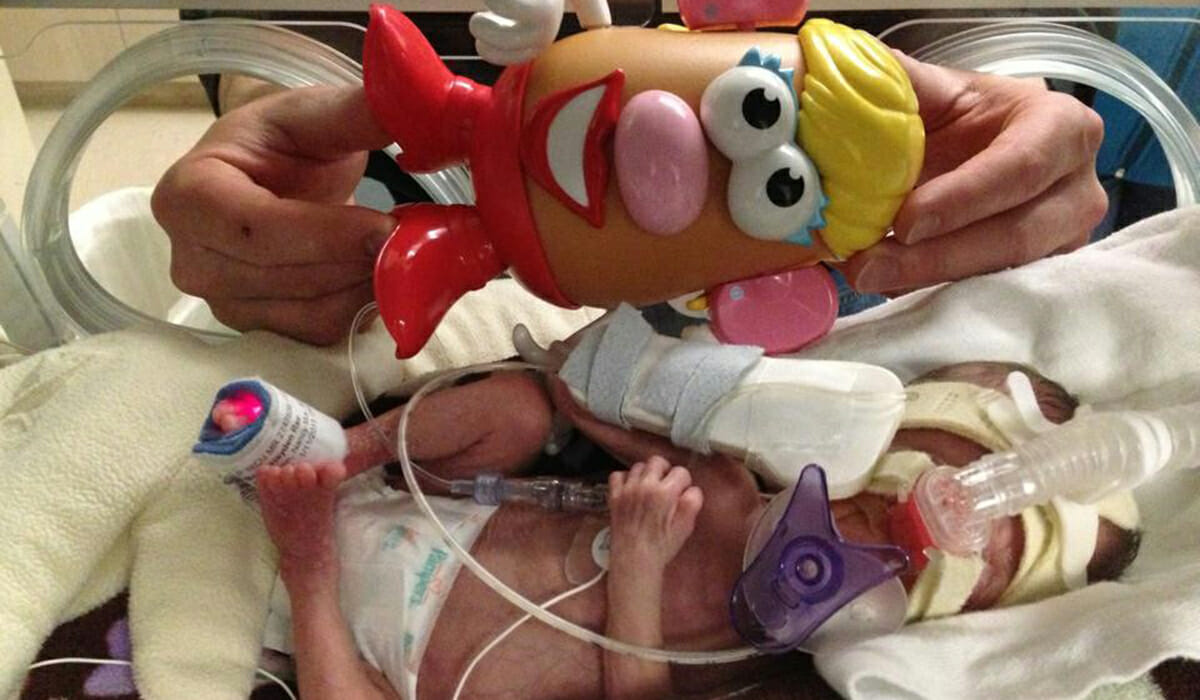
When Kristin Moan’s twin daughters Hayden and Dylan were born at 23 weeks gestation, she and her husband Eric were encouraged by a nurse to use a stuffed animal as a way to measure their daughters’ growth in weekly photos. Eric returned to the NICU with two Potato Head toys instead, thinking they could be more easily sanitized. For the next 119 days that the girls spent in the NICU, friends and family eagerly awaited the Potato Head photos as a way for them to follow along with the girls’ growth. The photoshoots became something Kristin and Eric looked forward to as well.
Six years later, Kristin has managed to turn a traumatic event into a positive movement with her nonprofit The Potato Head Project. Each year since their NICU experience, the Moan family and their volunteers have sent hundreds of care packages to other families with micro-preemies in the NICU. The gift bags consist of Potato Heads as well as various other items, such as micro-preemie leggings or knit hats for the babies, and hand sanitizers, Kleenex, Advil, water bottles or My Preemie Baby books for the parents. Since its creation, the nonprofit has sent out over 2,000 packages to families all across the United States. Kristin credits the immense support she has had from her family and friends for her ability to help provide support to families experiencing the same trauma she went through.
“We had no choice to go through what we did, but we are able to help others, and in turn it helps us heal,” Kristin said. “We receive messages about how we are helping others and that is a feeling you could never explain.”
Can you describe what The Potato Head Project does and what your role is?
Our girls were born at one pound each. They were born at 23 weeks gestation. When we were in the NICU, one of the nurses told us some of the parents would bring in a small stuffed animal to take pictures with their baby every week to watch them grow. As you can imagine, a one pound baby, it’s hard to imagine they ever will grow, but they do. So my husband went to the store and he came back with a Potato Head with the thought process that it could be sanitized, wiped down, kept in the NICU in a clean, sterile environment. Over time, we took photos and everybody outside the NICU got to watch our girls grow. Maybe three months or so down the road, another family friend had a micro-preemie and we sent a Potato Head out to them. It was a fun thing that people liked to follow and kind of got a little bit of attention from other friends and family, and then another micro-preemie would be born and then another one and another one and so on and so on. All of a sudden we were packaging up hundreds of packages a year and sending them out to people all across the country. It’s silly because it’s a Potato Head. Everybody knows how big a Potato Head is so they’re able to capture how small these babies are. But for the parents who are receiving them, it’s really kind of saying, ‘hey, there’s people out there who have been through what you’ve been through and here’s just a little something that maybe will get you by, one thing every week maybe you could look forward to.’
As we found that it was helping other people and providing them hope and giving them something to look forward to, we just knew we had to do more so we became an official 501(c)(3).
What kind of feedback have you received from the parents who have gotten Potato Heads?
The feedback has been amazing. The parents have said it gives them a sense of belonging, a sense of hope. The NICU is an incredibly dark place and when you’re there, most people never knew they were going to be there. Most people had no idea what a one pound baby looked like or what a two pound baby looked like. For them, it gives them something to look forward to. It gives them a place where they know they can reach out and find people who have been through that same traumatic event.
What is it like for you to be able to involve your kids in your work?
For us it’s extremely important that at all times they understand where they came from. We don’t ever use that as a negative tool. We try to be very positive in that we’re very lucky to have gone through what we did and to be able to provide other people with some of the hope and structure that we didn’t have. We know that was important. When Amazon packages show up at the door, and we have to stuff boxes, and we go to the post office, or supplies come in and Potato Heads are crammed in every closet in our home, they know what that’s all for and they know it’s for these sick babies. It’s really good to have them involved and I think it will keep them connected to where they came from.
A Potato Head is posed with Kristin Moan’s daughter, Hayden, whose birth at 23 weeks gestation led to the creation of The Potato Head Project./Kristin Moan
Are there any future partnerships, programs, or events that you are excited about?
We actually are hosting what we hope will pretty much fund us through most of the year. On April 18, we are hosting our All the Small Things [fundraiser]. We use All the Small Things because in the NICU the babies are small usually, but also it’s all these little things that people can do for families in the NICU that are so important, like a tiny care package or a gas card or a parking pass — all these things that to the outside world are small but to the NICU families are huge. We’re having a big event at The Nerdery in Bloomington. We did one in January of 2018 and it was awesome to see the hundreds of people that came with their NICU babies and their micro-preemies. We had superheroes and games and food and a silent auction. We started planning it a few months ago and we’re kind of ramping up and starting to solicit silent auction items and get DJs on board and stuff like that, so we’re super excited.
What’s been the most rewarding part of your work?
I think the most rewarding part has been giving these families something we didn’t have. It’s not to say that people didn’t reach out to us or there wasn’t a person here who understood, but social media has given us the ability to reach people and to say ‘hey, you know what, we are a story, we are a success story, and we want to help you get through it.’ So for us it’s been a huge part of our healing process. It’s been a huge part of providing hope for other families. It makes us so happy to know that we’re able to make a difference.
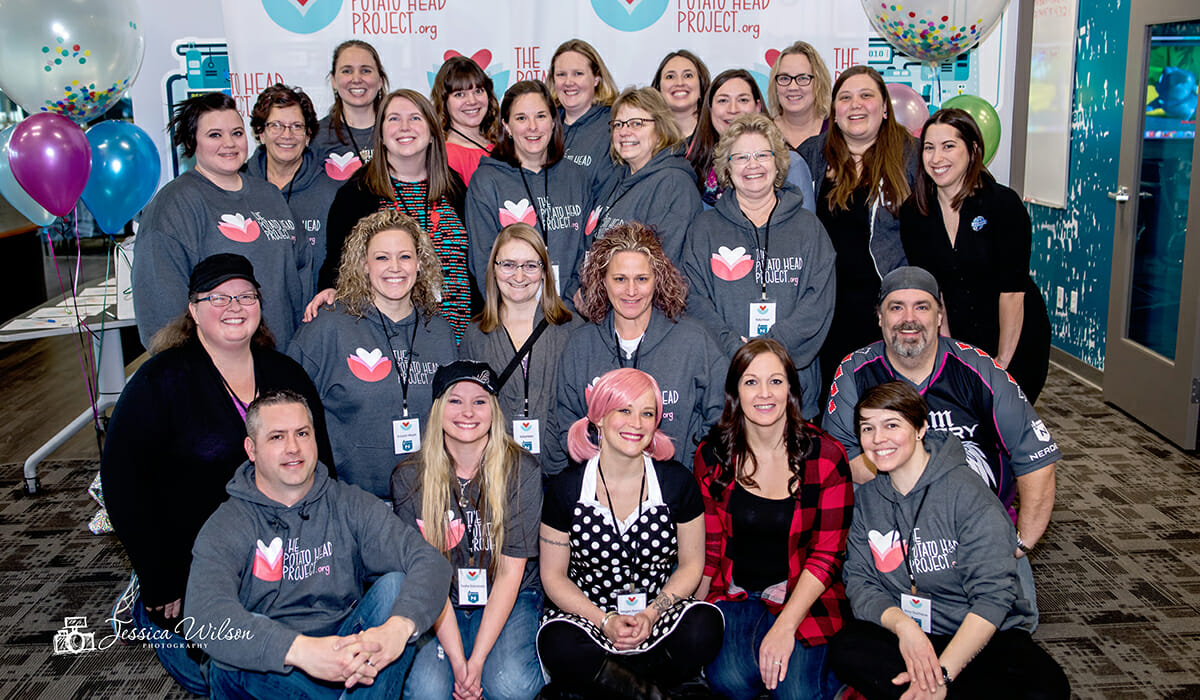
Kristin Moan, center row, second from left, stands with some of the many volunteers who help her run her nonprofit The Potato Head Project./Courtesy Jessica Wilson Photography
What have you learned through your experiences as a volunteer?
I think that in the world of the NICU, there is no right or wrong. There is no one story that’s completely relatable to another and every situation is so much about that family. To be able to bring people together that their number one similar factor is the NICU, and be able to connect them and have this community of people, it’s just amazing what you can do with strength in numbers. Some of my best friends now are people who also had micro-preemies and they help with the foundation and they go to the events with me for other nonprofits. Just involving ourselves in this world that is so undervalued. I don’t feel like it gets enough exposure so it’s been amazing to be a part of trying to bring that to light and showing people that this stuff is really happening, and it’s not just about the people it’s immediately effecting because at any time it could effect you as well. Babies aren’t born premature based on what job you have or what city you live in. It’s a traumatic thing and it’s very unfortunate, but as the numbers of babies being born at this gestation is rising, and the number of babies surviving is rising, the need for resources is also there. I feel really blessed and happy that I can be a part of one of those resources.
What do you want people to learn from your story?
I would say that if you want to make a difference or you want to help people, you just do it. You take what’s passionate and you find a way, no matter how small it is. We could have sent out 20 packages and I feel like our story still would have been successful, but we sent out 2,000 and that number is just rising. So no matter where we end this at, if our kids decide to continue it, or other people decide to continue it, it will still have been successful and it still would have had purpose and it still would have helped people at a time where there is very little for others to actually do something for them.
For Over a Decade, Volunteer Uses Soccer to Help Empower Kids with America SCORES LA
Meet Daily Point of Light Award honoree Aaron Kaufman. Read his story and nominate an outstanding volunteer or family as a Daily Point of Light.
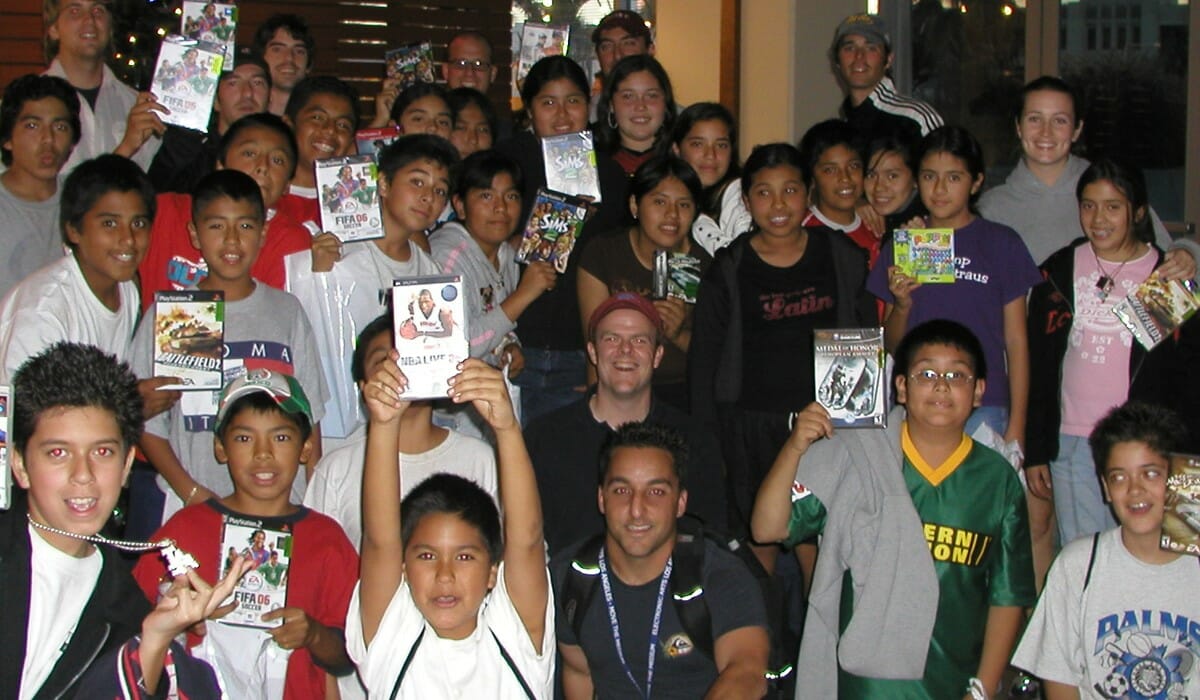
Aaron Kaufman said when he first heard about the nonprofit America SCORES LA back in 2005, he would have never imagined how involved he would be in the organization over a decade later. Aaron was invited to volunteer for the after-school program, which utilizes poetry and soccer to empower kids in low income and urban areas of Los Angeles, after meeting the organization’s then-Board President while networking through his corporate soccer league. Passionate about both soccer and how the organization helped youth in the community, Aaron invited them to spend the day at the offices of his former employer, video game company Electronic Arts. The kids spent the day learning about how to make video games, playing soccer on the company’s field, and picking out a gift from the EA store just in time for the holiday season. The day led to both an annual event with EA as well as Aaron’s continued hard work with the organization.
Fourteen years later, Aaron is known to multiple America SCORES LA alumni as ‘the EA guy’ due to how many kids were impacted by the event he organized. While he no longer works for EA, he has swapped out organizing EA Day with the annual America SCORES LA Cup, the nonprofit’s biggest fundraising event of the year. In the seven years Aaron has run it, he has grown the annual tournament from about 10 to 12 sponsors to 36, and has helped the event to raise almost one million dollars since he first took over organizing it. As a member of the Board of Directors, Aaron also helps oversee marketing for LA SCORES, which impacts anywhere from 300 to 400 kids in its programs each year.
Describe your volunteer role with America SCORES LA.
I am on the Board of Directors for America SCORES LA and as part of my role, I help oversee the marketing of the organization and I also run our annual LA SCORES Cup, which is our biggest fundraising event of the year.
We’re a nonprofit 501(c)(3) and we are based in the Culver and Palms district of Los Angeles, CA. We are an after-school program for kids in low income and urban areas of Los Angeles. We provide a safe environment, an incredible place for kids to nurture and grow and be empowered as leaders of tomorrow. The pillars that we really instill in our kids are poetry to understand reading and writing, and teamwork through playing soccer. Our after-school program accommodates kids all the way as young as kindergarten up through high school.
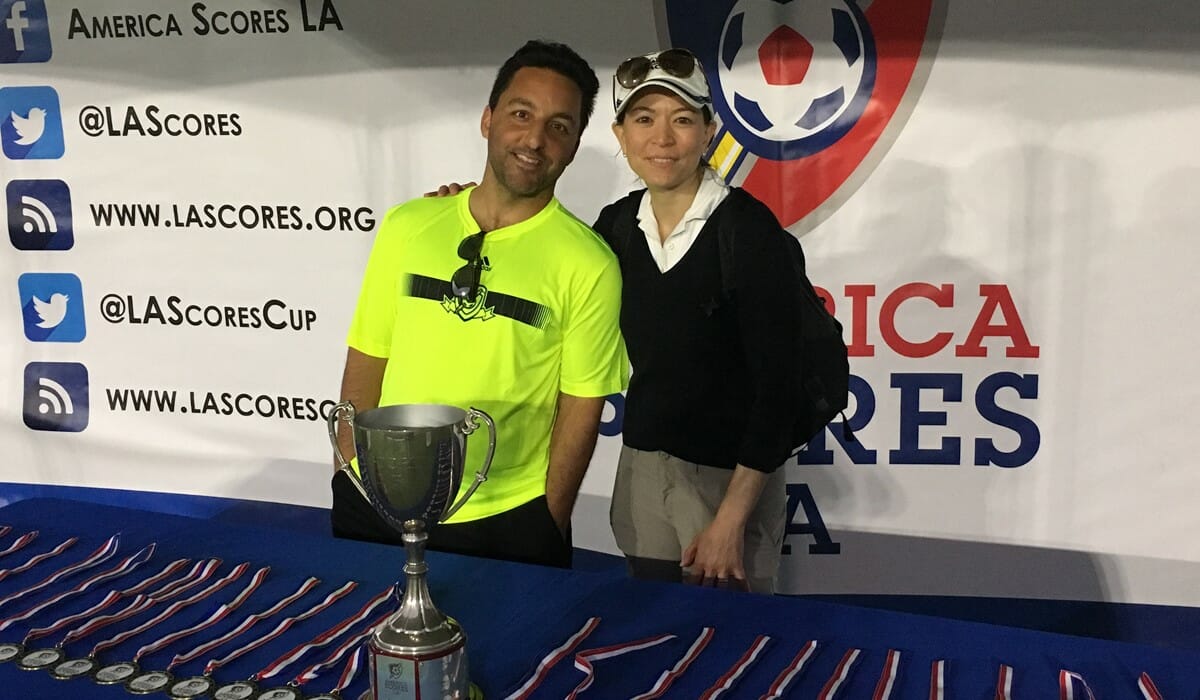
After learning about America SCORES LA, Aaron Kaufman, bottom row, fourth from left, organized EA Day where kids could spend the day playing soccer and learning how video games were made at the EA offices./Courtesy Aaron Kaufman
How did you get involved?
I first got involved in America SCORES LA way back in 2005. I was working at a company called Electronic Arts [EA], a video game company, and at the time I was running a Corporate Soccer League. I ended up networking with a good friend of mine today, Jason Greene. He was working at AEG and also held the position as Board President for America SCORES LA. He said to me, hey, we’re really looking for people from corporations around southern California to help get involved, certainly people who have a passion for soccer and wanting to help grow kids into leaders, and we think that you might want to consider volunteering. Jason introduced me to now-former Executive Directors of LA SCORES, Alex Soschin and David Joseph. I said to them, I’m really inspired by what you guys are doing, I think one thing we could explore is having the kids come here to EA, for what we ended up calling ‘EA Day’ during the holidays. What we would do then in the month of December, I would host the kids of LA SCORES at EA, teach them how we make games, give them cookies and milk, they got to play organized soccer on our soccer field. Then one of the coolest things they got to do is we had a store on the campus and we would basically let them go in there and pick out whatever they wanted as a holiday gift from us. That became an annual event that I ran at EA for a number of years, and really through that event is what got me a lot more connected to the organization and then I started to get much more involved.
Why did this organization resonate with you when you first learned about it?
I think what really inspired me is the way the program takes kids in and inspires them and can empower them as leaders. I really, really loved the connection to soccer they were using as a bond. No matter who you are, size, shape, sex, race — when you’re on the soccer field, it’s an even playing field in showing how everybody can bond together, [which was] was really, really cool to me. I at a younger age had been involved with the Boys and Girls Club, and I think LA SCORES has similar fundamentals as an after-school program, and I know what programs like this can do to change and empower kids to be incredible individuals when they grow up. I really, really appreciated that they were targeting all the way down to elementary school to help uplift and inspire these kids to be incredible leaders and go on to major colleges and universities in their future. LA SCORES has an alumni program and we have many, many kids from the program who come back, who have gone on to incredible universities whether it’s [University of California] Berkeley or Princeton, who have gone on to become lawyers and seasoned professionals, and then they come back to the program to help out and grow kids who they once were. It’s this really amazing full circle of watching the program help nurture and grow the kids from a young age to young, successful adults. I like that we have a program in LA that offers that kind of opportunity, especially with the connection to soccer which is something that I’m personally very passionate about.
What kind of feedback have you heard from the kids involved in the program?
I think one of the cool stories is there is a guy named Nahoul Gonzalez and today he actually does work for the program and he’s one of our alumni. I watched Nahoul when he was a young kid in elementary school when I was at EA. He was someone I met early on in the program and he was always one of these star soccer players. The guy has played semi-professional, he’s an incredible talent and he’s really an incredible human being. He’s someone I have stayed friends with through the program over the years and when he would see me, he would call me ‘the EA guy.’ He would always reference back to the times we would play soccer at EA when I would bring the kids of LA SCORES over and he was part of that. He was in elementary school and he would say to me that creating that day for us and the connections that you made really inspired me and helped me. I’ve gotten to watch him grow into an incredible leader and adult in and outside of LA SCORES. That story is a great anecdote for what LA SCORES has meant to me and the impact that I know it’s having on the hundreds of kids that we’ve touched over the years.
Are there any future partnerships, programs, or events that you are excited about?
I think the thing I’m always excited about the most is our annual LA SCORES Cup. This is an event that I direct. I’ve been doing it for seven years now and I think we’re not far off from having raised one million dollars since the time I took it over. It’s our biggest fundraising event of the year. It is one of the largest corporate soccer tournaments in southern California and it’s actually an annual event that all America SCORES organizations run. We have chapters throughout the nation and everyone runs their own Cup, generally in the spring and the summer. The goal of the Cup is to raise funds for our local LA SCORES. We go out there and target small businesses, large businesses, corporations of all kinds, from law firms like McDermott Will & Emery to JP Morgan, to Enterprise, to HBO, Apple, Starbucks. We have incredible partners who participate in this annually. When I took it over, we were getting about 10 to 12 companies in this a year, and since then we’ve grown to 36 companies participating. That number has fluctuated but the tournament has grown significantly. We’re trying to continue growing it and continue helping southern California corporations understand that playing in the LA SCORES Cup, every cent that you donate, every dollar goes directly back to the program. We get a lot of donations and corporate sponsorships that help us put the tournament on and we really believe it’s one of the best soccer tournaments that any company can participate in. That event is probably our premiere event of the year that we’re always really trying to advocate and drive to.
We haven’t set the date yet for 2020 but we generally are targeting end of June or early July. We are running it at the Dignity Health Sports Park where the LA Galaxy play. It’s really an incredible day and I think this year is going to be our biggest one ever.
What’s been the most rewarding part of your work?
It’s twofold. One, it’s seeing these kids grow. There are kids to this day who will come up to me who are young adults now and call me ‘the EA guy.’ They remember when they were young, coming to EA and having this incredible day. Now they see me every year directing our LA SCORES Cup, collaborating on the marketing of the organization with our Board, and truly incredible individuals, Executive Director Geoff Wilson and Program Director Amy O’Dowd. I think just watching how they empower and grow these kids of LA SCORES into successful adults, and knowing that the dollars and the efforts that I’m helping to bring to the organization are making a real impact — it’s really something that is extremely meaningful to me.
The other thing is with the LA SCORES Cup, time and time again when companies come out and have an amazing time on the field, they know exactly what they’re playing for. They hear the stories from us, they see all the connections. I think continuing to grow that Cup into an even larger event, I hope one day we can raise half a million or one million dollars plus on a single event. That would enable us to do so many things with LA SCORES, such as spreading the organization to different schools in different cities, building sport turf soccer fields on concrete floors at schools to create safe places to play soccer. There’s so many things we can do to continue to grow the Cup and other events to raise funds, and I love being at the forefront of this with everybody who’s contributing to the organization and knowing that the dollars I’m bringing in and helping to raise are making an incredible impact. I think those are the two things that mean the most to me.
Aaron Kaufman, left, has directed the America SCORES LA Cup for the past seven years./Courtesy Aaron Kaufman
What have you learned through your experiences as a volunteer?
I think especially in running the Cup and being on the Board, I’ve really, really learned the power of collaboration and teamwork. When I talk about running the LA SCORES Cup, there’s no way in hell that event gets off the ground without the recruiting contribution of our Board, the grassroots efforts of our Development Board, running the tournament with Geoff and Amy, and countless others who have helped contribute over the years. This is just one example of being in a position where you have to pull collaboration from a lot of people and I think anybody who gets involved with volunteering, that’s what we’re out to do. Volunteering is not an individual effort, it’s a team effort. You might be putting in your individual time, but you’re contributing to a team and I think that’s the part of volunteering that everybody needs to remind themselves of. You’re not just putting yourself out there for your own individual gain, you’re putting yourself out there to benefit the organization, to benefit the other people who are volunteering their time, and all coming together and taking that kind of skill and that kind of knowledge back to your everyday life. When you’re a parent, I’m a dad raising my son, and I partner everyday with my wife to grow and nurture him and so that kind of skill helps me there. At my job, I’m in social media and marketing for a video game company and I’m partnering everyday with tons of different people inside and outside our organization. Everything I’m learning in LA SCORES about collaboration and teamwork is having an incredible benefit in many other areas of my life.
What do you want people to learn from your story?
I think what I would want people to take away is you know, when we look at what we as individuals can do to change the world, I think sometimes we think that even just the littlest action we do may not have the greatest impact. Then sometimes we take for granted that everybody else is doing it, so what is my small step in helping LA SCORES, for example, going to do to impact the greater good? I never imagined back in 2005 that playing soccer with kids on a field would turn into the EA Day, would turn into someone like Nahoul Gonzalez coming back to me over a decade later calling me ‘the EA guy’ and saying how much our friendship inspired him and helped him grow up into the young successful adult he is today. I never imagined that the efforts I put forth with the team to grow the Cup from 12 companies to 36 would get us to where we are today. All of those things were all little individual steps that I took, contributing my time and effort into LA SCORES, which in the grand scheme of things, is an incredibly small nonprofit compared to many larger ones out there. But impacting kids, especially impacting humans at a level that is much more local and personable to where you are, I think is an incredible impact. If we all do that, then eventually we’re all going to have that chain effect that’s going to add to the greater good. I think the main takeaway is simply go get involved, make a difference. Even just the smallest step, the smallest contribution to a nonprofit that inspires you, can make a tremendous impact. You never know where it will lead to, but I can promise you it will lead to something that eventually winds its way back to you, that you’ll reflect back on and be like, man, I’m glad I impacted that person.
Twin sisters team up to clothe needy children in India
Meet Daily Point of Light Award honoree Esha and Eshita Kashboina. Read their story and nominate an outstanding volunteer or family as a Daily Point of Light.
Twin sisters Esha and Eshita Kashaboina know that not everybody grows up as fortunate as they are. Gifted students from a loving family, the sisters saw a harsher side of life when they visited their parents’ home country of India. They saw children in need, without basic necessities. This sparked empathy and a passion to make a difference. The sisters created a project called The Global Touch Project, working in tandem with Forgotten Children Worldwide, a nonprofit organization founded to protect vulnerable children from the life of poverty and child-trafficking, primarily in India and Africa. Sending clothing and shoes to kids in India became their mission, so the twins hold clothing drives in schools in their community and have collected more than 1200 pounds of clothing to date, making a difference in the lives of children in need.
Describe your volunteer role?
As the co-founders of The Global Touch Project, we organize clothing drives in our community. We are constantly in contact with the principals and directors of various schools so that we can schedule these drives. Once underway, we visit the schools to empty the donation bins and collect clothing. We then sort the clothing at our home and send it to Forgotten Children Worldwide. FCW then sends it in bulk to associates in India for distribution, making the shipping process easier and more cost-effective.
Why is it important to you to support your community in this way?
We have seen first-hand what the living conditions and challenges are for the people in India. It is especially hard to see children living on the streets. When you compare our realities to those in India, there is a significant difference in the quality of life. We wanted to improve these children’s living conditions by giving them clothing, an obvious necessity.
What’s the most challenging aspect of your volunteer service?
Managing multiple clothing drives at once! Often the dates and duration of the clothing drives are different for each school, so we have to be super organized. Also, once the bins are full we have to collect the clothing right away so that other people have the chance to donate without the bins overflowing. So, the challenging aspect is staying up to date with every school and ensuring that we fulfill our responsibilities.
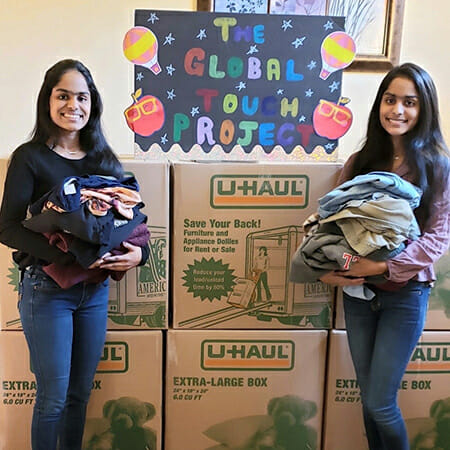
Esha and Eshita Kashaboina have collected more than 1,200 pounds of clothing./Courtesy Esha and Eshita Kashaboina
Why do you think it’s important for others to give back?
Volunteers make it possible for others to live in healthier environments with more resources and opportunities. Not only does volunteering positively impact other people’s lives, but it also makes us more tolerant and conscious individuals. Volunteering reduces ignorance in society by having people directly confront real-world problems. We become more giving towards others as we support and care for those who have less than us.
What’s been the most rewarding part of your work?
The rewarding part of our service is simply knowing that we are positively contributing to a child’s life. We feel that being able to aid children in India to rise above their circumstances is a great reward for our efforts.
What have you learned through your experiences as a volunteer?
It can be difficult trying to start a project without having a solid foundation or plan. However, by finding people who can assist you in executing your ideas, you can put these ideas into reality. The outcome of any intention of service is very valuable in the end!
Are there any future partnerships, programs, or events that you are excited about?
We are actually in the process of scheduling more drives in our community. We are hoping to expand our boundaries beyond schools. We are definitely excited to see how much more clothing we can send to India!
What do you want people to learn from your story?
The type and duration of community service isn’t what matters. Every difference you can make counts. One act of giving can make a huge impact on another person’s life. It’s easy to take for granted what is easily accessible to us and the circumstances we live in. We encourage everyone to spend giving back because that’s what it takes to create change.