Making a Difference One Dress at a Time, Volunteer Provides Hope and Relief to African Children
Meet Daily Point of Light Award honoree Rachel O’Neill. Read her story and nominate an outstanding volunteer or family as a Daily Point of Light.
Rachel O’Neill says she fell in love with the beauty of Africa while on vacation for her 50th birthday. Returning to the continent on a subsequent visit, she traveled to Malawi, one of the poorest countries in the world. Witnessing how communities treated their young girls like second-class citizens, relying on the children for cooking, child care and deprioritizing their education, Rachel said she decided to find a way to honor young girls in Africa.
Launching Little Dresses for Africa in 2008, Rachel has cultivated a network of volunteers worldwide that have sewn millions of dresses out of pillow cases or other simple patterns for communities in Africa and other third world countries. Serving as a vehicle for hope, the dresses (and shorts for boys) act as “ambassadors” according to the 64-year-old Brownstown, Michigan resident, to plant in the hearts of children that they are worthy and valued. As relationships are built across these communities, Little Dresses is then able to serve the impoverished residents in more comprehensive ways, through clean water, education and community. Making a difference one dress at a time, Rachel is providing relief to vulnerable children across Africa and beyond.
What inspires you to volunteer?
I come from a family of girls, I have five sisters. Being raised in that sisterhood, I believe in women, I think they’re strong and focused, and I just believe that they ought to get a fair shake. It made me sad to see these young girls in Malawi suffering an injustice and not being honored as they should.
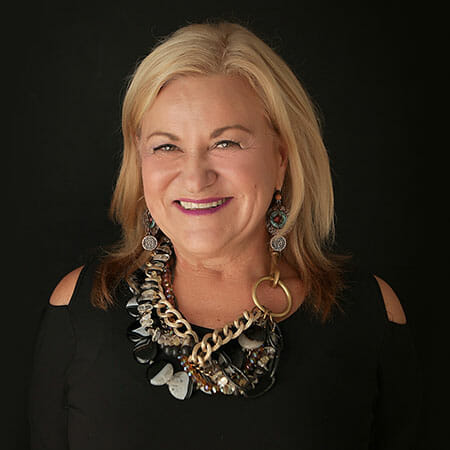
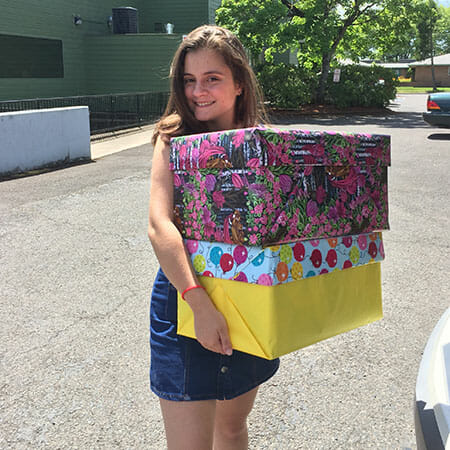
Rachel O’Neill: “The dresses are our little ambassadors that help us get in to the communities and allow us to form relationships with people in these villages.”/Courtesy Rachel O’Neil
Explain why you felt these girls needed relief.
The road is especially tough for little girls and young women in Africa. Often small children are left as primary care-givers of younger children, because of the death of their parents from disease and poverty. When I first visited Malawi, it seemed like the children, particularly young girls, did all the work. They took care of the babies, cooked food for hours, harvested the field when it was time to eat, they just did everything. And then they were sent to the back of the line to wait for their meal, and if the food ran out, there was nothing to be done. It seemed wrong to me and I wanted to do something to honor them. These little dresses plant the seed that they are worthy.
Describe your role with Little Dresses for Africa
As the founder of Little Dresses, I am the visionary in planning how to get dresses to communities in need. I also recruit volunteers, and work with various organizations to distribute the dresses to children in need. I also lead two teams each year over to Africa. We bring dresses with us, but I also work to introduce our volunteers to the Africa I know, so that they’ll fall in love with the people too, and want to help. Lastly, I speak to organizations and groups to raise awareness and get people involved.
Explain your reach in numbers.
We have volunteers across 10 countries, including the United States, sewing and packing up dresses and sending them to 87 countries across the world including within Africa. We focus on 3 bigger components to help improve lives: clean water, education and community. The dresses are our little ambassadors that help us get in to the communities and allow us to form relationships with people in these villages. Since 2008, our volunteers and networks have crafted over 8 million dresses.
Little Dresses also offers a program called Buckets of Hope. Explain.
One of the ways we help people once we meet them through the dresses is through “Buckets of Hope”. We identify widows in need, the sick, disabled or child-headed families, and we give them buckets full of supplies including oil, sugar, salt, rice, tea, soap, mosquito nets and Bibles. These essentials help to sustain individuals that are in need.
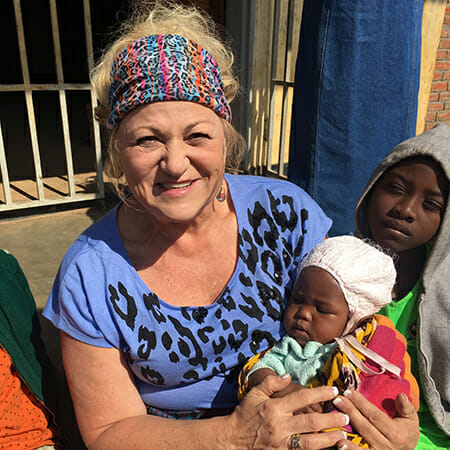
Rachel O’Neill: “The dresses are our little ambassadors that help us get in to the communities and allow us to form relationships with people in these villages.”/Courtesy Rachel O’Neil
Share how your volunteerism makes an impact on the lives of others.
The Dignity Program offers simple washable menstrual pads for girls who have reached puberty. On our visits to the villages, we discovered that girls weren’t able to attend school because they had no way of managing their periods. I can’t list the women that have told me that their daughters were able to stay in school because of what we’ve provided. Providing this essential is changing lives for young girls in Africa.
What’s one way you hope your service inspires others?
Because assembling these dresses is such a simple thing, there are no excuses. If you don’t sew, you can fold dresses. Or pack boxes, or help us with shipping, or load the shipping container we send the dresses over in. We are a community that is joining together to help people that we’ll mostly never know, and to me, that’s what makes our mission so good. Little Dresses brings people together on this side of the ocean as well as on the other side of the ocean.
What have you learned through your experiences as a volunteer?
You do not have to know the answers when you start. You can learn on the way. Originally, I didn’t know how to ship a container, I didn’t know how to build a school, or put a well in, but those things can be figured out along the way as you go.
How can readers help?
Please check our website for more information about our organization and how you can help.
AFTER TEENAGE DRUG USE, INDIANA VOLUNTEER SAVES LIVES WITH NALOXONE SHIPMENTS
Meet Daily Point of Light Award honoree Antonia Sawyer. Read her story and nominate an outstanding volunteer or family as a Daily Point of Light.
Sent to live in foster care as a child, Antonia Sawyer was a high school dropout who eventually became homeless, living on the streets and abusing drugs. Fast forward twenty years, the now 40-year-old mother of three says the recognition that families in her community were suffering because of substance abuse disorder compelled her to take action against a national opioid overdose crisis.
“No one is immune from addiction. I was in foster care, I was a runaway, I have been homeless. I see myself in some of the younger individuals who are actively using drugs, and that very well could have been me.”
Recognizing a desperately growing need across her state for opioid overdose recognition and response but an apparent gap when it came to getting help into the hands of people trained to use it, the Kokomo, Indiana resident decided to think outside the box. Literally.
Founding #ShipHappens in 2019, Antonia boxes up what is oftentimes a life-saving dose of Naloxone and ships it free to anyone in the state of Indiana, including to distributors who can mobilize the drug and individuals like people who use drugs, their friends and family. #ShipHappens also provides free training in opioid overdose recognition and response utilizing Naloxone. Receiving the medication, called an “opioid antagonist” which is used to counter the effects of opioid overdose, from harm reduction organizations, Antonia says the Naloxone she is shipping is saving lives in communities across the state.
Antonia Sawyer, the founder of #ShipHappens./Courtesy Antonia Sawyer
“I had a mother contact me, and told me she needed to get trained on Naloxone because her daughter’s life had recently been saved twice in one day by kits we’d sent her. Her daughter was coming home from a recovery center, and the mother wanted to have Naloxone in the house, just in case. I had a gal reach out to me saying her husband had overdosed, and that she had several kits in the house. It takes me 15 minutes to ship a box, but if it’s going to save someone’s child, my 15 minutes is nothing compared to the impact it’s going to have on someone’s life.”
By getting Naloxone in the hands of active drug users, their friends and family who have traditionally been dependent upon first responders and an individual’s ability to recognize an overdose, Kass Botts, executive director of the Indiana Recovery Alliance, says Antonia is empowering civilians to take action in crucial life or death situations.
“Whenever an overdose occurs, people are having to call 911, wait for first responders to get there, hope that first responders are able to adequately identify that an overdose is occurring and then chose to administer Naloxone. If someone is located more rurally, there could be a time delay in EMS getting to the person. Because irreversible brain damage or even death can happen within just five minutes of oxygen deprivation, today, people are able to act immediately and save a life then and there. (#ShipHappens) empowers everybody to be lifesavers in their own communities.”
Access to Naloxone is just one part of the daily battle Antonia wages in the fight against drug overdoses. The deadly stigma that exists, particularly in the Midwest, according to Antonia, against people who use drugs often acts as a barrier for active users and their families to get users the help they so desperately need. That’s why Antonia fights to expand access to the life-saving drug and provides virtual education for the people who need it most.
#ShipHappens is a zero barrier access point to Naloxone for people in Indiana.
“There’s a stigma against people who show up at public trainings and learn how to administer Naloxone. Once I received my first gift of about 1,500 doses of Naloxone and shipped it to distributors I knew were registered across the state, it clicked. If I can spare someone the shame and judgment they face to get this medication, then maybe I could train people online, and get Naloxone to anybody who needs it.”
Antonia has shipped more than 4,000 doses of Naloxone through #ShipHappens, and is changing the landscape of harm reduction in Indiana by increasing capacity across the state and providing tools that allow others to act as Naloxone distributors and champion the fight in their own communities.
“What Antonia’s doing is making herself available to anybody who puts in a request for Naloxone, anywhere across the state of Indiana, and she’ll get them exactly what they need,” Kass says. “That’s huge. People that don’t have access in their literal physical community, who can’t get to their health department, still have access to the community of harm reduction.”
Antonia says her volunteerism isn’t a choice, but instead, something she feels compelled to do.
“I am inspired by the perseverance of the families I serve. I am tired, I am busy, I am a mother. I go to school, I work, but I could be so many other things, and those are sacrifices I am willing to make. The families I serve don’t have the capabilities to serve, because they’re trying to save their kids and find recovery options for their family members and trying to make sure they don’t overdose. It’s inside me to help them, I can’t stop.”
Georgia Mom Helps Engage and Educate Kids Through Children’s Museum
Meet Daily Point of Light Award honoree Emily Crim. Read her story and nominate an outstanding volunteer or family as a Daily Point of Light.
As far back as high school, Emily Crim remembers being passionate about being involved and helping others, which led to her going to school for social work and then working for the Georgia Department of Family and Children’s Services. However, the Athens, Georgia-based mother of two said she felt a need to get back into serving her community beyond just through her job and return to more volunteer work. So when her friend said she was starting her own nonprofit children’s museum in order to fill a void in their town for educational children’s play, Emily knew she wanted to get involved.
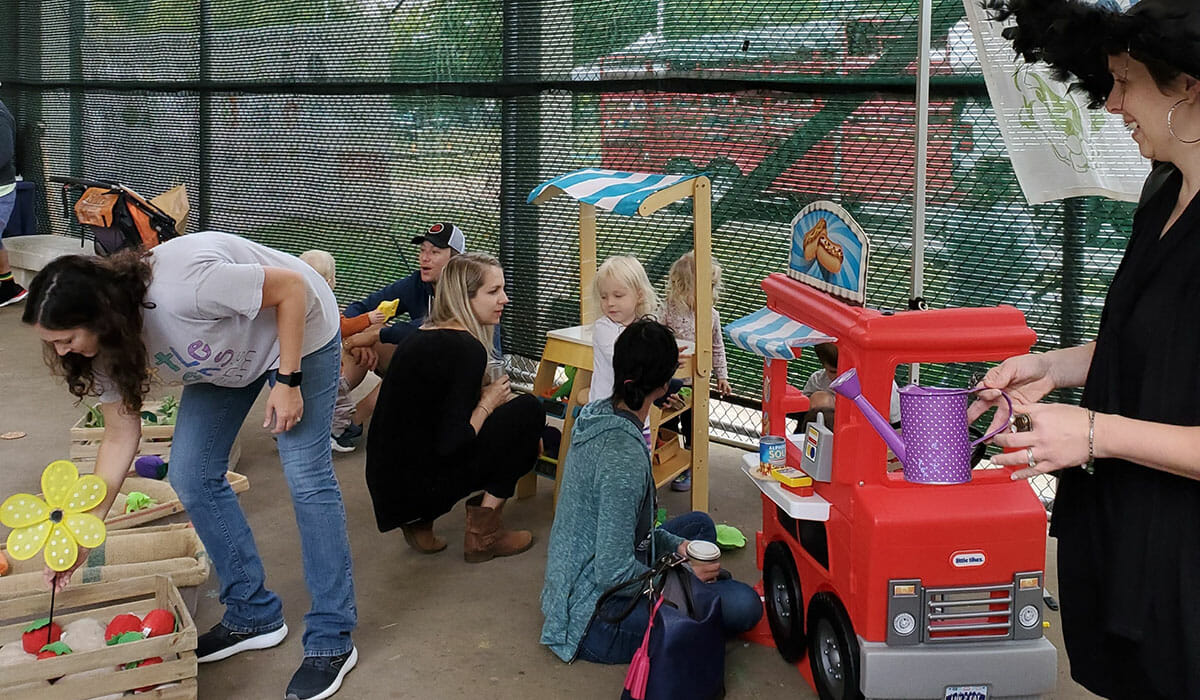
For the past three years, Emily has served as a board member and volunteer coordinator for Little Athens Children’s Museum, a mobile interactive play museum for children aged about 18 months to eight years old. Through pop ups at the local mall, farmers market and local events and festivals, Little Athens provides a safe place for kids to learn and develop skills by playing make believe, dressing up, playing instruments and more.
Describe your volunteer role with the Little Athens Children’s Museum.
I am one of the board members and I’m also the volunteer coordinator. I’m in charge of when we need volunteers, I send out the emails and say here’s what we need, here are the spots we have coming up, that sort of thing. I get that info from another board member, she’s the events coordinator, so whenever we have an upcoming event she figures out the parameters for that and sends it on to me and I try to get folks signed up to fill the spots and help out.
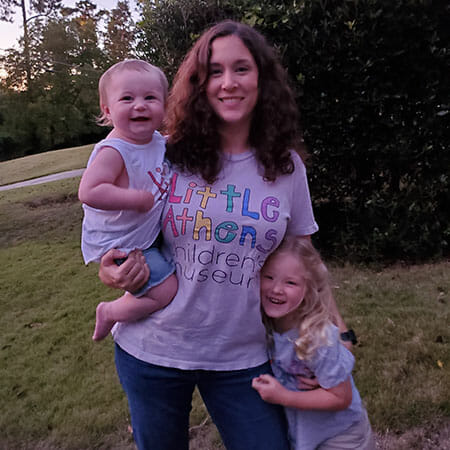
Emily Crim said one of the great things about volunteering for Little Athens Children’s Muse-um is how the organization encourages volunteers to bring their children with them, which she hopes will emphasize the importance of helping others to her two children./Courtesy Emily Crim
an you describe what Little Athens Children’s Museum offers to kids?
It’s been around for about three years and we are looking for a permanent location, but right now until we’ve gotten to a point where we’ve fundraised enough and figured out a site that works for us, we’re mobile. We have different pop up events. Typically we have a pop up once a month at [Georgia Square Mall]. They host us for free there at one of their old retail spots. We also a pop up once a month at one of our local Athens farmers markets. We also do different special events. There is a big musical festival each year that Athens has, and different kind of big events like that, we also go to.
A girl I went to undergraduate with, she founded the whole thing and her name is Leigh Ellen Magness. She’s a play therapist so she wanted to create something that was a children’s museum and was really very play-based, because that’s how kids learn best. All of our different exhibits that we have at our mobile pop ups are all basically to initiate that, so a lot of imaginative play and dress up and things like that. We have a small scale kids’ grocery store and we have a little coffee shop and a veterinarian department. We have a little construction area. We’ve been really lucky, we’ve had different partners in town that have donated things. Athens is where [University of Georgia] is so UGA donated some stuff for the little vet clinic we have, and then one of the coffee shops in town, Jittery Joes, donated things for the coffee shop. All these different kind of little units or little exhibits we have, kids can basically come and play and learn through that.
When did you get involved with Little Athens and why was it something that interested you?
I actually got involved right when we were first starting up. Like I said, the founder, Leigh Ellen, she and I went to undergraduate school together for social work. We’ve been friends and we both live in Athens and so every now and then our paths would cross. I heard about it when things were kind of starting up and she had reached out to me, so I started going to informational meetings. Then when the board was created, I was interested in being on that, so everything evolved from there. It was after my first child was born. She wasn’t really at an age yet where I recognized, hey, our community doesn’t have this and we really need it, but I’ve just always really liked the idea of a children’s museum. Then also for both undergrad and grad school, I went to school for social work, so I’ve just always really enjoyed being a part of things as far as helping out and volunteering. I work for [Georgia Department of Family and Children’s Services] and I kind of got to a point where I wasn’t volunteering as much, so it also really peaked my interest just as far as, personally I need to get back into doing something and I need to get back into this habit where I’m a part of something that I’m not required to be be-cause of my job. I’m not just fulfilling some other requirement other than just my own personal desire to feel like I’m being useful and feel like I’m putting something back out there and somehow being helpful. It really kind of just fell into my lap, as far as this is something I have time enough to do now, and this is something I think would be a great thing to add to the community, and also I could hopefully be helpful with.
Why was something like a children’s museum so important for your community to have?
It really is the best way for kids to learn, just through that kind of interaction of play. Kids have a hard time sitting still and those more traditional, more formal learning environments — for young kids, that’s just not really what they need. They need to explore through play and testing things out and figuring stuff out on their own, interacting with peers their own age and that sort of stuff while they’re doing that kind of thing. The necessity of that type of educational experience is really key for that age group. As far as this community goes, there aren’t as many options as far as indoor play go that aren’t things like, and I’m not bashing them in anyway, but we’ve got a trampoline park and inflatables kids can jump around on and things like that. But for little, little kids, there aren’t a whole lot of options for them in our community for playing and learning. So it’s just kind of crazy because with the university here and so many different other agencies and businesses and stuff in Athens, surprisingly that need is still not completely met. There’s still a niche there that is missing. It’s definitely something that fulfills that gap that’s in place for kids around those ages, where that imaginative play and role playing and exploring and things like that are so necessary.
Are there any future partnerships, programs, or events that you are excited about?
Currently there is the raffle we’ve been working on as far as the fundraiser that just kicked off two or three days ago. Athens Ford, and they had donated with us previously which was a huge help, they are sponsoring this raffle where they have three Power Wheel cars, those little electronic cars that the kids can drive around on. The three Power Wheels they are auc-tioning off for $5 a ticket [with 1,000 tickets total for the three separate vehicles], they could raise up to possibly $15,000 for us, which is a huge donation for us. That’s been really exciting. That’s going on through the middle of December.
As far as our events, we still have the mall pop up and the farmers market pop up over the next few months. As far as then toward the end of the year, things slow down a little bit with the holidays and everything, but those two, the mall and the farmer’s market, are our consistent events. The farmers market actually, they were getting such a good turnout as far as kids and families went at the market, that this next year going in — because they’re currently open March to December each year — they just let our events coordinator know within the last few weeks that because they got such a huge turnout from us, they are going to sponsor us so we get to be a more permanent thing at their farmers market. We’ll be on their official sign and be the official folks that fill the children’s space within the farmers market each month. That was re-ally exciting too, to kind of get that kind of prop from them. The farmers market is kind of a big deal here, very much how Athens kind of is. It’s a really local pride of point and a lot of families spend time there, with the whole sustainability and green mentality of Athens.
What’s been the most rewarding part of your work?
Really just getting to meet so many families and kids, honestly. It’s been really great when you stumble especially upon families who didn’t know we existed yet, when they kind of stumble upon us and they’re like, ‘Oh my gosh, this is so great.’ It’s so hot on some Saturdays or it’s so rainy out or whatever, and with the fact that we don’t have as many activities and don’t have as many businesses and different locales within Athens that support that age and play, that if outside is not appropriate on a day, then folks don’t have anywhere to go with their kids. It’s been great meeting these families and seeing them light up as far as having a place they can take their kid that’s safe and fun and their child is enjoying it. It gives them a little bit of a break too, because they can sit there and their kid can go crazy a little bit playing. They can actually have a seat and rest a little bit and still have something that is educational and safe for their kids and they’re not having to to get up at 7 a.m. and take their kid to the park before it’s 100 degrees heat index or something crazy like that. It’s been nice seeing families, just the positive response that they’ve had and seeing that need for them being fulfilled with there finally being another activity that fits for their kids and is also a positive one. It’s not plunking your kids down in front of video games for hours on end, or a tablet. It’s learning and having fun and getting to experience different things.
What have you learned through your experiences as a volunteer?
I feel like when I got into school for social work, I was so gung-ho, and ‘hey, I’m going to do all this stuff,’ and you get a little bit burn out. When I got back into working with people again and choosing to volunteer and spend time at Little Athens, it kind of retaught me and refreshed me on this is something that really fills you up. If you’re participating in other hobbies or activities, that’s great, but you can be tired or whatever else form it. But I don’t ever regret if I’m volunteering for something with Little Athens. If I’m tired, if it’s one of those days where you’re like ‘Oh my gosh, I’ve got so much on my plate and I don’t need another thing but you’re signed up to do it,’ I still never regret it because you’re getting something back out of it which is nice. It’s been nice over these past years being committed to a consistent something again, that you feel like you’re putting something in the community and you’re helping folks out. At the same time it kind of feeds you in reverse because you feel accomplished in what you’re doing and you feel accomplished in the time that you’ve spent. … It’s satiating. It’s been great being reminded of that because I think for me personally, going to school for social work and wanting to work with people, that was something that was always important to me. Even before college, when I was in high school I was always involved in a lot of different organizations and I liked helping out. Once you get out of the habit of that and you get too busy, you let that stuff fall by the wayside, you forget about that kind of great duality of purpose. You’re helping out other people but you are also helping yourself too. It’s this great flip side to the coin. I think that’s something I continue to learn and be reminded of anytime I’m really participating in something like this.
Emily Crim, left, works at one of the pop ups for Little Athens Children’s Museum, an educational and safe place for families to bring their young children.
Why do you think it’s important for others to give back?
I think it teaches you a lot. There’s so many great principles. It teaches you about other people, it reminds you of diversity and inclusion. Sometimes I think our society gets on the side of ‘everyone’s a stranger, you don’t talk to strangers’ and things like that and you don’t necessarily reach out to people you don’t know. When you’re volunteering, whether it be something like Little Athens or really any other organization or any other volunteer role, you’re put in a situation typically where you’re having to put yourself out there to some degree. Of course some volunteer roles are less interactive with people, but I think specifically ones that do inter-act with people, you are constantly faced with seeing what do I have in common with this per-son, what do I have that’s different from this person, and really seeing the value in different people which is great.
One of the things I love specifically about volunteering with Little Athens is that be-cause we are focused on providing these services to kids and families, we’re always allowed to bring our kids to volunteer with us. A lot of times, especially with my four-year-old because she’s at the age where she can play and I’m not having to chase her down as much and that sort of thing, I’ll take her with me. It’s great because she’s already learning this is what we do, which makes me feel good. If I put on my Little Athens T-shirt, she’ll say ‘Oh, Mom are we going to go volunteer today?’ Of course, she’s going to play so she’s not really volunteering, but we talk about it and she, as much as a four-year-old could, understands the concept of volunteering. It triggers these conversations of why do we do this and why do we help people and why do some people need help? It’s great because I think there’s so much exposure you person-ally can get that can better yourself when you’re volunteering with anything. Also when you have people watching you like your children, they’re learning every single thing you do, so if you’re spending your time to help someone out, if you’re spending your time to volunteer — and a lot of times we’re doing things like even cleaning up toys afterwards and stuff like that, but it’s still a lesson for her to learn. Sometimes we’re talking to people about what Little Athens does, and still she’s hearing that over and over and over again so hopefully it’s creating these impactful lessons as far as, as an adult, this is something you need to do. Anyone from A to Z can help in someway to someone else at any point. Hopefully it’s something that as she gets older and as they both get older, they carry with them. Not saying they have to go into a helping field or anything like that, it’s that they realize you do what you can to help people when you can.
To me, there are people that work in different sectors or have access to different means as far as helping folks out, and not everyone has time to volunteer on the weekends or nights or whatever and that’s fine too, but if you’re not feeling like to some degree you’re doing some-thing at any consistent level to help people, then I really think you’re just not getting as much out of things as you could. You’re not utilizing all the resources you have available to help folks. It could be the tiniest little thing or the biggest thing, but there is something so personally beneficial in knowing that you’re doing something to help at least one other person.
Ohio Cancer Survivor serves community through mentorship and guidance
Meet Daily Point of Light Award honoree Lisa Craine. Read her story and nominate an outstanding volunteer or family as a Daily Point of Light.
Being told you have six months to live seems like the end of the world. But for Lisa Craine, diagnosed with Stage IV Cholangiocarcinoma in 2010, that a prediction was the beginning of a new world, one of love and mentoring and fundraising to help others dealing with the extremely rare bile duct cancer. Nine years later, her medical journey has included five recurrences with eight tumors, four different chemotherapy regiments, two liver resections and intense radiation multiple times. But she’s still here, heading a non-profit that raises money for critically needed research money for this aggressive and deadly disease with no cure, and supporting them as they navigate their journey through mentoring, advocacy, love and prayer. Her favorite advice is to never let anyone take your hope away. She walks that walk every single day.
Describe your volunteer role
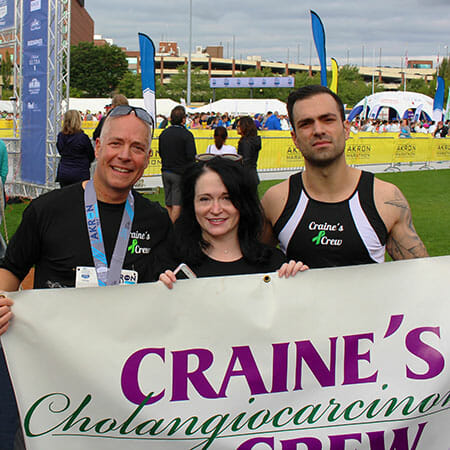
It is multi-faceted. I mentor patients in the CholangioConnect program, and am also actively involved in mentoring with the Cleveland Clinic Foundation, the Scott Hamilton CARES Foundation and Imerman’s Angels. My husband David and I founded Craine’s Cholangiocarcinoma Crew and together we have raised more than $250,000 strictly for research. I help others navigate second opinions, clinical trials and new treatment options, by phone and serve at a Research Advocate, Patient Advocate and CARE Team member, as well as a Conference Volunteer.
Why is it important to you to support your community in this way?
Growing up, my parents worked hard to provide for our family, but they always found time to serve others. Constantly volunteering and giving, they were compassionate and selfless. When I was diagnosed in 2010, I realized my parents, although not rich, were philanthropists and that volunteering time and talent was as important as writing a check. A year after my diagnosis, I started volunteering as a mentor for other patients, so they would not feel isolated and know what to expect through the treatment process. I am relatable because I have been in their shoes.
What’s the most challenging aspect of your volunteer service?
Feeling like you aren’t making a difference because people are still suffering and dying of this rare cancer. Not having enough hours in the day.
Lisa Craine and her husband David have already raised more than $250,000 for research and have mentored hundreds of patients and caregivers. /Courtesy Lisa Craine
Why do you think it’s important for others to give back?
As a Christian, I believe we all have the opportunity to serve others as Jesus did. Through love, kindness, education, research and hope we can impact our community positively. We will never abolish pain and suffering from the world but through our volunteer service we can sure make it a whole heck of a lot better.
What’s been the most rewarding part of your work?
Definitely the people I meet and the relationships that are built. Knowing you made someone feel loved and helped guide them to better treatments plans. Realizing that someone with a BFA in musical theatre can learn some of the basic science needed to help patients navigate clinical trials, targeted therapies and second opinions.
I love spending my days on the phone with patients and some days it’s scientific and other days it’s just giving virtual hugs and love.
What have you learned through your experiences as a volunteer?
I found the Cholangiocarcinoma Foundation shortly after being diagnosed. They were the first place that offered me hope. They have brought patients, caregivers and medical professionals together to unite in this fight against bile duct cancer.
I have learned that it is a privilege to volunteer and a gift that I cherish. I’ve learned that we can all make a difference.
Are there any future partnerships, programs, or events that you are excited about?
I am part of a new group with Cholangiocarcinoma Foundation called the CARE Team. Our goal is to spread Cholangiocarcinoma awareness through mini symposiums around the U.S. We have done four so far this year and have plans to establish CARE teams in other cities. As far as Craine’s Crew, our next goal is to raise enough money to endow a chair for Cholangiocarcinoma research.
I am passionate about making a difference in the lives of survivors and currently sit on a board that is looking at survivorship care and how to improve it.
I will continue to attend conferences, advocacy training and research training so that I can share my knowledge with others.
What do you want people to learn from your story?
There is always HOPE. And yes, one person can make a difference. Volunteers are a sign of hope and compassion in our world. I wouldn’t trade my life, diagnosis or volunteer work for anything. Volunteering has allowed me to love more deeply and give more freely. I believe that Mother Teresa was right when she said “We can do no great things – only small things with great love.”
Grandmother Volunteer Puts the “Art” in Heart for Homeless and Community Members in Need
Meet Daily Point of Light Award honoree Betty Hawley. Read her story and nominate an outstanding volunteer or family as a Daily Point of Light.
78-year-old Betty Hawley quilts to pass the time. As a volunteer receptionist at Father Carr’s Place 2B, a family wellness center that ministers to the poor and provides family and community activities, Betty says she’d notice people entering the center slumped over, often with tears in their eyes. “They were in distress,” the Oshkosh, Wisconsin resident says.
But after greeting these individuals, Betty says she’d engage them in conversation. They’d ask about her quilting. Sometimes, she’d teach the person how to quilt. And she says their sadness would melt away.
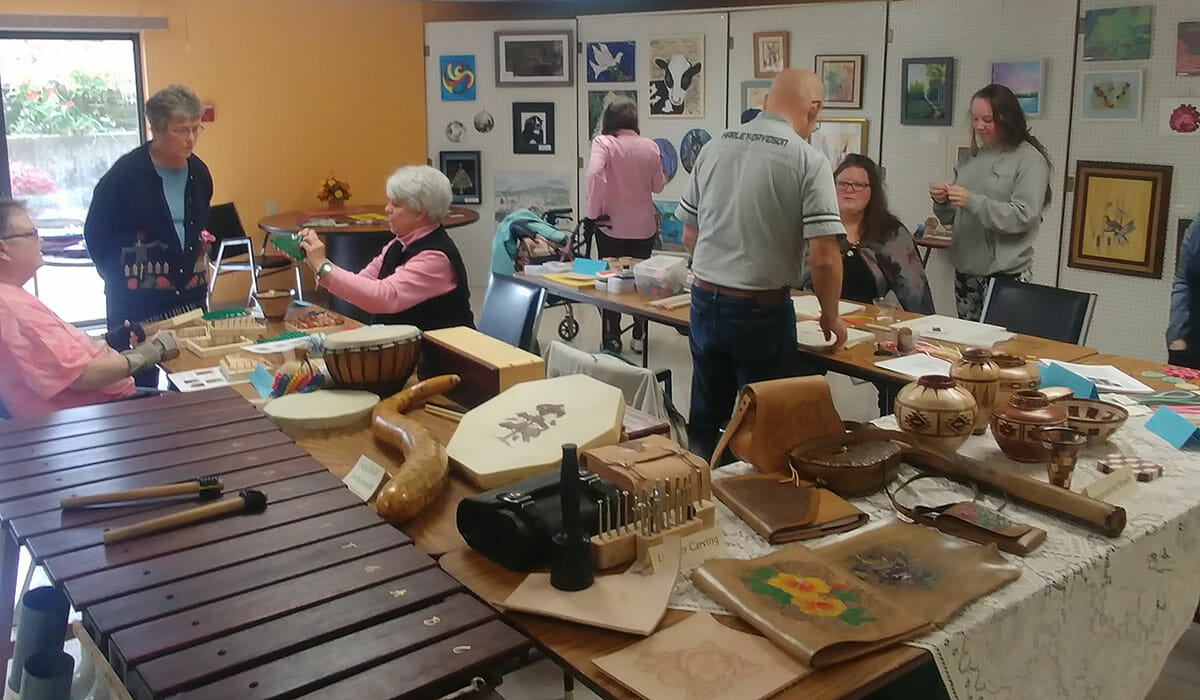
Recognizing the positive effect her creative projects had on others, Betty launched Creative Hearts, an art program offered to children and adults across homelessness, domestic abuse, refugee and other populations in need. Often overwhelmed by their stressful circumstances, this community sometimes has difficulty maintaining hope about overcoming their situations, according to Betty. Serving hundreds of participants in the last three years through Creative Hearts, Betty is providing those in need in her community with a social and artistic outlet, offering them a sense of freedom and hope through self-expression.
What inspires you to volunteer?
When I am creative, I feel empowered. When I’m being creative, it kind of speaks for what is in my heart and in my soul. Through volunteering, I wanted to offer creation, because we offer the homeless the basics: shelter, food, job training. Sure, we offer to help them, but this creative segment wasn’t there, and I wanted to be able to start a movement that would promote that.
Betty Hawley offers art programs for adults and children in need through “Creative Hearts”, a program she launched in 2016./Courtesy Betty Hawley
Describe your role with Creative Hearts.
I am the volunteer director of Creative Hearts, and all eight of the members on our advisory board are volunteers. We host the program at Father Carr’s Place 2B, and we plan for what supplies we need for our art classes and how we’ll pay for them. Our programs are assisted by Circle K student volunteers from our local university. I will preside over the art sessions, and our volunteers work one-on-one with the children in the program.
What are some of your favorite art projects to teach?
One time we taught shaving cream art with the class. It comes out in a beautiful print, they just loved that. Another time we might create greeting cards, or jewelry. At Christmastime, we’ll paint ornaments.
Share one personal story with me from your volunteerism.
There’s a program participant we had in class one day when we were making cards. This woman went through the line to pick up her art supplies, and she just plodded through. She really had no emotion to her. All of a sudden, a lady walked through the front door. This participant’s eyes lit up, she came up to me and asked if she could make another card. This woman hopped, even danced through the line to get her supplies. I can’t explain it (laughs). She then asked to give me a hug. She explained that the lady who had just walked through the door had helped her, and she was so thankful to be able to give her a card to thank her in return. It means so much that they can give something back to somebody, and not just be a taker. That’s important for all of us, that we feel we can give to society, and not just take.
What’s one way you hope to inspire others in your service?
All of us have some type of gift. My gift is to be able to see something that maybe other people don’t see, and put it together. All of us need to look at what gift we have that’s been given to us, and share that gift. It doesn’t matter how little or big your gift is, but we need to share it.
Betty Hawley organized a drum circle for program participants, regularly introducing music as a part of her art program so that those in need are provided with a social and artistic outlet./Courtesy Betty Hawley
What’s been the most rewarding part of your service?
We had this little boy come into class, he came in late with his mom. We were doing shaving cream art that day, and he didn’t want to do it because all the other kids had finished their projects and they were playing pool. We asked him to do his project anyway, and when he was done, he threw it on the floor. I picked the project up, cleaned it and put it into a frame. I then called the boy over, and he came to me with his shoulders bent over and his head down, expecting me to yell at him. I said to him, ‘look, you became an artist today.’ His eyes widened. They just grew. He was at that shelter for months, and there wasn’t anyone at that shelter who he didn’t show his artwork to while he was there. We gave him self-esteem that day. You don’t see big, miraculous changes each day, but you do see that, those types of changes, and that makes a difference.
What have you learned through your experiences as a volunteer?
I credit what I do to the man up above. The Lord speaks to my soul, and so that’s what we do and how I serve. Sometimes it works, and sometimes it doesn’t.
How can readers help?
We hold monthly art programs from September through May. We are dependent upon financial and art supply donations. For more information about Creative Hearts, please contact us.
Bringing His Passion for Service to The White House and Beyond, Gregg Petersmeyer is Today’s Daily Point of Light Award Honoree
Meet Daily Point of Light Award honoree Gregg Petersmeyer. Read his story and nominate an outstanding volunteer or family as a Daily Point of Light.
During his inaugural speech in 1989, President George H.W. Bush invoked his vision of a “thousand points of light,” which symbolize “all the community organizations that are spread around like stars throughout the nation doing good.” He promised his administration would reward the people and programs that are “brighter points of light.” Bush fulfilled that promise in 1990 when he became the first president in American history to institute a daily presidential recognition program from the White House, awarding thousands with Daily Points of Light Awards for their extraordinary community service, and inspiring even more to volunteer in their own ways. But at the center of this effort was Gregg Petersmeyer, who served as the President’s full assistant at the time and was founding director of the White House Office of National Service.
According to the New York Times, Gregg was the one who came up with the idea of picking a “daily point of light” to honor those who go out of their way to serve others. A map in his office was filled with color-coded numbered thumbtacks marking the different honorees: #3 Richard Andrew McDonough in Phoenix, Arizona, who organized hotels to donate vacant rooms to the homeless. #29 Duke Power Co. in Charlotte, North Carolina, for its employees’ work as mentors in North Carolina schools.
Now, nearly 30 years after helping establish Points of Light, Gregg sits on the organization’s board, and has stewarded its relationship with the United Kingdom government to continue the UK Points of Light Award through three successive prime ministers and its expansion to the Commonwealth Points of Light Award.
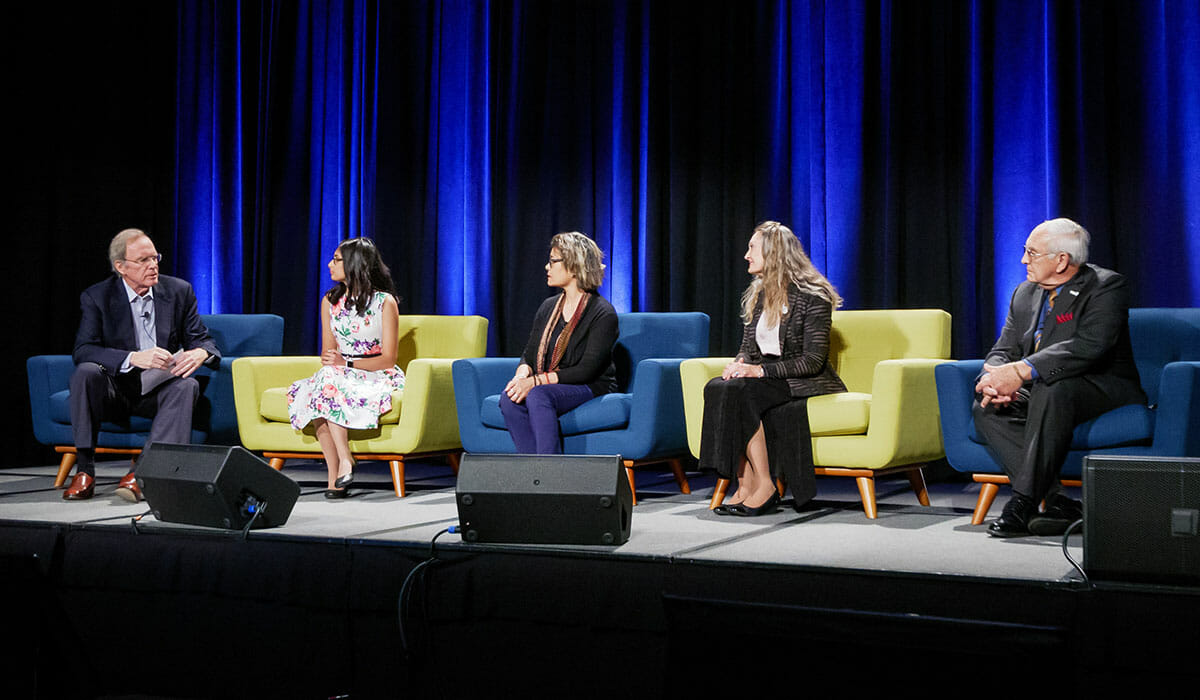
Gregg (far left) spoke with Daily Point of Light Award honorees at this year’s conference./ Courtesy Points of Light
But Gregg’s list of achievements and passion for service goes far beyond his work with Points of Light. He transferred his strength of finding the best in people he acquired with Points of Light to the business world, where he founded Personal Pathways, LLC. His company provides the early-stage enterprise technology product EffectiveTeams, which reveals a 360 degree view of an employee’s strengths and skills so managers and team leaders can see that individual as more than their resume and help build a team that works more effectively with each other.
Ann Hackett, co-founder of Personal Pathways, has known Gregg for over a decade and described him as an extremely humble man who “is always focused on what he can do for others.”
“Gregg has accumulated wisdom from a variety of different experiences. Experiences in the public, private, and nonprofit sectors. He has built businesses and organizations,” Ann said. “But I think his real light shines from his incredible intuitive understanding of human beings. He believes the best in people and seeks the best in people.”
John Gomperts, CEO of America’s Promise, reiterated Ann’s description of Gregg, adding that he is a “historic leader in the space for citizen service.” In January, Gregg was tapped to serve as new Board Chair of America’s Promise, an organization that provides children with “the five promises” they need to succeed. John remembered the moment former Chair Alma Powell asked Gregg to take her place.
“It was as if it had never occurred to him. He was dumbstruck, he flushed, and he just couldn’t find a word,” John said. “As obvious as it was to everybody else, it had never occurred to Gregg that Alma would tap him in that way. That tells you that Gregg, for a guy who’s all in, he’s never in it for himself.”
Alma Powell, who now serves as Chair Emeritus of America’s Promise, said Gregg’s dedication inspires her and “in working with him, he makes you a better person” just by being involved in the things that he’s involved in.
Although Gregg helped create the Daily Point of Light Award, those who know him say there is no one more deserving of the award than Gregg./ Courtesy Points of Light
Gregg also serves on the national board of City Year — an education nonprofit organization dedicated to helping students and schools succeed — and as chairman of The Fitzie Foundation that rewards outstanding girls and young women from four schools in the Boston area attended by his first wife who died of cancer.
All that know him say there is no one more deserving of the Daily Point of Light Award than Gregg. This includes Points of Light Chairman Neil Bush who said, “Gregg is a volunteer, a great husband and father, he’s a dear friend and an amazing point of light in the lives of so many.”
Making Birthdays Fun For Every Child, Oregon Volunteer Provides Birthday Kits for Low-Income, Homeless Children
Meet Daily Point of Light Award honoree Leah Haidar. Read her story and nominate an outstanding volunteer or family as a Daily Point of Light.
The cake and candles. Balloons, streamers and party hats. Celebrating another year of growth and experiences is an important milestone for any child, but hosting a child’s birthday party can be cost-prohibitive for low-income and homeless families. 20-year-old Leah Haidar decided to remove that financial barrier for families in need, so that all children have an opportunity to celebrate their birthday no matter what their family’s financial circumstances are.
Through The Party Project, an initiative created as part of her Girl Scout Gold Award, Leah and other volunteers fill boxes with birthday party essentials to make the day special for children and their families. For families struggling to pay expenses such as electric bills and medication, the Eugene, Oregon resident, currently studying abroad as a university student in the United Kingdom, says celebrations can be a financial strain. Through The Party Project, Leah has provided hundreds of birthday party kits to low-income and homeless children and their families to make birthdays a fun and memorable event.
What inspires you to volunteer?
I have been inspired to volunteer by my years as a Girl Scout. Volunteering is a way to gain valuable experience and give back to my community at the same time.
Explain what inspired you to launch The Party Project.
My Girl Scout troop has been hosting Halloween Parties for the families at the First Place Family Center shelter in Eugene, Oregon for a number of years, and it has been such a wonderful experience to give the children and their parents a safe place to celebrate the holiday and provide the necessary items for the event. I thought if the kids are so happy and excited for Halloween, how would they feel if they had an opportunity to celebrate their birthdays?
Describe your role with The Party Project.
I learned that families that utilize the Supplemental Nutrition Assistance Program (SNAP) can not use these funds to purchase non-food items, such as birthday party supplies. Given their limited resources, homeless and low-income families are really stretched financially. Using items purchased with grants I’ve received, we create birthday party kits that contain everything needed to have a birthday party for 8-10 people, including decorations, cake, candles, birthday cards and special treats. We’ve partnered with local agencies around our community that distribute the boxes to children or their family members.
Leah Haidar pictured delivering The Party Project birthday party kits to Womenspace, a local social services organization based in Eugene, Oregon./Courtesy Leah Haidar
Share one personal story with me from your volunteerism.
I had purchased about three shopping carts full of supplies at the Dollar Tree, and when the cashier asked what I was going to do with all of the stuff, I explained The Party Project, and how we provide birthday kits with no strings attached to families and children in our area. She started to cry when I was speaking with her, because she said when she first moved to town, she had stayed at one of the homeless shelters we work with, and that the kids living at the shelter had really appreciated the birthday boxes. It was nice to hear a story of someone who had seen the boxes in action.
Share how your volunteerism makes an impact on the lives of others.
I feel hopeful that my project will allow low-income and homeless families to have a greater sense of worth, that they are worth acknowledgement.
What have you learned through your experiences as a volunteer?
Small acts can build up and make a difference, and anyone can give something of themselves be it their time, experience, knowledge, etc.
How can readers help?
We work with several local social service organizations in our area to distribute birthday kits, including: Womenspace, Sheltercare, Hosea Youth, Catholic Community Services, St. Vincent De Paul’s and the Eugene Mission. Please visit our website to donate to The Party Project and learn more about how you can help.
Denver Man Dedicates Retirement to Serving Community With Volunteer Policing Program
Meet Daily Point of Light Award honoree Bruce Greiner. Read his story and nominate an outstanding volunteer or family as a Daily Point of Light.
When Bruce Greiner retired from his career in the military and then as an aerospace engineer, he saw his newfound freedom as the right time to contribute to his Denver community. This led to him joining the Denver Police Department’s volunteer policing program in 2012, and he has remained dedicated to the program ever since. Bruce serves as a volunteer coordinator for the department’s COP Shops, or Community Oriented Policing Shops, which support the police by assisting the public with issues that don’t necessarily need an officer present, such as taking general police reports and providing information to the community. In addition to the COP Shops, Bruce volunteers by serving at community events, attending neighborhood organization meetings to offer help, implementing various projects to help improve community safety, and much more.
Not content with just his role with the police department, Bruce also volunteers for the Denver Parks and Recreation Department, patrolling parks in order to provide information to visitors, and with the Office of Emergency Management as a member of the Civilian Emergency Response Team, training in emergency response measures should a disaster ever hit the Denver community.
“If you’re involved, you’re going to make the community better just by being involved,” Bruce said. “It’s just a given that at some point in your life, you should be giving back to your community.”
Describe your volunteer role with Denver Police Department.
I am a member of the volunteer policing program with the Denver Police Department. There’s about 250 volunteers with the Denver Police Department and I’m just one of them but I have a kind of a unique role within the Denver Police Department. I run what is known as a Community Oriented Policing Storefront, which is something that started in the 1980s by the Department of Justice that said if you can bring the community into the policing, things will work out better, you’ll get the community involved and it will help reduce crime in your community. One of those things was the idea that you open these Community Oriented Policing Storefronts where the police can interact with the residents within the population of the community. I work in Denver Police Department’s District 1 and I run two of these storefronts, which are actually placed in relatively high crime areas, or we call them hot spots. I am a volunteer coordinator as well as being a volunteer. I manage the volunteers that work in these COP Shops.
Above the COP Shop, I also assist the Denver Police Department in general. Last month, I helped with the interview team for potentially incoming police officers that would be going to the academy. I’m called on to do these special assignments that probably not an everyday civilian would do, but I’m being called because of my ability to understand what the police do and what the expectations for the police department are.
Why did you want to volunteer in this way?
I had kind of been pushed into retirement by a corporate restructuring, so I figured I was old enough that I could retire comfortably, there was no real financial issues or anything like that, but I really needed some structure in my life and I needed to find something I could do. I spent 22 years in the military and then became an aerospace engineer for another 20 years or so. This was my time to kind of contribute to the community. I saw Denver as a place where the police were really stretched and I started looking for opportunities there to help the police. I found this volunteer policing program as well as these Community Oriented Policing Storefronts. My first volunteer job at the Denver Police Department has essentially been the COP Shop, and I’ve stuck with it ever since.
Can you describe what services the COP Shop provides?
There’s some services we can provide really routinely. The routine activity is to have a volunteer in the COP Shop, myself or someone else, who can assist the public with issues involving the police that don’t require policemen. For example, we can take accident reports, we can take general police reports of crime activities. Not a crime in progress, but a crime that happened like someone stole your bicycle off your porch, so minor crimes, those types of things. You lost your wallet, those type of activities.
We also provide what we call graffiti supplies. This is a success story. Since the inception, we’ve always had paint available that people can use to cover graffiti. If you cover graffiti quickly, then there’s no incentive for guys to put a lot of art work in or work really hard to put up graffiti, because it gets covered right away and no one gets to see it anyway. It’s kind of a no-win situation for them. With the Denver Partners Against Graffiti, we established banks, neighbors can come in if they had issues with graffiti, they could get paint, cover the graffiti up. It’s not zero, but we have significantly reduced the amount of graffiti that we have in the district.
Another thing we do is community outreach. For example, once a month we go to a library that’s near us and provide people information about their safety. This is primarily people who are immigrants, refugees, those type of people, because it’s a night where they work on their citizenship programs and the library provides services to help assist them with that. So they understand what the police do in the United States, because they come from countries where the police are an entirely different animal, that are very distrusted, are believed to be spies on the public and stuff like that. The goal here is to make them understand that if they’re in trouble or they need help, that the police are someone you can call here and you can trust the policemen to give them the services you want. This whole community outreach activity is something we’re involved in.
We get involved in issues of public safety as a public safety representative for things, like improving pedestrian traffic along major thoroughfares, bicycle path safety type of activities. We actually hand out flyers for people who have at-risk behaviors or something like that. When they say at-risk behaviors, not that they’re doing a crime, but they are doing stuff that could put them at risk of someone taking advantage of them, like leaving garage doors open, those types of things. I think 80 percent of thefts from homes here, and we have a lot of detached garages, are by people leaving their garage doors open and someone coming in and stealing their bicycles. We provide that information to remind people to stay safe and take care of their property, register their bicycles, which is an activity we can do for them, and hopefully we can put a dent in these crimes of opportunity which is what almost all the crime is in Denver, a crime of opportunity.
What effect have you seen the COP Shops have on the community?
The COP Shops are in kind of a high-crime area. This is Denver, so it’s not like we have the violence that, say, Chicago has. We’re actually a relatively safe city, but what we’ve been able to do is provide information to the community on how to protect themselves. Our number one crime is what’s called theft from motor vehicle. For example, one of those things that counts in that crime statistic is people stealing license plates off cars, which believe it or not is a rampant crime. It’s very inconvenient to the owners, it causes issues with police and it causes issues with the Department of Motor Vehicles as well because now they have stolen cars with legitimate plates on them until they can get the plates cancelled and get the information out to the police. So we, along with the police, came up with the idea that you can take security bolts and attach one of these to a license plate and significantly stop the theft of license plates in the community. Believe it or not, we probably only reached maybe three percent of the total number of vehicles that operate in the district, and it significantly slowed down the theft of license plates. That is one example and that was essentially planned by the volunteers and executed by the volunteers, and has transitioned into a primarily police-provided service now. But the COP Shops also can provide that service to the community as well.
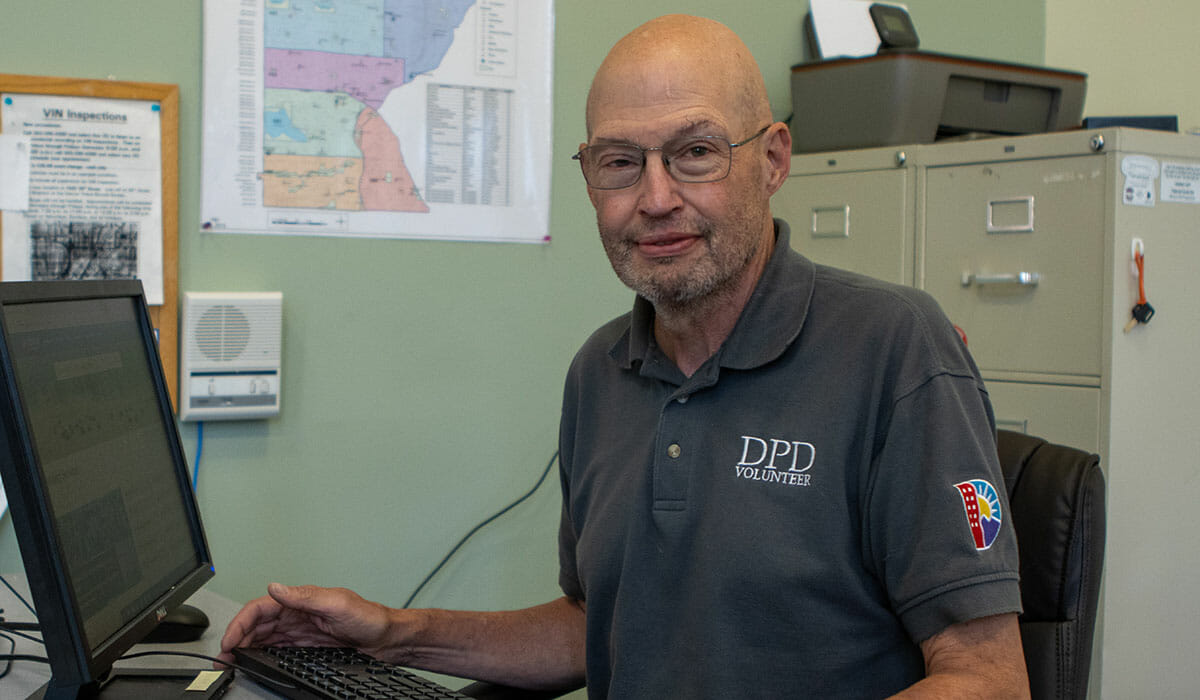
Bruce Greiner sits in the office of the Denver Police Department, where he has served as a volunteer since April 2012./Courtesy Bruce Greiner
Can you describe how you volunteer with Denver Parks and Rec Department and why you wanted to be involved?
Because I ride my bicycle a lot and walk the dogs a lot, when we walk through the park we have a uniform shirt we wear, and we provide information for people using the park, doing activities. We also discuss with people when they seem to be not sure what the rules are, you can call that violating the rules of the park, and kind of give them guidance on what they should be doing. Since we’re a courtesy patrol, we don’t really enforce it, we just talk to them about it and tell them what the rules are. Hopefully they take our advice and then when the rangers come by, the rangers don’t have to issue them a ticket or something like that. We have a major park right down the block from where we live so it’s something I can do pretty much everyday. There’s miles of bike paths that we can patrol. So any given weekend, we have 20 or 25 volunteers, including me, patrolling the parks to assist the park rangers who are very stretched, even more stretched than the police are.
Denver has an extensive park system and there is always this idea that there’s something wrong with the parks, either they’re not being policed enough or the rangers aren’t doing their job, and the rangers even admit they need help. They asked for this courtesy patrol activity to assist on that.
Can you describe how you volunteer with the Office of Emergency Management’s CERT team and why you wanted to join?
CERT stands for Civilian Emergency Response Team and what we are is a group of volunteers. We all have specialized training given by the Office of Emergency Management in communications, basic medical, incident command response, how to clear a building if there is a building collapse or an earthquake or something like that. We’re on call and there’s never been anything they’ve called out the CERT people for, it’s just that we are training in case of a worst-case disaster type of thing. In terms of impact to my volunteer activities, other than taking courses or getting refreshers on stuff, it’s very little impact, but if I was to be called up I would be in the instant command team and I would be assisting the Office of Emergency Management in remediation or recovery of people who had been impacted by the emergency.
CERT is just a natural extension. CERT is if the worst-case scenario comes to fruition in Denver. Every community should have a strong CERT team and my military training just fits within that role very well, that humanitarian response type of activity and some of my other activities, like I’m a ham radio operator so that gives me communication skills that would fit well within the CERT operation.
What’s been the most rewarding part of your work?
I think the most rewarding part of the work is running into people who when I talk to them, don’t realize what the police department can and can’t do, in terms of being able to fix what they perceive as problems in their community. They have to take a role in fixing, or helping the police fix, whatever the issues are they are seeing. We have organizations called Registered Neighborhood Organizations, RNOs we refer to them as. They are registered with the city. They generally have multiple meetings. Denver is nothing but these neighborhood groups all across the city. They bring up issues and we can facilitate that interaction with the police department. If they have a problem, we can go to the police if it’s a police problem or a city problem and have those addressed. Hopefully we can get to a mutual understanding of what the community needs to do and what the police needs to do. When we’re successful in doing that, I think that’s what community oriented policing was designed to do and I think that’s our metric for success as a volunteer with the Denver Police Department.
What do you want people to learn from your story?
If you have an interest in the community, there’s probably a volunteer position for you somewhere that will get you excited and get you involved. When you say public safety or first responders, the last thing you would think of is a volunteer position, but here I am volunteering with the Denver Police Department in a fairly critical role that helps the community in a broad way. So if anything, it doesn’t matter what your background is, it doesn’t matter what it is, if it’s something that interests you, there’s a volunteer opportunity out there for you.
Teen Volunteer Helps Feline Friends at Shelter Find Forever Homes
Meet Daily Point of Light Award honoree Coral Vidal. Read her story and nominate an outstanding volunteer or family as a Daily Point of Light.
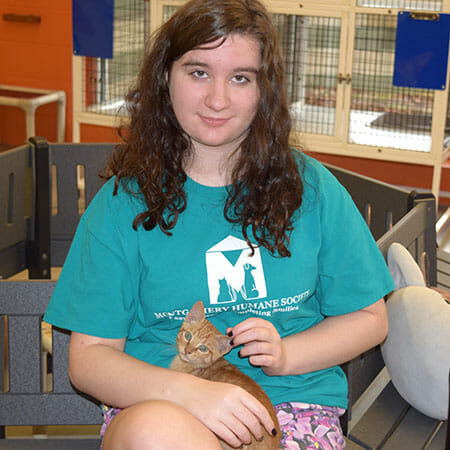
Coral Vidal has two pet cats of her own, and says she values the comfort and happiness that they bring to her life. Wanting to provide shelter cats a more permanent home and bring the happiness she’s experienced to other families, she decided to serve as a volunteer at her local animal shelter.
Currently a volunteer at the Montgomery Humane Society in Montgomery, Alabama, the 16-year-old focuses on helping cats be their happiest and best selves in the shelter environment so that they are strong candidates for adoption. Matching families with shelter cats and kittens that fit their family needs, Coral is serving animals in her community that need a good home and bringing the joy of furry friends to families looking to grow.
What inspires you to volunteer?
I am inspired to volunteer because I had extra time and wanted to contribute my time to serving others rather than just sitting around and doing nothing. It feels really good to make a difference, especially at an animal shelter, where you connect the animal with a person, and you know they’re going to have a great time with their pet.
Describe your role with Montgomery Humane Society.
I usually volunteer in the morning before the shelter opens to help clean the animal cages and get the main visiting room all set. I give the cats food and water, do a health check, make sure their litter is clear and give them blankets for their cages. Also, we do general maintenance, so if dishes or laundry needs to be done for the animals, we’ll do that as well.
Share how your volunteerism makes an impact on the lives of others.
Whenever children come in with their parents, the kid is usually just really excited to get their animal. Their joy is comforting to see, because you know that the cat will be going home with someone that has a personality match to theirs. Our volunteerism means that the cat won’t have to be in the shelter anymore, and they’ll get a more meaningful life. The cat will have a sturdy schedule and a routine and family. For the family or individual who is adopting the cat, they’ll have someone special to come home to every day after work or school.
Matching families with shelter cats and kittens that best match their family needs, Coral Vidal is serving animals in her community that need a good home and bringing the joy of furry friends to families looking to grow./Courtesy Coral Vidal
Tell me how you match cats to prospective adopters.
I will greet visitors at our shelter and ask if they’re interested in adopting. If they are interested, I’ll ask them what type of cat they are looking for, what approximate age (our shelter cats range in age from 6 months to 12-years-old), and personality-wise, what they are looking for. I will lead with personality because it is important to know whether an adopter wants a playful or snuggly cat. We’ll also talk about how compatible cats are with other people and children, and then we match the person and cat.
What’s been the most rewarding part of your service?
When you get to see people sitting at the shelter with a cat you know they’re going to adopt. They’re both super excited, the person and the cat, because they know that cat is the one. They’re sitting there happy, taking Snapchats and Instagram pictures.
What have you learned through your experiences as a volunteer?
I’ve learned that people care about making a difference and they want to commit their time to making a change. People aren’t just volunteering because they’re supposed to. They grow into their service and generally enjoy the experience.
What’s one way you hope to inspire others in your service?
If you have any free time, go out and try volunteering. Even if you are serving in a field you might not have interest in, you might be surprised – you could start to enjoy it. Try something at least once before you disregard the experience.
You have two pet cats. What are their names?
Yes, my two cats are named Jingles and Sherlock.
What do you do for fun?
(Laughs) I like to play video games but I don’t get much time to do so nowadays. Usually I just do homework. I also do debate team and I love to hang out at competitions with my friends.
Alaskan Teen Volunteers to Provide Food and Essentials to Families in Need with Blessing Boxes
Meet Daily Point of Light Award honoree Ashley Perry. Read her story and nominate an outstanding volunteer or family as a Daily Point of Light.
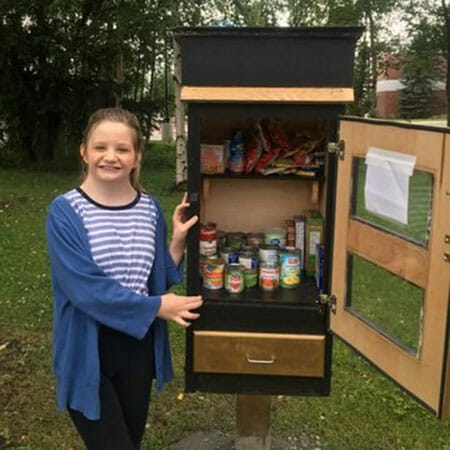
When Ashley Perry discovered that her classmates were sometimes showing up to school hungry, the 15-year-old Anchorage, Alaska teen decided to create the opportunity for neighbors to help one another, by providing community-donated food and essentials to families in need.
Installed in spots just outside schools within the Anchorage School District, Ashley’s “Blessing Boxes” are filled with non-perishable food items, hygiene products, and clothing like socks, hats and gloves. Available to anyone in need in her greater community, the boxes are styled after so-called library boxes, and are based on an honor system concept of “take what you want and replace what you can.” Intended for and supported by community members, Ashley is providing thousands of items to families in need across twelve boxes in her school district and counting.
What inspires you to volunteer?
I have Turner Syndrome, which is an immune deficiency. I’ve been on the receiving end of kindness and volunteering as I have faced my own health challenges, which inspires me to help others in return.
Describe your role with Blessing Boxes.
When I discovered that Alaska didn’t have any Blessing Boxes, I decided to bring them to my home state. I work with my school district to establish Blessing Boxes outside schools. We currently have 12 boxes throughout the school district, but eventually will have 45 boxes across the district. I also add donated items to the Blessing Boxes. The items in the boxes are mostly donated, it is an easy way for those who want to help others to donate non-perishable food and other items.
Ashley Perry decided to volunteer for her community when she heard that her classmates were sometimes coming to school hungry./Courtesy Ashley Perry
Share one personal story with me from your volunteerism.
A man came up to me and my dad as we were volunteering for Blessing Boxes, and thanked us for our service. This man said he relies on canned food that has been donated to Blessing Boxes. It felt amazing to hear that we were helping him, and it was confirmation that I’m doing the right thing by helping others.
What’s been the most rewarding part of your service?
Whenever I drop items off at Blessing Boxes and come back the following week, it makes me feel awesome knowing that all the donated items all gone, and people have a full stomach and warmer heads.
What have you learned through your experiences as a volunteer?
I’ve learned about the kindness of other people. Blessing Boxes involves kindness from others in our community, and is dependant upon people and companies giving back. Everyone has kindness inside of them, and I am still learning about how that kindness can grow.
What do you do for fun?
I’m a gymnast. I’m learning how to play the guitar, and I’m learning the main chords right now. I’ve learned how to play “Hot Cross Buns,” (laughs).
What’s in the future for your Blessing Boxes initiative?
I’m trying to get as many boxes established as I can in our community. We’re seeing how big we can get that number, not just in Alaska, but in other states, even outside our country, and see how many people can benefit from our boxes.