Teen Creates Nonprofit to Provide Accessible and Affordable STEAM Education to Kids
Meet Daily Point of Light Award honoree Danielle Boyer. Read her story and nominate an outstanding volunteer or family as a Daily Point of Light.
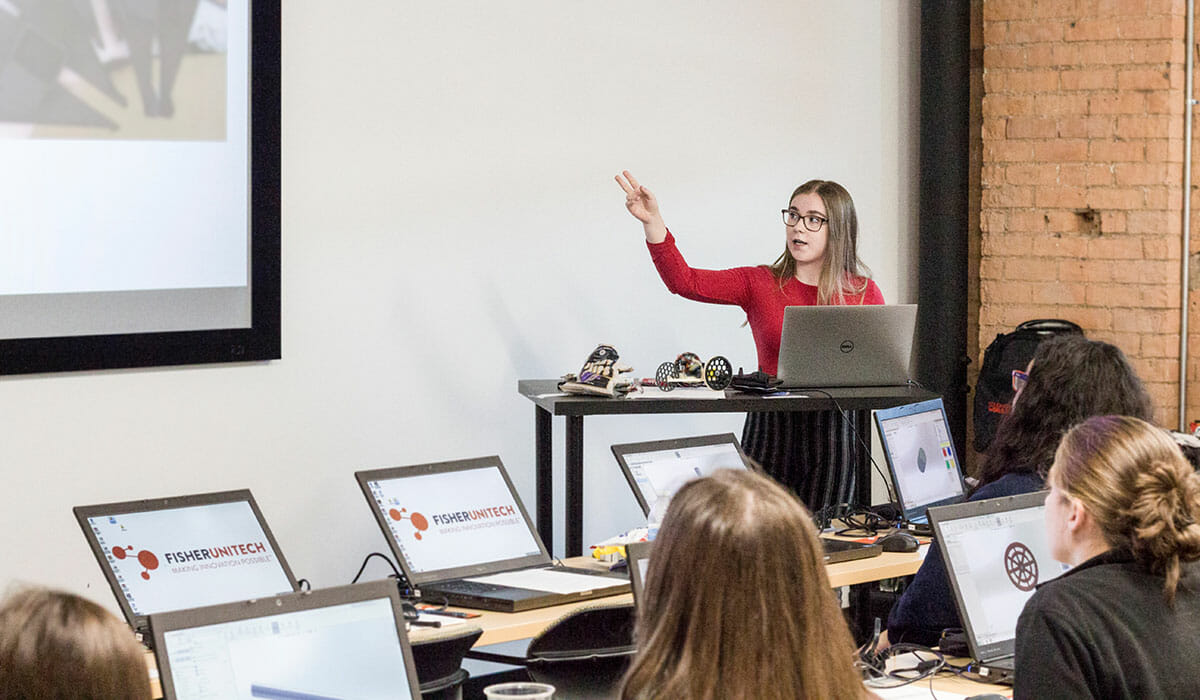
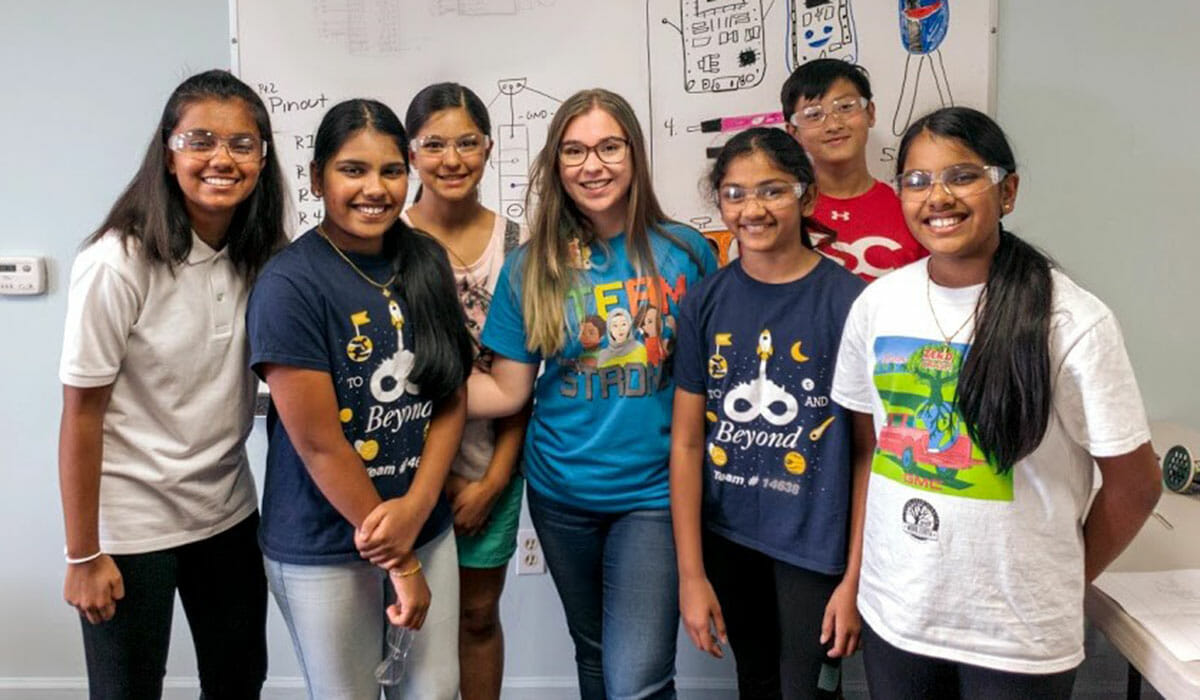
Danielle Boyer has taken her passion for STEAM education and robotics far beyond her own classroom and personal studies. At just eighteen, she founded The STEAM Connection this past January in order to provide accessible and affordable science, technology, engineering, art and math educational resources to kids ranging from kindergarteners to high school seniors in her Michigan area who would not have the best educational opportunities in those academic areas otherwise. To do so, she invented her own robot for only $18.95 that she has given to over 700 kids in the past year to take home and continue working on. She also self-published five STEAM educational books filled with depictions of diverse characters who are not normally seen in textbooks. Through The STEAM Connection, Danielle mentors 35 robotics teams, holds school lectures, hosts events, runs a blog to connect the international STEAM community, and distributes her robots and books to children all over, including at children’s hospitals.
Now studying both mechanical and electrical engineering at Wayne State University, Danielle hopes to build a career focused in robotics. She also wants to continue expanding The STEAM Connection, and hopes that by the time she’s in graduate school, she will have opened up a couple of STEAM labs where kids all around the United States can go to assemble robots.
“I really want to make this organization bigger and bigger so kids will continue having access to reduces that they may not even have had access or knowledge about before,” Danielle said.
Describe your volunteer role with The STEAM Connection.
I founded the STEAM Connection earlier this year. I wanted to provide more accessible and affordable science, technology, engineering, art and math educational resources for kids. I was really upset because I see a lot of kids not being able to learn about robotics, not being able to learn about engineering, not having access to good education materials because of how expensive everything is and that really stressed me out. Seeing that the STEAM educational world favored those with a lot of money bummed me out. I started out with inventing my own robot, named Every Kid Gets A Robot. It costs $18.95 and it’s gone to over 700 kids this year which is awesome. It allows kids to learn about everything from mechanical engineering, to electrical engineering, to computer science, in an affordable way. I also self-published five science, technology, art, engineering and math books because I wanted kids to be able to see examples of themselves, so very diverse characters learning and doing things in STEAM education — learning about the environment, doing math, programming, making robots, doing science experiments, all that kind of stuff. Those have gone to over seven countries which is amazing. I have a really great team of high school students, like one, Dakshesh [Daruri]. He is on our team and he helps with media and I have some college students on my team as well. It’s really awesome because we’re all students and we put on events, we put on classes. I think in the past year and a half of I’ve put on over 45 events and classes mostly by myself, which is crazy. I also distribute robots and books as well.
What gave you the idea to start The STEAM Connection?
I’ve been in STEAM education since I was 10. I was homeschooled up until into my sophomore year of high school and at my homeschool group as a child, we didn’t have a lot of leadership options as kids. I begged my parents to let me teach an animal science class and shockingly they let me. I created my own curriculum, I created lessons, I fed them way too much sugar, and from there on out I realized I really have a passion for STEAM education and engineering. Right now I’m actually studying mechanical and electrical engineering. I just knew that was what was right for me. I started from there mentoring robotics teams, putting on events, and I have not stopped since. Then earlier this year I realized there really was a need for accessible robots and accessible books so I decided to start my own organization and go [hard] with that and it has been really exciting since then. I’ve gotten to travel a bunch of conferences and take my robots. The robots are going to a Native American reservation soon. It’s been really, really exciting.
What effect has The STEAM Connection had on your students?
I intentionally target kids who are lower socioeconomic and environment [status] and also minorities in STEAM, which is mostly females. According to the Society of Women Engineers, female engineers earn up to 10 percent less than male engineers and there’s only 13 percent of engineers who are women, which is crazy low and one of the lowest of any industry. I really wanted to tackle that. Seeing the kids just gain confidence in themselves and their abilities, like going from ‘Someone told me I couldn’t engineer’ to ‘Oh my gosh, not only can I engineer, I can build my own robot and I can make my own projects and I can CAD — which is computer-aided design — and I can 3D print my own creations and I can actually make things happen.’ Giving kids that confidence and that ability to be able to make whatever they want is my favorite thing in the world and it’s really empowering.
Danielle Boyer holds a lecture or an event for young kids and teens once every weekend, on top of attending monthly STEAM conferences and attending college full time./Courtesy Danielle Boyer
Why was it important to have a robot that was under $20 and that students could take home?
The average educational robot costs $400-500. The average RC Car that you can get off Amazon usually costs over $100. That’s not accessible at all. It makes me so angry because STEAM education can be so isolating and to see kids not have equal opportunity just upsets me a lot. That’s why I decided to make Every Kid Gets a Robot and why it costs less than $20. It’s very exciting for it to be less than $20, especially because it includes the battery … and the 3D printing and all that. It bums me out a lot to see kids not necessarily have access to resources that other kids do. It can change an entire career and a future as well.
It’s been a huge learning curve especially teaching as I learn, but I’ve gotten to the point where hundreds of kids have gotten robots now and they absolutely love them. That is the most rewarding thing ever because they get to keep those robots and take them home and not only that, but they get them for free too.
I think robotics education is important starting out because it’s a hands-on way of learning many different topics in STEAM. When you do hands-on education, you’re going to have a higher chance of remembering something and being proficient in it. You get to learn things like how to wire a robot. Currently on the market, there isn’t a robot for sale where kids can learn how to actually wire a robot. So they get to learn how to wire it, they get to learn how to program it, they get to learn more mechanical engineering aspects of it, through computer-aided design, so all those things at once is why I think robotics education is crucial for every single child. Then from there, kids being able to take it home perpetuates continuous learning. They’re not just going to spend the time working on the robot and then be done with it, they get to take it home and they get to edit it, they get to decorate it more if they want to, they can upload new code to it if they want to, which the kids do. I send out feedback forms and 80 percent, or I think it’s higher than that actually, of kids continue to work on the robot at home. That’s really cool to hear. They add sensors to them if they have access to that, they reprogram it with their little micro USB, all that stuff. It’s really cool because I believe in being a consistent resource to my students, so having frequent touch points so that they’re able to become proficient in STEM topics or STEAM topics. With the robots, I believe that’s a very solid way of making that happen.
What kind of feedback have you gotten about your books?
I actually tested them with educators before I published them. They’re for K through three, and they actually tested them and actually saw if they liked them or not and helped me make tweaks to them. I got that feedback and then actually implemented, people love them, especially how diverse they are. I have a kid in a wheelchair, a kid with vitiligo, a kid in a hijab, everything. I bring them to hospitals too. I do hospital visits, especially with Dakshesh, and that’s been really rewarding because seeing a kid’s face light up when they see a kid who looks like themselves, when they maybe have never seen an illustration of a kid who looks like themselves before, that means the absolutely world to me. That feedback and the students’ reactions, but also what educators and parents have had to say about how much they love them, has been amazing. It was worth all of that illustration. It took a really long time. There’s 100 pages and I illustrated 88 out of 100 pages of the books and each one took like six hours. It took a really long time but it was one of the most rewarding projects I’ve ever done.
Why did you want to bring the books to hospitals?
I feel like I don’t have too much experience with a lot of family members who live in the hospital, but my sister does have a lot of health problems and I just know how isolating that can be. I wanted to bring materials that the kids would enjoy and benefit from and potentially even learn more from. Being able to to do hospital visits and bring the books and the robots and stuff is really awesome because you just see how happy they are to be able to create. They love crafts, they have craft days at a lot of hospitals, at a lot of children’s hospital especially, all the time. To be able to contribute to that especially in a more technical way and broach subjects that they kids may not have even had exposure to is really awesome. It’s also something they can do usually, if they have physical limitations they can still work with my tiny little robot and they can still color coloring pages a lot of the time.
Danielle Boyer, right, teaches students attending The STEAM Connection classes how to solder./Courtesy Danielle Boyer
Are there any future partnerships, programs, or events that you are excited about?
I actually just got back from something called the American Indian Science and Engineering Society’s national conference. This happened last week but I’m really excited about it, so I’m going to mention it. I had a booth where kids got to assemble my robot, a station with illustrations from my books, and 3D prints I got from my students as well as 3D prints I did myself. I also gave a lecture on accessible STEAM resources and I did my very first research presentation. This was in Milwaukee, WI, and as someone who is Ojibwe, it meant the absolute world to be able to go and support my community. It’s my first year in the American Indian Science and Engineering Society, and it was so cool, especially seeing everyone assemble the robots and get really excited about it. I even got to drive around the robots with little kids who were dressed up as astronauts. It was the best event I’ve ever went to in my life. That was really awesome and I just got back from that.
I’m really excited for the competitions to start. We’re going to start having some expositions for the younger robotics teams, where kids will show their projects that they’ve been working on, their robots that they’ve been working on. They’ll be competing, showing poster presentations. I am so excited for that. That’s coming up in a couple weeks.
What’s been the most rewarding part of your work?
Working with the kids, 100 percent. I have an all-girls robotics team, two actually. My elementary school kiddos, they’re called Astro Bears, and as I said are an all-girls team. I get to come and visit them and hang out with them and teach them about STEAM and just seeing how excited they are, and seeing their contributions to some of the work I’m doing like the robot, has been so rewarding because we get to work together on stuff. It’s not just me teaching at them, it’s us actually working together. To see how brilliant they are and how enthused they are to potentially pursue a career in STEAM one day is the most rewarding thing ever.
Why do you think it’s important for others to give back?
I feel like volunteerism is what shapes a community. I feel like no one knows a community better than the people who live in it and they know how to suit the problems that they see. So for me seeing a lot of problems with accessibility and affordability, I was in STEAM education, I was able to target that, and I was able to say ‘Hey, I know how to tackle that and I know exactly which groups of kids I’m going to work with, and I already know the people in the school system and I know how I’m going to approach this.’ I feel like when I live in a community and know the people, you have a higher chance of being able to make change. I think making the change you want to see is really important. It’s not just about stating a problem, but also doing something about it too.
Kentucky Teen Serves Homecooked Meals and Essentials to Homeless with “YaYa’s YES!”
Meet Daily Point of Light Award honoree Ayiana Day. Read her story and nominate an outstanding volunteer or family as a Daily Point of Light.
Noticing that junk food was being provided to the homeless in her community, Ayiana Day decided to find a way to offer healthy and balanced meals to those in need.
What started as a small project to provide fresh food to the homeless has grown into YaYa’s YES!, an initiative the 17-year-old Bowling Green, Kentucky teen offers by serving dozens of homecooked meals each week. Discovering that a greater need existed in the community beyond serving healthy food, Ayiana also provides essentials including personal care items and clothing. Committed to the belief that community is family, Ayiana, who is autistic and faces ongoing health issues, is overcoming her own personal challenges and inspiring others to extend inclusivity and friendship to hundreds within her community.
What inspires you to volunteer?
Imagine being homeless and feeling like you’re nothing. Helping people look and feel their best inspires my volunteerism. I love making sure they are well-fed and have clothes and personal care items.
What does the name YaYa’s YES! mean?
My brothers couldn’t pronounce my name when we were younger, so they called me YaYa. YaYa’s YES! means that we are supporting friends that come in all shapes, sizes and abilities. Our community is all one big family, and we all have challenges that we can help each other cope with.
Describe your role with YaYa’s YES!
As the founder of YaYa’s YES!, I cook the meals we serve each week in our kitchen, my mom will assist me with the cooking. In addition to feeding people weekly, we provide them with essentials including personal care items, clothing, blankets, snacks, and more. I use my pocket money to buy things and we also receive donations from people to help purchase items. I recruit volunteers to help us with these weekly events.
Your volunteerism with the homeless is personal for you. Explain.
Our adversity connects us. In addition to being autistic, I had a stroke and developed seizures earlier this year. I am overcoming my own challenges in order to make sure the homeless in my community get a good meal and the things they need to maintain some level of normalcy. Me and the homeless community, we’ve both gone through challenges and we’re both working to get through to the other side.
Ayiana Day has fed homecooked meals to hundreds of homeless individuals in her community through YaYa’s YES!/Courtesy Ayiana Day
Share one personal story with me from your volunteerism.
This one gentleman named Chris, he’s been one of our regulars to feed. He comes every week and no matter what, he always shows up with a smile. He’s always super excited to see us. We always do our little dance moves together when he arrives, it’s fun.
What’s a saying you live your life by?
I can do it.
What’s been the most rewarding part of your service?
The connections you make with these people we are feeding. I’m proud that I’m able to help people in need because I don’t like a lot of attention, I like to fly under the radar. I know I’m helping people and the effort doesn’t have to be all about me.
What have you learned through your experiences as a volunteer?
I’ve come more out of my shell. I never used to be able to go up to people and ask if they wanted food. I have autism and am socially awkward. Serving others has helped me be more outcoming and be welcoming.
When you’re not busy with school or volunteering, what do you do for fun?
I love to travel. Sports is also one of my big things, I’ve done sports with Special Olympics for a long time. I really enjoy the friends I have. I also horseback ride.
How can readers help?
Please visit our Facebook page for more information about how you can help.
South Carolina Teen Scores Double-Double Volunteering for Kids in Need
Meet Daily Point of Light Award honoree Adom Appiah. Read his story and nominate an outstanding volunteer or family as a Daily Point of Light.
Basketball is everything to Adom Appiah and he’s in the game to win. But for Adom, the game doesn’t begin and end on the basketball court. He believes that sports can be game changing beyond what happens during the four quarters of play. Adom founded Ball4Good in 2016, a nonprofit organization supporting communities through sports. His message of support and positivity play out on the pages of two books he’s written, Kids Can Change the World and Bouncing Back from Failure. A portion of the proceeds from the book sales and the funds raised from Ball4Good’s celebrity basketball games have benefitted Boys and Girls Clubs of the Upstate and other organizations. To date Ball4Good has raised more than $70,000 for 16 nonprofit organizations in his community – a winning season to be sure.
Describe your volunteer role?
I have the privilege of helping children and young adults in my community. With the help of my team, I organize sports events and drives. My organization, Ball4Good, is charged with supporting communities through sports. Through our operations, we involve youth in community service and leadership.
Why is it important to you to support your community in this way?
I believe that sports truly brings people together.
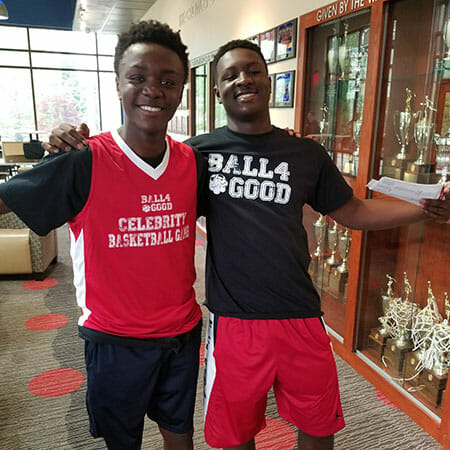
Adom Appiah and his friend Kevin volunteer at the 2018 Ball4Good Celebrity Basketball Game./Courtesy Adom Appiah
What’s the most challenging aspect of your volunteer service?
The fundraising and grant writing/review process is challenging. Some businesses or foundations deny our fundraising requests without carefully considering our application. Also, in some scenarios, since Ball4Good is mostly run by youth, some people underestimate our capabilities. When we’ve sent out requests for grant proposals in the past, we received halfhearted proposals from some organizations that doubted the skills of the grant review committee.
Why do you think it’s important for others to give back?
It is a blessing to give. We build better communities by sharing our talents and resources with others.
What’s been the most rewarding part of your work?
Meeting the kids who are a part of the organizations that we’ve helped is priceless.
What have you learned through your experiences as a volunteer?
I’ve learned to appreciate the opportunities that I’ve been provided. I hope others will rise to the challenge to provide youth with tools to succeed.
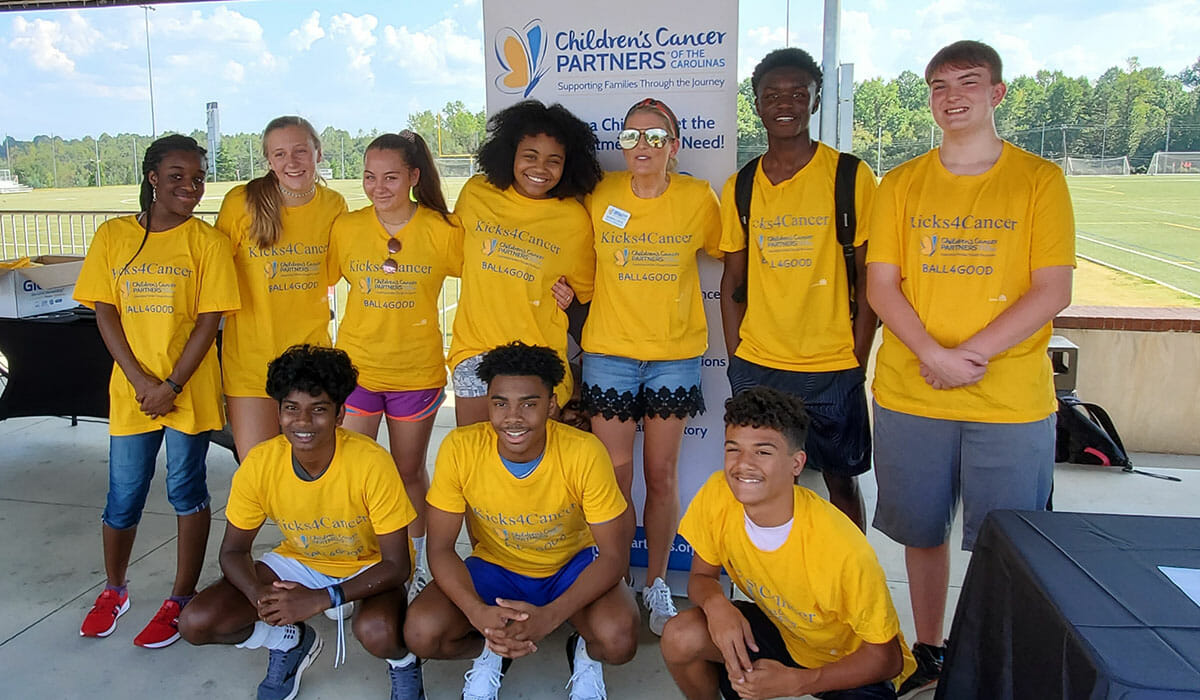
Adom Appiah and Ball4Good volunteers with Children’s Cancer Partners Representative at Kicks4Cancer game benefitting Children Living With Cancer./Courtesy Adom Appiah
Are there any future partnerships, programs, or events that you are excited about?
I hope to recruit some big-name celebrities to partake in our April 2020 celebrity basketball game.
What do you want people to learn from your story?
I want them to know that success starts with believing in yourself. Once you believe in yourself, it’s easier for others to believe in you.
MADD Volunteer is Living Proof of DUI Dangers After Surviving Deadly Highway Crash
Meet Daily Point of Light Award honoree Steve Fleming. Read his story and nominate an outstanding volunteer or family as a Daily Point of Light.
Steve Fleming remembers everything but the impact of the highway crash that almost took his life. His son seated in the passenger seat, the two were driving on a Saturday afternoon when they both noticed a car headed in the wrong direction, aimed like a weapon straight at Steve’s car. Steve had just 3.8 seconds before impact to try to maneuver out of the way of the drunk driver, but the aftermath of the crash had much more lasting and devastating effects.
Steve’s heart stopped beating on the ambulance drive to the hospital, and doctors told his family that they didn’t expect him to survive. It total, 68-year-old Steve spent more than 5 months in the hospital, underwent 10 surgeries and racked up millions of dollars in hospital bills.
After his harrowing personal experience, Steve dedicated his life to serving as a volunteer with Mothers Against Drunk Driving (MADD). A current volunteer for Southwest Florida MADD, the Fort Myers, Florida resident serves as a victim advocate and speaks with first-time drunk driving offenders, sharing his story with thousands, as well as supporting law enforcement officers and EMS employees through drunk driving education and training.
What inspires you to volunteer?
My volunteerism is inspired by this life-changing trauma and the support MADD provided to myself and my family in its wake. I didn’t know anything about MADD or their mission before the crash. I serve because if I can convince just one person to not drink and drive, that’s a winner.
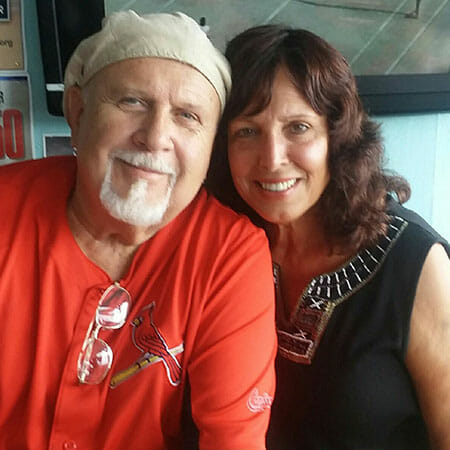
Doctors told Steve Fleming’s family they didn’t expect him to survive after a drunk driver crashed into his car on the highway. His wife, Cindi (pictured), kept a journal as he battled for his life in the hospital./Courtesy Steve Fleming
Describe your role with Southwest Florida MADD.
As a victim advocate, I share my story with DUI offenders, and have connected with thousands of people over the crash and my recovery in the time we’ve lived in Florida. I’ll speak once a month to a large group of DUI offenders, and my efforts are worth it if there’s even one person in the audience that gets the message, and I can possibly save lives. I speak at MADD events, I volunteer at checkpoints and other law enforcement events, and I’ll also speak to EMS employees and newly hired patrol police officers.
Share one personal story with me from your volunteerism.
Boy, you talk about life-changing, the crash didn’t just leave me with physical scars. It affected my entire family. We had to leave all our family and friends in St. Louis, Missouri and move to Florida because my health was deteriorating in the cold weather following the crash. And just as I have my perspective as the victim, there’s the other side. I volunteer at MADD with a young lady named Amanda, who speaks about her experience on the other side of the fence, as a drunk driver. She was drunk, wrecked her car and killed her best friend, and went to jail for four years. She now speaks to offenders to try to make an impact. We are making a difference through our shared experiences: I’m the victim, she’s the perpetrator.
What saying do you live your life by?
I always tell my grandkids, make good decisions. If you’re getting ready to do something and that little voice inside your head tells you not to do it, don’t do it.
What’s been the most rewarding part of your service?
About two years ago, I spoke to EMTs in Fort Myers, Florida. I told my story, and they stood up and gave me a standing ovation. After I was done with the speaking event, I went to each one of them and shook their hands. It just made me feel so good. Our first responders are always under a microscope, and they don’t get much credit, but those first responders who showed up at the crash site saved my life. I’m so thankful for their service.
Steve Fleming pictured at a DUI checkpoint. Steve credits the first responders who showed up at his accident scene with saving his life./Courtesy Steve Fleming
What have you learned through your experiences as a volunteer?
I knew about MADD but its purpose didn’t mean anything to me before the crash. Now, every day on this earth is a blessing because I shouldn’t be here. It was very hard for me to share my story the first couple of times, I actually cried. But talking about it seemed to help me process what happened. God had a plan for me, and talking to others about my experience doesn’t just help to prevent DUIs, it’s personally healing.
Red Cross Volunteer Helps Those With Disabilities During Disasters
Meet Daily Point of Light Award honoree Anat Habani. Read her story and nominate an outstanding volunteer or family as a Daily Point of Light.
While watching Hurricane Harvey devastate parts of Texas and Louisiana in 2017, Anat Habani knew she wanted to do something to help. She immediately put in an application to the Red Cross and was soon deployed to Harvey-effected areas to distribute emergency supplies. Two years later, Anat not only continues to volunteer for the Red Cross, but has become their Lead Volunteer for Disability Integration in her Los Angeles region.
During natural disasters, Anat helps to assess physical shelters for accessibility for affected community members with physical, mental or cognitive disabilities, as well as coordinate any shelter modifications or items that may be needed, ranging from walkers or wheelchairs, to sensory kits or infant supplies. While she’s not out on disaster relief or preparing for future disasters, Anat is on the Disaster Action Team for her Los Angeles communities to support those whose homes have been affected by house fires or other accidents. She also volunteers for Sound the Alarm, a Red Cross campaign to install fire alarms in vulnerable communities and educate residents about fire safety. Between all that she does, Anat is volunteering for the Red Cross two to three times in a regular week, and during disasters is out on relief for two to three weeks at a time.
Describe your volunteer role with the Los Angeles Region of the American Red Cross.
Currently I am the Los Angeles Lead Volunteer for Disability Integration in the L.A. Region. The Red Cross is committed to the fact that everybody is welcome in their shelters. For that, we needed to have disability integration — integrating everybody, providing everybody with the ability to be in a shelter and to actually have access ability to all the services physically, mentally, everything. If you are in a wheelchair, if you have a walker, if you are elderly, you have everything you need physically. If your English is second language, if you’re pregnant, if you’re an infant, if you’re homeless, if you are cognitive and mentally disabled, deaf people, blind people, everybody, we want for them when they come into our shelter to be able to access everything. So this is what we are preparing in blue sky [Red Cross term for when a natural disaster is not occurring] to provide, and when I go out on disaster relief throughout the United States that’s what I’m striving for.
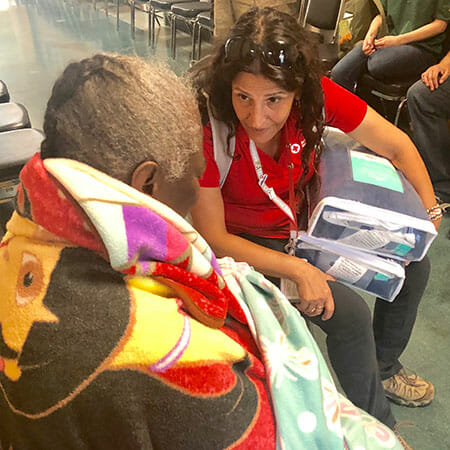
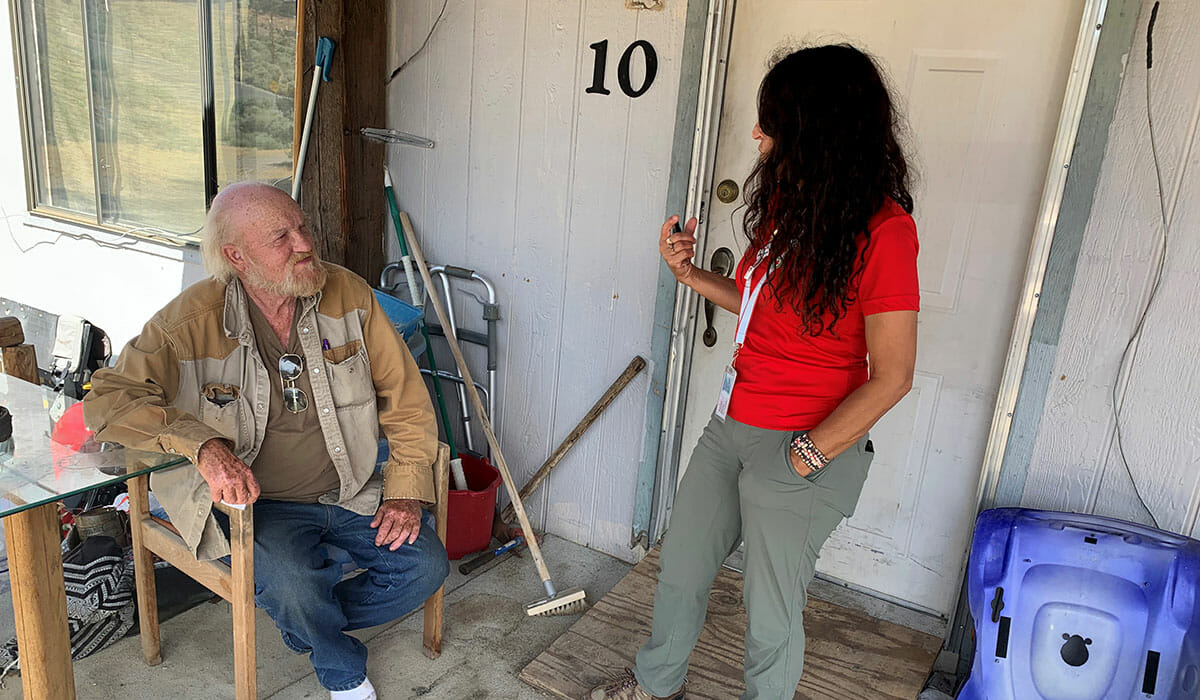
Anat Habani, right, has volunteered for the Red Cross for over two years./Courtesy Anat Habani
What do you do when you go out on disaster relief?
When I get there, my specific task is to actually assess the physical shelters for accessibility and if they are not, we do our best to modify what we need to make sure people feel comfortable. If I need to modify a ramp or make sure we have accessible showers, accessible bathrooms, offer phone, signage, interpreter if necessary for languages. We establish all that in anticipation of people coming in from all walks of life, and being able to understand and access everything. We start with the physical place. If I need a modification, I do it through Red Cross or [through the] counties. Every state has a different way they do things. If necessary, I recommend a different place to be if there is [another place available]. Sometimes in disaster areas, we have what we have. If something is isolated and we have only this place to house, then we do everything we can to modify to make sure everybody has equal accessibility for everything. If I need to get walkers to help, if they have it, I go to our partners and ask for a donation. If we need a shower chair, if we need to buy head shower to modify for somebody who is sitting can use the shower.
This is the physical sense of the things. We also provide kids and adults on the spectrum with sensory kits to calm down. I create a quiet room if I can in the shelter, to have people who are anxious to have a place to just come down and cool down. … A sensory kit is a weighted blanket that helps you feel more protected. It’s comfortable, it reduces anxiety. It helps a lot for adults and kids who are on the spectrum, and people who suffer from panic and anxiety. When you’re in a shelter, you can be among 100 people. When you go into a disaster, it’s pretty chaotic, because you can imagine, people are not in their home, not in their comfort. Also in the sensory kit, there’s the weighted blanket and we provide headphones and a squeeze-ball.
We make sure that there is no separation in our shelter between any kind of population. It’s inclusion, integration of everything. We do provide special medical cots when necessary for people that need more support. I do make sure when I get to the disaster area, that I know my partners, what they can provide, what they can do to help, and my state government zone, what they can help us with and provide, just to make everything easier for everybody and better accessibility. We have a contract with a video phone [company] that we can provide for deaf people, we have good signage for languages. It’s a lot of work and every disaster is really different, so it requires from me different things in every different state, county, everywhere, because the population is different. I can help with providing transportation so our client will be able to go to doctor appointments or anything that they need. It’s a big effort on top of everybody and I’m just there to coordinate it and help, because we do have mental health and we have nursing [specific Red Cross volunteers], so those are different things but we are all cooperating, coordinating, communicating with each other.
Can you describe what you do for Red Cross when you’re not out on disaster relief?
Sound the Alarm, we do it in our communities all over the L.A. region and the Red Cross does that everywhere. It turns out more people die in house fires than every other disaster. The Red Cross is working on making sure that we as volunteers donate the smoke alarm and we educate about how to exit a fire. We go through a community and knock on doors sometimes, or sometimes there’s a meeting, and say ‘Hey, we are Red Cross volunteers, it’s for free, we can install it if you like.’ We go to vulnerable neighborhoods and make sure that’s what we do and everybody has a safer home. I do volunteer when I’m able and I can, usually on the weekend and sometimes they ask me to do it during the week if I have time.
The Disaster Action Team is where everybody can go in and take those courses that are necessary and then we are volunteers. We put ourselves into a 12-hour shift, and if there is a disaster they call us and we get ready and we go out. Sometimes they just call me because they know if I have time I can go even if I don’t have that shift, per se. We go as a team. We assess the ability to live in that house. We get a call usually from the fire department for the team to come in. The last one I did was I think about ten minutes away. It was a house with a mother and four children. A fire caught up in the attic and we came in, we provided them with blankets, with snacks, with water. Then we see if there is no insurance and if they need, we provide them with money for a hotel and livable expenses. We do help them for at least the first, second night, to get themselves into someplace before insurance kicks in, relatives. We offer our ability to listen, and if a warm word and a hug is necessary, we’re there. Sometimes it’s necessary to open a shelter because it’s 80 residents in one apartment, so we do open shelter. We get people to do the sheltering and make sure people get to the shelter and have what is necessary until they can actually access their apartment or if not, until the homeowner is able to continue to provide them with a place to be. Those are the main things. If there is a need in the warehouse, if we need to open a trailer and just go through that, clean cots and do things, that’s what we do.
How did you first get involved with volunteering for Red Cross?
[2017 Hurricane] Harvey. I was sitting at home, I was just done with my work for the night, I was tired from working, and I saw Harvey. I always wanted to be a volunteer. When I saw that, right away I put in an application. I was able to deploy to Harvey for distribution of emergency supplies. We drove through the community providing necessary supplies in Harvey. It was a great experience to be able to be there in the community, and see how we were able to provide the necessary items, and the relief on people’s faces when they saw us around. It was a different kind of experience, that disaster relief. That’s what started [volunteering.] I did sheltering, and in [2017 wildfires] Thomas Fire, I did shelter and I worked logistic warehouse, a lot of other roles. Right now I’m concentrating on disability integration.
Anat Habani, right, helps integrate those with disabilities into shelters during natural disasters for the Red Cross./Courtesy Anat Habani
Why is disability integration important to you?
I went through a serious earthquake here in ’94 where I live. I’m always thinking about the fact that even myself … My vision is not the best, so just imagine me getting to a shelter without my glasses, my contacts. In a chaotic situation, you would run out and you might not be able to get to your home to get all these things … I’m a lot more sensitive and I am a social worker at trade, so I’ve been working with the population of elderly and disabled for 15 years before [volunteering], and it’s something very close to my heart. I know the limitations and I know how difficult it is on a daily basis. Just imagine being in a disaster. Some of them are out of their house without their walker, without their wheelchair, without any assistive device. It is very difficult to watch people go through disaster, and I strive to make sure when they come in that we are able to support them.
What’s been the most rewarding part of your work with the Red Cross?
I think being in contact with clients and being able to see some relief on their face when you’re in contact with them, providing what they need. Just being there to listen sometimes. … For me, the rewarding thing is just seeing people, being able to alleviate some of their suffering. That’s what counts for me. Trying to give them a feeling of home away from home, whatever it is, because I know from when I went through a disaster how important it is to have that support. This is what’s important for me. I’m not going to be able to rebuild their home, but alleviating their suffering in the moment.
What have you learned through your experiences as a volunteer?
It’s a whole different ball game of working in a natural disaster. I live in my neighborhood and you never know when your neighbor experiences a fire. I also do what we call Disaster Action Team when I’m not on a disaster [call]. We provide to our region in case of fire or any disaster that happens to any of our neighborhoods. The scope of the Red Cross, I’ve got to tell you I was surprised myself, because when you live life and you work day in and day out, you hear about things but you’re not in tune. Like, ‘Oh, ok, their house is burned.’ Not even just the big disasters, I’ve already went through ten of them in the state with disability integration. The day-to-day when I’m called in for a disaster call for somebody whose house is burned, somebody who had a truck just went in and destroyed two apartments and forced the rest of the residents out of their home. I just think about how life can change in a moment and how much help we have.
The one thing I was impressed by — my first deployment in Harvey, when we were sitting there waiting for our assignment, I looked around me and I asked ‘Where are you from, where are you from?’ [I was] not just impressed, but so proud to see people were there from all over the United States. All walks of life, all ages, coming in ready to help. You live in Los Angeles, a big city, you live your life, you hear about the Red Cross but you don’t understand the scope. Seeing the spirit of the people coming together to help, it’s just something that gave me a lot of hope in life. It’s just amazing.
I learned a lot about how to work and cooperate and understand. Every time I go into disaster, it’s a different state, different population. My ability to learn more about every place and how to be able to help or be there for them, it gives you a lot more flexibility in life. Understanding really the suffering of other people, no matter what age, what culture, where they came from, how much money they have, what socioeconomic status they are. When you have a disaster, it’s so humbling just to witness that. There’s so much in the past two years that I’ve been exposed to and so grateful to learn. Even things about myself. It’s a great life experience.
What would you want people to learn from your story?
I want people to be kind to each other, especially when there is a disaster. People need to know that volunteering is something that is important to our society and hopefully a lot more people will be able. It doesn’t matter where, you can volunteer anywhere. You can volunteer an hour a week, you can volunteer a day a month, a half a day a month. Not just with the Red Cross, everywhere. Apathy is the worst enemy and I think by volunteering, you are somebody who cares, who gets involved as much as you can. Everybody can do their share. There is so much need out there and I think sometimes people, they don’t know. You can go anywhere, you can volunteer with animals, anyway you want, you can work with children, you can volunteer with adults. Even within the Red Cross, there is so much to do. You don’t have to be in disaster relief in order for you to volunteer. I think for us as a community and young people, I would love them to know that volunteering somewhere will enrich your life and you will actually feel a part of the community. Because we are a community. Without it, we are pretty much detached. So I’m hoping that a lot more young people will do that. It doesn’t have to be in the scope that I’m doing, it can be little things.
Cycling Pro and Two-Time Cancer Survivor is “Spokes of Hope” for Patients
Meet Daily Point of Light Award honoree Cindi Hart. Read her story and nominate an outstanding volunteer or family as a Daily Point of Light.
As a nationally-ranked cyclist and Olympic hopeful, Cindi Hart was trained to compete like an athlete and beat the odds. When Cindi was diagnosed with breast cancer in 2004, and then launched a second battle against the disease just four years later, the Indianapolis, Indiana resident knew she needed to champion the fight against cancer for others in the midst of their struggle.
Founding Spokes of Hope in 2009, the 57-year-old registered nurse empowers cancer survivors wearing many hats: as a survivor, advocate and friend. Serving patients nationwide by establishing critical connections with “cancer buddies”, Spokes of Hope supports patients with cancer survivors in remission. Emphasizing that cancer isn’t contagious, but that hope is, Cindi is changing the way cancer is perceived and cycling towards the future to empower, unify and inspire cancer survivors.
What inspires you to volunteer?
When I was diagnosed I was really angry, because in my map, this wasn’t supposed to happen. When I was recovering from a double mastectomy, I remembered that’d I’d said a prayer just two months before I found the lumps in my breast. I’d said, “Lord, I give myself to you completely. Please use me as your instrument.” I understood my diagnosis at that point, that this service is what I’m supposed to be doing. You can’t write God a blank check and not expect him to cash it.
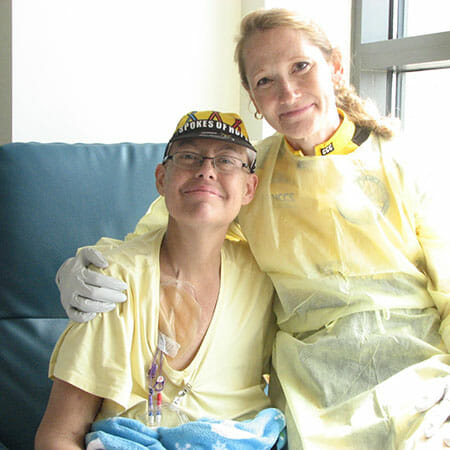
Cindi Hart pictured visiting a patient. Spokes of Hope volunteers visit cancer patients in hospitals to support and inspire them./Courtesy Cindi Hart
Your volunteerism is personal for you. Explain.
I feel like my service is why I’m still alive. That’s why I went through what I went through, so that I can help other people. It’s a huge mission, and one that I’m very passionate about.
Describe your role with Spokes of Hope.
I am a founder and current president of Spokes of Hope. A lot of our service is people power. We are advocating for cancer research, visiting patients in treatment, raising awareness and connecting the newly diagnosed with “cancer veterans” – we call them cancer buddies. We have dozens of volunteers in Indianapolis and around the country that contribute where they can. Helping a current patient can be as simple as escorting them to an appointment. You never want to go alone to your first oncology visit.
How does your passion for cycling intersect with your service?
We hold annual bike rides to raise funds and support for cancer research and patients. In addition, we do a community ride which means we cycle to visit patients in treatment. As a nurse, I’m very comfortable going into hospitals. We visit patients in our cycling uniforms, and it’s miraculous when survivors get together. It’s so uplifting. You can be instant friends because we’ve been down that same path before. We know the pain and the agony of cancer, and we don’t dwell on it. We are helping others in crisis.
As a cancer survivor, what’s your suggestion in talking with someone newly diagnosed?
I have been in remission for eleven years now. We don’t want pity, we want our lives back. The worst thing you can do is say, ‘I am so sorry,’ because to me, that means they just closed the lid on my casket. It’s better to say to a friend, family member or colleague: ‘You have cancer, that stinks. What are we going to do about it?’
Share one personal story with me from your volunteerism.
Our first year, we rode our bikes from Indianapolis to Washington, D.C., visiting cancer centers. During the ride, we met a woman who said that her best friend was going through treatment, and was scared to death. She asked if we’d go visit her friend to provide her some comfort. The woman was in isolation, but we decided to sing her a song from a distance to lift her spirits. Somebody suggested ‘You are my Sunshine’, and to spell love with our fingers using the numbers 1, 2, 3. Watching us from the porch, the woman was a moon face from the steroids, bald, and wearing an isolation mask. She was visibly affected by our presence. Her friend came to us crying, thanking us for our priceless gift of love when she didn’t know how to help her friend. A year later, we heard from the woman – she was in remission, and joined us on our next bike ride.
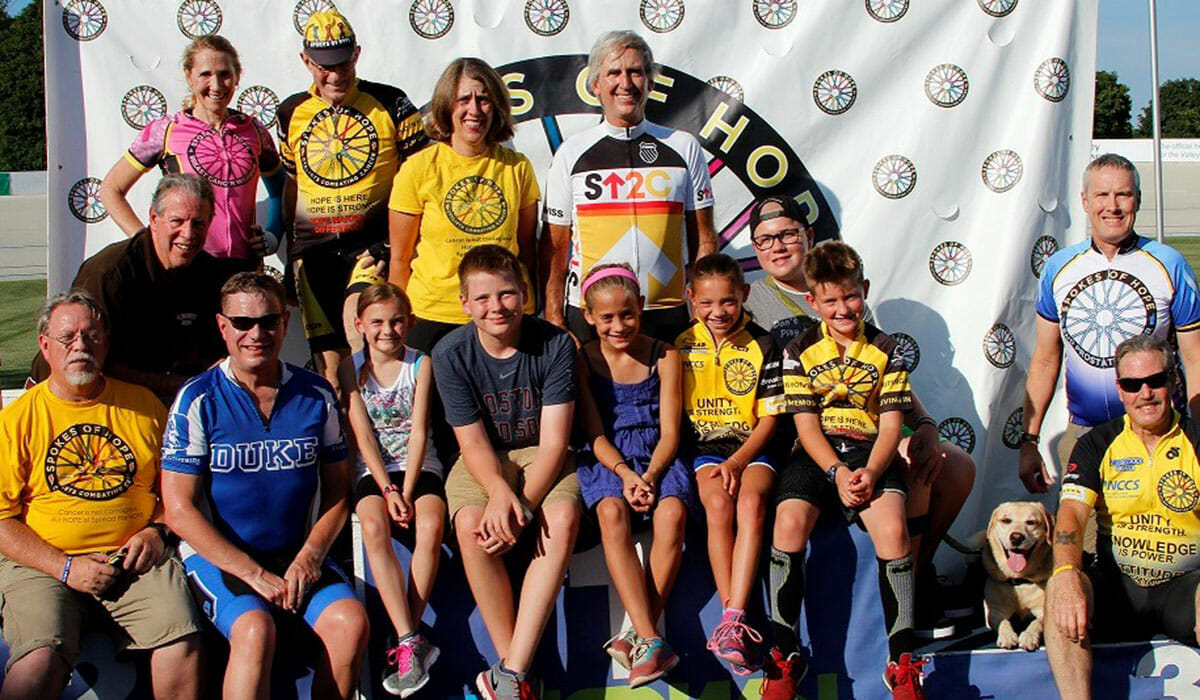
The Spokes of Hope team pictured in Trexlertown Pennsylvania honoring pediatric cancer survivorship./Courtesy Cindi Hart
What’s a saying you live your life by?
Lance Armstrong stated it best when he spoke of the “obligation of the cured.” Many, including me, who have gone through such an experience feel very passionately that if we can help just one person, it makes our journeys worth it.
What’s been the most rewarding part of your service?
Knowing that I made a difference in somebody’s life.
What have you learned through your experiences as a volunteer?
I’ve learned that the greatest gift is to be able to give to others. To be a facilitator, and to help lift people up out of pain or out of repression.
What’s in the future for Spokes of Hope?
We’re trying to figure out how we can reach out to the most people simultaneously. We’re working on a DVD for cancer patients to prepare before surgery and post-op, to advise them about what they can expect.
How can readers help?
Please visit the Spokes of Hope website for more information about how you can help.
Teenager Runs Nonprofit to Provide ‘Caring’ to Kids with Childhood Cancer and Their Families
Meet Daily Point of Light Award honoree Grace Targonski. Read her story and nominate an outstanding volunteer or family as a Daily Point of Light.
When Grace Targonski was ten years old, her aunt was diagnosed with breast cancer and her then-nine-month-old brother had brain surgery to remove a cyst. In the face of a devastating situation, Grace was inspired to make positive change for children with childhood cancer and their families. Now sixteen, she has run the nonprofit she founded, Caring with Grace, for over five years.
Caring with Grace focuses on easing some of the burden of childhood cancer patients and their families by providing care packages for the patients and their siblings, hosting free painting classes and other fun events for the families, volunteering at her local Ronald McDonald House, hosting awareness campaigns and more. About 10 to 15 volunteers help her with multiple events throughout each month. She has also taken the fight against childhood cancer a step further by not only raising money for childhood cancer research, but also traveling to Washington, D.C. several times a year to work on bills that would increase research funding and to meet with members of Congress.
“Some people are just thrown off or surprised when they hear I started this when I was ten, because they think I was too young to run a nonprofit,” Grace said, “but I just found my passion. It’s something that is very important to me and I don’t plan on ever stopping.”
What is Caring With Grace?
We are a nonprofit and we focus on childhood cancer. We send packages with toys, books, hats and cards, not just to the patients, but to the siblings if they have any. We stay connected throughout the treatments and over the years for holidays and birthdays. We also have programs. There’s free painting classes for those families effected by childhood cancer along with things like haircutting events, where a salon will host it and people come and donate their hair and will get a free hair styling at the end of it. Then we take the hair and send it to a group called Wigs for Kids, and they make wigs and donate them to children with cancer. I do a lot of advocating work as well. Over the past five years I’ve been working on three bills that will help the childhood cancer community with its funding. I go to Washington, D.C. around five times a year for these meetings and I meet with congressmen to talk about the bill and such. We do a few different things but it’s all about childhood cancer.
Describe your volunteer role with Caring With Grace.
I am the founder. I founded it when I was 10 years old and it’s been about five and a half years now. I have a lot of volunteers but I’m the one dealing with the emails, getting connected with people. I have people reach out to me when they hear of families that have a child that was diagnosed. Along with my volunteers, we’re the ones who go out and we buy supplies for things we need for the packages and put them in the packages and send them out personally. I’m the one who goes to the meetings. I do all of the stuff behind the scenes but it’s mostly me and my mom doing that, and then my volunteers help out with public events.
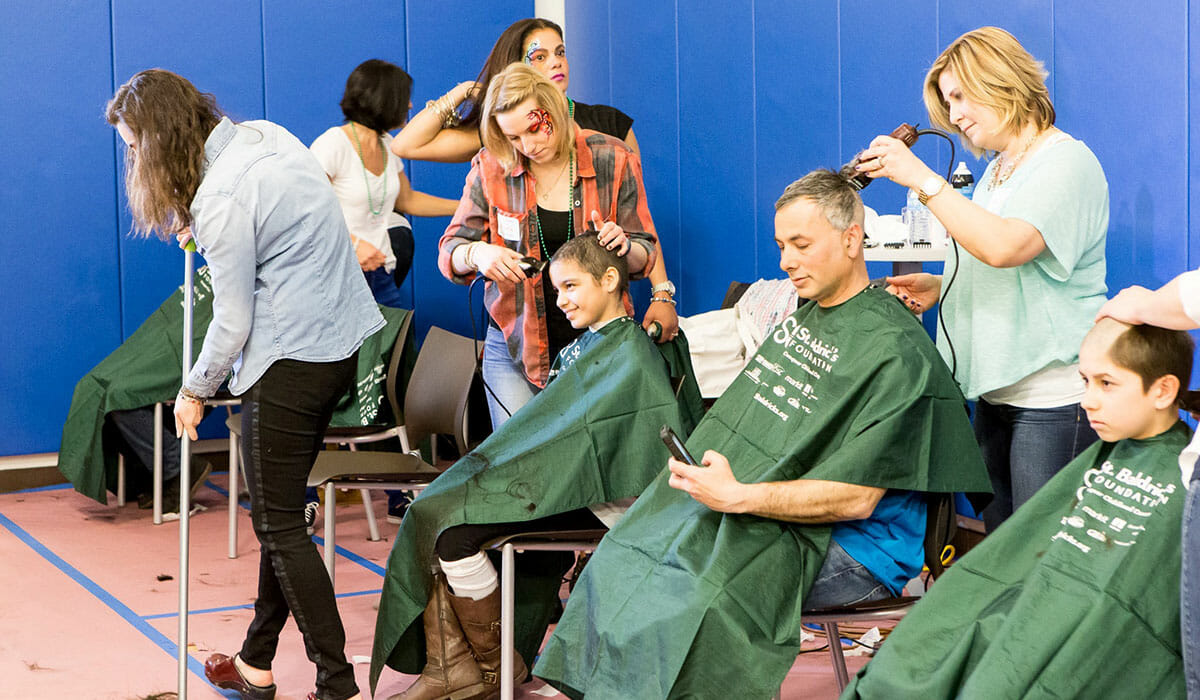
Grace, center, gets her head shaved in 2015 as part of one of the several head shaving events Caring With Grace hosts, which collect hair to donate to the organization Wigs for Kids./Courtesy Grace Targonski
What inspired you to start this nonprofit?
Back in 2012, my aunt was diagnosed with breast cancer and right before her diagnosis, my little brother, who was nine months old at the time, was told he had to have brain surgery because he had a brain cyst. I remember they told me a cyst isn’t cancerous and we won’t have to worry about him having any type of brain cancer. I believe it was my curiosity that I had questions about the difference between childhood cancers and adult cancers. I had questions that people didn’t really have the answers to, so that led to me finding my own answers and researching on the Internet. A bunch of things popped up about nonprofits and how the funding is really low for childhood cancer, so at that point it kind of became a no brainer that I should do something about it. I started by just having a hat drive in my school and I donated it the [Yale] New Haven Hospital. After that, a passion sparked and I realized this was something I wanted to do longterm. Because of all the support I had from my family and friends, we were able to grow really quickly. It’s been over five years now and we have our nonprofit status.
What inspired you to start sending the packages?
The first thing I did to help the childhood cancer community is I reached out to this nonprofit in Virginia and what they do is they send hats to children with cancer. When I asked them how I could help, they told me I could set up my own hat drive so that’s what I did. After that, I wanted to do more and I wanted to make it kind of customized. I figured that everyone likes toys and I was always really big on reading so I wanted to include books in the packages, and not just for the patients, but for the siblings as well. I wanted to give them something to do while they were in the hospitals or in the waiting rooms. I came up with these three things initially and eventually I started adding cards made by other children. At some events I’ll have a table and kids and parents will come and make cards for a child with cancer or a sibling of the patient. They will be included in the packages as well, along with anything else the family will need. Sometimes I will ask them for specifics and I will try to help them out to the best of my ability.
Why did you also want to include the patients’ siblings?
Seeing my brother go through brain surgery and his recovery. I’m the oldest out of three and I kind of had to grow up very quickly and help out with my younger sister and I had to become very independent at an unexpected time. Something that some people don’t really see is when a child is diagnosed with cancer and they have other siblings, the parent has to go through so much for the sick child in the treatments, that the siblings are going through a tough time and don’t always have the support system that they really need. I didn’t want them to feel they’ve been forgotten because I know just a little bit of what it’s like having a sibling who is sick and how hard it can be. I wanted to include them so they know we’re thinking of them as well.
Why is it important for there to be continued funding for childhood cancer research?
What a lot of people don’t know is that the funding for childhood cancer research is very low. The National Cancer Institute breaks up its budget between adult cancers and childhood cancers. Adult cancer research gets 96.2 percent, which leaves kids with only 3.8 percent. They get less than four percent of the NCI budget. Kids get different cancers than adults … and especially since a child isn’t fully developed, it’s very different cases with each child, even if it’s the same type of cancer. There is just a lot we don’t know about the human body in general and especially when these kids aren’t done growing, it’s so hard to tell what kind of medicine they need, what kind of amount. Since we don’t have the funding to do the research and get the technology and to get the medication, a lot of these children are suffering and they’re either taking really old and really toxic medicine, or they’re taking adult medicine. Everyone sees the side effects they have on adults and it’s pretty brutal, so imagine what it’s like giving [the medicine] to a young child or sometimes even a baby. If a child is sick, you won’t give them cold medicine that’s meant for adults, there’s medicine that’s made for children and it’s for a reason.
We need this funding to have this research done so we can better understand how to help these children and to get them better resources because their life is dependent on it.
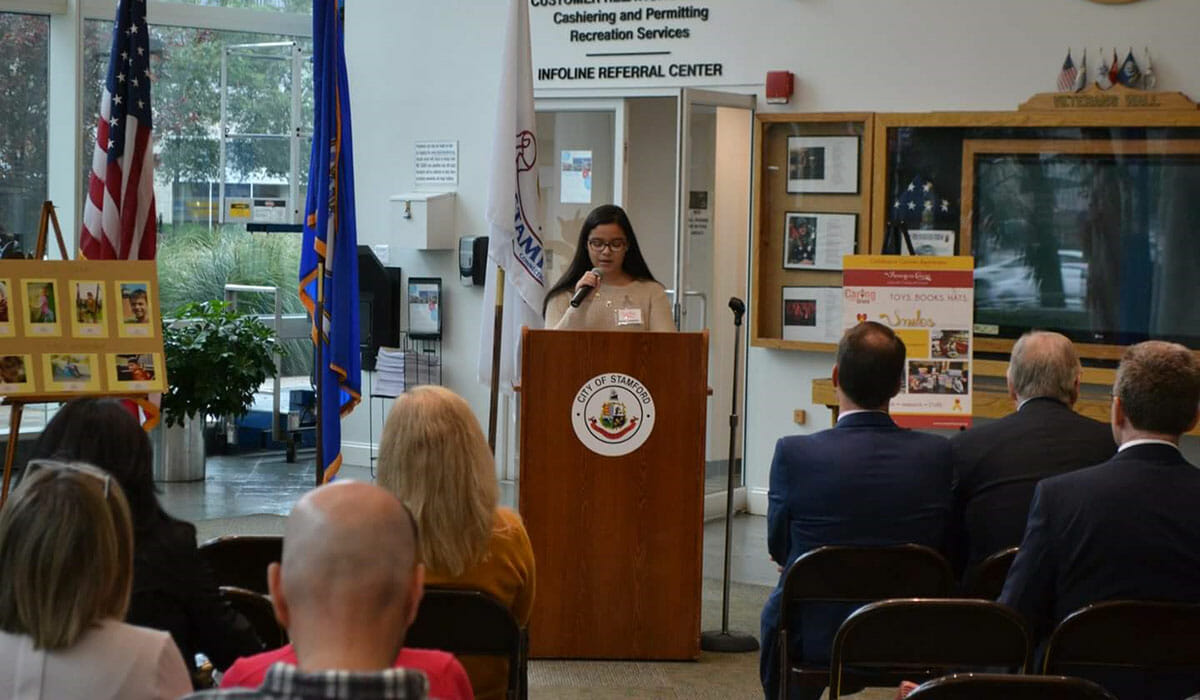
Grace Targonski, center, speaks at an awareness ceremony she organized at the Stamford Government Center, during which the Mayor and Governor proclaimed September as Childhood Cancer Awareness Month./Courtesy Grace Targonski
Are there any future partnerships, programs, or events that you are excited about?
I go to the Ronald McDonald House up to maybe five times a year. We have this program, Day of Kindness, and I bring a chef, musician, artist, a bunch of my volunteers and my friends. The families who stay at the Ronald McDonald House, their child typically has to go under some major surgery or treatment and [the child] stays at the hospital that’s right across from the House. They come from all over. I know a family from Venezuela that comes over once a year for treatment and they stay at the house. I go there a few times a year and I bring all these people and for a whole day, we’re there serving food and entertaining and the adults hang out with the adults and the kids hang out with the kids. It’s always a really good time and a successful event. We bring donations for the house and things like that. I’m always looking forward to that one and that will be coming up in the next couple months.
What’s been the most rewarding part of your work?
Something that’s happened to me a few times is the parents will reach out to me. Sometimes the child is still in remission, sometimes the child is still in treatment or the child has passed away. I’ve had parents reach out to me and tell me how the things I do aren’t so small in their eyes. The little packages, I just think of them as a simple way to make someone’s day better, but they really see it as something else from their perspective. They’ll come to me and they’ll tell me how grateful they are. I don’t really think of that when I do these programs or these ideas that I come up with, so it’s kind of cool to see how I actually do have an effect on these families and it definitely kind of opened my eyes to realize what’s actually going on.
Why do you think it’s important for others to give back?
There’s a lot of issues in the community besides childhood cancer and us ignoring them and just thinking, ‘Oh, but they don’t affect me directly so I don’t have to do anything about it,’ it’s not benefiting anyone. It’s very important for us to work as a team and start acting like a community. We need to address these problems and find solutions or nothing is going to be done. There’s a lot of work to do, not just with childhood cancer but with other things. If we worked together and had this common goal, it would be easier to reach those goals.
Triple the Volunteer Power: Teen Sisters Serve Underserved Community
Meet Daily Point of Light Award honorees Kaitlyn, Ashley and Emily Berger. Read their story and nominate an outstanding volunteer or family as a Daily Point of Light.
The Berger sisters are multiplying their volunteer power as the 16-year-old triplets serve the underserved in their community through programs for seniors, families and children in need.
As middle school students, the Northport, New York Berger sisters started serving their community through Youth Directions & Alternatives, a youth program, and discovered the greater impact they could make with the power of three. Volunteering more than 800 hours in recent years, Ashley, Emily and Kaitlyn Berger, now juniors in high school, all give back to their community in their own unique way, and support each other in their service missions. Through ‘Cooking for a Cause’, ‘Personal Care Gift Bags with a Smile’ and “Personal Shopping for Children’, their distinct initiatives carry a personalized touch, and have helped to make a difference for thousands in their greater community.
What inspires you to volunteer?
Emily: I volunteer with children because when I was younger, I really wanted to feel like I had the same clothes and toys that everyone else had. But what that really means is making sure children feel loved and supported, so through my volunteerism, we are doing that. Ashley: I love that my dad got us involved in volunteer service. I’m very, very grateful for our experiences as volunteers because I would be so much less of a person today if I hadn’t learned to help others and get involved in our community. Doing things for others has strengthened me as a person and I know we’ll do even greater things for our community in the future.
Describe your volunteer initiatives.
Kaitlyn: Cooking for a Cause: I love cooking, and so I prepare meals for seniors and my sisters help me to assemble the meals. We’ve delivered over 7,000 servings thus far to people in need. Through our food deliveries, we’ve met a lot of different senior citizens. These seniors have made a difference in our lives. One, his name is Terry, is paralyzed from the neck down and he helped us to realize that we are making a difference. He encouraged us to keep serving no matter what challenges we face.
Ashley: Personal Care Gift Bags with a Smile: We started the Gift Bag program in 2016 when our local food pantry explained that personal care items were in demand. With help from my sisters, I shop, assemble and deliver gift bags containing personal care items to a community pantry, the VA and local senior citizens. Each bag contains eight items including shampoo/conditioner, soap, razors/shaving cream, toothpaste/toothbrushes and more. At the VA, we met a veteran who was very grateful for the items and he started telling us what he went through while serving, and how meaningful it was that people were looking out for him even after his service.
Emily: Personal Shopping for Children: My personal pet project is shopping for young children. In 2016, after visiting a local day care center that accepts lower income struggling families, I requested a list of deserving families in need. My sisters and I shop for outfits and toys for children based upon their age, gender, size and interests. We’ve also delivered backpacks filled with school supplies for children.
The Berger sisters include handwritten inspiring poems or quotes on their donated items to personally connect with recipients. /Courtesy Tom Berger
All of your deliveries carry an inspirational message. Explain.
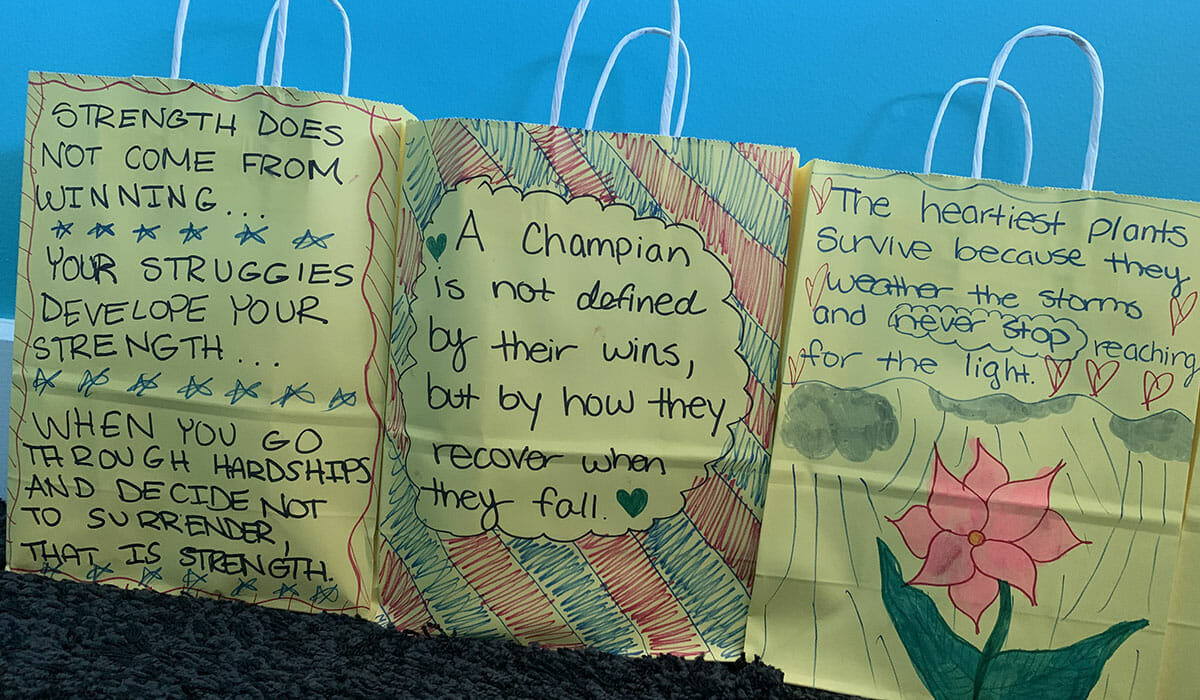
Ashley: My sister Kaitlyn and I are the writers in the family. We decided we wanted to make bags to deliver our various donated items in, and personalize them. These are little notes to make the person receiving the items feel like its more personal and special to them. Kaitlyn: We include a handwritten inspiring poem or quote that we’ve made up on the food bags, and the same for the gift and clothing bags. The recipients love the personal touch, we realized how special our messages were when people started sending messages back!
How does volunteering as a family impact the power of your service?
Kaitlyn: It brings us all together as a family. We all have our individual service projects that we are passionate about: Emily is children-oriented, mine is cooking, Ashley is gift bags of essentials, but when we combine our efforts, we all share ideas. By bringing us closer together, our joint volunteerism means we can do more and bigger things in the future.
What’s been the most rewarding part of your service?
Emily: There are a lot of low income families in our area, so knowing that all of the children in our community are being helped is rewarding. Ashley: Seeing the difference that you’re making is rewarding. When you give these people donated items, you see the smiles on their faces. They don’t have a lot going for them, they sometimes don’t even have family. After they read our personalized notes, you see how very grateful they are, and that makes you feel so good. Kaitlyn: Seeing how everyone reacts to our acts of kindness is rewarding. We were recently celebrated by the community for our volunteerism. Seeing their faces when we do things for them, they light up, and it makes us feel so happy to see that we’re making a difference in their lives.
What does it mean to know that you are inspiring others to volunteer?
Ashley: Community service isn’t as widespread as it should be. We want to encourage others to volunteer, because it’s good to know that you’re even making a little difference with your service.
What’s a saying that you live your life by?
Ashley: Do good in the world. Be the change you want to see in the world.
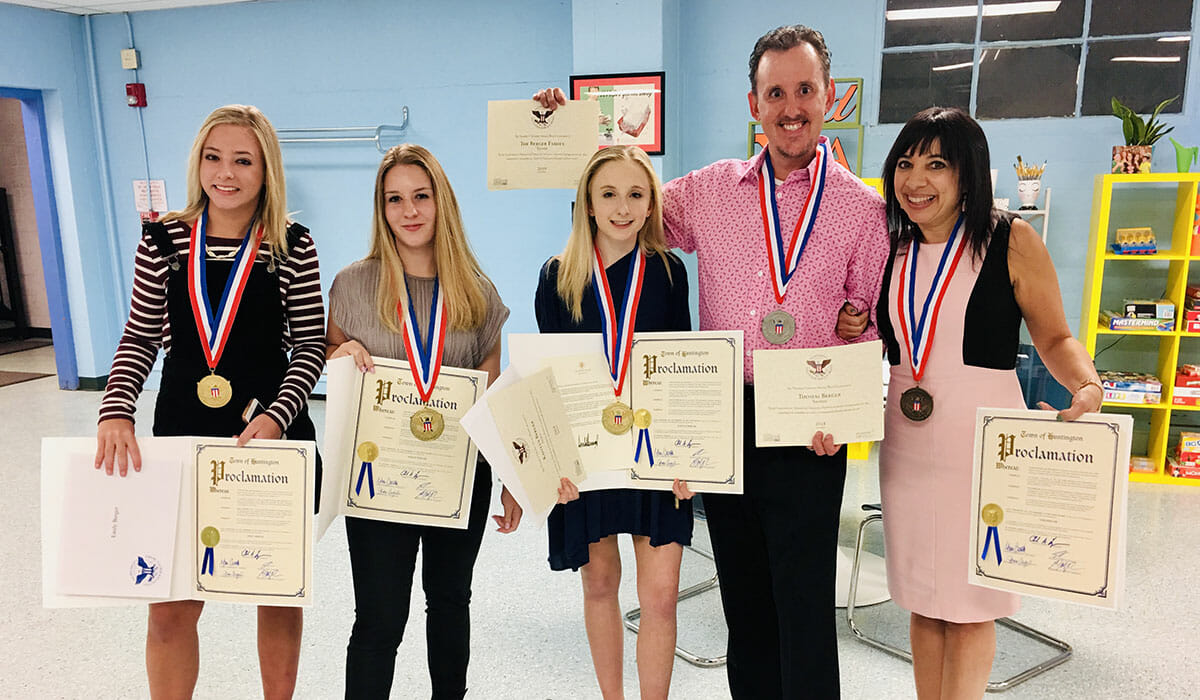
Emily, Ashley and Kaitlyn Berger pictured with their father, Tom and mother, Elisa. The sisters were presented with proclamations from the town of Huntington, New York and the President’s Volunteer Service Award gold medals for their community service./Courtesy Tom Berger
Describe what volunteerism means to you in one word.
Emily: I’m a cheerleader, I also love to be around children and be with family. Ashley: I like hanging out with my friends and learning how to drive. I try to spend as much time with my family as I can. Kaitlyn: I’m a cheerleader, we cheer five or six days a week. I also like to write poems and do community service. I like to hang out with my friends, drive and go shopping.
How can readers help?
Please email Tom Berger at for more information about the triplets volunteerism, or to find out how you can give back.
Houston Teen Serves Local Community Through Multiple Organizations
Meet Daily Point of Light Award honoree Kam’rin Christal. Read his story and nominate an outstanding volunteer or family as a Daily Point of Light.
Fifteen-year-old rising sophomore and Houston native Kam’rin Christal began volunteering with United Way of Greater Houston last year and has no plans to stop any time soon. The dedicated volunteer, who wishes to become a cardiovascular surgeon, is inspired by his need to see the best for others.
Kam’rin provides help wherever it is needed at UWGH but his main volunteer focus is with 2-1-1 Texas, a community aid helpline, which helps connect Texas citizens with services they need. Kam’rin makes sure the education team at 2-1-1 Texas has all they need for meetings and presentations.
The busy teen also assists with STEAR, a free registry for anyone that needs any form of assistance during times of an emergency or disaster event. The registry provides local emergency planners and responders with additional information on the needs of their community.
The teen, who also hopes to go to law school, knows the importance of volunteering. “I want people to learn that you can make a change in your community. There are plenty of volunteer opportunities you and others can benefit from. I never knew the importance of volunteering until one day I decided to try it out, and I saw the impact it made on me and my community.”
Colorado Native Serves California Community Through AmericaCorps Vista Program
Meet Daily Point of Light Award honoree Emily Ward. Read her story and nominate an outstanding volunteer or family as a Daily Point of Light.
Passionate about social justice, Emily Ward, a 25-year-old Colorado native and AmeriCorps VISTA Leader, who previously served with AmeriCorps as a Colorado Reading Corps literacy tutor, continues her journey to help make the world a better place.
Now a California resident, Emily serves as a VISTA leader with the CSU STEM VISTA program at California State University Chancellor’s Office Center for Community Engagement. The CSU STEM VISTA program “provides a one-year national service opportunity for dedicated professionals to apply their skills, knowledge and talents to meet the needs of our STEM students in the California State University system.”
Previously a volunteer with Epic Experience in Colorado, an organization which empowers adult cancer survivors and thrivers to live beyond cancer, Emily will spend the next 9 months helping support the cohort and lead 18 VISTA members who are stationed at the CSU campus.
What inspires you to volunteer?
I find meaning in life through connections with other people, and to me, that’s what volunteering is all about: growing relationships. We are all in this together! We all want to belong, be loved, and be understood. I am continually inspired to volunteer because it brings me in contact with wonderful, diverse people. I want to do what little I can to make this world better for all of us.
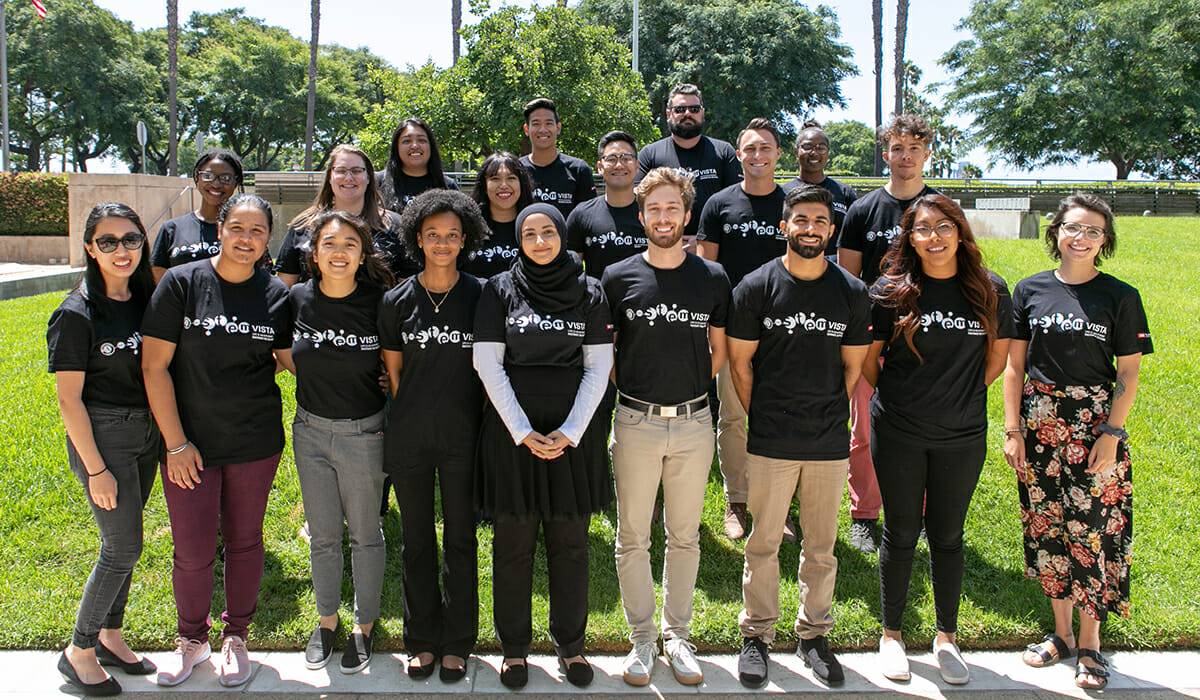
All 19 members of the CSU STEM VISTA’s 6th ever cohort including VISTA leader Emily Ward, pictured front and far right./Courtesy Emily Ward
Describe your volunteer role.
I am currently serving with the CSU STEM VISTA program as the VISTA Leader. This program is operated via an AmeriCorps VISTA grant to the California State University Chancellor’s Office Center for Community Engagement, and it strives to eliminate race, class, and gender inequities in undergraduate STEM programs. Each of the 18 VISTA members in this year’s cohort are stationed at a CSU campus to build capacity for programs that align with our mission. My job as the leader is to support the cohort. I help design and facilitate professional development trainings, run social media for marketing and recruitment, and offer social-emotional support when members need someone to talk to. The cohort model, and the intensive leadership development and training it provides for the members makes it unique. It is a joy to help my fellow VISTAs maximize their potential in serving historically under-resourced student populations.
What has been the most rewarding part of your work?
My work is so rewarding because it aligns with my personal values of human dignity, equity, compassion, and education. I feel extremely privileged to have the opportunity to work with a team of people who uphold those same values and are so deeply intentional about every aspect of the work we do. No one is perfect, but we all try our very best to bring equity and compassion to the forefront of every meeting, training, guidebook, et cetera.
What have you learned through your experiences as a volunteer?
My experiences as a volunteer over the years continue to reinforce the truth that everyone has a story. It’s human nature to jump to conclusions about someone based on their behavior in a brief encounter, but you never really know what they are going through. When I served previously with AmeriCorps as a Colorado Reading Corps Literacy Tutor, there was a young boy I tutored who had some challenges regulating his behavior in class. He was a “problem child” for many because they didn’t know his story, his personal struggles, his desire for stable relationships. Throughout the school year, we became very close and his behavior dramatically improved during our sessions. I hold this experience close to my heart and try to remember it when frustrating or discouraging situations arise in everyday life.
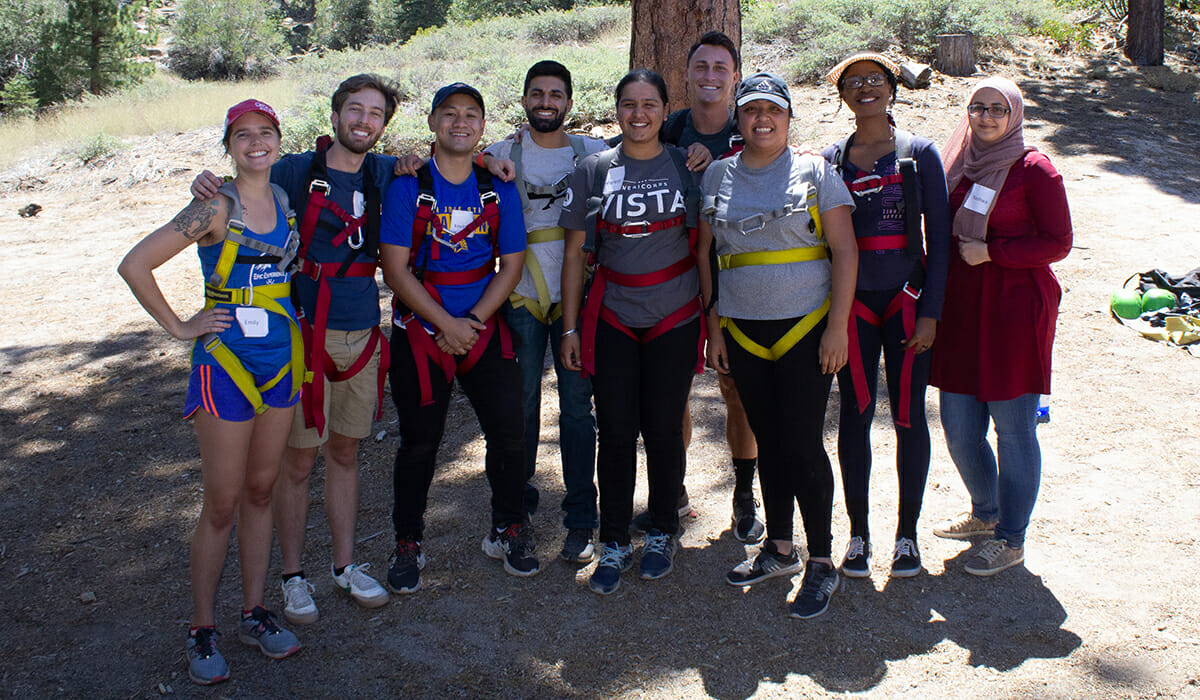
VISTA Leader Emily Ward (far left) with some of the cohort at the member training and retreat in Big Bear, CA. From left to right: Emily Ward, Nick Fortna, Kevin Salubre, Alvir Sangha, Sunpreet Kaur, Seth Lutsic, Joanna Solis, Elaina Sidori, and Nashwa Rafiq. /Courtesy Emily Ward
Are there any future partnerships, programs, or events that you are excited about?
I am so excited to see my current cohort continue to grow through challenges they face during their terms of service! Each one of them brings so much to their respective campuses, and I am honored that I get to assist them. We have an in-person training next week in which we will continue to deepen our understanding of our leadership skills, our identities, and cross-cultural communication. Each member of the leadership team, myself included, has put a lot of effort into the training sessions we designed and will be facilitating: there are going to be some very meaningful conversations and a lot of fun!
Why do you think it’s important for others to give back?
I think it is important for people to volunteer or give back because I truly believe that it is our responsibility to do so. I’ve always loved the MLK quote “no one is free until we are all free.” That sums it up nicely for me.
What do you want people to learn from your story?
Anyone can make a difference. No, you won’t single-handedly fix pervasive, systemic issues, but you can always try. You can always use what power you do possess to help someone else. To lift someone up. To heal yourself and others. To use your voice to speak out against all the “-isms” in this world. I’m just one person, and I’m sure everything I’ve done to help bring about a more equitable society is a mere drop in the ocean—but I can use the skills and talents I have to help my team help others. Our drops matter too.