Advocate for Mental Health, Connecticut Man’s Personal Challenges Serve as Inspiration for Volunteerism
Meet Daily Point of Light Award honoree Ryan Cook. Read his story and nominate an outstanding volunteer or family as a Daily Point of Light.
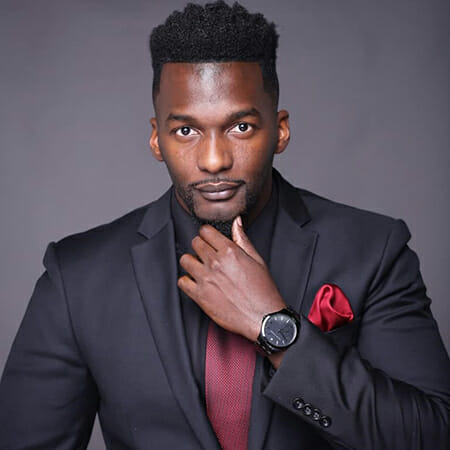
Ryan Cook was first diagnosed with mental illness as a teen. Grappling with a history of panic attacks and a failed suicide attempt, the Waterbury, Connecticut 35-year-old says he battles depression and anxiety to this day. Wanting to challenge stereotypes about mental health issues and more efficiently connect others with resources, Ryan became a mental health advocate.
Founding The Hope Corner in 2017, Ryan’s mission is to advocate, educate and provide tools to help those with mental health issues receive quality services in Connecticut. His advocacy means that others have the opportunity to be connected to better resources, after Ryan personally struggled to obtain comprehensive services when first diagnosed. In addition, Ryan is serving as an example that those with mental illness can work through adversity to reach success. The Hope Corner has thus far reached over 1,000 individuals as the organization works to improve mental health services, promote recovery, educate the community about the importance of mental wellness, and combat discrimination about mental health.
As founder and director of The Hope Corner, Ryan Cook serves as a mental health advocate. Ryan is pictured being interviewed by a Connecticut radio station./Courtesy Ryan Cook
What inspires you to volunteer?
At a young age, I witnessed the benefits of service to others from my grandparents and my mom. To this day, I still hold the values they taught me about the importance of making the world a better place. I truly believe that inside of us all there is the ability to be of service to others and to be a beacon of hope in our society.
Your volunteerism is personal for you. Explain.
When I went through my first panic attack, I felt that I was alone in what I was dealing with. There are so many people going through the same situations as I have and continue to, and I feel that it’s important to serve them so that they don’t feel alone.
Describe your role with The Hope Corner.
As founder of The Hope Corner and current director, I connect individuals to resources, offer education and improve awareness of the importance of mental wellness, and combat mental health discrimination. In addition, our organization offers some services and programs to individuals in our area, including guidance on meditation and mindful techniques. We are currently working to incorporate mental health into health curriculum in schools across Connecticut.
Share one personal story with me from your volunteerism.
The first time I helped someone de-escalate a panic attack was meaningful to me. I was with the person when they started to hyperventilate and sweat. Having been through a panic attack myself and recognizing the symptoms, I immediately used tactics to help them. I talked to the person peacefully, and suggested they visualize their favorite place. Being able to help someone makes everything worthwhile.
What’s been the most rewarding part of your service?
Knowing that my volunteerism has helped at least one person. Service has truly made a difference in my life, but I am also making a difference in their lives. We have the ability and responsibility to make our world a more hopeful, stable and peaceful place. If you can make a difference in one person’s life, you have changed the world.
What have you learned through your experiences as a volunteer?
Volunteering is giving the greatest gift, which is part of you. It’s the chance to make the world a greater place. I strongly believe we can be a greater people if we choose to be. Being able to volunteer is something beyond you, I or me. It’s a we.
Counselor Creates Nonprofit To Serve Community Through Innovative Mental Health Programs
Meet Daily Point of Light Award honoree Jeff Rocker. Read his story and nominate an outstanding volunteer or family as a Daily Point of Light.
When creating his nonprofit, How We See It, Jeff Rocker knew he wanted his organization to be nontraditional. The licensed mental health counselor said the community he serves struggles with the stigmas against mental health issues, so he knew he needed to grab their attention in order to help them. The South Florida-based nonprofit specializes in using innovative ways to promote mental health awareness — with programs that range from Hip Hop Therapy for high school students to discussion circles for adults, as well as fitness boot camps.
With the help of about twelve volunteers, How We See It regularly reaches 50 to 60 people through its multiple programs. The programs have received highly successful feedback from the community, who appreciate the nontraditional ways in which How We See It seeks to help them understand mental health. Jeff said the organization welcomes everybody, including people of all ages, to both participate in the programs as well as volunteer.
Describe your volunteer role with How We See It.
I am currently the CEO and the President of How We See It. How We See It is a nonprofit organization that specializes in dissolving the myths and stereotypes behind the stigma of therapy while finding innovate ways to establish mental health awareness of youth and young adults.
What inspired you to create How We See It?
I wanted to create an organization that is nontraditional. So where although we have the credentials and specialties, that people actually get to see the real side of the individual, rather than who they are and what they could offer. Showing a different side of a coin, I like to say, so people can relate to the people who are providing these services.
Jeff Rocker, CEO and President of How We See It, created his nonprofit to help fight the stigma surrounding mental health./Courtesy Jeff Rocker
Can you describe the innovate ways you are establishing mental health awareness?
We use multiple platforms such as the radio station, different panel discussions within the community, town hall meetings, anything that allows us to have a voice in the community. One of the most popular programs is Hip Hop Therapy, which is where we use hip hop as a catalyst for the understanding and comprehension for kids in regards to mental health.
We provide individual counseling, family counseling, couples counseling. We also provide Sister Circles and Brother Circles. Those are a higher age group, the adults, so we have circles where men can talk about certain issues they go through and also women can talk about issues that they go through as well. We also do fitness boot camps on the weekend.
What inspired you to use these innovative ways to talk about mental health, such as Hip Hop Therapy?
One day I decided to do a presentation about mental health the traditional way with a Power Point, and of course all the information and resources on the Power Point. I realized that doing it that way didn’t grab the attention of kids at the school. When I did a survey and asked them what they thought of the presentation, I didn’t get a lot of positive feedback because a lot of kids were sleeping and just disengaged from the presentation. So when I decided to add a hip hop component, that’s what grabbed the attention of all the kids in the room, and got them to listen to what I had to present and also learn about mental health issues that people go through on a day-to-day basis.
Why were fitness bootcamps something you wanted to incorporate?
I realized that when people work out on the regular, their self esteem tends to increase by a lot. I wanted to create a boot camp to improve their self esteem so that would also decrease some of their mental health issues that they may be going through. In the boot camps, while of course [we are] working out, we also provide self-care tips for every individual at the boot camp to make sure they are taking care of themselves on the regular throughout the whole week.
What inspired the Brother and Sister Circles?
I wanted to also create a program for adults. The Hip Hop Therapy is for children and teens and young adults, but I also wanted to do something for older adults so they can also talk about mental health issues that they are going through in their lives that they don’t feel comfortable talking about with other people. We talk about different topics, so within the topic they can share on the topic or bring up something they are going through at the time amongst the group members. It’s more open ended, so we give the group members flexibility to talk about stuff as they please, whatever they feel comfortable sharing at the time.
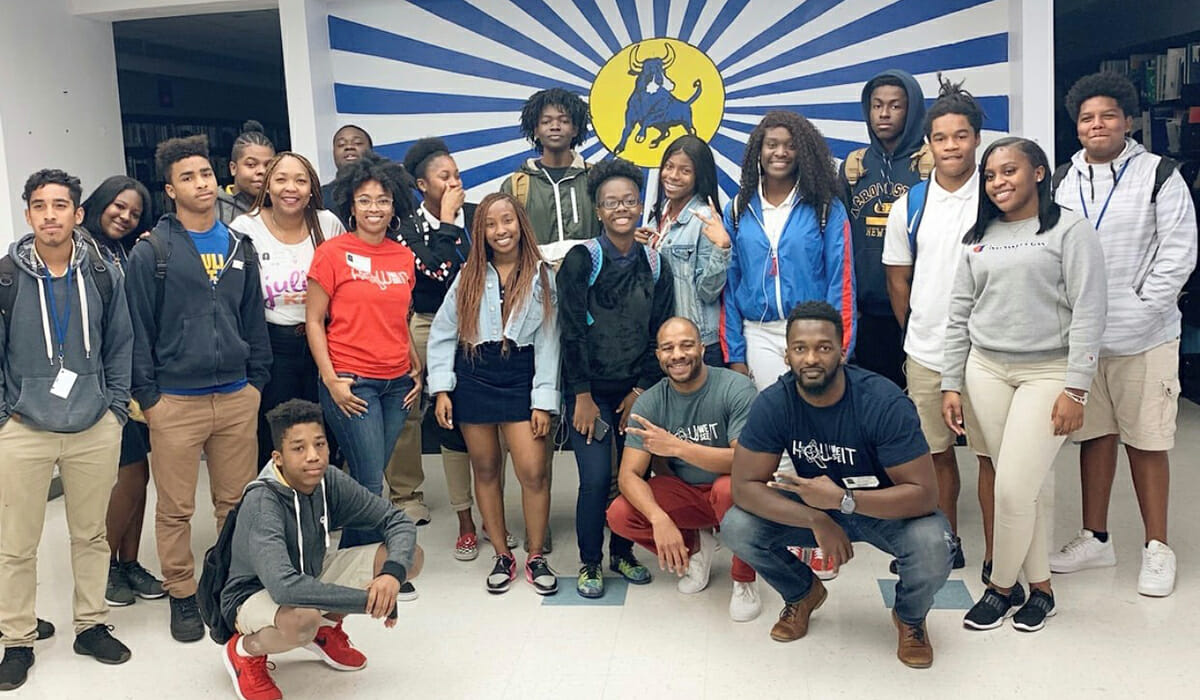
Jeff Rocker, front row, right, said How We See It has programs that serve all ages./Courtesy Jeff Rocker
What kind of feedback have you gotten from people that have been helped by How We See It?
They love it. They mention how it’s very different from what they’re used to and they’re very glad that we decided to incorporate that in the community, a community that very much needs services like this.
Why are these services and discussions about mental health so important for your community?
It’s partly because in the community I serve, they don’t believe in mental health issues. You have to be able to grab their attention, to show them not only what mental health is and what it looks like, but that the people who are talking about mental health can relate to them, can talk like them, can look like them, and can describe what mental health is to them. I think it goes a long way in the community that I serve.
What’s been the most rewarding part of your work?
Just to see the excitement in the youths’ faces. I believe that when you have people who are excited to learn, it goes a long way for not just the time being, but for future engagement with them. They’re looking forward to more information, looking forward to getting some help, of course looking forward to seeing a therapist if they need to.
What do you want people to learn from your story?
Being different goes a long way. People tend to forget about you when you’re traditional. I think our program symbolizes being different, being nontraditional, and that is how we became so successful. We encourage other people to do the same thing as well — find your niche and be different.
As a military spouse whose family moves around frequently, Ning Peel says her priority is to treat each base like home by strengthening community ties. Realizing just how great the need for help was in her own backyard, Ning decided to act as a service “band-aid” for her neighbors and surrounding non-profits, stepping in to provide help whenever it was needed.
Co-founding Bunco for Charities in 2008, Ning steps in and assists whenever there is a services gap across any demographic and situation. The 53-year-old Beaver Creek, Ohio resident says while enjoying a monthly Bunco night, a parlour game that involves rolling dice, the motivation to help others was born. “We discovered that this game night would become a conversation about helping the community and finding initiatives to support.” Helping over one-thousand people in her community thus far, whether a family has been displaced by a fire, a baby needs a crib or refugees are searching for resources, Ning is strengthening her community and making it a better place to live.
What inspires you to volunteer?
Our family always tends to help people. It is a part of the military lifestyle to serve, and my husband has taught our children to be “do-ers”, not takers. When my husband was traveling for work, I’d be supporting this idea of everyday service on the home front, so our service really happened naturally.
Serving others in need is personal for you. Explain.
During the Vietnam War, I came to the United States as a child. Everything was new to me, from the toilet to the language. Because I didn’t “fit in”, I understand where outsiders are coming from, and when they need help. I’m thankful to be living in this great country, and I want to help make others feel welcome as well.
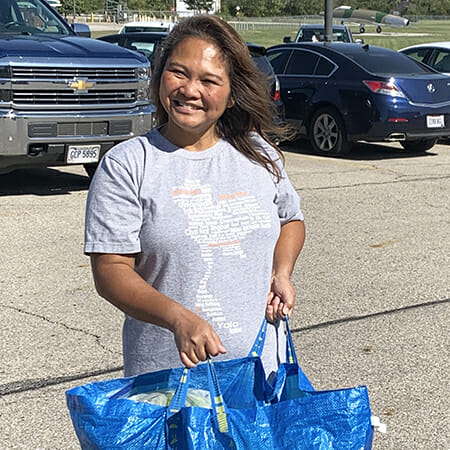
Ning Peel is a military spouse and is making her community better through acts of service. Ning is pictured here delivering home cooked Thai food to military members and families in need of food. /Courtesy Ning Peel
Describe your role with “Bunco for Charities”
As co-founder, I am finding organizations in our community to help, but we also support individuals who find themselves in need of assistance. I also spend time fundraising, as we believe in supporting existing organizations as opposed to starting new initiatives. We support whoever calls on us, so from churches to businesses, we are there to help.
Share one personal story with me from your volunteerism.
There are many stories, particularly when it comes to connecting people with education and resources. A refugee family from Congo had arrived in America three years ago, and I received a call explaining that the six children had been taken to a homeless shelter after their father left the home and their mother was hospitalized. Basically, these kids had fallen through the cracks – they’d been at the shelter for over a month and no one knew they were there. I visited the homeless shelter right away, and got them out of the shelter. We serve as a backstop when the first layer of support falls through.
What’s been the most rewarding part of your service?
To see the kids that we support go on to find success. Whether that means they graduate from school, or they are no longer being abused, or whatever the concern. I see big issues in our community, and we are working to tackle those issues one by one, through education and support.
What have you learned through your experiences as a volunteer?
That my family has served as an inspiration to others. I am surrounded by people in my community who want to help, but they don’t know how or where to go. Our family naturally gives back and shares, and we are teaching others to do the same.
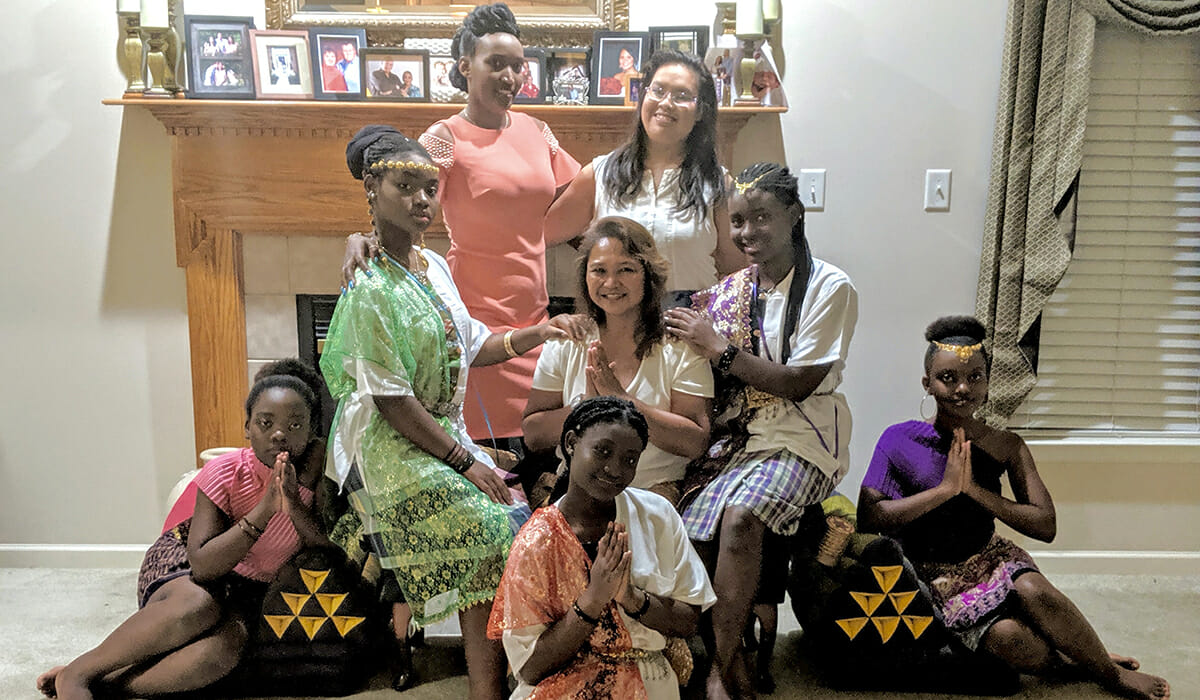
Bunco for Charities co-founder Ning Peel serves her community in a variety of ways, including connecting children, single moms and low-income families with education. /Courtesy Ning Peel
What’s a motto you live your life by?
When you see somebody do good things, praise them. I praise every single person who wants to do good for their community or their country.
How can readers help?
For more information about Bunco for Charities or how you can help, please email Ning.
Volunteering with Red Cross to Bring New Beginnings From Disasters
Meet Daily Point of Light Award honoree Roycelyn Lewis. Read her story and nominate an outstanding volunteer or family as a Daily Point of Light.
When severe arthritis ended her nursing career eight years ago, Roycelyn Lewis didn’t take a seat. A faith-based volunteer committed to serving since 1993, Roycelyn saw her forced retirement as an opportunity – to do more, give more and be an inspiration in her community. She uses her own resources and spends upwards of 3500 hours a year making a difference.
What inspires you to volunteer?
As much as I loved being a nurse, volunteering gives me more satisfaction than anything else. Although I can’t perform my duties as a nurse because of degenerative bone disease, I can still help the homeless, feed the hungry and work with kids in need. The need is great in my city.
Describe your volunteer role with the Red Cross.
I help set up mobile feeding stations, serve the food, and hand out sandwiches and meals on the road. Sometimes I am an ambassador at a disaster site, trying to help people figure things out. I also prepare and hand out bags of toiletries and clothing supplies. Sometimes the items are donated, but usually I pay for them myself.
Roycelyn Lewis is a regular volunteer with Red Cross ./Courtesy Roycelyn Lewis
What’s been the most rewarding part of your work?
I believe I’m a servant and a caretaker, which is why I became a nurse. I feel most rewarded when I see the smiles and get the hugs from the people helping. As a Red Cross ambassador, it’s my job to make people feel comfortable even when they’re at their lowest. To help them feel that today in this moment is where we are, but tomorrow starts all over as the first day of a new beginning. We’ve been through Katrina and we understand. The only moment we have to get it right is right now – that’s the way I live myself. Comforting people and giving them strength is so rewarding to me.
What have you learned through your experiences as a volunteer?
I learned how much I love people. I want everybody to be their best person and I want to help and support them. Volunteering is free, it just takes time. I put in a lot of time, but even a few hours a month makes a difference.
Are there any future partnerships, programs, or events that you are excited about?
I get excited about every opportunity – if I’m available, I’ll help! It’s my hope to create a safe haven space for domestic violence victims. I’m hoping a friend will help me write a grant to make that happen.
Why do you think it’s important for others to give back?
That person you’re helping could be you. We have so much to be thankful for. Volunteering is the best way to show that appreciation.
What do you want people to learn from your story?
We are all one disaster away from being in a dire situation. A fire, a flood, a hurricane can change your life in an instant. My thing is, ok, something bad has happened. Let’s take 15 minutes to feel really sorry for ourselves. Now we have 23 hours and 45 minutes to pick ourselves up – and with help, we can do just that.
California Teen “Serves” Goodwill and Farmer’s Market Leftovers to Community in Need
Meet Daily Point of Light Award honoree Dara Chidi. Read her story and nominate an outstanding volunteer or family as a Daily Point of Light.
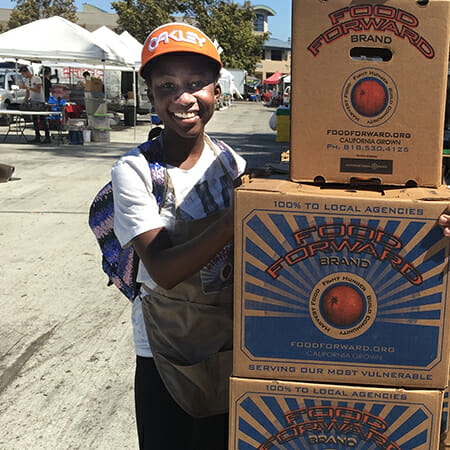
Three years ago, after visiting a farmer’s market and witnessing one of the sellers throw out what seem like perfectly good food that could be used, now fifteen-year-old Angeleno, Dara Chidi, sprang into action. After some research, Dara found Food Forward, whose mission is to “fight hunger and prevent food waste by rescuing fresh surplus produce, connecting this abundance with people in need and inspiring others to do the same.”
Today, the farmer’s market vendors see her and immediately know why she’s there. Armed with her Food Forward apron, she collects donations from them to later be distributed to various organizations that work directly with populations in need across eight counties in southern California.
What inspires you to volunteer?
Car rides through LA always remind me of the hunger crisis right here in our own backyards, in America, one of the richest and most powerful nations in the world. Starving women on the sidewalk hold worn signs, begging for the opportunity to work for food — any food. Emaciated men walk unsteadily from trash can to trash can, overwhelmed by hunger and thirst. I always found it difficult to comprehend how it is possible to have such poverty in a culture where the landfills are full of food waste and staple crops get destroyed to maintain a certain price. I could never get those images out of my mind and wished there was something I could do. I was bothered by the fact that every day, there are children who have no other food outside of the free school lunch and find it hard to concentrate on the lessons in school because of the hunger pangs they feel. I was bothered by the thought of seniors who struggle to stretch their fixed incomes between medicines they need and rent and do not have enough for food. Despite the fact that one in ten people don’t know when or if they’ll see their next meal, I would see restaurants throwing perfectly good food away and farmers throwing away fresh, unsold produce at the end of some farmers’ markets. Volunteering with Food Forward, a national organization that helps alleviate this hunger crisis, was the vehicle I needed to ensure that the vulnerable can get fresh, nutritious food.
Describe your volunteer role.
On Tuesdays, Saturdays, and/or Sundays, I go to a local farmer’s market and collect leftover produce. After putting on my Food Forward apron and badge, I pull the cart carrying stacks of flattened cardboard boxes towards the bustling market. At every produce stand, I stop the cart and walk up to the vendor. Since I’ve been volunteering with Food Forward for so long, they already know what I’m there to ask, “Good afternoon, would you like to have a Food Forward box today?” They almost always say yes and ask for at least 4 or more boxes. It makes me smile every time to know that they care to give their produce to the hungry. I quickly hand out the number of boxes to my peers and briskly start assembling the boxes as they write the vendor’s name. By now, I know all of their names and have developed a friendship with many of them. As I walk through the market, I feel a spring in my step, thanks to the calypso beats from the Caribbean steel drummer, who is positioned in the center aisle of the market. We exchange hellos before I have to wheel off to the next tent. After an hour, we’ve gone to every tent, but soon after, we go back to collect the heavy boxes. It takes at least five trips back and forth to collect all of the boxes. Afterwards, we weigh each one and distribute the boxes to different organizations that serve the homeless, seniors, and poor based on their needs. I help load the boxes into the various vans and then head back to put away our carts, scales, aprons, nametags, clipboards and markers, until the next market.
Dara after collecting several boxes of produce at a Farmer’s Market./Courtesy Dara Chidi
What has been the most rewarding part of your work?
I’ve had my share of “nice work” and “good jobs,” but what truly lifts my spirits is knowing that I’ve positively affected another person’s life with something that is as essential as food. Lacking something as crucial as food in the land of so much has got to be extremely demoralizing, regardless of whether it’s due to homelessness or insufficient funds or by virtue of being a homebound senior with limited resources and failing health. I feel very fortunate to be able to offer dignity and a message of care, hope, and humanity. My hope is that this lets them know that despite the hardships they may be facing, people do care and they are not statistics, they are not invisible. The drive to let others know they are important to total strangers is what keeps me going when the weather is either too hot or too cold to be outdoors at the market, or when I have an extremely busy day ahead of me once I leave the market. To me, true success is not the career I hope to have or the money I will earn in the future but what positive impact I can make in the lives of others who did not or do not have the same opportunities. Volunteering has taught me a lot about what is really important to me, and I wouldn’t have gained such knowledge if I had just decided to sit at home and hope that others solve the problems in our communities and the world.
What have you learned through your experiences as a volunteer?
Volunteering in farmer’s markets has completely altered my way of thinking. I realize that even one single person’s effort makes a difference. If I hadn’t decided to do something about the major starvation dilemma, thousands of meals would have merely been hopeful dreams. Just knowing this makes me feel satisfied. I’ve learned that, over time, one’s impact is great, so one should do whatever they can to help, even if it’s something simple like giving a dollar to the next homeless person one sees. At first, approaching strangers and asking if they wanted to donate their produce was quite daunting, but over time I became more comfortable and noticed myself become more outgoing in public. Through speaking Spanish to Latino farmers and vendors, I was able to use language skills to reach across cultures and find common ground. “Buenas tardes! ¿Quiere una caja de Food Forward hoy?” They always invariably smiled and would compliment my Spanish and encourage me to keep practicing, much like my aunts and uncles would. At the end of the day, we are not so different from each other.
Are there any future partnerships, programs, or events that you are excited about?
I have learned a lot about effective leadership skills including how to set goals, motivate, inspire, communicate with, and serve alongside others in a team setting by closely observing the various Glean Team Leads I have worked with. It has allowed me to see both what works and what can be improved upon. Next March, I will turn 16 and will be eligible to train to become a Glean Team Lead. This will allow me to try out my ideas about increasing efficiency of collection and distributing the produce, as well as outreach to get more kids involved. I am hoping that it will give me more of a platform to suggest more commitment to raising the next generation of food gleaners.
Why do you think it’s important for others to give back?
Humanity is an attribute in each of us, which we can either ignore or ignite. The great thing about it is that igniting it by taking care of others and our environment is a win-win situation. I am often amazed watching TV shows about social animals and seeing how they are more loyal and committed to the group or pack than we human beings are. We seem to be focusing more on the self as opposed to the community. I believe that the secret to true contentment lies in tapping into our humanity and expanding our community beyond ourselves and our nuclear families. There is so much to learn from many who may not have money for food but have so much to teach us. We need to stop measuring people’s worth by how much money they have and start valuing what each individual brings to our community, whether it is an example of grace under pressure or perseverance or empathy or generosity or talents that are no less important than those that are monetized. We all live on this one planet, breathe the same air, and come from the same origin — doesn’t this make us brothers and sisters? Food is a human right, as are many other important things. If each of us contributed to what we are passionate about, to the extent that we are able, the world would be a better place for all.
What do you want people to learn from your story?
The future will be bright only if we light up the present with our individual lights. I want people to realize how rewarding reaching out a hand to help others is. My favorite saying is that the presence of the divine is in community. We need to expand the idea of who our neighbor is to include more and more people, and volunteering is a great way to give of ourselves while honoring the divine in each other.
Woman Starts Volunteer Foundation In Order to ‘SPUR’ Good In Community
Meet Daily Point of Light Award honoree Jocelyn Cook. Read her story and nominate an outstanding volunteer or family as a Daily Point of Light.
After starting a family, Jocelyn Cook was inspired to find a way to positively contribute to her Massachusetts community. However, she said she hit multiple barriers in trying to find volunteer opportunities. Not content with simply giving up the search, she decided to leave her career in order to create her own organization where anyone, of any age and with any interest, could find ways to give back to those in need within the area. Five years later, Jocelyn serves as the Executive Director of SPUR with the mission of empowering those around her to enrich the lives of others and impact the world.
SPUR organizes multiple volunteer opportunities throughout the year, including backpack and holiday gift drives, beach cleanups, and work days in the organization’s organic food garden. In 2018, the organization had 677 unique individuals volunteer over a combined 2,500 times.
“I’m really, really proud of what the communities who engage with SPUR are building,” Jocelyn said. “I’m just one person who had an idea, but SPUR works because people choose to engage with it.”
Can you describe what SPUR does?
The easiest way I describe it is we cultivate a community of doers by providing an array of multigenerational volunteer opportunities, youth enrichment programs, and meet basic needs through two large drives that we do every year, one for backpacks and one for holiday gifts.
Describe your volunteer role with SPUR.
I am the Volunteer Executive Director. I started SPUR almost five years ago. I stepped away from my career in international affairs in order to start the organization and build it to a point of sustainable thriving.
What inspired you to step away from your career to start this organization?
It was a couple things. One was I had started a family and was trying to find a way that I could get involved in a meaningful way where I could still be fulfilling my heart’s desire. I found barrier after barrier trying to volunteer and I thought it was mind-blowing that as individuals there are so many obstacles to volunteering, whether it’s you don’t know where you go to do it, or you want to do something hyper local where you live, or you want to involve your kids. The more I started thinking about this, the more I was like, I just have to create an organization where everyone is welcome to volunteer and the amount of time or contribution they give is valued, and it’s not like the volunteer walks away thinking they didn’t do enough or it wasn’t enough. We should all be empowered to make our impact on the world.
Can you describe the different volunteer opportunities you offer?
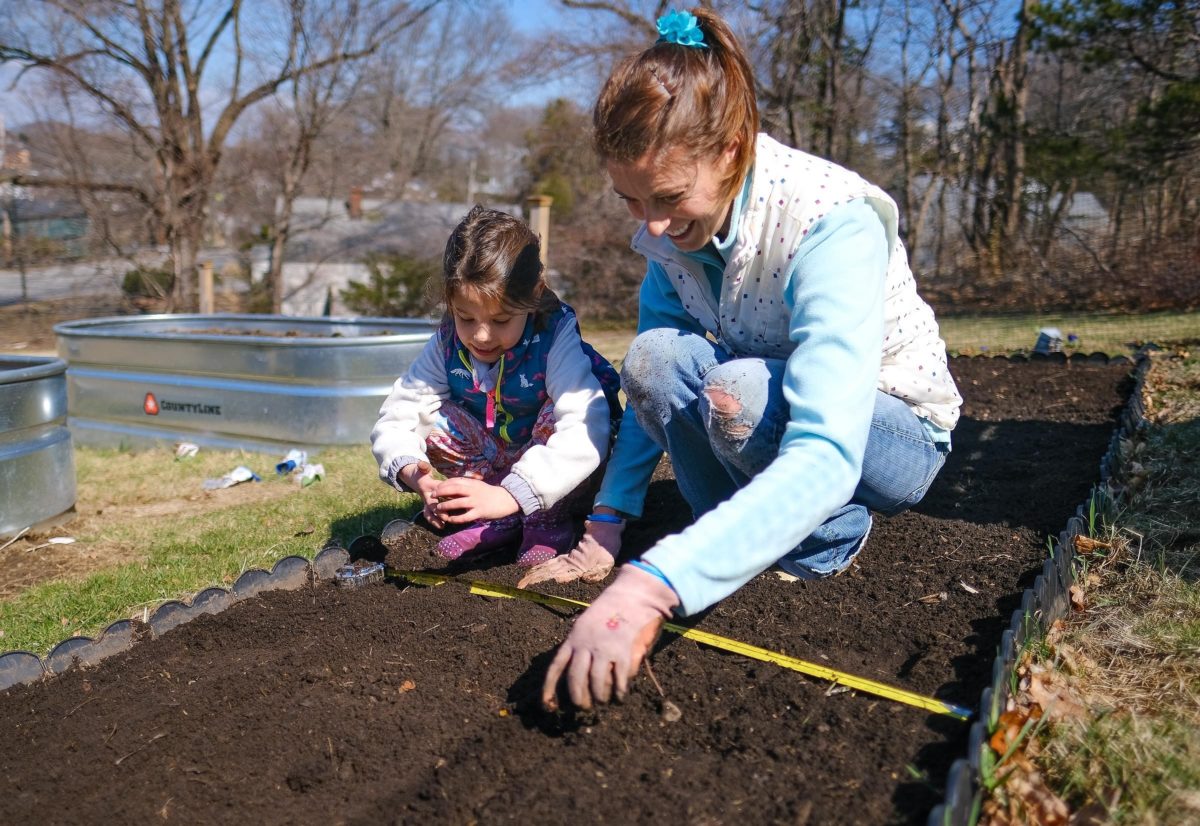
We have a lot of different volunteer opportunities. One of the things that I think is really awesome about the work we do is we try to do all kinds of things, understanding not everything we offer will speak to everyone’s heart. We do a monthly meal service at a shelter; we have an organic garden where we grow produce for local food pantries; we do beach clean ups, harbor cleanups; we rake leaves in the fall for individuals who physically can’t do it and financially can’t afford to have someone do it. We have literally hundreds of volunteer opportunities around both of our drives, where volunteers will come and fill backpacks with school supplies. We just gave out 677 brand new backpacks full of school supplies. Around the holidays we’ll do it again with what we call ‘Bundles of Cheer,’ which are wish lists from each child that get submitted and sponsors go shopping and return everything to us in a pillowcase. Right now we have a pillowcase-sewing volunteer opportunity once a month at our office, making gorgeous, handmade pillowcases. We have all different kinds of stuff, so hopefully something resonates with someone. We do a personal shopping thing in the spring for girls to find formal wear to attend their high school proms, interview prep with at-risk youth – really tons of different things.
Where do you focus your volunteer efforts?
We focus on the four immediate communities: Marblehead, Salem, Swampscott and Lynn. Everything is within a 15-minute drive and that’s deeply intentional. If people are citing one of their top reasons for not volunteering is a lack of time, I wanted to remove that obstacle right off the bat and say, “You don’t have to travel far, it’s in your own community.” I think, again, that one of the things that really resonates with people is that they’re doing something local. What excites me about it is that it invites people into a rhythm of life of volunteering that, I would contend, is integral to the fabric of our society as humans, and by doing that we can maybe try out things we wouldn’t normally. For example, if someone hasn’t volunteered before the idea of serving food at a shelter may or may not pose trepidation. Originally, we will see a volunteer start out by just cooking the food because volunteers cook at home and then drop it off to us. They’ll cook the food and then through repeat exposure we see volunteers moving from strictly cooking to coming in and actually serving the food at the shelter. We see this growth in our engagement of people taking larger and larger steps to other volunteer opportunities.
Jocelyn Cook said SPUR is a multigenerational organization and finds volunteer opportunities for those of all ages and interests./Courtesy Jocelyn Cook
What kind of feedback have you received from people who volunteer with the program?
The feedback has been really exciting and I think it deeply affirms the mission. The name SPUR is not an acronym. We use it as a verb: to spur good deeds. We hope that everything we do is a ripple effect, because doing good feels good and then you want to do more. That’s really consistent with the feedback we receive. People feel valued and honored for the contributions they make and they like to know that they can come to us for meaningful ways to make an impact in the local community. I think, too, one of the things we focus on with the fact that we provide multigenerational volunteer experiences, is really trying to get all individuals to recognize volunteering as the norm and not a checkbox on their college application or job interview or something like that. I’ve had a lot of beautiful opportunities to talk to people like that. I think that all of those things are consistently the feedback we receive, about just how people feel a greater sense of connectedness with their community, are happier, are meeting neighbors and stuff like that. The ripple effect as intended is definitely happening.
Are there any future partnerships, programs, or events that you are excited about?
As a young organization, there’s lots of exciting future plans. I think the key part is having to thoughtfully implement those in a way that doesn’t detract from the foundation that’s been built. We just expanded our garden, for example, so one of the things we’re excited about next year is we just added 20 new garden beds to the garden. We expect to double our yield of organic produce for the local food pantries. This spring, we started a food rescue program where we’ve been picking up food from local restaurants and markets that otherwise would have gone to waste and we’re redirecting it to programs who can benefit from it. We’re integrating our fresh-grown produce into our food rescue program, which is a very exciting thing.
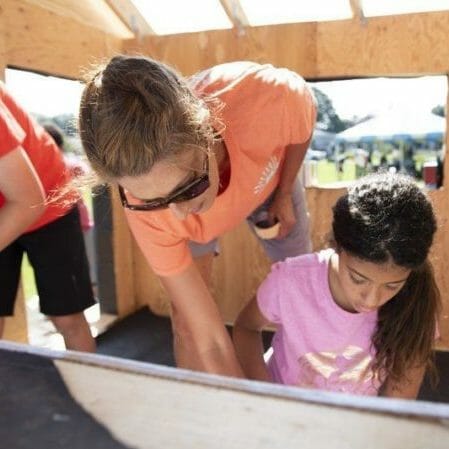
We did our first summer camp this year where we worked with 11- to 13-year-olds, exposed them to safe use of power tools, how to read architectural plans. Then, over the course of two weeks they built a 7-foot by 10-foot playhouse. That was then fully constructed and then transported by fork lift and flatbed truck to a neighboring town, one of the four towns we work in, and delivered to a social service agency. Now they’re using that playhouse that these kids built through our camp for therapy with their pediatric clients.
I think just continuing to expand on some of the great programs we already have going and increasing our volunteer offerings takes a surprising amount of work, organizing volunteer activities particularly for hundreds of people. On September 15, we had 106 volunteers go out and clean up trash and debris from the harbor and beaches via paddle board and kayak and motorboat as well as on land, so just the logistics of that is huge. So our future immediate plans are really strengthening those offerings, how can we have more volunteer opportunities, and how can we just continually evaluate what we’re doing and are we doing it well, what is the impact we’re making and are we continuing to grow or engage. Because that’s our mission, to cultivate doers and by doing that we are meeting needs. One of the things I love about SPUR is it’s a twofer, because we focus on growing a community of people who are passionate about getting involved and making a tangible difference in their communities, and by that they are relieving needs and making an impact for others as well.
What’s been the most rewarding part of your work?
There’s obviously a lot that is rewarding, but one thing that is super rewarding for me is to now have two young kids. I started SPUR five years ago and I’ve got an eight-year-old and a six-year-old so SPUR has always been a part of their lives. One thing that is very rewarding to me is seeing their constant exposure to our way of life and just getting involved and doing things. It’s really rewarding for me to see them just being helpful, or picking up trash that’s blowing down the street, or making their plans for their birthday money or their allowance money. Those things are very rewarding as a parent who can see how my job, if you will, impacts them.
Stepping beyond that, it’s really, really exciting to me when I have those conversations with people who talk about the direct needs that were met. I was recently talking to a mom whose son has volunteered with us for the last two years. He just went off to college, it’s his first semester. She remarked that she was so thankful for his experience with SPUR because he’s doing his first semester abroad and he already–before he went over there–reached out and identified a nonprofit that he wanted to serve with. They’re supporting the homeless community over there at this organization. She was like, “I know that’s a direct impact of his time with you and really opening up his heart to this type of work.” So I love hearing about the kind of, in some ways immeasurable, seeds that are planted that have the potential to grow way beyond our communities. I love that and I think it’s so imperative today that we have people who are thinking beyond themselves. I find that deeply rewarding.
What have you learned through your experiences as a volunteer?
I’ve learned a lot. I have learned a lot of areas where I really need a good team around me. I’m a huge visionary but also a big, strong leader and I have had to learn how to take a step back, relax and trust my team; to take care of myself and understand that they said they would do the social media posts, so they’ll get it done, for example. This is my baby and I want to drive and make the impact the community deserves.
One thing I think I’ve learned or maybe had affirmed is truly just how much people want to do something. I often tell people I generally believe we all want to do something but no one wants to feel like a failure and step out and do it, and I think through SPUR I’ve seen or had that affirmed, that people have the freedom to come to our organization to make an impact in the world. I’ve learned that people are really passionate and will go above and beyond for things that they believe in. I’ve learned that little kids are very committed and super strong.
What do you want people to learn from your story?
I think I would just want people to know that you don’t have to do something big and huge to change the world. You just have to do your little part of good. I think if everyone, just once a day even, could connect to doing one kind thing or one good thing or one thing where they said, “Oh, I’m going to do that,” then we as a society would be shocked at the impact that could be made. An example, I was driving down the road over the winter and a tree had fallen down. Everyone was going around this tree, and my son said, “Oh, Mom, someone should do something about that.” And I said, “You’re right, someone should, and we’re someone.” We have the ability to do that and I think if people would just stop saying, “Oh, someone should do something about that,” and realize we are that someone, because we all have the power to do something and we should just do it. I think that’s one of the things I hope people take away from this piece or just SPUR in general, is that we all have power to spur love and good deeds. We just have to do it and stop waiting or stop saying we’re too busy or stop coming up with all these reasons why it’s not enough, because everything is enough. We just have to do it.
Teen Volunteer Fights Infant Heroin Addiction with “LOVE” Blankets
Meet Daily Point of Light Award honoree Sidney Depp. Read her story and nominate an outstanding volunteer or family as a Daily Point of Light.
Tremors, fussiness and fever are just some of the symptoms babies experience as they go through newborn drug withdrawal. When Sidney Depp personally witnessed a baby struggling through these heartbreaking side effects, she knew she wanted to help infants and mothers whose lives have been torn apart by the opioid epidemic.
Sidney launched “The Love Project; Helping Heroin Babies get Addicted to LOVE” in 2016, an initiative to fight addiction and comfort babies during the withdrawal process. Discovering that Ohio has the second highest number of fatal drug overdoses in the country, the now 17-year-old Springboro, Ohio resident donates swaddling blankets to babies going through withdrawal. Providing 4,000 blankets across her community thus far, Sidney is spreading a message of hope and love to mothers struggling with addiction and their babies.
What inspires you to volunteer?
I’m a strong Christian, and I feel called to serve. I believe that’s how we should live our lives. I believe in the statement that God is first, others are second, and I’m third. As I was researching more about addiction, I discovered that every 19 minutes, a baby is born addicted to drugs. Addiction isn’t happening far away – it’s happening in cities 20 minutes away from my home. We help to comfort these babies with our swaddling blankets, and also, spread awareness about this issue.
Sidney Depp pictured during her first blanket delivery as a 14-year-old. Depp has since donated 4,000 blankets to newborns going through drug withdrawal. /Courtesy Sidney Depp
Describe your role with “The Love Project; Helping Heroin Babies get Addicted to LOVE”.
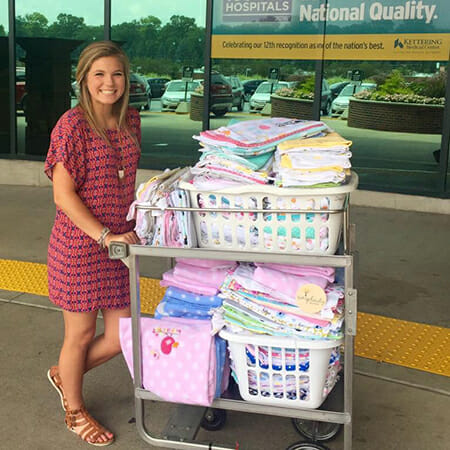
As the founder of The Love Project, I receive donations of unopened blankets from around the country – South Carolina, Texas, Montana – that we donate to babies in need. I also fundraise for supplies and coordinate with organizations who can receive our swaddling blankets, including hospitals. I’ll assemble and customize up to 300 blankets per donation. We heat press a special message of love onto each blanket for the mothers and babies, and we print “Jeremiah 29:11” on each to remind these mothers to stay hopeful, and that God has a plan.
Share one personal story with me from your volunteerism.
I’ve received quite a few messages from mothers who have received these blankets. I remember one little baby – not a little baby anymore – (laughs), his mother messaged me a few months after receiving the blanket with an update on the baby. She let me know that she’d been in rehab and was six months clean. It’s really cool to hear from these mothers that I gave them a little message of hope and love during such a difficult time.
What’s been the most rewarding part of your service?
I am making a difference, and I am inspiring other young people. No matter your age, whether you’re 14-years-old or 45-years-old, you can use your gifts and skills to make a positive impact in your community, state, or country.
What have you learned through your experiences as a volunteer?
It can be hard to step outside of your comfort zone and start a project that you might not have experience with, but it’s great knowing that if you take that leap of faith, your community will get behind you.
What’s your personal motto?
Do unto others as you would have them do unto you.
When you’re not busy volunteering or at school, what do you do for fun?
I am a varsity sideline cheerleader. I love my church. I’m currently a senior in high school, and I’m doing a lot of college visits on the weekends. I also work as a sales associate and a spokesmodel at a local dress shop.
How can readers help?
Please visit our Facebook page for more information about how you can help.
Volunteer Serves Veterans Through Providing “Hand Ups on the Homefront”
Meet Daily Point of Light Award honoree Amy Bamford. Read her story and nominate an outstanding volunteer or family as a Daily Point of Light.
Growing up in a family of veterans, including her father, Amy Bamford said she has always had “a soft spot for men and women in uniform.” So when she began dating one of the co-founders of VALOR Clinic Foundation, she wanted to help out. Nine years later, Amy is now the Board Secretary and Vice President of Operations of the Pennsylvania-based nonprofit, which provides veterans assistance with accessing benefits, housing and more.
Over the years, VALOR — which stands for Veterans Assistance Living Outreach — has reached hundreds of veterans through its various programs and has ballooned from about 25 regular volunteers to about 300 regulars, as well as up to 1,000 volunteers across its various events and programs throughout the past year. Amy helps hold community outreach events in various cities and towns, oversees providing holiday meals to families across Pennsylvania, New Jersey and Ohio, conducts general scheduling and administrative duties, and more.
“Each person, man or woman, that has served our country in any capacity, whether it was during war or peacetime, has given the ultimate sacrifice of signing on that dotted line,” Amy said. “Those of us who have not signed the dotted line, myself included, have a responsibility here to support and make a difference in their lives as much as it does impact our own.”
Can you describe what VALOR does?
VALOR stands for Veterans Assistance Living Outreach. We are a Veterans Service Organization that provides a hand up on the homefront for veterans as opposed to just handing them something for free. The difference between us and some other places is we help to give them the tools for them to then be successful and not need us anymore. So whether it’s bringing them into a transition homeless shelter that we have, key word there being transition, so when they come into one of our transition shelters, we help to give them the tools they need to be successful as a civilian. That could be everything from getting a driver’s license, making sure they have income, and helping them with any health concerns they have.
In addition to that, we do a very large holiday meal program. We are up to about 150 families in Pennsylvania and New Jersey and about another 30 to 40 in Ohio. We make sure they have a full holiday meal, consisting of everything from eggs and bacon for breakfast to their ham or turkey and dessert for dinner. That’s delivered to them about two to three days before the actual holiday. We deliver it for Easter, Christmas and Thanksgiving, so they don’t have to make the sacrifice with their family of making decisions of whether or not to be able to pay their electric bill or be able to really have a nice holiday meal for their family. They’ve sacrificed enough holidays throughout their life when they were serving, that we don’t think that aspect of it should be a sacrifice anymore once they’re home.
In addition to that, we have a program called Veterans Unstoppable which is a unique approach to PTSD. The piece I have to do with that is talking to spouses. They could be male or female spouses of the veterans and some of the things they need to learn and understand to help the veteran through the process. I do not teach those classes, they are done both in the retreat process and in a weekly more peer-to-peer type of assistance provided to them. We do what I call some oddities. A couple times a year we will place a service dog with a veteran that’s in need. We will team up with some other organizations to find a dog, get it trained and place it with a veteran who needs an actual service dog. We’ve also placed a couple emotional therapy or emotional support dogs throughout the years as well.
Describe your volunteer role with VALOR.
I do a lot of different roles. When I first started with the organization, my biggest role honestly was supporting the founder and helping to get other people interested in what we do. Then as I’ve evolved with the organization over the years, I am the Executive Secretary and I am Vice President of Operations. I sort of run the day-to-day operations of VALOR as a whole, which encompasses overseeing all fundraisers, making sure we have volunteers. I do what’s called a ‘Stand Down,’ so we go into towns and set up sort of a makeshift store that you don’t have to pay for. I create and set up locations and then train the people to be able to run it without me being there, but they still report up to me to let me know how successful or what challenges we were having. It’s like a community outreach program for both civilians as well as veterans in that aspect. During that event, we help to find the veterans who need additional help. So whether they’re homeless and need assistance in coming off the street, or maybe they’re already housed but they’re not receiving any kinds of benefits, I then work with one of our VSO people — mainly with [Sergeant Major Mark D. Baylis], who is our founder — to set up appointments with that veteran to help them get the benefits they need. In addition to that, if we know they are moving into their own residency — so maybe they were homeless and they’ve been in a shelter, whether it was one of our shelters or another one — I help to make sure our household goods team has the items that they need to be able to resource and stock this veteran’s house for everything from bed to pantry items.
The big one I help to oversee are the holiday meals as well as the ‘Stand Downs.’ I do oversee the activities and the events that happen both through fundraising as well as community interaction. My hands are out there for scheduling both myself as well as members of the organization to get out there and spread the word about what we do. I do a lot of the background administration work because there’s donation that come in that are both monetary as well as items, so everything needs to be inventoried and accounted for properly. There is never any charge to our veterans that we serve at all so we do a lot of different fundraising and have a partnership with a lot of different places.
How did you first get involved, and why did you want to?
The founder is my boyfriend. He was actually just starting it up when we got together and the funny thing is some of our first dates were actually going out to other veterans organization groups, VFWs [Veterans of Foreign Wars] and some American Legions and talking about what we were doing and how they could help us to get this program kicked off. Although I know that may sound sort of cliche that I didn’t need to join, because I didn’t, but I always had the ability and the heart to speak for people who don’t necessary know how to voice for themselves. In my younger years, I was a tremendous advocate for children with special needs and knew how to use my voice to help them along the way. I’ve always had a soft spot for men and women in uniform. My father is a veteran and most of my family, uncles and up, are all veterans. I think it’s part of my responsibility to use the talents that I have to make sure that they have the resources and know that people care. And sometimes that’s all it takes, knowing that somebody cares and being able to point them in the right direction to take the next step to become a successful civilian.
How has the organization grown since you first became involved with it nine years ago?
It has grown from that we used to do our holiday meals out of the back of our pick up trucks, to now we have about 60 volunteers that reach out to over 150 families. We used to only do a ‘Stand Down’ in one town. We now reach more than 10 cities through our ‘Stand Downs,’ which means that we reach an abundance of veterans — going anywhere from 10 veterans back when I first started, to now within a month we probably reach closer to 150 veterans through our ‘Stand Down’ process. But in addition to that, one of the biggest things that has grown is the awareness. We help to make people in the community aware of the need to help our veterans. That there is actually a need that some of our veterans are homeless and they need a hand up, they don’t need a hand out. There is a significance there that if you lend your ear, maybe that ear is going to help save a veteran’s life. We lose 22 veterans a day to the war at home which means [from] something during their time of service, they now suffer from PTSD and end up taking their life here on the homefront due to something that they experienced though the tragedy of when they were serving our country. If we aren’t bringing awareness about that, we cannot make an impact. I think that’s one of the biggest things that I’ve seen. In addition to that, we’ve gone from when I started, I’ll say probably about 25 regular volunteers, to now we probably have on a regular basis 300 volunteers, but that number goes up too. I think last year we broke about 1,000 volunteers that helped throughout all the different aspects we do.
What kind of feedback have you gotten from veterans?
I have had veterans tell me that if it wasn’t for our organization, they would not be alive. That to me is the biggest feedback and the most impactful feedback that has affected my life. Our household goods team comes back with stories that one day they delivered a mattress and a dresser to a father and his daughter. The little girl started crying and one of the guys said, ‘What’s the matter?’ And she said, ‘I never had my own bed before.’ To be able to make that type of difference to a veteran and his family, and provide them with something that can give them more hope and more reason to continue on for another day, I think that’s some of the best things we can do.
Are there any future partnerships, programs, or events that you are excited about?
There’s a huge one. We recently purchased a property, 192 acres … to build our own retreat building and property. Currently when we do Veterans Unstoppable, we are leasing out other places, other campgrounds or hotels to be able to have our weekend retreat. By purchasing this property, we are now going to be able to have are own buildings which also means we are going to be able to help more veterans come through the program, because of the resources that once our buildings are up, the dollar figure to have more veterans come through will decrease. We’re currently doing hunting and bow hunting and fishing events on this property. They are two of the sporting activities that we help our veterans to be able to have something to do when they see that ‘life isn’t going right, what can I do?’ Connecting with nature is huge for them. They have already enjoyed areas such as fishing and hunting that has been impactful on them. We actually give them some additional skills and some additional items to be able to continue to use that as part of their growth and their calmness. So having this new property is huge. We purchased the property and we hope to actually break ground probably in April or May of 2020, and then have our first building up and be able to start to do classes hopefully within that first year of building. The entire retreat property probably won’t be developed to it’s fullness, depending upon financial donations, probably for one to three years after the first building goes up.
What’s been the most rewarding part of your work?
Honestly, I have come in with so many veterans. There is, they’re now growing to be a family of five, but shortly after I started with VALOR, a very young Army husband and his wife and first child were introduced to us because he has PTSD and needed some help and was going in different directions. The embrace of watching this family grow and thrive, when they were at a point where they were all about to fall apart, is probably one of the most wonderful things I have witnessed. Watching them grow into a strong unit is something I don’t think I will ever forget. The programs that we have in place are to help to strengthen you as a person, but it also helps to strengthen relationships. So many of our veterans end up in divorce because people don’t understand, significantly their spouses on this one. We have to bring those pieces together…I think that we make a tremendous impact on their lives.
What have you learned through your experiences as a volunteer?
I’ve learned that the career that I have with Wegmans has given me the skills to really be able to apply listening, to share empathy, but not to be necessarily sympathetic to something I don’t understand. I don’t think before going into this I really had a whole understanding of the difference between empathy and sympathy, and our veterans don’t want our sympathy. They want us to understand to the best of our ability. I think as a civilian for myself, that one of the greatest things I can do, is listen and let them know that although I have never experienced what they have, that I will do what I can within my power to make a difference with them here today. Sometimes all it takes is somebody who cares. I think that’s been one of my biggest ones when it comes to dealing with the veterans.
The other thing that I have learned is that when you have as many volunteers as we have — and as we continue to grow we always need more volunteers — it takes a balance of people. So not everybody is going to want to be at a ‘Stand Down’ and not everybody is going to want to do holidays meals, but they want to make a difference. So you need to listen to your volunteers and really connect them with the part that they want to make a difference at. If that means they want to come in and cook a meal once a month, then we need to help them find that niche within our organization so they can feel appreciated both as a volunteer and that our veterans get the benefit out of that giving.
Woman Gives Back to the Underserved in Community She Grew Up In
Meet Daily Point of Light Award honoree Arlene Simmons. Read her story and nominate an outstanding volunteer or family as a Daily Point of Light.
Arlene Simmons had always been passionate about giving back to those in need, but it wasn’t until attending the Million Man March in Washington, D.C. in 1995 that she said she “woke up” and realized the importance for her to volunteer in underserved communities. After leaving the military over a decade ago and moving back to her home state of Georgia, she decided to focus her volunteerism on the middle Georgia area she herself grew up in. In 2008, she founded her own nonprofit, A.S Life Care Services and Urban Development, Inc., which supports the underserved through feeding the homeless, mentoring local youth, providing hurricane relief and more. Over a decade later, the organization has a team of about ten members and is supported by over 500 volunteers.
On top of founding and running her own nonprofit, Arlene also finds the time to volunteer in multiple other areas. She helped cofound a missionary school in South Africa that provides technology, food and clothes through an after school program. She is on a board that provides educational scholarships to students and teachers, is in the process of creating a lifestyle magazine for the black community in middle Georgia, and is also working on a program to teach aviation 101 to youth in the area.
Describe what your nonprofit, A.S Life Care Services and Urban Development Inc., does.
There are so many different arenas and so many different areas we put our hand into. We are into hurricane relief efforts, we’ve done quite a few of those. We’re actually gearing up for Jamaica hurricane relief efforts right now. … We have youth programs, the “Jump” program where we teach and mentor. We get 9th through 12th graders, we give them life skills, get them interview ready, get them jobs, also scholarships. We’re partnered with a co-op in Warner Robins [Georgia] where they have the abilities to give out scholarships for furthering their education after they’re done with our program. We hold holiday giveaways to numerous families, the largest one in the middle Georgia area for Christmas. We feed the hungry. Mainly for my organization we feed the hungry on Thanksgiving morning and Christmas morning, but throughout the year we volunteer with some local organizations and businesses in the middle Georgia area where I’m from. We team up, we sponsor multiple businesses throughout the year. For instance, one business, when they’re feeding the hungry, we will supply food and actually come out and volunteer. We supply all the sleeping bags for the homeless for this other organization. We just work with different organizations along with my nonprofit throughout the year when it comes to feeding the hungry, clothing the homeless, youth mentorship programs, having community events. Pretty much we have our hands in almost anything and everything that will [support] the underserved communities, with the youth and the elderly.
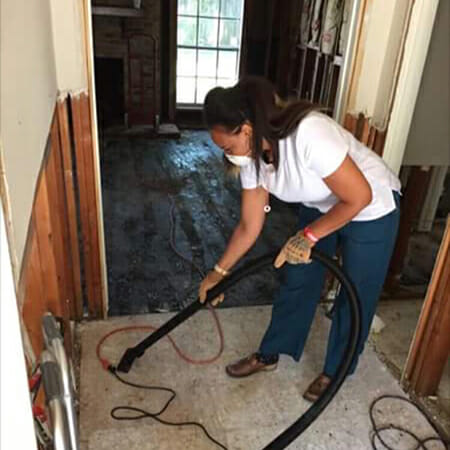
Arlene’s nonprofit A.S Life Care Services and Urban Development, Inc. provides hurricane assistance. She is seen here cleaning a home that was affected by Hurricane Harvey in Houston./Courtesy Arlene Simmons
Why did you want to create this nonprofit?
I remember back in ’95, I was a part of the Million Man March in Washington and I met a lot of great people who were really into helping their communities and their neighbors and a whole different type of field out there in the nonprofit sector. That woke me up. It spoke to me. In that moment, I realized I had been helping people all this time but I did not recognize what it meant and how big it was. That moment really defined what I really wanted to do with my life, just to give back and do it in a manner that was more helpful than what I was doing before, which was pretty much helping anyone who walked up and said they needed help. I focused on the underserved communities after I met some great people in ’95. So with that being said, I would volunteer with different organizations and lend a hand wherever I could.
We were military and we were moving around a lot. When I got back to Georgia after being out of the military over 12 years ago, I was focused on the middle Georgia area and the Atlanta area, with helping serve and being a volunteer wherever I could. Then I realized I had the ability to coordinate and put together events and I was really good at it. So I came up with my organization, just so I could focus more on what I thought it should look like or be like and to have more of a footing. I would see other people not doing the right things sometimes with their organization and I felt as though, Ok, I want to see something better,’ so I decided to do it myself. Seeing others at work and some things that I thought should be done a certain way, I decided to go forth myself, because there’s so much need out there when it comes to the homeless and the hungry and children in different neighborhoods and areas that do not get a chance to experience some things that could wake them up to bigger things in life. I decided that if I wanted to see things done a certain way and to dig deeper into the communities and neighborhoods, I would have to start one myself to satisfy what I thought it should look like or be.
Can you describe your work with the missionary school in Congos, South Africa?
I have a coworker, she was a nurse as well, and she’s from Africa. She wanted to give back to her community after hearing my stories from years ago, so she came up with the idea because her and her husband have a church. She came up with the idea and asked me to be a part. We came up with a full curriculum when it comes to reading and science and technology. We send over a lot of tablets and I send over all kinds of educational pieces. They meet after school and come there for the pantry, we do food, we do clothes, we do all kinds of supplies. They can get hooked up with the technology world when going after school, they can get food and some clothing. That is pretty much the basis of the after school. It supplies a lot of their needs educational wise, food and clothing. That’s something I can be proud of, definitely. For this Christmas we’ll be sending more tablets, more headphones, pretty much trying to keep them abreast of whats going on in the bigger world, what’s new in technology, what’s new in the world, education pieces like books. Whenever we do the Christmas giveaway in December, we always refresh and send supplies back for the school there.
There’s about 250 children that take advantage of it on a weekly basis. It’s really neat. They try to rotate children in and out. However, we have to do something more now. We’re looking to expand because so many children are wanting to take advantage of it. That’s something in the future I’m looking forward to as well. We will be taking a trip out next year to look and see what they have come up with when it comes to buildings or a site for a larger area. We don’t need much moneys for that other than the supplies. They have plenty of help out there. My main goal is to keep them updated with their supplies and the pantry and the food and go out to visit and make sure things are going accordingly and meet the children and gain some friendships out there with the kids and watch them grow. It’s coming along and its really nice to know where they once did not have access, they have it now and their minds are growing. It’s a beautiful thing for me.
Can you describe your role with Education of Excellence?
That is a foundation of the charter school system of which I’m from, Milledgeville, Georgia. I’m one of the officers on the board. We collect funds, moneys through state, federal and local, to give scholarships every year to reward teachers of the year for the Baldwin County School system. We help children with anything from A to Z, whatever is going to be helpful. We’ll give out scholarships and funding for students who are struggling in college with their books. We’ll give moneys to students in the high school who are great athletes and have great grades but don’t have the moneys they need, so we’ll bridge that gap. We give moneys to most of the classrooms that are in need, that are low in supplies. It’s very active, we make a lot of money. We are part of the Georgia reach program, thats what we’re doing here, we’re an extension of the Georgia REACH [Scholarship] Program, to where we are able to give these scholarships out and to get moneys from the state level as well.
I know that many children in that area, they don’t have the opportunities. I grew up in the area and whatever I can do to assist, that’s what I like to do. The children are young and they need a better, stable footing than what I had. I didn’t have that. I didn’t have anyone to say well here’s this, go to college and we’re here to back you up. So with me not having that and being able to do that for the next child now, it means a great deal to me, especially coming from my home town.
Can you describe your role with Urban Vibe Magazine?
I was approached with that opportunity a year ago. We as a culture did not have a magazine that was entertainment and lifestyle in the middle Georgia area. We had a middle Georgia Black Pages where you could find any business you want in the area without a problem, but we did not have a lifestyle magazine, with our culture being high rated in heart disease and diabetes and health issues. Even with entertainment, we didn’t have that type of magazine in the area. So we did the research, we coordinated with the president and CEO of middle Georgia Black Pages. He’s become a mentor to help us get this magazine off the ground which will be the end of this month. We will be able to pretty much service thousands of people that were not serviced before when it comes to people of color. This magazine is a little different, it has lifestyle, business, health inspiration, and entertainment. That was very important because that was something that was not available.
Arlene, center, and her nonprofit hold the largest holiday giveaway for families in the middle Georgia area./Courtesy Arlene Simmons
What drives you to commit so much time to volunteering in multiple different areas?
I look at it like this — I want to impact people because when I leave, any degree I may have, I’m going to take it with me and no one else can use it. I want to be able to leave something that someone else can use and maybe turn around and do it for the next person. I think thats the way the world should evolve and that’s the way the world should be, and I think that’s the way we end up with a better world. If I can show you how to be a better person, you can in turn show someone else how to be a better person. I think that because I was in a situation where we were underserved. My parents were grounded in their spirituality and that was strong enough for me to keep the faith of being able to say, ‘Ok, one day I will be able to look back and help someone else and not see them in the situation I was in, being underprivileged and not having the necessities.’ That stuck with me. I want to be able to — I would say not necessarily prevent others from being in that situation, which I have done — [but] my main focus is to make people’s situations a little bit lighter and brighter. We can’t save everybody, we can’t save the world, but if we do a little bit at a time it will effect the next person and they will probably be able to affect the next person. People helping people is what drives me, to know that it will be a lasting effect. You can give someone a dollar and they won’t think about it again and that doesn’t mean they will help the next person. But if you get out there and put in the time and energy and work, and actually make a difference, that sticks with people more and they will in turn have some gratefulness and maybe do that for the next person. So that’s what drives me, to be able to have real change.
Are there any future partnerships, programs, or events that you are excited about?
I’m a private plane pilot and I fly to [Cobb County International Airport-McCollum Field]. I’m working on an Aviation 101 program which I have adopted and will go forth with, helping the underserved community in the middle Georgia area because there aren’t any black female pilots in the area. I’m working with the Baldwin County private regional airport to be able to bring underserved children out. I want that to start in the spring, to teach them Aviation 101 to open up their minds to something bigger so they know it doesn’t matter where you’re from, it matters where you’re trying to go, and to show you how to get there, that’s the prize in this program. That’s something that I’m very excited about. I’m working to get my instructional license which is separate because I will be able to actually take someone up and teach, not only just to show them Aviation 101 and allow them to ride with me, but I’ll be able to actually teach. That is my goal, to teach the underserved communities Aviation 101. I don’t want to do anything that is going to be self centered and selfish, I want to do something that I can continue on helping someone else with. With me learning to fly, it was recreational at first, but then I started thinking, hey, I didn’t get this opportunity when I was young and now that I have a platform and I’m able to do more with other children, this is what I want to do with what I’m doing. I decided to turn that into something that the kids can grab hold of that’s not the regular norm they see everyday. That is what’s coming up and that’s one the most exciting things. Even though I have Christmas giveaways coming up in December, and the magazine coming out at the end of this month, I think that is one of the most exciting things that is coming up that I can really be proud of.
What’s been the most rewarding part of your work?
To see the smiles on the kids’ faces and to see their eyes light up and I know their brains are working in overload, seeings something different and seeing someone helping them. Knowing that these little young minds take these moments and may in turn help someone else later on. Just seeing the smiling faces and hearing the comments that make the ‘oohs’ and ‘ahhs,’ and getting the hugs. It’s a beautiful thing so I that’s the most rewarding.
Why do you think it’s important for others to give back?
I think now a lot of us have lost our way when it comes to community and family. Giving back to the community is a sense of belonging, a sense of trust, and a sense of security in each other again. With so much going on in politics and the world, it tends to feel like a cold world. It tends to feel like everybody is out for themselves. But when you’re in that community and you’re actually showing and doing for the community, you change people’s mindset and thoughts of this world, of what the mainstream media makes it look like most of the time. A lot of times, it looks like a cold world, so being in the community and giving back to each other, it gives a sense fo belonging, a sense of family, of neighborhood, of camaraderie. So that’s why I think it’s important, because it gives you a sense of belonging. I think it makes you see that this world is still a great world.
What do you want people to learn from your story?
Anyone can serve. Anyone can be a leader. You just have to do it and do it for the right reasons. It doesn’t matter where you’re from, it just matters where you’re going. There are no excuses, and we should put away the excuses and put ourselves to the side sometimes and look at the greater good of things when it comes to helping others. I think that is the greatest good. Helping others is the bottom line of why were here, allowing the world to turn in a better light. It doesn’t matter where you’re from, it just matters where you’re going, to put yourself aside for a moment and give or do something great for the next person because that’s going to assist the world in being a better place.
After Autism Diagnosis for Child, Volunteer Mom Builds Positive Community for Other Families
Meet Daily Point of Light Award honoree Stephanie Brown. Read her story and nominate an outstanding volunteer or family as a Daily Point of Light.
Stephanie Brown says when she started noticing her young son missing milestones, she took the child to the doctor. After her son, Mason, was diagnosed with autism, the 47-year-old Carbondale, Illinois mother began to mourn dreams for her son that others might take for granted, and lamented the lack of resources in her area. “The life that I had imagined for him became a life of a lot of unknowns – playing basketball, hearing him say mom, knowing what he ate that day.” Stephanie thought a so-called normal life may be lost to Mason, until she decided he could have all of those things, and others like him could as well.
As the president of the Southern Illinois Autism Society, Stephanie is able to guide other families like her own who are desperately searching for information, resources, or just a friendly ear. Helping thousands of families thus far, Southern Illinois Autism Society offers support services, programming and activities for children and adults with autism, turning a personal challenge into a positive outcome for her greater community.
What inspires you to volunteer?
When I had a child diagnosed with special needs, I realized how much I didn’t know, and when I realized that resources weren’t available for my son in my community, I knew that had to change. My service is personal because of my son, and volunteering with Autism Society has become my passion.
Describe your role with Autism Society.
As president of the Southern Illinois Autism Society affiliate, I help to connect autistic children, teens and adults with critical resources. People want to know where they can go for a doctor, dentist, therapy or support groups in their community. A parent will sometimes call just to talk to someone who understands what they’re going through. We also are continuously fundraising to support our direct services.
Tell me about some of the services you offer.
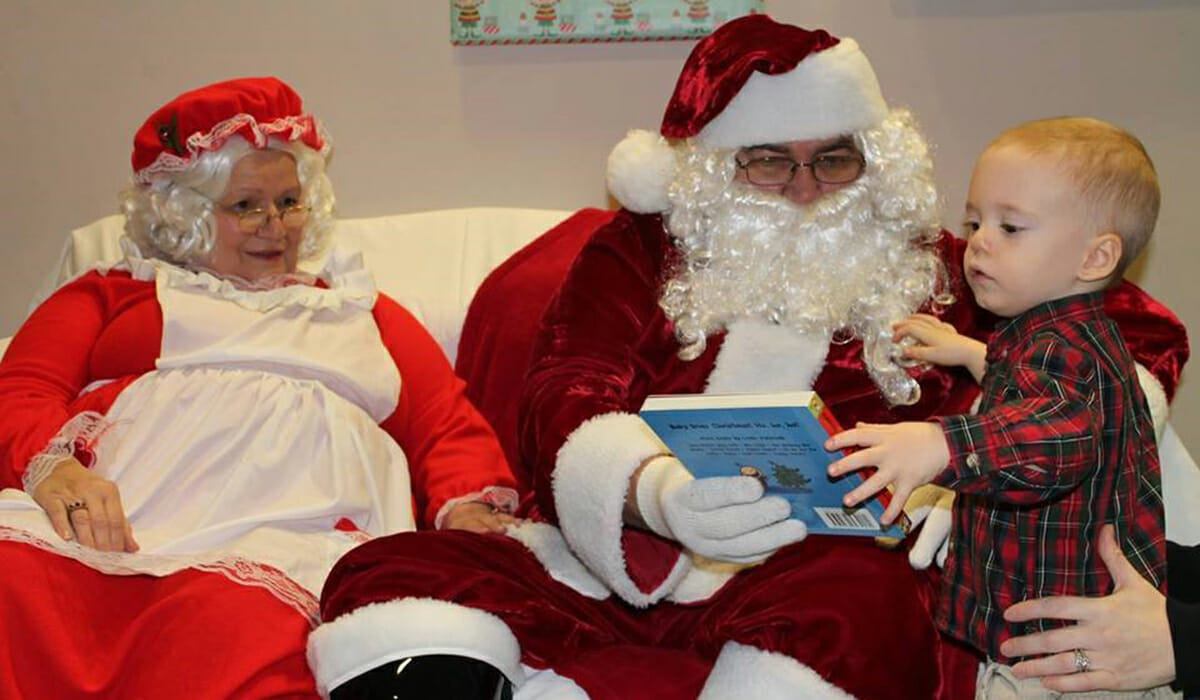
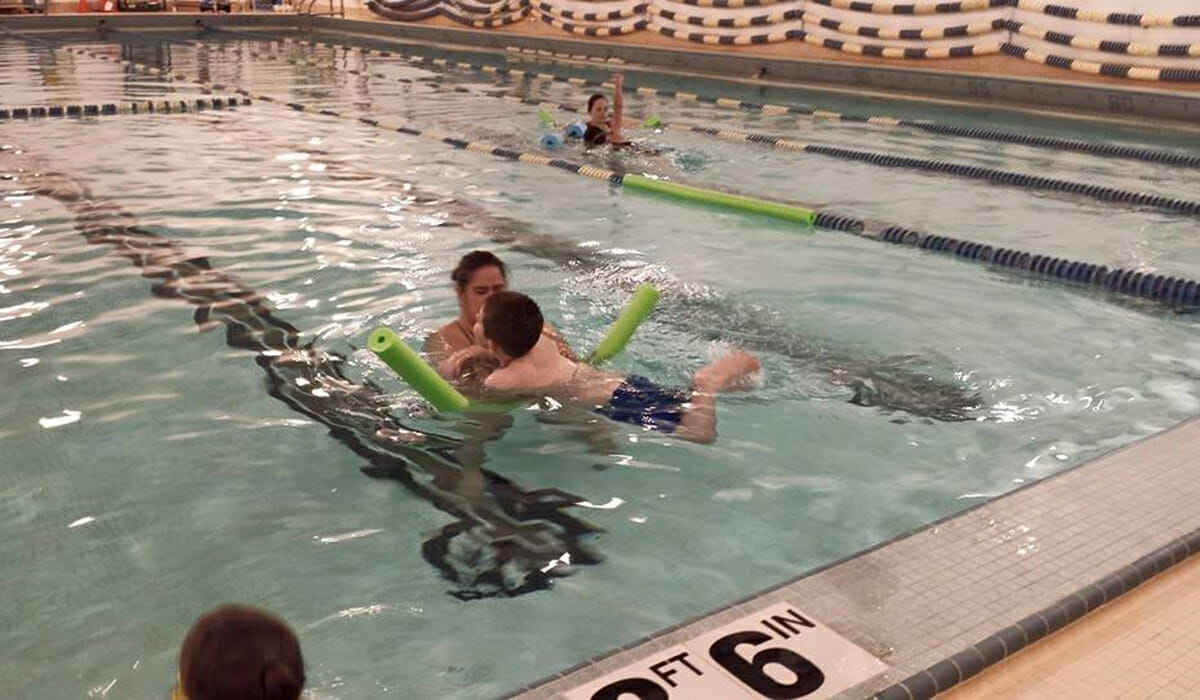
We offer activities including equine therapy and swim lessons, our Buddy Baseball league and Sensitive Santa for children to experience one-on-one visits with Santa. We also partnered with Illinois State Police District 13 to provide training to first responders.
Southern Illinois Autism Society offers programs including Sensitive Santa, so that families can visit with Santa one-on-one in a sensitive and friendly environment. /Courtesy Stephanie Brown
Share one personal story with me from your volunteerism.
I was attending an equine therapy session for a school-aged child who was non-verbal. The child was on the horse when they spoke for the first time in their life, saying “walk on.” Everybody around the child just looked at each other, and we all had a moment. We’re thinking, did that actually happen? Did the child just say what we thought they said? That child is completely verbal now.
What does your volunteerism mean to the people you’ve impacted?
It’s granting the person with autism and their family some normalcy. It’s the little, everyday things that others take for granted, but are so meaningful to these families. Whether it’s Buddy Baseball, or being able to take your kid to Walmart (laughs). For that one moment, you get to experience what other parents experience.
What’s been the most rewarding part of your service?
That the families in our program connect and grow collectively as a larger family. When you start off on this journey, you feel alone and isolated. As you find the right people that have similar experiences, you become an extended family. You celebrate every milestone and we celebrate and cheer each other on. It’s not just me cheering on Mason, now I have a whole community cheering Mason on.
Offering resources and services like private swim lessons, Stephanie Brown has helped thousands of families navigate challenges those with autism face./Courtesy Stephanie Brown
What have you learned through your experiences as a volunteer?
The power of kindness. In the beginning, I was so scared to drop Mason off at school. I worried how the world would receive him, and if the kids would bully him. These children not only accepted Mason, they embraced him from the very first day, and they all learn from each other. My service has taught me to never underestimate the value of kindness.
What do you want people to learn from your story?
As scary of a word as autism can be at first, once you get over the word, and the worry of what that word is going to bring your child, that you start forgetting about it, and start enjoying your child as they are. The more we include our kids and the more we expect inclusion, the more that our community gets the chance to show us how amazing they can be in embracing us.
How can readers help?
We’re holding a Family Fun Day on September 28, 2019. Please visit our website for more information about events and how you can help.