Through Simple Acts of Service, Texas Teen Hopes to Create A Ripple Effect of Positive Change
Meet Daily Point of Light Award honoree Emily Kate Mosley. Read her story and nominate an outstanding volunteer or family as a Daily Point of Light.
We each have the power to make a difference in our communities – with our voice, with our vote, with our resources, with our time and skills.
For the past six years, 17-year-old Emily Kate Mosley has put her power into action through volunteer service. Now a college freshman, Emily Kate has dedicated hundreds of hours to providing STEM education at her local public library and the nearby Baylor University Mayborn Museum, and hundreds more to ensuring that others are able to participate civically through bipartisan election activities.
Through her volunteer service, Emily Kate is not only making positive change in her Waco, Texas community herself, but also supporting others in realizing their own potential and becoming engaged themselves, creating a ripple of positive change.
What inspires you to volunteer?
I was once told: “Do not be discouraged by the tragedies you see in the media, because when they occur, you will always see those willing to help.” I feel compelled in a world so strongly divided and violent, that I can do small things to help. Through my work, I’ve been able to educate those who have not had access to the resources necessary for their advancement. Teaching STEM to inner-city students, helping job-seeking adults with computer skills at a public library, and even aiding in complicated voter registration situations has allowed me to feel that I am creating simple change with large, rippling effects.
Emily Kate speaking with Congressman Bill Flores (TX-17) about educational programs she worked with at her local library and university, as well as voter registration and election bias issues./Courtesy Emily Kate Mosley
Describe your volunteer role.
During the summers, my time commitment to the library was anywhere from 15-20 hours a week. Along with creating lesson plans for children and helping with the curiosity cart, I tested new materials such as simple robotics, 3D printer, a pancake art machine, etc. I would then implement these skills to adapt them to the ages and learning levels of the students. Over the past six years, I dedicated around 650+ hours. Now, my work with them is much more sporadic and less regular due to me being a freshman in college. I was honored enough to go to a STEM Star reception this summer hosted by US Congress for my efforts and speak on the education system as well as diversifying the field.
To help with election activities, I work directly with voter registration and aiding with questions such as finding the nearest polling station, ensuring that everyone I meet with has bipartisan access to information on candidates, and helping new residents change their status or request absentee ballots. In college there is a lot of this, as young voters are unsure on where to go, who to talk to, or the importance of asking voting questions. I have an open-door policy and keep all the necessary forms staffed in my residence hall for anyone on campus to contact me or ask how to get involved on either side of the isle. Another big part of this is that I live in Texas, and there is a large Hispanic community that needs help registering due to their new citizenship status or are unsure of their eligibility and I work with an alliance group to help with those issues as well. As far as partisan elections, I invite opposing candidates to town halls or various local events so that voters and citizens can get to know their potential representative. Due to my activism in various platform areas I have had the opportunity to speak on my community’s behalf to congresspersons and senators alike. These events are far between due to the congressional/legislative schedule and the natural election cycle. I have done this work the last 4 years and continue to do so now!
What has been the most rewarding part of your work?
The most rewarding part of my work is being able to build a platform to allow others to voice their opinions. Together, I believe that we bring a unique perspective to the legislative table as well as bring about sustainable change. I love hearing the stories of those with different backgrounds and experiences of mine. I was fortunate enough to travel to D.C. this summer and talk to representatives of my state and beyond to speak on behalf of some of the divisive issues I worked with first-hand. I was able to bring my journal of notes, comments, and questions from people I worked with over the last 7 years and finally give those in my community answers. The opportunity to do so was both breathtaking and humbling.
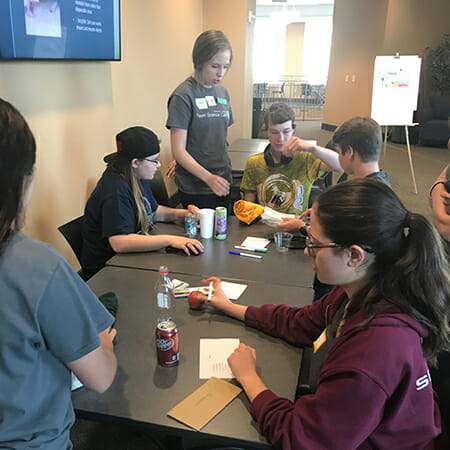
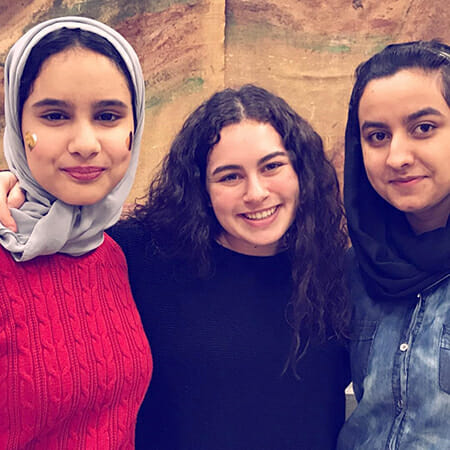
Emily Kate (center) at the Mayborn Museum working with a Ph.D. student at Baylor University whose thesis was on the effects of plastic in marine life and humans and test various objects compost capabilities. Together they were able to bring an educational seminar to high school level students and discuss sustainability, as well as provide time for students to ask questions about various environmental issues./courtesy Emily Kate Mosley
What have you learned through your experiences as a volunteer?
I’ve learned that everyone we come in contact with has an effect on our lives in one way or another. People who agree with us provide great conversation, people who teach us expand our worldview, and people who disagree with us provide an insightful viewpoint. Volunteering is all about helping no matter what. You don’t choose who you show empathy for based on how similar they are to you, you choose to show empathy across the chasm of differences because it’s the right thing to do.
Are there any future partnerships, programs, or events that you are excited about?
I’m about to start a remote internship with the Smithsonian Cultural Institute researching cultural destruction following natural disasters! I’m really excited about this project because I not only will get to work with a renowned organization, but because it combines my love of international Relations, Environmental Science, and philanthropy in a really unique and impactful way. Academically, I was recently commissioned by a faculty member to write a research piece for an academic journal pertaining to the morality of cyberwarfare. With the contacts I have had the honor of meeting in my work of litigation, I hope this article will provide both insight and a humanitarian perspective to a detached technological issue.
Why do you think it’s important for others to give back?
In true patriotic fashion, I am a firm believer in “together we stand, divided we fall”. I think it’s important to give back to serve as a reminder in such a heated political climate that we all face similar issues and have more in common than we do differences. By showing basic human kindness that costs nothing, we not only create a better world, but we open a door for communication, compromise and unity.
What do you want people to learn from your story?
Best put by Malala Yousafzai “Here I stand, one girl, among many. I speak, not for myself, but so those without a voice, can be heard” This story is not my story. It’s an accumulation of stories and a combination of dozens of external motivations I have received from those around me. I could not have accomplished what I have without the volunteerism of wonderful teachers, friends, and mentors I can’t even begin to thank for the time they dedicated to me without recognition or payment. Behind every great volunteer is another…and another…and another.
Woman Cofounds Free Medical Clinic to Serve Community Members in Need of Healthcare
Meet Daily Point of Light Award honoree Ann Heler. Read her story and nominate an outstanding volunteer or family as a Daily Point of Light.
Ann Heler was sitting around a kitchen table with a group of her fellow service-minded friends, wondering out loud together what project they could take on to benefit their Michigan community. An offhand comment led to a lightbulb moment about the need for a free health clinic for citizens unable to afford healthcare. Despite the fact that none of them had any experience in medicine, the group opened their first clinic within four years of their initial discussion. Over a decade since that meeting, Ann has now served as the co-founder and Executive Director of the FernCare Free Medical Clinic for the past nine years.
The medical clinic has 390 established patients of adults who have received healthcare that they otherwise would not have been able to afford, and 110 volunteers who have donated their skills and expertise to helping them. Each month, FernCare holds six clinics that each usually see about 20 to 30 people. Aside from traditional primary care, FernCare also offers access to acupuncture, nutritionists, dietitians, counselors, collects no longer-used medications and equipment, and serves as the second-largest source of healthcare information in the Detroit metropolitan area.
“What I tell the board and what I tell all the volunteers is that we’re not doing everything,” Ann said. “We’re not solving all the problems, but we’re part of the solution because we’re doing something.”
Describe what the FernCare Free Medical Clinic does.
We’re a free medical clinic open to anyone between the ages of 19 and 64 who does not have health insurance. We don’t care about how much money you make and we don’t care about residency, none of that is important. We are a primary care clinic, so think of everything in a traditional primary care medical clinic, that’s what we do. In addition to that, we dispense generic medications, we do all of your lab tests. We always have somebody who works on, if you need a prescription that is not generic, helping you find the cheapest, if not outright free, medication possible for your issue. … At the same time we always have a health insurance enrollment volunteer at every clinic to help people figure out if in any way they qualify for health insurance. We’re wonderful and we’re pretty magnificent, but we only run six clinics a month, and the only time there’s medical staff is when we’re there, so we try really hard to get people into traditional health insurance so if they need help at 3 o’clock in the morning, it’s there at 3 o’clock.
In addition to that, we also run acupuncture for our patients that’s at a separate time than the clinics. We also have counseling. We are also the second largest source of healthcare information in the Detroit metropolitan area. Our resources are pretty niche, meaning when you call us like for a dentist for instance, we just don’t give you every dentist in your zip code. We only give you the dentists who have possibly outright free care for charitable patients, or have great payment plans, or sliding scales based on your income. It’s a very, very specialized list, and now we do 18 areas like that. We are also a collection site for no longer used medications and we work in conjunction with Ferndale Police and the DEA, because the job is to get no longer-used medications out and safe to be disposed of. We also collect medical equipment from people who no longer need it but obviously don’t want to just throw it away. That’s in conjunction with World Medical Relief and we take all of that equipment over to them and they distribute it all over the country and internationally.
We have a nutritionist, a dietician, and a wellness coach who all the patients can access if they want. With those wonderful volunteers, they can see you at the clinic, they can see you at their home, wherever you need to go. There’s a big belief at the clinic that all these things are super important and we have to help people understand that they are really, really valuable. You really can make healthy decisions and help get to where you need to go and help lessen the use of medications.
There are only three paid part-time staff. Everyone else, including the medical director, including me, including all of the medical volunteers and everyone else, are all volunteers. There’s about 110 of them all together. It’s incredible. I’m amazed every time we open clinic. We are also a teaching clinic. We have contacts with the local universities … So we take people who are just beginning to come into the field and show them a different kind of care and different kinds of things we do when you’re working with this particular population, a population that does not have a lot of money to spend, and absolutely has to do this all on their own because of course they don’t have health insurance.
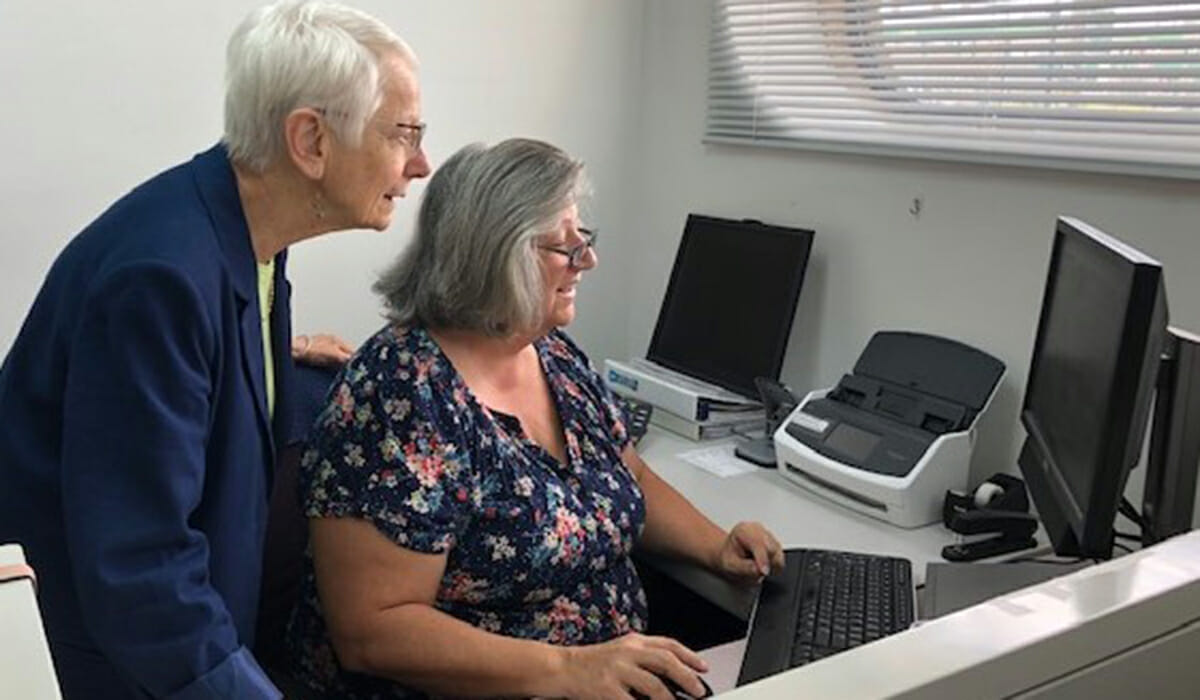
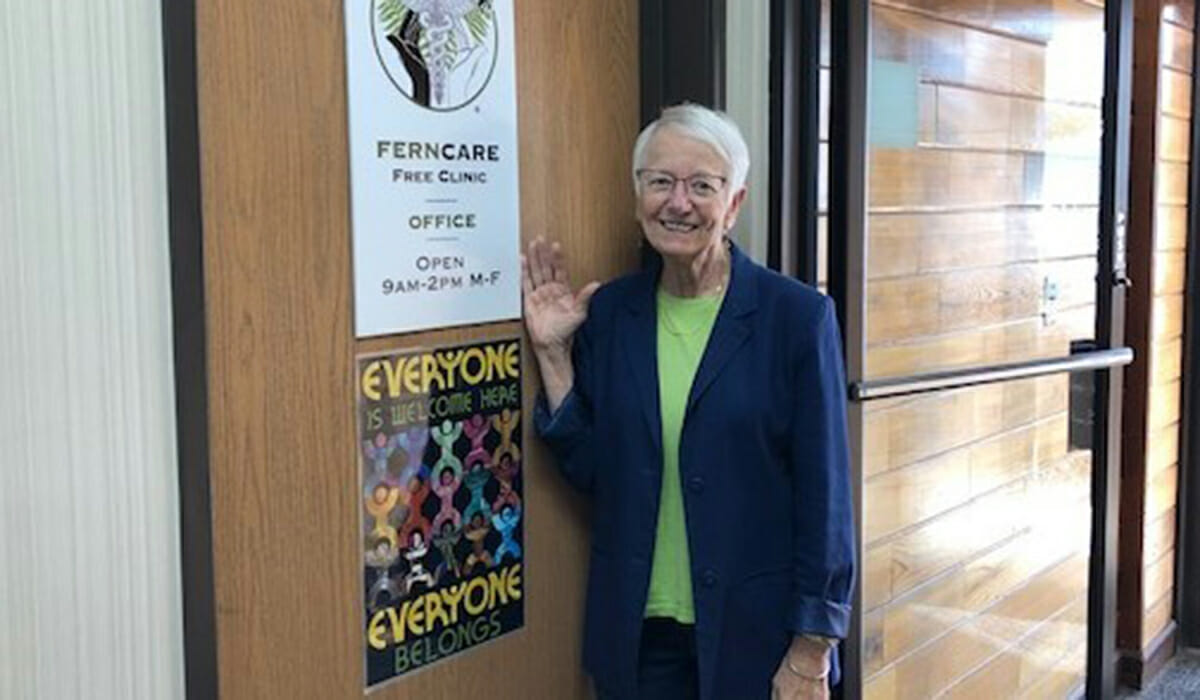
Ann Heler, left, helped to open FernCare Free Medical Clinic in 2010./Courtesy Ann Heler
Describe your volunteer role with FernCare Free Medical Clinic.
I’m one of the founders. That was 12 years ago in November 2007. Our first board meeting was in 2008. In 2010, we opened up our first clinic so I’ve been the Board President and the Executive Director since then, and then since leaving Board President last year, solely as Executive Director of the clinic.
The job [of Executive Director] is to keep the whole thing running smoothly, meaning everything from making sure our board is clear about what they need to do, and helping them in any way with what they need to do, especially around fundraising, around donors, around things like this. The next is to make sure the clinic manager and medical director have absolutely everything they need to run the clinic, to orientate new volunteers. Then, of course, just running the business and keeping the lights on and doing all those kinds of things you just have to do. We’re small, there’s only an office manager and myself when there’s no clinic. Kind of everything from looking through things people donate to make sure they can all go to World Medical Relief, to answering questions of people who just come by and have no idea what in the world a free medical clinic is and what in the world we do, and all the way up to helping to create budgets.
What inspired you and your co-founders to start the clinic?
Ferndale, Michigan is very community-minded and also a very, very politically active community. In 2006, a group of us [were involved with] Citizens for a Fair Ferndale. We had just passed the human rights ordinance. Now it’s 2007 and the five of us were sitting around thinking what are we going to do, what’s our next project? Two of the people happened to be independently health insured … One of the couple, she was opening her mail and she just received her insurance bill and she put it out in front of all of us and said, what do people do that can’t afford this? And I said, well, let’s start a free clinic. Our first board meeting was in April 2008, in 2010 we opened our first clinic. We’re still going, no end in sight. We’re still trying to think of another way to add one more clinic session, one more service, one more thing we can do.
I like to talk about it, I like to talk about the people and great patients, but it’s really sad that we have to use free clinics in this country for medical care. There’s about 1,400 free clinics in the whole country. Michigan has 49 clinics and they’re all over the state. The fact that we have not found out a better way to take care of healthcare issues and to take care of our country’s health — we just have to keep working on it. We just have to keep talking about some alternatives and other kinds of things we can do.
What would life be like for your patients if they didn’t have access to the clinic?
First of all, if they don’t have healthcare, for most of our patients, they’re going to die a lot earlier than they need to or should have or would have. The issues are real, it’s not just a headache, it’s not just a head cold. People come with us with hard, hard issues. Hard diabetes issues, blood pressure issues, that some of them, because they’ve lived with it for so long, they don’t even know how at risk they are. People who know something is wrong and know they need medical care that can’t afford it in our area. … Or they’ve been to the hospital before and they had dreadful, dreadful bills. They cannot access healthcare. They can’t afford it, so they live in misery. The number of people who live with damage, oh my goodness. First of all, if you have a toothache all the time, you’re not going to be the most cheerful person in the world. If you’ve got a headache that you feel is just exploding, you’re not giving full attention to anything except that headache. So what are we missing? These people, the family isn’t getting the attention they need, the job isn’t getting the attention it needs if they work, and it’s pretty frightful and they live kind of on a tightrope all the time. They know they’re ill, they can’t afford to miss work at all, so they don’t want a diagnosis that says they may have to. They don’t want that, but they know they need this issue handled. Most of these issues don’t go away just because you wish it so.
So when they come to the clinic and somebody says, ‘this is what you’ve got and this is what we’re going to do, and you’re going to see this and you’re going to try this,’ they change. When they walk out, you can just see their shoulders drop. Maybe not forever, but at least for now. For now, ‘I didn’t make all this up, somebody believed me, it looks like I’m going to get help, they’ve started some kind of plan. This, at least, might be ok.’
I’m very fortunate that I have health insurance and all of that. I can’t imagine being in a position where there’s nothing you can do so you just have to get up and go to work and try to get through the day. This helps in this area, in this one area of a physical or a mental issue, just knowing that this part is being handled, it’s a little better. It won’t solve all your problems, but at least this one little thing, now they can be easy on. Seventy eight percent of our patients work. Of that 78 percent of patients that work, about 63 percent [make] 32,000 dollars or less a year. So they don’t have a lot of money, you know. You can see why some things are just not possible for them.
Are there any future partnerships, programs, or events that you are excited about?
We have just inaugurated an electronic medical system for the clinic. We’ve been on paper charts up until May. The volunteers are just beginning to get used with that. As soon as the medical director gives me the go, we’re going to incorporate a patient portal so we will have one more way of being able to reach patients and also one more way for patients to find out about their heath status, about the latest report, about the latest appointment, whatever it is. Just one more service to help our patients get the best care they possibly can and then to do as much as they can working on their own health. That will be by next spring.
Another thing we hope to do is to offer counseling services that would be available to a number of our clinics. It’s one thing to have two or three social workers who can help and who can make appointments, but that is not a dent in what is needed around mental health, emotional health, and so on and so forth. We’re beginning to piece that together so we can open that as a new flourishing service in 2020.
FernCare Free Medical Clinic has helped hundreds of people without health insurance receive medical care since its first clinic opened.
What’s been the most rewarding part of your work?
One is seeing patients leave with big smiles on their face, like ‘I don’t have to worry about my insulin. I don’t have to worry about my blood pressure count, because now someone is helping me with this. This is one less thing I have to worry about. One less thing.’ What a pleasure to see that, what a pleasure. … That’s a lot and that makes me happy.
The other is working with these incredible volunteers. There’s no reason to come here, you know, nobody twists their arm, nobody begs, I don’t follow them around crying. They volunteer. All of these people, they all have licenses, they all have certificates, everything that is required by the state of Michigan to work in a clinic. They see people who are licensed by the Michigan Board of Health. The clinic, we maintain our license, our pharmacy license, we’re clean to Michigan’s hospital standards. Our clinic matches any clinic or hospital in the state of Michigan. So it’s not just people coming in with a donut in one hand and willing to sit down with you in the other. No, this is a real clinic. These people come after working all day or all night and they continue to do the great work they do. They’re incredible.
Obviously because we’re such a small clinic, you think of a hospital’s resources or a big clinic’s resources, of course we don’t have that. But if there’s something a patient needs that we don’t have — I can’t say how many times we’ve seen staff consult together to figure out who knows who, or who could know who, and could they call who, to see if they could see this patient. They don’t have to do that and they do time and time again. They’re just extraordinary. An extraordinary bunch of people. It makes you just want to do more. Just think, I can fit in a couple more hours, I can do a little bit more, because these people are such role models. Their skill is one that not a lot of people have and they’re willing to do it for free.
Also, it doesn’t get done for five dollars a day. This is a medical clinic, nobody wants a medical clinic on five dollars a day. Yet I am happy to tell you, we just celebrated our ninth year offering medical clinics. We have never closed because we didn’t have money to get through the month or because we ran out of volunteers, never, ever.
What do you want people to learn from your story?
If you want to do something, you can do it. Five people with no experience in medicine at all, opened a free clinic and have kept it going for nine years. We did it and you can do it. If you want it, you can do it. I always like to ask people when I speak at things like that — I know what you do during the day, I know what you do to earn your money … I always like to go around and ask what is it you would like to do? What do you want to work on? Is it trees? Better daycares? What is it? You should just start. Just get some people together and start. Because we’re an example of what happens when you do. You’re doing something that’s helping. Not the whole world maybe, but that’s ok. You’re not just taking up space, you’re doing something. That’s what I would say, what do you think needs to be done? What’s your project? What do you do? What do you think? What’s needling you, what’s bothering you? I bet you can think of a way, I bet you can start something.
Teen Volunteer Advocates for Diversity in STEM for Young Female Students
Meet Daily Point of Light Award honoree Emma Martz. Read her story and nominate an outstanding volunteer or family as a Daily Point of Light.
16-year-old Emma Martz says as a young, ambitious STEM student, she was surrounded by fellow classmates who didn’t really look like her, a realization that she set out to change.
Creating a comfortable space for young girls to experience STEM, Emma founded “Girls Exploring Ambitions in Robotics and STEM” (GEARS) in 2017, an organization dedicated to increasing diversity by providing 4th and 5th grade students with the opportunity to explore STEM fields and connect with one another.
The Antelope, California student offered the after-school program to 20 students last year, and will hold monthly lessons for another group of young girls again this school year. Aiming to increase interest in STEM, Emma is promoting female empowerment, career exploration and intellectual stimulation.
What inspires you to volunteer?
I have always been involved in the community, and when I reached high school, I found a number of opportunities to volunteer. Volunteering is a useful way to spend my time because I’m very interested in service and I like knowing that we’re all working together to help others.
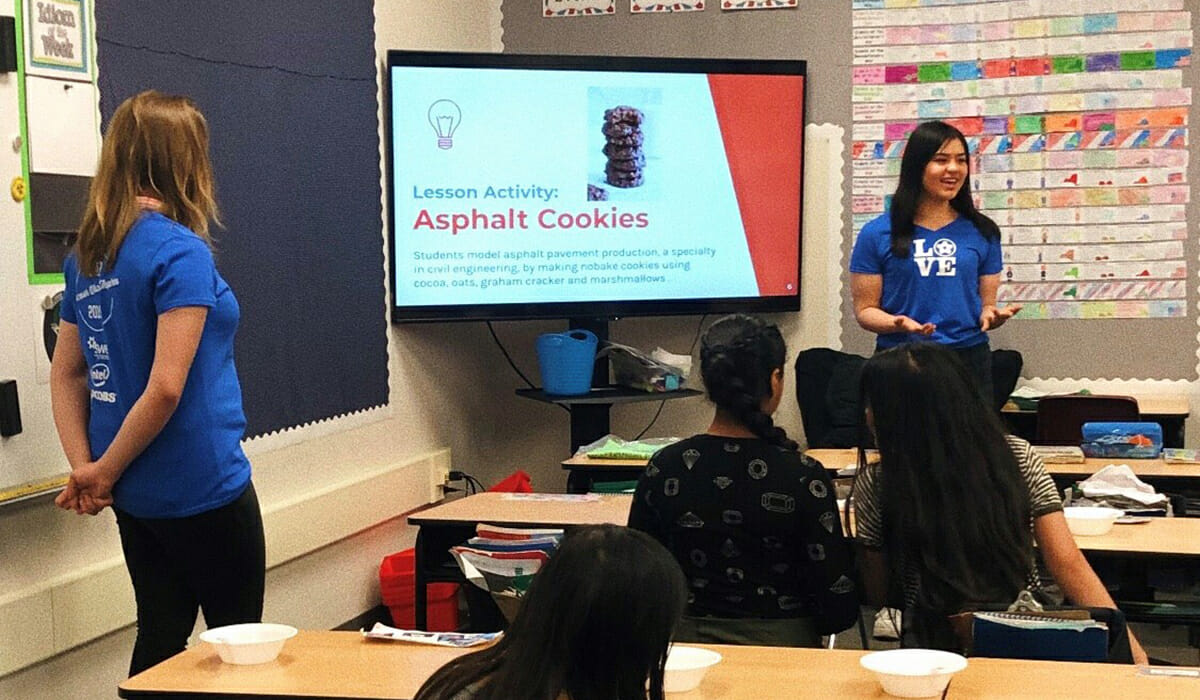
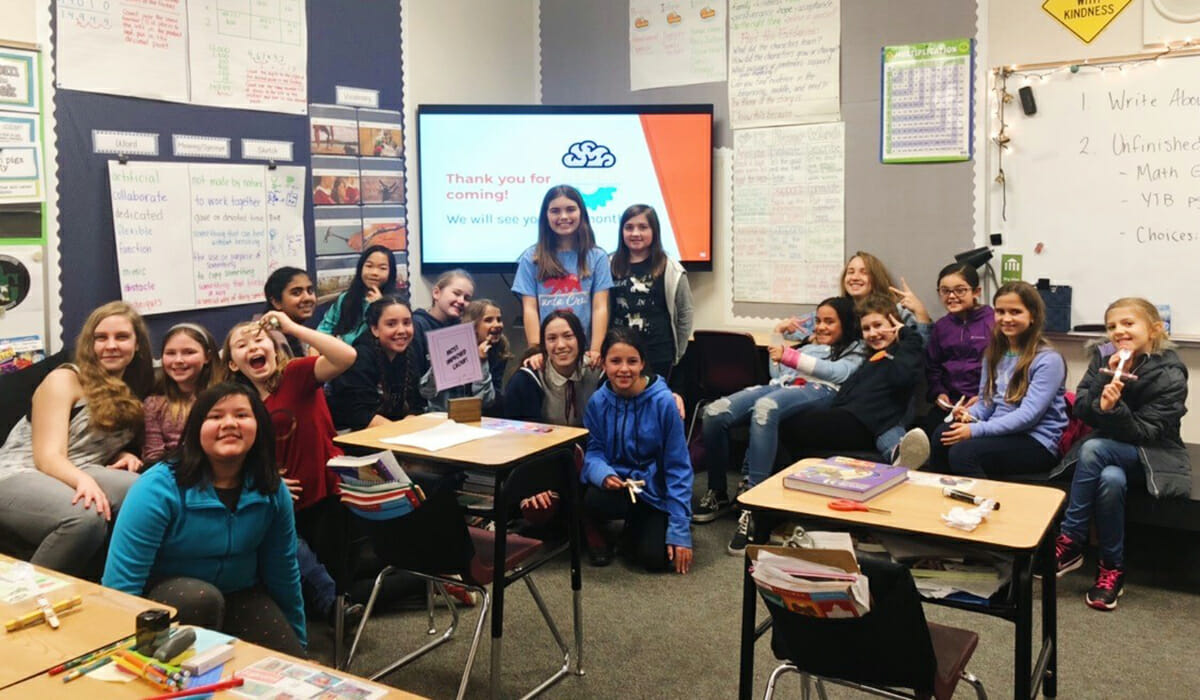
As the founder of GEARS, Emma Martz is promoting female empowerment, career exploration and intellectual stimulation. Emma is pictured here presenting an activity about asphalt cookies./Courtesy Emma Martz
Describe your role with GEARS.
As the founder of Girls Exploring Ambitions in Robotics and STEM, I research new curriculum and activities for the program’s lessons, and activities for the girls to partake in. I also train volunteers to be able to teach lessons to our participant, and am currently reaching out to more schools in our area to see if they are interested in our after school program.
Share one personal story with me from your volunteerism.
We had one young girl, a 4th grader, in our program, and at the beginning, she was so shy and reserved. As time went on, I noticed she gained more confidence and she would talk to more people. She was also more creative in the work she was doing. It was fun to see her grow and develop within the program.
Tell me about your favorite activity that GEARS has offered.
We made a gumdrop structure with toothpicks and gumdrops. We told the girls to create whatever they wanted, and they all created different things. One created a windmill, one created a crown. That lesson demonstrated our participants passion and creativity, and it really inspired me to implement that same creativity and expand on my own projects.
GEARS students and volunteers pictured during a lesson about popsicle stick catapults. /Courtesy Emma Martz
What have you learned through your experiences as a volunteer?
School has always been the place where I always felt comfortable, and I wanted these girls to have the same experience. Volunteering has given me insight into a possible career path in education, and I want to continue to help girls when I grow up.
You are a senior in high school. What do you do for fun when you’re not busy with school or volunteering?
Volunteering is usually what I do for fun! I’ll take a break every single day and walk my dog to get away from everything.
What do you want people to learn from your story?
Do not be afraid to do something that you’re passionate about, even though your service might not be expected in your community.
How can readers learn more?
We’ll welcome a new set of participants in the program for this school year. For more information about GEARS, please email us.
Healing Abuse Victims, Volunteer Supports Girls Through Mercy and Compassion
Meet Daily Point of Light Award honoree Elizabeth Clark. Read her story and nominate an outstanding volunteer or family as a Daily Point of Light.
Elizabeth Clark says that in light of the Me Too movement, supporting young women by giving them platforms to heal has become an inspiration for her volunteerism with vulnerable girls.
As a mentor volunteer for Vista Maria, an organization that provides healing and hope to women and children who have suffered the effects of abuse, neglect and trauma, the 41-year-old Dearborn Heights, Michigan resident spends meaningful time fostering restorative relationships with teenage girls. By connecting with these girls as a mentor, Elizabeth is helping them to understand their worth, heal and build skills for future success.
What inspires you to volunteer?
My parents taught me about morality, being nice, kind and trying to be helpful. I’ve always wanted to volunteer. I asked myself, what can I do to put some good back into the world?
Describe your role with Vista Maria.
I’ve mentored two teens thus far with Vista Maria. In addition, I help to coordinate donation drives for our residential youth who are in treatment, and help out with events. As a mentor, I’ll spend an hour just talking to the girl, or we do activities. Basically, we do fun stuff to keep their minds off the trauma they’ve been through. We paint nails, make vision boards, craft, or listen to some music I’ve never heard of that she likes (laughs).
Share one personal story with me from your volunteerism.
I mentored my first mentee for a year. It gets real heavy, and we had this really deep bond, I considered her to be like another niece of mine. When she was leaving our program, she hugged me and said, ‘Liz, you’ve made this so much more bearable for me and I couldn’t have done this without your support.’ Of course there were tears. We’re still in touch even though she’s out of the program and thriving now.
How has this Me Too world changed the environment for vulnerable girls like the ones you mentor?
I’m worried and optimistic for these girls. Me too has shown these girls that it’s ok to come forward. Vista Maria helps the girls a lot, there are lots of great programs for them.
What’s been the most rewarding part of your service?
Volunteering is very humbling and it makes me feel good. Serving these girls means the world to me, and I’ve been trying to get other friends to mentor as well.
What have you learned through your experiences as a volunteer?
I’ve learned to be a lot more patient. I’ve always been open-minded and forgiving, and these girls have taught me that they just need support and help from us. Understanding that these girls don’t enjoy the same freedoms I do, it’s humbling, and it’s taught me the importance of sharing my time with others.
What do you want people to learn from your story?
Even if you have a busy life or work full-time, there is time to volunteer. There are so many different people, places, and nonprofits that need the help.
How can readers help?
Please visit the Vista Maria website for more information about how you can help.
Utah Man Dedicates Retirement to Serving Senior Citizens
Meet Daily Point of Light Award honoree Gerry Leonard. Read his story and nominate an outstanding volunteer or family as a Daily Point of Light.
When Gerry Leonard retired from his job 12 years ago, he knew he wanted to make valuable use of his time — and after hearing that Salt Lake County Aging & Adult Services could use help in their Retired and Senior Volunteer Program, he knew exactly how he would spend his retirement.
Twice a week, Gerry drives senior citizens to and from their medical appointments for Salt Lake County’s Rides for Wellness program, and once a week he delivers meals to seniors who cannot cook for themselves through the county’s Meals on Wheels program. Aside from providing the much-needed services, Gerry also provides friendship and comfort to the seniors, some of whom have only him to speak to outside of their appointments. For the past decade, Gerry has provided over 5,000 rides to over 1,500 seniors, and has also delivered meals to hundreds of others.
Describe your volunteer role with the Retired and Senior Volunteer Program.
I go to the county building and pick up a manifest that lists seniors that have rides, where they’re going, where they live. We pick up senior citizens and take them to medical appointments and also often pick them up and take them back home from their medical appointments.
I deliver meals also to senior citizens who are restricted in getting out and being able to do their own meals. I deliver those in a particular neighborhood to the senior citizens and oftentimes that’s their one nutritional meal in the day.
Why did you want to get involved with this program?
I got involved when I retired form my full-time job in 2007, 12 years ago. When I retired I certainly did not want to sit on the couch all day, and I knew some people who worked for Salt Lake County Aging Services and I talked to them and found I could volunteer and really make a difference to senior citizens like myself. That’s why I wanted to get involved, to work with the senior citizens who need assistance.
How did this program benefit the senior citizens beyond just getting rides and meals?
Almost every day, one of my clients will tell me, I don’t know what I would do without this ride because I can’t drive, my children are too busy, they can’t take me to these doctor’s appointments, or they can’t take me to dialysis which is absolutely required to live. They tell me how much they appreciate it, especially the rides. Meals on Wheels, they’re very grateful to have the meals and you get to know these clients quite well and actually become friends with them.
Gerry drives senior citizens to and from their medical programs twice a week for the Rides for Wellness program. Courtesy of Tracey Gibson./Courtesy Gerry Leonard
How would you say volunteering for this program has benefited you?
It helps take up a lot of free time you have. Volunteering is something I look forward to every time I do it, so that has certainly benefited me. I think it’s helped me be a better driver at 79 years old. But it also just the main appreciation of people so grateful for our service, and that benefits me because it’s a give back to me.
What’s been the most rewarding part of your work?
The appreciation of people. They’re so appreciative of the service, and that’s what makes it worthwhile to me. I also enjoy getting to know the clients and also getting to know Salt
Lake County which is a very large, widespread part of the state. But the main thing is the appreciation they show when we provide this service.
What have you learned through your experiences as a volunteer?
I think I’ve learned a couple of things. One of them is how to be a better driver because it’s not just me in the car now, I’m responsible for other people’s lives. I’ve also learned to listen better than I did before because sometimes I’m the only person aside from their medical appointment that the person talks to all day.
What do you want people to learn from your story?
I would just like people to know that there are so many opportunities to volunteer, whether it’s aging services or in the schools or other places. There’s just so many opportunities to volunteer, and Utah is known as a good volunteer state. I would like people to know that its really, really worth their time and effort to do it because it’s very rewarding.
12-year-old Volunteer Leads Ocean Conservation in Florida
Meet Daily Point of Light Award honoree Ryan M. Read his story and nominate an outstanding volunteer or family as a Daily Point of Light.
A child’s book featuring an illustration of a shark with a bag wrapped around its gills is what first made then 5-year-old Ryan M. worry about the ocean. The Dunedin, Florida, child began picking up trash at the beach with family and friends, but wanted to do more to help marine life.
Founding The Fishes Wishes in 2011, the now 12-year-old is on a mission to protect the ocean from pollution and overfishing, and is inspiring other children to join his effort. Participating in restoration efforts, raising awareness about conservation and donating over $10,000 to various organizations thus far, Ryan is protecting the creatures that call the ocean home in his community and beyond.
What inspires you to volunteer?
One day, I’m afraid I’ll be looking into the ocean but nothing will be looking back. That gets me motivated. Also, I feel motivated to help because I love all the creatures in the ocean.
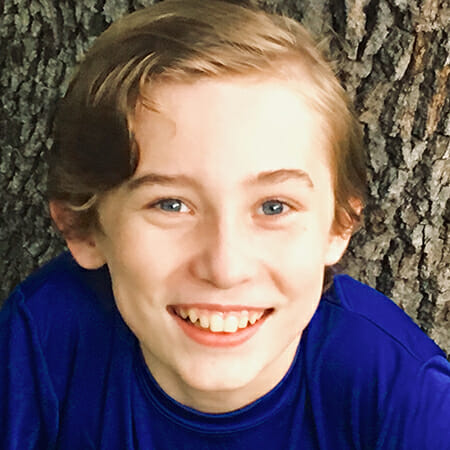
Ryan M. founded The Fishes Wishes as a 5-year-old when he discovered how pollution and overfishing can harm oceans and marine life./Courtesy Ryan M.
Describe your role with The Fishes Wishes.
As the founder of The Fishes Wishes, I fundraise, raise awareness and participate in restoration efforts. Some of our projects include:
Marine-themed products: With the help of family and friends, I make and sell sun catchers and keychains out of natural materials and recycled glass. We donate the money to ocean conservation organizations.
Beach clean-ups: We plant mangroves and sea oats and have picked up hundreds of pounds of trash from local beaches. I am also creating a sculpture to be auctioned made of materials found from beach clean-ups.
Promoting conservation: We raise awareness about how to help the ocean through projects and other initiatives. I am currently writing a book about unknown and unusual animals in oceans, the proceeds of which will be donated. Additionally, a friend and I have been doing research on alternatives to plastic straws and have pitched those ideas to local companies.
Share one personal story with me from your volunteerism.
A few years ago, I ran a summer camp at my school, and our goal was to make other kids aware of conservation efforts and how to protect our oceans. I felt like I make a big impact, and helped other kids realize how to help the ocean, and now they are helping us with beach clean-ups.
What’s been the most rewarding part of your service?
I like seeing what kind of trash I can find at beach clean-ups. The craziest piece of trash I ever found was a metal railing that divides the street from the sidewalk. It was this big piece of metal, just buried in the sand. The metal will be used in the new beach clean-up sculpture I am creating.
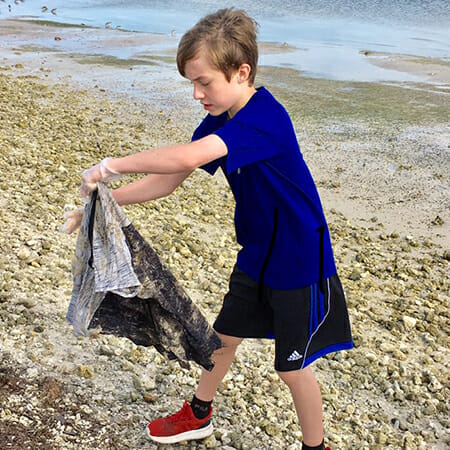
Ryan M. has picked up hundreds of pounds of trash during beach clean-ups with family and friends. In addition, he plants mangroves and sea oats as part of beach restoration./Courtesy Ryan M.
What have you learned through your experiences as a volunteer?
If you work really hard and try to make an impact, one person can make a difference, even if you’re just a kid.
What do you want people to learn from your story?
Even if one bag goes into the ocean, it never breaks down. A turtle could eat that bag and die, which affects the ecosystem. You can start a project just like mine if you’re interested in helping the ocean.
You’re in 7th grade. How do you spend your time when you’re not busy with school or volunteering?
I like to play football and I like to play outside. One day, for a career, I want to transplant coral to dying reefs.
How can readers help?
Please visit our website for more information about how you can give back.
Sharing Her Love of Nature with Others, Minnesota Woman Spends Retirement Volunteering in the Great Outdoors
Meet Daily Point of Light Award honoree Elizabeth Heeren. Read her story and nominate an outstanding volunteer or family as a Daily Point of Light.
Most Americans probably remember learning about the Mississippi River in school. Maybe it’s memories of a teacher talking about how the river provided Native Americans and early settlers with vital resources, or reading about the adventures of Mark Twain’s Huckleberry Finn as he journeyed down the river on a raft. But fewer Americans can probably say that they were able to experience the marvels of the Mississippi River for themselves.
Elizabeth Heeren of St. Paul, Minnesota, hopes to change that with the volunteer work she does for numerous wildlife and outdoors programs, including Big River Journey – an experience provided by the National Park Service that allows young students to get out on the river.
“A lot of the time, it’s the first time they’ve ever been on a boat. They actually get out in the water and they get into the woods,” Elizabeth said. “The kids are excited to see birds, are surprised that the rocks are full of fossils, learn that the water has all sorts of life, and can consider how the Mississippi River is a part of them.”
Elizabeth (left) assists park rangers in teaching children about the wonders of the Mississippi River./ Courtesy NPS
Aboard a riverboat that cruises down the Mississippi, third- to fifth-grade students get to learn different topics at each station, which are led by park rangers. Volunteers like Elizabeth assist the rangers to ensure each station goes smoothly.
“Showing kids how to use binoculars, though it might seem intuitive to adults, is not intuitive to kids,” said Paula Swigley, volunteer coordinator with the National Park Service. “They put them on upside-down, they try to look through them backwards. Our volunteer support helps us be able to give each student individualized attention and support in all of the stations.”
Elizabeth says her love for the outdoors started as a child, and has grown ever since. After working as a fruit and vegetable inspector, she retired and found herself with a lot of time on her hands. After a neighbor suggested she volunteer for the National Park Service, she started working with their Seedsters program, growing plants in her own home to be replanted in parks.
But Elizabeth didn’t stop with just one program. In fact, she volunteered for so many programs that she became the National Park Service’s Volunteer of the Year in 2018.
“It’s not unusual for volunteers to volunteer across multiple different programs,” Paula explained. “But Elizabeth volunteers more than average, for sure. She volunteered more than 450 hours on 80 different days. She’s pretty outstanding.”
On top of all the hours she dedicates to the National Park Service, Elizabeth is also a Minnesota Master Naturalist Volunteer, which required her to complete 40 hours of training and a minimum of 40 hours of volunteer service to promote awareness, understanding and stewardship of Minnesota’s natural environment. She is a docent at the University of Minnesota’s Bell Museum of Natural History, and she also volunteers with numerous other programs to assist scientists in collecting data on Minnesota’s vast biodiversity, including monarch butterflies, wasps and more.
While Elizabeth could easily spend her time enjoying the wonders of wildlife and nature by herself, she chooses to volunteer and share it with others because, “the more you know about it, the more you care about it.”
“I enjoy helping people become aware of the marvels of the world right around them, right here, outside their door,” Elizabeth said. “I want to help inspire them to maintain and protect those natural resources for the future.”
Teen Serves Pittsburgh Community Through Youth Organization Combating Cultural Intolerance
Meet Daily Point of Light Award honoree Peyton Klein. Read her story and nominate an outstanding volunteer or family as a Daily Point of Light.
A new friendship with a Syrian refugee in one of her classes inspired Peyton Klein to create an organization at her school to champion inclusion and foster diverse friendships throughout her community. Now 18, Peyton is the founder and executive director of Global Minds Initiative, a youth organization that utilizes its after-school tutoring program to combat cultural intolerance and discrimination. The program fosters a relationship between ESL (English-as-a-Second-Language) and NES (Native English Speaking) students, and in the past three years has impacted over 1,500 students across 23 schools in North America.
“Global Minds has given me a sense of social responsibility that I wouldn’t have had otherwise,” Peyton said. “I think the experiences and the stories of the people that I’ve met will stay with me for the rest of my life, and they’ll influence everything that I do.”
Describe your volunteer role with Global Minds Initiative.
I’m the founder and executive director of Global Minds since 2016.
We’re now across 23 schools in the U.S. and Canada, and we impacted over 1,500 students. There was a media snowball amongst all the chaos of our current administration, and people started reaching out to me, this 15-year-old at the time, saying that the academic and social disconnect between native English-speaking students and English-language learners was apparent not only just my school but across schools internationally. I saw it as my duty and purpose to bring the power and the family and community that we built at Global Minds on an international scale.
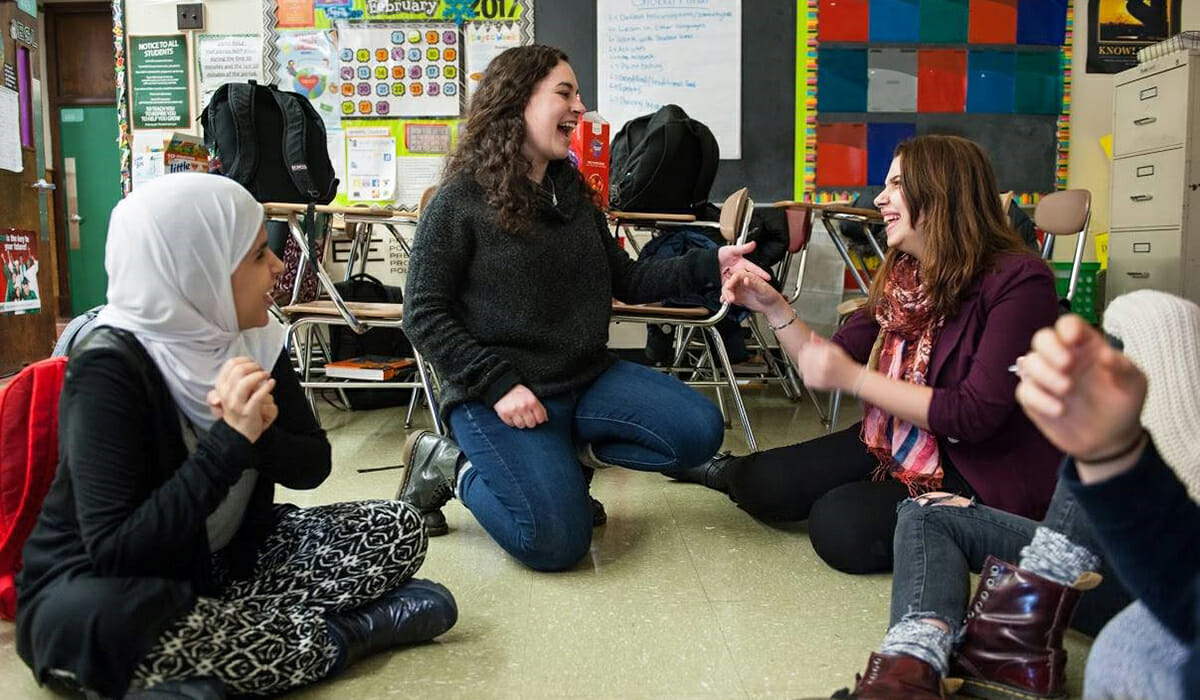
Peyton Klein, center, uses Global Minds Initiatives’ after-school tutoring program in order to combat issues of cultural intolerance./Courtesy Peyton Klein
What inspired you to found Global Minds Initiative?
One morning I was sitting in one of my classes and I realized I knew everyone’s name except for this girl sitting behind me. I realized in that moment that I believed in these values of diversity and inclusion and being welcoming, but I wasn’t actually living by those values. I went up the this student and I learned her name is Khwala. After learning her name, we became friends and I started learning of her incredible story of refuge from Syria, as well as our mutual interest in cooking and fashion and things like that. I wanted to replicate that same friendship I had with Khwala across the school, because I realized that through connecting with her, I was overcoming so many stereotypes I had and misconceptions. It was not only benefiting her in the sense that I could help her navigate school, but in return she was helping me conquer my own biases.
How did you go about actually founding this Initiative?
After I had my conversation with Khwala, I had focus groups which basically was me bribing kids with Oreos to speak with me, and English-as-a-Second-Language classes at my high school. From there, we started in December with 10 people and then 20 and it just grew really naturally in this after-school program that celebrated diversity and championed inclusion, truly fostering a welcoming community at my school. We would do activities and talk about global issues. It was amazing.
What affect have you seen the program have on the students?
I think students feel more included in school. Whether it’s a small wave in the hallway or going to the movies with friends, we’ve created a truly interconnected kind of family, to be honest, at my school. Internationally we’re seeing these same effects, whether it’s planning cultural potlucks to bring the community together or just really empowering youth and showing them that they can be the change. Global Minds is impacting students on a multitude of different levels.
Are there any future partnerships, programs, or events that you are excited about?
We’re continuing to expand. In the next two years, we’re going to be reaching 100 chapters. Anyone can start a chapter, they just go on our website and they fill out and go through our application process. We had a camp of Global Minds where we brought all of our chapter leaders to Pittsburgh to do leadership development and training and community building, really working on our national chapter network and how we can do everything better and create a brighter future.
What’s been the most rewarding part of your work?
I think it’s just the friendships we’ve built. We impact so many students, we do work across these incredible schools, but it comes down to the individual stories we hear. Whether it’s a student joining a tennis team because she met another student on the tennis team, and now they’re both playing together and having that really cool intercultural connection. Or just supporting each other as we go through the college admission process, or figuring out what we want to do one day. Or supporting each other when we’re going through different tragedies that happen in our community, because that is the reality of the world we live in today. It’s just those stories of connection and community and friendship that make it all worth it.
Peyton Klein, center, founded Global Minds in order to champion inclusion and diversity within her community./Courtesy Peyton Klein
Why do you think it’s important for others to give back?
I think that giving back to your community is in a way giving back to yourself. I’ve learned more from the people I get to work with every single day than they could have ever learned from me. It’s helped me really find out what kind of person and what kind of leader I want to be in this world. I think also giving back is our social responsibility. In a way, we’re all given this silver spoon or this privilege in whatever area that might be, and we all have to put in the work and level the playing field and all commit to making our communities better. Because in the end, we’re only as strong as our weakest link, [which] is something that we always talk about at Global Minds. Our school is only as strong as the student who is struggling the most, so how can we lift everyone up and make our communities better?
What do you want people to learn from your story?
I think you have the power to make a change…The hardest part with anything is getting started. And you can do that. If this is a problem in your community, get in touch and we’ll help you solve it. But if you have another problem in your community, find a solution or something you can do about it, because if you’re not a part of the solution, you’re a part of the problem.
Texan Serves Seniors and Fights Food Insecurity through Volunteerism
Meet Daily Point of Light Award honoree Shannon Beathard. Read her story and nominate an outstanding volunteer or family as a Daily Point of Light.
During a particularly challenging time in her life, Shannon Beathard was suffering from PTSD, and says she couldn’t see anything beyond her own dark circumstances. Turning to service, the Beaumont, Texas resident decided to help others struggling in her community, committing to making a difference for people struggling with chronic hunger.
As a volunteer for the Southeast Texas Food Bank, 49-year-old Shannon fights the crippling effects of food insecurity by helping to provide food to thousands of households across Southeast Texas. Currently volunteering for the organization’s Senior Food Box Program, Shannon helps to prepare and distribute 2,000 boxes of food each month to low-income seniors.
What inspires you to volunteer?
There’s so much good that needs to be done in the world, and I want to be a part of that. I feel a deep need to serve and to be a part of the good in the world.
Describe your role with the Southeast Texas Food Bank.
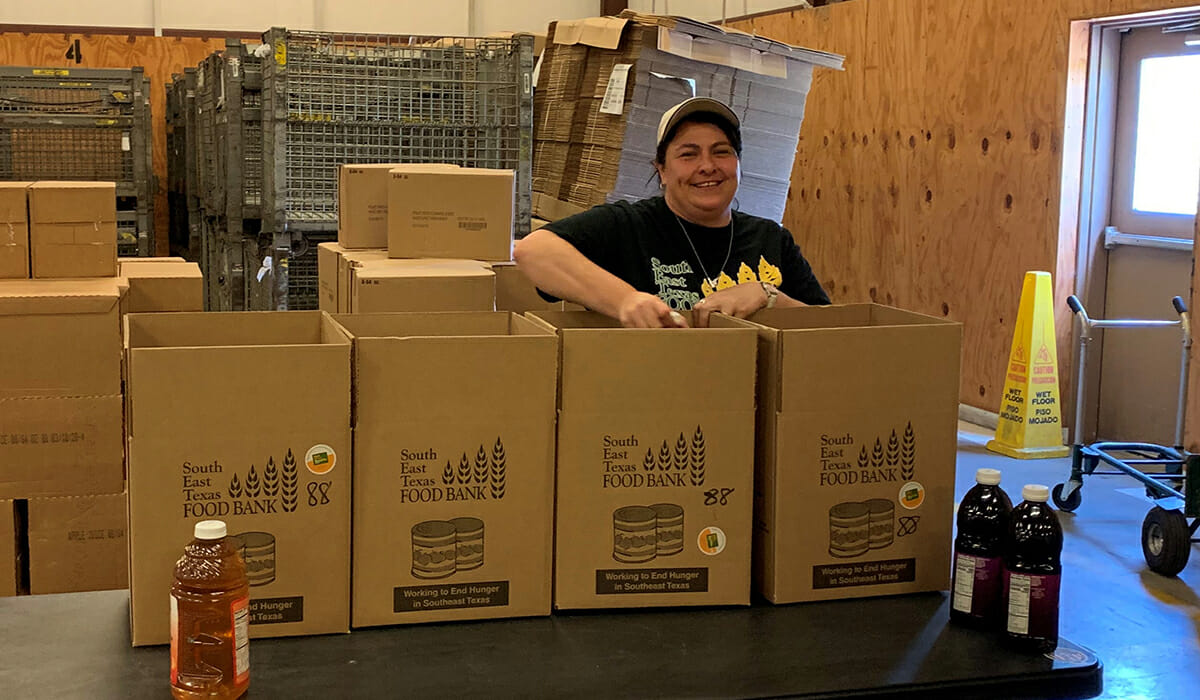
As a volunteer for the Southeast Texas Food Bank, I am currently working on their Senior Food Box Program. We work in the warehouse and make the food boxes, which include $50 worth of groceries, including non-perishable items like cereal, cans, shelf milk, oatmeal, beans and rice. Low-income seniors receive these boxes once a month to help augment their nutrition. I may personally prepare over 100 boxes just in one day of volunteering, and I volunteer several days each week.
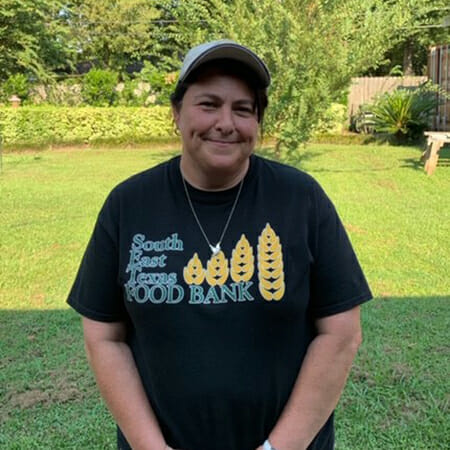
“We are helping the community, and people aren’t going hungry because of what we are doing.” Shannon Beathard, Southeast Texas Food Bank volunteer./Courtesy Shannon Beathard
Share one personal story with me from your volunteerism.
One particular older man was running late, and so I ran his food box to his car. He grabbed my hand and he had tears in his eyes. He said, you don’t know how much this means to me. I explained that it was my duty to serve the community. He repeated, no, I want to thank you for being here, and explained that his daughter had dropped his three grandchildren off at his home days beforehand, and she hadn’t been back since. The food he was picking up was going to be dinner for the children. Of course then, hearing his story, I wanted to cry. I remember that look of relief in his face, that we were going to make his situation better.
What’s been the most rewarding part of your service?
It’s rewarding to see the gratefulness in the faces of people we are serving. We are helping the community, and people aren’t going hungry because of what we are doing. One person can’t do that on their own, but it’s rewarding to know that I am part of a chain that is helping others.
What have you learned through your experiences as a volunteer?
I’ve learned so much about myself and about others. I’ve learned that there’s so much to be grateful for, because I found myself in serving other people. I’ve always been a kind person, but the food bank is where I can use my talents to care and to love with an open heart.
Shannon Beathard leads volunteers in service hours at Southeast Texas Food Bank, where she prepares boxes of food for low-income seniors./Courtesy Shannon Beathard
What do you want people to learn from your story?
“In a world where everyone can be anything they want to be, be kind.” Just be kind. And being kind means different things to different people, you’ve got to find out what it means for you. I was in such a dark place before volunteering, and I couldn’t see anything beyond myself. It has made a difference in my life to get out in the world, and see that other people have challenges, and that I can make a difference for them.
Rebuilding After Hurricane Harvey, Texas Man Breathes New Life into Critical Community Programs for Youth
Meet Daily Point of Light Award honoree Ryan Trevino. Read his story and nominate an outstanding volunteer or family as a Daily Point of Light.
After being battered by Hurricane Harvey in 2017, Ryan Trevino’s small hometown of Taft, Texas bore long-term scars left by the devastating storm, even after the preliminary damage was repaired. Critical funding for community initiatives were pulled and dedicated to more immediate post-hurricane issues, leaving parks abandoned and youth programs shuttered.
That’s when 26-year-old Ryan stepped in, rebuilding his community and providing affordable youth programs to children from low-income families with Friends of the Taft City Parks. Launching the community organization in 2017, Ryan has developed programs to encourage kids to stay active, healthy and engaged, as well as promote academic success and volunteerism.
What inspires you to volunteer?
My dad used to be in charge of the Boys & Girls Club of Taft, which I volunteered for and really enjoyed working with the youth. After Hurricane Harvey, the funding for community programs like that went elsewhere, and the Boys & Girls Club shut down. I wanted to carry on that legacy of service, because it was hard to see something that my family had invested so much time into go away. Now, we are breathing life back into the youth programs in our community.
Describe your role with Friends of the Taft City Parks.
Since 2017, we have reinvested almost $35,000 back into our community, and restored three parks. As the founder, current CEO and president of the board, I work with our youth and adult volunteers, secure funding to operate programs, meet with donors, write grants and facilitate partnerships. When I’m not at work, I’m volunteering.
Tell me about some of your youth programs.
We have directly impacted hundreds of children from Taft and surrounding communities with programs including the following:
Get Out And Play program: We offer registration at $10 per child for Friends of the Taft City Parks program, or we’ll use funding to cover the registration fee for a child for a different organization’s program.
NBA: This is the official youth basketball participation program of the NBA, which aims to develop a lifelong passion for the game of basketball in boys and girls by teaching them the fundamentals of the sport while instilling core values including teamwork, respect and sportsmanship.
NFL Flag: Powered by USA Football, the sport’s national governing body, this program is the country’s leading flag football program from the NFL, with unmatched standards of safety, education and support. We believe football imparts great lessons and provides kids with skills that serve them well throughout their lives to become responsible citizens.
RBI: Part of Major League Baseball’s Reviving Baseball in Inner Cities (RBI) program. Its mission is to re-introduce, revive and rebuild interest and participation in baseball and softball among underserved youth.
Share one personal story with me from your volunteerism.
We worked with a child last year who was from a socially and economically disadvantaged background, and his family was going through a really tough time. The child was on the verge of being suicidal. I sat down with the child and talked to him, and then got his family involved. This was a problem that could be talked out with the family. When we got involved, the child started participating in all our programs. He’s now at the top of his class in 8th grade, and he plants to volunteer with us when he reaches high school. I’m proud of him.
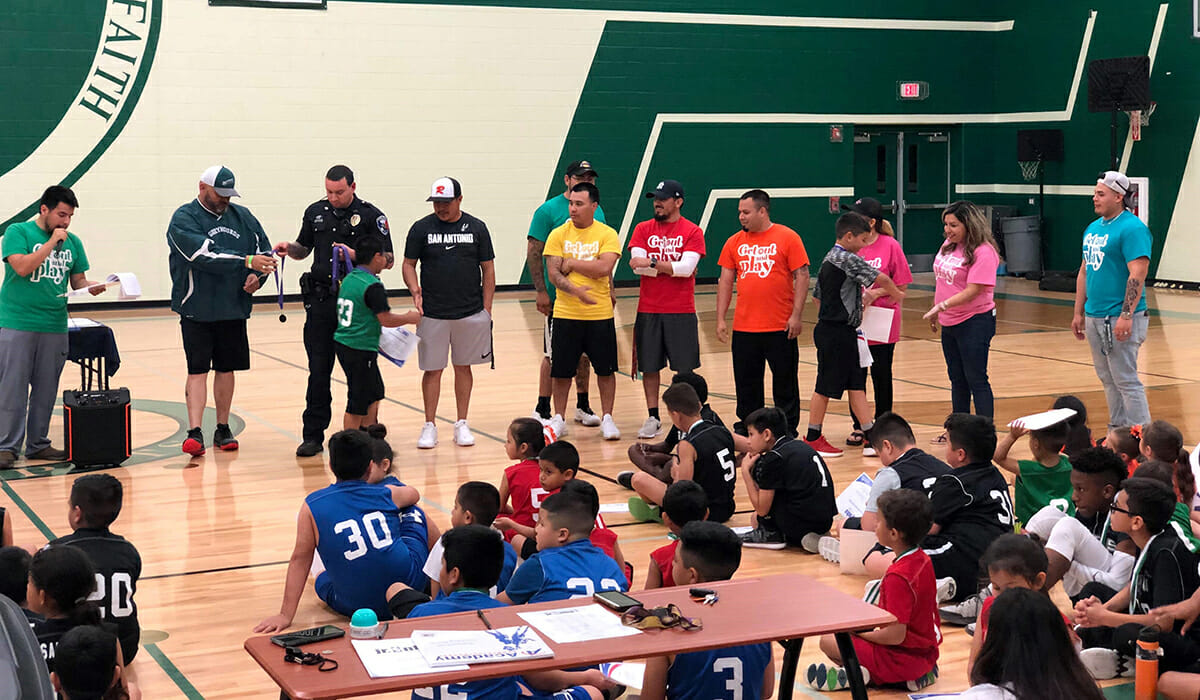
Ryan Trevino pictured presenting the closing ceremonies awards to a gym of over 100 youth participants for Jr. NBA Basketball league./Courtesy Ryan Trevino
What’s been the most rewarding part of your service?
Seeing youth programs come back to our community. Before, kids were running in the street, they were getting into trouble, the crime rate was up. It’s been rewarding to have the community get behind us for the sake of the youth, and encourage us to keep going.
What have you learned through your experiences as a volunteer?
We all have talents and it’s up to us to play to our strengths and talents. I am using my talents to make a difference.
What do you want people to learn from your story?
Don’t let people tell you you’re too old, too young. If you want to make a difference, make a difference.
Tell me about an upcoming project that you’re excited about.
We’re installing a new playground center in December 2019 for a low-income park in Taft called Hidalgo Park. We’ve made this a true community effort, and so we’re asking children for ideas to design their dream park, and have invited the community to come out and help us build. We believe that no child should have to pay to play, so minimal fees are required for Friends of the Taft City Parks youth programs, which makes us largely reliant on donations and fundraising. Please check our Facebook page for more information about how you can help.