‘The People’s Champ’ Volunteers to Highlight Social Injustices for Underserved Communities
Meet Daily Point of Light Award honoree Nolan Smith. Read his story and nominate an outstanding volunteer or family as a Daily Point of Light.
As a point guard for Duke University, Nolan Smith’s skills on the court were specialized, his primary job to create scoring opportunities for his team. As a community member in his adopted home of Durham, North Carolina, Nolan has tasked himself with a similar job, as the 32-year-old advocates for a better future for his neighbors and underserved populations.
Nolan, a former college basketball star who then went on to play in the NBA with the Portland Trail Blazers is by day the director of basketball operations for Duke men’s basketball. In his spare time, Nolan dedicates himself to bridging gaps within his community, empowering others through his service.
“Everyone should be empowered to speak up on things they feel aren’t right,” says Nolan. “That’s really been the most exciting thing for me (by volunteering). People are coming out, speaking more and people are listening. We are empowering people to speak up on social injustice and it’s really brought the communities together.”
As a volunteer for BLAST, which stands for “Building Leaders for A Solid Tomorrow,” Nolan is working to raise awareness about injustices black and brown communities suffer across services including health care and education, and lack of access to essential resources and food. Extending his high profile platform to better serve his neighbors, Nolan heads up the Brotherhood Focus Group, an initiative which focuses on diversity and inclusion. Receiving an off-the-court assist from former basketball great Grant Hill to promote the Brotherhood, Nolan has dug deep to make sure community needs are met, recently promoting a get out the vote effort.
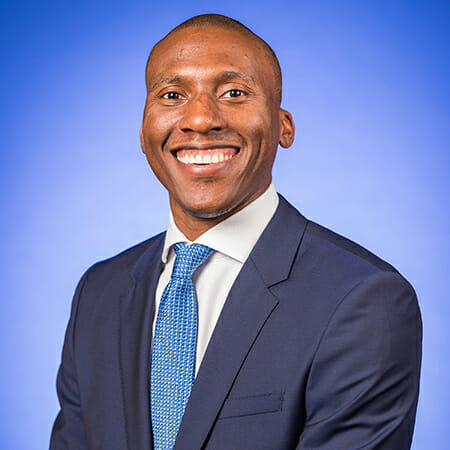
Nolan Smith: “Getting things done for the whole community became a mission of mine. I was known as Nolan Smith the basketball player, but everyone knew me as so much more than that because of the work I was willing to do for others.”/Courtesy Duke University
“Our voting initiative really took off. We put together a very powerful video involving a lot of former Duke University basketball players urging people to get out and use their voices and their right to vote. We know we affected and touched so many people with (our initiative). That was huge. The way we came together as a program to (turn votes out) was really powerful.”
Using his voice, platform and connections to effect change is nothing new. Nolan, who calls his volunteerism ‘God’s work,’ says was raised to be active in his community, particularly if he held a position of power. Perhaps most tellingly, Nolan’s college nickname, ‘The People’s Champ’, symbolizes his lifelong dedication to giving a hand up to others, whether it’s a bigger action or a simple gesture of kindness.
“One thing my mom always said to me was that one day, when the basketball deflates and you’re no longer a player, somebody won’t want your autograph anymore. Whenever I’d get to a city, whether it was in college or the NBA, I’d stand outside and sign autographs no matter the weather, (it could be) raining, cold or snowing. I’d be the last person back on to the team bus. Getting things done for the whole community became a mission of mine. I was known as Nolan Smith the basketball player, but everyone knew me as so much more than that because of the work I was willing to do for others.”
That work spans social issues being felt nationwide and also smaller community interactions, says Nolan, who serves as an important mentor to many underserved children through BLAST, as he speaks with them about issues their communities confront daily, including police brutality and food insecurity.
“I’d brought basketballs from home to a food distribution event, and at the end one kid tried to give the basketball back to me. This 13-year-old boy then told me he’d never had a basketball before. Stuff like that is what really makes the work so humbling and just makes you feel so good that you’re able to give. There are so many people that have so much, a lot of us have way more than we need. When I go to different black communities where there are kids that look like me but don’t have shoes or clothes to put on their back, I’m going to continue to give that young man or woman the shirt off my back.”
A former professional basketball player, Nolan returned to his alma mater of Duke University and adopted hometown of Durham to empower his community through service, by raising awareness of social injustices. /Courtesy Duke University
Word of Nolan’s slam dunk giving spirit has traveled far and wide, says community activist and BLAST co-founder, Christopher Kenan, who adds that Nolan isn’t afraid to put in the work or the time on behalf of those in need.
“The first time I reached out to Nolan via Instagram, he responded,” says Christopher. “He didn’t know me from a can of paint, but I explained there was a lot going on and was trying to recruit as many athletes as I could to get them to march and stand hand in hand to speak with the kids (in our community). When he came, he didn’t just want to be a figurehead, he wanted to get his hands dirty in the work. His (volunteerism is) very transparent for young kids in Durham. For them to know that people of his caliber really care about their living situation and how society is treating them, he makes the kids believe that no matter where they come from, he wants to help. He’s a man of his word and he really cares. His passion for the community – one he’s not even from – is unmatched.”
That passion has continued throughout the COVID-19 pandemic, as Nolan works to help those in need through distanced events including the voting initiative and by feeding hungry families during the holidays. A seemingly natural-born volunteer, Nolan feels a very personal connection to his service and the relationships he is building. His father, he remembers, who passed away when Nolan was just 8-years-old, is remembered as an incredibly charismatic person, a trait Nolan says he joyfully shares.
“I’m a relationship type of guy. I don’t know any strangers. If I meet you, as long as you’re a nice person, then we’re family. The more we can do to bring out and bring our community together, that’ll be real change. Strength in numbers always makes change. Whether it’s in Durham, while I’m coaching, or the next city I go to, there’s always going to be a community that needs togetherness in order to build. I volunteer to be that leader and connector for the community. That’s the end goal for me.”
Honoring Grandfather’s Legacy of Kindness, Teen’s Service Raises Cancer Awareness
Meet Daily Point of Light Award honoree Viraj Mehta. Read his story and nominate an outstanding volunteer or family as a Daily Point of Light.
His dadaji – Hindi for grandfather – was a really good cook, says 17-year-old Viraj Mehta. The Phoenix, Arizona teen remembers baking pumpkin pancakes alongside his beloved grandfather, who died following a diagnosis of Stage 4 lymphoma just a few years ago. Wanting to create something positive out of the devastating loss, Viraj decided to help others recognize the signs and symptoms of cancer.
Launching OncoVision in 2016 to educate underserved people how to screen themselves for cancer, Viraj is empowering those around the world who lack access to routine care and advanced medical technology. The high school senior says in his quest to empower people to identify the warning signs of early stage cancer before it’s too late like it was for his grandfather, he is hoping to prevent some of the 7.6 million global cancer deaths that happen each year. Connecting with more than 1,000 people thus far in the United States, Poland, Malaysia and India through online seminars, Viraj is using his personal loss to effect positive change.
What inspires you to volunteer?
I realized the devastating effects that cancer has not only on the people diagnosed but their families too. Through my volunteerism, I wanted to prevent other people from being diagnosed too late and dealing with that loss.
Describe your volunteerism with OncoVision.
As someone who lives in the U.S., I have more access to quality healthcare, whereas in rural areas, people lack access to medical professionals and quality care. Through OncoVision, I am offering information and resources so that people can take care of their own health and recognize their own potential symptoms. As founder and director, I create content for and coordinate our seminars, which includes warning signals and methods for screening for cancer. We have about one dozen volunteers internationally who help to lead our seminars.
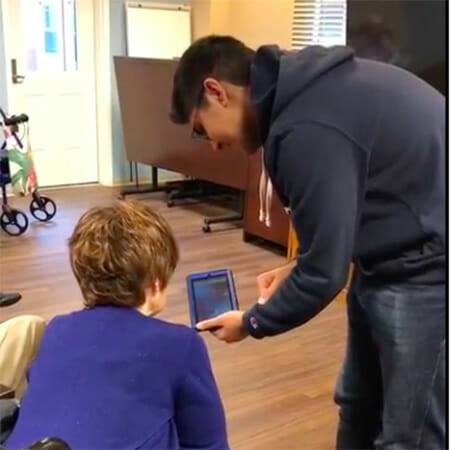
By hosting virtual educational seminars and empowering people to screen for and assess their own risk for cancer through his OncoVision app, Viraj has connected with more than 1,000 people across the U.S. and internationally. /Courtesy Viraj Mehta
You’re using technology to expand the impact your volunteerism has. Explain.
Our OncoVision app helps individuals screen themselves for cancer early on. I am passionate about computational biology, so I developed this app which uses machine learning to provide insights into individual risk of cancer and recommendations for next steps based on the person’s risk. We developed the app because I realized having a uniform system where people could import information and receive results was the best way to empower people to control their own health and monitor for symptoms.
Share one personal story with me from your volunteerism.
I hosted my first seminar at a retirement home in Phoenix. After the presentation, a woman in a wheelchair came up to me and said her husband had passed away from lung cancer. She said she really believed in the importance of the work I am doing, and that even though it was too late for her husband, it wasn’t too late for others. Hearing her say I could have an impact on others really meant a lot to me. It means everything to me even if I save one life! Every life is valuable and so all of the hours organizing seminars and leading teams and creating content, it’s all worth it, because those small actions can really lead to huge changes.
What would your grandfather say to you about your volunteerism?
I hope he’d say that he’s proud of me. My volunteerism honors his legacy, especially because I knew how compassionate and kind he was to others. OncoVision is advancing my grandfather’s values and what he stood for.
Why do you think it’s important for others to give back?
Volunteering is really important because people who are privileged should give back to society. There are some people that are disadvantaged, and that’s based purely on luck. It’s our duty as citizens of the world to support those who are disadvantaged.
What’s been the most rewarding part of your service?
It’s been rewarding to see our impact and receive messages from people who I’ve helped through OncoVision find tumors early on.
How have you continued to volunteer throughout the COVID-19 pandemic?
We used to host in-person seminars, but as a result of the pandemic, we’re now just hosting virtual seminars. We’ve also started to host virtual training on telemedicine, a practice which is being used much more frequently now during the pandemic.
In one word, what does volunteering mean to you?
Kindness.
When you’re not busy volunteering or in school, what do you do for fun?
I’m passionate about computational biology, so I take on different research projects in that field. Additionally, I play piano and tennis for fun.
Volunteer Keeps Food from Landfills to Serve Up Thousands of Meals to the Hungry
Meet Daily Point of Light Award honoree Ellen Bowen. Read her story and nominate an outstanding volunteer or family as a Daily Point of Light.
As a career fashion executive, Ellen Bowen counted money and success amongst her blessings, but the 66-year-old volunteer says that after moving to Miami, Florida, she realized what she calls is the most rewarding achievement of her life.
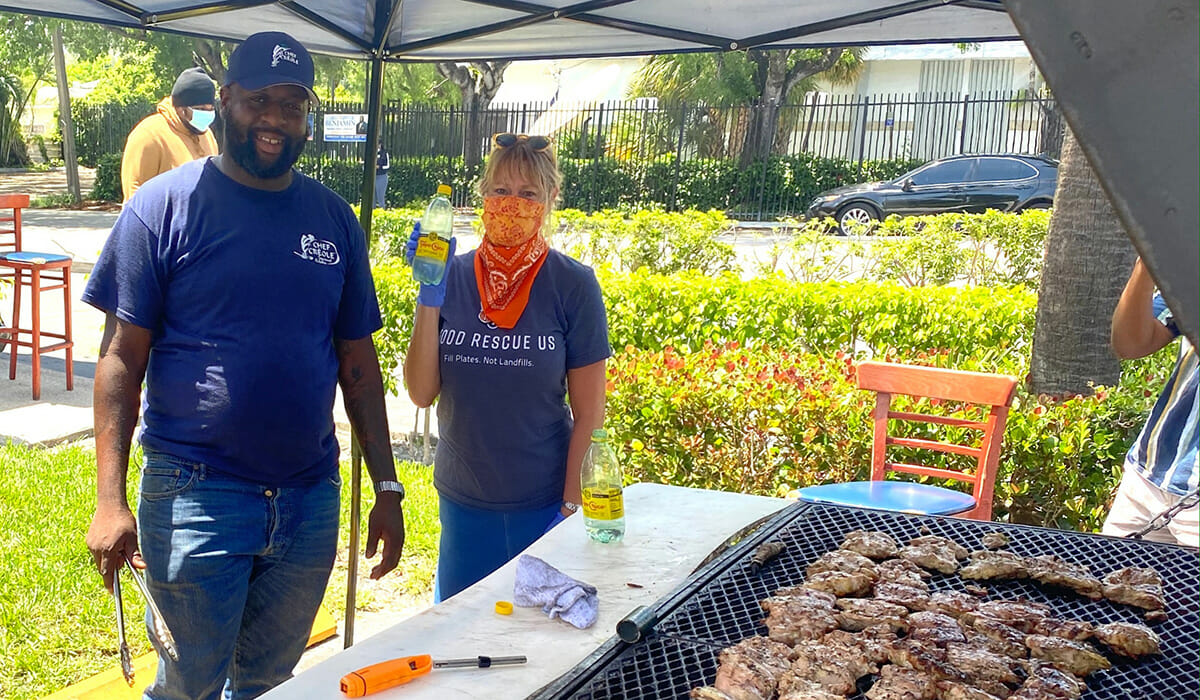
As the Miami site director of Food Rescue US, Ellen launched in 2018 what is now the largest Food Rescue affiliate nationwide. Serving alongside a group of more than 500 dedicated volunteers, Ellen is connecting community donors like restaurants, hotel caterers and more to neighborhood social services to keep healthy, fresh food in the neighborhood. Distributing meals that would otherwise be wasted food, Ellen and her volunteers have kept more than 617,000 pounds of food in the Miami area and Broward County from being thrown away in landfills, bridging the gap between excess and access in her greater community.
What inspires you to volunteer?
I’ve always been interested in philanthropic efforts but to be honest with you, previously, I’d write a check or attend an event and buy silent auction items. Once I moved to Miami, I witnessed amazing poverty and homelessness, and realized how much food was being wasted. Food Rescue US and their efforts spoke to me.
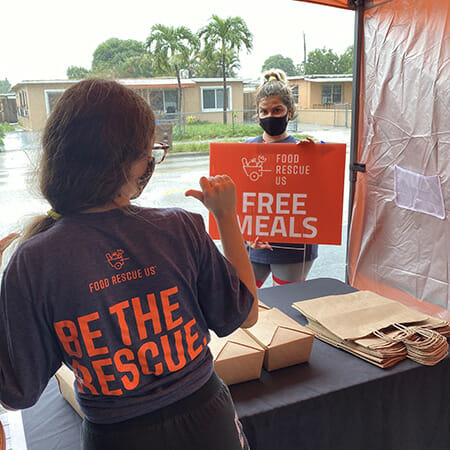
Ellen is bridging the gap between excess and access in her greater community. “If nothing else is learned from COVID, it should be that we live in a society filled with excess…If everyone spent a little time giving back, they’d find more purpose to their lives.”/Courtesy Ellen Bowen
Describe your volunteerism with Food Rescue US.
As the Miami site director, I’m recruiting volunteers, identifying new food donors and conducting community outreach to match food donors to social service agencies. We just added Trader Joe’s to our donor list. Our goal is to keep food in the neighborhood where the donor is. A donor can be a restaurant, hotel catering departments, convention centers or stadiums, grocery stores. We also do a lot of grant writing and apply for funding opportunities.
Explain how the impact of your volunteerism is multifold.
We get to see the happy faces of recipients getting the food, but also, the chefs that donate are so proud. If you think of it, when a chef creates a dish, it is like art to them. To then have to throw that meal out is horrible, especially when they know people are hungry nearby. Also, our volunteers are so committed and love this service because it’s so hands on. Many of them were laid off and furloughed during the COVID-19 pandemic. We’ve had a couple volunteers that show for a free meal and then offer to stay and help us. They’re the boots on the ground, actually seeing where the food is going.
Share one personal story with me from your volunteerism.
A woman approached me at a community event and asked if I was Ellen. This woman, a nurse who works at a local hospital in Miami, said she had a lot of patients from a local shelter, Miami Rescue Mission. She told me she hadn’t seen one man from the shelter for a long time, but he’d recently come in for a checkup. She said he had color in his cheeks and he looked healthy. When she asked what he’d been doing, he said, ‘We’re getting really good food at the MIami Rescue Mission!’ (Laughs) We were getting some amazing food like fried chicken and meatballs to distribute to the shelter from catered hotels like the Fontainebleau.
Why do you think it’s important for others to give back?
If nothing else is learned from COVID, it should be that we live in a society filled with excess. We don’t think twice about spending hundreds for entertainment and food, and we turn a blind eye or become numb to the homeless and underserved areas. It’s important to give back to those who aren’t as fortunate. If everyone spent a little time giving back, they’d find more purpose to their lives.
What’s been the most rewarding part of your service?
This volunteerism has been the most rewarding thing I’ve ever done in my life. My background is in fashion in New York City. Before, I was an executive and that was really nice and I made money and all those things, but for the first time, I feel like I have a purpose to my life. Doing this kind of service, children will thank us and people burst into tears telling us what the meals mean to their family. We even rescued more than 40,000 pounds of food at the 2020 Super Bowl post-event. If someone had said to me five years ago that I would be feeding the homeless in Miami, I would have said, ‘What?!?’ But here I am!
Through their Restaurant Community Kitchen initiative, Ellen has been able to keep the doors of 25 restaurants open during the COVID-19 pandemic, keeping staff employed and continuing to distribute meals to underserved neighborhoods. /Courtesy Ellen Bowen
How have you continued to volunteer throughout the pandemic?
So many of our donors closed because of the pandemic. We rescued everything and anything perishable we could in the first week of the pandemic and directed it to the shelters. Since then, unemployment has been a huge issue, especially here in Florida. Through fundraising, we’ve been able to keep the doors of 25 restaurants open. By keeping these restaurants open, we’re helping them keep staff employed, and they’re also able to prepare very simple meals that we pack as takeout for meal distribution in underserved neighborhoods. We’ve provided more than 50,000 meals thus far through this Restaurant Community Kitchen initiative.
In one word, what does volunteering mean to you?
Compassion.
How can readers help?
We’re fundraising to continue distributing meals during the pandemic. To help continue our efforts, please visit our website.
Do you want to make a difference in your community like Ellen Bowen? Find local volunteer opportunities.
For Decades, Georgia Woman Serves as Beacon of Support for Those in Need Throughout Her Community
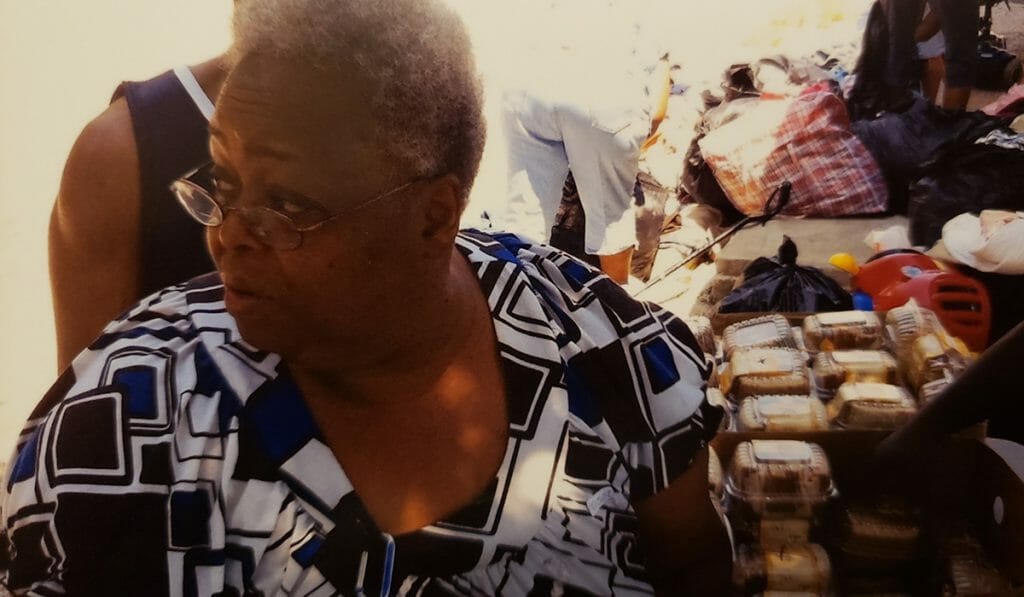
Each Wednesday, Eula Clay can be seen at St. Jude’s City of Faith in Decatur, Ga., distributing food, clothes, and any other items she has collected throughout the week to help those in need.
Eula describes herself as a “finder” — every day, all week long, she is working to find and collect what her community tells her they need. Sometimes that’s furniture for disabled veterans, and sometimes it’s children’s clothes for those struggling to afford them. Each week she strives for blankets and sleeping bags for the homeless, as well as clothing, toiletries, and lunches of nonperishable items.
“It always gave me a great feeling to know that maybe I couldn’t fix their problem, but I could help them get from one situation to another one,” Eula said. “Whatever I could do, even if I didn’t have it, I would try to find it for them.”
Eula said 100-150 people will visit each Wednesday distribution. Sometimes those stopping by aren’t looking for anything in particular, and just want to sit with Eula and have her listen to them while they talk.
“That’s been a rewarding thing in my life, knowing you can have that kind of impact on people and they believe in you,” Eula said. “That’s what keeps me going.”
Eula is able to collect her items from donations brought to her by community members who have heard her mission through word of mouth, as well as donations from the Finders Keepers consignment shop and Second Life thrift store. The items are either dropped off at her garage, or she travels to pick them up herself.
And if someone requests an item from Eula that she doesn’t already have, she will do everything in her power to find it from somewhere within her community.
“I always tell God, ‘Let me be able to find it or give it,’” Eula said. “With the ministry and everything, I’m just amazed at how sometimes I could get down to the very last minute, and all of a sudden someone will come and ask me for something, and it will always appear.”
Eula Clay distributes food, clothing and more each week at St. Jude’s City of Faith in Decatur, Ga. /Courtesy Eula Clay
Eula said she has been passionate about helping people her entire life — she remembered, as a teenager, giving away her lunch money to kids who didn’t have any — and she has been actively volunteering for almost 50 years. She first got started by asking her pastor how she could help out more at her church. She didn’t want to join the choir or become an usher, but as she told her pastor, she enjoyed helping people. At the time, he was in the prison ministry in DeKalb County, Ga., so she started traveling with him there and then all over the state of Georgia.
She began hosting monthly birthday parties for the incarcerated, a practice she continued for 36 years before retiring two years ago. At the birthday parties, which she also hosted for sober living facilities, she would bring gifts such as stamps, envelopes, and personal hygiene products, as well as cake and ice cream.
“Then I just started helping everyone I could,” Eula said. “I have a passion for it and I have a love for it. I hate to see people hurting. I can’t stand it. If I can do something to make you smile, I want to do that.”
From the prison ministry, she herself went into street ministry. She had a space at a local flea market where she could do her ministry, and she sold clothes she collected at a reduced price. After losing her spot in the flea market, she moved her distribution center to her garage and began her current work at St. Jude.
Eula is retired and any money she spends is her own. If someone tells her they are hungry, she will go to the grocery store and purchase food for them herself. She tries to keep umbrellas, coats, and blankets in her car, in case she sees someone who needs help while she’s out driving. Each holiday season, Eula will sponsor a family and provide them with toys and a Christmas dinner.
“She’s had a big impact on the community where she’s able to meet them where they are, because a lot of times those people are overlooked and they’re marginalized,” said Shirley Wright, Eula’s friend of ten years. “She’s always been a listening ear for them.”
Eula said she appreciates the faith and confidence that the people of her community have in her. They always know that when they donate items to her — whether it be furniture, coats, sleeping bags, or canned goods — that those items are going to someone who really needs it.
“It’s been a real honor for me to do that because I love people, and I feel like we’re all on the same page,” Eula said. “If we don’t help one another, we’re not going to survive.”
Teen Spreads Awareness and Education Globally on Child Trafficking
Meet Daily Point of Light Award honoree Anooshkha Shetty. Read her story and nominate an outstanding volunteer or family as a Point of Light.
Anooshkha Shetty was shocked to find out child trafficking was present in her area after reading about a sex trafficking victim in Oakland, Calif., near her home in Los Altos. She immediately knew she wanted to do something to help fight this form of modern-day slavery. Three years ago, Anooshkha started the awareness campaign No Child Trafficking as part of her project for her Girl Scout Gold Award, which is the highest award a Girl Scout can earn.
Through No Child Trafficking, the 17-year-old travels to schools in both the Bay Area as well as India in order to educate middle and high schoolers on the issue and on techniques used by traffickers. Since the COVID-19 pandemic has prevented her from giving in-person presentations, she has instead been spreading awareness by writing articles and blogs on child trafficking. Anooshkha, who is currently a high school senior, plans to study computer science and artificial intelligence, particularly image recognition, so she can combine the work with human rights by using image recognition to help find traffickers and identify missing persons.
Describe your volunteer role with No Child Trafficking.
My project focuses on raising awareness of child trafficking. I address this problem by educating middle schoolers and high schoolers globally about different recruitment scams and techniques that are used by labor and sex traffickers. I also encourage them to spread this awareness.
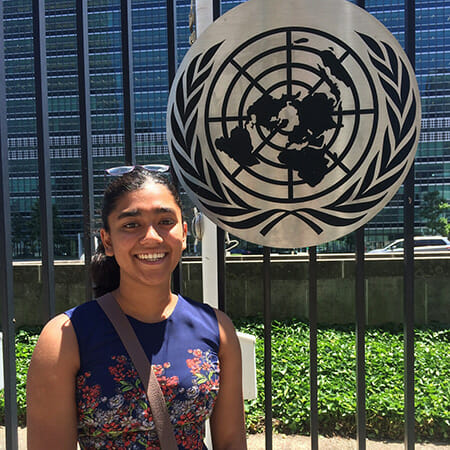
Anooshkha Shetty, founder of the awareness campaign No Child Trafficking, poses outside the United Nations in New York.//Courtesy Anooshkha Shetty
What inspired you to start this?
I was browsing online one day when I read a story about a sex trafficking victim who was in Oakland. I was really disturbed personally because she was my age at the time and this happened so close to my home. This was in my area. I was completely shocked because in school I had learned about slavery, and I had believed this was something that happened in the past and had been abolished, but this was slavery and it was happening in the present day. Human trafficking is modern slavery. It was an issue that I really cared about and I wanted to do something to help.
What kind of feedback do you get from students after your presentations?
I gave presentations in India and in the Bay Area. When I gave presentations in India, the kids kind of knew what I was talking about because trafficking there is clearly visible. You can see kids in the streets cleaning tables, really young kids, so they knew what I was talking about. But when I came to the Bay Area, it was more, “Oh, that doesn’t happen here, that only happens in third-world countries.” So it was a bit of a shock to them that it actually happens in places like where they live.
Why do you think this issue resonated with you so much?
I think because I’ve grown up going to India and seeing these kids, and a lot of them were younger than me and my younger sister’s age. I remember thinking, why aren’t they in school? Why aren’t they being kids? Why are they in the streets? I remember thinking all these thoughts and it’s something that stuck with me for a really long time.
What’s been the most rewarding part of your work?
The most rewarding part of my work was probably getting an email from a traffic survivor. I was in a path of my advocacy where I wasn’t sure whether the work I was doing was really beneficial. Getting a email from her thanking me for what I was doing and saying what I was doing meant so much to her, that other people cared about this issue — that helped me, and it energized me to fight more for the victims who can’t fight for themselves.
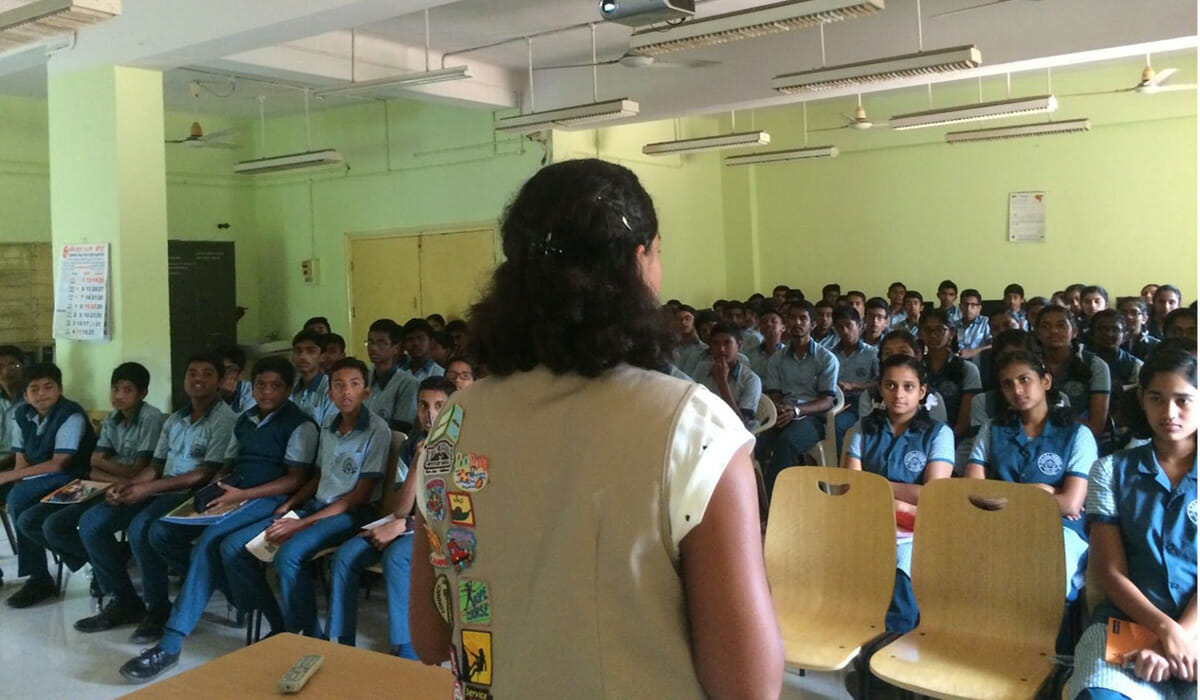
Anooshkha Shetty leads a workshop on child trafficking at C.F.T.R.I. School in Mysore, Karnataka State, India./Courtesy Anooshkha Shetty
What do you want people to learn from your story?
Trafficking is not something that is very well known so I would like them to understand what it is. The basic form of trafficking is the buying and selling of children for the purpose of labor or sexual exploitation. I think a widespread belief is that it mostly happens in third-world countries, so for them to have awareness that it does happen in the Bay Area and it can happen anywhere.
Why do you think it’s important for others to give back?
I think it’s important for people to give back because they can. This is an issue that I really care about and I’m able to do all this. If I imagine myself in that situation, I would feel so helpless, so I want to be that hope and light that can help these people.
Maryland Volunteer Spreads Cheer for Sick Kids Through the Mail
Meet Daily Point of Light Award honoree Jan Street. Read her story and nominate an outstanding volunteer or family as a Daily Point of Light.
Cards are sent to honor happy occasions like birthdays, holidays and milestones, and also to cheer recipients experiencing loss and struggle. Reminding sick children and others in need that they are not alone, Jan Street has taken card giving to the next level through her volunteerism.
As a volunteer for Zippy Zebra Smiles and Hugs, Jan sends handmade cards monthly to chronically or seriously ill kids and special needs children, in addition to senior citizens. Making more than 600 cards alongside her teen daughters since the start of the COVID-19 pandemic, Jan is sharing heartfelt positive spirit with many in her community.
Describe your volunteerism with Zippy Zebra Smiles and Hugs.
Through Zippy Zebra Smiles and Hugs, I send cards monthly to children with health issues and their siblings, in addition to senior citizens. Anyone can send cards through this organization, from a senior to church parishioner to a college or high school student.
What inspires you to volunteer?
As a mom, it’s a good feeling to see your kids smile when they are feeling bad. I hope the cards bring a smile to all of their faces.
What does it mean to you that your children are able to join you in service?
It’s great that my daughters enjoy helping when they can. They love to do for others and love to see everyone smiling and happy.
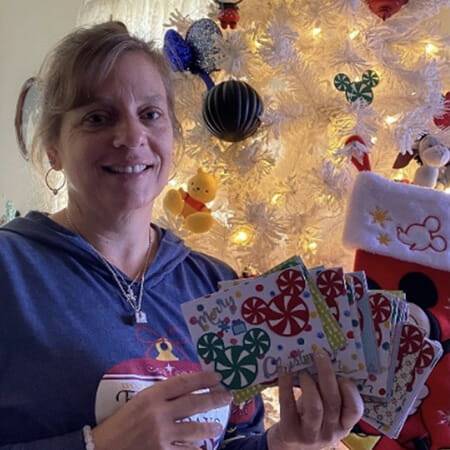
Jan Street pictured with a recent batch of cards: “As a mom, it’s a good feeling to see your kids smile when they are feeling bad. I hope the cards bring a smile to all of their faces.”/Courtesy Jan Street
Share one personal story with me from your volunteerism.
It’s nice to see photos parents share when their children receive cards. It’s a good feeling when a mom shares that their child was feeling bad, or having an especially tough day, and my card really brightened their day.
Why do you think it’s important for others to give back?
Volunteering makes the world a better place. If you’re in a place where you can help to make a difference, you should.
What’s been the most rewarding part of your service?
It’s been rewarding knowing that I bring a smile to a child’s face, and maybe their parent’s face too!
Your volunteerism is an “encouragement to others.” How have you learned through your experiences as a volunteer?
Not everyone views volunteering as important, but I think it’s super important. Everyone can help someone, and we all should! (Your volunteerism) doesn’t have to be cards for kids, it can be time spent sorting items to go to a shelter, shopping for Toys for Tots or (serving) at an animal shelter. There is a way for everyone to give back.
How have you continued to volunteer throughout the pandemic?
I am continuing to make cards. I think it’s even more important (to volunteer) now than at other times.
In one word, what does volunteering mean to you?
Connection. To others and their needs.
How can readers help?
Zippy Zebra Smiles and Hugs is in serious need of card senders. Please visit their website for more information about how to help.
Volunteer “Links” Learning and Volunteerism to Help Immigrant Students in Community
Meet Daily Point of Light Award honoree Lily Deitelzweig. Read her story and nominate an outstanding volunteer or family as a Daily Point of Light.
Lily Deitelzweig’s dedication to volunteerism has grown through the years, as has her commitment to fostering learning opportunities in her community.
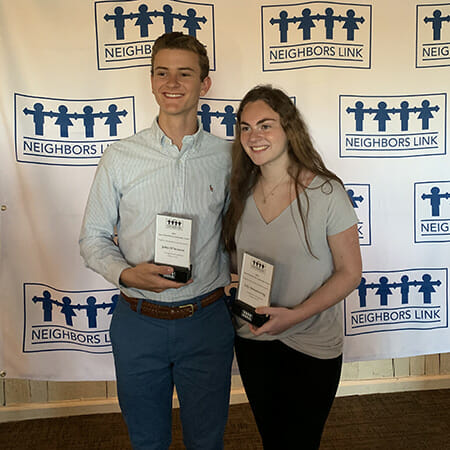
Starting first as a volunteer with Neighbors Link, an organization dedicated to strengthening community through the healthy integration of immigrants, the 18-year-old Armonk, New York student founded Learning Links Club in 2018 along with a classmate. Through Learning Links, which is a student-run club that operates under Neighbors Link to facilitate educational projects with students, Lily has connected with close to 100 people in her community, empowering the youngest in her community through inclusion and care.
What inspires you to volunteer?
When I first started volunteering with Learning Links Club it was an amazing feeling. That feeling made me want to go back every week. Volunteering is contagious because I know how important the work I am doing is and how it makes everyone feel, including myself.
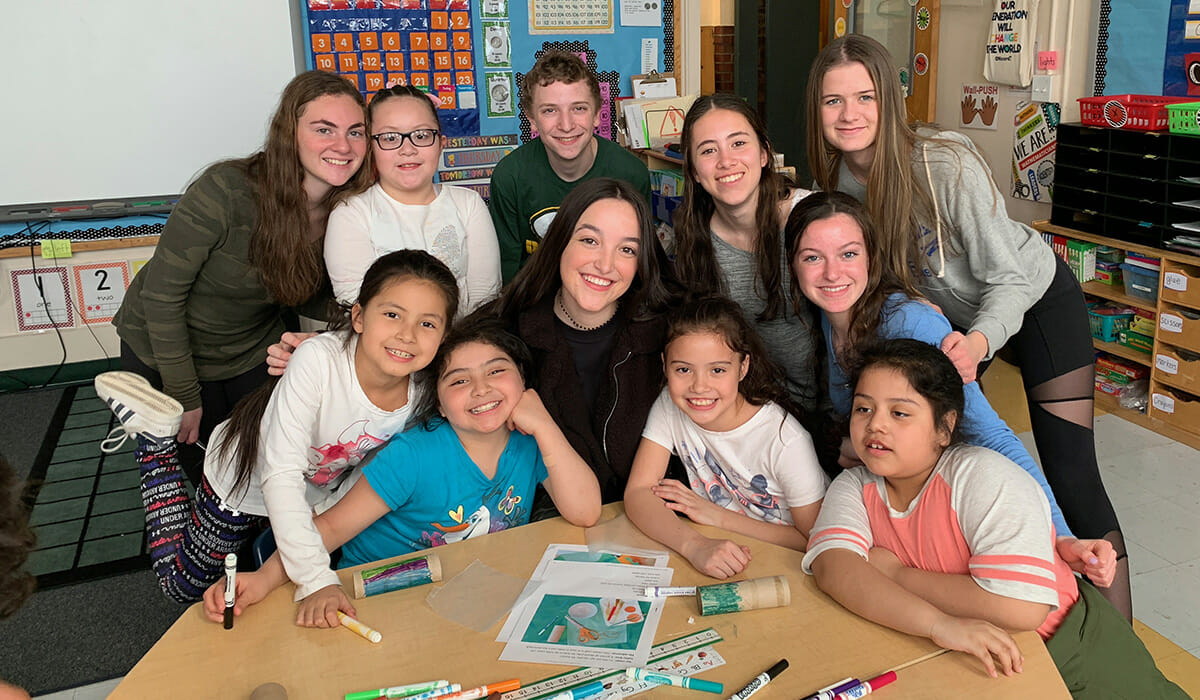
Lily (left) pictured with Learning Links Club volunteers from Byram Hills High School in Armonk, New York, and Mount Kisco Elementary School students./Courtesy Lily Deitelzweig
Describe your volunteerism with Learning Links Club.
As co-founder and co-president I organize, host and fundraise for our annual holiday party for the students, which we call the Holiday Mercado. We’ll use this money to purchase all their favorite foods and then celebrate. I also create science lesson plans and organize when we visit the students to do these projects, along with our high school student volunteers. Our club operates under the Neighbors Link organization, which serves immigrants within our community, many from Guatemala.
Share one personal story with me from your volunteerism.
The first time I brought volunteers from my high school to visit the students, we did a science experiment making kazoos with toilet paper rolls. I didn’t expect the students to have as much fun as they did, and they asked when we were going to come back. I was overjoyed that a project so simple and small could make a huge difference.
Why do you think it’s important for others to give back?
I know that no matter how big or small, if everyone works together, service can really make a huge impact on the community.
What’s been the most rewarding part of your service?
It’s been rewarding getting to know these kids really personally. Through the past four years of service with Neighbors Link, I’ve really been able to see these students grow in their math and English skills and proficiency. It’s rewarding knowing I’ve made really close relationships with these students through volunteerism that I wouldn’t have otherwise.
How have you continued to volunteer throughout the pandemic?
Learning Links is now offering virtual projects. It’s much harder to be hands on but we are still successful in connecting with students.
Lily (left) pictured with Learning Links Club volunteers from Byram Hills High School in Armonk, New York, and Mount Kisco Elementary School students./Courtesy Lily Deitelzweig
In one word, what does volunteering mean to you?
Gratifying.
When you’re not busy with school or volunteering, what do you do for fun?
I love playing tennis with my friends.
How can readers help?
Please visit the Neighbors Link website for more information about how you can give back.
Thanks to Ameya Jadhav, residents of Alpharetta, Ga. have the opportunity to brush up on their technology skills and even learn computer programming, all for free. Since helping to found the nonprofit Teach-Technology Organization, Inc. with his sister Daksha in 2016, Ameya has helped teach over 795 students of all ages in over 125 computer science-related classes. As the nonprofit’s current executive director, Ameya leads 27 volunteers in not only teaching the classes, but also hosting webinars, organizing Hackathons, and maintaining a technology blog.
Ameya and his sister were originally inspired to start Teach-Technology Organization in order to help bridge the ‘digital divide,’ referring to the gap between those who are able to benefit from the internet and those who are not, which locally affected many senior citizens who had access to iPhones and computers but couldn’t keep up with their ever-expanding technological innovations. The organization went to senior living centers in order to teach computer classes, with Ameya serving as Teach-Technology Organization’s very first teacher. When he took over running the nonprofit after his sister went to college, Ameya decided to expand classes to teach people of all ages programming skills and other computer science courses as well.
Describe your volunteer role with Teach-Technology Organization, Inc.
We work to teach programming skills and other technology skills to children, adults and even seniors, and we do this though our various activities. We teach a lot of classes such as Python programming, Java programming, and machine learning. We host webinars on cyber security and other topics. We host community get-togethers like Hackathon. We also have blogs on our website on technology topics. We do all these classes and all these activities to help our community learn more about technology and more about programming, and hopefully spark interest in young children where they’ll grow up and enter the CS [Computer Science] field. I am currently the executive director and I was the cofounder along with my sister. We started the organization back in September 2016. My sister left for college in 2018 and since then I’ve taken over as executive director. I manage all the day-to-day activities for the organization, so I mange our volunteer teams, I communicate with our locations and our virtual platforms, I make sure all the classes are going smoothly, and I also teach a couple classes that we host.
What inspired you to start this organization?
I’ve been interested in technology and programming for a very long time and even from a young age. Years ago when I was helping my grandparents use their iPhone and helping set up their computer, I realized there was a generational gap in terms of technology usage. A lot of times individuals have access to technology but they can’t enjoy it effectively because the pace of innovation in technology is moving faster than the older generation can fully grasp. I did some research and I realized this was a common phenomenon known as the digital divide, where for example, every year there’s a new iPhone and a new IOS and all these new features, and older generations can’t keep up with that. I wanted to help other people like my grandparents learn technology skills and improve their quality of life. That was the original inspiration to start Teach-Technology Organization and that’s how we got into our sessions for seniors, which was our very first class we started back in 2016. That’s when we went to senior living facilities and we helped those seniors learn technology and improve their quality of life. Since then, I started offering other classes.
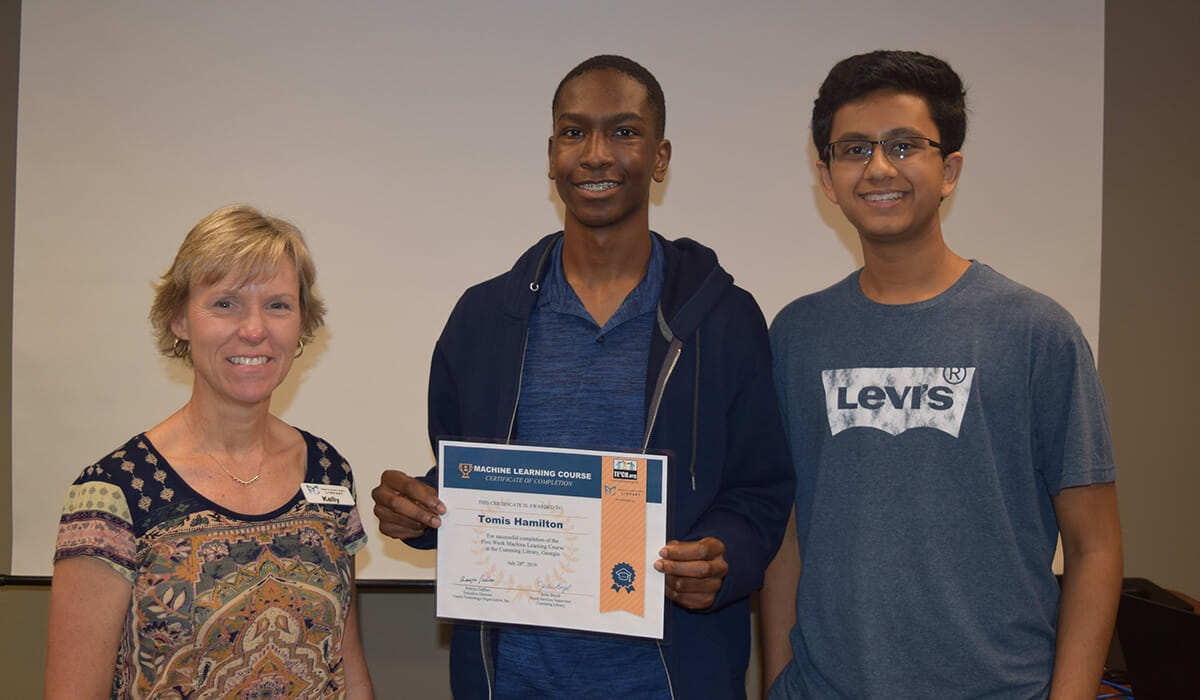
Ameya Jadhav, right, presents a student with a certificate of completion for his nonprofit Teach-Technology Organization’s Machine Learning class in 2019.
What made you want to expand to teaching all ages?
I did the expansion to other classes after my sister went to college in 2018. I realized I have an interest in technology and artificial intelligence and machinery, and I realized our world is becoming more technology-focused and more computer science-focused. In the next five to ten years, the demand for computer science and technology skills will be far greater than it is now or was in the past. I realized this is going to be a problem for my generation for knowing these technology skills and being able to apply them. That’s how I really got into using the technology skills I already knew and helping my community, peers, and students to also learn these skills. That’s why we expanded the classes.
How has it felt for you to see your organization grow so much?
It’s definitely been exciting and rewarding. When I started this I just had a dream to help all these people learn technology and it’s amazing to see how many of our volunteers, and even how many of our students, are so invested in learning these technology skills and even volunteering with us. Many of our volunteers are actually previous students. We have many of our students who first learn in our classes, and then they reach out to me or reach out to our volunteer team and they ask out to help with our organization and help other students as well. It’s really amazing to see how much we’ve grown over the last couple of years and how many students really want to get involved.
What’s been the most rewarding part of your work?
The most rewarding part is definitely being able to help students learn these different skills, and also meeting all these different students. Many of them have different knowledge areas. Some of them know more things about certain topics than even I do. The most rewarding part is being able to see how much of a difference I’m making in students’ lives and how much they’re learning from these classes. After each class, some of the students come up to me and say “Thank you for teaching me,” and that’s truly what the most rewarding part is.
What have you learned through your experiences as a volunteer?
I have definitely grown as a person with this nonprofit since I started this in seventh grade. I used to be a very shy person. I started doing these classes and I was the first instructor, so I had to go up and put on a class and teach these different skills to around 20 students my age or even adults. That really helped me get out of my comfort zone and be more extraverted and talk to more people and really get out of my shy area.
What do you want people to learn from your story?
I think the biggest thing I want people to learn or to be inspired to do is not be afraid to start their own thing or reach out to their community and help in any way. My passion was technology and computer science, so I went out into my community and I helped them in some way related to my passion. I want to encourage people to use whatever knowledge they have and use whatever passion they have and get out into these communities and help their communities whatever way they can.
Best Friends Share Skills with Students Worldwide Through “Covid NineTEEN” Volunteerism
Meet Daily Point of Light Award honorees Sarah Shapiro and Skye Loventhal. Read their story and nominate an outstanding volunteer or family as a Daily Point of Light.
It was a serendipitous first encounter, when Sarah Shapiro and Skye Loventhal met as small children on the front steps to their preschool building. Fast forward a decade and a half later, it seems only natural that the two, whose friendship began at the same time their formal education was itself just beginning, are now offering educational opportunities for children worldwide through service.
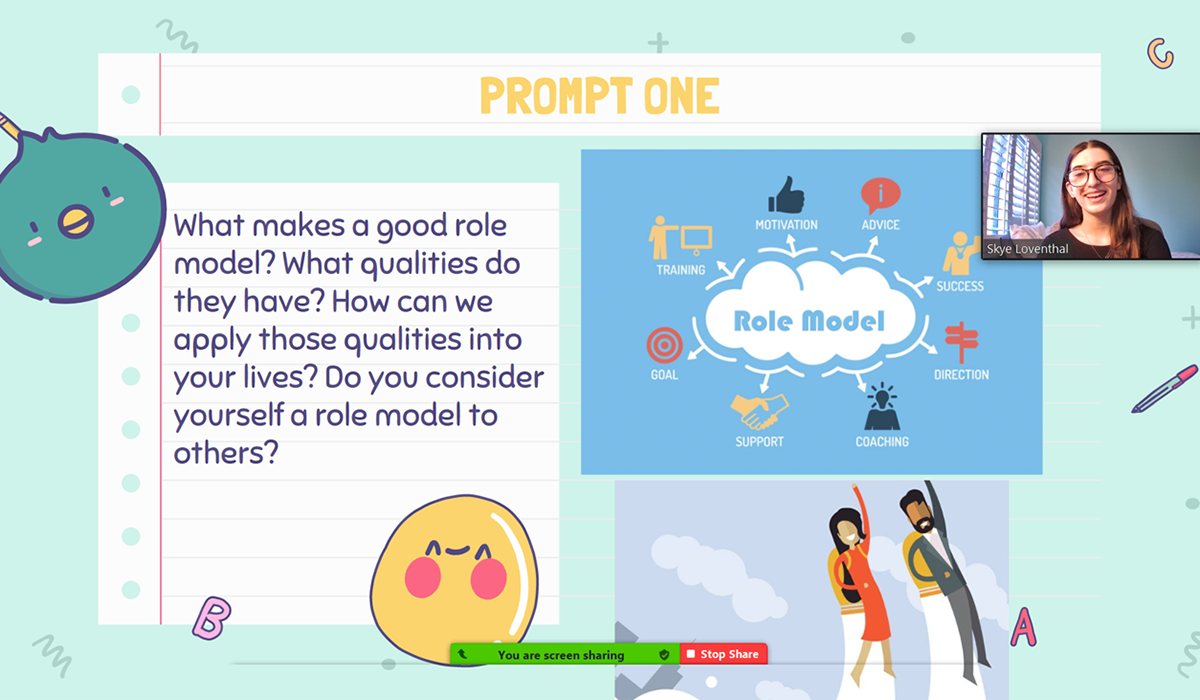
As co-founders of the Covid NineTEEN Project, the 17-year-old Northridge, California high school seniors are engaging elementary school students in quarantine amid the COVID-19 pandemic through their youth-led global initiative that offers free daily activities and one-on-one tutoring.
“Skye and I wanted to create something to address educational issues exacerbated by COVID-19,” Sarah says. “(We’re both) children of educators, (and we) saw how students were falling behind in our own classrooms and in our parents’ classrooms.”
Sharing previous experience in volunteering and mentoring young children, both teens felt that connecting with students during the pandemic was the “obvious route,” says Sarah. Once the two got going, it quickly became apparent how in demand their service was, as the pandemic forced school closures and shuttered after-school activities that many children and their families depended upon.
Sarah Shapiro: ““These are future change makers that we are teaching. When they finally grasp that math project or I teach them about environmental science, they’ll say, ‘this is something I want to do when I grow up!’ People told us we were biting off more than we could chew (with this project), but honestly, if we want to see change in the world, we have to be the ones to step up and do it.”/Courtesy Sarah Shapiro and Skye Loventhal
Conducting virtual tutoring and free daily activities in topics ranging from arts to academics to athletics, even hosting a Zumba class together every week, Skye and Sarah have connected with more than 800 students in the United States and internationally across 14 different countries, sometimes putting in 16-hour days to ensure activities were in order for the next day. According to Skye, online volunteerism is providing much-needed motivation for students.
“One of the many issues we experienced (due to the pandemic) was a lack of motivation when we were at home all the time,” says Skye. “I realized I was relying a lot more on procrastination than I had in the past. When I had my strict schedule and routine I was a lot more on top of my work.”
As Skye and Sarah are joined by more than 250 other teen volunteers in hosting these activity sessions, the girls are serving as mentors for children seeking engagement and continued development during this extended period of social distancing and providing stress relief for parents who are juggling career and family responsibilities at home. An unintended but added benefit, says Sarah, is how the Covid NineTEEN Project has built a community for the students they are serving and the volunteers themselves.
“I had a volunteer send a message to Skye and I saying they were in a really dark mental place before the program, and now they have a reason to get up every day. (The message) drove me to tears. Being in a community built not just for our students but for teens who needed that drive to continue working and bettering society has been an unexpected but amazing aspect of this program.”
Offering tutoring in fifteen different languages to support students who have lost access to important English-learning resources, that community is being nurtured in countries as far away as Argentina and South Korea, and in homes stateside including Yun Kim’s home in Virginia. An English as a second language parent, Yun says her only child, Madison, has new career goals as a result of Sarah and Skye’s volunteerism.
“After the pandemic she stayed home, but she could still meet and learn and have fun with (Covid NineTEEN Project). She first wanted to be a teacher, but after she tried a lot of activities (with Sarah and Skye), she decided she liked public speaking. She now wants to be a reporter.”
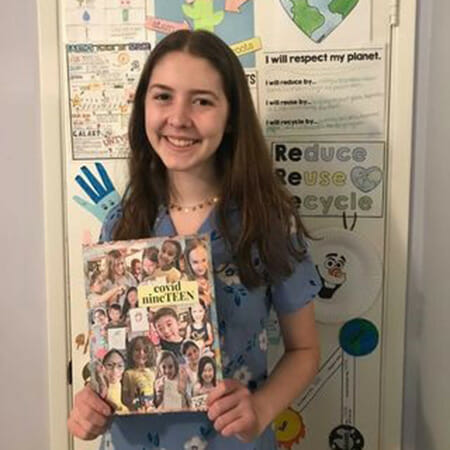
Conducting virtual tutoring and free daily activities in topics ranging from arts to academics to athletics, Skye and Sarah have connected with more than 800 students in the United States and internationally. /Courtesy Sarah Shapiro
That lasting impression, says Sarah, is something they’re seeing in many of the students they mentor. The two hope to extend their volunteerism so that others can implement similar programs in their own communities, as they believe virtual learning is here to stay. Meanwhile, Sarah says helping children to flourish during such uncertain times is what continues to drive her volunteerism.
“These are future change makers that we are teaching. When they finally grasp that math project or I teach them about environmental science, they’ll say, ‘this is something I want to do when I grow up!’ People told us we were biting off more than we could chew (with this project), but honestly, if we want to see change in the world, we have to be the ones to step up and do it.”
Texas Teen “SparkED” Success through Service for Next Generation of Empowered Youth
Meet Daily Point of Light Award honoree Paridhi Latawa. Read her story and nominate an outstanding volunteer or family as a Daily Point of Light.
It was a combination of experiences that changed Paridhi Latawa’s perspective on how to best serve her community and beyond. Volunteering with underserved students in her local Austin, Texas schools, coupled with a visit Paridhi took to India where she met with young girls who lacked access to educational resources, Paridhi decided to dedicate her service to increasing educational engagement for youth.
Founding SparkED to educate, empower and enable students so that they can make informed decisions about their career and life, the 16-year-old high school junior is preparing the next generation for a better future. Hosting events to connect students with professionals, Paridhi is increasing educational engagement and scientific literacy globally. Through these online opportunities for kids and focusing on in need communities including underserved students and girls who lack opportunity, Paridhi has engaged with thousands of students thus far.
What inspires you to volunteer?
I’m inspired by the realization that through volunteerism, mentoring and support, we can stimulate a lifelong passion in curious students.
Describe your volunteerism with SparkED.
As founder and executive director, I coordinate with mentors and identify sponsors, develop our program and sessions, and work directly with our board of directors. We’ve worked with international students from countries across the globe including Kenya, Philippines, China and India. Through our events, we offer opportunities for students to engage with and learn from professionals in their respective fields and help young children channel their creativity and love for learning.
Founding SparkED to educate, empower and enable students so that they can make informed decisions about their career and life, Paridhi Latawa is preparing the next generation for a better future. /courtesy Paridhi Latawa
Share one personal story with me from your volunteerism.
The goal of one of our sessions was to shed light on interdisciplinary fields. After the session, we had a couple students stay back, and they shared how they didn’t know these fields in science or education existed before our sessions. It gives me immense personal satisfaction to share my knowledge and happiness to know I can support students, including in underserved communities, and connect them with professionals to help them pursue their dreams and explore opportunities.
Why do you think it’s important for others to give back?
Since we each receive something from our communities, it’s important to give back so others can in turn benefit from your knowledge. By sharing and spreading my knowledge, I am helping to increase literacy and educational opportunities.
How have you continued to volunteer throughout the COVID-19 pandemic?
When we first launched, our program held some in-person events local to Austin, but once the pandemic started, we switched to a virtual format. The silver lining has been that through our virtual sessions and mentorship, we’ve been able to build a large international reach.
In one word, what does volunteering mean to you?
Community.
When you’re not busy with school or volunteering, what do you do for fun?
I play the viola. I also compete in science competitions, I am a Science Olympiad. I paint, read and spend time with my 5-year-old sister.