Seattle Man’s Service ‘Plants the Seed’ for Stronger Communities and Environmental Health
Meet Daily Point of Light Award honoree Tavish Fenbert. Read his story and nominate an outstanding volunteer or family as a Daily Point of Light.
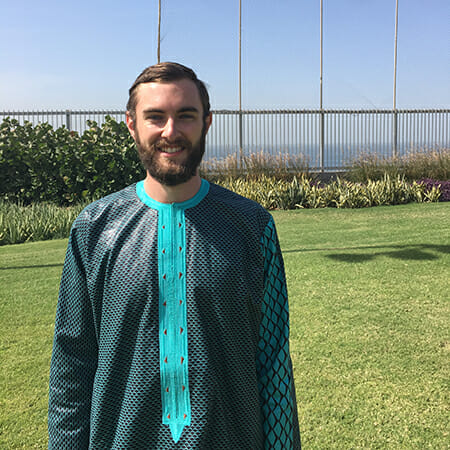
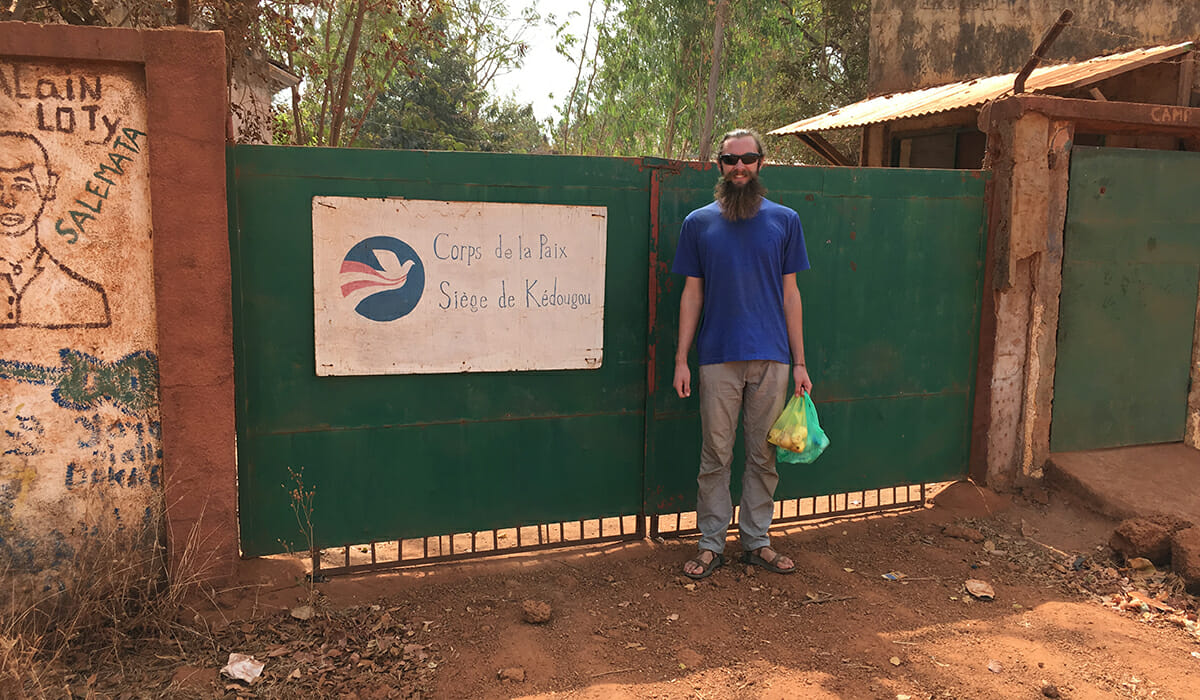
Living in rural Senegal as a Peace Corps Environmental Change Agent, Tavish Fenbert led grassroots efforts to protect the environment and help strengthen villagers’ understanding of how to manage their natural resources. Offering tree planting technique and environmental education to adults and youth as a way to combat deforestation, Tavish spent 18 months planting the seed for a better environmental future, a volunteer effort he’s now brought closer to home amid the pandemic.
Currently based in Seattle, Washington, the 25-year-old was evacuated back to the U.S. in late March, and has been volunteering to support food insecure families and those who lack access to nutritious foods in his own community. As a volunteer with the University District Food Bank and at Solid Ground, Tavish is breaking down socioeconomic barriers and serving those in need through access to healthy food.
What inspires you to volunteer?
I know this sounds cheesy, but I’m inspired to make a difference in the lives of others. In exploring how to best help people, I’ve found that I can engage my own interests and also help community organizations in the agriculture sector.
How has your volunteerism evolved?
I’ve always been interested in food, cooking and nutrition. What makes this service really important is how we are able to help people who might have lower incomes or less access to nutritious foods. With the Peace Corps, I loved getting to live with farmers, learning about the agriculture sector from the base level. Now in Seattle, I am getting to see what an urban farm looks like in a major city and learning about food justice and operations at food banks, which involves higher levels of food distribution and nutrition.
Tavish Fenbert is planting the seed for a better environmental future and making nutritious food accessible to food insecure families through his volunteerism.
Describe your volunteerism.
As a volunteer at the University District Food Bank, which operates a food and basic necessities bank for individuals and families across Northeast Seattle, I help families shop for their items. As a result of Covid-19 restrictions, customers tell the volunteers what they want at each station and we secure the items for them. I also assist with set-up and clean up for the day. At Solid Ground, which is dedicated to solving poverty through meeting basic needs, nurturing success and spreading change, I volunteer at the Marra Farm, an urban farm in South Seattle which donates all produce grown by Solid Ground to local food banks and senior centers. At the farm, I’ll weed, harvest produce, prepare beds for planting and plant seeds.
Share one personal story with me from your volunteerism.
As a volunteer in the Peace Corps, I helped women to build fuel efficient mud stoves. Most of the cooking in the village was done over open fire, but helping the residents cook with local resources without having to purchase materials meant these wood burning stoves could more efficiently cook, lessen smoke inhalation and help in the fight against deforestation. In Senegal, my host brother and I built a mud stove for our host mom, and for weeks and months afterwards, she’d comment to me how fast the stove was and how great it worked because she didn’t have to use as much firewood. I knew that this one stove had made a difference in her life, and while it wasn’t a huge difference, it was something that took a handful of hours to build and is something that will last years and she will use it every day.
Why do you think it’s important for others to give back?
Whenever I volunteer, I have the opportunity to cross paths with people that I probably wouldn’t have met in my day to day life. Exposure to different communities and people within your own community is really important because it helps to develop values and helps people learn what’s truly important in life. In the Peace Corps, I came to the realization that most of my time would be spent interacting with people and developing relationships in the village, rather than always trying to be working, because without those relationships, nothing I did would be sustainable. Volunteering means that you’re able to consider how others live their lives, and that recognition of what you have versus what others might not have is what increases my desire to continue giving back.
Tavish served in Senegal as a Peace Corps Environmental Change Agent for 18-months, where he offered tree planting techniques and environmental education to adults and youth as a way to combat deforestation.
What’s been the most rewarding part of your service?
The biggest benefit from my service is how personally rewarding it’s been. I don’t have any grand illusions about how I’ve helped people, others can do the work I am doing, but because of volunteering, I’m learning about where I want to dedicate my time and energy in the future.
Inspired by Her Mother, Connecticut Woman Helps Feed Hundreds of Local Children Each Week
Meet Daily Point of Light Award honoree Angela Chastain. Read her story and nominate an outstanding volunteer or family as a Point of Light.
The ongoing issue of food insecurity has been in the back of Angela Chastain’s mind her whole life. Her mother, Camella, grew up in extreme poverty and would talk to her daughter about not having food. So when Angela, who serves on the Board of Education in her New Milford, Conn. community, noticed the schools’ free and reduced lunch numbers increasing, she wanted to do something to help.
In 2018, Angela founded Camella’s Cupboard, a nonprofit organization that provides food to area children in need. The organization provides an in-school food pantry, as well as a summer lunch program and food bags for weekends and school breaks, in order to fill in the gaps when students aren’t receiving free or reduced lunches from their school. Since schools closed due to Covid-19, Camella’s Cupboard has ramped up services in order to give students seven breakfasts, lunches and snacks each week. They are also providing food products to families in need. In the past two years, Camella’s Cupboard has provided over 70,000 meals.
Describe your volunteer role with Camella’s Cupboard.
We provide food to children in need in the greater New Milford area, so New Milford and the surrounding towns. We stared as a summer lunch program to fill in the gap between the free and reduced lunch during the school year and not having that availability in the summer. My role is founder and I now serve as the executive director.
When did you start this organization and what inspired you to do so?
It was founded in April 2018. I’m also on the Board of Education in my town, so I’m very in tune with the schools, and I kept seeing our free and reduced lunch numbers going up. When I first got involved, it was around 10 percent. We now are a little bit over 40 percent. I kept seeing it continue to grow and I had tried a couple times unsuccessfully to start a backpack program in the school. The schools at that time were not equipped to deal with that logistically, so I thought, what can I do instead? That’s how this grew and how it started, with the summer lunch program. I figured we could fill that gap during the summer for families. We have since added the weekend backpack program, and of course, during Covid-19 we have really ramped up and served families even more than we typically do.
The reason it started was my mother grew up extremely poor, and I always remember her talking about that and not having food and things like that. That was always in the back of my mind. When we moved here and I kept seeing the numbers grow of free and reduced lunch, that really spoke to me and that’s something I was really passionate about doing. Actually, Camella’s Cupboard is named for my mother.
How have your operations changed since Covid-19 began?
Typically during the school year, we just serve on the weekends to provide food for the students on the weekend, and then we also have an in-school food pantry. When Covid-19 hit, of course everything was up in the air. The schools currently were not serving since we were out of school, and we weren’t sure when we were going to be back in school, so we started serving that first Friday the students were out. We gave the students seven breakfasts, seven lunches, and snacks to get them through the week. Our numbers exploded. We have been serving about 125, and we now serve over 400 a week. The need just grew exponentially. We have partnered with some local agencies in town and are now serving, in addition to food for the children, also some family components. Our families get fresh dairy, they get eggs, they get some meat, and they get lots of fresh produce every week, in addition to the food bank for the children.
Do you have any long term goals for how you would like to see the organization grow?
We have actually been approached by other towns to move into the surrounding towns that have a similar need to ours. The real key to our program is we don’t meet the threshold for reimbursement for free and reduced lunch during the summer, so our schools don’t do a summer lunch program. Some of the surrounding towns here are the same. They’re in the 40 percent, and you need to reach that 50 percent mark to get that reimbursement. We have some areas that want us to expand. That is an option.
One thing I definitely want to see us grow into is a delivery system. We do delivery to about 60 students now through the use of volunteers, but we really would like — once we’ve returned to a traditional lunch program where we’re serving everyday — to get an ice cream truck or something like that we can fix up and take around to different neighborhoods where we know students are but they’re not able to access us, because it is [currently] a pickup program. We would like to be able to expand and get to more students who we know are home alone, or parents don’t drive or something like that.
Another thing we would like to do, and we started to do this during Covid, is expand to other vulnerable populations, be it seniors or disabled or homebound folks who we know are out there and are not quite able to make ends meet and need some assistance. We have had some additional produce and things like that this summer that we’ve offered to the seniors in town, and that has been well received. I will say I was really surprised by the need there as well, so that is an area we’ve talked about expanding or even changing our mission. Our mission now is very child-focused, but changing that to vulnerable populations so we can encompass more of those folks.
What have you learned through your experiences as a volunteer?
I learn something new everyday, be it something related to the business or the nonprofit or the growth of it or relationship building, but I think the thing that I really have overwhelmingly learned again and again is just how gracious our town has been, and how generous our town has been. Whenever we’ve put out a call for any need, we’ve gotten it, whether it be a delivery driver or an empty fridge. We needed a freezer awhile back, and I put up a Facebook post, and within an hour I had a freezer. They’re just so willing to support us and have continued to support us. That first summer, we had overwhelming generosity, and I thought ‘This will be a one-time thing, next year we won’t get that,’ but that hasn’t been the case. The same thing when Covid hit — everybody knew we were ramping up, and the donations poured in and have continued to stay strong. I’m on a nonprofit executive director Facebook page, and a lot of the other nonprofits, their donations and volunteers have really fallen off. Thankfully we have not experienced that at all. We’re almost to the point of having to turn volunteers away, because we have so many people interested in helping, and donations. Every single day, we have somebody dropping something off or calling to see how they can help or sending a check. The generosity of this town has just been overwhelming.
What do you want people to learn from your story?
I think the one thing I really say to a lot of people is hunger is well-hidden, and a lot of people don’t realize how many children and families are hungry. It’s something you can easily hide and it effects so much of a child’s life. They don’t do as well in school. They have an increased risk of childhood obesity. So many different factors impact a child when they’re hungry. It doesn’t take more than just a few dollars or a few extra things purchased at the grocery store to make an impact, so I would encourage anybody who is reading this to donate to their local food pantry or a backpack organization or some other group that specifically especially feeds children.
A Born Volunteer, Teen Makes Dreams Come True for People in Need
Meet Daily Point of Light Award honoree Sydnee Floyd. Read her story and nominate an outstanding volunteer or family as a Daily Point of Light.
Growing up next to one of the poorest counties in the U.S., Sydnee Floyd says when she started noticing that her classmates were wearing the same clothes to school each day, or how they’d stash away any extra food served at school because it was the only meal they could plan on that day, she knew she had to do something to help her community.
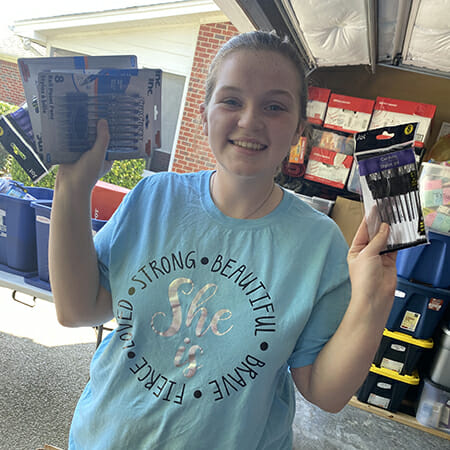
Now 15, the Franklin, Tennessee rising high school junior is connecting with impoverished families and homeless individuals across greater Nashville through Jumbled Dreams Changing Lives, an organization she founded in 2018 which provides essential items, non-perishable food and much needed support to those in need. Powered by more than 100 volunteers over the last year, Sydnee is inspiring others through her service, connecting with close to one-thousand volunteers and impoverished people in her greater community. Striving to change the world through good, Sydnee is empowering others to harness their efforts to make the dreams of others come true.
What inspires you to volunteer?
I once met a little girl at a service event with my mom, we were handing out donated shoes and we’d run out of the little girl’s shoe size. We sat her down and put on these sparkly, pink shoes that were two sizes too big. The little girl looked at me and said, ‘I want to be like you one day.’ I was just ten at the time, but in that moment, I knew what I was doing was right. That little girl is always there in the back of my head, pushing me to continue serving others, even in the face of hardship.
You say you were born to help others. Explain.
I knew I had to help when I started noticing differences between me and my friends. For example, they were wearing the same clothes every day, and in comparison I have a closet full of clothes, or they’d take a lot of food during lunch because it’s free, and they’d try to save some for later. I’d always try to sneak them clothes or shoes that didn’t fit me anymore. I’d pack extra lunches to bring to school and share with my friends.
Sydnee provides essential items, non-perishable food and much needed support to impoverished families and homeless individuals./Courtesy Sydnee Floyd
Describe your role with Jumbled Dreams Changing Lives.
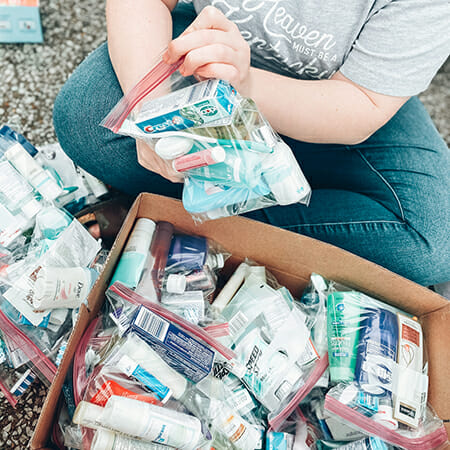
As founder and executive director, I coordinate our fundraising, manage social media communications, recruit volunteers and organize events. We also accept donations including clothing, non-perishable food, toiletries and any basic necessities. We’ll distribute these donated items within our community and have also partnered with national organizations to get our donated items in the hands of those most in need across the country.
Share one personal story with me from your volunteerism.
All of the people we are helping are just like you and I. They just lost their way. We often help this one woman, she’s a friend of ours. She’s older and doesn’t have the ability to do a job that requires standing all day long. She doesn’t have heat or electricity and she can barely pay rent. Anytime we give her anything she always cries on us and gives us a huge hug.
Why do you think it’s important for others to give back?
In this world, it’s super hard to fit in or feel loved, because people can easily hide behind so many things. Winston Churchill famously said, “We make a living by what we get, but we make a life by what we give.” There’s an emotional amount of heart and soul that goes into giving back, but it’s so regarding. What if you were struggling, on the streets, wouldn’t you want the help? You never know the battle someone is going through. My service is focused on that little dream of helping, even if it’s just holding the door open for someone, your small act of kindness could literally save someone’s life.
Sydnee Floyd: “Service is my passion. It makes my heart so full and it makes me so much happier than anyone or thing could make it.”/Courtesy Sydnee Floyd
How has the Covid-19 pandemic impacted your service?
Shoot, it’s messed everything up (laughs). We’ve continued donating to partner organizations and are still collecting, cleaning and sorting donated items until it’s safe to distribute.
In one word, what does volunteering mean to you?
The world. Service is my passion. It makes my heart so full and it makes me so much happier than anyone or thing could make it. Volunteering is something anyone can be born with, you just have to find that passion.
When you’re not in school or volunteering, what do you do for fun?
I hang out with my mom! (laughs). I know that sounds so cliché, but my mom just has been there through everything with me. I love hanging out with my mom and my friends and just enjoying life. We’ll watch a movie, we’ll go riding down roads. I also work at Chick-fil-A.
How can readers help?
Our Christmas Dreams event is an annual event we hold to help the homeless. Please visit the Jumbled Dreams Changing Lives website for more information about upcoming events and how you can help.
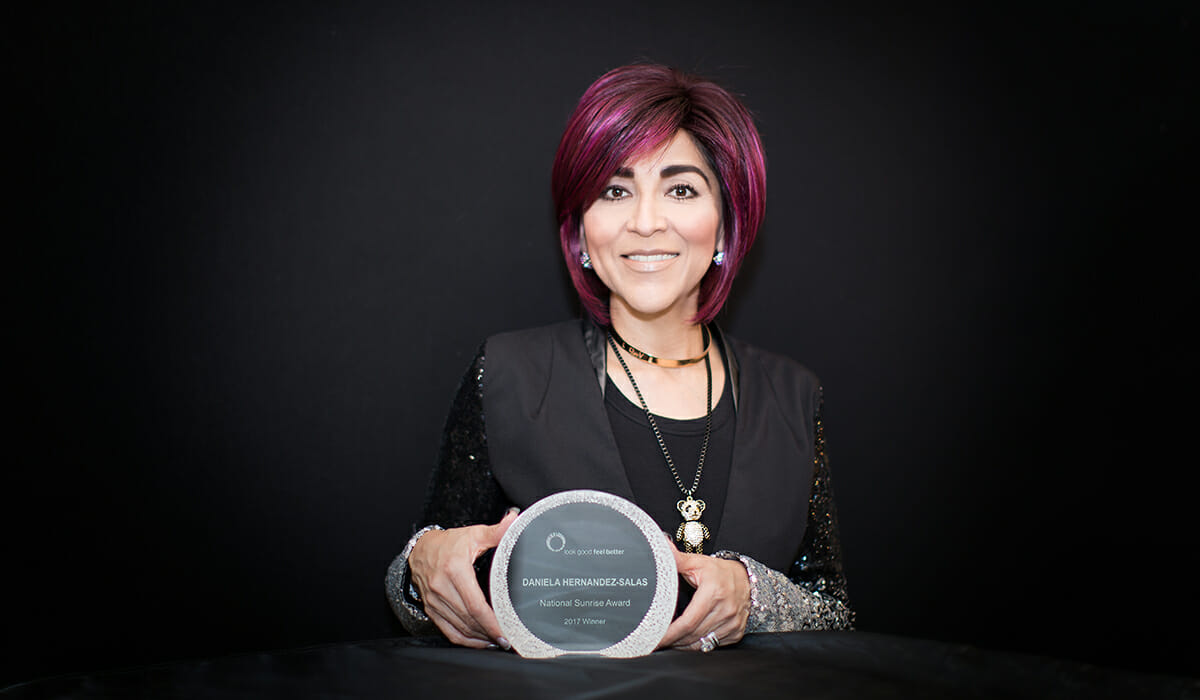
Texas Cosmetology Volunteer Helps Cancer Patients “Look Good Feel Better”
Meet Daily Point of Light Award honoree Daniela Hernandez-Salas. Read her story and nominate an outstanding volunteer or family as a Daily Point of Light.
As a licensed cosmetologist, Daniela Hernandez-Salas is following in her beloved parents’ professional footsteps, who often counseled the now 51-year-old Lubbock, Texas resident that everyone deserves to look beautiful, no matter their situation or circumstance.
Serving as a volunteer for nearly three decades with Look Good Feel Better (LGFB), Daniela is giving sick patients on their cancer journey the tools to take control and feel good about themselves again. The organization is free of charge and reaches thousands of women and men in cancer treatment each year, including patients in rural areas that may not have access to as many resources. Daniela, who offers wig and makeup workshops for patients experiencing hair loss around the world and also trains stylists who in turn volunteer to help others, is changing her community and beyond, one wig at a time.
What inspires you to volunteer?
I’m inspired to volunteer because of my mother, Bella, and my father, Ishmael. Both cosmetologists, my father is also a wig maker, and the two counseled me from a very young age that everyone deserves to feel beautiful no matter what economic background they come from, or no matter what’s happening in their life.
How does your volunteerism help cancer patients, on the inside and outside?
When someone is not feeling well or is undergoing treatment of any kind, including dealing with hair loss, they lose self-confidence. In addition to wigs, we do makeup as well. I teach patients how to do their eyebrows, how to take care of their skin, and how to put a wig on. My volunteerism helps to transform a person in just a few seconds. The wig is the first step back in helping a patient to regain their confidence and the encouragement they need to take more steps to feel better.
Describe your role with Look Good Feel Better.
I teach virtual classes to women around the world on how to select and care for their wig. I’ve taught women close to home in Texas, and as far away as Cuba, England, Brazil and Africa. We also travel throughout the state of Texas training cosmetologists for patient classes as the program offers group workshops hosted by trained and licensed hair stylists and cosmetologists in hospital settings who teach the women how to use different products to improve their physical appearance.
Share one personal story with me from your volunteerism.
When I’m working with a younger cancer patient, you can just tell they don’t want to get up in the morning. I’ll spend one hour with them, and they look in the mirror, and you see the emotion. Their smile comes back, and you just know you’re in the right place. The beautiful thing about (LGFG) is that you see the immediate hope for these patients. You see hope happening, right in front of your eyes, and you’re a part of that change.
Daniela Hernandez-Salas: “The beautiful thing about (LGFG) is that you see the immediate hope for these patients. You see hope happening, right in front of your eyes, and you’re a part of that change.”/Courtesy Danielena Hernendez-Salas
Why do you think it’s important for others to give back?
Because somewhere in our life journey, we’re going to need help ourselves. If you’ve been given a talent to do hair and makeup, this is such a beautiful opportunity to give back to others.
What’s been the most rewarding part of your service?
I learn so much from my patients on an everyday basis. My service is just as rewarding to me as it is to them.
How has your service changed amid the Covid-19 pandemic?
Prior to the pandemic, we’d switched to virtual training to reach even more people, whether they live outside of Texas, in a rural area or are homebound. Before Covid-19, we did in-person makeovers with patients in hospital settings, this is the first year we’ve not done workshops in the hospital. We’re currently offering virtual workshops for patients and training for professionals, and in my opinion, the switch to virtual has been positive because people feel comfortable participating in our workshop in the comfort of their own home.
In one word, what does volunteering mean to you?
Hope.
How can readers help?
Please visit Look Good Feel Better’s website for more information about how you can help.
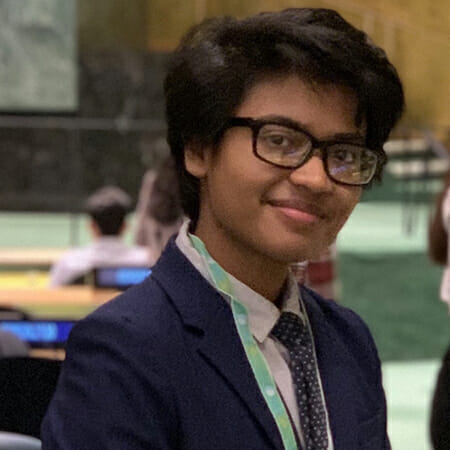
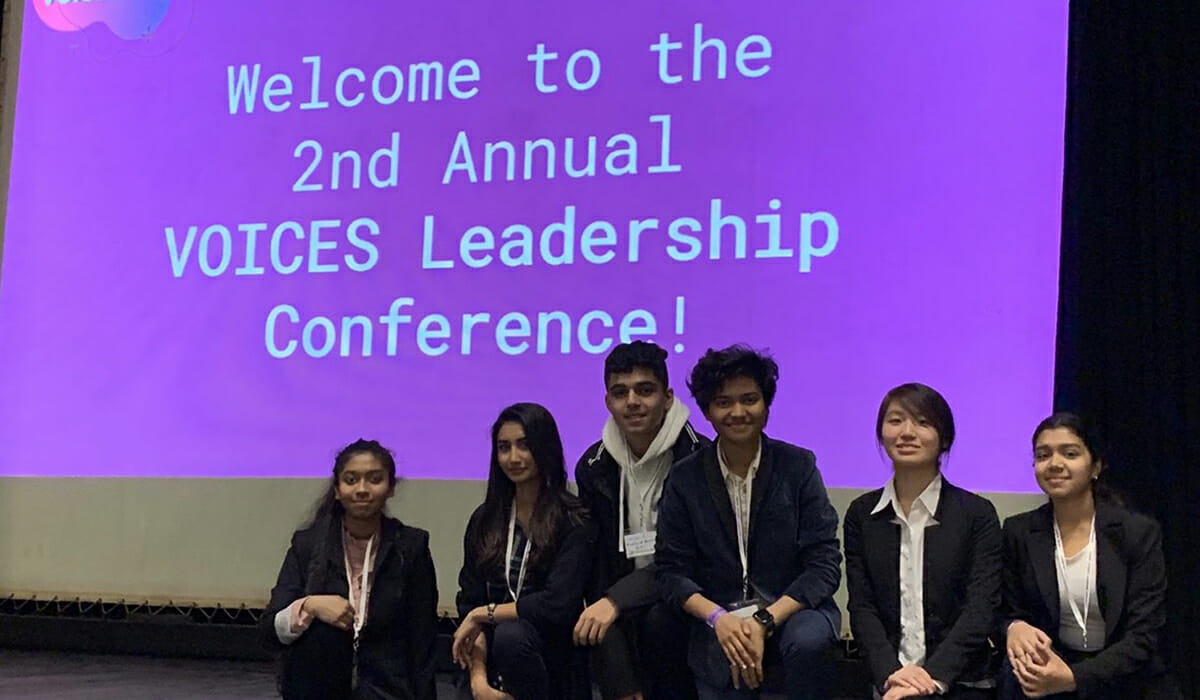
Teen Volunteer Unites Students to Serve Impoverished Bangladesh Children
Meet Daily Point of Light Award honoree Jahin Rahman. Read her story and nominate an outstanding volunteer or family as a Daily Point of Light.
16-year-old Jahin Rahman says examples of heartbreaking poverty in her native Dhaka, the capital of Bangladesh, can be found on every street corner. “You see youth around railroads or traffic signals. They don’t have proper clothes, they usually look like they’ve been through a lot. 6 or 7-year-olds are fending for themselves, begging for money with their younger baby sibling on their lap.”
Committed to supporting children of Bangladesh to improve their education opportunities, Jahin founded Efforts in Youth Development of Bangladesh (EYDB) in 2018. With the goal of decreasing poverty levels, the organization has helped thousands of children across Bangladesh thus far, most recently focusing on providing virtual education to children amid the pandemic. Offering resources and facilities to support education, Jahin, a New York City resident and rising high school senior, is improving lives and making the world a better place.
What inspires you to volunteer?
I grew up in Bangladesh and came to the United States in the 4th grade. Being raised in Bangladesh, I was aware of childhood poverty and how that resulted in inadequate education and human rights. It didn’t seem balanced to me that I had access to the basics needed to succeed that these children didn’t. That imbalance inspires me to volunteer.
As founder of Efforts in Youth Development of Bangladesh, Jahin Rahman is improving education opportunities for children in Bangladesh. /Coutesy Jahin Rahman
Describe your role with Efforts in Youth Development of Bangladesh.
As founder, I fundraise, train our volunteers, and maintain relationships with our partners in Bangladesh. We donate money to these partners and have volunteers on the ground helping to buy needed supplies and items. Once I realized there were ways to help children and I had classmates who would support me, we started reaching out to impoverished schools in Bangladesh. We bought new clothes and books for students at an orphanage. That act of service inspired us to do more. We’ve built a library and donated books, helped to build a daycare, a drug rehabilitation center for addicted youth and a small school. Our organization is student-run, with 300 volunteers from eight different countries in total.
Share one personal story with me from your volunteerism.
I visited a drug rehabilitation center for addicted youth in Bangladesh where we’d implemented a literacy project. I brought the children at the rehab some chocolates and toys, and spent the day with them. One little child stood up and thanked me, saying they were learning how to read because of me. The rehab manager told me that day to remember that while I might not be able to change everybody’s life, as long as I change the life of one person, that means a great deal. Even making a difference in one person’s life is a big deal for me, because that change means we’re changing the world.
Why do you think it’s important for others to give back?
Society is not equal, we can’t do anything about it, that’s just the way life is. The only thing we can do to ensure that people at least have the same basic rights comes down to how humanitarian we are as a society. No matter how small the act is, service means that everybody is closer to having the same rights.
How has your service adjusted amid the Covid-19 pandemic?
For many children in Bangladesh, there’s no such thing as remote learning because of the pandemic. These children may not even go back to normal schools after this is all over. We decided to offer a year-long education program for 4,000 children which will hopefully be implemented this fall. Additionally, we had several projects, including helping to build a daycare and drug rehab center in Bangladesh, that have been put on hold because of the pandemic. As we watched unemployment and deaths spike in Bangladesh, we decided to get in touch with Beacon Point to get funding directly to the slum families most in need. Our monetary support is providing a month’s supply of food to families. We are also currently training our volunteers on Zoom.
EYDB is student-run, with 300 volunteers from 8 different countries.
In one word, what does volunteering mean to you?
Impact. My service impact is changing lives.
When you’re not volunteering or in school, what do you do for fun?
I love to read and play guitar. My favorite book at this moment is “Becoming” by former First Lady Michelle Obama.
Gifts for Good: Missouri Volunteer Helps Refugee Women Survive and Thrive
Meet Daily Point of Light Award honoree Emily Bueker. Read her story and nominate an outstanding volunteer or family as a Daily Point of Light.
Emily Bueker is described as having a heart to help others, and the 33-year-old St. Louis, Missouri volunteer is doing just that, by teaching refugee and immigrant women in her community how to support themselves by crafting jewelry.
As the lead jewelry team volunteer for FORAI (Friends of Refugees and Immigrants), Emily helps local refugees learn crafting skills to gain dignified income, but her heartfelt volunteerism over the past several years has made an even bigger impact. A friendly face to many in the refugee and immigrant community, Emily helps refugees with basic tasks as they become accustomed to their new homes. Building relationships that bridge language and cultural differences, Emily has lent a hand in the production of more than 10,000 pieces of jewelry by FORAI artisans since 2016, enabling the realization of economic, educational and social goals for refugee women and expanding market opportunities for artisans.
What inspires you to volunteer?
Personally, service is based upon my faith. I’ve always had a heart for helping others and try to live my life in service. As volunteers, we can really make a difference in other peoples’ lives and make an impact on the world as a whole.
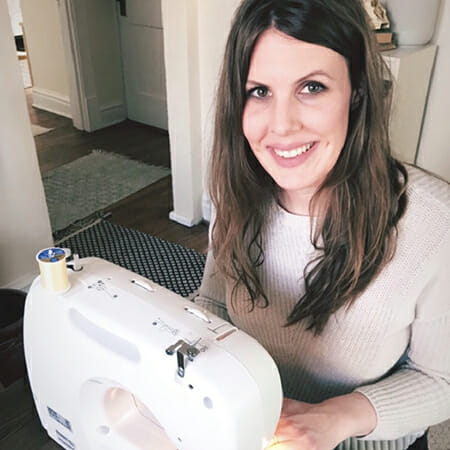
In response to the Covid-19 pandemic, Emily Bueker taught her mentee how to sew masks, and personally made close to 150 masks, donating the proceeds to FORAI to help keep their artisans employed. /Courtesy Emily Bueker
Describe your role with FORAI.
I’m the volunteer lead at the jewelry meetings for FORAI. We usually meet twice a month, and I oversee a handful of volunteers as we go over the process and check inventory and quality control. I also coordinate inventory forms as we update the rotating jewelry index with the specific catalogue, and serve on the fundraising committee. Lastly, each artisan, a female refugee who is typically from Nepal, Bhutan or Burma, is paired with an American volunteer. I currently mentor a Burmese refugee name Awi. I spend time connecting with her and her family, so as a mentor, I may go to her house to help with English, maybe explain a bill they don’t understand, or we might attend a cultural holiday celebration together.
Explain how FORAI helps refugee and immigrant women?
In addition to my work with the jewelry team, FORAI also has a sewing team. The refugees learn new skills from a teacher, and they’ll learn how to design new pieces of jewelry or techniques to better their skills. They then take those projects home for production, because many have children that they have to care for. This is a great way for them to work from home and still provide supplemental income for their families. The women turn in whatever products they produce, and then those items are sold through FORAI’s online store as well as community stores and a few national stores.
Tell me more about the jewelry these women are making.
We have several earring styles, necklaces and also different bangles. We have a simple ring as well. The style is minimalistic. I’m not a jewelry person myself, which is interesting, but I do wear FORAI’S jewelry quite a bit, it’s been interesting to see the design and creativity up close.
Share one personal story with me from your volunteerism.
During our holiday parties, we all come together and share food from each of the different countries our refugee and immigrant participants have come from. The events are really a picture of genuine community, where we truly see each other as human beings. This powerful experience brings dignity to each of the women, as they share their stories of hardship.
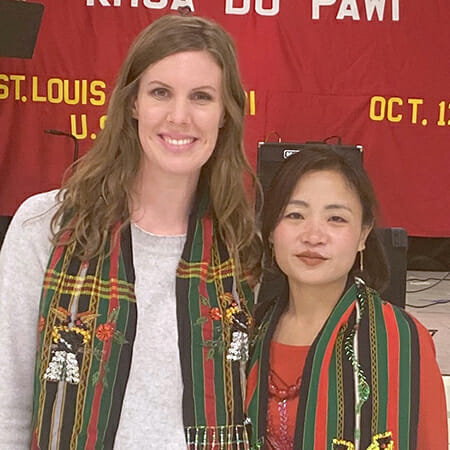
Emily pictured with her mentee and FORAI artisan, Awi. Emily: “Being in a relationship with people that are different than me, that have different stories and backgrounds, breaks down relationship barriers. My life has been impacted for the greater by being a part of their lives.” /Courtesy Emily Bueker
Why do you think it’s important for others to give back?
I’d felt a burden on my heart to serve the refugee population, which is how I connected with FORAI. Being in a relationship with people that are different than me, that have different stories and backgrounds, breaks down relationship barriers. My life has been impacted for the greater by being a part of their lives.
In one word, what does volunteering mean to you?
Service.
How has your service adjusted during the Covid-19 pandemic?
We’re currently not producing a lot of our own pieces because many festivals have been cancelled and businesses are still recovering from being shut down, but some of our artisans are working with a local designer named Theresa Wangia of Beltshazzar Jewels to create the clasps for her pieces. At the peak of the pandemic, FORAI’s sewing team and a few jewelry artisans stepped up and learned how to sew masks, sewing around 6,500 masks in total for frontline workers. More than 5,000 were donated to hospitals and other organizations in need of masks, the remainder were sold. I trained my mentee how to sew masks, and also personally made close to 150 masks to raise more than $1,000 in funds to help pay the artisans as they made thousands of masks.
How can readers help?
FORAI plans to hold a virtual fundraiser in October. Please visit their website for more information about how you can help.
Virginia College Student’s Storytime Volunteerism Gets Kids Excited about Reading
Meet Daily Point of Light Award honoree Trinity Woodson. Read her story and nominate an outstanding volunteer or family as a Daily Point of Light.
20-year-old Trinity Woodson was headed to the nail salon when she noticed a bunch of children at the next door laundromat, all with their heads down, staring at phones or tablets while waiting for their family’s laundry to be done. The rising college junior, who’d been looking for a way to help her community while home from school, knew she’d stumbled upon an opportunity to do good.
“Of course, being on their parent’s phone is fine. But I realized, wow, something else could be done during this time,” Trinity says. Launching Trinity’s TumbleReads in 2019, the Suffolk, Virginia resident and Hampton University student has connected with dozens of children thus far, facilitating story time for young learners during a typically mundane but necessary routine for families. Reading to underserved children in her community, Trinity is supporting education, helping to narrow the achievement gap and making laundry time fun for kids, one story at a time.
What inspires you to volunteer?
Giving back has always been a part of me, as a result of my upbringing and growing up in church. Whether it’s feeding the homeless or helping kids, I’ve been blessed with many opportunities and I am motivated to reach back in any type of way and help others.
Describe your role with Trinity’s TumbleReads.
As founder, I host our weekly summer reading sessions and initiatives for mostly elementary school students. Before the pandemic, I’d hold sessions during the school year. I pick books up at the library and we read as many books as we can during the hour-long reading sessions. A lot of my work focuses on getting kids excited about reading and helping them to understand the importance of listening skills and reading out loud. We’ll have repeat customers because a lot of people come into the laundromat every week. So far, Thanksgiving was the best turnout we had, because kids are out of school, we offered them snack bags during story time as well.
Trinity Woodson: “When you’re blessed with resources and you see that others don’t have the same opportunities, don’t give yourself a pat on the back, but instead give others an equal playing ground.”/Courtesy Trinity Woodson
Share one personal story with me from your volunteerism.
A young lady who joined us was at first nervous to read, and her mom was encouraging her. She started to let her walls down, she became more relaxed and engaged. At the end she was so excited and so glad she was a part of our reading group. There are so many benefits that reading aloud has for children, and even just interacting with children is positive. During service, it’s really the little things that are most meaningful.
Why do you think it’s important for others to give back?
When you’re blessed with resources and you see that others don’t have the same opportunities, don’t give yourself a pat on the back, but instead give others an equal playing ground. Through my volunteerism, I am following people into their lives and helping them. If you see someone that may not have the same exposure to reading that others have, step up to the plate and try to figure out ways to help.
What’s a saying you live your life by?
To whom much is given, much is required.
How have you adjusted your service during the Covid-19 pandemic?
During the pandemic, there were more people unemployed who had children at home. Giving back to my community through food pantry donations was one way I could address persistent issues like food insecurity. To celebrate my birthday, I went grocery shopping and donated 45 pounds of non-perishable items to Suffolk Christian Fellowship’s food pantry, which has been working tirelessly to provide citizens with hot meals, dry foods and fresh produce. The only way children will be successful in school is if they have food to eat, and through my donation, I helped to contribute to the future success of children in my community. Additionally, this summer, I created a virtual workshop on “How to Strive and Thrive as a Girl Scout During COVID-19.” On June 6th, I helped Girl Scouts determine the best ways for them to prosper and make an impact on their community, while getting badges!
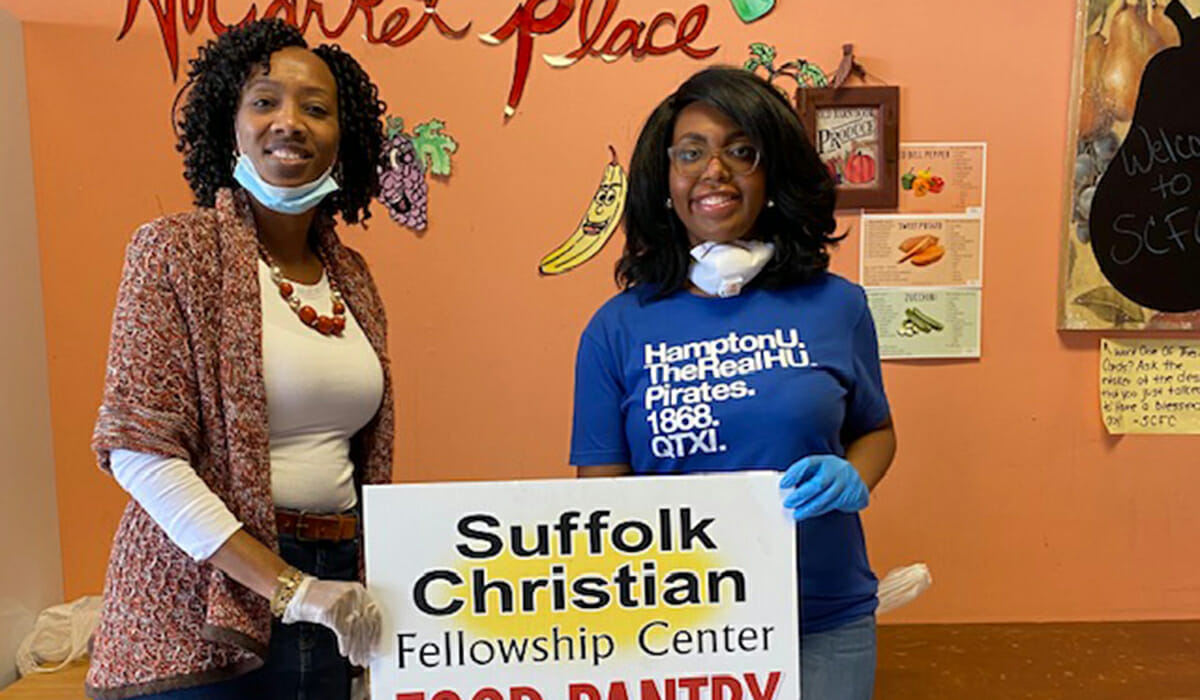
Trinity donated 45 pounds of non-perishable items to Suffolk Christian Fellowship’s food pantry amid the Covid-19 pandemic to help families in need./Courtesy Trinity Woodson
In one word, what does volunteering mean to you?
Hope.
What’s your favorite children’s book?
“Sit-In: How Four Friends Stood Up by Sitting Down” by Andrea Davis Pinkney. The story is the best children’s book I’ve ever read in my life. I first read Sit-In when I was interested in becoming a student at North Carolina Agricultural & Technical State University (where the Greensboro Four were students.) And even after deciding to attend Hampton University, I recognized it was a big deal given the role that Historically Black College/University (HBCU) students played during the Civil Rights Movement. Reading with children, you have to be engaging. This book is an effective way to get children to understand important times in our history on their level.
How can readers help?
Please email Trinity for more information about how you can help: [email protected].
Meet Daily Point of Light honoree Ginger Kane. Read her story and nominate an outstanding volunteer or family as a Point of Light.
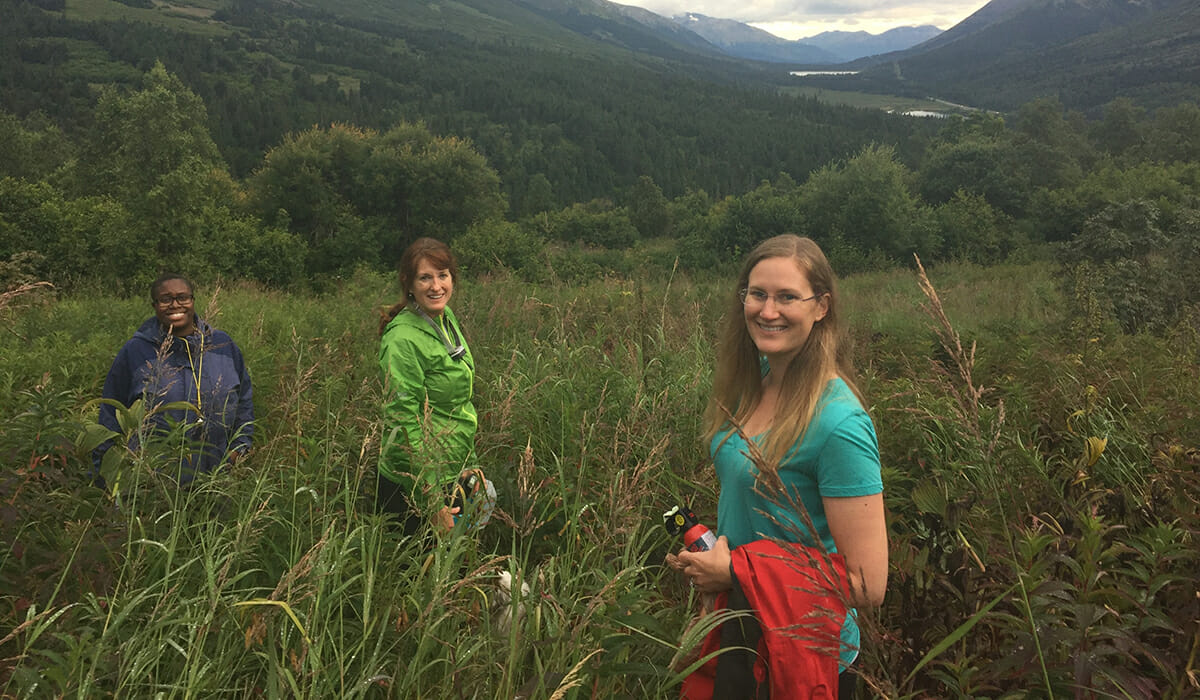
Four years ago, Ginger Kane was looking for ways to give back to her Anchorage, Alaska community when an opportunity arose through her work to help with Christmas gift wrapping at Covenant House Alaska, a nonprofit organization that provides housing and services to homeless youth. While volunteering that day, Ginger realized Covenant House Alaska was the right match for her to fulfill her desire to help out. Ever since, she has served as a mentor for Covenant House Alaska through their Rights of Passage program, a transitional living program for young adults to learn essential life skills.
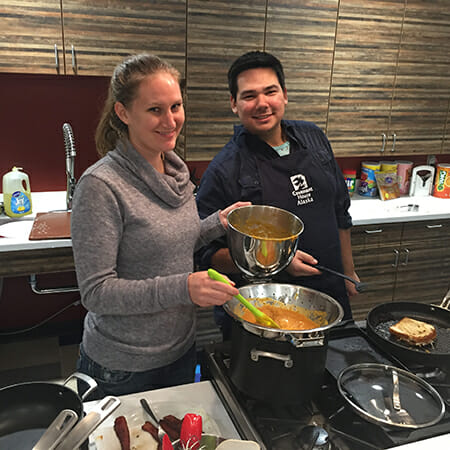
Ginger, who also works full time and is a mother of two, offers one-on-one mentoring and additionally hosts events for all of the program’s participants. She started an annual cooking night every Thursday, where anyone can come learn cooking skills while also talking to Ginger about what’s going on in their lives or anything they need help with. She also frequently plans hikes and attends camping trips with the program’s young people, among other events. Ginger said working with young people and seeing them overcome the challenges in their lives has been both gratifying and inspiring for her.
Describe your volunteer role with Covenant House Alaska.
Covenant House is a nonprofit organization that provides short- and longer-term housing for homeless youth in Anchorage. They also provide services and link them up with different community resources. In Anchorage, they have three main branches. They have what would be termed an emergency shelter, and that’s their biggest program. Then they have a program for either recent or expectant mothers. There’s a Rights of Passage program, which is up to a two-year program for students in the age range of 18 to 22, to support them gaining the life skills they need to be a functioning adult in society. That’s the program I work with.
Ginger Kane, right, goes hiking on one of the camping trips Covenant House Alaska hosts for the homeless youth within their programs./Courtesy Ginger Kane
What do you do within that program?
I fulfill a role called mentor, and what the mentors are meant to do is help provide an outside sounding board or provide guidance to the youth as they’re navigating this next life step and becoming adults, and kind of provide them with the perspective of a functioning adult and what that looks like. … I would be matched up with a specific youth and can provide regular help and guidance. Also, additionally I can help the program in general and go to their location and either be there or provide some life skills. Typically what that would look like for me specifically, is I like to cook a lot so I’ll go there and bring a recipe and the ingredients. I was doing it weekly, which would be every Thursday, so the kids would know that Thursday night there’s an opportunity if you want to come and either hang out or help cook. It’s provided that life skill of how to cook, but also somebody that’s there week to week to week, who can chat and hear what’s going on in your life … and be that excited person in their life when they have an accomplishment or try at something.
Then I’ve gone on hikes regularly with folks who want to get out hiking. … You’re focused on hiking and then there’s an end goal and you can reach that goal. It’s exciting and really fun. The kids, you can see them physically lighten up. They’re not focused on their daily grind. They can just focus on something else for a hot minute. Then of course, with the one-on-one mentorship role, we’ll go out for lunches to discuss what’s going on in their life. I can provide feedback or just talk about things and go back and forth, and do things like if they need to go get an ID, we can work that in so I can take them to the DMV to go do that. Or if they need to go to Walmart to pick things up, or go get clothes for an interview, or talk about interviewing and what they’re nervous about. Maybe work through those things or what next steps should look like, or what are their goals and what are some actions we can take today toward those goals, and stuff like that.
How important is it for homeless youth to have this kind of support in their lives?
I think it’s extremely important, actually. There’s the Big Brothers Big Sisters [nonprofit organization] that gets involved at younger age, but this is where we get involved when there’s been serious trauma. [We’re] really supporting those kids who are actually experiencing homelessness, and giving them a hand up when they’re at an age where they’re wanting it and they’re really wanting to move on to that next step of life, and showing them. I think the younger and earlier you can get in and influence them, and help them get on track and get the help they need to get to their next goals, to the next step of life — of course, the earlier you can influence, the better trajectory we can put these folks on and connecting them up with skills to get jobs to be functioning members of society.
What’s been the most rewarding part of your work?
I think the most rewarding part has been being able to provide a place for kids to really relax. I’ve done camping with just a couple kids before and they’re like “Oh my gosh, just to be out in nature for awhile and not worry about all this other stuff.” It also gives a chance for them to really let go of their stress. You can also talk about things, sprinkle it in with that fun, so it’s not as stressful talking about maybe, “How do we get to the next step?” We can sprinkle it in. Also, to see them enjoying things when you normally see them stressed out and coming and going and worried about things, that is really nice and heartwarming. The hiking has been really enjoyable.
The other thing is to see kids that really turn around. When I’m cooking with them week to week and seeing them really struggling, and seeing them overcome whatever barriers they had, whether it was just a mental, creating their own barriers in life, and then finally figuring it out and clicking. There was one girl in particular — she was struggling and not really taking that next step and getting a job. Then all of a sudden, it was like week to week, she was on her job, she was looking good, she was peppy, her attitude had changed and everything. Then finally as she left the program, totally felt completely ready and set up and involved in her own life and taking those next steps. It was like night and day one week to the next. [She was] struggling weeks and weeks, and months and months. Then it was like a lightbulb went off. … She really started taking accountability for her own life now that the barriers of her life had been removed from living with her family previously. Now she could really move on from that. Watching her be able to say, “Yep, the past is the past and the only way I can move forward is taking accountability for my future and doing that” — that was really great to see. That’s just one example. There’s been multiple kids who have really been able to overcome that barrier of the struggles of the past and really be able to take accountability for their future. I can’t imagine how hard that would be and I can totally understand struggling for a long period of time. When they do make that click and let go of what’s been holding them back, and are like “Ok, let’s work on the future” and “My future is bright” and “Let’s go get it” — it’s really cool.
Ginger Kane, right, goes hiking on one of the camping trips Covenant House Alaska hosts for the homeless youth within their programs./Courtesy Ginger Kane
What have you learned through your experiences as a volunteer?
I’ve learned that homelessness is a really complex deal. It’s given me a much greater understanding and much greater compassion for when someone is struggling. What you see on the outside, there is probably more down deep. … If somebody is not able to get up everyday at 8am to go to work, it wouldn’t be the same reason if I were to not get up at 8am. These folks have more barriers to doing that. Recognizing that and being compassionate about how can I help, instead of maybe just ragging on the outer problem, and how can I fix the barriers to that. Then just seeing that it is fun and I do have something to offer. Showing up is important, and then showing up and showing just who I am is also important, which is certainly not perfect. I think showing the silly things that I do and showing that I mess up cooking recipes all the time, but you still have to cook and you have to move forward — if you make mistakes it’s ok, it can be fun, it can be funny to make mistakes and you’re going to continue making them for a long time and you can still be successful while making mistakes — I think is a really good thing.
Why do you think it’s important for others to give back?
I think that the community is as strong as everyone wants to make it. As a member of the community, [if] I want a strong and healthy and vibrant community, then everyone needs to give back as much as they are capable. That will mean different things at different points in your life, but if everyone gives back as much as they can, then that will make for a very strong community. That might mean sometimes you’re not giving anything back. Sometimes you’re taking. Then once you can give, you can give maybe even a small amount. Maybe it’s money. Maybe it’s time. Maybe it’s just not being a burden, just you doing your part in the community. If everyone does that, then that makes for a strong community which is important for everyone.
Shocked that Girls Around the World Were Being Killed Just for Their Gender, this Georgia Teen Started a Volunteer Organization to Help End Female Gendercide
Meet Daily Point of Light Award honoree Himani Kalra. Read her story and nominate an outstanding volunteer or family as a Daily Point of Light.
Himani Kalra knew that female gendercide or femicide was a major problem in countries such as India and China. But never did the 16-year-old imagine that such a horrific thing could happen in the US.
“I saw a police report video and the police had heard the cries of a baby,” Himani recalled of the incident that happened last year. “They followed the voice into the woods and found a baby girl, which had been disposed of in the woods in Cumming, (Georgia), with her umbilical cord still attached.”
“It was a case of female gendercide,” Himani was convinced. And it reaffirmed to her that her organization, Save the Girl Child, was as needed as ever.
Himani, from Atlanta, Georgia, first started Save the Girl Child in 2018 as a Girl Scout project, but it has since grown into a larger movement with the goal of ending female gendercide and infanticide, which is the killing of female adults, children or infants, solely because of the fact that they were born a girl in a society where boys are preferred and more valued.
It’s most prevalent in South/East Asian countries such as China, India and Pakistan, but it’s happening around the world, even in the US, with the United Nations estimating that around 140 million girls are “missing” around the world, as “the result of son preference, including gender-biased sex selection.”
“In the societies where it happens, the female gender has less status in society because they’re given less opportunities, less rights,” Himani explained. “In those societies, it’s also considered that the male child is going to be the ones who support the parents in old age whereas the girl child is going to be the one going to the in-law’s house.”
“But that’s what we’re working to stop, to change the image of how women are portrayed,” she added.
With the help of her volunteers, Himani has been working to end female gendercide through three ways: 1) raising public awareness around the issue, 2) helping girls in underprivileged communities feel valued, and 3) empowering girls through education to become independent women in the future.
Himani Kalra founded Save the Girl Child, an organization working to end female gendercide by spreading awareness and empowering girls./ Courtesy Himani Kalra
Himani first started by creating a website for her organization and a Facebook page called “Every Girl Matters.” Through these platforms, she spreads important information on female gendercide by sharing videos, different news articles and posts. The Facebook page has over 7,300 followers and her website has been accessed by over 12,000 people, according to Himani. She has also delivered public presentations and distributed over 3,000 brochures on female gendercide to her community.
With her family being from India, Himani has a special connection to the country that sees some of the highest numbers of female infanticide. In the Jahangirpur Village and Delhi slums, over 50% of girls do not survive past the age of 16 and most are not allowed to go to school, according to Himani. So that’s exactly where she went to distribute over 1,750 care kits packed with books, writing materials and stuffed toys for these underprivileged girls.
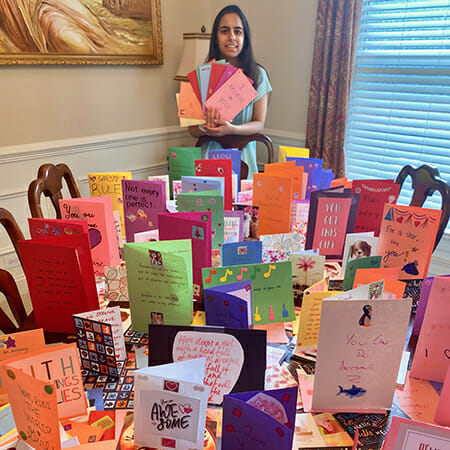
After she returned back home to Atlanta, she found a way to continue helping these girls by partnering with a nonprofit organization called The Invisible Girl Project, which rescues baby girls from infanticide in India. Himani and her volunteers created over 500 cards filled with words of encouragement and love to send to these girls through the organization.
“We’re so thankful to be fighting for justice alongside young women like Himani!” the Invisible Girl Project said in a Facebook post. “She’s a leader in her community & we’re deeply encouraged by her passion for the vulnerable.”
Knowing the amount of immigrant families living in Georgia, Himani also focused her efforts in the refugee settlement hub of Clarkston, Georgia. Dubbed as the “most diverse square mile in America,” over 30% of the city’s residents are foreign-born and 60 different languages are spoken in the community.
Himani and other volunteers made over 500 cards of encouragement that were sent to girls rescued from high-risk homes in India./ Courtesy Himani Kalra
Through a nonprofit organization called Friends of Refugees, Himani was able to meet refugee and immigrant girls who came to Clarkston from countries where patriarchy is still prevalent. She started tutoring these girls, all 130 of them, helping them learn science through a self-designed curriculum and improve their reading by setting up a classical book program.
“Basically, we want to provide an educational background for them so when they grow up, they can also have the same rights, the same opportunities and be equal to their male counterparts,” Himani said.
Running Save the Girl Child is a lot of work, especially for a high school student who has her own schoolwork, extracurricular activities and social life to worry about. But Himani said it’s all worth it when she sees the impact she’s making in the girls’ lives and their families.
“If I’m giving a writing notebook to a girl in the slum, I’ll see her face light up in excitement at the thought of a gift,” Himani said. “To her, it might just be a gift, but I know it’s an opportunity for her, something that could turn her life around.”
“Just seeing how these girls transform into confident young woman who have hope for their future and are valued and empowered. That’s the most rewarding,” she said.
Virginia Volunteer Uses Professional Skills to Strengthen Community
Meet Daily Point of Light Award honoree Theresa Kramer-Burgess. Read her story and nominate an outstanding volunteer or family as a Daily Point of Light.
The start to Theresa Kramer-Burgess’ service was serendipitous, while attending a local crab festival in 2017, she noticed a booth for Volunteer Alexandria, an organization that provides resources to community members of all ages. Since then, the Alexandria, Virginia resident has logged hundreds of hours promoting events for the organization and building a stronger community for her neighbors.
As a volunteer, Theresa supports Volunteer Alexandria’s social media efforts, writing posts, creating graphics and also writing and editing the organization’s materials. While promoting events for Volunteer Alexandria, which inspires and mobilizes people, six years and older, to volunteer and offers an array of services to community members in need, Theresa says she’ll sometimes sign herself up as a volunteer, serving as one of the many powerful forces in her community contributing to the greater good.
What inspires you to volunteer?
I’d volunteered in the past with different organizations, but this opportunity was a way to give back to the community I live in, using my professional skills to benefit my neighbors.
Describe your role with Volunteer Alexandria.
I became their social media volunteer lead and am pretty much in charge of writing and scheduling posts for Facebook, Instagram and Twitter. I also create most of the graphics, and edit and write some of the organization’s outreach materials and website content. I also enjoy being a volunteer for their events. I’ll see a social post for an upcoming service event, and say, ‘oh my gosh, that sounds like fun’. My teenage daughter and I will occasionally volunteer together.
Share one personal story with me from your volunteerism.
After the Covid-19 pandemic hit, everything just exploded, as you can imagine. With social media, you try not to get wrapped up in the immediate gratification of clicks and likes, but I once posted about an upcoming food drive, and within two to three hours, we had enough volunteers for the event. I know anecdotally, our social media helps to promote events and recruit volunteers, and Volunteer Alexandria has mobilized close to 5,500 volunteers since March to respond to the pandemic, helping with food distribution, supporting the most vulnerable including children and seniors. Seeing people out there distributing food in the rain, or the crack of dawn, you see how many good people we have in our community.
Why do you think it’s important for others to give back?
Because we have to take care of each other. You never know when we’re going to need help in some way. Passing on that kindness, the people we help will one day turn around and help someone else. Service is the right thing to do as a human being, that’s what makes a community.
What’s been the most rewarding part of your service?
It’s been rewarding to give back using my experience and my professional skills, whether that’s in person before Covid-19 or virtually during the pandemic, early in the morning and late at night. My volunteering hours adjust depending upon our needs, but during the pandemic I’ve been volunteering 10, 15, 20 hours a week. It’s all about being a part of this bigger community and making sure children and people in need are being helped. It’s inspiring to see the generosity of people who want to help and give back amid the pandemic.
In one word, what does volunteering mean to you?
Results. Seeing the results in the community, hearing that so many people picked up food, for example, and that students were fed when schools shut down during the pandemic, or that children received gifts during our holiday toy drive.
How can readers help?
Please visit Volunteer Alexandria’s website for more information about how you can help.