Houston-Area Teen Organizes Youth In Both Volunteering and Peacebuilding
Meet Daily Point of Light Award honoree Angela Zhong. Read her story and nominate an outstanding volunteer or family as a Daily Point of Light.
The core motivation for Angela Zhong’s volunteerism was to prove that when given the chance, youth can achieve a lot more than adults expect them to. The seventeen-year-old has proven that point herself, by leading thousands of teens across her Houston area through two different volunteer organizations.
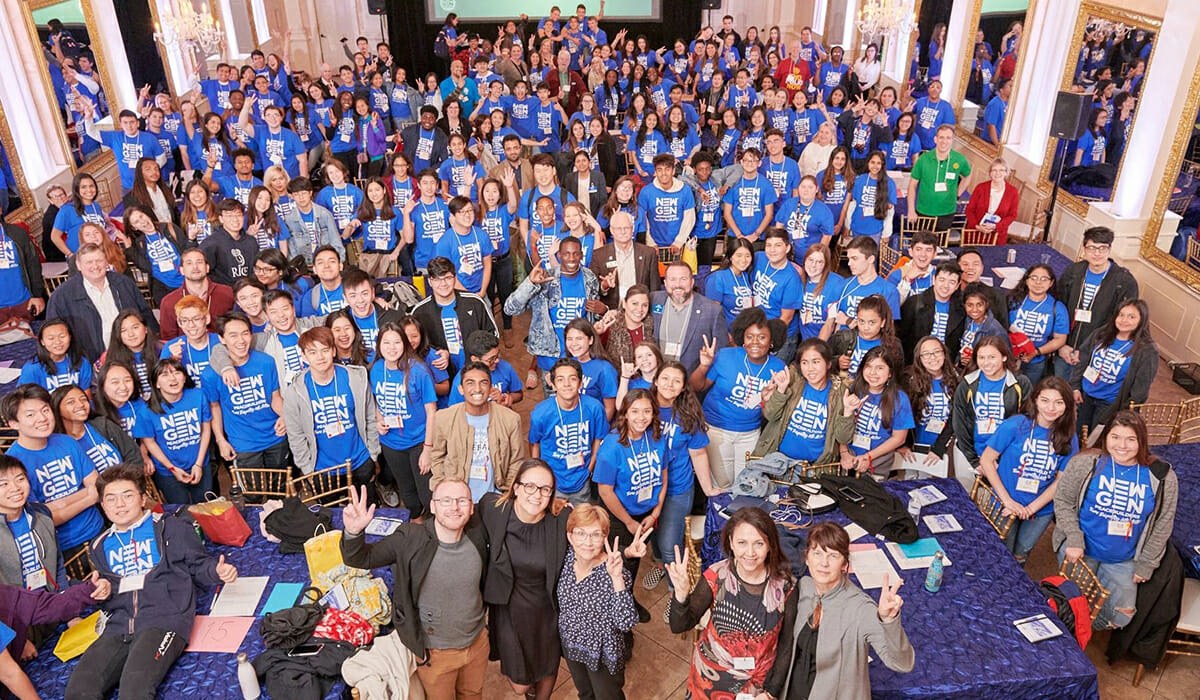
Since entering high school, Angela has been an active volunteer with Interact District 5890, a youth-based service club under the international service nonprofit Rotary International. This past year, Angela served as Interact District 5890’s Governor, leading over 4,000 teens and 90 clubs in the Houston area to complete numerous service projects. She also led Interact in a partnership with NewGen Peacebuilders, a peace educating program for young people. Angela helped organize a peace summit between the two organizations for about 200 attendees.
From there, Angela became involved as a Student Ambassador for NewGen, continuing to help organize and participate in a semester-long peace summit where students actively implemented their own peace projects. She is also currently serving as NewGen’s summer intern. In the fall, Angela will be attending Harvard University, where she plans on continuing her involvement with social impact organizations.
Describe your volunteer role with Interact District 5890.
Interact District 5890 is the youth version of Rotary International. It passes through the greater Houston area and has around 4,000 members and 90 clubs. I was District Governor last year. My main job was to organize a lot of different social or volunteering events where members of different clubs could come together and meet with each other, as well as different peace-building activities, which is how I got involved with NewGen Peacebuilders at the very beginning. It was a great year and I really enjoyed being able to help my community.
Why did you want to become involved with Interact?
I joined the club when I was a high school freshman, sort of just to do some service work. Then I ran for club-wise positions and then [became] Communications Officer and then District Governor after that. I really enjoyed it. There have been different camps for leadership that I’ve been able to go to that they sponsor. They do a lot of great work within the community so I wanted to see how I could help them and maybe streamline some of their efforts, so we can do the most good with the least amount of resources.
What kinds of social and volunteer events did you organize?
I did some organizing with Project Linus for blankets in the Medical Center of Houston. Also, I worked with the Soles4Souls Foundation to donate shoes. We’ve also collaborated with Kids Meals to donate packaged meals for families who may not have a consistent source of food during the summers when schools are out. Those are the smaller projects we worked on. Then [we organized] different conferences. The main one we did was with New Gen. I helped organize a peace conference for around 200 attendees to come on a full scholarship.
Describe your volunteer role as a student ambassador for NewGen Peacebuilders.
The peace conference was a two-day-long summit in February 2019. In 2019, we basically got some professionals who were well versed on peace literature and helped teach students about the different types of violence that inflict our community — such as structural, institutional, cultural and direct violence — and helped them and mentored them in brainstorming different peace projects that they could do to address these societal concerns. In the fall, I also helped organize and participated myself in a semester-long summit where we actually implemented our idea or did the research, depending on the different people’s peace projects. That was a more of a longterm and concentrated agenda. I was really happy to be able to help in both and attend some of the conferences they presented it at.
The [peace project] that I was working on was researching Houston-area youth and how they feel about peace, as well as collaborating with different Interact clubs through my tenure as District Governor to see if any of them would be interested in partnering with NewGen in the future to establish more peace-related curriculum. I’m currently still working on that as an intern in the summer with NewGen where I’m still doing more research. Given the coronavirus, that might change what the platform looks like and moving it online.
What about NewGen made you want to get involved with the organization beyond just their partnership with Interact?
I think the thesis of NewGen is that youth of all ages should also be an active peace builder in the way that maybe adults are generally deemed. Their voices should be amplified and they also should have a say in making decisions that effect them. I thought that was something that resonated with me, and that I wanted to help others amplify their voices as well, so that’s why I joined.
What’s been the most rewarding part of your work?
Even though I don’t get to see the reactions of people whenever they receive household necessities or blankets or what not, I think knowing I was able to direct funds towards people in need or towards important issues was definitely something I treasured about my time [with Interact].
Angela Zhong stands among some of the 200 attendees at the peace conference she helped organize with NewGen Peacebuilders./Courtesy Angela Zhong
What have you learned through your experiences as a volunteer?
I definitely think that sometimes the things that people try to do may not actually be the most helpful, in the sense that I think there’s a lot of energy and focus around youth creating their own startups, but sometimes it’s actually better to collaborate with a preexisting one so we don’t have to reinvent the wheel. That’s something that I didn’t really think about at first and I see happening quite a lot. That’s not to say that youth shouldn’t do their own startups, because there definitely are still areas of need that need to be fulfilled, but I do think that we should prioritize more collaboration rather than competition within these sectors. I think that would be really helpful in making a bigger impact.
Why do you think it’s important for others to give back?
I think it’s super important because a lot of the privileges we have are sort of arbitrary, in the sense that I’m lucky to be where I am today just because I was born into a family where I could afford basic necessities and things like that, whereas other people may not be in those positions. Because these things are incredibly arbitrary, there really is no justification for me to not help if I have the capacity to do so. Obviously if I needed help myself, I wouldn’t tell everyone you have to always been volunteering with others, but if you are in a position where you can do good, I think you should.
5,000 Hours of Education and Service: School Volunteer Teaches Children with Patience and Kindness
Meet Daily Point of Light Award honoree Debbie Tyson. Read her story and nominate an outstanding volunteer or family as a Daily Point of Light.
The secret behind Debbie Tyson’s more than 20 years of volunteerism with the Linn-Mar Community School District? The hugs and smiles from students, the 64-year-old Marion, Iowa resident says.
Volunteering since she was a student herself, Debbie says service is ingrained in her lifestyle, and since 1996, has served the youngest in her community, volunteering with students from kindergarten through middle and high school across many Linn-Mar schools. Working one-on-one with students in need of extra help, serving as a reading partner and being a consistent and kind presence in the lives of many hundreds of students, Debbie has volunteered more than 4,900 hours thus far.
What inspires you to volunteer?
I am inspired by the joy that volunteering gives me and hopefully, the person I serve. It makes me feel good knowing I can help struggling children who sometimes need the extra attention, because you can give them a little extra individual time when the teacher can’t.
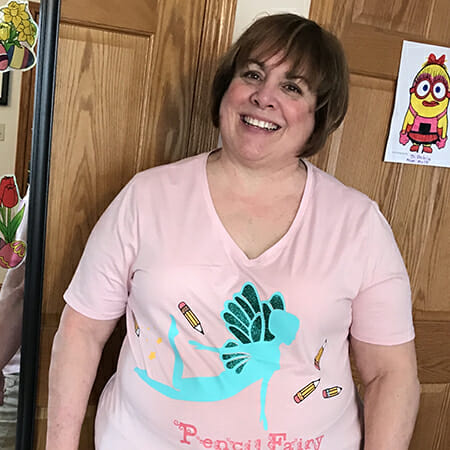
Linn-Mar Community School District volunteer Debbie Tyson has served over 5,000 hours in classrooms since 1996 with enthusiasm, patience and kindness. Pictured wearing her pencil sharpening shirt for kindergarten students./Courtesy Debbie Tyson
Describe your role with the Linn-Mar Community School District.
As a volunteer, I’m paired with students who need extra attention or help. I have recently volunteered in seven different kindergarten classrooms, and I’ll work with groups in literacy centers and also help teachers with classroom skills testing.
You’re also an “Encourage A Reader” (EAR) volunteer. Explain.
Yes, Encourage A Reader is so, so awesome. I volunteer with students K-5th grade who are struggling with reading, and sometimes they just need a little one-on-one time. I was a bad reader as a kid, so EAR is one of my favorite programs. I hope I help these children learn to love to read because it is so important to get those basics down and also to enjoy reading. Kids learn at different levels, and anything I can do to get them past any hurdle they are experiencing is important.
Share one personal story with me from your volunteerism.
I was assigned to work with a high school student who was Korean, her mother had passed away and her father sent her to live in the U.S. with her uncle and aunt. She was taking Spanish but she barely understood English. I sat in Spanish class with her every day that year to make sure she understood the English directions given in class. At first, she was extremely shy. She finally got to the point where she’d let me know if she didn’t understand. At the end of the year I asked permission to take her out for ice cream, and she thanked me for my help. She’s grown now and we’re connected on Facebook. I love seeing what she’s up to. I really hope that my volunteerism gave her confidence to ask people for help in other classes, and that she realized we were there to help her.
Why do you think it’s important for others to give back?
Any talent you have, whatever it is, be it a foreign language, art, or building houses if you’re good with your hands, share anything you can and give back to the community to make it a better place.
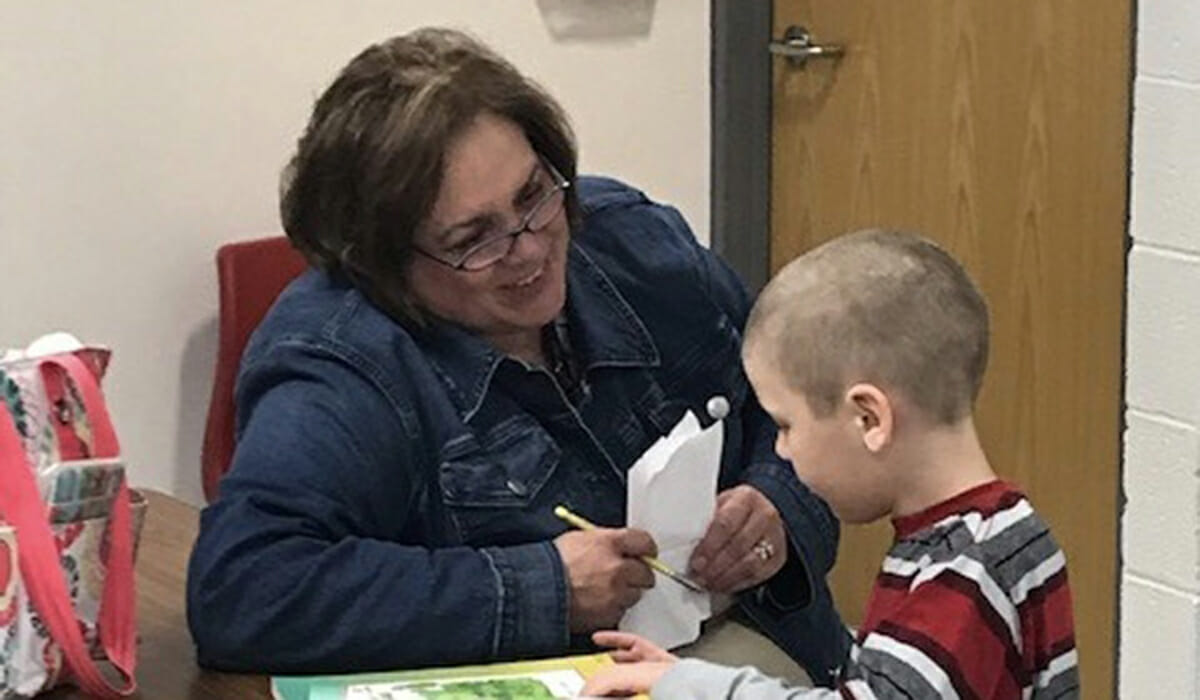
Debbie pictured reading to a Linn-Mar student. Debbie works one-on-one with students in need of extra help, serves as a reading partner and is a consistent and kind presence in the lives of many hundreds of students./Courtesy Debbie Tyson
What’s been the most rewarding part of your service?
The hugs I get (laughs). I’ll grade papers and whatever the students are working on out in the hallway, and I’ll get a hug from a lot of my students who walk by in the halls. The smiles from students help a lot too. I love those smiles and I love the kids.
In one word, what does volunteering mean to you?
Caring.
How can readers help?
Please visit the Linn-Mar Community School District website for more information about how you can help. I’m hoping to get back into the classroom once there is a Covid-19 vaccine.
17-year-old Velda Wang is effecting change in her community through art, and is inspiring others to build towards a better future through artistic expression. “Art has made a big difference in my life,” says the Tucker, Georgia teen. “It’s one way I chose to express myself and react to what’s going on around me.”
Founding Young Artists Atlanta (YAA) in 2019, Velda teaches art and provides free supplies to kids across greater Atlanta, from kindergarteners up to aged 13. Connecting with over 60 children thus far, Velda is helping to foster a love for art within her community and is opening the door to a better future for underserved youth.
What inspires you to volunteer?
I found myself becoming interested again in art as a teenager after taking a break for a few years. My parents got me started back up on art lessons, and it occurred to me how fortunate I was to be able to take art lessons, buy the expensive materials and supplies. Not everyone is able to afford that. Art has definitely made a big difference in my life, and I wanted to be able to share that opportunity with others.
Describe your role with Young Artists Atlanta.
As founder of YAA, I manage our communications and online presence. I am in charge of teaching art classes which are held at our local library. I recruit and instruct our volunteer art instructors, who are all high school students. We’ve partnered with various organizations in Atlanta to recruit children for our free classes and supplies, including the Clarkston Community Center and Atlanta Children’s Shelter.
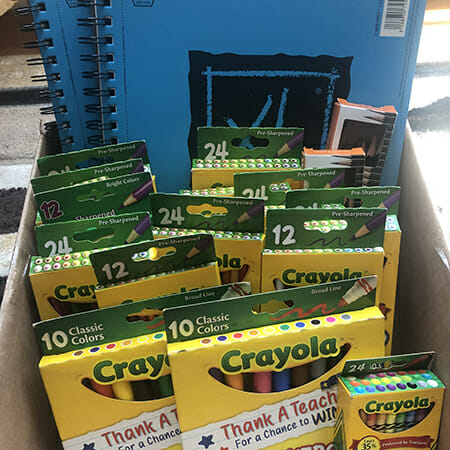
Young Artists Atlanta relies on donations for art supplies. For more information about how to help, please email: [email protected]
Share one personal story with me from your volunteerism.
There are four siblings that attend our classes, they’ve told me they look forward to coming to my class every single week. The oldest sibling is 10-years-old, he says he enjoys art so much more now that he’s been able to grow his skills. It makes me feel great that I’m making such a big difference. The kids that take our classes are from underserved or refugee populations, and art is changing their perspective and providing an outlet to express themselves a little bit more. They are learning fundamental art skills that will help them better problem solve, think creatively, and learn about themselves, which all have lasting positive effects.
Why do you think it’s important for others to give back?
This sounds really deep and philosophical (laughs) but I think volunteering is our purpose. We have to leave the world better and when we give back to others who are less fortunate, we learn how to support each other and build our communities up.
What’s been the most rewarding part of your service?
I love interacting with the children. Teaching them to understand themselves and the world around them through art can carry them not just through art but for other aspects as well. Art has the ability to take their mind off of the worries that may be at the forefront in their lives. I might just be a part of their life for a little bit, but I hope what I teach them in these classes can build a stronger younger generation.
In one word, what does volunteering mean to you?
Community.
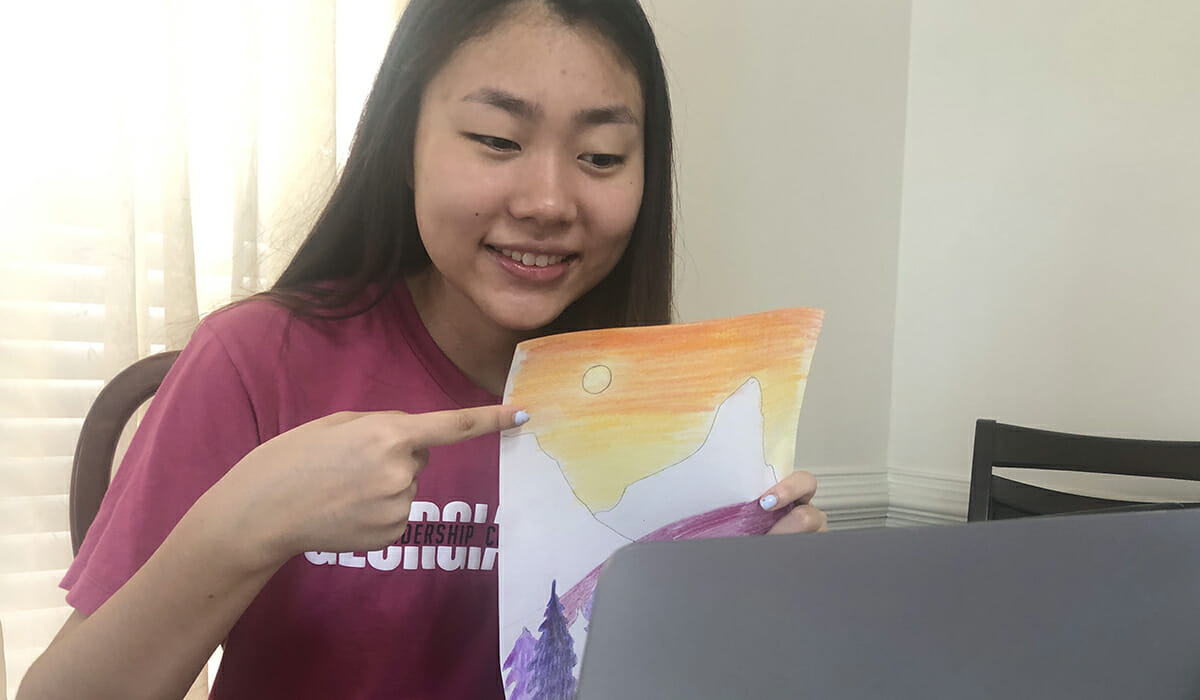
Velda has been holding virtual classes twice a week through the pandemic, encouraging students to connect and have fun while teaching them new skills./Courtesy Velda Wang
Explain how you’ve adjusted your volunteerism amid the Covid-19 pandemic.
We are currently holding virtual classes for our students twice a week. I’ll provide example pictures at the beginning of class on my computer, we’ll talk about pictures the students want to create and then I guide them step-by-step. The classes are a lot about having fun as well.
Speed round. Your favorite art medium and artist.
Acrylic paint. Favorite artist? Oh. That’s hard (laughs). I really like Georgia O’Keeffe.
How can readers help?
We are interested in forming more partnerships with local organizations in Atlanta. We rely on donations for our art supplies. For more information about how to help, please email us!
Advocating for Marginalized Communities; Teen Volunteer Plays Soccer to Welcome Refugees
Meet Daily Point of Light Award honoree Zayd Ali. Read his story and nominate an outstanding volunteer or family as a Daily Point of Light.
A love for soccer has been passed down from generation to generation in Zayd Ali’s family. But his passion for the game took on new meaning after one fateful conversation with a New York City taxi driver, broadening Zayd’s perspective on the power of the game.
“I was visiting my sister in college, wearing a Manchester United jersey. This taxi driver told us he’d lost his parents at a very young age, and as a result, had lost his faith in the religion his parents had brought him up to believe. Several years later when this man found soccer, it was the only thing that gave him peace. We started talking about our favorite players. (This man) said he believed Ronaldinho (former professional soccer player) to be a higher entity because of the power he had and what he could do with a ball. He said that anything (Ronaldinho) did, he did it with a smile, and you had a smile on your face whenever you were watching him.”
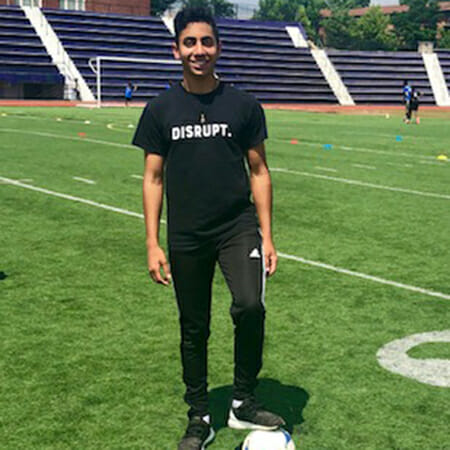
18-year-old Zayd says the conversation made him realize that if his beloved soccer could have such an impact on one person, there was the potential for even greater impact if he harnessed the sport to bring people together. Launching OnSide in 2016 as an 8th grader, the now recent Washington, D.C. high school graduate is building bridges between people across racial, religious and socioeconomic divides through a shared love for soccer, focusing his support on the vulnerable refugee population in the U.S.
“I’ve visited 32 countries. In each country, I could find someone watching, playing or talking about soccer. Soccer is the one commonality between the refugee demographic and kids that have lived in the U.S. all their lives. There are so many things that can separate us, including culture, language, religion, our skin color in some cases. These many things have the potential to separate one group from another. Nothing else has the universal connectedness of soccer.”
In order to fundraise for their programs, OnSide has developed a fashion activism clothing line to help bring awareness to the refugee crisis and ‘disrupt’ the status quo and stereotypes about refugees. Zayd pictured in his “Disrupt” t-shirt. Zayd Ali: “I wanted to help others because so many people have turned their backs on refugees. They came here with nothing. They fled their homes to get to the U.S. Let’s focus on building that group up.”/Courtesy Zayd Ali
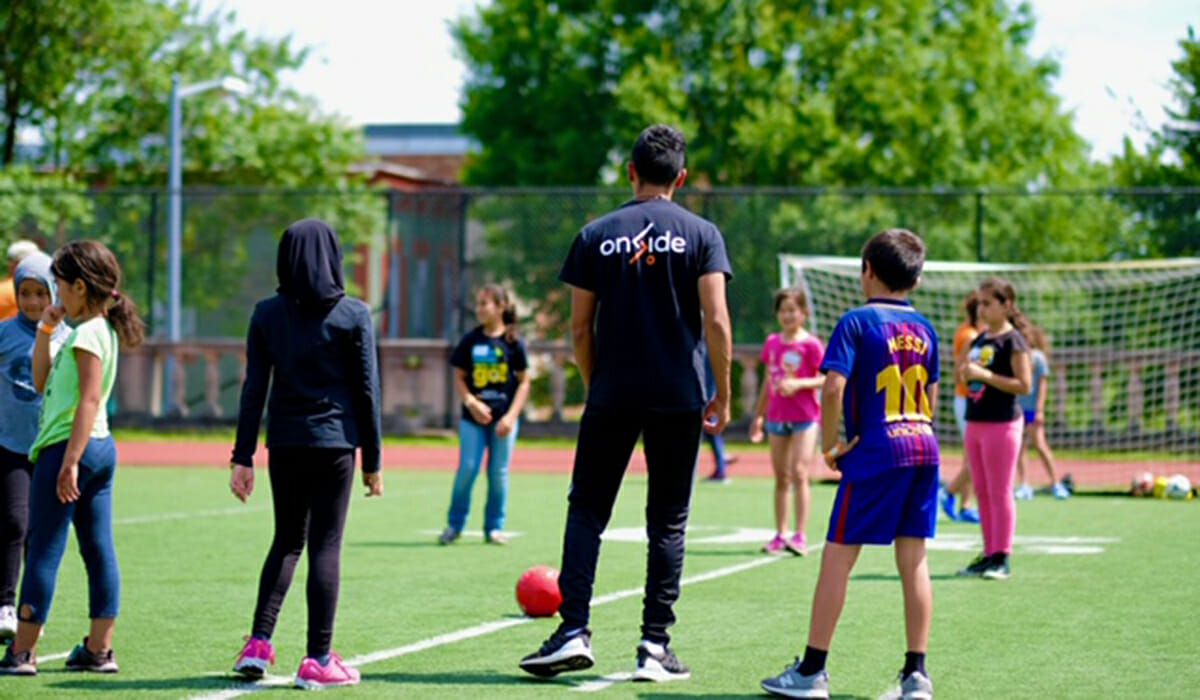
Helping often isolated refugees to feel more comfortable in their new homes in the Washington D.C. area, Zayd’s volunteerism supports kids aged 6-18 from countries including Ethiopia, Syria, Afghanistan and more to forge friendships, leveraging soccer as a tool for education and diplomacy. “Once you see you have soccer in common,” says Zayd, “everything else becomes that much easier for a friendship.”
Partnering with a number of organizations across D.C., including L.A.C.E.S, One Journey Festival and the International Rescue Committee to facilitate year-round activities and also participate in summer soccer camps, OnSide has organized soccer scrimmages, clinics, a tournament and outings to a professional soccer game for refugee kids. A fashion activism clothing line called OnSide Design provides critical fundraising. According to OnSide Vice President Alexander Sundberg, Zayd’s volunteerism makes refugee youth, who have often had to flee their homes, families and friends, feel welcome in their new communities.
“Zayd is an incredibly outgoing, heartwarming and genuine individual who has an unmatched ability to help kids feel safe and engaged in whatever is going on. He has a really amazing impact on these kids, allowing them to take the first hard step in feeling welcome and safe. (Zayd) makes all these kids want to participate, to have fun and be a part of the community. That’s what a lot of them haven’t been able to do beforehand and with Zayd’s help, are now able to do.”
That impact is helping young refugees to connect with others and adapt to their new surroundings, where even a few days of inclusive activities can change their perspective and future path in America, says Zayd.
Launching OnSide in 2016 as an 8th grader, Zayd Ali is building bridges between people across racial, religious and socioeconomic divides through a shared love for soccer, focusing his support on the vulnerable refugee population in the U.S. /Courtesy Zayd Ali
“We worked with a kid from Afghanistan who did not look anyone in the eye on the first day. He was very, very reserved and quiet. We really got him into the group through soccer and he felt more and more involved, first calling for the ball, moving towards the goal then getting high fives from everyone. It was really beautiful to see as he felt more comfortable in his skin. By the end of week, watching him grow out of his shell, he’d made a handful of friends. He was laughing, jumping and probably the best player on the field. He was having a phenomenal time.”
Folding refugees into the fabric of America has never been more important, says Zayd, who as a first-generation American, points to the drive and grit that immigrants bring to the U.S.
“We’re always stronger together. (Immigrants) are critical towards growth as a country. My uncle has told me: ‘There are things you don’t know, you don’t know. That’s where failure resides’. That’s why you need a diverse team and diverse group of people who have been able to experience things. We need something to bring us all together so we can have diversity of opinion and perspective to look at problems in a different way. OnSide is an example of why it’s necessary to move forward, stronger, together.”
Man Faithfully Feeds Cincinnati’s Homeless Every Week
Meet Daily Point of Light Award honoree Greg Nicoletti. Read his story and nominate an outstanding volunteer or family as a Daily Point of Light.
Every Monday for the past six years, Greg Nicoletti and his volunteers have driven his truck to downtown Cincinnati in order to provide for the city’s homeless. Each week, Greg’s nonprofit Kingdom Warriors provides up to 420 meals and hands out whatever the homeless would need to survive on the streets, from clothes and shoes to sleeping bags and first aid kits. The organization so far has served over 74,000 hot meals, given hundreds of haircuts and distributed multiple truckloads of clothing.
Greg described these Monday nights as almost like a big party, with hundreds of people milling around and interacting with one another. After setting up, he himself likes to walk around to meet his guests and ask them how he can help them get off the streets. The goal of Kingdom Warriors is to not only provide a weekly meal, but to intervene in the lives of Cincinnati’s homeless in order to get them back to supporting themselves.
Describe what Kingdom Warriors does.
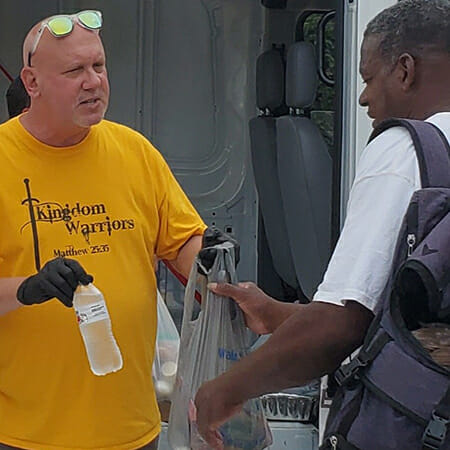
Kingdom Warriors is a nonprofit organization that started about six and a half years ago. We feed the homeless, clothe them and cut their hair. … We serve downtown on the streets. We cook and we take our urban survival truck that has shoes, boots, coats, tents, sleeping bags, toiletries, hygiene, first aid — anything you could need to survive on the streets. We hand that all out free. We cook up to 420 meals for people. They can come through our food line as many times as they like. If people are hungry, we want them to leave filled. We also have a taco line in addition to our food line. We have sometimes eight or nine different types of dessert. We have seasonal beverages, depending on if it’s hot or cold out.
Greg Nicoletti, left, hands out food to the homeless through his nonprofit Kingdom Warriors./Courtesy Greg Nicoletti
What inspired you to start this organization?
I had a dream and I kind of thought it was a strange thing, and then I had it again. I tried to ignore it, and then when I had it the third time, I thought, “Hmm, maybe someone is trying to tell me something.” It was that we started a facility where we were helping people in need. We were also feeding people on the street. We had a laundry facility, a shower house, a food pantry, and a resource desk where people could find links for housing and things like that.
What drives you to keep coming back every Monday?
We have so many stories that we can tell about our guests. Some really sad things and some really good things. It’s just wonderful to see peoples’ lives change, to give people a little bit of hope. While the world is as crazy as it is, we like to be just that little bit of light.
Are there any future partnerships, programs, or events that you are excited about?
We’ve been serving faithfully through the COVID pandemic with the non-touch dinner that we hand out, but as of July 6, we’re going back full force and we will have our complete caravan down there. We invite people to come down and join us. We also do other events. We cook for churches from time to time. We do an event for foster and orphan kids in the spring called ‘Hooked on Life’ where we teach kids to fish and we cook a big meal for them. People should stay tuned to our website and follow us on Facebook where we list all the upcoming events that we’re working on.
Do you have any plans or goals for the future of Kingdom Warriors?
Absolutely. We started out at my house in my garage, and we’ve grown so large that we’re now having to rent a big space in a local shopping center for our clothing distribution center. We’re presently supplying six different ministries with clothing. We hope to some day have the money to buy a big warehouse where we can house a place to get a meal. We would like to have a laundry facility for people to come in by referral to do their laundry. We would like to have barbering and hair stylist services for people who can’t afford to do that for their kids. We like to help people before they spiral completely down and their families end up in the system and their kids end up in foster care.
What’s been the most rewarding part of your work?
The most rewarding part of our work, I would have to say aside from the obvious things of helping people and trying to make a tangible difference in peoples’ lives, is that we’re teaching people and churches and organizations how to serve others, how to love people unconditionally. It’s really neat to watch people change. Their hearts get warmed. They go out to help somebody and they end up being the ones being blessed, so that’s probably the biggest wonderful byproduct of what we do.
What have you learned through your experiences as a volunteer?
I hate to sound cliche, but I’ve learned that anybody can get down on their luck. Anybody can make a bad choice. I’ve learned that we’re all equal. That homelessness can happen to anyone. I’ve learned that we also deserve a second, third, fourth, fifth chance, and that all lives matter.
What do you want people to learn from your story?
I believe that anybody can make a difference. I hear people say, “You should do this, you should do that, oh you know it would be nice if someone did this,” or people have problems with the way people do things. Well, I don’t like to be a part of the problem, I like to be a part of the solution. If people just put that effort toward making a difference, they can be a big part of the solution.
Frontline Hero Keeps At-Risk Seniors Safe at Home with Grocery Deliveries, Warm Meals
Meet Daily Point of Light Award honoree Brittany Eddy. Read her story and nominate an outstanding volunteer or family as a Daily Point of Light.
While living in Haiti, Brittany Eddy witnessed true devastation as the island was struck first by the deadly 2010 earthquake and then 2016 hurricane, which left widespread damage in the impoverished island. Today, the 36-year-old Atlanta, Georgia resident is a nurse practitioner in the ER at Grady Hospital, the city’s only level 1 trauma center, where Brittany has treated the sickest of the sick since the Covid-19 pandemic began in March.
Having seen first-hand the lasting effects of humanitarian disasters, Brittany is taking action during the pandemic to help the most vulnerable by providing resources for seniors in her community. As the Kirkwood Adopt a Senior committee chair for the Kirkwood Neighbors Organization (KNO), Brittany is leading efforts to pair at-risk seniors with a neighbor in the Kirkwood neighborhood of Atlanta, a buddy system which is providing a critical social safety net during these uncertain times.
What inspires you to volunteer?
My desire to connect with people and serve others is what inspires me to volunteer. Volunteering is not just serving. Even when you’re volunteering, you’re gaining a lot too.
Through Kirkwood Adopt a Senior, Brittany Eddy is pairing volunteer buddies in the Kirkwood, Atlanta neighborhood with at-risk seniors to provide a critical social safety net amid the pandemic./Courtesy Brittany Eddy
Explain how you’re helping seniors.
Kirkwood Adopt a Senior program increases the wellbeing and safety of Kirkwood’s older adults and neighbors experiencing physical challenges by identifying different needs they may have, and connecting them to existing resources. We leverage partnerships with local churches, existing organizations and local businesses to offer grocery delivery and warm meals as well as connect seniors to organizations such as Kirkwood Cares to assist with critical home repairs. Thus far, we’ve made over 220 deliveries to seniors, enrolled 30 senior households in our program and have oriented over 50 volunteers to help. Our service is about promoting a sense of social solidarity despite the ongoing social distancing measures.
Describe your role with Kirkwood Adopt a Senior.
As Kirkwood Adopt a Senior Chair, I lead the steering committee for the program, facilitated through Kirkwood Neighbors Organization, and our handful of volunteers. I oversee logistics, fundraising and communication. I coordinate our volunteers who are matched with seniors, providing help including our grocery shopping and warm meals program. I also liaise with other organizations and local businesses who have made donations to our effort. Our work won’t stop once the pandemic isn’t over.
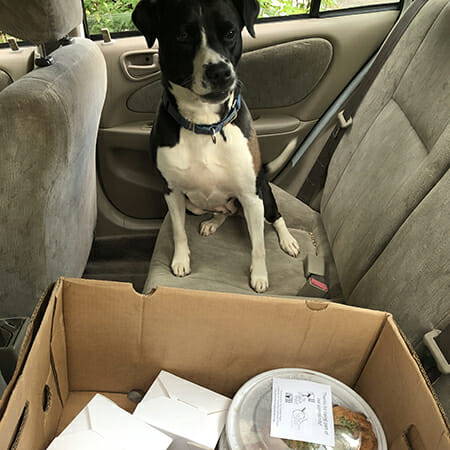
Brittany’s dog, Kona, pictured alongside deliveries for seniors in Brittany’s neighborhood. Kirkwood Adopt a Senior offers grocery deliveries, warm meals and connections to other important resources for seniors./Courtesy Brittany Eddy
Share one personal story with me from your volunteerism.
Because of the pandemic, we recognize a lot of seniors have lost their community and are even more isolated. They can’t go to church, can’t do the few things they were doing before. We had a senior make salmon croquettes for a volunteer. One senior lost his dog, and his volunteer buddy located the dog after searching social media, then helped to reunite the owner and pet. We are forming a greater sense of community in our neighborhood through our service.
Why do you think it’s important for others to give back?
You get out what you put into things. For me, service comes back to that sense of social solidarity. We’re all in this together and we need to treat each other with respect and give to others as others have done for us.
What’s been the most rewarding part of your service?
Some seniors we talk to say they’ve lost all of their neighbors on their street and all the people they used to know. A lot of these seniors have lived in this neighborhood for decades. These seniors are the most vulnerable, and they tell us meeting new people is giving them life again. It’s rewarding seeing those connections and relationships form.
In one word, what does volunteering mean to you?
Engagement.
How can readers help?
Please visit KNO’s Instagram for more information, and to donate to KNO’s Covid-19 assistance fund, please visit their PayPal page.
Continuing a Lifetime of Service, Math Teacher Spends Retirement Tutoring Students
Meet Daily Point of Light Award honoree Carl Wheeler. Read his story and nominate an outstanding volunteer or family as a Daily Point of Light.
Carl Wheeler has been a volunteer for almost his entire life, first starting when he was a Boy Scout collecting materials for the war effort during World War II. During his over 40-years-long career as a math teacher, Carl started volunteering for the Oahu Math League, a math competition among high schools on the island of Oahu. He served the League for 35 years and ultimately became its President. He also spent a decade volunteering with Teachers Across Borders – Southern Africa, traveling to the country each summer to help support the teachers there and build up the math programs in rural schools, where math education had been virtually nonexistent under apartheid.
Describe your volunteer role as a tutor at Kapiolani Community College.
[Kapiolani] runs what they call a Study Hub at the community college, which is where the students who need help in math or writing come in and we try to get them help. I’ve been doing that now, until they shut us down [due to COVID-19], since 2005.
There are others who are doing this, some of whom are students and some of whom are faculty members who also come in occasionally. [The organizer has] a schedule and I plug into the schedule where she wants me. … It’s varied a great deal over the 15 years that I’ve been doing that, so it’s tough to describe [tutoring] individually. In the last year, I’ve been going in once or twice a week. That’s all the need there was.
How did you start tutoring?
I was a teacher for over 40 years teaching math. I retired and my eye sight started going. I had a congenital disease. I was legally blind so for a period of time in the early 2000s, I was not very helpful in much of anything. A good friend of mine and former colleague, who was an instructor at the college, asked me in I think it was around 2003, 2002 — [they] said “Hey, we need help, why don’t you come help us with tutoring?” And I said, “Well, if you get my eye sight fixed, I’ll help you.” After a lot of research, I found a doctor in Portland, Ore. who changed my life. He corrected my vision and I became a new person, so to speak, and then I went to my friend and said, “OK, I told you, if I got my eye sight fixed I’d help you out.” So in 2005, that’s when I started working at the college.
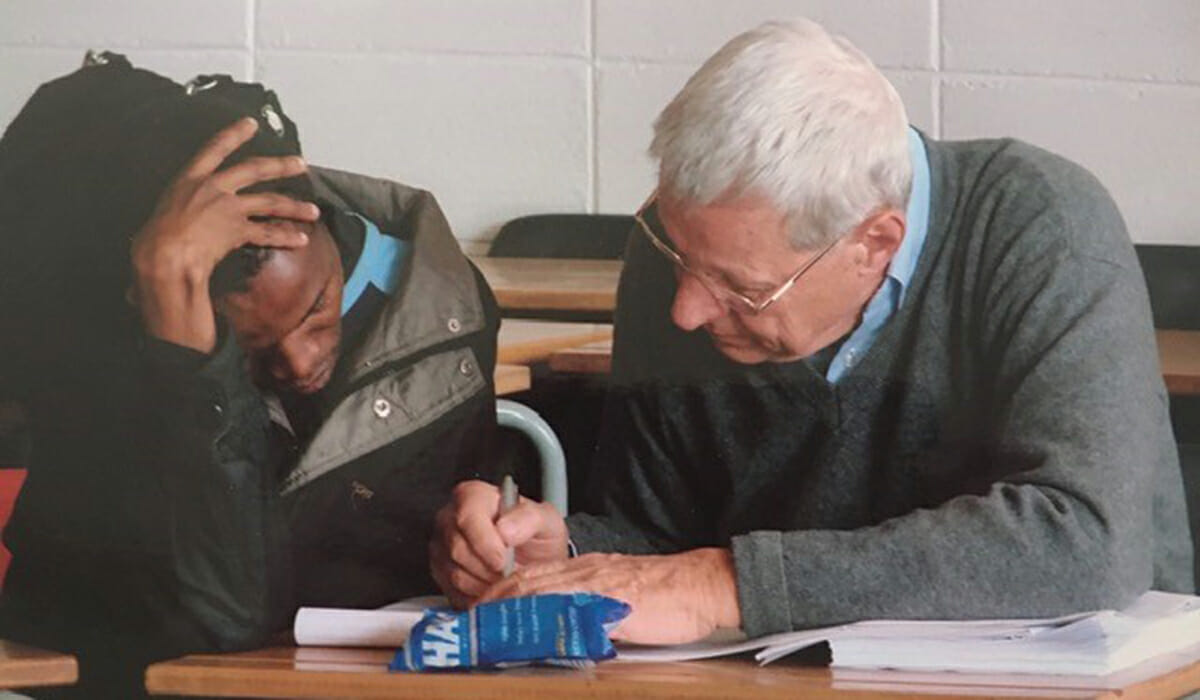
Carl Wheeler, right, works with a young man while volunteering for Teachers Across Borders – Southern Africa, a group of American educators who travel to Southern Africa to conduct math and science workshops each summer./Courtesy Carl Wheeler
What is it like for you to work and interact with the students?
It’s interesting because in a community college, you get a huge variety of students of all ethnicities and ages. It is interesting to work with, particularly the international students. You work one-on-one and you help them at whatever level they are, whether they’re fresh out of high school or moving on. There’s kind of two levels at the college. There’s a level where people are dead end, they aren’t going to go very far in the world of mathematics, and then there’s the other track where they’re going to go on and perhaps take calculus. All my work was pretty much precalculus. Occasionally I would do some calculus, but there’s a STEM sector at the college that handles the upper-level stuff. So we were dealing with mostly precalc stuff. Some folks came in with virtually no background in math whatsoever and they’re doing very basic stuff. Then you have some recently-out-of-high school kids who have taken a couple of math courses and they want to do some precalculus stuff so you’re teaching trig or something. There’s a huge variety of people you work with, which helps keep it interesting.
Can you describe your volunteer work with the Library for the Blind and Physically Handicapped?
This was a library that was founded by Congress in 1931. I got recruited by a lady I know who said we need help here. Up until a few months ago, when they closed that down too [because of COVID-19], I had been working there for the past five years. Initially I was recording for the library materials. They’ll take books in print and record them, because the clientele are mostly housebound. They’re either blind or they’re physically handicapped. I would record materials that had been written. More recently, they have their own radio network, so I’ve been doing some readings over the radio, things such as the morning news and obituaries, store ads, stuff for folks who are housebound.
What have you learned through your experiences as a volunteer?
I’ve learned a lot. Particularly when I was dealing with international students, I must admit during some of those tutoring periods, we would spend 45 minutes on math and then I would engage them in conversation for say over an hour. When you’re talking to somebody from Romania or Swaziland — the majority of them were actually usually from China or Japan, but we had them from all over the world, literally — part of it was actually talking to those people and learning something about their background.
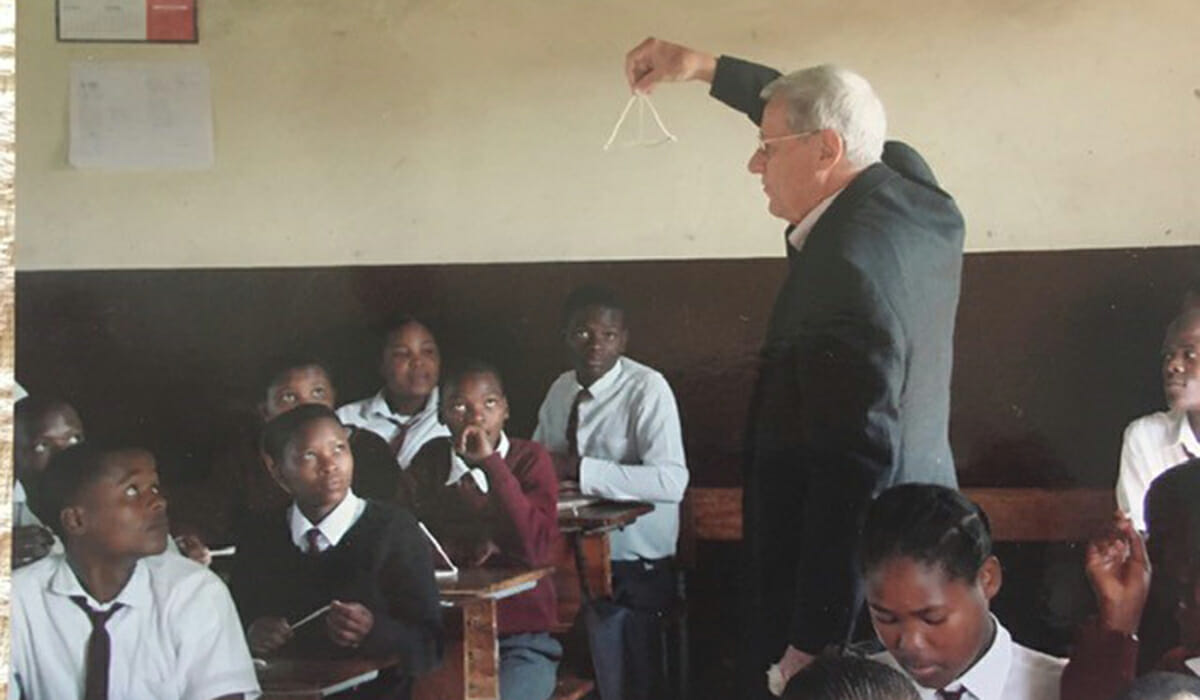
arl Wheeler leads a math workshop in South Africa while volunteering through Teachers Across Borders – Southern Africa, an organization he served from 2006 to 2016./Courtesy Carl Wheeler
What’s been the most rewarding part of your work?
The feeling that you’re helping people. You have something to give and they have a need to get. That’s a reward to me, that I can offer something. I grew up in central western New York in a small town and I was a volunteer when I was doing the Boy Scouts during the second World War — I go back that far — going around on trucks picking up stuff for the war effort. Later on, I became a volunteer fireman. We had no professional fire department in this town so everybody was a volunteer. I was a volunteer fireman for several years. It’s been in my blood, if you will.
Why do you think it’s important for others to give back?
All of these places where I’ve worked, there have been many others who have been doing some of the same kind of a thing. I think particularly nowadays, even more so with this coronavirus stuff, you’ve got all these volunteers doing food banks and all these things. If people weren’t volunteering doing this, the world couldn’t move. You’re a tiny part of a big bunch of people who are helping to keep the world going.
What do you want people to learn from your story?
Go out and help. We all have talents. We all have some abilities. Take what abilities you have and go out and use them.
Army Veteran Starts Foundation to Provide Furniture to Low-Income Veterans
Meet Daily Point of Light Award honoree Adam Harvison. Read his story and nominate an outstanding volunteer or family as a Daily Point of Light.
After serving in the Army for over 20 years, Adam Harvison is dedicating his life to supporting his fellow veterans. Outside of his full-time job helping to house homeless veterans in his Las Vegas community, Adam continues to assist veterans as the Founder and President of the nonprofit Harvison House. Since 2017, Harvison House has provided household furnishings to over 125 veterans receiving housing assistance.
Harvison House collects gently used furniture and equipment from donors around the country, cleans and repairs it, then personally delivers the furniture to the veterans’ homes. Adam said the furnishings give veterans a sense of stability and comfort. He has even noticed a decrease in evictions within the veteran community he is assisting.
“People are just really happy now that they can actually get off the street, have someplace they can go home and lay their head, and feel proud of it,” Adam said.
Describe your volunteer role with Harvison House.
We are a nonprofit organization that supplies household furnishings to veterans of low income who get newly housed into a property, whether it’s through the VA, U.S.VETS, HELP USA, or through any other type of organization throughout the community. What they do is contact us, and the case managers give us an itemized list of what that veteran needs, and we fulfill it to the best of our ability.
How are you able to fulfill these requests?
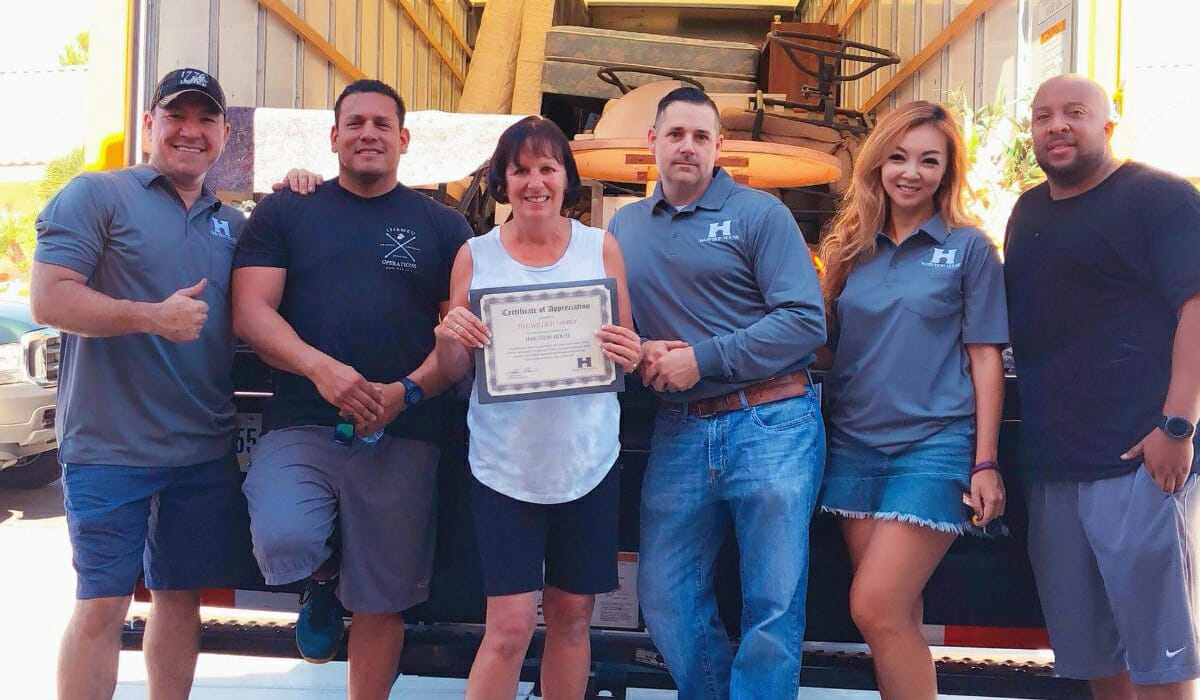
We actually get furnishings from donations from all over the community. We’ve had donations from New Hampshire, New York. We’ve had some from Pennsylvania, from California, Arizona. We don’t even advertise our organization. People have just spread it through word of mouth because we’re very different from any other organization out there. We took a lot of our military experience and put it towards helping veterans specifically. When someone donates something to us, we present the family with a certificate of appreciation showing we greatly appreciate what you’re doing for the community, because if it wasn’t for them, a lot of these veterans who are in need wouldn’t have anything. Case managers throughout the community contact us and they say “Hey, we have a veteran who is in need of this, this and that.” If we have it, we fulfill. Then after we take the furnishings and deliver them to the veterans, we actually take pictures of all the furniture that was delivered. We write stories and send them back to the family who donated it so they can see where their hard-earned money went. It’s only fair they know where their furnishings are going. We took a very structured atmosphere to put everybody in full 100 percent transparency, so from start to finish, everyone can see everything [we’re] about. We don’t include the veterans name. We just let them know what type of branch they were in and we write a nice little story about it and send it back. That has really been our calling card.
All of us in the Harvison House, we all work full time jobs outside of this. I actually work 10 hours a day and house the homeless veterans of the city of Las Vegas. The majority of our volunteers are metropolitan police officers, school teachers, or other people who actually house homeless veterans, too. We’re all intertwined in the community 100 percent, even outside of the Harvison House organization. When we built our Board of Directors, we put on there a professional resume writer, a drug and alcohol person. We have somebody to help write disability claims. We have housing. We put everything in place. A lot of veterans we work with are Vietnam vets and they really don’t use the VA [United States Department of Veteran Affairs] anymore, but they can come to us and we can assist them in other things too — getting them clothing, closets, food banks, getting them some resume writing, trying to get them some interviewing skills, that type of stuff. Everything we do, we don’t have grants. It solely comes out of me and my wife paying for everything, which we don’t mind, because we see the need in the community. … We basically put everything in [Harvison House] and put it all in God’s hands and were like, this is what we need to do. We sold our house for this. Within a year and a half time frame, we went from a two-car garage to a 5,000-square-foot storage facility. It shows the weight of how many people really want to help because they know that through us, they’re going to see their good deed done.
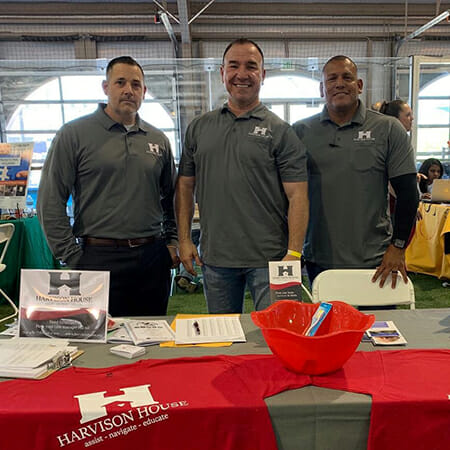
Adam Harvison is the Founder and President of Harvison House, a nonprofit that provides household furnishings to veterans in need./Courtesy Adam Harvison
When did you start Harvison House, and what inspired you to do so?
I believe it was December 2017. A lot of it has to stem with Pittsburgh [where Adam grew up], the need that was there after my dad lost his job at the mill. People donated to us and as a kid growing up, that meant a lot to me, whether it was a stick of gum or a pair of shoes. When I got out of the military, we actually started having veterans live with us who we actually served with. We would bring them into our home and we would tell them they could stay with us for free as long as they got situated — get a job, go to school, those types of things. Then I was working for an organization out of New York and it all started with an electric wheelchair. [Someone] asked me if I wanted an electric wheelchair and a lot of people said no. I said I’ll take it, and that’s how it started. It spiraled from there. Constantly trying to help somebody out in any single way. To give somebody an electric wheelchair who doesn’t have money for a bus pass, who can put a little box container on the back of that scooter just so they can go to the mission or to the food bank — that completely changes their world because they don’t have to spend eight hours on a bus just to go get the little box of food that’s going to keep them going for a couple of days. It’s been a really beautiful blessing to be able to help so many people in need.
What kind of feedback have you received from the veterans you have helped?
We get a lot of, “Now I’m living like a king.” We’ve had people say they finally feel like they are at home. They greatly appreciate the people who donate. … They’re so grateful and so thoughtful for everything. We have a lot of people who actually break down and cry and say they’ve never had things this nice, because we don’t take junk. We won’t provide junk to anybody. We have a lot of people who have never had such nice things and they get excited. While we’re delivering it, they’re bringing their friends over right then and there. They’re showing them and they’re all excited because that night they might want to play cards on the kitchen table and now they have one to do so. We get a lot of really good feedback in regards to it and it’s very touching. It’s very emotional, to see the roller coaster of someone who has absolutely nothing that’s living in an area where they don’t want to go outside because they don’t know how bad it is, because they might not be from Las Vegas, and we come in and now they don’t have to leave their home again and they have that comfortability. We mainly surprise everybody. We have kitchen starter kits. We set up their full kitchen, livings rooms. If we go there and we feel they need something else, we go in and get it — because sometimes the case managers don’t provide us with everything they need — no matter how small it is. It doesn’t matter if they just need a spoon. Most managers just say they need a couch, but when we get there, if you don’t have a kitchen table or a television, you’re still not sustainable because now you’re just going to stare at a wall.
Do you have any plans or goals for the future of your organization?
Since I have a lot of people who I served with throughout the military, I have actually been discussing trying to get this into California, Arizona, New York, Pittsburgh, North Carolina. It wouldn’t be the Harvison House, it would be their name that would be the structure, but we want to incorporate it through. … We really think we have something that is a lot more different than anybody else, through our process. We’re not looking for fame. We’re not looking for anything. We’re just looking to help those in need. That’s it. That’s why we don’t even advertise. People have asked us, they want to buy shirts from us and stuff from all over the country, and we’re working on some little things to bring some income into the organization. But everything is in God’s plan and God’s time.
What’s been the most rewarding part of your work?
Getting to meet everybody — the donors, the people who serve the country, and just [see] the expressions on everybody’s faces. All our volunteers are really free spirited and having a great time. We get a lot of feedback of how wonderful the volunteers are and that’s the reason they’re volunteers, because their heart is there. It’s not about money, it’s about their heart and what they get to bring back to the community. Being able to work with the volunteers is just as rewarding because they work all day long, and on weekends they give up their time too. They actually ask me when’s our next delivery. As a whole, from start to end, it’s 100 percent rewarding. Nothing works without the community or the volunteers. Harvison House would never exist.
With his nonprofit Harvison House, Adam Harvison collects, cleans and personally delivers furniture to veterans receiving housing assistance./Courtesy Adam Harvison
Why do you think it’s important for others to give back?
We brought a lot of the younger people in because the times have changed. We’re trying to partner right now with JROTC [U.S. Army Junior Reserve Officers’ Training Corps], and we just partnered with the military base. It’s good for the younger generation to see that not everything is great. There are people out there who really need help. When we bring them out, we let them realize, don’t walk past someone who is in need. Help them if you can. We’ve been in some very risky situations because some of these places in Las Vegas are pretty risky. We have so many people who their stories don’t need to be told, but people need to be able to assist them. Not everything is about the dollar. It’s about human kindness and making sure that people understand that everybody is a human being and everybody is equal. Regardless of the situation, everybody is equal and everybody should be treated the same. Everybody is still entitled to nice things, no matter how down they are on their luck.
What do you want people to learn from your story?
Just know that there are people out there who really need help. Their pride might not let them tell you that story, but there are people out there who are willing to help. Never give up on the community and the community is never going to give up on you.
Success in Helping the Poor and Homeless Leads Teen to Create an Even Bigger Initiative to Focus on Education
Meet Daily Point of Light Award honoree Matine Khalighi. Read his story and nominate an outstanding volunteer or family as a Daily Point of Light.
At just 18 years old, Matine Khalighi has earned acclaim for organizing Denver-area teens, businesses and schools to help the homeless – raising money, awareness and tirelessly bringing them cheer and hygiene items for four years.
But he’s only getting started. Just days ago, on June 22, 2020, Matine began closing down his “Helping the Homeless Colorado” website and other social media platforms in order to officially roll out a new, highly organized effort that focuses on helping impoverished and homeless students achieve the education that he now believes is the real key to a better future. Matine calls his new organization EEqual. Its mission is to give individuals in need a real chance to escape poverty for good by obtaining the education needed for an equal footing in life.
Our latest Daily Points of Light winner is the son of a doctor and a pharmacist. A bright, high-achieving student who’s been accepted to Harvard University this fall, Matine was perceptive enough to notice the plight of the homeless when he was just an eighth-grader, and savvy enough to realize he could tap into his generation’s desire to make a difference through social media.
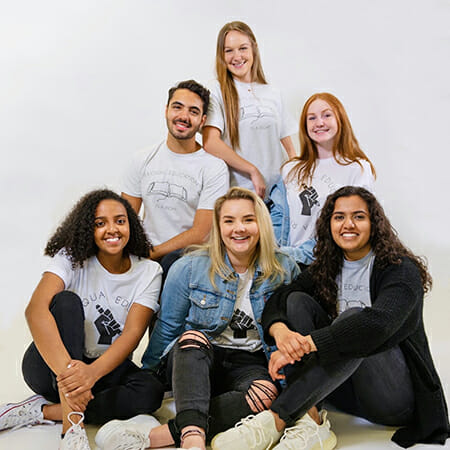
Matine Khalighi (second from left) and a team of youths have formed a Denver-based organization, EEqual, to help homeless and underprivileged students achieve education. The effort builds on Matine’s previous organization, Helping the Homeless Colorado, that he helped found four years ago./Courtesy Matine Khalighi
“Whenever I was driving around with my parents, I noticed people living on the street, and wondered how that was fair,” said Martine. He remembers being discouraged by his teachers at the time from working with the homeless – “It was a dangerous population in their eyes” – so he did his eighth-grade project on helping foster children and then he and a friend launched their own nonprofit, Helping The Homeless Colorado, in their freshman year of high school.
“We were the kind of kids who stand outside of grocery stores raising money and we thought it was fun,” he says.
As the organization grew, the teens ran many traditional fundraising events, such as annual galas and 5K runs. They applied for grants and wrote to local businesses asking for sponsorships. Martine soon realized that his generation’s comfort with social media gave them an added edge.
“Social media advertising is really, really effective,” Matine says. “People will donate on social media. For example, Facebook’s saying I can host a fund-raiser. So, I put it on my Facebook and suddenly, I check back one day later and I have $500 in donations. Here’s Giving Tuesday coming up — maybe we can get a company to match donations on Facebook. It’s easy.
“It’s also how we communicate everything,” Matine adds. “Our newsletter’s great, our website’s great, but Instagram, Facebook and Twitter are our strongest outlets as far as getting our message out there and for fundraising.”
Helping the Homeless Colorado ultimately raised over $140,000, distributed over 50,000 hygiene products, helped over 10,000 people and given over $15,000 in scholarships.
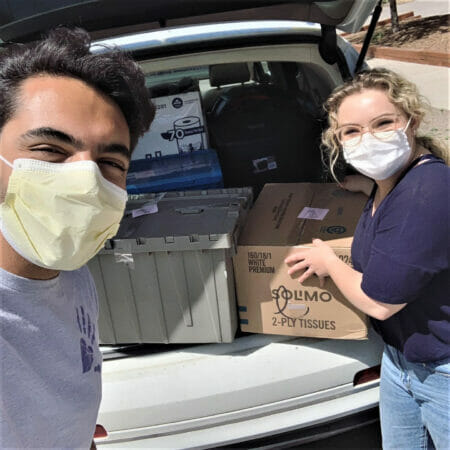
Matine Khalighi and his co-founder Alyssa Gorkin continue to distribute hygiene products in June 2020, during the coronavirus pandemic, as part of Helping the Homeless Colorado. The group ultimately delivered more than 5,000 items and also enjoyed conversing with the homeless and hearing their stories./Courtesy Matine Khalighi
Now, Matine will be the executive director of EEqual, a nonprofit that has been nine months in the making. Matine and five other young people on his executive team put together an entirely new website, created videos and designed a logo that looks like a book with an equal sign – to symbolize education and equality. The organization builds on the scholarship aspect that evolved with Helping the Homeless Colorado by raising money to provide classroom supplies and pay fees for students in low-income school districts, and also provide tuition for students pursuing community college or tech school after high school graduation.
Matine hopes to expand this organization to schools across the nation by creating a model that students can replicate at middle- and high schools, as well as at colleges and universities. He’s learned to recruit other teens by tapping into their individual personalities and assigning tasks at which they can excel.
One enthusiastic recruit is Shayda Zarrin, who’s known Matine for years as a family friend, but who attends a high school in a different school district than his.
“I’ve always wanted to make a positive impact – I believe in our generation and it’s common for young people to want to change the world, but we just don’t know how,” says Shayda, who is almost 16, and is already involved in student government and several other school clubs.
It was Matine’s Instagram posts that caught her eye. He urged viewers to message him if they wanted to get involved and Shayda did. She used Twitter to quickly draw her friends to join the cause. Now, Shayda acts as an ambassador for to get the word out to other schools.
Lydia Shimelis, a high school senior, is taking over as development director for EEqual, after having volunteered with Helping the Homeless Colorado since early 2019. She’s also already busy with student government and sports, but says Matine’s passion and leadership made her want to be on his team.
She learned she had a knack for approaching local businesses to make a pitch for sponsorship and donations.
Lydia thoroughly supports the organization’s transition to EEqual. “Although our program was helpful in the moment, it was kind of a band-aid solution to homelessness and poverty,” she says. “This change allows us to target poverty and homelessness at its core. Education has been shown to be a direct solution. I feel like now, with economic changes and the pandemic, that our mission is even more needed. There have been budget cuts in education and kids who are low-income are deeply affected by this.”
Teen Lends “Helping Hand” to Serve People In Need of Affordable Prosthetics
Meet Daily Point of Light Award honoree Viraj Jayam. Read his story and nominate an outstanding volunteer or family as a Daily Point of Light.
As a child, while his mother was in college and father in training, Viraj Jayam spent a year in India, his caretaker a man named Ramesh. After that summer, Viraj would visit with Ramesh whenever he visited India. In 2018, Ramesh lost an arm in a factory accident while operating heavy machinery. Captivated by the idea of using 3D printing to create affordable tailored prosthetics for the 2 million people in the U.S. and the 30 million internationally like Ramesh who need prosthetic limbs and cannot afford them, Viraj is using his skills and lending a helping hand to those in need.
Launching Helping Hands Long Island in 2019, Viraj provides free 3D printed prosthetic hands that are custom fit for anyone in need locally, nationally and internationally. The now 16-year-old Roslyn Heights, New York teen is changing lives in his community and beyond, shipping over 35 prosthetic hands and arms to people missing limbs across the nation and internationally. Viraj has also recently joined efforts to support frontline workers by producing 3D printed supplies amid the Covid-19 pandemic.
How did you decide to help people in this way?
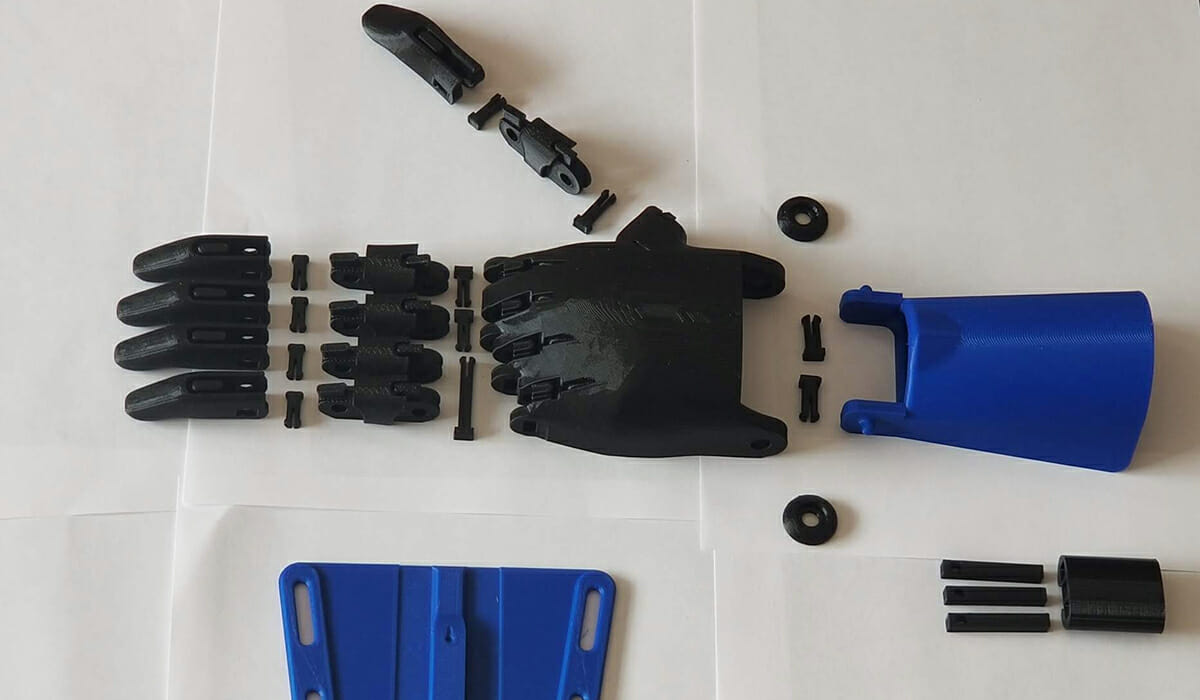
A medical-grade prosthesis can cost up to $10,000. Using open-source software, I print and assemble prostheses that are durable, lightweight, custom fit, and provide joint mobility and flexibility to people who could not otherwise access or afford prosthetic devices. I construct the prosthetics at home at a cost of about $5 per prosthesis.
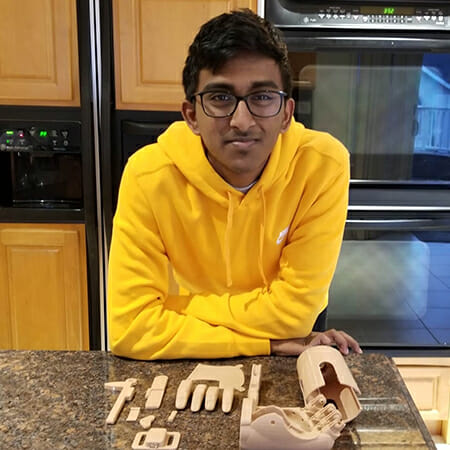
Viraj pictured with printed 3D prosthetic parts to be assembled./Viraj Jayam
What inspires you to volunteer?
I want to change people’s lives and make the world a better place for those who don’t have similar advantages. When I first started developing prosthetics, I delivered a hand to my former caretaker, Ramesh. He was able to make it work completely, and he immediately opened a bottle and drank water using the prosthesis. That was a very fulfilling moment, and is really what got me started on this mission.
Describe your role with Helping Hands Long Island.
As founder and CEO of Helping Hands Long Island, I construct prosthetics, including different types of hands and arms. We modify our code to customize the product for the client. I also manage our online and social media presence and communications. We’ve shipped prosthetics to places as far away as India, Dominican Republic, Mexico and Nepal.
Share one personal story with me from your volunteerism.
I took a trip to India last summer to hand out prosthetics, and I gave an arm to one man living in a very small village. He started using it immediately, he was in tears. His response was very moving and humbling. That prosthetic will change his life because day to day, he can use this limb to bike around, which is the main mode of transportation in his village. That’s the best part of volunteering. You can change somebody’s life that you don’t even know.
Why do you think it’s important for others to give back?
A lot of people in the world are faced with many disadvantages, so it is important for people who have connections and tools to give back to the community. Service helps to make the world a better place by providing equal opportunities for people to succeed and enjoy a higher quality of life.
What’s been the most rewarding part of your service?
Whenever I deliver prosthetics to people, it’s really amazing to see the look of joy on their face. That is the most rewarding part of volunteering. Nothing can replace the feeling of, wow, I just helped someone today.
How has your service changed amid the Covid-19 pandemic?
We’ve been making 3D face shields and door handles for frontline hospital workers, in addition to continuing our prosthetics production.
Unlimbited Phoenix arm pictured to be assembled. Viraj Jayam: “ Service helps to make the world a better place by providing equal opportunities for people to succeed and enjoy a higher quality of life.”/Courtesy Viraj Jayam
In one word, what does volunteering mean to you?
Happiness.
When you’re not in school or volunteering, what do you do for fun?
I really enjoy biking. I take biking trips across New York.
How can readers help?
I am currently self-funding our prosthetics production, but we will be able to fundraise once we are a 501(c)(3). Please visit our website for more information.