Doctor Forms Nonprofit to Provide Free Healthcare to Homeless
Meet Daily Point of Light Award honoree Dr. William Mazzella. Read his story and nominate an outstanding volunteer or family as a Daily Point of Light.
Dr. William Mazzella has been helping people for almost his entire life, with his motivation to do so first starting when he was in the sixth grade. While visiting the nursing home where his mother volunteered, he met a stroke patient who had lost the ability to walk or speak. Dr. Mazzella remembered the man crying and shaking and over his frustration at not being able to communicate. After leaving the visit, Dr. Mazzella purchased a book on basic programming language. He used it to teach himself how to write a program that would allow the patient to hit a computer space bar and choose what they wanted to communicate from a selection of phrases. From that moment on, his motivation to give back only grew.
Today, Dr. Mazzella is helping those in need with his nonprofit MedStreet, which provides free healthcare to the homeless population in his city of Alexandria, Va. and nearby Washington, D.C. He travels with his medical bag to wherever he knows he will find those most unable to afford healthcare, whether that be on the street or in parks, shelters, soup kitchens, or low-income housing programs. Aside from medical care, Dr. Mazzella brings the homeless coats, hats, heating pads, and sleeping bags sown by volunteers. Prior to COVID-19, volunteers including Dr. Mazzella’s wife and son would also join him to provide food. MedStreet is looking for volunteers and encourages anyone interested in helping to visit their website.
Describe what MedStreet is and what inspired you to start it.
I’m the founder of MedStreet. MedStreet is a nonprofit organization that provides free healthcare to the homeless. … I went to undergrad in Los Angeles at the University of Southern California, and there was certainly a significant homeless population there and that really got my attention and my heart. After undergrad, I went to medical school in Chapel Hill and in medical school we had a student health clinic where we would provide free healthcare to the low-income [and] no-income population. After med school, I went to residency, and in residency we would provide medical care at a homeless shelter. Since then, I’ve done medical missions to places like Haiti and Costa Rica to provide medical care to people who have no access to medical care. When my wife and I moved to Alexandria, I thought a lot about folks internationally who didn’t have a lot of medical care. Seeing the homeless in Alexandria and D.C., certain stuff brought to my attention that their plights are certainly similar. It seems like I could not only travel to other countries to provide help for people who need it, but I could do it right here in my own backyard.
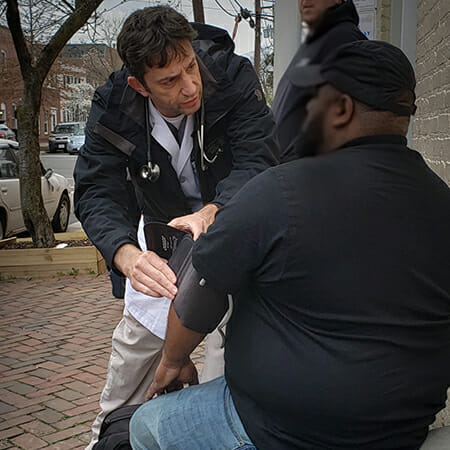
Dr. William Mazzella interviews a homeless client about his health issues./Courtesy MedStreet
My wife and I decided to start doing that. One day my wife, Brandy, made some sandwiches and packed bags with food and granola bars and things. I packed up a medical bag with medical supplies, and we went to a local park where we know the homeless hang out. We packed up our six-weeks-old son Joseph and we went to the park. It was a very funny afternoon, because the homeless population was there and I was there in my white coat and stethoscope and medical bag. We stood out. We were a very odd picture. They stared at us for awhile, and after a time we walked over to them and they were a little confused by us. Finally they started talking and I told them why I was there — I was a physician and here to provide medical care for anyone who might need it. At first they were like, “We’re good, Doc, thanks.” We were chatting and they started asking questions about Joseph. They were very enthralled with Joseph. He’s a very cute kid. Joseph broke the ice. We chatted for a few minutes and talked about Joseph and one of the people said “You know, Doc, actually I do need some help.” We went to the side to a little table with chairs and took care of a couple medical problems. Then that person went over to the cadre of other folks and next thing I know the next person came, and the next person came, and then MedStreet took off from there.
How often are you going out to treat people?
It’s hard to put it in an exact frequency. Obviously when I’m working in a hospital, it’s hard for me to get out. Sometimes it’s a few times a week and sometimes it’s almost every day. Sometimes it’s multiple times a day. I like going out in the morning because that’s when people need help the most. I’ll go out sometimes especially in the winter time at three or four in the morning. I’ll have not only my medical bag, but some coats and hats and heating pads so if anyone has hypothermia I can get them warm. A lot of churches offer breakfast. That’s a great time to catch folks when they are in need. A lot of them are cold, sleep deprived, and if they have medical conditions, a lot of the medical conditions are flaring or exacerbated in the morning, so I try to catch them when they are in the most need in order to do the most good. … I’m going out even more since COVID because there’s more need and there’s more fear. I’ve been giving talks to shelters and [having] conversations on the street about what COVID is, what are the real risks, what should one do to protect oneself. Answering many questions like that so people have useful strategies for dealing with it and not undo fear.
What has it been like for you to be able to share volunteering with your family?
It’s fantastic. I love it. I don’t know how to put it into words. It’s indescribable. Personally it means a lot to be able to reach out and help people, whether it’s writing a basic program language a la technology of the 1980s, or whether it’s using modern medicine that I’ve learned since to treat people. That’s very rewarding. I have to say the thing that really got us out the door was reading the Bible and going through Mark again. I ran into Mark 2:17, where of course Jesus is criticizing the Pharisees when the Pharisees are asking him why are you hanging out with these tax collectors and prostitutes, and if you were such an esteemed person, you wouldn’t hang out with these types of people. And Jesus responded, it isn’t the healthy who need a physician but the sick. Of course I understand that in the spiritual sense of how Christ meant it, but also it struck my heart in a very literal sense. For days and nights and weeks, I couldn’t get that out of my heart and I started losing sleep. I felt called to do this and make this happen, so that was the personal motivation that got me out. It means a lot both on a personal level and on a spiritual level to help God’s people and be able to do that with my family, with a wife who is wonderful and I’m very blessed to have and with a son who’s wonderful and I’m very blessed to have. We tried to have children for years and years and we had many infertility troubles. In fact, we went through multiple rounds of in vitro fertilization and failed and failed and failed. We were finally on our last embryo of who knows how many and we had given up honestly. We had our hearts broken so many times. We prayed about it and asked for it and it was overwhelming and then God blessed us with Joseph. So to be able to go with my wife and my son, who is a blessing, and do the Lord’s work — it’s hard to put into words what that means. It’s more than just a passion. It’s more than just a feeling. It’s a calling.
Is there any particular person you’ve helped or story of your volunteer work that sticks out to you?
It’s hard to choose one because I care about them all. There’s a woman who is the victim of domestic violence, a Muslim woman, and she stands out to me because she will ask for help for various things when I’m there. She has her son with her, and some of the help she asks for is not only on the medical side but with her personal life. At the end of our time together, we pray to God. We pray each in our own way together and it’s a beautiful picture of the world that stands out to me. I’ve been in a camp by the river where there was clearly a lot of violence and probably not a very good or safe situation. I walked up once and the hostilities seemed to be running high between some individuals, but it’s interesting — when I was there they put that down. They put it aside and they let me minister to them. It’s interesting to not only help on the medical side but to see people come together after that. During the visit, not only did we talk about health and treat some conditions they had, but we also ended up discussing hatred and animosity and how to lay those down.
There is a woman who I was treating multiple times for dental abscesses, but she couldn’t get access to a dentist. The city does have some clinics they provide, but they’re very overwhelmed and understaffed. There’s no way they can satisfy the need. I contacted a local dentist and asked her if she would see this person. I told her, whatever your fee is, don’t charge her, just send it to me and I’ll pay it, but please take care of her. The dentist responded to me that she would take care of her, but she wouldn’t charge anybody. She provided the dental care that the woman needed, but she actually needed a little surgery. Not only did she provide free dental care to her, but she called the oral surgeon and she referred the patient and said “I know this is going to be expensive but just bill me.” The oral surgeon says, “I’ll see this person but I’m not going to bill you or anyone else, I’m going to do this for free.” The patient eventually ended up going to the oral surgeon and getting care and he did it for free. That’s our community coming together. Then the story of when MedStreet got launched, speaking of the community, the response from the community was overwhelming. I think I received in a weeks time a thousand emails of people who wanted to volunteer and to help. The response from the community is just humbling and overwhelming.
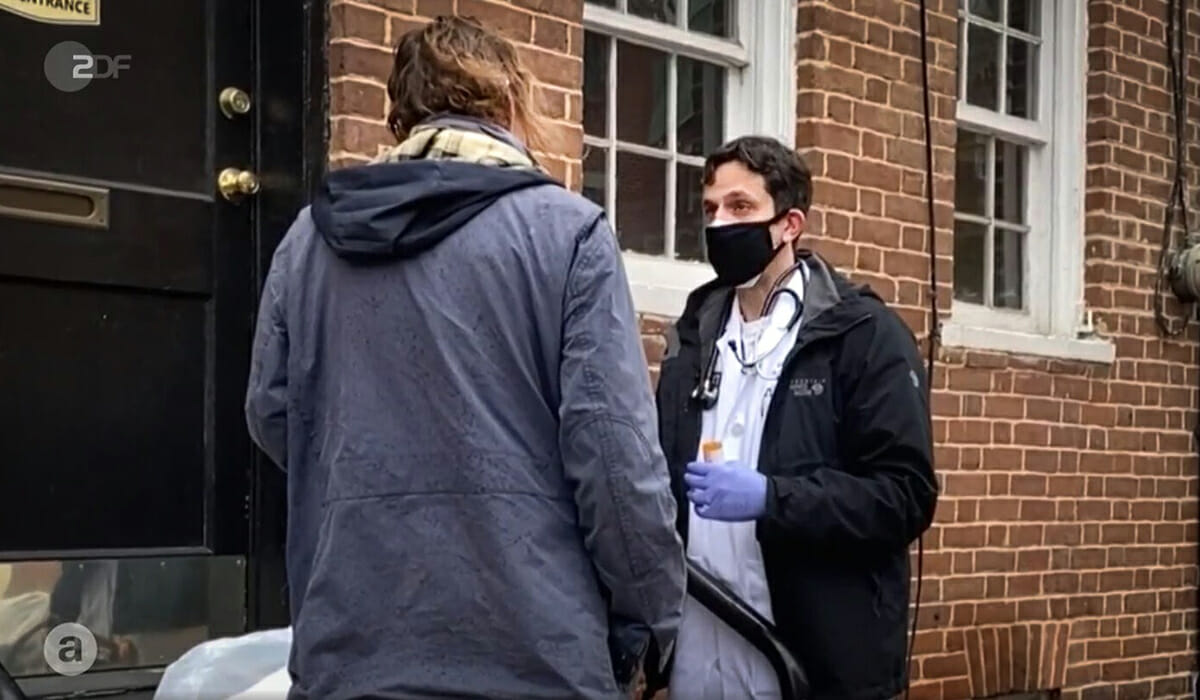
Dr. William Mazzella treats a client during a recent COVID-19-related visit in Alexandria, Va./Courtesy MedStreet
Do you have any future partnerships, programs, events, or general plans for the future that you are excited about?
I do, and it comes from the response of the community. I think so many people want to help those in need and have a heart for those in need that I’m trying to set up MedStreet as a national platform. We’re creating a platform where physicians can lead healthcare teams across the country, sort of have their own MedStreet franchise where they are. There are a lot of obstacles to doing this, and most of them are regulatory, so satisfying the medical board’s regulations, the pharmacy board’s regulation, on and on and on. It’s very difficult and I think that prevents a lot of people from being able to do this. What I’m striving to do is to create a platform where physicians can create their own healthcare teams in their own communities where these obstacles and regulations are already satisfied, and then they can replicate it from where they are to help.
Why do you think it’s important for others to give back?
Mark 2:17 — those who need physicians are not the healthy but the sick. I think we’re called to care for others. Some people may do it for a feeling or other things, but I think it’s a calling. Not just for me, but for us all.
What do you want people to learn from your story?
I would hope that people would be inspired to help. I think real help comes person to person and through relationships. Whatever skills people have, I hope they are inspired to take those skills and help those in need.
Turning a Requirement into a Passion and Giving His All
Meet Daily Point of Light Award honoree Rohan Rajesh. Read his story and nominate an outstanding volunteer or family as a Daily Point of Light.
Rohan Rajesh can’t help himself. He’s an over achiever, a 17-year old high school junior who doesn’t believe in doing a half-hearted job. Whether he’s earning the grades he needs to stay on the honor roll, fighting for his second degree black belt in martial arts or rushing the field as a JV football player, Rohan gives his all. So it’s no surprise that when he was required to perform community service as a sixth grader, he didn’t do the bare minimum.
Instead, volunteering became a passion for him, a mindful choice that has added up to more than 650 hours of service since then. Rohan has spent countless hours on projects ranging from feeding the homeless and tutoring kids to helping hurricane victims and creating care packages for the less fortunate. His natural leadership ability has inspired others to volunteer and earned him the position Youth Volunteer Coordinator for the NEST4US Maryland Chapter. From using his tech and graphic skills to help design the chapter’s banner to packing food to feed at risk kids, Rohan strives to be an advocate for positive change in his community.
Describe your volunteer role?
I volunteer for many organizations but the primary ones that I serve are NEST4US and the Montgomery County Board of Elections. For NEST4US, I am the Maryland Youth Team Leader, which means I supervise all events that are hosted in MD and help manage large events in VA. For the Montgomery County Board of Elections, I am the Future Vote Ambassador for Clarksburg High School. I help conduct outreach projects to recruit more volunteers to serve on election day.
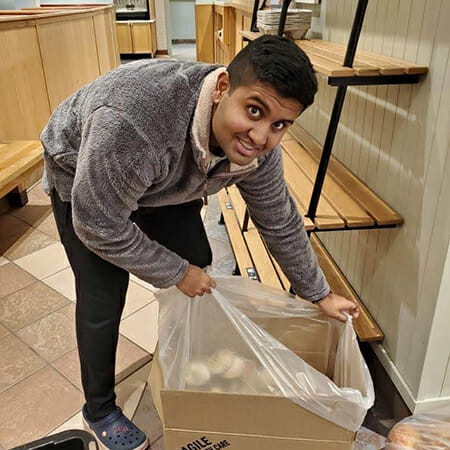
Rohan Rajesh during the NEST4US food rescue project where he picked up unsold breads and pastries from Panera to redistribute to homeless shelters./Courtesy Rohan Rajesh
Why is it important to you to support your community in this way?
For me, Community Service is important because it helps me gain new perspectives of the everchanging world we live in. I am able to learn practical skills such as problem-solving and adapting, better than I could from a classroom environment.
What’s the most challenging aspect of your volunteer service?
Most of the time, things don’t go out as planned. Depending on the organization, sometimes there will be too many people or not enough people showing up to the event, lack of supplies, etc., but we learn to work around it and get the job done.
Why do you think it’s important for others to give back?
You don’t see a problem until it’s right in front of you. Volunteering puts you at the front lines and helps bring to light the problems that exist in our communities and could easily be solved with a little bit of care and effort.
What’s been the most rewarding part of your work?
The heartwarming thought that I’ve been able to help improve the lifestyle of another person is what motivates me to continue volunteering.
What have you learned through your experiences as a volunteer?
I have learned to “expect the unexpected”. Hiccups occur a lot in life, and thanks to my experience dealing with situations that are not ideal while volunteering, I have learned to adapt so that I can help as many people as possible.
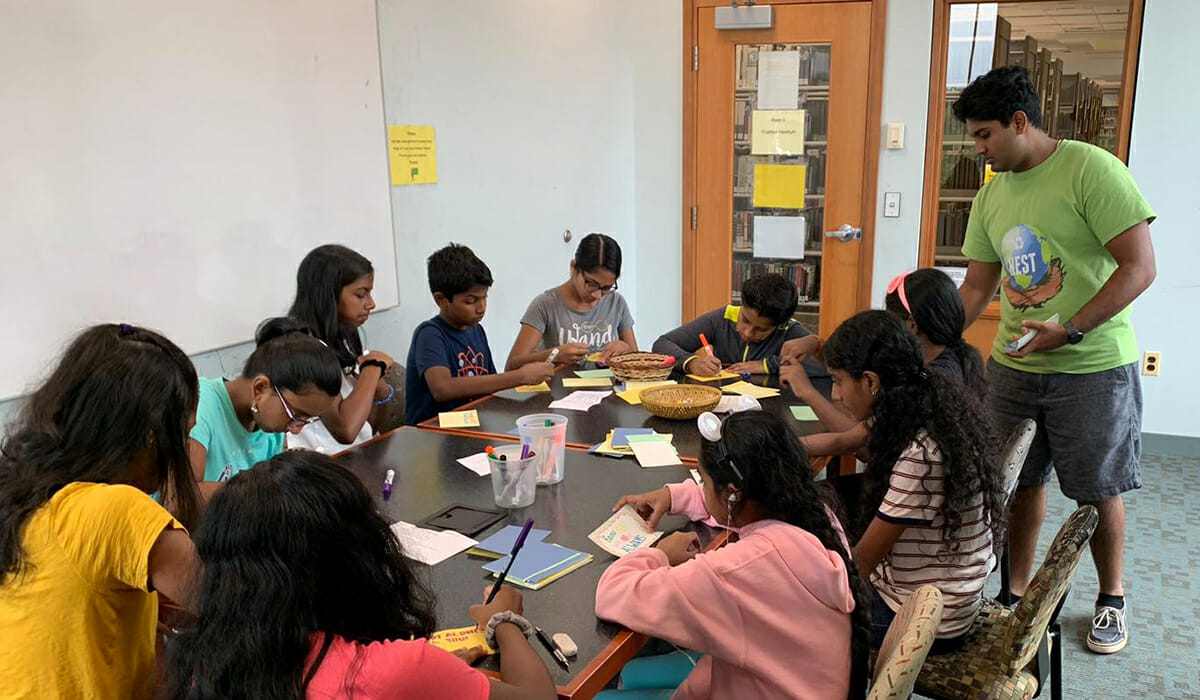
Rohan Rajesh supervised the Notes of Encouragement Project as the Youth Team Leader for NEST4US which wrote more than 500 notes to be placed into care packages for homeless people in DC, MD, & VA./Courtesy Rohan Rajesh
Are there any future partnerships, programs, or events that you are excited about?
I am excited to host the first Sandwich Assembly Project for NEST4US in Maryland.
What do you want people to learn from your story?
For me, volunteering started as an academic requirement but soon transformed into a personal interest. I have been volunteering since the 6th grade and now have logged more than 650 hours. I want people to know that doing something small every day to help someone will make a large impact in the long run.
Music to Their Ears & Hearts: Teen Musicians Volunteer for Students In Need
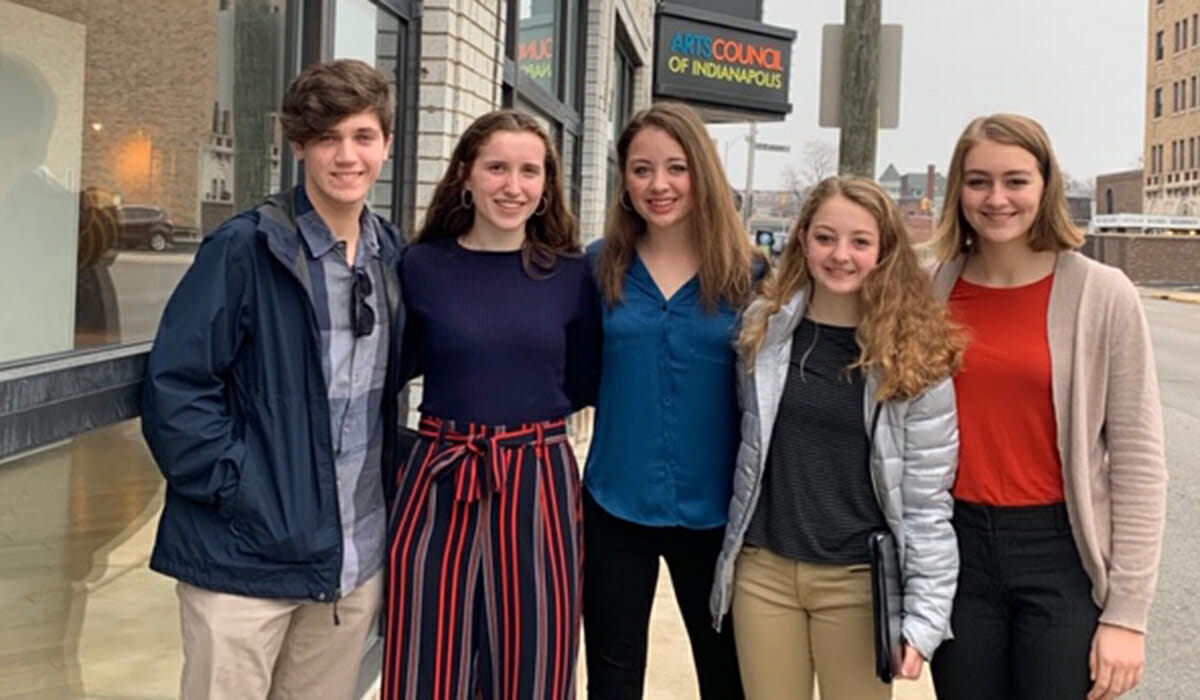
Meet Daily Point of Light Award honorees Kate & Meg Dimmett. Read their story and nominate an outstanding volunteer or family as a Daily Point of Light.
As sisters, Kate and Meg Dimmett have grown up in a home filled with music, their love for playing instruments bringing joy and a sense of place to their lives in Zionsville, Indiana.
In 2017, the two teens – Kate, 17, and Meg, 14, both avid violinists, realized the cost of their beloved pursuits might be out of reach for some youth. “We were in the process of getting a new violin,” says Kate, “and it was the first time we got to see how expensive musical instruments are.”
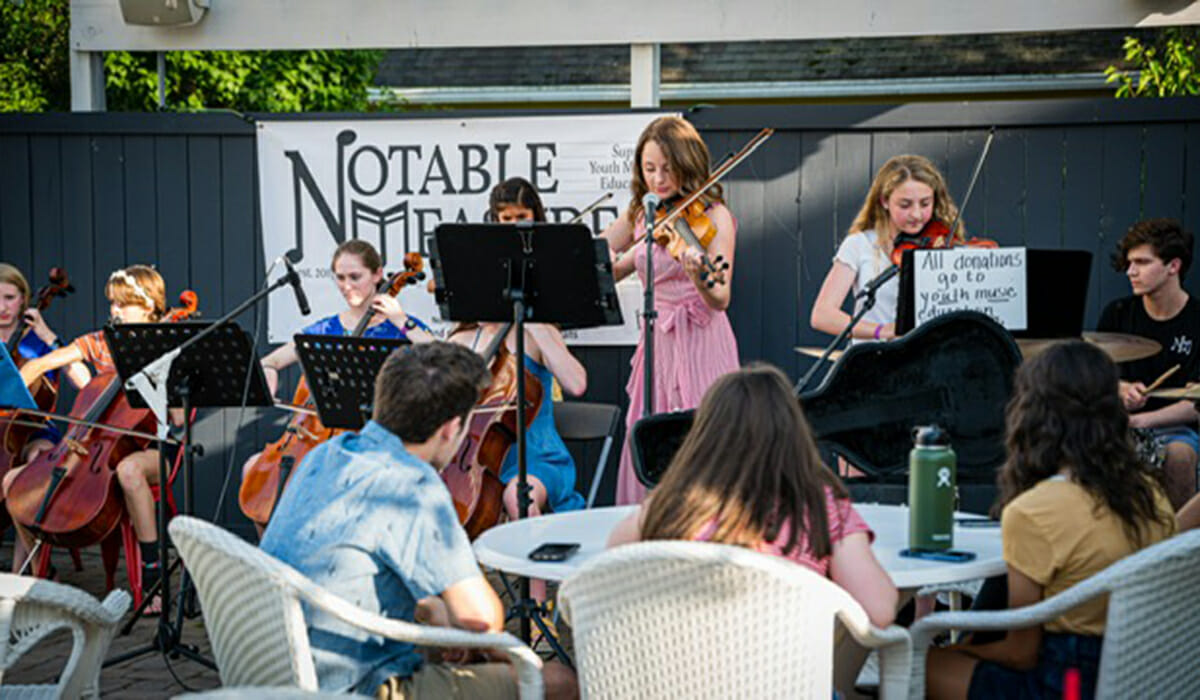
Launching Notable Measures, the sisters decided to make music accessible to any young person, regardless of cost. Harmoniously providing grants to local schools and other young music organizations, the duo, alongside community partners and volunteers, have gifted thousands of dollars in musical experiences, education and instruments to youth across the state of Indiana.
What inspires you to volunteer?
Kate:I can’t imagine my life without music. As a young person, I was very shy, and music made me more of a competent person. To be able to bring that same joy to other young musicians all across the state is so inspiring.
Describe your role with Notable Measures.
Kate: As co-founders, we raise awareness of the importance of youth music education, raise funds for youth music education programs, and provide performance opportunities for young musicians. We maintain our website, social media pages and a blog where we invite young musicians to share how music has impacted their lives. We also research schools that are in need of music funding, and organize performances for local schools and other community organizations. We’ve held about 50 performances alongside Notable Measures volunteers since 2017. We couldn’t do this service without the help of our fellow classmates and volunteers.
Why do you think it’s important for others to give back?
Meg: It’s important to volunteer because if everybody that can volunteer does give back, then we’ll slowly make the world a better place.
Notable Measures raises awareness of the importance of youth music education, raises funds for youth music education programs, and provides performance opportunities for young musicians. They also hold music performances for local schools and youth music organizations./Courtesy Kate & Meg Dimmett
Share one personal story with me from your volunteerism.
Kate:Our favorite part of our service is going into schools, meeting with other young musicians and seeing their drive and joy. These visits serve two purposes: to present monetary grants but also we perform songs for students and talk to them about our mission. We once visited a local band classroom, and presented the band teacher with a $1,000 check. Everyone else was in on the surprise but this teacher. When he saw the check, he broke down into tears because he was spending all of his own money on supplies for the classroom. That was emotional for everyone because he was finally able to get some help, and it shows the impact we’re able to make on schools.
In one word, what does volunteering mean to you?
Meg:Rewarding. Because we get to see that we can make an impact. Even if we’re not giving a huge amount, it is still making a difference.
Kate:Passion. Find a way to do what you love and help others through your passion.
What have you learned through your experiences as a volunteer?
Kate: You’re never too young to make a difference in your community. I hope we can be the inspiration for other young people, that they can make a difference regardless of their age.
How is volunteering rewarding?
Meg: I see the joy that our volunteerism brings students. I love music and it brings me joy to bring music to others. Music has been in my life since I was three, and it’s so nice to see others having that experience as well.
What musical instruments do you play?
Meg: Violin and guitar.
Kate: Violin, piano and guitar.
Notable Measures co-founder, Kate Dimmett: “I can’t imagine my life without music. As a young person, I was very shy, and music made me more of a confident person. To be able to bring that same joy to other young musicians all across the state is so inspiring.”/Courtesy Kate & Meg Dimmett
When you’re not in school or volunteering, what do you do for fun?
Meg: I love to run and I love playing soccer. I love to read and also I like doing calligraphy.
Kate:I love to run, I’m on my high school cross-country and track teams. I also love doing calligraphy, and playing music for fun. When we’re not volunteering, we’re usually making music together.
How can readers help?
We’ve been able to provide several grants during the coronavirus pandemic. There were several families unable to pay tuition at our local youth orchestra, Indianapolis Youth Orchestra, because of the pandemic, so we covered tuition for those students. We’ve also been performing weekly concerts and posting them on our website. Please visit our website for more information about how you can help.
Atlanta Teen Creates Nonprofit to Help Keep Hospital Workers Fed and Local Restaurants Busy Amid the Pandemic
Meet Daily Point of Light Award honoree Grey Cohen. Read her story and nominate an outstanding volunteer or family as a Daily Point of Light.
Health care workers have tirelessly worked for the past several months to fight against the coronavirus pandemic that has gripped our nation.
With nurses, doctors and other hospital workers putting their own lives at risk to save others, the last thing they should have to worry about is what to eat for lunch. Well, thanks to 16-year-old Grey Cohen, hundreds of health care workers haven’t had to.
Despite her young age, Grey, a high school sophomore, is the founder and director of nonprofit organization The Meal Bridge, a website that allows people to easily buy meals for hospital staff.
It all started back in March when her uncle wanted to send meals to the workers at Emory Hospital, which is where Grey’s mother works. Grey thought it was a great idea, but she knew it had the potential to be bigger.
“I thought, ‘How can we make this a platform that’s available to the whole community?’” Grey said.
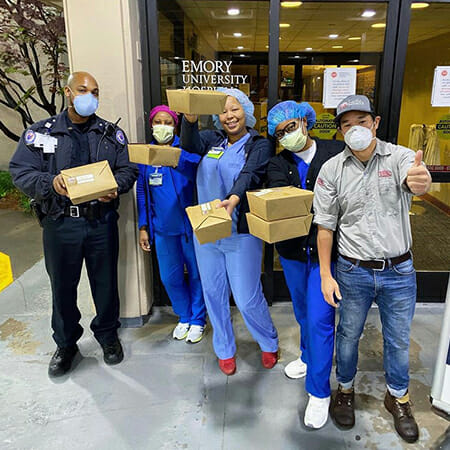
Workers at the Emory University Hospital in Georgia with boxed meals they received through Meal Bridge./ Courtesy Grey Cohen
So with the help of her dad who works in advertising and her mom who knows all the ins and outs of the hospital side, Grey was able to launch the Meal Bridge website in just a couple of days.
While donating meals on your own would require you to call the hospital and figure out all the details, Meal Bridge makes donating meals hassle-free. Whoever wants to donate meals can go onto the website, pick a hospital and shift, number of people to feed and then place an order from a list of approved restaurants. All the details you need to tell the delivery driver are right there on the website.
Grey first started the program at Emory Hospital in Atlanta, but it has since expanded to over 30 hospitals not only in Georgia, but also Washington, D.C., Seattle and Los Angeles.
“I think we’ve delivered around 25,000 meals in Atlanta,” Grey said. “I don’t have all of the numbers from all the other cities, but they have been doing very well as well.”
“We want to show these health care workers that we support them and have their backs. But we also want to help support the restaurant industry because they have been hit so hard,” Grey added.
Joey Smith, the unit director for the cardiovascular ICU at Emory Hospital, said Meal Bridge allowed his nursing staff to receive 20 meals twice a day for about a month and a half – one for the day shift and one for the night shift.
The meals “freed up time for our health care workers. It’s just one thing they don’t have to worry about when they’re taking care of these covid patients,” Joey said. “They don’t have to worry about going to the grocery store or bringing food in.”
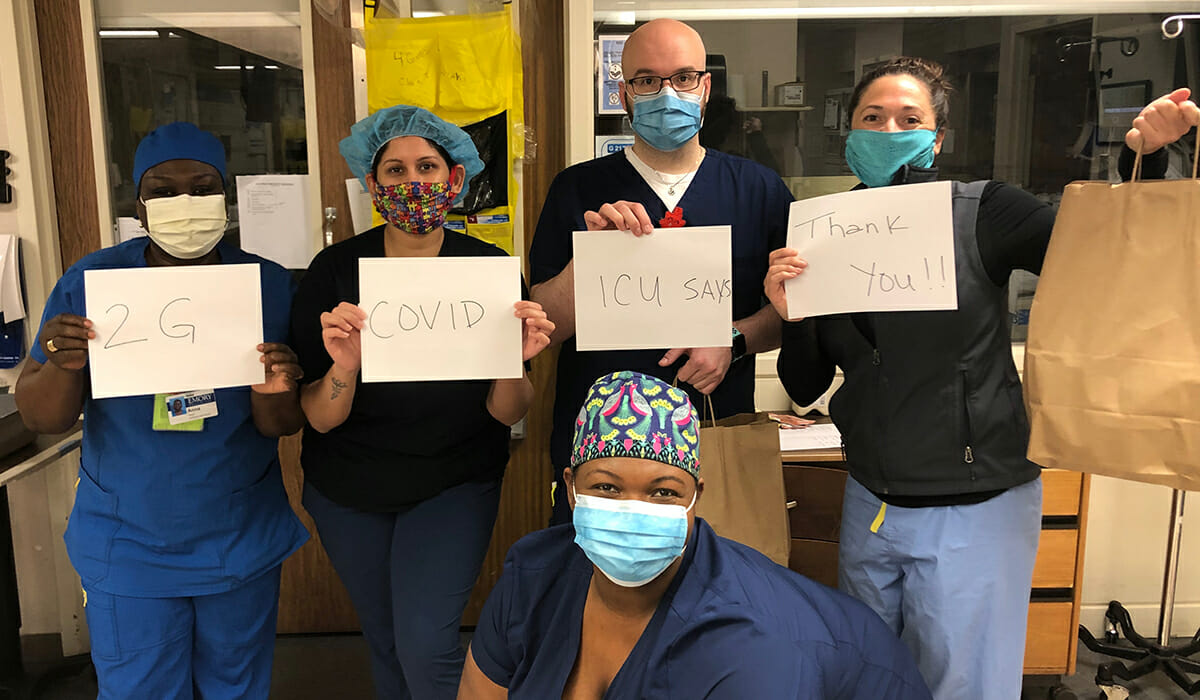
Emory Hospital workers taking care of patients in the coronavirus intensive care unit say thank you for their meals./ Courtesy Grey Cohen
“We’re just amazed that somebody that young is doing such an amazing thing,” Joey said of Grey. “It means a lot to see our community and American, in general, to see and recognize our work and help be a part of the fight.”
Grey doesn’t know yet what she would like to study in college or what she wants to be when she grows up, she said, but she noted that Meal Bridge has opened her eyes to volunteerism.
“Through Meal Bridge, I’ve really seen how community service is so rewarding and helpful to the community,” Grey said. “I really just started this because I wanted to help the staff at my mom’s hospital, but I never imagined it would turn into something this big.”
Chicago Woman Helps Housing-Insecure and Foster-Involved Students Attain Higher Education
MeetDaily Point of Light Award honoree Shanté Elliot, who was a 2019 L’Oréal ParisWomen of Worth Award winner. Each year L’Oréal Paris and Points of Light recognize and celebrate Women of Worth who make a beautiful difference in their communities. Ten honorees each receive a $10,000 grant to support their most cherished cause, and an online vote determines one honoree who will receive an additional $25,000 grant. Nominations for 2020 are open! If you know a woman who works to create lasting and significant change in her community, nominate her to be one of the 2020 Women of Worth.
When it comes to attaining higher education, homeless and foster-involved youth face many more barriers than their peers. Only 32 percent will graduate high school, less than 3 percent will earn a college degree, only half will be employed at age 24, and half will become incarcerated within two years of leaving foster care. With her nonprofit organization TasselTurn, Shanté Elliot is looking to change that.
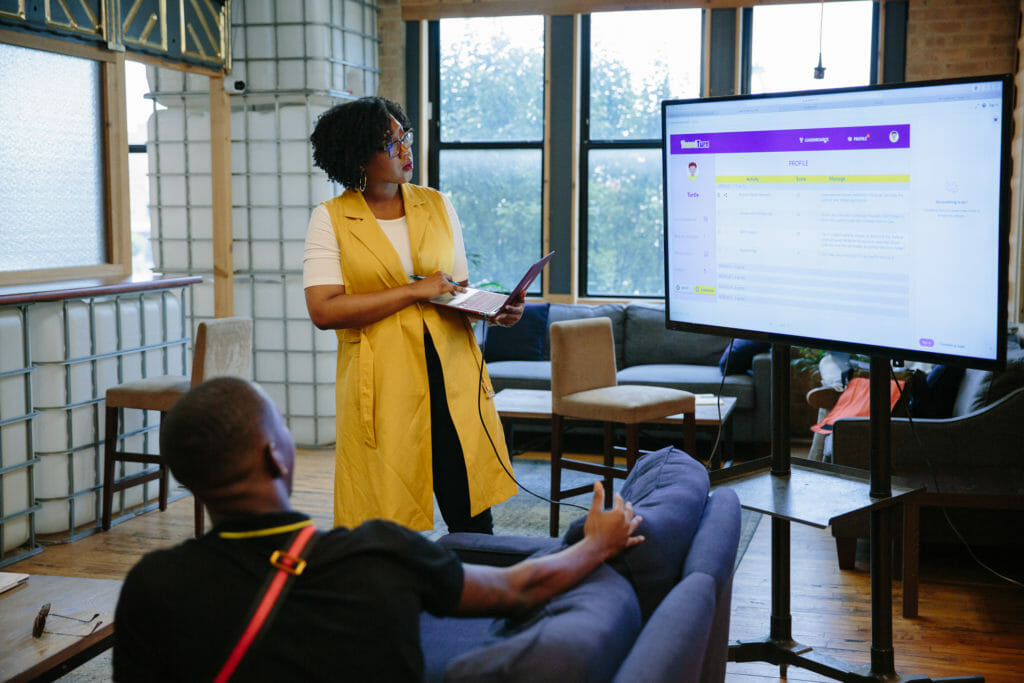
TasselTurn pairs these youth with virtual coaches who work with the students all throughout high school in order to prepare them for their futures and help them navigate the higher education process. Since Shanté launched the organization in 2018, over 130 students have gone through the technology-based program, which at any given cycle utilizes 10 to 30 volunteer graduate students and young professionals to work as coaches. So far TasselTurn has only worked with students in the Chicago area, but will soon launch an affiliate program in Fort Worth, Texas. Shanté plans on growing the nonprofit even further in the future, with TasselTurn programs spreading across the nation to support some of the most vulnerable students.
Can you describe what TasselTurn does?
TasselTurn is a nonprofit organization that uses technology to foster a community for housing-insecure and foster-involved students and youth. With our platform, we are able to connect both of these student populations to online educational coaching and training, and facilitate connections to higher education and career opportunities.
What inspired you to start this organization?
Professionally, my background is in higher education administration in the areas of policy and college access. In addition to that, I’ve also worked in leadership for a national chapter-based child advocacy nonprofit. I would say the combination of both of those experiences professionally really exposed me to the significance and meaning of higher education, and how for some students the pathway to college is much simpler than for other students. Those other students are overwhelmingly from the foster system or are experiencing some type of housing insecurity or homelessness. With working in college access, I was able to create pathways to college for those populations. Working in child advocacy for that national organization was great, meaningful work. However, I always saw that to really change one’s life, at least in the United States, often that still requires some sort of higher education, whether through training or graduating from a college or university. I knew that I really only wanted to focus on education for this population. I did not want to focus on any other area because I felt the sector overall does a good job of connecting to safety and foster families and those other areas, but the education component is what I feel is void in the market. That was the inspiration for TasselTurn, and then other side things [such as] volunteering and being mentors in certain social organizations really helped me see that this population is really in need. Technology is a tool to change those outcomes, because technology really makes everything accessible, per se, and really helps ensure that the affectability is consistent and not dependent on a residentially-based program.
Can you describe what the program is like for students involved with TasselTurn?
We facilitate the majority of our partnerships through high schools, so we start working with students as early as the ninth grade and we remain with students up until the twelfth grade and graduating from high school. On the student side, what it looks like is one, being paired with a coach. For this pairing, we do really try to place agency in the hands of the students, so they are vocal in articulating what they would like to see in a coach. We have great volunteers who serve as coaches for our organization. You’ll be paired with a coach and with that coach, we have our own unique curriculum that is proprietary to our organization. That curriculum is designed to build non-adaptive skills, so skills such as time management, interview preparation, interpersonal communication, financial, and also just navigating the barriers to college and careers. The great thing about our curriculum and what makes it unique for our organization is we concentrate and incorporate trauma-informed practices. For the population of students we work with, they have a history of lived trauma and often traditional curriculum doesn’t prioritize that and address that in the way we do. So you’ll be paired with a coach, we’ll have curriculum dependent on your goals for that school year, and our coaches select the modules for a student to complete. We also then continue working with the student and are able to really see the development of skill over the year and over their time working with their coach. When the child or student reaches those higher grade years like junior or senior, we also have college profiles that we work with the students to go through to see which college would be a good fit. Lastly, we facilitate and support the child in applying to college, and getting the proper materials and that pathway sorted out.
Shanté Elliot has supported over 130 homeless and foster-involved youth through her technology-based nonprofit TasselTurn./Courtesy Nilaya Sabnis for L’Oréal Paris USA
What kind of feedback have you gotten from kids who have gone through the program?
I think some of our best feedback is demonstrated in one of our early students who we worked with. We first met him during his sophomore year of high school. He was one of our first students in our program. He’s now a rising junior in college. He attends college in St. Louis. In working and looking at his story, we’ve been able to really see one that one, our model works. Two, just having him be able to share things with his coach that he was not able to share with his case worker for whatever reason, really speaks to the type of bond our students create with their coaches and with our program and with our materials. To see his successes and see how his next goal is to serve with Teach for America because he wants to become a high school English teacher, and that prior to getting engaged with us, that really wasn’t a pathway he sought for himself. So to be able to look at him, and see how the cliche like the light bulb turned on because of TasselTurn, and we helped that, I think is one of our greatest successes to date.
Why is it so important for kids who are going through homelessness and foster care to have this type of support, and what would going through the college process be like for them without it?
I think the climate we are currently in, we talk a lot about diversity, equity, and inclusion, and while I strongly believe in that — thinking about education and what education looks like for students, equity is a key issue in that. When we think about the students we serve, those who are housing insecure and foster involved, they know about college. They’ve heard about college. They want to attend college. However, college just does not seem like a pathway viable to them. For example, in Illinois in 2017, more than 3,000 youth in foster care completed a FASFA. However, when it came down to actually matriculating, only about 100 did. There’s a large gap in the services that our population of students need. I think it’s important that organizations like TasselTurn exist because we only work with this population, where the services in traditional schooling or traditional support speak to students as a whole. It’s important that you speak to the individual needs of students, and that’s what we are able to do successfully. We are trained and we are aware of the type of resources through financial aid, through grants, through scholarships, that our students are eligible for. We also know that we have to have different conversations with our students. For students who identify as homeless, as a part of their college application and preparing for college, we also need to work with them to identify housing during college breaks. That’s just a part of what’s not really talked about in traditional college-going programs. They don’t really specify the unique need of those students. Who is going to sign, who will get provided a tax return for a foster student for a FASFA application? Traditional college-going programs, that type of language, that type of information, they just don’t naturally know because that’s not the students they serve. Back to that diversity, equity, and inclusion, organizations like TasselTurn really understand the equity component of the college-going process and are able to close that gap for some of our most vulnerable students. Less than 3 percent of youth in foster care graduate from college, but at age 13, 90 percent say they want to attend college. So what happened?
What’s been the most rewarding part of your work?
Shanté Elliot supports homeless and foster-involved youth in navigating the barriers to college and careers through her nonprofit TasselTurn/Courtesy Shanté Elliot
I have to go back to the story of one of our first students who is now in college. Again, you get this idea, and as a founder you make sacrifices including financial and including the stage of life you’re in. You get this idea, and you walk
away from some things to pursue it, and you’re not really sure if it’s going to work. You’re not really sure what’s going to happen. Then you keep believing and you start something and you finally see one of the first beneficiaries do so well in college, and now he’s on a path to start a career for himself, and that college degree is not just a college degree. A college degree will ultimately change the trajectory of his life. I would say that indeed has been rewarding. In addition to that, having connections and being recognized by global companies like L’Oréal Paris while we are such a young organization — I can’t even describe it in words. We were also recently named an Echoing Green finalist, another national recognition. I think people really believing in our mission of what we’re doing and celebrating us and helping us has been rewarding. Because again, it takes a different type of courage to almost change the direction of your life to pursue an idea you got, and you knew you had to pursue it because it’s what you thought about every night and every morning. To see it actually happening has really been rewarding. It’s proof and evidence that they say slow and steady wins the race, so that’s how we’re moving. I’m thankful that we are now getting more opportunities and being recognized.
What do you want people to learn from your story?
I would first want them to understand that there is enormous potential in the youth that we serve and that we work with. They deserve an opportunity at college and to create a career they love and they desire. I also want them to visit our website to learn more and follow us and engage with us on social media. I want them to know that technology for good is possible. Youth and technology to facilitate educational pathways is a viable thing. While we may be a nonprofit organization, we do provide a social return with what we do as well. I want people to know that we’re a nonprofit, we’re using technology for good, and there are students who you do not hear about who have enormous potential and will make a home run if given the opportunity. That’s what TasselTurn really seeks to do, just via technology.
Teen’s Volunteerism Provides Youth Access to Tech Education
Meet Daily Point of Light Award honoree Faith Cheung. Read her story and nominate an outstanding volunteer or family as a Daily Point of Light.
17-year-old Faith Cheung says visiting children at an orphanage in Taiwan, she realized that concepts like typing on a laptop keyboard, or email, were unfamiliar to them. Identifying a similar lack of access to technology education in her own community of Rockville, Maryland, the rising high school senior decided to dedicate her time to increasing technology education for students.
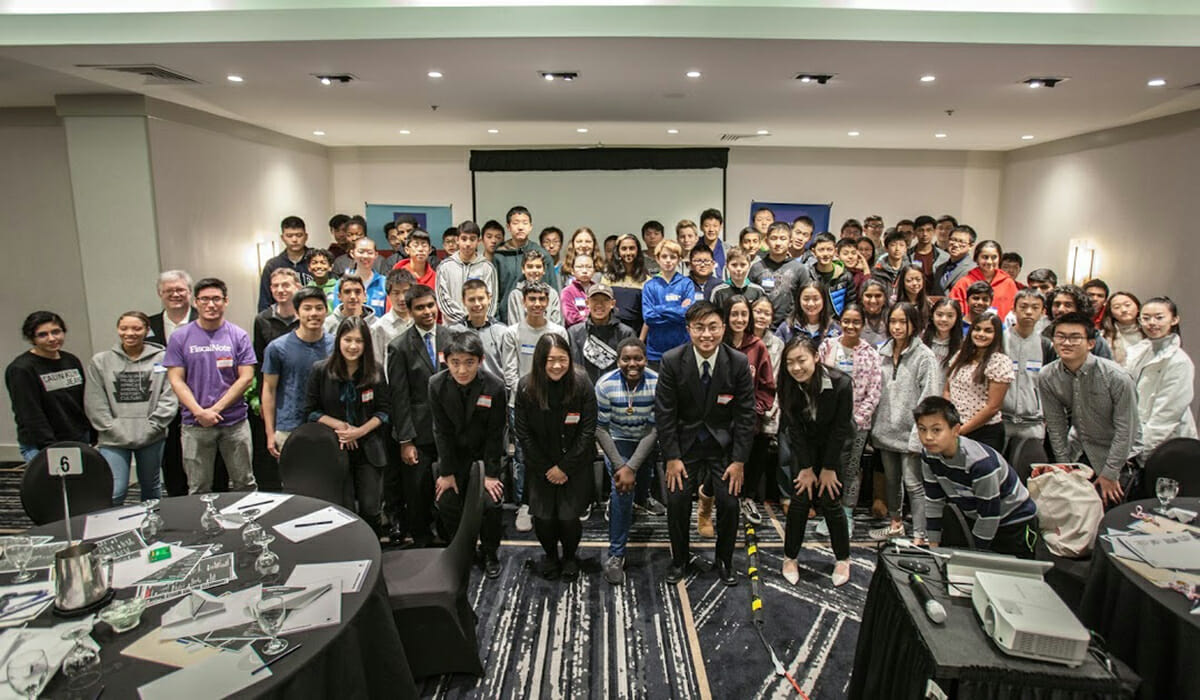
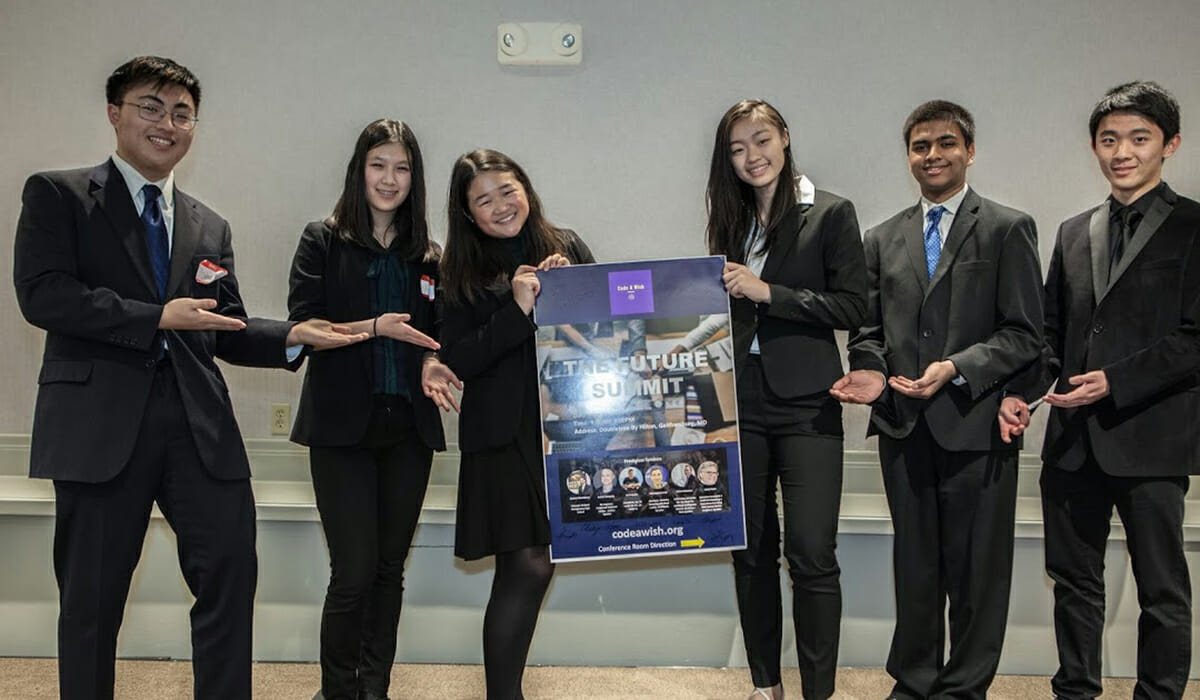
Launching Code A Wish in 2019, Faith hosts coding lessons at her local library and an annual technology conference for teens called the “Future Summit.” Connecting with more than 500 elementary and middle school students in the Maryland area thus far, Faith is offering technology skills that she says are critical for students in order to unlock future success.
What inspires you to volunteer?
Most students in my community have access to technology, but as a volunteer for a program serving Syrian elementary school student refugees called “Pioneer On”, I discovered that there were a lot of individuals who don’t even know how to use a computer. Considering this along with my experience at the Taiwanese orphanage, I was startled. Because of a lack of skills, these people, many disadvantaged, are closed off to so many job opportunities. I was inspired to volunteer to increase awareness about technology and help others learn how to code or use a computer so they’re not trapped when they’re older.
Code A Wish founder Faith Cheung (center) pictured with volunteers from her organization along with attendees at the Future Summit in November 2019. /Courtesy Faith Cheung
Describe your role with Code A Wish.
As founder and CEO of Code A Wish, I recruit other volunteers to teach coding lessons to students around the state. We are a student-run organization, and want to reach as many students as possible through lessons and events. I also run our marketing and planning initiatives, and raise awareness about our programs.
Share one personal story with me from your volunteerism.
I visited this orphanage in Taiwan in summer 2019, and provided three computers for the girls living there through Code A Wish. I wasn’t sure if the computers would make a difference in their lives, or even if the students would use the computers once I was gone. When I got back to the U.S., I received an email from the girls in the orphanage. They told me how much the computers were helping with their school work and how it helped them bond throughout the orphanage. Receiving that email was a great moment for me.
Why do you think it’s important for others to give back?
If you’re more fortunate than others or comfortable in your own life, it is time to turn to others who might be lacking opportunities. It’s your duty to be able to turn to other people and make sure they have equal access to the amazing opportunities you do. Everyone has potential in computer science and other fields, and I want to give others access to be able to pursue future success.
What’s been the most rewarding part of your service?
It’s been rewarding knowing that even if teens attend our lessons because their parents force them, not necessarily because they have interest themselves, they will learn something. Whether it’s a business skill, a newfound interest in coding or AI. These students might be blocked off to learning new skills, but I can plant a tiny seed of interest, and maybe because of that, they might decide to pursue something completely new.
What have you learned through your experiences as a volunteer?
Every community is not always accurately represented, wherever you live. I attend a well-off school compared to other places, and I never realized exactly how many people didn’t have access to a computer or didn’t know what email was. Our world is more and more reliant on technology, as you can see with the coronavirus pandemic, so it’s important for students to be able to effectively communicate using these tools.
Through Code A Wish, Faith (pictured third from left) and her volunteers have connected with more than 500 elementary and middle school students in the Maryland area. /Courtesy Faith Cheung
In one word, what does volunteering mean to you?
(Laughs). Reciprocation.
When you’re not in school or volunteering, what do you do for fun?
I attend orchestra, where I play the oboe. I also do public speaking.
How can readers help?
Code A Wish relies on donations and local sponsors for our programming. Please visit our website for more information about how you can help.
Saving Bees & Protecting the Planet, Teen Volunteers to Reverse the Declining Bee Population
Meet Daily Point of Light Award honoree Natasha Threat. Read her story and nominate an outstanding volunteer or family as a Daily Point of Light.
Natasha Threat was in 6th grade when she read an article about the rapidly declining bee population. Important crop pollinators responsible for pollinating one-third of the food consumed by Americans, as beehives have suffered dramatic losses over the last decade, the production of food crops have similarly decreased.
Deciding to do her part to reverse the declining bee population, Carlsbad, California resident Natasha launched Beegether in 2016, zeroing in on a burgeoning problem in her own community. Discovering that grassy slopes commonly found between town property and privately owned land is sometimes sprayed with chemicals that kill weeds but also kill bees, 15-year-old Natasha is replanting these slopes with flowers and bee-friendly plants. Raising several thousand dollars to contribute to a better future for the environment, Natasha is changing her community, one bee at a time.
What inspires you to volunteer?
I have always been fascinated with the idea of giving back. Community has given so much to me growing up and supporting my interests, and it gives me joy to give back to my community. I hope to foster a similar experience of such a welcoming community for others.
Explain how you are supporting bees.
I realized that in my community, there are plots of land nestled between public and private land that are basically ignored. As a cheap way to kill weeds on the slopes, it usually ends up being sprayed with a ton of Glyphosate, a systemic herbicide that has been labeled a probable carcinogen. I became really concerned about this because there could be harmful chemicals around children playing on these slopes, and it’s also a bee-killing chemical. I decided that I could replant slopes with flowers and other bee-friendly plants so that bees are attracted back to these slopes, and there are less harmful chemicals near other animals and humans.
Describe your role with Beegether.
As founder of Beegether, I manage our online communications. I also raise money for Beegether through garage sales and other fundraising. Bees are a keystone species and their decline is really concerning to me. I know if we can provide a safe haven for bees, we’ll be able to help pollination.
Natasha pictured next to Bottlebrush, a pollinator-friendly plant she plants on her slopes. Through Beegether, Natasha is volunteering to reverse the declining population of bees. /Courtesy Natasha Threat
Share one personal story with me from your volunteerism.
When I planted my first slope next to my old school, Poinsettia Elementary, I first educated my principal on why I wanted to do this and explained how harmful the chemicals being sprayed on slopes were. I found this an important area to preserve as it is near the field where students (including me) played. She was proud of me for taking the initiative to make a difference. It was gratifying to see that my principal was so thankful, and when I visited the spot later, I saw all the bees buzzing around, the children playing. It was so rewarding.
What flowers and plants do you plant on your slopes?
It costs about $1,200 to plant each slope, and I enjoy figuring out what grows best where. I plant a lot of Bottlebrush, bees just love this flower, they’re on it every season. I am hoping to do more slopes in the future. I really enjoy gardening, and I also have a lot of house plants in my room.
What’s one way you hope to inspire others in your service?
I hope to inspire others to find an action that really means something to them. When you find something you’re passionate about, service won’t feel like work, it won’t feel forced, but rather, something you enjoy that will make a difference.
Why do you think it’s important for others to give back?
This is our world and we need to do our best to take care of it. If everybody did one little thing to give back, then our world would be so much better. Coming together as a community is better for our planet and it strengthens bonds between us all. It also gives us an opportunity to create a better future for our children.
In one word, what does volunteering mean to you?
Community.
When you’re not volunteering or at school, what do you do for fun?
I really enjoy reading and learning French and Spanish.
How can readers help?
My plans to plant a second slope at another nearby elementary school have been put on hold because of the coronavirus pandemic. I hope to be able to go speak with the students at that school and plant the slope next spring. As we rely on donations and fundraising to plant slopes, please visit my website for more information about how you can help.
Doctor Uses Volunteer Work to Help Patients Pay Medical Bills
Meet Daily Point of Light Award honoree Dr. Demetrio J. Aguila, III. Read his story and nominated an outstanding volunteer or family as a Daily Point of Light.
So many patients have lost hope from both a medical standpoint as well as a financial one, Dr. Demetrio J. Aguila, III said. That’s why his practice, Healing Hands of Nebraska, is built around a program specifically designed to restore hope and put control back into the hands of patients, while also benefiting the greater community. Through its M25 Program, the practice allows patients to pay for their medical procedures by putting in hours at various volunteer organizations within the Norfolk, Neb. community and surrounding area. Patients can also enlist their friends, family and neighbors to help them complete the hours needed.
Dr. Aguila, an ENT, reconstructive and plastic surgeon who has practiced for 23 years, opened Healing Hands of Nebraska in June 2018 knowing he wanted M25 to be the foundation of the practice. The program launched about a year ago, and since then he said about five percent of his patients have chosen to use M25 to pay for their procedures, with nine patients currently enrolled in the program right now. He hopes to have about ten percent of his patients utilize the program, as well as expand the number of M25’s charitable partners. A military veteran, Dr. Aguila is also planning to develop a program specifically for military personnel and veterans.
Describe what exactly M25 is.
First of all, it’s the heart and soul of Healing Hands of Nebraska. The entire practice is built around the M25 program. It’s the crown jewel and the foundation of the entire practice. It is a mechanism by which we offer patients affordability and transparency and fairness, by offering them another opportunity to invest in their own outcomes. We found multiple studies have demonstrated that patients who are invested in their surgical outcomes get better [results.]
How does the program work?
When somebody comes in and they need surgery, in the interest of transparency and fairness, we let them know what that surgery would cost in terms of a monetary amount. That way, the patient doesn’t get any surprise bills. That’s also significantly discounted compared to what they might otherwise pay somewhere else. Patients also want to know if they can pay that over time and work with some third-party financing companies in order to facilitate that. Then the third option we offer patients, and our favorite option, is the M25 program. Through that program, patients can volunteer their time and enlist the time of friends and family and neighbors and people in their community to help them invest in their outcomes. Every patient who walks in the door is offered all three options, then it’s up to the patient to decide. A lot of people say “How do you decide who qualifies for the program?” I don’t make that decision. The patients decide who qualifies for that. It’s up to them to decide, “What’s more valuable to me — my time, my money or my problem?” They’re in the driver seat. There’s none of this prior authorization. There’s nobody saying “Well, you can’t do this and you can’t do that.” It’s all in the hands of the patient. We’ve given them back the control over their health and their healthcare decisions.
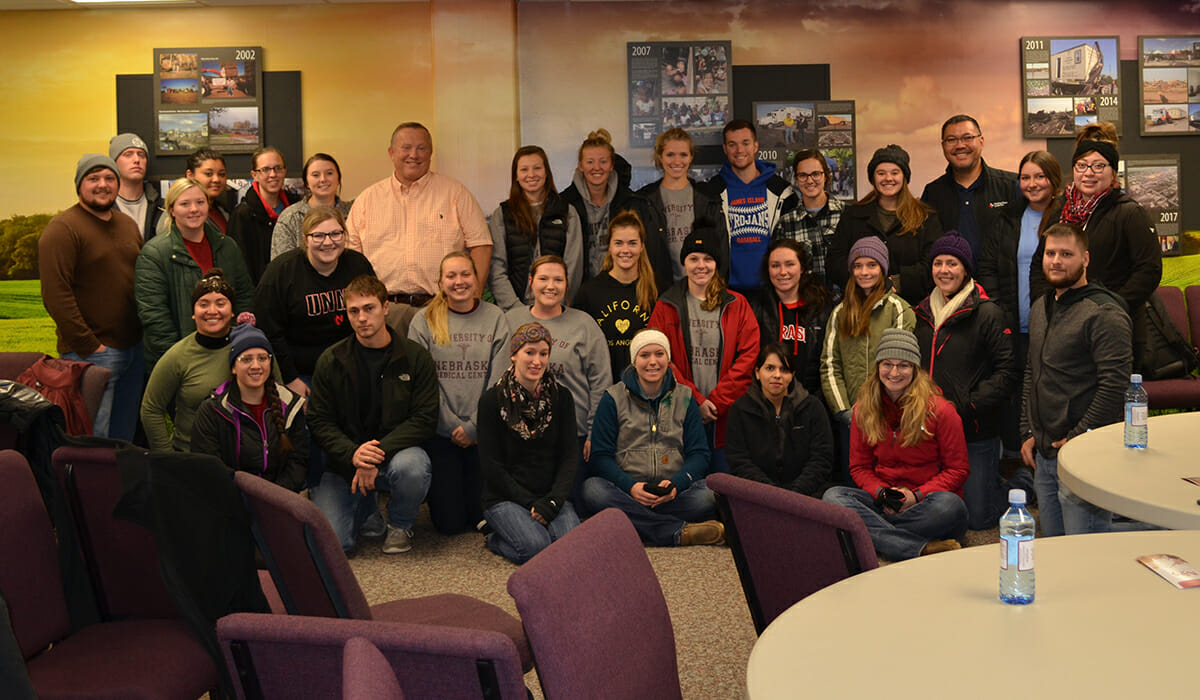
Dr. Aguila, top row, third from right, meets with University of Nebraska nursing students who were volunteering as part of their program./Courtesy Dr. Demetrio Aguila
What kind of volunteer work can they do?
Patients have multiple outlets for volunteer work. We currently work with Sacred Heart Parish here in Norfolk. It’s a Catholic Church. We also work with the Orphan Grain Train which is a large international charitable organization whose headquarters happen to be here in town. We work with the Least of My Brethren which is a volunteer organization down in Omaha to help homeless people. Then there is a volunteer fire department in Fort Collins, Colo. that we’re working with. We’re also developing a number of other relationships with other volunteer organizations. Those are in various stages of development. Basically we send patients over there and they call us and they say “OK, doc, what do you need?” I tell them how many hours and then they find stuff that’s appropriate for that individual patient. If the person is wheelchair bound, then we find stuff for them that somebody who is wheelchair bound can do. If they’re able bodied, then there’s other stuff they can do. It all depends on the individual and what kind of volunteer work they work out with the particular charitable organization.
Why was this something you wanted to launch in the first place?
I wanted to do it mainly because I recognize that this is the mission that God gave me. He gave me a whole bunch of abilities and talents and this is what I was supposed to do with them — to offer people hope. The core of the M25 program is hope. So many patients these days have lost hope from a medical standpoint and they’ve lost hope from a financial standpoint, and we want to restore that. It also gave us an opportunity to do medical mission work right here in our backyard, neighbors helping neighbors. I don’t have to travel to Timbuktu or Zimbabwe or Venezuela or Vietnam or anywhere else. We can do it right here in our own backyard. It allows people here in the community to tap into that latent desire they have to help their neighbors. Some of them didn’t recognize that desire was there, and others just didn’t have the mechanism to do it. We provide them both.
What kind of feedback have you gotten from patients about the program?
We’ve had all kinds of patients tell us they are very grateful for the opportunity to be able to invest in themself. I’ve had a number of patients say, “Thank you so much for respecting my dignity in allowing me to contribute to my own wellbeing,” unlike so many other programs they’ve run across which made them feel like they were stripped of their dignity and treated as an invalid. They said, “You know what, I want to be part of this and I want to be driving my own recovery,” and I said “This is exactly what I’m doing for you.”
Have you volunteered with any of these organizations, and what was that like for you?
I volunteer with Sacred Heart Parish and I’ve also volunteered with the Orphan Grain Train. … It’s an opportunity for me to lead from the front and show people I’m willing to put my money where my mouth is, and that I take all of this very seriously. But more than that, it’s an opportunity for me to really work side by side with these people who have been so struck down and to help hold their hands and restore the hope that they’ve lost.
What’s been the most rewarding part of your work?
For me, the most rewarding part is being able to use the abilities that I’ve been given and the opportunities I’ve been given to offer people hope and to give them their lives back.
Dr. Aguila launched the M25 program at his practice in order to allow patients to have greater control over their medical and financial outcomes./Courtesy Dr. Demetrio Aguila
What do you want people to learn from your story?
The main thing that I would want people to take away from this is that we are in a country of great opportunity. I’m from an immigrant family and my parents came to the United States because of opportunity. I think a lot of people have forgotten that. I think it’s through these opportunities that we have a chance, if we give ourselves permission to be able to think outside the box and offer people solutions that big organizations like government or other bureaucracies can’t offer because they’re not closely connected to the underlying problems. When we give people that chance to work on problems that are close to them geographically, and we give them permission to do so or to give themselves permission to do so, then the ingenuity of the American person can come to the forefront and really provide solutions that otherwise never would have existed.
Why do you think it’s important for others to give back?
It’s through those community bonds and those family bonds that we’re able to hold each other up. As individuals, it’s very difficult for us to accomplish the great things and to deal with the great challenges that we face on a daily basis. When we’re able to lean on each other and know that help is around the corner, it can help us surmount problems that otherwise would be impossible.
Crops for Change: Volunteers Grow Gardens Nationwide to Feed Hungry Families Amidst Coronavirus
Meet Daily Point of Light Award honoree Katie Stagliano. Read her story and nominate an outstanding volunteer or family as a Daily Point of Light.
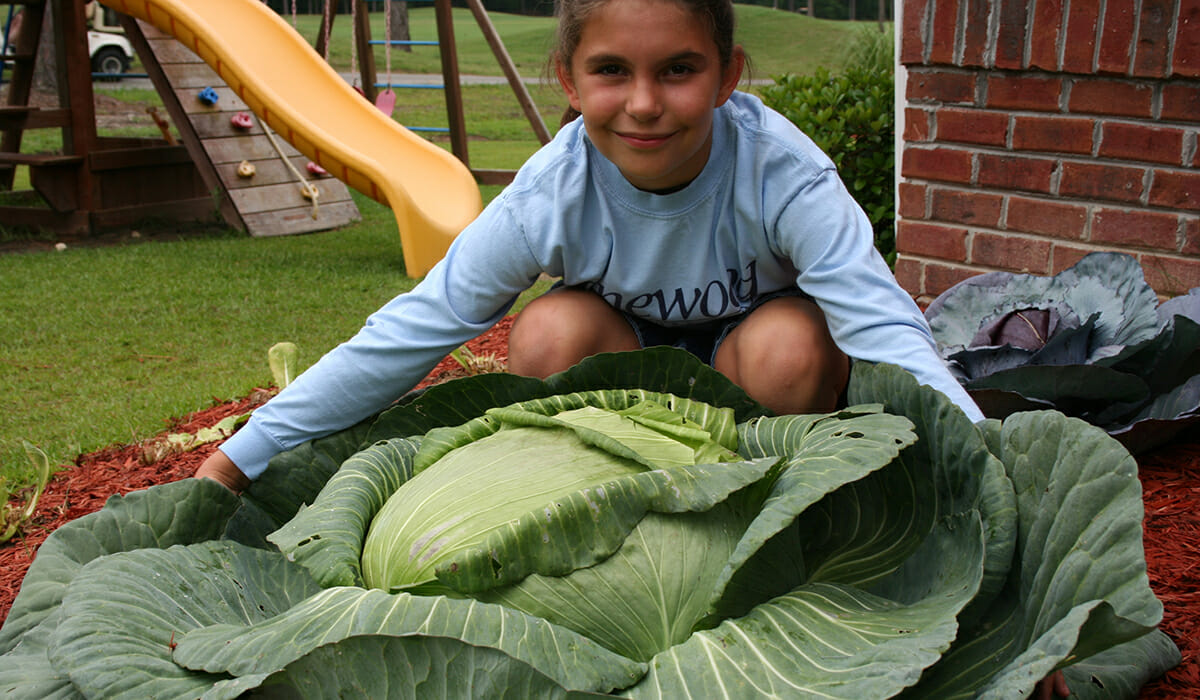
The average grocery store cabbage weighs a couple of pounds. So when Katie Stagliano grew a 40-pound cabbage in her home garden as a 3rd grader, she knew she had to share the bountiful crop. 275 people fed later at a local soup kitchen, the now 21-year-old Summerville, South Carolina resident says she realized the power of her harvest.
“I brought home this cabbage seedling as part of a school project, and planted it in our backyard, watering and weeding around it every day. Once it grew into a 40-pound cabbage, we knew it was far too big for just my family. It really opened my eyes to hunger. If one cabbage can feed 275 people, imagine how many people an entire garden could feed. That was the inspiration for my volunteerism. I wanted to help feed people in need.”
Launching Katie’s Krops in 2008 with the idea that “it only takes a seedling”, Katie, who serves as founder and chief executive gardener, has inspired hundreds of other gardeners, growing to include vegetable gardens of all sizes in 30 states across the country. Katie’s Krops “Growers”, aged 9-16 from California to Washington to Texas, run gardens in their backyards, school yards, and anywhere they can get permission to grow produce, their healthy harvests donated to help food insecure individuals and families. In total, Katie says 250,000-pounds of produce have been donated since 2008, not just feeding hungry mouths, but also changing the future for thousands of people in the U.S., says Katie’s Krops Grower Ian McKenna, a 15-year-old volunteer from Austin, Texas.
“Katie’s Krops has helped many, many, many people. I’ve grown thousands of pounds of produce to donate to people who are struggling with food insecurity. The food I am bringing them helps in more ways than just feeding them. If a kid receives our food, it helps them with school because I know if I’m at school and I haven’t eaten for awhile, I have trouble focusing. That, by extension, is helping their future.”
As a third-grader, Katie Stagliano grew a 40-pound cabbage in her home garden, her dream of growing a healthy end to hunger, one vegetable garden at a time, starting with just one seedling. /Courtesy Katie Stagliano
Feeding some of the more than one in ten U.S. households that experienced food insecurity in 2018 with fresh vegetables including tomatoes, peppers, cucumbers, beans, eggplant, okra and more, Katie says that her dream of growing a healthy end to hunger, one vegetable garden at a time, is slowly becoming a reality.
“When I first began this service, I wasn’t really aware of the issue of hunger, food insecurity and how it affects families. People who have lost their jobs are dealing with medical bills and are worried about putting food on the table. (Katie’s Krops) has opened up my eyes to not only the problems the world is facing but also the amazing people who are passionate about making a difference and the changes we are able to make.”
Those changes are far reaching and yet personal for Katie, who is able to interact with recipients of her fresh vegetables.
Katie’s Krops is continuing to serve hungry families during the coronavirus pandemic, distributing 2,000 healthy meals thus far through weekly drive-ups./Courtesy Katie Stagliano
“I met a little girl at an event we hosted at a vacation bible school. The little girl raised her hand and said she didn’t have any questions for me, she just wanted to tell me that I was awesome. She walked up to me with a sticker that said “love” on it, and she gave me a hug and put the sticker on my heart. After all the kids left the room one of the counselors explained to me that the vegetables I’d brought for the event to help feed a homeless family were given to that little girl’s family. The family had been struggling to put food on the table. It’s heartbreaking to see that families just like mine have fallen on hard times and I know the solution starts with just one seedling to start helping these people.”
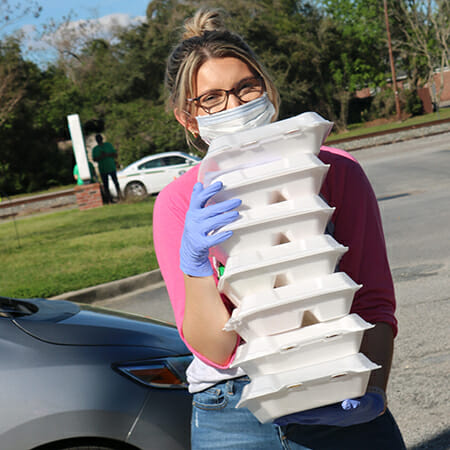
And now, as she continues her work to end hunger, Katie is adjusting her organization’s offerings to make sure hungry families can still receive food amidst the coronavirus pandemic, swapping what used to be a monthly garden to table dinner for weekly drive-up dinners for her community.
“Since in-person dinners are no longer possible, we are now doing weekly drive-up dinners every Thursday. For the past two months, we’ve been creating the meals and boxing them up for distribution to families in South Carolina. There are so many individuals out of work and out of school and struggling, so we want to be there for them. We’ve been trying to do fun and different meals while also keeping everyone’s meals healthy to keep everyone’s immune systems up. We’ve served two-thousand meals thus far and we will continue doing this for as long as it’s necessary.”
Domestic Violence Survivor Starts Nonprofit to Empower At-Risk Girls
MeetDaily Point of Light Award honoree Ni’cola Mitchell, who was a 2019 L’Oréal ParisWomen of Worth Award winner. Each year L’Oréal Paris and Points of Light recognize and celebrate Women of Worth who make a beautiful difference in their communities. Ten honorees each receive a $10,000 grant to support their most cherished cause, and an online vote determines one honoree who will receive an additional $25,000 grant. Nominations for 2020 are open! If you know a woman who works to create lasting and significant change in her community, nominate her to be one of the 2020 Women of Worth.
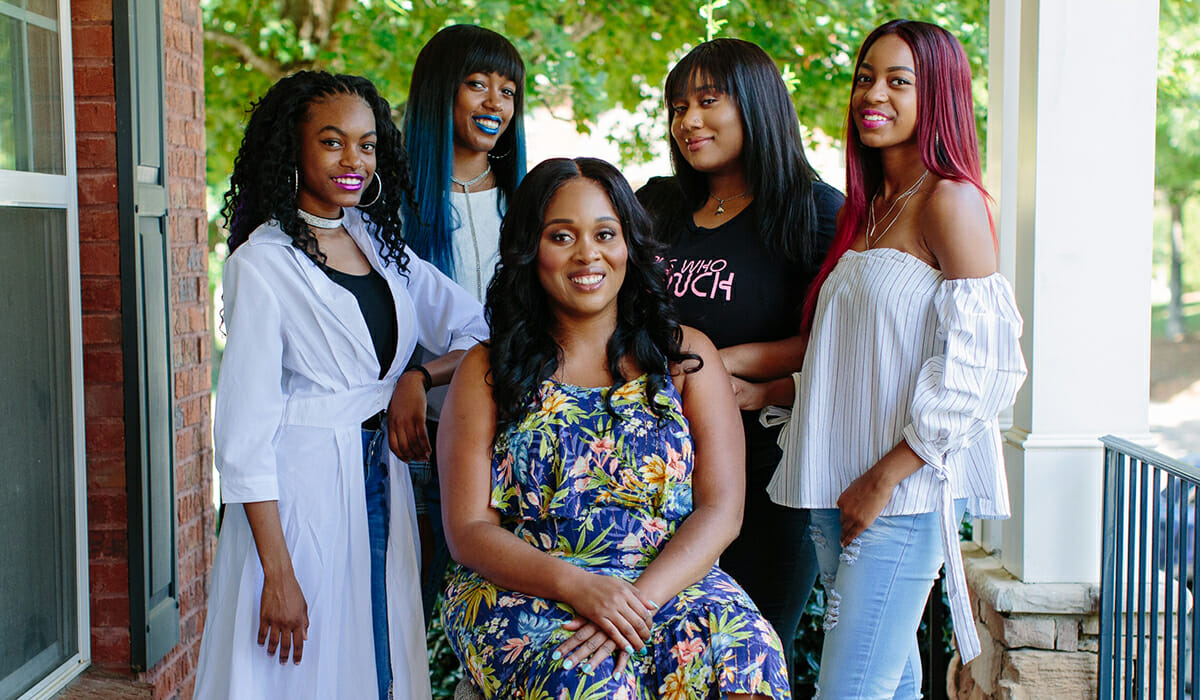
As a domestic violence survivor and former at-risk youth, Ni’cola Mitchell knew she wanted to do something to help girls who were in a similar position as she once was. In 2016, the Alpharetta, Ga.-based author was at a signing for one of her books when she met a group of girls who had never seen an African-American author before. She said the chance meeting is what spurred her to start her own nonprofit to reach at-risk youth — Girls Who Brunch.
Girls Who Brunch sponsors at-risk and low-income girls, including girls in foster care and who were rescued from the sex trade. The organization does everything it can to empower and educate the girls in order to turn them into leaders and prepare them for a successful future. Girls Who Brunch reaches its participants through mentorship, workshops, events, and Master Classes that train the girls in subjects such as writing, financial literacy, and art. Since its inception, Girls Who Brunch has grown into a 21-city tour that has reached 8,000 girls.
Describe what exactly Girls Who Brunch does.
Girls Who Brunch takes girls ages 9 through 17. We sponsor at-risk and low-income girls and girls who were rescued from the sex trade, girls in group homes, girls in foster care. We put them with girls who run businesses and have a better circumstance. We do a complete empowerment session. We have workshops, we have panels, we have basketball games, we have a gala. We do a lot just to show the girls that they’re worth it and they can be more than what their circumstance is.
What inspired you to start this organization?
I started this organization back in 2016 because I was an at-risk kid. At the time my mother had passed away, so I kept putting it off that I was going to do it for the girls. During that time frame, I was super depressed and sad and I needed something to channel my energy to. I met this group of girls in Charleston, South Carolina. They came to my book signing and number one, they had never seen an African-American author until going to my book signing. Number two, some of the girls didn’t know pizza came in a box and that was in 2016. That was when I was like, I need to start this organization, and it spiraled into a movement. And now we’re here — all from a by-chance situation.
What kind of feedback have you gotten from the girls who have been involved?
There’s positive feedback. As of today, we have serviced 8,000 girls nationwide. Our girls are happy. They believe in themselves. We teach them confidence. It’s always great. I feel like I’m a parent to a cluster of girls across the country. They reach out to me directly. They help each other. They believe in sisterhood and every one of them said something positive that the person they are today is because of Girls Who Brunch.
Is there any specific event, program or class that is particularly special to you?
Right now the ones that pull at my heart string are two things. Number one is going to the jail facilities. Those girls are always forgotten. Those girls are typically victims of a situation, something going on in the home, rape, abuse. They follow up with crime or just doing stupidity and they wind up in the facilities. That has been what’s standing out to me the most, number one. Number two, human trafficking, because every city we go to, between that and bullying, those are the two biggest epidemics in every city. I am on a very huge crusade trying to fight both epidemics. Bullying because that leads to suicide, and human trafficking because you can see by what’s going on in the media everyday, what the effects of human trafficking are.
Are there any future partnerships, programs, or events that you are excited about?
Right now, we had to push our gala to September because of the whole Covid situation. We have a virtual conference we’re kicking off June 27 in Charlotte. I am excited and nervous at the same time for this virtual conference. We wanted it to stand out more than just a regular virtual conference, a Zoom call. We wanted to have the girls engaged and interactive. I’ve been working with web designers. We have a production team that we hired. We’ve just been working with all these different people to make this event work. I’m excited about it, I’m nervous about it, but change is good. It’s something that can enhance our program for the future, to be able to have more classes in a particular city, rather than just waiting for us to come back once a quarter or once a year for the main conferences. It would be open to all the girls. Today we service 8,000 girls. It will be free attendance to everybody who wants to attend but if they want a bag, then we will ship the bag to them that will have all the components of what that session is going to entail and that’s going to be for ten dollars. I think because we’re still going to keep it free for everybody, we have better chances of reaching a couple thousand at a time virtually, rather than a couple hundred we do in person.
We have an ambassador fundraiser challenge right now and our goal is to raise $7,500. That is for our operational costs for the year. We’re breaking it down to smaller fundraisers because of Covid, because we had to push our gala back. We have 16 of our ambassadors competing to raise the $7,500 — that’s their goal, $500 a piece. They’re working really hard and they came up with their prizes. We have a Zoom call focus group on what the prizes should be, to see who should participate. Everything was decided by the girls from across the country. It was so cute. They’re our leaders of the future.
What’s been the most rewarding part of your work?
Seeing their smiles. Hearing the ‘thank you’s.’ Being a mother [to them]. Just knowing they appreciate what we do for them and know it’s not in vain, that’s the best feeling for me. Seeing my success stories. Seeing my girls graduate. Seeing my girls who are modeling or acting or getting NAACP awards. There’s all kinds of stuff they’re involved in that I touched just a little bit. I sprinkled some magic a little bit to help them move on to the next level. That’s more than the world. That’s better than any award I can get.
Ni’Cola Mitchell (center) with Girls Who Brunch participants./COURTESY NILAYA SABNIS FOR L’OREAL PARIS USA
What have you learned through your experiences as a volunteer?
I learned no two girls are alike. You have to approach each girl differently. You have to meet them where they are. Some girls are going to be open and ready to work and do what they got to do, some girls are not. Some girls are going to want help and some girls are going to fight you for it. Some girls are going to demand your attention, some girls you’re going to have to coax out of their comfort zone. Either way, I’ve learned that you have to meet each girl where they are. Once you do, they all love this. It’s easy once you figure out what their love language is in regards to communication. Then you’ll be able to work it out more and be more effective than just doing the same [for each girl].
Why do you think it’s important for others to give back?
It’s important because there are so many different needs that people have in the community, that we all need to find our voice and work to provide those needs. Especially with what’s going on with the coronavirus — it’s shown even more that family and brotherhood and sisterhood within our communities, within our neighbors, is so vital. With feeding programs, with social media education, with everything. We need to give back to our communities because we never know when our communities are going to need us.