New York Woman Brings Hope to Babies with Down Syndrome
Meet Daily Point of Light Award honoree Brittany Schiavone, who was a 2019 L’Oréal Paris Women of Worth Award winner. Each year L’Oréal Paris and Points of Light recognize and celebrate Women of Worth who make a beautiful difference in their communities. Ten honorees each receive a $10,000 grant to support their most cherished cause, and an online vote deter-mines one honoree who will receive an additional $25,000 grant. Nominations for 2020 will open on April 20! If you know a woman who works to create lasting and significant change in her community, nominate her to be one of the 2020 Women of Worth.
Brittany Schiavone has a catchphrase — people with Down syndrome can do anything.
Brittany, who herself has Down syndrome, has proven just that through founding her own nonprofit, Brittany’s Baskets of Hope. The organization supports and celebrates new parents of babies with Down syndrome by sending them handmade baskets filled with baby items, such as a onesie that says ‘Down right perfect’ and locally hand-knitted blankets, as well as information and guidance about raising their baby. The baskets are tailored for each specific baby, with clothes in their size and personal touches related to their families or any health concerns they may be going through.
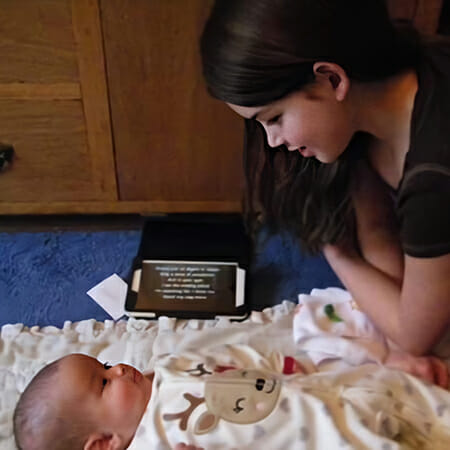
Since its inception, Brittany’s Baskets of Hope has sent over 900 baskets to families across all 50 states and Puerto Rico. For parents on Brittany’s native Long Island, she personally delivers the baskets, and uses the opportunity to hold the baby — which she says is the most rewarding part of helping so many families.
Points of Light spoke with Brittany as well as her mother, Susan Schiavone, who serves as Vice President for Brittany’s Baskets of Hope.
Describe what Brittany’s Baskets of Hope does.
Brittany: I make and deliver baskets to newborns with Down syndrome. [In the baskets are] little things like pacifiers, blankets. We have handmade, knitted and crocheted blankets, hats and booties as well, and then teething rings, toys, books, clothes.
Susan: Things to celebrate a new baby’s birth, because what we found 31 years ago when Brittany was born and now still talking to new parents, is that the first thing parents hear is ‘I’m sorry.’ They get a very bleak view of what’s going to be their life going forward and what their baby is going to have to go through. Like anything else, there are babies who have more issues than others, more health complications, more cognitive issues, but basically we want to support and celebrate those babies and tell those parents that your baby is going to —
Brittany: Be ok.
Susan: Right, and live a good life.
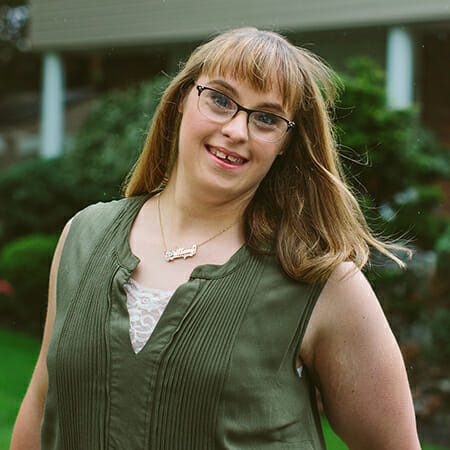
Brittany Shiavone, founder of Brittany’s Baskets of Hope./Courtesy Nilaya Sabnis for L’Oreal Paris USA
Can you describe the process of making and delivering the baskets?
Brittany: Me and mom or [Secretary and Social Media Director] Ashley Asti go down and see the babies and see the moms, give the baskets to them, [if they are] local. We do that first. Then later we have a bagging party. We always have it in the living room. We put everything from the basement up here to set up and do all the packing stuff like toys, clothes.
Susan: When we have a local baby, a Long Island baby that we can drive to, Brittany, myself and Ashley … climb in the car and do an in-person visit to meet the parents and meet the baby. … Brittany’s Baskets of Hope to date has sent out over 900 baskets in all 50 states and Puerto Rico. Most of the time, we get requests online, on Facebook, on our Instagram account. The vast majority of the 900 baskets come all across the country so it’s impossible for us to physically visit. Our “baskets” become mailing envelopes or boxes. We pack the boxes with all the things we want to give the baby and the parents through the mail. We have a packing party, and as Brittany said, we take all of these items that go into the basket, and we each take a baby with all their information —
Brittany: The sex of the baby, the stories of the baby, the baby’s names, siblings they have, or their parents or a dog.
Susan: All those babies get a packed basket specifically for them. Each of the baskets is hand tailored for the size of the baby, if they’re going through any health concerns. Then there are certain things that go in every basket.
What else is in the baskets?
Susan: The important thing for us as parents to give back to the new parents is a book called ‘Babies with Down Syndrome’ by Susan J. Skallerup. It’s a guidebook or handbook for new parents who are raising a baby with Down syndrome, from even before birth and as the baby grows. It gives them some tips and lets them know they’re on the right track.
We have a onesie that we have printed for all the babies and it says ‘Down right perfect.’ That goes in all the baskets. Brittany has a story of her life so far written from her perspective, and then I have my version of what it was like for my husband and I to raise Brittany. We pack the poem ‘Welcome to Holland’ in the baskets. It’s an amazing poem written by a mom with an individual with Down syndrome who’s now an adult. It’s her version of what happens when you get that diagnosis and the different path it puts you on. The other piece of the basket is we have knitters all over Long Island — small groups, large groups, individuals — who knit for us. They donate to us hand-knitted, beautiful baby blankets.
Brittany: Hats and booties, too.
Susan: There are quilters who submit quilts for us, and that’s a staple of all the baskets.
Why did you want to start Brittany’s Baskets of Hope?
Brittany: I saw a video. Then I came home, told them I wanted to do this, and that’s really it.
Susan: It really is that simple. She was at work, and she saw a video with her boss about people helping new babies with Down syndrome. She came home and said “I want to do this,” and we said that’s a nice idea. She was very persistent and it came at the same time we were changing the service model of the services that Brittany gets to support her as an adult. Brittany is supported by a program called Self Direction [which promotes personal choice and control for people with development disabilities].
Brittany: I want to give them hope and I want to give them joy and happiness in their lives. I want the moms or dads or siblings [to know] this is their child. I make them happier for their own sake, because I know it’s what’s right for them. What I always say is Down syndrome kids can do anything — really anything. That makes me happy, to see them in person and hold them as a baby.
What kind of feedback have you received from the families you’ve helped?
Brittany: [The parents] have happiness. They cry a bit. They know I’m there.
Susan: I think Brittany presents a role model for an individual with Down syndrome who has grown up and flown in the face of what the doctors have warned them or scared them about. She’s a good role model for living the life you want, whether that life is forming a nonprofit corporation or whether your goal is to ride a bicycle, or be employed, or have your own apartment, or even be comfortable wherever you are.
What’s been the most rewarding part of your work?
Brittany: Holding the babies.
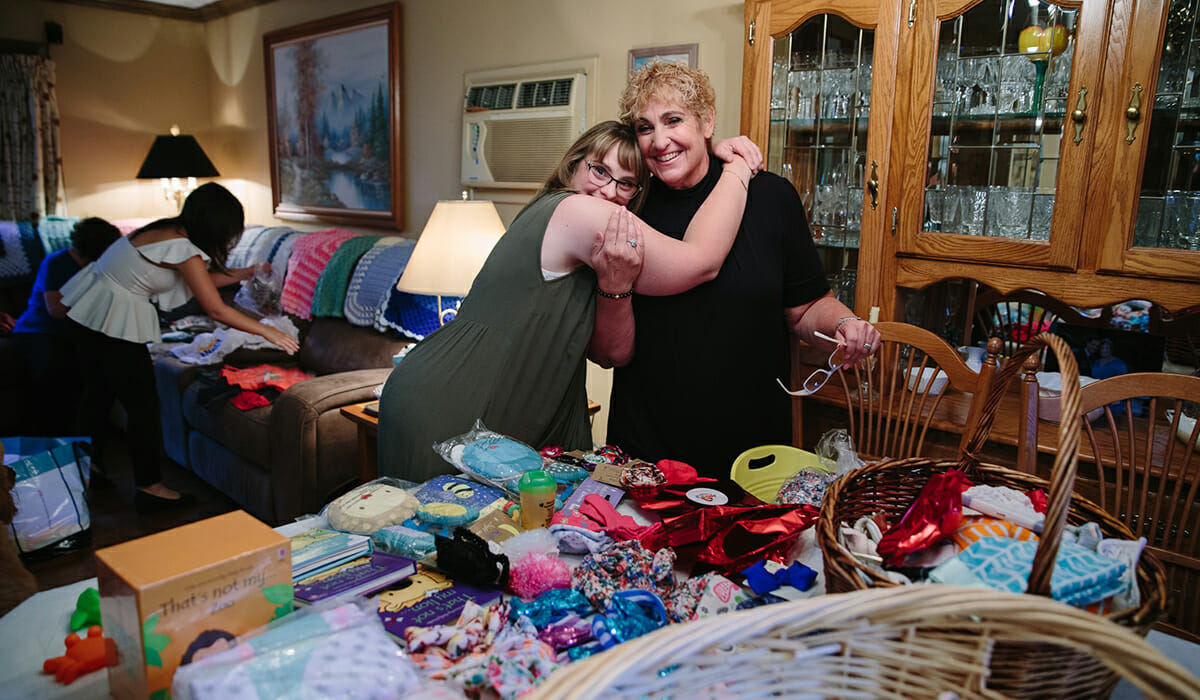
Brittany’s Baskets of Hope has sent over 900 baskets to families across all 50 states and Puerto Rico./Courtesy Nilaya Sabnis for L’Oreal Paris USA
What is it like for you to see the babies and visit the families?
Brittany: I know I have Down syndrome and I think the babies know they have that too. There’s a connection.
Susan: The parents and Ashley and I laugh when Brittany holds these tiny newborns with Down syndrome. We call her ‘the baby whisperer’ sometimes because the look on her face and the connection she has with these babies she holds is really a cool thing.
What have you learned through your experiences as a volunteer?
Brittany: There are babies in the entire world who have Down syndrome.
What do you want people to learn from your story?
Brittany: People with Down syndrome can do anything. Really, really, really anything.
Jennifer Levine Hartz has devoted herself to service since she first tried volunteering back in the 8th grade. Fast forward to 2020, and this working mother of four sports a civic leadership resume a mile long. Jennifer, whose wheelhouse includes industrial psychology, public policy and for profit counseling, runs her own consulting business, Corporate Hartz. Besides juggling career and family, Jennifer has a long history of volunteer leadership with organizations like Boys & Girls Club of America, Habitat for Humanity and for the past 30 years, Hands On Atlanta. From fundraising to hands-on service and projects, she’s always ready to help and lead.
What inspires you to volunteer?
Service feels good, makes a difference and is pragmatic, a word that describes me to a tee! Everyone has something to give – physical goods, professional expertise, emotional support, hands-on skills, pro bono service, money or in-kind, and of course plain old elbow grease.
Describe your volunteer role(s) at Hands on Atlanta
I serve wherever there is a need. I think I’ve explored every kind of service HOA offers, from building wheelchair ramps and planting trees, to rehabbing nonprofits’ physical plants and serving Thanksgiving in public housing. I have always donated to capital and annual campaigns as well as calling on others to do the same. When I joined the HOA board of directors, I know I made a big impact as a fundraiser. I also created HOA’s first CEO breakfast, hosted by Michael Leven, with guest speaker Bernie Marcus – which put us into metro ATL’s “big league” I was on the Search Committee for our new (current) office space. And I have been co-chairing or chairing HOA’s Advisory Council for 15-plus years.
What’s been the most rewarding part of your work?
I so appreciate being around people who understand that service is a two-way street. Beyond the notion of just giving to others is the deeper idea that all eight billion of us are in this thing we call life together. It’s mutual — as I fill others’ cups, they simultaneously fill mine. Also rewarding is serving with our four children over the years. Now that they are young adults, they have the volunteering bug and the right perspective around service.
What have you learned through your experiences as a volunteer?
So many things – I’ve learned that people like to be asked for their input. What do you need, how can we help, how can you serve, what can you give? When I ask others to volunteer with me, they often say, thank you for asking, before saying yes, or no, or not now. Similar experience with asking for money or in-kind. I’ve also learned, “measure twice; cut once!”
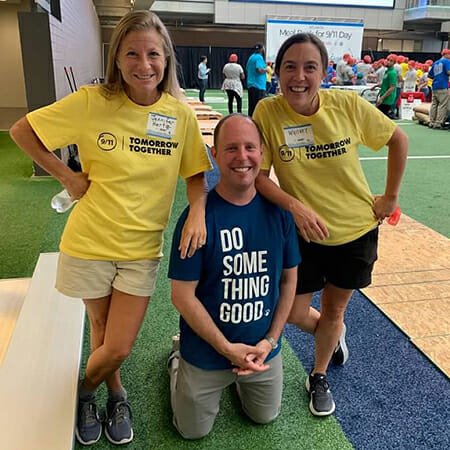
Jennifer Levine Hartz, Exiting Hands On Atlanta Advisory Board Chair, Hands On Atlanta President and CEO, Jay Cranman, and Whitney Deal Marshall incoming Advisory Board Chair joined volunteers packing 330,000 meals for food insecure families across metro Atlanta on 9/11 Day./Courtesy Jennifer Levine Hartz
Any future partnerships, programs, events you are excited about?
I’ll just be excited when COVID-19 finishes its work with the least amount of suffering, and we can get back to the business of living! I know that everybody is hurting on a number of levels, but people are stepping up in so many ways right now. I’ll be excited when we can all get back to working and volunteering. I pray that we will be more inclined to help others generally, even without pandemic.
Why do you think it’s important for others to give back?
It is important because we ALL need each other! We need to KNOW each other, forming real connections with people not like us. That is often a huge outcome of volunteering. Community connectivity is key to a healthy society.
What do you want people to learn from your story?
I want everyone to feel comfortable asking for help and giving help. But I also want them to see that there’s much forward thinking to do. How do we take preventative measures on: school quality, health challenges, food insecurity, homelessness and substandard housing, environmental sustainability, etc.
Arizona Senior Dedicates Over 20 years to Volunteerism and Shows No Sign of Stopping
Colleen Mealey from Phoenix, Arizona, has dedicated over 20 years of her life to volunteer service. She got her first taste of volunteering through a corporate “Make a Difference Day,” but she became hooked and what started out as a nice hobby quickly turned into a lifelong passion.
Colleen first started out by taking part in various volunteer projects with Hands On Greater Phoenix.
“I did a lot. We would fix breakfast for the people who lived at a shelter for abused women and their children. We painted a boys and girls club, packed food boxes at our local food bank. We’ve planted gardens, built picnic tables, put in buddy benches at different schools over the years. So many different things,” the 66-year-old recalled.
But the love Colleen had for her community inspired her to do more and brought her to Paz De Cristo, an outreach center that provides food, clothes and employment resources for the homeless and others in need.
For the past 16 years, Colleen has helped manage volunteers as they cooked and served hot meals to men, women and families facing food insecurity. She started out as a project leader for a small group of volunteers, but now she helps manage all 20 volunteers on the two nights per month she is assigned.
With her volunteers, Colleen helps prepare and serve hundreds of meals, which include a main course such as pasta or steak, a green salad, bread and butter and a fruit salad. They also serve hot drinks during the winter and have peanut butter and jelly sandwiches ready for the guests to take with them.
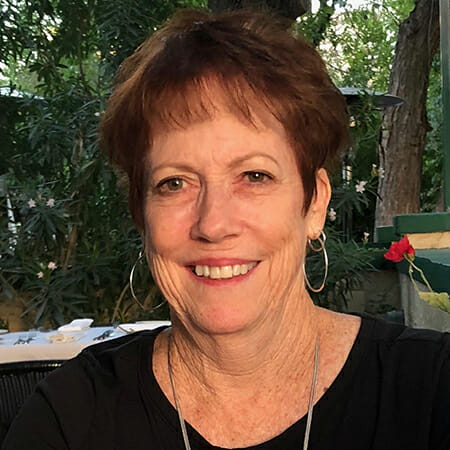
Colleen Mealey has participated in various volunteer events with HandsOn Phoenix for over 20 years. /Courtesy Colleen Mealey
Colleen said she loves volunteering with Paz De Cristo because she loves to cook but also because she believes in the organization’s mission to empower those stuck in unfortunate circumstances to become self-sufficient.
“I feel no matter what anybody has done in their life, however they got to where they are, they deserve to eat,” Collen said. “And the people when they come in, they always say, ‘God bless you’ and ‘thank you.’ It really makes you feel good, like you’re really doing something important for somebody.”
While Covid-19 has temporarily halted the free dinners at Paz De Cristo’s dining hall, the organization still found a way to help those most in need by supplying emergency food boxes. And of course, Colleen is helping out with those as well.
“She is always eager to come in… Always fulfilling her responsibilities with excellence,” Priscilla Frias, volunteer coordinator at Paz De Cristo, said. “She’s been so dedicated to the organization for such a long a time. She’s committed and very much a leader.”
After a long career in supply chain for Honeywell, Colleen is now retired, but she said she doesn’t plan on stopping her volunteer work any time soon.
For people who have never volunteered or are just starting out, this volunteer veteran has some advice for you.
“Find something that you really like to do and you’re passionate about and then find a volunteer project that matches that,” Colleen said. “With the people we serve, you see a smile on their face when they leave and you can see that you’ve made a difference.”
Teen Advocates for Abused Children Through Youth-Led Volunteerism
Meet Daily Point of Light Award honoree Lori Christian. Read her story and nominate an outstanding volunteer or family as a Daily Point of Light.
The world changed for Lori Christian when a 6-month-old foster baby arrived at her home after suffering 11 broken bones, both of her broken legs in casts. After Lori’s family took the baby in, the 16-year-old helped her parents care for the abused infant. The teen says she remembers peering into her crib, watching the sweet baby sleep with her casts, wondering who could have ever hurt a child like that.
Witnessing the aftermath of the abuse the baby suffered and what Lori says was a lack of support offered by the overwhelmed child protective services system, the high school junior founded Teens for Abused Children (TFAC). The youth-led organization partners with hospitals and the state’s child protective services to help children who have experienced abuse. Raising awareness, offering resources and lobbying to change what Lori calls a failed system for foster children, Lori has connected with hundreds of people in her greater community since 2018.
What inspires you to volunteer?
It was awful to see what had happened to this sweet baby. My drive to help was amplified by how awful it was to deal with the CPS system, and witness how it failed my community. While we had the foster baby, her case manager was simultaneously working on 190 cases. The baby is well and safe now in a permanent home and is in the process of being adopted. She’s walking and talking and happy as can be.
Tell me more about how you’re trying to help foster children in your state.
CPS receives an overwhelming amount of cases each month—sometimes more than the caseworkers can handle at once. We are lobbying to pass the “New Hope Law” that would cap the number of cases child protective services caseworkers can handle at a time. While we had the baby in our home, she was in obviously critical physical condition, and it was really difficult to get any support from the system, so we had to rely on ourselves and support from the community.
Lori Christian pictured with her baby sister. Lori helped her parents care for an abused 6-month baby (not pictured) they took in as a foster child, the experience spurring her desire to help other foster children in the state. /Courtesy Lori Christian
Describe your role with “Teens for Abused Children (TFAC).
As founder of TFAC, I help to raise awareness, host service events and fundraise to support our efforts. I’ve also partnered with other clubs at my high school, and other organizations, including the Family Community Career Leaders of America (FCCLA) to raise money. We volunteer with FCCLA members to put together care packages for foster children, including diapers, clothes, toys and bottles.
What’s been the most rewarding part of your service?
The awards and recognition for my service is nice and humbling, but I think working with kids and seeing the foster kids we are helping grow and evolve is most rewarding. We realize there are other kids out there that are experiencing abuse and support makes all the difference in the world.
What’s one way you hope to inspire others in your service?
Acknowledge, understand and intervene. You can be 15 or 50-years-old, but whether it’s voting on legislation or helping a kid, I hope to inspire others to listen to the need in your community and do what you can to help.
In one word, what does volunteering mean to you?
Passion.
What saying do you live your life by?
“Aspire to inspire before we expire.” I believe in living your life to serve others.
When you’re not in school or volunteering, what do you do for fun?
I do speech and debate. I like to write poetry and I have an activism blog. I’m also a full-time college student in addition to my high school work.
How can readers help?
Please visit our website for more information about how you can help and contribute to our cause.
It’s a growing problem oftentimes hidden behind closed doors. Because of childhood food insecurity in Houston, one in four children don’t have enough food to eat at home. For JR Irvin, a 48-year-old father of three, the issue hit close to home.
“We often didn’t have very good meals when I was a kid. So I know what (these) kids are going through. I know what it’s like to open the cabinet and there’s nothing to eat, where my kids, they go to the cabinet and they can’t decide what they want to eat and they say there’s nothing to eat!” said JR, laughing.
Understanding that having limited or unreliable access to a sufficient quantity of affordable, nutritious food can lead to negative impacts on children in school, health and negative emotional tendencies, JR decided to take action in the only way an “everything is bigger in Texas” resident could: by tackling childhood hunger in a big way.
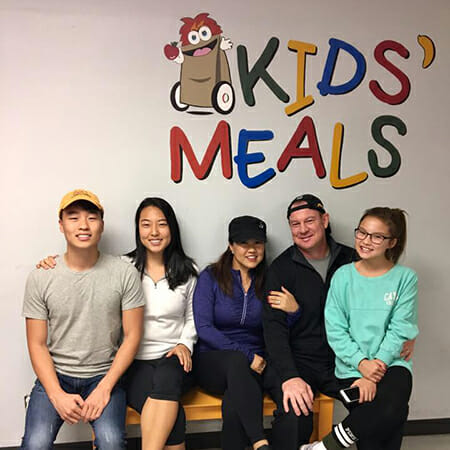
As a volunteer for Kids’ Meals, the Katy, Texas resident has made and delivered thousands of meals directly to the homes of children struggling with food insecurity since 2009. JR has amplified his impact at the organization by serving in several leadership roles on the board, helping with finance, governance and expansion. Delivering meals alongside his wife, Vivien, and their children (Vanessa, Brandon and Hailey), JR has made his volunteerism a family affair, connecting his heart to his heartfelt service.
“We’d go out on deliveries together when the kids were little. Our youngest would sit in the backseat and keep the older two supplied with packed meal bags, and my wife would navigate to the homes. I absolutely believe our family bond is stronger as a result of our service. I wanted my kids to grow up knowing that it’s normal to give back to our communities when we can.”
JR Irvin pictured (2nd to right) with his wife, Vivien, and their children, Vanessa, Brandon and Hailey volunteering at Kids’ Meals in Houston, Texas./Courtesy JR Irvin
Primarily serving children under age 6 who don’t have access to school-based free meal programs, Kids’ Meals served over 1.3 million meals in 2019. But the organization aims to do more than just provide meals. They are changing the future for these children by breaking the cycle of poverty and providing resources for families through social service partner programs.
“We help the parents by relieving them of that stress so they don’t have to worry about what they’re going to feed their kid that day,” JR says. “As a parent, I can’t help but think that other parents, even in poverty, they still want to feed their kids. We’re relieving some of that pressure that will in turn allow them to hopefully have more ability to succeed. There’s hope too, because the families know they’re not on their own.”
Raised in a home without much money but with importance placed on giving back to others, JR credits his mother’s service as inspiration for his own volunteerism. Accordingly, JR’s impact is one that will leave a lasting effect, says Cynthia Stielow, director of development and communications at Kids’ Meals, by delivering food directly into the hands of children who would not otherwise be eating, and driving systemic change for tens of thousands of kids.
“JR’s rallying call is, ‘Let’s feed them all!’ We don’t just deliver meals, we deliver hope. And he has a desire to make sure that not a single child in Houston goes hungry. We are focused on being the first city to end childhood hunger, and JR has been a significant leader in looking at how we feed all of the children in Houston and then how we take (our program) outside of Houston someday, and help other cities too.”
According to JR, who has watched families in his community come out of poverty in part due to the support from Kids’ Meals, while childhood hunger is not always in plain sight, the response from children who often come to the door first when he arrives to receive their lunch, is immediate.
“Poverty is definitely hidden. It doesn’t bleed over to our lives unless you choose to go help,” said JR. “How do you describe the feeling of being able to help? Even delivering a sandwich to a child you don’t know, when you see their face brighten up when you deliver a lunch, it’s such an incredible feeling.”
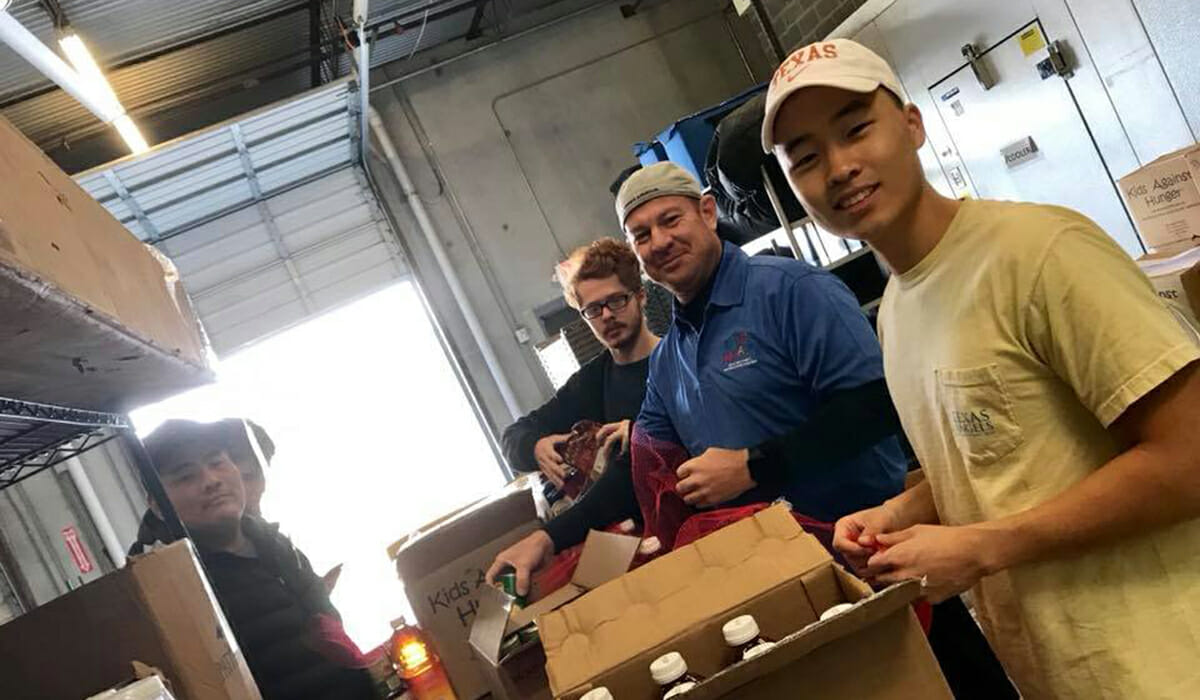
As a Kids’ Meals volunteer, JR Irvin has delivered thousands of meals directly to the homes of children struggling with food insecurity. JR pictured (2nd to right) with his son, Brandon (right), working in the Kids’ Meals warehouse. /Courtesy JR Irvin
Calling him a servant leader, Cynthia says JR’s impassioned service has enabled the organization to grow and even extend services into their neighboring county, with the goal of replicating the Kids’ Meal program in other large cities outside of Houston. To JR, each meal represents one small step towards changing the lives of children in his community and beyond.
“You know the old saying about how you can give a guy a fish for a day, or you can teach him how to fish and he can feed himself forever? Those little kids, they need nutrition in order for their brains to grow up healthy. We give them food to cure the hunger they feel at that moment in time, but the food we’re providing gives them nutrition that will hopefully help them grow up healthier and break the cycle they’re in.”
Reader’s note: Because of the coronavirus pandemic, JR Irvin says contributions and help is more important than ever before. Please visit Kids’ Meals on Facebook and Twitter for the latest updates and information on how you can help.
All pictures included in this story were taken prior to social distancing guidelines going into effect.
Family Pays it Forward by Serving Families Impacted by Autism
Meet Daily Point of Light Award honorees the Jeevanayagam family. Read their story and nominate an outstanding volunteer or family as a Daily Point of Light.
Nicky Jeevanayagam says when her son Luke was first diagnosed with autism, the family was in disbelief. “It seemed like an end to a lot of dreams that we had hoped for for his life and his future,” says Nicky. The Suwanee, Georgia resident and her husband, Jacob, cycled through feelings of fear and anxiety as their toddler missed traditional milestones like potty training and riding a bike.
But through significant support and many prayers, Nicky says, the family began to see the light at the end of the tunnel. Receiving support, education and resources from Spectrum Autism Support Group, the entire family, including Luke’s twin sister, Hannah, engaged with other families experiencing similar issues with autism spectrum disorder (ASD) and found comfort in knowing they were not alone.
Deciding to pay that support forward, the Javeenayagam family, one of the finalist families for the Disney and Points of Light Family Volunteer of the Year, have served as volunteers for Spectrum since 2014, helping to fill gaps that exist in support and services for other families in their community and demonstrating that every person of any ability has the power to make a difference.
Points of Light spoke with Nicky Javeenayagam to learn more about her family’s volunteerism.
What inspires you to volunteer?
We volunteer as a family by helping children and our neighbors in need. Volunteering with Spectrum was one way of giving back because we realized that not a lot of people want to work with special needs kids. There is such a great need there and Spectrum had helped us through difficult times when we did not understand what was going on. By volunteering, we are giving back in some small way.
Describe your role with Spectrum.
As volunteers, we started making “Hope Bags” which are goodie bags for children. We also help to put together race packets for the annual Georgia Race for Autism, and volunteer at the race. We also help to organize events and solicit donations as Spectrum is dependent upon fundraising for programs and resources for families.
What are in these Hope Bags?
We make and distribute goodie bags that are hygiene kits for people in need. They can include a toothbrush, towel, soap and shampoo. We’ll also put a $5 bill in the bag as well as an inspiring message including a list of resources for them to use within the community.
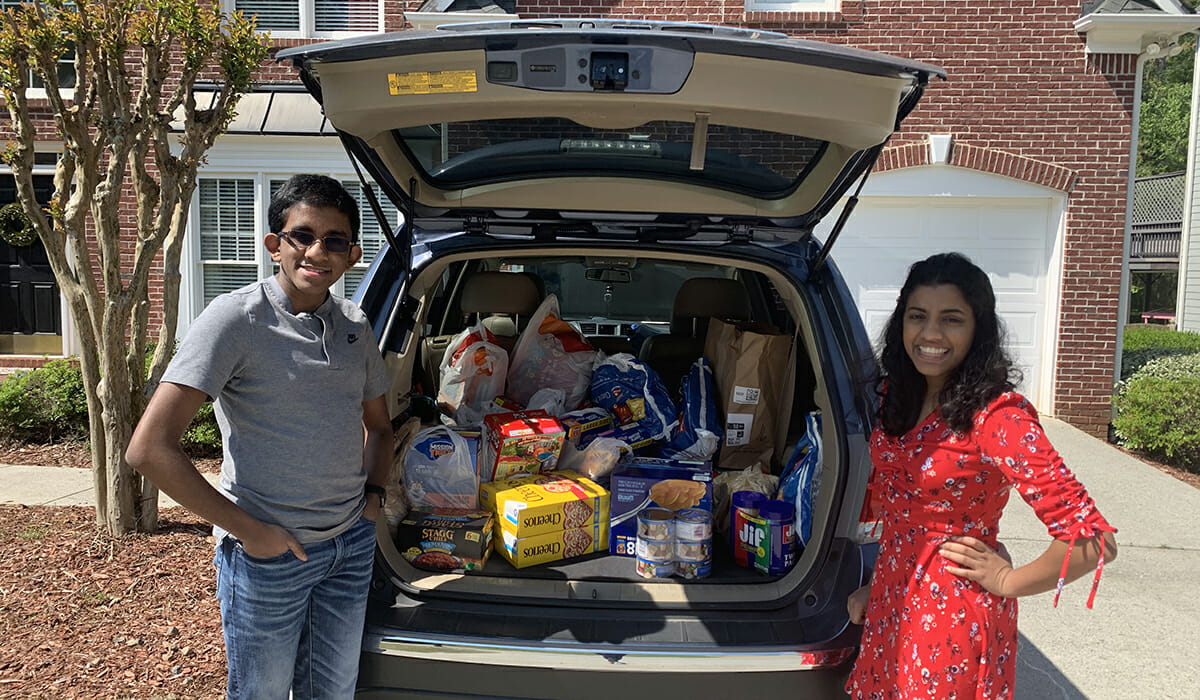
The Jeevanayagam family also volunteer with the North Gwinnett Co-Op, which helps food insecure individuals in their community. Luke and Hannah Jeevanayagam pictured with food donations./Courtesy Jeevanayagam Family
Share one personal story with me from your volunteerism.
Spectrum provides innovative and progressive programs to improve the lives of children and adults with ASD and their families. This past year, our daughter, Hannah, helped to lead a Spectrum support group panel discussion for other siblings of kids who have autism. That was a profound moment for me because I realized how much volunteering with Spectrum has helped Hannah to see beyond her little bubble. Parents came up to me afterwards and thanked us for being so open (about ASD) because they were walking the same walk that we had done just a few years ago.
What’s one way you hope to inspire others in your service?
Everybody can start somewhere and do something by volunteering in small ways. Children and families going through lots of difficulties may think they can’t give back, either because it takes up too much time or they’ve exhausted all their resources. We also volunteer with the North Gwinnett Co-Op, which helps those in our community who are food insecure, and we started by sponsoring just one child. Last Christmas we were able to help hundreds who are hungry in our community.
What’s been the most rewarding part of your service?
It’s rewarding to help people and see them understand they’re not in this alone. Volunteering means there’s always someone to walk alongside you who has already gone on a similar path, and is willing to help out and listen.
In one word, what does volunteering mean to you?
Bringing joy. So two words (laughs).
Give us an update on your children. What are they up to?
Hannah and Luke are 18-years-old, Hannah is a freshman in college and Luke is graduating from high school this May. Luke has really progressed very well from lots of therapies, great teachers and also lots of prayers. He just loves people and loves helping out, and wants to be a math teacher one day.
How can readers help?
Please visit Spectrum’s website to learn more about how you can get involved and give back.
Mental Health Professional Offers Services to Single Parents in Need
Meet Daily Point of Light Award honoree Pamala Kaiser-Helmick. Read her story and nominate an outstanding volunteer or family as a Daily Point of Light.
As a Licensed Professional Counselor Candidate in Colorado, Pamala Kaiser-Helmick was tasked with completing thousands of hours of mental health services in order to obtain her licensure. In order to do so, she started working with Spark the Change Colorado, a nonprofit organization that engages individuals through volunteerism and service. As part of their Pro Bono Mental Health Program, Spark the Change connected her with those within her community who need mental health services but can’t afford them — a volunteer relationship that Pamala still maintains today.
For her first six months with the organization, Pamala was placed at a battered women’s shelter where she worked with seven clients on a pro-bono basis. She was then sent to Warren Village, an affordable, transitional housing program specifically for low-income, single-parent families in downtown Denver. In the over two years she has volunteered at Warren Village, she has worked with 33 clients, providing them much-needed, free mental health counseling in order to prepare them for life outside of the program.
Describe your volunteer role with Spark the Change.
Spark the Change was formally known as Metro Volunteers. … They have a Pro Bono Mental Health Program of Colorado. This program connects folks who are undeserved for one reason or another — maybe they don’t have insurance or income, or whatever the reason is — with pro bono, free mental health services. I volunteer through their program. It’s been a little but more than two years I’ve been with them. I have volunteered through a battered women’s shelter. I provided mental health services inside the shelter for about six months. For a little more than two years now, I’ve provided services at Warren Village. Warren Village is a program in the heart of downtown Denver. It’s a transitional housing program for extremely low-income, single-parent households. They have to apply to get in. Once they are accepted, it’s an apartment building and they’re given a place to live with their children. However, there are pretty rigid requirements in order to stay in the program. They have to be working on a degree or a certificate or a licensure involved in school, or they have to be full-time employed, or a combination of the two. They have staff to help each of the residents with this. They have to take parenting classes, financial classes, everything from balancing a checkbook to making investments. The point is to set them up to be able to provide for themselves after they leave the program. It’s between about two and three years. Depending on the degree they’re working on, it might take a little longer so they may need an extension, or plans change when you’re a single parent and such. My role at Warren Village through Spark the Change is I’m the therapist. They don’t have a therapist there and they don’t have it within their budget. [Prior to the COVID-19 pandemic] I was going there about twice a week to provide individual therapy for the adults there.
Why is it important for the people you are working with at Warren Village to have access to mental health resources?
A tremendous amount of those folks, the work I do with them is trauma. Without my volunteering, a lot of them don’t have access to the services. It’s important for their mental health in order for them to overcome some of the obstacles they’ve been through and to have a better future and to provide for their children. All of them are single parents.
Why did you want to complete so many of your licensure hours at Warren Village, and then continue to keep volunteering there?
There’s a few different things. I enjoy working with this population. I feel they are very appreciative. They’re very engaged and very interested in doing some of the mental health work and healing that needs to be done in order to be healthier. Something I’m really noticing at Warren Village — even though this is pro bono for them, I’m volunteering there, they are very engaged, maybe more so than some of the other populations and places that I work.
Why is mental health wellness important to you?
It’s just as important as medical health. I think that a lot of folks, if you have a cold or bronchitis or something, you’re going to go see a medical physician. In order for us to be balanced and healthy as individuals, and stop some of the cycles from our childhood, we have to work on mental health issues as well. It’s just as important as a medical health issue.
What’s been the most rewarding part of your work?
Seeing folks make these changes. Watching the progress as they’re working through different [issues], recovering from trauma or anxiety or whatever it is that they’re dealing with. I think what’s very rewarding is towards the end of therapy, as they’re graduating so to speak and moving on, seeing the changes they have made. Seeing the hard work that they’ve done. Being able to witness the healing that’s happened for them. Any part of that I played is absolutely incredibly rewarding. It’s an absolute honor to be any part of the healing that these folks are going through.
What have you learned through your experiences as a volunteer?
I’ve learned a lot about generational poverty. I’ve learned a lot about the human spirit and determination to not give up, to not quit. It’s been pretty remarkable how strong a lot of these people are, some of the traumas and things they’ve come through and how they’re surviving and how they’ve managed to survive so far.
What do you want people to learn from your story?
You should probably never judge somebody by their current life circumstances. Everybody has a back story. Be gentle with everybody you come across for you don’t know what sort of battle they’re fighting. I think that’s really, really the case. A lot of these folks I’m working with have been very judged because maybe they receive assistance in the form of food stamps or something like that, maybe they’ve been homeless. I think for other folks that would be reading this story and learning about this, that is very, very inaccurate. Don’t judge others. You don’t know their background. You don’t know their story. You don’t know the reasons for where they’re at at the time.
Why do you think it’s important for others to give back?
I think none of us are in this alone. I think that helping others helps yourself. You feel good about yourself by volunteering and lifting others up. None of us are in this alone. We must help each other to get through tough times and the good times.
Nonprofit Founder Provides Safe Haven for Thousands of Girls
Meet Daily Point of Light Award honoree Crystal Clark-Chatman, who was a 2019 L’Oréal Paris Women of Worth Award winner. Each year L’Oréal Paris and Points of Light recognize and celebrate Women of Worth who make a beautiful difference in their communities. Ten honorees each receive a $10,000 grant to support their most cherished cause, and an online vote determines one honoree who will receive an additional $25,000 grant. Nominations for 2020 will open on April 20! If you know a woman who works to create lasting and significant change in her community, nominate her to be one of the 2020 Women of Worth.
A decade ago, Crystal Clark-Chatman was at a low point, unsure of what she should be doing in life. One day after leaving her church’s women ministry, she started going over her bible notes in her journal and praying.
She said as she was writing in her journal, the letters ‘BSW’ appeared clear as day on the paper. Crystal said she asked God what the letters meant, and ended up writing down “Beautiful Spirited Women.”
“He wanted me to go back into the community in which I grew up in and restore and build there,” Crystal said. “Be a vessel for young girls who experienced the things I went through, as well as find passionate women who actually went through the same thing as well.”
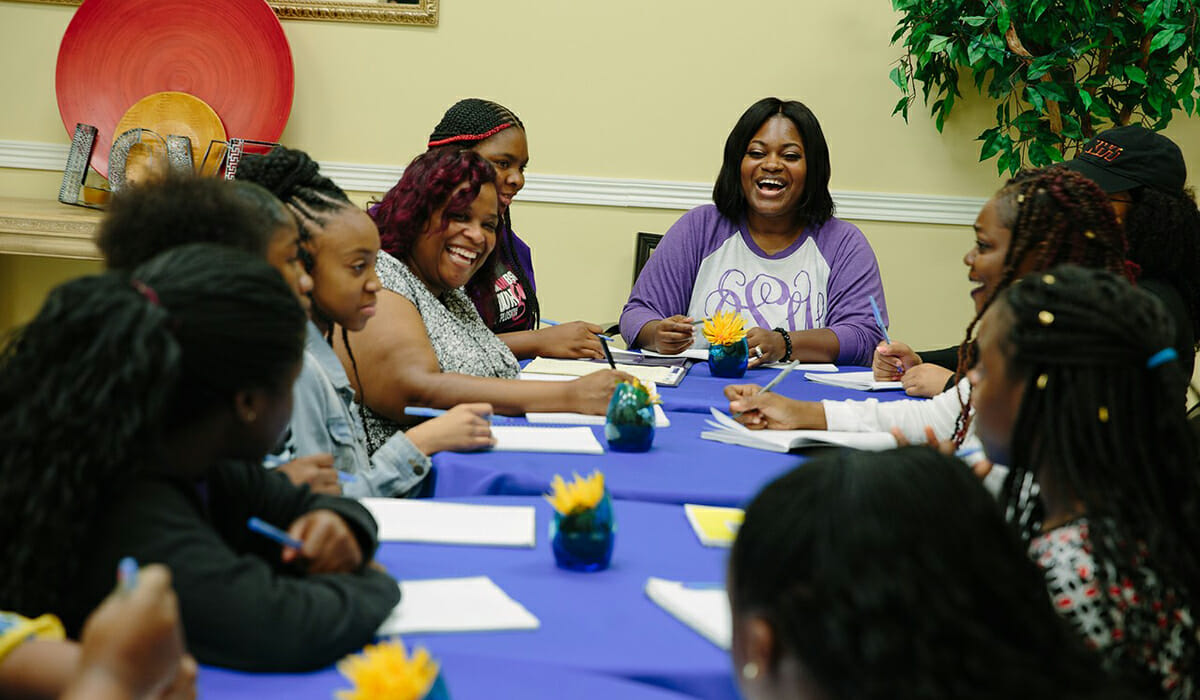
Ten years later, Crystal is now the Founder and CEO of Beautiful Spirited Women (BSW), a nonprofit dedicated to empowering and advocating for girls. BSW offers a mentorship program for girls, ranging from 4-19 years old, in nine cities across the country. While not all the girls involved are at-risk, BSW does focus on working with at-risk girls in low-income areas. For some of the girls involved, BSW additionally fills the void of a missing parent by partnering them with a mentor who has had similar experiences.
Each year, the programs reach 5,000-10,000 girls, and even more than that with BSW’s online workshops. Since its inception, the nonprofit has completed over 250 workshops and over 300 community service projects. BSW offers a variety of different types of workshops and seminars, with all of programs focusing on academic and life enrichment, teaching life skills and developing positive attitudes.
Crystal created the organization’s programs and workshops based on the needs she saw. She said she makes BSW clearly distinct from a social club through implementing rules for everyone involved, including “no drama.”
Crystal said growing up, her generation didn’t have an outlet to voice their feelings and personal issues. Her goal is for Beautiful Spirited Women to truly be a safe haven for girls to talk about whatever it is they are going through and then receive the resources they need.
“I believe that every girl should have an outlet like BSW, because you learn so much,” Crystal said. “You learn different things. You’re around diversity. You are around people who are positive, encouraging, motivational. People who are just praying for the goodness on your behalf.”
Some of these life lessons come from more informal BSW gatherings, including a group outing to purchase supplies for a local shelter for women who have escaped domestic violence. The experience was used to explain to girls how to avoid entering that type of relationship. Crystal said she wants to bring “real life” into BSW meetings. During a recent Domestic Violence Workshop, theater group OVA Flow Productions put on skits depicting challenging life situations, messages of survival and tips for standing up for yourself.
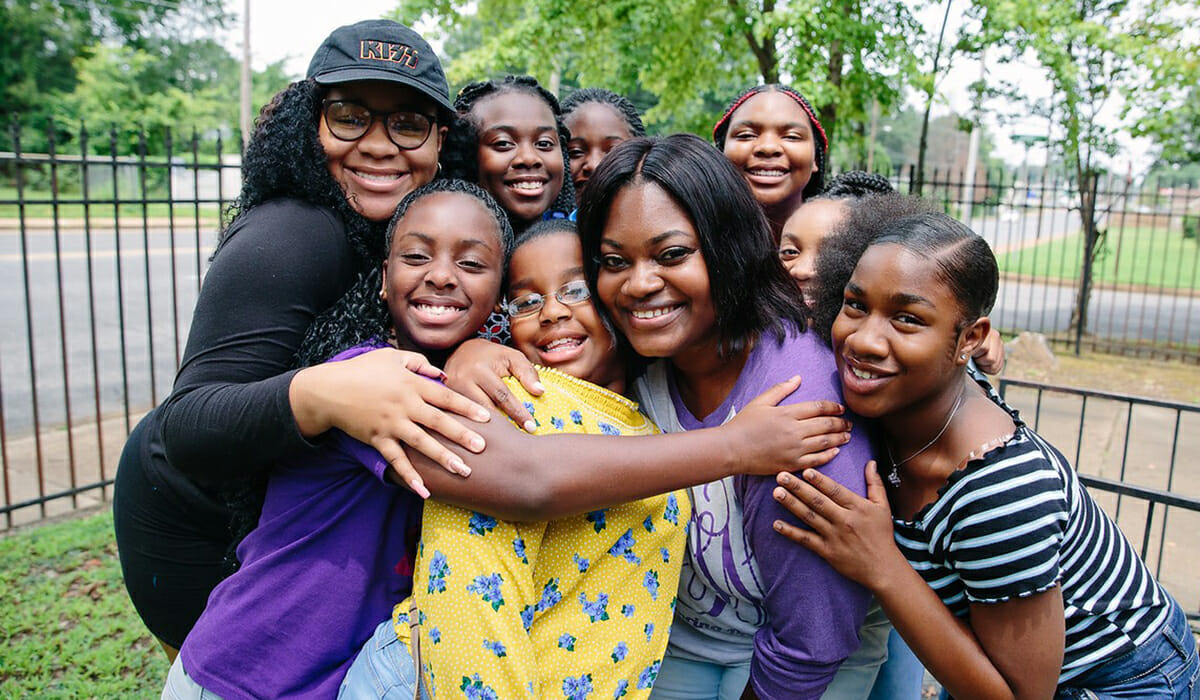
Crystal Clark-Chatman, center, created all of Beautiful Spirited Women’s programs and workshops based on the needs she saw for young girls./Courtesy Nilaya Sabnis for L’Oreal Paris USA
Dominque Jones, BSW’s Assistant Director to Founders, said this organization is so near and dear to Crystal’s heart because of the struggles she endured growing up. She added that BSW is something she herself would have liked to be a part of when she was young.
“Crystal is someone who is a pure heart,” said Dominique, who has known Crystal since 2002 when they met at college. “Everything she does comes from a pure place and pure intentions. … Her mission is to help the teenage girls as well as empower women, and to know that you can overcome anything if you put your mind to it.”
For Crystal, the most rewarding part of her work is hearing the girls talk about how Beautiful Spirited Women has impacted their life, as well as seeing the impact it has on their parents, the program’s mentors and others involved in the organization.
“We’re not just here for us and the girls, but we’re here for each other as a family,” Crystal said. “That’s what’s making it more powerful, is knowing that we’re a family and we’re all trying to get through this trying time together.”
Through Beautiful Spirited Women, Crystal Clark-Chatman, center, works to empower girls aged 4-19 and provide them with a safe haven to discuss the issues they face./Courtesy Nilaya Sabnis for L’Oreal Paris USA
She said some of the girls have told her about how they’ve had a more positive attitude since joining the organization. Others have said attending BSW’s events and workshops is what is keeping them from getting into trouble. Crystal has even had some girls tell her that BSW is what stopped them from committing suicide.
As for the future, Crystal hopes to be able to build a safe haven facility in Memphis, her hometown and where BSW was founded, so girls can have one place to go to receive all the resources they may need. She would also like to set up a virtual office in each city BSW is in, for parents who are struggling and are looking for resources themselves. BSW’s goal is to also eventually set up international chapters to provide the same opportunities to girls all over the world.
Overall, the main objective is for Beautiful Spirited Women to continue being a safe haven and point of contact for girls in need.
“They look at us as women who are truly out here empowering girls, being a restoration to girls, and making a healthy living for girls to not go through the same things that we went through,” Crystal said. “I just want to continue to provide resources for the girls to be able to compete in this lifetime.”
Man with Autism Volunteers to Support Affordable Housing in Tucson
Meet Daily Point of Light Award honoree Matt Steiner. Read his story and nominate an outstanding volunteer or family as a Daily Point of Light.
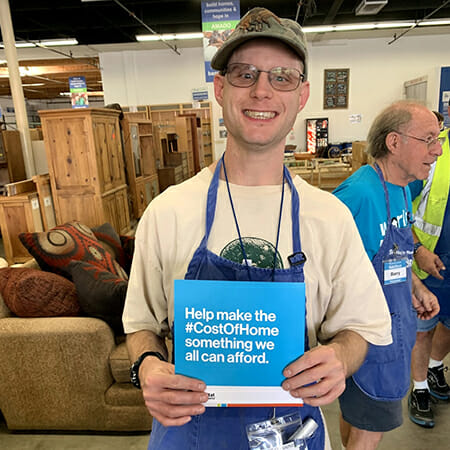
“Fueled passion…staple at the store…genuinely cares,” these are just some of the ways Matt Steiner’s volunteerism is described. As a volunteer at the Habitat for Humanity Tucson HabiStore, the 32-year-old Tucson, Arizona resident is helping to support Habitat’s mission of building a world where everyone has the opportunity to live in affordable housing.
The HabiStore is Habitat for Humanity Tucson’s home improvement outlet which is open to the public. The store accepts new and used building materials, furniture, appliances, lighting fixtures and other home goods, and sells items to raise money for Habitat homebuilding projects. Matt, who has autism, volunteers at the store five days a week cleaning and tidying to ensure a safe and clean space for customers, and because of his efforts, the store is able to save money paying for custodial services.
Dedicated and committed to inspiring others through his service work, Matt makes it a point to enthusiastically support his fellow volunteers and other store staff as he volunteers, logging over 4,000 hours since 2017.
Points of Light spoke with Matt and his father, Doug, to learn more about his volunteerism.
What inspires you to volunteer?
Matt: Volunteering makes me feel good inside. It makes me feel that you’re helping and giving back to all of Arizona, not just Tucson. Doug: Matt has been volunteering for years. He loves being at the HabiStore and interacting with the people.
Describe your role with the Habitat for Humanity Tucson HabiStore.
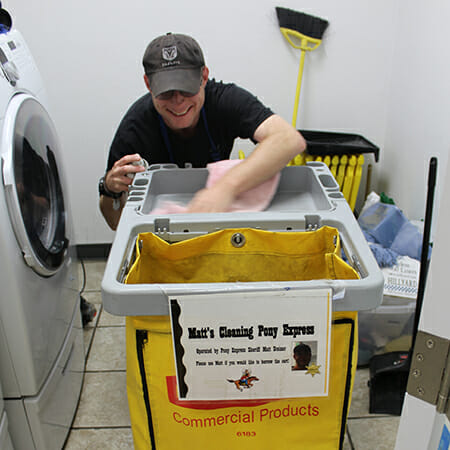
Matt: I have a cleaning cart that I refurbished and use at the store. Because of HabiStore, 1040 tons of items are saved from the landfill annually, my cleaning cart was one of those saved items. We have 150 active volunteers at the store and I wash the volunteer aprons which is a very big help, so the volunteers have clean uniforms every time they volunteer. I keep the break room tidy and I work hard to keep our store clean, safe and shoppable for customers. I’m inspiring to others. I make sure all my other coworkers and pals are having a good day. I help to run the morning meeting with a morning montage, cheering on the other volunteers. Teamwork is very important, I teamwork with all my pals.
Matt Reiner, a self-professed “huge” Kentucky Derby fanatic, named his refurbished cleaning cart “the cleaning pony”. Because of Matt’s dedication, the store is able to save money paying for custodial services. /Courtesy Habitat for Humanity Tucson
Your cleaning cart has a name. Tell me about it.
Matt:I’m a huge Kentucky Derby fanatic. I named my cleaning cart “the cleaning pony”, because it’s like my Secretariat (one of the greatest horses in racing history). Based on the recognition I’ve received for my service, It’s like winning the Triple Crown!
You have been praised for your positivity and enthusiasm for Habitat’s mission. Share one personal story with me from your volunteerism.
Matt: I now join the biweekly operations meetings because I have ideas that contribute to the store’s success. All of the board directors once left a note, a thank you letter, from all of them because of my work.
What’s one way you hope that Matt’s service can inspire others?
Doug: I hope they see that if somebody like Matthew can do this, anybody can and should do this. Habitat helps people of all abilities. Matt can be a springboard for other people to volunteer.
Matt’s service has been praised by leaders at HabiStore, he even sings as he volunteers. What does that mean to you?
Doug: It makes me happy that Matt is happy, and that he can interact with all these people and they appreciate him. Matt’s one of these guys, if you tell him what to do, he’ll do it, he’ll dust, anything.
Habitat for Humanity Tucson HabiStore volunteer Matt Steiner helps to support Habitat’s mission of building a world where everyone has the opportunity to live in affordable housing. /Courtesy Habitat for Humanity Tucson
When you’re not busy volunteering, what do you do for fun?
Matt: I love to go shopping. I love coffee shops and music. I do photo albums too! Doug: He enjoys doing his shopping, going out to get chile rellenos, just going out with his parents. He loves socializing with his sisters and brother.
In one word, what does volunteering mean to you?
Matt: Helpful. Volunteering means I’m very helpful and informative because I’m learning new stuff day by day.
What have you learned through your experiences as a volunteer?
Matt: I’ve learned independence and responsibility. I am maintaining the store through my service work and I enjoy it.
How can readers help?
The HabiStore has temporarily closed as a result of the Covid-19 pandemic, but as soon as they reopen, donations can be dropped off or scheduled for pick up. Please visit the Habitat HabiStore website for more information about how you can help.
A Child of Jim Crow Laws, Senior Citizen Promotes Education as Global Volunteer for Peace Corps
Meet Daily Point of Light Award honoree Lincoln Law. Read his story and nominate an outstanding volunteer or family as a Daily Point of Light.
82-year-old Lincoln Law remembers the day that then President John F. Kennedy announced the creation of the Peace Corps. Signing an executive order on March 1, 1961, President Kennedy established the volunteer organization to combat negative stereotypes of Americans, particularly in post-colonial Africa and Asia.
“(Kennedy) announced (the creation of the Peace Corps) on the TV. He talked about how people could go and help people around the world. I thought that was the best idea that anybody could have, and the idea stuck with me, so when I retired, I decided I’d do it.”
As a young man, Lincoln first served as a seaman on two U.S. Naval ships that both sailed around the world, the Navy racially integrating just a few years prior, and then worked for the Los Angeles County school system. When it came to volunteering, the San Pedro, California resident combined his ambition to see the world and his dedication to giving back to the community.
“I joined the Navy because I wanted to go places and see what was going on in the rest of the world,” Lincoln says. On giving back? He says it’s simple. “It’s a good idea. It’s just natural to me. My mother and father always said that you should really do the best you can. Look, we’re stuck on this planet, all of us, and if we don’t help each other who’s going to help us?”
In 1992, when Lincoln retired from his career with the county, he applied to be a Peace Corps volunteer in the Solomon Islands at age 56. He then signed up to serve in South Africa from 1997 to 1999, shortly after the country ended apartheid. Lincoln completed his most recent Peace Corps tour in Tanzania, where he helped the community create a functioning library. Volunteering as a teacher and teacher trainer, Lincoln was particularly proud as an African-American to answer the call to serve in South Africa.
“Before going to South Africa, I was an activist for the elimination of apartheid. The Jim Crow we felt here in America and the apartheid system, they’re not really that much different. I consider them both the same but just on different plots of land.”
Lincoln Law: “If one child is able to use the library and learn to read, that means they will be able to teach someone else to do the same. It’s a domino effect.”/Courtesy Brandalyn Bickner
Observing the black South Africans he was volunteering with, just a few years out from the end of apartheid, Lincoln says he was shocked by their lack of confidence in their own chosen professions.
“You could actually see the effect that apartheid had left on the people there. The teachers had hardly any self-esteem. It’s kind of hard to teach others if you don’t have any self-esteem yourself. The lack of confidence, hesitation, if they had a thought, they were afraid to act on it. Coming from America, it seemed like a different world.”
Teachers had not been allowed to express their creativity while under apartheid, and Lincoln says reteaching the group, newly freed from the ravages of the apartheid education system, was a high point for his service. His impact on other communities has yielded additional long-term effects, says Tanzania Peace Corps county director Nelson Cronyn, Ph.D. By helping the Tanzanian community leverage external resources to build and stock a library, and assisting teachers in the community with their skills, Nelson says that Lincoln brought people together to address problems through collective action.
“By demonstrating the power of one dedicated individual to elicit positive change; Lincoln fostered a very positive impression and understanding of Americans by living at the same level as his Tanzanian colleagues,” Nelson says, “contributing to the solution of pressing community problems, and sharing their everyday lives on a long-term basis – thereby fulfilling the Peace Corps’ mission.”
During his three years in Tanzania, Lincoln taught math at the secondary school level, helped to build a water catchment system for the community and collected 22,000 books for the newly built library. According to Lincoln, the community had never before had access to public books.
“The community didn’t have a library. The books they had were locked in a room, they weren’t accessible to students. If one child is able to use the library and learn to read, that means they will be able to teach someone else to do the same. It’s a domino effect.”
His impact is a model for people of all demographics, says Nelson, and service that will continue to inspire others.
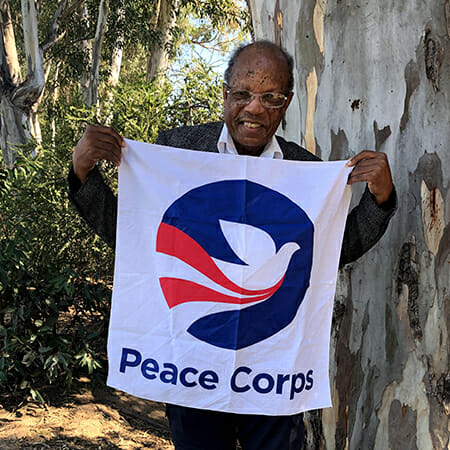
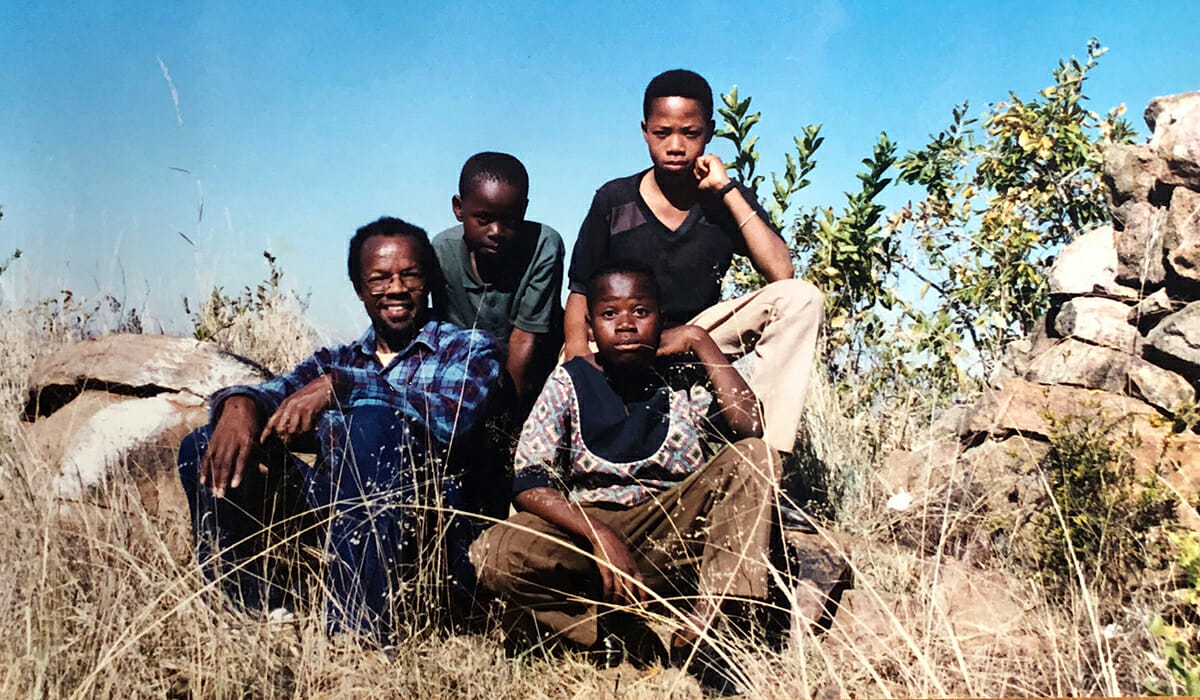
As a Peace Corps volunteer, Lincoln Law has volunteered in the Solomon Islands, Tanzania and South Africa as a teacher and teacher trainer./Courtesy Brandalyn Bickner
“Perhaps the biggest impact Lincoln had with his volunteerism was demonstrating that anyone – regardless of color, background, or age – can contribute in substantive ways to the greater good by volunteering,” Nelson says. “He models positivity and perseverance, characteristics that are requisites for solving challenging problems faced by the human enterprise.”
Lincoln hopes to continue volunteering in other communities for the Peace Corps, and is raising funds to expand the library he helped to build in Tanzania. While currently stateside, Lincoln is a volunteer at the African American Firefighter Museum in Los Angeles, which promotes information about the heritage of African American firefighters in the U.S., once restricted and segregated from white firefighters.
Lincoln says his volunteerism continues to come full circle even today, recently receiving a Facebook message from a grown man who’d been taught by Lincoln decades before in the Solomon Islands.
“He let me know how much of a difference that the experience he had in school made on his life. He went on to college, and he became a professor himself at the college on Solomon Islands. Now that’s the most inspiring and unexpected action that I’ve had…It was so much more rewarding to hear after 20 years, you did make a little difference.”
Do you want to make a difference in your community like Lincoln Law? Find local volunteer opportunities.