“Adding” Up Acts of Service, Retiree Teaches Young Students Math Skills
Meet Daily Point of Light Award honoree Roger Keller. Read his story and nominate an outstanding volunteer or family as a Daily Point of Light.
Currently a math tutor serving young students, 86-year-old Roger Keller is helping others by leveraging his lifetime of experience, and then “sum.” A former farmer, then accountant, the Mesa, Arizona retiree is now multiplying his impact on the future leaders of his community by serving as a classroom volunteer.
As a volunteer with Your Experience Counts (YEC), a program offered through HandsOn Greater Phoenix, Roger has tutored hundreds of students and spent over 3,500 hours volunteering for the program in his 11 years of service. Sharing his wealth of knowledge and personal experience with the youngest members of his community, Roger is working alongside classroom teachers to ensure the academic success of each student.
What inspires you to volunteer?
The older I got, I felt I didn’t do enough to help our own kids in school when they were little. That’s at the heart of my volunteerism. Now, by working with kids in my community, I am able to help people out and improve the lives of these children. I felt God sent me to this service to help other kids, since mine are grown.
Describe your role with Your Experience Counts (YEC).
I volunteer in a third grade classroom and help the students through the school year. I’ll help on average 30 students, working with them on their math skills in order to keep them on track for success. I sit at a table in the classroom and I will call the students to my table to help them. I keep track of where every student is in the class, what they’ve passed and what they still need to learn, including subtraction and addition, then multiplication and division. We help them as they are stepping up the mountain of learning, I always say we need to get them to the top of the mountain! (laughs).
Share one personal story with me from your volunteerism.
Before this year, I worked with a fifth grader who couldn’t follow along in multiplication, she couldn’t even count to 25. Some of the students we work with are learning English as a second language and are often behind in their schooling. I worked with this student on her math skills, and after awhile, she just bloomed. It was like seeing a flower blooming. At the end of the year she was getting all of the questions right on her multiplication test. I helped another student who is from Colombia, and he didn’t know any English when he arrived at our school. He wanted to teach me Spanish! (Laughs). Seeing students improve through my volunteerism is the biggest thing for me.
What’s one way you hope to inspire others in your service?
Kids will ask for help with division, or something else, but they’ll also come to my table to hug me and say thank you for my help. You know these kids are learning something, and there’s no paycheck in the world that’s better than the feeling that you’ve helped that child to a successful future.
What’s been the most rewarding part of your service?
I sit here with tears in my eyes talking to you about this. It’s been rewarding to see these kids learn from zero to ten in one year. If they’re willing to learn, boy, I’ll push them and I’ll push them. Getting a thank you from a third grader? That just makes you want to come back again and work more and work harder.
In one word, what does volunteering mean to you?
Success for kids. That’s hard to answer in one word.
What does it mean to know your service is helping children to succeed in school?
I’m a volunteer and also a positive adult figure in many of these children’s lives, which is helping to increase their ability and willingness to succeed in school. As a volunteer, I don’t feel as though I do a lot, but we’re helping children to succeed. Each year, I can’t wait for the fall to start school again.
How can readers help?
Please visit the HandsOn Greater Phoenix website for more information about how you can give back.
Meet Daily Point of Light Award honoree James Cullen. Read his story and nominate an outstanding volunteer or family as a Daily Point of Light.
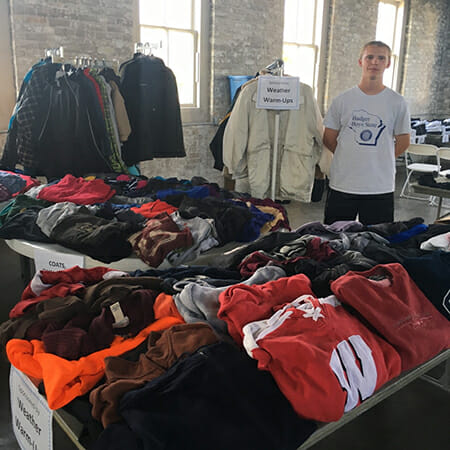
On a cold day in Kewaunee, Wisconsin temperature can dip into the single digits. For James Cullen, who turns 18 next month, the idea that some kids in his community don’t have cold weather gear was chilling. So he decided to make a difference and founded Weather Warm-Ups three years ago, a charitable clothing drive that has donated jackets, sweaters, hats, gloves to more than 400 local kids. Working with the county’s yearly Back-To-School Program, Violence Intervention Project for children and women in need and the local Lakeshore Community Pantry’s Thrift Shop, James has literally warmed lots of hearts – and bodies too.
Points of Light spoke with James about his commitment to service.
Describe your volunteer role?
I started Weather Warm-Ups three years ago as a freshman when I saw how many people need warm clothing during the winter months. With support and guidance from my parents, my parish and the Kewaunee County Back-to-School program, I have organized, promoted, gathered and distributed cold weather gear to more than 400 young people so far. I distribute flyers, spread the message via media and social media, set up collection sites throughout the community, collect and distribute clothing as part of our county’s Back-to-School Program.
Why is it important to you to support your community in this way?
It’s important for me to give back because there is a need. During fall and winter our weather is incredibly cold, and not many students come to school with warm clothing. It’s rewarding to me to see young people find a jacket or a sweatshirt that they love and are able to take home to wear when the temperature drops.
James Cullen distributing items collected during his annual Weather Warm-Ups Drive to a local charitable organization./Courtesy James Cullen
What’s the most challenging aspect of your volunteer service?
Getting the clothing donated! I find it challenging to get the students at my high school to donate clothing. I do my best to promote my charitable the value of giving to those less fortunate.
Why do you think it’s important for others to give back?
Volunteering is a great way to strengthen one’s community as it builds teamwork skills and inspires others to give back too. It is also important for the people in need to know that they matter, that others care about them.
What’s been the most rewarding part of your work?
The best is seeing the looks on kids’ faces when they find a piece of clothing that they really enjoy. It means so much to me to be able to give those kids jackets and sweatshirts and the excitement they show when they receive them is the only reward I need. I especially remember one child who excitedly ran to his mom to show her his new winter jacket.
What have you learned through your experiences as a volunteer?
Through communication with programs such as the Kewaunee County Back-to-School Program, the Violence Intervention Project, and the Lakeshore Community Pantry’s Thrift Shop, which all received items collected through my charity, I have developed great communication skills. Through the organization of my clothing drive I have learned how to be a better leader.
Are there any future partnerships, programs, or events that you are excited about?
I will be distributing all of the clothing I’ve collected so far at the Kewaunee County Back-to-School program event in August. My younger brother plans to take over the annual Weather Warm-Ups collection drive when I go the college. Next year, my goal is to continue a similar collection drive to provide warm weather items for the citizens of my college community.
What do you want people to learn from your story?
I would like people to know that anyone can make a difference if they put forth the time and effort to do so. You don’t need a lot of people to make a change, just yourself. Find a cause that is needed in your community and come up with a way to solve it. Everywhere you go there are challenges facing people and it is up to us, as individuals, to go out and make a difference.
91-Year-Old Spends Decades Volunteering with Incarcerated Kids
Meet Daily Point of Light Award honoree Donald Roth. Read his story and nominate an outstanding volunteer or family as a Daily Point of Light.
Almost 30 years ago, Missouri resident Donald Roth read a column in his local newspaper encouraging laypeople to spend some time with the kids being held at the Family Court of St. Louis County’s Juvenile Detention Center. The Korean War veteran was inspired to reach out to the center’s director, only to find out that such a program did not exist. The dire invited him to come to take a tour of the facility instead. Ever since that fateful meeting, Donald is still volunteering his time to positively impact the lives of his community’s troubled youth.
Donald has spent decades visiting the kids at the facility, talking to them about his life and experiences or playing ping pong and basketball, although as he approaches 92, he can no longer do the latter. He has spoken out against dogfighting to them, which is prevalent among youth in the community, and then brought in dogs from the local Humane Society so they could learn how to treat animals. He has coordinated several other visitors to the center, ranging from the St. Louis University Billikens men’s basketball team, who taught the kids basketball skills, and the St. Louis Classical Guitar Society, which now gives the kids weekly guitar lessons. Now a mainstay at the center, Donald is a sworn citizen deputy juvenile officer.
Describe your volunteer role with the Family Court Juvenile Detention Center.
I started this 30 years ago when a layman could come in and share some of his life experiences with some of the incarcerated kids, whose average age is around 15. I talk about what my background might be, I talk about sports figures. I’ll talk about dogfighting, for example, which is prohibited, and which I would say is rampant with the kids, [although] certain years seem to have more activities involving that. I try to bring in some sports figures. I brought in the representatives of St. Louis University basketball team, who put on a demonstration of basketball skills. That was a memorable situation where the kids really interacted with the players. That was a couple of years ago and I’m in an effort now to recruit some other basketball players from the local scene. I would say I might try to get some of the new St. Louis Blues hockey players, although the kids primarily are interested in basketball and of all things, are interested in playing chess. Something else I happened to bump into is that they love music. In St. Louis, we have what they call the Classical Guitar Society which is an entertainment group and very popular here in the city. I approached them to see if they would put on a demonstration at the detention center and lo and behold, for the last year, twice a week, some of the professors at this Classical Guitar Society conduct classes for the kids and provide the instruments of playing classical guitar. It’s amazing how they took to that as opposed to a conventional guitar, which is predominantly a teenage musical instrument. Also, I talk to them about certain historical events, certainly dealing with the various wars we’ve been involved with. Another area deals with dogs, but also how to treat animals. We bring them some dogs from the Humane Society here. The kids go crazy over it. They can’t wait to bestow some affection on these dogs, which shows the lack of attention they get at home.
What inspires you to keep volunteering in this way?
It occurs to me that these kids are really anxious and eager to hear what’s going on in the outside world because their world is so centered on personal gain and getting involved with gang activities, access to firearms, dope and so forth. It’s an opportunity I think for an adult who’s been around to share their life experiences, and also prepare them when they return back home again. A lot of them are released for their own recognizance before they go before a judge necessarily. I think it’s an ongoing need in our community and these kids, they’re as I say, so vulnerable to undesirable activities. It’s a real national emergency in spite of all the other turmoil we have in the world. I find that for me, it’s been an integral part of my life and I thoroughly enjoy it. I find that maybe if I can make an impression, a good one — if one of the kids, for example, comes to me and says ‘When are you coming back?’, that’s all the real appreciation that I would seek.
How did you first start volunteering with the Family Court Juvenile Detention Center?
Thirty years ago, there was an article in the paper from one of our newspaper columnists that the Family Court was considering bringing in some laypeople, people who had been around and would like to talk to the kids, but it hadn’t been formalized yet. That turned me on, so I approached them. I was a little premature in approaching the director but he said to come back in three months and maybe we’ll have a program established. Time came and went and so forth, and so I said I’m going to try it again. I approached him and made an appointment and he said we still don’t have anything formally installed yet, but let me show you around the facilities and I’ll show you what we try to achieve here. He took me on a tour of the place. I was really impressed with the fact that they really do make a concerted effort to help these kids become happy kids, or at least more well adjusted to the community. So I started coming in. I was assigned a juvenile officer. I came in in the evenings after my work and went and talked to these kids individually or in a group session, and I found it very emotionally uplifting for me. Evidentially they liked what I did. I played ping pong with them. I’m not so good, however, I let them beat me. We play ping pong and I played a little basketball — I don’t do that now. In any event, it was a unique volunteer opportunity. As a matter of fact, the staff at the detention center are so outstanding. One of them I would say I befriended and he retired just recently and he’s a member of my family. He’s outstanding. One of the rewards was establishing relationships with the people and the staff who I think are outstanding.
Why do you think it’s important for these kids to get these types of opportunities?
I think anything that can be done to broaden their life [should be done] because they’re so limited right now from the environment they come from. It’s terrible, particularly in St. Louis. It’s an opportunity while they’re at detention. Our special school district conducts classes every day, that’s five days a week, to help these kids keep up with their particular grade level. So many of them, their reading level is just terrible. They have a staff psychologist. It’s an effort to really elevate these kids to make them more competitive in their local schools, and single schools do need some help. These kids, I know the attention are terrific. Some of them, obviously, show a little bit of hesitation or resistance, they are resentful, but most of them I would say there’s no behavior problem. Some of them, by the way, would like to live there. The food is great, and they get respect, something they don’t get on the street or from their parents. So many of the parents are completely inadequate in terms of their skills. I think, for the most part, it’s an opportunity for these kids to see another part of life. That’s the way I feel. I feel very strongly about it. I don’t have any hobbies but this has been one part of my life that I really have enjoyed and I feel like it’s made me a better person, and that’s the way it’s been. I’m lucky I’m still here.
What’s been the most rewarding part of your work?
I think you can say that it’s a feeling that maybe I’ve done something that’s worthwhile. It’s a feeling that maybe, I don’t know what’s the right word, but maybe a legacy that I have done something that I’ve been looking for. Something meaningful to show my gratitude for so many good things that have happened to me. I have a family with two sons who are outstanding, and health-wise, up until just recently my health has been really very good. I have friends who have shown their affection for me, and my wife who died 22 years ago, so my life has been pretty good. I like to return some of this goodness that has happened to me. This is also coming out of my book. Some of my best friends are those that I met through detention. Not the kids, necessarily. It’s been a rewarding experience. Hopefully, I have made some meaningful, worthwhile impressions upon these kids. Well and good, that’s my motive, but it’s also returned to me in many, many ways.
Shelter Volunteer Coordinator Uses Her Resilience to Help Dogs Find Their Home
Meet Daily Point of Light Award honoree Kristy Michalski. Read her story and nominate an outstanding volunteer or family as a Daily Point of Light.
Kristy Michalski’s sunshine-filled disposition has fueled her development of resilience, which she uses to help homeless dogs. She serves with Fetching Tails, a small animal shelter that opened in 2015 in the metro Chicago area. As of today, Fetching Tails is the temporary home of 90 dogs waiting for adoption. However, man’s best friend is in good hands with Kristy taking the lead with the shelter’s volunteer and adoption efforts.
“I’ve been through some difficult situations but I always had a support system,” says Kristy. “I want to be a support system for the dogs, too.”
Kristy fosters medically fragile dogs, runs adoption show events with established retail partners, accompanies her parents to drive 100 miles to provide freedom rides for at-risk dogs in high kill animal facilities, coordinates volunteers, plans orientation sessions for prospective volunteers, and takes photos of adoptable dogs.
With her positive can-do attitude, passionate warm listening heart, and her ability to instantly calm a stressed neglected dog, no one would ever suspect that Kristy has endured tremendous physical pain leading up to her recent foot amputation. Having to withdraw from vet tech school because of limitations caused by a serious bone infection, Kristy has directed her energy to join forces with an all-volunteer successful rescue. Her energy and her ability to overcome is a benchmark for all to admire.
Every Saturday, Kristy hosts an adoption event at a local pet owner’s business. She assigns each volunteer with a group of dogs to show them to the local community, in the hopes that they will find their furrever home. Each dog gets a green bandana with a little ‘adopt
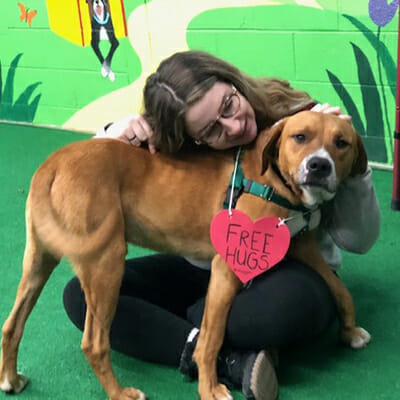
Kristy with a fetching tails dog offering free hugs. Photo Credit: Kristy Michalski
me’ slogan written on it. The dogs have a chance to play and socialize with each other and hopefully taken in by a good family.
“Seeing a dog adopted is the most rewarding and challenging part,” says Kristy. “On the one hand, it’s hard to say goodbye, but we want our dogs to go to a good family and be happy.”
Kristy is passionate about helping dogs find their happily ever after. She understands every canine has its quirks, but all dogs are loving and want to be loved.
“Some people stereotype certain breeds of dogs as aggressive,” Kristy explains. “But they’re not inherently aggressive. They’re taught those behaviors, but no dog is born aggressive.”
Kristy explains that Fetching Tails accepts all dogs regardless of their medical condition or behaviors. They spend time and resources ensuring dogs receive the training, treatment and attention they need before they’re adopted. Most of their dogs have come from animal control, where they take in dogs that are at risk of being euthanized. No matter what their condition or background, Kristy offers support and love to all dogs that come through Fetching Tails. Her favorite rescue story was with Paisley, a deaf dog who she trained using sign language. Paisley was able to understand the sign language and obey accordingly.
“Watching their progress is rewarding,” says Kristy.
Kristy loves taking the dogs on field trips, where they get in the car and drive to Starbucks for a “Puppuccino”— a giant dollop of whip cream that is safe for dogs to lap up and enjoy. Kristy says the adoption is the most rewarding part of the work. Having undergone 14 intense medical procedures – including having her leg amputated—she feels a strong kinship with the dogs and their resilience. Kristy gives credit to her volunteer work with dogs helping her stay strong through all of her medical procedures.
“People see me and they tell me to take a break,” says Kristy. “But I tell them my hands are full but my heart is more full.”
You can help Fetching Tails by making a financial donation or donating items. If you’re in the Itsaca area, consider fostering a dog.
Louisiana Woman Serves as Advocate for Children in Need
Meet Daily Point of Light Award honoree Lisa Mohr. Read her story and nominate an outstanding volunteer or family as a Daily Point of Light.
Lisa Mohr has taken on various volunteer roles all throughout her life, but when her last child graduated high school, she knew she wanted to use her newfound time to do even more for her community. That’s why eleven years ago, she became a Court Appointed Special Advocate, also known as a CASA, in her Baton Rouge, La. community. As a CASA, Lisa is a specially-trained and supervised volunteer advocate on behalf of children who have been removed from their homes due to abuse and neglect. She serves as not only their voice within the court system, but also as a someone the child can turn to while they go through one of the most traumatic experiences of their life.
Lisa is currently working on her 17th case as a CASA, and over the years has served 23 children ranging from infancy to teenagers. While working on a case, she meets with the child, their parents, foster parents, teachers, doctors, counselors and more in order to build a report she will present to the judge presiding over the case. She must visit the child she is appointed to in person at least once a month, although she personally usually sees them more often, checking in on them and serving as a source of comfort. Lisa says while her volunteer work can be challenging, it is by far the most rewarding and meaningful work she has done.
Describe your volunteer role with Court Appointed Special Advocates (CASA).
I am a volunteer advocate. This is a volunteer position and I am supervised by employees of CASA, a nonprofit organization. I am very closely monitored because this is important work that we’re doing here. I spend my time working with children who have been removed from their homes resulting from abuse and neglect. When the Department of Children & Family Services gets a call for abuse and neglect, it’s often times an anonymous call. Then they’ll turn it in and investigate it. If they find there is cause, they will move to the court system to have the children removed depending on the severity of the issue. I don’t become involved until after they’ve had a hearing and the judge has decided to put a hold order and they remove the children. If they do, then a court case will come and the judge will ask for a CASA.
The first essential thing I do is a build a rapport with everyone involved in the case — with the children, the parents, the foster parent, with whomever’s home their in if they were moved to a family member. I build a rapport and then we work together. Our job is to advocate for the best interests of the children as they navigate the court process, so I’m with them every step of the way. I mostly just offer comfort and support to these children, and then I make reports. I have reports that I turn in to the judge. He uses my reports in a different way than he uses the other reports because I’m a volunteer and I’m an advocate for the child. I am the child’s voice at court.
I’ve had [children of] all ages. I’ve had 17 cases and 23 children. It’s been eleven years. Currently right now I have two different infants. Sometimes I do two cases at a time because it doesn’t really require too much work in this case, because they’re with foster parents and they’re basically healthy. I go and I visit them and I advocate for them. If they need services like Early Steps intervention or evaluations, I make sure that they get that. If it’s a school-age child, I go to school and I check with counselors and teachers, I get reports, and I’ll sometimes just go eat lunch with them or visit. Also, I will take them on little activities. It’s my duty to visit with them once a month. It’s part of the job description. I must have a face-to-face contact with my children at least one time, but many times I do more often. Of course, I’m in constant contact if something comes up. Sometimes I’ve had some issues where the kids haven’t been doing too well in the foster home and I need to really keep a close eye on that. In that case, I’m over there maybe once a week popping in, checking, going to school, talking to the counselor. … Sometimes I drive them to visits, sometimes I meet them at the doctor, those kinds of things. It just depends on what needs to be done, because each case is different.
Why did you want to volunteer with this organization?
I’ve always volunteered my time when I had small children in the schools. We’re part of the Catholic school system so I always did a lot of Catholic school [volunteer] work. Once my child graduated from high school, my last child, I realized I needed to do something a little more in the community. I was just looking for more. This organization fits my needs. That’s why, obviously, for eleven years I’ve been able to do it. This work is challenging, I will say that. There’s a lot of ups and downs and there’s a lot of disappointments, but there are so many joyful times, too. When things come together and a child is adopted — I’ve had three adopted — or if they return to their family members and everything seems to be fine, you know those are wonderful, uplifting times. The reason I like this work is there’s a beginning and an end to it. You work toward a goal, and most often we’ve been successful in our goal that I can see.
Why is it important for children to have an advocate?
I think it’s essential. I’m there as a personal support for these children. I’m a source of comfort and I answer their questions and I help them through it. It’s somebody that has extra time, because these Department [of Children & Family Services] workers, they don’t have the time I have. They might have 30 cases and I have two. I’m available. If they have my cell phone number, [the children] can call me and ask a question or if they need something, and I can do my best to answer it. It’s a nice, familiar face. I sit with them in court and I bring little toys and games to play to occupy their time, books to read, snacks to eat. I help the time pass and then we go in. I think everyone has done very well. This is a very traumatic time for them. They miss their parents and this is hard. This is the hard time until we can get it all straight.
What’s been the most rewarding part of your work?
The most rewarding part is when we have success. It is building that bond with that child and seeing them be OK, and seeing a resolution to the case and knowing that we did the best job we could do for them, and they’re happy and they’re settled and it all worked out well. I can’t say that happens every time, and sometimes I don’t know more than I know. Some of them I feel like they were returned and doing OK, and I have to just hope and pray that they are well. Some of them, the ones I keep in track with, I know they are OK. I really wish I could know everything about everyone of them, but time moves on and everybody moves past this process. Sometimes they don’t really want to remember this. Sometimes it’s hard to remember what they went through in this. That’s why I step back, I see what they need from me. That’s mostly what I do, I just see what everybody needs from me and I do my best to give it to them, and just bring a little light and happiness.
One of those little boys I would take to the park, and I made some little homemade cupcakes, just simple little cupcakes. He was like ‘oh my goodness, these are so good.’ He says, ‘Miss Lisa, every time we come to the park, can I please have some cupcakes?’ He just loved sitting on the picnic bench and eating the cupcakes. See how easy that was? That was an easy, little thing I could do for him. I did it the best I could. Sometimes our visits were quick, but I made sure I had cupcakes for him as much as I could. That’s just a simple thing.
Lisa Mohr, center, speaks with some of the children she had advocated for, during a holiday event sponsored by the National Charity League in Baton Rouge, La./Courtesy Lisa Mohr
What have you learned through your experiences as a volunteer?
I have learned a lot. One of my things I always say is, when you come into a new case, leave your judgment at the door when you go to visit someone. Everyone doesn’t live the same way we live. Everyone doesn’t mother the same way I mother. We have to make sure that the child is safe, secure, and in a home that’s a good, safe home. As far as all the things that maybe you were raised or I was raised, not all of us were raised the same way. It’s important to know that. I learned a lot about the children’s world. They have a lot of anxiety that builds in their home life. When their mothers are mentally ill or on drugs, they don’t feel safe when they wake up in the morning. They don’t know what they’re going to see when they get home from school. I’ve learned about that, too. I try to pay close attention to what’s going on and don’t judge and do my best to make sure everyone gets what they need so they feel OK. The parent is trying to work her case plan to get her child back. I work with her too, because I want every child to be with their own parent if we can. I want that to happen for them if it’s possible. Sometimes it’s not. I’ve had plenty of them that it’s not possible. But that’s the main thing that I learned, just cultural awareness and differences, and the way we live and work, and needs people have and how they manage their lifestyles. They’re learning about me, they ask me questions all the time, too. I think it’s a win-win for all of us.
What should someone interested in becoming a CASA know?
I work closely with the Department [of Children & Family Services] and family members, parents, foster parents. We always work to achieve a goal of a stable, safe home for each child. Our primary goal is advocating for the best interest of these children. It’s something I think anyone can do. It is a rewarding opportunity to meet people, to work with people and to help children, our greatest resource in this country.
Anybody can do this volunteer position. All you have to do is care about children and be organized and responsible. We have to make reports and we have to show up for court, but I will tell you that if I’m out of town, my supervisor takes care of everything for me and she’ll give me a report. It’s not like it’s something I have to give up everything for. This can work in anyone’s life. It’s so rewarding. It’s one of the most rewarding volunteer opportunities. I’ve done a lot of different volunteer opportunities, I’ve had plenty throughout my years, but this is the one I’m keeping. I really see the value in this, and that’s what makes me want to keep doing it.
What do you want people to learn from your story?
How important this volunteer opportunity is. It’s so important that we care for our young children in our society. If our parents can’t do the job or need help doing the job, we as a community can try to help them fill the gap here and do what needs to be done to make them good, solid citizens. Children are our future and we have to keep them safe and secure, educate them, and provide homes for them so they can be good citizens.
Why do you think it’s important for others to give back?
I think it’s essential because if you have this opportunity and have some time, and it just depends on how much time you have, anyway you are able to contribute back to your society and to your community, you get rewards tenfold. It’s just a wonderful, wonderful feeling if you can give your time and help others in some kind of way that’s meaningful. I find this particular job very meaningful and it’s so worth my time. I get such a reward, and I’m meeting some wonderful people. Some of these foster mothers that I’ve formed relationships with, they’re lovely people. Totally different from me, and I have really, really enjoyed getting to know them and keeping in touch with them. That’s an added bonus, too. I have all these added friends to my life, different people who are wonderful additions and we carry them on through life.
Financial Planner Volunteers to Help Impoverished Community Make Smart Money Decisions
Meet Daily Point of Light Award honoree Kristin Pugh. Read her story and nominate an outstanding volunteer or family as a Daily Point of Light.
Kristin Pugh was raised by a struggling single mother, and says as a young teenager, she remembers a man wearing a suit coming to their apartment with paperwork for her mother to sign. Only later did Kristin realize what had happened that day: her mother had declared bankruptcy in an effort to clear away the credit card debt incurred buying items to keep her young family afloat. Now 36-years-old, the Smyrna, Georgia resident is leveraging her skills as a financial planner to serve others who are experiencing hardships similar to what Krisitin grew up with.
As the volunteer director of Community Outreach and Pro-Bono Planning for the Georgia chapter of the Financial Planning Association (FPA), Kristin says she knew that to secure her financial future, gaining financial literacy was critical, an education she is now sharing with others. Providing guidance to individuals and families in addition to hosting financial workshops, Kristin is helping to stabilize lives through her service, and has connected with over 100 individuals in her community since 2015.
What inspires you to volunteer?
You don’t think about money as a kid, and this isn’t a topic really taught in school at a younger age. The money my mom was spending was for items like our clothes for school. She declared bankruptcy to start anew. That was instructive for me. I realized that I wanted to use the knowledge I had to help others faced with the conditions I grew up with. That motivation is what drives my service and quest to volunteer.
Kristin Pugh has helped over 100 individuals improve their financial literacy in her community since 2015 as a volunteer for the Georgia chapter of the Financial Planning Association./Courtesy Kristin Pugh
Describe your role with Director of Community Outreach and Pro-Bono Planning for the Georgia chapter of the Financial Planning Association (FPA).
We provide one-on-one sessions to evaluate the financial situation of our participants and provide guidance. We also host workshops on specific topics, and have partnered with a number of other organizations in the community to provide comprehensive support.
Share one personal story with me from your volunteerism?
Recently, I met with a woman who was being offered guidance from Atlanta Volunteer Lawyers Foundation and our organization. She’s 68, in great health, but we slowly started to uncover that she had a few high interest credit card accounts that I could provide guidance on. Our conversation then turned to her family history. She has a great-grandchild and she was giving me advice on having children. Moments like that make me realize that this is so much more than just providing guidance for stronger financial situations. By establishing trust, you are developing a connection and helping people reach their financial goals and live better lives.
What’s been the most rewarding part of your service?
The rewarding parts in my volunteerism and day job are the same. It’s when the client has that ‘a-ha’ moment. You can see it in their eyes and then you affirm that thought for them. With every interaction, I feel like I’m making a difference. That’s what keeps me going.
Kristin Pugh: “You don’t think about money as a kid, and this isn’t a topic really taught in school at a younger age. The money my mom was spending was for items like our clothes for school. She declared bankruptcy to start anew. That was instructive for me. I realized that I wanted to use the knowledge I had to help others faced with the conditions I grew up with.”/Courtesy Kristin Pugh
How do you hope to inspire people by your volunteerism?
I hope to inspire people to use the knowledge they have, whether it be for landscaping, teaching or engineering. Give yourself to somebody and don’t expect an outcome or reward for yourself. Life is about building relationships and sharing knowledge.
In one word, what does volunteering mean to you?
Peace. When you find yourself doing something, and time just goes away, that’s when you’ve found something you truly love.
What have you learned through your experiences as a volunteer?
Finances are historically taboo, people have always been told that you don’t talk about money. When someone opens up and tells you about their financial situation, that’s a hugely trusting moment that you’ve got to take seriously.
Do you want to make a difference in your community like Kristin Pugh? Find local volunteer opportunities.
Retired Nurse Extends Care as a Volunteer to Hospitalized Patients
Meet Daily Point of Light Award honoree Elaine Wilson. Read her story and nominate an outstanding volunteer or family as a Daily Point of Light.
As a career nurse for nearly 50 years, Elaine Wilson was dedicated to her patients and their wellbeing. Now, as a hospital volunteer, the 78-year-old Georgetown, Indiana resident is able to focus on comforting hospitalized patients, connecting with thousands over a decade in service.
As a hospital volunteer at Norton Hospital in Louisville, Kentucky, Elaine has logged thousands of hours of service spreading cheer to patients. Manning the hospital’s “Comfort Cart” weekly, Elaine distributes activities and kindness to patients and their family members. Accompanied by her husband of 56 years, Elaine’s volunteerism puts her right back at the bedside of her beloved patients.
What inspires you to volunteer?
When I go into patient rooms, these people have stoic faces, but you know they have concerns that they are dealing with. I’ll say (starts to sing): ‘Good morning, my name’s Elaine, I’m a Norton volunteer, and I’m here to bring you cheer!” I enjoyed being a nurse, and now I can really enjoy spending time with these patients in a different capacity.
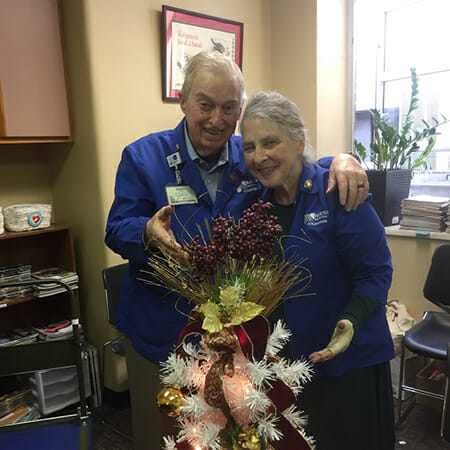
A retired nurse, Elaine Wilson is continuing her service to patients through volunteerism, connecting with thousands thus far at Norton Hospital. Elaine pictured with her husband, Wilbern Wilson. /Courtesy Elaine Wilson
Describe your role with Norton Hospital.
As a hospital volunteer, I bring the “Comfort Cart” around to our patients. Crossword puzzles and Sudoku, magazines, stress balls, coloring and more, we offer activities that are easy for patients and help to take their minds off their hospitalization, even for a bit of time. We also hand out candy to hospital employees.
Share one personal story with me from your volunteerism.
Sometimes I’ll sit down in a patient’s room and just talk to them. Sometimes they don’t want to talk, or sometimes they’ll open up, and all of a sudden, their mood changes. They’ll tell me that my visit made their day. Our time with patients is very personal, we share personalized “cheer cards” that include special messages to our patients, and also prayer cards that are given to the hospital chaplains.
What’s been the most rewarding part of your service?
It’s rewarding to help people relax and give them something else to do besides wallowing in their sickness and focusing on what’s going on physically.
In one word what does volunteering mean to you?
(Laughs) Giving.
What have you learned through your experiences as a volunteer?
As a volunteer, I’ve learned to look beyond a person’s external look, and see the person within. Through service, you realize, that’s a body, soul and spirit. No matter how the person looks on the outside, all of a sudden, you see the real person, and you’re able to connect with them and make them happy.
Your husband, Wilbern, is also a volunteer at the hospital.
Wilbern: Yes, I give out coffee and tell jokes. Did you hear about that oyster that was stingy, it wouldn’t give up its pearl? Shellfish!
How can readers help?
Please visit the Norton Hospital website for more information about how you can give back.
Healthcare Professionals Start Nonprofit to Organize Medical Mission Trips to Underserved Communities
Meet Daily Point of Light Award honorees Shane Groover and Sarah Huovinen. Read their story and nominate an outstanding volunteer or family as a Daily Point of Light.
Billions of people, making up two-thirds of the world’s population, are living without access to safe or affordable surgery. Smyrna, Ga.-based healthcare professionals Shane Groover and Sarah Huovinen are doing what they can to help as many of these people possible, through starting their own nonprofit, Ethical Medical Missions.
Ethical Medical Missions coordinates with volunteer healthcare providers, including surgeons, nurses and technical staff, to send them on international medical mission trips that will provide free healthcare to those in need. The organization partners with existing charitable organizations, takes care of the administrative work, secures the necessary funding, and organizes device and supply donations, in order to make it seamless for interested healthcare providers to volunteer. Shane and Sarah, who are the president and vice president of Ethical Medical Missions, started the organization in August after years of working in the healthcare industry — Shane currently as the owner of a small medical device distributorship that focuses on spinal implants, and Sarah as a neurophysiologist.
Last year, they organized the nonprofit’s first trip to Peru. Along with a team of three surgeons and about fifteen other volunteers, they provided necessary spinal surgeries to about 30 locals, as well as education to the local hospital staff. They also engaged in additional humanitarian work by assisting with school-building renovations and handing out donations to the local community. Ethical Medical Missions will be returning to Peru this June, and plans on organizing another trip elsewhere before the year is over.
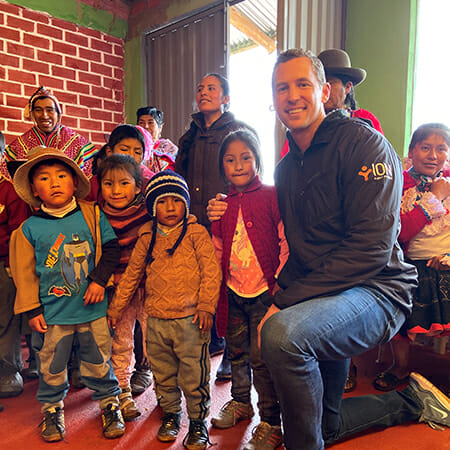
Shane Groover, right, is the president of Ethical Medical Missions, where he helps organize medical mission trips such as one to this Peruvian town./Courtesy Shane Groover
Describe what Ethical Medical Missions does.
Shane: We have worked in the advanced surgical healthcare industry for quite a whole now and … we’re passionate about bringing surgical and advanced healthcare to underserved communities around the globe. There’s a big need for surgeons to go on these medical mission trips in order to help out populations in underserved and impoverished communities that don’t have that access to surgery and advanced healthcare. We partner with both the health providers that go on these mission trips, and the charitable organizations that have already established mission trips in their countries. We identify the opportunities that both work for the charities and also with the healthcare providers in order to set them up with a medical mission trip that works for them. Then we take care of all the administration, funding, getting all the paperwork, finding the drug donations, partner with the hospitals to get instruments and supplies. Then we go on the mission trip with them to help provide support. Sarah does neuromonitoring. I work in the OR with these guys. We bring surgeons to foreign countries to do medical missions.
We’re not just doing medical mission trips here. We really try to focus on education as well. The whole thing is you can give a man to fish and feed him for a day, or you can teach a man how to fish and you’ll feed him for a lifetime. When we are in the countries that we’re in, we try to focus on an education piece — teaching the local surgeons, teaching the local staff, about how to deal with some of these patients that really have some advanced problems, whether it be palliative or basic surgery. We want to leave an impact that these guys can draw on, education that they can draw on once we leave, because there is still an existing problem after the five or six days we leave the country. They still have tons and tons of people who need help. If we come in there and do surgery and we leave and we don’t teach anybody how to do the same things, then we’re not making as big of an impact as we possibly can. The focus really is on teaching and education as well as providing surgery once we’re in the country.
Why did you want to start this organization?
Sarah:I had done medical mission trips these past few years through work, and I always knew I wanted to be more involved with that type of thing and do as many of them as I could. Shane came to me with the idea of starting this charity and I was all about it. I knew it was exactly what I wanted to do and with my background and his, we would be able to provide more trip options for people who want to go, and make ourselves useful.
Shane: We’ve gone on these before and we’ve seen a need. If you go on the medical mission trips, you do one or two of these and your heart is changed forever. You see some of the most impoverished people you’ll ever encounter, who don’t have access to the basic healthcare needs we’ve come to enjoy and take advantage of here in the United States. When you see that kind of stuff, it really stirs you. It’s always stuck with me since I was in the military and traveling overseas and saw it. Sarah has done medical mission trips as well. Then taking our experience, where we are in with a lot of these surgeons and advanced healthcare practitioners who really saw a need. There’s kind of a bell curve of volunteerism I see. You’ve got the guys who are all about volunteering. They want to do this, they really actively engage in some sort of organization, they’ll take the initiative in order to set their own mission trips up. Then you have the other side of the bell curve, that no matter what they do, they’re just not interested in volunteering, they’re not interested in going outside the U.S. For whatever reason, they’re just not interested in it. We’ve come to see the vast majority of surgeons are open to the idea, they’re willing to do these medical mission trips, but they don’t want to do all the administration, all the paperwork, all the finding the funding, getting donations from medical device supply companies, working with the hospitals. They’re already busy doing all of that. That’s where we kind of take over — say you want to go on this mission trip, we’re going to work with the organization to make it as efficient and as beneficial to the host country and the charity that we possibly can.
What was your last mission trip to Peru like?
Shane: It was for about a week. We did surgery for about five days and then saw the sites and did some touring after that. We were partnered with a nonprofit called Eagle Condor and also a device manufacturer called Innovasis. We were able to bring three surgeons from all over the United States. One was from Denver, one was from Salt Lake City, one was from Washington, D.C., and we teamed up in Peru. We went down to Lima, teamed up with a hospital down there, and assessed 30 patients that basically came in and — we were doing spine surgeries there — said they needed some sort of spine intervention. We worked with the three surgeons to do surgeries on these patients.
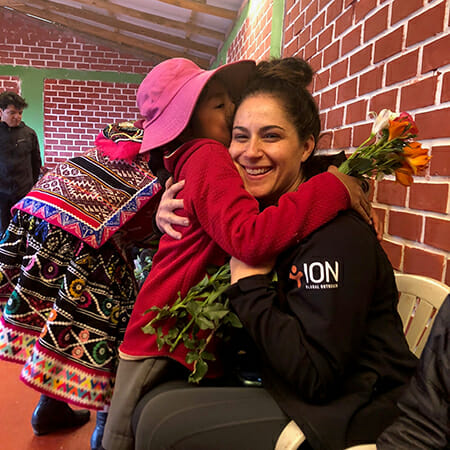
Sarah Huovinen hugs a girl in Peru, where Ethical Medical Missions traveled for their first mission trip./Courtesy Sarah Huovinen
What are your goals for Ethical Medical Mission’s future?
Shane: Right now, we’re pretty new, so we’re partnering with existing organizations that have medical mission trips set up. Our ultimate goal is to set these things up ourselves and be able to provide different opportunities throughout the year for them to go as a part of Ethical Medical Missions. That’s the ultimate goal, to expand it to where we are doing all of the set up for the mission trips and doing it all ourselves. Our goal [was] to go on one last year, two this year, and then hopefully next year to go on four, and then start setting up our own medical mission trips in hopefully year three. We don’t know where our second trip is going to be. It kind of depends on the surgeon who we are partnering with. We ask them a bunch of questions on where they want to go, what organization they’re interested in, and if it depends on a time frame. Then we match the medical mission trip with what their desires are. It could be anywhere.
Is there a story from any mission trip you’ve been on that has really stayed with you?
Sarah: One of the girls we did surgery on the last time we were in Peru, she was 23 or 24, mother of two. She had scoliosis and we did a huge fusion on her back. She was just amazing. She was so thankful. We saw her up and walking two days after surgery. It completely changed her life. She was at the point where she couldn’t pick up her kids and she was just so thankful and she was walking around the hospital, and hugging us and hugging surgeons, and taking nothing but Tylenol. It was just amazing.
Shane: These people when they come into surgery, they have to bring their own postoperative medication. If they can’t afford any, then you don’t really get any unless we’re able to provide those medications, which on this trip, we really didn’t have any. The lady walked in for a huge surgery and only had Tylenol for the postoperative medication. She was as happy as she could possibly be, because she knew the surgery had taken care of the biggest portion of [her] big problem. She had some postoperative pain, but she was still smiling and loving and hugging on all of us that she was able to receive the surgery, even though she was in a great deal of pain, because we were able to provide her basically a new life where she could play with her kids.
What’s been the most rewarding part of your work?
Sarah: For me, just seeing the patients after surgery. It’s amazing how happy they are and thankful. It completely changes you.
Shane: When you go into these hospitals, there’s not a lot of hope. If they do have access to surgery, most of the people in these areas cannot afford it at all, so even if they have the access — which a lot of places don’t even have the access to surgery — they can’t afford it. Coming in to places that really do not have hope of any type of restoration or healing and being able to talk to them and really provide first-world healthcare, and giving them that hope that you know that you won’t have to live with this pain or this problem for the rest of your life, we’re going to come in and take care of you and do it in a professional manner. Then also seeing them postoperatively, and the joy and just how effective surgery can be for people who really don’t have hope.
What do you want people to learn from your story?
Shane: The biggest takeaway, I would say probably, is the education piece of it. There’s the fact that there’s five billion people out there in the world that don’t have access to surgery, and that’s about two-thirds of the world’s population. I think people in the United States do not understand how big of a problem healthcare in other countries really is. We have the ability to walk into a pharmacy or walk into an acute care place or go see our doctors, and it’s just not a reality for a majority of the world’s population. I don’t think we understand that as a collective group in some of these first-world countries. We want to bring awareness to how big of a problem not having access to adequate, advanced healthcare is.
What have you learned through your experiences as a volunteer?
Shane: I would say probably the biggest thing I’ve learned is you can make a difference if you have passion. If you have an idea or you have something that you want to see changed and you want to help improve, you really can make a difference. It doesn’t take someone else going in there and doing it for you. I think there’s a lot of people that want to do good things but don’t think they can because they don’t have the time, the resources, the initiative, anything, and really it just takes a little bit of heart and a little bit of initiative and you really can impact a lot of people’s lives.
College Student Sends Baseball Equipment to Underserved Communities in Africa
Meet Daily Point of Light Award honoree Max Bobholz. Read his story and nominate an outstanding volunteer or family member as a Daily Point of Light.
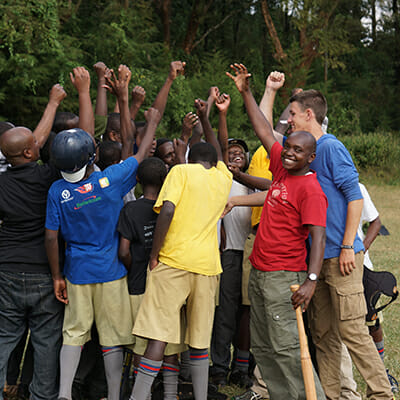
When Max Bobholz’s coach passed away, the 12-year-old baseball student was trying to find ways to work through his grief. He witnessed the Uganda team become the very first baseball team to represent Africa while watching the Little League World Series. The team from Uganda, however, lacked equipment. They only had seven gloves to share between the entire team and not all of the players had uniforms or hats.
Max knew he and his friends had spare equipment in his garage so he decided to gather any extra equipment and send it to the Uganda baseball team. For the next two years, sending extra baseball equipment became his mission. The idea has since grown into Angels at Bat, an organization that has sent about 10,000 pieces of equipment to Africa. The group is currently sending equipment to Kenya and Nigeria and working to expand to other African countries.
Friends and family supplied the majority of the donations in the early days, then word of mouth carried it throughout his hometown, the state and now, onto a national level. In the early days, Max was trying to figure out how to coordinate getting the equipment to a team.
“We had all this equipment and we were just trying to get it to someone,” says Max. “And so when we finally reached out to someone and they invited us to go to Kenya – I said yes. I wasn’t going to turn that down. My mom and I packed 19 suitcases, all filled with baseball equipment we had fundraised to pay for the extra cost.”
The first trip to Kenya inspired Max to continue sending baseball equipment to underserved communities, and knowing he could do more to help, Max continued to grow his nonprofit.
Max and the Alliance High School (located in Kikuyu, Kenya) finish a day of training/instruction with a chant of their team name — “Bison”. Photo Credit: Max Bobholz
Shipping equipment to the teams is a challenge. Usually, a team will reach out to Angels at Bat through email, and then Angels at Bat coordinates with the team to ship the equipment to their area. Sometimes, the team has a family member traveling from the U.S. In that case, Angels at Bat puts together a few suitcases of baseball equipment to send with the family member back to their hometown. They’ve also been able to make a few freight when they’re sending equipment to an area they don’t normally service.
“It’s not always easy for [Angels at Bat] to send equipment through organizations that offer that service,” says Max. “It’s either not affordable or we can’t work with them. It’s not always cost-effective.”
Max has connected with a group in Connecticut called American Friends of Kenya to help make larger shipments to communities. He and his dad – and other family members who help with the nonprofit— drive from Green Bay to Connecticut with a U-Haul filled with baseball equipment. Six months later the equipment arrives in Uganda.
Max acknowledges that he tries to find a balance between managing his nonprofit and college. However, he says college often takes precedence over nonprofit.
“I don’t want to say [Angels at Bat] is a hobby because it’s really become a passion,” says Max. “When I’m doing schoolwork, I choose to work with the nonprofit expanding whatever way possible. I’m always emailing people who want us to ship equipment. Whenever I have a free weekend I spend it with the nonprofit.”
Max says the number one thing Angels at Bat needs are donations. “We’ll always accept equipment donations. But that’s the easiest thing to get. Right now, we really need monetary donations.”
He continues to grow his nonprofit and spread the joy baseball to underserved communities.
Idaho Teen Volunteer Tackles Low Student Proficiency Rates Through STEM Opportunities
Meet Daily Point of Light Award honoree Lilian Smith. Read her story and nominate an outstanding volunteer or family as a Daily Point of Light.
17-year-old Lilian Smith says she discovered competitive math at a young age, but lacked access to experimental science until she reached high school. Now interested in pursuing a future in chemistry, the Coeur D’Alene, Idaho teenager is doing her part to battle low math and science proficiency rates in her community and expose young children to more STEM education.
Launching Growing the STEM alongside her younger sister, Adeline, in 2017, Lilian is sharing her love for STEM through youth development programs across more than a dozen schools in her community. Offering fun ways for elementary and middle school students to learn new skills and participate in hands-on science and math education, Lilian has impacted more than 400 young students thus far.
What inspires you to volunteer?
I am inspired to volunteer because of the impact I see my service making. Our school district has a high college drop-out rate because of low math proficiency, so as a volunteer math coach, to have 5th graders tell me how math is cool, and how super excited they are, you can really tell that you’re making a difference.
Explain your passion for STEM.
Growing up, I went to a small middle school that didn’t provide a lot of opportunities for science, but I had a passion for competitive math. As the only freshman taking honors chemistry in high school, I learned how to incorporate my love for competitive math but in a more realistic situational way. Taking that class was one of the most important decisions in my life, as I now want to pursue chemistry in college.
Describe your role with Growing the STEM.
As co-founder, I serve as head coach at one of the schools we offer programs at, and run the math and STEM programs. I also help to plan STEM and competitive math activities, and meet with school leadership to establish additional programs. Additionally, I am the main recruiter for student volunteers and I manage our website.
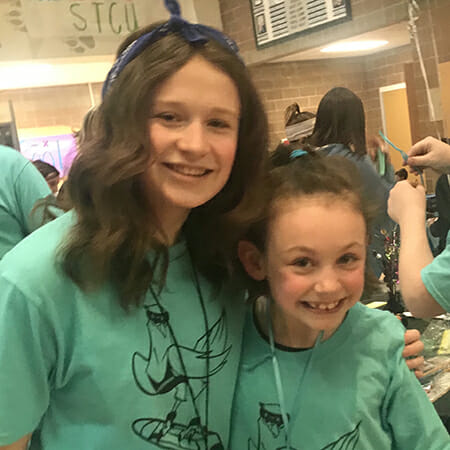
Lilian Smith pictured with one of her students at a math competition./Courtesy Lilian Smith
Tell me about the programs you offer.
We currently offer three different programs across 13 schools in our district with about 50 volunteers, and we hope to expand. The programs include:
STEM club: Focused on science and scientific experiments.
Peer tutoring program: Older elementary student volunteers mentoring younger elementary students. Statistics show that peer tutoring is helpful in a classroom.
Competitive math team: We have several math teams across our participating schools, and older students help to prepare younger students for an annual math competition.
Share one personal story with me from your volunteerism.
Last year, we had a 4th grade student who hated math join the program. His parents had encouraged him to join Growing the STEM and he refused because he thought it would be a waste of time. His parents forced him to come to our first practice, just to give it a try. The student has continued coming back to our programs, and he’s now one of our strongest students. He’s always super excited to learn more math. It’s awesome.
What’s one way you hope to inspire others in your service?
If everyone takes their own passion and they go out and try to solve that problem, we can solve each other’s burdens. If everyone did something positive for their community, it would make the world a better place.
What’s been the most rewarding part of your service?
There are a lot of problems in the world, but through education, if you improve the lives of children and get them excited about the world, they can get out there and help to solve those problems. Our mission is to encourage kids to learn and problem solve.
In one word, what does volunteering mean to you?
Impact.
When you’re not busy volunteering or at school, what do you do for fun?
We live near a lake, so a lot of my activities center around the lake including tubing and surfing. I also go to coffee shops with my friends, and drive around with the windows down and the music really loud (laughs).
How can readers help?
Please visit our website, Growing the STEM, for more information about how you can help.