North Dakota Woman Serves to Brighten the Future for Homeless Children with “Golden Drive”
Meet Daily Point of Light Award honoree Sue Baron. Read her story and nominate an outstanding volunteer or family as a Daily Point of Light.
Sue Baron has spent a lifetime serving others. First being put to work in a kitchen at the age of 14, the former waitress says a single crayon left behind on a restaurant table inspired her current volunteerism, helping to improve the future for homeless children.
Launching Golden Drive Homeless Kids in 2013, the 53-year-old West Fargo, North Dakota resident says she lacked awareness about homelessness in her own community, however recognized an opportunity to help others in need. Through donations including food, clothes, baby supplies, school supplies, hygiene items and other basic necessities, Sue has given back to thousands of children struggling due to homelessness.
What inspires you to volunteer?
I’d volunteered before, but this was different. I was just one woman with one crayon and an idea. I just kept believing and believing in this idea of connecting people in our community, connecting them to resources and to shelters. I’ve worked in the industry my whole life, I’ve met thousands of people, and I believe everything has worked its way to this.
Tell me more about how a crayon inspired your service.
At my waitressing job, we’d provide three coloring crayons to each table, and whether they were touched or not, the crayons were thrown away at the end of the meal. One day I picked up a crayon from the table and put it in my apron. I thought that I’d bring the crayon to a local shelter along with a coloring book for a child. The next 30 days, I went door to door, business to business, soliciting donations for children in shelters, which eventually led me to launching Golden Drive Homeless Kids in 2013.
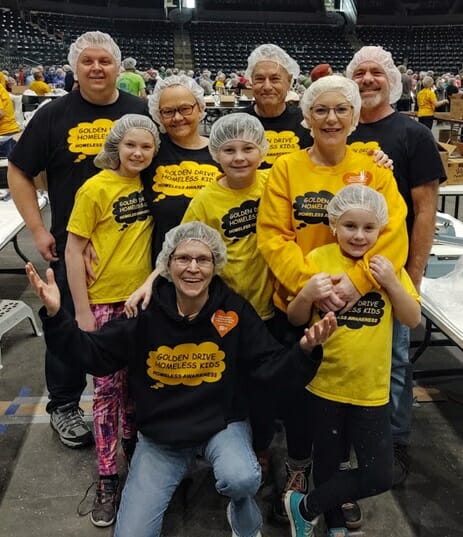
Sue Baron (pictured) with Golden Drive volunteers at the “Feed our Starving Children” event in Fargo, North Dakota./Courtesy Sue Baron
Describe your role with Golden Drive Homeless Kids.
As founder, I am always creating something or doing something to contribute to the organization after I am done with my day job. We rely on donations, so I plan events and reach out to local businesses and supporters for assistance.
Share one personal story with me from your volunteerism.
There are so many beautiful stories. We once took a lot of young hockey players to the food pantry, and they were so, so excited to help. It was beautiful to bestow that act service on children, it was just gold.
Speaking of gold, what does the name, Golden Drive Homeless Kid, come from?
My love for the show, ‘The Golden Girls’ (laughs). People will see me around town and yell to me, ‘Stay golden, Sue!’
What’s one way you hope to inspire others in your service?
Don’t ever chase the dollar or material things. You’ll never know happiness.
What does it mean to know that you are making an impact on the homeless population?
It is very overwhelming. When I sit back and reflect, it brings me to tears. The road is always rocky in life. You’ve got to be able to turn things around and make it positive. My goal has always been to connect people, and that is what we are doing.
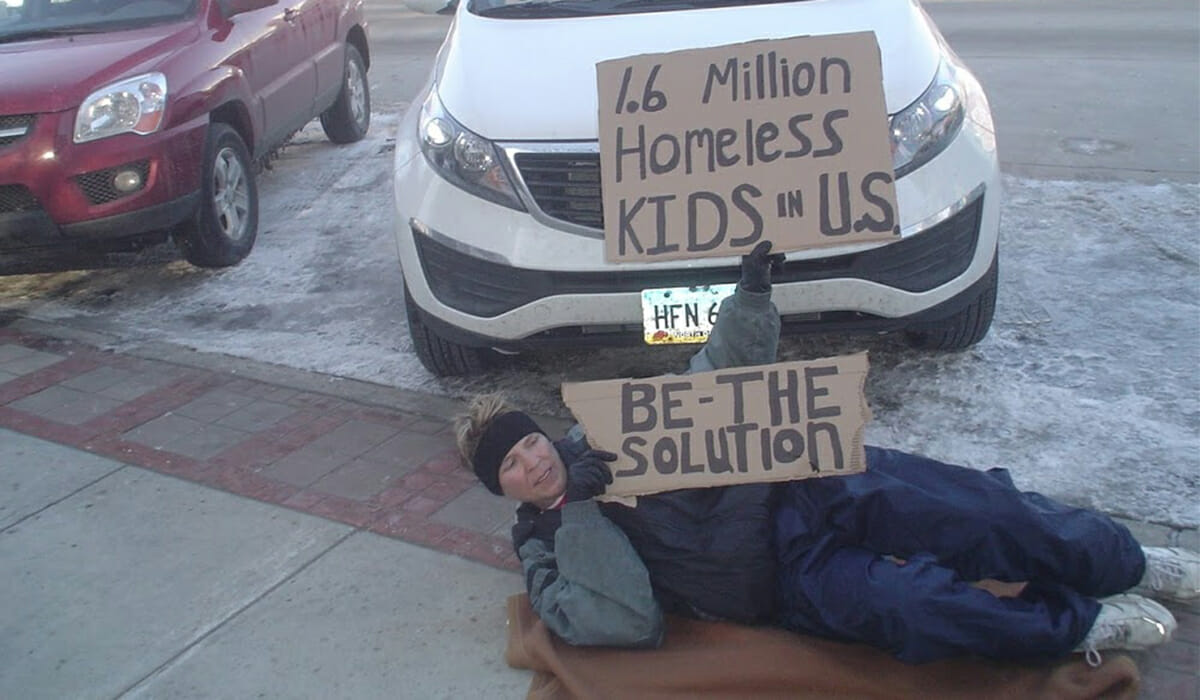
Sue Baron (pictured): “When I started the organization, I didn’t have extra money, and I didn’t have any education about homelessness in our community, but I knew that if we could raise awareness about children in need, I could help homeless kids. These children are our future and truly our greatest assets.”/Courtesy Sue Baron
What have you learned through your experiences as a volunteer?
When I started the organization, I didn’t have extra money, and I didn’t have any education about homelessness in our community, but I knew that if we could raise awareness about children in need, I could help homeless kids. These children are our future and truly our greatest assets.
In one word, describe what volunteering means to you.
Happiness. And always believing in yourself.
How can readers help?
Please visit our website and our Facebook page for more information about how you can help.
Indian-American Teens Volunteer for Global Changes in Sanitation for Impoverished Communities
Meet Daily Point of Light Award honorees Simran Bhargava and Malika Rawal. Read their story and nominate an outstanding volunteer or family as a Daily Point of Light.
As longtime family friends, Simran Bhargava and Malika Rawal’s friendship is a bond formed over their shared Indian heritage. Making trips back to their family’s hometowns in India, the two Charlotte, North Carolina teens discovered the lack of sanitation within impoverished communities and an increased risk of disease transmission.
Simran and Malika formed HelpHygiene Foundation in 2016, offering resources and education to improve hygiene and decrease the transmission of noxious disease. Raising funds to purchase sanitizers, toiletries, bedding, water pumps and gently used shoes, 16-year-old Simran and 18-year-old Malika are helping to safeguard health in impoverished communities worldwide.
What inspires you to volunteer?
Malika: I live in America and I speak English. I‘d felt like I’d lost touch with my Indian side and culture. By volunteering and giving back, I am able to connect with people who need help in India and globally.
Simran: I am inspired to volunteer because of the reactions we receive from donation recipients. When we go to a shelter in the U.S., or travel to India, the individuals we are giving to are so happy for things that we take for granted. These reactions inspire me to keep on volunteering and motivate me to help even more people.
Tell me more about how your volunteerism is tied to your roots.
Simran: As Indian-Americans and the first generation in our families to grow up in the U.S., there’s a distinct difference in how we grew up compared to our parents. We are connecting to our roots through HelpHygiene Foundation by reaching back and helping others in need.
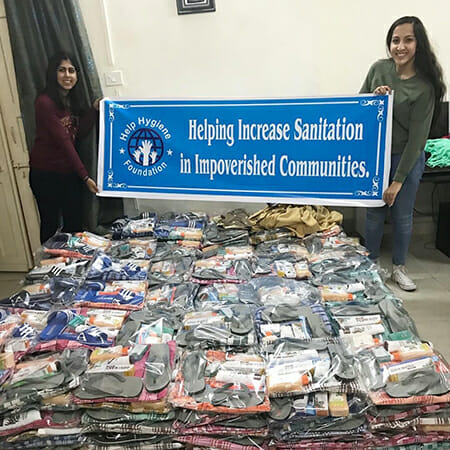
Malika Rawal (left) and Simran Bhargava (right) with about 700 donated sanitation packets of toiletries, shoes and towels to be distributed in India./Courtesy HelpHygiene
Describe your role with HelpHygiene Foundation.
Simran: A co-founders, we recruit other volunteers for our organization, we have about 60 members worldwide across North Carolina, India and also offer help in Africa through a partnership. We help our foundation members hold their own hygiene drives in their neighborhoods so our mission can be extended beyond our reach. We also fundraise, host events, and write grants to help support our organization financially.
Share one personal story with me from your volunteerism.
Simran: We traveled to India two years ago to personally hand out donations. We provided toiletries, shoes and floor mats to an Indian school because the school couldn’t even afford tables, desks or chairs. While I visited with the children, children who are our age, I realized the vast differences between my school and what they have. For me, that experience truly revealed the impact our organization is making.
Malika: I was contacted by a Hurricane Florence survivor for toiletries. She took four buses and a train ride so she could get the toiletries that day. That just showed her desperation and the circumstances she was dealing with. This woman had lost all of her belongings, and she was so grateful for what we could give her.
What’s one way you hope to inspire others in your service?
Malika: Anyone can be a changemaker. Do something that you care about and something that keeps you present and facing challenges that you see in the world. This cause hits home for us, and that’s why we’ve continued doing it for so long.
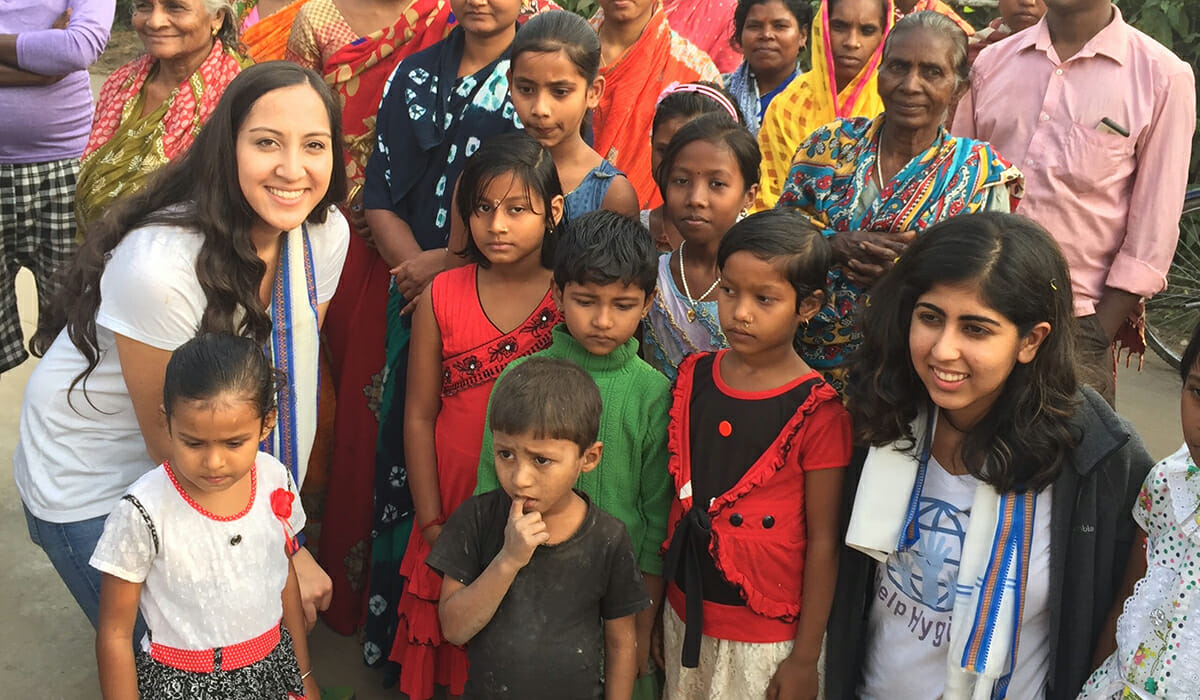
Simran Bhargava (left) and Malika Rawal (right) pictured with village residents in Calcutta, India distributing a water pump, sanitation packets and feminine hygiene products.//Courtesy HelpHygiene
What’s been the most rewarding part of your service?
Simran: My mom recently traveled to India for the foundation and donated items to the village she grew up in. Our organization has grown so much, and it’s so rewarding that we’re able to go back directly to where my family came from and give back.
Do you want to make a difference in your community like Simran Bhargava & Malika Rawal? Find local volunteer opportunities.
10-Year-Old Travels World to Promote Wildlife Conservation
Meet Daily Point of Light Award honoree Kate Gilman Williams. Read her story and nominate an outstanding volunteer or family as a Daily Point of Light.
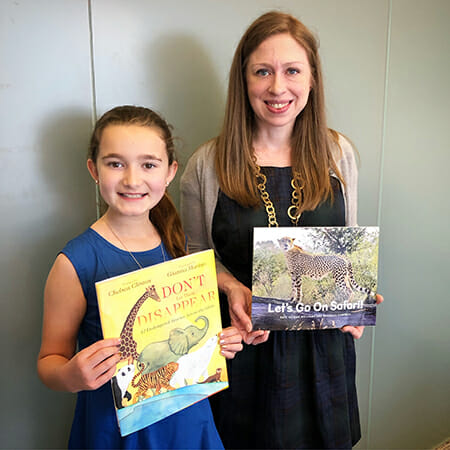
Kate Gilman Williams’ personal motto is “advocacy has no age limit,” and in only 10 years of life, she has certainly embodied that. After going on an African safari and learning about poaching when she was seven years old, Kate was inspired to become an animal advocate. She began writing a book along with her safari’s game driver, Michelle Campbell, about how kids can also advocate for animals. Since it’s publication last year, ‘Let’s Go on a Safari’ has sold over 2,000 copies, with all of the sales going to the three leading international organizations working to protect animals — the Sheldrick Wildlife Trust, the Jane Goodall Institute, and Global Wildlife Conservation.
Kate’s conservation work hasn’t stopped there. She’s an Education Volunteer for the Sheldrick Wildlife Trust, and she runs her own website about how kids can save animals. Kate’s also running a fundraising campaign at her Austin, TX school called ‘Quarters for Koalas’ which will donate all of its proceeds to the Adelaide Koala Rescue in order to help koalas injured in the Australia bushfires. Kate will travel to Australia in March in order to view the bushfire damage for herself. Afterward, Kate hopes to write another book about her trip, this time focused on the issues of climate change. Despite her young age, Kate knows she wants to spend her whole life as an advocate for animals, and dreams of being a game driver herself one day.
Points of Light spoke with Kate along with her mother, Lynn Gilman.
When did you first become passionate about saving wildlife?
When I went on my first safari in Africa, Michelle, my game driver, taught me so much about animals. One thing she told me is that humans were killing the animals. I was so surprised about that and I’m like, I need to do something to help. When I flew home, I had the idea to write a book, and I asked Michelle if she would write it with me and she said yes. Now I have my book called “Let’s Go on a Safari”.
Describe what ‘Let’s Go on a Safari’ is about and how it helps wildlife.
It teaches kids and families how to advocate for animals. It’s about my safari and you learn all about the animals in Africa. We hope you’re feeling like you’re in a safari. Every time a kid buys my book, they’re automatically supporting conservation, because all the sales of my book go to Global Wildlife Conservation which is based in Austin, the Jane Goodall Institute and the Sheldrick Wildlife Trust.
How did you pick which conservation partners you wanted to support?
I love the Global Wildlife Conservation because they inspire kids all over to get interested in being a scientist. Jane Goodall, she actually read my book and she loved it and wanted to be a part of it so now I feature her and her Roots & Shoots Youth Service Program in my book. The Sheldrick Wildlife Trust, I visited there and I just love the elephants and I wanted to help. They rescue the elephants whose mothers have been killed by poachers, and then once they’re ready to go back into the wild, they release them.
Kate, left, meets with Chelsea Clinton, who is holding a copy of Kate’s book ‘Let’s Go on a Safari.’ Kate donated 100 books to The Clinton Foundation’s literacy initiative “Too Small to Fail.”/Courtesy Kate Gilman Williams
Can you describe Quarters for Koalas?
When I found out that one million animals died in Australia [due to the 2019-20 wildfires], I really wanted to do something to help, so I started this new campaign, Quarters for Koalas. It’s kicking off at my school, Trinity Episcopal School, and all the kids are going to bring in quarters. I’m going fly to Australia and donate them to Adelaide Koala Rescue. It is based off of volunteers, and they rescue the koalas that were burned in the fires and rehabilitate them, and then when they’re ready to go back into the wild, they release them.
My friend [actress] Debra Messing is matching my donation of the quarters I raise. Animal advocates need to stick together, so I got in contact with her. She actually endorsed my first book, so when I asked her to match my donation, she was very willing to do it.
What else are you doing when you travel to Australia?
I’m visiting Kangaroo Island. It’s a perfect chance for me to experience what climate change looks like because one-third of the island was destroyed by climate change and over 25,000 koalas died. I’m going to be visiting and I’m going to be learning a lot about the island from a local expert. I’m going to be traveling around and we’re going to be visiting the animals that are left there and the part of the island that was destroyed.
Aside from Quarters for Koalas, do you have any plans for the future for continuing to help wildlife?
After I go to Australia, I’m hoping to write another book about climate change. I spend five hours a week on conservation and I’m an Education Volunteer for the Sheldrick Wildlife Trust. Recently, there’s a school [Crestview Elementary School] in Kansas City, Missouri, that I gifted an elephant to. My mom got contacted by the teacher [Leah Joerling] there. Their mascot was a cheetah and they told us that their kids loved animals, so I actually gifted kids third through fifth grade all a free copy of my book, and for the whole school, I adopted an elephant.
Lynn: This school has a really unique cheetah bedtime program, and the teacher reached out to me asking if Kate wanted to be a guest author. A lot of the parents in this community worked nights, and I love this story because the teacher felt so strongly that all these kids deserved to have a bedtime story. She’s used Facebook as a platform so that every night if mom and dad are at work, they can log in and be read a story, so it was really neat for Kate to be asked to be the guest author. Then we just decided we had to surprise the school with books and an elephant.
What’s been the most rewarding part of your work?
I think it’s so great that I’m inspiring kids everywhere and they’re wanting to take action.
Why do you think it’s important for others to give back to the earth?
Kids have a natural love for animals so if I can unlock that, I know they’re going to want to help. With my new campaign, I’m hoping that all the kids will want to donate quarters and it can make a difference.
What do you want people to learn from your story?
I want them to know that advocacy has no age limit and that they can make a difference, no matter how old you are.
Seattle Teenager Combines Entrepreneurship, Art and Technology for a Unique Nonprofit Approach
Meet Daily Point of Light Award honoree Chirag Vedullapalli. Read his story and nominate an outstanding volunteer or family as a Daily Point of Light.
When he was five, Chirag Vedullapalli decided to make his own way in the world. Instead of following in his mom’s steps as a basketball player, he gravitated toward art with his godmother. After moving to Washington when he was ten, he and his art teacher hosted an art expo at her house called ‘Blooming Hearts’. Kids from his art class came together and created paintings that they donated to Seattle Children’s Hospital. After hosting the event and seeing what a positive impact it had on not only the hospital but also the friends who participated, Chirag had a lightbulb moment.
“I realized that when you create opportunities for kids that they not only want to be part of [the event] but it allows them to be empowered to give back to the community,” he says. “They more than willingly would jump in headfirst in wanting to be part of it.”
Chirag wanted to provide an alternative to traditional volunteering and engage kids in something they genuinely enjoyed doing, rather than participating because they felt obligated or required.
With that incentive in mind, Chirag created Creative Children for Charity or otherwise known as 3C. Since 2010, Creative Children for Charity has worked with over 42 organizations and corporations in the Seattle area and out of state to support Creative Children for Charity’s work. Initially, C3 hosted events focused on art, much like ‘Blooming Hearts’. After hosting several events including a Guinness World Record event, they landed on entrepreneurship and technology as their main focus. To date, 3C has donated over 11 thousand volunteer hours, worked with more than 6,500 youth and supported over 17 nonprofits in the community.
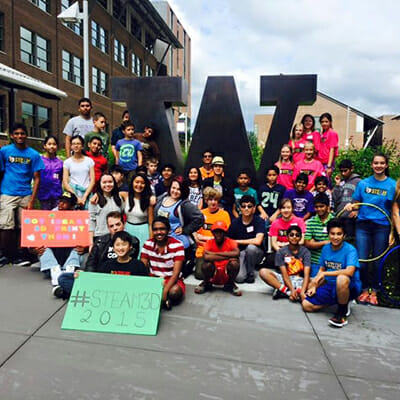
The Steam-3D Hackathon. Photo Credit: Chirag Vedullapalli
Chirag based Creative Children for Charity around three pillars: entrepreneurship, STEAM-3D and working with other nonprofits.
His first pillar, entrepreneurship, inspired him to start The Children’s Business Fair, the largest entrepreneurship event for kids in North America. It’s designed similarly to a farmer’s market except it’s for youth, by youth. Kids are given a chance at creating their product, designing their brand, practicing their pitch and pricing their products – all aspects of entrepreneurship. To achieve this goal, The Acton business fair provides a curriculum that helps them establish a business, even if it’s their first time starting.
“We take whatever their interests are and build it from the ground up,” says Chirag. “We help them build a product they can showcase. The fair is really exciting because it helps the participants grow as individuals, as well as provide an opportunity to donate part of, if not all of their earnings to a charity of their choice.”
Chirag wants to give the kids a chance to create something that they can sell or donate beyond the Children’s Business Fair.
The second pillar is STEAM-3D. Chirag believes that art is a crucial component of STEM because it allows kids to be innovative. This pillar is based on bringing together these two fields – STEAM (science, technology, engineering, art, and math). By combining STEM and art, students become more agile thinkers and provide the best option for kids to become global citizens. 3D printing was the perfect medium to introduce kids to technology while also incorporating creative ideas and thinking. STEAM-3D utilizes a structured curriculum, workbook and a web-based CAD (computer-aided design) program that allows students to optimize learning while having a great time.
“We realized there was a big opportunity gap in our community in Washington,” says Chirag. “When we did some research on it, we found out according to Forbes, that 30% of engineering jobs prioritized 3D printing. But there had only been ten schools with a 3D printing curriculum in Washington. So when we discovered this huge opportunity gap we decided we were going to be the ones to solve it.”
The teen instructors and advisors hail from Creative Children for Charity (3C) and have taught classes and sponsored hackathons at Coder Dojo in Bellevue and The Garage on the Microsoft campus. The registration fees from this class go to support other STEAM-hosted youth events in our community including a summer STEAM3D Hackathon.
They have seen schools K – 12 starting to adopt STEAM, and three other chapters have adopted Charity for Creative Children’s 3D workshop. It’s a growing operation, but it has a huge impact. Chirag wants to increase access to 3D printing design, as well as STEAM workshops. He says it’s been exciting to experience that growth and watch how his STEAM-3D model has made a positive impact on the community.
The third and final pillar is engaging with other nonprofits to find opportunities for kids that are not part of the normal volunteering format.
Chirag acknowledges his team as an essential part of Creative Children for Charity’s success. “In ninth grade we usually find youth leaders to get involved and they stick with us through senior year. Not only are they able to contribute to their community – to all of our communities – they’re able to grow as well. They learn how to plan events, raise sponsorships, all of the skills that will help them become more successful.”
At times, Chirag’s age has made leaders question if he can handle projects at a certain scope. Being able to prove that he can handle large projects has been one of the most rewarding parts of growing his own nonprofit. Chirag said he had the opportunity to speak at the Women and Girl’s Summit Event at the U.N.
“There aren’t many of these programs happening around the world,” says Chirag. “To be part of that and knowing that I’m able to do what I can for my community and then contribute to this global development of youth generation and the next generation lit a lightbulb in my head.”
Chirag is continuing his efforts in all parts of the Creative Children for Charity organization.
Nature Lover Volunteers to Preserve Land and Water Life
Meet Daily Point of Light Award honoree Lois Van Buren. Read her story and nominate an outstanding volunteer or family as a Daily Point of Light.
A former marina owner, 69-year-old Lois Van Buren has resided by the water for most of her life. As a resident of Santa Cruz, California, Lois’ ties to the San Lorenzo River run deep, the waterway once celebrated as the heart of the city.
Dedicated to revitalizing the river and raising awareness about the importance of nature, Lois is a volunteer with Coastal Watershed Council (CWC). Alongside other volunteers, Lois has dedicated hundreds of hours of service to inspire others to explore, enhance and protect the San Lorenzo River as a critical resource.
What inspires you to volunteer?
I travel through my day with a purpose. Even before retirement, I volunteered for organizations dedicated to the outdoors. I like to feel that I’ve accomplished something in a day.
Why did you dedicate your time to helping the river?
Living here, the San Lorenzo River becomes a part of the scenery. Because I’d owned a business out on the wharf and have been established in the community for a long time, I wondered why there were never rowing boats out on the river. After living in a town for awhile, you start learning about the people and the community. I learned that the river had once been utilized by residents and at one time had been celebrated as the heart of the city.
Describe your role with CWC.
Initially, I helped CWC with their river survey to assess how and if people in the community were using the river. As a volunteer, I assist with their habitat restoration and water quality monitoring programs. We also gather samples from up and down the watershed, and help out at events.
You’re also a leader of CWC’s River Health Day program. Explain.
Through the River Heath Day program, I show people how to support the river by planting beneficial native plants on the riverbed and removing invasive species. I’ll guide people as they’re working: I’ll point out what the native plants are that we’re planting, and share how each one might attract pollinators. I’ll point out a bird here and there.
As a volunteer with the Coastal Watershed Council (CWC), Lois Van Buren serves alongside others to revitalize the San Lorenzo River, once celebrated as the heart of Santa Cruz, California. Volunteers are pictured during a CWC Workday./Courtesy Lois Van Buren
Share one personal story with me from your volunteerism.
I have been very happy to see that service is being promoted across the younger generation and is becoming a bigger part of our society.
Your volunteerism isn’t limited to the river. Explain.
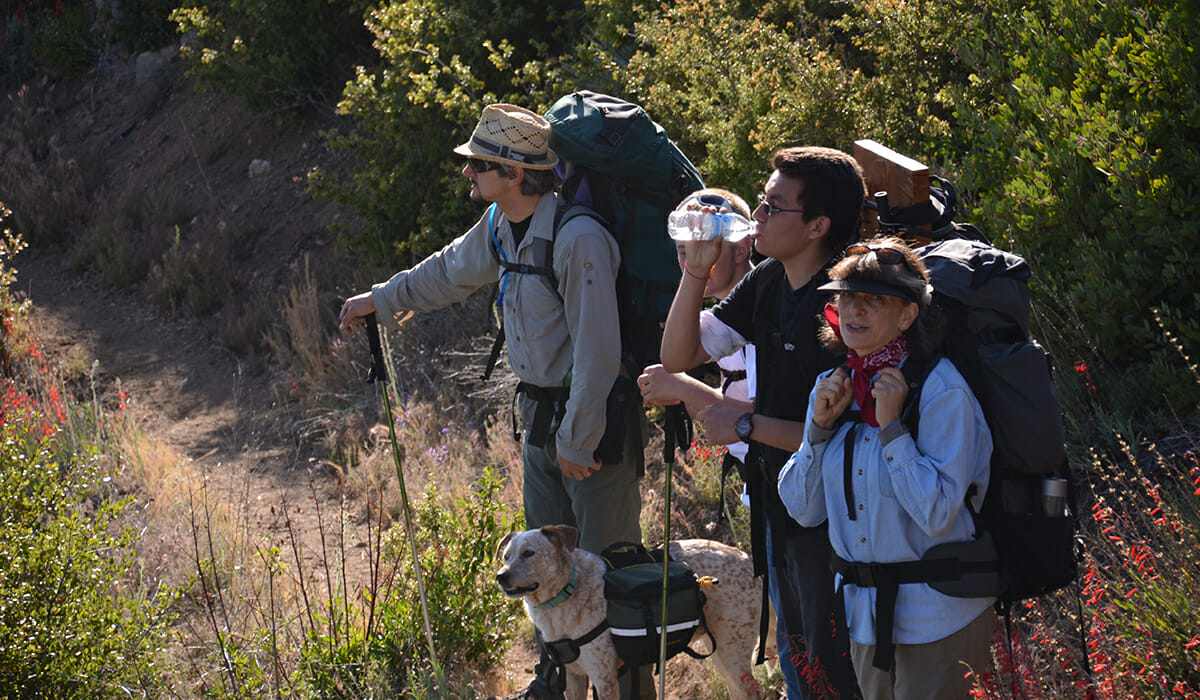
I’m also a California State Parks Foundation volunteer and volunteer with the Ventana Wilderness Alliance. Through VWA, I help to clear and improve the trail in the Big Sur wildlands. The beauty of nature, both Big Sur and the river, is just phenomenal. I’m lucky I get to get out and volunteer in nature.
What’s been the most rewarding part of your service?
I like volunteering (laughs). I take great pleasure in helping people. Working and bonding with others has been rewarding.
In one word, what does volunteering mean to you?
Gratifying.
What have you learned through your experiences as a volunteer?
I’ve learned that even though the personalities of the people you’re volunteering alongside can be quite varied, and in other arenas of daily life you may not have anything in common with these people whatsoever, the commonality of doing the work you’re doing together is often what makes the service all worth it.
How can readers help?
Please visit the Coastal Watershed Council website for more information about how you can give back.
Ohio Teenager Creates Nonprofit to Bring Books to Inmates
Meet Daily Point of Light Award honoree Jacob Hervey. Read his story and nominate an outstanding volunteer or family as a Daily Point of Light.
Many students are keen to forget about their school assignments upon turning them in. For Ohio high school student Jacob Hervey, however, a research paper on education in the American prison system inspired him to create his own nonprofit, Books Behind Bars, in the hopes of bringing positive change to inmates at his local jail.
Through extensive research for his paper, Jacob learned about the lack of educational and reading materials in jails and prisons across America, as well as how inmates who read while in prison have a lower chance of reoffending once they are released. This inspired him to begin collecting books to donate to his local jail. Now 17, Jacob has spent the past year collecting and donating about 1,500 books to his local Stark County Jail, and hopes to begin donating to other nearby jails as well.
Describe your volunteer role with Books Behind Bars.
Books Behind Bars is a nonprofit I started last year. It tries to bring reading materials and other sorts of books and nonfiction material into prisons, so the inmates have a chance to read and reflect while they are in there, so there is a lower chance that they commit recidivism.
What made you want to start this organization?
The main reason I started it was in my junior year, for my English course, I had to write a research paper and the only limitation my teacher put on it was it had to be about education in America. I chose for my subtopic to be education in the American prison system. I did a month of pretty intense research with that course. With that, I realized the mere scarcity of books. It’s like a drought in our prisons of reading material. That’s when I contacted Frank Forchione, one of our county judges, and he helped me contact sheriffs and other officials in our area to really get through the paperwork and bureaucracy part of it. From there, I’ve just been collecting books and distributing it to our local jails.
Have you received any feedback from the inmates or the jail you donate to?
When I delivered my first round of donations to the county jail, I got overwhelming feedback right away from the sheriffs and other officers there. They welcomed my friends and I who were bringing [the books] very nicely. They brought me into their office and thanked me. On the inmate side of things, people have emailed me thanking me from their family and from the inmates themselves, showing their gratitude, which was really meaningful because I like hearing the first-hand account of how people are affected.
Our city mayor has sent me a letter, our state representative. Seeing the support it’s gaining is pretty empowering to me, because I feel like a lot of times we see prisoners and inmates get overlooked in society. Because they committed a crime once, we like to label them as always wrongdoers, but I think the fact that it’s receiving more support from my community is indicative of how the opinions are changing in my area.
What would you want people who put that label of ‘always being wrongdoers’ on inmates to know?
What I always like to say is obviously, these people are in jail for a reason, but most of the time it’s for nonviolent offenses. Ninety percent of people in county jails are for drug offenses. But what I like to think is even if these people have committed a violent or even nonviolent crime, I think education and books are a critical way to break that cycle. What happens across the nation, somewhere between 80 to 90 percent of inmates are rearrested in the next decade and land themselves back in jail. Reading and education while in jail is a way to help them reflect on themselves. It helps them once they leave jail to really not fall into that trap of committing crime over and over again. What I say is, most of the time these inmates aren’t violent people like we stereotype them as, but even for people who are [imprisoned for violent crimes], it’s critical to help them and give them these materials so it doesn’t become a cycle of crime.
How do you fundraise and gather the books?
There are a variety of sources I get my books through. The first is through pure donations from family and friends. For example, there was an article in our local newspaper about my project, and from there my friends, family and some community members I had never heard of sent donated books to me. The second avenue I collect books is through companies and entities that donate. For example, the very first large donation I received was from Akron Bookstore. They were closing so they invited me and a couple of my friends to go up there and take any books we wanted from the entire store. Also for example, yesterday I drove about an hour to this church that had their own library that they were cleaning out, and they donated a few hundred books. The third way I get fundraising and books is through monetary donations. There’s a third-party nonprofit that collects money from local community members. Just recently in the last month or so, they told me they were going to be donating their quarter revenue to Books Behind Bars. That’s going to be around $3,000 in cash that is going to be donated to my nonprofit, and then I will choose what books to purchase with that and what to use those funds for.
Is there a certain type of book you are looking for when you’re collecting donations?
When I’m collecting donations, I normally accept them all and vet through them to see which ones are most likely to be accepted well by the inmates. Whenever people ask me when they’re purchasing books, which types people like most, [I say] in the world of fiction, a lot of these inmates like military history and sports fiction stories. Realistic fiction is their favorite genre, typically. Also, I like finding self-help books and ‘Chicken Soup for the Soul.’ Those types of books are really good just because the purpose, like I said, is to reduce recidivism and this cycle of leaving jail and just falling right back into the cycle of crime, and education is a powerful tool that can break that. I try to get books that can help them reflect more on that. I’m trying to also buy GED books for these people so they can study while they’re in jail and hopefully when they leave they’re encouraged, because many of them lack high school diplomas depending on the demographics of where [the jail] is and if it’s a county jail or prison. Regardless, I’m trying to get some GED books to help study for that when they leave.
What have you learned through your experiences as a volunteer?
It definitely has reaffirmed my belief in the importance of not stereotyping and stigmatizing criminals. I think we as a society really like to try to stigmatize and label them. Through this process I also learned the importance of initiative. I think a lot of times when I ask for donations from people, they look at me strange because I am a 17-year-old trying to start my own nonprofit to help some stigmatized group in our society. I think from a youth perspective, it’s important to hear the youths’ voices and I think this project has showed me the power that even one person can have, let alone a minor. I think my message to the world is you really need to trust the voices of the youth because they can have messages as powerful as even the most senior of people.
Why do you think it’s important for others to give back?
In my case specifically, I think it’s important to break the cycle of crime because that effects everyone in the U.S. Somewhere close to 80 to 100 billion dollars a year, we spend housing these criminals who commit recidivism specifically. I think in the more general and literal sense of giving back to your community — I’m Jewish and we have this saying ‘Tikkun olam,’ which means repairing the world. It’s almost your obligation to help the people. I know if I’m in an area of strife and need some outreach from people in the community, I can expect that from my community, the same way I want my community to be able to rely on me. It’s more of a yin and yang relationship, almost.
If you are interested in helping out Books Behind Bars, you can contact Jacob.
Arizona Man’s Volunteerism is “One Small Step” in Providing Resources to Impoverished Community
Meet Daily Point of Light Award honoree Larry Langer. Read his story and nominate an outstanding volunteer or family as a Daily Point of Light.
After a clothing bank in Larry Langer’s community of Gilbert, Arizona closed in 2008, his wife and several others decided they would fill the gap created by the closure.
Opening Clothes Cabin in 2008 through One Small Step, the organization is dedicated to helping children, families and individuals living in poverty to attain a more productive life by providing quality clothes, shoes, and other support services. As a volunteer and Board Treasurer for One Small Step, Larry is helping to champion thousands of families in need in Arizona.
What inspires you to volunteer?
I’m inspired to volunteer because there’s a need in our community probably like any other community. Providing general health, hygiene and wellbeing items for people without the means to purchase their own clothing or shoes helps to improve their acceptance into the community.
Describe your role with One Small Step.
We serve over 12,000 people each year at One Small Step. I help with any maintenance tasks at the facility, including building and repairing. I primarily built shelving and installed all the cabinets in the laundry room, break room and classroom.
What’s one way you hope to inspire others in your service?
I have been able to recruit other volunteers to serve with our program, these individuals wouldn’t have otherwise been involved in the things that we do.
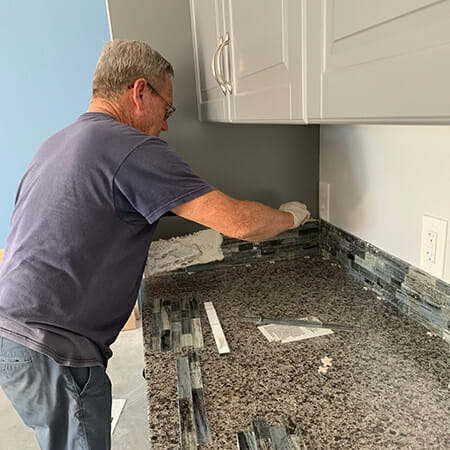
Helping children, families and individuals living in poverty to attain a more productive life, Larry Langer volunteers to perform any maintenance tasks at One Small Step, including building and repairing./Courtesy Larry Langer
A variety of different programs are offered at One Small Step. Explain.
One of the services we provide is Homeless Assistance. We offer facilities such as showers, washers and dryers so that the homeless can do their laundry or take a shower. In addition to Homeless Assistance and Clothes Cabin, we offer Back to Work, which provides support and resources for clients who are seeking or have newly obtained employment and Share Partners, which provides clothing to other partner agencies within the community.
What’s been the most rewarding part of your service?
It’s rewarding to work with all the other volunteers and to continue to see the services that we provide expand. It’s also been rewarding to see how that need in our community has been met.
You’re helping a part of the community that has nowhere else to turn. What does that mean to you?
It means a lot to me that we are able to help this segment of our community whose needs may not always be recognized. It feels great that we are able to help them.
In one phrase, what does volunteerism mean to you?
Giving back. It’s a worthwhile service that I’m fortunate I can be a part of. We know there’s a need and we see the benefits that it provides to clients we serve.
What have you learned through your experiences as a volunteer?
There are lots of people out there that are doing things helping to serve others, most of which you don’t really ever hear about. It’s really great to see such a large number of volunteers out there helping the community.
How can readers help?
Please visit the One Small Step website for more information about how you can help.
Teenager Starts Nonprofit to Bring Birthday Celebrations to Those in Need
Meet Daily Point of Light Award honoree Sonika Menon. Read her story and nominate an outstanding volunteer or family as a Daily Point of Light.
Throughout her life, Sonika Menon’s parents have always made a big deal for her birthday, with a homemade cake, decorations, gifts and family get-togethers. Her family also always instilled in her the importance of community service. When she was 13 years old, Sonika decided she wanted to follow in their footsteps and help pay it forward in her own Plainfield, IL community. That year, she started the nonprofit organization, The Birthday Giving Program, as a way to help honor the birthdays of people who don’t normally receive celebrations like the ones Sonika grew up with.
The Birthday Giving Program brings gift bags and cake to kids at her local Boys and Girls Club and homeless shelters, as well as to adults in shelters, senior citizens in nursing homes, veterans, and adults with physical or mental challenges. Since being founded in May 2017, the organization has delivered over 1,530 birthday bags and over 200 cakes, as well as raised over $17,000. Sonika is now 16 and serves as the CEO of the organization, and has expanded it with chapters in Tennessee and Florida. She has been reaching out to high schools in other states in the hopes of creating even more chapters across the country, in order to bring the joy and happiness that comes with celebrating birthdays to as many people as possible.
Describe your volunteer role with The Birthday Giving Program.
The Birthday Giving Program is a 501(c)(3) nonprofit organization. We provide birthday bags which include gifts such as toys, stuffed animals, balloons, socks, gloves, clothing items, and we customize the bags to fit the need of the recipient. If it’s an adult, we include clothing items, socks, stuff like that, and if it’s a kid, we do toys. My cousin also serves senior citizens and veterans. We customize the bags to meet the needs of the recipient. We also provide cakes as well. We sometimes make the cakes and sometimes we buy, depending on the budget, and we provide enough cake so that all the people at the center or the homeless shelter are able to join in for the birthday celebration. We also have two chapters right now. We have [the main organization] in Illinois and then we have two chapters in Tennessee and Florida.
We provide the bags to the children who attend the centers, for example, the Boys and Girls Club of Joliet. With the adults, we are partnered with some organizations who serve adults who have physical or mental challenges, such as the Individual Advocacy Group, so we provide the bags to those individuals. Then with the senior citizens, we’re partnered with some nursing homes in Illinois. With the veterans, one of my representatives in Tennessee, her name is Marie, she is partnered with Operation Stand Down which helps veterans, so she delivers to the veterans at that [organization].
For some of our organizations, we actually celebrate with the kids and the recipients. For example, with the Boys and Girls Club of Joliet, we’re actually able to stay there for the party, help serve cake and pass out the bags. For some of our other organizations, they don’t allow us to meet the recipients due to privacy purposes, so for those organizations, we just drop off the bags.
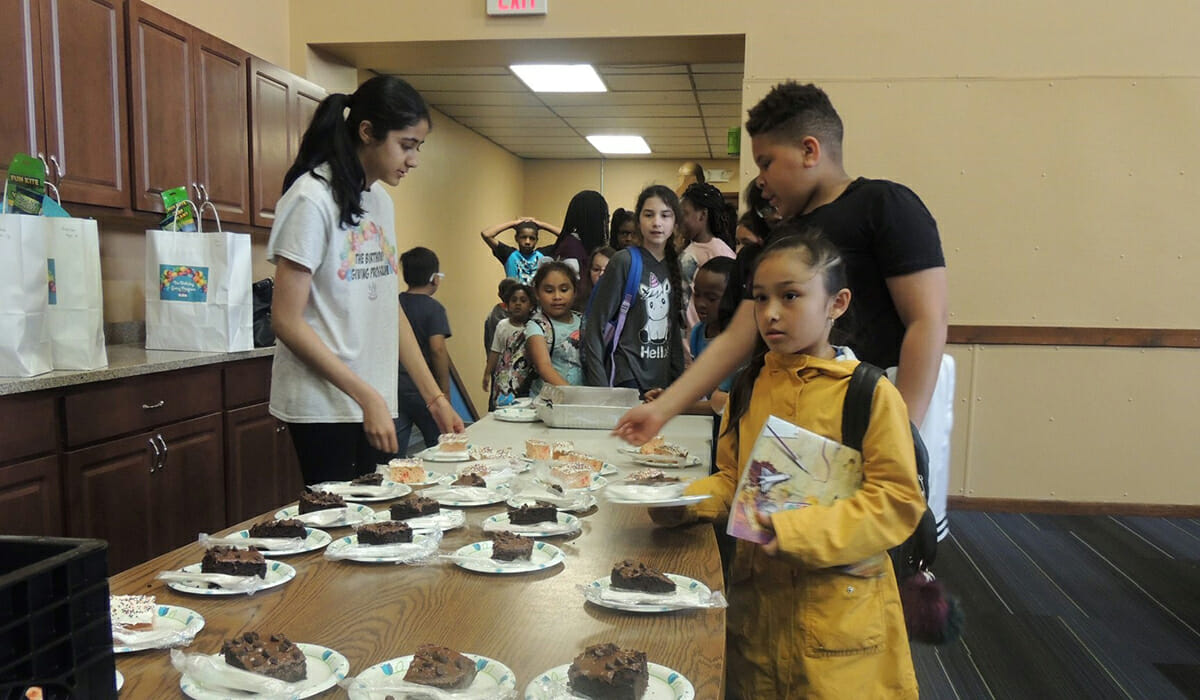
Sonika Menon, left, hands out cake to kids at the Boys and Girls Club of Joliet during a birthday celebration organized by her nonprofit, The Birthday Giving Program./Courtesy Sonika Menon
When did you want to start this organization, and why did you want to?
I started it in May of 2017 when I was 13. A lot of people in my family are actively involved with community service, like my grandparents who immigrated from India in 1954. They opened a temple in Illinois and that’s helped serve members of our community here. One of my aunts on my dad’s side of the family, she used to work with homeless shelters and she always told me stories about how nice it was to help other people and that really motivated me. I wanted to experience that feeling of helping others for myself, so that’s why I started the Birthday Giving Program.
Why was helping people celebrate birthdays important to you?
I always thought about how on my own birthday, my parents always celebrated with lots of joy and they always went all out. My mom always bakes a cake and they decorate the house for me. I just feel like birthdays are a really fun way to help other people because the celebration doesn’t only last for one day or one hour. It can really last for a lifetime. I feel like it’s important to really keep and cherish those memories because we’re not only celebrating a birthday, we’re celebrating people’s accomplishments and we’re celebrating their ability to overcome difficult challenges.
Can you describe what it’s like when you’re able to stay and interact with the recipients?
When we meet the recipients, it’s really an amazing feeling. I get a really warm feeling in my heart to see everyone happy and to see them experience so much joy when we are giving them something we often take for granted. For example, some of the kids at the Boys and Girls Club, they take two or three pieces of cake, and for some of them it might be their first time eating cake, so they’re really happy. They always talk to us and they always remember us. With the places where we actually get to interact with the recipients, it’s not just a matter of serving the cake and then leaving. A lot of them remember us, they talk to us, so it’s like we’re forming a sort of friendship. It’s a really valuable friendship and I think it’s really amazing to be able to connect with these people.
What kind of feedback have you gotten from the centers and organizations you’re visiting?
I think they really like what we’re doing for them. For a lot of these organizations, they’ve never really had someone do anything like this for them before. Some organizations have done birthdays for them, but they’re not very consistent. They just drop off some stuff for one month and then they forget about it the next month. For us, I think what makes us different is we try to be as consistent as possible. I reach out on a monthly basis to each organization, asking them if they need anything for the month. Even if they don’t respond to the email, we go the extra mile, we really call them to figure everything out. We’ve gotten positive feedback even from the people we can’t meet. Some of them write letters to us. We’re partnered with a few organizations in downtown Chicago and for them we normally drop off the bags, but they also mail us letters from the recipients who have written back, so it’s really nice to see their feedback and how happy they are.
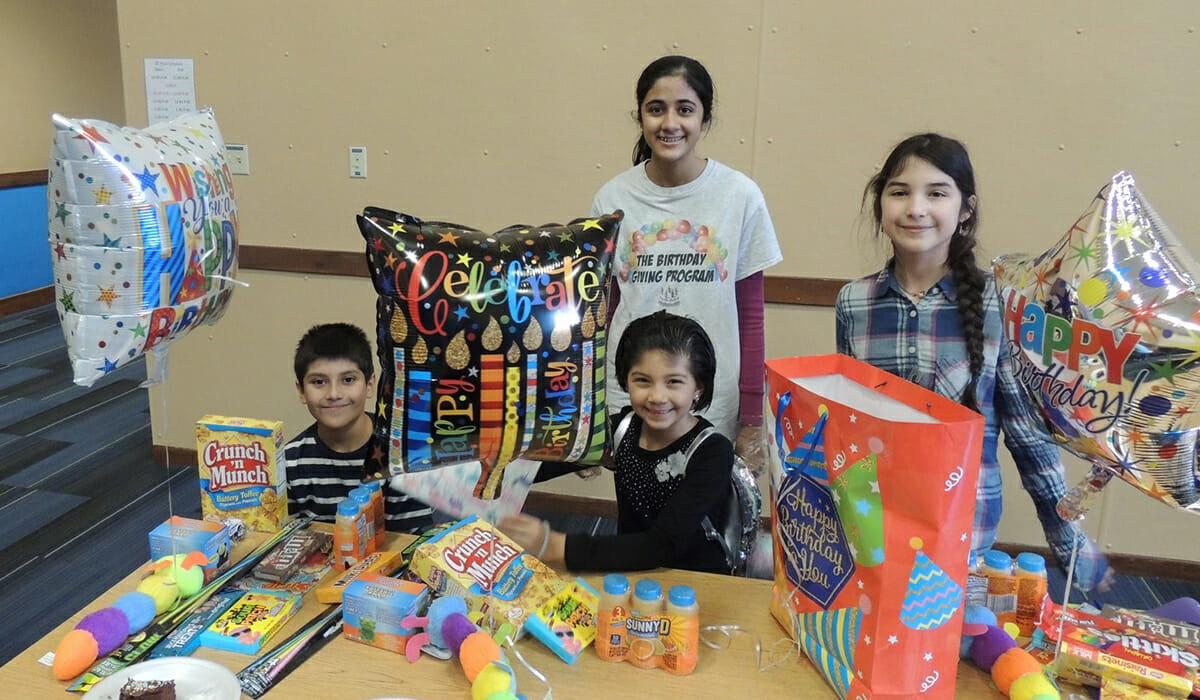
Sonika Menon, back row, center, celebrates the birthday of one of The Birthday Giving Program’s recipients. She founded the nonprofit in 2017 in order to bring celebrations to those in need./Courtesy Sonika Menon
What’s been the most rewarding part of your work?
The most rewarding part has definitely been being able to meet so many new people and form so many new relationships with them. I think just connecting with them has really been rewarding. I think being able to say we have two chapters in other states is also very rewarding, because now I have other volunteers who are experiencing the same happiness I’m experiencing when I’m providing these birthday parties to people in need. It’s great that other people are also able to help their communities and realize helping others is very important. It gives you a sense of satisfaction that you’re able to make a difference in the world and in your community.
What have you learned through your experiences as a volunteer?
I think something I’ve learned is I often take a lot of things for granted, especially with my birthday parties and stuff. We don’t do anything extremely extravagant, but just with the stuff that we do get — like the gifts my family gives and the get-togethers we have — I think it’s important to realize not everyone is as fortunate as I have been. There’s so many people who are going through much more difficult challenges than I’m going through. In high school right now, I’ll be worried about the tests I have tomorrow or my tests that I have later in the week, but other people have to worry about whether or not they’re going to be able to eat dinner tonight. I think it’s important to realize that people have much more difficult challenges than what I’m going through.
Why do you think it’s important for others to give back?
I think people don’t realize that one person can really make a difference. When I started this, I was very inexperienced. I remember the first meeting I had was just my mom and I and a director. We had a two-hour meeting, and we didn’t know what we were doing or anything, and we didn’t even know if this whole idea was going to work. Eventually, I started this on my own, but now I have so many other people who are helping me out. I think it’s important to give back because you need to realize that everyone has the ability to make a difference. Everyone has the potential to do something great. If you don’t have a lot of money, you can always give your time. If you don’t have a lot of time, you can always give money. There’s always something you can do to help other people.
14-Year-Old Is an Activist for College Readiness and Big Dreams
Meet Daily Point of Light Award honoree Ila Prabhuram. Read her story and nominate an outstanding volunteer or family as a Daily Point of Light.
Ila Prabhuram’s dreams are unlimited. They’re not distilled down into a specific interest or defined by one field. She’s bold enough to imagine a variety of careers for her future. What her plans do share is a common theme: helping others. It’s no surprise Ila would stand in front of the Georgia Board of Education and make the case for hundreds of kids who do not have access to resources that would help them pursue their big dreams in college. She’s an advocate for dreams, which is why she started College Pathway – to be a support system, a resource, and an advocate for college readiness.
“In 2018, I decided and discovered a passion for empowering students to become changemakers through education,” says Ila.
Her idea for College Pathway came when she was tutoring at a trailer park. The mother of one of her students told Ila her son was not going to attend college. Ila pressed why he wouldn’t be able to pursue higher education. He was only in elementary school – how could she already know college was not an option? The mother said college was too expensive and that scholarships were typically rewarded only to low-income students that had high academic achievements.
The story left Ila dumbstruck. She had always seen college as a natural next step after high school. She didn’t realize that for other people, it wasn’t an option. “It was eye-opening to me,” she says.
After the conversation with her student’s mother, Ila went home to discuss the incident with her parents. She searched for nonprofits that address low-income students’ needs and provide awareness for options like FAFSA and Cooke’s Foundation Scholarship. She says she couldn’t find an organization that specifically helped low-income students find life-changing resources for helping fund their college tuition.
And so, like any big dreamer, Ila took matters into her own hands and started her own nonprofit: College Pathway.
“When I first wanted to start College Pathway my parents were immediately on board,” says Ila. “They were like, ‘Yes you can do it!’ even though they were a little iffy because none of us had any experience starting a nonprofit. But we all wanted to because my parents knew I was passionate about it.
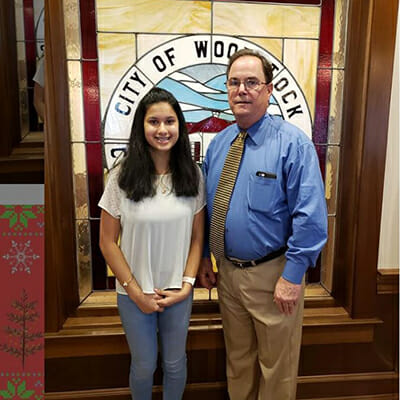
Ila Prabhuram had an opportunity to speak to the Mayor of Woodstock, Mr. Donnie Henriques, about College Pathway at the City Council Meeting. photo credit: Ila Prabhuram
One of the first challenges Ila faced was finding teachers for her board of directors who would get along together and whose personalities would really help College Pathway. Eventually, her eighth-grade teachers agreed to join as board members. Together with Ila, they began to attend monthly meetings. Ila is now in charge of fundraising and speaking at public events and overseeing the ambassador and scholarship programs.
“We recently implemented a program where we train young students to make changes and how to do projects in the community and amplify College Pathway’s mission,” explains Ila. “I oversee the entire organization and its specific programs. And I also work with my board of directors to track all the legal and fundraising things.”
Finding organizations and representatives to partner with College Pathway became the second challenge. Ila didn’t receive a single response from her first batch of emails asking to team up with her nonprofit.
“I think the reason why a lot of people didn’t respond to my email when College Pathway was in its early stages is because I didn’t have much to back it up,” explains Ila. “I was like, ‘Yes I’ve done this so far, I have this passion—that’s it.’ I didn’t really have anything else to say, ‘And I’ve done this so far also!’ You know?”
When presented with an obstacle Ila did not back down. She took a risk and directly contacted the Georgia Superintendent of Schools, who responded saying that he wanted to meet with her. After that, the opportunities for partnerships were easier to obtain. The meeting with the superintendent provided the opportunities Ila was seeking, but it was her passion that drove her forward and gave her the courage to continue pursuing her big dream.
Ila has presented College Pathway in front of the Georgia Superintendent of Schools along with representatives from the Georgia Department of Education. The superintendent came to Ila’s school to listen to her present College Pathway, their mission, and what they planned to do in the future. They discussed how to maximize College Pathway’s impact, and the superintendent gave Ila contacts who could help her further College Pathway’s goals. Through those contacts, Ila has organized a meeting with the Georgia Board of Education. She’s trying to get viewpoints from different people to help her find better ways to reach out to low-income students.
“I think reaching out to these influential figures will help me implement change,” says Ila. “And we can all work together to implement these different projects. I want to start eventually doing FAFSA workshops that low-income students can attend and learn how to apply for FAFSA during the college application time.”
Ila says that the response to her speaking engagements has helped garner positive support for College Pathway. As a high school student, she’s been able to reach thousands of people and it’s only getting bigger. While cultivating College Pathway, Ila has realized how much privilege she has. She always thought she was just lucky. In her mind, college was the logical next step that she didn’t have to worry about – her parents would help her with costs.
“It made me realize I was living in a bubble,” says Ila. “I wasn’t stepping into people’s shoes. I didn’t realize 1/3 of my school is economically disadvantaged. I have economically disadvantaged friends. A lot of them didn’t even know about resources.”
Ila wants College Pathway to even the playing field and offer resources to everyone regardless of their economic status. She wants every student to have the same opportunities for pursuing higher education. In other words, she wants to give other students the space to have big dreams too.
Ila continues to work with influential leaders, teachers, and organizations to expand College Pathway’s reach. She believes that FAFSA workshops are essential for low-income students to receive the financial resources necessary to attend college. She’s speaking with her principal and county school officials to implement school-wide and statewide FAFSA workshops.
Through College Pathway, Ila is setting the course for equality in education. No matter what the dream, she’s helping facilitate a stronger community. She’s not keeping her big dreams to herself – she’s setting the stage for others to dream big too so the future can have brighter points of light.
Promoting Coastal Protection, Florida Volunteer Shares Love of Nature with Families and Children
Meet Daily Point of Light Award honoree Jeff Finnan. Read his story and nominate an outstanding volunteer or family as a Daily Point of Light.
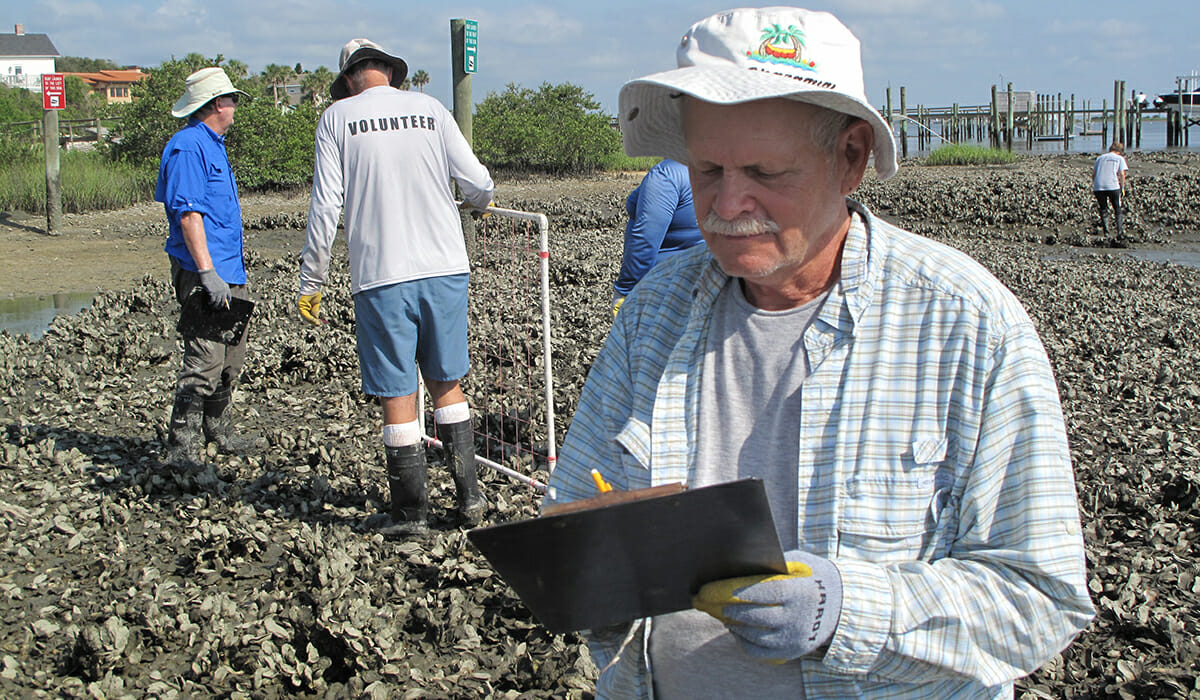
After retiring from a career as a researcher and high school chemistry teacher, 68-year-old Jeff Finnan moved to St. Augustine, Florida with his wife, Mary, and the two started exploring their surrounding community. Struck by the beauty of the Guana Tolomato Matanzas National Estuarine Research Reserve (GTMRR) coastal area on a hike, Jeff decided to join in efforts to protect the reserve through volunteerism.
By educating children and families and promoting and supporting the reserves and natural cultural history, Jeff is helping to raise awareness about the environment throughout his community.
What inspires you to volunteer?
We really like nature and being outdoors. When we first came to visit St. Augustine, we did a hike at GTMRR and it really appealed to us. I joke that my original career plan was to become a marine biologist and instead became a chemist. Now, as a volunteer, I’m actually getting to do my marine biology.
Describe your role with GTMRR.
I help to support our outreach programs, and lead a monthly guided hike. Through the education we offer, we discuss nature and the cultural history of the area. I also help with GTMRR’s research programs, where we do nekton sampling, oyster monitoring project and water quality data sampling.
Share one personal story with me from your volunteerism.
We do something called family seining, which is a method of fishing that employs a fishing net called a seine, and we identify the fish we collect and talk about how the estuary is a nursery for the ocean. A hands-on program, often the parents and kids will get in there and do it themselves. You can just see they really enjoy it and everyone learns a lot. By educating the youngest generation about climate change, particularly high school students, we hope they use those learnings moving forward.
Jeff Finnan says his volunteerism has been a learning experience, and he’s learned a lot about the ocean and the estuary through volunteering./Courtesy Jeff Finnan
What does volunteering mean to you in one word?
Fun. Volunteerism is simple (laughs).
What does it mean to you to know that your volunteerism is described as helpful?
It shows that I’m serving a purpose.
What’s been the most rewarding part of your service?
I enjoy the guided hikes. The people are really appreciative of the information we provide. In order to be better guides for these hikes, my wife and I became Florida Master Naturalists.
What’s the coolest thing you’ve seen during your time volunteering at GTMRR?
We once saw a dolphin chasing a school of fish in the estuary. The fish would jump out of the water almost like a shoot of water and then go back in.
What have you learned through your experiences as a volunteer?
I’ve learned a lot myself about the ocean and the estuary through volunteering.