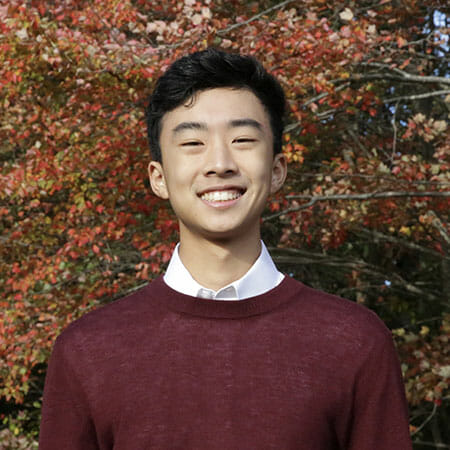
Teen Recruits Volunteers Around the World to Bring ‘Sunshine’ to Those Struggling with Mental Health Amidst Pandemic
Meet Daily Point of Light Award honoree Natalie Salvatierra. Read her story and nominate an outstanding volunteer or family as a Point of Light.
In less than a year’s time, sixteen-year-old Natalie Salvatierra has managed to bring together hundreds of volunteers across 37 countries in order to help thousands of people struggling with mental health — and all while amidst a global pandemic. In May, the Santa Ana, Calif.-resident founded the organization Solely Sunshine, which collects letters of encouragement from people around the world and delivers them to those being treated with OCD and other mental health conditions. Solely Sunshine partners with organizations such as the Assistance League, the California Scholarship Federation, Girl Scouts, the Rotary Club of Vancouver, and Baskin Robbins in order to recruit volunteers to transcribe, handwrite, and then decorate the letters, which are mailed to mental health facilities across the world.
So far, at least 2,000 letters have been mailed, and approximately 4,500 people have been impacted by them. Natalie’s goal is to mail 10,000 letters of encouragement. She has made her organization a part of her Girl Scout Gold Award project in order to help reach that number through the support of her fellow Girl Scouts. Not content with her impact on mental health stopping at Solely Sunshine, this summer Natalie also authored and illustrated the children’s book “Do Not Worry, Little Donkey” in order to help kids overcome their worries and fears.
Describe what Solely Sunshine is and your role with it.
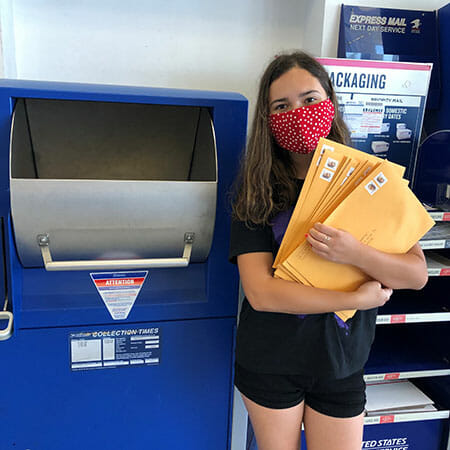
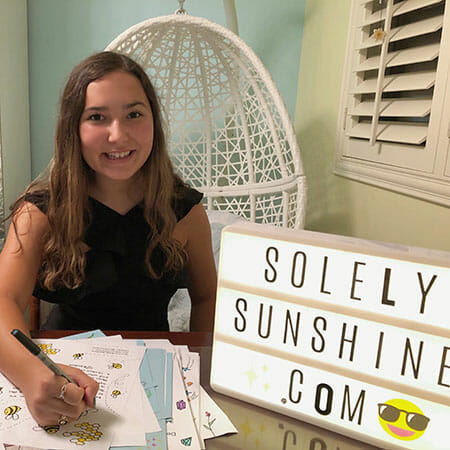
I am the founder of the mental health organization Solely Sunshine. I created the website solelysunshine.com as a way for anybody around the world to write virtual letters of encouragement for free. Once somebody writes a virtual letter of encouragement, somebody on my team transcribes the letter to paper and then I put them in an envelope and mail them to mental health facilities all across the world.
Natalie Salvatierra mails letters of encouragement to those in mental health facilities as part of her organization Solely Sunshine./Courtesy Natalie Salvatierra
What inspired you to start this organization?
I started this in May 2020 because my mom showed me an article about somebody who had OCD, which is Obsessive Compulsive Disorder, hand-washing compulsion. They mentioned that with all the constant reminders to wash your hands because of COVID so you won’t get sick, but then at the same time trying to resist that urge to learn that you won’t get sick, makes things really difficult for them. I wanted to spread encouragement to those people and really anybody with a mental health condition.
Why are these letters of encouragement so helpful for those in mental health facilities?
A lot of times if you have a mental health condition, it might feel like there’s a storm cloud over your head and you feel sad, and a lot of people might experience things such as panic attacks, or migraines, or a lot of anxiety and even depression. I really wanted to change all the rainclouds into sunshine and make it so that people have a bit of encouragement. While the letters don’t completely solve everybody’s worries or anxieties, they really help with making people smile in that moment, and then [serve] as encouragement for them to look back on and a reminder that other people are supportive of them through this tough time, and that they are doing great.
Why do you think your idea has resonated with so many people for you to have received letters from 37 countries?
I think because a lot of people either know somebody [who has a mental health condition] or they have a mental health condition. Even if you don’t, everybody has experienced sadness and stress, so I think no matter what, anybody would benefit from receiving a letter of encouragement. Also, because the letters are a virtual form, I made it so anybody, no matter where you are, no matter how old you are, you can write a letter and you don’t have to give away any personal information. The virtual letters I think are really cool because during COVID, a lot of volunteer opportunities had to be stopped because they were going to somewhere to help serve food or doing other things like that, which are also super important issues that need to be solved, but then also a lot of volunteer opportunities involved donating money or cans and things like that. I made it so [with] Solely Sunshine, you don’t have to give anything but a little bit of time.
Why is mental health an issue that is important to you?
I just really like to help people a lot. I feel like a lot of times, people focus on other important problems in the world, and I feel like sometimes mental health can be overlooked. I really wanted to shine some light and spread encouragement to people who might not be getting encouragement and support from others usually.
Natalie Salvatierra poses with “Do Not Worry, Little Donkey,” the children’s book she authored and illustrated in order to help kids overcome their worries and fears./Courtesy Natalie Salvatierra
What’s been the most rewarding part of your work?
I love hearing the feedback of people who have received letters and hearing their appreciation and that it made them smile. That’s the whole reason I created Solely Sunshine — to spread sunshine and encouragement. Hearing those things from the people, that the kids hang them up in the room, and another mental health facility told me that because people were quarantining, receiving the letters was like something from the outside world, so that was also really neat to hear. I also love to connect with people from different states and countries and learn about where they’re from, because ultimately it’s like we’re one community even though we’re far apart.
What have you learned through your experiences as a volunteer?
I definitely on the business end have learned more about writing emails and public speaking. Then on the non-business side, I have learned a lot more about mental health conditions and ways I could help people. I think that’s really cool. Hearing peoples’ personal stories gives you a lot of insight in how you can help people and encourage them, so I really appreciate that.
What do you want people to learn from your story?
I think it’s really important to spend a little bit of time to help people. Everybody has their own story and are experiencing different things, but together it’s so important to help others. I encourage doing as much community service as possible, while still making time for yourself, too.
Why do you think it’s important for others to give back?
I think it’s kind of like, treat people how you would like to be treated. Anytime you’re experiencing a tough situation, you would want your friends, family, and community to be there for you. I think helping others and giving back makes up for the time that you would want or need help. It also makes you feel really good to help other people. I definitely try to help other people as much as I can.
Celebrating Diversity and Fighting Racism, Student Volunteer Promotes Inclusion in Community
Meet Daily Point of Light honoree Hananeel Morinville. Read her story and nominate an outstanding volunteer or family as a Daily Point of Light.
Once known to be one of the most segregated cities in the country, Kansas City, Missouri and its surrounding suburbs is increasingly becoming more diverse. Recognizing the changing face of her community, 18-year-old Hananeel Morinville is volunteering to celebrate that diversity.
Launching the Black Student Union in 2018 at her high school in the Shawnee Mission school district, the 18-year-old Overland Park, Kansas student, who is Haitian-American, is promoting inclusion and harmony to recognize students who felt like they didn’t have a voice. Renaming the organization more recently to Coalition of Racial Equality (CORE) to better reflect their mission to fight racism and work towards equality for marginalized communities, Hananeel has connected with dozens as she fosters diversity amongst her peers.
What inspires you to volunteer?
My primary inspiration for volunteering is based upon my faith. Christianity teaches us to help others and promote our faith when you can. Additionally, my parents raised me to understand that when you have the means and ability to give back, it’s something you should do. I’m in a position of privilege to help others, and the best way to help is by impacting their lives.
Describe your volunteerism with CORE.
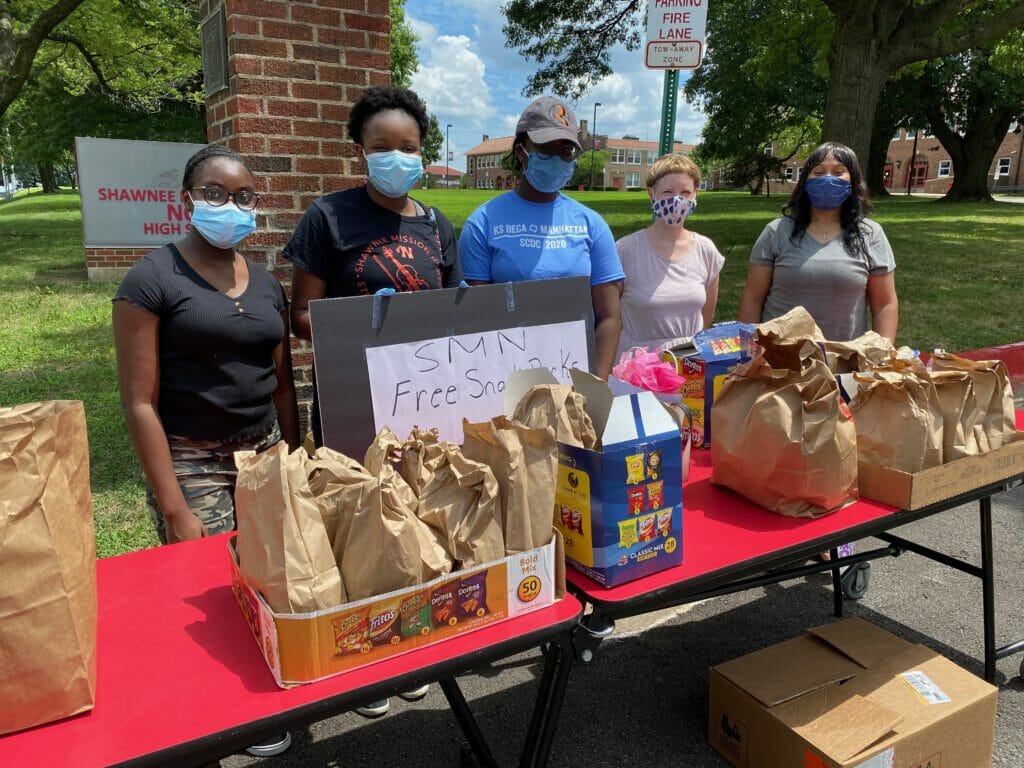
As founder, I address the issues our community is facing. We still see the impact of ‘redlining’ and segregation in our town. The reason we decided to take action is so we could continue to be united in the fight against racism and build towards equality. I was joined by two classmates very early on, who have been critical to our efforts. CORE offers resources and also services to help marginalized populations in our community, like food and book drives. We’ve also sent donated books to high school students in Africa. I’ve also been honored with the The Princeton Price in Race Relations for my work.
Explain the impact your volunteerism is having.
We are working on a project to increase the conversation around racism in the community. After the death of George Floyd, we saw a spike in racism and discrimination in schools across our community. On the other hand, we also saw people willing to fight against this discrimination, and do something about it. This upcoming project will outline ways to increase dialogue around race relations in our community.
Share one personal story with me from your volunteerism.
During one of our food drives, we watched a family drive past our station and then turn around. It was a woman with her family, and she said she’d been up at night worrying how she was going to feed her kids. She was out on unemployment because she’d just lost her job, and she was very grateful for how we were helping her, even the impact our assistance would have in the long run. Putting food on her table meant that she wasn’t going to worry about how to feed her kids for a little while, which meant she could focus on finding a job and establishing a long-term solution. Our help also meant her kids didn’t have to worry about what their mother could or couldn’t do for them.
CORE offers resources to increase conversations around race and discrimination, and promote inclusion, in addition to services to help marginalized populations in our community, like food and book drives. / Courtsey Hananeel Morinville
Why do you think it’s important for others to give back?
We should constantly be asking ourselves something former First Lady Michelle Obama has said, ‘Do we settle for the world as it is or do we work for the world as it should be?’ We get so used to the world as it is, we don’t look to alleviate the plight people are faced with. When it comes to giving back, we should always move forward and create the world that should exist.
How have you continued to volunteer throughout the COVID-19 pandemic?
We’ve conducted food drives to help families affected by coronavirus, as we were looking to address the lack of accessibility to food that people were experiencing during the pandemic. We are also planning to hold a feminine product drive in November.
In one word, what does volunteering mean to you?
Uplifting others.
When you’re not busy with school or volunteering, what do you do for fun?
I like playing the piano and reading.
How can readers help?
For more information and resources please visit the Core Website.
Veteran umpire Dan Labrie can typically be found on a field presiding over a game, but as the coronavirus pandemic was breaking out and sporting events were on hold, the 33-year-old Auburn, Maine resident was instead sitting behind his brand-new sewing machine, doing his part to strike out sickness for frontline workers.
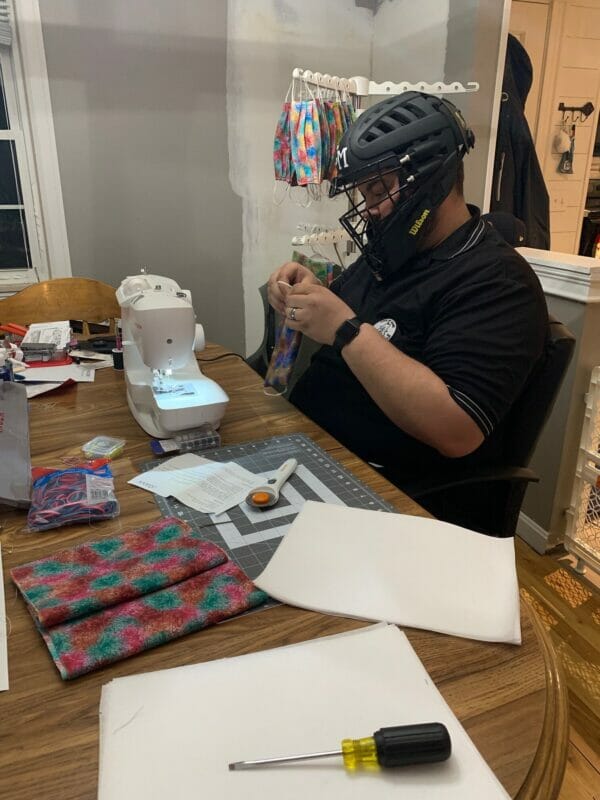
Dan, who says he was inspired to take action after New York Gov. Andrew Cuomo made frequent mention of how urgently hospitals needed masks during his daily briefings, got to work sewing masks with no prior experience sewing. As COVID-19 cases skyrocketed globally, Dan was joined by his mom, wife and some fellow church goers in the effort, sewing nearly 7,000 masks thus far. Trading out his umpire mask for homemade surgical masks, Dan is helping his community by making the ‘safe call’ and helping to protect essential hospital workers in Maine.
What inspires you to volunteer?
I’m inspired to volunteer because of how I was raised. I was taught the importance of hard work, and having a work ethic, as both of my parents worked very, very hard for everything we ever had. I’ve cherished what we had from an early age, and I’ve always been willing to help others. In addition to my other volunteerism, my wife and I are volunteers for the Dempsey Center in Auburn, Maine, which helps to support patients undergoing cancer treatments.
Describe your recent volunteerism.
When I first got the idea to sew masks, I asked my mom to meet me at Walmart and show me everything I needed to sew. She thought I was kidding. That night, I bought a sewing machine and all the pieces we needed. She was in awe of her 6’5”, 365-pound son sitting down at a dainty sewing machine to make masks (laughs). I probably took an hour to make the first one, and I’ve made thousands since then. At its peak, our group was made up of about half a dozen people sewing masks. Our service was inspiring other volunteers to pitch in.
Your personal connection to volunteerism deepened in recent years due to a traumatic event. What happened?
I went to college in Boston and then worked there after graduating. Marathon Monday, which is Patriots’ Day in Boston, has always been a day of celebration. In 2013, I was working at the finish line at the marathon, handing out water, when the bombing happened. That day, me and the other guys working the finish line helped to clear the street so emergency crews could get through to help people. We cut down barricades, went towards explosions to help. Since that day, being a part of a solution and greater cause has really resonated with me. When the pandemic struck, the masks became my solution. It’d be 2 o’clock in the morning, I’d almost be hallucinating, because I was making so many masks.
Why do you think it’s important for others to give back?
Trading out his umpire mask for homemade surgical masks, Dan has made thousands of masks to protect essential hospital workers in Maine.
There are so many people that are not as fortunate. Even at a young age, I recognized that my family wasn’t fortunate, but there were people even less fortunate than we were. Our own family was facing adversity during the pandemic. My oldest daughter was experiencing medical issues, and the masks became a much needed distraction as we sought treatment for her. I would literally make masks all night, and then would wait in the hospital parking lot to try to get a glimpse through the window of my child and at the time, 8-month pregnant wife. Volunteering gives you the opportunity to help, because you never know when one day, your whole life could change, and you’re the one needing the offering plate at that point.
What’s been the most rewarding part of your service?
Right after we started making masks, a church friend who serves for the U.S. Coast Guard asked if I could make a mask out of one of his old uniforms. On the third day of the shut down in Maine, he called me and said his master chief had told USCG leadership about the mask, and then sent a message to the entire US Coast Guard Sector Northern New England asking for old uniforms to turn into masks. I was told that every coast guard branch in the U.S. sent out instructions on how to make homemade masks, as even the coast guard was concerned about mask availability. I made a little over 300 masks in about two weeks for the Portland, Maine USCG.
How have you continued to volunteer throughout the pandemic?
Making masks has slowed a little bit now that baseball and football have started up in some capacity. My mother and I are still making some masks to deliver to Central Maine Medical Center in Lewiston, Maine.
In one word, what does volunteering mean to you?
Love.
How can readers help?
Please visit our church’s website for more information about how you can give back.
Do you want to make a difference in your community like Dan Labrie? Find local volunteer opportunities.
Accessibility Advocate Paving the Way for Future Generations to Thrive
Meet Daily Point of Light Award honoree Carden Wyckoff. Read her story and nominate an outstanding volunteer or family as a Daily Point of Light.
For many, public transportation is an efficient way to get to their destination. For Carden Wyckoff, who relies on the train to get from point A to point B in her wheelchair, just one trip requires planning. And lots of it.
“The stations are sometimes a mile away from each other,” says Carden. “When an elevator goes out, my wheelchair is electric so it only has so much mileage in it. (When that happens, I’m) thinking about distance. I have to be very careful and calculated with whether or not I’m going to sit and wait for the next train. Sometimes I’m waiting up to 30 minutes for the train, just to backtrack.”
For 27-year-old Carden, who has facioscapulohumeral (FSHD) muscular dystrophy, the progressive physical challenges she’s encountered in her life have underscored infrastructure and accessibility failings in her environment, from torn up sidewalks that aren’t repaired to inaccessible public transportation and buildings. More broadly, Carden is highlighting barriers people with any disability face, explaining that in working to remove those barriers and empower people with disabilities, she’s volunteering to shift mindsets.
“Throughout the years I’ve experienced many different degenerative physical transitions, from being able to run to no longer being able to. From being able to walk, to using my wheelchair full time. I’ve gone through many lenses and transitions in my physical state, (and) this has meant that I experienced life through varying viewpoints. With accessibility, it’s not just about wheelchairs. It’s about universal design, and that benefits everyone. When you’re thinking about all the senses you use: smell, eyesight, hearing, your physical body, it’s all one. If you come in with a very narrow mindset, you’re only targeting a very small population.”
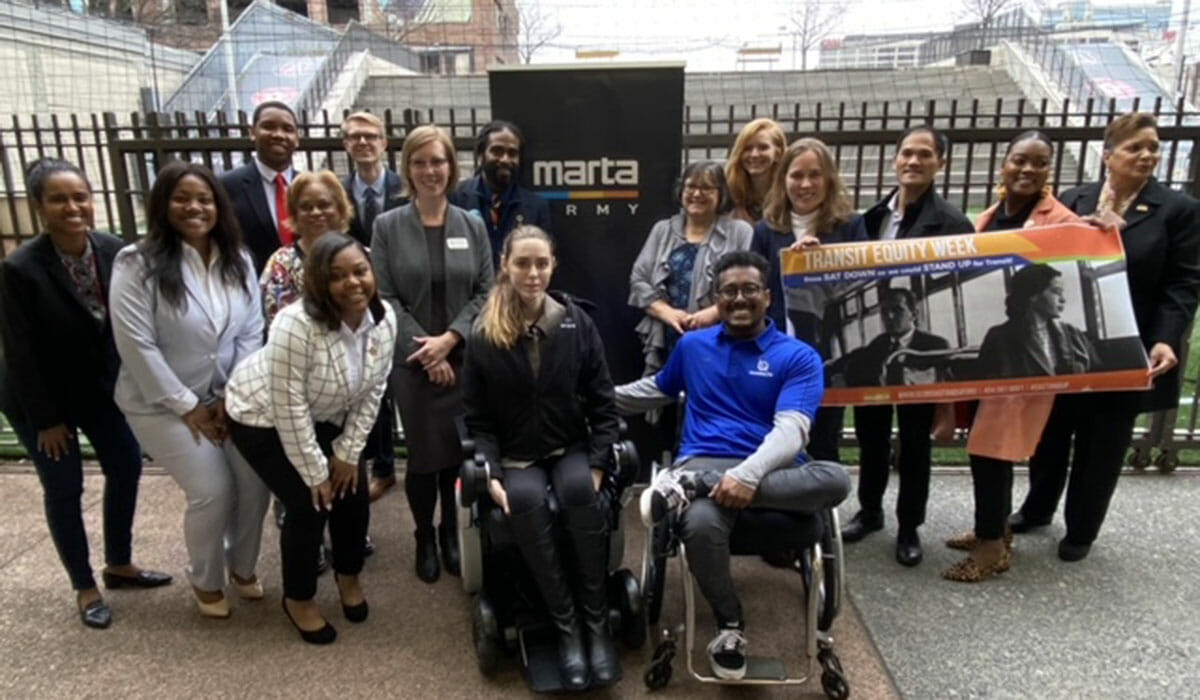
Through advocacy and serving as an ally, Carden is working to empower people with disabilities as she volunteers to shift mindsets. /Courtesy Carden Wyckoff
Advocating for the underrepresented and working to empower the one in four people in the U.S. and beyond with disabilities, Carden says the 1990 passage of the Americans with Disabilities Act (ADA) was really just the starting point for what she expects to be a life-long journey, as she volunteers to promote inclusion and raises awareness about universal design, tackles ableist language and fights the discrimination those who are disabled face each day. Starting in her own community of Atlanta, Georgia, Carden is building a safer world for future generations across the country and internationally.
“I want to ensure that people don’t have to face the same challenges I did growing up. What I’ve learned in the last five, six years is to understand and learn from others who also have challenges I don’t personally have, and to be an ally and an advocate for them.”
That drive to help all individuals with disabilities means that Carden has made a broad impact as a champion of accessibility, serving on the board for the Facioscapulohumeral Muscular Dystrophy (FSHD) Society, as a committee member for MARTA Riders’ Advisory Council and volunteer ambassador for iAccessLife, and volunteer and advocate for many other organizations, including MARTA Army, Atlanta Bicycle Coalition and PEDS. She also was the chair of the city of Atlanta’s Accessibility and Inclusion Task Force in 2020, which provided recommendations to city council on real estate, technology and public outreach. Speaking her mind as an advocate, Carden’s message is amplified with her podcast, ‘Freewheelin with Carden’, where she interviews guests with disabilities or professionals that work to build an equitable world, talking about stigmas, stereotypes, adaptive equipment, workplace accommodations, representation, future of accessibility and more. Through sharing her life experiences to help others, Carden has connected with individuals as far away as Australia, China, and South America.
Her work doesn’t stop at improving accessibility, rather, Carden says her work is continuously evolving, as she raises awareness of how people can become allies to people with disabilities. Brandon Winfield, CEO of iAccessLife, a mobile app that lets users with disabilities rate, review and research places based on their accessibility, says Carden’s actions as a disability advocate are nothing short of heroic.
Carden Wyckoff: “You are given one opportunity on this earth and it is our duty to pave the way for future individuals that come behind us.”/Courtesy Carden Wyckoff
“She’s almost like a superwoman,” says Brandon. “All you’d have to do is throw a cape on her and she’d fit the part. Her experience of her disability is the difference. She lived this normal life and slowly got it taken away from her because of this degenerative disease. She’s dealt with that and it doesn’t seem to have slowed her down. She’s done her research, she has the voice to do it and she knows what she talks about. She cares about everybody, and she has that ‘it’ factor that helps her succeed. I don’t think she’ll be stopped. She’s indescribable.”
Behind her inclusive volunteerism is Carden’s desire to be the change she wishes to see in the world. A change that is slowly taking place through education, advocacy and hard work, she says, as prior to the COVID-19 pandemic, Carden would often make in-person visits to building sites to offer suggestions about how their facilities could be made more accessible.
“You are given one opportunity on this earth and it is our duty to pave the way for future individuals that come behind us. I’m so thankful for those that paved the way for me. They helped to create ADA, but we have so much more work to do. It’s the passing of the torch, it’s my responsibility and my role to gladly raise my voice and volunteer my time and service to ensure those that come behind me are also afforded the ability to thrive.”
Teen Starts Tutoring Nonprofit to Bridge Gap in Equitable Education
Meet Daily Point of Light Award honoree Avighna Suresh. Read her story and nominate an outstanding volunteer or family as a Point of Light.
Avighna Suresh has always had access to great education and resources, but when she started high school, she realized that not everyone can say the same. Taking community college classes, as well as volunteering at an after-school program for low-income students, introduced the Hayward, Calif.-resident to the issue of inequitable education. Inspired to help bridge the gap in education access, Avighna founded STEAMPower, a nonprofit that provides free tutoring and educational videos.
Now 17, Avighna serves as the Executive Director of STEAMPower. Since its inception, her nonprofit has provided over 750 hours of tutoring to students ranging from ages eight to 18. The nonprofit took off in March due to the COVID-19 pandemic creating a greater need for remote tutoring. Due to this shift, STEAMPower has been able to recruit both tutors and students from around the world. Almost 50 subjects are offered, including Advanced Placement and honors curriculum.
Describe your volunteer role with STEAMPower.
STEAMPower is a 501(c)(3) nonprofit bridging gaps in equitable education. We provide free tutoring, we make videos on a variety of subjects, and we also have an empowerment series. We also work with local libraries and city councils to try to integrate our services with local offerings to make it more accessible to anyone who needs it. I’m the founder and Executive Director.
What inspired you to start this nonprofit?
Ever since I started high school, I started seeing the pieces of inequitable education throughout many things I did. I’ve always been really privileged and lucky to have access to really great education resources. I’ve been to private schools my whole life and education was never really an issue for me in terms of access. When I first took community college classes, that was the first time I had stepped out of the bubble of educational comfort and I saw people who didn’t have the straight school-to-college-to-workforce path. That was the first time I really encountered my own classmates having a different reality to me, whereas before — especially in elementary, middle, and high school — all my peers were really similar to me and I never really saw anyone having an issue. Everyone had access to tutoring. Then last year, I went to Up on Top which is an after-school program in San Francisco. It’s for low-income students. It goes up to fifth grade. It’s a totally free after-school program where they give them food and homework help and they keep them there until their parents can come pick them up. That was really sort of a turning point for me where I saw it in action and how this effected their everyday lives. These kids were so young and they didn’t really have access to tutoring the way I did, or access to really great teachers who were able to stay after school and help them out with homework, especially since a lot of these children did have issues with learning. That’s when I realized that the resources in many areas are just not enough, [in terms of] resources that are publicly available and free for people to access.
I started off with just providing free tutoring and letting people from high schools like mine volunteer to provide these services for students. I think this is something that a lot of libraries try to do, but I wanted to make it really easy to match students and tutors together and make it a really seamless process. I used social media and the internet and the power of all of that to find a lot of people willing to do these things. It was actually surprisingly easy. I think today we have something around 350 people willing to tutor, and it’s increasing by the day. From there, it went into how do I get these people who are really willing to give their time, and how do I get them in touch with others who need it? It started with a lot of reaching out to people in our local communities, talking to libraries, city councils, emailing principals of many schools in a really big radius from where me and a lot of the other team members lived, and finding a way to get our service out there. Once that happened, it sort of grew upon itself and we were able to help a lot of students. That’s where the tutoring started. As we had a lot more people, a lot of people were willing to create videos and be interviewed, so that’s how we expanded to doing those things.
What are your goals for the future of STEAMPower?
I think the growth I really want to see is not within the organization but with educational equity as a whole. I think the things we’re doing should not just be limited to our own organization. I think a lot of people and a lot of organizations should implement similar things to us within their own organizations, like schools and libraries around the country and around the world. Tutoring can cost up to $60 an hour, and that’s just really inequitable and makes it really difficult for low-income students to be able to get the same educational benefits as students with more money. So collaborating with a lot more schools, and not just having our independent tutoring, but weaving it into the way education is built. It’s a really longterm goal and it’s achieved in many short-term goals, and that comes with talking to more libraries and seeing how they can implement our programs or similar programs within their own institutions and schools, and how teachers can use other students and create systems within their school that students feel comfortable and safe going to, to get these resources for free.
What’s been the most rewarding part of your work?
Definitely seeing the impact we could make and how many hours and people we were able to help. Seeing that number constantly go up is really rewarding. Also, interacting with these students. At the very beginning, I was able to interact with a lot of them. Now I’m not really able to do that so much anymore because there’s just so many, but at the beginning, just seeing the way they grew to become really comfortable with the tutors. A lot of the students would start off really shy and afraid to come out and ask questions. Then further through the process, they became really infatuated with learning and really started enjoying and looking forward to that Thursday where they would meet their tutor on Zoom. It was really nice seeing how much more open they became toward learning and education, and seeing that spirit fostered within them from some really supportive tutors. That’s really the most rewarding part.
Change can start at the local level. I’m not some big entrepreneur and I really didn’t have all these resources to create the change I wanted to see, but I was able to mobilize the people around me who had similar concerns for their own communities. The power of vision can really take you far. Seeing a cause within your community and taking it to the next level is not difficult at all. It does take a lot of hard work, but I think that people think they need to have a lot of money or resources. Creating change, especially educational change, [is easy] because a lot of us are already knee deep in the educational system because we go to school and we’re a part of after-school activities. It’s really easy to start a club at your school that provides tutoring in whatever way possible. Give a little bit of time everyday to tutor a kid every week. Change really starts with the individual and I think I really saw that happen with the efforts that me and a lot of my peers were able to create through STEAMPower.
Why do you think it’s important for others to give back?
I think it’s really, really important because it’s not really just something that effects the group of people that you’re trying to impact, but it really changes the way that your community views things. If we were all stagnant to change, we would never see anything progress. Leaving it up to others to change our communities and the way we want to see them changed — if everybody thought that way, we would never make any progress. We take a lot from our communities and I think if we see something we have an issue with, or we see a need that we feel like should be satisfied, we should take that first step in trying to create the change we want to see.
Inspired by Grandmother’s Message of Kindness, Volunteer Delivers Groceries Free of Charge Amid Pandemic
Meet Daily Point of Light Award honoree Dhruv Pai. Read his story and nominate an outstanding volunteer or family as a Daily Point of Light.
Dhruv Pai says his grandmother’s common refrain of kindness – to help strangers on the street, was something repeated to him at each family gathering, a lesson drawn from his family’s community and culture. As he began buying food for his own grandparents to lessen the risk they faced grocery shopping amid the COVID-19 pandemic, Dhruv was inspired by his grandmother’s words to help others.
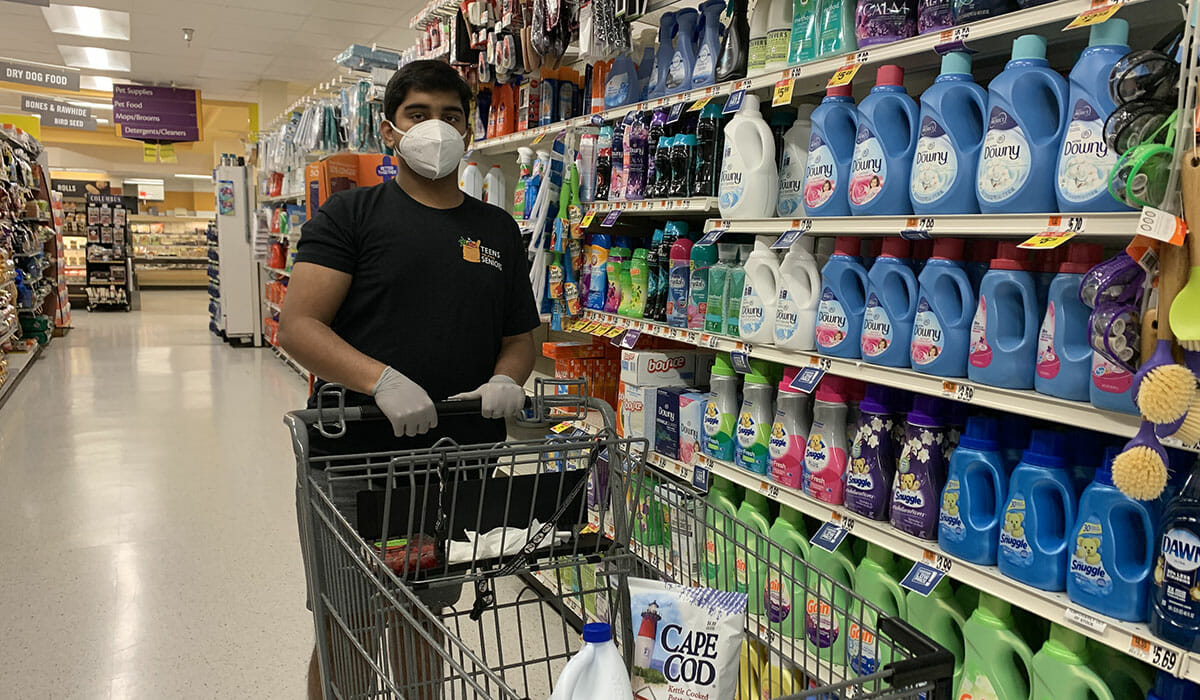
Launching Teens Helping Seniors in March along with a classmate, the Potomac, Maryland high school junior is now facilitating free ‘no-touch’ grocery and essential medications deliveries for seniors nationwide. Recognizing the struggle seniors faced to get food and other essentials as lockdowns began and grocery store lines snaked across parking lots, Dhruv is providing a cost-efficient way for seniors to receive deliveries from youth volunteers and in the meantime, form new connections with community members during what has been a very isolating time. Making over 2,300 deliveries thus far, Dhruv is helping people in need and is bringing generations together.
What inspires you to volunteer?
My grandma has always stressed the importance of helping a person on the street because you don’t know their situation. Your act of kindness could change their life. It’s a really prevalent lesson from our community and culture. I’m helping people because I recognize them as human beings, and our service brings a spark of joy to their day.
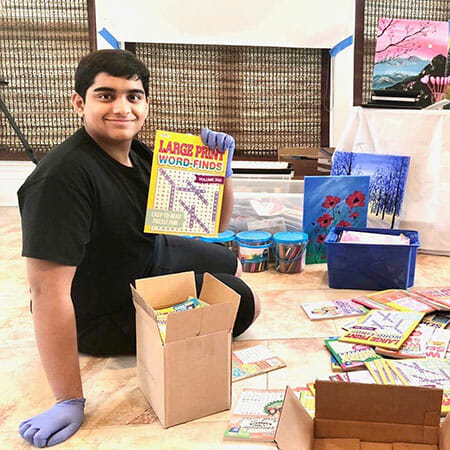
Dhruv pictured preparing art activity kits for seniors in nursing homes for Arts-N-STem 4 Hearts. The Potomac, Maryland teen had often volunteered with seniors prior to the COVID-19 pandemic, and as a result understood the risk the most vulnerable in his community faced./Courtesy Dhruv Pai
Describe your volunteerism with Teens Helping Seniors.
As co-founder, I’m managing communications and delivery requests. I am also delegating tasks to our coordinators. We rapidly expanded as demand for our services increased, and we now have 33 chapters in 16 states across the country as well as one in Montreal, Canada, with more than 750 volunteers, mostly teens, making deliveries. We’ve made over 2,300 deliveries thus far, and are currently making a few dozen deliveries each week to those in need. We started by helping seniors, but have partnered with organizations to expand deliveries to help people with chronic illnesses, disabled veterans and people with dementia.
Share one personal story with me from your volunteerism.
We’re collaborating with a local organization to deliver to veterans, and I’ve continued delivering to this one elderly man because he suffers from mental health and physical issues. You rarely get to see the face of the person you are delivering to because it’s contactless, so it’s difficult to form a connection. After every delivery I’d give this man a call and ask him if the delivery went well. Gradually, we moved onto other questions, I’d ask him how his day was going, or if there was anything else I could help him with. These casual questions moved what was a delivery relationship to a real relationship between human beings. My volunteerism began because I dreaded the thought of anyone else having to go through what my grandparents initially dealt with in worrying about the virus and having to choose between their personal safety and getting access to essentials. Forming that connection makes me feel really really thankful, because even if I wasn’t his delivery volunteer, there’d be someone else to support him.
Why do you think it’s important for others to give back?
Especially during the pandemic, a lot of media narrative surrounding youth was decidedly negative. We heard stories about teens in Florida ignoring state guidelines, and I wanted to change the narrative that youth weren’t interested in contributing to safer communities. What I found was that there were many teens interested, because they had a vested interest in altruism. They really wanted to help that stranger on the street, because of their sense of empathy.
What’s been the most rewarding part of your service?
It’s rewarding to meet other teens that are also interested in helping their community. In our case, they might be halfway across the globe, in Canada or Spain, and so we’re bonding while helping other people. Also, we are getting to know seniors and people in my community through our service. Before this, I might have driven by their house once or twice going to school, but I wouldn’t really know who they were. Through this volunteerism, we are forming a personal bond and getting to know one another.
What does your future volunteerism look like?
It’s still really unclear when or if the COVID-19 pandemic will even be over. I want to continue this service because there are plenty of seniors who have difficulty getting to the grocery store, with or without the virus. In addition to my volunteerism with Teens Helping Seniors, I’ve volunteered for a number of other community organizations, including Arts-n-STEM4Hearts, Walter Reed National Military Medical Center Volunteen Red Cross program and the Congressional App challenge.
Dhruv Pai: “I’m helping people because I recognize them as human beings, and our service brings a spark of joy to their day.”/Courtesy Dhruv Pai
In one word, what does volunteering mean to you?
Altruism. Altruism is the most important aspect of volunteering.
When you’re not busy going to school or volunteering, what do you do for fun?
I like spending time with my two cats. When I grow up I want to have a lot more cats hopefully. I also really love gardening, especially during the pandemic because it helps to take the stress off. I tried growing some ghost peppers but one came up and died just a few weeks into the growing season. I’ve had really good squash yields.
How can readers help?
Please visit our website for more information about how you can help.
Inspired by TV Story of Service, Teen Shares Love of Sport with Other Kids in Need
Meet Daily Point of Light Award honoree Donnie Stoltz. Read his story and nominate an outstanding volunteer or family as a Daily Point of Light.
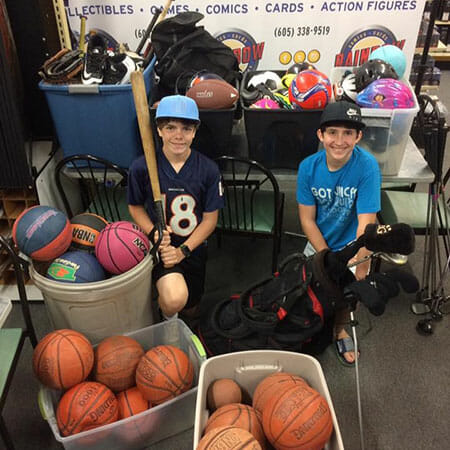
Watching television one day, Donnie Stoltz says an interview featuring a man volunteering made an impression on him. Along with his mother, Donnie set off to help people in his own community, and when the now 17-year-old Donnie found a pair of basketball shoes that were too big for him, the lightbulb went off: he would donate them to a child in need.
Helping hundreds of kids in the Sioux Falls, South Dakota area, the high school junior is giving back through Donnie’s Closet, offering gently used donated sports equipment to kids in need. Explaining the endless opportunities sports can afford a child, Donnie’s service means that for a family who doesn’t have the means to buy expensive equipment, their child has the opportunity to get into the game, building friendships and making lasting memories on the field. Distributing around 2,000 pieces of sports equipment to kids thus far, Donnie is making a positive change in his community and giving underprivileged young athletes the chance to participate.
What inspires you to volunteer?
I’m inspired by the smiles we receive from the kids when they get the equipment. Knowing that my volunteerism means they are able to go play their favorite sport with their friends, or make new friends, makes me feel like I am giving them the opportunity to change their life for the better.
Describe your volunteerism with Donnie’s Closet.
As founder of Donnie’s Closet, I volunteer with my mom to collect gently used sports equipment that other people in town don’t need. We distribute those items to kids in need. We’ve held collection events and received donations of new equipment from local stores as well. We’ve also fundraised to support our community.
Donnie pictured with his friend, Jonah, at a collection event for Donnie’s Closet./Courtesy Donnie Stoltz
Share one personal story with me from your volunteerism.
We delivered a couple soccer balls and cleats to a child, and when we got to their house I noticed how ragged and impoverished the neighborhood was. I thought to myself, this (donation) must be a really big opportunity for them, because they might not have been able to play without this (equipment). Sports can be a whole mixture of things. It’s having fun with your friend, and there’s that competitive side where you really want to win and your friends help you with that. You have a more positive outlook on life knowing you have people to back you up, and our volunteerism is helping to make that all happen.
Tell me about the equipment you receive.
The most unusual piece of equipment we’ve received was a pair of skis that we got from our first collection event. They were the only pair we’ve ever received.
Why do you think it’s important for others to give back?
Through service, people learn the impact of their choices and how it can change a person’s life. Volunteerism shows people how they can increase the happiness of others just by doing one simple thing.
What’s been the most rewarding part of your service?
It’s rewarding to see the smiles. When I see the faces of the kids and their parents, I feel a whole world of joy because I know that I’m helping them do something they probably could have never done without our help.
How have you continued to volunteer throughout the COVID-19 pandemic?
We’ve still been distributing equipment throughout the pandemic. For a bit, I was volunteering at my church to broadcast their sermons while people weren’t allowed to attend church in person.
In one word, what does volunteering mean to you?
Joy.
When you’re not busy in school or volunteering, what do you do for fun?
I like to play with my friends online and sometimes hang out with them and play some sports.
Coworkers Serve Those Infected With and Impacted by HIV/AIDS Within Their Delaware Community
Meet Daily Point of Light Award honorees Karen Stanford and Sharon Roach. Read their story and nominate an outstanding volunteer or family as a Point of Light.
Karen Stanford and Sharon Roach said they’ve both always felt they were called to serve others. This call has led the Middletown, Del.-residents to Beautiful Gate Outreach Center, which assists both individuals infected with and affected by HIV/AIDS, through programs including counseling and testing. Karen and Sharon, who are coworkers at Exelon with Sharon working for Exelon Company Atlantic City Electric, have dedicated the past several years to volunteering for some of those most in need in their community.
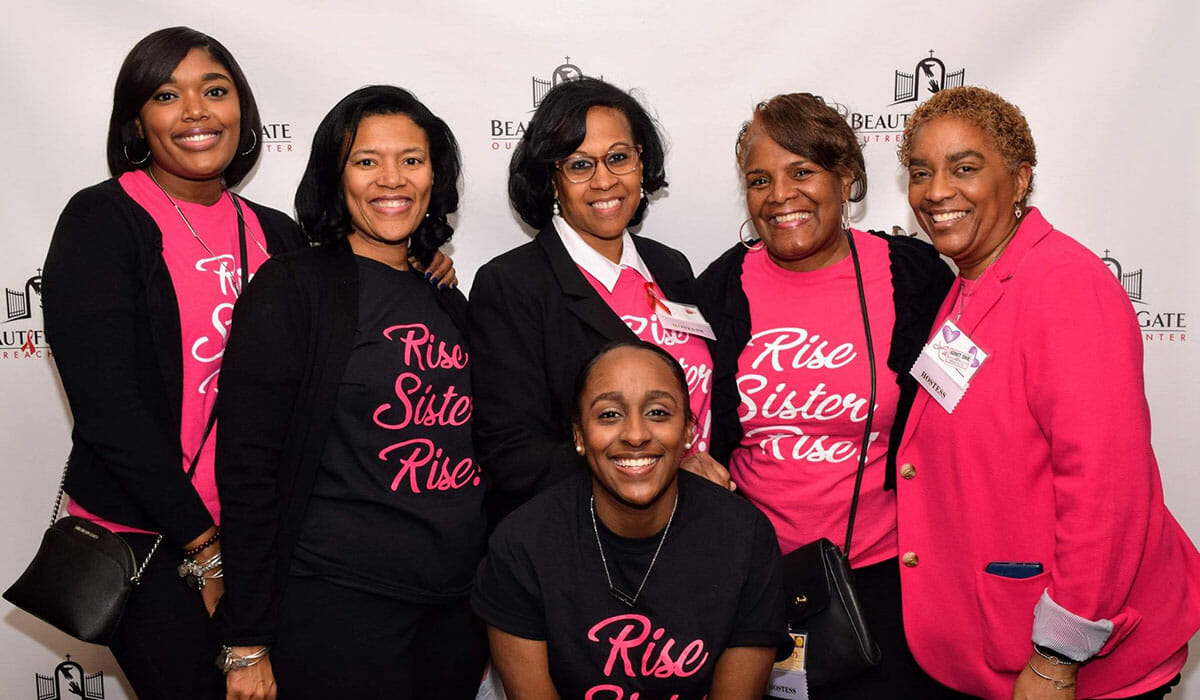
The duo are both heavily involved with the Beautiful Gate Outreach Center’s annual Saving Our Sisters conference, an all-day event that brings together women and girls of all ages who are impacted by HIV/AIDS to learn about health, wellness, and self empowerment. Karen, who has volunteered with the Center for about the past five years, serves as the chair of their hostess committee, which plans the logistics of the event. Sharon, who has been a volunteer with the Center for at least the past 15 years, is a speaker for the youngest girls attending the conference. She also works with students impacted by HIV/AIDS on a weekly basis through a support group, and serves as a member of the Beautiful Gate Outreach AIDS Task Force.
Describe your volunteer role with Beautiful Gate Outreach Center.
Karen:I particularly assist with their annual Saving Our Sisters conference, as well as other events throughout the year, wherever they need assistance from a volunteer perspective, and providing donations and getting donations. We have an annual Saving Our Sisters conference every year where princesses or queens, or young ladies and women from eight years up and older, attend this conference to get valuable information — not just specifically about HIV and AIDS, but about healthcare, mental health, how to empower themselves. It’s an all-day conference that the individuals come to. It’s a lot of fun. They get information from various speakers who come in to speak to the young ladies and the women about various topics. They do healthcare. They have representatives there from a local hospital who do blood pressure screening and things of that nature as well. It’s fully encompassing around the young ladies and women to help them be empowered and to improve their wellbeing, and it’s very educational. They do breakout sessions that are age-appropriate for the attendees that speak to different themes. Each year there’s a different theme, and then the speakers in the breakout sessions will educate the young ladies and women on various topics that pertain to them.
I chair the Hostess Committee for the Saving Our Sisters conference, and have been doing that for the past six years. All the hostesses are responsible for ensuring the logistics of the conference go right. We call ourselves the directors of first impressions. We’re greeting the attendees when they get there, we’re helping to direct them to their various breakout sessions, helping them during break, helping them with the breakfast and lunch and different things like that, and also providing assistance to the vendors. The hostesses are the largest part of volunteers who participate in the Saving Our Sisters conference, and then they help the speakers such as Sharon. We break them out in each of the breakout groups to assist with the speakers if they need anything from a technology perspective, logistics, or just assisting with the participants and the attendees with their breakout sessions. That’s been my main role with the conference — chairing that committee, divvying up assignments, making sure everyone is in place and is educated and understands their role and how we have an impact, to ensure there’s a successful conference.
Sharon: I actually am the speaker or presenter for the 8-to-10-year-old princesses. I put together an agenda and work with them on age-appropriate items. As well, I actually work with students who are part of families that are affected by or infected with AIDS for several hours once a week. We give them different items of interest, such as hygiene. We give them a breakfast. We have them understand social etiquette and learn various educational items throughout. I’m a member of the Beautiful Gate Outreach AIDS Task Force, and that task force meets monthly. During that time, we are educated on items that are of interest throughout the world as it relates to AIDS and its effect and its impact on others. We take that information and share it with the clients that come in, the families that come in. It keeps us up with what’s going on in the world, but also we connect it to our local community as it relates to Beautiful Gate and make sure they understand even from a pharmaceutical standpoint, everything from the testing to different medications, trials that are going on, how they can be better impacted by the new drugs that are on the horizon, or what effects the current drugs have on the patients.
Why is this issue important to you?
Sharon: First of all, volunteering is important to me because that is what my parents instilled in me and my siblings, to give back to others. Also, the fact of the matter is I’m a Christian, and I do believe serving others is what I’m called to do. It’s important for me, as it relates to the AIDS issues, that we do something to help those who are being forgotten. That’s just my opinion, that to me it was important to help not only the ones who are infected — which they do need help — but also the ones who are affected and impacted by those who are sick. We can help meet their needs where we can. I feel as though I’m very blessed in many ways with my talent, with my monetary giving, and so I was drawn to it because I knew I could help as it related to supplies, bus passes, time, educating, and just trying to make a difference in the lives of those affected and impacted.
Karen Stanford, second from left, poses with fellow volunteers at the 2019 Saving Our Sisters conference, an annual conference held by Beautiful Gate Outreach Center in order to empower women and girls impacted by HIV/AIDS./Courtesy Karen Stanford and Sharon Roach
Do you have a favorite part of the Saving Our Sisters Conference?
Karen: The most exciting part for me is seeing the difference that we’re making. They’re so energetic and they’re so excited while they’re there during the day, and some of it is difficult. We have counselors who are there because some of the women and girls may have an issue, and we have a crisis room set up where they can go talk to them. But overall, the excitement and the joy that the attendees, the princesses and the queens, get from the conference. They’re being educated. They have information that they can take and use in their life and possibly share with other women and girls that will impact them for years to come, for the rest of their lives. That’s the beauty of it, when you see their faces and you see how they’re listening and they’re taking in the information. That, to me, helps to solidify that I am making a difference and my contribution is helping them in ways I don’t even know.
What have you learned through your experiences as a volunteer?
Karen: There’s so much we don’t know that we have maybe taken for granted. I’ve learned that you need to continually educate yourself and help to educate others. Not just about HIV and AIDS, because the conference isn’t just all about HIV and AIDS. It’s about wellness. It’s about health. They educate them on abusive relationships and what you can do about that, and self esteem. So for me, what I learned is how important it is to continue to educate the young ladies and the women. It’s not just, ‘Oh, at 50 you should know this already,’ because some of us don’t. I’m 54 and I’m still learning everyday. How critical it is and how important it is to respect individuals, and show them that respect and show them how important they are, how beautiful they are, how empowered they are, and how much they can continue to do in their lives and continue to grow. I think that’s what I’ve learned particularly from this organization.
Why do you think it’s important for others to give back?
Karen: I think that’s how our communities thrive. Thrive and survive. Because we’re all a part of the community.
Sharon: Who’s going to do it if we don’t? If not us, then who?
Karen: I think it can only help to improve the communities and it shows that people care. It’s not just about, ‘Oh, because you live in Middletown and I live in Wilmington, you think you’re better than me because you live out here.’ It’s not about that. It’s about helping them to do better and to see that there’s other opportunities, or to even know that people care.
As part of her volunteer work with Beautiful Gate Outreach Center, Sharon Roach meets with students impacted by HIV/AIDS each week./CourtesyKaren Stanford and Sharon Roach
What do you want people to learn from your story?
Sharon:Get involved. Make a difference.
Karen:And it doesn’t have to be with this organization. We all have something to offer somewhere. Get involved with whatever your passion is or whatever it is for you, but give back to others. Learn and grow.
Sharon:At the end of the day, you only know what you know until you know something different. In order to know something different, you have to get involved. That’s how I see it. I myself didn’t realize how being involved with Beautiful Gate, that I was educated and empowered because now I have the knowledge. I’ve always tried to treat everyone the same, with respect, because I expect respect back. Irregardless of your titles, you age, your race, the bottom line is we’re all human beings. We all need to be respected no matter what our salaries are, where we live. It does not matter. We are all human beings.
College Student Volunteers to Change World through Peer-to-Peer Virtual Education
Meet Daily Point of Light Award honoree Divya Rath. Read her story and nominate an outstanding volunteer or family as a Daily Point of Light.
Millions sickened. Hundreds of thousands dead. While experts scramble for solutions to stem the spread of the COVID-19 pandemic, Divya Rath says the burgeoning health crisis points to the importance of greater access to education worldwide.
“Because of the pandemic, we see how important it is to have a strong knowledge base,” says Divya. “Everyone from leading world experts to really well-educated scientists and humanitarian scholars are trying to come together and solve this problem. Through education, maybe you can help contribute to solving world problems.”
What gives the 19-year-old Jasper, Texas teen hope? The growing numbers of students seeking access to resources she and her two sisters are making available, as the three teach children around the world.
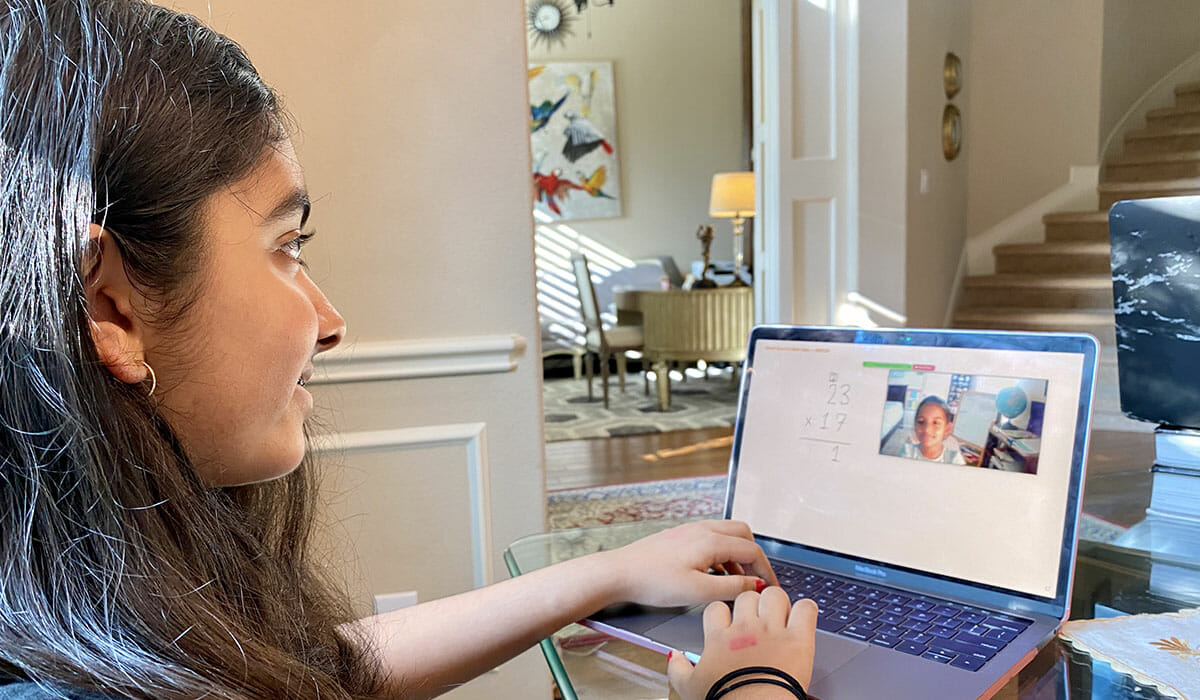
As co-founders of Global Guru, Divya and her two younger sisters are helping K-12 students receive free virtual tutoring from peer tutors aged 13 and older in subjects ranging from math to French. The college junior says their volunteerism was inspired by her youngest sister, Krisha, who first started tutoring children in their neighborhood.
Discovering the limits of in-person tutoring because of time constraints, Divya, also the CEO of Global Guru, says the three, all 18 and under at the time, joined forces for good, starting with that one student, and growing from there. Since 2019, Global Guru has connected with hundreds of students in the United States and internationally through peer-to-peer online tutoring, making education more accessible, one student at a time.
“I envision the future of educational accessibility as one where students not only have access to supplemental education services, such as tutoring, mentorship and more, at the tip of their fingers, but also as one where they have access to the technology needed to utilize these resources. Our efforts are almost meaningless if students aren’t able to use the services we aim to provide,” Divya says.
Global Guru is upending the traditional model of supplemental education, where access to high-quality learning was guided by expert availability, cost and complementary resources. Global Guru is picking up where school classes leave off for the day, says Divya, as they support students to ensure they establish good study habits and build a strong academic foundation, which positively impacts their future higher education, job prospects and career success. Divya says her volunteerism is based in experience, as she struggled as a student herself to find an affordable STEM tutor.
“I decided if I was having this difficulty in college, I couldn’t imagine what other students were going through. If we can help provide supplementary education to people who lack access starting from high school, we are bridging the gap in terms of education inaccessibility starting from a younger age.”
Krisha Rath, co-founder of Global Guru, pictured conducting a 1st grade math class with a Global Guru student./Courtesy Divya Rath
That impact of targeted skilled human interaction through an online learning network, says 14-year-old Global Guru volunteer Shilpi Bardhan, where any child can receive personalized online tutoring from a peer who is matched to them based upon subject preference and time zone, is making a difference for students who may need extra attention in a specific course. Counting close to 125 high school and college student volunteers amongst its Global Guru ranks, and student participants from rural India, China, Australia, Canada, South Korea, and ten states in the U.S., Shilpi, an Oklahoma resident, says Divya’s commitment to providing free education to students is unwavering.
“Divya is very kind, caring and very determined. When we need to offer a specific program, she gets on it, tells us what we need to do and how we need to achieve it. Her effort has created a wonderful program that provides one-on-one tutoring for students, where the tutor is able to teach a subject they like.”
The joy of watching learning in action is what powers Divya’s service. “I’m tutoring a first grader now,” says Divya. “They’re very vocal about when they don’t understand something. You can see on their face when (the concept) doesn’t make sense. You come back and revisit that topic after you break it down step-by-step. They’ll throw their hands up, their eyes get really wide. They’ll say, ‘Oh, I got it! I got it, this makes sense to me.’ It’s great to see the little gears in their heads start to turn. Even if it’s just one vocabulary word, or one simple addition problem, you know you helped them with an idea they’ll carry with them for the rest of their life.
Recently raising more than $1,000 in conjunction with CGI-U, Global Guru participated in a GoFundMe challenge to fundraise in order to expand their student outreach initiatives, finance their current premium Zoom accounts, and build their own tutoring platform through Amazon Web Services. Since the start of the pandemic, Global Guru’s enrollment numbers have exploded, Divya explains, due to shuttered after-school resources and tutoring that would ordinarily be offered. Additionally, the sisters are preparing for a future where education may remain virtual, which makes their mission even more critical.
“We have a hand in helping to raise the future generation of world leaders. It’s important to recognize that not everyone starts off on the same level playing field. I’m lucky to have parents who emphasized that education is important, and they helped me pursue that education. We are able to help, so it’s just common sense that we should make sure everyone has the same opportunities we do. If we can help even one child to succeed academically, that one person could help us change tomorrow. It might be a really small contribution but at the end of the day, we’re all trying to succeed.”
Teen’s Sustainable Service Promotes Healthier Lifestyles Under Quarantine During COVID-19 Pandemic
Meet Daily Point of Light Award honoree Matt Tengtrakool. Read his story and nominate an outstanding volunteer or family as a Daily Point of Light.
The COVID-19 pandemic has crushed daily routines for individuals, curtailing commutes to work, exercise and other stress-reducing activities. High school senior Matt Tengtrakool is pushing back against this diminished activity and infusing communities with ‘green’ resources.
Founding QuaranGreen in early March as the increasing threat of the coronavirus became evident and community quarantines loomed, the Burlington, Massachusetts 17-year-old uses lettuce plants to support healthier lifestyles. Innovating on ways to help individuals curb aspects of an unhealthy lifestyle that arises with quarantine including stress and unhealthy eating, Matt decided that through a simple and easy first step: growing a lettuce plant in one’s home, families could focus on de-stressing through gardening and the basics of getting their lives back on track.
Promoting personal nutrition and helping people re-establish a sense of routine during a once-in-a-lifetime health crisis, Matt has distributed resources to more than 2,000 households thus far through his youth-run organization, and is inspiring other teens to serve their communities in unique ways.
What inspires you to volunteer?
I’ve always been really active in my community. Growing up, I was lucky enough to be raised in a great community and I had a lot of opportunities, especially centered around the environment. As I grow older, I feel it’s important to give back to my community and environment.
Matt is helping Massachusetts households decrease stress and increase healthy eating habits, a sustainable service he hopes to continue even beyond the pandemic./Courtesy Matt Tengtrakool
Describe your volunteerism with QuaranGreen.
As founder and president of QuaranGreen, I schedule all of my different community operators, nearly 150 youth volunteers in total, who work in each community. In the beginning, I used grant money from Peace First to kickstart my program in Burlington, and have slowly expanded to serve households, community organizations like food pantries and schools in over 25 towns across the state. We are supporting local businesses by managing lettuce plant distribution from local farms and businesses to households. We’ve distributed thousands of lettuce plants and information packets thus far and have been awarded five national grants that have totaled over $10,000 to support the organization.
Share one personal story with me from your volunteerism.
One teacher of ours was so inspired by my project that they built a garden in their own backyard. That shows the impact we’ve made in our community, how small changes can lead to larger community responses. We are handing out informational packets and lettuce plants to provide the simple first step for people to have little produce sources in their home, and that will hopefully get them thinking about how to stay healthy and keep a routine during quarantine.
Why do you think it’s important for others to give back?
It’s important to give back, especially in these difficult times. A lot of people are affected in a lot of different ways, and it’s important for people to volunteer, especially young people like me who have the time and opportunity to serve their communities and help people struggling.
You are serving your community in a sustainable way. Explain.
We hope to continue this service even beyond the pandemic. We’re working with local farms and community gardens to continue to expand this idea of local sustainable agriculture within all of our communities.
In one word, what does volunteering mean to you?
Compassion.
When you’re not busy with school or volunteering, what do you do for fun?
I love to play tennis. I also like being outdoors doing activities like kayaking, hiking and camping.
How can readers help?
Please visit the QuaranGreen website for more information about how you can help.