Texas Child Strengthens Community Ties to Police Officers Through Volunteerism
Meet Daily Point of Light Award honoree Khloe Joiner. Read her story and nominate an outstanding volunteer or family as a Daily Point of Light.
She’s just 8-years-old, but Khloe Joiner has made a big impression on her community through service, showing that any act of kindness, small or large, can make a difference.
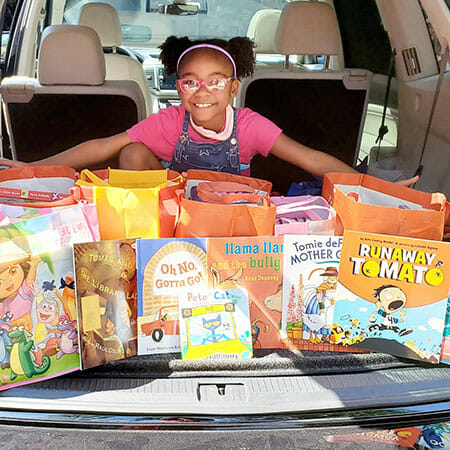
Leveraging books as a tool to both strengthen community ties and help underprivileged children, Khloe’s project, A Book and a Smile, has donated more than 6,000 books to groups and organizations across greater Houston thus far. Serving to put a smile on the faces of as many children as possible, Khloe’s volunteerism has continued during the pandemic, helping many children who have lost access to important reading resources at school.
Points of Light spoke with Khloe and her grandmother, Billye Moutra, about her volunteerism.
What inspires you to volunteer?
Khloe: It makes me feel good to see kids when they first open the book (we donate to them) and start reading it. They automatically get a smile on their face. That makes me happy. Some people don’t have enough money to buy books, everybody should have at least ten books. I want them to have even more than that.
Through A Book and a Smile, Khloe Joiner has donated more than 6,000 books across greater Houston, Texas, leveraging books as a tool to both strengthen community ties and help underprivileged children./Courtesy Billye Moutra
Describe your volunteerism with A Book and a Smile.
Billye:Founding A Book and a Smile when she was just 4-years-old, Khloe’s service began as part of an effort to strengthen relations between our community and police officers. One day, we were going to pick her sister up at school and Khloe saw a police officer on a motorcycle. She told me she was afraid to say hello, and I told her she shouldn’t be afraid. I followed up with the Missouri City, Texas Police Department because I was determined to get this officer’s name, and once I did, the two of us got to work figuring out how to help children be more comfortable with police officers. Police Officer Jessica Berry suggested something to calm kids down, like a book, could be helpful for police to hand out at community events and emergency scenes. Khloe took her life savings, more than $141 in coins, and spent all of it on books to donate to the police department. After people started hearing about Khloe’s story, the donations started pouring in.
Share one personal story with me from your volunteerism.
Khloe: When we do our book giveaways at schools, I’ll see the kids walk up and get their books. As they walk off with their parents, you can see they are smiling. People all over should have books. Books make them happy, and I like seeing people happy. I really do.
Why do you think it’s important for others to give back?
Khloe: When you volunteer, you are helping people. At my school, my grandma volunteers for the PTO, she brings them snacks and crafts supplies for kids to make art projects.
What’s been the most rewarding part of service for Khloe?
Billye: The feeling, the look on Khloe’s face when she receives book donations, or when she purchases more books, and the ultimate gift – giving books to a child in need. I’m a big volunteer, and we have a kindness tree in our home. We document each act of kindness with a hand cut-out. I teach the children that service doesn’t have to always cost something, you can open the door for someone, or say good morning, how are you? This is our reminder that we’d have a much better world if we were all kind to each other.
What’s your favorite book?
Khloe:(Giggles) The ‘Junie B. Jones’ series, written by Barbara Park.
Khloe’s service has had a ripple effect in the community. Explain.
Billye:Khloe donated books to a local underprivileged school, and a student at that school was having a hard time making friends and participating in class. The student received one of Khloe’s donated books, and with the encouragement of a teacher, started a book club. Khloe’s book donation is supporting this book club, and is helping this student make friends and talk about their love for reading.
How have you continued to volunteer throughout the COVID-19 pandemic?
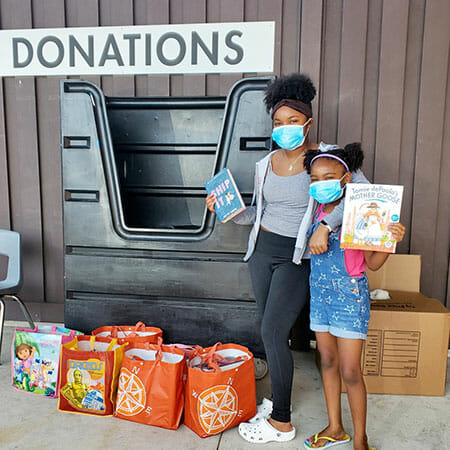
Billye:Since the pandemic started, Khloe wanted to do something special for other children, and has donated books to a local middle school, to homeless children at Star of Hope Mission and held a drive-by book parade in lieu of having a party for her birthday, where she handed out free books to children. Also, Disney recently donated 1,000 books to support A Book and a Smile.
Continuing her volunteerism amid the COVID-19 pandemic, Khloe donated 300 books to homeless children at Star of Hope Mission in Houston, Texas. Khloe pictured with her sister Kaiya Joiner./Courtesy Khloe Joiner
When you’re not busy with school or volunteering, what do you do for fun?
Khloe:I like reading. I read about four books per week (laughs). I read chapter books a lot. I started reading chapter books when I was in 1st grade.
In one word, what does volunteering mean to you?
Khloe: Helping. Helping people.
How can readers help?
Please follow Khloe’s grandma, Billye, on Twitter and Instagram for more information about how you can help.
If she hadn’t retired early due to a medical issue a few years ago, Debra Franceschini-Gatje said she likely would still be working full-time. Instead, her retirement led her down a road of service for her Ridgefield, Conn. community, where she works tirelessly to support those in need, particularly local senior citizens.
“I guess everything happens for a reason, so I think it was God’s way to say ‘Hey, I think your services are needed elsewhere,’” Debra said.
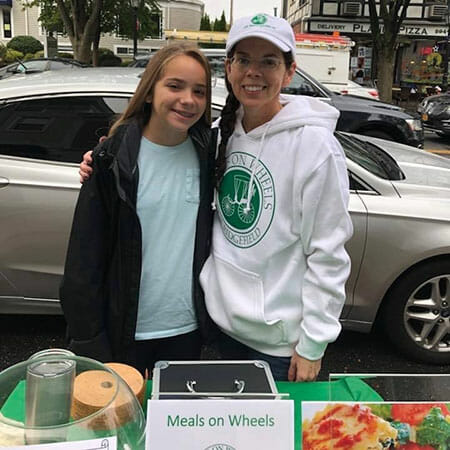
Three years ago, Debra joined Meals on Wheels of Ridgefield to lead their outreach and events. In that time, Debra has helped to triple the nonprofit’s client list, going from providing about 10,000 meals a year to 30,000. From there, she joined the Ridgefield Commission on Aging, whose mission is to represent the community’s seniors and provide them with information and support. She represents both organizations on the Senior Positive Initiative Forum, a town committee that works to meet the needs of local seniors. Debra is also a part of the local Salvation Army, where she works to raise money for the town and to further assist seniors.
Debra has taken her service even farther. Prior to their services being paused due to COVID-19, she volunteered for a monthly pop-up food pantry and for a monthly food truck, helping to distribute food to those in need. During the summer, Debra and her daughter volunteered to go food shopping for seniors uncomfortable leaving their homes during the pandemic. Along with a friend, Debra started a Ridgefield Connecticut Seniors Facebook page in order to keep the senior community aware of COVID-related information, free Zoom classes being offered, and local resources. Debra said it has always been in her nature to help those in need, as well as advocate for seniors.
Describe your volunteer role with Meals on Wheels of Ridgefield.
We help provide meals to folks who can’t cook for themselves or who have a disability. A situation we just had recently was a family of four. Suddenly their son got sick and the mother had to be in the city everyday for chemo treatments, so the other young man in the family was being left alone without being fed, if you will. I reached out to them to ask them if we could help them with some of the stress by providing family meals. We also help folks who have knee surgeries or hip replacement surgeries, so short-term and long-term [help].
I am in charge of outreach and events. … Ever since I started three years ago, my main responsibility has been to make folks aware of Meals on Wheels and how we help the community, and help take away the stigma that this is just for the elderly people and disabled people. I would attend and secure meetings with local organizations like Lions Club and the Mens’ Club. The Founders Hall in our town is a big senior center, so we did a presentation there. We do a presentation in school for the kids so they can talk about it with their parents. We have these white bags that we put our meals in, so I go in and talk to the kids about Meals on Wheels and they would get a bag so they can color. We deliver all our meals to clients in these colored bags to make it a special day. They always write really cute things, the kids, very kind words.
Since then, our client list has tripled. We were doing about 10,000 meals a year when I started, and now we’re doing 30,000 meals a year. Obviously COVID definitely had an increase in that this year, but even before that happened, we were well beyond tracking last year’s numbers in terms of clients and how many meals we served. We also offer meals to folks who can’t afford it. Sometimes we’ll get calls from social services about people who are in need. We offer them complimentary meals or discounted meals. Because of COVID this year, we couldn’t do it, but I put together a luncheon for our 150 volunteers every year at this retreat house that one of our benefactors lets us use free of charge every year. It’s a beautiful place. That’s always a lot of fun. We also do a fundraiser night. We call it a Bartender Night. Unfortunately, we couldn’t do that this year because of the COVID situation. A lot of the stuff I do now is online, trying to reach to people and make them aware of things online as opposed to the live things I would do.
Debra Franceschini-Gatje, right, volunteers with her daughter Nina for Meals on Wheels of Ridgefield./Debra Franceschini-Gatje
Describe your volunteer role with the Ridgefield Commission on Aging.
It’s mission is to speak for and represent the seniors in the community who can’t speak for themselves, and also find out information to benefit the older population. For example, before the COVID situation happened, we would have meetings to inform the senior population on things like Medicare enrollments coming up. We would bring in a nutritionist to show them how to eat for longevity. We try to educate them and also support them and be their advocates. There have been a couple of times where we’ve had to advocate in the housing complex for them. Oftentimes the seniors are afraid to speak up because they feel they’ll be kicked out of their apartment or a rent increase will happen. That’s just some of the main things we do on the commission.
Can you discuss the Senior Positive Initiative Forum?
The Senior Positive Initiative Forum is a town committee that consists of all the town stakeholders. For example, the Ridgefield [Visiting Nurse Association] has a big presence in town. Founders Hall is another big one that always attends. They’re a big senior center in town where people who are 60 or older can go and take advantage of the facilities, playing bridge, working out, taking yoga, activities, cooking classes. It’s really a great place. We also have the Ridgefield Library as part of the committee, and the rec center in our town where people go to work out of all ages. We also have Rides of Ridgefield, which is an organization that gives free rides to seniors who need transportation to things like doctor appointments or going to the store. Social Services is also on that call to talk about what they’re doing. It’s a culmination of all the town stakeholders and we share information on what we’re doing. Oftentimes we’ll be like, “That’s a great idea, we should do that,” or “This is a great idea, let’s do this.” It’s kind of like a meeting of the minds of all the folks who have a stake in the community to help different populations.
How do you volunteer for the Salvation Army?
I am part of the town Salvation Army team, so I work with the Salvation Army here to help raise money for our town. We’ve used it last year to provide a senior getaway at the Salvation Army camp. It’s a full, five-connection-type building. It has beautiful grounds and lots of activities and there’s a beautiful pond. We were able to send seniors up to enjoy a free week of being in a resort that they normally wouldn’t be able to go to or afford on their own.
Are there any future partnerships, programs, or events that you are excited about?
I started a Ridgefield Connecticut Seniors Facebook page with a friend of mine. The goal of the page is to keep people advised of COVID-related information, and also keep them advised of all these Zoom-type free classes they could take part in. It’s a small little group, only about 600 people, that we started in March when this whole thing started. I update that on a regular basis with my partner. That’s one of the things I’ve personally done to try to keep up communication with the senior population. I also hear from people that need help with certain things from the Aging Commission. People will sometimes email me directly or message me on Facebook and I’ll help people that way. If they’re having an issue with a landlord, for example, oftentimes I’ll step in as an advocate to go with them and speak with them, or just send a note to a town member asking a question as opposed to that person being afraid of asking the question. I’ve always been a senior advocate. My mom lives in Florida and she’s very far away and I pray that somebody like me is taking care of her. I do it because I grew up with nothing and know what it’s like to have nothing, so I try to help the people who have nothing because it means a lot personally.
What’s been the most rewarding part of your work?
I think just getting to know all the people I know. If I hadn’t stepped in to my first role at Meals on Wheels, I wouldn’t have met all the great people I’ve met. Meals on Wheels led to the Commission on Aging, the Commission on Aging led to the Senior Positive Initiative Forum, then that led to the Salvation Army, so I’ve gotten to know so many great people in town. It’s been so rewarding and I feel lucky. I feel like people know me and they know who to contact when they need a person who can help them do this and that. Oftentimes I get messages from people out of the blue just saying, “Hey, can you send me the link to this thing you posted?” It’s really about meeting all the people and kind of feeling like I’m making a difference. I do feel like I make a difference.
What do you want people to learn from your story?
Never assume that people are OK. There’s always people out there that need help in one way or another. We all live in this cute little suburb and we think that things like homelessness doesn’t go on, and things like hunger and food insecurity don’t go on, but it does. There’s so many things that go on that people don’t know. It’s off their radar, and I try to keep it on the radar and the people I work with are the same. I think it’s important to keep people educated on all the resources available as a town, whether it’s in good times or bad times.
Why do you think it’s important for others to give back?
Because I find that a lot of the volunteers that I work with are on the senior side, and sooner or later, those people aren’t going to always be here to be able to volunteer. Younger folks need to step up and be in a position to take over their roles, otherwise these groups won’t survive. It’s important that people of all ages get involved so these great programs that we have can continue on from generation to generation.
Teen Helps Combat Nicotine Addiction Through Nonprofit
Meet Daily Point of Light Award honoree Sid Thakker. Read his story and nominate an out-standing volunteer or family as a Point of Light.
Not everyone can say that their passions have led to them to positively impact thousands of kids. Sid Thakker, however, can say that his love for biology and economics has led him to not only help fellow teens in his Reston, Va. community, but potentially across the country — and he did it all before he turned 18.
Two years ago, Sid’s award-winning science fair project on nicotine addiction led to him starting the nonprofit Nicreport, with the goal of educating as many high school students as possible on the dangers of nicotine addiction and vaping. Through Nicreport, Sid has created interactive curriculums that have been implemented in biology and health classes within his Fairfax Coun-ty Public School district. So far, the curriculum has reached about 3,000 students in five of the district’s high schools, but by the end of the year, it will be in all 23 of the district’s schools and will reach closer to 60,000 students. Nicreport’s reach goes farther through seminars and its website, which serves as a database for the latest news and research on nicotine addiction and vaping.
Sid is currently working with the National Association of Secondary School Principals to make Nicreport a national organization so its curriculum can be implemented in schools all across the country. The nonprofit has also paired with the Fairfax County Health Department and the Truth Initiative to develop an app that will provide support for those currently trying to kick their nicotine addiction. Aside from his positive impact on fighting addiction, Sid has also used Nicreport to raise over $10,000 to donate to Feeding America.
Describe your volunteer role with Nicreport.
Nicreport is a nonprofit that I created two years ago. The reasoning behind me creating this nonprofit is because of a massive issue, not just at my school, but in practically every school across the country — the issue of vaping. In 2018, we saw this massive vaping epidemic and at the same time, I was creating a science fair project focused on nicotine addiction. I was grateful enough to go to the Intel International Science and Engineering Fair where I won an award from NIDA, or the National Institute on Drug Abuse. That really allowed me to get the connections necessary to create an organization that’s focused on educating the youth on the dangers of vap-ing. We created a new type of curriculum in both biology and health classes, where we create interactive lessons to help teach students on the dangers of vaping.
The biggest issue I saw as a student in our school district is that the education on vaping was lackluster and it didn’t seem the teachers put as much emphasis on it. I came to learn that eve-rything the teachers were teaching was state-mandated, so they didn’t have much say on it. I had grateful enough teachers at my high school who let me work with their curriculum to inter-twine mine. I was able to tweak it a little bit to put my curriculum in place, where we were able to have super interactive lessons to teach students. I also focused on talking at different semi-nars such as PTSA meetings, where I help to educate not just students, but also parents on the dangers that come with vaping. We’ve done a couple seminars. On top of that, my website acts as a database to inform as many students and parents as possible on news related to vaping. For example, during this time, news is being released that COVID-19 and vaping have a strong connection. I’ve taken this time to add information and news articles and research that have show the interaction between the two, and making sure everybody is up to date on the type of information coming out about it.
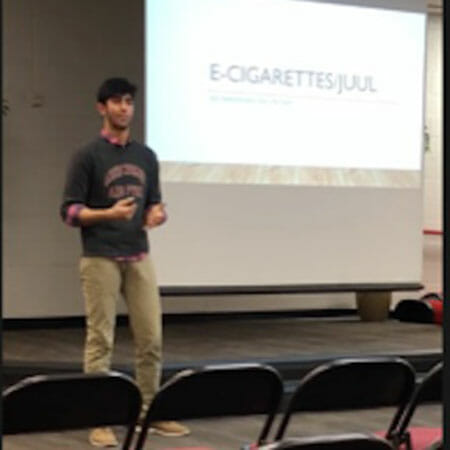
Sid Thakker gives a presentation on the dangers of vaping through his nonprofit Nicreport./courtesy Sid Thakker
Why was the issue of vaping important to you?
As a big science person, I really want to create the best types of tools necessary for not just stu-dents, but anybody to feel safe. I was lucky enough to intern at Georgetown University, where I did my nicotine addiction research. I learned about a receptor that primarily causes nicotine addiction. The original project I was working on was focused on smoking, but then I looked back at my school and I noticed that a couple of my classmates had succumbed to this [vaping] addiction. It was really worrisome for me to be looking at friends and family who had been tak-en over by this somewhat small device, even though it shouldn’t even be an issue for anybody. It should be banned. I took the liberty to create an organization that can help these kids learn about it so they don’t even fall into the trap in the first place.
Do you have any long-term or short-term goals for the future of your nonprofit?
Obviously the end goal for my organization is to impact as many students as possible. I’m working right now with the National Association of Secondary School Principals. They’re help-ing me create my organization into a national organization to where I can have my curriculum in the hands of schools all over the country, from California, to Texas, to New York. To me, that is the next step. We’ve seen amazing results at my high school and the other surrounding high schools, and we would love to replicate that in every high school across the country.
Why did you choose to also raise money for Feeding America?
Feeding America has been something I’ve volunteered for in the past, and I also know a lot about. Especially during COVID, when unemployment was at an all-time high, a lot of people in Reston were out of jobs and going to local food shelters. It was really hard to see this, espe-cially as a person who has spent their entire life in Reston. I decided to donate all this money to Feeding America to help people who’ve lost their jobs and give them the relief they need, espe-cially during this terrible time.
Are there any future partnerships, programs, or events that you are excited about?
For the past couple of months, I’ve been working with Fairfax County Health Department and we have an amazing partnership going on. This month, we’re releasing a product that is going to be targeted for students that are also paired with this organization called Truth Initiative. The program is called This is Quitting, and it’s an amazing resource for students who have already been addicted to nicotine and want a way to stop. This is the best place for students to be look-ing toward in the Fairfax County Public School District.
This is Quitting is an app software where kids can interact with a chat bot where they can get information from a software that can determine its needs. We want students to be able to learn information from someone who is available 24/7. This chatbot offers different ways for stu-dents to get help, what numbers to call, what hotlines to use, what type of activities they can do to escape the crave, such as going on walks, and they’ll give directions to the nearest trail they can go to. It’s a great way for students to learn about the preventative measures they can take.
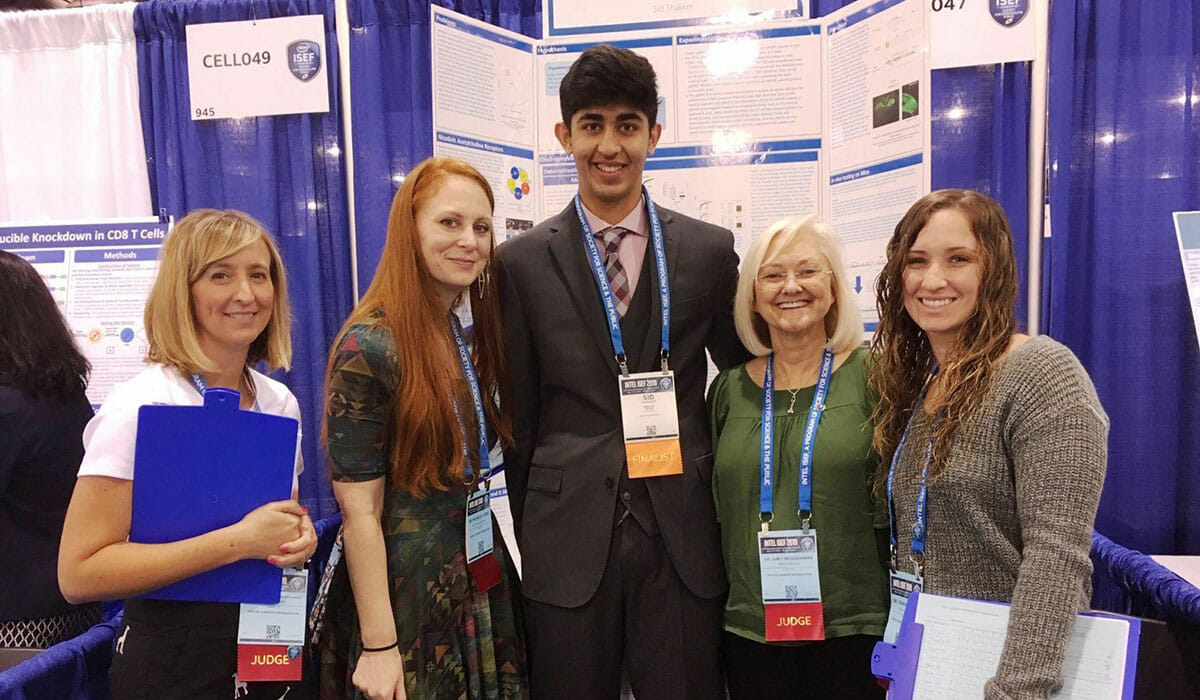
Sid Thakker, center, presents the award-winning science fair project on nicotine addiction that led to him starting Nicreport at the Intel International Science and Engineering Fair./Courtesy Sid Thakker
What’s been the most rewarding part of your work?
The most rewarding part has definitely been receiving emails from parents whose kids have been through my curriculum. I’ve receive a couple emails from parents thanking me for the work I’m doing, which is really not even close to what I expected this curriculum would cause. A lot of parents are thanking me for bringing the attention to the kids, who then brought the at-tention to their parents so they were able to get the help they need. It’s just incredible to see that as a 17-year-old student, I’m able to impact more than just one life, than myself. It’s in-credible to have reached over 2,000 students when I started this curriculum only a year and a half ago. To me, it shows any kid can do whatever they want to if they put some hard work and dedication toward it.
Why do you think it’s important for others to give back?
I think volunteering is probably the most important thing someone can do. I think especially given these restrictions, even if you’re volunteering online, it’s impacting someone else’s life. When you first volunteer, you don’t think what you’re doing is making that much impact, but when you look at the scope of the organization or the program you’re working for, you’re actu-ally affecting more than one person. You’re affecting an entire family and a community that has been working hard for years trying to develop something. Even your hour or two can really make an impact. I think it’s really important for people to be patient and see it won’t just take a couple days or weeks, but when you give it those months and years, you’ll see that impact and you’ll be happy you stayed with it.
In California, outdoor sports continue for those with vision loss, thanks to GO See Foundation
Meet Daily Point of Light Award honoree Allyson Buerger. Read his story and nominate an outstanding volunteer or family as a Daily Point of Light.
For Allyson Buerger, who created a foundation called GO See that helps people with little or no vision to enjoy fun adventures, the emphasis is on the word, GO.
She capitalizes both the “G” and the “O” for two reasons: first, because they are the initials of her late father, Gary Owens; and secondly, because the whole point is to get out and “go” places, despite vision loss.
The GO See Foundation, based in San Luis Obispo, Calif., has been arranging hikes, bike rides and even kayaking trips, taking advantage of California’s beautiful central coast and parks. Lunches and dinners at restaurants usually follow. The once- or twice-monthly outings have slowed down temporarily, only because of the recent coronavirus pandemic.
Members are meeting these days via Zoom and other video systems, but they are eagerly discussing future outings, including snow skiing in the mountains.
“I’m the kind of man who likes to go out a lot,” says Travis Sitler, 33, who has been almost totally blind his entire life. Travis was instantly interested when Allyson came up with the idea for GO See group. The two met in a separate group that helps blind and visually impaired people learn about the latest assistive technology. Since joining GO See, Travis has enjoyed visiting a sea otter exhibit, doing pottery, and other outings.
If you suspect it’s a bit tricky to arrange such activities for people with little or no vision, you’d be right. Allyson has to put in the effort to line up transportation to and from the activities, as participants do not drive and live in a number of communities. She also provides sighted people to attend to act as guides for those who need them. Special equipment is needed to provide “tandem bicycling,” “tandem kayaking” and “tandem skiing.” Allyson has also arranged fundraising events to raise money for the group.
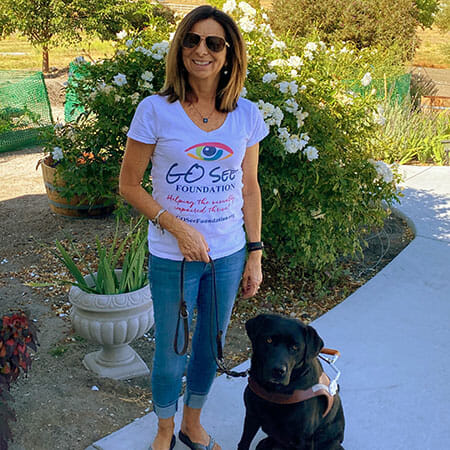
Allyson Buerger and her guide dog, Olga./Courtesy Allyson Buerger
Allyson says she doesn’t mind the work. “It’s important for me to give to others because I know what it’s like,” says Allyson, who has been visually impaired since childhood, but has lost more of her vision in recent years. She can no longer drive and now uses a guide dog. Olga, her black lab, joins the GO See activities, along with other participants’ guide dogs.
Being able to having fun not only keeps people with vision loss physically active, but bolsters emotional health, says Allyson. Her father had always encouraged her to live life as fully as if she were not diagnosed with progressive vision loss.
“I was mainstreamed through high school and did everything my friends did,” she says on her website’s home page. “I worked at McDonalds, was a basketball cheerleader and did drill team at half time for the football games.”
Allyson married, raised a son and a daughter, and runs a custom framing and gift shop with her husband, John.
Now, she says it’s important to help others avoid the isolation that can come with severe vision loss.
“The hard part is not knowing how it will affect your life,” says Laurie Mileur, a former university research professor whose vision loss was a factor in her retirement. Laurie has now gone kayaking in the ocean as a GO See member, and hopes to do zip-lining. “Allyson is so enthusiastic and energetic,” she adds.“She opens up doors you thought were closed.”
When Gail Kennedy learned about the GO See idea, her first thought was “I am so ‘in.’”
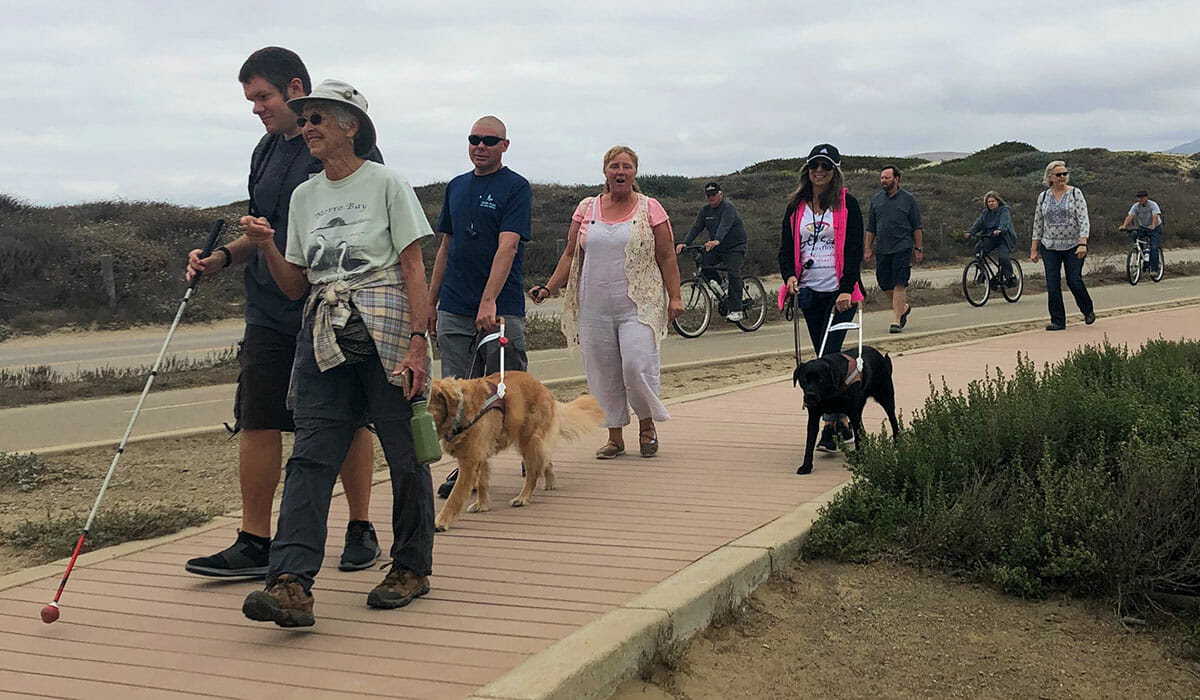
Allyson Buerger and her black lab, Olga, join members of the GO See Foundation for a hike in Morro Bay. Calif., in September 2019./Courtesy Allyson Buerger
Gail, a retired early childhood educator, notes that most programs for the visually impaired tend to focus on practical skills, such as how to prepare meals or do household chores.
While there’s nothing wrong with that, Gail says she and others who have lost their vision need more.
Gail has always loved to take long hikes and go kayaking, and she’s grateful that Allyson has found a way for her to continue doing that.
“Allyson’s foundation embraces that – live life, enjoy!” said Gail.
Volunteer Fulfils Civic Duty to Provide Safe Community for People with Disabilities
Meet Daily Point of Light Award honoree Nicolas Escobar. Read his story and nominate an outstanding volunteer or family as a Daily Point of Light.
Calling volunteerism a civic duty, Nicolas Escobar’s current service helps people with developmental disabilities reach their fullest potential.
As a volunteer and a member of the Board of Directors for Kreider Services, Nicolas, a 38-year-old from Polo, Illinois, has volunteered since 2017 to help people with disabilities overcome challenges so they can live, work and participate meaningfully in their community. Supporting his neighbors in big and small ways, from his leadership role on the board to getting his hands dirty to beautify Kreider’s residential facilities, Nicolas is giving back to his community to provide a better life for those who need the help.
What inspires you to volunteer?
We all need to volunteer as a civic duty. it can be easy to overlook providing a meaningful life for those who need it. Our goal is to create a safe and happy community to facilitate active living for people with developmental disabilities.
Describe your volunteerism with Kreider Services.
As a board member and volunteer, I serve to improve organizational ability, efficiency and business oversight in regards to financial, legal, staffing, and many other operating factors. I also fundraise for the organization, and as a volunteer, I’ve done everything from planning different events to doing grunt work. I saw firsthand how challenging it can be for people with developmental disabilities to fit in and have purpose. The parents of the residents at Kreider want to know their children are safe, and as a board member, it’s our job to make sure we are providing a safe community, offering programs that make a difference not only in the client’s life, but also their family’s.
Explain how your service offers a better life for your neighbors.
We all have opportunities and the duty to give back to our community. As part of my volunteerism, I help to maintain and beautify residential facilities for the Kreider community. This includes spreading mulch, raking and getting my hands dirty. It means the world to me that I can make an impact on somebody’s life.
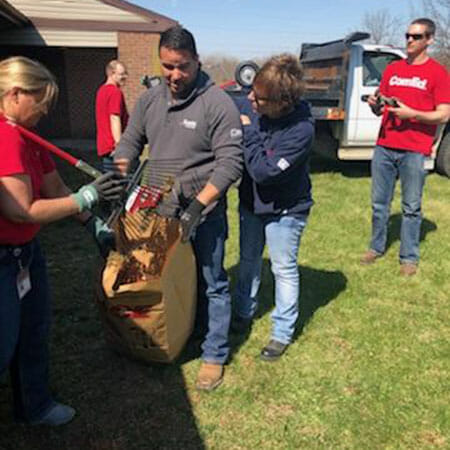
Nicolas pictured doing yard work at Kreider Services. Nicolas Escobar: “People are given opportunities to succeed in their personal life, and with that comes a personal responsibility to give back to others and to their community.”/Courtesy Nicolas Escobar
Share one personal story with me from your volunteerism.
Meeting the clients and having them tell you a story, going to an event and seeing them smile and dance, or giving you a hug, that’s the biggest impact. Helping to better someone else’s life puts things in perspective for me, I think it helps to keep me balanced and it makes me feel good.
Why do you think it’s important for others to give back?
People are given opportunities to succeed in their personal life, and with that comes a personal responsibility to give back to others and to their community.
How have you continued to volunteer throughout the COVID-19 pandemic?
The Kreider facility residents are a high-risk group, so we’ve had to pause volunteerism on site. Our board meetings have recently recommenced in person, but we are social distancing and wearing masks.
In one word, what does volunteering mean to you?
Dedication. Volunteering is hard. I’ve been volunteering since I was 16-years-old. I missed ball games, I missed practices. I missed these sort of things because I had commitments to volunteerism. It’s not easy, but I’m dedicated to it.
How can readers help?
Please visit the Kreider website for more information about how you can help.
Full of Gratitude, Young Immigrant Pays Service Forward to His Adopted Home
Meet Daily Point of Light Award honoree Sheldon Fouche. Read his story and nominate an outstanding volunteer or family as a Daily Point of Light.
12-year-old Sheldon Fouche says when his family immigrated from South Africa to Tampa, Florida, his new American neighbors were incredibly welcoming. When his uncle unexpectedly passed away in 2017, the grieving family once again received overwhelming support from the community. Sheldon, his older brother, Dominic, and their two cousins are now volunteering to pay that kindness forward.
As CEO of Kids 4 A Cause, Sheldon is supporting others in difficult circumstances to help ease their pain and suffering by donating funds generated by the sale of handmade products and items. The 7th-grader is inspiring other youth to get involved in service and make a difference, as he has raised more than $12,000 thus far, helping everyone from the homeless to veterans, teachers, police and first responders, the hungry, abused and orphaned, as well as important causes including the environment, neglected animals and addiction.
What inspires you to volunteer?
Our family has always placed a high value on community service and volunteering. My service can have a ripple effect. Kids like to inspire other kids, and kids can make a difference through volunteerism.
Sheldon Fouche, CEO and co-founder of Kids 4 A Cause, is supporting others through his volunteerism to help ease their pain and suffering. Sheldon is volunteering in his uncle’s memory./Courtesy Sheldon Fouche
Describe your volunteerism with Kids 4 A Cause.
As CEO and co-founder, I handle marketing, communications, and the sale of our products. I also make public speeches and plan which events and expos we will attend. We make a variety of household products to sell including handmade soaps, essential oils, jewelry, environmentally friendly straws and bath bombs. My goal is to raise at least $1,000 each month for our initiatives, and through our fundraising, we’ve given back to the community in various ways, including donating 10,000 meals for the hungry and helping Hurricane Dorian victims. We’re currently helping people locally in the Tampa Bay area, but also have sent help to South Africa and the Philippines.
Share one personal story with me from your volunteerism.
Our annual December event is Santa’s Shoe Box Project, which is our biggest project of the year. We fill shoe boxes for homeless with donated essentials including soaps, shampoo, toothbrushes, food and clothes. Each box is wrapped in holiday paper with an uplifting note attached, and this year, our goal is to deliver 500 boxes. The boxes are delivered to Vincent dePaul homeless shelter and Pinellas Hope, and we have five schools involved in this project. It’s so nice to see everyone brought together for this cause, and the recipients are always very happy when they receive the boxes. They say they can’t even remember the last time they received Christmas gifts. It’s really a wonderful thing to see.
Why do you think it’s important for others to give back?
It’s really important to volunteer because you get good karma from serving and you’re also helping to spread kindness to make the world a better place, one step at a time.
How have you continued to volunteer throughout the COVID-19 pandemic?
It’s been harder to volunteer but our efforts are going smoothly, and we’re doing lots of things online. We’ve supported the elderly who are in isolation at nursing homes by giving them flowers, cards and gifts. It gives them hope to see that people are there for them, as they’ve been in quarantine and lots can’t see family.
In one word, what does volunteering mean to you?
Service. We are supporting our local community whenever there is a need. It also makes us feel good to help others.
Sheldon has raised more than $12,000 thus far for Kids 4 A Cause, helping everyone from the homeless to veterans, teachers, police and first responders, the hungry, abused and orphaned, as well as important causes including the environment, neglected animals and addiction./Courtesy Sheldon Fouche
What do you think your uncle would say about your service?
I think he’d be proud of us, and he’d tell us to keep going. I remember how he loved life. He had lots of friends, he was a very energetic person and he had a great attitude. He gave back to the community and made everybody happy.
When you’re not in school or volunteering, what do you do for fun?
I just started lacrosse. I spend lots of time with my family. We like to be outdoors, or go out to dinner. We kayak sometimes, we also watch movies together and play board games.
Empowering Planet Conscious Youth, Teen Volunteers to Promote Climate Education
Meet Daily Point of Light Award honoree Shreya Chaudhuri. Read her story and nominate an outstanding volunteer or family as a Daily Point of Light.
17-year-old Shreya Chaudhuri, a Haywood, California high school senior, says she witnessed environmental racism and injustice from a young age growing up in the Bay Area, infamous for its extreme socioeconomic disparities. Moreover, according to Shreya, inequities in the educational system in low-income communities exacerbate already existing climate change issues.
Founding Project Planet in 2019, Shreya is targeting underserved students to eradicate the climate educational divide and encourage youth to become climate leaders. Serving with the belief that ignorance, not apathy, fuels climate inaction, Shreya is improving current climate education by focusing on long-term, sustainable projects and research. Connecting with more than 3,500 students in the U.S. and across the globe thus far, Shreya is volunteering to build a future of planet conscious citizens.
What inspires you to volunteer?
We are a part of the generation that can effect change, and I’m inspired to volunteer for the future generation. Project Planet combines research, advocacy and activism to give people an action-impact plan and create a sense of real change.
Describe your volunteerism with Project Planet.
As founder and CEO of Project Planet, I manage our dozens of volunteers who serve across the world. I also create programs and educational materials which we distribute to schools and make available online. Lastly, I facilitate collaborations with environmental organizations.
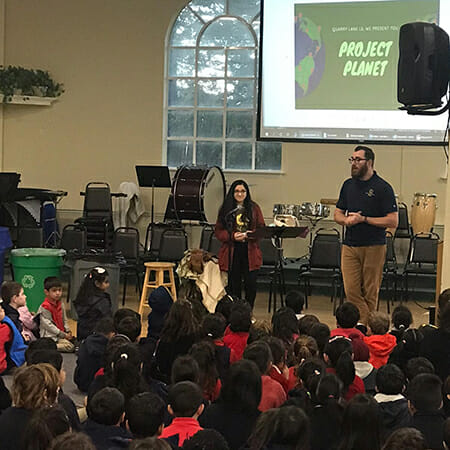
Shreya pictured at a school presentation. The Haywood, California teen is working with underserved students to eradicate the climate educational divide and encourage youth to become climate leaders.
Share one personal story with me from your volunteerism.
When we first started out, I didn’t really think I’d make an impact that quickly. After one of our school events, a parent told me her daughter talked about the change she wanted to make in her own community after learning more about climate change. Another student created a plastic drive in their own community. Through our volunteerism, we are inspiring other kids to take action. Even changing one person’s mentality is enough to change the world, and seeing that change motivates me to continue my service.
In addition to your own volunteerism, you are encouraging other kids to become climate leaders.
Underserved communities are the most disproportionately affected by the climate educational divide. This isn’t just because of location, but also because educational systems are underfunded. These communities and citizens can’t make a change even though they might want to. We are providing everyone with the opportunity to make a difference, so they too can have access to clean air and water.
In one word, what does volunteering mean to you?
Hope. We are able to solve this problem together by giving hope. The media shows how it’s impossible to stop climate change, how big companies are causing climate change and nothing can be done. Our project shows there is a future generation that wants to help and people are working together to try to make a difference.
How have you continued to volunteer throughout the COVID-19 pandemic?
Because of the pandemic, we expanded the virtual curriculum we’d previously created for schools, and are now implementing these programs for students. Our programs include mentorship programs, workshops, blogs, campaigns, petitions, webinars and courses, which have all moved online due to the pandemic. Additionally, we are in the process of launching a carbon dioxide tracking app. Next year, we plan to launch two programs:
– Global Exchange Project: We connect an underserved youth with another youth that does have resources so the two can make an impact together.
– Mentorship Program: We will connect our more experienced youth climate leader volunteers with less experienced youth leaders so they learn and then in turn make their own change.
When you’re not volunteering or at school, what do you do for fun?
I like to read and bike and go on hikes.
How can readers help?
For more information on how you can help Project Planet, please visit our website.
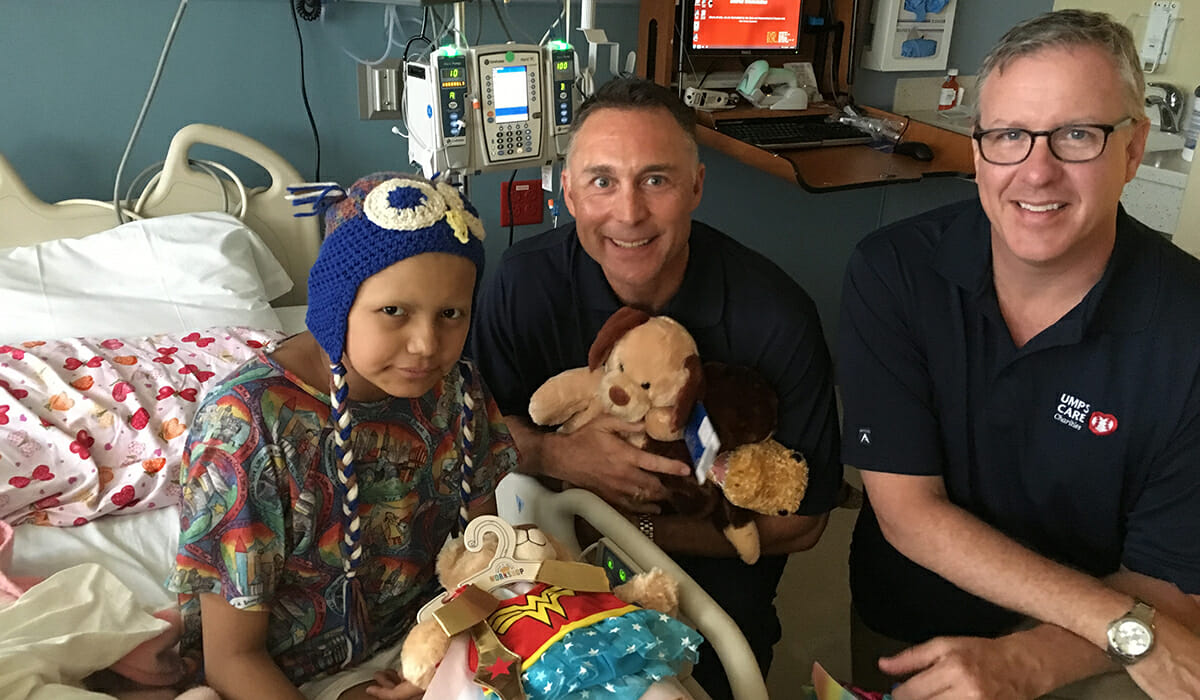
The Major League Baseball umpire has spent the past several years volunteering tirelessly for kids both in his Castle Rock, Colo. community, as well as kids around the country and world. Paul serves as the Secretary for UMPS CARE Charities, a nonprofit formed by MLB umpires to support kids in MLB markets around the country and Canada. The organization’s programs include BLUE for Kids, which delivers Build-a-Bears to children hospitalized with life-threatening illnesses; BLUE Crew Tickets, which provides baseball tickets to kids in need and brings them onto the field; and the All-Star College Scholarship, which helps fund higher education for children adopted later in life.
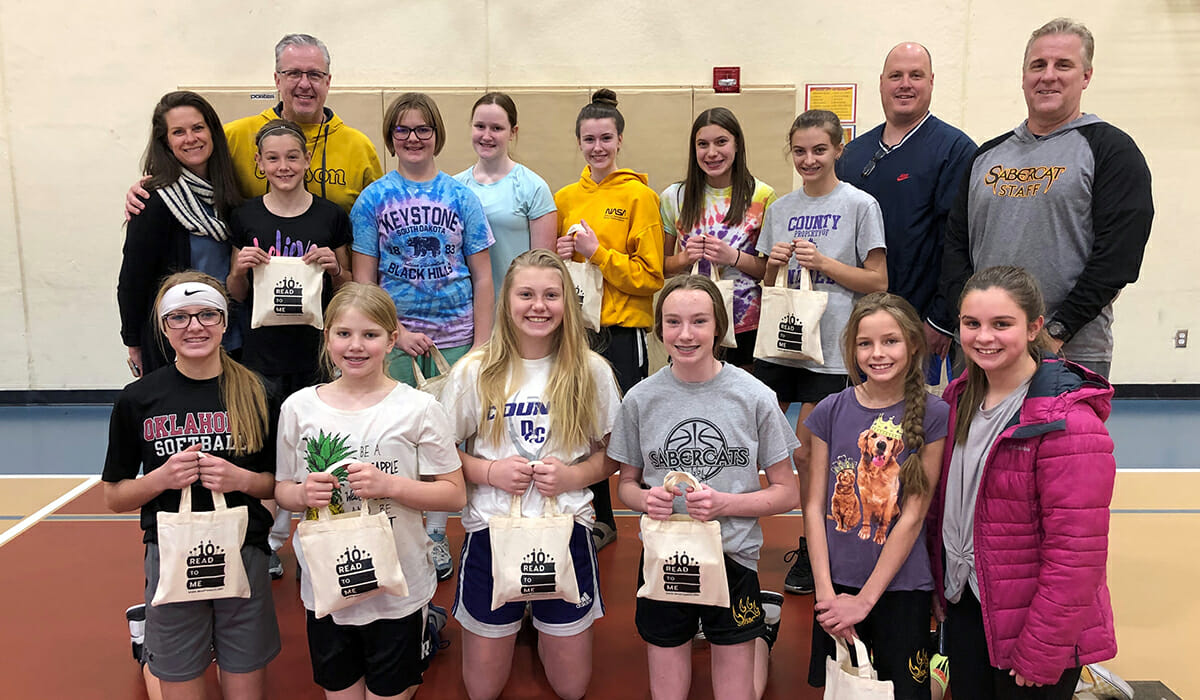
Aside from UMPS CARE, Paul volunteers at Manna Care, a food market run by his church. Each week, Paul and his kids help stock and provide food and toiletries to families in need. He and his kids donate to and participate in fundraisers for Hope’s Promise, which provides orphan care support around the world. For the past nine years straight, and on-and-off for two decades prior, Paul has coached middle school girls’ and boys’ basketball teams, and he has brought volunteerism to his teams as well. Last year, Paul started having his team support Read to Me, a nonprofit that donates books, blankets and teddy bears to new mothers.
“To me, if we can help that next generation and teach our kids how to live for others, I think this world is going to be a better place,” Paul said.
Describe your volunteer role with UMPS CARE.
By title, I’m the Secretary. We don’t really assign job duties, it’s just whoever has the time and inclination to get things done. That’s what makes it a great organization — people just chip in and get things done. Quarterly we have Board meetings and then once a month we have Executive Board meetings. I also have meetings with the Chairman of the Board, the President, the Vice President, and we basically just talk about general strategies for the future of the charity. We have a staff of three and we get together with those three staff members for the charity. … The charity has four initiatives. I’m involved in all four of those initiatives. The one that is nearest and dearest to my heart is the college scholarship program. About three years ago, I put a team together of five people, and we have worked hundreds of man hours to restructure this and align it with the charity. Our biggest accomplishment was what we call relational integrations. We get these kids. We can give them money, but that really helps their parents. We can’t adopt them, so we do the next best thing and just have a relational integration with them. We bring them back into the charity. They help on the committees. That’s usually a 30 minute-to-an-hour phone call once a week with our committee, just to keep our outreach going and keep our scholarship going and keep the kids on track and keep them involved in their family and fundraising. It’s a labor of love, for sure.
Is there a memory from your time with UMPS CARE that especially sticks out to you?
There’s really two situations. When we go into the hospitals and we sit with those kids and we take them Build-a-Bears, it became evident really early on that when these kids go into the hospitals, they’re out of choices in their life. Their doctors decide their medication and their treatment. Nurses decide what they eat and when they eat. They don’t have anymore choices in their life. When you walk in the room with six different stuffed animals and 12 outfits, you look at the kid and they get to make a choice. We take choices for granted. A lot of time their parents try to step in and choose for them, and we say “No, this is their choice.” For once in a long time they get to choose, and just giving a choice to someone who is out of choices is so impactful. Not to mention that we all have kids, and to see these kids battling what they do with the smiles on their faces — that’s hard sometimes. Sometimes we have to step away and just take a moment to ourselves and regroup.
The other situation is the Tickets program. When we take the at-risk, inner-city kids who grew up on the outside of that giant brick wall, never dreaming they could see what’s on the other side, and take them out on the field. I had one great experience where a Latin-American third baseman came over and he was talking to the kids in Spanish. What he said was, “Don’t be so shocked and awed at this side of the wall. Most of us came from humbling beginnings.” To see the hope in their eyes when they heard that message was just so powerful, and that’s what this charity is all about.
Paul Emmel, right, attends a BLUE for Kids event held by the nonprofit UMPS CARE Charities, for which he serves as Secretary. /Courtesy Paul Emmel
Describe your volunteer role with Manna Care.
Manna Care is through our church in Highlands Ranch, Colo. It’s the third-largest food bank in the state of Colorado. I’ve always been a financial supporter of it. Me and my kids during the wintertime are involved with it. Then [I was] injured and off this season, and able to just be present and involved. Now through the Covid crisis, with the amount of people that we’re giving food to, we almost ran out of food last week. They just keep coming. It’s no longer a working-poor issue. Covid’s become a white-collar issue, too. There are affluent people who are out of work and not getting paid. To be able to give back to the community, just food and toiletries and a prayer, and build them up emotionally and put some groceries in their car, is so impactful for this community. [I’m] able to be there all year round now. Me and my two children put in probably six to eight hours a week. For me, it’s finding time between school and sports to get them down there to stock shelves, and everything from breaking boxes down to putting groceries in peoples’ cars. The need has not gone away.
What drew you to getting involved with Hope’s Promise?
That was about five years ago. Interestingly enough, I was looking for a charity to support with my kids. There is a brother and sister who are my children’s age in the orphanage in Kenya. For them to write letters and communicate and get pictures and watch them grow as my children grow, and to be involved in that, I think is just a massive teaching moment for kids in this country who take advantage. Not through any fault of their own, but there’s so much to live for here and so many choices to make, and we don’t realize that this country is so special in that way, that other countries don’t have that. That’s how we got into it, I was looking for a connection for my kids with kids in another part of the world.
What is Read to Me, and how do you support them?
There is a charity in my daughter’s school that we support and it’s called Read to Me. It’s giving a little stuffed animal, most importantly a book, and a little blanket, so mothers who don’t have the means can read to their kids in the hospital and when they first go home. We all know how important reading is to infants. … [We provide] financial support. Also, with our basketball program at the middle school, we have a Read to Me event so the girls can put together these packages. From the mail comes the bears, the books, and the blankets, and they break these boxes open and they put these packages together. They tie them up and make them nice and cute and pretty to be delivered. The lady who runs the organization then delivers these to the hospital. We’re looking to expand that. The first year was last year, just getting the girls aware of it. Now to follow up this year, I’m hoping to have a Read to Me basketball game where we can get the word out in the community and parents of the other teams that show up. Hopefully we’re going to have a Read to Me fundraising basketball game. Covid may have something to do with that, but that’s my plan.
Paul Emmel, back row, second from left, stands with the middle school girls’ basketball team he coaches at an event they held to assemble care packages for charity Read to Me./Courtesy Paul Emmel
What’s been the most rewarding part of your work?
I think it’s peace of mind. I’ve learned through trials and tragedies that God doesn’t cause car crashes, and there are a lot of people out there much worse off than me. Those things pull you through things like divorce, and things like injuries and loss, and to me, always knowing there is something else to do out there. When you’re in charity work, your work is never done. There’s always that feeling of tomorrow I have something else to do, and that keeps you going. There’s that feeling of, we did good work today for other people, for our community, for our state, for our country, for our planet. That’s a good feeling to put your head on a pillow at night.
What have you learned through your experiences as a volunteer?
The people I cross paths with, it’s just so different from the business world. The cutthroat, climbing the corporate ladder, stepping over people — it is the complete opposite. Everybody there is willing to work and ideas get shared and ideas get tried. We work together to move to a common good. I think in the words of Abraham Lincoln, it’s a collective action, and that’s what government is and that’s what charity is. When things run that way, they run so smooth. Meeting people from all walks of life, not just umpires — meeting moms and kids and retired dads — and no matter who you are, it’s working together with all these people to a common good and I think that’s what drives it.
What do you want people to learn from your story?
You have to live for others. You can’t just live for yourself. When you live for yourself, you worry about your circumstances, and when you live for others, your circumstances don’t matter. You’re not judged by them. You don’t live up to them. You’re not disappointed by them. That would be my takeaway for everybody, to just do one thing for somebody else and see how that grows.
This Teen is Volunteering to End Period Poverty, Providing Thousands of Menstrual Products to Those in Need
Meet Daily Point of Light Award honoree Samantha Parelli. Read her story and nominate an outstanding volunteer or family as a Daily Point of Light.
An average box of tampons costs $6 at the store. That might be chump change for some, but for others, it could mean the difference between dealing with their period or eating dinner that night.
Believing that no one should have to make that decision, 16-year-old Samantha Parelli started a chapter of the youth-led nonprofit organization PERIOD The Menstrual Movement at her high school in Livingston, New Jersey, in hopes to help end period poverty in her community.
Period poverty is the “lack of access to sanitary products, menstrual hygiene education, toilets, hand washing facilities and, or, waste management,” according to Global Citizen. Access to toilets or hand washing facilities might not seem like a major issue in the US, but access to menstrual products definitely is, especially when it comes to underserved and low-income communities.
Only a handful of US states have passed laws mandating that schools provide free period products to students, Global Citizen said. And federal prisons only made these products free as of 2018, with the products often being of low quality,
Knowing that there’s much more work to be done, Samantha and her group of volunteers with PERIOD at Newark Academy have organized drives and fundraising events since her sophomore year to collect tampons and pads and distribute them to people in need.
She started off by making them available at her school because she knew firsthand how uncomfortable it was for students to not have menstrual products readily available in school bathrooms.
“I’ve forgotten pads and it’s been really inconvenient to have to ask around,” Samantha said. “I knew my friends had similar experiences so I felt like it was a big problem, but it wasn’t getting addressed in the way it should be.”
So she worked with the school administration to get free menstrual products in her school’s bathrooms. But today, two years later, Samantha is impacting much more than just her school.
She and other menstrual activists have been working on a bill that would ensure all public schools in New Jersey have free period products available in bathrooms. The petition has received nearly 1,000 signatures and they hope to present it to lawmakers soon.
Additionally, Samantha has been able to provide around 30,000 menstrual products to more than 10 community organizations such as food banks, homeless shelters and correctional facilities.
“It feels really good to see people getting period products, opening them and not having to worry about it for a three-nights’ cycle,” Samantha said. “It makes it so much more difficult for menstruators to go to their job or school and do well if they don’t have access to this very basic need.”
In recent months, with the Covid-19 pandemic forcing so many people out of jobs, the issue of period poverty was further exacerbated. Samantha said she personally received an email from a community member who said she could no longer afford menstrual products.
So even with the pandemic making fundraising and drives more difficult, Samantha kept going, even partnering with new organizations to distribute menstrual products to more people.
“It’s amazing to see someone young so dedicated,” said Denyelle Burgess, network engagement specialist at the Community FoodBank of New Jersey, which has received menstrual products from Samantha since last year.
“For people struggling with food insecurity, they wouldn’t be able to afford menstrual supplies, so [Samantha’s donations] have made a tremendous difference and it’s allowed people to have access to these supplies throughout our entire 16 counties we serve,” Denyelle added.
With schoolwork, college applications and extracurricular activities already loading up her plate, running a chapter of a nonprofit organization would seem like too much to handle. But she said it’s all worth it.
“Volunteering is a win-win,” Samantha said. “You’re making yourself feel good and you’re also helping others. If you have the power to change something you’re not happy with, why not?”
Through Mentoring Project, Teen Helps Those in Need in His Georgia Community
Meet Daily Point of Light Award honoree Haaris Ahmed. Read his story and nominate an outstanding volunteer or family as a Point of Light.
Haaris Ahmed was looking for a volunteer program that would allow him to participate frequently when his school presented students an opportunity to work with The Mentor’s Project of Bibb County. The program connects mentors in the Macon, Ga.-area with Bibb County Public Middle and High School students in need of support. Haaris joined as a mentor when he was only a freshman in high school, meeting with his protege once or twice a week to work on homework, go out to lunch, or just talk.
Now a senior, Haaris has evolved with The Mentor’s Project in the time of Covid. While he can’t meet with his protege in person, Haaris still remains in contact with him virtually. He is also helping The Mentor’s Project to deliver food to families in need. Each week, he travels throughout Macon to deliver meals to several different families.
Describe your volunteer role with the Mentor’s Project of Bibb County.
I am one of the lead volunteers for the program. I work very closely with the CEO of the program as well. It’s mainly for middle and high school kids in our city that need extra help in both school and livelihood. I started as a freshman. The first two and a half years, I had a personal protege of mine. Every week during the school year I would go by and tutor him in school subjects, and sometimes I would go mentor him in other aspects as well. Once Covid hit in March, I was not able to do that, so the CEO of the company set me up with an opportunity to be delivering [food]. I really enjoyed it when I did it, and since then I’ve been delivering for The Mentor’s Project.
What inspired you to get involved in the Mentor’s Project?
I have a passion for helping others. My dad is a physician and I see multiple people around me, both family and friends, out there helping people. The joy it brings me whenever somebody gets help is hard to explain, but it just brings you so much joy.
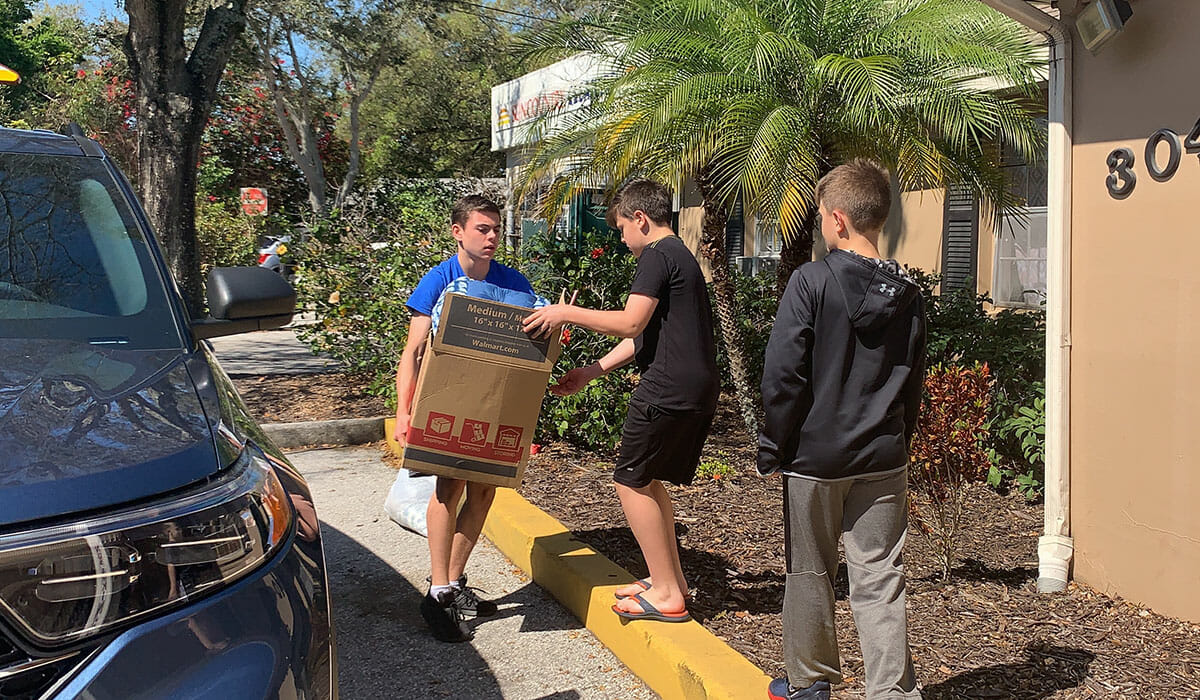
Haaris Ahmed, left, assists in delivering meals to several families in need throughout Macon, Ga./Courtesy Haaris Ahmed
What would you do with your mentee?
On the weekdays, initially we would start by going over his homework and studying for any quizzes and tests he had. When we were done, I would talk to him about how stuff was going on. I would sometimes take him places and talk to him there, or maybe go for lunch with him.
Is there a memory from your time volunteering that particularly sticks out to you?
The first year that I was volunteering for my protege Carlos, when I met with him, he obviously needed help in his education. He was struggling. By working with him, and him understanding how to do better, in the end [he passed] through for the next grade. The feeling and emotion that overcame me in that moment was so much. It was really a joyous moment.
What’s been the most rewarding part of your work?
I think definitely the experience of being able to see different aspects of how people live in my community and society.
Why do you think it’s important for others to give back?
I think it’s important for others to volunteer for them to share what they have with others and to help build our society in the best way possible.