Texas Volunteers Step Up to the Plate for Sick Kids in Daughter’s Memory
Meet Daily Point of Light Award honorees Courtney and Chris Bonham. Read their story and nominate an outstanding volunteer or family as a Daily Point of Light.
It was just a brief moment of joy, but fourteen years later, Courtney and Chris Bonham can still describe the moment their hospitalized daughter received a small stuffed monkey as a gift. That ‘single beam of sunshine’ as Chris describes it, briefly lifted the Missouri City, Texas family up in what was a very dark time while the three lived their lives in and out of children’s hospitals. Little Riley passed away in 2006 as a result of an injury suffered at birth, but Chris and Courtney continue to volunteer in their daughter’s memory to bring small moments of joy to other families in the Houston, Texas area.
As volunteers for UMPS CARE Charities an organization founded through Major League Baseball (MLB) umpires which provides financial, in-kind and emotional support for America’s youth and families in need, Courtney and Chris have united their efforts to support sick children and their families. Drawing from their own personal experience, the husband and wife volunteer team, who now have two more daughters, Madeleine and Harlow, are paying it forward to many struggling families in their greater community.
What inspires you to volunteer?
Chris: We gravitated towards this charity because of our experience. God connected us with this organization which has provided an opportunity to give back using the experiences we’ve had, and help other families that are in similar situations.
Courtney: When we visit these kiddos in their hospital rooms with their parents, they don’t know who we are or what we’ve been through, we’re there because we want to be there and we feel blessed to be there. The world keeps spinning but to see (these children), to be able to stand back and witness the smiles on their faces…to bring some joy into a situation where they may have gone quite awhile without joy, or they may be dealing with a lot of pain, it’s a blessing.
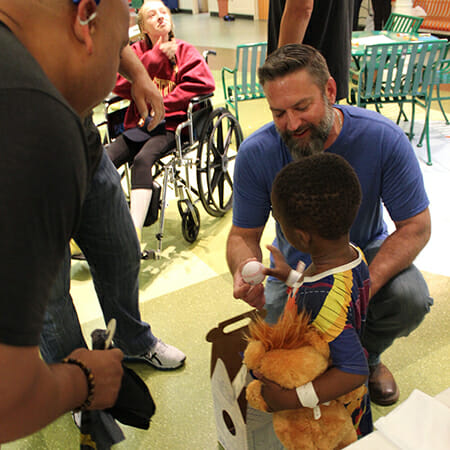
MLB Umpire Adrian Johnson (left) and Chris distribute Build-A-Bears to a patient at Children’s Memorial Hermann Hospital. UMPS CARE Charities has distributed more than 17,000 Build-A-Bears – and a lot of joy – to kids undergoing hospital treatment. /Courtesy Children’s Memorial Hermann Hospital
Describe your volunteerism with UMPS CARE Charities.
As volunteers with UMPS CARE Charities, we fundraise, make hospital visits to children and their families and support organization initiatives, including:
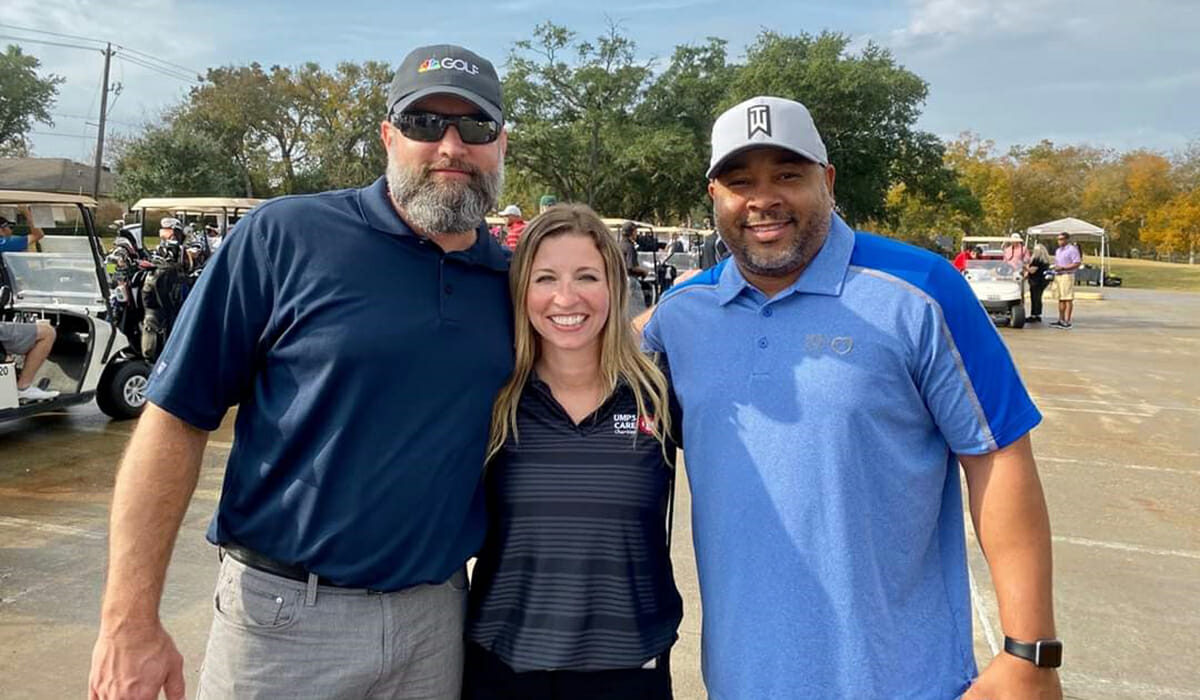
MLB Umpire Adrian Johnson’s annual golf tournament: Fundraising goes towards BLUE for Kids pediatric hospital visits and other programs. This is one of the largest fundraisers for UMPS CARE Charities each year.
BLUE for kids: Program brings a crew of Major League umpires to the bedside of children with life-threatening illnesses, along with a Build-A-Bear® Workshop gift. To date, UMPS CARE has made more than 150 hospital visits and distributed more than 17,000 Build-A-Bear furry friends.
Kendra Scott Fundraising: A fundraising shopping event hosted around Valentine’s Day, which happened to be Riley’s birthday.
Share one personal story with me from your volunteerism.
Chris: We visited a young girl and her family at the Children’s Memorial Hermann Hospital. During that visit, I’m already going there in my mind, thinking about Riley. The parents had the same look (on their faces) that I’ve had. I’ve been that father. After our visit with the child, she was elated, and the father and I had a brief conversation. He thanked me for being willing to offer my time for his daughter. For me, it wasn’t so much what this man was saying, but how he was saying it. I can still vividly see his face in my mind, because of the shared experience I’d had with this man who I didn’t even know. He was looking at me as a beam of light through absolute despair and the heartache (they faced). I cried for an hour after the interaction.
Why do you think it’s important for others to give back?
Courtney: Serving people that are in times of need, especially families with children that are in need of encouragement, is an opportunity to feel humanity and love for one another. Volunteerism crosses all stages and phases of life and economic backgrounds, races and cultures. It’s a reminder that there are good souls out there that want to help lift you up in times of need.
Chris: Our volunteerism shows these people that they’re not alone. Because what they are going through is very isolating emotionally.
What’s been the most rewarding part of your service?
Courtney: It’s rewarding having the opportunity to be the only two people there alongside these umpires and UMPS CARE Charity staff. We get to be on sidelines helping umpires bring smiles to faces. It was a full circle experience for Chris and I both.
In one word, what does volunteering mean to you?
Chris: Love. Sharing. Courtney: Love. I’d deliver bears to children’s hospitals five days a week, all year round if I could.
MLB Umpire Adrian Johnson (left) and Chris distribute Build-A-Bears to a patient at Children’s Memorial Hermann Hospital. UMPS CARE Charities has distributed more than 17,000 Build-A-Bears – and a lot of joy – to kids undergoing hospital treatment. / Courtesy UMPS CARE Charities
What do you think Riley would say to you about your service?
Courtney: I think she’d be very proud. Chris: She’d be very proud.
How have you continued to volunteer throughout the COVID-19 pandemic?
Courtney: I’ve been a part of the team that has helped develop ways to reach out to hospitalized children while making sure their safety and health is protected. We developed an activity book that can be delivered to kids with individually wrapped crayons. The children are still there in the hospital (during the pandemic), and they’re already so isolated, so the book serves as a way for parents and their kids to connect through activities, because there’s a lot of downtime while you’re in the hospital. Most events have been postponed due to the pandemic and hospital visits have been paused.
How can readers help?
UMPS CARE Charities relies on fundraising for their activities. Please visit the website for more information about how you can help.
On a trip to visit family in Iran while she was in middle school, Sophia Kianni was struck by the heavy pollution she witnessed. Sophia had already started to become passionate about climate change, and she was shocked when she tried discussing it with her relatives only to find out they weren’t even aware of the very issue that was affecting them. When she tried to find educational materials for her family, she found none in their native language of Farsi, so Sophia took it upon herself to start translating climate information for them.
Now eighteen, Sophia decided to turn what was once a small deed to educate her family into a global movement. This year, she launched Climate Cardinals, an international youth-led nonprofit that translates climate information into languages other than English. So far, over 6,000 volunteers in 41 countries have translated information into over 105 languages. Sophia, who is a freshman at Indiana University studying public policy, serves as the Executive Director of the organization. Climate Cardinals recently partnered with the United Nations Environment Programme to translate their Youth for Nature manifesto. Sophia was also selected by the UN to represent the United States on the Secretary-General’s Youth Advisory Group on Climate Change, where she works to help bolster youth engagement and advise the Security-General.
Describe your volunteer role with Climate Cardinals.
Climate Cardinals is an international youth-led nonprofit working to translate climate information into languages other than English. We currently have over 6,000 volunteers in 41 countries, and we’re translating climate information into over 105 languages. I am the Founder and Executive Director of Climate Cardinals. I manage our 15 directors and their teams, as well as look for partnerships and funding opportunities. I’m responsible for the vision of the organization as well as the strategic development and expansion.
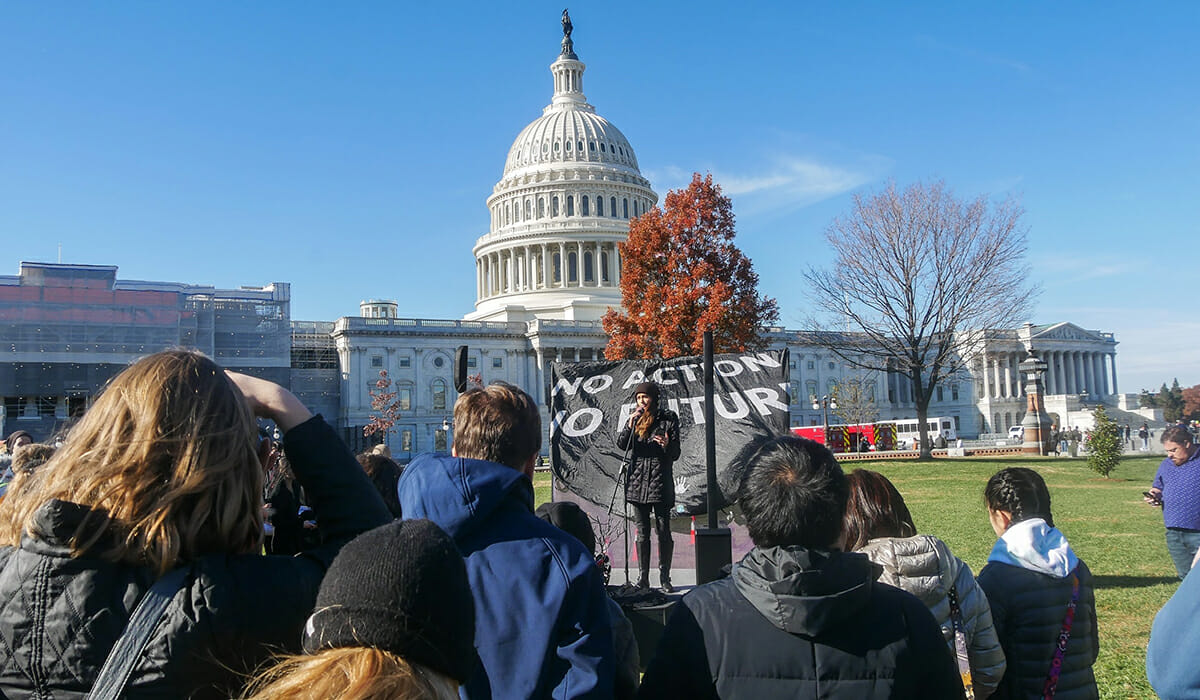
Climate Cardinals Founder and Executive Director Sophia Kianni, who has always been passionate about climate change, addresses the crowd at the 2019 Black Friday climate strike in Washington, DC./Courtesy Joe Hobbs
What inspired you to start this organization?
I was inspired by my experiences translating climate information to educate my relatives in Iran about climate change. I took a trip to Iran in middle school and I was really struck by how horrible the pollution in Iran was. I couldn’t even see the stars at night. After I did more research, I also learned there was a Middle Eastern climate crisis happening where countries in the Middle East are rising more than twice the global average. When I talked to my relatives, I was kind of shocked that they didn’t know anything about climate change, and obviously given that climate change was disproportionately affecting them, I thought that was a shame. I really took it upon myself to translate climate information to try to teach them about climate change, because I realized that there was really no climate information available online in Farsi, which is the language that they speak.
What specific information are you translating?
Most recently we partnered with the UN Environment Programme and we’re going to be translating their Youth for Nature manifesto, which is basically about the need to act for biodiversity. Then in addition to that, we have also been translating climate glossaries which define different climate terms with a one- to two-sentence explanation. We’ve translated to date over 200,000 words.
Why is it so important that this information is available to people in a language other than English?
The reason why I really believe it’s important is because we’re really trying to educate and empower a diverse coalition of people to advocate on behalf of their communities about what’s happening, and to really talk about climate change and become climate activists, because climate change really does disproportionally affect people of color. We’re trying to mobilize a diverse coalition of people to learn about climate change and to be able to properly articulate what effects it’s having on their communities to government leaders, and hopefully compel them to take action and to pass policies that will make it better for them and for future generations.
Are there any future partnerships, programs, or events that you are excited about?
I’m definitely super excited about the partnership we just formed with the UN Environment Programme translating their Youth for Nature manifesto. We just reopened our Education Team applications. We also have applications available on our Resource Team, because we realized that climate information available in other languages, it’s kind of all scattered throughout the internet. What we want to do is create an encyclopedia of climate information available in other languages, so that’s what our Resource Team of over 100 members is currently working on right now. They’re sourcing climate information that is available in a host of different languages and organizing it so we can publish it on our website. I would love for students to get involved in that — especially because the way that Climate Cardinals even launched and became a big thing was because we had a Tik Tok video that went viral and reached over 350,000 people, basically telling young people that they could get community service hours for working with us and for making climate education more accessible. I know a lot of young people, because of Covid, it’s harder for them to go outside and volunteer physically, so this is a great opportunity for them to volunteer virtually and earn community service hours.
What’s been the most rewarding part of your work?
I just think it’s amazing that during this really horrible time, we’ve been able to provide a small community of hope and positivity for young people. The average age of one of our volunteers is 16, so for all these young people to work together collaboratively in our Slacks and our Google Classrooms, and to really feel like they’re making progress in making the climate movement more accessible to other people.
Climate Cardinals Founder and Executive Director Sophia Kianni speaks at the 2019 Black Friday climate strike organized by Fridays for Future./Courtesy of Joe Hobbs
Why do you think it’s important for others to give back?
I think that volunteering is super important, because we all should be working to make the world a better place and help those less fortunate than us, especially if we’re in a privileged position. I know I’ve been helped by so many people on my journey whether that be my parents, my relatives, mentors, teachers, so I really feel a responsibility to give back to my community. I think that other people should also want to pay it forward and pay it back since they’ve gotten help along their journey as well.
What do you want people to learn from your story?
I would want them to know that they should just go for it. I was really worried when I was starting my climate organization. I was worried about how other people in the climate movement would perceive it, and whether or not we would even be successful. I honestly thought we would have maybe 100-200 people max sign up to work with us, and even then I thought I was being overly idealistic, but then we had over 1,000 people sign up to work with us on our first day. We had a Forbes profile. That really was just because I worked so hard and contacted as many people I could about my idea, and people really resonated with it. I would definitely tell people to just go for it if there something you’re passionate about and you want to make it into an organization or a company. You never know how successful it will be unless you try. I would definitely just go full speed ahead and try to make it happen.
Teen Volunteers for a Healthier Community through Increased Health Literacy
Meet Daily Point of Light Award honoree Griffin Thompson. Read his story and nominate an outstanding volunteer or family as a Daily Point of Light.
Griffin Thompson says volunteering at a local health clinic was eye-opening, as the 17-year-old witnessed understaffed clinical workers do their best to care for underserved patients who lacked insurance, didn’t receive routine care and sometimes couldn’t understand the language. The Spartanburg, South Carolina teen says at the time, he didn’t know much about health inequity, but he knew he needed to help.
Founding Lil Lifesaverz in 2019, Griffin is volunteering to promote health education and teach essential lifesaving skills to youth after discovering that only 12% of adults possess a proficient level of health literacy. The high school senior is engaging directly with children so they are able to advocate for their own health and wellness, most recently offering COVID-19 health education to kids.
Griffin has connected with thousands across the state of South Carolina thus far as he works to bridge disparities existing in public health and education.
What inspires you to volunteer?
I was adopted at a young age and given up by a mother who couldn’t afford me. I feel like giving up a child is the greatest act of service you can make. I was raised in a family dedicated to service and now, I’m getting to live how my parents live, giving back in an area I truly find interesting, public health.
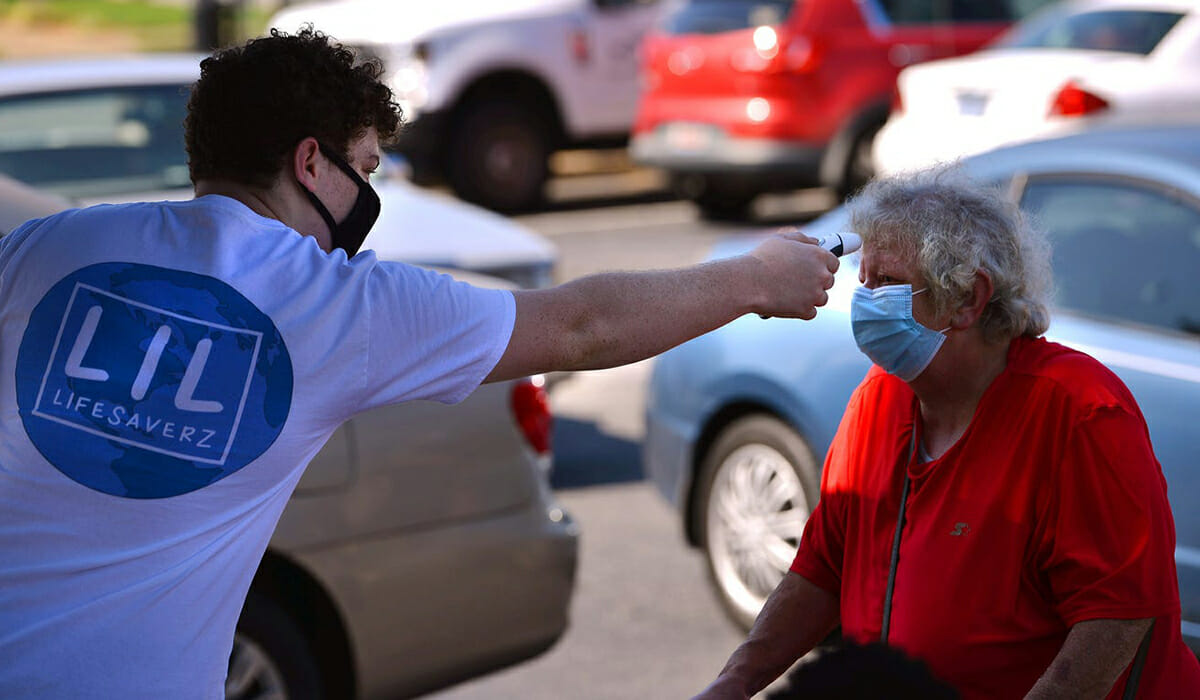
Griffin Thompson is engaging directly with children so they are able to successfully advocate for their health and wellness./Courtesy Griffin Thompson
Describe your volunteerism with Lil Lifesaverz.
As founder and director of Lil Lifesaverz, I develop curriculum, organize and teach health education classes in-person around the community. We also fundraise around events and host mobile health clinics throughout the year with local partners in under-resourced areas. Lil Lifesaverz has dozens of youth volunteers in the Spartanburg area.
Share one personal story with me from your volunteerism.
We teach curriculum at Lil Lifesaverz which is designed to help youth advocate for themselves when it comes to health issues. A mother told me that at a recent appointment, her son spoke to the doctor, asked questions and was engaged during the appointment. It means a lot to me to know I have that impact because health illiteracy is a rampant problem. If I can change this kid’s life through education, hopefully he’ll pass these learnings on to his friends and one day, his kids.
Why do you think it’s important for others to give back?
Right now, our country is a little bit of a mess. Whenever you have people, especially youth, advocating for change through volunteerism, that makes a world of difference.
What’s been the most rewarding part of your service?
It’s been rewarding to empower local kids to volunteer. We are serving in the community we were raised in to better it for ourselves and for the future.
What have you learned through volunteering?
When I started this volunteer effort, I didn’t think I could help as many people as I have. I was hesitant to start, but knowing how many people I’ve helped by combining my love for public health and volunteerism makes me realize this is my future.
How have you continued to volunteer throughout the pandemic?
We have been able to make a direct impact during the COVID-19 pandemic because we are focused on health. We have adjusted our services to distribute Spanish and English health materials, offer assistance through mobile health clinics for people who lost insurance during the pandemic, and lastly, we are teaching COVID-19 youth curriculum. As the pandemic unfolded, I was talking to teachers who were scared out of their minds about kids returning to school and not being educated on how to protect themselves and others. We are teaching kids in person and virtually about COVID-19 safety protocols including mask wearing, why you need to stay safe and who you are protecting.
Griffin volunteers to promote health education after discovering that only 12% of adults possess a proficient level of health literacy./Courtesy Griffin Thompson
In one word, what does volunteering mean to you?
Future. Volunteering is really how we’re going to better our collective future. The time people spend bettering their community truly paves the path for a better future.
When you’re not in school or volunteering, what do you do for fun?
I’m an avid music learner. I also attend public health conferences for my local community. I am a very big health activist and enthusiast.
How can readers help?
Please visit our website for more information about how you can help.
Volunteer Shares Innovative Health Tech with Underserved Regions Across the Globe
Meet Daily Point of Light Award honoree Kasyap Chakravadhanula. Read his story and nominate an outstanding volunteer or family as a Daily Point of Light.
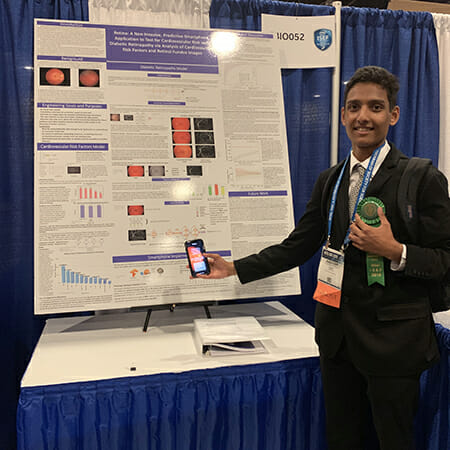
In low-resource communities and developing nations worldwide, there are severe shortages in health workers. 57 countries around the globe report a critical shortage of healthcare workers, a deficit of several million doctors and nurses and counting. For clinicians in underserved areas, providing health care with dwindling resources has become a pressing issue. For 17-year-old Kasyap Chakravadhanula, the growing divide between the haves and have-nots was a problem he couldn’t ignore.
“My goal is to give doctors and health workers in these regions a seat at the table,” says Kasyap, “to talk about issues and make decisions so technologies can adapt to further their own needs and create equality.”
Driving technology solutions to bridge disparities in healthcare, Kasyap, a high school senior from Scottsdale, Arizona, launched Medical Bridge Project in 2018, an organization dedicated to unifying health education and the future of technology in low-resource areas suffering from a shortage of medical professionals. The teen’s service is motivated by a natural curiosity and determination to help others.
“My mom is a biologist. My dad has worked in healthcare for 20 years. A lot of people in my school want to be doctors. I’ve witnessed how implementing technology and research in healthcare can change lives. Seeing the potential of all these technologies and getting excited about how they can be applied has sparked this (drive for service) in me.”
That window into next era healthcare has meant that Kasyap has been able to work with over twenty hospitals across the world thus far, addressing critical health gaps for the most vulnerable populations by harnessing available resources around the world, including locations in Costa Rica, Egypt, South Africa, Rwanda, Zambia and many more. Just one recent innovation, an Immersive Training Program which uses low-cost virtual reality, has propelled Medical Bridge forward and has been indispensable amid the COVID-19 pandemic. As well, doctors use Medical Bridge’s AI technology for education and to help validate models through collaboration with researchers.
As the founder of Medical Bridge Project, Kasyap has dedicated his volunteerism to unifying health education and the future of technology in low-resource areas suffering from a shortage of medical professionals./Courtesy Kasyap Chakravadhanula
The health training technology, Kasyap says, is being integrated into hospitals that have had to limit practitioner training to decrease the risk of exposure to staff during the pandemic, and also serves as an effective recruiting tool for regions and doctors that don’t have full-scale surgical facilities and traditionally lose medical talent to countries with more developed medical technology.
“We are working with Nelson Mandela Children’s Hospital in South Africa as they transition to what they call a “new age of health” in their hospital. I wanted to (share our tools) because the staff wanted to catapult their technology. The goal when I started (Medical Bridge) was to help hospitals in different regions and perspectives in these new technologies. That was my dream. When they thanked me for this initiative, that was really great. It’s one thing to start an initiative and have a goal, it’s another thing for someone you’re working with to actually tell you’ve made a difference for them. That was really cool.”
Through collaborations including Arizona State University, 4Afrika and Healthcare Intelligence, Medical Realities, International Medical Corps and many hospitals, medical schools, and research facilities around the world, Kasyap’s volunteerism extends beyond Medical Bridge, as he raced to offer assistance during the pandemic as a co-founder of Remidi-19, an organization founded by five Arizona high school students who are using cutting-edge technology to help alleviate the national social repercussions of COVID-19. A fellow Remidi-19 co-founder and classmate, 17-year-old Ritvik Warrier, says Kasyap’s passion to help others has been an invaluable part of their efforts to share information with the public about the progression of the pandemic and donate 3D printed equipment to front line workers.
“Kasyap has by far, one of the greatest work ethics I’ve ever seen,” says Ritvik. “He’s incredibly driven, he’ll sometimes sit down for hours at a time to get something done. He’s passionate about our work and sees the greater cause and effect. (Kasyap) doesn’t just do things to say he accomplished something. He does things for the greater good.”
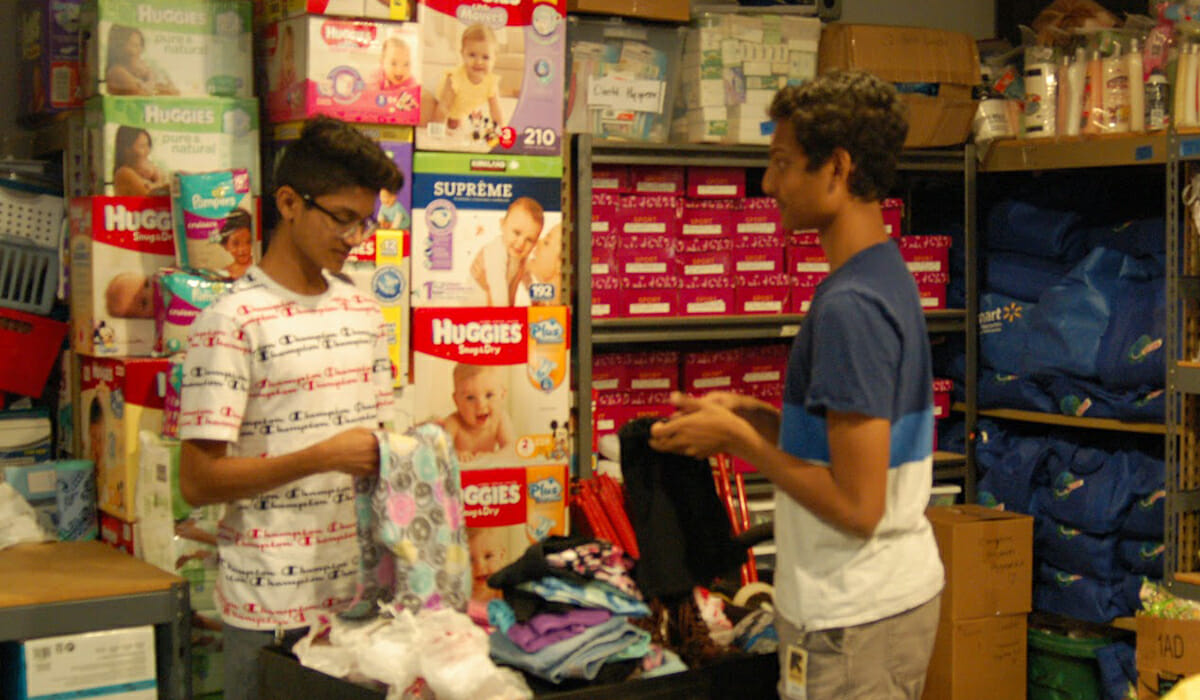
As a co-founder of Youth For Refugees, Kasyap Chakravadhanula (right) pictured volunteering with a friend folding donated clothes for refugees at IRC in Phoenix./Courtesy Kasyap Chakravadhanula
Kasyap’s service has also focused on aiding refugees in his community, as a co-founder of Youth for Refugees (YFR), routing vital supply packages to refugees who were in lockdown during the pandemic. Additionally, through YFR, in collaboration with the International Rescue Committee, Kasyap works to help those around him feel more welcome in their new communities. By serving others for the greater good, Kasyap is taking steps to unify his community and individuals across the globe. Starting first with health equality, Kasyap says his work is more important today than ever before in creating a future where people have a say in their own wellbeing.
“We are redefining inclusiveness by bridging gaps in health using emerging technology. By offering technology, we are giving people a voice in their own wellbeing. There’s so much going on in the world, even besides the pandemic, that can take us away from unity. I hope my volunteerism can help to restore some of that unity and bring us together to talk about these issues and ultimately, create some equality in the world.”
High School Student Volunteers to Support Millions Diagnosed with Alzheimer’s Disease
Meet Daily Point of Light Award honoree Bill Zhang. Read his story and nominate an outstanding volunteer or family as a Daily Point of Light.
‘Devastating’ is the word 17-year-old Bill Zhang uses to describe his grandfather’s Alzheimer’s Disease diagnosis, and the subsequent impact on his family. Explaining how frustrating it was to not be able to better support his grandfather through the disease, the Holmdel, New Jersey teen decided to learn more about those suffering from neurological diseases like Alzheimer’s and dementia.
Launching DementiAid in 2019, Bill is volunteering to help the more than 50 million people who live with Alzheimer’s Disease or some other form of dementia. Recognizing the alarming growth of the disease and shedding light on its stigma, the high school senior is empowering youth volunteers to support caretakers by serving at memory care and long-term care facilities. Harnessing the power of 250 volunteers from six chapters around the world, including in New Jersey, Bill has connected with hundreds of seniors thus far, helping our oldest generation and combating social isolation in underserved senior facilities through youth engagement.
What inspires you to volunteer?
As a first-generation son of two Chinese immigrants, I am incredibly fortunate to have the support system I have. I am where I am today because of the service of others. That motivates me to do good things and seek solutions to problems.
Through DementiAid, Bill Zhang is empowering youth volunteers to connect with those suffering from neurological diseases like Alzheimer’s and dementia./Courtesy Bill Zhang
Describe your volunteerism with DementiAid.
As founder and executive director of DementiAid, I manage our three primary initiatives: Music4Memories, Makerspace and COVID-19 relief. We also solicit donations from local businesses.
Music4Memories: Our volunteers who play musical instruments perform in nursing homes. This program was sparked by a YouTube video I saw of a man who suddenly became more connected to the world around him after putting on headphones and listening to music. We also collect old iPods and MP3 players and volunteers compile playlists for seniors of their favorite songs.
Makerspace: This project is designed to build a scientifically literate community that is equipped with the foundational skills to contribute to the fight against neurological diseases like Alzheimer’s Disease on the research front.
Share one personal story with me from your volunteerism.
When I first started volunteering at a memory care facility, I walked in on a woman who was lying on the ground. She’d fallen from her wheelchair, and I later found out she had Lewy body dementia. When I first found her, I was overwhelmed with questions and emotions. I wondered how long she’d been there for. At first I was angry with the caregivers but in reality, this facility was supporting nearly five times more patients than they had staff. The lack of personnel came at the expense of quality care, and that experience spurred me to recruit youth volunteers to better help staff at these facilities.
Why do you think it’s important for others to give back?
Being able to improve someone else’s quality of life makes me feel better. Also, seeing others volunteer gives me hope. It’s a beautiful thing to see people from all walks of life coming together to dedicate their time and energy into an important cause.
What’s been the most rewarding part of your service?
It’s really rewarding to receive appreciation from others. Although some of the seniors can’t show much reaction, when they do, they’ll smile, or say thank you to the best of their abilities. Their family members and staff members also are appreciative of our help.
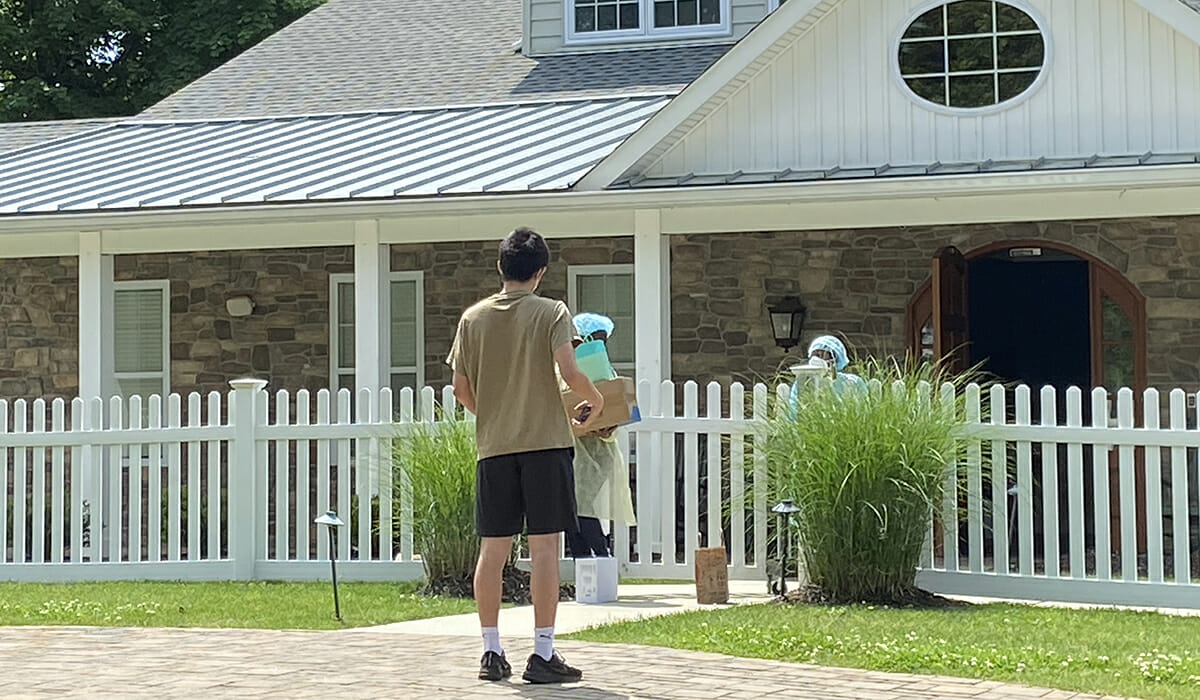
Since the start of the pandemic, Bill has donated around 1,800 pieces of PPE around the world to nursing home facilities in need. /Courtesy Bill Zhang
How have you continued to volunteer throughout the pandemic?
We’ve adjusted the Music4Memories program so that music can be played virtually. We’ve put student videos of performances specifically requested by seniors on our website so seniors can watch. Also, we’ve distributed COVID-19 materials to nursing homes. Since the start of the pandemic, we’ve donated around 1,800 pieces of PPE around the world, all items that we were able to obtain from organizations that had extra to spare.
In one word, what does volunteering mean to you?
Community.
When you’re not busy volunteering or in school, what do you do for fun?
I enjoy playing basketball with friends and watching movies.
How can readers help?
Please visit our website for more information about how you can help.
Rob Arning said he was shown the importance of generosity from an early age thanks to his parents, who were always helping out and giving to those in need. The New Yorker has carried that spirit of giving back throughout his entire life, evident by his active involvement with not one, but several volunteer organizations for the past two decades. For much of his volunteer work, Rob has been able to incorporate his workplace and serve with his coworkers. He is the former Vice Chair of Market Development at KPMG LLP as well as the KPMG Foundation Chairman and Client Care Executive, and will soon be retiring after more than 37 years at the firm. The numerous organizations he supports span from helping eradicate hunger to promoting childhood literacy, funding cancer research, assisting in natural disaster relief, and more.
PENCIL stands for Public Education Needs Corporate Involvement Leadership. About 20 years ago, I served as principal for a day, which is a program that they offer. I was randomly assigned to P.S. 161 in Manhattan, on 131st Street and Amsterdam Avenue. I absolutely fell in love with the school, the students, the teachers, and the work they do. I, in effect, adopted P.S. 161 unofficially. There was no adoption program, but I sort of adopted the school and wound up going back there every year since, and leveraged a lot of different resources and teams from KPMG to provide all different kinds of support to the school, the teachers and the students.
What did you do with P.S. 161 that you are most proud of?
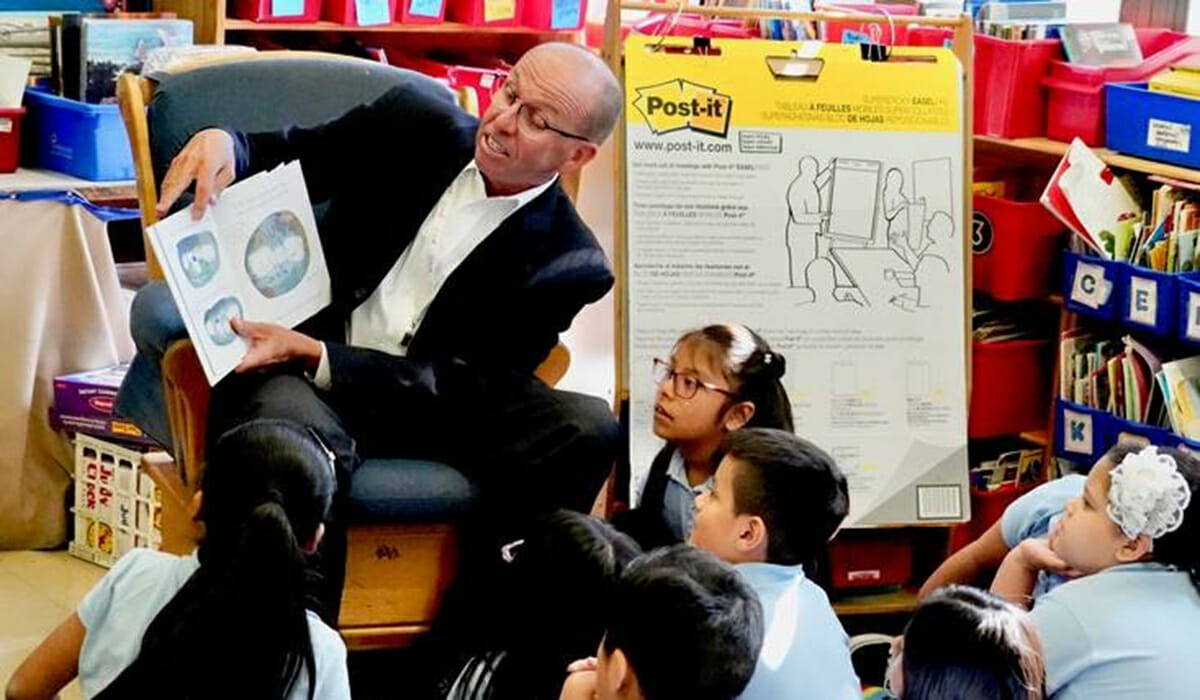
I think the thing I’m most proud of would be focused on the book programs that we brought to the school. This ties in to one of the other organizations, KFFL, which stands for KPMG’s Family for Literacy program. We run fundraisers where KPMG people and our families get involved. We generate funds and then we buy books from First Book, which is an organization focused on fighting childhood illiteracy, and then we deliver those books in person to students at Title 1 schools around the country. We did several of those book readings at P.S. 161. They’re incredibly moving, because you sit on the floor and read to first graders and second graders. They ask you questions. It’s so much fun and it’s so emotionally gratifying to see the looks on their faces, especially at the end of the session. We hand each of the students the copy of the book that becomes their copy to take home, and in many cases, it’s the first book that child has ever owned. I would say of all the programs we did at P.S. 161, our KFFL book reading program are among the most inspiring.
Rob Arning reads to P.S. 141 students through KPMG’s Family for Literacy program./Courtesy Rob Arning
Can you talk about your volunteer work with the American Cancer Society?
I got involved in the American Cancer Society 15 years ago, when our then-Chairman Gene O’Kelly passed away from brain cancer. We were looking for a way to honor Gene and also support the ACS. We came up with a new gala, the Financial Services Cares Gala. For 15 years, we have run that dinner. I’ve been a Co-chair of the dinner since we started. It started as a fairly modest event and has grown to a giant ballroom-style dinner. We’ve generated north of 22 million dollars in proceeds for the American Cancer Society. In addition, I was asked to be a Co-chair of the New York chapter of CEOs Against Cancer, where we rally other business leaders to get involved in the fight against cancer. … I like to say that I may not be able to do the work that the Cancer Society does, or I may not be able to do the work that the doctors and nurses do, but I can help them do their work. The way that I can help them is by raising awareness, raising support, and raising funds to help them do their jobs, and do their jobs better, each and every day.
What is your role with City Harvest?
City Harvest is an organization that harvests, or rescues, more than 60 million pounds of food each year and distributes it to needy residents in the five boroughs of New York City. The food is rescued from cafeterias, restaurants, and local farms, and then redistributed. When I first heard about City Harvest probably about 20 years ago, I thought the simplicity and the purity of their message was amazing. There are hundreds of thousands of people in New York City who don’t get three meals a day — many don’t even get a meal a day — and City Harvest is fighting to make that change. I got involved by being a volunteer with the Skip Lunch Fight Hunger campaign, and remained a champion of that campaign for the last 20 years. The people of KPMG have been huge supporters of that effort.
I was drawn to the campaign by the simplicity of the campaign and the immediacy of the effort. You skip lunch one day, you take the money you would have spent on lunch, and donate it to City Harvest. They buy food and they feed a hungry person. The simplicity, the purity, and the immediacy that you know you support City Harvest today, they’re feeding somebody tomorrow — that really made me attached to their mission. And just the simple notion of being hungry. We’ve all been hungry, or at least, we think hungry. We don’t really know what hunger is, but when we’re hungry, we really know it and feel it and it doesn’t feel good. The notion to think there’s hundreds of thousands of New Yorkers, who we’re walking past each and every day, who are hungry — it’s just completely unacceptable.
How do you volunteer with Stars of HOPE?
Stars of HOPE was born out of the tragedy of 9/11. It’s really all about 9/12 and how we responded. It started as an effort to pay back the other communities around the country for the help they provided New York City in the days following 9/11. People came from everywhere to help clean up New York and rebuild. Stars of HOPE was basically a New York Says Thank You effort, where we went around the country and helped people who were hit by hurricanes and floods and tornadoes and wildfires, and rebuilt their communities as a way of saying “thank you” for helping New York in our time of need. One of the things that was born out of the effort was this notion of making these little wooden stars and painting messages of hope on them, and hanging them all around these communities that had been struck by disaster. This small gesture took off and became such a powerful message platform that tens of thousands of stars were produced and hung in communities around the country and around world that have been struck by disaster, and brought hope and peace and healing to some of the most troubled spots in the world. The very targeted and immediate impact that the organization was having is what struck me and made me feel like this is a place where I can help and make a difference.
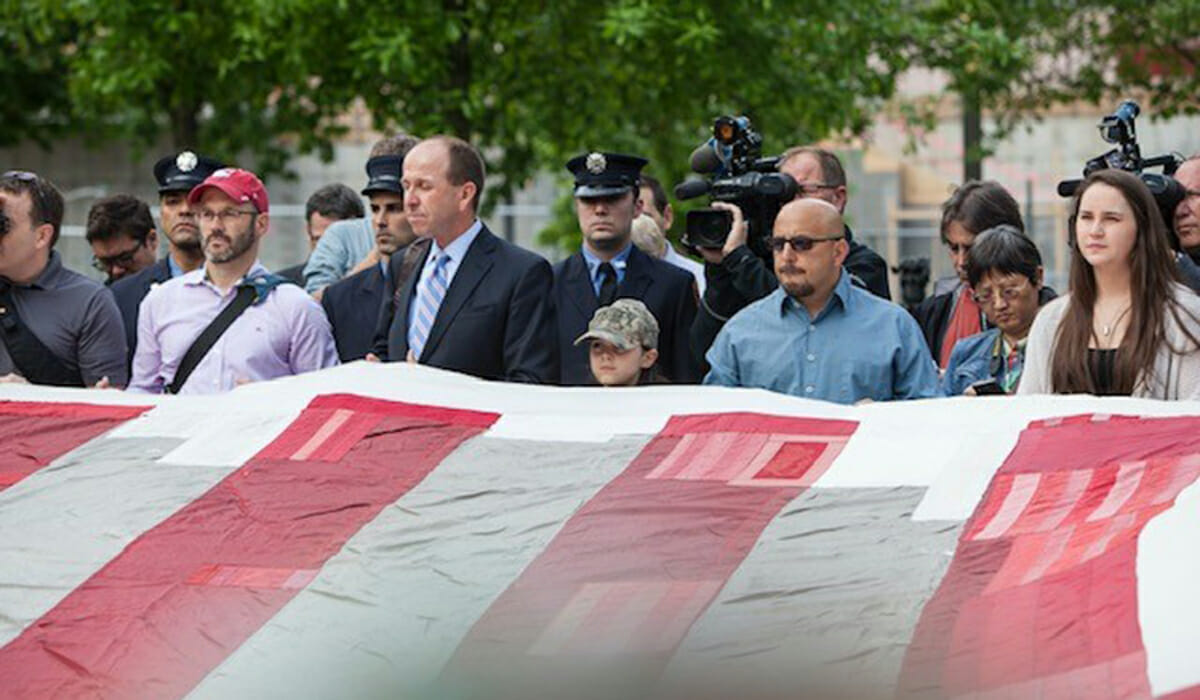
Stars of HOPE started as financial support, and then coaching and providing advice to the founder, Jeff Parness, as he was putting the organization together. I then also participated in a few field trips where there were rebuilding efforts. Joplin, Mo. was one, following a terrible tornado. The Hurricane Sandy rebuild was another. I also went on some missions where we were repairing a flag that had been damaged in the 9/11 attacks. That flag was being rebuilt state-by-state all around the country, and I visited and participated in a few different of the flag restitch and repairing efforts as well. I’ve stayed involved as an advisor as well as a financial supporter of the Stars of HOPE organization.
Can you talk about your volunteer work with Concern Worldwide?
Concern Worldwide is an amazing organization that goes into some of the most challenged parts of the world. What’s so amazing about Concern is they go in and they stay until they help towns and villages and communities rebuild themselves into a sustainable footprint. It’s not like they just go in when there’s a flood or a hurricane, stabilize for a couple months, and then they leave. They go in and they teach people how to thrive on their own and how to maintain a healthy lifestyle, whether it’s by building schools or wells or creating businesses, and basically change the trajectory of how these folks live and enable them to be a healthy, self-sustaining community. I got involved through fundraising and as a spokesperson for Concern 15 years ago, maybe more, and have remained involved and helped talk up and raise visibility for their mission ever since.
Rob Arning, second from left, attends Stars of HOPE’s Ground Zero flag ceremony./Courtesy Rob Arning
What inspires you to be involved in so many different ways?
I guess I didn’t wake up one day and say, “Let me find five or six things to get involved with.” Somehow I heard about things, or read about an issue, or something or someone crossed my path that caught my attention. I advise young people at our firm to put themselves in the traffic. What I mean by that is just be out and about and know what’s going on in the business world, but also know what’s going on in your community. When you’re out and about in the traffic today, and you’ve got your eyes open and your ears open, you’re going to see and find places where you can make a difference and make the world a better place.
Why do you think it’s important to give back?
I think it’s really important for people to volunteer because, not getting political, but I don’t think government alone can solve the social issues of the day. I think it really takes a village to address the issues of today, whether it’s health and human services issues, education, the environment. This is a team effort. We all need to come together. There’s strength in numbers. Imagine if we all said we were going to eradicate illiteracy, or we all said we were going to eradicate hunger on earth, and we all worked toward that common goal. The impact would be extraordinary. This is not somebody else’s job. We’re all in this together, and I think coronavirus has showed us that. It doesn’t matter where you live, what your economic situation is, what part of the country you’re in, what you do for a living — every one of us is at risk, some more than others for sure, but everyone is sort of in this together. I think it’s become this wake-up call that we all have to care for each other and think about each other a little bit more than we have in the past.
What do you want people to learn from your story?
What I would want people to learn is that no matter what our situation is in life, no matter what we do for a living, where we live — every one of us on earth can make a difference. All you have to do is pause, think about what is going on around you, look, listen, and reach out and make an impact that you’re comfortable with. No matter how big or how small, it’s going to make a difference.
For over 20 years, Elliott Flick has been an avid volunteer for Habitat for Humanity, an international nonprofit that helps families in need build and improve their homes. Despite also working and raising a family, Elliott volunteers his time to not only lead home build projects, but also currently serves on the Board of Directors for Habitat for Humanity of Chester County, located in Pennsylvania. Elliott serves on two of the Board’s subcommittees; the Family Services Committee, which helps identify families to be recipients of Habitat’s work, and the Neighborhood Rehabilitation Committee, which is working to expand Habitat for Humanity of Chester County’s outreach by also rehabilitating already-existing homes.
Elliott will be recognized by his employer, Exelon Generation, at Exelon’s 2020 Powering Communities Employee Volunteer Awards. The annual awards ceremony will honor 24 employees this spring and award grants to the winners’ nonprofit partners. Thanks to Elliott’s dedication to volunteerism, Habitat for Humanity will be receiving a $20,000 grant.
Describe your volunteer role with Habitat for Humanity.
I am currently on the Board of Directors for Habitat for Humanity of Chester County. I’ve been on the Board for a little over a year now. I have a couple of roles, being on the Board, but there’s two different subcommittees I’m involved with. The first one is heavily involved with identifying families that we can qualify to work with Habitat to be recipients of the work that we do to help improve peoples’ living conditions and housing. The second committee is one which is involved with changing how the charity has operated for many years now. The charity has been primarily involved with building new houses for low-income people. We’re working to change the way the organization operates so that now we will also help people who are low income who need support with staying in their existing house, because maybe they have safety issues, or they need help because their roof is leaking, or other kind of structural issues. We’re looking at doing that because it will be a way for less resources to be able to touch and help more families than we otherwise are able to do when we just purely focus on building homes for low-income people.
Are you also involved in home build projects?
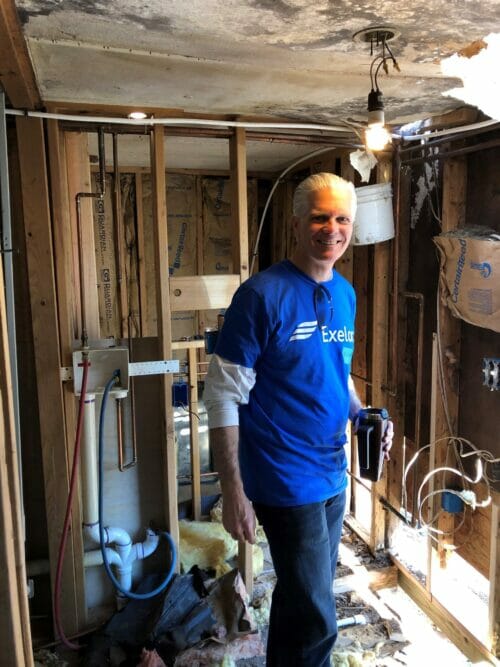
Elliott Flick volunteers for Habitat for Humanity, his go-to charity for over 20 years.
Habitat for Humanity has been my go-to charity for more than 20 years now, not only from a financial-contribution perspective, but I love going on home builds and it’s something I try to do several times a year. Unfortunately, Covid has kind of put a cramp in that style this year. Last year, for instance, in the fall I took a team of 24 people from my work to one of the Habitat build sites near where I live. We spent the whole day working on getting a house that was close to the end of construction ready to go be turned over to a family. Then a couple months later I had the great experience to be able to go for the ceremony where we actually turn the keys over to the homeowner. It was really a very touching experience to be able to be there when something like that happens, particularly knowing that my coworkers and I had spent time working on the house to get it ready for them to be able to live in. So I certainly do that, and then this Habitat chapter also has a part of the organization that is called the ReStore, which is basically a store that people donate building materials and home furnishings and other things like that, and then the charity sells those and uses the proceeds from that to help with our constructing new house projects. My oldest daughter has caught the bug of being involved in this charity from me, so she’s been working at the ReStore for a good part of the beginning of this year prior to all the Covid happening. She also has been joining me on home builds and she really enjoys it, so it’s near and dear to me that somebody directly in my family has really caught the bug and is getting involved now with helping the community also.
What drew you to this organization all those years ago?
I enjoyed working on homes myself and buying houses, fixing them up, and working on them. I got a lot of satisfaction out of doing that and I heard about Habitat for Humanity through the media. Then there was an opportunity with work that they were doing what they called a ‘Christmas in June’ project, where they were going to a home. I spent the whole day up on the roof, helping tear off the roof and putting a new roof on this person’s house. By the end of the day, just getting a chance to talk to the homeowner was really something that touched me to be able to realize what a huge impact me and the folks who I was working with were able to make. That has stuck with me to this day. I guess that over the years, I have gotten more and more involved in looking for opportunities to get involved and do some of these house builds. I had an opportunity a number of years ago, for instance, where I was living in Tennessee at the time. Tornadoes had torn through an area not far from where we lived, and it had destroyed all kinds of peoples’ houses. I took a team of folks with me to go and basically help a family to pick up their lives and do what we could in order to help them with reestablishing the living situation. Those types of experiences over time really stuck with me and made me really want to get more and more involved, to the point now that I’ve gotten involved in a Board capacity, because it gives me more opportunity to help with the strategy that the charity is using and be even more influential in my work.
Is there anything you would want people to know about Habitat for Humanity’s mission, especially for anyone who might not be aware of how big of an issue housing insecurity is?
Habitat for Humanity’s mission is to put God’s love into action by bringing people together to build homes and build up communities and build up hope in people who don’t necessary have hope. We do this through not only construction of homes that are affordable for low-income people, but we’re also doing this through helping people to be able to stay in their homes when their homes are in a state of disrepair. It’s about providing families with a hand up to help themselves, not a hand out. The charity isn’t just in the business of giving people houses. We help people to qualify for homes. We provide them with no-cost mortgages and other things like that to support them, but it’s about providing people with a hand up in this world and not just giving people a hand out.
Are there any future partnerships, programs, or events that you are excited about?
Right now we’re in the midst of soliciting for families in need who are in the Coatesville, Pa. area and the West Grove, Pa. area, because we have active home constriction projects that are going on. We have 16 homes in the next year that we anticipate that we will be able to complete, so we’re actively soliciting for people who could meet the requirements to be able to move into some of the properties that we’re actively working on.
What’s been the most rewarding part of your work?
I get a tremendous amount of satisfaction from actually getting a chance to talk to the homeowners and people who we’ve been able to help, and hear their stories and understand that the work we’re doing makes a difference. Secondly, I had mentioned my oldest daughter who has now caught the bug for Habitat and being involved. I take a lot of satisfaction that she’s [become involved] much earlier in her life than I was when I first started getting involved in the charity, and she’s got a passion for helping others. It makes me feel like I’m probably setting at least a decent example in that regard as part of her upbringing.
What do you want people to learn from your story?
I would encourage people to take the step and be open to doing something different and get involved with a charitable organization. It provides a lot of joy and satisfaction. You’ll learn something about yourself and you’ll help your neighbors in the process. If somebody is feeling like they can’t just take on one other thing in their life, they should reconsider, because I certainly felt that way about myself, that I couldn’t take on anything more. I have family, I have work, I have all other kinds of things I’m involved with. Be open to the opportunity that presents itself by getting involved in a charity to help your neighbors and fellow man.
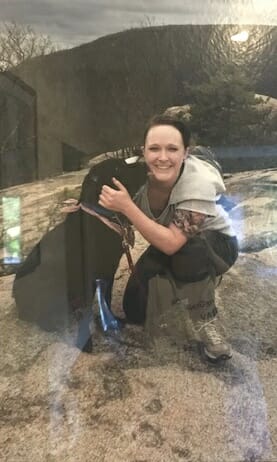
Jeanette’s daughter, Ali, pictured shortly before she died by suicide. Jeanette Fairhurst: “You don’t have a choice of what happened, but you have a choice of really getting stuck in it, or trying to make something positive of it.”
One of Jeanette Fairhurst’s most precious memories of her late daughter, Ali, a photo with Ali and her foster service dog, a future guiding eye dog she was caring for. Sadly, Jeanette’s daughter died by suicide shortly after the photo was taken. This memory is one Jeanette holds close to her heart, as she remembers the love and kindness her daughter exhibited towards others.
In the wake of her daughter’s passing, Jeanette says she knew she had to carry her lived experience with her as she worked to make something positive out of the hurt. The Thornwood, New York resident turned to Mental Health Association of Westchester, where she now serves as a board member. The organization, which serves as a front-line resource for children, adults and families experiencing behavioral health conditions, offered Jeanette an avenue to raise awareness of suicide and promote conversations around mental health.
Serving as a volunteer since 2015, Jeanette has helped countless people learn more about mental health and how to develop the tools needed to build resilience.
What inspires you to volunteer?
My parents were very giving, so I grew up around service. Volunteerism also helps heal. Connecting with others is good for myself as well as trying to do good for others.
Describe your volunteerism.
MHA Westchester: As a board member for MHA Westchester, I’ve helped to guide the growth of the organization through fundraising and programming, and offer input from the point of someone with lived experience with mental health.
Regeneron Resilience is Essential (RisE) Employee Interest Group: As a Regereron employee, I work by day on health and wellness issues, and additionally, through service, as the founder and president of RISE. Counting more than 100 members, we are helping countless people learn more about mental health and how to develop the tools needed to build resilience.
BluePath Service Dogs: Ali worked with the people that formed BluePath before her death. They named a dog after Ali, a white lab. We’ve done walkathons and support BluePath, which provides autism service dogs, offering safety, companionship and opportunities for independence.
American Foundation for Suicide Prevention (AFSP): We also volunteer with AFSP, an organization that works to save lives and bring hope to those affected by suicide.
Green Mountain Camp for Girls: We sponsor annual scholarships at this camp. Their mission is to empower girls to believe in themselves and their ability to make a difference in the world.
Share one personal story with me from your volunteerism.
I’m a liaison for the MHA Westchester Peer and Family Advisory Council which is made up of peer counselors with lived experience and clients. We all go through little ups and downs in life, but if you are taken out by a mental health episode or an addiction episode, you’re losing so much of a valuable person. You see these people who have gotten through that and thrive. They may still struggle, but you see the potential. And that really makes such a difference.
Why do you think it’s important for others to give back?
We’re all in this together. The only way to really get through life and enjoy things is with other people. The more we all realize we’re more alike than different, the more we all can support each other and really, that builds resilience.
What’s been the most rewarding part of your service?
It’s very rewarding to see peers who are such role models, and it’s such an important thing that people are given chances to keep growing. I’m also amazed at the growth that’s gone on at MHA, the people are so innovative in how they’re pushing to stay ahead of the curve, which at this time is so important. They do all the day in, day out, hard work.
Jeanette Fairhurst pictured at the Mental Health Association of Westchester annual gala. As an MHA Westchester board member, Jeanette raises awareness of suicide and promotes conversations around mental health.
What’s your message to those struggling during these difficult times?
It will get better. Things will come around, but you have got to hold on. I wish I had been able to say that (to Ali). We were very open about what happened to my daughter. Through RisE, we emphasize that with resilience, you’re able to do more and connect. Everybody needs to have some way of getting through. If it’s stopping you from moving forward, every problem is a big problem. By focusing on resilience, we bring people together who are going through all sorts of things and acknowledging it with no judgement.
How have you continued to volunteer throughout the COVID-19 pandemic?
Everything for MHA Westchester has switched to virtual participation. It’s challenging because a lot of support I do is through connecting with others. We have had to get creative and connect with people who are going through difficult times.
In one word, what does volunteering mean to you?
Survival. Volunteering means survival for all of us and the planet. We need each other.
How can readers help?
September is Suicide Awareness Month, and in October, MHA Westchester holds their gala which funds important services including court appointed advocates for kids. Please visit their website for more information about how you can help.
TJ Kim has wanted to fly for almost his entire life. The sixteen-year-old has dreamed of be-coming a Navy pilot since he was only nine, and in April 2019 started working toward getting his pilot’s license. As he works toward his dream, TJ has now found a way to use his hobby to help some of those most in need.
When the country began shutting down in March due to COVID-19, TJ wanted to find a way to be able to keep up his passion of flying while also giving back to the community in some way. Brainstorming with his dad, they came up with Operation SOS, or Supplies Over Skies.
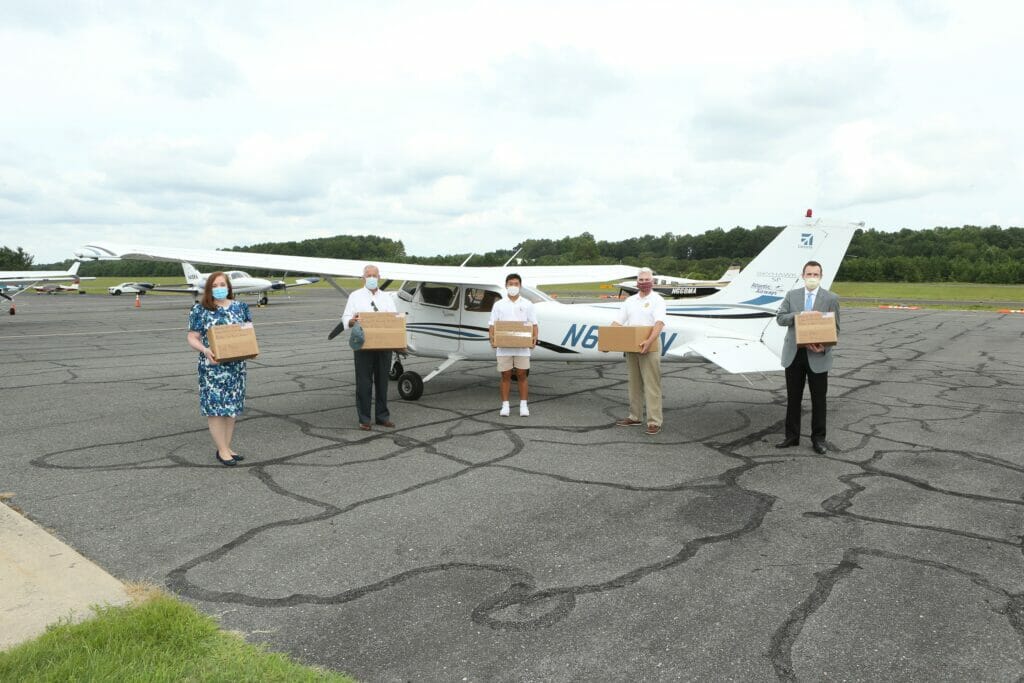
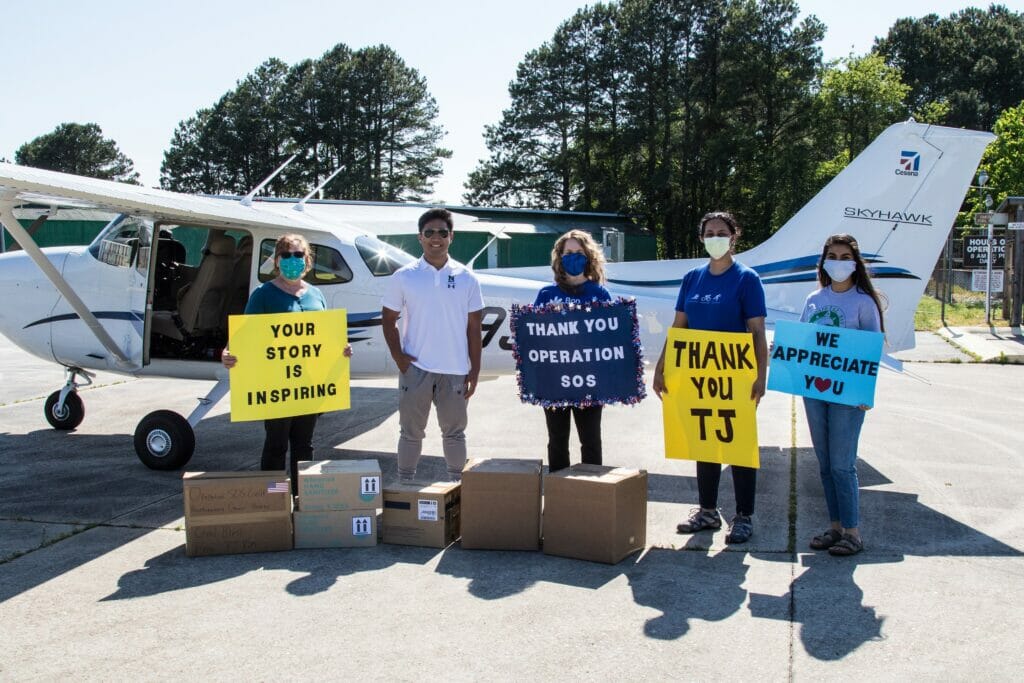
Under Operation SOS, TJ sources personal protection equipment (PPE) locally and delivers them to rural hospitals. The McLean, Va.-resident’s original goal was to deliver PPE to each of Virginia’s seven critical-access hospitals. Since March, TJ has more than exceeded that goal — delivering about 58,650 PPE on 17 different missions to rural hospitals in Virginia, Maryland and Pennsylvania.
“If there’s a need and I’m able to fly, then I’m going to help out anyway I can,” TJ said.
According to TJ’s flight instructor Dave Powell, of Aero Elite Flight Training, the teen had al-ready been asking around for aviation-related community service opportunities at the beginning of the year. Still, when TJ told him his idea for Operation SOS in March, Dave was taken aback that such a young person would want to help out in this way.
TJ Kim, center, delivers locally-sourced PPE to rural hospitals in need throughout his area under Operation SOS.
“It’s one of those moments where you are just kind of blown away to see a guy be so selfless,” Dave said.
TJ collects all of his donated supplies locally, which include masks, gloves, shoe covers, head covers, and isolation gowns. Due to a recent and very generous donation, he is also now delivering ventilator supplies.
The aspiring pilot focuses on rural hospitals specifically due to his first and so far most memorable mission, to a hospital in Luray, Va. TJ said it wasn’t a big operation and he didn’t delivery a lot of PPE, but the hospital staff was still so appreciative. They told him how under-serviced the felt due to so many people focusing on helping out hospitals in big cities.
Dave has been on a few of Operation SOS’s flights, including that first one to Luray. He re-called noticing right away the definite need the hospital personnel had for the PPE. The personnel were waiting for them when they landed and were clearly so grateful to see them. Dave said the flight was one of the moments both he and TJ will never forget.
“Talking to those people and really getting the perspective on the rural hospitals, and for the first time really seeing how appreciate they are, really stuck out to me,” TJ said. “So the first [mission] is always going to be one I have in my heart.”
It takes at least a week for TJ to plan a flight, beginning with sourcing the donations and communicating on a fly date to the hospital. He then has to plan the flight itself, which includes tracking weather formations, wind and other elements. He also has to research where to land, which so far has ranged from on top of a mountain to the shortest-paved public-use runway in Virginia. Finally is what he says is the fun part — getting to fly to meet the people he is helping.
TJ Kim, second from left, delivers PPE to rural hospitals in need through his volunteer project Operation SOS.
“The most rewarding part is definitely once I land, and getting to talk to the people with the hospital,” TJ said. “Just feeding off their gratitude and seeing how much of a difference I’m making has really been amazing.”
If you told TJ about Operation SOS a year ago, he said he would have laughed. The biggest thing he learned through this experience was just how many ways there are for someone to serve the community — and also that no help is ever too small, and no one is ever too young to give back.
“The amount of change I’ve been able to bring doing Operation SOS has been amazing, and it’s a lot more than I ever thought I would be able to do just as a 16-year-old kid,” TJ said. “A lot of people tend to think they can’t help out that much, but that’s not true. You can make a big difference.”
17-year-old Abhi Desai says when he found he couldn’t talk to a friend about immigration issues, he realized more needed to be done to unify youth and strengthen civics education in schools.
Founding LexGen in 2018, the high school senior is creating innovative civics education curriculum for elementary and middle school youth. “Talking with friends, even really close friends, when it came to polarizing topics, it seemed like you couldn’t have a civil conversation,” says the Phoenix, Arizona teen, who says school children aren’t being given the tools to enable discussions and employ their rights as citizens. “We’re taught about the assassination of (former president) William McKinley,” says Abhi, “but never taught about voting or constructive conversations as it relates to these topics.”
Connecting with students through student-run workshops, online learning and through curriculum distributed to teachers across the country, Abhi has reached over 5,000 students in the United States thus far, helping youth to build mutual respect and find common ground across differing viewpoints.
What inspires you to volunteer?
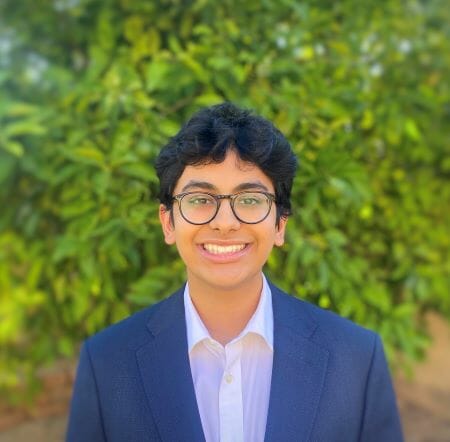
Abhi Desai, founder of LexGen, is creating innovative civics education curriculum for elementary and middle school youth.
A sense of community. We live in a world where everything’s a lot more interconnected. If you’re able to help out in some way, shape or form, not only will those dividends come back to you but it’ll be generally better for your community as a whole. Serving people both near and far, even if they’re across the country, is good for everybody.
Describe your volunteer role with LexGen.
As the founder of LexGen, I build materials that we distribute to teachers. I also create partnerships with other educational organizations in the technology field including FANschool and The Opportunity Project at the Census Bureau. We have several dozen volunteers across 30 student-run branches in the country, those branches conduct student learning workshops and peer-to-peer civics learning. Our service is helping to prioritize civics in the classroom, promote constructive conversations and facilitate cohesiveness.
Share one personal story with me from your volunteerism.
My 6th grade teacher, Mrs. Rabe, is one of my favorite teachers, and she inspired in me a love for learning. Mrs. Rabe emailed saying she was going to use LexGen curriculum because she thought it brought value to the classroom. Hearing from someone as near and dear to me that I am bringing value was awesome. As a youth, you don’t expect your volunteer efforts to reach high levels. Her words validated that the work I am doing really matters and is changing my community for the better.
Why do you think it’s important for others to give back?
Giving back is really an important part of self-development. Once you start volunteering, you get a different outlook on life and you improve as a person because you meet new and different people. Service teaches you to live life with a more positive outlook.
What’s been the most rewarding part of your service?
Empowering students who might not have received civics education before, and really teaching them they have the power to impact their own communities. That aspect of empowerment has been really gratifying for me.
How have you continued to volunteer throughout the COVID-19 pandemic?
We’ve continued our online curriculum for students and started adapting curriculum for virtual classrooms. We also have some animated civics videos in the works. We’ve increased our student volunteers, finding ways to give back seems to have become an even bigger priority for people in these pretty harsh times.
In one word, what does volunteering mean to you?
Giving.
What do you do for fun when you’re not busy volunteering or in school?
These days, watching some NBA games. I’m a Suns fan but things are still alright for them.
How can readers help?
Please visit the LexGen website for more information about how you can give back.
Do you want to make a difference in your community like Abhi Desai? Find local volunteer opportunities.