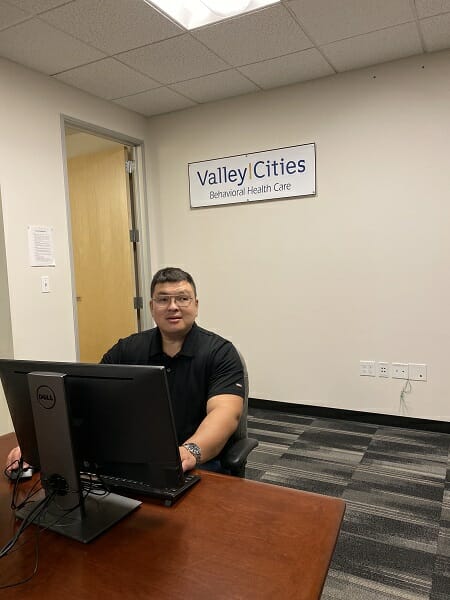
39-year-old John South is known as a volunteer who goes “above and beyond” to provide resources and help. The Federal Way, Washington resident says his service represents the mindfulness, love and kindness that he practices towards his fellow community members each and every day.
As a Valley Cities Behavioral Health Care volunteer in the Federal Way Resource Room, John volunteers five days a week to help clients. By providing information on housing or employment, or resources on tasks like using a computer or building a resume, John is a calming presence who has dedicated himself to helping people solve their problems. As a volunteer and client of Valley Cities, which promotes recovery, wellness, and resilience, John is lending a helping hand in offering holistic support to thousands of his community members.
What inspires you to volunteer?
I’ve had other volunteer roles in the past, but my current volunteerism is driven by my work ethic. I previously worked at a non-profit, and that altruistic spirit, showing love and kindness, motivated me to do more in that world.
Describe your volunteerism at Valley Cities.
By providing information on housing or employment, or resources on tasks like using a computer or building a resume, John is a calming presence who has dedicated himself to helping people solve their problems.
I started volunteering in the Federal Way Resource Room in 2018, where I organize and update our resources and make copies of materials. We have clients who need help with things like housing, employment and shelter, and I make sure they have all the resources they need. All of the folks we serve are similar to me, we’re in recovery. I view my volunteer work as a part of my recovery. I get to give a part of me through my service, and that helps me as well as it helps them.
Share one personal story with me from your volunteerism.
One time, a woman came to the resource room, I didn’t know her story or where she was coming from, I just helped her. We have a sign in sheet where clients can also leave comments. Before leaving, she wrote in the comment section that I had a very calming presence. A lot of the people we help have been through traumatic events, or are recovering from substance use disorder. To me, her comment meant that there is hope for other people. I have anxiety, but I didn’t project that anxiety on her as I helped her, I left my anxiety out of the situation. It made me feel good to help, because helping others is my job and it’s my job to share love and kindness.
Why do you think it’s important for others to give back?
The beauty of volunteering is that you get to learn yourself. It’s important for folks to give back because it helps people to understand others are going through the same struggles as they are. We have a lot of temporary assignments in life: mortgage, job, home, those can all be taken away. We need to be out in the world to meet other people’s needs in order to understand the struggles of others.
What’s been the most rewarding part of your service?
Connecting with other people. Being in the presence of other people. I am using mindfulness to be present, in the moment, and to be non-judgemental. Interacting and helping other folks is a very psychological act.
How have you adjusted your service during COVID-19?
The resource rooms had to close because of the pandemic. In the meantime, I am doing grant research for Valley Cities, and the plan is to go back to the resource room once things are safe.
In one word, what does volunteering mean to you?
Love.
How can readers help?
There are other volunteer opportunities at Valley Cities. Please visit their website for more information about how you can help.
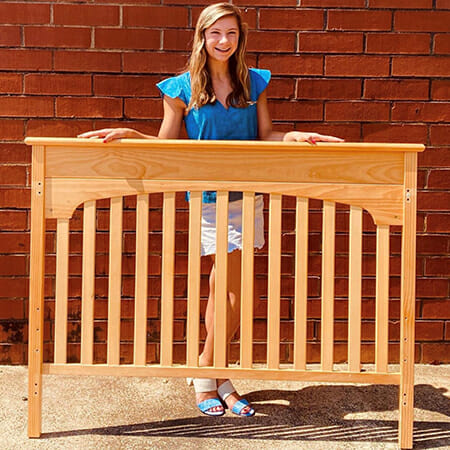
Two years ago, while out volunteering with kids in need in her community, Tejal Patel became aware of some of the health problems facing young people, especially those in underserved communities. The Brea, California-native felt the health problems were caused in part by a lack of education for children on how to live a heathy life. Tejal decided to fill that need herself by starting Teens for Healthy Kids.
Teens for Healthy Kids teaches children throughout Orange County how to lead healthier lives through activities and games about health and wellness. Prior to COVID-19, Tejal and her fellow teen volunteers would hold a program almost every week, either at schools, libraries, Boys and Girls clubs, or other community outreach programs. Teens for Healthy Kids has remained active despite the pandemic by hosting smaller programs online, as well as donating masks and snacks to various community centers. Currently a senior at Troy High School, Tejal wants to study medicine or a healthcare-related field in college so she can continue to help people.
Describe your volunteer role with Teens for Healthy Kids.
Teens for Healthy Kids is an organization I founded as part of my Girl Scout Gold Award. The goal of this organization is essentially to teach young children about the importance of having healthy habits and leading healthy lives. Basically, what we do is we go around to different schools, libraries, and community outreach programs to help, which are all aimed at teaching young children about leading healthy lives. We do a lot of this through different games and activities that we planned.
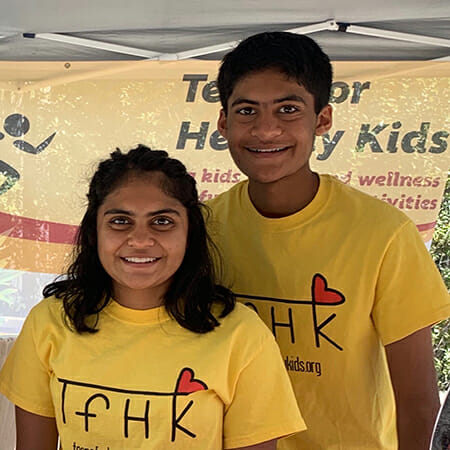
Tejal Patel, left, volunteers with her brother, Arjun Patel, who has been integral in developing Teens for Healthy Kids. /Courtesy Tejal Patel
What made you want to do this for your Gold Award?
I’m part of another organization located in Anaheim, CA. called, Assisteens. Within my community, one of the projects of Assisteens is to help clothe kids [identified as homeless through] the McKinney-Vinto Act. As I was volunteering to help through Assisteens through Operation School Bell, I became aware of the health problems that these kids were facing as well as the differences in education. One thing that stuck out to me is that while there were a lot of different community outreach programs, there weren’t ones that were teaching kids the importance of leading healthy lives. This problem is really prominent, I think especially in the underserved communities, because kids aren’t being taught the importance of leading healthy lives. They aren’t aware of the problems that it could cause and how it causes a lot of disease later in their lives. I wanted to do something about it and that’s why I created this organization.
What kind of activities do you do to educate the kids?
Before COVID-19, we went to the Boys and Girls Club in our community and hosted different programs. It depends on where we’re going, but the program that we do is about 45 minutes to an hour, focusing on one aspect of living a healthy life. For example, one activity that we did was around the idea of making healthy food choices. We played a game with kids and in that game, the kids would choose between three food choices and try to choose the healthiest option. We also expand it out to teaching kids more about the human body and also how to keep themselves, for example, safe from the sun or how to keep themselves safe while playing outside. We do activities and games and often at the end of the activity, the kids would do a little craft or something to remember what they had learned.
Why is it so important for young children to be aware of their health and how to live an active lifestyle?
A lot of health problems that affect us later in life, especially in the United States, [such as] obesity and heart problems, all stem from habits we pick up at a young age — for example, not eating as healthy or not remembering to exercise regularly. The reason why I think teaching young kids about healthy habits is especially important is because it can prevent the prevalence of the incidences of these diseases later on in life and help them live better lives.
What’s been the most rewarding part of your work?
Definitely the most rewarding part is being able to go every week and work with the kids, and seeing how enthusiastic they are to learn about everything, and seeing them always excited to learn new concepts. For me, I just enjoy working with them.
Why do you think it’s important for others to give back?
I think it’s important to help make our society more equitable. Volunteering is a great way to bring those in the community who are more privileged or luckier together, and it’s also a way to really help change the lives of people who may not have as much, and I think that is very important.
What do you want people to learn from your story?
I would want people to learn if you want to do something that you know will help others, to go ahead and do it. When I first started this organization, it was rather hard to get venues or people to take a chance on what I was doing. But keep persevering, because if what you’re doing is to genuinely help people, then it will work out.
Adolescent Volunteer Honors Long-Lost Loved Ones Through Gravestone Archiving
Meet Daily Point of Light Award honoree Robert McPhie. Read his story and nominate an outstanding volunteer or family as a Daily Point of Light.
Robert McPhie is safely serving others left behind, showing volunteerism knows no limit, even during a worldwide pandemic. The 12-year-old Irvine, California boy is helping his community amid COVID-19 by sewing masks, and most recently, has led a project to document gravestones at cemeteries around the world.
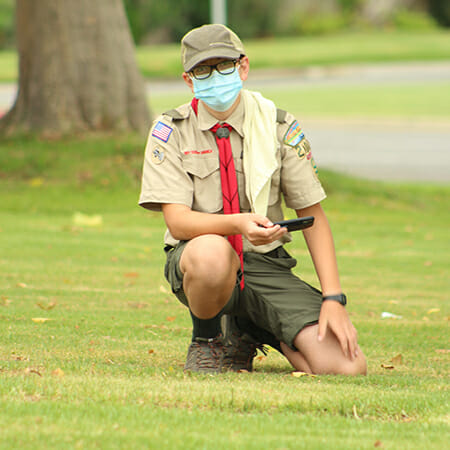
As a BillionGraves volunteer photographer, the 7th-grader leads his Eagle Scout service project to document gravestones. Believing in the importance of remembering those who have been left behind, Robert is helping to create a lasting record by archiving gravestone information, including many veterans. Additionally, Robert answered a call for help from Orange County Rescue Mission amid the pandemic, and has donated dozens of handsewn face masks, continuing to help his fellow neighbors in a safe way.
What inspires you to volunteer?
It’s really important for people to be remembered. We always remember famous people, but it’s also important to remember regular people. I have always loved family stories. My grandma is a professional storyteller. One wall of my house actually has a tree painted on it and is covered with photos of ancestors who make up my family tree. We have journals and letters and pictures of two of my great-grandpas who fought in WWII. While I don’t think I’m going to do anything really extraordinary in my life, everyone wants to be remembered, and my service helps to do that.
Robert McPhie: “I volunteer so that we can remember the men and women who have made the ultimate sacrifice in order for us to have the freedoms that we enjoy.”/Courtesy Robert McPhie
Describe your volunteerism.
As a BillionGraves volunteer organizer, I’m offering a meaningful and safe project that can be done outdoors, wearing masks, socially distanced. I have helped to document more than 10,000 individual gravestones, many belonging to veterans. We take GPS-encoded photos of gravestones which are then transcribed and made publicly available to genealogy researchers and people around the world who are looking for their family members. My project’s efforts continue to grow – two of my cousins living in Portugal found gravestones at cemetaries that weren’t even listed on the BillionGraves app, and Scouts have participated in my project in Scotland, Portugal, Switzerland, Germany, and Austria, and across the U.S. The names on these gravestones will deteriorate soon, and our online photos will serve as a lasting record.
Also, I’d previously volunteered at Orange County Rescue Mission, and when the food bank asked for help making cloth masks at the beginning of the pandemic, I joined in to help. I’ve made dozens of face masks thus far.
Share one personal story with me from your volunteerism.
My scoutmaster once volunteered with me as we were documenting gravestones, and he wanted to visit the grave of his neighbor’s father to pay his respects. He opened up the BillionGraves app, and the app immediately showed where to find gravestone. We walked over to the gravestone together, and he told me about Jack Keene, a great man and a great American. Jack had been a bomber in WWII, and then came home, and raised a great family. I loved seeing that the app actually worked, because it is helping people find, remember and honor the legacies of those who have gone before.
What does it mean to know that you’re helping find long-lost gravestones for strangers?
It’s really amazing to be able to help people. It’s really powerful to think about all these different people, even if you didn’t know them personally.
What saying do you live your life by?
President John F. Kennedy said, “A nation reveals itself not only by the men it produces, but also by the men it remembers, the men it honors.” I volunteer so that we can remember the men and women who have made the ultimate sacrifice in order for us to have the freedoms that we enjoy. I never want these people to be forgotten, because they are the people who have given us our American heritage.
Why do you think it’s important for others to give back?
We’re all very lucky, and it’s important to give back to the community because that’s how we make the world a better place.
In one word, what does volunteering mean to you?
Community. You’re helping to strengthen your community.
What do you do for fun when you’re not in school or volunteering?
I play piano, and I’m learning trumpet. I’m involved with my church youth group. I love scouting. I also enjoy reading. This summer, I read all of the Sherlock Holmes books.
How can readers help?
If you have a couple of hours, and a smartphone, you can help ensure that our American heroes are never forgotten. Please visit the BillionGraves website for more information about how you can help.
Connecticut Volunteer Not Only Delivers Library Books, but Laughter and a Helping Hand to Senior Citizens
Meet Daily Point of Light Award honoree Terry Ziegler. Read her story and nominate an outstanding volunteer or family as a Daily Point of Light.
From encyclopedias to romance novels, the Groton Public Library is filled with aisles upon aisles of books that allow the citizens of Groton, Connecticut to dive into new worlds. But for homebound seniors and those who are physically disabled, a trip to the library can be difficult.
That’s why for the past 18 years Terry Ziegler has brought the library to them. No matter if their house is 5 or 20 miles away, if it’s raining or blizzarding, Terry has been delivering books, DVDs and magazines to dozens of seniors and others who are physically unable to make it to the library.
One person Terry has been delivering books to for many years is Heather A. Davis, who cannot go to the library by herself because she is in a wheelchair.
“Having the books and movies brought to me means everything to me because they keep me from being bored,” Heather added. “I enjoy talking to Terry. She makes me laugh. People ask me if a consider Terry a friend. No! I consider her a sister.”
Groton Public Library’s Homebound Delivery Service was actually started by Terry’s own mother back in the 1970s.
“She started a program of delivering books in her ’66 Mustang to different senior housing because these people couldn’t get to the library,” Terry recalled. “Once a week, she loaded that car up with huge canvas bags and off she went.”
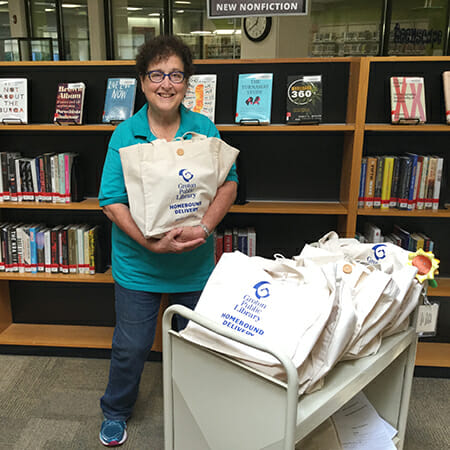
Terry Ziegler is the sole volunteer for Groton Public Library’s Homebound Delivery Service program, delivering books to senior citizens and others who are physically unable to visit the library. /Courtesy Terry Ziegler
Terry’s mother stopped working at the library after 25 years, so the program ended as well. But after Terry retired as a music teacher, she brought the Homebound Delivery Service back to life, becoming the program’s sole volunteer.
The program started out with just a few deliveries, but today, Terry delivers two times a week to about 40 homes.
For the seniors who used to be doctors and physicists, the books allow them to continue educating themselves. And there’s some seniors “who just love the romance stuff,” Terry said.
“There are a lot of people who are alone and this keeps their minds going. It brings them a lot of enjoyment,” Terry said.
But with each delivery, Terry does far more than bring books. She’s known to bring treats for people’s pets, take out their garbage and create meaningful relationships with the people she delivers to.
Even when the library had to shut down during the coronavirus pandemic and Terry couldn’t deliver books, she made sure that the seniors who were surely feeling lonelier than ever knew that she was thinking of them.
“When the pandemic resulted in self quarantine, Terry checked in on me by text going above and beyond to make sure I knew that there were still people out there who cared and that one day again soon we would all have our books,” said Tenille Martin, who became housebound after two traumatic brain injuries.
She even helped create an intergenerational pen pal program during the pandemic so many of the program’s senior patrons have been receiving cards, letters and drawings to brighten their day.
“Terry is amazing. She never stops,” Kimmerle Balentine, a librarian and the coordinator of the homebound delivery service said.
“Word has slowly but surely gotten about this Library service and Terry’s passion for it. As a result, three other Connecticut towns – East Lyme, Waterford and Norwich – have used our program and Terry’s methods as a model to create their own Homebound Delivery Service programs,” Kimmerle added.
On top of her volunteer work with the library, Terry also knits hats that she donates to oncology centers for people undergoing chemotherapy. When asked why she selflessly dedicates her time and efforts for others, she said “because this is humanity.”
Teen Volunteer Uses Unique Skills to Benefit Those in Need, from Hungry to Military
Meet Daily Point of Light Award honoree John McPhie. Read his story and nominate an outstanding volunteer or family as a Daily Point of Light.
John McPhie is a rising high school freshman, but the 14-year-old Irvine, California teen is proving that age does not define ability, as he dedicates his unique skills to serve people in need, from the hungry to US troops.
As a volunteer with Operation Gratitude, an organization that strengthens the bond between military and civilians, John handmakes paracord bracelets, which are then donated to troops and first responders. Inspired by gratitude for his country’s service men and women, John says it is individuals like his great-grandfather, who fought in WWII, that he honors through his service, which also includes writing letters to deployed troops and others. Most recently, John has extended his service to his community during the COVID-19 pandemic. Raising more than $2,700 for Second Harvest Food Bank of Orange County, the teen creates his art in exchange for donations to his virtual food drive that has put more than 7,500 pounds of food on the tables of families in need.
What inspires you to volunteer?
Because I’ve been given so much, I feel as though I should give back to my community. I feel a need to give back to my community because I feel very lucky to live in America and in Orange County.
Describe your volunteerism.
My volunteerism helps people near and far, including the hungry and military members.
Second Harvest Food Bank of Orange County: At the start of the pandemic, I decided to hold a virtual food drive for the food bank. I am raising money by painting watercolors that people request from me in exchange for donations they make to the food bank. To date, those donations have funded more than 8,1000 meals for families in need.
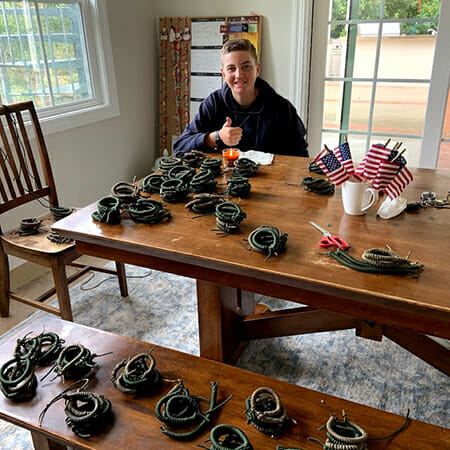
Operation Gratitude: My handmade quick deploy paracord survival bracelets are donated to troops and first responders. All who serve use paracord, which gets its name from parachute cord and can hold up to 550 pounds of weight. The bracelet provides 7.5 feet of cord in an emergency. We owe a lot of gratitude to the men and women who defend our country and our freedoms, and this project was a way for me to show my thanks for all they’ve done for our country. I’ve led other volunteers to make 600 bracelets thus far. I also write thank you letters that are included in Operation Gratitude care packages.
John McPhie has led community volunteers in hand making 600 quick deploy paracord survival bracelets, which are then donated to troops and first responders through Operation Gratitude./Courtesy John McPhie
Share one personal story with me from your volunteerism.
Operation Gratitude shares weekly stories of people who receive our bracelets. Maybe the recipient was going through a hard time, or felt lonely and received our care package with the bracelet and letters, and it makes their day. They have the opportunity to think about what they’re fighting for, and they feel appreciated. That’s really powerful. They’re doing so much for us, it’s the least we can do to return the favor and make someone’s day.
Why do you think it’s important for others to give back?
It’s important because we must think about and consider all the ways in which we are blessed. All the things we have and all the things we take for granted are really very important to making our lives so great, and that gives us a much deeper appreciation for all the people who serve us and do things for us that you might not otherwise notice. We should give back so we can continue the cycle, continue lifting other people up, and serving others to make a better community.
What’s been the most rewarding part of your service?
I lead community groups in making the paracord bracelets and writing thank you letters for our deployed troops, first responders, new recruits, and military veterans. It’s one thing to receive a bracelet, it’s a show of thanks, but writing letters really helps the volunteers to connect with the troops. The letters remind service members that people are thinking of them and sending them their thoughts and appreciation.
In one word, what does volunteering mean to you?
Appreciation. Appreciation of things people have done for us and giving back to those who have made our lives better.
What do you do for fun when you’re not in school or volunteering?
I am really involved in my Boy Scout troop, I am the senior patrol leader. I also play the piano and am involved in our church youth group.
Former Foster Child Starts Volunteer Project to Help Foster Families
Meet Daily Point of Light Award honoree Cara Cole Heerde. Read her story and nominate an outstanding volunteer or family as a Point of Light.
Cara Cole Heerde wants the world to know that she is a fighter.
When she was only three years old, she and her brother entered foster care after being neglected. They had been left with no food, drink or even toothbrushes, resulting in her needing 12 root canals. By the time she entered her seventh foster home at the age of six, she was still unable to talk. Thankfully, that seventh home would prove to be her last, as her then-foster mother adopted her and her brother when she was eight.
Now fifteen, Cara Cole is proving just what a fighter she is by not only thriving, but also dedicating her life to helping other foster children. The Jefferson, Ga.-native started the #3SProject, where she volunteers to help support foster families and uses social media to encourage others to do the same. Through her project, Cara Cole is working with the Georgia Division of Family and Children Services to enter photographs of foster children into the Georgia SHINES System, an online database of information for all foster children within the state. In addition to the #3SProject, Cara Cole volunteers for Piedmont CASA by making and delivering meals to ten different foster families each month. She also speaks as an advocate at CASA events. Cara Cole additionally advocates with Promise 686, a volunteer organization that mobilizes churches and families to help orphans and foster children. Next month, she will begin volunteering as a leader for the nonprofit Girl Talk, where she will offer peer-to-peer mentoring and encouragement to middle school girls. Cara Cole dreams of one day starting her own foundation where she can donate money to foster children and continue down her path of volunteerism.
Describe your volunteer role with the #3SProject.
It stands for stand up, show love and shine bright. I want to step up for foster children. I want to be able to put foster children’s pictures in the Georgia SHINES system. Then, showing love, I do volunteer work and I bring meals to families. I’m going to be doing volunteer work at churches. For shine bright, I want to use social media to encourage other people to step up and show up and shine bright for foster children. I want to use it to promote businesses and companies who are doing good things for foster kids.
When did you start this project?
Three years ago. I was a foster kid and when I was younger I didn’t have any pictures of myself as a baby. I also want to make sure that foster children have families and people to love them, because I never had that when I was in foster care.
What inspired you to work toward putting foster children’s photos in the Georgia SHINES system?
I would see pictures in picture frames and I had never seen that before. Ever since, I was always interested in pictures and I wondered what I looked like as a baby because I never had any pictures of myself. So, for other foster children, I want to make sure that they have pictures of their life as they are growing up. They store all the foster children’s information in the Georgia SHINES system.
Cara Cole Heerde helps foster families in the Jefferson, Ga. area by volunteering with Piedmont CASA./Courtesy Cara Cole Heerde
How do you volunteer with Georgia CASA?
My mom and I will make meals for families. We put them in a cooler and we take them to their house, and we leave the cooler on the front porch. They take the meals in for their foster families. … Someone did that for my mom when we were in foster care. It helps a lot because foster families have a lot of pressure when they take in foster children. They’re trying to cooperate with them and talk to them and they have to watch them all the time, so it lifts a lot of weight off their shoulders when someone else is helping out with making dinner and doing little things like that.
What do you do as a Promise 686 advocate?
I go to churches and I encourage people to become a part of a community of care. They bring meals to foster families, babysit, support the foster families, and they do things like that. … Someone did that for me. They came and they babysat and brought us meals. They supported our foster family, so I’m encouraging and influencing other people to do the same for other foster families.
Are there any future partnerships, programs, or events that you are excited about?
I’m going to be a Girl Talk leader. I’m going to talk to girls about middle school problems that they’re having and encourage them. I’m going to be a leader and role model for them and help them develop confidence. … [Girl Talk] develops confidence and leadership for girls in middle school. Once a month, they have meetings with middle school girls. I just became a new leader, so I’m going to start doing it next month.
I wanted to do it because when I was in middle school, I didn’t really have a lot of confidence in myself. Being in foster care, I didn’t really know how to talk when I was younger. When I was six years old and I came to my mom’s house and she took us in, I couldn’t talk. I could make sounds, but I couldn’t actually talk. I had a lot of trouble talking and learning how to talk because I was so behind. In middle school, that kind of stuck with me, so I want to help other girls in middle school to develop confidence.
What’s been the most rewarding part of your work?
Just being able to go and do something good for foster families and for foster children, because it’s hard taking in a foster child. I want to use my story to encourage other people to do the same.
Why do you think it’s important for others to give back?
I think that it’s really important because someone did do that for us. Also, it’s the right thing to do and people need a purpose to give to others.
What do you want people to learn from your story?
Mainly that everyone can help with foster families and foster children. Everyone can do something to help with them. I want people to know that I’m a fighter. I fought through a lot of difficult things in my life while I was in foster care and even now to this day.
New York Volunteer Raises Puppies to Become Guide and Service Dogs
Meet Daily Point of Light Award honoree Ruthann Collins. Read her story and nominate an outstanding volunteer or family as a Point of Light.
After medical conditions forced Ruthann Collins to retire from her beloved job as a missioner, she found herself feeling depressed from the abrupt change of completing high-paced work that allowed her to travel the world, to being totally stagnant at her home in Islip, NY. She and her husband had previously floated around the idea of raising puppies one day, so she decided to use her newfound time to start volunteering for the Guide Dog Foundation in nearby Smithtown, NY.
Seven years later, “stagnant” is the last word you could use to describe Ruthann. She is currently raising her third puppy for the Foundation, which trains puppies with the goal of becoming either guide dogs for the visually impaired, or service dogs for partner organization America’s VetDogs to place with veterans and first responders. In addition to puppy raising, Ruthann is also a caretaker for one of the Foundation’s breeder dogs. She is a volunteer for the Foundation’s Speakers Bureau, leading educational tours at their facilities and traveling to various events to raise awareness for their work. For the past three years, she has served on the Dogs on the Catwalk committee, which plans the Foundation’s annual fashion show fundraiser.
Describe your volunteer role with the Guide Dog Foundation.
My primary role started out as a puppy raiser. You receive the puppy when they’re eight weeks old. It lives with you until they’re about a year and four months old. During that time period, we train them the basic things they need to know — socialization, house manners, basic behavioral type things, how to stay, how to walk properly on the leash. The dog and I go to class. We were going twice a month, but with Covid we’re doing them virtually once a month. Usually around 12 months, they have to take a YODA test, a Year Old Dog Assessment. Our job is to care for them and do all that basic training so when they’re ready to go to whatever discipline they’re going, whether they’re going as a service dog or a guide dog, all the basics will be taken care of so that the trainers who are going to do the specifics don’t have to start with the basics. The dog is ready to go with them to the deeper, more difficult things.
I am also what’s called a caretaker for one of the breeder dogs. We raised her from when she was a puppy. When it was time for her to go into training, after she completed her test, the decision was made that because of her lineage and her behavior and all kinds of qualifications they have, they made her a breeder dog. Both dogs live with us 24/7. … We’re primarily responsible for keeping her basic trainings up and taking care of her, especially during the pregnancy. She will stay with us until she retires from that. Once she’s retired, we have the first option of keeping her, and of course we will after having gone through all the volunteering with her.
What inspired you to start volunteering in this way?
I had to leave my job, which I loved, because of some medical conditions. I was a missioner for the The Domestic and Foreign Missionary Society. Because of my medical conditions, I was not able to continue because it involved a great bit of travel. I was really very ill. When I got to the point where I was able to walk and I was done with my rehab and all kinds of things to get me well, I started to get depressed because I had gone from going 100 miles an hour all over the world, to being totally stagnant. For years, my husband and I had talked about well, maybe someday we’ll raise puppies. We made the decision maybe that would be good for me. My first dog probably gave me as much, if not more, than I gave her because having to do the work with the dogs, you have to stay on schedule. You have to be active. It was excellent for my health.
What do you do as a volunteer for the Speakers Bureau?
Every year when New York has Fleet Week at the Intrepid Museum, we have a booth. We’ll go there and we’ll mingle with people and speak with people. We do schools and community-based organizations that want to find out more about it. We work a lot with the Lions Club and colleges. Sometimes for the colleges, we’ll go when they have their stress week. We’ll bring the dogs so the students can, in between classes, come and hang out with the dogs and pet them. It’s a variety. We also did what were call talking tours, where a Girl Scout or Boy Scout troop would come to the facility in Smithtown and we would do a presentation for them. Everything is pretty much on hold, other than those of us actually handling dogs, because of Covid, so we’re not doing the speaking at this point. It was great fun, and it’s part of our mission as an organization to educate the community.
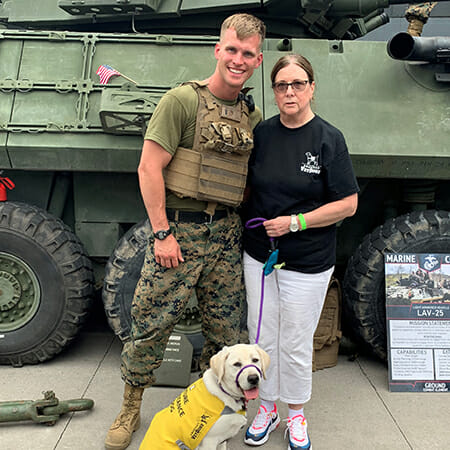
Ruthann Collins, right, poses with a soldier during New York’s Fleet Week, where she ran an informational booth at the Intrepid Museum as part of her volunteer work for the Guide Dog Foundations Speakers Bureau./Courtesy Ruthann Collins
Are there any future partnerships, programs, or events that you are excited about?
The Dogs on the Catwalk, certainly. I’ve been a committee member for three years. This year, we’re doing it as a virtual fashion show. That’s a major fundraiser we do for the guide dog side of the program. It’s in October.
I know the event will be virtual this year, but what is it like normally?
Anthony Rubio is a top designer who shows at Fashion Week here in New York, Milan, etc. He happens to be a dog lover. He not only designs clothes for women, but he designs clothes for dogs. … We have the event where he brings his models. There’s a cocktail hour and all of that. We have puppies there so people can see some of the puppies and hold them when they do the walkabout. It’s followed by a full dinner and then the fashion show. His work is really impressive. The models, bless them in their four-inch heels, actually walk down the runway with dogs that are in his designer couture. That’s been a major fundraiser. We auction off a few items. We try to get enough money for one or two puppies to be sponsored. A sponsorship is $6,000 and that covers the first year of life for the puppy. It’s a really very nice event. It’s very, very elegant and it’s a really nice evening out.
What would you want someone interested in training guide dogs to know?
Obviously, one would have to love animals to do this kind of volunteer work, but there’s so much that needs to be done and it’s not just handling the dogs. If you want to learn, you want to grow, and you want to do something exciting, this is the kind of work that does that. I’m a puppy raiser and I work on a committee and I’m on the Speakers Bureau, but we have people who are what we call transportation people, and they volunteer to drive the vans to transport the students around and the dogs around. We have people who just come in when we’re doing the fundraisers and stuff envelopes. I believe the last count, we had about 1,500 volunteers. That’s the other thing, you wind up with new friends and you get to do really exciting stuff. Other than the Covid situation, we’re always out as far as being puppy raisers. We’re socializing the animals but we’re also getting out and doing different things. Maybe we’ll have a class at the aquarium. I remember one class we did at the aquarium, all the dogs were sitting and watching the penguins go around in a circle. It was just so much fun.
What’s been the most rewarding part of your work?
I think the rewarding part is when the dogs that you are working with leave you. That’s a hard part, but when they eventually finish their training at the facility and you know that someone’s life has been changed. … When you’ve done your job and they’ve passed their test to go on, and then later on when they’re handed off to the person, you know you’ve been a little part of getting rid of some of the barriers that people have in their lives. Our first dog [Gypsy] that we raised is a guide dog in Tennessee. After her training and she went down and was assigned to the gentlemen she was with, who teaches the blind at the university down there, he asked if he could talk to me. We got on the phone and after about three minutes, he was in tears and I was in tears. As part of their final test down there, he and Gypsy had to get around the entire campus where he had to be around his daily life without any help, and they passed it. I was so proud of her. I felt good that I could tell she was going to a nice guy and his wife.
I’m thankful for my health now. Even though I have some problems, I’m thankful that I don’t have the barriers that certainly people who are visually impaired and of course the veterans [have]. When you speak to the veterans who are receiving our dogs or have received dogs, it’s an amazing feeling to know you’ve been able to thank somebody who has gone to war for our country. It’s pretty powerful stuff. … The first one with Gypsy, they had to walk around and do their final test without help. He was 33 years old at the time he received her, and he said to me it was the first time in his life that he understood what the word ‘independence’ meant. That’s why you do it, to be able to help somebody else like that.
What do you want people to learn from your story?
I think that as individuals in the kind of country that we live in, we need to give back to each other. We need to do whatever we can to help our community to be healthier and peaceful. I think volunteering is something that is critical for a small community and for our country at large to be healthy. We all have gifts of some kind, and I think we have a personal responsibility to each other, so you find the thing that excites you to do that work. It’s ok to say “I want to feel good when I’m done with this work.” It’s ok to be honest about it. You choose something you have a passion for. I will tell you for the volunteers for the Foundation, we all have a passion for it. Otherwise, you couldn’t do this particular kind of work. But whether it’s this, or volunteering for Heifer or Habitat for Humanity or a tiny little Boys and Girls’ Club in your community, I think the important thing is that it’s not only our responsibility. It’s a great gift to you as a person and it helps you grow tremendously.
Couple Dedicates 40 Years to Helping Train Guide Dogs
Meet Daily Point of Light Award honorees Doreen and Phil Zipf. Read their story and nominate an outstanding volunteer or family as a Point of Light.
Forty years ago, husband and wife Doreen and Phil Zipf noticed an ad in the local paper looking for volunteers to help the Guide Dog Foundation in Smithtown, N.Y. Doreen was raised to be a volunteer, and Phil had an admiration for guide dogs since he was a kid and read a short story about how the animals helped the blind. Along with the fact that they had recently moved only a short distance from the Foundation, it seemed like a no-brainer to sign up.
Now four decades later, Doreen and Phil’s volunteerism is still going strong. The duo have raised 13 puppies and taken care of several of the Foundation’s breeders. Doreen also helps teach orientations for other volunteers and sews coats to signify the guide dogs who are in training, while Phil helps “taxi” dogs to vet appointments and to the airport when they need to travel. The couple passed on the spirit of volunteerism to their four children, who helped with the dogs while growing up, and one of whom became a breeder caretaker. Doreen and Phil currently have four dogs from the Foundation in their home — two retired breeders, a breeder still having puppies that will hopefully grow up to be guide dogs, and a “release” dog who didn’t make it through training. While their house is full at the moment, they aren’t opposed to taking on puppies in the future, and have no sights on discontinuing their service anytime soon.
Describe your volunteer role with the Guide Dog Foundation.
Doreen: We have been volunteering there for 40 years. When we first started volunteering, we started off as puppy raisers. … We raised another one, and another one, and we did that for probably the first 10 years. [Then] we got into being caretakers [for breeders]. That was ’91. In between, there were other puppies. We actually helped buy a couple puppies for the breeding program. … We’ve had at least eight litters the house. I just sent my last one back last Friday. There were three little labs, so now they’re back at their Foundation and they will get all their shots and their examinations. They will go out to puppy-raising homes and they will be raised, and they will come back for training.
Of course since coronavirus, we haven’t done it since March, but I go up one day a week and work with the little puppies in the nursery when they’re four to six weeks — holding them, letting them walk a little bit on the lead, depending on the age. Then [we do] other little projects along the way. We’ve been around a long time, and we know everybody. Sometimes we’ll get a call, “Hey, do you want to come do this?” and I’ll go up and do it. … We’ve taken temp dogs sometimes, just dogs who need temporary homes maybe for a week or two.
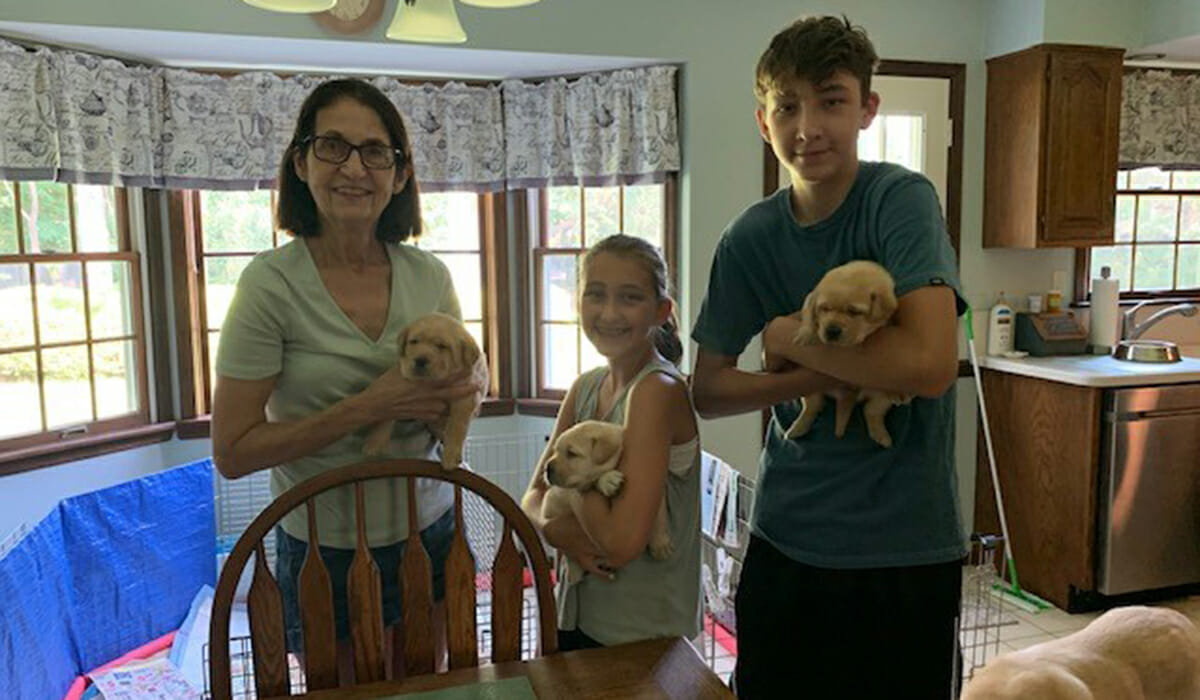
Doreen Zipf, left, and her grandchildren hold three of the puppies recently birthed by the breeder dog she and her husband are taking care of on behalf of the Guide Dog Foundation./Courtesy Doreen and Phil Zipf
Can you discuss the additional volunteer work you do with the foundation individually?
Doreen:The puppies being raised, they have these little jackets they wear to identify them so they can walk into a store. In New York, they do not have access rights for puppies. Obviously a guide dog has access rights, but in New York state they don’t have access rights for dogs you are training yourself, like the puppy raisers. It’s very important that they go out and be socialized, so they get this little jacket that identifies them as from the Guide Dog Foundation. There’s no problem at all. Nobody says you can’t bring the dog in here. I got involved with that and I am now the lead sewer. I cut all the coats for the last 12 years, I think. Now I’ve gotten to the point where we put them in kits. I cut the binding and straps, I actually make the straps, put them in kits, and then they go out to people who sew them.
I also do orientations for temporary homes and breeder caretakers. I used to do them at the Foundation, but with coronavirus, I now do them on Zoom, which is always interesting. I explain to people what a temporary home is, what’s expected of you. If it’s short term, we take the dog for two weeks in the summer to get them out of the kennel. Some of them were release dogs [who didn’t meet the qualifications to become guide dogs] and they were waiting to be adopted. Then others were actually training dogs but they’re waiting for students to come, so sometimes there’s a gap in time between the two processes, and they like to get them out into a home. … Of course, a breeder caretaker is the other thing we’ve done. Basically, I explain to people what the responsibility of that is. It’s not your dog, the dog belongs to the Foundation, but you take care of the dog … and keep the dog’s manners up when they’re in public. They have to behave because they’re a representative to the Foundation. Those are the two classes I give for them.
Phil: I used to take dogs to LaGuardia and MacArthur airport for transport, where they would fly different places in the country. Sometimes I would go to LaGuardia to pick them up. Later on, I would take them mostly to local vets and things like that.
What has been the most rewarding part of your volunteer work?
Phil:When I was a kid in grade school, I read a short story called ‘My Eyes Have a Cold Nose’ [by Hector Chevigny]. It was amazing to read about this man who got a guide dog and could simply cross the street safely. That always impressed me. When we moved out here in 1978, shortly thereafter, like the beginning of 1980, we saw the Foundation was right around the corner from us. I said, “Oh, it would be nice to get involved in that someday.” Then my wife saw an ad in the paper that they were looking for puppy raisers, or they called them puppy walkers at that time. They gave us this black female Labrador. Her name was Ace and she was sponsored by the Long Island Railroad. She didn’t become a guide dog, but she did after a certain amount of time become a detector dog for the Connecticut State Police Department. She became what’s popularly known now as a service dog. I find it very rewarding. People always ask you a million times, “Oh, don’t you find it hard to give them up?” I always counter with, “I’m not doing this to raise a dog for myself. I have my own dogs. I’m doing this to try to help somebody else.”
Since you started volunteering, have you consistently always had a dog in the house?
Doreen: I would say yes. Right now we have four of them. There’s an active breeder, two retired breeders, and one release dog. All together, we’ve raised 13 puppies. … We’ve pretty much always had one of their dogs in the house since 1980. I think there was a break when we lost our own dog. Now all the dogs are theirs, but when we started this, we had our own dog. To me, that’s important, because if you’re going to raise a puppy and that’s the only puppy in the house, when you give it back, it can be a little emotional. You have a different sense when you have your own dog in the house and you know this dog is staying and you raised it, especially when children are concerned. … So we always had our own dog. That was the only break. That was back in the 80s. Didn’t last long. I’ve had as many as even two puppies in the house for a very short time.
How does it feel knowing your children have followed in your footsteps with volunteering?
Doreen: Very good. It was kind of in the back of my mind, going way back then, [that] it was important to show them that you should give back. That was a real way of giving back, and it was something they could enjoy. They knew they had to give the dog up. This wasn’t a dog they were going to keep. They would go to the graduation, and you would see the person get the dog. As I said, of the 13 [puppies], there was only one that didn’t make it. One became a police dog, and four of them actually became breeders. … They were dogs that would have been guide dogs, but they chose them to instead be the mothers of future generations. I felt that as a parent, that was an important thing to teach the children.
Doreen Zipf, second from right, attends a Guide Dog Foundation class with one of the dogs she helped raise./Courtesy Doreen and Phil Zipf
What would you want people to know about this type of volunteer work?
Phil: It’s a demanding but very satisfying adventure. That’s what it is. It’s not a Monday, Wednesday, and Friday deal. … It’s a 24-hour deal. You have to get up. You have to take them out,. You have to feed them. You have to walk them and take care of them. But it’s very, very rewarding, and there’s groups up there that help you with the training and the obedience and the socialization. For me, it was and still is very rewarding.
Why is it important for people to volunteer?
Phil: If they can — and not everybody can due to time constraints, or even money — it’s a good thing to give back to the community. I felt that this was a good way to give back. I always said it’s very satisfying to see a dog you raised, from a puppy to about a year or fourteen months, help somebody cross the street safely.
What do you want people to learn from your story?
Doreen: When you get involved — and I’ve been involved in other volunteer jobs, too — it’s really a very rewarding thing when you give to someone else. It’s very rewarding to see that you helped someone. Everybody [at the Foundation] helps. They help along the way. When you raise a puppy, you’re helping along the way. There’s other people who are going to do other things raising that dog. I think it’s a very rewarding experience. I think sometimes people get caught up, not to criticize, but they get caught up in what’s the best movie, and caught up in Twitter and cell phones. To have a litter in the house and watch them go from the size of little mice when they’re born — and there’s only three in the litter who walked out of here, and the biggest one was 12.5 pounds when they walked out of here. For five and a half weeks, it’s an amazing thing to watch and be a part of and know now they’re going to go to someone else. They’ll go through the program and be raised that certain way, and hopefully they’ll come back and help someone. You’re part of a group and everyone gives. … You’re doing it for the end result, and you’re a part of that end result.
Teen Volunteer is Loyal Companion to Neglected Senior Dogs
Meet Daily Point of Light Award honoree Meena Kumar. Read her story and nominate an outstanding volunteer or family as a Daily Point of Light.
It’s been said that “a true friend leaves paw prints on your heart.” 14-year-old Meena Kumar is showing the world that all dogs, no matter their age or breed, deserve a forever home in return for their unconditional love, bettering her community by demonstrating the acceptance and love the San Jose, California teen has personally experienced.
Abandoned as a baby, Meena was just nine-months when she was found in a basket on a college campus in Pune, India. The infant was then taken to an orphanage, before she was adopted by a couple in Mumbai and raised in San Jose. Meena’s harrowing beginnings have made her acutely empathetic to others in need of love and care.
“I was abandoned, but It feels amazing that I was able to join this wonderful family and have so many opportunities,” says Meena. “I am inspired to help others find their passion, and make their dreams come true.”
Helping those who have been left behind like she was all those years ago, Meena is volunteering to give senior dogs a second chance at life, through Muttville Senior Dogs Rescue, which rescues about 1,000 dogs each year. First offering to volunteer at Muttville at the ripe old age of nine, Meena also pet sits to raise money for man’s best friend, often older, passed over for puppies and left behind in shelters. She owes the special connection to senior dogs because of her devotion to her grandfather, who she lost last year.
Meena offers services to her neighbors including dog walking and boarding, taking her earnings and donating them to Muttville, raising close to $25,000 thus far.
“It’s important that we give back to people or animals that have given us so much love. I have a special connection to older dogs because of my connection to my grandpa. Senior dogs out there deserve a loving home. They’ve given us so much love and they deserve a loving home just like I found mine. Just like I was abandoned, the senior dogs were also abandoned. I am grateful, and want to give dogs the same amazing life I got.”
That shared experience of being left behind makes her service even more sincere, says Sherri Franklin, founder and CEO of Muttville, who says the teen is paying it forward in more ways than one.
“All living beings need to be loved and cared for,” says Sherri. “(Meena) found purpose in coming to Muttville, seeing these abandoned, sometimes discarded, neglected dogs that are now getting a second chance at Muttville to have a loving family. Nothing could touch you more deeply than having that empathy and compassion around another being that had a similar past. And then she found a way to work and benefit these animals (through her pet sitting). She’s paying it forward.”
With her own adopted dog, Bambie, a Chihuahua, Terrier, Border Collie and Dalmatian mix, at home, Meena offers services including dog walking and boarding to her neighborhood, taking her earnings and donating them to Muttville. Inspiring others through her giving spirit, Meena isn’t just giving back to dogs in need, she’s strengthening bonds in her neighborhood, bringing her community together in a time of uncertainty and distance.
“We have this really close customer,” says Meena. “She brings her pug, named Bocci, over for me to babysit, and now she has a puppy named Cannoli. It’s special, because I feel like we’ve gotten to see the pug grow up and now the puppy. It’s really cool. My business is all about a trust-based relationship. I’m getting to know people in the community by being a friend and supporting a good cause.”
Raising close to $25,000 for Muttville, Meena hopes that more people will adopt older mutts during the COVID-19 pandemic. Her particularly prescient life motto, “Always care about others because you never know what they might be going through,” is demonstrative of her service, which is having an impact that will ripple beyond just her singular actions, says Sherri.
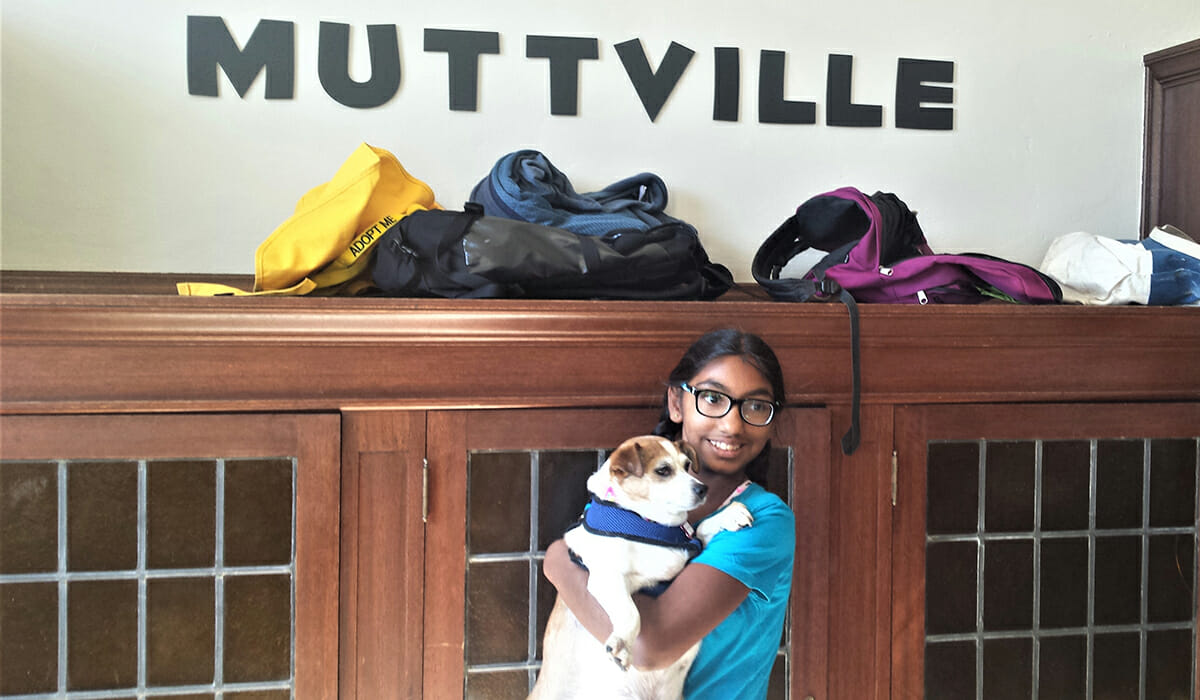
Meena volunteers at Muttville Senior Dogs Rescue, which rescues about 1,000 dogs each year. Meena hopes that more people will adopt older mutts during the pandemic./Courtesy Meena Kumar
“She’s been a spokesperson to her friends, community and because of that, her impact is much greater than financial. The impact of community, education, of youth telling other youth about what she’s doing, How one (now 14-year-old) could make a huge impact, shows other kids that they can also do the same kind of thing. Her work loving senior dogs and for our mission to mean so much to somebody so young is so beautiful, and I know that the impact will spread and grow the more she talks about it and the more she lives it.”
Because of the pandemic, Meena has not had as many pet sitting customers, but she’s joined the team at Pebble Naturals, advocating for better pet health, particularly amongst senior dogs, who can be saddled with serious medical conditions. In spite of her young age, Meena’s dedication to four-legged friends in the winter of their lives is evidence that the teen is wise beyond her years. The future entrepreneur, who plans to expand upon her pet services business to give back, says age doesn’t define ability, no matter how old or young.
“It’s never too young or too old to volunteer. As long as you have the passion and dreams, you can really make a change in this world, at any age.”
Ray Ziegler receives his future Leader Dogs when they’re just 8-weeks old. Labrador retrievers, golden retrievers and German shepherds, these fur babies ready to be man’s best friend, but they arrive with very important missions: to be trained to serve as guide dogs for the blind or visually impaired.
As both a Leader Dogs for the Blind puppy raiser and Prison Puppies counselor, the 55-year-old Southgate, Michigan volunteer is paying it back in more than one way. Ray trains one puppy each year to become a guide dog, counsels prison inmates to raise their own future Leader Dogs, and finally, that fruitful work results in trained, socialized dogs who can change the life of a blind or visually-impaired person. Provided at no cost, Leader Dogs are the answer for thousands of people in critical need of service as the simplest to the most complex everyday tasks become daunting due to loss of sight.
Raising 12 dogs thus far and impacting countless others through his service, Ray is changing his community, one puppy at a time.
What inspires you to volunteer?
I’m inspired because of the way volunteerism makes me feel. You’re doing something for someone who you may never meet, or they may never be able to thank you.
Describe your role with Leader Dogs.
Leader Dog puppy raiser – As a puppy raiser, I receive one puppy each year, and for 12-months, I train that future Leader Dog. We socialize them so when they start their Leader Dog formal training, they are used to being around lots of people, different smells, noises, distractions. That includes parking lots and high traffic crossings, busy events with lots of people. These dogs are a part of my life, they go to work with me each day, they go to sporting events with me.
Leader Dog Prison Puppies counselor – I’ve served as a counselor to inmates in two different prisons in the state. I drive over 1,000 miles roundtrip each month to the current prison I volunteer at, where I counsel inmates on how to raise their Leader Dogs. For these inmates, this is the first structured opportunity they’ve had in their lives.
Share one personal story with me from your volunteerism.
This service is life-changing for the visually impaired. One mother told me that her son was a shut in, but because of his Leader Dog, he was able to graduate with a masters degree. Another started with his new Leader Dog, he now has a family and children, and works a 40-hour a week job. This wouldn’t have happened without that Leader Dog. The guide dogs give them freedom, because before, you would have had to have someone holding your elbow, walking you around.
Explain how your service is changing not just the lives of the visually-impaired, but prison inmates too.
Each puppy is assigned to three inmates, who learn to break down barriers and work together to train the dogs. The inmates are good candidates to raise these puppies, because they are screened, required to maintain good behavior, and have time to give. A prison ward once asked me, ‘do you want (inmates) to get out harder than they came in, or do you want them to get out with an education, where they can fit into society?’ When they turn a puppy in after that year of service, they break down just like you or I would. It’s oftentimes the first thing they’ve loved. Many of these guys, they were born to go to prison by the way they were raised. They never had anything to care for or love, they never had anyone else to care or love them. When these guys get paroled, they’ll contact me and tell me that they’re a completely different person because of the Prison Puppy program. Hearing that, you know that you made the world a better place through your service.
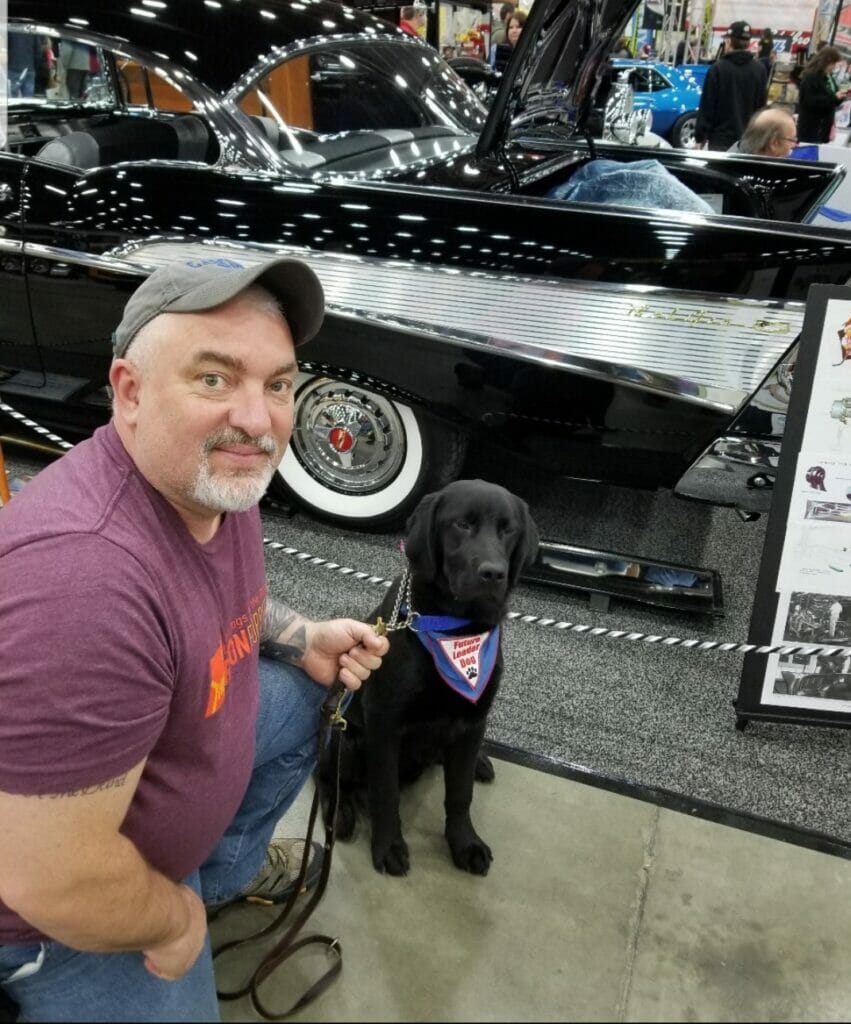
Ray Ziegler pictured with future Leader Dog Sherman, at Detroit’s Autorama. As a Leader Dogs for the Blind puppy raiser volunteer, Ray socializes and trains puppies to be comfortable with noises, smells, people and other distractions so they can serve as guide dogs one day.
What’s your favorite part of training?
When we do our local elementary school presentations. I don’t name my puppies, I let local elementary school students name the puppy. It’s just like an election, they’ll vote on a name.
What’s been the most rewarding part of your service?
It’s rewarding to help someone you’ve never met. If there were more people giving to others, the world wouldn’t be the way it is today.
In one word, what does volunteering mean to you?
Rewarding. My volunteerism started when I heard an advertisement on the radio for Leader Dogs. I came home and told my wife I’d apply to be a volunteer. Her exact words were, ‘Nobody is going to give you a puppy.’ This service is a major part of our life, and it’s changed my life for the better.
How can readers help?
If you have interest in participating in the Leader Dogs program or would like more information, please visit the Leader Dogs website.