Naval Officer Helps Train Service Dogs for Fellow Veterans with PTSD
Meet Daily Point of Light Award honoree Petty Officer Andrew Armstrong. Read his story and nominate an outstanding volunteer or family as a Point of Light.
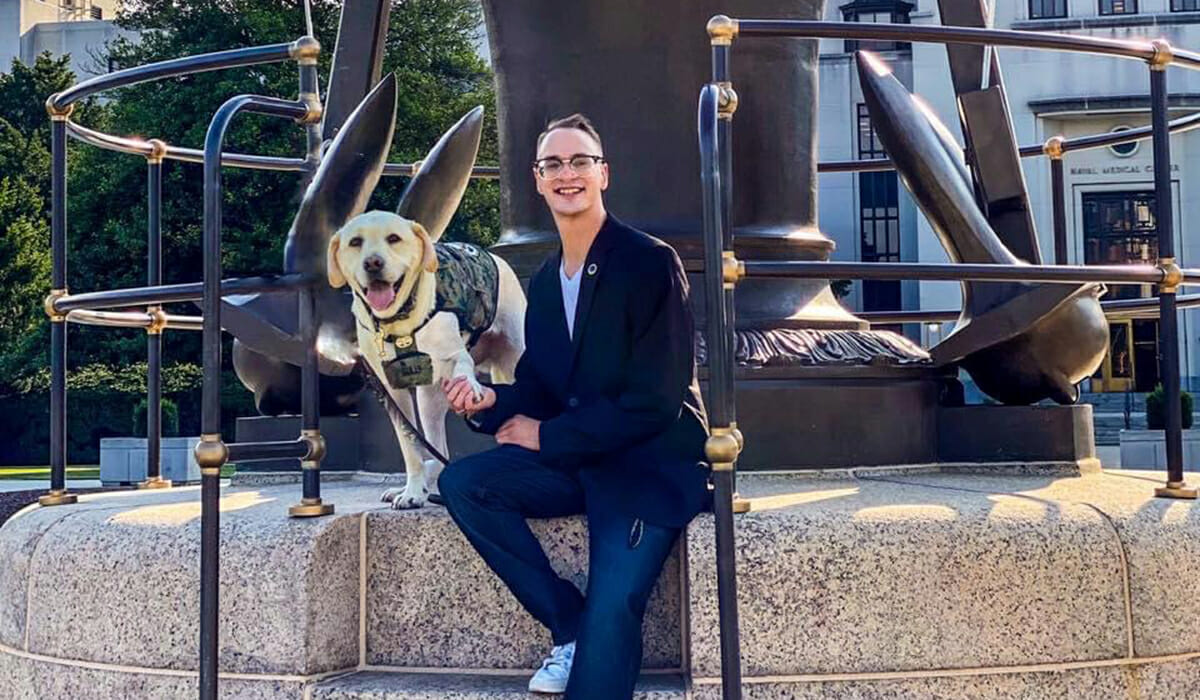
Culinary Specialist Third Class (Surface Warfare/Aviation Warfare/Information Warfare) Andrew Armstrong, United States Navy, is dedicating his time to training service dogs in order to support both veterans with PTSD as well as sexual assault survivors, all with his beloved service dog-in-training Cleo by his side.
After being diagnosed with PTSD in 2018, Petty Officer Armstrong joined a medical study on PTSD and service dogs at Walter Reed National Military Medical Center, which is located on his base, Naval Support Activity Bethesda in Maryland. He enjoyed the dog training aspect of the study so much, he wanted to continue the work even after the study concluded in order to help fellow veterans struggling with PTSD. Petty Officer Armstrong is now a volunteer for Warrior Canine Connection (WCC), which enlists veterans in learning to train service dogs for fellow veterans. He trains puppies on stress cues, obedience and socialization, so they can help other veterans with PTSD just as Cleo helps him. While training, he is joined by Cleo, who was recently commissioned an Ensign in the United States Navy. She is currently on her way to obtaining her Assistant Dog International (ADI) certification in November.
In addition to his work with WCC, Petty Officer Armstrong is a volunteer for the Sexual Assault Prevention and Response Program (SAPR) on his base. He is the program’s point of contact and works to train the base’s staff and residents on sexual assault prevention and bystander intervention. He is also advocating for the program to have a facility dog or assistant animal therapy dog to support sexual assault victims. Petty Officer Armstrong is “coworkers” with President George H. W. Bush’s former service dog Sully, who is also stationed on NSA Bethesda. Sully will help out with the SAPRP during Sexual Assault Prevention Awareness Month, and also happens to be friends with Cleo.
Describe your volunteer role with Wounded Canine Connection.
Last October, I was diagnosed with PTSD. I work on the same base as Walter Reed. Walter Reed was advertising a medical study for PTSD and service dog work, and that’s how I first got started with the service dog work because I didn’t know anything about it beforehand. I ended up doing medical studies for them, but then I enjoyed the dog training aspect of it. When the medical study concluded, I went back and I would work with the dog trainers and continue training the dogs for other veterans and learning all I could, as I was going through other means to train my own service dog. I was doing my best to give back to other veterans with PTSD through WCC and learning how to train service dogs for other veterans, as well as understanding the role that a service dog has.
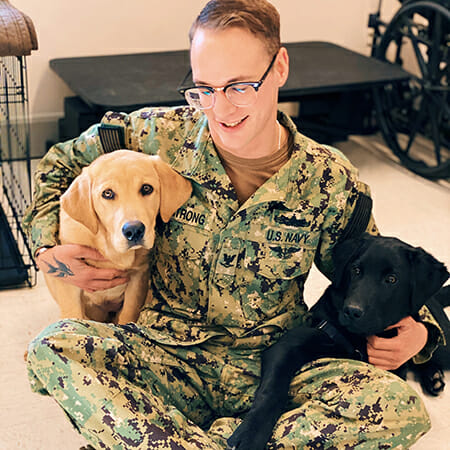
Petty Officer Armstrong works with two of Warrior Canine Connection’s service dogs-in-training./Courtesy Andrew Armstrong
What made you interested in participating in the Walter Reed medical study?
I feel like PTSD is very misunderstood. In the military, there’s a big pride issue when it comes to any kind of disability or going to medical for any kind of issue, because it almost seems not macho and weak. I wanted to dispel that, and as an advocate for the sexual assault prevention program that I run on base, I’m trying to provide alternative methods for people no matter what their gender, age, rank, to come forward to get the support and help they need. Volunteering for that medical study in the first place was opening the door, then after my time ended with them as a medical study, I went back and used those trainers as mentors. Cleo would make cameo appearances, so that way I’m making sure that I’m on the right path with her to prepare for her ADI, which is Assistance Dog International qualification. It’s what the ADA [Americans with Disabilities Act] approves for military service dogs. I really liked helping out people and especially my fellow veterans with teaching them how to train their dogs, whether they have a personal dog they want to do it with. Now there’s lessons learned on my behalf that I can advocate for — how to be a good handler-dog team for a personal pet, a therapy dog or even a service dog.
Can you tell me about your work with the Sexual Assault Prevention and Response Program?
One of my collateral duties, which is a volunteer position as part of my military duties, is the Sexual Assault Prevention and Response Program point of contact. [That] means for the whole base, I’m accountable to the commanding officer for training the military police, the military housing folks, training victim advocates — that’s the military version of a crisis line, so if someone gets sexually assaulted, there’s a 24/7 cell phone that someone is trained to answer and support them through that process of getting them assistance and help. I initially volunteered to be a victim advocate on the phone, but when I went through the training it triggered my PTSD, so I had to overcome that struggle. I took a break from volunteering from that position and then I got hand selected to this position to lead the training for the base. I’m still helping out, but not in the capacity where my own baggage per se may harm another service member. Part of that job training was making sure everyone on command, whether it was staff or a resident, is being trained properly and making sure that everyone understands that it’s OK to prevent things before they happen and recognize the signs of bystander intervention.
When I first got Cleo, before I was diagnosed with PTSD, I was looking at having her volunteer with that program as the animal assistance dog. Obviously now she’s my service dog, so she can be there to support, but when I leave and I’m not active duty anymore, there will be another [spot] for another dog to fill in. I’m trying to raise awareness of how the dogs, like service dogs and facility dogs at the hospital, can provide this much more visibility and support to the victims of sexual assault. I do a lot of the advocacy work, making sure everyone is being professional and accountable. I’m pushing for that need for the program to have a facility dog or assistant animal therapy dog to support the victims as they tell their story. Part of the training we had to do was try to be desensitized by any awkward stories, whether it’s different orientations or different scenes of what could happen. It’s very awkward, so just imagine you’re already emotionally and mentally traumatized and now you’re telling a random stranger your story, how scary and difficult that could be. I feel personally it might be easier if there’s a comfort dog that’s there for you to pet, and make the focus more about the dog then on you telling the story, while you’re telling the story.
Can you describe how important having these service dogs can be for veterans with PTSD?
Everyone who has PTSD doesn’t always get it or experience it in the same way. The one common dominator for that is service dogs. Service dogs, if you are matched with one, provide you with that companionship, that medical necessity and that support. … I describe it as an imprint kind of thing. They’re always by your side. They’re always looking and watching over you. Say you are having a nightmare. They can be trained and know how to wake you up in a safe manner that’s not going to be dangerous for anyone else if they were to try to do that. I don’t work with Cleo on any PTSD tasks that could be used as a crutch for me. I don’t like big crowds, so if I go out in big crowds, I don’t teach Cleo to circle around me or to be in defense of me. I’m using her as an ability to migrate my own disability of not being able to function as if you would walking through the mall. She would assist me in that situation by laying down at my feet, nudging me if I’m showing anxious stress cues. We work a lot on stress cues, so she would nudge me out of my anxiety attacks and get me to focus on her. It’s her way of saying, “Hey, focus on me, it’s ok, we can get through this, it’s great.” It’s the same way of me using her as an excuse if I just need to leave a situation.
I view it as a very healthy alternative. I know before the service dogs were an available variation of a treatment plan for PTSD, people would just use medication or drinking. That’s not the best option obviously, but neither is different types of therapy. I’m all for therapy, I’m in therapy, but sometimes with a lot of different traumas and different personalities, it’s going to be very hard to bring up those emotions and talk through them, and be by yourself when you’re not in therapy. If you’re in therapy, you’re talking to someone, but you don’t have that 24/7 support.
Can you discuss your work with President George H. W. Bush’s former service dog Sully?
I first met him about a month before I got Cleo. He is a facility dog on base at Walter Reed. He comes and visits the patients for ceremonial visits, like for my SAPR program whenever we do SAPR month, which is a [sexual assault] prevention awareness month. He’ll come and he’ll support. He is still on task as a service dog, but not in the capacity that he had with the President. Now it’s more of an assistive therapy. I’m not his handler, I do not volunteer with the Walter Reed facility dog program, but I volunteer to reach out and work with the facility dog team in order to gain more insight and more knowledge as a support system from a handler point of view. … His handler is a very good friend of mine and Cleo and him are actually going to go hiking this weekend.
Petty Officer Armstrong poses with President George H. W. Bush’s former service dog, Sully, who is “coworkers” with Armstrong on NSA Bethesda./Courtesy Andrew Armstrong
What’s been the most rewarding part of your work?
My most rewarding aspect is overcoming the training version of writer’s block when it comes to training the dogs. They don’t speak English. They don’t see and understand the way humans do. When you’re raising a kid, it’s a little bit more easy on that because they can learn a language, they can communicate without having road blocks. Whereas it really becomes difficult but when you’re trying to teach a dog a new task, and you have to meet their personality and the mental ability they have already, and build from the building blocks on how to be successful in doing that. For instance, a heel is when you get your dogs to mimic your movement on the left side of you. When you stop, they stop and sit. When you lead, they’re in perfect step. That’s something that’s very difficult for a puppy, especially a Golden Retriever like Cleo, because she stands around a lot. She’s very distracted. We can’t just try out Plan A and Plan B and [if it doesn’t work] just be like, “Oh, well, she’s untrainable.” You have to be very patient. You may have to try a couple different courses of action, but if you build up the building blocks to a foundation and be patient and follow through, once she finally gets it, it’s so rewarding. For me personally, that’s the most rewarding part, whether it’s working with the WCC dogs and getting a four- or five-month-old black lab to sit for the first time, or something more complicated like Cleo’s command heel.
What do you want people to learn from your story?
Not all disabilities are visible. If you are a part of the general public who doesn’t understand service dogs, don’t come out of the blue and try to make it harder for them and question them about their dog and the qualifications and such. We’re just trying to lead a normal life and this is how it’s going to happen for us. Also, if you’re a veteran who doesn’t necessarily know if you want a service dog or not, or think it’s a pride issue, I would just advise to take the chance and bond with a dog. It doesn’t even have to be a service dog. They have service horses and [other animals]. I just recommend dogs because I love dogs. Take care of yourself and your medical history. You did all you could for your country and you sacrificed, but now it’s time for you to reap some of that reward.
Why do you think it’s important for others to give back?
That is the question that sets America higher above most other countries. I’ve been stationed in Asia and Europe, and a lot of the communities are not as supportive of each other as America is. America is different in the aspect of — not speaking politically, but personally — as a community, we can support each other and help each other reach a common goal. [With] my American values and the way that I was raised, and as a history major in college, when I look at past presidents like George H.W. Bush to lead a life of public service and to think of someone else other than yourself — that is your sole duty whether or not you were born with privilege or you had a leg up on someone. Everyone has an American rag-to-riches story and also everyone had advantages over another person. That’s just the way the world works. If you give back and support each other in anyway you can, that is more rewarding than earning a fancy paycheck or have a million followers on Twitter or something. When you give back, it’s more rewarding, and you’re setting a good example for other people to do the same thing.
Cayden Stump says he knew he wasn’t stupid, but it was hard for the Elkton, Virginia student to understand what was wrong when he just couldn’t understand what he was being taught in class. “It could be reading aloud,” says Cayden, “or a math problem, it just didn’t make sense to me.”
After being misdiagnosed as a 2nd-grader, it was a painful near-decade later that the now 21-year-old was told he was dyslexic. Things then started clicking into place for Cayden, and he decided to help others struggling with dyslexia.
Advocating for dyslexic kids and their families, Cayden raises awareness and educates others about the learning disorder, which involves difficulty reading and is the most common of the language based learning disabilities, which affects one in five students. As a volunteer with Decoding Dyslexia Virginia and the Virginia Department of Education’s I’m Determined! project, Cayden’s volunteerism began when he was a high school student, and has extended to present day, as he serves so that no other child has to face the adversity he did. Offering support to thousands across the state of Virginia and beyond, Cayden is sharing his life experiences to empower other families and students with dyslexia.
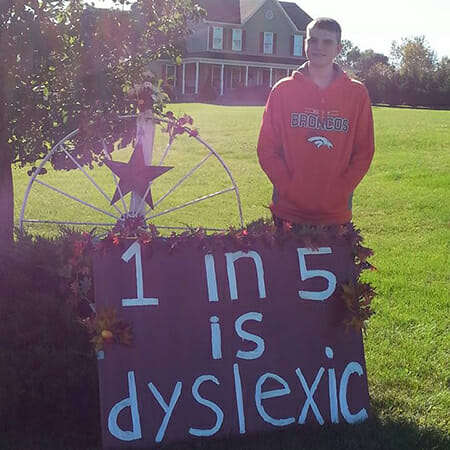
Dyslexia is a learning disorder which involves difficulty reading and is the most common of the language based learning disabilities, which affects one in five students. /Courtesy Cayden Stump
What inspires you to volunteer?
Being dyslexic, I didn’t want anyone else to go through the hardships we’d been through as a family. I knew I wasn’t stupid, but I felt stupid. I just didn’t know what was wrong. I am volunteering so people don’t have to go through what I went through. It’s really important to me that other students don’t have to struggle through what I did, and they can succeed.
Describe your volunteerism.
– I’m Determined! project: As a young leader for the I’m Determined! project, I helped to organize their annual summit, which included coordinating all youth activities. I’d also speak as an advocate and promote disability self-advocacy. I received a grant from the Virginia Department of Education’s I’m Determined! project to start a club at my high school for students with learning differences.
– Decoding Dyslexia Virginia: My service with Decoding Dyslexia Virginia included advocacy at the state Capitol, where I’d speak with lawmakers and advocate for people with disabilities. We got two bills passed which both centered around protections for dyslexic students.
Share one personal story with me from your volunteerism.
We held an event at my school, and invited Ronnie Sidney, who talks about his personal experience in overcoming learning disabilities. I introduced Ronnie to the audience, and in that introduction, I told my entire school I was dyslexic. Afterwards, kids came up to me and told me how much they appreciated me sharing my story. A lot of these kids, I didn’t even know that they knew my name. It wasn’t my goal to have them congratulate me, but it was one of the first times in school that I actually felt accepted.
Why do you think it’s important for others to give back?
If you have the opportunity to volunteer, you should do it. Giving back feels good and it’s also very important for a community to come together, especially in times like these. Right now it seems like everyone just doesn’t like each other.
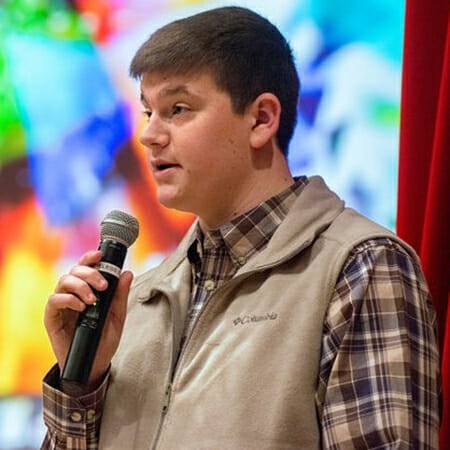
Cayden announced his dyslexia to his entire high school student body, and many students thanked him afterwards for sharing his struggles./Courtesy Cayden Stump
What’s been the most rewarding part of your service?
The reaction of the youth that I have served has been the most rewarding part. It’s always great to see the lightbulb go off, when they realize they could do something that they maybe hadn’t before.
How has the COVID-19 pandemic affected your service?
My service with the I’m Determined! project ended when I turned 21. I haven’t had the opportunity to find places to volunteer during the pandemic, but I am thinking about going to help Hurricane Laura victims in Louisiana if I can complete my college course work.
In one word, what does volunteering mean to you?
Special.
When you’re not in school or volunteering, what do you do for fun?
I watch sports, I’m a Broncos and Nationals fan in addition to a lot of college teams. I hang out with friends and go to church.
College Student Brings ‘Joy’ to Charlotte’s Homeless Community Through Her Nonprofit
Meet Daily Point of Light Award honoree Gabriela Pena. Read her story and nominate an outstanding volunteer or family as a Point of Light.
When Gabriela Pena was 15 years old, she attended a mission trip to the church and nonprofit organization Dream Center NYC, where she spent time volunteering and working with the homeless population there. The experience stuck with her so much that two years later, the Mooresville, N.C. native would start a nonprofit organization to help the homeless community in the Charlotte metro area.
Gabriela serves as the Founder and Executive Director of Joyful Sleepers, which provides sleeping bags to the homeless. Now 20 and a junior at Liberty University, Gabriela has provided over 1,000 sleeping bags to those in need. About twice a year, she brings the sleeping bags she has collected via donations to Dream Center Charlotte to personally hand out to the homeless population attending their services. She and her mother will also drive around the city to hand the bags out to anyone they see. Gabriela hopes to one day expand Joyful Sleepers to other states as well.
“Nobody wants to not have a place to rest their head at night,” Gabriela said. “Being able to give that to people is so important … and showing them that they’re loved and they’re thought about is so important.”
Describe your volunteer role with Joyful Sleepers.
Joyful Sleepers is a nonprofit organization that I started when I was 17 years old. I went to my mom one night and I was like, “You know what, Mom, I really want to get involved with helping the homeless community.” I told her what I wanted to do is collect sleeping bags and give those out to the homeless. That’s what I’ve been doing since, collecting and distributing sleeping bags, new or gently-used. The first target I wanted to reach out to was local churches, which have been so incredible. We’ve received so many from them. I wanted to take it a little bit of a step further, so I began asking friends and family, reaching out online, making videos on Facebook. It’s been absolutely been incredible how helpful people have been and how willing to help.
What made you want to do something to help the homeless community in the first place?
When I was about 15 years old, I went on a mission trip to New York where I worked with the Dream Center up there. [I was] able to work hands-on with the homeless by making sandwiches for them, [and] we had a clothing drive for them where we would help them pick out interview clothing that they could have. Being able to see how something we find so simple has such a huge impact on their lives — having clothing to wear to an interview — I was like, you know what, I absolutely love working with the homeless community, and this is incredible with how much of an impact you can make in someone’s life without even really realizing it.
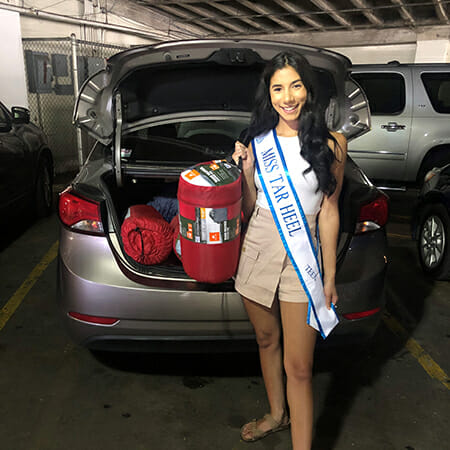
Gabriela Pena poses with some of the sleeping bags she has collected through her nonprofit Joyful Sleepers, which provides them to Charlotte, N.C.’s homeless population. /Courtesy Gabriela Pena
How do you distribute them, and what kind of feedback do you get when you do?
I get in contact with the Dream Center in Charlotte, North Carolina, and I meet up with them. They typically have services for people who are homeless and after their services, I stand at the exit and I hand out the sleeping bags. … They have just been so excited. When I told them that the sleeping bags were free, they were like, “Oh my goodness, are you serious? Really?” It’s amazing, living in a world where you have to convince people like, “Yeah, I’m being real, this is free.” They were so excited and so shocked. They would ask if they could have just a couple more, and with having so many donated, I was like, “Absolutely.”
What’s been the most rewarding part of your work?
I would honestly say seeing how before I started working with the homeless community, I viewed a sleeping bag as something so simple. The biggest reward from it all is seeing the smile on their faces and knowing that now they have something to rest their heads on at night. I’m making their nights a little more joyful and a little more comfortable for them. It’s so easy to take for granted that we have something to sleep on. Knowing that I could give someone the rest they need to possibly go into an interview that morning or try to get a job, or to people who are incapable of getting jobs because of suffering from mental illnesses and abuse and things like that — it’s incredible knowing that such a small thing can make a huge difference in someone’s life.
What have you learned through your experiences as a volunteer?
I really didn’t know, honestly, how willing people would be to donate. I remember the first church that we reached out to was my own church in Mooresville. I put out these flyers and I was excited about it, but the amount I got from the church the first round of collecting was absolutely incredible. … I thought that this was something like, oh, I don’t know, I’ll try it and see how it goes, and hopefully it works but if it doesn’t work, I’ll find something else to do to help. People’s willingness to serve and give is absolutely amazing.
Why do you think it’s important for others to give back?
I think it’s so important to give back because in giving back, you find your passion. You find a way to make other people’s days so much better, and be a light and pour into people and give them new perspectives they never thought of before. In giving back to your community, you’re making it better for the future to come. We’re not guaranteed a tomorrow, so doing as much as you can today is so important, and knowing that I will leave this earth making an impact in peoples’ lives for the better.
What do you want people to learn from your story?
I want to ignite them in the idea of getting involved in their own communities and starting something they’re passionate about. I would see all of these young people also starting their own nonprofit organizations, and just know that it’s not impossible. It’s doable. When you set your mind to something, especially to giving back, it’s possible.
Senior Volunteer Supports Police Detectives in a ‘Small Way’ for the Bigger Cause
Meet Daily Point of Light Award honoree Joanie Jones. Read her story and nominate an outstanding volunteer or family as a Daily Point of Light.
Joanie Jones is enjoying retirement – but that doesn’t mean the Denver, Colorado resident has hit the pause button on building her skill set. To the contrary, Joanie, whose decades-long service has focused on health and education, decided that when she saw an advertisement in the newspaper for a volunteer role with the local police department, she’d apply, simply because she wanted to learn more.
Serving as a volunteer for the Denver Police Department since 1998, Joanie is the department’s longest-standing volunteer. Working with Sex Offender Registry detectives, Joanie supports the police with case filings, which are critical to their jobs and the court process. Known as a volunteer who dedicates her time joyfully and enthusiastically, Joanie has dedicated more than 3,000 hours of service to the police department thus far.
What inspires you to volunteer?
It inspires me to know that in a small way, I’m doing something that contributes to a bigger cause. I’ve always thought that we need to look for similarities, and not just differences. It’s more beneficial to look for similarities, whether it’s a smile or holding out your hand to help. A lot of us can give our time, and it’s neat to have some fun volunteering along the way.
Describe your role with the Denver Police Department.
I work in the sex offender registry records room, and am the longest-standing volunteer at the Denver Police Department. When I first heard there was an opening in this department, I asked what it was about, and I was told the cops are tough. I worked with surgeons for 40 years throughout my career, no one’s tougher than surgeons in an operating room. My volunteerism includes pulling reports for police and case filings. It’s not a glamorous job, but it’s important to the detectives, because they don’t have to waste time fumbling around for a chart when I am there to help. They need these records for court, so my service is a piece of the bigger whole.
Joanie is also a volunteer at the MaxFund Animal Adoption Center shelter in Denver./Alexa Beale/MaxFund Animal Adoption Center
Share one personal story with me from your volunteerism.
In addition to my volunteerism with the Denver Police Department, I also volunteer at a local animal shelter, and once a week at the Denver Veterans Hospital where I visit patients. When you’re visiting with the former soldiers, they’ll often say, ‘Thank you ma’am’. I once walked into a room, and a WWII POW started telling me about how he’d been taken a prisoner of war. He said he’d never told his family most of the details he was then telling me, how they didn’t have much to eat, talking to me about kamikazes and Okinawa. At the end, he said to me, ‘Thank you ma’am, for your service,’ and that just took me to my knees, because I felt as though I should have been saying thank you to him! Here was a 90-year-old who’d been taken prisoner while protecting our country, and all I did was listen. When he took me by the hand and thanked me for my service, it meant he was glad to have someone who was interested in him.
Why do you think it’s important for others to give back?
Volunteerism means we leave behind hope and friendship. Service is building bridges, person-to-person. Not on a big scale, but one-to-one.
What’s been the most rewarding part of your service?
Mother Teresa said service to others is the price we pay for the space we occupy. That’s what I think about the reward of service. I am taking my time and giving it to someone else.
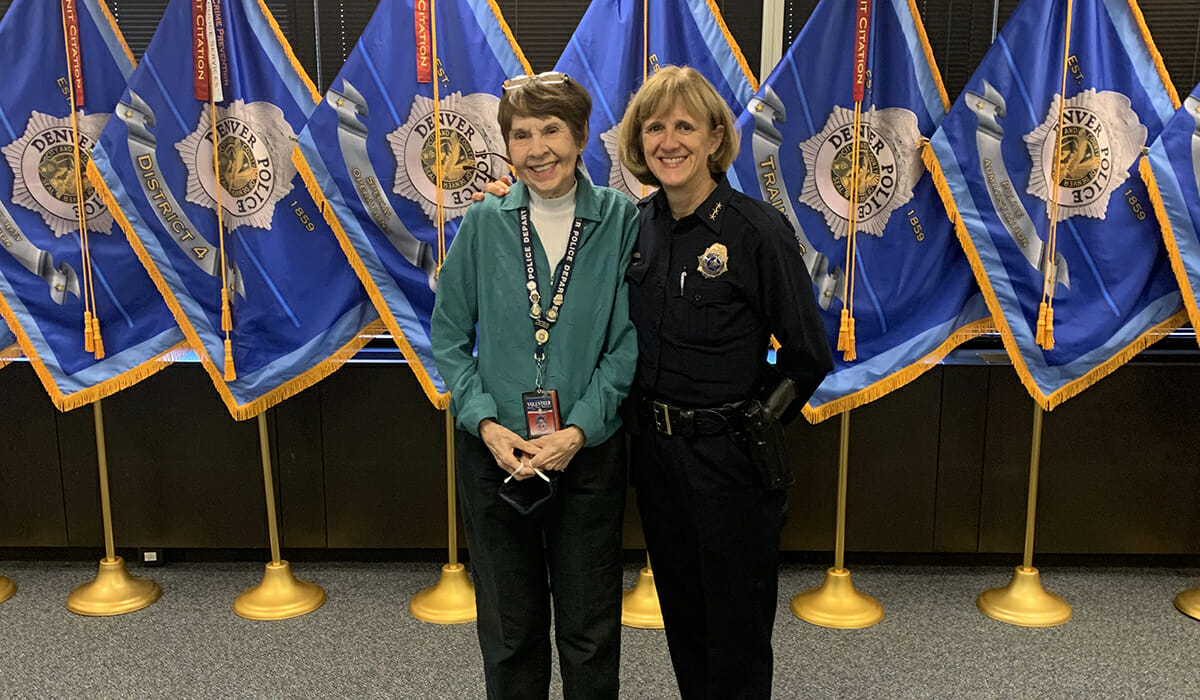
Joanie supports detectives in the Sex Offender Registry department, dedicating more than 3,000 hours of volunteer service to DPD./Courtesy Denver Police Department
How have you adjusted your service as a result of the COVID-19 pandemic?
The City of Denver paused our volunteerism at the police department for almost three months. I just resumed my volunteerism in August, but I’m still waiting to resume service at the VA. I was able to continue my volunteerism at the MaxFund Animal Adoption Center shelter in Denver throughout the pandemic.
In one word, what does volunteering mean to you?
Contribution. Being able to make a contribution. There are things that are bigger than me in life, and through service, we expand our life experience.
Florida Volunteer Dedicates Retirement to Supporting Local Animal Services
Meet Daily Point of Light honoree John Patience. Read his story and nominate an outstanding volunteer or family as a Point of Light.
Following a 27 year career with the Osceola County, Fla. school system, John Patience started looking for a good way to spend his retirement. Having always liked dogs and himself owning a chihuahua named Shorty, John decided to start volunteering for Osceola County Animal Services. He began walking dogs and helping out where he could. Eight years later, he is now the shelter’s technology volunteer, dedicating sometimes up to 40 hours a week to helping with any and all of Animal Services’ technology-based needs.
John works on Osceola County Animal Services’ website, creates online learning modules to help train fellow volunteers, writes articles and makes short videos for the newsletter, produces content for digital promotional materials, and works on other technology-based projects. He was also integral in helping Animal Services obtain Points of Light’s Service Enterprise Certification last year. He was in charge of the technology and data collection as well as the presentation required for the project. While John primarily serves technology-based needs, he has also spent time volunteering in the vet clinic and fostering kittens.
Describe your volunteer role with Osceola County Animal Services.
It’s been changing since I started. I started about eight years ago, pretty much just walking dogs. Then as things developed, I wound up getting into the technology side, which is pretty much all that I do now — work on the website, work on training modules, and that kind of thing. … I do a lot of the daily shelter website operations, posting found pet reports. People who have volunteered to be fosters, I go through that kind of paperwork all through the website. It’s pretty much daily.
I did for a time volunteer in the vet clinic and for awhile I was also fostering kittens, which was a surprising revelation for me because I never had much use for a cat. I really enjoyed them and the dog really enjoyed playing with them. It was a really good experience.
How did you get involved in the technology side of volunteering?
In my other life, I worked for the school system for 27 years. For about 13 or 14 of those years, I was an instructional technology specialist, so I was very interested in that kind of thing — in building websites, in building things that would make operations easier. When the new volunteer coordinator began at Animal Services, she and I just clicked together and decided to start to do online learning modules, and it kind of grew from there.
Can you describe what the online learning modules are for?
The learning modules are for volunteers. For example, when you begin, right after you come to an introduction orientation, you take a shelter basics module which tells you what the rules are, where to park and things like that. Then as you go to different steps in your volunteering, for example before you can walk dogs, you have to take the dog module which gives you the basics. It’s a lot of safety information and procedure information and that kind of thing. I think we have probably eight to ten of them up now.
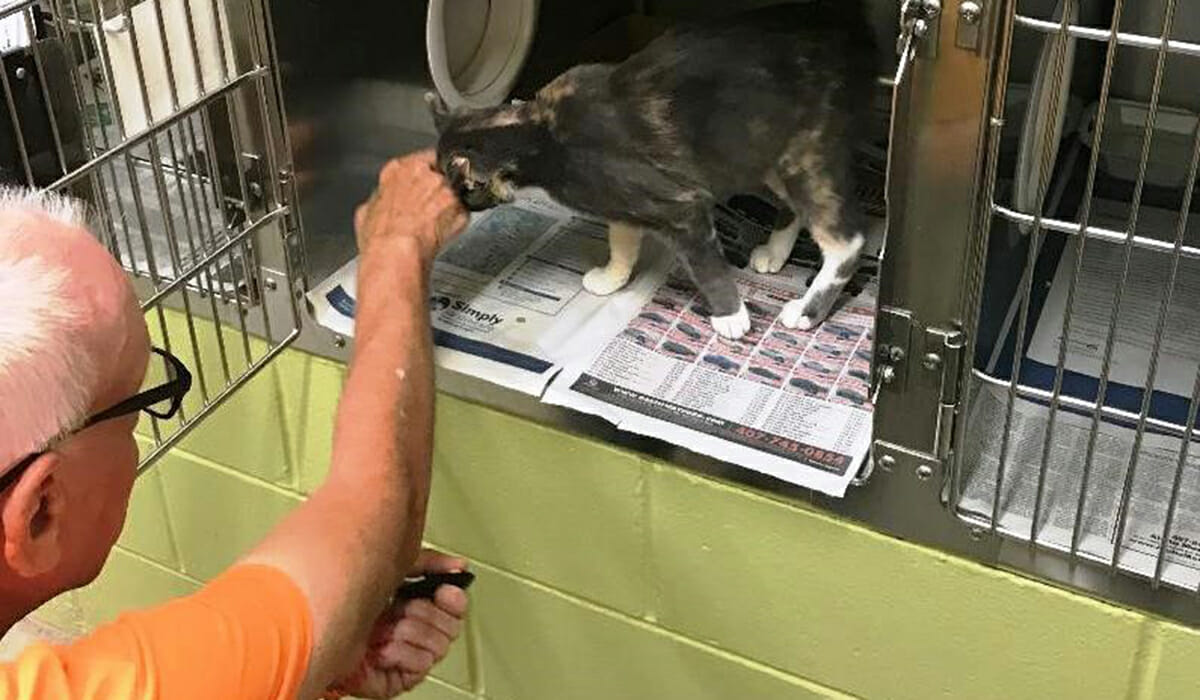
John Patience works with one of the kittens in Osceola County Animal Services’ shelter./Courtesy John Patience
Have you always been passionate about animals?
I had pets as a kid, and I always enjoyed them and always enjoyed other people’s animals. They can be a whole lot of fun.
What’s been the most rewarding part of your work?
I think when somebody tells me that I’ve been a part of creating something that has made things easier or made things more efficient.
What do you want people to learn from your story?
I would hope that people, particularly when volunteering, wouldn’t be afraid to ask questions and wouldn’t be afraid to ask to try to do something. An example is when I volunteered in the vet clinic, I just went up and I asked someone, “Hey, can I volunteer in the vet clinic?” And they said, “Yeah, just go in and ask if you can do it.” The process for that is different now, but that’s how I became a part of the website. That’s how we started the newsletter. That’s how I got into everything I’m doing now, is pretty much asking “Can I be a part this?” People shouldn’t be afraid to do something they’re interested in. If there’s a skill they can share with an organization, they cannot be afraid to ask if they can share it.
Why do you think it’s important for others to give back?
I think it’s your duty to give back to the community in some way. It doesn’t have to be volunteering at the shelter or anything like that, it’s just got to be helping. It seems to me everybody is going to need help — or everything, I guess in this case with the shelter, is going to need help. You have to do your bit to try to to help someone or something just as part of being a citizen, as part of being a part of the community.
Connecticut Woman Serves Community for a Safer, More Equitable Future
Meet Daily Point of Light Award honoree Amanda Gabriele. Read her story and nominate an outstanding volunteer or family as a Daily Point of Light.
Volunteering, Amanda Gabriele says, is the ultimate way to participate in democracy. “You only get to cast a ballot once a year in an election, but by volunteering, you can cast a ballot each and every day for organizations that are important to your heart.” The 37-year-old North Haven, Connecticut resident is casting her daily ballot in support of creating a better future for children.
Volunteering for many local organizations, Amanda’s service is centered around education and children. From increasing STEAM opportunities for her Girl Scouts troop, to advocating for special needs students, to promoting solutions in her school system, Amanda has connected with thousands as she works towards a safer, more equitable community.
What inspires you to volunteer?
My dad, a life-long volunteer, really modeled that behavior for us, that volunteering for your community and cause is not only personally fulfilling, but also good for your community. We were raised to be the kind of people expected to fix a problem when they see it as opposed to just pointing it out.
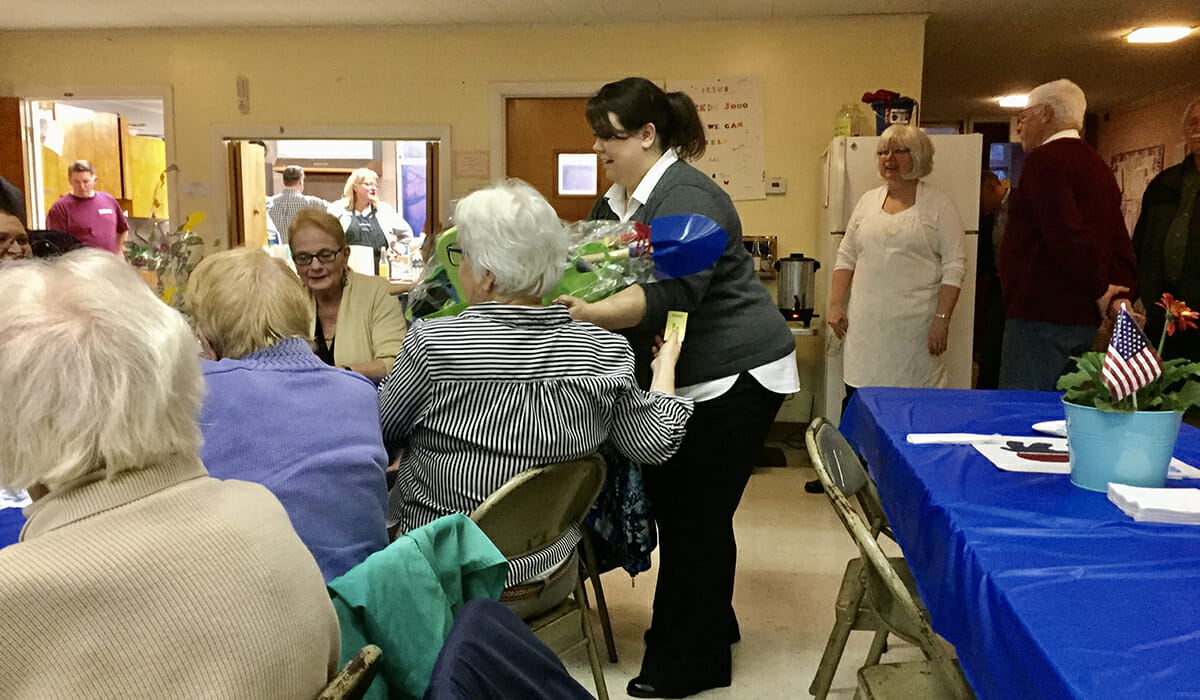
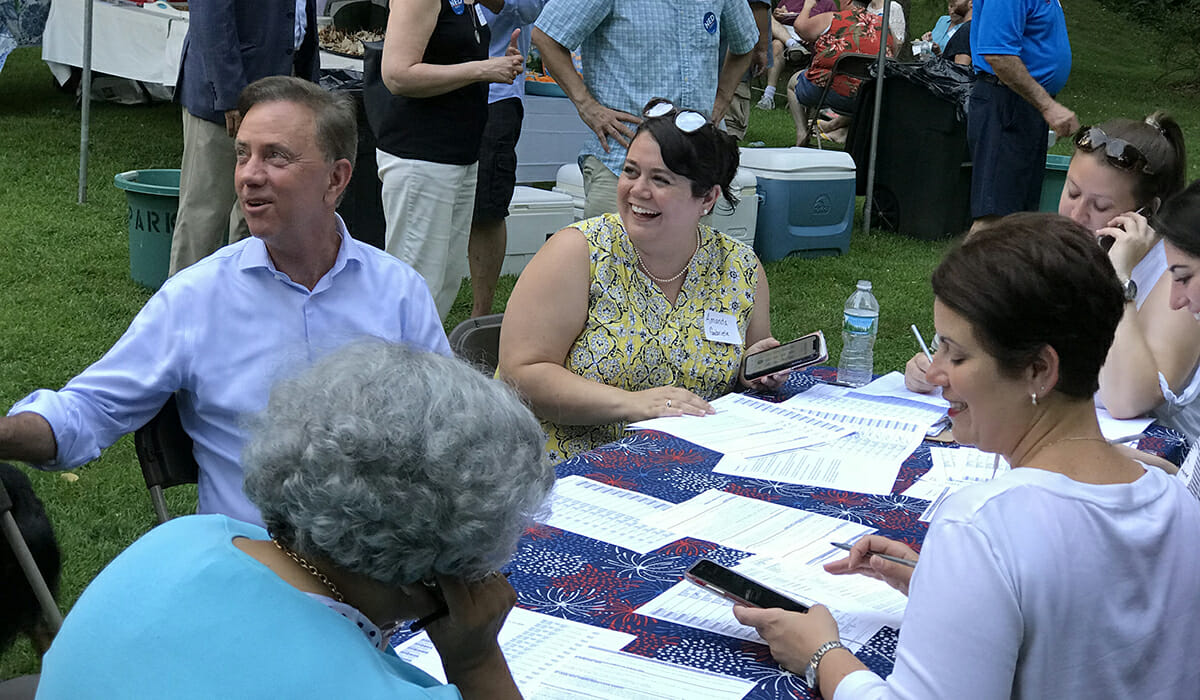
Amanda pictured delivering raffle prize baskets. The volunteer has connected with thousands as she builds a safer, more equitable community for kids./Courtesy Amanda Gabriele
What does volunteerism mean to you?
Rudyard Kipling’s poem, ‘If’, famously concludes with this message: “If you can fill the unforgiving minute with sixty seconds’ worth of distance run, yours is the earth and everything that’s in it,”. That’s what I’m trying to do with my life, so that when my time is up, I can rest easy, knowing I’ve done enough.
Describe your volunteerism.
The one thread that runs through all of my service is that I am trying to make our community a more safe and equitable place for our kids. Some of my volunteerism includes:
People Investing in People Foundation (PIIP), where I serve on the board of directors.
North Haven Board of Education, where I serve on various subcommittees and task forces. School plans are really up in the air right now, so I’m helping families get in touch with childcare and taking really important questions back to my district.
Girl Scout Troop 60400 leader, where we offer a space for girls to explore STEAM in ways that are interesting and practical.
North Haven Special Need Advisory Group (SNAG), I serve as co-chair of this organization. SNAG advocates for more service and funding within the school system for children with special needs, a mission that is personal for my family and my son, Oliver.
Your volunteerism isn’t limited to organized service. Explain.
We adopt families within a Facebook group that supports children with rare diseases. My 10-year-old daughter, Alice, was born with Craniosynostosis, which is when the bones in a baby’s skull join together too early. She’s doing awesome now, but since having children of my own, my service has moved towards helping other children. My daughter and I mentor kids with Craniosynostosis because it’s a scary experience to work through.
Share one personal story with me from your volunteerism.
As a Girl Scouts troop leader, we spend time exploring issues in our community and offer a safe place for the girls to explore and identify how they can help. We once helped the girls learn basic sign language, and it was really cute to see them signing secret messages back and forth to each other. In the 9-11 age group, confidence in young girls starts to drop off significantly. It’s really important to me that the girls feel they have a place to explore and build up confidence to be able to go out into the world and do great things.
What’s been the most rewarding part of your service?
My service is all rewarding. That’s the beauty of volunteering. It’s allowed me to connect at a deeper level with North Haven, my adopted home. When we moved here, service was a really great way to engage more meaningfully, and I’ve made a lot of friends here who support and motivate me to keep pushing.
Amanda pictured discussing educational opportunities for students of North Haven with Connecticut Governor Ned Lamont./Courtesy Amanda Gabriele
Tell me what your future service might look like.
North Haven is a great place to live, but no place is perfect. By getting more people involved and paying attention, we can make North Haven, Connecticut , even the United States an even better place to live. Each one of us has the ability to be the drop in the bucket that creates the ripple that makes change. Get as many people involved and make your community what you want it to be.
Senior Builds Safer Community through Volunteerism
Meet Daily Point of Light Award honoree Susan Vasalle. Read her story and nominate an outstanding volunteer or family as a Daily Point of Light.
Susan Vasalle has lived a life of service by building relationships with others, first as a child raised to help others, then professionally as she moved throughout her career as a social worker, then radio broadcaster. Now, the 72-year-old serves as a community liaison, aiding citizens in her community in preventing crime and accessing police services.
As a volunteer and president of Leetsdale Cop Shop, a non-profit supporting a police station, the Denver, Colorado resident provides crime prevention information and tools in addition to other resources to the public. Serving with the Cop Shop since 2013, Susan launched a “Mobile Cop Shop” to better facilitate community outreach, including to seniors, and offers safety resources to over 500 citizens each year. Susan, who calls volunteering an “attitude”, is building a safer community through service, devoting nearly 3,700 hours and connecting with thousands of people thus far.
What inspires you to volunteer?
I’ve done volunteer work in a variety of ways my whole life. My parents volunteered in the town we lived in and I was brought up to believe that if there was a way that I or anyone in my family could help someone in need, that’s just what we did. Volunteering was an attitude.
Describe your role with the Cop Shop.
As a volunteer and the president of Leetsdale Cop Shop, I handle administrative duties, coordinate with supervisory staff and handle training, scheduling and opportunities for the half-dozen volunteers who work out of the Cop Shop. As a Mobile Cop Shop, we find places in the community to set up and share our resources. People can call, text and email us for help. I also routinely speak with neighborhood organizations and city leaders to raise awareness and fundraise to support our activities.
Tell me more about how the Cop Shop works.
We take care of two populations in our community: citizens and police officers in our local district. We help citizens in a variety of ways. We’ll give them information that they can either pursue, or safety education resources that help allay their fears. We get tons of inquiries from people who have received scam phone calls. These are scams where the person is looking to steal money, for example, the scammer will pretend the person’s grandson has been arrested and he needs bail money from grandma. It’s kind of like being a social worker in a way. You counsel and offer advice. We don’t ask people for their names or contact information unless they provide their information.
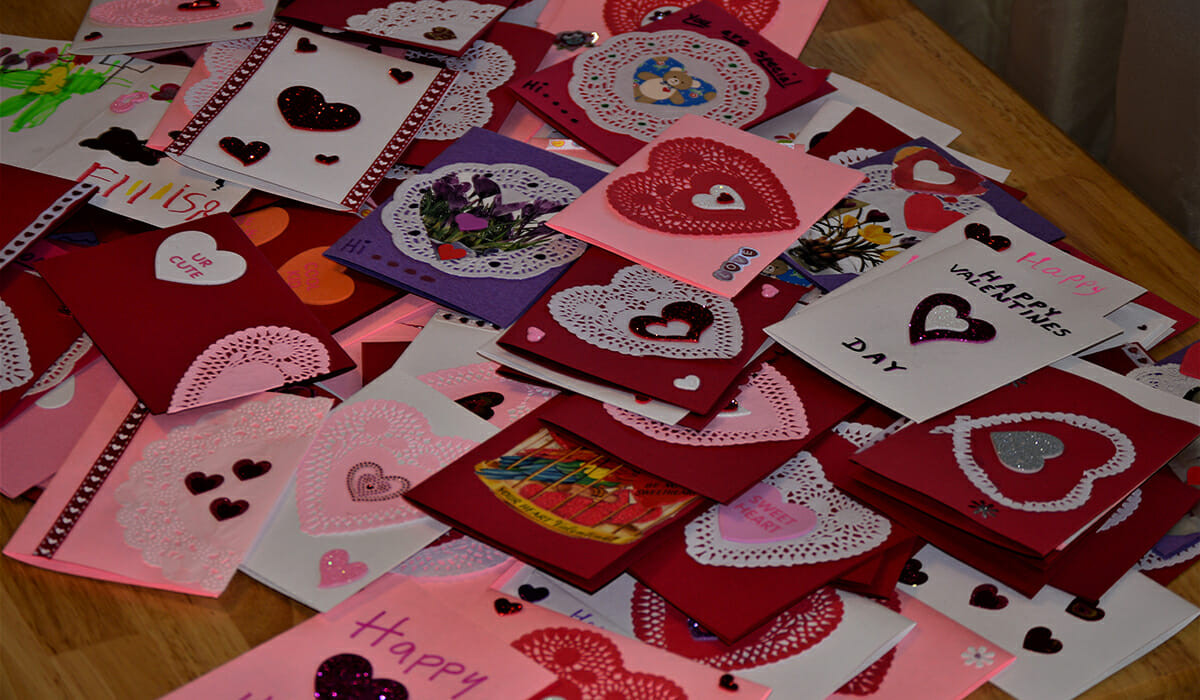
Handmade Valentine’s Cards from Cop Shop volunteers for district police officers they support./Courtesy Susan Vasalle
Share one personal story with me from your volunteerism.
In addition to helping citizens, we take care of police in our district. When we had the Cop Shop storefront, we’d keep water and snacks for the officers. Now we make notecards, or we’ll send officers lunch, or pass out goodie bags at the holidays. Police are usually very thankful when we show them appreciation.
What’s been the most rewarding part of your service?
It’s been rewarding to do something to make my community better. Our Cop Shop is located closeby to where I live, but what we do and how we help our local police district filters out to other parts of the city too. My Cop Shop is considered an ‘outside the box’ operation, because we’re the only non-storefront that has successfully thrived as a mobile operation for three years. We’ll do a lot of things nobody thinks about, like our Dancing with the Cops event, which raised over $2,000 for traffic safety, as well as provided the opportunity for citizens to have fun with local police officers.
How have you adjusted your service as a result of the Covid-19 pandemic?
We had to stop any physical contact with the community once the pandemic hit. One of our biggest initiatives is offering safety resources to a 55+ senior community, and we had to pause that activity, but we’re hoping to start going back in September. There are more than 3,500 residents there, and they rely on us and our interactions. Throughout the pandemic, my focus has been to keep my volunteer team united through team building. We also bought lunch for police officers and wrote them notes.
In one word, what does volunteering mean to you?
Connecting.
How can readers help?
Please email [email protected] with inquiries about how you can help.
Volunteer Helps to Feed, Clothe and Shelter Homeless and Others In Need
Meet Daily Point of Light Award honoree Melvin Claiborne. Read his story and nominate an outstanding volunteer or family as a Daily Point of Light.
People don’t choose to be homeless, says Melvin Claiborne, but rather, living on the streets is often a matter of circumstance. Reaching out to help those who have fallen on hard times in the greater Washington, D.C. area, the 51-year-old Accokeek, Maryland resident is joyfully volunteering to help his fellow neighbors.
Serving as a volunteer for a number of organizations across greater Washington D.C. and Maryland, Melvin has been volunteering since his time as a young teen in the Boy Scouts. Connecting with thousands of people, including the homeless, seniors, children and impoverished over his decades of service, most recently feeding the hungry during the pandemic, Melvin is passionate about giving back to his community and inspiring others to join in on the effort as well.
What inspires you to volunteer?
it’s just joy. Volunteerism is happiness, and that is the fuel that inspires me to help and do for others who can’t do for themselves. I’ll sometimes hear people say that they’re forgotten, and my service is a reminder to these people that they do matter, no matter the circumstances they are in.
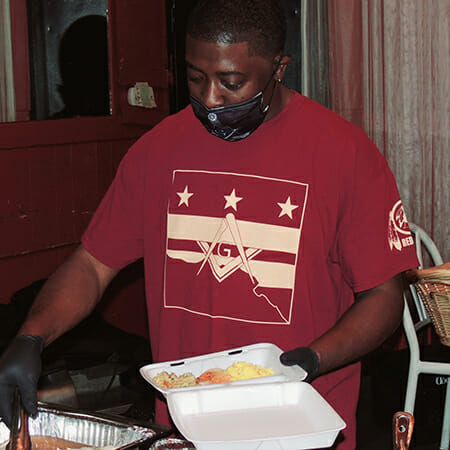
Melvin pictured feeding the homeless at Adam’s Place Emergency Shelter in Washington D.C. Since the beginning of the Covid-19 pandemic, Melvin has fed homeless at two bagged lunch events, and plans to do more. /Courtesy Melvin Claiborne
Describe your volunteerism.
I help people because I have been blessed and fortunate in life, but if circumstances were reversed, I would be grateful for someone to offer some kind of assistance to me for no reason. My volunteerism includes some of the following organizations:
Share one personal story with me from your volunteerism.
We were distributing food at an event, and a gentleman walked past us without a shirt on. He appeared to have been beaten up, so we stopped him and asked what was going on. He told us he’d just been robbed, and the attackers had torn his shirt off in the process. I took off the shirt I was wearing because I had another one underneath, and gave that shirt to this gentleman. In essence, I was his protector in that moment, and it meant the world to me that I was able to help. Also, for the younger generations and older people that were there, it’s my hope that my humble action might inspire them to do better the next time they’re in a situation like that.
Melvin pictured at the 801 East Men Shelter in Washington D.C., feeding men at their Father’s Day event./Courtesy Melvin Claiborne
Why do you think it’s important for others to give back?
It’s important because my bad day could be somebody else’s worse day. A lot of people are realizing that we’re just one turn away from everything changing, and that tomorrow, they could be right where those who are in need are, for any given reason. This pandemic is proof of that.
What’s been the most rewarding part of your service?
The smiles and being able to meet with people in my community is the most rewarding part of my service. It’s worth every minute that I might not get any sleep, because I’ll sometimes leave work (I work the nightshift) and then I go do community service.
How have you adjusted your service during the Covid-19 pandemic?
We’ve fed the homeless in D.C. twice with bagged lunches, and we’re looking forward to doing it again.
In one word, what does volunteering mean to you?
Family.
How can readers help?
We’ll be offering Thanksgiving baskets, which include a turkey and all the fixings, for families in need. Please email [email protected] for more information about how you can help.
Teen Volunteer Democratizes Computer Science for Underprivileged Youth in U.S. and Abroad
Meet Daily Point of Light Award honoree Genu Lee. Read his story and nominate an outstanding volunteer or family as a Daily Point of Light.
Genu Lee says the nearly infinite applications for computer science, ranging from basic programs for 8-year-olds to the next big thing in electric cars, is what attracts him to the rapidly-changing technology sector. Believing in the importance of democratizing education, Genu is helping underprivileged children gain access to computer science education.
Launching Voice of Calling in 2018, Genu and his fellow youth co-founders are educating kids about tech that is steadily becoming an integral part of life. Connecting with hundreds of children in the U.S. and internationally thus far through coding camps and more, the now 18-year-old, Northridge, California recent high school graduate is bringing new opportunities to his community, even recently pitching in to support front line workers with produced masks and 3D printed face shields.
What inspires you to volunteer?
In the game of baseball, kids like me who live in privilege are already on third base. As Barry Switzer said, We didn’t hit the ball to get there, we were born there. There are so many people in the world who lack the resources we have. Those people are still waiting to hit their double or triple. Since we’re already on base, it’s our job to cheer those people on so they can find success as well. I’m inspired to volunteer so that we can all progress as a human race.
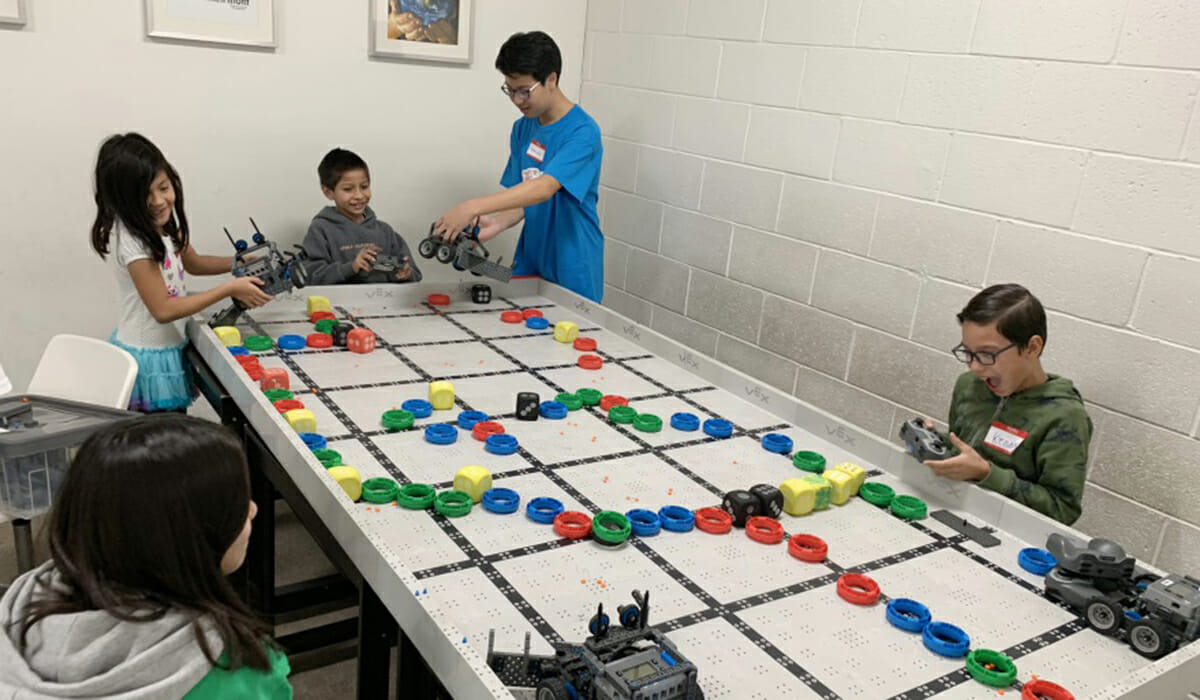
Genu has connected with hundreds of children in the U.S. and internationally through coding and robotics camps and computer science education programs./Courtesy Genu Lee
Describe your role with Voice of Calling.
As a co-founder, I manage our curriculum and programming, our online presence and our communications. We have dozens of high school student volunteers who teach our coding and robotics camps. I also reach out to organizations to recruit more program participants. We’ve taught foster kids in greater Los Angeles, students in Cambodia and are planning to help students in Kenya in the future.
What does ‘Voice of Calling’ mean to you?
The majority of our co-founders are Christians. As cheesy as it sounds, the name of our organization means that God’s voice is guiding us through hardships. But our service doesn’t just come from a religious place, it can be applied to whatever anyone believes in, as we are guided to help others.
Share one personal story with me from your volunteerism.
We held a Thanksgiving coding camp with foster children, and a little boy who is autistic joined us. His mom was very worried to let him stay with us because of the extra attention he required, but he’s very talented, and he participated with his peers, listened to his teachers and learned a lot. At the end of the class, we asked him what he wants to be when he grows up, and he told us he wants to be a computer engineer and to work with robots. It was very inspiring to see that we could affect a young child in that way, and that just after a simple coding and robotics lesson, he left with such ambitious dreams.
Why do you think it’s important for others to give back?
Living in Los Angeles, you see everyone from immigrants to Hollywood actors making seven, eight figures a year. There’s a sharp contrast between the wealthy and the underprivileged. If everyone in the world can give to each other and share resources, we can all prosper as a human race.
How have you adjusted your service due to the Covid-19 pandemic?
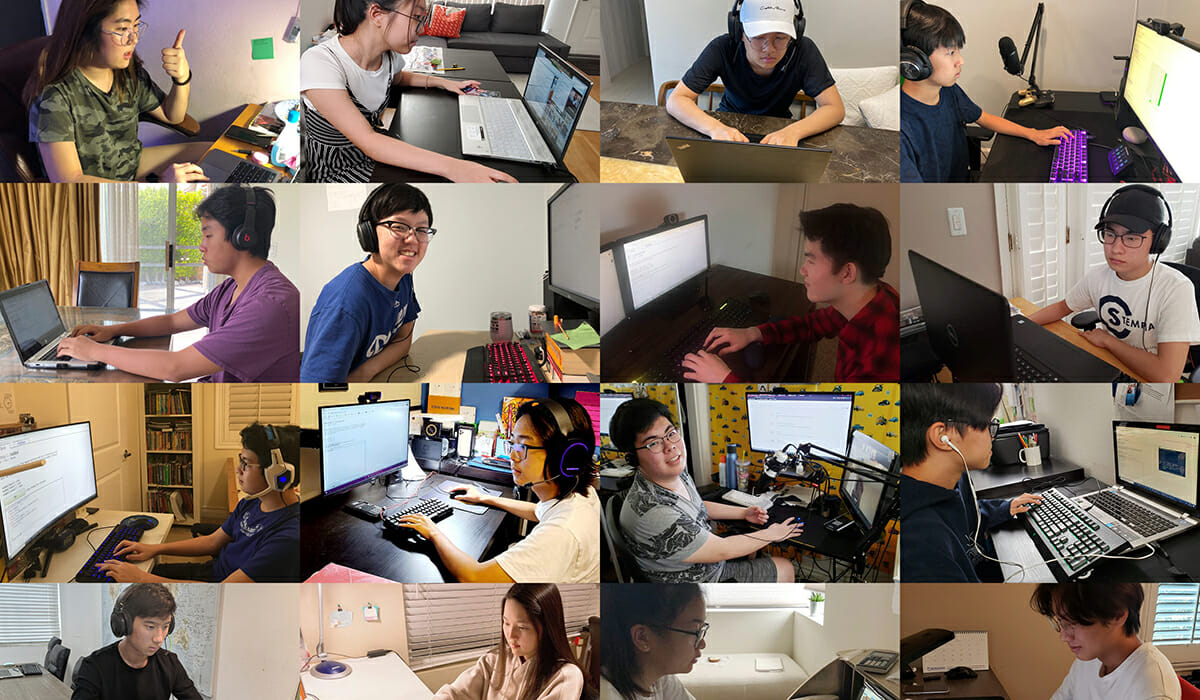
We held a virtual camp with almost 250 American youth participants recently, and we’re planning on holding another virtual coding camp for Tanzanian students soon. Additionally, we’ve supported frontline workers by making and sewing thousands of masks and 3D printed face shields. We distributed these items to hospitals and other people in need, including to foster families.
Voice of Calling held an online coding camp as a result of the pandemic, and plans to host another camp in the future./Courtesy Genu Lee
In one word, what does volunteering mean to you?
Necessity.
When you’re not in school or volunteering, what do you do for fun?
I love playing sports with my friends. Most of the time we’re just ordinary teenagers. We watch movies, play a lot of football.
How can readers help?
Please visit Voice of Calling for more information about how you can help.
Volunteer Firefighter Makes a Difference In North Carolina Community by Starting Both a Mental Wellness Program and a Food Pantry
Meet Daily Point of Light Award honoree Misty Matthews. Read her story and nominate an outstanding volunteer or family as a Point of Light.
By creating two different programs for her North Carolina community, Misty Matthews is doing more than her part to improve the health and wellbeing of her fellow neighbors. The volunteer firefighter helped start Elkin Fire Department’s mental wellness program, which is working to not only improve the mental health of her fellow first responders, but is also trying to tackle the longstanding stigma against talking about mental health within the first responder community. Misty works all year holding events to teach first responders about their mental health and how to manage their feelings, as well as bonding events to bring all of Elkin’s first responders together.
In addition to her work with the first responder community, Misty also started Helping Hands, a community food pantry within the Yardkin Valley. Misty organized the creation of nine different pantries which she and other community members fill with food for anyone in need to take. She also provides toiletries and items such as gloves and scarves during the winter. Through helping to fight both mental illness and food insecurity, Misty is making a difference in her community members’ lives.
Describe your volunteer role with with the Elkin Fire Department, specifically your role with the mental wellness program.
I’ve been with the fire department for three years. I am not one who wants to rush out to fires or emergencies, so we figured out what my passion was and my passion is people. One major thing going on in a lot of fire departments, and of course any first responders, is mental illness because of the things they deal with and see. What we wanted to do was start a pilot program to help our firefighters realize that it’s normal and that we’re available to help and they won’t lose their job. Back in the day, they would teach firefighters [to] “suck it up buttercup, don’t talk about it.” That’s ingrained in firefighters and it’s very hard to un-train firefighters from that thought. What we’re trying to do is un-train that. Retrain them to think, “It’s OK to feel how I feel and what I’m going through.” Then we try to teach them ways to manage some of their feelings, such as mediation and yoga and breathing and taking time for themselves and above all, seeing a counselor. A lot of them aren’t comfortable with that avenue yet but it’s a process. What we started to do is we expanded it, because our firefighters and our police department and our rescue squad and our EMS, they all go to the scene, so we expanded it to the Elkin first responders. We hold about four events a year. It’s separate funds, we aren’t using the fire department funds. We fundraise and have events throughout the year to bring all the departments together so they can bond and get to know each other on a personal level. Once a year we have a mental wellness speaker to help guide them as well.
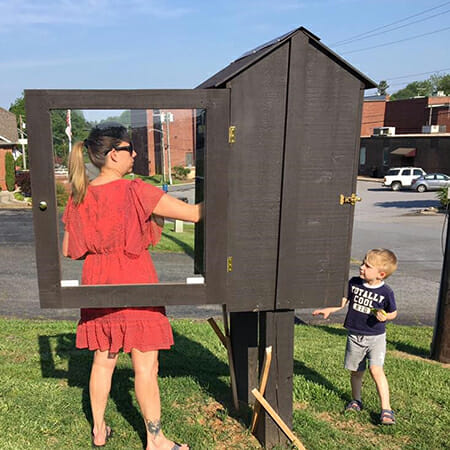
Along with her son, Misty Matthews fills one of the nine food pantries she helped install in her community./Courtesy Misty Matthews
What inspired you to start the mental wellness program?
We kept hearing a lot about it. [Fire and Life Safety Team Captain Theresa Knops] goes to a lot of seminars and that’s been a big topic of discussion. She presented it to me because I’m part of Company A … [which] she wanted to be in charge of peer support, if that was something I was interested in, and I’m like, “I can give it a shot.” I care about mental wellness and overall health for people, so I said, “Let me see where it goes.” We were kind of playing around with it, seeing what I could learn. I took the NC peer support [class] … and got some ideas. We did a ‘Feeling Friday’ on Facebook. Every Friday you put an emotional statement up there. We started with that, and then we’ll get a speaker once in a while to come in and talk about mental wellness. We will do our research to find counselors who are familiar with first responders and we hand that information out as well. Our goal is constantly reminding our firefighters that it’s OK to feel this way. A lot of our firefighters are firefighters elsewhere who don’t have a peer support program, so some of them will come to us and release their feelings with us because they know it’s a safe place. That’s what we’re trying to do, is let them know it’s safe and we’re not going to judge them, and they don’t have to worry about their jobs or how they’re viewed.
Why is mental wellness so important for first responders?
The suicide rate is very high in anyone in the first responders line of work. When they see something or they come on the scene, sometimes they can see 100 of them and nothing bothers them. Sometimes it could be a small event or it could be a large event. If they just started having children and they go to a scene where there’s a child involved, then that’s usually [a breaking point.] There tends to be a breaking point at some point because a lot of them put it away. They file it away. They make jokes about it. They laugh about it. But at some point, it catches up to them. They don’t notice they’re doing it, but they’ll pull away from their families, they’ll pull away from their friends, they’re shorter in their temper, and then some tend to drink. Then they can’t talk about it, because they feel embarrassed because their partners aren’t going through that, when a lot of them are — but again it’s the same story, it’s they don’t want to talk about it. They’re constantly filing away, putting it away, and they get deeper in a hole, and one day they just break and that’s when they commit suicide. We’re hoping at some point when we get this going and well, we’ll learn how to help the families deal and help their partners when they’re going through things, because sometimes they’ll be the one to reach out to us. We have a couple events where families are included because we want them to feel comfortable to say, “Hey, listen, my husband, a firefighter, or my wife, a firefighter, is going through some things and I don’t know what to do.” We’re able to help them help their partner.
Can you talk about your volunteer work with Helping Hands?
I started Helping Hands about three years ago. People always post on Facebook where others are doing great things, and I did the same thing. I posted blessing boxes. Then I’m like “OK, I think it would be great to put one in the community,” so I talked to one of my friends and we said we can build one. I work for the Chamber of Commerce, so I sent out an email to our members that said “I need someone to build a blessing box, if you’re interested let me know.” I had a few volunteers. We have nine in the community that we service, so we promote those nine. There’s many more. Churches have put them out. Elementary schools have put them out. I found sponsors for the pantries that we service. I have people donate food to me, and I do fundraisers to get money so I can purchase food for the families. I only focus on my nine. I don’t put food in the other ones [started by the churches and schools], but I do promote them so others can help keep food in them. They’ve been out for about three years. They go empty almost every day. They’re really hard to keep food in them, especially right now when a lot of people are out of work. It’s very helpful. The summertime when kids are out of school and they’re not getting those hot meals, they seem to empty out a lot faster.
People used to leave us notes in them. There was a lady who had five children and she said she didn’t know how she would feed her children without the pantry. That pushed us to keep going. Sometimes we get a little disheartened because you don’t know who is using it or abusing it, but my feeling is, God has led me help to put food in the pantry and it’s up to God whomever is using them, it’s not my place anymore. We try to do toiletries and food and anything that people need. Around winter time, we’ll throw gloves and scarves and hats in them.
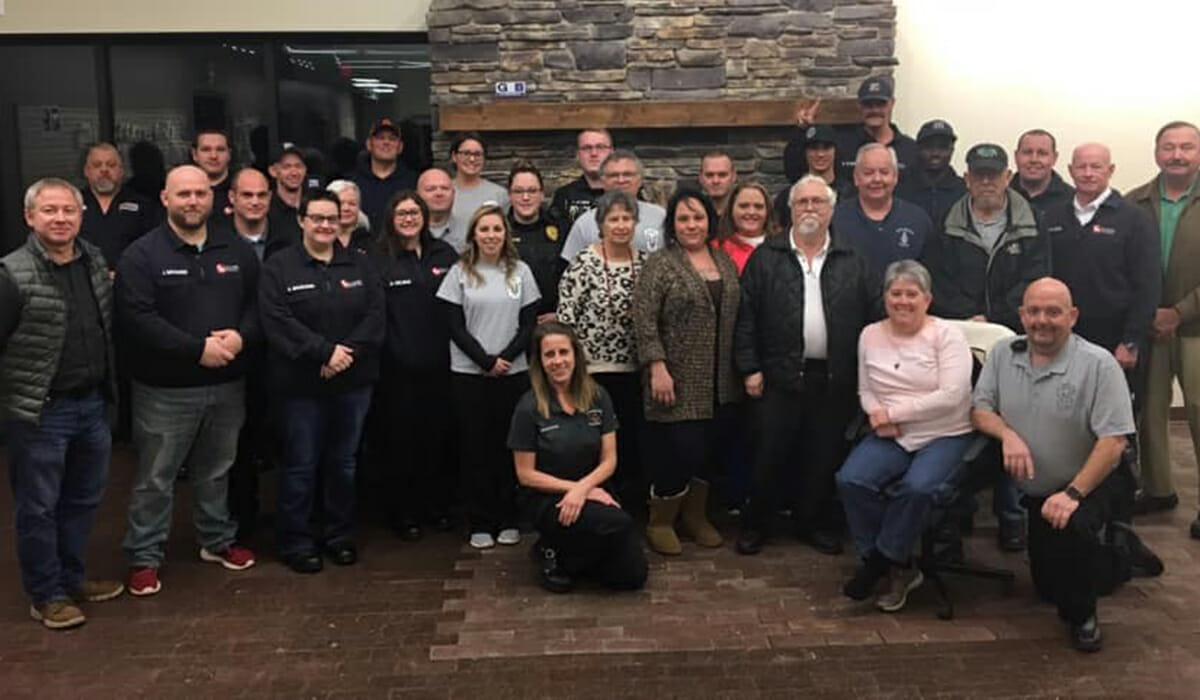
Misty Matthews, front row, center, poses with some of Elkin first responders who attended the annual dinner she organizes to discuss mental wellness within the first responder community./Courtesy Misty Matthews
What’s been the most rewarding part of your work?
Knowing I’m helping and showing my children that even though you don’t have a lot of time and you don’t have a lot of money, you can still make a difference.
Why do you think it’s important for others to give back?
I think it reminds people about compassion and caring for others and helps them think beyond themselves. We’re all in this world together, and we’ve got to all have each other’s backs in order to get through this, especially times like this.
What do you want people to learn from your story?
Be compassionate to others. Even if there’s not a lot of time and money, you can make a difference in your community. Any little thing. I’ve done a lot of little things with my children that took us no time, and it was family time, too. We … talked to a local florist who gave us a bunch of flowers and we just put them in people’s car windows and handed them out. Little simple things that cost no money and time and makes you feel good.