Teen Starts Worldwide Letter Campaign for People in Times of Need
Meet Daily Point of Light Award honoree Vedha Vaddaraju. Read her story and nominate an outstanding volunteer or family as a Point of Light.
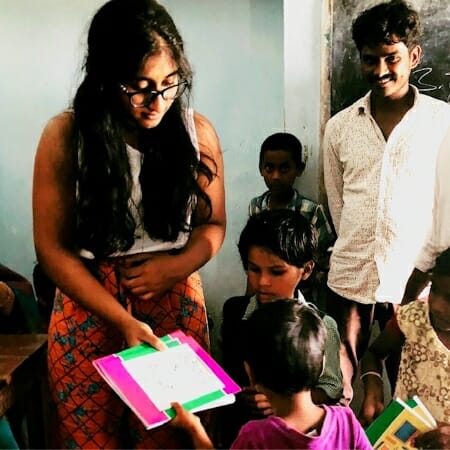
Volunteerism has always played an important part in Vedha Vaddaraju’s life, but a service trip to India in 2017 to donate books to children is what really ignited her passion of service. After the COVID-19 pandemic hit, she and her friends started thinking of ways they could help their Dallas-Fort Worth metroplex community. They specifically wanted to create an opportunity that anyone could join in, regardless of location of socioeconomic status.
Thus, Letters of Gold was born. The nonprofit organization enlists volunteers worldwide to write letters to those in need of motivation or a connection, including healthcare workers, senior living residents, domestic violence survivors, cancer patients and Afghan refugees. So far, the organization has delivered approximately 3,000 letters. Vedha also leads Letters of Gold in book drives, toy drives, and other fundraisers and donation drives.
Describe what Letters of Gold does.
We started writing letters just for healthcare workers. These letters would be written on our website. We would scan all of them, print them out, package them, and deliver them to local hospitals and clinics. As we were doing that, we got requests from other organizations if we would like to give them letters as well. That’s when we started expanding our scope to not only healthcare workers but also survivors of domestic abuse, teachers, cancer patients and refugees. Our most recent topic was survivors of cystic fibrosis. Based on what’s happening in our community and which group we think needs the most support, we change the topic on our website every month or two months. Groups of volunteers can come on our website and write letters. Since we were able to start it in our school and encourage more people, now we have chapters of our organization in six schools across the DFW [Dallas-Fort Worth] metroplex. So far we’ve delivered approximately 3,000 letters.
What is your volunteer role with the organization?
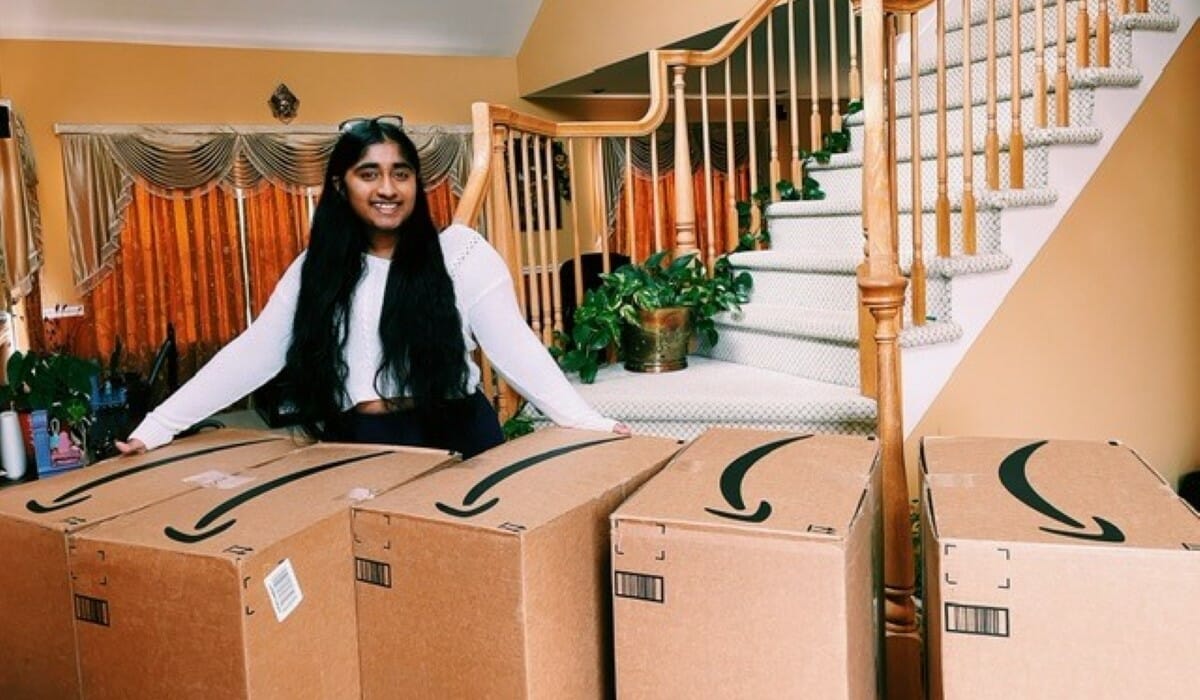
I’m one of the founding members of Letters of Gold. Through this organization, I basically handle the day-to-day affairs, so talking to other organizations and coordinating information. I’m also in charge of fundraisers and drives. This past year, I held a drive through our organization to collect books for Dallas ISD [Independent School District] schools. These are for the library, and given the status of their schools, they’re usually struggling in terms of having enough books in their library that cover a vast array of topics. This past summer, the other cofounder and I were able to do a drive. For three days, we collected nearly 900 books for those students. My specific role is contacting the different organizations and making sure those books get delivered to that location. Apart from that, I also focus on coordinating with our volunteers, not only in the U.S., but also other countries. So far we have 100 youth volunteers in the U.S., Germany, India, Singapore, and Canada.
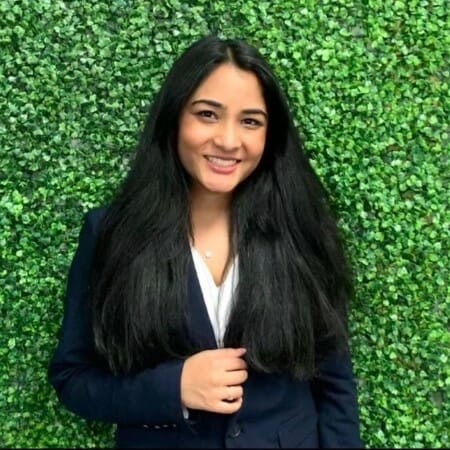
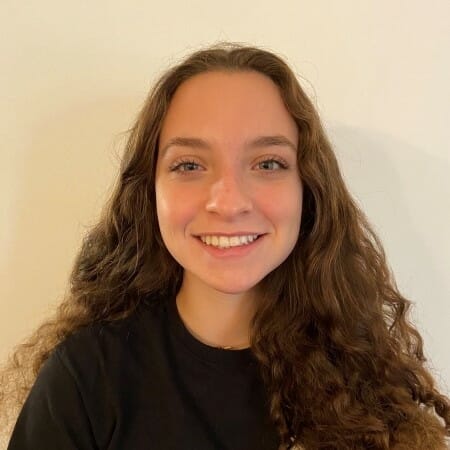
Vedha Vaddaraju serves as the cofounder of Letters of Gold, a nonprofit that enlists volunteers worldwide to write letters to people in times of need, including healthcare workers, refugees, and domestic violence survivors./Courtesy Vedha Vaddaraju
What has been your favorite letter campaign?
One that has really stuck with me is when we wrote letters to the Afghan refugees who had just come in. Being in a point of time where a lot of their future has been uncertain, I really enjoyed the fact that we’ve been able to deliver letters to them, in addition to working with other organizations such as Refugee Care Initiative to donate food and other canned meals. I think we were really able to motivate them and remind them that everything is going to be OK in the long run, and they do have a community and group of people who support them despite these obstacles that come in their path. Something that stuck with me was knowing there are so many people out there who support one another. I think the community that Letters of Gold has created is incredible.
What kind of reaction have you gotten from the letter recipients?
We’ve been really grateful for the fact that people have really been uplifted by these letters. One of the main places we’ve seen a lot of response is when we donated letters to the nursing home around this time last year. We donated approximately 300 letters to the nursing home. We are really grateful to have gotten such encouraging feedback, especially from a lot of residents who, due to COVID, weren’t able to see their family or weren’t able to speak to others even in the same community. I think they were really grateful to see there are people out there thinking about them.
What goals do you have for your organization?
Once the other cofounder and I go to college, I think one of the things we hope to accomplish is being able to get more youth involved and take over more of the day-to-day affairs in their community. Another thing we hope to accomplish is to get more people involved in their community, whether it be through Letters of Gold or through their own community service initiatives. We hope to be an incubator for more organizations and nonprofits, and help them understand what goes into starting a nonprofit. We hope to set up a more clearly-defined program in probably the next year or so. So far, we helped two separate organizations build up just in our community, but we hope to make it a bigger program so more people can do it.
What’s been the most rewarding part of your work?
I think definitely the most rewarding part of what we’ve been doing is seeing that even a small thing like a letter can make a difference in someone’s life. That’s one of the things that has really kept us going. Even though it’s been a lot of work and there’s been a lot of obstacles in our path, being able to know that even as high schoolers and through something as simple as a letter, we were able to encourage people to stay motivated and have resilience throughout their difficulties.
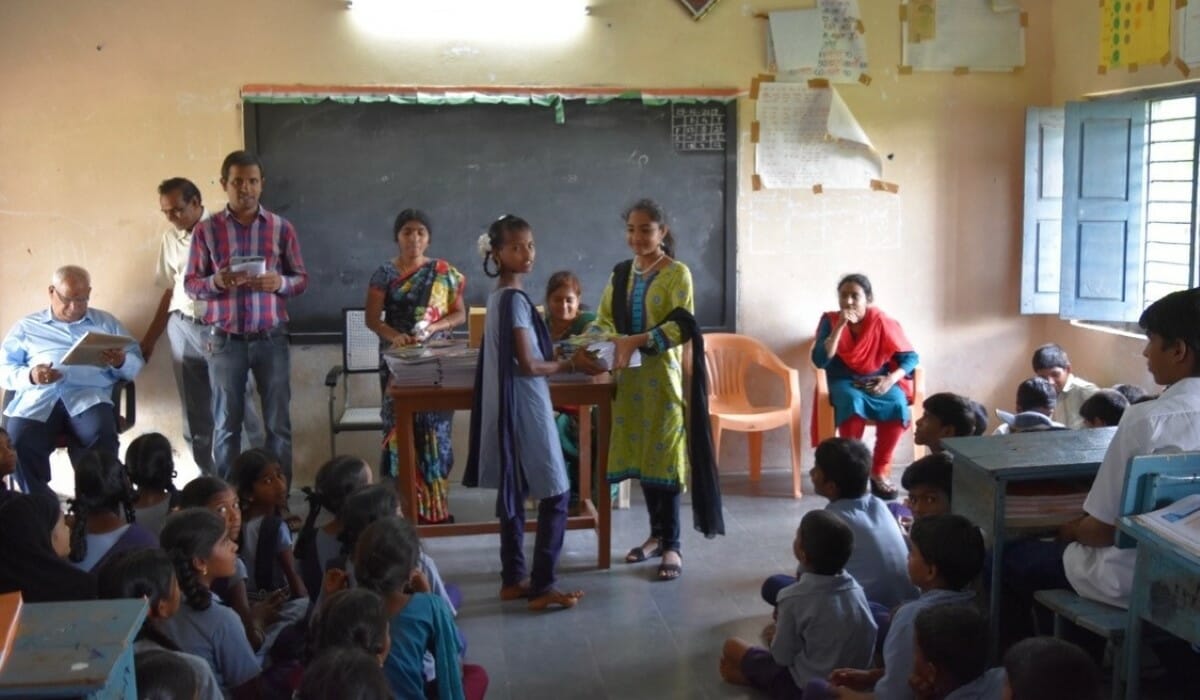
Vedha Vaddaraju, center, donates books to children in India in 2017, an experience she says truly ignited her passion for volunteering./Courtesy Vedha Vaddaraju
Why do you think it’s important for others to give back?
That idea has always stuck with me since I was young. It started when I went back to India a couple summers ago. I didn’t realize there are so many people who come from similar backgrounds, yet don’t have equal opportunities, until I saw it firsthand. That concept of being grateful for what I have has really extrapolated into that idea of needing to help out in the community.
What do you want people to learn from your story?
The main thing that I would suggest people learn from our story is that regardless of who you are, and regardless of what comes in your path, you can always make a difference. I think that’s something that is incredibly important to remember, because when I talk to my peers, something I’ve often heard is regardless of that passion to help out in the community, there’s always that inhibition that what I’m doing is not going to be enough. Something I learned over the past two years is nothing is too small to make a change. Even if it’s something really small like complimenting someone, or if it’s something bigger like holding a drive, I think every small thing you do definitely has a ripple effect.
College Student Works to End Period Poverty at Home and Abroad
Meet Daily Point of Light Award honoree Sanjana Buddi. Read her story and nominate an outstanding volunteer or family as a Daily Point of Light.
Sanjana Buddi believes that no girl should be held back because of period poverty. Menstrual inclusivity is at the center of 20-year-old Buddi’s heart, who started her service journey with People for Urban and Rural Education (PURE) in 2017. The college junior now serves as PURE’s director of global outreach while studying information technology and political science at Rutgers University in New Brunswick, Canada.
“Our first mission is making sure they have access to clean water and hygiene, and then from there, we go around assessing their needs,” Buddi said.
Buddi volunteers to help girls like 13-year-old Lakshmi from rural India, who previously had to miss up to five days of school every month because of her period. Lakshmi’s story is one of many. Since many girls don’t have access to safe and hygienic sanitary products or toilets with running water, it’s common for them to miss large amounts of school or drop out of school entirely. This makes them vulnerable to child labor, abuse, child marriage, and early pregnancy.
Buddi discovered PURE through the radio in her hometown of Princeton, New Jersey, after she’d been searching for opportunities to give back to her South Asian community. Soon after, she traveled to India in 2015 to give back to communities in need. Buddi was able to visit her parents’ village of Gandrai and old school before they left for the United States.
It was a life changing experience, according to Buddi. “It could have been me, and there’s always that sense of feeling that I need to give back, like it’s my responsibility because I could have been the one going to that school,” Buddi said.
“Thankfully, my parents worked extremely hard to get me here, but that’s really what got me started,” Buddi added.
Sanjana Buddi leads menstruation and hygiene educational conversations with community members and school girls in rural India with the People for Urban and Rural Education nonprofit./Courtesy Sanjana Buddi
From that trip, Buddi began fundraising for PURE and her service took off. Donations of $300 turned into thousands of dollars. With so much growth, Buddi and her school friends quickly came together to create the first PURE school chapter in Lawrenceville, New Jersey. Because of Buddi, PURE currently has 35 active chapters across the world working to end menstrual poverty.
“We need to normalize talking about menstruation,” Buddi said. “Whether it’s the way that you’ve discussed menstruation in your own household or with the people around you, it’s so important that you first try to use inclusive terminology and using the word menstruation and period instead of having these code words, like it’s not something that you need to hide away or make secret,” she added.
With help from passionate volunteers like Buddi, PURE helps provide running water, toilet repairs, hygiene awareness and provides knowledge for people to manage periods with dignity. The nonprofit is committed to providing the best resources and awareness to period poverty, education, emergency relief, shelter homes, and more across the world.
2015 wasn’t the only year Buddi experienced what PURE was doing in India. She also traveled to an Indian pad factory in 2018 to help employ more women workers and lead menstruation and hygiene educational conversations with community members and school girls.
“I think that was the first barrier that I noticed, that there’s obviously a little bit of discomfort talking about these things. So the first step was trying to figure out how to remove that discomfort, which changes with every school and every area that I go to,” Buddi said.
“It’s about learning more about the students before you approach them and slowly getting to know them better, making them feel more comfortable, and they become more willing to open up about menstruation,” she added.
That’s not the only accomplishment Buddi made in 2018. After her trip to India, she spoke about her menstruation education experience at the TEDxCapeMay Conference as a senior in high school. Her message, which has more than 41,000 views, describes the privilege many Americans have in finding meals, electricity, and running water — things she says should never be taken for granted.
20-year-old Sanjana Buddi packs and ships eco and budget friendly menstrual products for communities in need around the world./Courtesy Sanjana Buddi
Menstrual equity and the elimination of period poverty collides with LGBTQ+ rights, according to Buddi, who also works to make sure that menstrual terminology is more inclusive for all.
“We’ve started amazing initiatives where we don’t just discuss menstruation with girls. We make sure that we include all students and that menstruation is openly discussed to end its taboo,” Buddi said.
Buddi plans to partner with the government of Guyana through PURE to create a menstrual education project in the near future after the First Lady of Guyana’s recent launch of a multi-million dollar period poverty project. She also has hopes of expanding to Mexico, The Philippines, and Thailand.
“I really would like to encourage anybody that has the money to donate, but also to give their time,” Buddi said. “Giving back your time and efforts to help your local community can make such a big impact,” she added.
Teen Volunteers to Connect Hundreds of Youth to a Brighter Future
Meet Daily Point of Light Award honoree Bianca Jortner. Read her story and nominate an outstanding volunteer or family as a Daily Point of Light.
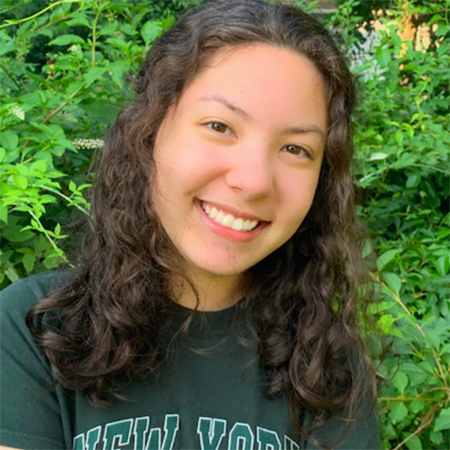
17-year-old Bianca Jortner is a high school senior from Easton, Connecticut, and says she witnessed firsthand how education was negatively impacted during the COVID-19 pandemic, particularly for underserved students.
Launching Youth Promise in June 2020, Bianca offers students around the globe individual tutoring, group classes and college/test prep workshops. Thus far, more than 400 Youth Promise student volunteers around the world have taught over 1,000 lessons to hundreds of students from countries including Kenya, Vietnam and Bangladesh. Bianca is offering educational stability to children during this unprecedented time, helping kids reach their full potential through service.
What inspires you to volunteer?
I’m so privileged with the resources I have. I want to use my voice and resources to empower others and be the voice for those that are silenced.
Describe your volunteerism with Youth Promise.
The pandemic harmed education, especially for youth who didn’t have access to technology or adequate education in the first place. I manage YP’s volunteers and outreach to shelters, schools, orphanages and other community organizations. I also work on communications, social media and with the public relations team. We fundraise around events including a recent holiday toy gift drive. Youth Promise opened the door for my volunteerism with other causes that are close to my heart, including: U.S. Youth, Peace and Security Coalition, CT Students For a Dream and Peace Direct.
Youth Promise founder Bianca Jortner is volunteering during the COVID-19 pandemic to help students reach their full potential./Courtesy Bianca Jortner
Share one personal story with me from your volunteerism.
The parent of a student wrote me an email explaining how YP’s tutoring helped her son perform better in all his classes. The boy also understood his emotions more, and was able to control them more and become healthier. Through personalized academic mentorship, we see the impact of our efforts and how we can empower children.
Why do you think it’s important for others to give back?
It’s essential we give back to our communities as well as the world. It’s our responsibility to give back to create a better future and impact lives in order to create a better generation.
What’s been the most rewarding part of your service?
Volunteerism and receiving feedback is the greatest satisfaction. It’s so rewarding to see how youth benefit from academic mentorship they otherwise wouldn’t receive, because I’m helping people out of the sheer drive to help others. And I think that’s the best gift in life.
In one word, what does volunteering mean to you?
Passion.
What do you want people to learn from your story?
If you have a passion, follow it. You can do anything with that passion. Your mission and drive is larger than the fear of failure. Don’t let the fear of failure stop you, let your passion for the mission drive you.
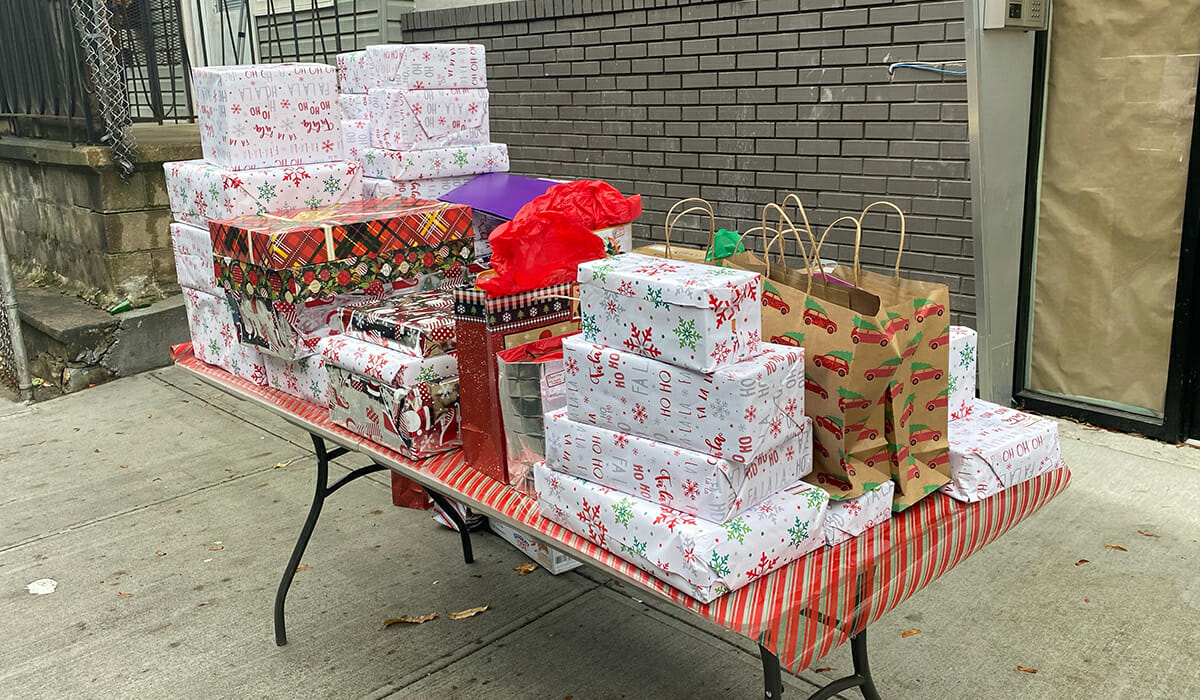
Youth Promise recently held a holiday toy gift drive in Brooklyn, New York. The organization offers tutoring, group classes and college/test prep workshops to students around the world./Courtesy Bianca Jortner
When you’re not busy volunteering or in school, what do you do for fun?
I love to write, read, and do other projects including activism. I also hang out with family and friends.
How can readers help?
We’re always looking for volunteers and to get more people involved. Please visit our website for more information about how you can help.
Teen’s Education Volunteerism Empowers STEM Leaders of the Future
Meet Daily Point of Light Award honoree Annika Viswesh. Read her story and nominate an outstanding volunteer or family as a Daily Point of Light.
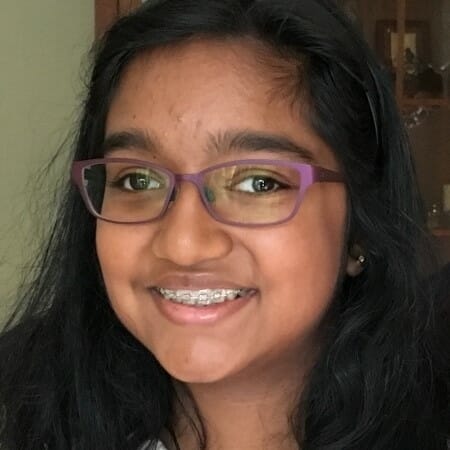
Annika Viswesh grew up with visual impairments, and the 18-year-old Palo Alto, California high school senior says she received many accommodations as a result to improve her educational experience.
Discovering many underserved students in her own community lacked access to similar benefits, Annika launched Jobs of Tomorrow (JoT). A career education program for middle and high school students, JoT is helping to improve diversity in STEM fields by introducing underrepresented groups to careers in STEM and their future potential. Helping to launch leaders of tomorrow and connecting with more than 10,000 students worldwide thus far, Annika is bridging the global education gap through volunteerism.
What inspires you to volunteer?
A bridge separates my hometown from East Palo Alto, and it’s a world of difference. Knowing how discrimination and inequality still exists for those students in a community that has made so much progress is what makes me wake up in the morning and think there’s still work to be done. We’re not there yet in terms of diversity [in the field of STEM,] and I’m inspired to volunteer because there are incredibly talented and smart students around the world that need more resources.
Your volunteerism is creating the leaders of tomorrow. Explain.
A hurricane hit Haiti on the day a JoT session was scheduled. We planned to reschedule the lecture, but the students [in Haiti] arrived in the middle of the storm to sit in a tent and listen to the female engineer speak. After the session, a lot of girl students told us they’d never thought it was possible to be an engineer as a woman, and that they wanted to become an engineer one day. We are completely changing their perspective through volunteerism.
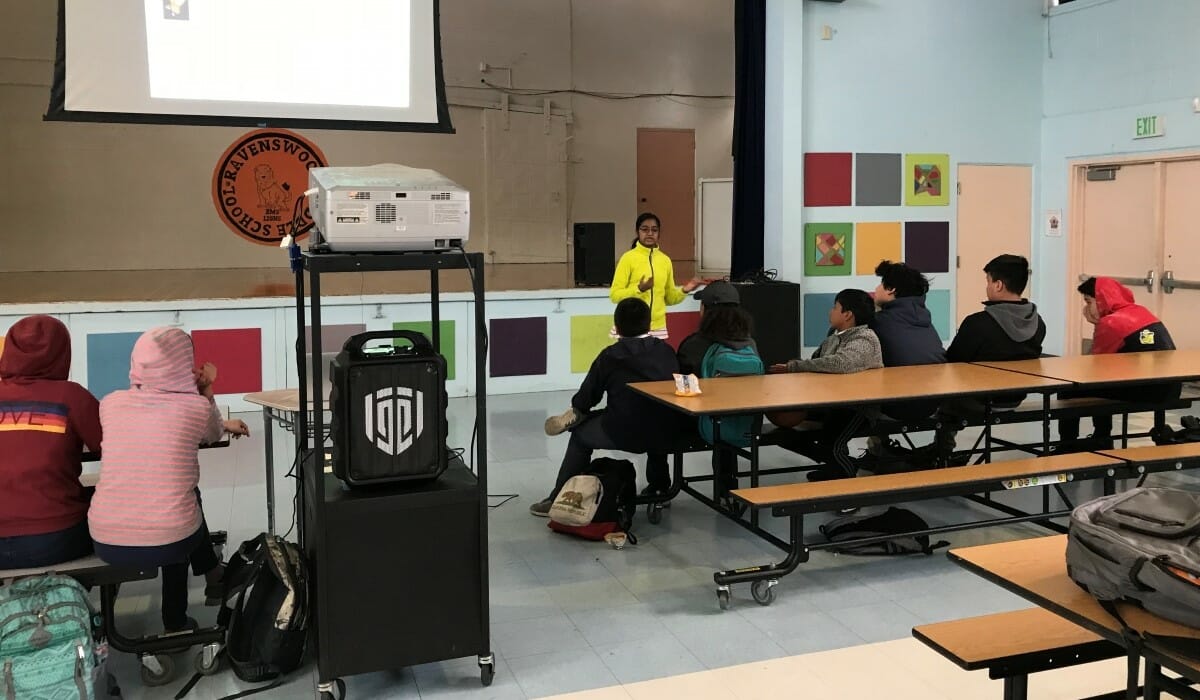
Jobs of Tomorrow founder Annika Viswesh is making STEM career education accessible to students and improving diversity in STEM fields./Courtesy Annika Viswesh
Share one personal story with me from your volunteerism.
The COVID-19 pandemic came with the opportunity to expand JoT globally, however each site from Zimbabwe, India to Afghanistan came with particular challenges. In Zimbabwe, students could only communicate through the messaging platform WhatsApp. We received questions from students…and even though they were motivated to learn, they’d never directly engaged with scientists or engineers. Through our program, the students went from, “what are we learning?” to “how can I help” or, “how can I go to America to learn how to build these things with NASA themselves?” It touched me because I was so happy these students, even with their background, were so excited to take risks, apply themselves and learn.
Why do you think it’s important for others to give back?
It’s important to work together to help others who may not have the same resources as we do. I really believe in equity in education, but so many socioeconomic factors make it difficult for many to get the resources they need to attain those levels. Equality will help everyone lead more purposeful lives, and the trickle effect will result in improved lives and improved community.
Jobs of Tomorrow has connected with more than 10,000 students worldwide as Annika bridges the global education gap through education./Courtesy Annika Viswesh
In one word, what does volunteering mean to you?
Teamwork.
What do you want people to learn from your story?
Teamwork makes the dream work. We reach and inspire so many people because of partnerships and everyone giving their time away. I’m so grateful to everyone I’ve worked with. Believe in something, find the right person and right resources, and you can make it happen.
When you’re not busy with school or volunteering, what do you do for fun?
I love pursuing science research, especially in computational biology and structural biology. I worked at a nearby university to conduct research. In my spare time, I also play violin.
How can readers help?
Please visit theJobs of Tomorrow website for more information about how you can give back.
Florida Teen Starts Library and Tutoring Program for Foster Children
Meet Daily Point of Light Award honoree Rebecca Adler. Read her story and nominate an outstanding volunteer or family as a Point of Light.
It’s easy for many teenagers to take for granted the necessities in their life, such as clothes, books and access to education. 17-year-old Rebecca Adler, however, knows just how lucky she is to have what she does, and is working to ensure foster kids in her southern Florida community do as well. Since 2018, Rebecca has volunteered at Mary Ann’s Closet, which provides foster parents with clothes, toys, diapers, and other necessities they need for their foster children.
When she noticed the Closet lacked books, Rebecca took it upon herself to start Mary Ann’s Library, and has so far collected over 1,800 books for foster kids. During the COVID-19 pandemic, she realized many foster students were falling behind in school and were especially struggling with virtual learning, so she started Mary Ann’s Tutoring to provide foster kids with one-on-one tutoring. The program began with just Rebecca, her sister, and two foster kids, and has since grown to over 100 tutors nationwide helping over 100 foster students.
Describe your volunteer role with Mary Ann’s Closet.
I started Mary Ann’s Library and Mary Ann’s Tutoring as an offshoot of Mary Ann’s Closet. Mary Ann’s Closet is a closet that targets foster children in south Florida. When a foster parent gets their foster child, they have little to no notice. They don’t know the age, gender, or anything about the kid. They have a new kid with no clothes, no diapers, no toys. Mary Ann’s Closet provides toys, clothes and other necessities for children. When I went there the first time, I noticed there were no books, so I decided to start a library for the closet. I have collected over 1,800 books for the foster kids to take to their new foster homes. When I started to get to know the foster community a little better over COVID, I noticed the huge education gap between the foster students and the kids in my school. They were really falling behind and struggling in their classes, especially because with online school they didn’t have a parent to sit down with them and make sure they’re doing their work. I started Mary Ann’s Tutoring with just me, my sister, and two foster kids. Through word of mouth, it spread like wildfire and now we have over 100 tutors working with over 100 foster kids around the community.
Rebecca Adler serves as a volunteer for Mary Ann’s Closet, as well as the founder of Mary Ann’s Library and Mary Ann’s Tutoring./Courtesy Rebecca Adler
How did you first become involved with Mary Ann’s Closet?
I started my journey [with] foster care in sixth grade for my bar mitzvah project. I started volunteering at a preschool and I was immediately drawn to these two girls because they looked just like me. They had curly hair and blue eyes, and they were always asking me to read to them. I then found out they were sisters and were in foster care. I became kind of a mentor to them and took them under my wing. I would see them regularly over the weekends and babysit. I followed them to two different foster homes. The second foster home is where I met the woman who created Mary Ann’s Closet. I began babysitting the two girls at her house all the time. Through that, she basically opened my eyes to the world of foster care, and how hard it is for the foster parents and the foster kids. She started Mary Ann’s Closet for herself in order to help her friends and other people in the community, because she knew first hand how hard it was to get a new foster kid.
How important is it for the foster community to, aside from the closet, also have access to resources like the library and tutoring?
I think it’s important for every child to have this. As a kid, we always had books lying around the house in every corner. The first time I went to Mary Ann’s Closet, I realized there were no books in the house and she had four kids. I was concerned and realized this was much more common than I initially thought, because the foster parents are so focused on getting the bare necessities for the children that they don’t really have time to think about their education. They can’t afford tutoring if their children are falling behind. I get so many emails everyday from the parents, thanking me for helping their child because otherwise they never would have been able to afford or have time for any help.
What are your goals for Mary Ann’s Closet, Library, and Tutoring?
I would love to make it more widespread. I started out the tutoring online but now I have tutors from all over the country who are tutoring virtually for the students. I would love to help as many students as possible. Right now we’re just focusing on the foster kids in Broward [County] because there’s already so many of them that need our help, but to expand even beyond Broward would be amazing.
Do you have a favorite memory from your time volunteering?
My favorite memory of volunteering is the first time I walked in to tutor the kids in person at the Closet. One of the girls I was tutoring wrote little note cards that she colored with colored pencils and taped them all over the walls. She wrote ‘Miss Rebecca’ and her name, and she decorated the closet and called it the classroom. I thought that was adorable. The kids are so cute. They always tell me they look forward to tutoring. Honestly, I think it just gives them one-on-one attention that they otherwise don’t really get. That’s so important for everyone, even just for an hour a week.
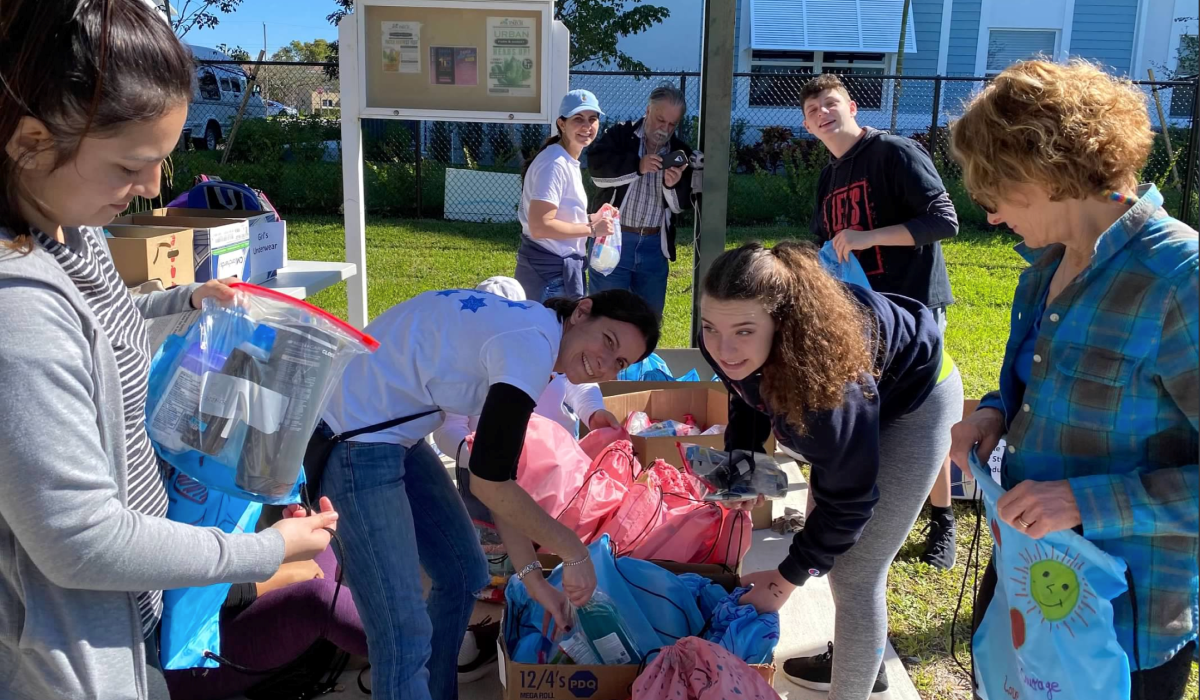
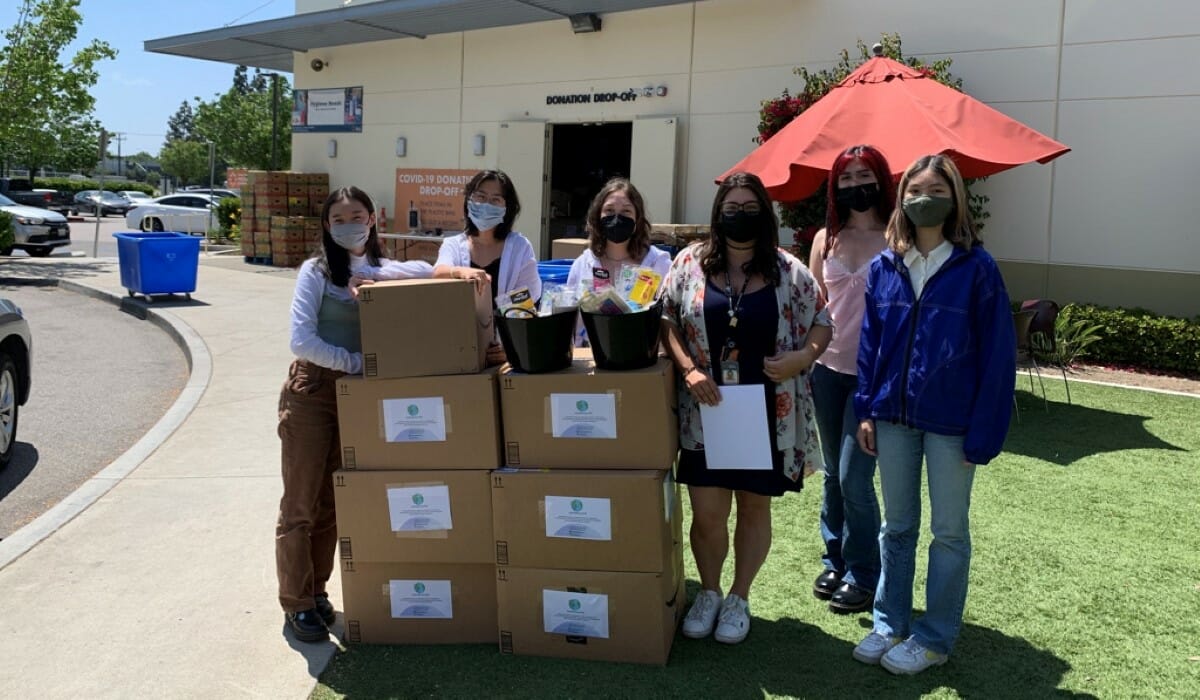
Rebecca Adler, second from right, sorts through donations at a book collection and toiletry drive she organized for Mary Ann’s Closet./Courtesy Rebecca Adler
What have you learned through your experiences as a volunteer?
I’ve learned the impact that you can make on one person’s life just by giving up something so menial. I started [Mary Ann’s Tutoring] during COVID when there was a ton of free time, so tutoring twice a week was nothing, but it really made a difference in these kids’ lives. I’ve seen grades go up from Ds to Bs and As. It’s amazing. Giving up a small portion of your time can really make a huge impact in people’s lives.
Why do you think it’s important for others to give back?
It’s important for people to volunteer so they can change people’s lives for the better, really help a kid out, be a part of something bigger than themselves, and improve the community as a whole.
What do you want people to learn from your story?
I want people to understand that something that you might take for granted, such as your education, or being able to keep up in school, or being able to have books or toys or clothes, is really important and it’s not something everyone has. Don’t take that for granted and help out as much as you can. I appreciate everyone who is a tutor for me so much and everyone who donates books and clothes.
16-Year-Old Brings New Orleans twist to Fighting Food Insecurity
Meet Daily Point of Light Award honoree Henry Morse. Read his story and nominate an outstanding volunteer or family as a Daily Point of Light.
Saturdays begin at 5 a.m. for 16-year-old Henry Morse, and he has no plans on changing his alarm clock. The New Orleans teen found Culture Aid NOLA – a food distribution nonprofit – with his mother in the Spring of 2020 and never stopped volunteering. Community means the world to this high school sophomore, and he believes that people helping people can change the world.
Before the COVID-19 pandemic, Morse kept himself very busy. Theatre and sports filled his time outside of school, but he soon found himself with nothing to do in March of 2020. His mom started volunteering once a week and Morse quickly followed suit. “It just kind of grew into a passion,” Morse said, “I got to see the same people week after week and developed relationships with the volunteers.”
Morse began as a traditional food distribution volunteer but was given more responsibility as he spent multiple days a week with the organization. Now the teen manages other volunteers and ensures that food operations run smoothly. He takes inventory of daily food deliveries and decides how much should be given out to the plethora of families that visit each day. Morse also leads volunteer orientations and operations for Culture Aid NOLA in addition to piloting outreach programs at local high schools to recruit volunteers and spread the word of the organization’s impact.
Henry Morse prepares food to be distributed for New Orleans families before and after Hurricane Ida./Courtesy Henry Morse
“What inspires me are the looks of the faces of the people that drive through our food lines,” Morse said. “There’s just nothing else in the world that compares to that. I’m not doing a huge part, but I’m going a little part in trying to make these people’s lives easier.”
Culture Aid NOLA was created in March of 2020 to combat food insecurity heightened by the COVID-19 pandemic. Since it was created in response to the pandemic, its operations and schedule didn’t have to shift – it was built to ensure social distancing and safety. Through a collaborative approach to food distribution with local New Orleans partners and restaurants, it puts food and resources directly into the hands that need them. It’s given more than 450,000 pounds of food out since the beginning of the pandemic.
The nonprofit receives food donations and purchases produce. Volunteers then pack the food and deliver it directly to people’s cars at their distribution facility. One unique aspect of Culture Aid NOLA is that there are no requirements for people in need to receive food, and Morse said it’s a big deal for locals that are undocumented or turned away from other facilities.
Building meaningful relationships with the people who need the organization is important to Morse. “I know almost all of their names, and one lady comes and picks up food for her neighborhood because most of the people around here don’t have a car,” he said.
“Food insecurity is always a problem in New Orleans, and almost all of the people that come through our line are 100% reliant on us to feed their family for the rest of the week,” Morse added.
Volunteers like Morse make everyday a celebration at Culture Aid NOLA. There’s constant music, a weekly DJ, and an endless supply of dancing – what Morse calls a New Orleans twist on volunteering.
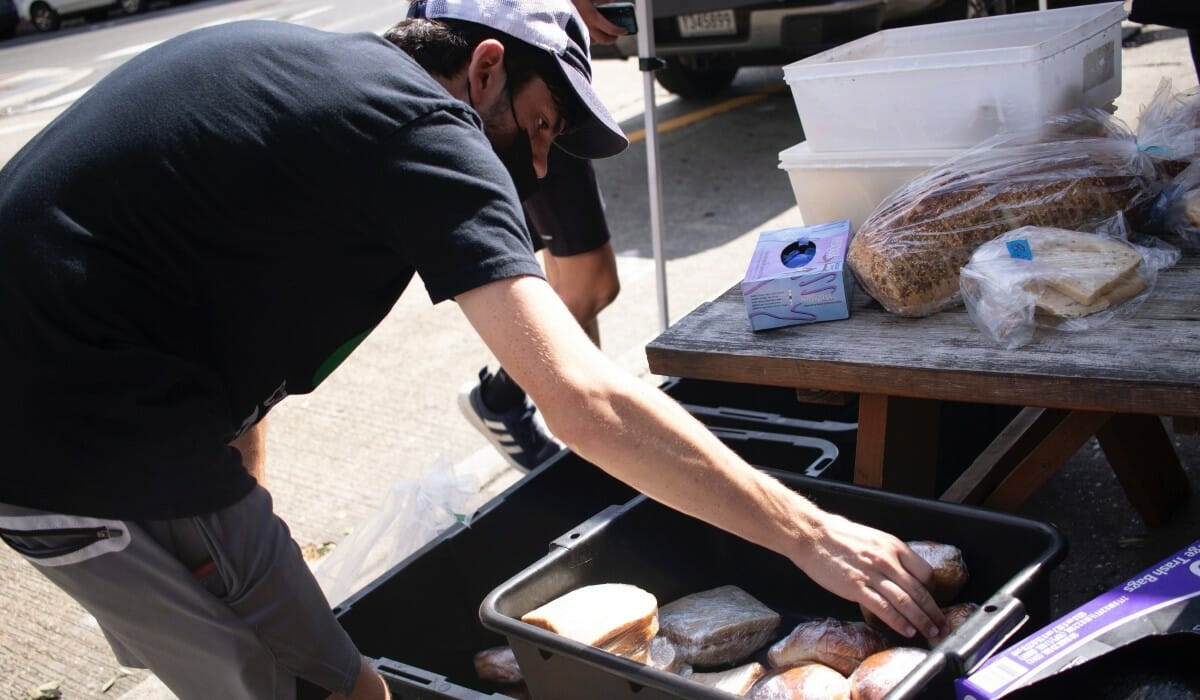
Henry Morse packs sandwiches to be placed in the cars of New Orleans families during Hurricane Ida relief distributions./Courtesy Henry Morse
Morse also believes that it’s important to break free of comfort zones sometimes. “I live in a bubble of sorts – I go to a good school and hang out with mostly white privileged kids – and this past year opened my eyes,” he said.
“I also think it’s important for young people to volunteer because as a young person you’re on this track – you have to go to school, get good grades, and go to college – but volunteering makes you realize that there’s just so much more to life than that straight line.”
With two years left of high school, Morse is excited for the consistency of waking up at 5 a.m. every Saturday. He wants to volunteer as long as he can and has dreams of starting his own food-related nonprofit in the future.
“If everyone can just all come together and help each other out, the world is going to be a better place,” Morse said.
81-Year-Old Retiree Helps Bring Accessibility to Taxes
Meet Daily Point of Light Award honoree William Hicks. Read his story and nominate an outstanding volunteer or family as a Daily Point of Light.
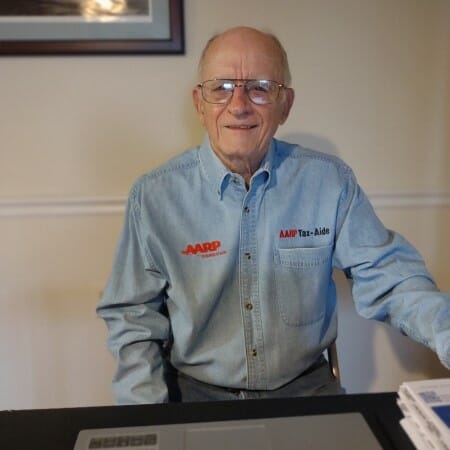
After retiring in Gaithersburg, Maryland, 81-year-old William Hicks stays busy providing free tax preparation and training to his community. As a leader in the AARP Tax-Aid program, Hicks gives tax support to low-income and senior residents year-round.
Hicks supported over 20 in-person tax preparation sites that generated more than 4,500 returns, but the COVID-19 pandemic changed everything. Hicks quickly planned, organized, and executed the contactless Alternative Tax Preparation (ATP) Program in Maryland to keep tax resources accessible for those in need of support.
Describe how you first got involved with tax preparation and AARP?
In 2004, I was retired for the second or third time, and was looking for something to do to volunteer and I was always interested in taxes. So I started volunteering in the tax aid program at AARP — we were doing returns with paper and pencil in those days. We’ve evolved through the computer and the internet.
I quickly became involved with training and I did trainings for 100 volunteers in Virginia, and then moved here to Maryland and continued volunteering. I prepare taxes and I’m also the state training coordinator for the tax aid program in Maryland as a Maryland State training specialist. I volunteer at a number of different tax sites and prepare taxes four days a week, usually. When COVID-19 was bad, it was a little bit different, but three or four days a week is normal and I enjoy it.
Can you explain how your volunteer activities have grown?
Well, I started out in the tax aid program as a volunteer who helps file taxes. In order to help prepare, you have to pass an IRS certification and also a state tax certification. The IRS provides the test for the federal certification and the local or state organization provides the test for the state certification.
But in my initial efforts in Virginia, I was the training coordinator for a district with about 250 tax preparers. So every year, we put on training programs for 250 tax preparers. Then I moved over here to Maryland, and did some of the same thing for a little while. And then I got involved at the state level. At the state level, I was the state coordinator, which really means that I prepared training, tests and certification processes that are used by the other instructors across the state. I also help train individual volunteers and set them in the background as sort of advisors and backups when there are questions and issues.
Hicks planned, organized, and executed the contactless Alternative Tax Preparation (ATP) Program in Maryland to keep tax resources accessible for those in need of support./Courtesy William Hicks
Can you explain the No-Contact Alternative Tax Preparation (ATP) Program and how you helped execute it across Maryland?
The ATP was a kind of spin-off IRS program particularly during COVID-19, since we were not going to be able to meet with people in person. It was a program that took advantage of the IRS free filing initiative with the commercial tax preparers. And basically it makes free filing programs, such as TurboTax, easily accessible to taxpayers. And so we facilitated the volunteer finding for those programs, and then we interacted with them as they prepared their own taxes to try and help them gain enough confidence so that, you know, [the] person who’s doing her own taxes can feel confident that she knows what she’s doing.
What inspires you to volunteer?
I was looking for something to stay busy that was going to be a bit challenging. And the appreciation and the interaction with the taxpayers is very valuable. The taxpayers that we serve are mostly either low-income or seniors, and they really don’t have the resources to go pay for prepared work. But the tax returns we do are relatively simple, although the most significant thing we do is rental, but [we do] almost any other things if they have investment accounts and retirement accounts.
Volunteerism is just the ability to feel like you’ve done a good deed for the day, so to speak; that you have helped the taxpayer who otherwise might not get the help, or who might find themselves in a storefront where they get a tax return that ends up getting them in trouble. It’s just a good feeling. And it’s a good, good thing to get to stay busy.
What have you learned through your experience as a volunteer?
Well, certainly I’ve learned a lot more about the tax code in both the state and the federal levels. But I have also learned a lot about interacting with people. My career was somewhat isolating, and I’ve expanded the numbers of people that I interact with and the ways I interact with them. It’s a pleasure serving them or helping them do something. It’s just a whole new ability to be paid for what I do through the pleasure and the joy of doing it, as opposed to somebody giving me a paycheck at the end of the month.
What would you want someone to learn from your service story?
Sign up to help people on a one-on-one basis that takes your capabilities, whatever they may be, and applies them to help other people. That’s what it’s all about — helping people; and I’ve been able to not only help people at the individual level, but also by instructing and training instructors. I’ve sort of expanded my ability, but it all starts with that one-on-one interaction with the taxpayer, the one-on-one interaction with the volunteer students that makes it all worthwhile.
Why is it important for others to give back?
It’s kind of like paying it forward; we got here because of the assistance of others either seen or unseen, known or unknown, and the ability to pay it forward and give back to others in the hope that hey, you’re helping them and they may be able to follow along and help somebody else.
Are there any partnerships, programs, or events that you are excited about?
From a tax perspective, it’s probably the start of the tax season and looking forward to COVID-19 being sufficiently under control that we can do face-to-face tax preparation like we did before the pandemic. There are a lot of other things that I have going on. I live in a retirement community and I’m the chairman of our council. And so I have a lot of activities that are ongoing that we will deal with here at the council, but not that are not associated with taxation specifically.
Meet Daily Point of Light Award honoree Lando Aldridge. Read his story and nominate an outstanding volunteer or family as a Daily Point of Light.
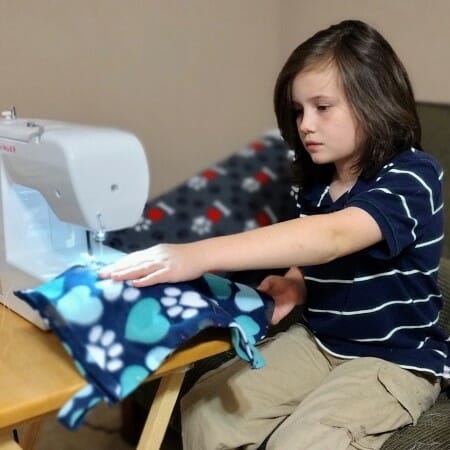
Young Lando Aldridge was just six-years-old when he received a sewing machine as a gift. The Alabaster, Alabama child has combined his interest in sewing with another passion, his love for animals.
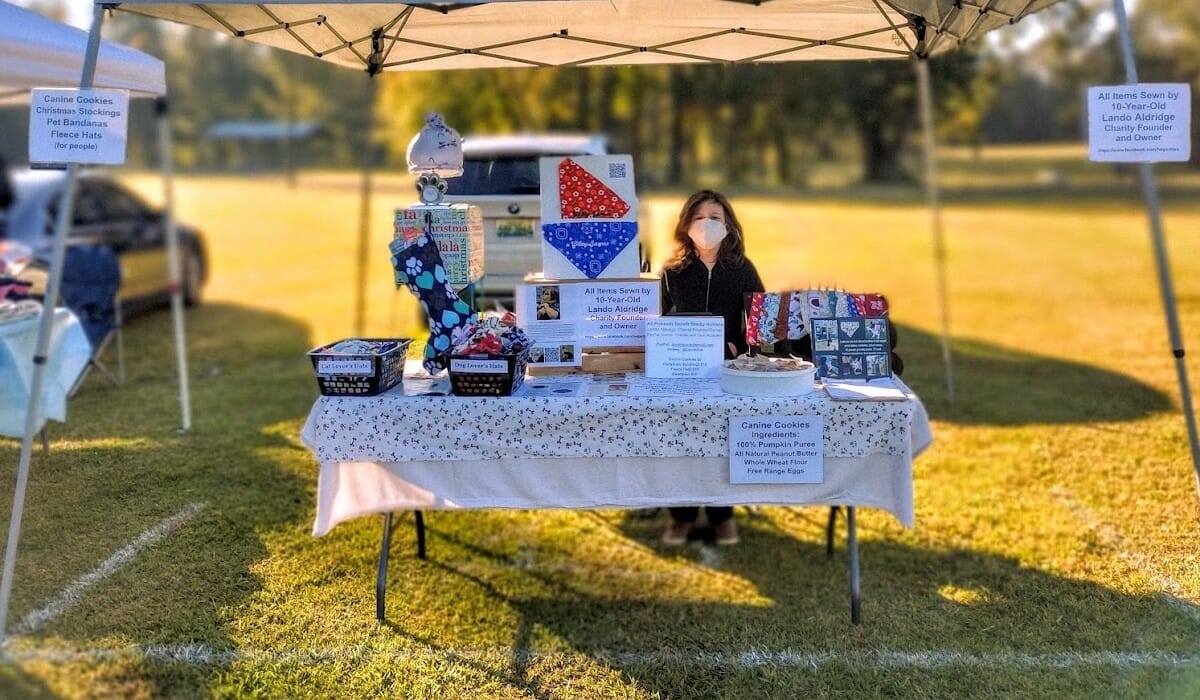
Founding Hats for Cats, the now 10-year-old has donated more than $7,000 of his profits from handsewn items, connecting with individuals across his greater community and as far away as Hawaii and the United Kingdom as he supports animal shelters, rescues and sanctuaries. A pet owner himself who is dedicated to helping four-legged friends in need, Lando is volunteering to help give animals a second chance at life.
Points of Light spoke with Lando and his mother, Francie-Ann Vono, about his volunteerism.
What inspires you to volunteer?
Lando: Of course, I’ve loved animals always. When I was five, my cat Pewter died, our first rescue cat. I really thought, maybe there are other animals like this in shelters. There’s dying animals and they need a home and this money helps provide them food and water. Volunteering makes me happy and a bit tired, because our work takes time and hard work.
Explain Lando’s passion for this cause.
Francie-Ann: After he received his sewing machine, he sewed presents for the entire family that year. He started with easy things like hats. My sister fosters cats, and Lando asked me why his aunt had so many cats, and we only got to have one. She explained what fostering was, and how cats live in shelters if they don’t have homes. The exact words out of his mouth was, “I have to help the kitties.” That’s how he started. He now volunteers to support all animals. I cut things out and he’ll sew, and now they let us go clean out cat condos and help socialize cats.
The 10-year-old volunteer has combined his interest in sewing with another passion, his love for animals./Courtesy Francie-Ann Vono
Share one personal story with me from your volunteerism.
Lando: We receive notes in the mail about how much we donated and sometimes the note says how many [animals] I helped or what they get to do, or how many [animals were] spayed or neutered [because of my donation,] and that warms my heart.
Why do you think it’s important for others to give back?
Lando: When people give back, it forms a stronger community that can help each other which will form an entire community that will help each other.
What’s been the most rewarding part of your service?
Lando: It’s rewarding hearing how many animals I’ve saved. The second part is receiving rewards from my mom (laughs).
What has Lando learned through his experiences as a volunteer?
Francie-Ann: Like he mentioned, the organization will explain how his donation has helped 40 cats eat, or this number spayed. I really think it warms his heart. He loves animals and I think now he’s done it enough that he does equate it with work, but someone needs to do it.
Lando has donated more than $7,000 in profits from his handsewn items to support animals in need./Courtesy Francie-Ann Vono
How have you continued to volunteer throughout the COVID-19 pandemic?
Lando: COVID has affected a lot of animal lives too.
Francie-Ann: He started making masks through his Masks for Medical Workers / Masks for Mutts initiative. I let him watch press conferences about COVID-19, and he asked questions about the pandemic. Officials asked the community to make cloth masks, so [Lando] said, let’s make them for doctors and vets. He donated many masks to essential workers, and sold some.
In one word, what does volunteering mean to you?
Lando: Love.
When you’re not busy with school or volunteering, what do you do for fun?
Lando: Video games! I played chess and baseball before the pandemic.
How can readers help?
Please visit our website for more information about our merchandise, or tosponsor an item for a shelter locally.
Nurse Collects Thousands of Bikes Across Minnesota for Kids In Need
Meet Daily Point of Light Award honoree Deb Fortner. Read her story and nominate an outstanding volunteer or family as a Point of Light.
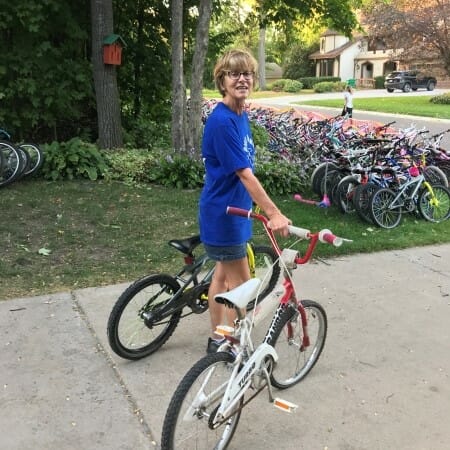
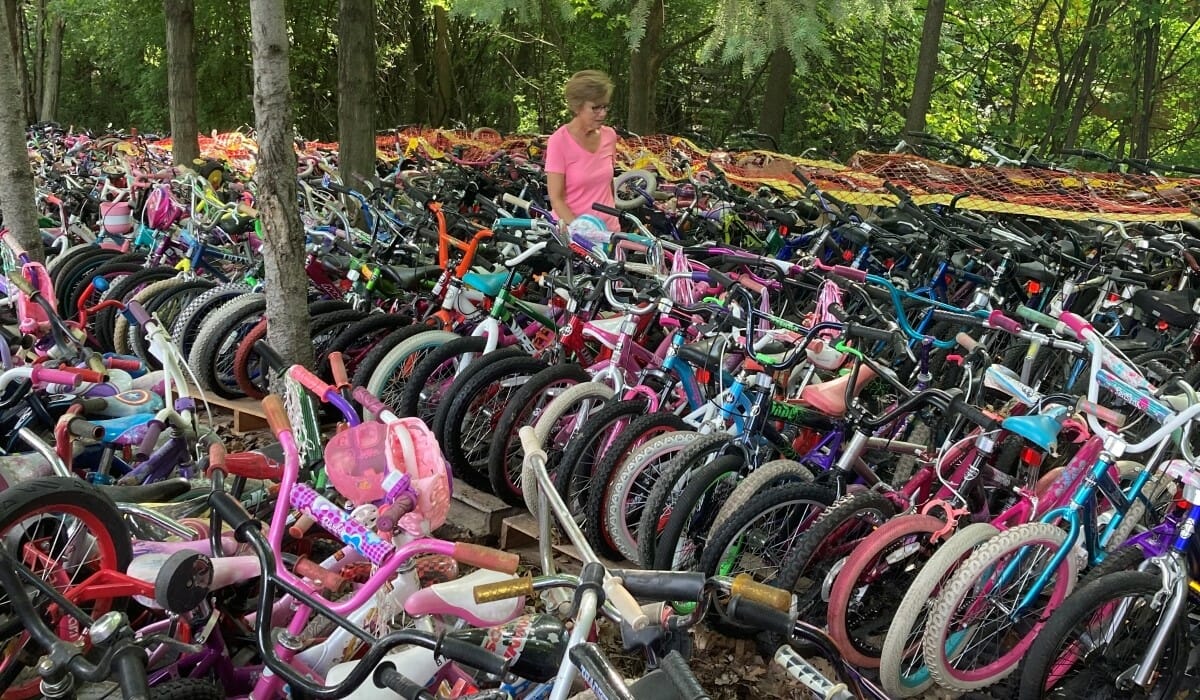
In Deb Fortner’s yard, you won’t find patio furniture or a garden. Instead, her yard is completely filled with hundreds and hundreds of bicycles. All year long, Deb collects bikes — searching for people getting rid of them on social media sites, reaching out to friends and neighbors, and researching if there will be any nearby whenever she travels anywhere in her home state of Minnesota. Her collection is not for a hobby or a side hustle. Instead, Deb is gathering them for kids who otherwise wouldn’t be able to afford this childhood rite of passage.
Deb began her journey 11 years ago when her employer Allina Health, where she has worked as a nurse for over three decades, partnered with the organization Free Bikes 4 Kidz MN. She started out helping at the collection sites, cleaning and fixing up bikes alongside her husband, as well as at the giveaways. After seeing the pure joy on the kids’ faces when they were handed a free bike and helmet of their own, Deb was inspired to take her volunteerism even further.
Describe your volunteer role with Free Bikes 4 Kidz MN.
I started at the collection sites. People would drop their bikes off and help load them into the trucks. My husband and I would go to the Free Bikes 4 Kidz warehouse where all the bikes were taken, and we would help clean the bikes. My husband would help fix them up so they would be running. We also helped with the giveaways, so when the kids came, helping them with the bikes. We did that for a few years, and I got to thinking, well, I could start collecting bikes. About six years ago or so, I talked to some friends and neighbors and I collected about nine bikes. Then I thought, well I could do a little better, and I think the next year was around 48 or so. Then the year after that, it was about 99. I started thinking, where can I find bikes for these kids? I started doing some of the socials like Craigslist and Nextdoor. One year I got a little under 500 bikes. The following year was 950 or 960 bikes. Last year, we got up to 1,120 bikes.
I go around and now I do Facebook as well. When there’s a free bike, I always explain what I’m getting the bikes for so people understand it’s not for personal use and I’m not going to sell them again. I contact the people and if they’re willing to donate the bike, I go pick it up. The collection to the warehouse is once a year, so we bring the bikes home. Fortunately I have a yard that’s very secluded, so we store them on pallets and keep them under tarps. In early October, all the bikes get transported to the warehouse so they can be fixed and distributed to the kids.
What inspired you to start volunteering once Allina partnered with Free Bikes 4 Kidz?
I didn’t have grandkids and I was really looking for an opportunity to do something. … Our family has always been a really big biking family, so I thought this sounded kind of interesting. We were fixing these bikes and cleaning them. Then to be a part of the giveaway, oh my goodness. I can’t even tell you the feeling you get when you see these kids, who otherwise wouldn’t have an opportunity to have a bike, come and pick out a new bike. Allina gives each kid a new helmet. You send these kids out with I think one of the best gifts you can give a kid. When you think about it, biking can be something you enjoy for your lifetime. Just to see these kids have that opportunity got me hooked. That’s when I decided I can do more.
What does it mean to you that your family also volunteers with you?
Deb Fortner poses with just a few out of the thousands of bikes she has collected over the years for Free Bikes 4 Kidz./Courtesy Deb Fortner
It kind of started out just being me, but now it’s encompassed my whole family. It’s such a good feeling to have the kids and the grandkids involved, and see they’re as excited about it as I am. It means the world to me to have that opportunity not only to spend time with kids, but also to give back. Being a nurse and in the hospital setting, this has been something so positive to focus on during the last two years.
Do you have any memories from the bike giveaways that have really stuck with you?
I remember a really memorable moment when we were at an elementary school. … What I liked about that one is that the older kids helped out during the bike giveaway. The older kids got a bike, but then they helped take the little kids through to help them pick out their bike. There was one kid, maybe 15 or 16, and he had a little brother. It was the end of the day and his little brother came to pick out a bike. The only bike left was a pink bike, and I could see this little boy was so down and out. His brother stepped up and said, “This could be the most radical bike. I’ll get you some spray paint and we’ll get this sprayed up with whatever color you want,” and kind of made the best situation out of what was left. He really got his little brother excited about getting a new bike and that they were going to get it all painted up. The first giveaway I saw, there was a little girl who was about four or five. She just squealed. She ran to a little pink Barbie bike with training wheels, hopped on it, and started riding around. Those are two moments where I think oh my gosh, this is just so worth every minute I spend, every mile I drive, to see these kids who otherwise probably wouldn’t have an opportunity to have a bike come pick out a bike and get a new helmet.
What’s been the most rewarding part of your work?
I think the most rewarding part has been to see the kids receive the delight and the happiness that a bike brings. That is the key to it. But there’s also so many other parts. It’s meeting people in the community and talking to them and letting them know about the program. It’s my kids and my family involved in an activity we can do together to try to make a difference. There’s so many positives to it and so many things I find rewarding. It feels like it’s the right thing to do.
Why do you think it’s important for others to give back?
I think you get more back from volunteering than the effort you put in, and I think it can leave this world in a better place if we focus on the positive of what we can do rather than all the negative stuff we hear and all the problems. It changes our outlook and hopefully the outlook of others if we just focus on doing something positive.
Deb Fortner walks through her yard, which is teeming with the hundreds of bikes she collects yearly for Free Bikes 4 Kidz./Courtesy Deb Fortner
What do you want people to learn from your story?
I know obviously not a lot of people are able to do this on the scale I do it. But Free Bikes 4 Kidz are in many cities throughout the United States. All I would like people to know is there is opportunity for them to donate if they have a bike to any of the Free Bikes 4 Kidz sites. They’re always looking for financial donations if they want to do that. There’s all sorts of volunteer opportunities to sign up to help clean bikes and, if they have any mechanical bike skills, to wrench and fix the bikes, because every bike is gone over to make sure it’s safe for the kids it have.
Is there anything else you would want to share with anyone reading?
My message would be, find something you enjoy or are passionate about, then find an opportunity to volunteer to pursue that passion. It’s an energizing and positive way to make a difference.
Teen Donates 30k+ Feminine Hygiene Products through “Womenwurld” Volunteerism
Meet Daily Point of Light Award honoree Allison Wong. Read her story and nominate an outstanding volunteer or family as a Daily Point of Light.
Feminism and the female experience has been a focus of Allison Wong’s throughout her life. The 16-year-old is now making a difference for women in need through volunteerism.
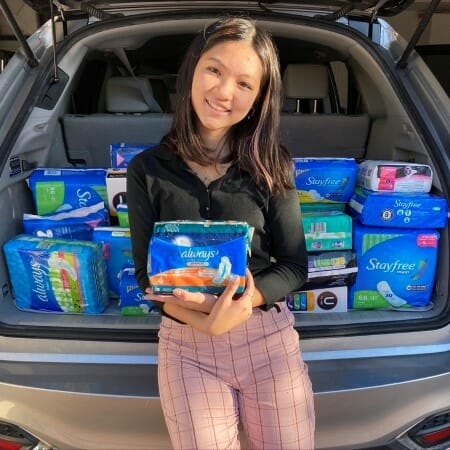
As the founder of Womenwurld, the Irvine, California student is empowering women, girls and nonbinary individuals by providing them with period and personal hygiene products and resources. Supporting underserved populations hit particularly hard during the COVID-19 pandemic, Womenwurld has donated more than 30,000 products and raised more than $5,000 to combat period poverty in Orange County. Allison’s volunteerism is a celebration of womanhood and a reminder to women that they are not alone.
What inspires you to volunteer?
I’m in a position where I’ve had things handed to me. The people I serve don’t get to focus on their passions because they’re so focused on their health and conditions that prevent them. That’s what allows me to focus on my passions of volunteering.
Share one personal story with me from your volunteerism.
As founder of Womenwurld, Allison Wong provides individuals in her community with period and personal hygiene products and resources./Courtesy Allison Wong
Last year, I visited Mary’s Kitchen, an organization that works directly with houseless individuals, and that was the first time I’d ever been so close to women who really don’t have anything. When you’re giving them kits as they walk by, they look at you, smile and say thank you, and it’s very intimate and touching. During the pandemic, it was hard to interact with people, but that was a moment where we were able to.
Why do you think it’s important for others to give back?
You can really find yourself when you give back to the community and give people opportunities they haven’t been handed before. By volunteering, you find people who think like you, or maybe don’t think like you, but you can come together and make something really great.
What’s been the most rewarding part of your service?
It’s rewarding to inspire other young women to join this effort. We’ve had people at my school and other cities join, and it’s really exciting.
What’s in the future for your volunteerism?
I started this organization because of the need for personal hygiene, and I will definitely be continuing it. Our school bathrooms don’t typically have products, and even if you were home during the pandemic, some don’t have products when they need it, and that makes it hard to go about your daily life. Our overall mission is to support women, so we want to do it in other ways, hopefully expanding into STEM and other educational opportunities.
What do you want people to learn from your story?
When it comes to service projects, it’s really important to find where your passion and empathy overlap, because that’s where you can make the biggest difference.
In one word, what does volunteering mean to you?
Hope. It’s kind of cheesy (laughs.)
Allison (pictured right) has donated more than 30,000 products and raised more than $5,000 to combat period poverty./Courtesy Allison Wong
When you’re not busy volunteering or in school, what do you do for fun?
I’m really into computer science and art, which are strangely related for me. I like AI and I want to focus on the places where AI and art intertwine.
How can readers help?
Please visit Womenwurld’s website for more information on how you can help.