Volunteer Creates Successful Global Citizens by Empowering Young Black Entrepreneurs
Meet Daily Point of Light Award honoree Qu‘Derrick Covington. Read his story and nominate an outstanding volunteer or family as a Daily Point of Light.
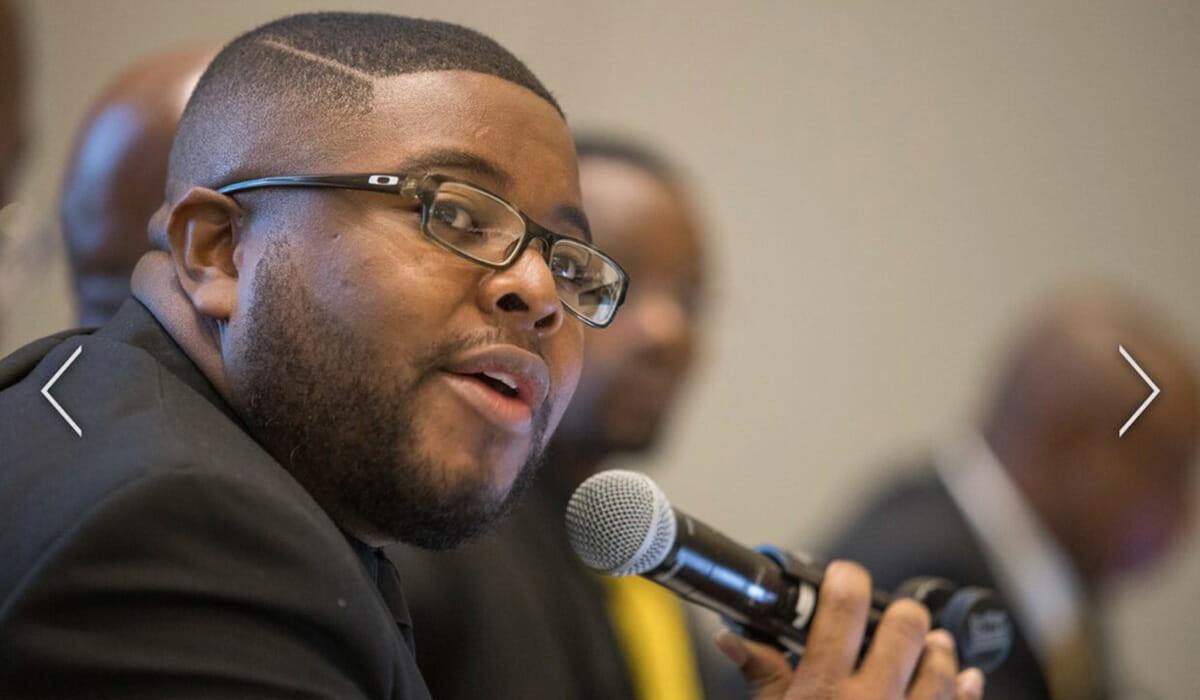
Today, Qu‘Derrick Covington works at Howard University, a world-renowned historically Black university, to ensure students successfully graduate, but growing up, Qu‘Derrick says his world was much smaller, and he yearned for strong Black role models.
“I grew up extremely poor,” says Qu‘Derrick. “When it was time for school, my mother couldn’t afford to buy me shoes so I had to wear flip-flops to school. (As a child) I didn’t see successful Black business owners, men who looked like me.”
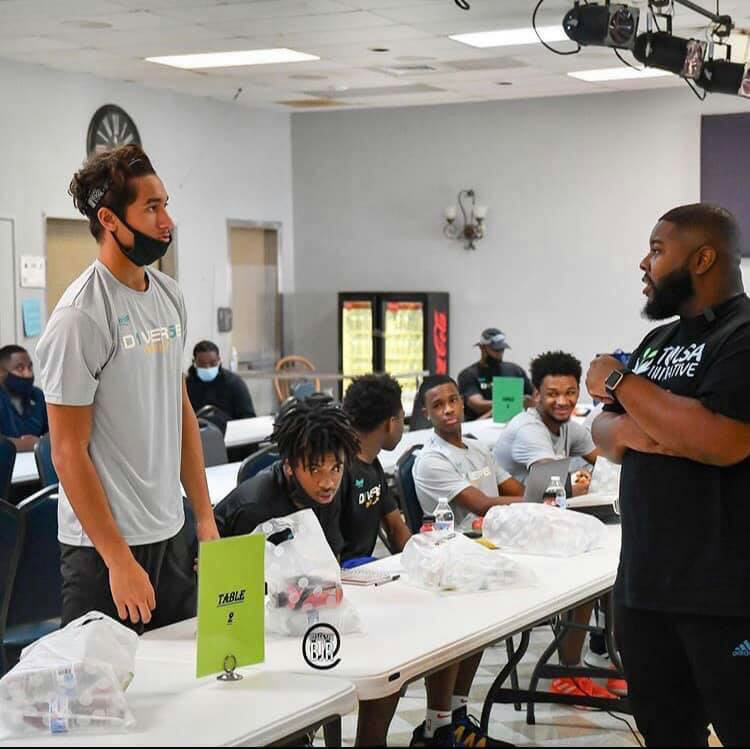
It wasn’t until meeting his middle school principal that Qu‘Derrick discovered that successful Black role model, who was a father figure to the young student. Now through volunteerism, Qu‘Derrick is creating space for other young males of color to meet entrepreneurs that look like them.
Launching The Tulsa Initiative in 2018, the Silver Springs, Maryland 29-year-old, both a first-generation college graduate and first-generation entrepreneur, is uplifting entrepreneurial young men of color, ages 18-24, by connecting them with leaders of color and offering resources to support their paths to success, positive attitudes and a healthy mindset.
Tulsa Initiative is addressing an economic gap between young men of color and their counterparts through volunteerism. Qu‘Derrick Covington: “Generational wealth comes down to ownership, and Tulsa Initiative addresses that economic gap. I wanted to make sure we focused in on entrepreneurship and pushing forward (their) vision, dreams.”/Courtesy Qu’Derrick
“I started looking at data around Black and Brown males as it related to Black economics, and I noticed a gap between Black and Brown communities versus (other) counterparts. Entrepreneurship wasn’t pushed and if it was pushed, it wasn’t being supported financially. Generational wealth comes down to ownership, and Tulsa Initiative addresses that economic gap. I wanted to make sure we focused in on entrepreneurship and pushing forward (their) vision, dreams.“
Tulsa Initiative, named in honor of the thriving Greenwood District in the city of Tulsa, Oklahoma following World War I, recognized nationally at the time for its affluent African American community, has connected with a couple thousand young men across the United States thus far. As part of its intensive seven-week virtual program, participants learn from leaders about how to be better entrepreneurs, and then pitch their own companies in an end-of-program contest to secure funding.
Building the next generation of businessmen, young millennial founders of companies ranging from a national competition for marching bands to a digital marketing company with major contracts, Qu‘Derrick’s service is creating what he says is a foundation of better global citizens, inspired to improve their communities. An example of that foundation is former Tulsa Initiative participant Justice Houser of Birmingham, Alabama, who is the founder of SkyRocket Social Media Management, LLC.
“He didn’t know me, (and) I didn’t know him before the program,” says Justice. “We’ve been able to form a real bond, it feels like I’ve known him my whole life. He’s taken an extremely active role and interest in my business and personal life in making sure he can help guide me in making decisions and connections. He sends us almost daily encouragement and helps us in any way he can to make sure we’re successful.”
Through service, Qu‘Derrick is creating space for young males of color to meet entrepreneurs that look like them. /Courtesy Qu’Derrick Covington
Partnering with organizations like 2-6 Project, Inc., Diverse, Inc., Affiliated Apparel, LLC., C2LP, LLC., Swivr, LLC. and SkyRocket Social Media Management, LLC, Qu‘Derrick says his long-term goal is to create an entire generation of men of color entrepreneurs who will train up the next wave of younger entrepreneurs. In the short-term, Qu‘Derrick has already changed lives through his volunteerism, and is giving unique focus to young men with great potential across the country.
“We had a young man who was a part of the cohort. After the program was over, he called me and said he’d been going through a serious court case and he was thinking about taking his life. (He said that) our weekend sessions changed his life, and gave him the opportunity to focus on his business. We do a lot of things in life, but not everything is in-purpose. That was one of those ‘wow’ moments for me. It let me know I was in-purpose.”
Do you want to make a difference in your community like Qu‘Derrick Covington? Find local volunteer opportunities.
Delaware Volunteer is Compassionate Champion for Community
Meet Daily Point of Light Award honoree Michelle Parsley. Read her story and nominate an outstanding volunteer or family as a Daily Point of Light.
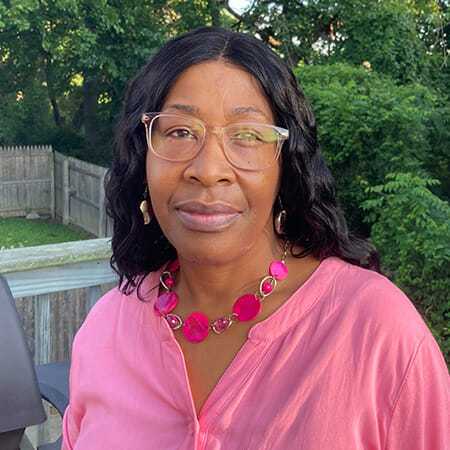
Through her outreach, the Newark, Delaware resident isn’t just feeding impoverished community members, Michelle says she’s offering hope and encouragement to many who are just barely hanging on. Recognized for being a compassionate champion of the people, Michelle is a faithful volunteer who is dedicated to helping others in need.
What inspires you to volunteer?
When I was growing up, my father ran a homeless shelter. We helped to feed the less fortunate at the shelter as children. That service had an impact on me at a younger age, and is my inspiration for volunteering today.
Through two decades of volunteerism, Michelle Parsley has helped to serve food, hope and encouragement to thousands. /michelle Parsley
Describe your volunteerism with Blessings, Dressings & More.
I volunteer with Victory Christian Fellowship’s ministries including:
Blessings, Dressings & More: Food distribution that services local communities in Delaware reaching approximately 1,500 each month and more during holidays.
Motel Ministry: Monthly service where we visit local motels and take food to individuals. We also go directly to the homeless, feeding people who live under bridges and in the woods.
In addition to this volunteerism, I am actively involved in my church community, and have also volunteered at Christiana Hospital for more than a decade.
Share one personal story with me from your volunteerism.
Motel Ministry meets with people who are temporarily displaced or don’t have anywhere to live. A lot of people tell us they didn’t know what they were going to eat if we hadn’t shown up. That’s when you know you are making a difference. You have people at their wits end, but that dinner or bagged lunch, a smile and encouragement does a lot.
Why do you think it’s important for others to give back?
Each person has a gift they were born with. Those gifts are not just for you to sit on. Those gifts need to be used because they can change a life.
What have you learned through your experiences as a volunteer?
I’ve learned how to step back and listen to a person. I put myself in their shoes.
How have you continued to volunteer throughout the COVID-19 pandemic?
COVID-19 decreased some of our Motel Ministry, but we devoted more time to Blessings, Dressings & More by changing food distribution to take-out and following safety protocol including social distancing.
For Over a Decade, Youth Runs Nonprofit to Promote Volunteerism and Kindness
Meet Daily Point of Light Award honoree Maxwell Surprenant. Read his story and nominate an outstanding volunteer or family as a Point of Light.
On a fateful winter day in Boston about thirteen years ago, then-four-year-old Maxwell Surprenant encountered a homeless man without proper clothing in the freezing cold temperatures. Upset by what he saw, Maxwell was later inspired to promote kindness and empathy by starting the nonprofit Catching Joy, which organizes hands-on service projects, ranging from collecting books and socks to making fleece blankets for the underserved.
When the nonprofit was founded in 2008, Maxwell completed service projects from his living room. In the over a decade since, an estimated 100,000 volunteers from around the country, many of them other young people, have been mobilized to complete acts of service. Now 17, Maxwell is currently leading a Catching Joy Ultramarathon, a challenge to complete 100 acts of service to aid essential workers and others in need.
Describe your volunteer role with Catching Joy.
I serve as CEO and cofounder of Catching Joy, Inc. It’s a nonprofit that promotes volunteerism and acts of kindness for kids, teens and their families. I organize hands-on service projects to share the responsibility and joy of giving. In the last 13 years, I’ve been able to mobilize an estimated 100,000 people to get involved. As part of my civic action as well, I also serve as an Asian-American reporter covering sports, art, politics and social justice issues. I write from a teen’s perspective for my generation and amplify marginalized voices that need to be heard and shine a light in the darkness. At the start of the pandemic, I initiated a Catching Joy Ultramarathon — 100 ways to aid essential workers and people in need. We’ve been making blessing bags filed with toiletries, disposable masks and heart cards for those most vulnerable, so the sick, elderly, veterans and homeless. We’re also collecting clothes and books for kids living in poverty and crisis, and making blankets for underserved communities.
Maxwell Surprenant serves as the cofounder and CEO of Catching Joy, a nonprofit that organizes hands-on service projects to promote volunteerism in youth and their families./Courtesy Maxwell Surprenant
What inspired you to start this?
I started this when I was five years old. I think empathy was my initial driving force. I’ve been volunteering since my earliest memories. When I was four years old, I was holiday shopping with my family in Back Bay, Boston and I saw a man standing alone. He was without a coat, hat, mittens. He only had threadbare shoes. What struck me most then was that people were ignoring him and walking past him as if he was invisible. I had a lot of questions and I talked to my parents about it, because before this experience, my sheltered young self did not know or understand that not everyone has food, clothes, shelter and support. That moment of empathy was the spark and impetus for change and how Catching Joy ultimately got started.
What inspired the Catching Joy Ultramarathon and how has it gone?
It’s been super successful. I’m so proud of everyone who has gotten involved and so happy we’ve been able to make an impact. I live in Boston and the inspiration for the Catching Joy Ultramarathon came around when the Boston Marathon was cancelled. It was in the midst of COVID closures and I wanted to do something. I’d been trying to come up with a way to get people to engage in service and do good from home for awhile, and I thought this was a perfect opportunity to do something in honor of the Boston Marathon with service. I launched a goal of having 26 miles, or events, for people to do good from home. It was very successful and we’ve since extended it and made it an Ultramarathon, so we’re aiming for 100 miles and we’re currently at 82.
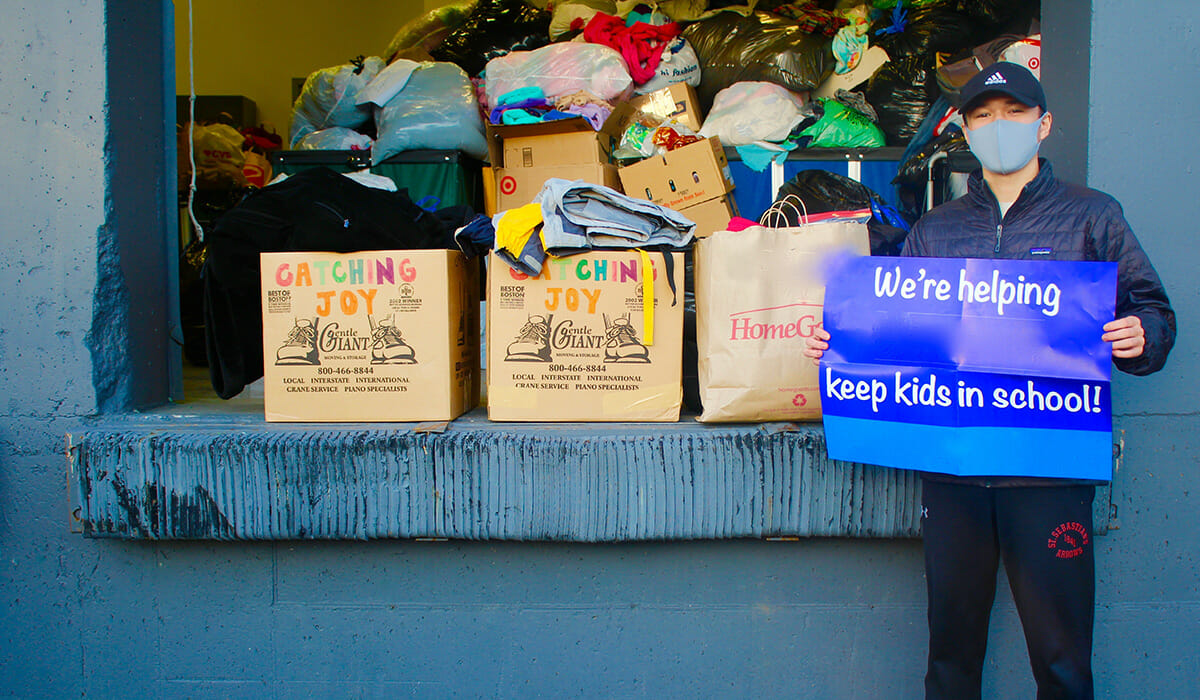
At the start of the year, I was partnered with the Biden Inaugural Committee to lead a service project on Martin Luther King, Jr. National Day of Service and that was one of the miles. I launched what’s called Operation Sock Drive and set out to collect 2,021 pairs of socks for people in need along with heart cards. In a couple of weeks, I ended up surpassing that, and we actually collected over 7,000 socks and cards. The socks and cards came from neighbors and local businesses across the country, so I think it was a great show of unity and solidarity. Socks right now are the most requested items in shelters so we were able to provide that service. One day when it was freezing cold, I was able to see volunteers handing out socks and warm clothing to people in line waiting for food, so that has inspired me to continue our marathon and get to 100.
Are there any future partnerships, programs, or events that you are excited about?
Right now, we have a goal of making 100,000 heart cards, so people can use their creativity and care to decorate these paper hearts with positive messages and then send them in to Catching Joy. We’re currently at more than 60,000. … I’m working toward organizing events to get people engaged in that project. We will be distributing them to some of the organizations we work with and also to homeless shelters, hospitals, senior living centers and some other places as well. Overall, places where we can share some empathy and spread some dignity. People can send them in to Catching Joy — PO Box 125, Waban, MA 02468 — and they can also join our events in person or remotely. We’re also going to be collecting books and clothes for people in need, so mostly homeless shelters and underserved communities.
What drives you to put so much time into Catching Joy when you’re also a student?
First of all, I love my work with Catching Joy, so it doesn’t at all feel like a chore or something forced upon me. I’m always looking for ways to do more with Catching Joy. It’s probably the most rewarding part of my life. I also believe I have a responsibility to use my gifts and talents to make a difference. Volunteering for me has provided perspective and purpose. It’s made me more grateful for my blessings and connected me to people around me. I believe in fighting for equality and equity for all and fighting for humanity, so I really think I have a responsibility to do Catching Joy, and I love doing it so it’s a win-win.
Maxwell Surprenant collects clothes as part of a back-to-school drive organized by Catching Joy for the beginning of the 2020 school year./Courtesy Maxwell Surprenant
What’s been the most rewarding part of your work?
Seeing how much dignity I can provide to others has definitely been the most rewarding, and also just the fact that I serve to make other people’s lives better.
What have you learned through your experiences as a volunteer?
I’ve learned that youth especially have power and passion and can change the world. I’ve learned that it’s so important for young people like myself to get informed, get involved, raise their voice and take action. Change starts now and we can’t wait.
Why do you aim to especially inspire young people?
I think young people have so much to give. I think they have so much to offer. They have time, talent, creativity, care, imagination, idealism and they have so much energy and enthusiasm to put forth in the world. I think if young people felt empowered to use all those positive things for good, we could make a huge difference.
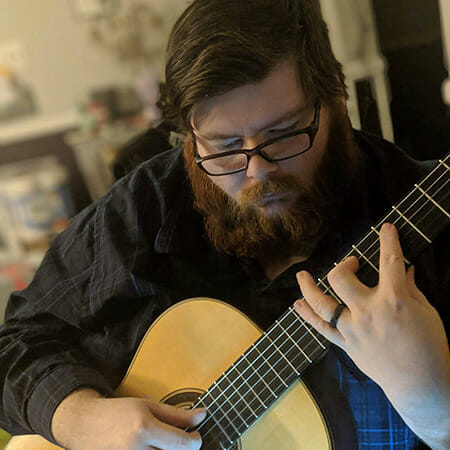
James Leitch has been a passionate guitar player for the past 25 years. When his own guitar teacher posted about a need for a music teacher for Loch Raven VA Outpatient Clinic’s music program for veterans, he thought this would be a great opportunity to use his passion for service.
Each Wednesday, James teaches guitar and music theory to a class of veterans. While the classes were initially at the clinic, which is in Baltimore, MD., the pandemic caused the instruction to go virtual. Loch Raven even provides guitars, replacement strings and other equipment to veterans who need help obtaining them.
Describe your volunteer role with teaching veterans at Loch Raven VA Outpatient Clinic.
I teach guitar. My role is that I provide them with instruction on how to play, give them diagrams and homework to help them progress, show them songs they would like to learn and give them a little bit of instruction in music theory so they understand what they’re doing.
What inspired you to start this?
I first got involved in January 2020. My guitar teacher at CCBC [Community College of Baltimore County] had been posting about his experience teaching a guitar class, and he had to move on because he had other obligations, so he asked if anybody was interested in taking over. I though it sounded like a great opportunity. I enjoy teaching and especially teaching guitar, and these are people who have a need that I can fulfill.
Since January 2020, James Leitch has served veterans through guitar lessons via the Loch Raven VA Outpatient Clinic in Baltimore, MD./Courtesy James Leitch
How do these music lessons help the veterans?
Music is therapeutic. Having something to distract you or to focus on can be really beneficial to people who have PTSD and other sorts of trauma related to war. I think it’s important for everybody to have an outlet for expression and something for their creative side. We don’t always get that. Guitar is safe because even though it’s hard, it’s a skill you can learn and the guitar does the work. People have a lot of problems learning to do things like sing or play some of the orchestral instruments and things like that, but when it comes to guitar, people have an impression that it’s a little more accessible.
Why is music something you would want to share in this way?
It’s a source of achievement. It’s a source of diversion. It’s a source of expression. It can help you to get feelings and thoughts and emotions out that you might not have another vehicle to get them out, and they need to get out.
What kind of feedback have you received from your students?
The students seem to be very happy. They’re coming along playing little tunes here and there, and it’s a really great feeling to see it click for somebody. They struggle with something a little bit for maybe a couple weeks, and then all of a sudden it just falls into place and makes sense and they are very excited. I try to be as supportive as I can. I get calls at weird random hours from some of my students sometimes saying, “Hey, I don’t know if I really understand this thing you want me to do,” and I like to help them with that. I think they really enjoy it.
What’s been the most rewarding part of your work?
Definitely meeting and hanging out with people and developing some friendships and relationships and camaraderie. Some people really take to the guitar and some people really struggle. They’re almost there for something else, and that camaraderie is really exceptional and I think it keeps people coming back.
Why do you think it’s important for others to give back?
It’s a rough world out there and we don’t all have what we need. Many of us have a surplus in one area that other people will benefit from if we share. I think that’s really important for people to do. When you have something you can give people, I think you should.
What do you want people to learn from your story?
Volunteering is great fun and it is work. It’s rewarding because you feel good about yourself, but more importantly you develop relationships with people. The relationships with people are what get you by, and are the most important things that we have, honestly. I think that’s what people should seek out. There’s a function to volunteering — people need this thing, you have the thing, bring them the thing, help them with the thing. But ultimately that’s just a vehicle for developing relationships, and developing those relationships is what’s crucial.
Florida Teen Hits High Notes of Service to Empower Young Musicians
Meet Daily Point of Light Award honoree Ruby Tilghman. Read her story and nominate an outstanding volunteer or family as a Daily Point of Light.
Music has played an important role in Ruby Tilghman’s life, offering the 17-year-old an outlet to express herself creatively. Through volunteerism, the Panama City, Florida rising high school senior is providing that opportunity to thousands of other students.
Launching Many Mini Musicians at the tender age of 12, Ruby volunteers to fund fine arts programs at public schools. Making music more accessible, Ruby’s instrumental service hits the high notes by connecting more than 5,000 students across the state of Florida to music and helping to close the funding gap in fine arts programs.
What inspires you to volunteer?
My experience as a student and musician is what inspires me to volunteer. Music has given me an outlet to express myself, and gave me a place in school where I felt I had a purpose. I wanted to provide that benefit to other students.
Describe your volunteerism with Many Mini Musicians.
As founder and director, I manage our social media, marketing, events and fundraising to support the organization. I also recruit young musicians and other volunteers who want to help at our events. Our Many Mini Musicians’ Youth Advisory Board gives student volunteers a place to focus their passion for volunteer service. Lastly, I make visits to schools that receive our funding. We’ve done everything from funding a percussion program at an elementary school to hosting concerts where musicians sing and play guitars, pianos and drums.
Share one personal story with me from your volunteerism.
There is a kid in our program who is a piano prodigy, but when he first started playing, he was playing on an out of tune, damaged piano, and his family couldn’t afford a new piano. We helped this boy get a new piano, and now, he plays a piano that matches his talent. You can tell he pours everything into what he’s playing and he really loves the craft. As a pianist myself, I know exactly what he’s feeling and I know this gives him purpose, passion, and a place he feels he belongs. That motivates me to help more musicians, because I know how my service is making an impact on people’s lives.
Many Mini Musicians volunteers and performers pictured at the Hello Spring concert./courtesy Ruby Tilghman
Why do you think it’s important for others to give back?
To whom much is given, much is expected. My community has poured into me in the way they’ve supported my endeavors from music to volunteerism. Now I’m able to give back to music programs that are building up kids like me every day. It’s that cycle of pouring into others and then turning around and giving it back that really keeps everything moving.
How have you continued to volunteer throughout the COVID-19 pandemic?
We fundraise around our outdoor concert series, and since we couldn’t meet in person during 2020, we pivoted to a virtual series. We had our biggest year yet in 2020, raising more than $20,000.
What do you want people to learn from your story?
Find your passion and then use that to impact others around you. For me, that passion is music, but for my brothers who are athletes, it could be sports. Finding what you love and using it to help others gives you a unique niche within your community to impact people in a very unique way.
In two words, what does volunteering mean to you?
Giving back.
When you’re not busy volunteering or in school, what do you do for fun?
I am a cheerleader and I love going to the beach with my friends. Living on the coast, that’s one of my favorite things to do.
How can readers help?
Please visit our website for more information about how you can help.
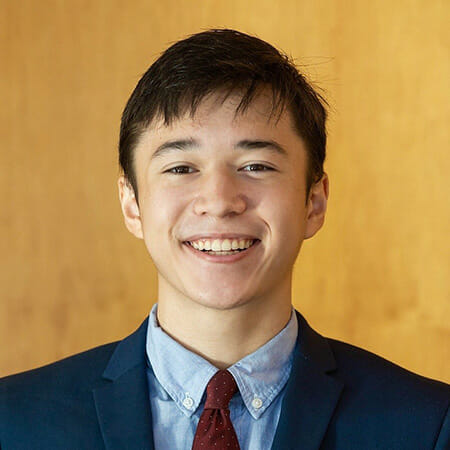
Isabella He spent much of her childhood moving around due to her parents’ jobs, so when her family settled in Fremont, Calif. when she was in eighth grade, she started looking for volunteer opportunities that would allow her to immerse herself in her new community.
During her search, she discovered Friends of Children with Special Needs (FCSN), a support network for neurodiverse individuals and their families. Isabella quickly immersed herself into the organization, which she was initially drawn to due to its tight-knit nature and feelings of family.
Now 16, Isabella serves as the program lead for FCSN Clubs at the high school and college level, the first ever of which she founded at her own high school. She is the program coordinator and one of the cofounders of FCSN’s tutoring program, a one-on-one flexible subject virtual tutoring program that has about 300 participants, and also serves as one of the tutors. Further, she is the cofounder of FCSN’s newsletter, FCSN Voices, and serves as its reporter lead and editor, managing the content and all of the other youth reporters.
Once she was in FCSN, Isabella discovered her passion for neurodiversity. On one of her family’s yearly trips to China, she interned at Chengdu’s Hospital for Women and Children’s program for early-age autism training, an experience that only furthered her passion.
“I discovered if I was able to help society focus on [neurodiverse individuals’] strengths rather than the deficits and challenges [they] face, it could increase society’s productivity as a whole,” Isabella said. “That’s kind of the entire idea around neurodiversity, which is to focus around their strengths and embrace the uniqueness of neurodiversity.”
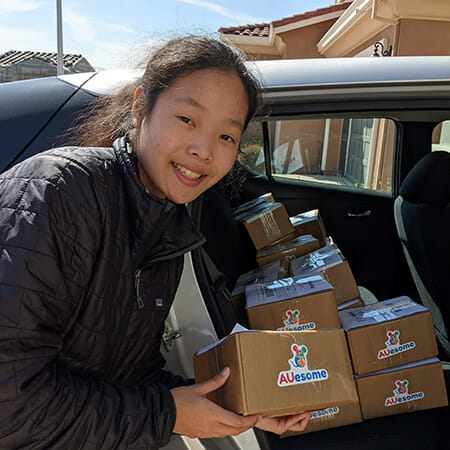
Isabella He prepares for delivery of AUesome’s free custom therapy kits which help children with special needs improve communication and motor skills./Courtesy Isabella He
The internship inspired her to start SN Inclusion, a nonprofit that provides free career-technical education for neurodiverse individuals. The program includes vocational training, career readiness courses and job opportunities through partnerships with local businesses.
Wanting to also tackle the issue of making home therapy more accessible to neurodiverse individuals and their families, Isabella cofounded AUesome with Anshul Gupta, Andrew Kim and Arnav Gurudatt. The organization provides instructional videos as well as hands-on home therapy kits. So far, over 200 kits have been distributed across nine states.
“Because especially at young ages, continuous therapy is so crucial, we want to help the parents be able to work with the children in the comfort of their own homes,” Isabella said.
In the future, AUesome hopes to both work directly with therapists and professionals as well as raise more money to improve the quality of the kits and make them more customizable, since no two children on the autism spectrum are alike. The organization is also looking to build more of a community among the families they are helping by organizing webinars and family activities.
Isabella is putting in volunteer effort daily, so much so that her mother, Tracy Song, said it feels as though her daughter’s volunteering is almost like a part-time job. Isabella enjoys her service work so much that she said it feels like a reprieve from her other responsibilities such as school.
“It’s really what I enjoy doing, working with neurodiversity and meeting with my volunteers and helping,” Isabella said. “One of my biggest achievements I would say is being able to see my volunteers get more and more involved in neurodiversity and developing their passion for the subject.”
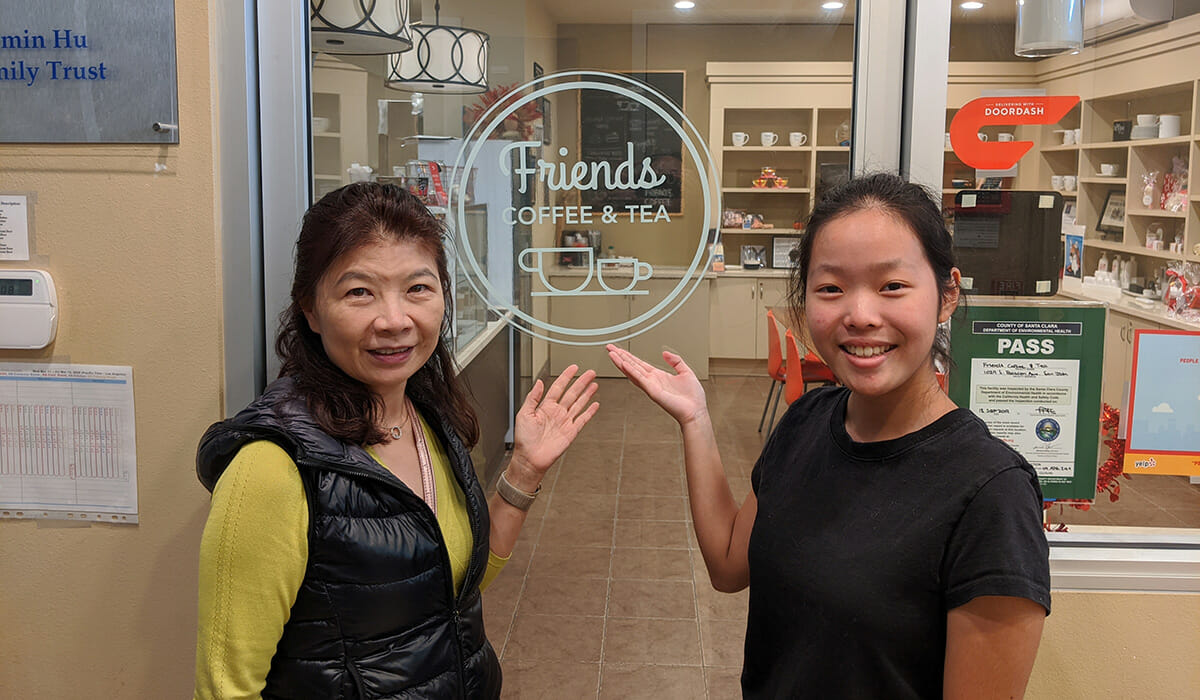
Isabella He, right, poses in front of Friends Coffee and Tea, a coffeeshop owned by Friends of Children with Special Needs that pairs with her nonprofit SN Inclusion to provide work training and opportunities for neurodiverse individuals. /Courtesy Isabella He
Isabella’s spirit of service even inspired her mother to join her in volunteering for FCSN.
“I’m feeling a little bit touched by the fact that she is very devoted to helping the special needs community,” Tracy said. “Now I’m personally learning together with her about how we can even help the community more, so it’s great. That’s the kind of attribute we want in our teenagers and in the next generation.”
For Isabella, the most rewarding part of all of her volunteer work has been being able to work with neurodiverse students directly through FCSN’s one-on-one tutoring, as well as being able to work with the teams across all three of the organizations she is involved in. She recognizes that had she been hesitant to start volunteering with FCSN due to her unfamiliarity with the neurodiverse community, she would have never experienced these achieving moments, which is why she encourages others to not be afraid of trying something new.
“I would really encourage everybody to believe in their ability to create a change, and believe in their ability to advocate for causes they believe in,” she said.
Highschool Senior Uplifts Texas Community through the Power of Music
Meet Daily Point of Light Award honoree Shreya Ramanathan. Read her story and nominate an outstanding volunteer or family as a Daily Point of Light.
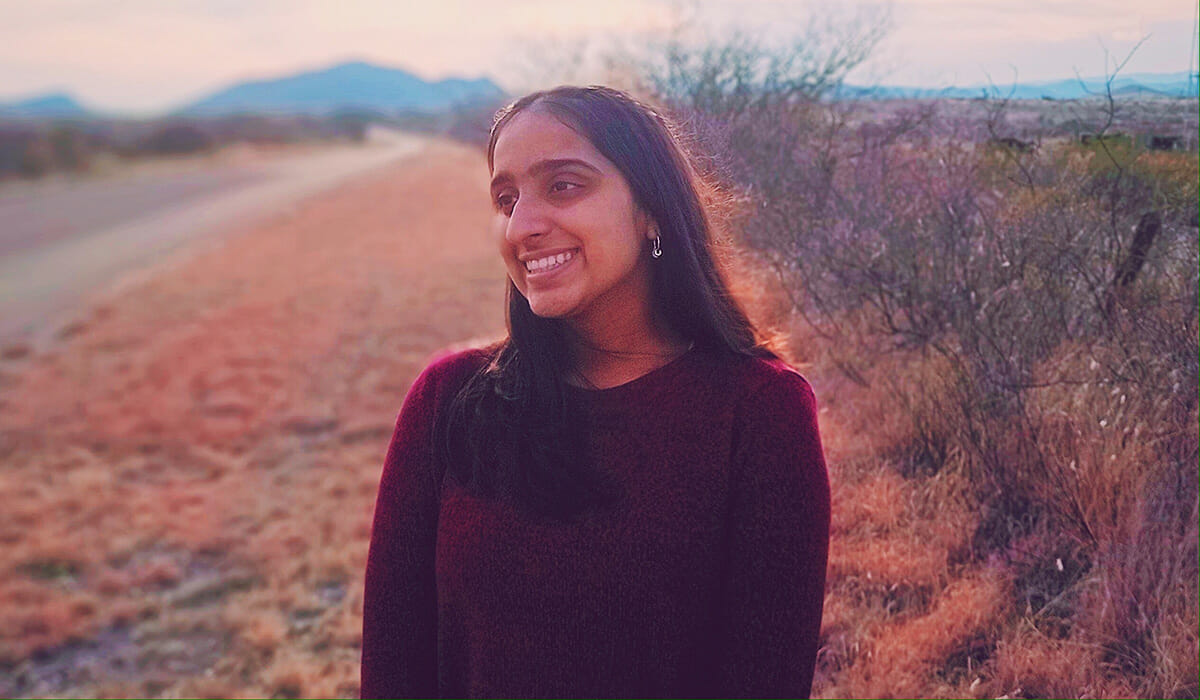
Although the COVID-19 pandemic resulted in the physical separation of people, Shreya Ramanathan brought together hundreds of Texans through music and volunteerism. The Liberal Arts and Science Academy High School senior created Notes of Change, an Austin, Texas, based organization, in 2018 to spread joy throughout her community with creative performances and concerts.
Ramanathan’s Notes of Change connects local musicians and artists to elderly populations at retirement homes, hospital patients and the broader Central Texas population with in-person and virtual performances. As a lifelong musician herself, Ramanathan understands the impact that music can have on someone’s life, and has made it her mission to bring musical equity to lower income communities and restore memory loss through music.
Describe Notes of Change and the inspiration behind creating it:
I started Notes of Change in 2018 because I’ve been a musician and artist my whole life. Whenever I perform for people, I always see how everyone seems to enjoy it and always makes everyone’s day better — including mine. What I realized is that people in retirement homes, nursing homes and the elderly population have less access to these kinds of artistic performances and activities. They don’t have as much of a creative outlet as the rest of us might have, so I wanted to kind of bring music and art to these communities who might not have as much access to art.
I’m also really into science and medicine. I’ve read tons of articles and research papers and realized how music actually helps improve and maintain your memories and helps prevent memory loss. Based on what I know about music and my passion for music, I decided to start Notes of Change so that I could bring music to the elderly population and help them with their memory loss issues and to support those communities.
Shreya Ramanthan’s Notes of Change connects musicians to retirement homes, hospitals and the broader Austin, Texas community to foster unity during the COVID-19 pandemic and beyond. /Courtesy Shreya Ramanathan
Did Notes of Change shift during the COVID-19 pandemic?
When the pandemic first hit, I was really unsure on how we could continue working with the retirement homes and nursing homes, especially because most of those places have pretty limited access to technology for virtual performances. However, I partnered with a few organizations like Heart & Soul Care, AGE and Big & Mini of Texas so that we could basically continue playing for these memory loss support groups virtually, which is really important during the pandemic. I think the elderly were the most impacted at first because they couldn’t go out at all and they were pretty much isolated to their own room. The one thing about memory loss is that isolation only makes it worse. So for me, it was not only important to continue bringing music to these communities to support their memory health, it was also important to bring music and interaction to these communities for their mental health so that they could still continue feeling like there was someone out there who cared about them and there are people out there looking out for them.
Has music always been a part of your life?
I’ve been a musician and an artist my whole life. I started playing the piano when I was five years old and then I started playing the oboe at age 11, which is like my primary instrument now. I also do Indian classical dance, which is also a form of art. So art and music has been such an integral part of my life since I was really, really young. It’s a creative outlet for me and it’s what I go to every time I’m feeling down or when I just need to relax or unwind. Music has definitely been my go-to thing as well as all artistic outlets such as dance.
Describe Notes of Change’s Sounds of Light Project:
One of the things that we did at the beginning of the pandemic was called the Sounds of Light project, which was basically a short series where we got a few highschool musicians to play and we broadcasted the performances on YouTube for all of the retirement homes that we worked with. Even though we weren’t able to connect through live performances for a while in the first two or three months of the pandemic, we put out these YouTube performances for our community and we raised a little bit of money for the American Red Cross, which was amazing.
How can people get involved in Notes of Change?
So I started Notes of Change to connect primarily highschool musicians with the elderly community, but now it’s really open to any musician or any artists out there who’s interested in connecting with the elderly community. I mean, a few months ago, we had an Austin musician who’s definitely not a high schooler. He’s a saxophonist and he played for one of our memory loss support groups. Most of our volunteers are highschoolers, just because that’s kind of the age base that I started with, but volunteers don’t even need to be musicians. I’ve done a few performances with dance, and I’ve had a few volunteers who decided to do a dance performance instead of music. I’ve definitely heard a lot of proposals from visual artists and we’re trying to incorporate art classes and acting classes that are beyond just musical performances and those types of things. So it’s definitely not just for young musicians. It’s for anyone with any kind of artistic inclination or anyone who just wants to get involved with the elderly community. A lot of our sessions have just volunteers who talk to the participants and just get the whole thing going and set the mood, and then we have a few volunteers who are actual musicians. So it’s open to anyone really.
What inspires you to volunteer?
I know what music has done for me during hardship, and the best points in my life are often because of music. So for me, volunteering is just about feeling that amazing feeling that I get out of music for everyone else. I think music is such a central part of just living, I think it’s everywhere and I think everyone, regardless of their age or if they have a memory loss disorder, should be able to have access to that. That’s really important to me, and that’s why I started volunteering. In general, volunteering is really important because I just think that I want to make my community a better place, so if that’s through music, volunteering or doing something else like volunteering at the food bank, it’s just constantly important for me to be helping others and doing my part to make my community a better place.
What have you learned through your experience as a volunteer?
It’s taught me how everyone, even if you don’t have a musical background, can really relate and connect through music. When I first started, I was really scared. As someone who’s classically trained, I was scared that I wouldn’t be able to have our music really relate to what other people are doing with their lives. Yet through sessions, I really learned that even classical music and any type of music can relate to everyone and evoke emotions. It’s been a really great way to connect with the elderly populations and with volunteers who I don’t really know that personally. We can all have this shared experience that connects us.
Something else I’ve learned is about the experiences of the people we work with. I think it’s really easy to start seeing people as less, especially when you’re working with memory loss groups or retirement members. But I’ve learned a lot about their experiences and their youth. A lot of these people used to play instruments and be musicians themselves, so hearing their own stories and experience with music is really cool. Hearing them kind of recall their childhood and their youth with art is really amazing because I think it just shows how impactful music can be for memory loss.
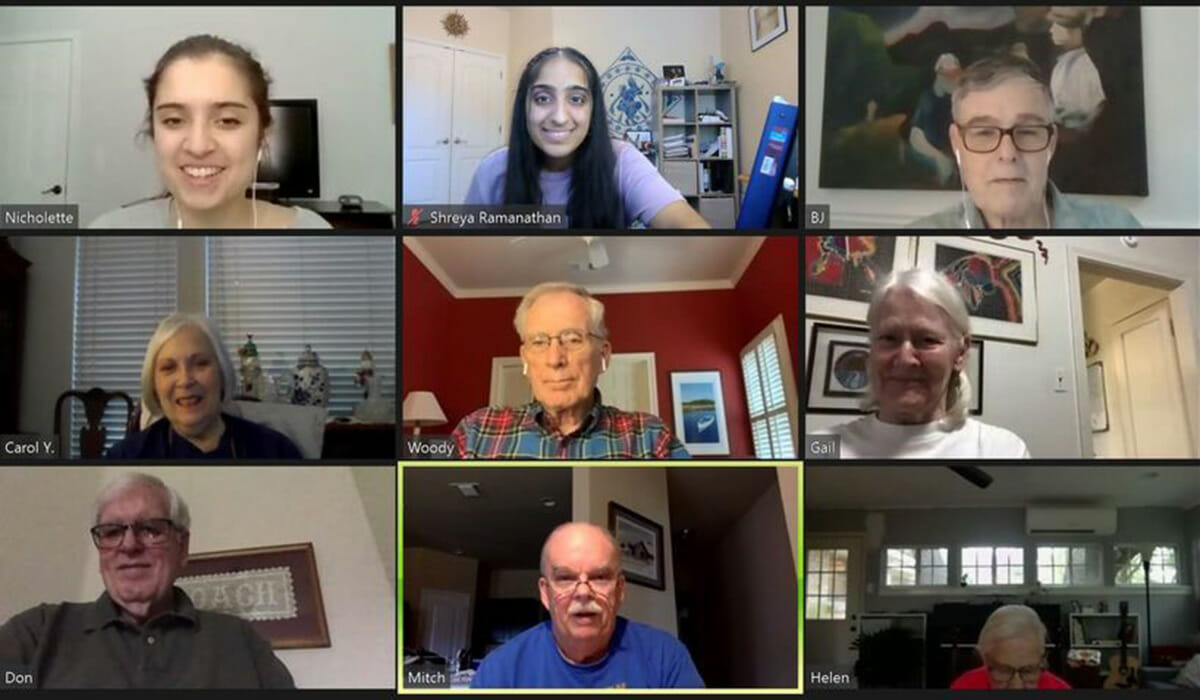
Shreya Ramanthan hosts a virtual Notes of Change event to connect people who are socially distant during the COVID-19 pandemic./Courtesy Shreya Ramanathan
Why is it important for others to give back, especially students?
We have the privilege of being able to be involved with the musical community from such a young age. Personally, my band directors and music teachers have always instilled in me that music is not just for yourself — music is to be shared. So for me, I think for young musicians and students, it’s really important that we pay it forward and give back what we were given by our teachers and our directors. Everyone in our music community has taken the time out of their day to teach us music and to give us this beautiful art form. It’s really important that we continue to spread that knowledge and that art, because otherwise, there’s really no point in music if you just keep it to yourself. I think everyone should have access to music and art in general.
What would you want others to learn from your service story?
I think that even if it seems kind of hard to start something, especially during the pandemic or virtually, anything is possible if you just put your mind to it. We started by playing just a few pieces for a really small group of people at one retirement home and received positive feedback which inspired us to grow. It just shows that if you start small, you can really have a really large impact.
Are there any partnerships, programs, or events that you are excited about? School for music and music therapy?
So we’re trying to expand our organization to work with more retirement and nursing home groups across Central Texas and work with more memory loss groups. Another thing that we’re kind of working on right now is actually bringing music to middle school students who live in lower income areas of Austin. There’s many middle schools in Austin that have a severely underfunded music program so we’re in the process of connecting with those band and orchestra directors and actually hosting free private and master classes for those students so they have the opportunity to become better musicians and hopefully continue their music.
In my personal life, I’m going to college at Emory University in Atlanta, so I’m definitely planning on continuing my work with Notes of Change there and hopefully bringing music therapy for memory loss to nursing and retirement homes in Atlanta. I’m excited to connect with the grassroots organizations within and outside of Emory to make an impact on that city’s elderly community.
Passion for Frogs Inspires Ten-Year-Old to Help Protect the Planet
Meet Daily Point of Light Award honoree Justin Sather. Read his story and nominate an outstanding volunteer or family as a Point of Light.
Justin Sather has had a deep love for frogs since receiving a frog blanket when he was three years old. His passion led him to wanting to help not only the species, but also the entire planet. When he was in only kindergarten, Justin started For the Love of Frogs, an organization whose mission is to conserve 30 percent of the planet by 2030.
For the Love of Frogs raises money to help restore wetlands and help protect rainforests, and also hosts projects related to land conservation and preserving clean water. Now ten-years-old, Justin has raised over $20,000 to conserve land and clean the planet. In partnership with the youth project Reserva, Justin is currently raising money to purchase and protect acres of land in Ecuador’s Choco Rainforest. Last month, he visited Ecuador to see the reserves in person.
Describe your volunteer role with For the Love of Frogs.
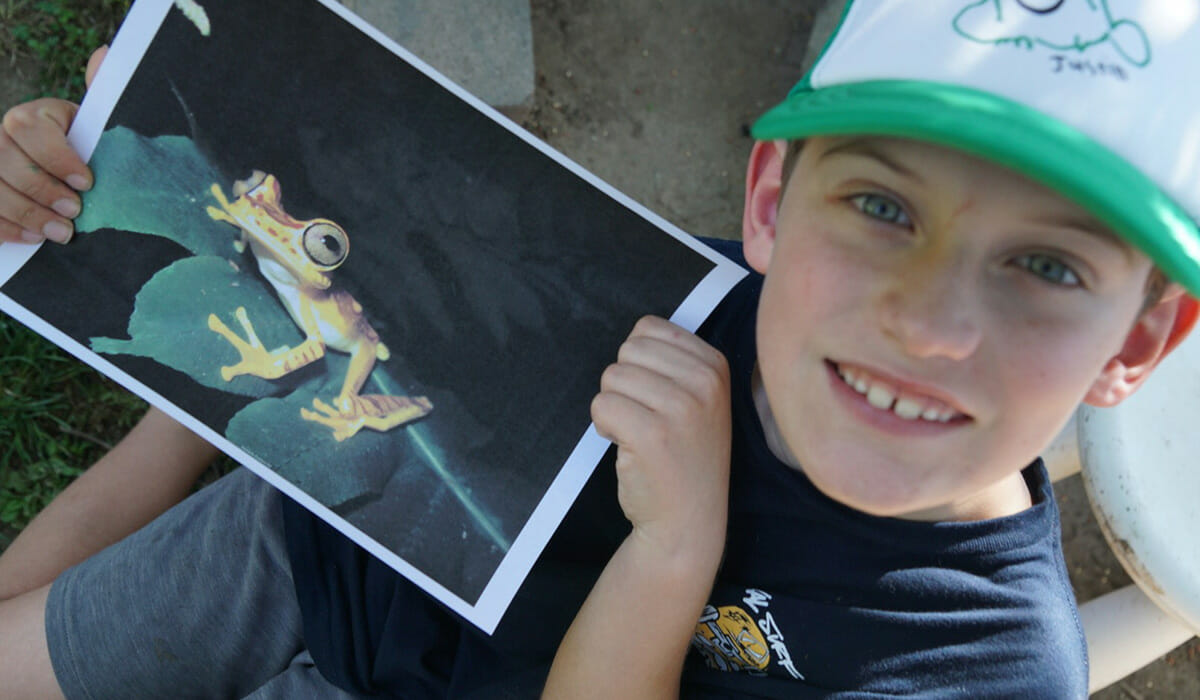
I started it. It’s an organization that helps save the frogs. We have people cutting down their homes and plastic pollution. I’m helping with plastic and the rainforest. I also sell toy frogs. The frogs are indicator species so that’s why it’s really helping the rainforest and everything, because the frogs are telling us the planet needs our help. Frogs are indicator species. What that means is if the frogs are dying in an area, like in the water, that means the water is polluted and is bad. Frogs are super sensitive because they can breath and drink through their skin.
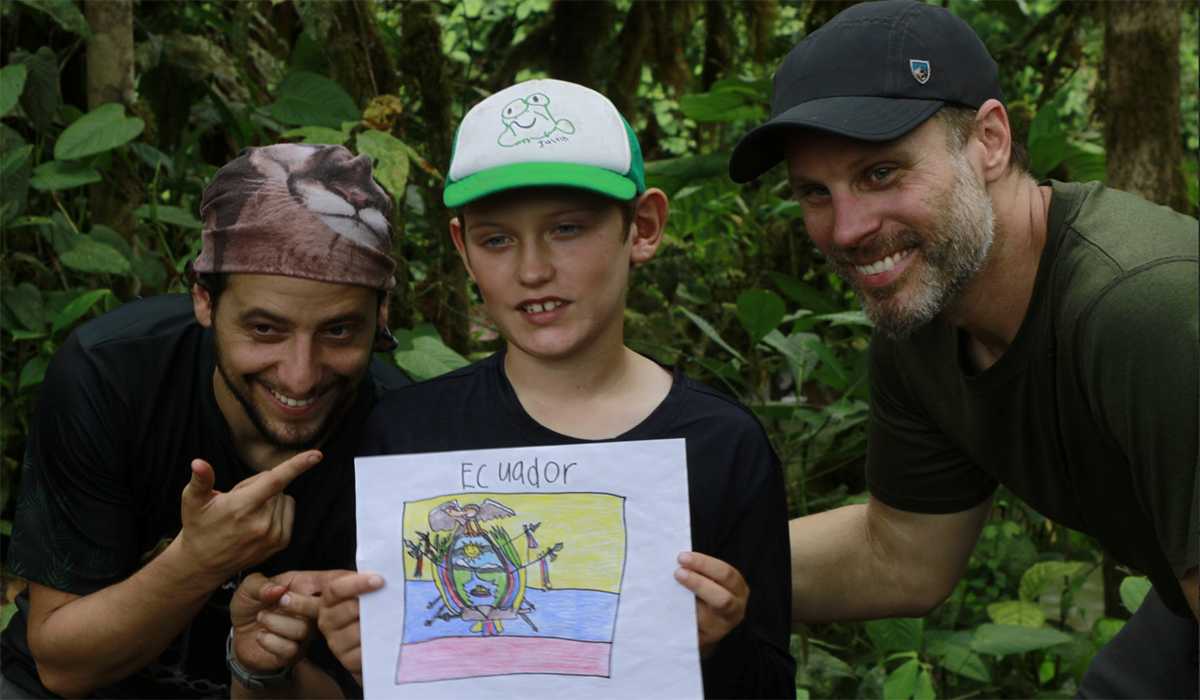
Justin Sather, center, visits Ecuador to see reserves saved by the youth project Reserva./Courtesy Justin Sather
What inspired you to start For the Love of Frogs?
I started it in kindergarten. I read this book called What Do You Do With an Idea? [by Kobi Yamada]. It’s about a kid who has an idea and it grows and grows and finally changes the world, and I was like, well I want to have an idea. I always liked frogs since I was three when I got these froggy blankets. I studied all about frogs and I started my project off by selling toy frogs. They’re one dollar for the small ones and five dollars for the big ones. I raised money for Dr. Kerry Kriger [of Save the Frogs] which helped me build ponds. I built three wetlands. I helped build wetlands in the Plumas National Forest to help save the red-legged frogs.
I read that second book called What Do You Do With a Chance?, and I have the chance to work with an organization called Reserva. Reserva is helping the rainforest. I raised 28 acres of rainforest in Ecuador. Almost half of the world’s rainforest have been destroyed and they could disappear in 100 years. A lot of the frogs live in the rainforest. You also can do the Million Letters campaign, which is how you raise money for the rainforest. You raise three dollars for every letter you write and you can help frogs and save land in Ecuador every time you write a letter. When you make a letter, you get a certificate. You need 244 letters to raise one acre, and one acre of land is 730 dollars.
What are your goals with this organization?
To save 30 percent of the planet by 2030. I’m doing Reserva and saving the rainforest. I got to meet Dr. Jane Goodall and she said you’re doing really good, but you have to help work on the plastic because there’s going to be more plastic in the ocean than fish by 2050. So I’m also helping the plastic pollution. I started helping people in Africa and that’s another part of my project, which is called the parallel projects. We get ideas from everyone and we make things out of plastic bottles. We have pen pals in Africa. They have so many bottles in Africa, and in the ocean, all the animals are dying. There’s even a whole river full of plastic bottles. So I started helping people in Africa to get rid of their plastic bottles by teaching kids to use less plastic. We made all these different toys and stuff, like a toy car out of a plastic bottle. We do it here in the U.S. and over in Africa, in Cameroon and Tanzania, they make a toy car too. We go back and forth making different things. Now we want to change laws so you can’t just throw your plastic bottles on the ground because they don’t have any recycling centers near where everyone is. We want to teach kids to use less plastic and to reuse bottles.
Are there any future partnerships, programs, or events that you are excited about?
There’s a book I’m in that just came out and it’s called Young Change Makers: Making a Difference. The book is about all different young kids and people doing things around the world to save nature and to help stop plastic pollution and everything that’s a problem. Also the Million Letters Campaign. The only people who can write letters are 26 and younger. All you have to do on the letter is write your age, name, why you like nature and why you want to protect it. You can also donate to my GoFundMe for more acres of land I will save.
What’s been the most rewarding part of your work?
I liked meeting Dr. Jane Goodall and going to Ecuador. They’re probably the two most rewarding parts, and to be in Bravery Magazine. I’m in the book that Dr. Jane Goodall is in. It’s called Bravery Magazine and it’s about different change makers around the world. It’s cool because the same day I got to meet Dr Jane Goodall, I also got to have the interview for the book.
Justin Sather serves as the founder of For the Love of Frogs, an organization whose mission is to conserve 30 percent of the planet by 2030./Courtesy Justin Sather
What do you want people to learn from your story?
I want people to learn to be brave and also have their own project that actually helps change the world. I learned that one idea can help change the world, even if it’s big or small. If you pick up some plastic, that’s still pretty big. I want people who are very young to also have an idea to help save different parts of the planet, like their favorite animal, if it’s sea animals or land animals. I really want all the people to get an idea of how they can actually make their own project and be brave and do their best and not let anyone down and have a growth mindset, which means that if they can’t do it yet, they have to keep on trying new things.
Why do you especially want young people to start their own project to give back?
I think it’s important because they’re really the next generation. … When they start off when they’re younger, they’ll get better and better and finally help change the world. We’re the next generation so we can’t just let everyone else do a project. We have to actually help during the project and help climate change and oceans and rainforests. We want to have rainforests, clean oceans and not have a bad climate. If we don’t stop, by 2050 the whole ocean will have plastic in it. We’re bringing the million letters to the world leaders also to help us. If we have more kids doing the project, the leaders will help. We’re trying to get it to presidents and all different people to try to help save the next generation for all the kids. When they have their own kids, they want them to experience the rainforest or the ocean.
The Fab Four: Charlotte Siblings Band Together to Inspire Youth Service
Meet Daily Point of Light Award honorees Maia, Liam, Eva and Jack Campbell. Read their story and nominate an outstanding volunteer or family as a Daily Point of Light.
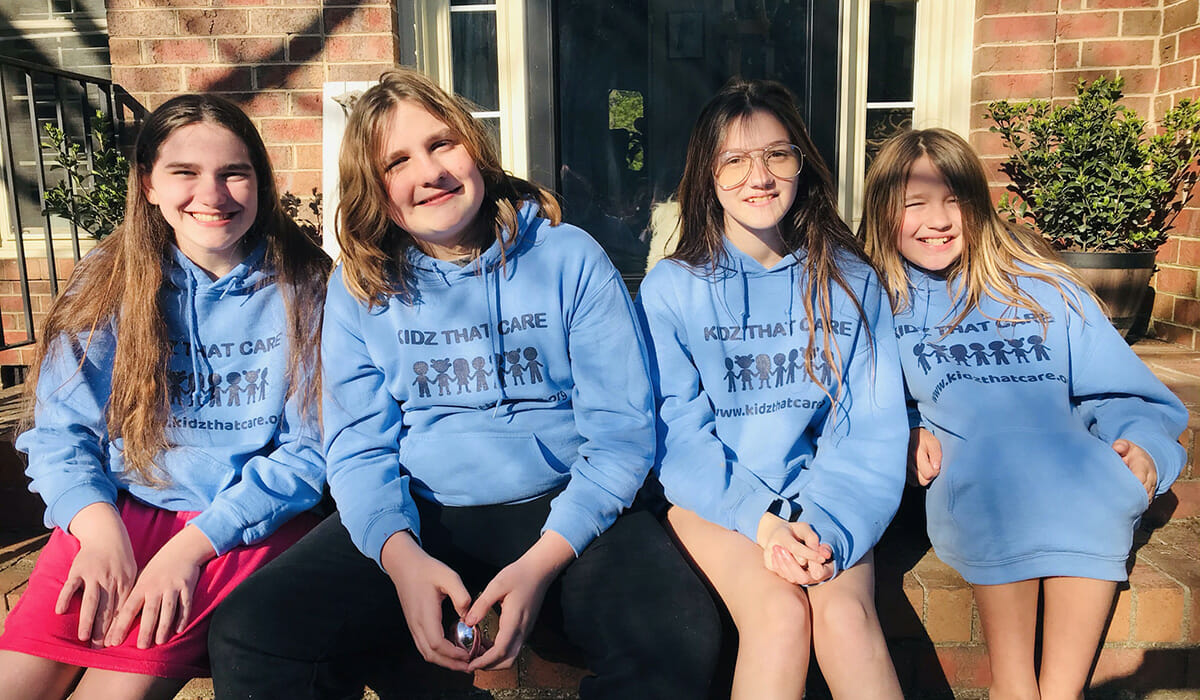
Maia Campbell says when she and her three siblings watched their parents volunteer, the four Charlotte, North Carolina children wanted to join in, but faced limitations because many organizations don’t provide service opportunities for kids younger than 16.
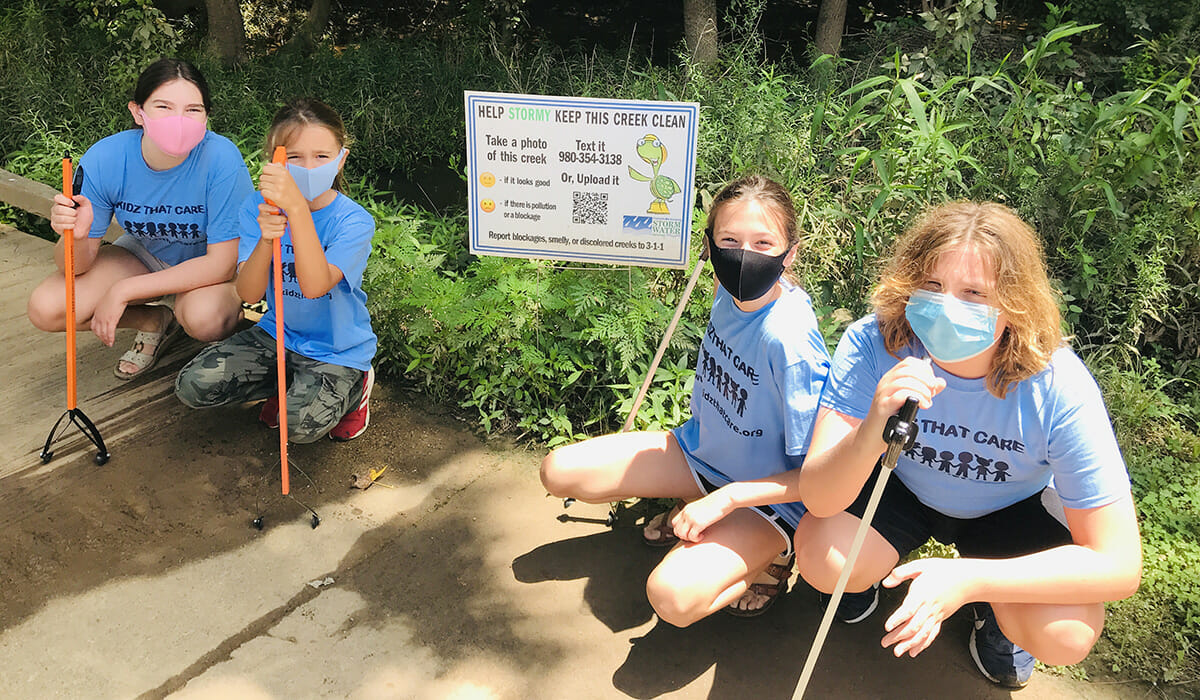
It was when Category 4 Hurricane Florence hit, causing catastrophic damage in the Carolinas, that the Campbell siblings began to organize their service efforts. Launching Kidz That Care in 2018, Maia, aged 14, Liam, 13, Eva, 12 and Jack, 10, support diverse causes and empower kids and teens to give back to their communities. Powering volunteerism through their united service, the Campbell siblings have since partnered with more than 40 organizations in the Charlotte area to lead hundreds of service projects ranging from community clean-ups to collecting donations, totalling more than 500 hours of community service.
Maia, Liam, Eva and Jack Campbell have united their volunteerism to power service for kids 16 and under through Kidz That Care./Courtesy The Campbell Family
What inspires you to volunteer?
Liam:Whenever I’m looking around and see other people who aren’t as fortunate, I want to help those people. I’m inspired to volunteer knowing they can use the support of others.
What does it mean to you to volunteer alongside your siblings?
Maia: Service really brings my family together. If we have a common goal we want to reach, we work together and get along, which is sometimes a challenge with families! It really teaches kids a good lesson.
Describe your volunteerism with Kidz That Care.
Maia: As co-founders, we conduct various community projects. My mom helps me identify different events to participate in and then I lead the projects with help from my three younger siblings. We empower other student leaders by recruiting volunteers aged 16 and younger across greater Charlotte to contribute to causes they care about.
Share one personal story with me from your volunteerism.
Eva: During one clean-up, we were picking up trash, and a lot of people thanked us for helping the community. It put a smile on my face because it’s just wonderful knowing I’m helping people. Yes, maybe at times you don’t want to get up in the morning to do these things, but volunteering is a great experience and you’re helping in such a nice way, it makes you feel warm inside.
Why do you think it’s important for others to give back?
Jack:If others volunteer, that care will start growing and growing, so we can help more people across the world.
What’s been the most rewarding part of your service?
Maia: It’s rewarding to see how much we’re doing to help other people. It’s a great feeling to know even though I’m just one person, I can still do a lot of good.
Volunteer Cooks Up Help and Hope for Hungry Families Amid COVID-19 Pandemic
Meet Daily Point of Light Award honoree Lynn Bassanese. Read her story and nominate an outstanding volunteer or family as a Daily Point of Light.
Lynn Bassanese has volunteered with Dutchess Outreach for several years, serving on their board and also, preparing and distributing healthy meals for the organization’s Lunch Box.
But when the organization was forced to adapt their community meals service to feed families amid the COVID-19 pandemic, Lynn boosted her commitment. Lynn, a Highland, New York resident, has connected with thousands across Dutchess County by providing nutritious and fresh food to individuals and families in need. A critical member of the community meals team, Lynn is cooking up help and hope through volunteerism.
What inspires you to volunteer?
I’m inspired by a quote from former President Franklin D. Roosevelt: “The test of our progress is not whether we add more to the abundance of those who have much; it is whether we provide enough for those who have too little.” I’m inspired every day to try to help those who have too little.
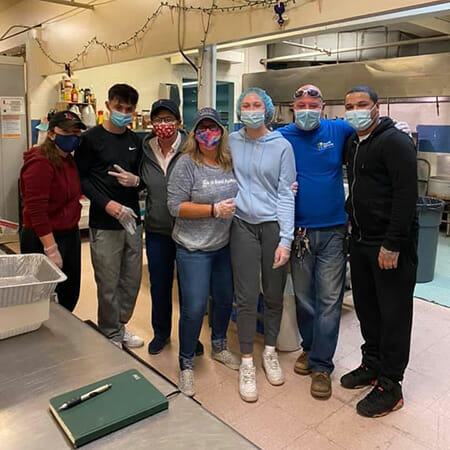
Dutchess Outreach Lunch Box volunteers pictured at the community meal Christmas Eve dinner. Lynn (third from left) pictured with her two grandchildren (left and second to left.)/Courtesy Lynn Bassanese
Describe your volunteerism with Dutchess Outreach.
In addition to my volunteerism with the Lunch Box, I serve on the organization’s board as the Chair of Client Services Committee, and also as co-chair of the Fundraising Committee. The Lunch Box provides hundreds of hot lunches and dinners daily for community members in need. We prepare nutritious meals from scratch using fresh produce from local Hudson Valley farms.
Share one personal story with me from your volunteerism.
We have a mother who comes for meals for herself and her five children. We always try to pack a little something special the kids will enjoy. This mother would much rather be going to the supermarket and choosing whatever the kids would enjoy for meals, but she’s unable to do that. It’s extremely rewarding to know her family will have a healthy and nutritious meal thanks to our work.
Why do you think it’s important for others to give back?
You get back so much more than you give by volunteering. There is no better way to enrich your life than to help others who through no fault of their own, need a little help or a little hope.
What’s your favorite meal to prepare at the Lunch Box?
It’s a real pleasure to serve roasted fresh vegetables. If fresh vegetables come in from the farm, we quickly change the menu to use them right away. There’s nothing better than putting all these fresh vegetables into the oven with a little olive oil and seasoning.
What have you learned through your experiences as a volunteer?
The dedicated staff and my fellow volunteers care so much about the people they serve. I feel so fortunate to be able to work with them.
Lynn is cooking up help and hope for hungry individuals and families through volunteerism./Courtesy Lynn Bassanese
How have you continued to volunteer throughout the pandemic?
Once the pandemic started, I increased the time I spent volunteering. The need for volunteers at our organization grew and a smaller core group of volunteers became regular volunteers. We followed all masking and distancing guidelines, and transitioned our meals for families from sit down to takeout.